Skip to content
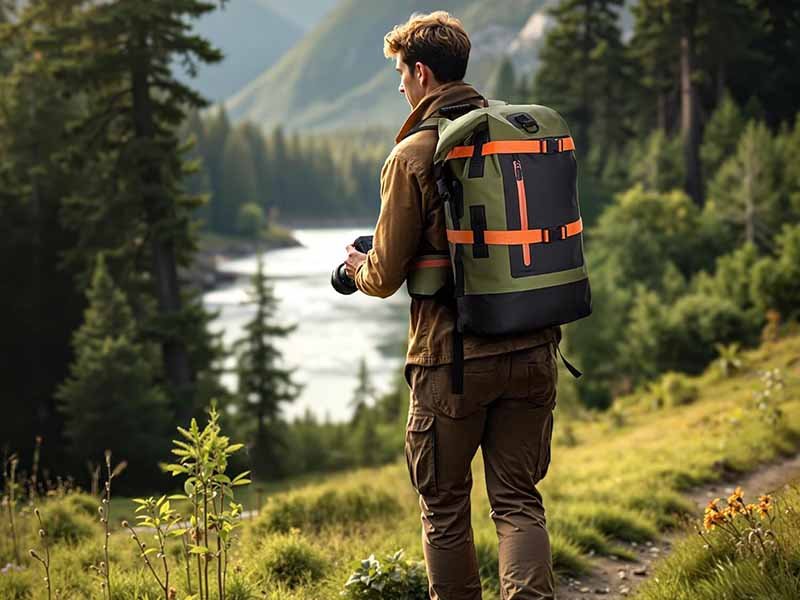
A waterproof dry bag looks simple from the outside, but once it enters real camping use, it quickly proves whether it was made well or made cheaply. On a rainy trail, near a lake, inside a kayak, or on wet ground beside a tent, a dry bag stops being a nice accessory and becomes gear protection. If the material cracks, if the seam leaks, or if the roll-top does not seal tightly, the whole purpose of the product is lost. That is why dry bag manufacturing is not just about making a bag that looks outdoor-ready. It is about building a product that can keep clothing, sleeping gear, electronics, food, and personal items dry under repeated outdoor stress.
Waterproof Dry Bag Manufacturing is the process of producing dry bags with waterproof materials, sealed seams, reinforced structure, and reliable closure systems so they can protect camping gear from rain, splashes, mud, humidity, and short-term water exposure. A well-made dry bag combines proper fabric selection, seam technology, roll-top engineering, and quality control to deliver real outdoor performance.
Many low-cost dry bags enter the market looking similar in photos. The difference only appears later, when users start leaving comments like “water got in,” “the material became stiff,” “the seam opened,” or “the buckle broke.” Szoneier has spent more than 18 years working with neoprene and functional material product development, customizing bags, koozies, sports supports, medical supports, wetsuits, and other sewn and laminated products for overseas small and medium buyers as well as higher-end brand customers. Once you understand how a dry bag is really manufactured, it becomes much easier to judge why some products become repeat sellers and others disappear after one season.
What Is Waterproof Dry Bag Manufacturing?
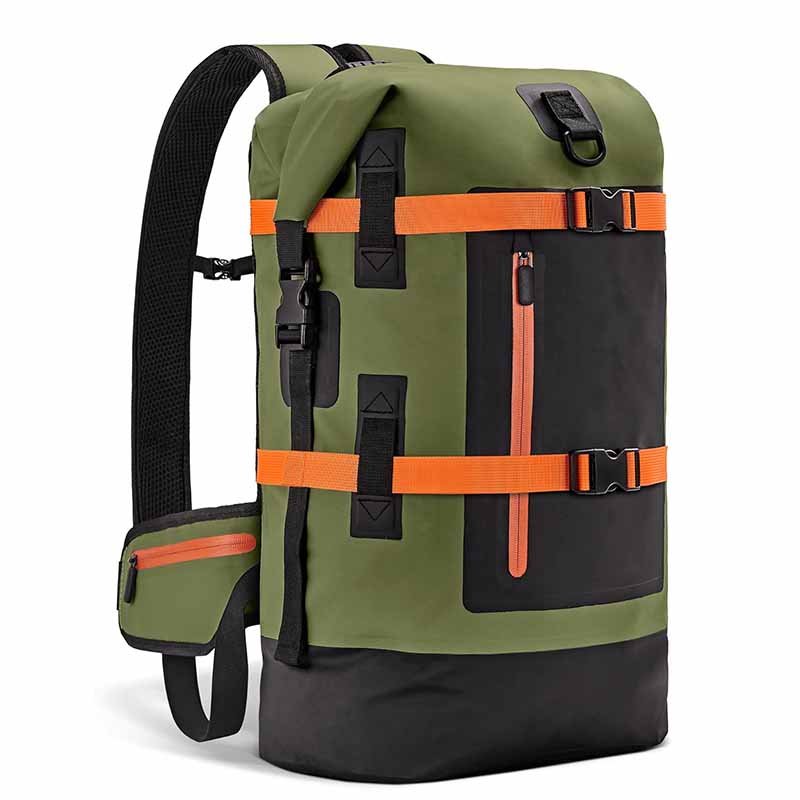
Waterproof Dry Bag Manufacturing is the process of designing, selecting materials, cutting, welding, assembling, and inspecting dry bags that are built to keep camping gear dry. It relies on waterproof fabrics, sealed seams, and dependable closures rather than ordinary stitching alone, so the final product can handle wet outdoor conditions more safely and more consistently.
What is Waterproof Dry Bag Manufacturing?
Waterproof Dry Bag Manufacturing is the complete production system behind a dry bag, not just one production step. A true dry bag is not simply a fabric sack with a buckle on top. It is a product built around water protection, structural reliability, and repeated outdoor use. Every part of the bag has to support that goal.
In most cases, a waterproof dry bag is made from coated or laminated material, cut into panels, then bonded or welded so water has fewer paths to enter. The opening is usually designed as a roll-top system, because that structure is more reliable for waterproof protection than many ordinary zip openings at the same price level.
A good dry bag is usually made up of these key parts:
- waterproof outer material
- inner or backing layer that supports structure
- welded or sealed seams
- roll-top closure section
- buckle and strap system
- reinforced bottom or stress points when needed
Each part affects the final result.
| Product Part | Main Job | What Happens If It Is Weak |
|---|---|---|
| Outer material | Blocks water and handles surface wear | Cracking, leakage, early wear |
| Seams | Keep water from entering through joints | Seam leakage |
| Roll-top area | Creates closure barrier | Poor sealing performance |
| Buckles and straps | Lock and carry the bag | Failure during use or transport |
| Bottom panel | Supports load and abrasion | Fast wear on rough ground |
One common misunderstanding is thinking that waterproof fabric alone creates a waterproof bag. It does not. A bag can use waterproof fabric and still leak badly if the seams, top closure, or structure are weak. This is why manufacturing quality matters so much more than surface appearance.
From a product development angle, Waterproof Dry Bag Manufacturing is really about controlling the full system. Material thickness, welding temperature, panel alignment, fold tolerance, buckle fit, and logo method all influence performance. Szoneier’s long experience in functional material products helps because the company is already familiar with how coated and laminated materials behave during cutting, assembly, and bulk production.
Why choose Waterproof Dry Bag Manufacturing?
The main reason customers choose waterproof dry bags is simple: gear protection. But from a business point of view, the value goes much deeper. A well-made dry bag protects the user’s equipment, supports stronger reviews, lowers complaint rates, and helps outdoor brands build a more dependable product line.
Camping conditions are unpredictable. Even when people are not crossing rivers or using the bag on a boat, they still face:
- rain during hiking or campsite setup
- wet grass and muddy ground
- condensation inside tents
- splash exposure near lakes, beaches, or rivers
- humidity affecting clothes, sleeping gear, and electronics
This means a dry bag is solving a real and frequent problem, not an imaginary one.
Compared with ordinary outdoor bags, the performance gap is clear:
| Product Factor | Waterproof Dry Bag | Ordinary Outdoor Bag |
|---|---|---|
| Water protection | Strong | Limited |
| Opening method | Roll-top or sealed design | Mostly zipper |
| Seam structure | Welded or sealed | Usually stitched |
| Mud and wet-ground handling | Better | More vulnerable |
| Gear protection confidence | Higher | Lower |
From a commercial perspective, dry bags are attractive because they are practical, giftable, easy to bundle with other outdoor gear, and suitable for multiple size tiers. A single successful line can often expand into 2L, 5L, 10L, 20L, and backpack-style versions. That creates more room for repeat orders and broader product planning.
For many brands, Waterproof Dry Bag Manufacturing is also a way to move into a more functional, higher-value product category. A cheap storage sack competes mostly on price. A well-made dry bag competes on protection, outdoor trust, and product confidence. Those are much stronger selling points.
What makes Waterproof Dry Bag Manufacturing different?
What makes Waterproof Dry Bag Manufacturing different is that the product is built around keeping water out, not simply carrying items. That changes almost every manufacturing decision.
A normal bag can often tolerate standard sewing and ordinary accessory selection. A waterproof dry bag cannot. Needle holes, weak top structure, thin coating, poor welding, and low-grade buckles all create failure points. This is why dry bag production is more technical than many people expect.
The biggest difference is seam construction. In ordinary bags, stitching joins the panels. In dry bags, stitching alone can become a leakage path. So many waterproof dry bags rely on welding, heat sealing, or bonded construction at key areas.
A simple comparison shows the difference:
| Manufacturing Area | Standard Bag | Waterproof Dry Bag |
|---|---|---|
| Panel joining | Sewing | Welding or sealed construction |
| Opening system | Zipper or flap | Roll-top |
| Waterproof logic | Limited splash resistance | Built to block water entry |
| Material choice | Appearance + strength | Waterproofing + strength |
| Failure risk | Wear and tear | Leakage plus wear and tear |
Another important difference is how the opening must behave. A roll-top system sounds simple, but it only works well when the material thickness, fold stiffness, edge finishing, and buckle alignment are correct. If the material is too stiff, rolling becomes difficult. If it is too soft, the seal becomes unreliable. If the top width is wrong, the bag looks awkward or seals poorly.
This is one reason experienced production matters. A supplier that only “adds a roll top” to an ordinary bag concept may create something that looks like a dry bag but performs like a regular bag. Szoneier’s experience with neoprene and functional product customization gives it a stronger base for handling material behavior, bonding structure, and performance-oriented product design.
Which Materials in Waterproof Dry Bag Manufacturing?
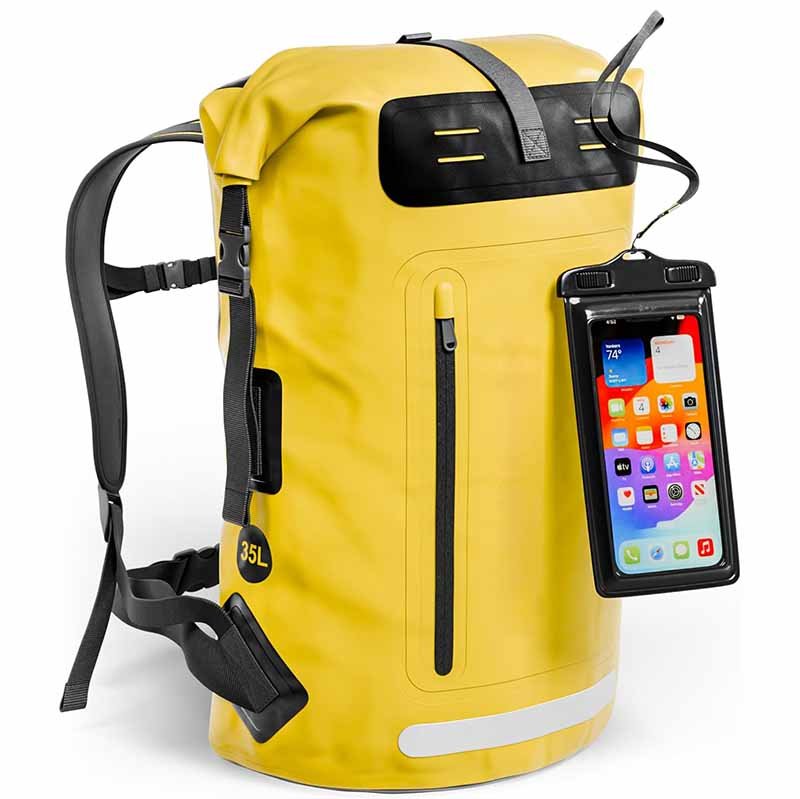
The materials used in Waterproof Dry Bag Manufacturing decide how well the bag resists water, handles folding, survives abrasion, and maintains its shape over time. A dry bag is only as strong as its material system. Good performance does not come from one fabric alone. It comes from how the face material, coating or lamination, reinforcement areas, strap components, and closure parts work together.
Which fabrics in Waterproof Dry Bag Manufacturing?
The most common materials used in waterproof dry bags are coated or laminated synthetic fabrics. These are selected because they can block water, handle outdoor wear, and support welding or sealing better than ordinary fabric.
For camping dry bags, the most widely used fabric directions include:
- PVC coated polyester
- TPU laminated polyester
- TPU laminated nylon
- coated Oxford fabric in selected product tiers
Each material has a different balance of price, flexibility, strength, and product feel.
| Fabric Type | Main Advantage | Main Limitation | Common Product Level |
|---|---|---|---|
| PVC coated polyester | Strong and cost-effective | Heavier and less flexible | Entry to mid-range |
| TPU laminated polyester | Better feel and cleaner finish | Higher cost | Mid to premium |
| TPU laminated nylon | Lightweight and more technical feel | Higher material cost | Premium |
| Coated Oxford fabric | Balanced structure | Performance depends on spec | Select mid-range items |
PVC coated materials are popular because they offer a good cost-performance balance and can handle rough outdoor use. They are common in many standard outdoor dry bags. TPU laminated materials are often chosen when brands want a more premium feel, better flexibility, improved cold-weather handling, or a cleaner market position.
Customers should not choose fabric only by sample touch. They should also think about:
- target selling price
- intended use scene
- expected product lifespan
- brand image
- bag size and carrying weight
A small 5L day-use bag and a 30L heavy camping gear dry bag may need very different material logic. The first may prioritize flexibility and light weight. The second may need stronger body support and abrasion resistance.
Szoneier’s experience with neoprene and related functional products gives it an advantage in material handling because many outdoor products depend on coated, laminated, or specialty structures that require more precise production control than ordinary textile bags.
Is PVC or TPU used in Waterproof Dry Bag Manufacturing?
PVC and TPU are the two most discussed material directions in dry bag development, and for good reason. They are both widely used, but they serve different product goals.
PVC is often chosen for its cost advantage and strong, proven outdoor use. It can produce durable bags with good waterproof performance at a competitive price. TPU is often chosen when customers want a softer hand feel, a more premium appearance, better flexibility, or a cleaner product story.
A side-by-side comparison helps make the choice clearer:
| Factor | PVC | TPU |
|---|---|---|
| Material cost | Lower | Higher |
| Flexibility | Moderate | Better |
| Product feel | More standard | More premium |
| Weight feel | Often heavier | Often lighter-feeling |
| Cold-weather handling | Less flexible in some cases | Better in many cases |
| Market position | Value to mid-range | Mid to premium |
PVC is still a very practical choice for many camping dry bags. It is strong, widely accepted, and suitable for volume production. TPU is often better for brands targeting higher-end outdoor markets, travel users, or customers who want a softer and cleaner finish.
The right answer depends on the product plan. A low-cost promotional dry bag may not need TPU. A premium outdoor line trying to stand apart in material feel and user experience often benefits from TPU. What matters is that the material matches the market promise.
A common mistake is trying to advertise a basic PVC dry bag as a premium performance product without upgrading structure or finish. That mismatch often creates complaints. It is usually smarter to position the material honestly and build the product around its real strengths.
How materials affect Waterproof Dry Bag Manufacturing?
Material choices affect almost everything the customer later notices. They influence not only waterproof performance, but also weight, folding behavior, durability, print effect, smell level, product feel, and storage convenience.
Here is how material choices shape the final bag:
| Material Decision | Product Effect |
|---|---|
| Thicker coated fabric | Better abrasion resistance, more body |
| Softer laminated fabric | Easier rolling and handling |
| Low-grade coating | More risk of cracking or peeling |
| Better surface finish | Cleaner printing and better appearance |
| Stronger reinforcement area | Better load support and longer life |
From the user side, these technical choices become everyday product impressions:
- the bag feels strong or feels cheap
- the roll-top closes smoothly or feels awkward
- the surface stays neat or starts cracking
- the bag carries well or feels stiff and inconvenient
- the bag inspires confidence or creates doubt
From the brand side, material choice affects unit cost, complaint rate, return risk, and product review quality. A dry bag with poor material stability may save money in quotation stage and lose much more through quality claims later.
This is why serious development usually starts with one practical question: what kind of real outdoor use should this bag survive? Once that answer is clear, material planning becomes much more accurate.
How should customers choose materials for different dry bag levels?
Not every product needs the same material level. A better approach is to match materials to product position. This keeps the bag competitive while protecting margin.
A useful planning model looks like this:
| Product Level | Suggested Material Direction | Main Goal |
|---|---|---|
| Entry level | PVC coated polyester | Cost control and solid basic waterproofing |
| Mid-range | Improved PVC or coated polyester with better structure | Better durability and appearance |
| Premium | TPU laminated polyester or nylon | Better flexibility, cleaner finish, stronger perceived value |
Customers should also consider size and usage:
- small daily-use dry bags may focus on lighter handling
- medium camping bags need balance between flexibility and durability
- larger gear bags need stronger reinforcement and bottom wear resistance
- premium branded products often need a cleaner logo finish and more refined material feel
For customers developing custom products, it is often smarter to upgrade key areas instead of upgrading everything. For example:
- premium material on the main body
- stronger reinforcement at the base
- improved buckle system
- cleaner logo method
- better shoulder strap components for larger sizes
That kind of balanced product planning usually creates better commercial results than simply chasing the highest-cost material across the whole bag.
Material Planning Table for Custom Camping Dry Bags
| Product Area | Better Value Option | Better Premium Option |
|---|---|---|
| Main body | PVC coated polyester | TPU laminated polyester or nylon |
| Bottom panel | Heavier coated reinforcement | High-strength laminated reinforcement |
| Closure area | Standard coated roll-top section | Cleaner flexible roll-top material |
| Buckles | Strong POM plastic | Upgraded branded-look hardware |
| Strap system | Standard carry strap | Padded or adjustable carry system |
| Logo application | Screen print | Heat transfer, emboss, or patch detail |
How Does Waterproof Dry Bag Manufacturing Work?
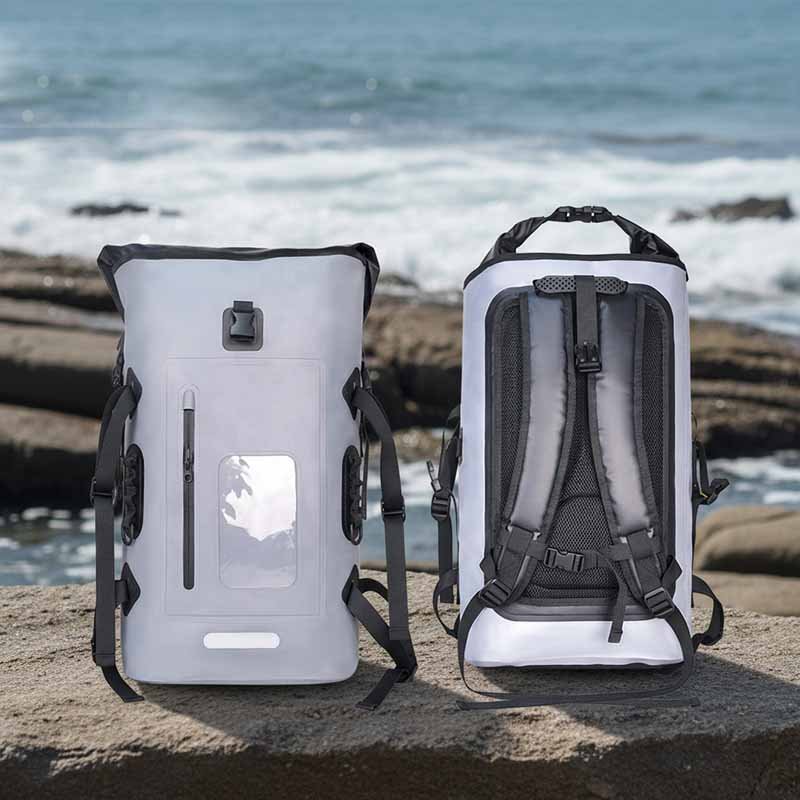
Waterproof Dry Bag Manufacturing is a controlled production flow that turns coated or laminated fabrics into sealed, load-bearing, and easy-to-use bags for camping. The process relies on precise cutting, correct welding or sealing, stable hardware assembly, and consistent inspection. Each step must match the material behavior; otherwise, leakage, deformation, or early failure will appear in use.
How is Waterproof Dry Bag Manufacturing processed?
Production starts with material preparation and confirmation. Before cutting, factories check:
- fabric thickness and coating quality
- color consistency across rolls
- surface defects and coating uniformity
- compatibility with welding parameters
After approval, the process moves to panel cutting. For dry bags, cutting accuracy directly affects seam strength and final shape.
Common cutting methods:
| Method | When Used | Advantage |
|---|---|---|
| Die cutting | Standard shapes, high volume | Consistent size, fast output |
| CNC cutting | Mixed sizes, flexible orders | Good accuracy, adaptable |
| Laser cutting | Precision edges, logos/holes | Clean edges, minimal fray |
Key control points during cutting:
- maintain straight edges for better welding
- avoid stretching laminated materials
- keep tight tolerances for roll-top alignment
Next is panel layout and pre-assembly. Panels are aligned to ensure:
- grain direction consistency
- even thickness overlap at seams
- correct positioning for reinforcements (base, strap areas)
A practical production flow looks like this:
| Step | Purpose | Risk if Weak |
|---|---|---|
| Material check | Ensure fabric suitability | Inconsistent quality in bulk |
| Cutting | Define size and edges | Poor fit, weak seams |
| Panel layout | Align components | Uneven welding, shape issues |
| Pre-assembly | Prepare for welding | Misalignment in final bag |
At Szoneier, production teams treat cutting and layout as structural steps, not just preparation. Good cutting reduces waste, improves seam strength, and keeps product appearance consistent across batches.
How are seams made in Waterproof Dry Bag Manufacturing?
Seam construction is the most critical factor for waterproof performance. Instead of relying on stitching alone, most dry bags use welding or sealing methods to eliminate needle holes.
Main seam methods:
| Method | How It Works | Result |
|---|---|---|
| High-frequency welding | Uses electromagnetic energy to fuse layers | Strong, clean seams |
| Heat sealing | Applies heat and pressure | Good waterproof barrier |
| Hot air welding | Melts coating surfaces and presses together | Flexible seam |
| Sew + tape (hybrid) | Stitching + seam tape | Lower waterproof level |
For camping dry bags, welding methods are preferred because they create a continuous barrier.
Key seam parameters:
- temperature
- pressure
- dwell time
- overlap width
If these are not controlled well, problems appear:
| Issue | Cause |
|---|---|
| Seam leakage | Low temperature or pressure |
| Burn marks | Excess heat |
| Weak bond | Insufficient dwell time |
| Stiff seam | Poor parameter balance |
A well-welded seam should:
- look smooth and even
- have consistent width
- resist peeling under tension
Szoneier uses controlled welding processes adapted to different materials (PVC vs TPU), because each reacts differently to heat and pressure.
How are closures done in Waterproof Dry Bag Manufacturing?
The roll-top closure is the main sealing mechanism of a dry bag. Its performance depends on both design and material behavior.
A standard roll-top system includes:
- stiffened top edge (sometimes with internal reinforcement strip)
- flexible body material for rolling
- buckle system for locking
How it works:
- The top is rolled down 3–4 times
- Air is pushed out
- The buckle locks the rolled section
Important design factors:
| Factor | Requirement | Impact |
|---|---|---|
| Top width | Must match bag size | Affects sealing ease |
| Material flexibility | Must allow smooth rolling | Affects usability |
| Edge finish | Clean and strong | Prevents cracking |
| Buckle strength | Reliable locking | Ensures closure security |
Common problems:
- material too stiff → difficult to roll
- material too soft → weak seal
- uneven edge → poor alignment
- weak buckle → failure under load
For larger bags (20L+), strap systems are often added to:
- stabilize the roll-top
- improve carrying comfort
- distribute weight
Szoneier adjusts roll-top design based on bag size and material type to ensure consistent sealing performance.
How is Waterproof Dry Bag Manufacturing finished?
Finishing is where the product is prepared for market and checked for quality.
Key finishing steps:
- trimming excess material or threads
- cleaning surface (removing marks or residue)
- logo application
- strap and buckle alignment check
- waterproof integrity check
- packaging
Logo methods:
| Method | Best For | Effect |
|---|---|---|
| Screen print | Simple logos | Cost-efficient |
| Heat transfer | Detailed graphics | Clean finish |
| Emboss/deboss | Premium look | Subtle branding |
| Patch | Outdoor style | Strong identity |
Quality checks include:
- seam strength testing
- roll-top function test
- buckle load test
- visual inspection
Szoneier performs full inspection before shipment, which helps reduce defects reaching customers.
Manufacturing control and bulk consistency
Manufacturing is not only about making one good sample. It is about producing thousands of units with the same quality.
First, material consistency matters. Different batches of coated fabric can behave differently during welding. If not controlled, this leads to inconsistent seam quality.
Second, process parameters must be stable. Welding temperature, pressure, and timing should be standardized for each material type.
Third, operator experience plays a major role. Skilled workers understand how materials react during welding and how to adjust for small variations.
Fourth, in-line inspection reduces risk. Checking seams during production helps catch problems early instead of waiting until final inspection.
Fifth, hardware quality must match the bag level. Weak buckles or straps can fail even if the body is well made.
A stable production system includes:
- defined material specifications
- controlled process parameters
- trained operators
- multi-stage inspection
This is how consistent products are achieved in bulk orders.
What Improves Waterproof Dry Bag Manufacturing?
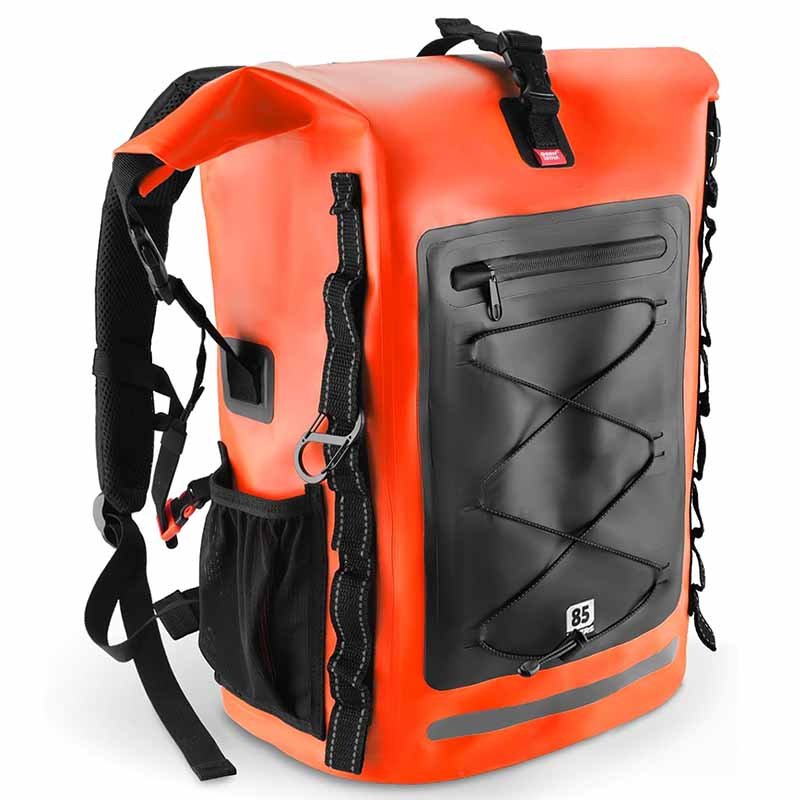
Improving Waterproof Dry Bag Manufacturing means enhancing waterproof performance, durability, usability, and product consistency. Small upgrades in structure and materials can significantly improve real-world performance and customer satisfaction.
What makes Waterproof Dry Bag Manufacturing waterproof?
True waterproof performance comes from combining multiple factors:
- waterproof material
- welded seams
- effective roll-top closure
- proper structural design
A single weak point can compromise the whole bag.
Waterproof levels:
| Level | Description | Use |
|---|---|---|
| Water-resistant | Light rain protection | Casual use |
| Waterproof | Strong protection | Camping, hiking |
| Heavy-duty waterproof | High exposure resistance | Water sports |
Common mistake:
- relying only on fabric, ignoring seams and closure
How to strengthen Waterproof Dry Bag Manufacturing?
Strength comes from reinforcement and material selection.
Key improvements:
- reinforced bottom panel
- thicker or higher-strength fabric
- stronger strap attachment points
- better welding overlap
Comparison:
| Feature | Basic Bag | Upgraded Bag |
|---|---|---|
| Base | Single layer | Reinforced |
| Straps | Standard | Reinforced stitching/welding |
| Material | Thin | Thicker or laminated |
| Seams | Narrow overlap | Wider overlap |
Are roll-top systems key in Waterproof Dry Bag Manufacturing?
Yes, roll-top systems are essential for most dry bags.
Advantages:
- simple structure
- reliable sealing
- adaptable to different sizes
Without a proper roll-top system:
- water can enter from the opening
- waterproof performance drops significantly
How to improve usability in Waterproof Dry Bag Manufacturing?
Usability improvements include:
- adjustable shoulder straps
- ergonomic carry handles
- transparent panels for visibility
- lightweight design
These features improve:
- user experience
- product appeal
- repeat purchase potential
Why small upgrades matter in dry bag products
Small improvements often create large differences in real use.
First, waterproof reliability builds trust. If a bag leaks once, customers lose confidence quickly.
Second, durability reduces hidden costs. Fewer returns and complaints improve long-term profitability.
Third, ease of use affects daily experience. A bag that is hard to roll or carry becomes inconvenient.
Fourth, visual quality influences perception. Clean seams and neat logos increase perceived value.
Fifth, consistent production supports growth. Reliable products allow brands to scale without quality issues.
Szoneier focuses on these areas through:
- controlled material sourcing
- precise welding processes
- experienced production teams
- strict quality inspection
How to Customize Waterproof Dry Bag Manufacturing?
Custom Waterproof Dry Bag Manufacturing is not just about changing colors or adding a logo. It is about building a product that fits your target market, price range, usage scenario, and brand identity. A well-planned customization strategy helps you reduce trial-and-error costs, shorten development time, and launch products that sell more consistently.
How to design Waterproof Dry Bag Manufacturing products?
Product design should start from real use conditions, not just appearance.
A practical design workflow includes:
- defining the main use (camping, hiking, kayaking, travel)
- identifying target users (casual campers, outdoor enthusiasts, professional users)
- deciding capacity range (small daily bag vs large gear storage)
- selecting material level (PVC or TPU, thickness level)
- confirming structure (simple sack vs backpack-style dry bag)
A key design factor is capacity planning. Dry bags are usually sold by volume:
| Capacity | Typical Use |
|---|---|
| 2L–5L | Small items, electronics |
| 10L–15L | Clothing, daily gear |
| 20L–30L | Camping equipment |
| 40L+ | Extended trips, group gear |
Another important point is proportion design. A bag that is too tall becomes unstable, while a bag that is too wide becomes harder to roll and seal.
Good design balances:
- height vs diameter
- opening width vs roll efficiency
- capacity vs portability
Szoneier helps customers turn product ideas into clear specifications, including size, structure, and material matching.
Which sizes suit Waterproof Dry Bag Manufacturing?
Size selection is directly linked to customer needs and sales strategy.
Instead of offering only one size, most successful brands build size series products.
Example product line:
| Product Line | Sizes | Strategy |
|---|---|---|
| Entry set | 5L + 10L | Starter kit |
| Core line | 10L + 20L | Best-selling sizes |
| Extended line | 30L + 40L | High-capacity users |
Why size series matter:
- customers can choose based on trip length
- increases cross-selling opportunities
- improves brand completeness
From real sales data trends:
- 10L and 20L are usually the most popular sizes
- smaller sizes are often used as add-on purchases
- larger sizes attract experienced outdoor users
For camping gear, a combination approach works best:
- small bag for valuables
- medium bag for clothing
- large bag for equipment
This multi-size usage pattern is important when planning product development.
How to brand Waterproof Dry Bag Manufacturing?
Branding is one of the most visible differences between products.
A dry bag without clear branding looks generic. A well-branded product feels more reliable and professional.
Common branding methods:
| Method | Advantage | Best Use |
|---|---|---|
| Screen printing | Low cost | Entry-level products |
| Heat transfer | Clean and detailed | Mid-range products |
| Embossed logo | Premium feel | High-end products |
| Patch (rubber/fabric) | Strong visual identity | Outdoor brands |
Branding should consider:
- logo size and placement
- color contrast
- durability (will it fade or peel?)
A common mistake is placing logos in areas that bend or fold frequently, which reduces lifespan.
Good branding strategy:
- place logo on visible flat area
- match logo style with product positioning
- maintain consistency across product line
Szoneier provides free design support to help customers create branding that works well in production and looks consistent in bulk orders.
How to control cost in Waterproof Dry Bag Manufacturing?
Cost control is about smart allocation, not cutting everything.
Effective strategies:
| Area | Optimization Approach |
|---|---|
| Material | Choose correct thickness, avoid over-spec |
| Structure | Simplify design where possible |
| Hardware | Upgrade only key components |
| Branding | Focus on high-visibility areas |
| Packaging | Keep clean and functional |
Example:
- upgrading bottom reinforcement gives more value than upgrading the entire fabric
- improving buckle quality reduces failure risk more than adding decorative features
Cost should match product positioning. A low-cost product should still meet basic performance expectations. A premium product should justify its price with better materials and finish.
How to ensure stable bulk production in Waterproof Dry Bag Manufacturing?
Consistency is critical when scaling production.
Key factors for stability:
- consistent material supply
- standardized production process
- trained workers
- clear quality standards
Typical risks in bulk production:
| Risk | Cause |
|---|---|
| Color variation | Different fabric batches |
| Seam inconsistency | Process variation |
| Size deviation | Cutting inaccuracy |
| Hardware issues | Unstable supplier |
Szoneier ensures stability through:
- controlled material sourcing
- fixed production parameters
- experienced production team
- full inspection before shipment
This helps customers maintain product quality across large orders.
Customization strategy for long-term product success
Customization is not just about making something different. It is about making something that works in the market.
First, clear positioning is more important than adding features. A simple, well-executed product often outperforms a complex one.
Second, consistency builds brand trust. Customers expect the same quality every time they buy.
Third, speed improves competitiveness. Faster sampling allows quicker market testing and product improvement.
Fourth, quality reduces long-term cost. Better products reduce returns, complaints, and replacement expenses.
Fifth, product expansion increases value. A successful dry bag can grow into:
- multiple sizes
- color variations
- upgraded versions
- matching accessories (backpacks, pouches)
This creates a complete product line instead of a single item.
Why Brands Choose Szoneier for Waterproof Dry Bag Manufacturing
Szoneier is not only a bag manufacturer. It is a factory with over 18 years of experience in neoprene and functional material product development.
Szoneier works with:
- small and medium overseas buyers
- growing e-commerce sellers
- established brand customers
This allows the factory to understand different market needs and provide suitable solutions.
Start Your Custom Waterproof Dry Bag Project
A well-made dry bag is more than a product. It is a reliable solution that protects gear, builds customer trust, and supports repeat sales.
If you are planning to:
- launch a new camping gear product
- upgrade your current dry bag design
- build a private label outdoor brand
- improve product quality and reduce complaints
Szoneier can support your project from concept to production.
Send your idea, sample reference, or target price today.The Szoneier team will help you develop a waterproof dry bag that performs reliably and fits your market.