 Skip to content
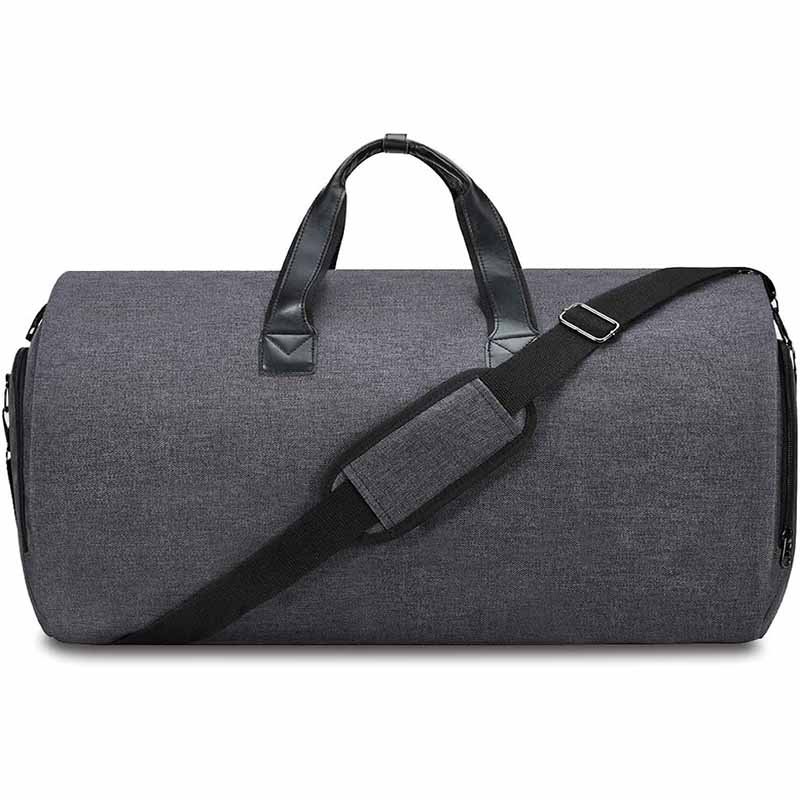
Travel often forces us into uncomfortable compromises. We want convenience, but we also want our clothes to look sharp when we arrive. For anyone traveling with suits, dresses, or formal wear, the question becomes unavoidable: should you use a garment bag or a suitcase?
At first glance, the answer feels simple. Garment bags are made for suits; suitcases are made for travel. But real-world travel is rarely that clean. Airports are crowded, airline carry-on rules are strict, and modern trips often combine business meetings, formal events, casual wear, and even gym clothes into one journey. The wrong choice can leave you wrestling with bulky luggage—or worse, pulling a wrinkled suit out of your bag minutes before an important meeting.
What complicates the decision even further is that not all garment bags or suitcases are designed the same way. Materials, internal structure, folding logic, and even stitching methods dramatically affect how well your clothes are protected. Many travelers blame the bag type, when the real problem is poor design or improper packing.
When choosing between a garment bag and a suitcase, the best option depends on your trip type, clothing, and travel style. Garment bags are ideal for keeping suits wrinkle-free during short business or formal trips, while suitcases offer better versatility and mobility for longer journeys. Understanding how each option handles suits, airport movement, and packing efficiency helps travelers make the right choice.
Imagine arriving at a wedding in another city, opening your bag, and realizing your jacket sleeves are creased beyond repair. Or picture sprinting through an airport with a long garment bag that keeps slipping off your shoulder. These experiences are common—but avoidable. Understanding the real differences between garment bags and suitcases is the key to traveling smarter, not harder.
What Is a Garment Bag
A garment bag is a travel bag specifically designed to transport suits, dresses, and formal clothing while minimizing wrinkles and fabric distortion. Unlike suitcases, garment bags keep clothing hanging or gently folded along natural seams, reducing pressure on shoulders, lapels, and hems. They are widely used for business travel, weddings, performances, and events where clothing appearance is critical.
What exactly is a garment bag and how does it work?
At its core, a garment bag is a clothing-first travel solution. Instead of forcing garments to adapt to the bag’s shape, the bag is engineered around how formal clothing naturally hangs and folds.
Most garment bags feature:
- a central hanging system (hook or loop)
- an elongated internal cavity to preserve garment length
- controlled folding points (for travel-sized versions)
- smooth linings that reduce friction between fabrics
By minimizing sharp folds and uneven pressure, garment bags help maintain the original structure of suits and dresses—especially at vulnerable areas like shoulders, lapels, waistlines, and hems.
What types of garment bags are most common today?
Modern garment bags generally fall into three main categories, each serving different travel scenarios:
- Traditional Hanging Garment Bags Long, vertical bags that allow clothing to hang almost fully extended. Best for car travel, backstage use, or hotel transfers. Not airline-friendly.
- Foldable / Carry-On Garment Bags Designed to fold in half or thirds, meeting airline carry-on size limits. These are the most popular choice for business travelers and wedding guests.
- Hybrid Garment Bags (Garment + Luggage) Combine a garment section with compartments for shoes, shirts, and accessories. Ideal for travelers who want wrinkle protection without carrying multiple bags.
From a manufacturing perspective, the difference between a good and bad garment bag lies in fold geometry, internal reinforcement, and material stiffness—not just appearance.
What clothing items does a garment bag protect best?
Garment bags are optimized for structured or drape-sensitive clothing, including:
- business suits and blazers
- tuxedos and formal jackets
- evening gowns and dresses
- uniforms and stage costumes
- coats made from wool, cashmere, or blends
These garments rely on shape and drape. Compression—common in suitcases—can permanently distort them. Garment bags reduce stress points and allow fabric fibers to relax, especially during longer journeys.
Is a garment bag better for a suit than a suitcase?
In most real-world scenarios, yes. A garment bag is generally better for suits because:
- suits are designed to hang, not fold repeatedly
- garment bags avoid shoulder collapse
- lapels and chest canvassing stay flatter
- trousers maintain crease lines instead of random folds
That said, not all garment bags perform equally. Poor-quality bags with thin fabrics, weak stitching, or uncontrolled folding can still cause creasing. This is why professional-grade garment bags focus on engineering, not just aesthetics.
What are the main limitations of garment bags?
Despite their advantages, garment bags are not perfect. Common limitations include:
- lower capacity for shoes and bulky items
- reduced mobility compared to wheeled suitcases
- airport handling challenges on full flights
- limited protection for non-clothing items
For this reason, many experienced travelers either choose hybrid designs or use a two-bag system (garment bag + suitcase) depending on trip length and clothing mix.
When does a garment bag make the most sense?
A garment bag is the smartest choice when:
- clothing appearance is non-negotiable
- travel is short (1–3 days)
- the trip revolves around formal or business events
- steaming or pressing access is limited at destination
This explains why garment bags remain essential for executives, wedding guests, performers, brand representatives, and fashion professionals—even in an era dominated by suitcases.
What Is a Suitcase
A suitcase is a structured travel bag designed to carry clothing, shoes, and personal items in a compact, organized, and highly portable form. Unlike garment bags, suitcases rely on folding and compression to maximize space efficiency. They offer superior mobility, durability, and versatility, but require proper packing techniques to prevent wrinkles in suits and formal wear.
What exactly is a suitcase and how is it designed?
A suitcase is fundamentally a space-optimized travel container. Its design philosophy prioritizes volume efficiency, protection, and ease of transport rather than garment preservation.
Key structural elements typically include:
- a rigid or semi-rigid outer shell
- internal compartments or split cavities
- compression straps or zip panels
- wheels and telescopic handles for mobility
This structure allows travelers to pack diverse items—clothes, shoes, electronics, toiletries—into a single, manageable unit. However, this same compression-focused logic is what creates challenges for suits and structured garments.
What are the main types of suitcases?
Suitcases generally fall into two major categories, each affecting how clothing behaves during travel:
- Soft-Shell Suitcases (Nylon / Polyester)
- More flexible under pressure
- Better for clothing-heavy packing
- Slightly more forgiving for suits and jackets
- Hard-Shell Suitcases (PC / ABS / Aluminum)
- Excellent impact protection
- Fixed internal volume
- Less forgiving for garments, higher crease risk
From a clothing-care perspective, soft-shell suitcases are usually more suit-friendly, while hard-shell models favor durability and security over fabric comfort.
How does a suitcase compress and organize clothing?
Suitcases depend on compression systems to keep items stable in transit. Internal straps and zippered panels prevent shifting, which is ideal for casual clothing and accessories.
However, compression concentrates pressure on garments—especially at folds. For suits, this often leads to:
- flattened shoulders
- bent lapels
- hard crease lines at unnatural angles
The effectiveness of a suitcase for formal wear therefore depends heavily on internal layout design and how garments are layered within the cavity.
Is a suitcase a good choice for packing a suit?
A suitcase can be a practical choice for packing a suit under the right conditions:
- only one suit is required
- the trip involves mixed clothing (formal + casual)
- mobility and speed matter more than perfect presentation
With correct folding techniques, garment folders, or integrated suit panels, many travelers successfully transport suits in suitcases. That said, the margin for error is smaller than with a garment bag.
What problems can a suitcase cause for suits and dresses?
The most common issues include:
- sharp creases caused by over-folding
- shoulder collapse due to vertical pressure
- fabric memory wrinkles, especially in wool or linen
- distortion from shoes or hard objects
These problems are rarely caused by the suitcase alone, but by a mismatch between bag structure, packing method, and garment type.
When does a suitcase make the most sense?
A suitcase is usually the best option when:
- the trip lasts more than 3–4 days
- multiple clothing categories are needed
- frequent airport movement is expected
- wheels and one-hand mobility are essential
For many modern travelers—especially those combining business and leisure—a well-designed suitcase offers the best overall balance, provided they understand how to pack formal clothing properly.
Why do many travelers choose suitcases despite wrinkle risks?
The answer is convenience and control. Suitcases:
- roll easily through airports
- fit predictably in overhead bins
- consolidate all items into one bag
- reduce physical strain during travel
This explains why suitcases dominate global travel—even among professionals who occasionally travel with suits. The trade-off is not ignorance of wrinkles, but a calculated compromise between appearance and practicality.
Which Keeps Clothes More Wrinkle-Free
Garment bags generally keep clothes more wrinkle-free than suitcases because they minimize folding and reduce compression on fabric. By allowing garments to hang or fold along natural seams, garment bags protect suit shoulders, lapels, and hems. However, a well-packed suitcase with proper folding techniques and garment accessories can still achieve good wrinkle control, especially for short trips.
Why do clothes wrinkle during travel in the first place?
Wrinkles are not random—they are the result of fabric stress and memory. When clothing fibers are bent, compressed, or twisted for extended periods, they adapt to that shape.
Three factors cause most travel wrinkles:
- Sharp folding angles that exceed the fabric’s recovery limit
- Uneven pressure from shoes, hardware, or overpacking
- Time under compression, especially in warm or humid conditions
Formal garments like suits are especially vulnerable because they rely on structured panels, interlinings, and natural drape. Once these elements are distorted, wrinkles become harder to remove without steaming or pressing.
How do garment bags reduce wrinkles more effectively?
Garment bags work because they respect garment geometry. Instead of forcing clothes into a box-shaped cavity, they allow garments to follow their natural hanging or draping position.
High-quality garment bags reduce wrinkles by:
- keeping shoulders supported instead of collapsed
- allowing trousers to hang with gravity-assisted crease alignment
- using smooth linings that reduce fabric friction
- limiting compression to controlled fold points only
This approach reduces both crease formation and fabric fatigue, which is why garments often arrive wearable straight out of the bag.
Why do suitcases create more wrinkles by design?
Suitcases are built around space efficiency, not garment preservation. To maximize capacity, clothes must be folded and compressed, often at unnatural angles.
Common wrinkle-causing mechanisms in suitcases include:
- pressure from compression straps
- vertical stacking of heavy items
- rigid shell walls that do not flex
- garments shifting during transit
Even when clothes appear neatly folded, internal pressure can lock wrinkles into place—especially in wool, linen, and blended fabrics.
Can packing technique overcome suitcase wrinkles?
To a large extent, yes. Packing technique can dramatically reduce wrinkles in suitcases, although it rarely matches the performance of a garment bag.
Effective strategies include:
- folding jackets along natural seams only
- using soft garments to pad shoulders and sleeves
- placing suits at the top or center of the suitcase
- avoiding direct contact with shoes or hard items
When done correctly, these techniques distribute pressure evenly and avoid sharp fold lines, improving wrinkle outcomes significantly.
Do garment folders, sleeves, and packing accessories really help?
Yes—but only when used correctly and not overstuffed.
- Garment folders with rigid panels are excellent for shirts and light jackets
- Garment sleeves reduce friction, allowing fabric to slide instead of crease
- Packing cubes help organization but can increase wrinkles if compressed
From an engineering standpoint, the best results occur when these accessories are integrated into the bag’s structure, rather than added as loose components.
How does fabric type affect wrinkle resistance?
Fabric choice plays a major role in wrinkle behavior:
- Wool: resilient, recovers well but creases under heavy compression
- Linen: highly breathable but wrinkles easily and sets creases quickly
- Polyester blends: more wrinkle-resistant but less breathable
- Silk: sensitive to pressure and moisture
This is why garment bags are especially recommended for natural fibers and structured garments, while suitcases may suffice for synthetic or casual clothing.
Which option performs better in real-world travel?
In controlled conditions, garment bags consistently outperform suitcases in wrinkle prevention. However, real-world travel introduces variables:
- long airport walks
- overhead bin pressure
- temperature changes
- handling by others
For short, formal-focused trips, garment bags provide the most reliable results. For longer or mixed-purpose trips, a well-packed suitcase offers acceptable wrinkle control with greater convenience.
The practical takeaway for travelers
If wrinkle-free appearance is critical—such as for business meetings, weddings, or performances—a garment bag is the safer choice. If convenience, mobility, and packing volume matter more, a suitcase can work, provided you pack with intention and restraint.
In other words, wrinkle control is not just about the bag type—it’s about how well the bag’s design aligns with your clothing and travel behavior.
Which Is Better for Carry-On and Airports
Suitcases are generally better for carry-on use and airport travel because they fit overhead bins more predictably, roll easily through terminals, and comply more consistently with airline size rules. Foldable garment bags can qualify as carry-ons and protect suits better, but they are harder to maneuver and store during crowded flights and busy airport transfers.
How do airline carry-on rules affect garment bags vs suitcases?
Most airlines define carry-on limits by maximum folded dimensions, not by bag type. Standard limits average around 22 × 14 × 9 inches (56 × 36 × 23 cm), including handles and wheels.
Suitcases are designed around these constraints, making compliance straightforward. Garment bags, however, only qualify if they are purpose-built foldable designs. Traditional long garment bags almost always exceed limits and must be checked.
For travelers, this means the question is not “Are garment bags allowed?” but rather “Is this garment bag engineered for carry-on use?”
Are garment bags easy to place in overhead bins?
In practice, garment bags are less predictable in overhead bins. Even compliant models may:
- require laying flat across other luggage
- need gentle bending to fit
- depend on early boarding for space
Some aircraft offer onboard closets, but access is inconsistent and often restricted to premium cabins. By contrast, carry-on suitcases are designed to stand upright or lie flat in bins with minimal negotiation.
Which option is easier to move through airports?
Mobility is where suitcases dominate. Wheeled suitcases—especially four-wheel spinners—allow travelers to move efficiently through:
- long terminal corridors
- security queues
- transfers and gate changes
Garment bags are typically shoulder-carried or hand-held, which increases fatigue. Newer designs with backpack straps or wheels reduce this gap, but they still require more active handling than a rolling suitcase.
How do security checks and boarding affect each option?
During security screening, suitcases are easier to manage because items remain contained and organized. Garment bags often need to be partially opened, increasing the risk of garments shifting or creasing.
During boarding, garment bags can draw attention if overhead space is limited, sometimes forcing travelers to gate-check or re-fold the bag. Suitcases rarely face this issue if they meet size rules.
Does flight duration or aircraft type matter?
Yes. On short-haul flights with smaller aircraft, overhead space is limited, making suitcases the safer choice. On long-haul wide-body aircraft, garment bags perform better due to larger bins and occasional closet availability.
Frequent travelers learn to match bag choice to aircraft type, not just trip purpose.
Which is better for frequent flyers and business travelers?
For travelers who fly often, predictability and efficiency matter more than perfection. This is why many professionals choose suitcases even when traveling with suits. They accept minor wrinkles in exchange for smoother airport experiences.
Others choose hybrid garment bags that fold into carry-on size and include wheels—combining suit protection with airport practicality.
The airport-centric takeaway
If your priority is speed, ease, and compliance, a suitcase is usually the better carry-on choice. If your priority is arriving with a perfectly pressed suit and you are willing to manage some inconvenience, a foldable garment bag can still work—especially for short, formal-focused trips.
In airports, the best bag is often not the one that protects clothing best in theory, but the one that works most reliably under real-world constraints.
Which Is Better for Different Trips
The better choice depends on trip purpose rather than bag type alone. Garment bags are ideal for short, formal-focused trips where clothing appearance is critical, while suitcases are better for longer or mixed-purpose travel requiring mobility and capacity. Evaluating trip length, clothing structure, and transport conditions helps travelers choose the most practical option.
Which should you use for a wedding suit or formal gown?
For weddings, galas, or black-tie events, garment bags are almost always the safer choice. These trips usually revolve around a single, high-stakes outfit where wrinkles or shape distortion are unacceptable.
Wedding suits, tuxedos, and gowns rely heavily on:
- clean lapels and shoulders
- uninterrupted fabric drape
- sharp crease lines
Garment bags allow these garments to hang or fold gently along natural seams, often making steaming unnecessary upon arrival. Many experienced travelers attending destination weddings deliberately choose garment bags—even if it means carrying a second small bag for shoes and accessories—because the cost of failure is simply too high.
Which is better for business travel with one or two suits?
For short business trips (1–3 days), a foldable carry-on garment bag is often the best balance between appearance and convenience. It allows professionals to arrive meeting-ready while still complying with airline carry-on rules.
For longer business trips or itineraries involving casual wear, a suitcase with garment-friendly packing methods may be more practical. Many business travelers accept light wrinkling in exchange for easier airport movement, especially when hotel steaming services are available.
The decision often comes down to whether presentation or efficiency is the top priority for that specific trip.
Which is better for longer trips with shoes and bulky items?
For trips longer than four or five days, suitcases usually outperform garment bags. Extended travel introduces:
- multiple shoe pairs
- casual and outerwear layers
- toiletries and accessories
These items quickly overwhelm the limited capacity of garment bags. Attempting to force everything into one garment bag often leads to excessive compression—negating its wrinkle-prevention advantage.
In these cases, carefully packing suits into a suitcase or using a two-bag system becomes the more realistic solution.
Which works best for leisure travel or mixed-purpose trips?
Leisure and mixed-purpose trips benefit most from suitcases. When formal wear is only a small part of the wardrobe, convenience and flexibility matter more than perfect wrinkle control.
Suitcases handle:
- varied clothing types
- frequent outfit changes
- unpredictable schedules
Travelers on vacations, city breaks, or combined business-leisure (“bleisure”) trips often prioritize mobility and space efficiency, making suitcases the default choice.
Which is better for road trips, trains, and cruises?
Outside of airports, garment bags regain a major advantage. Road trips, train travel, and cruises involve gentler handling, fewer size restrictions, and easier storage.
Cruise travelers, in particular, favor garment bags because:
- formal nights are common
- luggage is unpacked once and stored
- movement between destinations is minimal
In these environments, garment bags deliver excellent wrinkle control without the mobility drawbacks seen in airports.
Which option is better when you have no access to steaming or pressing?
If your destination offers limited access to garment care—such as rural locations, remote venues, or quick overnight stays—garment bags are strongly recommended.
Suitcases assume that wrinkles can be fixed later. Garment bags assume they should not happen in the first place. When post-arrival correction is uncertain, prevention becomes the smarter strategy.
How experienced travelers actually decide
Seasoned travelers rarely think in absolutes. Instead, they ask:
- How critical is clothing appearance on arrival?
- How long is the trip?
- How much walking and transferring will I do?
- Can wrinkles be fixed easily at the destination?
Their answers—not the bag category—determine the right choice.
Practical takeaway for real trips
- High-stakes, short, formal trips: Garment bag
- Long, mixed-purpose travel: Suitcase
- Non-airport travel with formal wear: Garment bag
- Efficiency-first, frequent flying: Suitcase
- No margin for wrinkles: Garment bag
Understanding trip context is what turns a good luggage choice into a smart one.
How Do You Choose the Right One
To choose between a garment bag and a suitcase, start with trip length, clothing structure, and mobility needs. Garment bags suit short, formal trips where wrinkle prevention is critical, while suitcases fit longer or mixed-purpose travel. The right choice depends less on bag type and more on how bag structure, materials, and packing habits align with your travel scenario.
Step 1: What is the primary purpose of your trip?
The first and most important question is why you are traveling, not how. Trips generally fall into three categories:
- Formal-focused (business meetings, weddings, performances)
- Mixed-purpose (business + casual, events + leisure)
- Casual or utility-focused (vacations, family visits)
If your trip centers on one or two formal outfits with little margin for error, a garment bag naturally fits the purpose. If formal wear is secondary, a suitcase offers more flexibility. Starting with purpose prevents choosing a bag that fights your actual needs.
Step 2: How many days are you traveling, and how much are you packing?
Trip length determines volume pressure, which directly affects wrinkles.
- 1–3 days: Low volume → garment bag performs best
- 3–5 days: Medium volume → hybrid solution or suitcase with garment care
- 5+ days: High volume → suitcase almost always wins
Overpacking is the enemy of wrinkle control. A bag that is too small for your load forces compression, while an oversized bag invites poor organization. Matching bag capacity to trip length is one of the simplest ways to improve results.
Step 3: How important is mobility in airports and transit?
Mobility is often underestimated until you are rushing between gates. Ask yourself:
- Will you walk long distances in airports?
- Will you handle stairs, trains, or transfers?
- Are you traveling alone or with additional luggage?
If efficiency and speed matter, wheeled suitcases reduce physical strain and mental load. Garment bags—unless wheeled or backpack-style—require more active carrying. Many frequent flyers choose convenience over perfection, accepting light wrinkles as a trade-off.
Step 4: What type of clothing are you carrying?
Not all clothes behave the same under pressure.
- Structured garments (suits, blazers, gowns): favor garment bags
- Casual or knitwear: suitcase-friendly
- Natural fibers (wool, linen, silk): wrinkle-sensitive
- Synthetic blends: more forgiving
If your wardrobe includes garments with canvassing, padding, or sharp creases, preserving structure matters more than saving space. Let your most delicate item—not your bulkiest—drive the decision.
Step 5: What materials and construction details should you look for?
Bag performance is determined by engineering, not category. Key features to evaluate include:
- controlled folding lines (for garment bags)
- smooth, low-friction linings
- reinforced stress points and seams
- dedicated shoe and accessory separation
- stable internal geometry that prevents garment shifting
A poorly designed garment bag can crease clothes as badly as a suitcase, while a well-designed suitcase can protect suits surprisingly well.
Step 6: What are the 5 biggest packing mistakes to avoid?
Even the best bag fails if packing habits are wrong. The most common mistakes are:
- Overpacking, which creates uncontrolled pressure
- Folding against natural seams, especially jacket shoulders
- Placing shoes or hard items directly on garments
- Ignoring fabric behavior, assuming all clothes wrinkle the same
- Using low-quality bags with weak structure or rough linings
Avoiding these errors often improves results more than switching bag types.
Step 7: Should you choose one bag—or combine both?
Experienced travelers often choose a two-bag strategy:
- garment bag for suits or formal wear
- suitcase for shoes, casual clothing, and accessories
This approach minimizes compromise and is common among executives, wedding travelers, performers, and brand representatives. While it adds one more item to manage, it delivers the best balance between appearance and practicality.
Step 8: How professionals and brands approach the decision
Professionals rarely ask “Which is better?” They ask:
- What problem am I solving on this trip?
- Where is my tolerance for wrinkles?
- How much inconvenience am I willing to accept?
Brands and manufacturers apply the same logic when developing travel products—designing different solutions for different use cases rather than chasing a single “perfect” bag.
Final decision framework (simple and practical)
- If appearance is critical: Garment bag
- If convenience is critical: Suitcase
- If both matter: Hybrid or two-bag system
- If travel is frequent: Prioritize predictability and mobility
- If margin for error is zero: Prevent wrinkles, don’t plan to fix them
Choosing the right bag is less about preference and more about alignment—between your trip, your clothes, and how the bag actually works in real life.
Conclusion
No two trips—and no two travelers—are exactly the same. The real question is not simply garment bag vs suitcase, but which design best fits your travel reality, clothing needs, and brand positioning.
With over 18 years of experience in bag R&D, manufacturing, and global OEM/ODM production, Szoneier helps brands, retailers, and professional buyers develop custom garment bags, suitcases, and hybrid travel solutions tailored to real-world use.
If you are planning to launch or upgrade a travel bag line—or need a reliable factory partner for custom garment bags or suitcases—contact Szoneier today to discuss your project, request samples, or receive a tailored quotation.
Your travelers’ first impression starts with how their clothes arrive. Let’s build the right bag for it.
manufacturer Categories
- Custom Tote Bags Manufacturer
- custom backpacks Manufacturer
- custom travel bags& Duffle bags manufacturer
- custom makeup bags & toiletry bags manufacturer
- custom cooler bags manufacturer
- custom drawstring bags manufacturer
- custom makeup bags & toiletry bags manufacturer
- custom golf bags manufacturer
- custom fireproof bags manufacturer
- custom dry bags manufacturer
- custom ski bags manufacturer
- custom gym & sports bags manufacturer
- custom laptop bags manufacturer
- custom tactical bags manufacturer
- custom beach bags manufacturer
- custom medical bags manufacturer
- custom camera bags manufacturer
- custom wetsuits manufacturer
- custom leather goods manufacturer
- more personalized products


Can't find the answers?
No worries, please contact us and we will answer all the questions you have during the whole process of bag customization.
Make A Sample First?
If you have your own artwork, logo design files, or just an idea,please provide details about your project requirements, including preferred fabric, color, and customization options,we’re excited to assist you in bringing your bespoke bag designs to life through our sample production process.
