 Skip to content
How to Make a Plush Pattern | Step-by-Step Factory Method
- Eric
- February 2, 2026
- 10:01 am
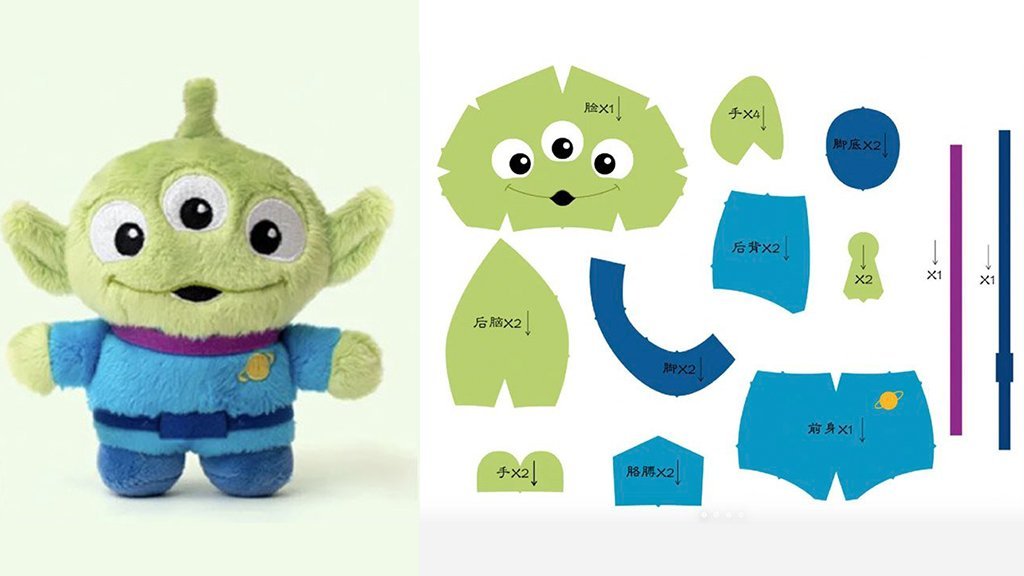
A plush toy can look “simple” until you try to reproduce it twice. The first sample might feel cute, but the second one comes out with a twisted face, uneven arms, or a body that looks longer than your drawing. That’s not a sewing problem most of the time—it’s a plush pattern problem. In plush manufacturing, the plush pattern is what keeps shape, cost, and lead time under control. If the plush pattern is not stable, you pay for it with extra sampling rounds, more fabric waste, and inconsistent mass production.
To make a plush pattern, you define the plush size and proportions, split the 3D toy into 2D pattern pieces, add seam allowances, alignment notches, and pile-direction marks, then sew a test sample and adjust until the stuffed result matches your design. A production-ready plush pattern also includes clear assembly notes so different operators can sew the same shape consistently.
At Szoneier, many custom projects succeed faster when the plush pattern is treated like a “repeatable recipe,” not an art sketch. In the next section, I’ll show what a plush pattern really contains—and what makes it reliable when you scale from 1 sample to 5,000 pieces.
What is a plush pattern?
A plush pattern is a complete set of cutting and sewing templates that control the final size, shape, symmetry, and structure of a plush toy. It defines how fabric pieces fit together, where seams sit, how stuffing fills the form, and whether the plush can be produced consistently from sample to bulk production without shape distortion.
What a plush pattern really means for customers
For many clients, a plush pattern sounds like a “technical detail.” In real projects, it becomes one of the most cost-sensitive and risk-sensitive parts of plush development.
A plush pattern answers questions clients care about, even if they don’t ask them directly:
- Why does my second sample look different from the first one?
- Why does the plush look good flat, but wrong after stuffing?
- Why does bulk production not match the approved sample?
- Why did the factory ask to revise the pattern again?
In most cases, the answer is not fabric quality or sewing skill—it’s the plush pattern.
From a factory perspective, the plush pattern is the control system behind the toy. If it’s weak or incomplete, everything downstream becomes unstable.
What exactly is included in a professional plush pattern?
A production-ready plush pattern is not just shapes on paper. It is a working tool that allows different people to make the same toy with the same result.
A complete plush pattern usually includes:
- Plush pattern pieces Head panels, body panels, limb panels, gussets, ears, tails, and any internal structure pieces.
- Seam lines and seam allowance Typically 5–8 mm depending on fabric thickness and stitch type.
- Alignment notches and match points These ensure that curved seams join correctly and don’t twist.
- Center reference lines Especially important for faces, bellies, and symmetrical bodies.
- Pile direction marks Essential for minky and faux fur to keep color and texture consistent.
- Stuffing and turning openings Planned locations that reduce visible hand stitching and lumping.
- Assembly notes Order of sewing, reinforcement points, and insertion positions.
Here’s how this affects real production:
| Pattern detail missing | What happens in reality |
|---|---|
| No pile direction | Parts look darker or messy |
| No match points | Seams twist after stuffing |
| No centerline | Face looks off-center |
| No opening plan | Closure becomes visible |
| No assembly notes | Operators improvise |
Clients usually feel these problems as “quality inconsistency”, even though the root cause is the pattern.
How a plush pattern controls shape and size
A plush toy is a 3D object, but the pattern is 2D. The job of a plush pattern is to convert volume into flat pieces that behave correctly once sewn and stuffed.
This conversion controls:
- Volume distribution – where the plush feels full or soft
- Balance – whether the plush leans, sits, or stands correctly
- Proportion – how big the head feels compared to the body
- Compression recovery – how the plush looks after packing
For example:
- A head gusset that is 2 mm too narrow can make the face look tight.
- Limb panels that are not balanced left/right cause angle differences.
- Body panels that ignore fabric stretch result in thinner plush after stuffing.
These are not “small” errors. At scale, they become visible defects.
Why a plush pattern matters more than drawings or renders
Clients often start with drawings, 3D renders, or reference photos. These are useful—but they do not guarantee a good plush result.
The plush pattern is what translates visual ideas into something that can be sewn repeatedly.
Here is a realistic comparison:
| Development stage | What it controls | What it cannot control |
|---|---|---|
| Drawing / render | Style, mood, proportions | Fabric behavior, seams |
| Sample sewing | First impression | Repeatability |
| Plush pattern | Shape, size, consistency | Creative styling |
In many projects, clients approve a sample visually, but bulk production still fails because the pattern was never stabilized.
How a plush pattern affects cost and lead time
From a business point of view, the plush pattern directly affects:
- Sampling rounds Clear patterns usually reduce revisions.
- Fabric waste Poor patterns increase cutting loss.
- Labor efficiency Clean patterns sew faster and more consistently.
- Reorder stability Locked patterns ensure future orders match.
Based on factory experience, a well-developed plush pattern can:
- Reduce sample revisions by 30–50%
- Lower sewing error rates during bulk
- Improve consistency across different production batches
For clients, this usually means faster launch and fewer surprises.
How factories judge whether a plush pattern is “good”
Factories don’t judge patterns by how they look on paper. They judge them by performance.
A plush pattern is considered reliable when:
- Two operators can sew the same plush with the same result
- The plush keeps its shape after stuffing and handling
- Size stays within acceptable tolerance
- Face and limbs remain symmetrical
- The pattern works with the chosen fabric, not against it
Here’s a simplified internal check:
| Check item | Acceptable result |
|---|---|
| Face symmetry | Visually balanced |
| Limb position | Same angle left/right |
| Seam behavior | Flat, no pulling |
| Size tolerance | Stable across samples |
| Stuffing result | No dents or lumps |
If these pass, the pattern can move forward. If not, revision is needed—before bulk production.
Why many plush problems start with the pattern
When clients experience issues like:
- “The plush doesn’t look like the approved sample”
- “The face looks different in bulk”
- “The body shape feels wrong”
- “We need another sample again”
In most cases, the root cause is not the sewing line—it’s the plush pattern design.
This is why professional plush factories treat pattern development as a core skill, not an afterthought.
What tools are needed for a plush pattern?
To make a reliable plush pattern, you need accurate drafting tools, stable measuring tools, and fabric-aware reference materials. These tools control symmetry, seam accuracy, and size consistency. Using the right tools reduces sampling rounds, prevents shape distortion after stuffing, and ensures the plush pattern can be repeated consistently in production.
Tools used to draw and control a plush pattern
These tools shape the pattern itself. They decide whether curves are smooth, parts are symmetrical, and pieces can be traced repeatedly without distortion.
Common drafting tools used in professional plush development include:
- Pattern paper or cardboard templates Thick paper or card stock keeps edges stable when patterns are traced multiple times. Thin paper bends easily and causes small shape errors that multiply in bulk cutting.
- Straight rulers (metal preferred) Used for centerlines, symmetry checks, and alignment references. Plastic rulers flex and introduce small deviations.
- Curved rulers / French curves Essential for heads, cheeks, bellies, and gussets. Freehand curves often look fine flat but create wrinkles after stuffing.
- Compasses or radius tools Help repeat consistent curves on mirrored parts like ears or cheeks.
- Fine-tip pencils or technical pens Thick markers hide 1–2 mm errors, which is significant in plush patterns.
Client reality: many “shape problems” are not design mistakes—they come from tools that cannot hold precision.
Measuring tools that affect size and symmetry
Plush patterns live or die by measurement accuracy. A few millimeters may not sound like much, but after sewing and stuffing, it becomes visible.
Key measuring tools include:
- Steel rulers and tape measures Used to verify finished dimensions and seam lengths.
- Calipers (for advanced control) Useful when checking repeated gusset widths or seam consistency.
- Pattern weights or pins Prevent shifting when tracing patterns onto plush fabrics with pile.
Here’s why measuring tools matter:
| Measurement error | Result after stuffing |
|---|---|
| 1–2 mm on head panel | face looks uneven |
| 2–3 mm on gusset | tight or wrinkled face |
| Limb length mismatch | arms sit at different angles |
Customer insight: if a factory cannot explain how it controls measurements, consistency is usually luck-based.
Tools related to fabric behavior
A plush pattern does not exist independently—it must work with fabric. Some tools are used specifically to understand how fabric will behave once cut and sewn.
Important fabric-related tools include:
- Fabric swatches with known stretch behavior Used to test how the same pattern behaves in different materials.
- Pile brushes or combs Help evaluate how long-pile fabrics hide or expose seams.
- Temporary marking tools (chalk, removable pens) Allow marking pile direction, match points, and openings without damaging fabric.
Different fabrics respond differently to the same pattern:
| Fabric | Pattern risk without testing |
|---|---|
| Minky | shape grows after stuffing |
| Faux fur | seams hidden but volume exaggerated |
| Fleece | body becomes thinner |
| Velboa | every seam shows |
Tools used during test sewing and evaluation
Pattern tools are not only for drafting. They are also used during testing and evaluation.
Common tools during test samples:
- Clips or temporary stitches Allow quick adjustment without full resewing.
- Scale or stuffing weight reference Controls volume consistency during tests.
- Mirror or symmetry board Used to visually check left/right balance.
- Simple measurement guides Used to confirm finished size matches target range.
These tools help answer practical questions clients ask:
- Does the plush keep its shape after squeezing?
- Do both sides look the same?
- Is the size acceptable for packaging and shipping?
What happens when the wrong tools are used
Using the wrong tools does not always cause immediate failure. Often, problems appear only after time and money are already spent.
Common outcomes include:
- Extra sample revisions
- Inconsistent size between batches
- Visible asymmetry in faces or limbs
- Higher rejection rates during QC
- Difficulty reproducing the same plush months later
Here is a simple comparison clients often experience:
| Tool quality | Result |
|---|---|
| Basic / improvised tools | unpredictable results |
| Stable drafting + measuring tools | repeatable patterns |
| Fabric-aware testing tools | fewer surprises |
What clients should ask their plush factory about tools
If you are working with a plush manufacturer, these questions reveal a lot about their process:
- How do you ensure left and right parts are symmetrical?
- How do you control seam allowance consistency?
- How do you adjust patterns for different fabrics?
- How do you test pattern stability before bulk?
Factories that have clear answers usually rely on tools + process, not just experience.
How do you design a plush pattern shape?
Designing a plush pattern shape means defining the finished size and proportions first, then breaking the 3D form into balanced 2D pieces that work with fabric stretch, stuffing behavior, and seam tension. A good plush pattern shape looks correct after stuffing, keeps symmetry, and remains stable when produced repeatedly.
Why plush pattern shape is where most projects struggle
Many plush projects fail not because the idea is wrong, but because the shape logic was never clearly defined.
Clients often say:
- “The plush looks okay, but something feels off.”
- “The face looks different every time.”
- “The body shape changed after bulk production.”
These are almost always shape-design issues, not sewing issues.
A plush pattern shape decides:
- How volume is distributed
- Where fabric stretches or collapses
- How stuffing pushes against seams
- Whether the plush feels balanced in the hand
If the shape logic is weak, no fabric upgrade or embroidery fix will solve it.
How factories start designing a plush pattern shape
Before any line is drawn, professional factories define shape targets. Without these, pattern design becomes guesswork.
Key shape decisions made first:
- Finished height (not flat length)
- Body depth (front-to-back thickness)
- Head-to-body ratio
- Limb length and attachment angle
- Standing, sitting, or lying posture
Here is a simplified internal reference many factories use:
| Plush size range | Typical use | Shape priority |
|---|---|---|
| 15–20 cm | promotional / keychain | simplicity, low seam count |
| 25–35 cm | retail plush | balanced proportions |
| 40–60 cm | display / gift | structure and volume control |
Client reality: a plush that looks fine at 20 cm can look awkward at 40 cm if the pattern shape is simply scaled up.
How proportions change the feel of a plush
Proportion choices define emotion and market positioning. Small changes in pattern ratios have big visual impact.
Common proportion approaches:
Large head, small body
- Cute, friendly
- Requires strong neck structure in pattern
Long body, short limbs
- Relaxed, soft feel
- Needs careful stuffing control to avoid collapse
Balanced head and body
- More realistic
- Demands higher symmetry accuracy
From a pattern perspective, proportions affect:
- Seam tension around curves
- Stuffing density zones
- Where wrinkles or dents appear
Factory experience: many “not cute enough” comments trace back to proportion choices, not fabric or embroidery.
Breaking a 3D plush shape into 2D pattern pieces
This is the core technical step. A plush toy is round and soft, but the pattern is flat.
To convert 3D shape into 2D pieces, pattern makers focus on:
- Where volume is needed (head center, belly, hips)
- Where seams can hide naturally (back, under arms, inside legs)
- Where symmetry must be controlled (face, front body)
For example:
- A round head often uses multiple panels or a center gusset.
- A flat face panel without enough curvature usually looks tight after stuffing.
- Over-segmenting the body increases seam count and cost without improving shape.
| Shape goal | Pattern approach |
|---|---|
| Round head | multi-panel or gusset |
| Soft body | wider side panels |
| Stable sitting | flat bottom + depth |
| Clean face | controlled front panel |
How fabric behavior affects plush pattern shape
Fabric changes shape more than most clients expect. A plush pattern that works on paper can fail once fabric and stuffing interact.
Typical fabric effects:
| Fabric type | Shape behavior |
|---|---|
| Minky | stretches, grows volume |
| Faux fur | hides seams, exaggerates roundness |
| Fleece | pulls inward, looks thinner |
| Velboa | shows every curve and imbalance |
Because of this, factories often adjust shape design by:
- Reducing curvature for stretchy fabrics
- Adding volume for fabrics that collapse
- Changing gusset width for thick pile
- Adjusting seam positions to hide distortion
Planning stuffing zones during shape design
Stuffing is not uniform. A plush pattern must guide where stuffing sits naturally.
During shape design, factories plan:
- High-density zones (head, hips, sitting base)
- Low-density zones (arms, ears, tails)
- Transition areas (neck, shoulder joints)
If this is ignored, common problems appear:
- Hard heads with soft bodies
- Lumpy transitions
- Plush that cannot sit or balance
Pattern shapes that work with stuffing feel “natural” without forcing volume.
How posture changes plush pattern shape
Posture is often overlooked but critical.
Different postures require different shape logic:
| Plush posture | Pattern requirement |
|---|---|
| Standing | balanced leg angles |
| Sitting | flat base + center of gravity |
| Lying | extended body panels |
A sitting plush, for example, often needs:
- A wider bottom panel
- Slightly angled leg attachment
- Extra volume at hips
How factories check if a plush pattern shape is correct
Factories don’t rely on feeling alone. They use repeatable checks.
A plush pattern shape is considered workable when:
- The plush looks balanced from front, side, and back
- Left and right sides match visually
- The plush holds shape after squeezing
- Size stays within acceptable tolerance
- The posture matches the intended use
| Check | Acceptable result |
|---|---|
| Face view | symmetrical |
| Side view | no leaning |
| Back view | seams straight |
| Compression test | shape recovers |
| Size check | within target |
If these fail, shape revision is required—before moving forward.
Why plush pattern shape must be finalized early
Late shape changes are expensive.
If shape is adjusted after:
- embroidery is placed
- accessories are added
- packaging is designed
Costs increase and timelines slip.
This is why professional factories focus heavily on shape design early, before locking details.
What clients should clarify before approving a plush shape
Before approving a sample, clients should confirm:
- Does this shape still look right at the final size?
- Does it match the intended fabric?
- Is the posture correct for use?
- Does it feel balanced when held?
- Can this shape be repeated?
Factories that guide clients through these questions usually deliver more stable results.
How do you draft a plush pattern correctly?
Drafting a plush pattern correctly means translating the intended 3D shape into accurate 2D pieces with consistent seam allowances, clear alignment marks, and fabric-aware curves. A correct draft allows different operators to sew the same plush with the same result, keeps size within tolerance after stuffing, and prevents twisting, wrinkling, or shape drift in production.
How factories approach drafting before drawing anything
Before drawing lines, experienced pattern makers clarify three drafting controls:
- Which pieces must be perfectly symmetrical (faces, front bodies, bellies)
- Which pieces can absorb tolerance (backs, inner legs, underarms)
- Where seam tension will concentrate after stuffing (neck, cheeks, hips)
This thinking prevents over-correcting the wrong areas later.
How do you draw seam lines correctly?
Seam lines come before seam allowance. Many early mistakes happen when allowance is added too early.
Factory drafting logic:
- Draw the true seam line first This represents the real shape after sewing.
- Build curves gradually Sharp changes almost always wrinkle after stuffing.
- Mirror from one master side Never redraw left and right separately.
- Control length, not just shape Two curves that look similar but differ in length will twist when sewn.
Common drafting mistake: Matching shapes visually instead of matching seam length.
| Drafting issue | Sewing result |
|---|---|
| Unequal seam length | twisting |
| Over-tight curves | wrinkles |
| Flat curves on round areas | tight, “pulled” look |
How do you add seam allowance correctly?
Seam allowance controls size, strength, and consistency. It must match both fabric and production reality.
Typical seam allowance ranges in plush manufacturing:
| Fabric type | Common allowance |
|---|---|
| Thin velboa | 4–5 mm |
| Standard minky | 5–7 mm |
| Thick faux fur | 7–8 mm |
Drafting rules factories follow:
- Add allowance after seam lines are finalized
- Keep allowance consistent on connected seams
- Avoid mixing wide and narrow allowances on the same joint
- Mark allowance clearly on master patterns
How do you mark alignment points correctly?
Marks are what make a plush pattern usable by someone who didn’t design it.
Essential marks include:
- Notches – align curved seams
- Match points – control length differences
- Center marks – facial and body symmetry
- Insertion marks – limbs, ears, tails
- Opening marks – turning and stuffing points
Without these marks, operators rely on experience—and experience varies.
| Missing mark | Result |
|---|---|
| No face center | eyes drift |
| No limb mark | angle mismatch |
| No gusset mark | twisted head |
| No opening mark | visible closure |
How do you control symmetry during drafting?
Symmetry is critical for faces and front bodies.
Factories control symmetry by:
- Drafting only half the piece, then mirroring
- Measuring seam length, not just outline shape
- Checking distance from centerline at multiple points
- Locking one master pattern before copying
Even a 1–2 mm difference can become visible after stuffing.
| Symmetry error | Visual effect |
|---|---|
| 1 mm on face | slight eye imbalance |
| 2 mm on limb | arm height difference |
| 3 mm on body | leaning posture |
How do you draft gussets and multi-panel parts?
Gussets are often where plush patterns fail.
A gusset controls:
- Roundness
- Depth
- Tension distribution
Drafting gusset rules:
- Gusset length must match the combined seam it attaches to
- Width controls volume, not height
- Ends must taper smoothly to avoid hard points
| Gusset issue | Result |
|---|---|
| Too narrow | tight, wrinkled face |
| Too wide | over-round shape |
| Sharp ends | dents after stuffing |
Factories often adjust gussets in 1–3 mm steps, not large jumps.
How do you draft openings for turning and stuffing?
Openings must be planned, not added later.
Drafting considerations:
- Opening placed where seam stress is low
- Length long enough for stuffing, short enough to hide
- Avoid curved high-tension areas
Common opening locations:
| Location | Use case |
|---|---|
| Back seam | character plush |
| Bottom | sitting plush |
| Side seam | simple shapes |
Poorly drafted openings cause:
- Lumpy stuffing
- Weak seams
- Visible hand stitches
How factories check if drafting is correct before sewing
Before sewing, pattern makers do quick checks:
- Seam length comparison
- Left/right overlay
- Allowance consistency check
- Mark clarity review
These checks often prevent full resampling.
| Check | Pass signal |
|---|---|
| Seam length | matches |
| Overlay | edges align |
| Allowance | consistent |
| Marks | clear and readable |
Why correct drafting reduces revisions and cost
When drafting is done correctly:
- Fewer sample rounds are needed
- Sewing results are more predictable
- Bulk production matches samples better
- Reorders are easier and safer
From real factory experience, clean drafting can reduce pattern-related revisions by 30–40%.
For clients, this usually means:
- Faster approvals
- Lower development cost
- Less frustration
How do you test and improve a plush pattern?
Testing and improving a plush pattern means sewing real samples with the intended fabric, fully stuffing them, checking shape, symmetry, and size stability, then adjusting the pattern until results are repeatable. A pattern is improved through controlled changes—usually small millimeter-level adjustments—until it performs consistently from sample to production.
How factories test a plush pattern step by step
Professional testing is done in stages, not all at once. Each stage reveals different pattern issues.
Step 1: First sewing test
- Sew the plush following the drafted pattern and marks
- No corrections during sewing
- Purpose: check basic assembly logic
Step 2: Full stuffing test
- Stuff to the target weight or firmness
- Close opening using the planned method
- Purpose: reveal tension, wrinkles, and imbalance
Step 3: Visual symmetry check
- Front, side, and back views
- Compare left and right sides
- Purpose: catch subtle pattern imbalance
Step 4: Handling and compression test
- Squeeze, press, and release
- Check recovery after 5–10 minutes
- Purpose: test shape memory
Step 5: Rest test
- Leave the plush untouched for several hours
- Recheck shape and seams
- Purpose: detect slow deformation
Clients usually only see the final photo. Factories see what happened before it looked “acceptable.”
What measurements are checked during testing
Testing is not only visual. Measurements confirm whether the plush pattern behaves as intended.
Common measurement checks:
| Check item | Typical tolerance |
|---|---|
| Finished height | ±5–10 mm (depends on size) |
| Head width | within defined range |
| Limb length | left/right match |
| Gusset width | consistent across samples |
| Stuffing weight | within target range |
If these drift between samples, the pattern—not the sewing—is usually the cause.
Common failure signals during plush pattern testing
Most pattern problems appear in repeatable ways. Recognizing them early saves time.
| Visible issue | Likely pattern cause |
|---|---|
| Wrinkles near curves | curve too tight or uneven |
| Tight face | gusset too narrow |
| One arm higher | unmatched seam length |
| Leaning body | imbalance in side panels |
| Lumpy surface | poor opening placement or volume control |
How factories improve a plush pattern
Pattern improvement is about small, controlled changes, not redesigning everything.
Typical adjustment methods:
- Curve smoothing Softens seam flow to reduce wrinkles.
- Millimeter-level width changes Gussets or panels adjusted by 1–3 mm.
- Seam length balancing Ensures both sides sew evenly.
- Allowance tuning Adjusted for fabric thickness or stretch.
- Mark refinement Adds or repositions match points.
Large changes often create new problems. Experienced factories move in small steps and retest.
Why multiple samples are normal
Clients often ask, “Why do we need another sample?” The answer depends on what changed.
Typical sample progression:
| Sample stage | Purpose |
|---|---|
| First sample | shape logic check |
| Revised sample | pattern correction |
| Pre-production sample | stability verification |
In many projects, 2–3 samples are normal when the pattern is developed properly. More than that often indicates unclear shape targets or fabric changes mid-process.
How factories decide a plush pattern is ready for production
A plush pattern is considered production-ready only when it meets all of the following:
- Shape stays stable after stuffing and handling
- Left/right symmetry is visually consistent
- Finished size stays within tolerance
- Different operators achieve similar results
- Fabric behavior is fully accounted for
Factories often “lock” the pattern at this stage.
| Stage | Pattern status |
|---|---|
| Initial sample | flexible |
| Revised sample | controlled |
| Pre-production | nearly locked |
| Mass production | locked |
Once locked, further changes should be minimal.
What “locking a plush pattern” really means for clients
When a plush pattern is locked:
- Bulk production matches the approved sample
- Reorders are easier and safer
- Cost becomes predictable
- Quality complaints decrease
For clients, this is the moment where a plush project becomes scalable, not experimental.
What clients should confirm before approving a pattern
Before saying “yes” to bulk production, clients should confirm:
- Does this plush still look right after handling?
- Does the size fit packaging and shipping needs?
- Is the shape consistent across samples?
- Can this pattern be reused for future orders?
If these answers are clear, the risk level drops significantly.
Work with Szoneier on Your Plush Pattern
If you are developing a new plush toy, refining an existing design, or struggling with repeated sample revisions, the plush pattern is usually the key.
At Szoneier, we don’t just sew plush toys—we develop production-ready plush patterns based on:
- Real fabric behavior
- Clear assembly logic
- Stable mass-production results
You can start with:
- A drawing or reference image
- A physical sample
- Or just an idea and target size
Our team can help you design, correct, and test a plush pattern, then move smoothly from sample to bulk production.
Contact Szoneier to discuss your custom plush toy project and request a quotation.
manufacturer Categories
- Custom Tote Bags Manufacturer
- custom backpacks Manufacturer
- custom travel bags& Duffle bags manufacturer
- custom makeup bags & toiletry bags manufacturer
- custom cooler bags manufacturer
- custom drawstring bags manufacturer
- custom makeup bags & toiletry bags manufacturer
- custom golf bags manufacturer
- custom fireproof bags manufacturer
- custom dry bags manufacturer
- custom ski bags manufacturer
- custom gym & sports bags manufacturer
- custom laptop bags manufacturer
- custom tactical bags manufacturer
- custom beach bags manufacturer
- custom medical bags manufacturer
- custom camera bags manufacturer
- custom wetsuits manufacturer
- custom leather goods manufacturer
- more personalized products
Can't find the answers?
No worries, please contact us and we will answer all the questions you have during the whole process of plush customization.
Make A Sample First?
If you have your own artwork, logo design files, or just an idea,please provide details about your project requirements, including preferred fabric, color, and customization options,we’re excited to assist you in bringing your bespoke plush toy designs to life through our sample production process.
