Skip to content
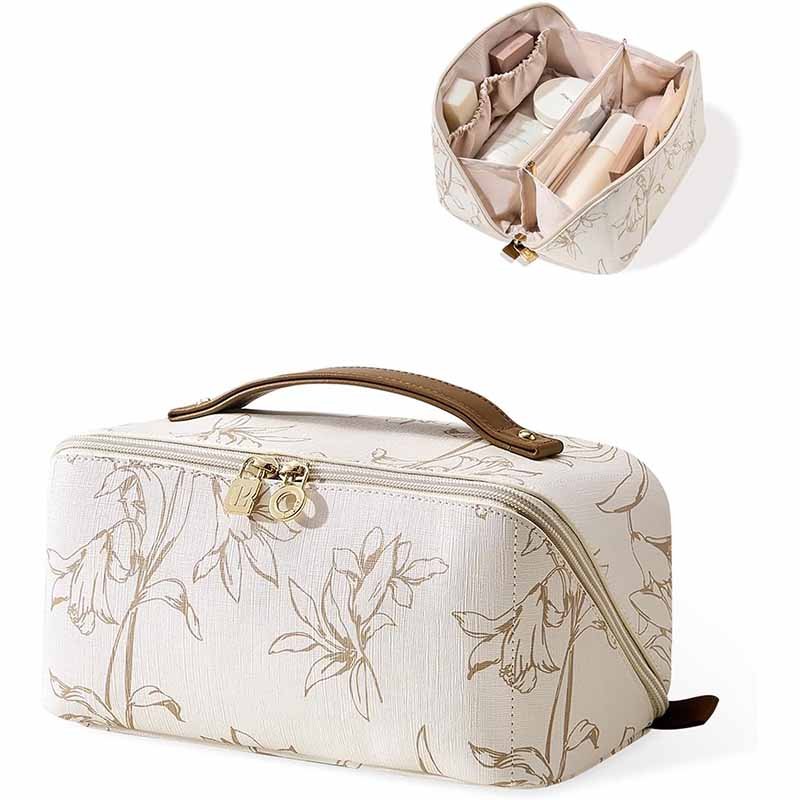
In premium cosmetics, customers rarely separate the product from its accessories. The feel of a zipper, the smoothness of a lining, and even the absence of chemical odor inside a makeup bag quietly shape how a brand is judged. Many beauty companies discover that the real difference between a reliable cosmetic accessory and a disappointing one is not design—it is material sourcing strength inside the factory. When sourcing is unstable, colors drift between batches, linings peel after contact with oils, and delivery dates slip because one small component is missing.
Choosing a makeup bags factory with strong material sourcing means selecting a manufacturer that controls fabric grades, lining chemistry, zipper quality, and supplier consistency—ensuring that every cosmetic bag matches approved samples, performs under real cosmetic use, and can be reproduced reliably as your brand scales.
This level of sourcing discipline protects both customer experience and long-term profit by preventing hidden defects, sudden cost changes, and supply interruptions.
Across global beauty accessory launches, brands that secure stable material sourcing early typically reduce defect complaints by 20–40% and shorten reorder cycles by several weeks. Yet many startups focus first on price instead of sourcing control—only realizing the risk after inconsistent bulk production appears. The question is not whether materials matter. It is how to recognize a factory that truly manages them well.
What Is Strong Material Sourcing in a Makeup Bags Factory?
Strong material sourcing in a makeup bags factory means the factory can consistently obtain the same-grade PU/fabric, lining, zippers, and trims with documented specifications, stable color batches, and predictable delivery. It includes incoming material inspection, batch tracking, and performance checks against cosmetic oils, alcohol wipes, humidity, and abrasion. Strong sourcing reduces defects, avoids “quiet” material downgrades, and improves on-time production.
What “strong sourcing” looks like in everyday production
When people say “strong sourcing,” they often mean “the factory knows suppliers.”
For premium cosmetic bags, strong sourcing is more practical and measurable. It means the factory can answer questions like:
- What is the PU thickness and surface finish?
- What lining is used and is it wipe-clean?
- What zipper type is used and what is its expected life?
- If we reorder in 90 days, will color and texture match?
- If one supplier is out of stock, what is the approved backup material?
If the factory can’t answer these clearly, you’re depending on luck.
What materials are used in makeup bags?
Makeup bags are multi-component products. Most failures come from one “small” component that wasn’t controlled.
| Bag area | Common material choices | What customers notice |
|---|---|---|
| Outer body | PU leather, nylon, RPET, canvas | look, hand-feel, scratch marks |
| Lining | polyester, PEVA, TPU-coated fabric | wipe-clean, stains, peeling |
| Zipper | nylon coil, metal, waterproof zipper | smooth pull, durability |
| Puller/hardware | plated metal, rubber, custom puller | premium feel, corrosion |
| Structure | foam padding, stiffener board | shape, protection |
| Branding | print, emboss, embroidery, label | sharpness, durability |
Brand reality: the exterior sells the bag, but the lining and zipper decide whether customers love it after 2–3 weeks.
Why does material sourcing matter for makeup bags?
Strong sourcing affects three key outcomes that premium cosmetic brands care about:
Consistent look across a collection
If your gift set includes multiple bags or multiple colors, inconsistent PU gloss or shade mismatch makes the whole line look cheap.
Real durability after contact with cosmetics
Makeup bags face oily products, pigments, and alcohol cleaning. Low-grade PU and weak lining laminations fail quickly.
On-time launch
A missing zipper batch or delayed lining delivery can push production back by 2–3 weeks, which can ruin seasonal launches.
A simple way to see the value:
| Sourcing strength | What happens in bulk | What happens in reorders |
|---|---|---|
| Weak sourcing | more delays + quality drift | “not the same as last time” |
| Strong sourcing | stable schedule + stable specs | repeatable, scalable line |
What sourcing risks affect a makeup bags factory?
These are the most common sourcing problems premium cosmetic brands run into:
- Unapproved material swaps: “same color, different PU grade”
- Color drift: black looks more brownish in the next lot
- Odor issues: PU not fully cured; bag smells when opened
- Lining delamination: wipe-clean layer peels at folds/corners
- Zipper inconsistency: slider from a different batch feels rough
- Hardware discoloration: plating changes, rust-like marks appear
If you’ve ever seen a factory claim “same material” while the hand-feel changes, that’s sourcing control failure.
Which Proof Shows a Makeup Bags Factory Has Strong Sourcing?
A makeup bags factory proves strong sourcing by showing measurable material specifications, supplier traceability, batch records, and compliance documents (when needed). Reliable factories provide a material spec sheet (composition, thickness/GSM, coating type), identify zipper/hardware grades, and keep records that link every production order to a specific material batch. This proof protects your brand from quality drift and unapproved substitutions.
The minimum “proof package” you should request
Premium brands don’t need complicated paperwork—they need the right paperwork.
Ask for these items (even for low MOQ):
- Material specification sheet (outer, lining, zipper)
- Color reference (Pantone or physical swatch)
- Batch consistency plan (how they keep the same look next time)
- Incoming inspection checkpoints (what they measure before production)
- Approved backup option (if stock is unavailable)
If the factory can’t provide these, your sample is not a stable reference.
Which material specs should a makeup bags factory provide?
Here are the specs that matter in real production. They are short, clear, and avoid “marketing words.”
| Component | Spec you should request | Example of what “good” looks like |
|---|---|---|
| PU outer | thickness (mm), surface finish, peel resistance note | 0.6–1.2 mm PU with stable topcoat |
| Woven fabric outer | GSM or denier, weave type | 300–600D or 200–400 gsm |
| Lining | material + coating type | polyester + TPU/PEVA wipe-clean |
| Zipper | type + size + supplier model | nylon coil #5/#8, smooth slider |
| Puller | plating type or finish | stable plating, no discoloration |
| Padding | thickness + density | keeps shape without bulk |
What certificates support makeup bag materials?
Not every project needs certificates, but premium brands often need them for:
- recycled claims (RPET)
- restricted substance control for coatings/dyes
- retailer or marketplace compliance
- brand “clean beauty” positioning
A practical approach:
| Brand situation | What sourcing proof helps most |
|---|---|
| eco story (RPET) | recycled content declaration + traceability |
| travel kits | wipe-clean lining spec + odor control proof |
| premium gifting | hardware plating quality confirmation |
| retail chain | restricted substances compliance support |
Certificates matter because they reduce risk when you scale into bigger channels.
How does a makeup bags factory keep batch consistency?
Consistency is usually controlled through four habits:
- Keep a physical master swatch (outer + lining + zipper tape)
- Record the supplier and batch number for every material
- Approve color under standard lighting (not only factory light)
- Retain a sealed reference sample from bulk production
Here’s a simple consistency record that good factories keep internally:
| Record item | Why it matters |
|---|---|
| supplier name + material code | prevents “similar but not same” |
| batch/lot number | links bulk to a material run |
| date received | helps track aging/curing |
| inspection result | catches defects before sewing |
| reference sample ID | solves disputes on reorders |
For premium cosmetic brands, the goal is simple: your next order should look like it belongs to the same collection—without you needing to fight for it.
How Do You Test Makeup Bags Materials Before Production?
Before bulk production, makeup bag materials should be tested for peel strength, abrasion resistance, color stability, wipe-clean performance, zipper durability, and odor safety. These checks confirm that PU, fabric, lining, and hardware can survive real cosmetic use such as oil contact, alcohol wiping, friction inside handbags, and repeated opening. Reliable factories complete these tests during sampling to prevent hidden defects in bulk orders.
Why pre-production material testing matters more than visual samples
A cosmetic bag sample can look perfect under studio lighting yet still fail after two weeks of real use.
Premium beauty brands often face complaints that never appeared during sampling, such as:
- PU surface cracking after friction with nails or keys
- lining peeling when wiped with alcohol pads
- zipper teeth separating after repeated opening
- strong chemical odor trapped in sealed packaging
These failures usually come from untested materials, not sewing mistakes.
That is why experienced factories treat sampling as a performance verification stage, not just a design preview.
A practical comparison:
| Sampling approach | Result in bulk production |
|---|---|
| Visual approval only | High risk of returns and complaints |
| Performance-tested approval | Stable quality and fewer defects |
Testing early is far cheaper than replacing defective inventory after launch.
What tests check PU and fabric strength in makeup bags?
Outer materials must survive daily friction, folding, and cosmetic contact.
The most useful tests are simple mechanical and chemical simulations.
1. Peel and surface durability test
| Test method | What it reveals | Premium expectation |
|---|---|---|
| Adhesive tape pull on PU surface | coating stability | no peeling or color lift |
| Repeated folding at corner | crack resistance | no visible cracking after 50+ folds |
| Fingernail scratch rub | surface hardness | only light mark, no coating break |
Low-grade PU usually fails these checks within minutes.
2. Abrasion resistance simulation
| Test | Real-world scenario | Premium result |
|---|---|---|
| Fabric rub against rough cloth | friction inside handbag | minimal color fade |
| Corner friction on table edge | travel wear | no exposed base layer |
| Repeated compression | luggage pressure | shape recovery without wrinkles |
Premium cosmetic bags typically maintain appearance after hundreds of friction cycles.
3. Color stability and transfer test
| Method | Purpose | Acceptable result |
|---|---|---|
| Dry white cloth rubbing | dye transfer risk | no visible color stain |
| Damp cloth rubbing | sweat or humidity effect | extremely light or none |
| Sunlight exposure | fading resistance | stable color tone |
Color transfer is one of the fastest ways to generate negative customer reviews, especially for light-colored handbags.
How do lining tests ensure makeup bags durability?
The lining experiences the most chemical stress because cosmetics leak, smear, and get wiped away.
Testing must simulate real contamination and cleaning.
1. Wipe-clean chemical resistance test
| Test liquid | Why it matters | Premium lining behavior |
|---|---|---|
| Liquid foundation | pigment + oil mix | wipes clean without stain |
| Alcohol pad | disinfecting reality | no peeling or discoloration |
| Lotion or cream | oil absorption risk | no dark oil shadow |
| Micellar water | daily cleansing | no bubbling or delamination |
TPU-laminated or PEVA-coated linings usually perform best.
2. Seam and bonding durability test
| Test | Failure sign | Premium expectation |
|---|---|---|
| Pull at lining seam | tearing or separation | seam remains intact |
| Repeated turning inside-out | coating crack | smooth surface maintained |
| Humidity exposure | bubbling | lining stays flat |
Poor lamination often fails after just a few alcohol wipes, which customers notice immediately.
Which zipper tests protect makeup bags quality?
Zippers are the most frequently used moving part of a cosmetic bag.
Even premium materials cannot compensate for weak zipper performance.
1. Zipper cycle life test
| Cycles performed | What it predicts | Premium target |
|---|---|---|
| 1,000 cycles | short-term use | should pass easily |
| 5,000 cycles | daily use for months | no tooth separation |
| 8,000–10,000 cycles | long-term reliability | smooth movement maintained |
Premium cosmetic accessories generally require at least 5,000 smooth cycles.
2. Stress and alignment test
| Test | Risk checked | Premium result |
|---|---|---|
| Pulling zipper at angle | misalignment | slider remains smooth |
| Force at zipper end | seam tearing | reinforcement holds |
| Overfilled bag closing | tooth strength | zipper closes fully |
Many zipper failures occur at the final 1–2 cm, making end reinforcement essential.
How to stop “cheap swap” materials before bulk production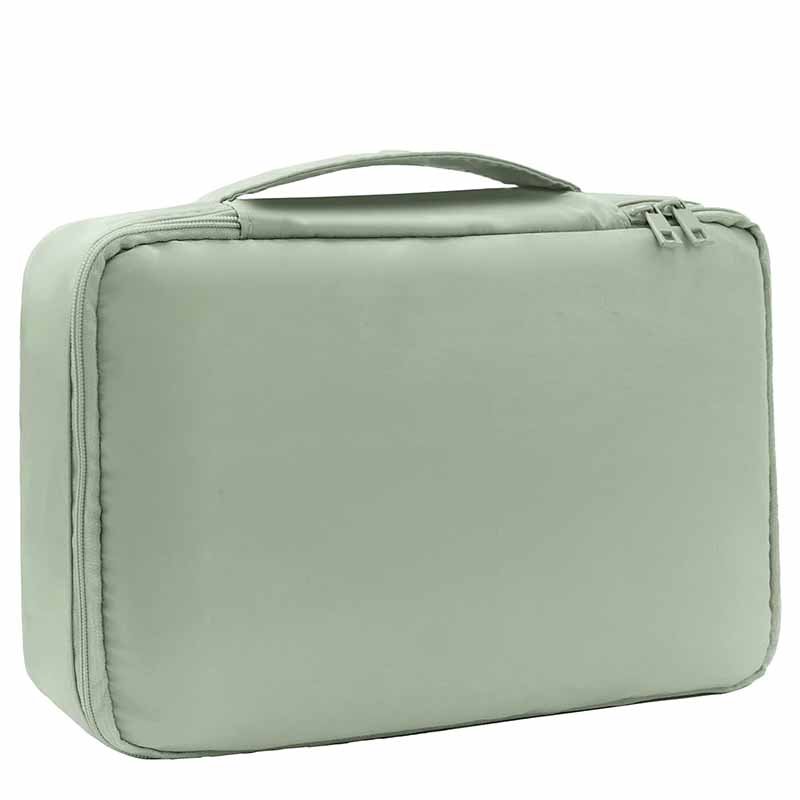
One of the biggest hidden risks in cosmetic bag manufacturing is unapproved material substitution after sample approval.
Brands can prevent this with three simple controls:
Signed material confirmation sheet
Lists outer, lining, zipper, and hardware specs.
Pre-production sample using real bulk materials
Must match final production exactly.
Incoming material inspection during bulk
Confirms color, thickness, and feel before cutting.
A clear prevention table:
| Control step | Problem prevented |
|---|---|
| Material confirmation sheet | silent quality downgrade |
| Pre-production sample approval | mismatch vs bulk |
| Incoming inspection record | mixed supplier batches |
Factories with disciplined sourcing systems—such as Szoneier—apply these controls routinely to keep premium cosmetic bag quality stable across orders.
What Costs and MOQs Come from Makeup Bags Material Sourcing?
Material sourcing directly determines makeup bag cost, minimum order quantity, and long-term price stability. Higher-grade PU, coated linings, durable zippers, and certified recycled fabrics increase unit cost but reduce defect risk and returns. Strong factories balance sourcing efficiency with realistic MOQs, helping cosmetic brands control margins while keeping quality consistent across repeat orders and seasonal product launches.
How material choice changes makeup bags MOQ
Minimum order quantity is rarely decided by sewing capacity alone.
In cosmetic bag production, materials set the real MOQ because suppliers impose their own minimums on PU rolls, lining fabric, zippers, and custom hardware.
Here is a realistic view from export manufacturing:
| Material type | Typical supplier MOQ | Impact on cosmetic bag MOQ |
|---|---|---|
| Standard PU leather | 200–500 meters | Supports low-MOQ bag orders |
| Custom-color PU | 800–1,500 meters | Raises MOQ significantly |
| RPET recycled fabric | 500–1,000 meters | Medium MOQ pressure |
| TPU laminated lining | 300–800 meters | Moderate MOQ effect |
| Custom metal logo plate | 1,000–3,000 pcs | High MOQ for branding |
| Standard nylon zipper | Low | Minimal MOQ impact |
Low MOQ cosmetic bags are easiest when using stock materials and standard hardware.
Custom colors, special textures, or exclusive trims usually require larger first orders to remain cost-efficient.
What sourcing factors change makeup bags price
Material sourcing influences price more than labor in many premium cosmetic bags.
Even small upgrades can shift the final quotation noticeably.
| Upgrade decision | Average unit cost increase | What brands gain |
|---|---|---|
| Standard PU → textured PU | +10–20% | Better scratch resistance |
| Polyester lining → TPU lining | +8–18% | Wipe-clean durability |
| Nylon zipper → metal zipper | +12–25% | Premium feel & lifespan |
| No padding → structured foam | +10–22% | Shape protection |
| Generic fabric → RPET certified | +5–15% | Sustainability value |
How to avoid material downgrade during bulk production
Material downgrade is one of the most expensive hidden problems in cosmetic accessories.
It usually appears when factories substitute:
- thinner PU with similar color
- lower-grade zipper from a different supplier
- lining without proper coating
- recycled fabric from mixed batches
Brands can prevent this using three enforceable controls:
| Control method | How it protects quality |
|---|---|
| Signed material specification sheet | Locks exact materials before production |
| Pre-production sample from bulk materials | Confirms real sourcing, not sample stock |
| Incoming material inspection photos | Verifies correct batch before cutting |
How Do You Grow with One Makeup Bags Factory?
Growth with one makeup bags factory happens when stable material sourcing, fixed specifications, and predictable lead times allow cosmetic brands to reorder faster, reduce unit cost, and expand product lines without restarting development. Long-term cooperation transforms a single cosmetic bag into a scalable accessory system that supports seasonal launches, retail expansion, and consistent global quality.
How strong sourcing improves reorder speed and stability
When a factory already controls the correct PU, lining, zipper, and trims, reorders become dramatically simpler.
| Production stage | New factory timeline | Existing factory timeline |
|---|---|---|
| Material confirmation | 5–10 days | 1–3 days |
| Sampling | 10–15 days | 3–7 days |
| Bulk preparation | 7–12 days | 3–5 days |
| Total lead-time reduction | — | 30–50% faster |
This speed difference is critical for:
- holiday gift launches
- influencer campaign timing
- retail replenishment cycles
Stable sourcing turns production into a predictable schedule, not a gamble.
What sourcing plan fits seasonal cosmetic launches
Beauty brands rarely sell one cosmetic bag year-round.
They launch limited colors, holiday editions, and bundled kits.
A practical seasonal sourcing strategy looks like this:
| Season stage | Recommended sourcing action |
|---|---|
| Core product launch | Use stable stock materials |
| Color expansion | Dye within same supplier system |
| Holiday edition | Add premium trim, not new base fabric |
| High-volume season | Reserve material batches early |
| Post-season reorder | Reuse confirmed specs to reduce cost |
How makeup bags scale with one factory over time
Long-term cooperation creates measurable financial improvement.
Across growing cosmetic brands, stable factory relationships commonly produce:
- 8–20% lower unit cost after volume increases
- fewer quality complaints due to fixed materials
- shorter development cycles for new designs
- consistent color and texture across collections
Scaling usually follows this pattern:
| Brand stage | Cosmetic bag strategy |
|---|---|
| Initial launch | 200–500 pcs using stock materials |
| Early growth | 500–1,000 pcs with minor upgrades |
| Stable demand | 1,000–3,000 pcs with cost optimization |
| Retail expansion | Multiple SKUs sharing materials |
| Mature brand | Seasonal collections with reserved sourcing |
What styles of cosmetic bags can Szoneier customize and develop
Szoneier can customize nearly every commercial cosmetic bag structure on the global market—ranging from simple daily pouches to luxury vanity cases, waterproof travel organizers, professional makeup artist systems, and sustainable RPET collections. Each style can be engineered with different materials, linings, reinforcements, closures, and branding methods, allowing cosmetic brands to launch entry-level items, expand into premium retail lines, and maintain consistent quality across long-term product development.
1. Entry-level and high-volume cosmetic bag styles
Most cosmetic brands begin with fast-moving foundational shapes designed for gift sets, subscription boxes, and promotional distribution.
These styles prioritize cost efficiency, stable production, and clean branding surfaces.
| Style | Structure | Typical use | MOQ flexibility | Cost level |
|---|---|---|---|---|
| Flat zipper pouch | Single layer, soft body | Samples, skincare kits | Very high | Low |
| Gusset cosmetic pouch | Bottom expansion | Daily carry | High | Low–mid |
| Box-shape makeup bag | Structured rectangle | Retail starter sets | High | Mid |
| Mini cosmetic purse | Compact, lightweight | Handbag storage | High | Low–mid |
These designs are commonly produced in PU leather, nylon, canvas, or RPET, enabling quick market entry with controlled investment.
2. Travel and multi-function organizer cosmetic bags
As brands grow, customers expect better storage logic and portability.
Travel-focused cosmetic bags emphasize capacity, separation, and durability.
| Style | Key engineering | User benefit |
|---|---|---|
| Double-layer makeup bag | Upper/lower compartments | Separates tools and liquids |
| Multi-divider organizer | Elastic holders, partitions | Prevents product collision |
| Hanging toiletry bag | Foldable panels + hook | Saves counter space in hotels |
| Large travel beauty case | Reinforced frame + handle | High-capacity transport |
| Roll-up brush pouch | Slot pockets + fold design | Protects brushes hygienically |
These structures require precise pattern control, padding, and reinforced seams, increasing manufacturing complexity but significantly improving user satisfaction.
3. Waterproof, transparent, and hygiene-focused cosmetic bags
Modern beauty consumers increasingly value cleanability, spill resistance, and visibility—especially for air travel, spa environments, and professional sanitation.
| Style | Material system | Functional advantage |
|---|---|---|
| Clear PVC/TPU pouch | Transparent waterproof film | Airport security compliant |
| TPU-laminated cosmetic bag | Soft waterproof surface | Easy wipe-clean maintenance |
| Leak-resistant travel bag | Sealed seams + coated lining | Prevents liquid spread |
| Antibacterial lining pouch | Treated inner fabric | Improved hygiene perception |
These bags are widely used in:
- airline amenity kits
- dermatology or spa product packaging
- professional makeup artist sanitation workflows
- travel skincare bundles
Waterproof construction quality strongly influences odor control, stain resistance, and long-term durability.
4. Premium and luxury cosmetic bag constructions
For mid-to-high-end cosmetic brands, makeup bags become brand extension products rather than simple packaging.
Design focus shifts toward texture, structure, and refined finishing.
| Premium style | Signature feature | Market positioning |
|---|---|---|
| Saffiano-texture PU bag | Scratch-resistant crosshatch | Luxury gift sets |
| Leather-trim cosmetic bag | Genuine or vegan leather accents | Premium retail |
| Metal-frame vanity case | Rigid opening structure | Classic luxury |
| Embroidered beauty pouch | Decorative stitched branding | Boutique collections |
| Magnetic-closure cosmetic clutch | Hidden hardware closure | Fashion crossover |
These styles support higher perceived value and longer product lifespan, helping cosmetic brands justify premium pricing.
5. Professional, salon, and technical cosmetic storage systems
Beyond consumer retail, Szoneier also develops advanced professional cosmetic storage for makeup artists, salons, and mobile technicians.
| Professional style | Core function | Target user |
|---|---|---|
| Makeup artist train case | Multi-layer trays + rigid shell | Professional artists |
| Brush storage cylinder | Vertical divider system | Studio organization |
| Portable beauty workstation bag | Tool-specific compartments | Freelance technicians |
| LED mirror cosmetic case | Integrated lighting mirror | On-site makeup work |
| Modular detachable organizer | Removable storage units | Traveling professionals |
These products demand reinforced structure, precision hardware integration, and higher durability standards, reflecting complex manufacturing capability.
6. Sustainable and eco-focused cosmetic bag collections
Sustainability is now a central theme in global beauty branding.
Szoneier supports eco-driven development using:
- RPET recycled polyester fabrics
- recycled webbing and linings
- low-solvent or water-based PU coatings
- minimal-ink or woven branding techniques
| Eco style | Material direction | Brand message |
|---|---|---|
| RPET zipper pouch | Recycled bottle fiber | Environmental responsibility |
| Organic canvas cosmetic bag | Natural fiber aesthetic | Clean beauty lifestyle |
| Reusable minimalist pouch | Long-life structure | Waste reduction |
| Mono-material recycle-ready bag | Single polymer system | Circular design potential |
Eco cosmetic bags increasingly appear in subscription programs, skincare launches, and sustainability campaigns, reinforcing long-term brand credibility.
7. Full private-label customization capability at Szoneier
Across all cosmetic bag categories, Szoneier provides complete OEM and private-label development:
Structural customization
- size, compartment layout, divider system
- padding thickness, reinforcement method
- zipper type, closure form, frame construction
Material customization
- PU textures, nylon density, TPU coatings, RPET blends
- lining chemistry for wipe-clean durability
- genuine leather or vegan alternatives
Branding & packaging
- screen print, embossing, embroidery, metal logo plates
- woven labels, patches, debossed leather marks
- retail gift boxes, barcode labels, e-commerce packaging
This integrated capability enables cosmetic brands to evolve from:
simple starter pouch → travel organizer → luxury vanity case → full beauty accessory collection
without changing manufacturing partners.
Build Stable, Premium Cosmetic Bags with Szoneier
Choosing a makeup bags factory with strong material sourcing is ultimately about protecting your brand reputation.
When materials remain consistent, cosmetic bags look the same across batches, perform reliably in daily use, and arrive on schedule for every launch.
Szoneier combines 18+ years of bag manufacturing experience with structured material sourcing across PU, nylon, RPET, TPU, canvas, leather, and more—supporting:
- low-MOQ custom cosmetic bag development
- fast and accurate sampling
- verified material specifications and batch control
- stable lead times for seasonal launches
- full OEM and private-label production
If you are planning a new cosmetic accessory line—or upgrading an existing one—the most important step is confirming material stability before production begins.
Contact Szoneier today to request a quotation, sampling plan, or material recommendation tailored to your cosmetic brand.