 Skip to content
Best Makeup Bags Structures for Travel vs Daily Use
- szoneier008
- January 30, 2026
- 10:32 am
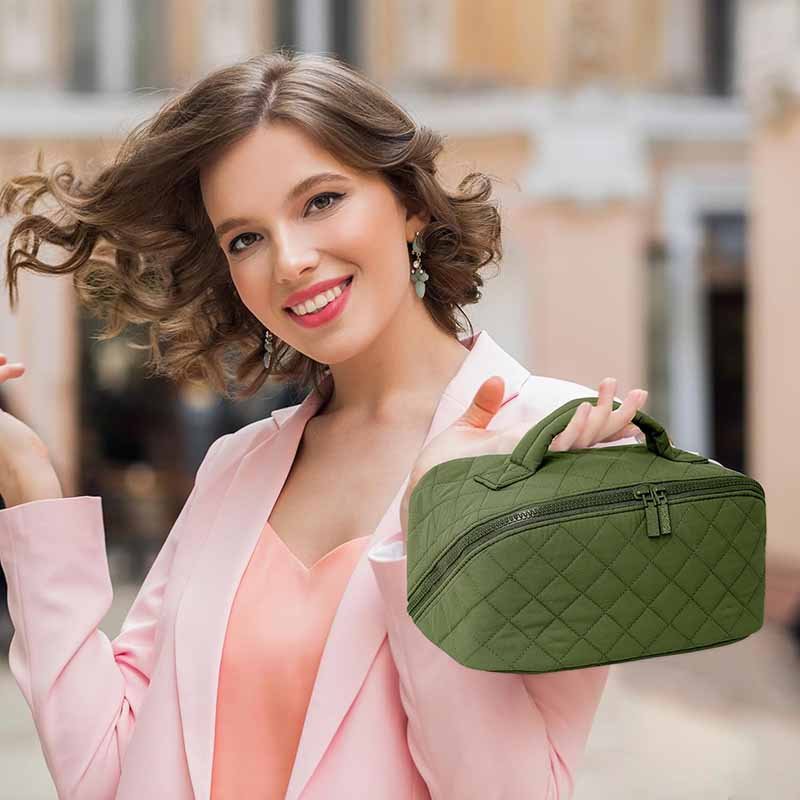
Most makeup bags don’t get returned because they’re “ugly.” They get returned because they’re annoying. The zipper catches. The opening is too small to see anything. A foundation leaks and the lining stains forever. Brushes bend. Powders crack. Or the bag collapses into a soft lump in a suitcase and turns into a mini disaster zone. That’s why structure matters more than most brands think. Two bags can use the same PU or nylon and still feel completely different in real life—because structure controls how the bag opens, stands, packs, and protects what’s inside.
Daily-use makeup bags work best when the structure is soft, flexible, and quick to access. Travel makeup bags work best when the structure holds shape, protects fragile items, and keeps liquids separated. If you use a travel structure for daily routines, people complain it’s bulky. If you use a daily pouch for travel, people complain it’s messy and unsafe.
A retail team once told us their #1 complaint wasn’t fabric or logo—it was “I can’t find things inside.” They changed only the opening and internal layout, kept the same materials, and saw returns drop noticeably. Customers don’t buy “structure,” but they feel it every day. Let’s break down what structures actually work—and why.
What Are Makeup Bags Structures?
Makeup bags structures are the shape and internal build that control how a makeup bag opens, holds items, and behaves when packed. Structure includes the opening style, stiffness level, base shape, internal compartments, and support layers (foam/EVA/padding). Structure directly affects access speed, leak containment, packing efficiency, and damage protection—especially for travel and retail use.
What Does Structure Mean in Makeup Bags?
In real production, “structure” is not one thing—it’s a set of design decisions that change user experience.
A makeup bag’s structure is mainly defined by:
- Body shape: flat pouch, rounded pouch, box, dome, bucket
- Base design: no base, gusset base, rigid base insert
- Opening style: top-zip, wide-mouth, U-zip, clamshell
- Internal layout: single cavity vs dividers vs brush panel
- Stiffness level: soft / semi-structured / structured
If you want to speak “factory language,” these are the specs that matter:
- panel count and seam layout
- reinforcement (binding, tapes, corner stitching)
- foam thickness (0–3 mm commonly)
- lining type (polyester vs TPU wipe-clean)
A quick way to understand structure: it decides whether the bag works like a pocket, a box, or a tool organizer.
Why Makeup Bags Structure Affects Daily Use
Daily use is fast, repetitive, and usually low-stress. People open the bag in a bathroom, on a desk, or in a car. They want quick access and minimal friction.
Daily-use structure should support:
- open quickly with one hand
- see products immediately (no digging)
- fit into handbags and drawers
- feel light and “not in the way”
Daily use often fails when:
- opening is narrow
- bag is too deep
- rigid walls fight the hand
- zipper curve is too tight and catches
What daily users usually carry:
- lipstick, compact, small cream
- cushion/foundation
- small brush or sponge
This is why daily bags favor a soft pouch shape with a wide opening and a shallow interior.
Why Makeup Bags Structure Matters for Travel
Travel changes everything. Makeup bags get squeezed, tossed, compressed, and exposed to pressure changes. Liquids leak. Powders crack. Brushes deform. And most people carry more items when traveling, including skincare.
Travel structure should support:
- shape retention inside luggage
- separation of liquids from dry products
- protection for fragile items
- pack efficiency without wasting space
Travel problems that structure must solve:
- leaks spreading across the whole bag
- items shifting and breaking
- brushes getting crushed
- bag collapsing into corners of luggage
So travel bags usually need:
- a stable base
- a wide opening that stays open
- internal compartments or panels
- wipe-clean lining (especially for liquids)
Makeup Bags Structure Map
| Structure Type | Access Speed | Leak Control | Travel Protection | Best For |
|---|---|---|---|---|
| Flat pouch | fast | low | low | daily touch-ups |
| Rounded pouch | medium | low | low | purse carry |
| Box bag | high | medium | high | travel basics |
| Clamshell organizer | medium | high | high | travel full kit |
| Brush panel bag | medium | medium | medium | makeup tools |
Which Makeup Bags Structures Work Best for Daily Use?
The best daily-use makeup bags structures are soft or semi-soft pouches with wide openings, shallow depth, and simple interiors. These structures make products visible and easy to grab, fit into handbags, and feel light in daily routines. Daily structures should prioritize access and comfort over heavy organization or rigid protection.
What Daily Makeup Bags Are Used For
Daily makeup bags usually serve one of these roles:
- purse makeup bag (quick touch-up)
- vanity makeup bag (daily routine)
- work/commute makeup bag (minimal set)
Daily contents tend to be small and repeated:
- lipstick / gloss
- compact powder
- cushion/foundation
- mini concealer
- small brush or sponge
Daily users care about:
- opening fast
- seeing items immediately
- not having to “re-pack” after use
If daily bags are too structured:
- they take up extra room
- they feel heavy
- they slow down routines
That’s why daily bags should feel like a comfortable container, not a suitcase inside a purse.
Which Soft Makeup Bags Structures Feel Better
Soft daily structures win because they match how people actually use makeup bags.
Common daily-friendly structures:
- flat zip pouch
- rounded pouch
- dome pouch
- light gusset pouch
Why they feel better:
- they compress into available space
- they open easily even when half full
- they’re light in hand
- they don’t “push back” when you reach inside
But soft does not mean cheap. Quality depends on:
- zipper grade
- stitch density consistency
- lining attachment
- corner reinforcement
Daily bags often fail at the zipper because the bag is opened constantly. So “soft + strong zipper build” is the safest daily structure formula.
What Makes Daily Makeup Bags Easy to Access
Daily users complain about one thing more than anything else:
- “I can’t see anything inside.”
Access is determined mainly by opening geometry.
Daily-friendly access features:
- wide zipper arc (U-zip or long top zip)
- zipper positioned slightly lower on the side seam
- light-colored lining for visibility
- shallow depth (not a deep bucket)
Here’s a simple access score model many brands use internally:
| Feature | Daily Access Impact |
|---|---|
| Wide opening | very high |
| Shallow depth | high |
| Light lining | medium |
| Internal dividers | low–negative (daily) |
| Rigid walls | negative (daily comfort) |
If the bag is daily-use, don’t over-design it. Make it easy, then make it durable.
Practical Build Targets for Daily Makeup Bags
| Daily Use Level | Recommended Structure | Common Weight Range |
|---|---|---|
| Minimal touch-up | flat pouch | 60–120 g |
| Purse daily carry | rounded/dome pouch | 90–180 g |
| Vanity routine | semi-structured pouch | 120–250 g |
These ranges help brands avoid daily bags that feel “too flimsy” or “too bulky.”
How Szoneier Approaches Daily Makeup Bags Structures
For daily-use projects, Szoneier typically recommends:
- soft-to-semi-soft pouch structures
- wide opening patterns (better visibility)
- reinforced zipper ends (high-frequency opening)
- wipe-clean lining options for foundation and spills
This approach reduces the most common daily complaints: zipper issues, messy linings, and hard-to-access interiors.
Which Makeup Bags Structures Work Best for Travel?
When it comes to travel makeup bags, structure becomes the number one priority. Unlike daily bags, travel bags need to withstand pressure, movement, and extreme handling during trips. They should protect fragile items, keep liquids sealed, and organize cosmetics efficiently in compact spaces. The key difference is durability and protection over access and softness.
What Travel Makeup Bags Must Protect
When traveling, makeup bags don’t just hold makeup—they protect valuable and fragile cosmetics that can break or spill. The primary function of travel makeup bags is damage control. Cosmetics like powders, creams, and fragrances need extra protection from being crushed or leaking.
What travel makeup bags need to safeguard:
- Glass bottles (perfume, foundation)
- Powders (blush, eyeshadow)
- Liquids (serums, moisturizers)
- Brushes and applicators (fraying or bending)
- Cosmetic tools (tweezers, eyelash curlers)
Common travel makeup bag failures:
- Makeup breaking in transit
- Leaks ruining clothing or other bags
- Brushes getting bent or ruined
This is why rigid or semi-rigid structures work best for travel. They offer shape retention and protect delicate items from external pressure and internal chaos.
Which Structured Makeup Bags Prevent Damage?
Structured bags, such as box bags, clamshell bags, and hard-shell cases, offer the best protection for travel.
- Box bags provide solid, stable storage that keeps the contents in place.
- Clamshell bags allow the bag to open wide, giving easy access to cosmetics without crushing.
- Hard-shell cases offer maximum protection for items that might get crushed in transit.
These structures:
- protect fragile glass bottles
- organize powders and liquids in separate compartments
- keep makeup brushes from bending
- secure items in place, preventing movement
Rigid bags provide protection without added bulk. The structure holds the makeup bag’s shape even when packed tightly, and the solid sides ensure no squishing of products.
For example, travel cosmetic cases (like the ones often used for tech gadgets) are becoming popular because they provide the rigidity needed to protect glass and liquids.
How Travel Makeup Bags Stay Organized
Unlike daily-use bags, travel makeup bags require more internal organization. A well-organized travel makeup bag keeps products separated to avoid spills, leaks, and cracks. The best structure for travel makeup bags allows for multiple compartments or dividers.
Key organizational features for travel makeup bags:
- Separate compartments for liquids, creams, and powders
- Mesh dividers for small tools and accessories
- Elastic straps or pockets to hold brushes and applicators in place
- Leakproof zippers or sealing flaps to prevent liquids from escaping
- Foam padding or EVA inserts to provide extra cushion for fragile items
Common structures that aid organization:
- Clamshell design with multiple sections
- Semi-structured boxes with removable dividers
- Hard-shell cases with foam inserts or mesh pockets
For example, clamshell-style makeup bags are often preferred by travelers because they can fully open, giving users easy access to all their products while keeping things organized.
Travel Makeup Bags Structure Comparison Table
| Structure Type | Best For | Protection Level | Organization Features | Ideal Use |
|---|---|---|---|---|
| Clamshell | Full access, compact | High | Multiple dividers, mesh pockets | Weekender bags, short trips |
| Box (Rigid) | Max protection, compact | Very High | Fixed compartments, rigid structure | Long trips, heavy-duty travel |
| Semi-Rigid | Flexible, organized | Medium | Removable dividers, flexible material | Quick trips, light packers |
| Hard-shell | Fragile cosmetics | Very High | Foam padding, mesh dividers | Premium travel, expensive makeup |
How to Choose Between Makeup Bags for Travel vs Daily Use
Choosing between makeup bags for travel or daily use is not a design question—it is a usage decision. Brands that make the wrong choice usually don’t fail on looks or materials; they fail because the bag doesn’t match how customers actually use it. The correct structure depends on frequency of use, item types, carrying environment, and tolerance for mess or weight.
In short:
- Daily use prioritizes speed and comfort
- Travel use prioritizes protection and control
Trying to force one structure to do both almost always leads to compromise—and customer complaints.
Do You Need Different Makeup Bags for Travel and Daily Use?
In practice, yes—and data supports this.
From retail feedback and post-sale surveys, users who travel more than 3–4 times per year almost always own at least two makeup bags:
- one soft, flexible bag for everyday routines
- one structured bag for trips
Why this separation happens naturally:
- daily bags are opened multiple times per day
- travel bags are packed once and unpacked once
- daily bags stay visible (vanity, handbag)
- travel bags stay hidden (luggage)
When brands offer only one “all-in-one” makeup bag:
- daily users complain it feels bulky
- travelers complain it doesn’t protect enough
That’s why mature brands usually split their makeup bag line into Daily / Travel instead of blending both.
How Usage Frequency Changes Makeup Bags Structure Choice
Frequency of use is the most underestimated factor.
Daily use reality:
- opened 2–6 times per day
- often used with one hand
- user is standing, rushed, or multitasking
- small number of items, high repetition
Daily-use structure must:
- open easily every time
- not fight the hand
- feel light and flexible
- show contents immediately
Travel use reality:
- opened 1–2 times per trip
- packed tightly among other items
- exposed to pressure, shaking, compression
- more items, less repetition
Travel-use structure must:
- keep its shape under load
- prevent liquids from spreading
- protect powders and glass
- stay organized when full
If you match structure to frequency, complaints drop sharply.
How Product Types Inside the Bag Affect Structure Choice
What customers put inside the bag matters more than how big the bag is.
Daily makeup bag contents (most common):
- lipstick / gloss
- compact powder
- cushion or concealer
- mini brush or sponge
These items are:
- lightweight
- used repeatedly
- not highly fragile
Best structure fit:
- soft pouch
- shallow depth
- wide opening
- minimal dividers
Travel makeup bag contents (most common):
- liquid foundation
- skincare bottles
- perfume (glass)
- multiple brushes
- palettes
These items are:
- heavier
- more fragile
- leak-prone
- expensive
Best structure fit:
- box or clamshell
- reinforced base
- internal compartments
- wipe-clean lining
Brands that ignore product type usually see leak-related complaints, not cosmetic complaints.
How Carrying Environment Changes Makeup Bags Structure Needs
Where the bag lives matters.
Daily environments:
- handbag
- desk drawer
- bathroom counter
- car
These spaces favor:
- flexible shapes
- compressible bags
- soft edges
- low weight
Travel environments:
- suitcase
- backpack
- carry-on
- overhead bins
These spaces punish:
- soft bags that collapse
- bags without base support
- loose internal layouts
Travel bags must survive:
- vertical pressure
- side compression
- constant movement
This is why travel bags need structure that resists external force, not just looks neat.
Travel vs Daily Makeup Bags Structure Comparison
This table reflects real brand decisions, not theory:
| Decision Factor | Daily Makeup Bags | Travel Makeup Bags |
|---|---|---|
| Open frequency | Very high | Low |
| Item count | Low | Medium–High |
| Fragile items | Rare | Common |
| Leak risk | Low | High |
| Preferred feel | Soft, light | Stable, protective |
| Structure type | Soft / semi-soft | Structured / box |
| Internal dividers | Usually unnecessary | Often required |
| User tolerance for weight | Low | Higher |
If more boxes fall on the right side, it’s a travel bag. If they fall on the left, it’s a daily bag.
Why One “Universal” Makeup Bag Usually Fails
Many brands try to design a single makeup bag for both scenarios to save cost. In reality, this often creates:
- daily bags that feel too stiff
- travel bags that feel under-protected
The result:
- mixed reviews
- unclear product positioning
- higher return rates
Successful brands don’t ask:
“Can one bag do everything?”
They ask:
“What is this bag meant to do extremely well?”
What Brands Should Ask About Makeup Bags Structures
When sourcing makeup bags for retail, it’s crucial to ask the manufacturer the right questions about structure options and performance specifications. This ensures that the product aligns with both brand expectations and customer needs.
What to Ask a Makeup Bags Manufacturer
Before making an order, brands should ask these essential questions:
- What is the ideal structure for this product? (Daily vs. travel focus)
- How will the makeup bag structure protect items during travel?
- Can we sample the structure before committing to bulk?
- What reinforcements are included for high-stress areas (e.g., zippers, corners)?
- How does the structure affect cost?
Manufacturers should provide clear, detailed answers on structure and its effect on durability and cost.
How Makeup Bags Structure Affects Cost
The structure of a makeup bag can significantly impact:
- Material choice: Stiffening materials or reinforcements increase cost.
- Manufacturing time: More complex structures take longer to assemble.
- Packaging and shipping: Rigid structures usually take up more space and increase shipping costs.
Brands should balance structural requirements with cost objectives. If the makeup bag structure impacts retail pricing too much, it may affect the final customer price point.
Which Makeup Bags Samples to Test
When testing samples, make sure to assess:
- Opening size and ease of use
- Durability of zipper and stitching
- Protection against leaks or breakage during a test travel
- Weight and compactness when fully packed
Always test travel-use makeup bags in actual luggage to see how they hold up under stress, and test daily-use bags in real-world scenarios to check how comfortable and easy they are to use over time.
How to Confirm Makeup Bags Structure Quality in Bulk
Bulk production is where structure problems show up—not during sampling.
What QC Points Matter Most for Makeup Bags Structures
Quality control should focus on structure-related weak points, not cosmetic appearance.
Critical QC checkpoints:
- zipper alignment and end reinforcement
- corner stitching density
- base seam strength
- divider attachment
- lining fixation
Structure failure usually starts at:
- zipper ends
- bottom corners
- divider seams
If these points are controlled, defect rates drop significantly.
How Brands Reduce Returns Through Structure Control
Most retail returns related to makeup bags come from:
- zipper failure
- leaks spreading
- bags losing shape quickly
Return prevention strategies:
- match structure to use case (daily vs travel)
- avoid over-structuring daily bags
- reinforce travel bags at stress zones
- use wipe-clean lining for travel
- test structure under pressure
Brands that apply these steps typically reduce return rates by 20–40% over time.
How Structure Affects Packaging, Shipping, and Storage
Structure doesn’t stop at the product—it affects how makeup bags are packed, shipped, and stored.
How Makeup Bags Structure Affects Packaging
Soft daily makeup bags:
- can be folded or flattened
- require minimal inner packing
- lower shipping volume
Structured travel makeup bags:
- must maintain shape
- often need internal stuffing
- require careful carton planning
Packaging mistakes cause:
- deformation
- creases
- customer complaints before first use
Brands should confirm:
- how bags are packed individually
- whether structure support is used in cartons
- how many units fit per carton safely
How Structure Influences Shipping Cost
Shipping cost differences are real:
| Structure Type | Carton Efficiency | Shipping Cost |
|---|---|---|
| Soft pouch | High | Low |
| Semi-structured | Medium | Medium |
| Box / clamshell | Lower | Higher |
Travel makeup bags sell at higher prices, but brands must plan freight cost early to protect margin.
Working With Szoneier on Makeup Bags Structures
With over 18 years of experience in bag R&D and manufacturing, Szoneier helps brands:
- choose the right makeup bag structure for daily or travel use
- adjust structure to balance cost and performance
- test samples under real conditions
- control structure quality in bulk production
- support retail-ready packaging and logistics
The focus is not on one-time orders, but on repeatable, scalable products that work in real life.
Ready to Develop the Right Makeup Bags?
If you’re planning:
- daily makeup bags that feel effortless
- travel makeup bags that protect and organize
- custom, private label, OEM, or ODM projects
Talk to Szoneier about your makeup bag structure, usage scenario, and target market. The right structure doesn’t just improve the product—it protects your brand long after launch.
manufacturer Categories
- Custom Tote Bags Manufacturer
- custom backpacks Manufacturer
- custom travel bags& Duffle bags manufacturer
- custom makeup bags & toiletry bags manufacturer
- custom cooler bags manufacturer
- custom drawstring bags manufacturer
- custom makeup bags & toiletry bags manufacturer
- custom golf bags manufacturer
- custom fireproof bags manufacturer
- custom dry bags manufacturer
- custom ski bags manufacturer
- custom gym & sports bags manufacturer
- custom laptop bags manufacturer
- custom tactical bags manufacturer
- custom beach bags manufacturer
- custom medical bags manufacturer
- custom camera bags manufacturer
- custom wetsuits manufacturer
- custom leather goods manufacturer
- more personalized products
Can't find the answers?
No worries, please contact us and we will answer all the questions you have during the whole process of bag customization.
Make A Sample First?
If you have your own artwork, logo design files, or just an idea,please provide details about your project requirements, including preferred fabric, color, and customization options,we’re excited to assist you in bringing your bespoke bag designs to life through our sample production process.
Why Work With Szoneier Leather?
OEM/ODM.development.processing and Mass production
With over 18 years of manufacturing expertise, Szoneier Leather is your trusted partner for OEM/ODM leather goods development. We offer a full-spectrum solution—from raw material R&D to product design, prototyping, mass production, and packaging—designed to support brand clients and custom wholesale buyers who value professionalism and quality.
Our strengths include:
In-house R&D for materials and finished goods
Free design and sampling to accelerate product launch
Low MOQs & fast lead times for flexible order planning
ISO & BSCI certified production with strict quality control
Global logistics support (DDP, FOB, CIF)
Whether you need custom leather bags, wallets, belts, straps, or accessories, we handle every step with precision and care. From concept to delivery, Szoneier ensures your vision is realized with consistency, efficiency, and craftsmanship.
We’re not just a factory—we’re your strategic development partner.
Effective Production Process
We believe quality is always the key to success, which includes a responsible approach to manufacturing, and controlling whole process.

1-Business Contact

2-Sample Creation

3-Material Preparing

4-Material Cutting

5-Bulk Production

6-Quality Inspection

7-Product Packaging

8-Cargo Warehousing
- Failure pattern: Seams fail before fabric when stitch logic is incorrect.
