 Skip to content
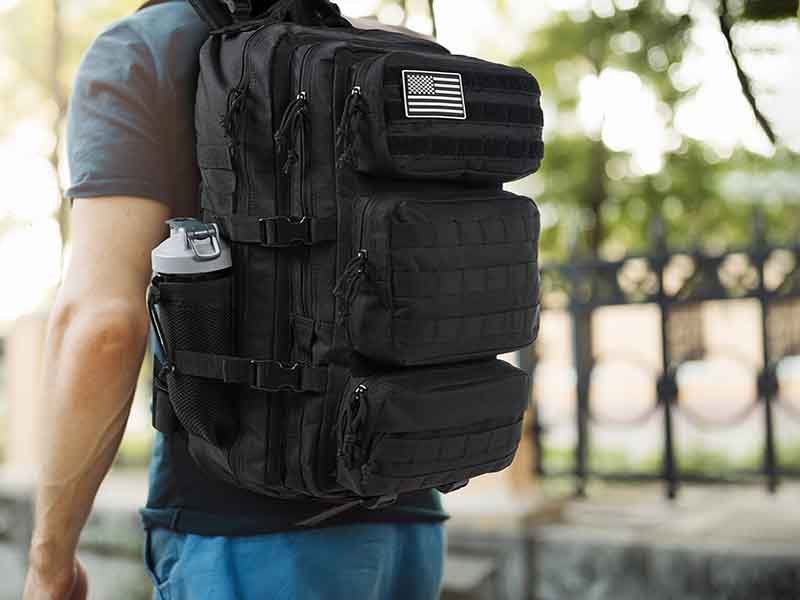
Choosing between a military backpack and a hiking backpack isn’t as simple as picking one that “looks cool” or has the right capacity. These two pack types are built on completely different philosophies—one engineered for rugged survival and heavy gear, the other optimized for comfort, efficiency, and long-distance mobility. Yet many outdoor users still confuse the two, often discovering the difference only after a painful shoulder rub, sweaty back panel, or a load that shifts unpredictably on the trail.
Military backpacks emphasize durability, modular storage, and heavy-load capability using thick nylon, reinforced stitching, and MOLLE systems. Hiking backpacks emphasize comfort, breathability, and weight optimization through ergonomic frames, padded belts, and ventilation panels. Military packs excel in rugged terrain and gear-heavy setups, while hiking packs are better for long-distance comfort and airflow. Your ideal choice depends on environment, load weight, and usage style.
A few years ago, an outdoor buyer told me he trekked 40 km with a 45L tactical pack—tough as armor, but punishing on his shoulders. That moment perfectly captures why the choice truly matters.
What Is the Key Difference Between Military Backpacks and Hiking Backpacks?
Military backpacks are built for durability, modular gear loading, and harsh environments using thick nylon, MOLLE systems, and reinforced construction. Hiking backpacks focus on long-distance comfort, weight efficiency, and ergonomic load distribution through lightweight fabrics, internal frames, and ventilated back panels. The key difference lies in each category’s core design philosophy: military bags prioritize strength and gear capacity, while hiking bags prioritize biomechanics, energy efficiency, and extended wear comfort.
Different Design Philosophies Drive Every Detail
Military backpacks are purpose-built for unpredictable, high-impact environments—combat zones, desert conditions, jungle humidity, and heavy daily loads. Their design prioritizes survivability, not user comfort. The focus is on maximum gear protection, modularity, and structural reinforcement, even if that means added weight.
Hiking backpacks, however, are built around human biomechanics. Every curve, padding thickness, and panel angle is tested to reduce fatigue and protect your spine. Engineers aim to keep the user walking farther, faster, and with less energy loss, which is why comfort and efficiency dominate hiking backpack design.
Structural Differences: Load Distribution vs Load Resistance
Military packs resist external force; hiking packs distribute internal weight.
Military bags often have:
- Less flexible back panels
- Minimal or no ergonomic frame
- Weight concentrated on shoulders
- Stiffer structure for gear protection
Hiking bags are designed to transfer 60–80% of weight to the hips via frame-supported systems. This dramatically reduces shoulder strain during long treks.
Material Intent: Thick Armor vs. Lightweight Efficiency
Military backpacks typically use 900D–1000D nylon, Cordura, and wide webbing. These choices prioritize abrasion resistance, tear strength, and long-term durability under stress.
Hiking backpacks often use 210D–420D ripstop nylon or polyester, which cuts weight dramatically while still offering solid performance—ideal for endurance trekking where grams matter.
This leads to a significant design divergence:
| Feature | Military Backpack | Hiking Backpack |
|---|---|---|
| Fabric Weight | 700D–1000D | 210D–420D |
| Purpose | Gear protection, durability | Comfort, long-distance mobility |
| Weight | Heavier | Much lighter |
| Environment | Rugged, unpredictable terrain | Trails, long-distance routes |
Functional Priorities: Modularity vs Efficiency
A key philosophical split is versatility vs. efficiency.
Military backpacks emphasize modularity:
- MOLLE webbing
- Removable pouches
- Expandable load system
- Customizable layouts
This flexibility is vital for mission-specific gear but adds bulk.
Hiking backpacks emphasize efficiency:
- Pre-defined compartments
- Hydration integration
- Compression straps for load stabilization
- Ergonomic pockets for accessibility
Here, the goal is to reduce “pack fiddling” and maximize walking efficiency.
Comfort and Ventilation: Secondary vs. Primary
Military packs tend to have minimal back ventilation because a solid structure protects gear better. Hiking packs often feature:
- 3D mesh
- Airflow channels
- Curved back panels
These reduce sweat buildup and heat retention—critical for multi-hour treks.
How Are Military Backpacks Built?
Military backpacks are built around durability and load-bearing strength. They typically use 600D–1000D nylon or Cordura with heavy PU/TPU coatings, dense webbing, and MOLLE/PALS grids. Structural points are reinforced with box stitching and bartacks, while oversized zippers, load-rated buckles, and thick foam padding support heavy gear in harsh environments. Every element—from fabric weave to stitching pattern—is engineered to survive abrasion, impact, and long-term field use.
Fabric and Coatings: Turning Cloth Into Armor
The foundation of a military backpack is its fabric. Most genuine tactical packs use 600D–1000D nylon or Cordura, sometimes blended with polyester for cost or color stability. Higher denier (D) means thicker yarns, which significantly increase abrasion resistance and tear strength. On top of the base weave, manufacturers apply PU or TPU coatings to improve water resistance and stiffness. These coatings can range from single-layer (for flexibility) to multi-layer (for higher hydrostatic pressure ratings). The result is a shell that behaves more like soft armor than casual fabric—hard to tear, slow to wear down, and stiff enough to protect internal gear from sharp edges and rough contact.
Internal Structure: Panels, Frames, and Load Paths
While many entry-level “tactical-style” packs are just fabric plus foam, true military backpacks are built around load paths—the way weight travels through the bag and into your body. Some models use internal frames made of aluminum stays, fiberglass rods, or HDPE (high-density polyethylene) sheets. These elements keep the pack’s shape under weight and prevent sagging. Reinforced back panels and bottom panels help the bag stand upright and resist deformation when filled with heavy equipment. Internally, load-bearing seams are aligned with shoulder strap anchor points and hip belt attachments, making sure force moves through structural lines instead of stressing a single stitch. This hidden architecture is what allows a military pack to carry 15–30 kg without collapsing.
Stitching, Bartacks, and Reinforcement Zones
If fabric is the skeleton, stitching is the nervous system. Critical stress areas—shoulder strap bases, grab handles, hip belt roots, MOLLE anchor points, and bottom corners—are usually reinforced with box-and-cross (X-box) stitching plus bartacks. Bartacks are dense clusters of stitches that act like a rivet in textile form, locking webbing and straps in place. A good military backpack may have dozens or even hundreds of bartacks distributed across the structure. Layered reinforcement is also common: extra fabric patches under shoulder strap roots, double-layer bottoms, and folded webbing instead of raw tape ends. This multi-layer approach ensures that even if one seam starts to fail, the overall structure holds together under field conditions.
MOLLE and Webbing: Modular by Design
A signature feature of military backpacks is the MOLLE (Modular Lightweight Load-carrying Equipment) system. It typically uses 1-inch (25 mm) nylon webbing sewn in horizontal rows onto the pack body, forming a PALS grid (usually spaced about 1.5 inches vertically). Each webbing bar is stitched down at regular intervals to create attachment points for pouches and accessories. This requires precise sewing patterns and consistent spacing—if the spacing is off, pouches won’t weave correctly and can shift or detach. Behind the webbing, manufacturers often add an extra fabric layer so the stitching doesn’t weaken the main shell. This MOLLE matrix turns the backpack into a customizable platform, letting soldiers or users build their own loadout without changing the core bag.
Hardware, Foam, and User Contact Points
Military backpacks also rely heavily on high-spec hardware. Zippers are usually large-gauge (#8 or #10), with coil or tooth designs that resist dust, sand, and repeated stress. Buckles are commonly made from acetal or nylon plastics rated for high impact and cold resistance; quality ones won’t crack if stepped on or exposed to low temperatures. Inside the shoulder straps, hip belt, and back panel, manufacturers use high-density closed-cell foams that resist compression over time. The foam is often layered—firmer foam near the structure for support, softer foam near the body for comfort. Mesh linings may be added for breathability, but in military designs, protection and longevity still outrank maximum ventilation.
Testing and Field Validation
Finally, serious military packs don’t go straight from design file to mass production. They undergo field testing and lab testing, including tensile and tear strength, abrasion cycles on fabric, color fastness, UV resistance, and hardware fatigue tests. Feedback from soldiers, law enforcement, or heavy-duty outdoor users is then fed back into refining strap angles, pocket placements, and access points. A well-built military backpack is the result of multiple design iterations, each focused on surviving a very simple but brutal test: “Will this fail when someone’s life or mission depends on it?”
How Are Hiking Backpacks Designed?
Hiking backpacks are designed around biomechanics and long-distance comfort. They use lightweight ripstop fabrics, ergonomic internal or external frames, ventilated back panels, padded hip belts, and balanced compartment layouts to distribute weight efficiently. Every component—from strap angles to foam density—is engineered to reduce fatigue, improve airflow, and stabilize loads during extended outdoor movement.
Lightweight Fabrics Designed for Distance, Not Combat
Hiking backpacks typically use 210D–420D ripstop nylon, high-tenacity polyester, or ultra-light UHMWPE blends. These fabrics are significantly lighter than the 600D–1000D materials used in military packs, yet they remain durable enough for trails and wilderness conditions. Ripstop grids prevent tears from spreading, while silicone or PU coatings add water resistance without dramatically increasing weight. This fabric philosophy reflects the primary goal: reduce pack weight so the user can conserve energy over long distances.
Internal and External Frames Built Around Body Mechanics
A key element of hiking backpack design is the load-bearing frame.
- Internal frames use aluminum stays, fiberglass rods, or molded HDPE sheets that contour to the spine, helping the pack follow natural movement.
- External frames use rigid metal structures ideal for bulky loads or warmer climates where airflow behind the back is critical.
These frames shift 60–80% of pack weight to the hips, relieving shoulder pressure and reducing long-term fatigue. The frame also stabilizes heavy loads, preventing the pack from collapsing inward or swaying during movement.
Ventilation Systems Reduce Sweat and Heat Build-Up
Back-panel ventilation is one of the biggest differences from military backpacks. Hiking packs incorporate:
- 3D mesh panels
- Suspended trampoline-style back systems
- Air channels along the spine
- Curved frame geometry to create airflow gaps
These features significantly reduce heat, moisture, and friction during long treks. For hikers covering 10–20 km per day, this ventilation can dramatically improve comfort and reduce the risk of skin irritation.
Hip Belts, Shoulder Straps, and Load Lifters Work as One System
Hiking backpacks rely on a multi-point suspension system carefully tuned to human anatomy.
- Hip belts are heavily padded and shaped to wrap around the iliac crest, transferring most weight to the pelvis.
- Shoulder straps use S-shaped or J-shaped curves to follow the natural collarbone line.
- Load lifters at 45° angles pull the top of the pack closer to the body, stabilizing the center of gravity.
Foam density varies by layer—firmer foam near the structure for support and softer foam near the body for comfort. This layered construction prevents pressure points even during multi-hour wear.
Compartments and Access Points Prioritize Usability
Unlike modular military packs, hiking packs are optimized for quick, efficient access to essentials:
- Side stretch pockets for water bottles
- Front stash pockets for jackets
- Internal hydration sleeve with hose port
- Top lid storage for navigation tools
- Compression straps to stabilize shifting loads
The pocket layout is based on minimizing the need to stop, unload, or disrupt the hiking rhythm.
What Materials Do Both Backpack Types Commonly Use?
Military and hiking backpacks both use synthetic performance materials like nylon, polyester, Cordura, UHMWPE, and ripstop weaves. Nylon offers high tensile and abrasion strength, while polyester provides colorfastness and lower water absorption. Coatings such as PU, TPU, silicone, and laminates enhance waterproofing and stiffness. Hardware like YKK zippers, acetal buckles, and high-tenacity webbing completes the structure. Military packs favor thicker, highly durable materials; hiking packs prioritize lightweight, breathable versions.
Nylon
Nylon remains the go-to fiber for both backpack types because of its superior tensile strength, abrasion resistance, and tear performance.
Why Nylon Matters
- Stronger than polyester at the same denier
- High resistance to tearing under sudden load
- Flexible and smooth to the touch
- Widely compatible with PU and TPU coatings
Different Densities Used
| Denier | Typical Use | Characteristics |
|---|---|---|
| 210D | Lightweight hiking packs | Low weight, moderate strength |
| 420D | Mid-tier hiking packs | Balanced durability and weight |
| 600D | Tactical-style civilian packs | Good abrasion resistance |
| 900–1000D | True military packs | Extreme strength, rugged durability |
Military backpacks typically use 600D–1000D nylon or Cordura-grade variants to withstand dragging, scraping, and impact. Hiking backpacks use 210D–420D nylon to reduce weight during long-distance movement.
Polyester
While nylon excels in raw strength, polyester wins in:
- UV resistance
- Colorfastness (colors fade slower)
- Water absorption (lower than nylon)
- Cost efficiency
This makes polyester popular in:
- Budget hiking backpacks
- Lightweight daypacks
- Internal linings
- Pocket panels
However, polyester is generally less abrasion resistant compared to equal-denier nylon, making it less suitable for heavy military loads.
Cordura and High-Tenacity Weaves
Cordura nylon is a premium material used in many genuine military packs.
Cordura Benefits
- Air-jet textured yarn creates high abrasion resistance
- Extremely tough against tearing and punctures
- Rugged hand-feel suitable for combat environments
Cordura variants include:
- Cordura 500D (common in modern military packs)
- Cordura 700D
- Cordura 1000D (classic heavy-duty tactical standard)
Cordura-grade fabrics are rare in hiking packs except for bottom panels where abrasion is highest.
Ripstop Weaves: The Lightweight Strength Solution
Ripstop nylon or polyester incorporates a micro-grid pattern that prevents tears from spreading.
Why Ripstop?
- Adds strength without adding weight
- Crucial for lightweight hiking gear
- Resistant to sharp-object punctures
Military versions usually have larger grid spacing for maximum reinforcement. Hiking packs use smaller, lighter ripstop to maintain pack flexibility.
Coatings: PU, TPU, Silicone, and Laminates
Raw fabric alone is not enough—its real performance comes from coatings.
Common Coating Types
| Coating | Features | Used In |
|---|---|---|
| PU (Polyurethane) | Water resistance, structure, affordable | Both types |
| TPU | Durable, chemical resistant, premium | Military + high-end hiking |
| Silicone | Lightweight, hydrophobic | Ultralight hiking |
| Laminates (3-layer / 2.5-layer) | Waterproof-breathable membranes | Mountaineering packs |
Military packs favor PU and TPU due to stiffness and durability. Hiking packs may use silicone-coated ripstop for ultralight waterproofing.
Webbing, Buckles, and Hardware
Backpack hardware determines fail-points under stress.
Webbing
- Military packs use nylon webbing (stronger, more heat-resistant).
- Hiking packs often use polyester webbing (lighter, less stretch).
Zippers
Most quality backpacks use YKK zippers:
- #10 for military main compartments
- #5 / #8 for hiking pockets
Buckles and Adjusters
Made from:
- Acetal (Duraflex) – high impact resistance
- Nylon – tough but heavier
Military buckles are oversized for gloves and high-stress use.
Foam, Mesh, and Padding Materials
Comfort materials differ greatly:
Military Packs
- Closed-cell EVA or PE foam (dense, less breathable, high support)
- Tight-weave mesh for longevity
Hiking Packs
- Multi-density foam (soft near body, firm deeper)
- Air mesh or 3D mesh
- Ventilation-focused panel engineering
This difference explains why hiking packs feel much cooler and softer during long treks.
UHMWPE and High-Tech Materials
High-end mountaineering and tactical gear may include:
- Dyneema (UHMWPE)
- X-Pac laminates
- Spectra fibers
Benefits:
- Exceptionally high strength-to-weight ratio
- Waterproof laminates
- Near-zero stretch
Which Backpack Should You Choose for Outdoor or Tactical Use?
A military backpack is ideal for environments requiring durability, modularity, and reliable performance under heavy or variable gear loads. A hiking backpack is more suitable for long-distance travel where ventilation, ergonomic load transfer, and weight efficiency are the primary considerations. The correct choice depends on terrain predictability, load characteristics, duration of movement, and the user’s operational objectives.
Environmental Predictability and Operational Demands
The first determinant when choosing between a military backpack and a hiking backpack is the degree of environmental predictability and operational complexity. Hiking routes—whether forest trails or alpine paths—generally present a controlled environment where the primary challenge lies in continuous locomotion over long distances. In such scenarios, the biomechanical efficiency offered by hiking backpacks becomes essential. Conversely, tactical, field, or survival-oriented operations often involve irregular surfaces, vegetation, debris, or unexpected contact with abrasive objects. Military backpacks, constructed from high-tenacity fabrics and reinforced architectures, are engineered precisely for environments where durability and external shock resistance take precedence. Users should therefore assess not only where they will travel, but also how variable and physically demanding the operational space may become.
Load Characteristics and Structural Requirements
The second factor is the nature, density, and stability of the load being carried. Hiking backpacks are optimized for balanced, relatively low-density loads such as clothing, food, hydration systems, and lightweight camping equipment. Their internal frames and hip-transfer systems are designed to distribute 60–80% of weight onto the pelvis, ensuring prolonged comfort. Military backpacks, by contrast, are built to accommodate high-density items: tools, communication devices, ammunition, batteries, and survival accessories. The structure of a tactical pack—reinforced seams, stiffer shells, and modular attachment points—prevents deformation even under substantial load. When the required equipment is heavy, rigid, or mission-specific, a military backpack provides superior structural integrity and load containment.
Movement Patterns, Endurance, and User Physiology
Movement dynamics also play a decisive role. Hiking places the user in a continuous forward-motion pattern with minimal directional changes. Under these conditions, pack ventilation, shoulder-strap ergonomics, and precise weight distribution significantly affect fatigue accumulation and cardiovascular efficiency. Hiking backpacks are intentionally engineered to minimize energy expenditure per kilometer through optimized geometry and breathable back-panel systems. Tactical movements, on the other hand, may involve rapid directional adjustments, crouching, climbing, or interacting with equipment. Military backpacks must therefore maintain rigidity, external protection, and stability under multi-directional force. Hikers prioritizing endurance will benefit most from a hiking pack, while users in physically varied or equipment-intensive activities will find a tactical pack more operationally aligned.
Modularity Requirements, Configuration Flexibility, and Mission Duration
The final consideration lies in the expected variability of gear configuration and required adaptability. Military backpacks support modularity through MOLLE systems, adjustable webbing, and external attachment points, allowing users to reconfigure capacity based on daily mission profiles. This flexibility is critical for professionals and advanced outdoor users whose gear loadout may change frequently. Hiking backpacks, in contrast, emphasize streamlined organization and rapid access, providing predefined compartments optimized for long-distance efficiency. For expeditions with stable gear lists, simplicity and weight savings offer clear advantages. However, when equipment categories vary—medical kits, tools, communication devices, or mission-specific accessories—a military backpack’s modular architecture provides significantly greater functional range. Ultimately, the correct choice is determined by whether the user prioritizes endurance efficiency (hiking) or operational adaptability and durability (military).
Ready to Develop Your Military or Hiking Backpack?
Developing a high-performance military or hiking backpack requires far more than selecting a fabric and choosing a silhouette. It demands a complete understanding of material engineering, load-bearing architecture, ergonomic performance, reinforcement methods, and supply-chain consistency. Whether your goal is to build a rugged tactical line with maximum durability and modularity, or a lightweight trekking backpack optimized for ventilation and long-distance comfort, success depends on partnering with a manufacturer that can translate technical concepts into stable mass production.
If you are preparing to launch a new product line or seeking to upgrade the technical performance of your existing models, Szoneier can support you with professional expertise and scalable manufacturing resources.
Contact Szoneier today to receive development recommendations, material solutions, and a fast quotation. Let us help you bring your military or hiking backpack project to market with confidence, precision, and competitive strength.
manufacturer Categories
- Custom Tote Bags Manufacturer
- custom backpacks Manufacturer
- custom travel bags& Duffle bags manufacturer
- custom makeup bags & toiletry bags manufacturer
- custom cooler bags manufacturer
- custom drawstring bags manufacturer
- custom makeup bags & toiletry bags manufacturer
- custom golf bags manufacturer
- custom fireproof bags manufacturer
- custom dry bags manufacturer
- custom ski bags manufacturer
- custom gym & sports bags manufacturer
- custom laptop bags manufacturer
- custom tactical bags manufacturer
- custom beach bags manufacturer
- custom medical bags manufacturer
- custom camera bags manufacturer
- custom wetsuits manufacturer
- custom leather goods manufacturer
- more personalized products

Can't find the answers?
No worries, please contact us and we will answer all the questions you have during the whole process of bag customization.
Make A Sample First?
If you have your own artwork, logo design files, or just an idea,please provide details about your project requirements, including preferred fabric, color, and customization options,we’re excited to assist you in bringing your bespoke bag designs to life through our sample production process.
