 Skip to content
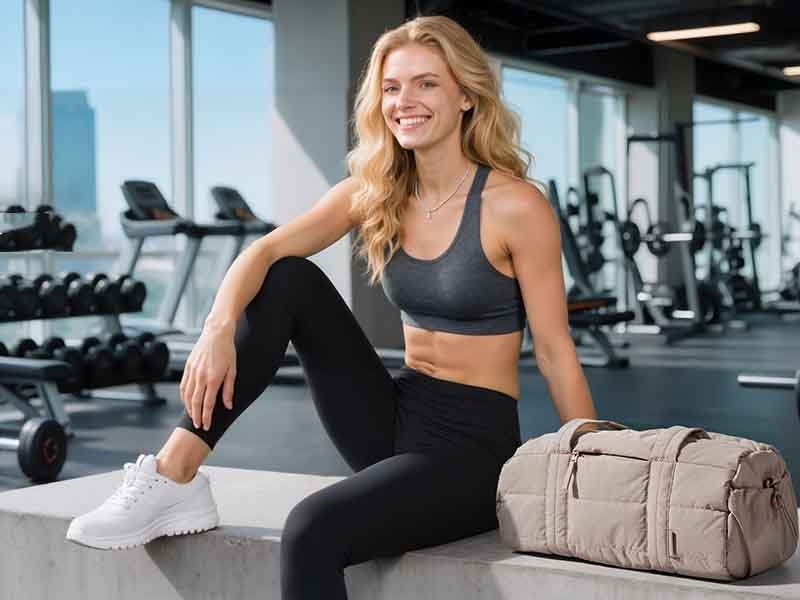
A yoga bag may look simple — a tube-shaped carrier or stylish tote — but behind its calm exterior lies a blend of material engineering, ergonomic design, and craftsmanship. Whether you’re a yogi seeking functionality or a brand looking to create a signature accessory, understanding how yoga bags are made reveals the balance between form, purpose, and sustainability.
To make a yoga bag, you must select the right material (cotton canvas, nylon, or polyester), design an ergonomic pattern that fits standard mats, and sew key features such as straps, pockets, and ventilation panels. The process involves cutting, assembling, reinforcing seams, and quality testing. Manufacturers like Szoneier customize yoga bags with eco fabrics, waterproof coatings, and private-label branding for global clients.
What started as a simple mat sling has evolved into a global fashion and wellness essential. Today, the yoga bag stands at the crossroads of lifestyle, sustainability, and manufacturing innovation. Let’s explore the entire journey — from choosing the perfect fabric to the production techniques that transform an idea into a beautiful, functional product.
What Is a Yoga Bag?
A yoga bag is a specially designed carrier made to hold yoga mats, towels, and practice essentials. Unlike standard gym bags, it features an elongated or cylindrical shape, breathable materials, adjustable straps, and dedicated compartments for accessories. Its purpose goes beyond convenience — it protects the mat from dirt and bacteria, supports portability, and reflects the wellness lifestyle values of balance, mindfulness, and sustainable living.
Understanding the Purpose Behind the Design
At its core, a yoga bag isn’t just a piece of equipment — it’s a functional expression of a mindful lifestyle. Every practitioner knows that a yoga mat is personal space — it’s where energy, sweat, and focus meet. The yoga bag’s job is to protect that space, keeping the mat clean, dry, and easy to carry from home to studio.
Standard gym duffels can hold clothes and shoes, but they aren’t designed for mat-shaped items. A yoga bag, on the other hand, features a long tubular body (typically 26–30 inches) that snugly fits a rolled mat without bending or damaging it. This structural difference is key: where duffels emphasize volume, yoga bags emphasize form and alignment — just like yoga itself.
Functional Value
Yoga mats are prone to collecting dust, moisture, and bacteria when carried without protection. The yoga bag addresses this problem with:
- Breathable materials (like cotton canvas or mesh panels) that allow ventilation.
- Moisture-resistant linings that protect from sweat after practice.
- Zippers or drawstrings that prevent dirt and debris from entering.
These design details ensure hygiene and longevity. For studio owners or instructors who travel between sessions, a yoga bag is a non-negotiable necessity — it keeps mats hygienic, organized, and professional-looking.
Industry Data Insight: According to Yoga Journal’s 2024 consumer report, 68% of yoga practitioners now own a dedicated yoga bag or mat carrier, citing cleanliness and portability as their top reasons for purchase.
Design Philosophy
Yoga philosophy emphasizes simplicity and balance — and a well-made yoga bag mirrors those same principles. Its structure avoids unnecessary bulk, using clean lines, lightweight fabrics, and ergonomic straps.
Most yoga bags share three common design priorities:
- Ease of carry – Adjustable shoulder or crossbody straps distribute weight evenly.
- Ease of use – Wide zippers or roll-top openings simplify packing.
- Ease of maintenance – Washable fabrics keep bags fresh and odor-free.
From an OEM standpoint, this design philosophy translates to efficiency: less hardware, fewer production steps, and higher user satisfaction — which also means lower return rates for retailers.
Aesthetic Value
For modern yogis, a yoga bag isn’t just about function — it’s an aesthetic accessory that complements personal identity. Whether it’s minimalist linen, vibrant printed cotton, or sleek nylon, the bag reflects how someone integrates yoga into daily life.
- Urban commuters often choose water-resistant nylon or rPET yoga backpacks for durability.
- Studio practitioners prefer soft cotton canvas totes that match their outfits.
- Travel yogis appreciate foldable, lightweight drawstring carriers for compact storage.
This intersection of fashion and wellness has fueled a global rise in yoga accessories. Brands now integrate natural dyes, handwoven fabrics, and custom prints — blending spirituality with modern design.
Szoneier’s Note: Szoneier’s in-house designers collaborate with international brands to create yoga bags that fit brand identity and regional preference — whether that’s Scandinavian minimalism, Japanese eco-style, or Californian boho-chic.
Structural Anatomy of a Yoga Bag
To understand why yoga bags matter, it helps to break down their anatomy:
| Component | Description | Function |
|---|---|---|
| Main Compartment | Cylindrical or rectangular chamber | Holds rolled yoga mat securely |
| Accessory Pockets | Side or front zip compartments | For keys, towels, or water bottles |
| Ventilation Panels | Mesh or eyelet details | Prevent odor buildup |
| Straps & Handles | Adjustable webbing or padded leather | Provide ergonomic comfort |
| Closures | Zippers, drawstrings, roll-tops | Ensure easy access and protection |
| Lining & Coating | Polyester or waterproof film | Adds structure and hygiene control |
Beyond Carrying
A yoga bag represents more than practicality — it’s part of a broader lifestyle narrative. Owning one signals discipline, care, and self-awareness. Much like the mat itself, the bag embodies personal commitment to health and mindfulness.
In Western markets, especially in the U.S. and Europe, yoga bags also double as everyday accessories — used for gym visits, errands, or weekend outings. This hybrid use drives innovation: combining fashion silhouettes (totes, backpacks) with functional features (ventilation, waterproof lining).
For brands, this evolution creates opportunity — producing multi-use yoga bags that appeal to both yoga practitioners and broader wellness consumers.
Which Materials Are Best for Making a Yoga Bag?
The best materials for yoga bags balance durability, comfort, and sustainability. Common options include cotton canvas, nylon, polyester, Oxford fabric, and recycled PET (rPET). Waterproof or washable coatings add functionality, while soft linings improve comfort. For eco-conscious brands, organic cotton, hemp blends, or rPET offer low-impact alternatives. Choosing the right fabric ensures your yoga bag stays lightweight, breathable, and long-lasting, even with daily studio use.
Comparing Common Yoga Bag Fabrics
| Material Type | Durability | Water Resistance | Weight | Texture & Feel | Eco Impact | Ideal Use Case |
|---|---|---|---|---|---|---|
| Cotton Canvas (12–16 oz) | High | Moderate (coatable) | Medium | Natural, breathable | Biodegradable | Eco & studio yoga bags |
| Nylon (420D–600D) | Excellent | High | Light | Smooth, sporty | Moderate | Outdoor or travel yoga bags |
| Polyester Oxford (600D–900D) | Excellent | High | Medium | Structured, glossy | Moderate | Fashion or sporty designs |
| rPET (Recycled Polyester) | High | Moderate | Light | Soft, eco-modern | Low | Sustainable brand lines |
| PU / TPU Laminate | Medium | Waterproof | Medium | Sleek, modern | Varies | Premium waterproof models |
| Hemp or Linen Blend | High | Low (natural fiber) | Light | Textured, rustic | Biodegradable | Eco, artisan collections |
Popular Material Types
(1) Cotton Canvas
Cotton canvas (12–16 oz) remains one of the most popular materials for yoga bags due to its breathability, durability, and aesthetic appeal. It’s comfortable to touch, washable, and aligns with yoga’s organic lifestyle.
Advantages:
- Natural fiber, biodegradable, non-toxic
- Excellent printability for logos or patterns
- Strong resistance to tearing (up to 4000 cycles in Szoneier’s tests)
Limitations:
- Absorbs moisture; requires water-resistant coating for long-term use
- May fade under prolonged UV exposure
OEM Tip: Szoneier offers waxed or PU-coated canvas finishes to combine the natural feel of cotton with water repellency — perfect for boutique brands that value both performance and authenticity.
(2) Nylon
Nylon (typically 420D or 600D) is a performance material known for its strength-to-weight ratio. It’s ideal for users who travel or carry their yoga bags outdoors.
Advantages:
- Water-resistant and easy to clean
- High tensile strength — tear-resistant under heavy load
- Quick drying, mildew resistant
Limitations:
- Synthetic fiber (not biodegradable)
- May require lining for a softer feel
Szoneier Insight: Nylon bags are favored by global retailers for their low cost and long-term durability. A 600D nylon yoga bag can withstand over 8 kg of static load and 5,000+ flex cycles without deformation.
(3) Polyester & Oxford Fabrics
Polyester (especially Oxford weave, 600D–900D) offers structure, color depth, and design flexibility. Oxford fabrics combine strength, wrinkle resistance, and print capability.
Advantages:
- Smooth surface, easy to clean
- Good resistance to fading and abrasion
- Water and stain resistant with PU or PVC backing
Limitations:
- Slightly less breathable than cotton
- Non-biodegradable
Application: Best for fashion-forward yoga lines, corporate gifting, or co-branded products that need a sleek, uniform look.
(4) Recycled PET (rPET)
rPET (made from recycled plastic bottles) is the fastest-growing yoga bag material category. It mirrors polyester in performance but reduces virgin polymer use by up to 50–60%.
Advantages:
- Eco-friendly with GRS and OEKO-TEX certification
- Lightweight yet tear-resistant
- Smooth, premium feel; customizable textures
Limitations:
- Slightly higher production cost
- May require lining for color retention
Eco Benefit: 1 kg of rPET fabric recycles ~67 plastic bottles and saves 30% energy vs. virgin polyester production.
Szoneier’s Sustainable Line: Szoneier offers rPET Oxford and twill fabrics with water-based PU coatings and solvent-free adhesives — ideal for brands targeting the conscious consumer market.
(5) PU / TPU Laminates
For performance-driven or luxury yoga lines, PU (polyurethane) and TPU (thermoplastic polyurethane) laminates create smooth, glossy finishes that resist moisture and stains.
Advantages:
- 100% waterproof barrier
- Easy to wipe clean after practice
- Modern aesthetic; ideal for unisex or minimalist designs
Limitations:
- Less breathable than woven fabrics
- Higher material cost
(6) Hemp and Linen Blends
Hemp blends combine traditional fiber strength with sustainability. Hemp grows with minimal water and no pesticides, making it a carbon-negative crop.
Advantages:
- Naturally antibacterial and odor-resistant
- Breathable, with beautiful texture
- Aligns with eco-brand storytelling
Limitations:
- Higher cost and limited supply chain
- Slightly coarse texture without finishing
Brand Trend: Hemp-based yoga bags are growing popular in Nordic and Japanese wellness markets, where buyers value “slow fashion” aesthetics and tactile authenticity.
Inside Matters Too: Linings, Zippers, and Straps
A yoga bag’s internal components are as important as its exterior.
| Component | Material Options | Function |
|---|---|---|
| Lining | 210D Polyester / Microfiber Suede | Protects mat, resists moisture |
| Zipper | YKK / SBS Nylon Coil | Smooth access, long life |
| Straps | Nylon Webbing / Cotton Tape | Adjustable, durable carry |
| Buckles | Acetal / Zinc Alloy | Structural integrity |
| Ventilation | Metal Grommets / Mesh Panels | Airflow and odor control |
Szoneier’s QC Protocol: All hardware and textiles undergo 5000 open/close cycles and tensile pull tests up to 30 kg. Colorfastness is tested under ISO 105-B02 to prevent fading after UV exposure.
5. Functional Enhancements by Material Type
| Feature | Canvas | Nylon | Oxford | rPET | PU/TPU |
|---|---|---|---|---|---|
| Waterproof Coating | Optional wax | Built-in | PU/PVC backing | Water-based PU | Fully waterproof |
| Machine Washable | Yes | Yes | Yes | Yes | No |
| Heat Resistance | Moderate | High | High | High | Medium |
| Custom Printing | Screen / Digital | Heat transfer | Sublimation | Sublimation | Laser Engrave |
| Texture Options | Natural grain | Smooth | Textured | Satin or matte | Glossy |
This variety allows brands to tailor yoga bag lines — for instance, pairing canvas for eco bags, nylon for travel models, and PU laminates for luxury editions under one cohesive brand aesthetic.
How to Design a Functional and Stylish Yoga Bag
Designing a functional and stylish yoga bag requires balancing form, ergonomics, and brand identity. A great design starts with the right dimensions for yoga mats, includes thoughtful features like ventilation, pockets, and adjustable straps, and finishes with textures, colors, and branding that reflect wellness culture. Successful OEMs like Szoneier use CAD modeling, sustainable materials, and design research to craft yoga bags that are practical, beautiful, and built to last.
1. Defining Purpose: Function Before Form
Every yoga bag begins with intention — who it’s for, how it’ll be used, and what story it tells. A design meant for casual yogis differs greatly from one for professional instructors or travelers. Before sketching a single line, identify the following:
| Target User | Lifestyle Focus | Design Priority |
|---|---|---|
| Daily Studio Goers | Frequent practice, light commuting | Breathable, washable, stylish |
| Outdoor Yogis | Hikes, retreats, travel | Water-resistant, reinforced, crossbody design |
| Urban Professionals | After-work yoga & commute | Sleek silhouette, laptop pocket |
| Eco-Conscious Users | Mindful, sustainable lifestyle | Organic or recycled materials |
| Luxury Consumers | Fashion-driven buyers | Premium hardware & finish |
Design Rule: A functional yoga bag supports movement — it shouldn’t feel like carrying equipment, but an extension of one’s calm, balanced self.
2. Selecting the Ideal Shape and Carry Type
Shape determines usability. There’s no one-size-fits-all model — each yoga practice or lifestyle requires a different structure.
| Shape Type | Description | Pros | Ideal For |
|---|---|---|---|
| Sling Bag | Long, tubular with side zipper | Light, compact, ergonomic | Daily practitioners |
| Tote Style | Wide-open top, fits yoga gear + mat | Roomy, fashion-forward | Studio or gym users |
| Backpack Style | Dual straps, vertical load | Hands-free convenience | Commuters, travelers |
| Drawstring Tube | Minimalist cylinder | Lightweight, low-cost | Entry-level users |
| Convertible 2-in-1 | Switches from sling to tote | Multi-functional | Premium collections |
Design Insight:
- Sling Bags emphasize ease of access — often one continuous zipper and minimal seams.
- Totes prioritize visual balance — often rectangular with structured base for neat storage.
- Backpacks focus on load distribution — adjustable straps and padding are key.
- Convertible styles add market appeal but require reinforced construction and advanced patterning.
3. Planning Dimensions for Yoga Mats
Precision in sizing is critical. Most yoga mats measure between 24–28 inches (61–71 cm) wide and 68–72 inches (173–183 cm) long. The bag must fit the mat comfortably, leaving space for a towel or bottle.
| Yoga Mat Type | Diameter (Rolled) | Recommended Bag Size (L × W × D) |
|---|---|---|
| Standard Mat (3 mm) | 5–6 in | 27 × 8 × 6 in |
| Thick Mat (6 mm) | 6–7 in | 29 × 9 × 7 in |
| Travel Mat (1.5 mm) | 4 in | 26 × 6 × 4 in |
Designers must allow +2 cm tolerance in width and depth to accommodate zippers, lining, and potential shrinkage after coating.
4. Mapping Functional Features
A beautiful yoga bag is useless if it doesn’t perform well. Designers must integrate functional details without adding clutter.
Core Features
- Main Chamber: Long cylindrical body to fit the mat.
- Accessory Pockets: Zippered or mesh pockets for keys, towel, wallet.
- Ventilation: Eyelets, perforated mesh, or grommets prevent odor.
- Closure System: Zipper, drawstring, or magnetic flap based on brand identity.
- Handles & Straps: Adjustable, ergonomic, padded for comfort.
- Reinforcement Points: Bar-tacked at strap joints for durability
5. Balancing Functionality with Style
Yoga culture celebrates simplicity, serenity, and individuality, so the bag’s look should reflect that harmony. Style elevates a functional bag into a lifestyle statement.
Design Aesthetics That Matter
- Minimalism: Clean lines, fewer seams, muted tones.
- Natural Textures: Waxed canvas, linen blends, matte coatings.
- Soft Geometry: Rounded corners and smooth zipper transitions.
- Color Psychology: Earth tones (sand, sage, clay) calm the mind; blues and greys convey peace.
Branding Opportunities:
- Embossed leather or PU patches for premium appeal.
- Woven logo labels for eco-focused lines.
- Reflective piping or prints for night-time visibility.
Szoneier’s design teams work with global clients to match brand identity with market trends — for instance, Nordic clients favor muted monochromes, while U.S. boutique studios request boho-inspired colorways.
6. Considering Ergonomics and Comfort
The ideal yoga bag should feel weightless, even when carrying a heavy mat. Ergonomics ensures comfort and user satisfaction.
| Feature | Function | Ideal Spec |
|---|---|---|
| Strap Width | Distributes pressure | 3–5 cm |
| Padding | Reduces shoulder fatigue | 3 mm EVA foam |
| Handle Drop | Ensures grip flexibility | 25–35 cm |
| Weight Distribution | Keeps bag balanced | Centered strap anchor |
| Breathability | Reduces sweat buildup | Mesh lining or vents |
7. Material Harmony
Selecting materials isn’t just about function — it’s about expression. The right fabric defines the tactile and emotional experience.
- Canvas or Cotton: Earthy and natural; pairs well with hand-printed designs.
- Nylon or Oxford: Modern, durable, and waterproof — suited for commuters.
- rPET or Hemp: Soft eco-texture that resonates with sustainability-focused consumers.
- PU/TPU: Sleek luxury appearance for premium lines.
OEM Flexibility: Szoneier allows multi-material combinations (e.g., canvas body + PU base) to merge eco-design with durability.
Finishing Options:
- Matte coatings for a minimalist look.
- Glossy film for high-end appeal.
- Colorfast dyeing to prevent fading in sunlight.
How to Make a Yoga Bag — Step-by-Step Process
To make a yoga bag, start by defining dimensions based on your mat size, choosing suitable fabric, and cutting precise panels. Next, stitch and reinforce seams, add zippers and pockets, and install straps for balanced weight. Finish with lining, edge binding, and branding before quality inspection and packaging. Professional factories like Szoneier follow this structured workflow to ensure each yoga bag meets durability, aesthetics, and ergonomic standards.
Step 1 — Define the Dimensions and Design Blueprint
Every yoga bag begins with a clear technical drawing or CAD file that defines the product’s function and proportion. The average yoga mat measures 26–30 inches (66–76 cm) long and 5–7 inches (13–18 cm) in diameter when rolled, so designers must create a bag with +2 cm allowance on all sides.
Blueprint essentials:
- Main body pattern: cylindrical or rectangular (e.g., 29 × 8 × 7 in).
- Side panels or gussets: to control depth and structure.
- Pockets layout: zippered front for towels, mesh side for bottles.
- Strap position: centered to maintain balance.
- Closure type: zipper, drawstring, or flap based on target market.
Step 2 — Choose the Right Materials
Material choice defines both performance and market positioning. Before production, Szoneier’s material lab evaluates each fabric for:
- Tear strength (ASTM D1424)
- Abrasion resistance (Martindale cycles)
- Colorfastness (ISO 105-B02)
- Water repellency (AATCC 22 spray test)
Typical fabric combinations:
| Section | Material | Reason |
|---|---|---|
| Main body | 600D Oxford / rPET Oxford / Canvas | Structure + printability |
| Lining | 210D Polyester or Micro-suede | Easy cleaning |
| Straps | Nylon Webbing (1.5–2 in wide) | Strength and comfort |
| Zippers | YKK #8 Nylon Coil | Smooth, durable |
| Hardware | Acetal / Zinc Alloy | Rust-resistant |
| Ventilation panels | Mesh or laser-cut fabric | Air circulation |
Each batch is pre-tested for shrinkage (< 2 %) and coating adhesion (> 3 N/cm) before cutting approval.
Step 3 — Cutting Fabric and Components
Precision cutting ensures perfect alignment during assembly. Factories may use:
- Automatic CNC Cutters for bulk orders (±0.5 mm accuracy).
- Manual Pattern Cutting for small runs or prototype samples.
Tips for optimal cutting:
- Stack no more than 15 layers for uniform edge quality.
- Align grain direction to avoid bag twisting.
- Mark notch points for pocket and strap placement.
- Label each panel with a lot code for traceability.
Step 4 — Prepare Zippers, Pockets, and Accessory Panels
Before assembling the main body, all sub-components are made separately. This modular process speeds up line efficiency and improves quality control.
Accessory preparation includes:
- Front pocket panel: stitched with zipper + inner lining.
- Side mesh pocket: elastic top for bottles.
- Logo label placement: woven or PU-embossed patch added here.
- Interior organizer: optional key hook or mini-pouch.
Every pocket seam is reinforced with bar-tack stitches (6–8 mm width) to prevent tearing under stress.
Step 5 — Stitching the Main Body and Assembly
This is the structural heart of production. The precision of seam alignment defines the bag’s durability and silhouette.
Assembly Process
- Join side panels to the main body using flat-fell or binding seams.
- Install zipper or drawstring channel along the opening.
- Insert lining with minimal puckering (1–2 mm seam offset).
- Attach shoulder strap loops with double-layer reinforcement tape.
- Sew handles or straps using box-and-cross stitching (minimum 3 cm² area).
Machinery used:
- JUKI DDL-8700 single-needle lockstitch for outer seams.
- JUKI LU-1560 double-needle for webbing and thick joints.
- Brother T-8450D for bartack reinforcement.
QC Checkpoint: After assembly, each bag is checked for seam alignment tolerance (< 2 mm) and stitch count uniformity.
Step 6 — Add Functional Features and Reinforcements
Now the structure is complete; functional details are integrated.
Examples of reinforcements:
- Bottom panel padding: 3 mm EVA sheet for shape retention.
- Edge binding: polyester tape to conceal inner seams.
- Ventilation eyelets: metal grommets for airflow.
- Adjustable strap hardware: tri-glides or D-rings for flexibility.
- Elastic loops: to secure the mat from shifting.
Szoneier’s design engineers often propose innovations such as:
- Magnetic flaps instead of zippers for silent opening.
- Detachable straps for multipurpose carry.
- RFID fabric patches for inventory tracking in global shipments.
Step 7 — Branding and Surface Finishing
A yoga bag also carries your brand identity. Finishing defines both appearance and perceived value.
Branding options:
- Screen print / Heat transfer: for bold logos on polyester or nylon.
- Embroidery: for premium or boutique lines.
- Debossed PU patch: gives leather-like elegance.
- Reflective print: for nighttime visibility and sporty aesthetics.
Surface finishing methods:
- Water-based PU coating: adds stain resistance.
- Wax finish on canvas: gives a rustic, vintage tone.
- Anti-UV treatment: maintains color fastness in sunlight.
Step 8 — Quality Control and Testing
Before packaging, each yoga bag undergoes a multi-stage quality audit.
| Test | Standard | Description |
|---|---|---|
| Seam Strength | ASTM D1683 | Pull test at 15 kg load |
| Zipper Function | ISO 2062 | 5,000 open/close cycles |
| Color Fastness | ISO 105-B02 | UV fade test (4 hours) |
| Water Resistance | AATCC 22 | Spray test rating ≥ 80 |
| Odor & Mold | Internal | 7-day humidity chamber check |
| Dimensional Accuracy | Internal | ±0.5 cm tolerance |
Szoneier’s QA protocol follows AQL 2.5 / 4.0, and inspectors document results in a digital dashboard for transparency to clients.
Step 9 — Packaging and Logistics Preparation
Once passed, bags move to the final stage: presentation and protection.
Packaging workflow:
- Dust bag or polybag wrapping to prevent surface abrasion.
- Desiccant inclusion to control humidity.
- Hang-tag and barcode labeling (GS1 compliant).
- Carton packing: 10–20 pcs per export carton.
- Palletization: shrink-wrapped and strapped for container loading.
Shipping Notes:
- FCL / LCL / Air Express available.
- All exports include packing list, commercial invoice, CO, and MSDS (if coated).
- Average production lead time: 25–30 days after sample approval.
Step 10 — Continuous Improvement & Custom Iteration
Even after shipment, Szoneier treats each project as a data point for refinement.
- Client feedback on usability is logged to update future samples.
- Material consumption reports are analyzed for cost optimization.
- Defect trend analysis ensures each batch performs better than the last.
This iterative system supports brand consistency, supply-chain trust, and long-term partnerships — essential for private-label or OEM success.
Are There Sustainable and Premium Options for Yoga Bag Production?
Sustainable yoga bags use materials like organic cotton, hemp, and recycled polyester (rPET). Eco coatings, solvent-free adhesives, and OEKO-TEX®-certified dyes minimize environmental impact. Factories like Szoneier implement ISO14001 environmental management and GRS-compliant sourcing, offering brands traceable, low-carbon products that appeal to eco-conscious consumers.
Eco Material Choices
- Organic Cotton: Biodegradable, breathable, and renewable.
- Recycled Polyester (rPET): Reduces waste from plastic bottles.
- Hemp Blends: Naturally antibacterial and durable.
- Cork & TPU Films: Alternative for waterproof vegan lines.
Compliance & Certification
Szoneier ensures every eco-line meets:
- GRS (Global Recycled Standard)
- OEKO-TEX® Standard 100
- REACH & California Prop 65 Compliance
Each batch includes full traceability reports, allowing brands to communicate sustainability transparently to end consumers.
Designing for Longevity
Sustainability isn’t just materials — it’s durability. Reinforced stitching, high-quality zippers, and fade-resistant coatings extend product lifespan by 2–3 times compared to fast-fashion yoga bags.
Szoneier’s quality philosophy: “Sustainable isn’t about less material — it’s about longer life.”
Conclusion — Partner with Szoneier to Design and Manufacture Custom Yoga Bags
In the world of wellness and mindful living, a yoga bag is more than a carrying case — it’s a symbol of purpose, design, and balance. Behind every beautifully crafted yoga bag lies a story of material selection, ergonomic logic, and manufacturing precision. Whether your brand focuses on eco-friendly yoga accessories, fashion-forward urban styles, or durable outdoor gear, the right production partner transforms your vision into reality.
Szoneier helps brands around the world bridge creativity and manufacturing. Whether you need a minimalist cotton canvas yoga sling, a water-resistant nylon backpack, or a luxury rPET-PU hybrid tote, our production lines can bring your design to life with consistency, speed, and craftsmanship.
Your Next Step
Contact Szoneier for OEM Yoga Bag Solutions:
manufacturer Categories
- Custom Tote Bags Manufacturer
- custom backpacks Manufacturer
- custom travel bags& Duffle bags manufacturer
- custom makeup bags & toiletry bags manufacturer
- custom cooler bags manufacturer
- custom drawstring bags manufacturer
- custom makeup bags & toiletry bags manufacturer
- custom golf bags manufacturer
- custom fireproof bags manufacturer
- custom dry bags manufacturer
- custom ski bags manufacturer
- custom gym & sports bags manufacturer
- custom laptop bags manufacturer
- custom tactical bags manufacturer
- custom beach bags manufacturer
- custom medical bags manufacturer
- custom camera bags manufacturer
- custom wetsuits manufacturer
- custom leather goods manufacturer
- more personalized products
Can't find the answers?
No worries, please contact us and we will answer all the questions you have during the whole process of bag customization.
Make A Sample First?
If you have your own artwork, logo design files, or just an idea,please provide details about your project requirements, including preferred fabric, color, and customization options,we’re excited to assist you in bringing your bespoke bag designs to life through our sample production process.
