Skip to content
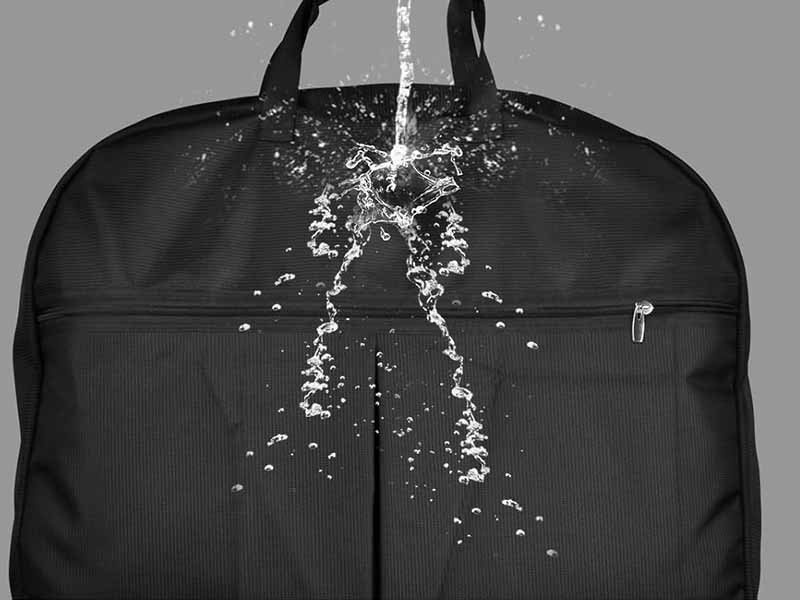
A garment bag is one of those products people only notice when it fails. If a suit arrives with damp shoulder marks, or a wedding dress picks up mildew smell after shipping, it’s rarely “bad luck.” It’s usually a spec problem: the fabric repels a splash, but the seams leak; the coating blocks rain, but the zipper wicks water; the bag stays dry outside, yet condensation forms inside because breathability was ignored. That’s why “waterproof” and “water-resistant” are not marketing words for garment bags—they’re engineering targets that determine whether clothing stays presentable after real travel and storage.
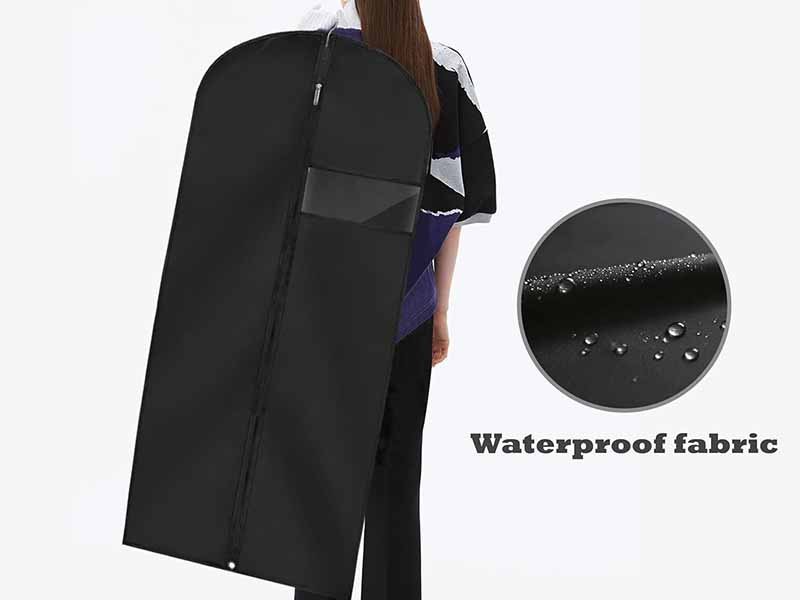
Water-resistant garment bags are designed to handle light exposure—brief rain, splashes, and damp air—mostly through tight weaves and light coatings. Waterproof garment bags are built to stop water entry even during longer rain or pressure contact, using laminated/coated materials plus seam and zipper protection. The correct spec depends on the use case: commuting and closet storage need water resistance and airflow; airport transfers, shipping, and wet luggage environments usually need waterproof structure and verified test levels.
Picture this: you’re moving from a taxi to an airport terminal in heavy rain. You’re not standing in the rain for an hour—but your bag gets soaked in a few minutes, then pressed under other luggage. That short, ugly window is exactly where the wrong spec shows up.
What Is the Difference Between Waterproof and Water-Resistant?
Water-resistant means delays water penetration; waterproof means prevents water penetration under defined conditions. For garment bags, the real difference is not only the fabric—it’s the system: fabric + seams + zipper/closure + construction. If one part is weak, moisture finds a path.
How the two terms behave in real life
| Situation | Water-Resistant Bag | Waterproof Bag |
|---|---|---|
| quick walk in light rain | usually OK | OK |
| heavy rain + bag pressed under luggage | may leak at seams/zip | designed to resist |
| wet car trunk / damp floor | moisture can creep in | blocks entry longer |
| high humidity storage (closet/warehouse) | can be safer if breathable | can trap moisture if non-breathable |
Key point customers should remember: A “waterproof fabric” alone does not make a waterproof garment bag. If seams are stitched and the zipper is unprotected, the bag behaves like water-resistant in practice.
What does “waterproof” mean for garment bags?
For garment bags, “waterproof” should be specified by measurable performance, not a label. In production, it usually means:
- waterproof fabric layer (TPU laminate or PVC coating)
- sealed seams (tape, weld, or hot-air sealing)
- protected zipper/closure (waterproof zipper or storm flap)
- controlled entry points (hanger opening, handle area)
Waterproof target levels (practical factory ranges)
Hydrostatic head (HH) is the most common waterproof metric for coated/laminated fabrics.
| Waterproof Target | Hydrostatic Head (HH) | What It Survives |
|---|---|---|
| “Rain-ready” | 1,000–3,000 mm | short rain, mild splash |
| “Travel-grade” | 3,000–5,000 mm | heavy rain, wet handling |
| “Shipping / harsh” | 5,000–10,000 mm | prolonged wet exposure, pressure contact |
HH is a fabric test. To keep the bag waterproof, seams and closures must match the target.
Common waterproof failure points
- zipper teeth area wicks water into the bag
- needle holes in stitched seams create micro-leaks
- hanger opening acts like a funnel in rain
- bottom corners hold water and soak through over time
When a brand wants to claim “waterproof,” these points must be engineered, not guessed.
What does “water-resistant” mean in real use?
Water-resistant garment bags typically rely on:
- tight woven polyester/nylon
- light PU coating (or durable water-repellent finish)
- standard stitched seams
- standard zipper (coil or molded)
They perform well for:
- commuting in light rain
- closet storage protection from dust and minor dampness
- everyday travel where exposure is brief
They perform poorly when:
- water sits on the surface under pressure
- rain hits seams and zipper lines for more than a few minutes
- the bag is placed on wet floors or under other luggage
| Feature | Water-Resistant Expectation |
|---|---|
| water beads on surface at first | yes |
| seams stay dry in heavy rain | not guaranteed |
| zipper line stays dry | not guaranteed |
| bag safe on wet floor for long time | no |
Practical spec language that avoids confusion: “Water-resistant outer shell with splash protection; not intended for prolonged rain or submersion.”
That wording prevents unrealistic expectations and reduces negative reviews.
Which claims are commonly misused in listings?
In the garment bag market, these phrases are often vague unless supported by specs:
- “waterproof” (fabric may be waterproof, seams are not)
- “rainproof” (could mean only surface beading)
- “all-weather” (no test data provided)
The fastest way to verify a real waterproof claim
Ask for these four items:
| What to Ask For | Why It Matters |
|---|---|
| fabric HH (mm) | shows waterproof level of shell |
| seam method (taped/welded/stitched) | stitched seams leak under pressure |
| zipper type (standard vs waterproof / flap) | zipper is the #1 leak line |
| construction drawings/photos | verifies hanger opening and corners |
If a supplier cannot clearly answer these, the product is usually “water-resistant,” even if marketed as waterproof.
Which Materials and Coatings Work Best?
The material decision is not only about blocking water. Garment bags also need to protect fabric shape, prevent wrinkling, and manage humidity (especially for long storage). The best spec balances:
- water protection level
- foldability and hand feel
- weight and cost
- breathability (or moisture management strategy)
- odor and mildew risk
| Goal | Best Material Direction |
|---|---|
| light travel + foldable | TPU laminated polyester/nylon |
| lowest cost waterproof | PVC coated polyester |
| breathable closet storage | woven polyester/nylon with light PU + vents |
| premium feel + low odor | TPU laminate + quality lining |
Which fabrics are most common (polyester, nylon, TPU, PVC)?
The base fabric provides strength and structure; coatings provide water performance.
- Polyester (base): stable, cost-friendly, good for large production
- Nylon (base): stronger and more flexible at same weight, often feels more “premium”
- TPU laminate: a film laminated to fabric (often polyester/nylon base)
- PVC coating: a heavier plastic coating, often more rigid
Typical fabric weight ranges
| Fabric System | Common Weight Range | Feel / Use |
|---|---|---|
| 210D–300D polyester (PU) | ~120–220 gsm | light, water-resistant |
| 420D–600D polyester (PU) | ~220–350 gsm | tougher, more structured |
| TPU laminated (poly/nylon) | ~200–420 gsm | waterproof + flexible |
| PVC coated polyester | ~300–600 gsm | very waterproof, stiffer |
Customers often care about foldability and noise: PVC can feel stiff and “plastic-y,” while TPU laminates tend to fold more naturally.
How do coatings compare (PU, TPU laminate, PVC)?
Coatings define how water behaves on the surface and how long the barrier lasts.
| Coating | Water Barrier | Foldability | Cold Weather | Notes |
|---|---|---|---|---|
| PU coating | low–medium | good | good | best for water-resistant |
| TPU laminate | high | very good | very good | modern “premium waterproof” |
| PVC coating | very high | medium–low | can stiffen | strong waterproof, heavier |
Where customers get disappointed:
- PU-coated bags labeled “waterproof” but leaking at seams
- PVC bags that feel stiff, noisy, or crease-mark easily
- non-breathable waterproof bags used for long storage, creating odor risk
So the best coating depends on whether the bag is for active travel or long storage.
Do zippers and seams decide performance more than fabric?
Yes. For garment bags, seams and zippers are usually the first leak path.
Even if the fabric is 5,000 mm HH, water can enter through:
- needle holes (stitched seams)
- zipper tape/coil gaps
- hanger opening
- handle attachment points
Leak risk ranking
| Component | Leak Risk Without Protection | Fix |
|---|---|---|
| stitched seam line | high | seam tape or weld |
| standard zipper | high | waterproof zipper or storm flap |
| hanger opening | high | flap cover + gasket design |
| bottom corners | medium | reinforced fold + drainage planning |
Factory reality: A “waterproof” garment bag usually requires at least one of these:
- seam sealing tape
- welded/heat-sealed seam structure
- waterproof zipper or flap system
Otherwise, the bag behaves like water-resistant.
How Do You Specify Seams, Zippers, and Closures?
Even the best waterproof fabric will fail if water can enter through seams or openings. In garment bags, more than 70% of leakage complaints are caused not by fabric, but by:
- stitched seams
- zipper penetration points
- hanger openings
- bottom fold construction
Because garment bags are long and vertically oriented, gravity pulls water toward seams and zippers, making construction details critical.
To achieve real waterproof performance, fabric rating, seam sealing method, and closure protection must be specified together—not separately.
Which seam methods actually prevent water leaks?
There are three main seam constructions used in garment bags:
| Seam Type | Water Protection | Cost Level | Common Use |
|---|---|---|---|
| Standard stitched seam | Low | Low | water-resistant bags |
| Seam-taped stitch | Medium–High | Medium | travel waterproof |
| Heat-welded seam | Very High | High | full waterproof / dry-bag style |
1. Stitched seams
Traditional stitching creates needle holes that allow slow moisture entry, especially when:
- water pressure builds during rain
- the bag rests on a wet floor
- luggage weight presses fabric against seams
These seams are acceptable only for water-resistant garment bags, not waterproof ones.
2. Seam-taped construction
Seam tape—usually PU or TPU tape—is applied over stitched seams using heat and pressure.
Benefits:
- blocks water from entering needle holes
- maintains flexibility for folding garment bags
- suitable for 3,000–5,000 mm waterproof targets
This is the most common solution for travel garment bags because it balances:
- cost
- durability
- softness
3. Heat-welded seams
Heat welding fuses coated or laminated fabrics without stitching.
Advantages:
- zero needle holes
- highest waterproof integrity
- ideal for 5,000 mm+ protection levels
Limitations:
- higher tooling cost
- reduced softness and foldability
- more suitable for heavy-duty or shipping garment covers
Are waterproof zippers necessary or excessive?
Zippers are the single most common leak path in garment bags.
Even when fabric and seams are waterproof, standard coil zippers allow:
- water seepage through zipper teeth
- capillary wicking along zipper tape
Zipper protection comparison
| Zipper Type | Water Resistance | Flexibility | Cost | Best Use |
|---|---|---|---|---|
| Standard coil zipper | Low | High | Low | closet / light rain |
| Reverse coil + flap | Medium | High | Low–Medium | travel rain |
| Waterproof laminated zipper | High | Medium | High | full waterproof |
When a waterproof zipper is worth the cost
Use waterproof zippers when:
- garments must stay dry during heavy rain transfers
- the bag is used for air travel or shipping
- brand positioning targets premium outdoor or travel gear
For retail mid-range travel garment bags, a common solution is:
Reverse coil zipper + storm flap cover
This provides strong rain resistance at lower cost than laminated waterproof zippers.
How do flap structures and hanger openings affect leakage?
Two overlooked entry points cause many real-world failures:
1. Storm flap design over zipper
A simple fabric flap covering the zipper can reduce water penetration by more than 60–80% during rain exposure.
Key flap design details:
- flap width ≥ 20–25 mm beyond zipper line
- downward-facing edge to shed water
- reinforced stitching at fold
Without a flap, even taped seams cannot stop zipper leakage.
2. Hanger opening at top of garment bag
The hanger hole is often the weakest waterproof point.
Common problems:
- direct rain entry
- water running down hanger hook into bag
- gaps around reinforced eyelet
| Method | Protection Level | Notes |
|---|---|---|
| Open slit | Very low | water enters easily |
| Covered slit flap | Medium | common travel solution |
| Elastic gasket seal | High | premium waterproof |
| Roll-top closure | Very high | shipping / dry protection |
What Tests and Ratings Should You Request?
Visual inspection cannot confirm waterproof performance. Reliable specification depends on laboratory testing and durability simulation.
Professional garment bag development usually includes three categories of testing:
- Waterproof performance tests
- Mechanical durability tests
- Environmental aging tests
Together, these predict real travel behavior, not just showroom appearance.
How is waterproofness measured?
Hydrostatic head (HH) measures how much water pressure fabric can resist before leaking.
The test places water pressure on fabric until droplets pass through.
Practical HH interpretation for garment bags
| HH Rating | Protection Meaning | Recommended Use |
|---|---|---|
| <1,000 mm | splash only | dust / closet storage |
| 1,000–3,000 mm | light rain | commuting |
| 3,000–5,000 mm | heavy rain | travel |
| 5,000 mm+ | prolonged exposure | shipping / harsh handling |
For most travel garment bags, ≥3,000 mm HH + taped seams is a reliable minimum.
Which spray, rain, or immersion tests matter?
Besides HH, factories may use:
Spray rating test
Simulates falling rain impact on fabric surface.
- evaluates water beading and surface wetting
- useful for water-resistant fabrics
Rain chamber simulation
Exposes a full garment bag to continuous rainfall.
Measures:
- zipper leakage
- seam seepage
- hanger opening penetration
This test better reflects real airport or outdoor conditions.
Short immersion or puddle contact test
Checks resistance when the bag:
- rests on wet ground
- contacts standing water
Important for shipping and baggage handling scenarios.
What durability tests predict long-term waterproof performance?
Waterproofing can degrade with:
- folding stress
- UV exposure
- temperature cycling
- abrasion from travel
| Test Type | Purpose | Real-World Risk Covered |
|---|---|---|
| flex cracking test | coating integrity after folding | travel packing |
| UV aging test | resistance to sunlight | airport transport |
| abrasion test | surface wear | luggage friction |
| seam peel strength | tape adhesion | long-term leakage prevention |
Without durability testing, a bag may pass new-product waterproof tests but fail after months of use.
How to Match Specs to Use Cases and Price?
When specifying waterproof vs water-resistant garment bags, it’s crucial to consider the end user and real-world conditions in which the bag will be used. A bag that works perfectly in an indoor closet may fail under airport handling, or vice versa. Here, we’ll break down how to choose the right waterproof specs for different use cases and how those specifications align with retail pricing and customer expectations.
Which specs suit travel, storage, and formalwear shipping?
Depending on whether the bag is for personal travel, storage, or shipping formalwear, the waterproofing level and material choice can vary.
Travel Use
For customers who use the garment bag primarily for travel, they’re likely concerned about light rain, splash protection, and brief exposure to water while traveling. For this, a water-resistant bag with a hydrostatic head rating of 1,000–3,000 mm and sealed seams will be sufficient.
Key features for travel garment bags:
- Polyester or nylon fabric with light PU coating
- Seam taping to prevent water seepage
- Reverse coil zipper or flap cover for zipper protection
This solution provides good protection from everyday rain but will not hold up in extended exposure to water.
Storage Use (high humidity and moisture protection)
Garment bags used for long-term storage need a balance between moisture resistance and breathability. While the bag does not need to be fully waterproof, it must prevent dampness or mildew growth.
Recommended for storage bags:
- Polyester fabric with PU coating for water resistance
- Mesh or breathable lining to allow airflow and reduce condensation
- Minimal waterproofing since the bag will not face significant rain exposure
A water-resistant bag with highly breathable material is ideal for closet storage or seasonal garment care.
Formalwear Shipping (full waterproof protection)
For high-value garments like wedding dresses, suits, or designer clothing being shipped, full waterproof protection is necessary. These bags will be exposed to prolonged contact with wet conditions, including airport handling and potential moisture damage.
Key features for shipping garment bags:
- TPU-laminated or PVC-coated polyester
- Seam welding or heat sealing to eliminate water entry at seams
- Waterproof zipper with flap cover or storm guard for zipper protection
- Hydrostatic head rating of 5,000 mm+ for full protection
These bags should be entirely waterproof to ensure the contents remain dry during transit, and additional features like reinforced handles and padding can further protect delicate fabrics.
How do you balance breathability vs waterproofing?
When designing garment bags, breathability is often sacrificed for waterproof performance, and vice versa. However, both factors are important for customer satisfaction, as they influence comfort during travel and storage conditions.
Breathability vs. Waterproofing Breakdown
| Use Case | Key Feature | Breathability | Waterproofing | Material |
|---|---|---|---|---|
| Light Travel | Low exposure to rain | Moderate | Water-resistant | Polyester with PU coating |
| Long-term Storage | Prevent moisture buildup | High | Low | Polyester with mesh lining |
| Formalwear Shipping | High moisture risk | Low | Waterproof | TPU-laminated or PVC-coated fabric |
In formalwear shipping and heavy-duty travel use, waterproofing is more critical, but for everyday use (light travel or storage), breathability should be prioritized. For garment bags that need to function in a variety of conditions, a hybrid solution with a waterproof base and breathable lining is recommended.
Why Choose Szoneier for Custom Garment Bags?
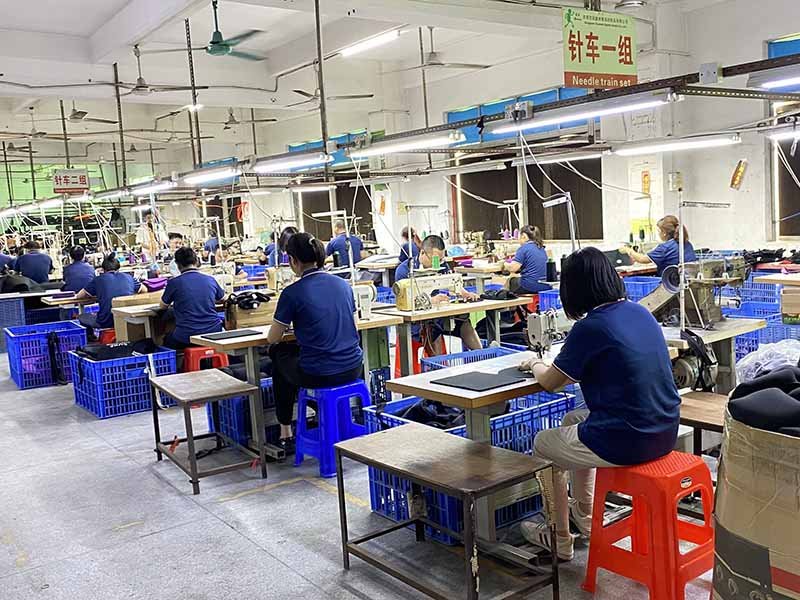
Szoneier is a trusted leader in custom garment bag manufacturing. With over 18 years of experience in producing high-quality bags for international markets, we specialize in OEM customization for a wide variety of industries, including travel, formalwear shipping, and retail. Our bags are designed to meet exact specifications for waterproof and water-resistant protection, ensuring your garments stay dry, safe, and undamaged.
Key Benefits of Choosing Szoneier for Garment Bags:
| Feature | Benefit |
|---|---|
| Custom Waterproof Designs | Tailored to your product’s specific needs (light travel, formalwear shipping, storage) |
| Low MOQ | Affordable for small businesses or new product launches |
| Fast Turnaround Time | Speedy samples and production cycles for faster market entry |
| Expert Engineering Support | Work with a team of experienced engineers to perfect your designs |
| Premium Material Sourcing | Use of high-quality fabrics and coatings (TPU, PVC, PU) |
| Eco-friendly Materials | Recycled PET and eco-conscious coatings for sustainability-focused brands |
Whether you need a premium waterproof garment bag for wedding dress shipping or a lightweight, breathable bag for travel use, Szoneier offers custom solutions that meet your specific needs and budget.
Request a Custom Garment Bag Quote from Szoneier
Ready to develop your custom waterproof or water-resistant garment bags?
Contact Szoneier today for a custom quote and we’ll work closely with you to choose the perfect materials, design features, and production timeline for your product.
Our team will help you navigate:
- Fabric and coating options
- Seam sealing and zipper protection methods
- Durability testing for long-term performance
- Eco-friendly customization options for market-leading brands