 Skip to content
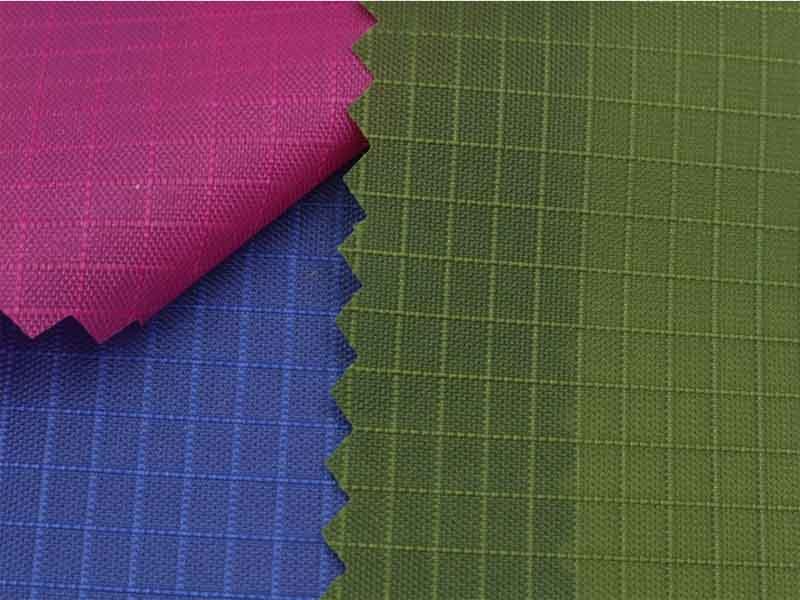
If you build bags that get used—not just photographed—you eventually land on Nylon 66 (PA66). It shows up in travel backpacks, tool bags, cooler shells, smell-proof liners, even fire-retardant outer fabrics. Why? Because PA66 starts strong, stays strong at higher temperatures, and shrugs off abrasion better than most commodity fibers. But “Nylon 66” isn’t a magic word; quality varies by denier, weave, coating, and finishing. The difference between a bag that feels premium for years and one that frays by Labor Day is how you specify and test it.
Nylon 66 (PA66) is a polyamide made by polymerizing hexamethylenediamine and adipic acid (“6,6” refers to the six carbons in each monomer). Compared with Nylon 6 and polyester, PA66 offers higher melting point, excellent abrasion resistance, and strong tear strength—ideal for backpacks, travel, tool, and ballistic fabrics. It isn’t inherently waterproof; water repellency comes from weaves and coatings (DWR, PU, TPU). Downsides include higher cost, moisture uptake, and UV sensitivity vs. polyester.
A quick story: a brand came to us because their “tough” daypack scuffed through at the corners after a season. The fabric was a nice-looking Oxford, but the yarn was PA6, the coating was thin, and the weave density was light. We swapped to 420D PA66 ripstop with a 0.8 PU back-coat and C0 DWR, tightened the construction, and validated with abrasion/tear testing. Same silhouette, same price band—completely different lifespan. That’s the Nylon 66 effect when it’s specified well.
What Is Nylon 66 and How Is It Made?
Nylon 66 (PA66) is an engineering polyamide made by reacting hexamethylenediamine (6 carbons) with adipic acid (6 carbons)—hence “6,6.” The monomers form a “nylon salt,” which is polymerized into chips, dried, and melt-spun into filaments. The filaments are drawn (stretched) to align molecules, then texturized and woven (e.g., 210D–1050D) into fabrics. Finishes like DWR and back-coats (PU/TPU) tailor water resistance and hand-feel for bags, backpacks, travel gear, and rugged reinforcements.
Why is it called Nylon 6,6?
The name comes from the carbon count of each monomer: hexamethylenediamine (H₂N-(CH₂)₆-NH₂) contributes six carbons and adipic acid (HOOC-(CH₂)₄-COOH) links through six carbons across the amide bond. Pairing a “6” diamine with a “6” diacid produces a highly crystalline polyamide—PA66—with a higher melting point and better creep/abrasion resistance than many commodity nylons.
From “nylon salt” to polymer chips
- Neutralization (Salt Formation): Equimolar hexamethylenediamine and adipic acid dissolve in water to form a nylon 66 salt. Balanced stoichiometry is critical—too much of either monomer skews molecular weight and performance.
- Polycondensation: The salt is heated under pressure; monomers join into long polyamide chains while releasing water. Process controls target the right molecular weight/viscosity so the polymer will spin cleanly and deliver the strength designers expect.
- Pelletizing & Drying: The melt is extruded and chopped into chips (pellets). Chips are dried to very low moisture to prevent hydrolysis during spinning.
Melt-spinning, drawing, and texturizing (how fiber performance is built)
- Melt-Spinning: Dry chips are melted and pushed through a spinneret (think showerhead for polymer). Cooling solidifies continuous filaments.
- Drawing (Orientation): Filaments are stretched several times their original length to align molecular chains. This jump in orientation delivers the tensile and tear strength PA66 is known for.
- Heat-Setting: A gentle heat treatment stabilizes the orientation so properties don’t relax in use.
- Texturizing: Air-jet or false-twist texturing adds bulk, cover, and a rugged hand. Air-jet textured PA66 is what gives “Cordura-style” fabrics their signature matte, tough look.
From yarn to the bag on your shoulder
- Yarn Counts (Denier): Bag fabrics commonly use 210D, 330D, 420D, 500D, 630D, 840D, and 1050D PA66. Lower deniers suit linings/organizers; higher deniers suit shells, bases, and tool/outdoor reinforcements.
- Weaving/Knitting:
- Oxford and ripstop for daypack and travel shells (210D–500D).
- Air-jet textured (Cordura-style) for a premium, abrasion-resistant hand.
- Ballistic (840D/1050D 2×2) for corners, bottoms, and high-drag panels.
- Finishing & Coating:
- DWR (C0) on the face for water beading.
- PU back-coats (e.g., 0.5–1.0 PU) for structure and hydrostatic head.
- TPU laminates when you need true barriers (dry bags, cooler liners, odor-control stacks).
- Coloring: piece-dyed, yarn-dyed, or solution/dope-dyed routes depending on colorfastness, cost, and MOQ needs.
What makes PA66 attractive for bags?
- Mechanical resilience: Excellent abrasion, tear, and tensile performance—especially at higher deniers and tighter weaves.
- Thermal stability: Melting ~255–265 °C helps maintain shape in hot environments (car trunks, summer tarmacs).
- Dyeability & Hand: Takes color well and can be engineered for a rugged, premium feel with air-jet texturing.
And what are the caveats?
- Not inherently waterproof: You need weave density, DWR, and back-coats/laminates for weather performance; waterproof seams require tape or welding.
- Moisture uptake & UV: PA66 absorbs modest moisture (helpful for dye, but it can alter hand) and has lower UV stability than polyester unless stabilized.
- Cost: PA66 typically sits above Nylon 6 and polyester; brands often reserve it for high-wear zones or hero SKUs where durability sells.
Process Map (bag-focused)
| Stage | What happens | Why it matters for bags |
|---|---|---|
| Nylon salt → polymer | Step-growth polymerization | Sets baseline strength/viscosity for clean spinning |
| Melt-spinning | Filaments formed through spinneret | Controls filament diameter, luster, and consistency |
| Drawing & heat-set | Molecular alignment & stabilization | Unlocks tear/tensile performance and dimensional stability |
| Texturizing | Adds bulk/cover (“Cordura-style”) | Rugged hand, better abrasion, premium look |
| Weave & finish | Oxford/ripstop/ballistic + DWR/PU/TPU | Tunes water resistance, structure, and sewability |
Which Properties Make Nylon 66 Stand Out for Bags?
PA66 balances high abrasion resistance, strong tear/tensile, and heat tolerance (melting ~255–265 °C). It dyes well and feels premium. It’s not inherently waterproof—repellency comes from DWR and back-coatings (PU/TPU). Typical use cases: backpacks, travel, tool, cooler, and smell-proof shells; webbings; reinforcements. Downsides: higher cost than PA6/PET, moisture uptake affecting stiffness, and UV sensitivity lower than polyester.
What Is Nylon 66 Used For?
- Backpacks & Travel Bags: 420D–630D ripstop/Oxford for outer shells; 210D for linings.
- Tool/Outdoor Bags: 840D–1050D ballistic for impact corners and bases.
- Cooler/Dry/Smell-Proof Bags: PA66 face laminated to TPU or barrier films for waterproof/odor control.
- Webbing & Trims: PA66 webbing maintains strength at elevated temps better than many alternatives.
- Fire-retardant shells (with FR chemistries) in specialized tool or industrial bags.
Tensile, Tear & Abrasion; Heat Resistance & Moisture Regain
- Abrasion: PA66’s tougher crystalline structure improves wear life versus PA6 of similar denier.
- Tear/Tensile: High across the board; weave density and yarn quality matter as much as polymer.
- Heat: Higher heat deflection and melting ~255–265 °C help with form stability in hot cars or while heat-setting.
- Moisture: Equilibrium moisture ~2–4% at ambient humidity—improves dye uptake but can slightly change hand and dimensions.
Is Nylon 66 Waterproof?
No fiber is truly waterproof by itself. Waterproof performance in bags comes from:
Weave (tight constructions reduce wicking),
DWR (surface water repellency), and
Back-coats/laminates (e.g., PU, TPU).
Seam construction (tapes/welds) and closure design (zippers/roll-tops) determine real-world water ingress.
Which Deniers Suit Which Bag Types?
| Bag Type / Zone | Recommended PA66 | Why |
|---|---|---|
| Daypack shell | 420D ripstop | Balance of weight, tear, and cost |
| Travel shell | 500D Oxford / 420D ripstop + 0.8 PU | Durable with good hand |
| Base/panel reinforcements | 840D–1050D ballistic | Impact & drag resistance |
| Tool/outdoor | 630D–1050D | High abrasion & load |
| Liners/organizers | 210D–330D | Light, smooth, colorfast |
What Are the Disadvantages of Nylon 66?
- Cost: Typically higher than PA6 and polyester at like-for-like denier.
- Moisture Uptake: Gains mass and can soften when humid; can lengthen dry times.
- UV Sensitivity: Weathers faster than polyester without stabilizers or dark colors.
- Hydrolysis/Chemical: Strong acids/bases and long, hot, wet storage can reduce strength.
- Sustainability: Fewer recycled PA66 streams vs. recycled PA6/PET (improving, but limited).
How Does Nylon 66 Compare with Nylon 6 and Polyester for Bag Fabrics?
Versus Nylon 6, Nylon 66 (PA66) generally offers a higher melting point, better abrasion/creep resistance, and a “rugged premium” hand—but it costs more. Versus polyester (PET), PA66 wins on toughness and tear strength, while PET wins on UV/weather resistance, lower moisture uptake, print vibrancy, and price. For hard-wearing shells, bases, and reinforcements, PA66 is a top pick; for sun-heavy, value-sensitive programs or vivid prints, PET is often smarter.
The chemistry-in-brief
- Nylon 66 (PA66): polyamide made from hexamethylenediamine + adipic acid. More crystalline than PA6.
- Nylon 6 (PA6): polyamide from ε-caprolactam; slightly lower melt and softer hand at like-for-like denier.
- Polyester (PET): polyethylene terephthalate; hydrophobic, UV-stable, widely available in recycled streams.
What you feel and what customers notice
- Abrasion & tear (durability): PA66 typically edges out PA6 at the same denier and weave. Both nylons out-tough PET in drag/scuff zones (bag bottoms, corners, tool pockets).
- Hand/appearance: Air-jet textured PA66 yarns create the familiar matte, rugged “Cordura-style” look. PET reads crisper and smoother, with excellent print clarity; PA6 sits in between.
- Heat stability: PA66’s higher melting point (~255–265 °C) helps panels keep shape and coatings stay stable in hot cars or during heat-taping.
Moisture, sun, and weather behavior
- Moisture uptake: Nylons take up ~2–4% moisture at ambient humidity; that aids dyeing but can soften the hand and extend dry time. PET is ~0.4% (more “dry-feeling,” faster to dry).
- UV resistance: PET weathers significantly better outdoors. Unstabilized nylons can chalk/fade faster in intense sun; additives, darker shades, and top finishes mitigate this.
- Waterproofing reality: None of these fibers is “waterproof” by itself. Real performance comes from weave density + DWR on the face + PU/TPU on the back (and tape/welding for seams).
Cost and sustainability
- Cost (fabric, same denier): PA66 > PA6 > PET. Use PA66 surgically where it pays back (high-wear zones), and balance BOM with PA6/PET elsewhere.
- Recycled content: Recycled PET and PA6 are widely available and color-flexible; recycled PA66 exists but is less common and can be more limited in shades/MOQs.
- Dope-dyed (solution-dyed) options: Common in PET (UV/colourfastness gains and lower water use); available but less ubiquitous in PA66.
Coatings, laminates, and compatibility
PA66 bonds cleanly with PU and TPU—use PU (0.5–1.0) for everyday water resistance and panel stability; pick TPU laminate when you need a barrier (dry pockets, cooler/smell-proof modules). PET also coats well; just remember that UV-heavy programs often skew PET anyway.
Side-by-Side Comparisons
Property snapshot
| Property | Nylon 66 (PA66) | Nylon 6 (PA6) | Polyester (PET) |
|---|---|---|---|
| Melting point | ~255–265 °C | ~220–225 °C | ~255–260 °C |
| Abrasion resistance | Excellent | Very good | Good |
| Tear/tensile (same denier) | Excellent | Very good | Good–Very good |
| UV/weathering | Fair (needs help) | Fair | Very good |
| Moisture regain (50% RH) | ~2–4% | ~2–4% | ~0.4% |
| Dyeability | Excellent | Excellent | Good (great print pop) |
| Typical cost | High | Medium | Low |
| Hand/feel | Rugged, premium matte | Smooth/versatile | Crisp, clean |
Decision Guide
- Choose Nylon 66 (PA66) when you need best-in-class abrasion/tear at moderate weight, a rugged premium hand, and stable performance under heat—e.g., travel shells, tactical/tool reinforcements, bag bases.
- Choose Nylon 6 (PA6) when you want most of nylon’s toughness at lower cost for general shells and panels, and you’re not pushing extreme wear or heat.
- Choose Polyester (PET) when UV exposure, print vibrancy, fast drying, and price lead—resort/travel in sunny markets, fashion graphics, value programs.
What Weaves, Finishes, and Coatings Are Used on Nylon 66?
Popular PA66 constructions include Oxford, ripstop, air-jet textured (Cordura-style), and 1050D ballistic. Finish stacks pair C0 DWR with PU back-coats or TPU laminates for water resistance or waterproofness. Silicone finishes enhance repellency. Smell-proof/cooler builds use barrier films. Authenticity checks: supplier specs, DSC/FTIR lab tests, and consistent performance in abrasion/tear and melt point.
The core PA66 weave lineup
| Weave / Construction | Look & Hand | Typical Deniers | Strengths | Best Uses |
|---|---|---|---|---|
| Oxford (plain/basket/twill variants) | Smooth to slightly textured; versatile | 210D–500D | Balanced tear/hand; broad color range | Everyday shells, travel, linings (lighter denier) |
| Ripstop (box/diamond grids) | Subtle grid; technical vibe | 210D–420D | Arrests tears; good weight/performance | Daypacks, travel shells, organizers |
| Air-jet textured (Cordura-style) | Matte, rugged, “dry” hand | 420D–500D | Excellent abrasion, premium feel | Premium shells, urban/outdoor hybrids |
| Ballistic (2×2 basket) | Dense, glossy armor look | 840D–1050D | Max drag/impact resistance | Bases, corners, tool/tactical zones |
| Dobby/Jacquard accents | Patterned textures | 210D–420D | Visual interest; branding | Panels/pockets where scuff is lower |
What to choose when:
- Want premium, tough aesthetics without heavy weight? 420D PA66 air-jet.
- Need “can’t-kill-it” abrasion for bottom panels? 840D–1050D ballistic.
- Making a light travel shell at sharp cost? 210–330D PA66 Oxford or mix PA66 shell + PET liner.
Face finishes (how water beads, how color lasts)
- C0 DWR (fluorine-free): Standard for modern bags; beads light rain and spills. Re-treatable.
- Silicone top-finish: Higher beading and slick hand; can reduce friction during clean-down. May impact print adhesion—test early.
- Acrylic/hand modifiers: Add “body” to fabrics that need crisper drape.
- UV stabilizer packages: Helpful because nylons weather faster than polyester; darker shades + UV aids extend life.
- Color routes:
- Piece-dyed: Flexible MOQs; widest palette.
- Yarn-dyed: Better shade consistency; pattern effects (ripstop grids).
- Dope-dyed (solution-dyed): Strong colorfastness, lower water use; fewer off-the-shelf colors in PA66 vs PET.
Back-side solutions: PU back-coats vs TPU laminates
| System | Typical Spec | Hydrostatic Head* | Pros | Watch-outs | Seam Method |
|---|---|---|---|---|---|
| PU back-coat | 0.5–1.0 PU | ~500–1,500 mm | Adds structure, easy sewing, value | Heavy coats can stiffen; hydrolysis in hot/wet storage if under-spec’d | Tape (PU), stitch + tape |
| TPU laminate | 0.05–0.20 mm film | 5,000–10,000+ mm | True barrier, weldable, odor-resistant bases | Higher cost; careful heat control | Tape (TPU) or weld |
| Acrylic back-coat | Thin binder | Low | Cost/body only | Not for waterproofing | Not intended |
| Barrier stacks (EVOH/foil) | Layered films | Ultra-low permeation | Smell-proof/cooler builds | Lamination complexity; fold crack | Tape + weld where applicable |
- Guidance only—verify with lab tests on your exact stack.
When to use what:
- Everyday water resistance (rain, splashes): C0 DWR + 0.5–0.8 PU.
- Dry pockets / cooler liners / smell-proof: TPU laminate behind PA66, then tape or weld seams.
- Tool/tactical rigidity: A slightly heavier PU helps panel stability without going up a denier class.
Spec recipes by use-case
- Urban/travel backpack shell: 420D PA66 ripstop, C0 DWR + 0.6–0.8 PU; 210D rPET liner. Option: air-jet PA66 for a richer hand.
- High-wear zones (bases/corners): 840D–1050D ballistic PA66 panels; same finish stack as shell or heavier PU.
- Wet compartment / dry bag module: 210–330D PA66 + TPU film, WR zipper + seam tape or RF/heat weld.
- Smell-proof pocket: PA66 face + EVOH/foil barrier; extended seam sealing and zipper spec; validate permeation.
- Lightweight organizer/liner: 210D PA66/PET with C0 DWR; PU optional.
Authenticity, QC, and care
- Prove it’s PA66 (not a blend): Ask for yarn certs; confirm denier/filament specs. Lab DSC (melt peak ≈255–265 °C) and FTIR fingerprinting verify polymer.
- Adhesion & aging: Crosshatch/peel tests for coating adhesion; hydrolysis aging for PU in hot/wet conditions; salt-spray for hardware on coastal programs.
- Colorfastness: AATCC 16 (light) + AATCC 8 (crocking) at target grades for your channel (indoor vs sun-heavy).
- Seam integrity: If you tape or weld, test peel after temperature/humidity cycles.
- Care guidance: Rinse salt/sand, avoid long hot-car storage, re-proof DWR as needed. Durable products + clear care labels = lower returns.
Are There Sustainability and Compliance Considerations for Nylon 66?
Yes. Recycled PA66 exists but is less common than recycled PA6/PET. Brands reduce impact via durability-first design, dope-dyed yarns, C0 DWR, and repairability. Compliance frameworks include OEKO-TEX®, bluesign®, and REACH. Microfiber shedding can be mitigated with tighter weaves, durable finishes, and consumer care guidance.
Is Recycled or Bio-Based PA66 Available?
- Recycled PA66 streams are growing (post-industrial, some post-consumer), but availability and color options can be limited.
- Bio-based PA66 is emerging; volumes are small and costs higher. If you need high recycled content now, PA6/PET may offer broader color/price options for linings and trims.
Microfiber Shedding—What Can Brands Do?
- Use tighter weaves and durable finishes to minimize fiber loss.
- Provide care labels: wash/clean bags less aggressively; spot clean.
- Consider monomaterial linings where possible for easier recycling.
OEKO-TEX®, bluesign®, REACH—What Auditors Expect
- Chemical management for dyes/finishes, restricted substances, and traceable inputs.
- For TPU laminates and smell-proof films, request food-contact or low-VOC options when applicable.
Design for Durability, Repairability, and End-of-Life
- Reinforce strap anchor points; specify UV-stable webbing and corrosion-resistant hardware.
- Offer spare parts (zipper sliders, buckles) and repair services.
- Favor classic colorways for longer fashion life—sustainability starts with products people keep.
How Do Brands Source, Test, and Cost Nylon 66 with Szoneier (OEM/ODM)?
We help you choose denier/weave/coating, validate with abrasion/tear/colourfastness tests, and hit target margins via weave density, coating weight, liner choices, and pattern efficiency. Low MOQs, 7–10-day samples, Pantone or stock colors, and transparent BOMs keep costs predictable. We map PA66 vs. PA6/PET where it makes sense.
Sourcing → Fabric Stack
Send a one-page brief (use case, weight & price targets, color plan, warranty horizon, sustainability asks). We’ll answer with 2–3 stack options—e.g., PA66 premium (420D ripstop, C0 DWR + 0.8 PU), PA6 value (420D Oxford, 0.5 PU), and PET UV (600D for sun-heavy markets)—each with estimated performance, weight, and cost deltas. Compliance (OEKO-TEX/REACH) and documentable inputs are included from the start.
Sampling & Verification (7–10 days to proof of concept)
We build a functional sample in 7–10 days using the intended weave/coating, then lock a PP sample. Validation covers abrasion (e.g., 20k–50k+ cycles face; 40k–80k+ base), Elmendorf tear (typ. 15–30 N for 420D class), hydrostatic head (≈800–1,500 mm for 0.5–0.8 PU), DWR spray (80–90+), colorfastness (AATCC), seam/tape or weld strength for TPU laminates, and AQL 2.5/4.0 pre-ship.
Transparent Costing & Real Levers
You get a line-item BOM (shell, liner, coatings, trims, labor, QA, packaging, scrap). Biggest levers: (a) fabric & weave density (a tight 420D PA66 ripstop can beat a loose 500D PA6), (b) coating weight (prove need before jumping from 0.5→0.8 PU), (c) liner choice (recycled PET value), (d) pattern efficiency (CAD nesting trims 5–12% offcuts), (e) hardware consolidation, (f) branding method (heat-transfer/silicone vs. heavy embroidery).
MOQs, Timelines & Risk Controls
Typical MOQs: 200 pcs/style/color (bags); custom fabrics follow mill yardage. Lead times: samples 7–10 days, PP +5–10 days, bulk 25–55 days (stock vs. custom). We de-risk with a signed golden sample, pilot run (50–100 pcs) for new stacks, inline QC at critical ops, salt-spray for hardware where relevant, and full traceability (fabric/coating lots, test reports) with each shipment.
Application Map—Backpacks, Travel, Tool, Fireproof, Cooler/Dry/Smell-Proof
| Category | Typical Shell | Inside/Barrier | Notes |
|---|---|---|---|
| Everyday backpack | 420D–500D PA66 ripstop/Oxford | 210D liner | DWR + 0.5–0.8 PU |
| Travel duffel | 500D PA66 Oxford | 210D liner | Reinforced base in 840D/1050D |
| Tool/tactical | 840D–1050D ballistic | 330D liner | Box-X stitches, bartacks |
| Fire-retardant shells* | FR-treated PA66 fabric | — | *Market-specific compliance |
| Cooler/dry | PA66 + TPU laminate | TPU/food-safe film | Tape/weld seams |
| Smell-proof | PA66 + barrier film | EVOH/foil layer | Seal seams; low-permeation |
Quick Reference Tables
PA66 vs PA6 vs PET
| Metric | PA66 | PA6 | PET |
|---|---|---|---|
| Melting point (°C) | 255–265 | 220–225 | 255–260 |
| Moisture regain (50% RH) | 2–4% | 2–4% | ~0.4% |
| Abrasion resistance | Excellent | Very good | Good |
| UV stability | Fair | Fair | Very good |
| Dyeability | Excellent | Excellent | Good |
| Relative cost | Higher | Medium | Lower |
Denier & Use Guide
| Denier | Typical Weave | Use | Notes |
|---|---|---|---|
| 210D | Oxford/ripstop | Liners, organizers | Light, smooth |
| 330D | Oxford/ripstop | Light shells | Good color pop |
| 420D | Ripstop/air-jet | Everyday shells | Sweet spot |
| 500D | Oxford/air-jet | Travel/outdoor | Tougher hand |
| 840D | Ballistic | Bases/corners | Drag resistance |
| 1050D | Ballistic 2×2 | Tool/tactical | Maximum ruggedness |
Conclusion
Nylon 66 earns its reputation the hard way—on airport floors, gravel trails, and job sites. It brings abrasion toughness, thermal stability, and that premium “rugged” hand that users feel immediately. It’s not always the cheapest choice, and it’s not waterproof by itself—but when you pair the right denier, smart weave density, and the right coating stack, it delivers bags that stay beautiful after real life happens.
If you’re weighing PA66 against PA6 or polyester—or you simply want a bulletproof shell in the right price/weight—we’ll help you spec, sample, and test it fast.
Partner with Szoneier (OEM/ODM):
- Low MOQs from 200 pcs/color
- 7–10-day prototypes with your colorways
- Transparent BOMs and test reports (abrasion, tear, colorfastness, hydrostatic)
- Options for recycled linings, C0 DWR, and TPU barrier builds
manufacturer Categories
- Custom Tote Bags Manufacturer
- custom backpacks Manufacturer
- custom travel bags& Duffle bags manufacturer
- custom makeup bags & toiletry bags manufacturer
- custom cooler bags manufacturer
- custom drawstring bags manufacturer
- custom makeup bags & toiletry bags manufacturer
- custom golf bags manufacturer
- custom fireproof bags manufacturer
- custom dry bags manufacturer
- custom ski bags manufacturer
- custom gym & sports bags manufacturer
- custom laptop bags manufacturer
- custom tactical bags manufacturer
- custom beach bags manufacturer
- custom medical bags manufacturer
- custom camera bags manufacturer
- custom wetsuits manufacturer
- custom leather goods manufacturer
- more personalized products
Can't find the answers?
No worries, please contact us and we will answer all the questions you have during the whole process of bag customization.
Make A Sample First?
If you have your own artwork, logo design files, or just an idea,please provide details about your project requirements, including preferred fabric, color, and customization options,we’re excited to assist you in bringing your bespoke bag designs to life through our sample production process.
