 Skip to content

The duffel bag is one of the world’s most recognizable soft-sided bags, used everywhere—from weekend travel to gyms, sports teams, and even military deployments. But despite its global popularity, most people have never paused to ask a simple but intriguing question: Why is it called a duffel bag in the first place? The answer is richer, more historical, and more globally influenced than most buyers expect. A duffel bag gets its name from the town of Duffel in Belgium, where thick woolen cloth—called “duffel cloth”—was produced in the 17th century. Early bags were made using this rugged material, and soldiers later popularized both the design and the term. Over time, “duffel bag” came to describe any cylindrical, soft, top-closure bag, though modern versions now appear in canvas, nylon, polyester, leather, and performance materials.
As we explore the term’s meaning, global variations (such as what it’s called in the UK), and the design evolution that shaped today’s travel standards, you’ll gain a deeper appreciation for a product you may use frequently—yet rarely question. And by the end, you’ll see how modern manufacturers like Szoneier, with 18+ years of OEM/ODM experience, continue to shape the future of this iconic bag category.
What Does the Term “Duffel Bag” Actually Mean?
The term “duffel bag” refers to a soft, flexible, cylindrical or rectangular carry bag originally made from “duffel cloth,” a thick woolen fabric produced in Duffel, Belgium. Today, the meaning has expanded to include any large-capacity, soft-sided travel, sports, or utility bag made of canvas, nylon, polyester, leather, or waterproof materials. The name describes not only the fabric origin but also a functional category of bags known for durability, versatility, and packability.
Although the term “duffel bag” appears simple on the surface, its meaning is layered—shaped by textile history, military adoption, global travel culture, and modern product design. For modern buyers and brands, understanding the meaning of “duffel bag” is valuable because it explains why the category has become so versatile and why the term still influences bag-buying decisions today.
Historically, “duffel” referred strictly to a material—a thick, coarse woolen cloth manufactured in the Belgian town of Duffel beginning in the 1600s. This fabric was prized for its density, water resistance, and hard-wearing durability, making it ideal for sailors, soldiers, and long-distance travelers. The earliest duffel bags were nothing more than simple drawstring sacks made from this heavy fabric. Yet, the combination of durability, mobility, and low cost made them indispensable in an era before structured luggage.
As global trade and travel increased, the name “duffel” transitioned from describing a fabric to describing a bag type. By the 1800s, travelers used duffel bags made from canvas or cotton duck, while soldiers relied on cylindrical top-loading duffels for deployment. Because the utility of the design mattered more than the material, “duffel bag” became a functional term—one that described how the bag behaved rather than what it was made from.
Fast forward to the 20th and 21st centuries, the meaning has broadened dramatically. Today, a duffel bag is defined not by wool, but by its versatility, capacity, and soft structure. Whether rectangular or barrel-shaped, zippered or roll-top, duffels are understood as bags designed for high-volume packing, quick access, and multi-purpose use. Airlines, sports teams, outdoor brands, and gym culture have all helped solidify the duffel bag as a core product category.
Digital retail and AI-driven search further blur the definition. When modern users search “duffel bag,” they may be looking for:
- a gym bag
- a weekender travel bag
- a carry-on duffel
- a military-style duffel
- a rolling duffel suitcase
- a waterproof expedition duffel
- a tool duffel or work duffel
This means the term now functions like a category umbrella, much like “sneakers” or “backpacks.” Consumers expect the bag to be durable, multi-functional, and comfortable to carry, while brands have the freedom to interpret and redesign the category for different markets.
For manufacturers like Szoneier, this evolving meaning is a strategic advantage. Because “duffel bag” has become such a wide, flexible category, Szoneier can help brands develop:
- travel duffels (nylon/polyester/canvas)
- waterproof duffels (TPU/PVC tarpaulin)
- premium leather weekenders
- gym and sports duffels
- folding duffels for e-commerce
- fireproof or smell-proof duffels
- tool and equipment duffels
- rolling duffel luggage
Understanding what “duffel bag” means today is not just a linguistic exercise—it’s crucial for brands building product lines or planning OEM/ODM manufacturing. The modern duffel is more adaptable, more customizable, and more marketable than ever before.
What Does “Duffel Bag” Mean in Modern Use?
In today’s consumer landscape, a duffel bag refers to any large-capacity soft-sided bag designed for convenience, high-volume packing, and multi-activity use. Whether sporty, stylish, or tactical, the common features remain: flexible structure, wide-opening access, and the ability to carry items that might not fit into a rigid suitcase. Modern duffels are defined by purpose more than shape, and by versatility more than tradition.
Where Does the Word “Duffel” Come From?
The term comes from Duffel, Belgium, once a major textile hub producing thick woolen cloth ideal for harsh weather conditions. Travelers purchased this fabric for its long-lasting strength, and the bags made from it inherited the town’s name. This linguistic evolution mirrors many product categories named after their materials or origins—like denim (Nîmes), muslin (Mosul), or calico (Calicut).
What Materials Were Used in the Original Duffel Bags?
Early duffels used coarse woolen “duffel cloth,” but were later replaced by cotton canvas for better affordability and manufacturability. In the modern era, materials include polyester, nylon, ballistic nylon, TPU, PVC tarpaulin, neoprene, and premium leather. Manufacturers choose materials based on durability, weight, water resistance, and price point—allowing the duffel category to adapt to every market segment, from economy to luxury.
How Did Soldiers Contribute to Popularizing the Term?
Military adoption is one of the biggest reasons the name “duffel bag” became globally recognized. Soldiers in Europe, the United States, and Asia carried duffels because they were lightweight, expandable, and easy to transport. Military duffels symbolized mobility and endurance, pushing the term into everyday vocabulary. Even today, “military duffel” remains a strong SEO keyword because its authenticity and ruggedness appeal to many consumers.
Why Is It Called a Duffel Bag Historically?
It is called a “duffel bag” because early versions were made from “duffel cloth,” a thick, durable woolen fabric produced in the town of Duffel, Belgium, from the 17th century onward. Sailors and soldiers widely adopted the bag because it was rugged and easy to pack, and the name eventually spread globally. Over time, even as materials changed, the term “duffel bag” continued to describe this simple, utilitarian, top-loading travel bag.
Understanding why the duffel bag carries its name requires tracing a surprisingly rich journey through European textile history, maritime trade, military logistics, and the evolution of global travel culture. While modern duffel bags now come in sleek nylon, TPU, and leather materials, the origins of their name remain deeply tied to one humble product: a thick woolen cloth produced hundreds of years ago in the Belgian town of Duffel.
1. The Birthplace: Duffel, Belgium
Beginning in the early 1600s, Duffel developed a reputation for producing a dense, coarse woolen fabric known for exceptional durability. This “duffel cloth” was heavy, water-resistant, and able to withstand abrasion—characteristics that made it highly desirable for seafaring expeditions and military campaigns in Europe. Before the age of industrial textiles, having a fabric that could survive months at sea or in harsh winter conditions was invaluable.
2. From Cloth to Bag: A Practical Necessity
Travel in the 17th–19th centuries was nothing like travel today. There were no suitcases, no rolling luggage, and no structured carriers. Travelers, explorers, and soldiers needed a container that was:
- inexpensive
- durable
- expandable
- easy to repair
- able to be stuffed with odd-shaped items
The simplest solution? A cylindrical or elongated sack made from Duffel’s thick woolen cloth. These sacks were functional rather than fashionable, typically featuring a drawstring closure or fold-over top. People began referring to them informally as “duffel bags” because they were made of duffel cloth.
3. The Military Effect: How Soldiers Spread the Name Worldwide
The next stage of the duffel bag’s naming journey came through the military. European armies—including those of Britain, France, and Belgium—issued duffel-style bags to soldiers because they were ideal for carrying varied supplies.
Military influence matters for naming because:
- Soldiers travelled widely
- Military terminology spread between nations
- Items used in war quickly became part of everyday culture
By the 19th century, the “duffel bag” was instantly recognizable among sailors and soldiers throughout Europe and eventually North America. The U.S. military adopted its own versions—most famously the olive-green seabag—further reinforcing the identity of the duffel bag as a rugged, utilitarian container.
4. Linguistic Persistence: Why the Name Survived Even After the Material Changed
One of the most interesting historical shifts is that duffel bags kept their name—even after manufacturers stopped using duffel cloth.
As canvas became cheaper and easier to mass-produce, it replaced wool. Later, synthetic fibers like nylon and polyester dominated due to strength-to-weight advantages.
Yet the term “duffel bag” stayed the same. Why?
- Cultural inertia — once a word becomes widely used, it rarely disappears.
- Symbolism — “duffel” became associated with durability and adventure.
- Military nostalgia — military duffels embedded the term deeply into society.
- Shape over material — people recognized the form and function, not the fabric.
This phenomenon mirrors other items whose names outlived their origins—for example, “denim” (from Nîmes), “muslin” (from Mosul), or “Duffel coat” (also named after Duffel’s wool fabric).
5. The Duffel Bag’s Transition Into Civilian Life
By the 20th century, duffel bags were no longer exclusive to military personnel. Athletes, gym-goers, travelers, and outdoor adventurers embraced the bag because:
- It carried bulky gear easily
- It weighed less than leather suitcases
- Its flexible shape fit various travel environments
- It could be folded flat when not in use
This democratization of travel coincided with the rise of commercial airlines, weekend tourism, and fitness culture. The duffel bag found new identities: gym bag, weekender bag, sports bag, travel duffel.
6. How Modern Manufacturing Solidified the Term
Once manufacturers industrialized duffel production in canvas, nylon, and polyester, the term became permanently tied to a category rather than a material.
Today, “duffel bag” describes:
- barrel-shaped sports duffels
- rectangular travel duffels
- rolling duffels
- waterproof expedition duffels
- fireproof or smell-proof duffels
- premium leather weekenders
Even AI search engines now treat “duffel bag” as a broad semantic category with dozens of subtypes.
For OEM/ODM manufacturers like Szoneier, this history is meaningful: the enduring name “duffel bag” gives brands tremendous flexibility to create products across both technical and lifestyle categories, while still benefiting from the search volume and consumer familiarity of a well-established term.
Was the First Duffel Bag Invented in Belgium?
The first duffel bag was not formally “invented” in Belgium in the sense of having a single known creator. Instead, Belgium provided the material foundation. Duffel cloth from Duffel, Belgium, became so internationally recognized that any bag made from it was eventually called a “duffel bag.” European sailors and military personnel were among the first adopters, using duffel-cloth sacks extensively from the 17th century onward. Over time, the association between the cloth and the bag became inseparable, giving rise to the name we still use today.
How Did Military Usage Shape the Duffel Bag’s Name?
Military use played a decisive role in popularizing the name “duffel bag.” Soldiers valued duffels because they were durable, inexpensive, easy to carry, and expandable. When armies across Europe and later the United States standardized duffel-style bags in their equipment lists, the term entered official documents, manuals, and everyday speech. Returning soldiers brought the term back to civilian life, where it spread through sports teams, travel communities, and general consumers. Few products owe their naming longevity to the military as much as the duffel bag
What Differentiated Duffel Bags From Other Soft Bags at the Time?
Duffel bags stood out historically because they filled a unique functional gap. Rigid wooden or leather trunks were heavy and expensive. Cloth satchels lacked durability. Duffel bags offered the best of both worlds: a low-cost, sturdy, weather-resistant sack that could carry oddly shaped items, compress when empty, and withstand harsh travel conditions. This combination made duffels indispensable for centuries, long before suitcases or backpacks became mainstream.
How Has the Duffel Bag Evolved Over Time?
Duffel bags evolved from simple woolen drawstring sacks into highly engineered travel, sports, and outdoor gear. Over centuries, they transformed through material upgrades (from duffel cloth to canvas, nylon, polyester, TPU), design innovations (zippers, compartments, backpack straps, wheels), and shifting lifestyle needs. Today’s duffels include travel, gym, outdoor, rolling, and premium weekender versions engineered for specific use cases.
The evolution of the duffel bag mirrors the evolution of global travel, warfare, material science, and lifestyle culture. What began as a simple cylindrical sack made from a thick Belgian wool fabric has transformed into one of the most diverse and versatile bag categories in the world. Understanding its evolution helps brands, manufacturers, and consumers appreciate how this everyday object became a global icon.
1. The 17th–18th Century: The Duffel Sack Was Born
The earliest duffel “bags” were nothing more than rugged sacks crafted from dense duffel cloth. Travelers valued them because they were inexpensive, durable, and capable of holding irregularly shaped objects. These early duffels offered no pockets, structure, or padding—just pure functional storage. Users tied them shut or folded the top over and secured it with rope.
2. The 19th Century: A Traveler’s Essential
As travel increased due to industrialization, trains, and seafaring trade, duffels gained popularity for portability. Their cylinder-shaped, top-loading design allowed travelers to pack quickly and move fast. Canvas replaced wool due to better availability and lower cost. The duffel at this stage remained simple but reliable—an essential companion for explorers, laborers, and migrants.
3. The 20th Century: Military Adoption Transforms the Design
Both World Wars radically influenced the duffel’s identity. Armies standardized duffel bags (or “sea bags”) for soldiers’ personal gear. Key innovations emerged:
- heavy-duty canvas construction
- reinforced seams
- larger capacities
- shoulder straps for mobility
The military’s widespread use turned duffel bags into a global household term. Many still associate duffels with ruggedness and reliability—a perception that benefits modern outdoor and tactical brands.
4. Mid-20th Century: The Rise of the Gym & Sports Duffel
As organized sports expanded, athletes adopted barrel-shaped duffels for carrying equipment. These versions introduced:
- zipper closures
- side pockets
- shoulder pads
- lighter materials like nylon and polyester
By the 1970s–1980s, gym duffels became a mainstream consumer product. Fitness culture helped the duffel bag shift from a utilitarian military item to a lifestyle accessory.
5. Late 20th Century: The Travel Duffel Goes Mainstream
The invention of air travel created new expectations for bags—lighter, more flexible, and easier to store in overhead bins. Duffel bags naturally fit this need. Innovations included:
- rectangular shapes
- padded handles
- shoe compartments
- trolley sleeves
- water-resistant coatings
Travel duffels became a fashionable alternative to suitcases, especially for weekend trips and business travel.
6. Early 21st Century: Outdoor & Adventure Duffels Redefine Performance
Outdoor brands popularized expedition duffels built from:
- TPU-laminated fabrics
- PVC tarpaulin
- welded seams
- waterproof zippers
- compression straps
These designs allowed duffel bags to survive rainstorms, snow, rivers, deserts, and high-impact environments. They became indispensable for mountaineering, motorcycle touring, camping, and extreme sports.
7. The Present Day: Technology, Customization & Hybrid Designs
Today’s duffel bags reflect both material science and user experience design. New innovations include:
- rolling duffels with wheels + telescoping handles
- convertible duffel-backpack hybrids
- smell-proof linings for athletic gear
- fire-resistant or insulated versions (for industrial or specialized use)
- EVA-molded bases for structure
- ultra-light ripstop duffels for travel convenience
Brands now view duffel bags as modular, customizable products. OEM/ODM manufacturers like Szoneier engineer duffels for niche needs—tech duffels, tool duffels, foldable duffels, premium leather weekenders, and waterproof expedition models—all from a single category that once started as a simple wool sack.
8. The Digital Age: Search Behavior Reinforces the Category
E-commerce and AI further strengthen the duffel’s evolution. Searches for “gym duffel,” “travel duffel,” “rolling duffel,” and “waterproof duffel” shape how manufacturers design products. Modern consumers expect high performance, specialized compartments, and aesthetic appeal—pressuring brands to innovate faster.
Thus, the evolution of the duffel bag is not just historical; it is ongoing, shaped by technology, travel trends, sport lifestyles, and consumer behavior.
Which Design Features Have Changed the Most?
The most dramatic evolution has occurred in closure systems, materials, and structure. Early duffels had simple fold-over or rope closures; modern duffels feature high-quality zippers, waterproof roll-tops, magnetic closures, or hybrid combinations. Materials evolved from wool to canvas to ballistic nylon, TPU, ripstop polyester, and leather. Structure also transformed—from completely unstructured sacks to reinforced, padded designs with shaped bases, shoe compartments, laptop sleeves, and multi-pocket interiors. Ergonomic upgrades—like padded shoulder straps, removable sling straps, ventilated panels, and backpack-convertible harnesses—make today’s duffels far superior in comfort and practicality.
How Did Sports, Travel, and Work Influence the Duffel Shape
Sports demanded wider openings and ventilated compartments, leading to the classic barrel duffel shape. Travel required efficient packing and overhead-bin compatibility, resulting in structured rectangular duffels and weekender designs. The rise of commercial air travel also influenced size standards and weight optimization. Work environments—from construction to photography to aviation—required durability and specialized storage, giving rise to reinforced tool duffels with EVA bottoms and multi-pocket layouts. Each sector shaped the duffel’s geometry based on functional needs, resulting in the diverse duffel ecosystem we see today.
Are Today’s Duffel Bags Still Made Like the Originals?
Structurally, the original principles remain: duffels are soft-sided, flexible, and capacity-driven. However, manufacturing sophistication has changed dramatically. Today’s duffels use computer-generated patterns, high-tensile stitching, bar-tack reinforcement, heat-welded seams, and precision hardware. Materials are lighter yet stronger, and many duffels include modular organization systems unheard of in earlier versions. While the spirit of rugged simplicity remains intact, modern duffel construction is the result of advanced textile engineering and user-centered product design—something manufacturers like Szoneier specialize in.
What Types of Duffel Bags Exist Today?
Modern duffel bags include barrel duffels, weekender duffels, travel duffels, rolling duffels, waterproof expedition duffels, gym and sports duffels, tactical or military duffels, foldable duffels, and specialized tool or work duffels. Each type differs in structure, material, capacity, and intended use. These variations serve different travel, sports, outdoor, industrial, and lifestyle needs worldwide.
The term “duffel bag” today covers one of the broadest and most diverse soft-luggage categories in the global travel, sports, and outdoor markets. Unlike centuries ago—when a duffel was a simple cylindrical sack—modern duffel bags span multiple sub-categories, each engineered for different user lifestyles, environments, and performance expectations.
This diversification is driven by major consumer trends: more frequent short trips, gym culture, outdoor sports, airline travel, remote working, and the rise of niche travel activities. At the same time, advances in materials (nylon, TPU, ripstop polyester, EVA-molded structures) have made duffel bags lighter, more durable, and more customizable than ever.
To fully understand the modern landscape, it helps to break duffel bags into clear professional categories used by manufacturers, OEM/ODM suppliers like Szoneier, and retail brands. Each type offers a unique combination of structure, capacity, portability, organization, and durability.
1. Classic Barrel Duffel Bags
Barrel duffels are the closest descendants of historical duffels. Their cylindrical shape maximizes internal volume and allows users to pack bulky items easily. They typically feature a long main zipper, detachable shoulder strap, and lightweight construction.
These duffels are most popular for:
- gym sessions
- team sports
- school activities
- day-to-day carry
Barrel duffels usually use polyester, nylon, or canvas, making them highly affordable for both retail and promotional markets.
2. Weekender Duffels
The weekender is a modern, style-oriented interpretation of the duffel bag. Unlike barrel duffels, weekenders often have:
- structured sides
- premium materials (leather, canvas, high-denier nylon)
- metal hardware
- multiple organization pockets
This type caters to short 2–4 day trips and is widely used by business travelers, couples, and lifestyle consumers who prefer a sophisticated aesthetic.
Weekenders are a high-value category for OEM/ODM manufacturing because brand identity, trims, stitching quality, and finishing techniques significantly affect perceived value.
3. Travel Duffel Bags
Travel duffels bridge the gap between soft luggage and traditional suitcases. They often include:
- reinforced base panels
- padded handles
- shoe compartments
- trolley sleeves (for attaching to luggage handles)
- internal zip pockets
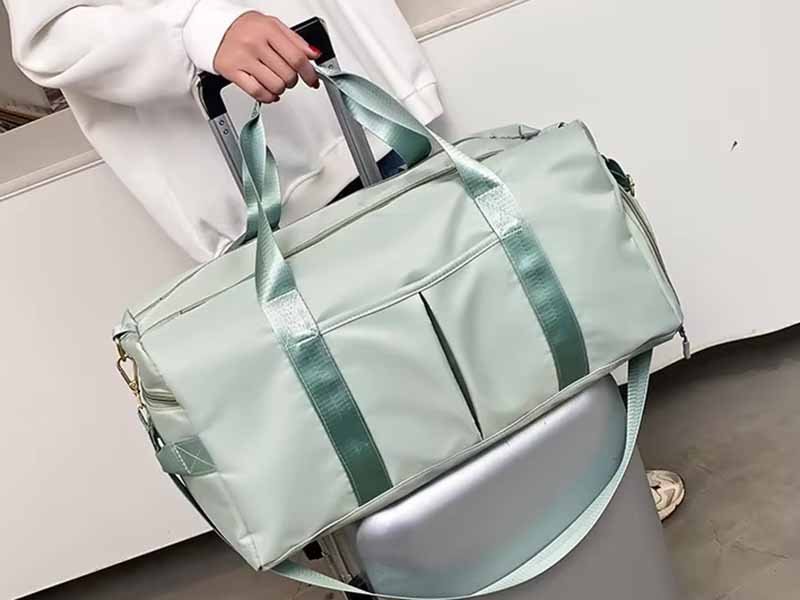
Their rectangular shape improves packing efficiency. Many brands market travel duffels as versatile “carry-on companions” that meet airline size requirements. Because they are lightweight and compressible, travelers frequently prefer them over rigid suitcases for weekend or multi-stop trips.
4. Rolling Duffel Bags
Rolling duffels combine the flexibility of a duffel bag with the convenience of wheeled luggage. They feature:
- a telescopic handle
- two or four wheels
- a rigid or semi-rigid base
- structured compartments
They are especially useful for travelers carrying heavy gear, such as athletes, tour groups, or outdoor expeditions. Their hybrid design is more durable than standard soft luggage and often uses ballistic nylon or heavy-duty polyester.
5. Waterproof & Outdoor Expedition Duffel Bags
Outdoor duffels have become a major category thanks to adventure travel, motorcycle touring, and extreme sports. These duffels use:
- TPU-laminated material
- PVC tarpaulin
- welded seams
- watertight zippers
- roll-top closures
They are designed to survive rain, snow, mud, river crossings, and rough terrain. Many outdoor duffels also convert into backpacks, offering dual-carry functionality for hiking or travel.
These bags are widely used by:
- mountaineers
- campers
- kayakers
- motorcycle riders
- outdoor photographers
Their waterproofing and rugged durability place them into the high-performance product category.
6. Gym and Sports Duffel Bags
Sports-focused duffels often include:
- ventilated shoe compartments
- breathable mesh panels
- wet/dry separation
- lightweight construction
They target fitness enthusiasts, students, athletic teams, and professional sports organizations. Because these bags are high-turnover retail items, brands frequently use them for private-label collections where Szoneier’s low-MOQ & fast sampling advantages shine.
7. Tactical or Military-Style Duffel Bags
Inspired by original military seabags, these duffels feature:
- heavy-duty nylon or canvas
- MOLLE webbing
- reinforced stitching
- lockable zippers
- large-capacity cylindrical designs
They are popular among tactical users, law enforcement, and outdoor professionals, as well as consumers who want rugged aesthetics.
8. Tool Duffels / Work Duffel Bags
For industrial applications, tool duffels provide:
- reinforced EVA or PE bases
- abrasion-resistant fabrics
- internal tool loops
- multiple compartments for hardware
- waterproof or fireproof linings
These duffels are used by construction workers, electricians, mechanics, and technicians. This category is growing rapidly due to the global demand for commercial-grade gear bags.
9. Foldable or Packable Duffel Bags
These ultralight duffels fold into compact pouches for travel convenience. Made of ripstop nylon or polyester, they weigh very little but provide additional storage when needed. They are favored by frequent travelers and e-commerce buyers due to low cost and portability.
10. Premium Leather Duffel Bags
At the top end of the market, leather duffels offer luxury aesthetics, durability, and timeless appeal. They are usually hand-crafted with reinforced stitching, metal hardware, and structured interiors. These are especially strong performers for fashion brands and high-end private labels.
Which Classic Barrel Duffels Are Still Popular?
Barrel duffels remain a staple because their cylindrical design provides more usable space than rectangular bags of similar dimensions. They appeal to gym users, athletes, and commuters who want quick access to gear without complicated organization. Their lightweight nature and simple construction also make them affordable for mass retail and promotional campaigns.
What Are Weekender, Square, and Travel Duffels?
Weekender and square-shaped duffels cater to style-conscious travelers who want structure and elegance. Their boxier frames make packing more efficient, and many include laptop sleeves or interior organizers. These designs blend fashion with practicality, making them ideal for urban professionals or short leisure trips.
Are Rolling Duffel Bags Better for Long Trips?
Rolling duffels excel for extended travel or heavy loads. Their hybrid design minimizes strain, while still offering the flexible packing capacity of a traditional duffel. Many rolling duffels also include reinforced edges, skid plates, and water-resistant bases—features that make them travel-proof and airline-ready.
How Do Waterproof and Outdoor Duffels Differ?
Waterproof duffels use 100% sealed construction, while outdoor duffels focus on abrasion resistance, weather tolerance, and multi-carry options. Outdoor duffels may not be fully waterproof but offer superior durability for rugged use. Waterproof duffels, on the other hand, protect gear from immersion or heavy rain, making them essential for adventure travel.
How Do Materials Affect Duffel Bag Performance?
Duffel bag materials determine durability, weight, water resistance, abrasion strength, structure, and long-term usability. Nylon is strongest, polyester is lightweight and color-stable, canvas offers rugged aesthetics, TPU and PVC provide full waterproofing, and leather delivers premium appeal. Each material affects performance differently, influencing whether a duffel is best for travel, sports, outdoor use, industrial work, or premium lifestyle applications.
The performance of a duffel bag—how long it lasts, how it handles stress, how comfortable it is to carry, and what environments it can survive—is determined almost entirely by the materials used. Unlike hard-shell luggage, where structure influences durability, duffel bags rely on textile engineering to create strength, flexibility, and weather protection. Understanding the effect of each material helps brands make better decisions and enables consumers to select the best bag for their lifestyle.
1. The Foundation of Performance: Fabric Strength & Fiber Composition
Material strength is measured by factors such as denier (D), tensile strength, tear resistance, and abrasion resistance. High-denier nylon fabrics (e.g., 600D, 1000D, 1680D) deliver exceptional performance for sports, military, and outdoor duffels. Polyester, while slightly less strong per denier, offers superior colorfastness, making it ideal for fashion-forward or printed duffels. Canvas, made from cotton or cotton blends, offers traditional rugged durability but requires heavier weight.
2. Water Resistance & Weather Protection
For outdoor and travel environments, water resistance is crucial. Polyester with PU coating offers basic protection, while nylon with TPU coating provides stronger hydrostatic resistance. Fully waterproof duffels require:
- TPU laminated surfaces
- PVC tarpaulin construction
- welded seams
- airtight zippers
These ensure protection during heavy rain, river crossings, snow, and extreme environments.
3. Structure & Form Retention
Duffel bags are inherently soft-sided, but materials influence how well they retain their shape. Stiff PVC or thick canvas creates a firm silhouette, while lightweight nylon collapses easily for packability. Some premium duffels integrate EVA-molded bases or foam reinforcement to achieve a hybrid structure.
4. Weight & Portability
Material weight drastically affects carry comfort. Nylon and polyester are significantly lighter than canvas or leather. TPU/PVC waterproof bags add weight but are essential for outdoor durability. For airline travel or daily commuting, lighter fabrics are preferred because they reduce the overall load.
5. Aesthetic Appeal & Brand Positioning
Material choice influences brand identity and consumer perception. Polyester duffels signal sporty casual design, canvas conveys heritage, nylon suggests performance, and leather communicates luxury. For private-label brands, choosing the right material is part of defining market positioning.
6. Sustainability Considerations
Eco-conscious brands now request recycled polyester (rPET), organic canvas, or vegetable-tanned leather. rPET, made from recycled bottles, offers performance similar to virgin polyester but strengthens environmental credentials.
7. Manufacturing Implications
Material selection affects production complexity, MOQ, and cost. For example:
- TPU welding requires specialized machinery
- Leather requires skilled craftsmanship
- Nylon requires reinforced stitching and bartack strengthening
- Polyester is easier and more cost-efficient to mass-produce
OEM/ODM suppliers like Szoneier help brands choose materials that balance performance, cost, and market positioning.
Which Fabrics Offer the Best Durability
Nylon is widely considered the strongest duffel bag material due to its high tensile strength, abrasion resistance, and elasticity. Ballistic nylon (1680D) or Cordura-grade nylon is ideal for tactical, outdoor, and heavy-duty travel duffels. Canvas offers excellent abrasion resistance and a rugged, vintage aesthetic, but its heavy weight and lower water resistance make it less suitable for long-distance travel unless waxed or coated. Polyester is durable enough for everyday and sports use, holds color extremely well, and is cost-effective—making it a favorite for private-label and fashion-focused duffels. For premium performance, nylon is superior; for lifestyle appeal, canvas shines; for affordability and visual customizability, polyester wins.
How Do Waterproof, Fireproof, and Smell-Proof Duffel Designs Work?
Waterproof duffel bags rely on TPU or PVC tarpaulin laminated fabrics combined with heat-welded seams to create a fully sealed barrier. Unlike stitched seams, welded seams prevent water penetration even during immersion. Fireproof duffels utilize heat-resistant materials such as fiberglass fabric or fire-retardant coatings designed to withstand high temperatures. Smell-proof duffels use multilayer activated carbon lining that traps odor molecules inside a porous matrix, preventing odors from escaping—ideal for athletic gear, food delivery, outdoor camping, or specialized professional use. These technical material solutions elevate duffel bags from simple carriers to performance equipment suitable for extreme conditions.
Are Premium Duffels Made With Leather, TPU, or Hybrid Materials?
Premium duffel bags often combine materials to balance function and aesthetics. Leather delivers sophistication, structure, and long-term durability, making it a preferred choice for weekenders and luxury travel bags. However, leather is heavier and more maintenance-intensive. TPU offers superior waterproofing, abrasion resistance, and eco-friendliness compared to PVC, and is increasingly used in outdoor and adventure duffels. Hybrid constructions—such as nylon bodies with leather handles, TPU panels with EVA molded bases, or polyester shells with PU-reinforced corners—allow brands to optimize durability, weight, waterproofing, and design appeal. As a manufacturer, Szoneier specializes in hybrid formulations because they offer the greatest flexibility in both price and performance for OEM/ODM projects.
Why Do Travelers, Athletes, and Brands Still Prefer Duffel Bags?
Travelers, athletes, and brands prefer duffel bags because they provide large capacity, flexible packing, lightweight construction, easy access, and durability across many environments. Duffels adapt to travel, sports, outdoor activities, and everyday routines better than rigid luggage. Their affordability, customization potential, and wide variety of styles also make them ideal for both consumers and private-label brands.
Even with the rise of wheeled luggage, technical backpacks, and modular travel systems, duffel bags continue to be one of the most widely used soft-luggage categories worldwide. Their enduring popularity comes from a combination of functionality, versatility, comfort, and affordability—qualities that appeal equally to travelers, athletes, families, professionals, and brand owners planning their own product lines.
1. Duffel Bags Reflect How People Travel Today
Modern travelers want flexibility: weekend trips, gym sessions, spontaneous getaways, multi-stop itineraries, and carry-on-only flights. Duffels excel in these situations because they are:
- lightweight
- easy to store
- soft-sided for overhead bins
- simple to pack and unpack
- compatible with multiple carry methods (hand, shoulder, crossbody, backpack)
A suitcase dictates how you pack; a duffel adapts to you. This flexibility matches modern travel behavior—fast, multi-modal, casual, and often unplanned.
2. Athletes Prefer the Accessibility & Ventilation of Duffels
Duffel bags have become essential in sports culture. Their wide-mouth opening, high capacity, and easy dumping/pulling access are perfect for gym clothes, shoes, balls, protective gear, or team uniforms. Many sports duffels include:
- ventilated shoe compartments
- mesh pockets for sweat-heavy items
- waterproof linings for wet towels
- foldable designs for locker-room storage
Fitness and sports users don’t want structured luggage—they want a bag they can “grab and go.”
3. Outdoor & Adventure Users Value Durability & Weather Resistance
Outdoor duffel bags use waterproof TPU or PVC materials, welded seams, and compression straps to handle unpredictable environments. They are built to endure:
- rain and snow
- river crossings
- sand, mud, and dust
- rough handling during transport
- motorcycle or off-road travel
This ruggedness positions duffels as the go-to choice for adventure travelers, hikers, campers, and field professionals.
4. Families & Everyday Users Appreciate Simplicity & Capacity
Families need bags that can carry:
- kids’ clothes
- sports gear
- weekend essentials
- spontaneous outing supplies
Duffels are lightweight, affordable, and hold more volume than backpacks or totes—making them a practical household staple.
5. Brands Prefer Duffels Because They Are Easy to Customize
From the manufacturing perspective, duffels are one of the easiest bag categories to modify. Brands can adjust:
- size & volume
- pockets & compartments
- fabric types (nylon, canvas, polyester, TPU)
- prints, colors, trims
- shoulder straps and hardware
- waterproof or smell-proof features
OEM/ODM suppliers like Szoneier can rapidly develop samples because duffels require fewer rigid components and allow for flexible pattern making, which reduces development time and MOQ.
6. Businesses Love Duffels as Promotional or Corporate Gifts
Duffels have large surface areas for branding and are universally useful. Corporations, sports teams, fitness studios, and travel companies frequently commission custom duffels for:
- giveaways
- merchandise
- employee packages
- event kits
This also explains the consistently high search volume for “custom duffel bags,” “branded duffels,” and “private label duffel manufacturer.”
7. Duffels Are More Affordable and Lightweight than Suitcases
Suitcases often carry:
- higher production costs
- heavier shells
- wheels and telescoping systems prone to breakage
Duffels avoid all of these issues. They are cheaper to manufacture, easier to ship, and more durable in the long term because they have fewer mechanical components.
Thus, both consumers and brands choose duffels because they deliver maximum practicality at a competitive cost.
Do Duffel Bags Offer Better Capacity Than Backpacks?
Yes. Duffel bags often offer 30L–120L of usable space, significantly more than standard backpacks. Backpack interiors are divided, vertical, and narrow, while duffels provide a wide, open cavity that accommodates shoes, jackets, sports gear, or oddly shaped items. This is why gym users, sports teams, and travelers often prefer duffels for bulkier loads. The ability to unzip, toss items inside, and zip back up in seconds makes duffels far more efficient than backpacks for many activities.
How Do Duffels Compare With Suitcases for Short or Frequent Travel?
Duffels outperform suitcases for short or spontaneous trips because they are lighter, easier to handle, and adapt to irregular packing. Suitcases are ideal for formal clothing or long trips, but for weekend travel or carry-on flights, duffels allow faster packing and more flexibility in overhead bins or tight spaces. They avoid zipper strain caused by rigid shells and are easier to store in cars, lockers, and under seats. This makes duffels a top choice for frequent travelers, students, and commuters.
Are Duffel Bags the Best Option for Gym, Outdoor, and Work Use?
For most people, yes. Gym environments favor duffels because they enable quick access and offer separate compartments for shoes or wet clothes. Outdoor environments require tough materials—like TPU, nylon, and polyester with reinforced stitching—making duffels the most reliable option for rugged use. Work environments, especially trade jobs, often require tool duffels with structured bases and strong load-bearing capacity. This versatility across three major lifestyle categories is why duffels remain a top-selling bag type globally.
How Can Brands Customize Duffel Bags Today?
Brands can customize duffel bags by choosing materials, dimensions, colors, compartments, hardware, straps, linings, waterproofing, logos, and packaging. Modern OEM/ODM manufacturers like Szoneier offer full design engineering, low MOQ, rapid sampling, and advanced customization options—from premium leather weekenders to waterproof TPU expedition duffels—allowing brands to tailor performance, style, and pricing to their target markets.
Duffel bags are one of the most customizable soft-luggage categories in the global manufacturing industry. Their flexible structure, straightforward pattern-making, and broad application across travel, sports, outdoor, lifestyle, and industrial markets give brands enormous freedom to create unique, market-ready products. Today’s customization possibilities are far more advanced than simply choosing a color or adding a logo; they span material engineering, structural design, functionality, branding, performance features, and packaging.
1. Custom Materials Define Durability, Positioning & User Experience
Brands can choose from a full spectrum of fabrics depending on performance, price point, and aesthetic goals:
- Polyester (210D–1200D) — affordable, lightweight, excellent color printing
- Nylon (420D, 600D, 1680D ballistic) — high strength, abrasion resistant
- Canvas (cotton, waxed canvas, cotton-poly blends) — heritage or outdoor style
- TPU laminates — high-end waterproof duffels
- PVC tarpaulin — cost-effective waterproofing
- Leather (full-grain, top-grain, split leather, PU leather) — luxury positioning
- Neoprene — modern, sporty look
- rPET / recycled materials — eco-friendly branding
Each material influences product cost, weight, structure, and performance. Szoneier can provide material recommendations based on market segment, helping brands select the right balance of durability and budget.
2. Structural Customization: Shape, Size & Compartments
Duffel bags can be constructed in various forms:
- barrel cylindrical duffels
- rectangular travel duffels
- square weekender duffels
- rolling duffels with wheels
- convertible duffel-backpack hybrids
- foldable ultralight duffels
- large-capacity equipment/work duffels
Brands can specify:
- overall dimensions (carry-on compliant / oversized / mini)
- pocket layout (internal, external, mesh, shoe pockets, wet/dry compartments)
- reinforcement panels
- foam padding
- base structure (EVA molded, PE board, padded bottoms)
Structural design directly shapes the buyer’s experience, making it a key differentiator in the market.
3. Functionality Customization: How the Bag Performs in Real Life
Performance features can be engineered for specific use cases:
- waterproofing level: PU coating, TPU, PVC, welded seams
- ventilation: mesh panels or air vents for gym/sports duffels
- anti-odor lining: activated carbon for smell-proof bags
- fire-resistant layers: fiberglass or heat-resistant fabric
- impact protection: padded laptop sleeves or EVA panels
- expandability: zipper expansion panels
- carry options: shoulder straps, backpack straps, crossbody straps
For example, a gym brand might prioritize ventilation and anti-odor features, while an outdoor brand prioritizes waterproof materials and welded seams.
4. Branding & Logo Customization
Brand identity is crucial in the soft-luggage industry, and duffel bags offer a large branding canvas. Options include:
- silk-screen printing
- sublimation printing (best for polyester)
- embroidery
- rubber patches (TPU/PVC logos)
- 3D silicone logos
- metal badges
- woven labels
- leather embossing/debossing
Each method creates a different perceived value. For premium brands, combining leather patches with metal hardware significantly elevates the product’s appearance.
5. Hardware Customization: Small Details, Big Impact
Hardware quality often determines the perceived price of the bag. Brands can customize:
- zippers (SBS, YKK, smooth-pull, waterproof zippers)
- zipper pulls (metal, rubber, reflective, branded)
- buckles and adjusters
- hooks and D-rings
- metal feet or studs
- strap padding
- removable straps
- trolley sleeves for luggage integration
Premium hardware is one of the fastest ways to differentiate a custom duffel from mass-market offerings.
6. Interior Customization: Linings, Pockets & Organizational Systems
Interior design affects usability:
- 210D / 230D / 420D linings
- water-resistant TPU linings
- padded compartments
- elastic mesh pockets
- RFID-protected pockets
- hidden security pockets
For private-label brands creating higher-end duffels, premium linings and organization are major selling points.
7. Packaging Customization: Branding Before the Bag Is Even Opened
Szoneier offers:
- branded polybags
- recycled packaging
- gift boxes
- hang tags
- swing cards
- custom cartons
Packaging elevates brand presence and supports retail sales or influencer unboxing campaigns.
8. Low MOQ, Fast Sampling & OEM/ODM Engineering Support
What truly empowers brands today is access to manufacturers who can support:
- low MOQ (ideal for startups)
- rapid prototyping (5–10 days)
- material sourcing
- pattern creation & CAD development
- cost optimization
- quality assurance
This is exactly why many global buyers choose Szoneier—the company provides end-to-end customization that shortens development timelines and reduces risk.
What Logo & Branding Methods Work Best on Duffel Bags?
Screen printing is the most cost-effective and suitable for polyester and canvas. Sublimation offers vibrant full-color graphics but works only on polyester. Embroidery provides a premium textured look but increases cost. Rubber and silicone patches offer a modern aesthetic and durability for sports and outdoor bags. Metal logos elevate premium weekenders or leather duffels. For luxury collections, leather embossing or debossing is the most elegant branding method. Brands choose based on their target customers, retail price, and design identity.
Which Custom Features Matter Most for Buyers?
End users typically care most about durability, comfort, waterproofing, organization, and style. Shoe compartments rank highly among gym users. Outdoor customers prioritize waterproof or abrasion-resistant fabrics. Travelers prefer padded shoulder straps, lightweight construction, and trolley sleeves. Professionals want laptop compartments, structured internal pockets, and premium trims. Understanding user intent allows brands to focus on features that increase conversion and customer satisfaction.
How Do Private Label, OEM & ODM Production Processes Work?
Private label begins with selecting an existing model and customizing logos, materials, colors, or small details. OEM involves producing a design provided by the client. ODM is the most comprehensive option—manufacturers like Szoneier create new designs based on the client’s concept. After confirming materials and design details, the factory develops patterns, produces samples, and begins bulk production. Quality control is conducted at cutting, sewing, finishing, and packaging stages. This structured process enables both startups and established brands to bring new duffel bag lines to market efficiently.
Conclusion
Understanding why a duffel bag is called a duffel bag reveals more than just a historical curiosity—it highlights how a simple woolen sack from Belgium evolved into one of the world’s most versatile, customizable, and widely loved bag categories. Today’s duffels are travel-ready, gym-ready, adventure-ready, and brand-ready, making them a top choice for both consumers and growing product lines.
If your business is looking to customize, private label, or OEM/ODM manufacture duffel bags, gym bags, travel bags, waterproof duffels, or weekender bags.
Contact Szoneier today to start your custom duffel bag project and get a competitive factory quote.
manufacturer Categories
- Custom Tote Bags Manufacturer
- custom backpacks Manufacturer
- custom travel bags& Duffle bags manufacturer
- custom makeup bags & toiletry bags manufacturer
- custom cooler bags manufacturer
- custom drawstring bags manufacturer
- custom makeup bags & toiletry bags manufacturer
- custom golf bags manufacturer
- custom fireproof bags manufacturer
- custom dry bags manufacturer
- custom ski bags manufacturer
- custom gym & sports bags manufacturer
- custom laptop bags manufacturer
- custom tactical bags manufacturer
- custom beach bags manufacturer
- custom medical bags manufacturer
- custom camera bags manufacturer
- custom wetsuits manufacturer
- custom leather goods manufacturer
- more personalized products

Can't find the answers?
No worries, please contact us and we will answer all the questions you have during the whole process of bag customization.
Make A Sample First?
If you have your own artwork, logo design files, or just an idea,please provide details about your project requirements, including preferred fabric, color, and customization options,we’re excited to assist you in bringing your bespoke bag designs to life through our sample production process.
