Skip to content
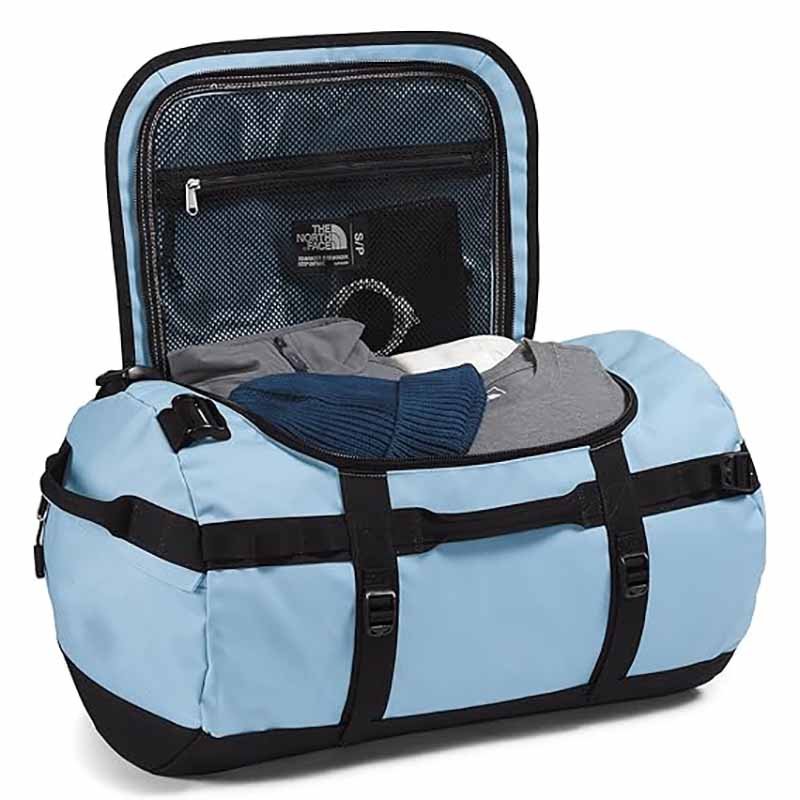
A duffle bag is one of those products that looks “easy” until you start testing it in real life. Fill it with shoes, a water bottle, power bank, toiletries, and a few heavy items, then drag it through airports, throw it into car trunks, or hang it by the shoulder strap for a long time. That’s when the weak points show up—and one of the first areas to fail is often the end cap (the two panels closing the left and right side of the bag).
If your duffle bag is collapsing, twisting, wasting space, or tearing near the side seams, the root cause is usually not the zipper. It’s the end cap construction—how the side panels are shaped, reinforced, stitched, and connected to the main body. Choosing round ends or box ends isn’t only about style. It changes packing efficiency, shape stability, load distribution, and manufacturing cost.
End cap construction for duffle bags is the engineering method used to close and reinforce the two side panels of a duffle bag body. The two most common types are round ends (cylindrical shape) and box ends (rectangular shape). Round ends feel lighter and more flexible, while box ends hold shape better, pack more efficiently, and usually need stronger reinforcement for heavy loads.
Here’s the part many brands learn the hard way: changing the end cap design late in development can force a full pattern rebuild, new samples, and delays. A smarter approach is to understand the end cap options early—before you lock the structure and materials. Let’s break it down clearly.
What Is End Cap Construction for Duffle Bags?
End cap construction for duffle bags refers to the two end panels that close the sides of the bag and connect to the main body. These panels determine whether the bag stays stable under load, how it holds its shape when half full, and how well it protects the contents. In real production, end caps are treated like “stress zones” because the side seams often take repeated pulling and internal pressure from packed items.
What is a duffle bag end cap?
A duffle bag end cap is the left and right side panel that seals the bag’s body. It’s not just a “piece of fabric.” In manufacturing, it’s a structural part that must handle:
- Outward pressure when the bag is packed full (shoes + clothes + accessories)
- Tension from handles/straps (especially when strap anchors are near the ends)
- Abrasion and impact (bags get dropped on ends a lot during travel)
- Seam stress caused by uneven loading (one end heavier than the other)
In custom manufacturing, end caps can be built as:
- Single-layer end caps (lowest cost, lowest structure)
- Double-layer end caps (more stable, better seam holding)
- Reinforced end caps (foam + board + extra binding, designed for heavy use)
A simple way to understand this: if the body panel is the “wall,” the end cap is the “door.” If the door is weak, the whole structure feels cheap—even if the fabric looks premium.
Common end cap materials used by factories (practical view):
| End cap layer | What it does | Common materials | When it’s used |
|---|---|---|---|
| Outer shell | Appearance + abrasion resistance | 600D polyester, 420D/840D nylon, canvas | All duffles |
| Support layer | Improves stiffness, reduces collapse | 2–6mm EVA, 3–5mm foam, nonwoven | Travel/gear duffles |
| Hard insert | Prevents deformation under load | PE board 0.8–2.0mm, PP sheet | Box ends, heavy loads |
| Edge binding | Stops fraying + strengthens seam | nylon binding, polyester tape | Most structured designs |
For brands, the important point is not the name of the materials—it’s knowing what function you need: lightweight flexibility or stronger structure.
How does end cap construction shape duffle bags?
End caps don’t just “close the bag.” They define the duffle’s geometry. A small change in end cap shape changes everything: how the bag stands, how it packs, and how it looks in product photos.
Here’s how the two main end cap types behave:
| Item customers feel | Round ends | Box ends |
|---|---|---|
| How the bag looks | classic, sporty | modern, organized |
| How it packs | flexible, but space can feel messy | structured, efficient |
| How it sits on the floor | tends to roll or collapse | more stable |
| How it handles shoes/toiletries | can shift around | easier to separate |
| How it stacks for travel/shipping | weaker stacking | better stacking |
Why this matters in real use:
Many customers pack rectangular objects: shoe boxes, tech organizers, toiletry bags, folded clothes. A cylindrical round-end duffle creates curved internal space, so items shift more. Box ends create flat walls, so items stay in place and the bag feels “cleaner” inside.
From a manufacturing standpoint, end cap construction changes the pattern and sewing route:
- Round ends use a curved seam joining a circular panel to the body.
- Box ends use corner seams and usually require extra reinforcement at corners.
That’s why you’ll often see box-end duffles used in travel and gear categories—because they are easier for customers to pack neatly.
Why does end cap construction matter for duffle bags?
This is where development becomes “real.” Brands don’t lose money because the bag looks slightly different. They lose money because of returns, complaints, and repeated sampling changes.
End cap construction affects four business-critical areas:
1) Durability and failure risk
End caps are common failure points because the seam line experiences repeated stress. Problems usually show up as:
- seam splitting near corners (box ends)
- end panel distortion and wrinkles (round ends without support)
- strap anchor tearing (when anchors are too close to end seam)
- binding edge fraying (low-quality edge finishing)
What a factory should control (durability):
| Control point | Good standard (practical) | What happens if ignored |
|---|---|---|
| Stitch density | 6–8 stitches per inch | seam loosens, gaps appear |
| Seam allowance | 10–12mm for stress seams | seam tears easier |
| Backstitch at stress points | 2–3 passes | stitch run-out |
| Reinforcement patch | added under strap anchors | fabric tears under load |
2) Packing experience (customers care a lot)
Customers rarely say: “Your end cap construction is wrong.”
They say:
- “It doesn’t hold shape.”
- “Hard to pack.”
- “Everything falls to one side.”
- “Looks cheap when half full.”
End cap design is often the hidden cause.
3) Production cost and lead time
End cap shape changes how many pattern pieces, how many sewing steps, and how much reinforcement is needed.
A realistic factory view:
| Cost driver | Round ends | Box ends |
|---|---|---|
| Pattern pieces | fewer | more |
| Sewing complexity | easier curve sewing | corner sewing + reinforcement |
| Reinforcement need | optional for light use | common for travel/gear |
| QC focus | seam curve consistency | corner strength + shape |
In many OEM projects, switching from round to box ends can increase labor steps enough to raise cost by about 8%–15%, especially if you add hard inserts and binding.
4) Brand positioning and customer expectations
Round ends often feel “sporty.” Box ends feel “premium and organized.”
If your target is high-end travel customers, box ends usually match expectations better. If your target is gym users who want lightweight and flexible, round ends can be the better match.
What Szoneier checks before confirming an end cap design
When clients ask us to develop a custom duffle bag, we usually confirm these details early so the end cap design doesn’t need changes later:
- Target use: gym / travel / tools / outdoor gear
- Expected load: light (<8kg), medium (8–15kg), heavy (15–25kg)
- Fabric choice: polyester, nylon, canvas, TPU coated, etc.
- Structure requirement: soft, semi-structured, structured
- Brand requirement: must stand upright? must pack like a suitcase?
- Logo and strap layout: strap anchors near ends or center?
This avoids common late-stage issues like “the sample collapses,” “corners wrinkle,” or “end seams tear during pull tests.”
What Are Round Ends in Duffle Bags?
Round ends in duffle bags refer to circular side panels attached to a cylindrical body panel, forming the classic tube-shaped gym bag structure. This design is widely used because it requires fewer pattern pieces, offers flexible packing, and creates a lightweight structure that works well for sports and casual travel.
What does round-end duffle bag construction look like?
A round-end duffle bag is built around a cylindrical body panel. Instead of multiple panels forming corners, the bag body wraps into a tube, and two circular panels close each side.
The structure typically includes:
- One main body panel (rectangular fabric rolled into a cylinder)
- Two circular end panels
- One zipper opening (usually top center)
- Two handle straps
- Optional shoulder strap anchors
A simplified construction layout looks like this:
| Component | Purpose |
|---|---|
| Main body panel | Forms the cylindrical structure |
| Circular end caps | Close the left and right side |
| Zipper panel | Provides opening access |
| Handle webbing | Supports carrying weight |
| Reinforcement patches | Prevent tearing at stress points |
This structure has been used for decades in sports duffle bags and military-style gear bags because it is simple and efficient to manufacture.
The sewing process usually follows these steps:
- Body panel sewn into a tube
- Zipper installed along top seam
- Circular end panels attached to body
- Edge seams reinforced with binding
- Handles and strap anchors attached
This method keeps labor steps relatively low, which helps reduce production cost.
Why do many gym duffle bags use round ends?
Round-end construction is especially common in gym bags and sports duffles because it offers several practical advantages.
1. Lightweight structure
Round-end duffle bags usually require fewer internal reinforcement materials. Without corner panels or structural inserts, the bag remains lightweight and flexible.
For example:
| Bag type | Average empty weight |
|---|---|
| Round-end gym duffle | 500–900 g |
| Structured travel duffle | 900–1500 g |
This difference matters to users who carry gym bags daily.
2. Flexible storage
A cylindrical bag can compress or expand slightly depending on how full it is. This flexibility helps when packing irregular items such as:
- sports clothing
- towels
- water bottles
- boxing gloves
- yoga accessories
Because the bag has no rigid corners, it adapts easily to the contents.
3. Faster production
From a manufacturing standpoint, round-end bags are quicker to produce.
Typical sewing complexity comparison:
| Production factor | Round-end duffle | Box-end duffle |
|---|---|---|
| Pattern pieces | 3–5 | 6–10 |
| Corner seams | None | Multiple |
| Reinforcement layers | Optional | Often required |
| Sewing difficulty | Moderate | Higher |
Because of this, round-end designs are often used for high-volume promotional or sports bags.
4. Lower production cost
Less reinforcement and fewer panels generally mean lower manufacturing costs.
A simplified cost comparison (for mid-size 45–50L duffle bags):
| Cost factor | Round end | Box end |
|---|---|---|
| Fabric usage | Slightly lower | Slightly higher |
| Labor time | Shorter | Longer |
| Reinforcement materials | Minimal | Moderate |
| Overall cost | Lower | Higher |
This is why many fitness brands and promotional product companies prefer round-end construction.
Which materials suit round-end duffle bag construction?
Round-end duffle bags work best with flexible fabrics that can easily form curved seams.
Common materials include:
| Fabric type | Typical weight | Application |
|---|---|---|
| 600D polyester | 250–300 GSM | gym bags |
| 420D nylon | 180–220 GSM | lightweight travel |
| 840D nylon | 320–360 GSM | durable sports gear |
| cotton canvas | 300–450 GSM | lifestyle duffles |
| neoprene | 3–5 mm thickness | fashion/sports duffles |
Flexible fabrics help the circular panels attach smoothly to the cylindrical body without creating seam tension.
How manufacturers strengthen round-end duffle bags
Although round-end duffle bags are flexible, they still need reinforcement to prevent long-term failure.
Factories usually strengthen these areas:
End seam reinforcement
The circular seam connecting the body and end panel is a high-stress zone.
Manufacturers commonly use:
- double stitching
- nylon binding tape
- thicker seam allowance
Typical seam specifications used in production:
| Parameter | Recommended value |
|---|---|
| Stitch density | 6–8 stitches per inch |
| Seam allowance | 10–12 mm |
| Backstitch length | 8–10 mm |
Strap anchor reinforcement
Many duffle bags attach shoulder strap anchors near the end panels. Without reinforcement, the load can pull the seam apart.
Reinforcement methods include:
- box stitch patterns
- bartack stitching
- internal reinforcement patches
A properly reinforced strap anchor can handle 20–30 kg pull force without tearing.
Shape stability
Even flexible round-end duffles benefit from light structure.
Manufacturers sometimes add:
- thin foam padding
- EVA sheets (2–4 mm)
- soft PE inserts
These materials help the bag maintain a cleaner shape without making it too rigid.
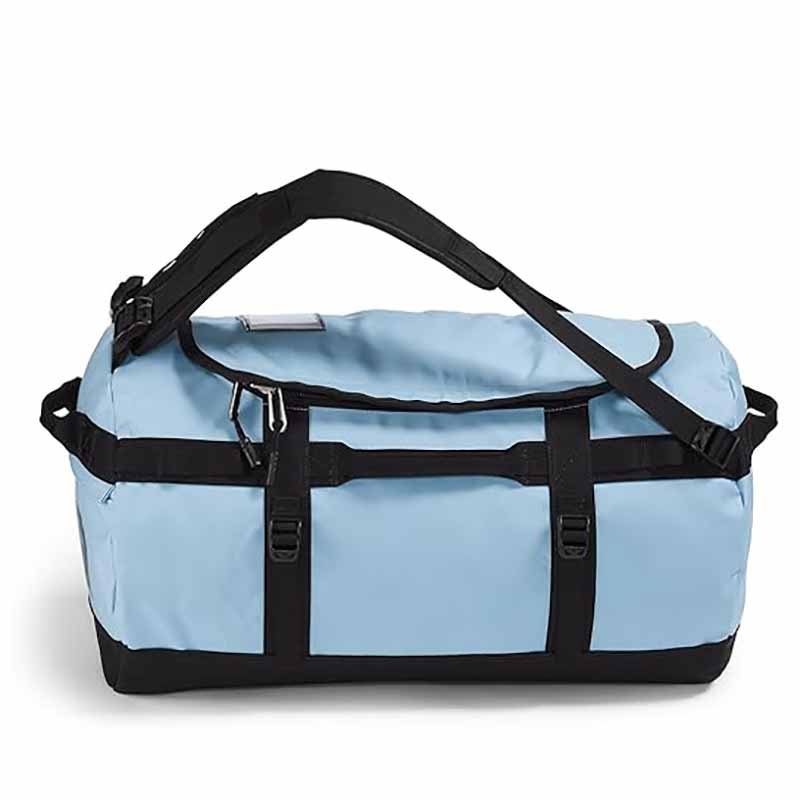
What Are Box Ends in Duffle Bags?
Box-end duffle bags use rectangular or square end panels, creating a more structured shape. This design improves packing efficiency and stability, making it popular for travel bags, tactical gear bags, and premium duffle products.
What does box-end duffle bag construction look like?
Unlike cylindrical duffles, box-end bags are built using multiple panels forming a rectangular structure.
The typical pattern includes:
| Panel | Function |
|---|---|
| Front panel | Main body wall |
| Back panel | Opposite body wall |
| Bottom panel | Supports weight |
| End panels (2) | Close each side |
| Top zipper panel | Opening access |
This creates a more rigid “box-like” geometry.
The manufacturing sequence usually includes:
- Constructing the rectangular body panels
- Attaching bottom reinforcement layer
- Installing zipper opening
- Sewing end panels with reinforced corners
- Binding seams for durability
Because the structure contains corners, it requires more precise pattern cutting and sewing accuracy.
Why do travel duffle bags use box ends?
Box-end duffles are often preferred for travel because they improve organization and structural stability.
Better packing efficiency
Rectangular structures use space more efficiently.
For example:
| Packing factor | Round end | Box end |
|---|---|---|
| Internal usable volume | medium | high |
| Shoe storage | less organized | easier |
| Packing cubes fit | moderate | excellent |
Travelers often pack rectangular items such as:
- folded clothing
- shoe boxes
- packing cubes
- toiletry organizers
A rectangular bag accommodates these shapes better.
Improved stability
Box-end duffles tend to stand upright more easily when partially filled. This makes them more convenient for:
- hotel rooms
- locker rooms
- car trunks
- airport security areas
Users often perceive structured bags as higher quality.
Better protection for contents
Because box-end duffles often include reinforcement layers, they provide more protection for items inside.
Common structural reinforcements include:
| Reinforcement | Purpose |
|---|---|
| EVA foam (3–6 mm) | impact absorption |
| PE board inserts | maintain shape |
| reinforced corners | prevent seam tearing |
These features are especially useful when carrying:
- electronics
- camera equipment
- tools
- outdoor gear
How do box ends improve duffle bag structure?
The main advantage of box-end construction is load distribution.
When heavy items are packed inside, the pressure spreads across flat panels instead of concentrating on curved seams.
This reduces the risk of deformation.
Typical load performance comparison:
| Feature | Round end | Box end |
|---|---|---|
| Shape retention | moderate | strong |
| Load stability | moderate | high |
| Heavy gear carrying | limited | good |
Because of this, box-end duffles are often used in military, outdoor, and equipment bags.
How manufacturers reinforce box-end duffle bags
Box-end duffles require stronger reinforcement because corner seams are natural stress points.
Factories typically apply several reinforcement techniques.
Corner reinforcement stitching
Corners often receive double seams or bartack stitches.
These stitches prevent seam splitting during heavy loads.
Structural inserts
Many premium duffle bags use rigid or semi-rigid inserts in the end panels.
Common inserts include:
| Insert type | Thickness |
|---|---|
| PE board | 0.8–1.5 mm |
| EVA foam | 3–6 mm |
| PP sheet | 1.0–2.0 mm |
These inserts help the bag keep its rectangular shape.
Bottom reinforcement
Because structured duffles carry heavier loads, the bottom panel is usually reinforced.
Factories often add:
- double-layer fabric
- waterproof coating
- abrasion-resistant panels
These features extend product lifespan.
Round Ends vs Box Ends for Duffle Bags — Which Is Better?
Choosing between round ends and box ends is not simply a design preference. The decision directly influences packing experience, durability, weight distribution, and production cost. Different bag categories benefit from different structures, and understanding these trade-offs helps brands design products that perform well in real-world use.
In practical product development, manufacturers evaluate four major aspects before recommending an end cap design: capacity efficiency, load stability, user convenience, and manufacturing feasibility.
Which duffle bag end cap holds shape better?
Box-end duffle bags generally maintain their shape better because they use flat panels and corner seams that support structural reinforcement.
Round-end duffles rely mostly on the tension of the fabric and the circular seam, which means the bag may collapse slightly when it is partially filled.
Shape retention comparison:
| Structure Type | Shape Stability | Reason |
|---|---|---|
| Round ends | Moderate | flexible cylindrical body |
| Box ends | High | flat reinforced panels |
A structured bag has several advantages:
- easier product presentation in retail displays
- better visual appearance when not fully packed
- improved stacking during shipping and storage
For brands targeting premium travel or lifestyle markets, maintaining a clean shape often becomes an important selling point.
Which end cap design fits more gear?
Although round-end duffle bags appear large, they do not always use internal space efficiently. Cylindrical interiors leave unused curved areas around rectangular items.
Box-end designs usually provide better usable packing volume.
Example comparison using a 50-liter duffle bag:
| Packing Item | Round End Bag | Box End Bag |
|---|---|---|
| Folded clothing | Moderate fit | Efficient stacking |
| Shoe storage | Limited organization | Dedicated compartments possible |
| Packing cubes | Often uneven | Fits well |
| Electronics pouch | May shift | More stable |
Travelers and athletes increasingly prefer bags that organize items clearly, which explains why box-end structures are widely used in modern travel gear.
Which duffle bag end cap is stronger?
Durability depends on both structure and reinforcement, but box-end designs generally distribute load more evenly across the bag.
Round-end seams concentrate stress along the circular seam where the end panel meets the body.
Typical durability comparison:
| Stress Factor | Round Ends | Box Ends |
|---|---|---|
| Seam tension distribution | concentrated | distributed |
| Corner stress | low | moderate (needs reinforcement) |
| Heavy load performance | moderate | strong |
For bags designed to carry 15–25 kg loads, box-end structures often perform better when reinforced properly.
However, for lightweight sports bags, round-end designs can still provide excellent durability while keeping the bag lighter.
Which end cap design is easier to manufacture?
Manufacturing complexity also influences the final design decision.
Round-end bags are generally easier to produce because they involve fewer pattern pieces and fewer sewing steps.
Production comparison:
| Production Factor | Round End | Box End |
|---|---|---|
| Pattern pieces | 3–5 | 6–10 |
| Sewing complexity | lower | higher |
| Reinforcement steps | fewer | more |
| Production speed | faster | slower |
This difference can influence pricing.
For large production runs, switching from round ends to box ends can increase:
- labor time
- reinforcement materials
- sewing operations
Depending on the design, production cost may increase 8–15%.
For promotional bags or sports club merchandise, many brands prefer the round-end structure to maintain competitive pricing.
How Do Factories Build Strong End Cap Construction for Duffle Bags?
Reliable duffle bag manufacturing requires careful engineering of the end cap area. Factories focus on pattern accuracy, reinforcement layers, stitching techniques, and durability testing to ensure long-term product performance.
How are duffle bag end caps patterned and cut?
The pattern development stage determines how well the end caps will fit and hold shape.
Design engineers first calculate the exact relationship between:
- body panel length
- end panel diameter or width
- seam allowance
- fabric stretch properties
Incorrect pattern calculations can lead to problems such as:
- wrinkled end panels
- uneven seams
- distorted bag shape
Factories usually create prototype samples and test the fit before mass production begins.
Typical pattern tolerance standards:
| Parameter | Acceptable tolerance |
|---|---|
| panel width deviation | ±1.5 mm |
| seam alignment deviation | ±2 mm |
| end panel symmetry | ±1 mm |
These small measurements ensure the final bag looks clean and professional.
How do factories reinforce duffle bag end caps?
End caps are reinforced differently depending on the bag’s purpose.
Common reinforcement options include:
Foam reinforcement
Soft foam layers help maintain shape and provide impact protection.
Typical specifications:
| Material | Thickness |
|---|---|
| EVA foam | 3–6 mm |
| PE foam | 2–5 mm |
Foam reinforcement is widely used in:
- travel duffle bags
- sports gear bags
- camera equipment bags
Hard board inserts
Some structured bags include rigid inserts.
Common materials:
| Material | Thickness | Function |
|---|---|---|
| PE board | 0.8–1.5 mm | shape retention |
| PP sheet | 1–2 mm | structural rigidity |
These inserts prevent the bag from collapsing and help maintain a clean rectangular shape.
Edge binding and seam reinforcement
Binding tape is often applied along the seam where the end panel joins the body panel.
Benefits include:
- preventing seam fraying
- improving tear resistance
- increasing long-term durability
Factories may also apply double stitching or bartack reinforcement at critical stress points.
How is duffle bag end cap strength tested?
Before shipping large production orders, manufacturers usually perform several durability tests.
Seam strength testing
The seam connecting the end cap to the body is tested under pulling force.
Typical testing parameters:
| Test type | Standard value |
|---|---|
| seam pull strength | ≥ 20 kg |
| strap anchor pull | ≥ 25 kg |
| bartack strength | ≥ 30 kg |
These tests simulate real-world usage where bags are lifted or dragged while full.
Load capacity testing
Factories also conduct weight load tests to ensure the bag maintains structure when filled.
Typical test process:
- Fill bag with weighted materials
- Suspend bag using shoulder strap
- Maintain load for several hours
Load test benchmarks:
| Bag type | Recommended load |
|---|---|
| gym duffle bag | 8–12 kg |
| travel duffle bag | 12–18 kg |
| gear duffle bag | 18–25 kg |
Testing ensures the end caps and seams can withstand repeated use.
Conclusion
End cap construction is a critical factor in duffle bag performance. While customers may focus on appearance, experienced product developers understand that the side panel design controls the bag’s structure, durability, and usability.
- Round-end duffle bags offer lightweight flexibility and simpler manufacturing. They are widely used in gym and sports bags where portability and cost efficiency are important.
- Box-end duffle bags provide better shape retention, improved packing efficiency, and stronger load distribution. They are ideal for travel, gear storage, and premium product lines.
Choosing the right structure depends on several factors:
- the intended use of the bag
- expected load weight
- fabric type and reinforcement options
- target retail price
- brand positioning
For brands planning to launch new duffle bag products, working with an experienced manufacturer early in the development process helps avoid costly design changes and ensures the final product performs as expected.
Szoneier has more than 18 years of experience designing and manufacturing custom bags, including duffle bags, backpacks, travel bags, gym bags, tool bags, cooler bags, and many other product types. Our factories support a wide range of materials such as cotton, canvas, polyester, nylon, neoprene, TPU, PVC, EVA, jute, and leather.
If you are planning to develop custom duffle bags for your brand, our engineering team can help you choose the right structure, materials, and reinforcement solutions to ensure durability and market competitiveness.
Contact Szoneier today to discuss your custom duffle bag project and request a quotation or sample development.