 Skip to content
Duffel Bag vs Luggage: Key Differences & How to Choose
- Eric
- February 15, 2026
- 8:52 am
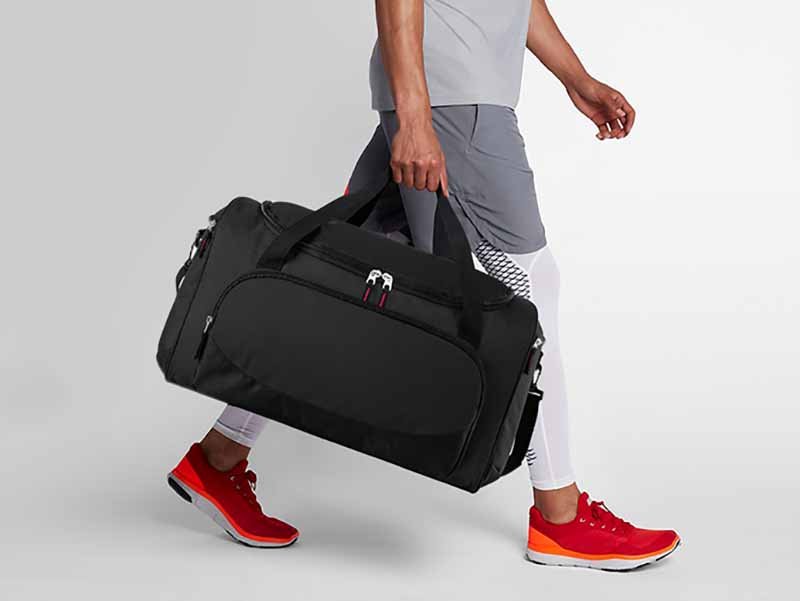
Walk through any airport terminal and you’ll see two very different travel habits. Some travelers move quickly with a soft duffel slung over the shoulder, flexible and easy to carry. Others roll structured luggage behind them, organized and protected. The choice between a duffel bag and luggage is not just about style—it reflects travel purpose, packing behavior, comfort needs, and durability expectations. For brands and product developers, this decision also shapes material selection, production cost, and target customer positioning.
A duffel bag is a flexible, soft-sided travel bag designed for mobility, quick packing, and versatile use, while luggage typically refers to structured suitcases—often wheeled—built for protection, organization, and longer travel durations. Choosing between them depends on trip length, transport method, storage needs, and user comfort preferences.
Many travelers don’t realize how much this choice affects real travel experience until something goes wrong—an overpacked duffel becomes uncomfortable to carry, or a rigid suitcase feels bulky on uneven ground. One outdoor retailer once reported that customers who switched to hybrid rolling duffels reduced travel fatigue during short trips, proving that the “right bag” can quietly change the entire journey. Understanding that difference is where the comparison truly begins.
What Is a Duffel Bag?
A duffel bag is a soft, flexible travel bag—usually fabric-based—with a wide opening and carry handles (often plus a shoulder strap). It’s made for quick packing, fast access, and adaptable use: gym, weekend trips, short flights, and outdoor travel. The main trade-off is structure—duffels protect less than suitcases unless reinforced with padding, stiffeners, or a semi-rigid base.
Key Features of Duffel Bags
A duffel’s value comes from freedom of movement. It’s easy to carry, easy to squeeze into trunks or overhead bins, and easy to pack fast. But “simple” doesn’t mean “basic.” A well-made duffel has several engineering details that customers feel immediately:
- Wide U-zip or D-zip opening: faster packing, better visibility
- Soft body: compresses when not full (space-saving at home and in transit)
- Multiple carry modes: hand carry + shoulder strap; some include backpack straps
- Reinforced stress points: handle anchors, strap D-rings, zipper ends
- Base protection: thicker fabric, coated panel, or feet to resist abrasion
Customers complain most when a duffel lacks reinforcement. Common pain points include:
- shoulder strap clips bending
- stitching tearing where handles join the body
- zipper failure at the curve of the opening
- bottom panel wearing through after frequent floor contact
Materials are the biggest durability switch. For the same size duffel, moving from low-density polyester to stronger nylon/polyester (and reinforcing the base) can meaningfully reduce returns and negative reviews in e-commerce.
Quick spec ranges customers ask about most
| Duffel spec point | Common range | What it means in real use |
|---|---|---|
| Capacity | 30–90L | 30–45L weekend; 50–70L travel; 80–90L gear-heavy |
| Empty weight | 0.6–2.2 kg | Lighter is easier to carry; heavier often means tougher build |
| Fabric | 600D–1680D, canvas | Higher denier often improves abrasion resistance |
| Zipper | #8–#10 | Larger zipper size usually improves durability |
Common Uses of Duffel Bags
Duffels dominate when people value speed + flexibility more than perfect organization. Customers choose duffels for:
- Weekend travel (1–3 days): clothing + toiletries, quick in/out
- Gym and sports: shoes, towel, wet/dry separation
- Road trips: soft bag stacks better in a trunk than hard luggage
- Short flights: easier to store under-seat or overhead (depending on size)
- Outdoor or adventure: rugged fabric models handle rough surfaces
Where duffels can disappoint is equally practical:
- Long walking + heavy load: shoulder strain if there’s no padding or backpack straps
- Fragile items: less protection unless there’s foam, stiffeners, or structured panels
- Neat packing: without dividers, items mix together
So many brands now build hybrid duffels (semi-rigid base, internal frame sheets, or rolling options) because customers want duffel flexibility without the classic “everything piles in the middle” problem.
Duffel-friendly travel scenarios
| Scenario | Duffel advantage | What to design for |
|---|---|---|
| Weekend city trip | quick packing | 35–45L, clean interior, strong zipper |
| Gym/sports | easy access | shoe pocket, ventilated panel, wipeable lining |
| Road trip | space efficiency | soft sides, compression straps, abrasion base |
| Light carry-on | mobility | carry handles + padded strap, compact silhouette |
What Is Luggage?
Luggage usually means a structured suitcase—hard-shell or soft-shell—often with wheels and a telescopic handle. It’s designed to protect contents, keep clothing organized, and move heavy loads with less strain by rolling instead of carrying. Luggage performs best on smooth surfaces and long trips, but it can feel bulky in tight spaces, stairs, crowded public transit, or rough ground.
Hard Case vs Soft Case Luggage
Customers typically start with one question: “Do I need protection or flexibility?” That is the core hard vs soft luggage split.
Hard case luggage is chosen for:
- better protection for fragile items
- stronger compression resistance (stacking in cargo holds)
- easier cleaning (wipe the shell)
- a more “premium” structured look
Soft case luggage is chosen for:
- exterior pockets for quick access
- slightly more forgiveness when packed full
- sometimes lighter overall weight
- better performance when you need to squeeze into a tight trunk
Here’s what customers actually experience after purchase:
| Feature | Hard case luggage | Soft case luggage |
|---|---|---|
| Protection | Strong against crushing | Better against scratches/abrasion |
| Organization | Usually internal dividers | Internal + external pockets |
| Overpacking | Less forgiving | More forgiving (some expand) |
| Surface | Scuffs show | Fabric can stain if untreated |
| Best for | flights, fragile items | mixed trips, quick access |
The most common complaint about low-quality luggage is not the shell—it’s wheels and handle system. A suitcase can look perfect and still fail if wheels crack or the telescopic handle wobbles under load.
Typical Uses of Luggage
Luggage wins when the trip is longer, the packing is more structured, and the traveler wants to reduce carrying effort.
Customers reach for luggage for:
- Business travel: wrinkle control, structured packing, clean look
- International or long trips: larger volume, better organization
- Family travel: easy separation, predictable packing
- Airports and smooth sidewalks: rolling saves energy
But luggage has real-world friction points:
- Stairs and subway stations: lifting a heavy suitcase is exhausting
- Cobblestones, snow, sand: small wheels struggle or jam
- Tight car trunks: rigid cases waste space compared with duffels
- Overhead bins: structured shape can be less forgiving
A helpful way to communicate this to customers is to compare “movement style”:
| Movement condition | Luggage performance | Duffel performance |
|---|---|---|
| Smooth floors/airports | excellent | good |
| Stairs/crowds | frustrating | excellent |
| Rough ground (gravel/sand) | poor–medium | medium–good |
| Tight storage spaces | medium | excellent |
Duffel Bag vs Luggage — Which Is Better?
Choosing between a duffel bag and luggage is not about which product is universally “better.”
The real question customers care about is simpler and more practical:
- Which one feels easier during the trip?
- Which one protects my belongings better?
- Which one matches how I actually travel—not how I imagine I travel?
In everyday use, duffel bags usually win in mobility, flexibility, and quick packing, while luggage wins in protection, organization, and reduced physical strain over long distances.
The smarter choice comes from matching the bag type to trip length, transport environment, and packing weight.
Portability and Carrying Effort in Real Travel
The biggest difference customers feel is how the bag moves with their body.
Duffel bags move with you.
Luggage moves behind you.
That simple distinction changes the entire travel experience.
Where duffel bags feel easier
Duffels perform best in situations involving:
- stairs, subway stations, or crowded sidewalks
- tight car trunks or small storage areas
- quick transitions between locations
- short walking distances with moderate weight
Because they are soft and lighter, duffels adapt naturally to irregular movement.
Travelers who frequently use public transportation often prefer duffels for this reason.
Where luggage feels easier
Luggage becomes more comfortable when:
- walking long distances in airports or hotels
- carrying heavier loads (10–20 kg or more)
- moving mostly on smooth floors
- needing to avoid shoulder or hand fatigue
Rolling wheels shift weight from the body to the ground, which is why luggage feels dramatically easier during long airport walks.
Real user comfort comparison
| Travel condition | Duffel bag comfort | Luggage comfort |
|---|---|---|
| Short walk, light load | Very comfortable | Comfortable |
| Long walk, heavy load | Tiring on shoulder | Much easier due to wheels |
| Stairs or crowds | Easy to manage | Difficult to lift or roll |
| Rough ground (gravel, snow) | Manageable | Wheels struggle |
If most of your trip involves walking far on smooth surfaces, luggage usually feels better.
If your movement includes stairs, crowds, or tight storage, duffels often feel easier.
Capacity and Packing Efficiency
Customers often assume luggage holds more, but the truth is more nuanced.
Duffel bags provide flexible capacity, while luggage provides structured capacity.
How duffel capacity behaves in real use
Duffels can:
- stretch slightly to fit bulky clothing
- compress when under-packed
- accept irregular items like sports gear or shoes
- stack easily in car trunks
This makes duffels highly efficient for casual or mixed packing.
However, without internal dividers, items may:
- shift during movement
- wrinkle more easily
- become harder to locate quickly
How luggage capacity behaves in real use
Luggage offers:
- separated compartments for clothing and accessories
- compression straps to stabilize contents
- flat packing surfaces that reduce wrinkles
- predictable shape for airline sizing
This structure improves organization and protection, especially for:
- business clothing
- electronics
- fragile souvenirs
Packing efficiency comparison
| Packing factor | Duffel bag | Luggage |
|---|---|---|
| Bulky item storage | Excellent | Limited by shape |
| Clothing wrinkle control | Low | High |
| Item organization | Medium–low | High |
| Overpacking tolerance | High | Medium |
Choose duffels for flexible, casual packing.
Choose luggage for organized, protective packing.
Durability and Protection Over Time
Durability depends less on product type and more on which parts fail first.
Common real-world failure points
| Product | Most frequent long-term issue |
|---|---|
| Duffel bag | Handle stitching or zipper stress |
| Soft luggage | Wheel wear or fabric tearing near frame |
| Hard luggage | Wheel breakage or shell cracking |
Duffels avoid complex mechanical parts, which means:
- fewer components can break
- repairs are often simpler
- lifespan depends mainly on fabric quality and stitching strength
Luggage introduces wheels and telescopic handles, which:
- improve comfort
- but add mechanical failure risk
- and increase repair difficulty
Protection comparison for belongings
| Protection need | Duffel bag | Luggage |
|---|---|---|
| Fragile items | Low protection | High protection |
| Compression in cargo | Low | High |
| Rain resistance | Medium–high (coated fabrics) | Medium |
| Impact resistance | Medium | High (hard shell) |
If protecting contents is the top priority, luggage is usually safer.
If simplicity and rugged fabric durability matter more, duffels can last just as long.
Weight, Airline Rules, and Real Travel Costs
Another hidden factor customers care about is total travel weight.
Empty weight difference
| Bag type | Typical empty weight |
|---|---|
| Medium duffel | 0.8–1.5 kg |
| Carry-on luggage | 2.5–4.0 kg |
That extra 1–2 kg can matter on airlines with strict limits.
Some travelers switch to duffels simply to stay under carry-on weight rules.
Airline flexibility
Duffel bags often:
- fit more easily into overhead bins or under seats
- compress slightly if space is tight
Rigid luggage must match exact size limits, which can create boarding stress on full flights.
Cost vs Long-Term Value
Price differences also influence the “better” choice.
General retail positioning
| Product | Entry price | Premium price |
|---|---|---|
| Duffel bag | Lower | Medium |
| Luggage | Medium | High |
But long-term value depends on usage frequency:
- Frequent short trips or gym use → duffel often delivers better value
- Frequent flights or long travel → luggage justifies higher cost through comfort and protection
Clear Decision Guide Based on Real Behavior
Instead of asking “Which is better?”, a more useful question is:
“Which matches how I actually travel most of the time?”
Quick real-life selection table
| Travel habit | Better choice |
|---|---|
| Weekend trips, gym, road travel | Duffel bag |
| Business flights, long vacations | Luggage |
| Mixed travel with heavy walking | Luggage |
| Mixed terrain or outdoor movement | Duffel bag |
How to Choose Between Duffel Bag and Luggage
Choose a duffel bag for short, flexible, or active travel. Choose luggage for long trips, heavy packing, or situations where protection and organization matter most. The correct decision comes from matching the bag type to travel duration, transport method, and packing style.
Customers rarely regret buying a good bag.
They regret buying the wrong type for their real travel habits.
Travel Type & Duration
Trip length is the fastest way to choose correctly.
Simple travel decision guide
| Trip length | Better option |
|---|---|
| 1–3 days | Duffel bag |
| 3–7 days | Either, depending on packing style |
| 7+ days | Luggage |
Short trips reward speed and mobility, where duffels shine.
Long trips require organization and protection, where luggage performs better.
Storage Needs & Packing Style
Different travelers pack in very different ways.
Minimal packers usually prefer:
- soft duffels
- quick packing
- fewer compartments
Organized packers prefer:
- divided suitcase interiors
- compression straps
- separate sections for clothing and accessories
Neither approach is right or wrong.
But designing travel products requires knowing which customer mindset you serve.
Budget & Product Positioning
Price structure differs between the two categories.
General market cost comparison
| Product type | Manufacturing complexity | Retail price potential |
|---|---|---|
| Duffel bag | Lower | Low to mid range |
| Luggage | Higher | Mid to premium |
Because luggage requires:
- wheel systems
- telescopic handles
- rigid panels or molded shells
its production cost and retail pricing are naturally higher.
For brands, this creates two clear strategies:
- Duffel line → volume sales & lifestyle positioning
- Luggage line → higher margin & premium perception
Many successful travel brands offer both, allowing customers to choose based on trip type.
Are Duffel Bags or Luggage Better for Specific Activities?
Duffel bags are usually better for active, short, or flexible trips such as gym sessions, weekend travel, and outdoor movement, while luggage performs better for business travel, long vacations, and situations requiring protection, organization, and reduced carrying strain. The right choice depends on how the bag will actually be used, not just how it looks in photos.
Many purchase mistakes happen because travelers choose based on appearance or trend, instead of real movement conditions and packing behavior.
Looking at common travel scenarios makes the decision far clearer.
Business Travel
Business travel prioritizes order, appearance, and efficiency. Clothing must remain wrinkle-free, electronics need protection, and movement often includes airports, taxis, hotels, and conference venues.
For these reasons, structured luggage is usually the safer choice.
Why luggage fits business travel better
- Internal compartments keep suits, shirts, and documents separated
- Rigid or semi-rigid shells protect laptops and fragile items
- Rolling wheels reduce fatigue during long airport walks
- Professional appearance aligns with formal environments
However, compact carry-on duffel bags still have a role in short overnight trips, especially when travelers want:
- faster packing and unpacking
- lightweight movement through crowded transit
- easier storage in tight hotel rooms
Business travel comparison
| Factor | Duffel Bag | Luggage |
|---|---|---|
| Wrinkle protection | Low | High |
| Laptop safety | Medium | High |
| Airport walking comfort | Medium | High |
| Packing speed | High | Medium |
Short overnight trips may suit a compact duffel, but most business travelers rely on carry-on luggage for reliability and presentation.
Adventure & Outdoor Travel
Outdoor travel introduces uneven terrain, weather exposure, and unpredictable transport conditions.
Rolling wheels—so useful in airports—often become a disadvantage on:
- gravel roads
- dirt paths
- snow or sand
- stairs without ramps
In these environments, duffel bags—especially rugged, water-resistant models—perform better.
Why duffels dominate outdoor movement
- Soft structure fits into cars, tents, or storage racks
- No fragile wheel system to break on rough ground
- Water-resistant fabrics handle rain and mud
- Multiple carry methods allow shoulder or backpack transport
Some modern designs combine the best of both worlds:
rolling adventure duffels with hidden backpack straps, useful when terrain changes during the same trip.
Outdoor performance comparison
| Condition | Duffel Bag | Luggage |
|---|---|---|
| Rough terrain | Excellent | Poor |
| Weather resistance | High (coated fabrics) | Medium |
| Gear flexibility | High | Medium |
| Long smooth walking | Medium | High |
For outdoor or mixed-terrain travel, durable duffel bags are usually the more practical solution.
Gym, Sports & Daily Use
Gym and sports environments require quick access, flexible storage, and moisture separation rather than rigid organization.
Duffel bags naturally match these needs.
Why duffels are standard for sports
- Wide opening for fast packing
- Separate shoe or wet compartments
- Lightweight carry between home, car, and locker
- Easy cleaning with coated interior fabrics
Luggage rarely fits this scenario because:
- rigid shells waste space in lockers
- wheels add unnecessary bulk
- structured interiors slow down quick packing
Sports use comparison
| Requirement | Duffel Bag | Luggage |
|---|---|---|
| Quick packing | Excellent | Poor |
| Wet/dry separation | High | Low |
| Locker storage | Easy | Difficult |
| Daily portability | High | Low |
For gym, training, or daily sports, duffel bags remain the clear winner.
Custom Duffel Bags and Luggage for Brands and Retailers
For travel brands, choosing between duffel bags and luggage is not only a design decision—it is a product strategy that affects cost structure, retail pricing, customer audience, and long-term brand positioning. Working with an experienced OEM manufacturer ensures both product types meet durability, quality, and market expectations.
Product Strategy Differences in Manufacturing
Duffel bags and luggage require very different production systems.
Manufacturing comparison
| Aspect | Duffel Bag | Luggage |
|---|---|---|
| Structure | Sewn soft goods | Molded or framed structure |
| Tooling cost | Low | High (molds, hardware) |
| Development time | Shorter | Longer |
| MOQ flexibility | Higher | Lower |
| Retail price range | Low–mid | Mid–high |
Because of this:
- Duffels support fast product launches and volume sales
- Luggage supports premium positioning and higher margins
Many successful travel brands combine both into a complete travel collection.
Customization Opportunities That Increase Brand Value
Customization transforms standard bags into recognizable branded products.
High-impact customization areas
- Material selection: polyester, nylon, canvas, leather, TPU-coated fabrics
- Logo application: embroidery, printing, woven labels, rubber patches, metal plates
- Structural upgrades: reinforced handles, waterproof zippers, molded bases
- Color matching: precise Pantone control for brand identity
- Packaging design: retail boxes, dust bags, barcode labeling
Even small upgrades—like stronger handle stitching or improved lining fabric—can significantly increase:
- customer satisfaction
- product lifespan
- perceived retail value
Why Global Clients Choose Szoneier
Szoneier supports international brands with end-to-end custom bag development, combining:
- 18+ years of manufacturing experience
- Full material capability: cotton, canvas, polyester, nylon, neoprene, TPU, EVA, leather, and more
- Wide product range: duffel bags, luggage, backpacks, gym bags, travel bags, cooler bags, tool bags
- Low MOQ and fast sampling for growing brands
- Strict quality control and durability testing
- Reliable lead times for bulk production
This allows clients to move efficiently from:
concept → sample → production → global sales
with reduced sourcing risk.
Start Your Duffel Bag or Luggage Project with Confidence
Choosing between a duffel bag and luggage is ultimately about real travel behavior.
Short, flexible, and active movement favors duffel bags.
Long, structured, and protection-focused travel favors luggage.
For brands and retailers, the smarter approach is rarely choosing only one.
The strongest product lines often include:
- lightweight duffels for mobility and sports
- structured luggage for travel and business
Together, they create a complete travel solution that serves more customers and increases market reach.
If you are planning to develop custom duffel bags, luggage, or a full travel collection, Szoneier is ready to help—from material selection and structural design to sampling and mass production.
Contact Szoneier today to request samples, discuss specifications, and receive a tailored quotation for your next travel bag project.
A well-designed bag does more than carry belongings—it carries your brand into the world.
manufacturer Categories
- Custom Tote Bags Manufacturer
- custom backpacks Manufacturer
- custom travel bags& Duffle bags manufacturer
- custom makeup bags & toiletry bags manufacturer
- custom cooler bags manufacturer
- custom drawstring bags manufacturer
- custom makeup bags & toiletry bags manufacturer
- custom golf bags manufacturer
- custom fireproof bags manufacturer
- custom dry bags manufacturer
- custom ski bags manufacturer
- custom gym & sports bags manufacturer
- custom laptop bags manufacturer
- custom tactical bags manufacturer
- custom beach bags manufacturer
- custom medical bags manufacturer
- custom camera bags manufacturer
- custom wetsuits manufacturer
- custom leather goods manufacturer
- more personalized products

Can't find the answers?
No worries, please contact us and we will answer all the questions you have during the whole process of bag customization.
Make A Sample First?
If you have your own artwork, logo design files, or just an idea,please provide details about your project requirements, including preferred fabric, color, and customization options,we’re excited to assist you in bringing your bespoke bag designs to life through our sample production process.
