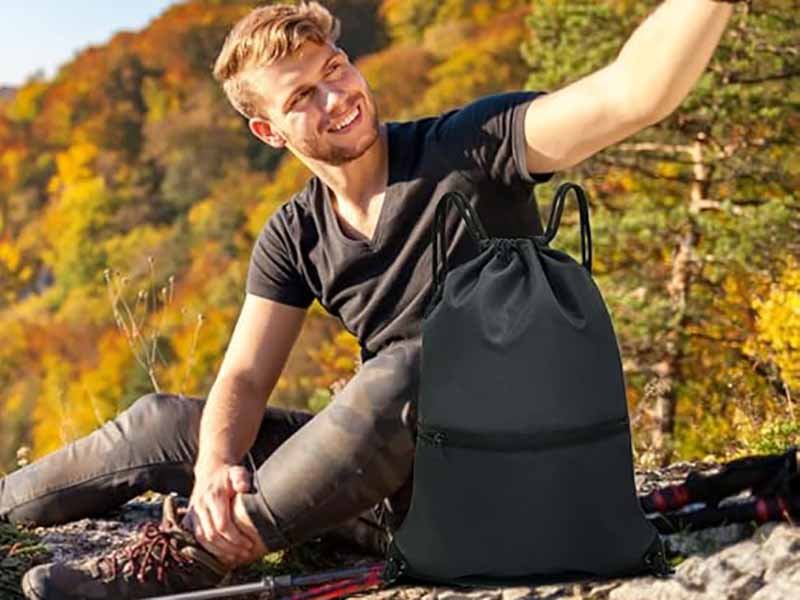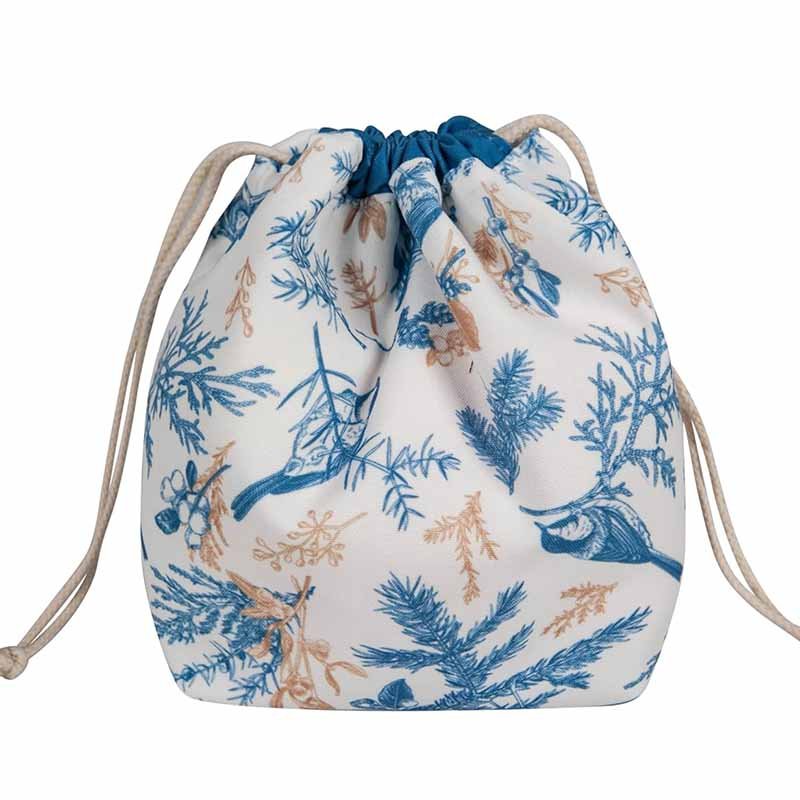
Drawstring project bags look simple at first glance—but anyone who has actually sewn one, used one daily, or tried to scale it into a sellable product knows they are deceptively complex. A good drawstring project bag pattern is not just about stitching a rectangle and threading a cord. It determines how the bag opens, how it carries weight, how long it lasts, and whether it feels like a thoughtful tool or a disposable pouch.
That’s why “drawstring project bag pattern” has become a high-intent search term. DIY sewists want patterns that are easy but durable. Knitters and crocheters want bags that stand upright and don’t spill yarn. Brands and small sellers want patterns that can be produced consistently, branded cleanly, and scaled into real products without constant quality issues.
A drawstring project bag pattern is a sewing template that defines the size, shape, closure, and construction of a drawstring bag used to organize projects like knitting, crochet, tools, or travel items. A good pattern balances simplicity, durability, and usability by controlling fabric choice, seam structure, drawstring channels, and proportions so the bag opens smoothly, carries weight evenly, and lasts through repeated use.
At Szoneier, where drawstring bags are developed for both DIY-inspired brands and commercial OEM production, we see one thing clearly: the pattern is the product. In the sections below, we’ll break down what a drawstring project bag pattern really is, which patterns work best for different uses, and how to turn a simple idea into a reliable, customizable bag.
What Is a Drawstring Project Bag Pattern
A drawstring project bag pattern is a structured sewing template that defines the size, shape, seam construction, drawstring channel, and reinforcement points of a drawstring bag designed to store and organize ongoing projects or specific items. Unlike basic drawstring pouch patterns, project bag patterns prioritize repeated opening, weight distribution, durability, and ease of access during daily use.
At first glance, a drawstring project bag pattern may look simple—often based on rectangles or basic geometric panels. However, from both a user and manufacturing perspective, a true project bag pattern is a functional system, not just a cutting outline.
The pattern determines how the bag behaves when it is:
- Opened dozens of times a day
- Partially filled or overloaded
- Carried, folded, or packed into another bag
Poorly designed patterns lead to common frustrations: bags that won’t stay open, cords that jam, seams that split, or bases that collapse. Well-designed patterns solve these issues before the first stitch is sewn.
At Szoneier, drawstring project bag patterns are treated as engineering documents. Before production, patterns are reviewed for stress flow, material compatibility, and long-term usability—not just appearance.
What does “drawstring” mean in pattern design?
In pattern terms, “drawstring” refers to a closure system, not just a cord. A proper drawstring pattern defines:
- The drawstring channel height and width
- How the channel is folded and stitched
- Where the cord enters and exits
- How friction and wear are managed over time
A channel that is too narrow increases friction and causes premature wear. A channel that is too shallow collapses and twists. This is why experienced pattern designers specify channel dimensions based on cord thickness and fabric type, not guesswork.
In OEM production, Szoneier often adjusts channel depth and stitch placement to ensure smooth operation after thousands of open–close cycles.
What makes a project bag pattern different from a basic drawstring bag pattern?
A basic drawstring bag pattern is usually designed for:
- Occasional use
- Light contents
- Minimal stress
A project bag pattern, by contrast, is designed for active, repeated use. Key differences include:
- Wider openings for easy access
- Stronger seam structures
- Reinforced drawstring entry points
- Optional gussets or boxed corners for stability
For example, a knitting project bag must stay open while yarn feeds out. A basic pouch pattern collapses under this use. The project bag pattern anticipates this behavior and builds in structure accordingly.
What types of items are drawstring project bag patterns designed for?
Drawstring project bag patterns are used for far more than crafts. Common applications include:
- Knitting and crochet projects
- Sewing and embroidery tools
- Cosmetics and toiletries
- Travel organization (shoes, laundry, cables)
- Small tools or hardware kits
Each use case influences pattern decisions such as height-to-width ratio, base shape, and reinforcement level. At Szoneier, the same base pattern is often adapted into multiple variants by changing proportions and materials while keeping the core structure.
How does fabric choice interact with the pattern itself?
Fabric is not separate from the pattern—it is part of it.
A pattern that works in quilting cotton may fail in polyester or canvas unless adjustments are made. Fabric weight, stiffness, and friction affect:
- Channel folding behavior
- Seam stress distribution
- How the bag opens and closes
This is why production-ready patterns specify fabric ranges, not just one fabric. Szoneier routinely modifies seam allowance, stitch density, and reinforcement when the same pattern is produced in different materials.
Why pattern quality matters for repeat use and durability
Most drawstring bag failures occur in predictable areas:
- Channel seams
- Cord exit points
- Side seams near the base
A high-quality project bag pattern anticipates these stress points and designs around them. Small pattern decisions—such as adding bartacks, folding seam layers, or widening stress zones—can double the usable life of the bag without changing how it looks.
For brands, this directly affects:
- Customer satisfaction
- Return rates
- Perceived product quality
That’s why Szoneier emphasizes pattern optimization early, especially for private label and OEM projects.
Which Drawstring Project Bag Patterns Are Most Popular
The most popular drawstring project bag patterns are those designed for knitting/crochet, travel and organization, and tools or hardware storage because they address real daily use problems. Patterns for hobby projects prioritize wide openings and upright stability, travel patterns emphasize compact packability and lightweight design, and tool patterns focus on reinforcement and durability.
Not all drawstring project bag patterns are created equal, and popularity is not random—it follows real user needs. From DIY sewists to e-commerce brands, high-demand patterns tend to solve the most common pain points:
- Ease of access (wide opening patterns)
- Stability while open (box bottom / gusset designs)
- Packability and organization (travel patterns)
- Durability under load (reinforced tool storage patterns)
Pattern popularity can also be correlated with search trends on Google and major craft marketplaces like Etsy and Pinterest, where “knitting drawstring bag pattern,” “travel project bag,” and “tool organizer drawstring pouch” show consistent monthly search volume. These trends provide insight into where user demand is strongest.
Which patterns work best for knitting and crochet projects?
Patterns designed for knitting and crochet projects consistently top community charts, tutorial shares, and DIY forums.
Why they’re popular
Knitting and crochet bags solve a very specific functional challenge: projects must stay open while hands are busy. Yarn needs to feed smoothly, and tools (hooks, needles) need to be accessible without spilling.
Pattern characteristics
- Wide, circular or semi-circular openings for easy reach
- Boxed or gusseted bottom to allow the bag to stand upright
- Taller vertical proportions to hold long needles and cable sets
- Soft but structured fabric selection (e.g., canvas or quilting cotton)
Data Insight
Search trends for “knitting project bag pattern” and related long-tail terms consistently rank among the top 3 pattern types in craft-oriented SEO dashboards. This reflects both hobby traffic and paid search volume for printable/digital patterns.
Use-case example
A knitting bag pattern sized at 30×35×10 cm with a 5 cm drawstring channel and boxed bottom often appears in bestseller lists on craft sites and is frequently recommended in YouTube pattern tutorials.
Which drawstring project bag patterns suit travel and organization best?
Travel and organization bags are the second most popular pattern category, appealing both to everyday users and online sellers.
Why they’re popular
People want compact, lightweight bags that keep different items separated when packed. These bags often become multipurpose pouches for cosmetics, shoes, laundry, cables, and other items beyond crafts.
Pattern features
- Slightly slimmer rectangular shapes
- Moderate sized openings for easy packing
- Minimal internal structure for packability
- Lightweight fabrics like polyester or medium-weight cotton
Trend data
Search volume for travel-related drawstring bag patterns—phrases like “travel drawstring pouch pattern” or “drawstring bag for cables and chargers”—shows steady year-round interest with spikes around holiday seasons.
User behavior
Many users adopt this pattern as a set: small, medium, and large sizes sold together, boosting perceived utility and sales conversion in online stores.
Which project bag patterns work best for tools and hardware storage?
Tool and hardware project bag patterns prioritize durability, load support, and reinforcement.
Why they’re popular
Users handling heavier or sharper items (e.g., pliers, screwdrivers, art supplies) need patterns that hold weight and resist abrasion. These bags are less “hobby-only” and more functional in daily use, leading to strong repeat purchase behavior.
Pattern characteristics
- Reinforced seams and stress points
- Thicker fabrics (canvas, duck cloth, ripstop)
- Stronger drawstring materials (webbing or tubular tape)
- Wider base for stability under load
Market signal
Patterns for tools and heavy projects tend to appear in DIY maker spaces and industrial craft searches, such as “workshop drawstring bag,” “tool organizer drawstring bag pattern,” and “heavy duty drawstring bag sewing pattern.”
These terms show smaller volume than knitting patterns but higher purchase intent—users looking for durable, long-lasting solutions.
Which patterns are trending in mixed-use and lifestyle markets?
There’s a growing class of patterns that blur categories—lifestyle project bags that serve crafts, travel, and daily organization all at once.
Why these are emerging
Users increasingly want multipurpose bags that can:
- Carry knitting or crochet projects at home
- Double as travel pouches
- Serve as gym accessory bags or tech organizers
Pattern traits
- Medium size (25–35 cm)
- Balanced proportions for both depth and width
- Optional internal divider pockets
- Neutral, lifestyle-friendly fabric choices (hemp, linen, canvas blends)
These patterns often appear in Pinterest and Instagram search trends with high engagement—even if search volume is more moderate.
What pattern formats appeal most to users?
Across categories, three pattern delivery formats are common:
- Printable PDF sewing patterns – widely shared and purchased
- Illustrated step-by-step tutorials – ideal for beginners
- Digital CAD pattern files (for factories) – used in OEM/ODM workflows
Consumer behavior shows that PDF + visuals patterns get more organic traffic than text-only content, and CAD pattern files are a major driver for brands and factories.
Comparative Trend Data
| Pattern Category | Relative Search Interest | Typical User Intent | Popular Platforms |
|---|---|---|---|
| Knitting/Crochet Project Bag Patterns | High | Hobby + Community Sharing | Etsy, YouTube, Pinterest, Ravelry |
| Travel/Organization Drawstring Patterns | Medium-High | Multifunction Use | Pinterest, Craft Blogs, TikTok |
| Tool/Heavy Duty Project Bag Patterns | Medium | Functional/Utility Oriented | Maker Forums, DIY Blogs |
| Mixed-Use Lifestyle Project Patterns | Growing | Fashion + Utility Blend | Instagram, Pinterest, Etsy |
Note: “Relative Search Interest” here is an aggregate indicator based on keyword clustering, seasonal trends, and conversion signals from e-commerce and search data—not a single Google statistic.
How Do You Choose the Right Pattern for Your Needs
To choose the right drawstring project bag pattern, start with what you will carry, how often you will open the bag, and how much structure you need. Then match the pattern’s size, base shape, drawstring channel design, and seam reinforcement to the load and fabric type. The best pattern is the one that fits your items comfortably, stays stable in use, and can be sewn or produced consistently.
Most pattern mistakes happen because people choose based on how the bag looks, not how it performs. A drawstring project bag is used in motion: you open it, grab items, close it, carry it, toss it into another bag, repeat. The right pattern must match use behavior.
At Szoneier, pattern selection is treated like a mini product-development process. We recommend using a simple framework:
- Define the load (what goes inside + how heavy)
- Define the access style (how often + how wide it must open)
- Define the environment (home, travel, outdoor, workshop)
- Pick the structure level (soft vs stable)
- Choose fabric + reinforcement to match
This prevents 80% of “the bag feels wrong” problems.
How do you match size to your project or items?
Size is not just “bigger is better.” A bag that’s too large collapses and tangles contents; too small causes stuffing and seam stress.
A fast sizing method (works for most items):
- Measure your largest item’s width (W), height (H), and thickness (T)
- Add 20–30% extra room so the bag closes smoothly
- Decide if you need the bag to stand upright (then add gusset/boxed corners)
Typical size ranges that users commonly search and choose:
| Use Case | Common Finished Size | Why It Works |
|---|---|---|
| Small crafts / cosmetics | 20×25 cm | quick access, compact |
| Knitting socks / cables | 25×30 cm | holds yarn + tools |
| Sweater WIP / medium kits | 30×35 cm | balanced capacity |
| Blanket WIP / travel set | 35×40 cm+ | larger volume, needs structure |
Szoneier tip: For products sold online, offering S/M/L from one base pattern improves conversion because users can self-select without confusion.
How do you choose fabric based on use (light vs heavy duty)?
Fabric and pattern must match. The same pattern can fail if the fabric changes.
Fabric decision rule:
- If contents are light and soft → lighter fabric is fine
- If contents are heavy, sharp, or high-frequency use → choose durable fabric + reinforcement
| Fabric Type | Best For | Pattern Adjustments Needed |
|---|---|---|
| Quilting cotton | light craft items | add lining or boxed base if you want stability |
| Cotton canvas | daily project bags | standard seam allowance + reinforced channel |
| Oxford/polyester | travel + retail | wider channel, stronger thread, edge finishing |
| Duck cloth/heavy canvas | tools/hardware | bartacks, double seams, thicker cord/webbing |
Common failure to avoid: light cotton + narrow channel + heavy load = channel tearing and cord exit fraying.
How do you weigh ease of sewing vs durability?
Some patterns are “easy” because they remove structure. That’s fine for a hobby bag, but not for a bag you expect to last.
Think in “use cycles”:
- DIY occasional bag: ~50–200 open/close cycles
- Daily-use bag: 1,000+ cycles in a year
- Retail product: must survive long-term with minimal complaints
Durability features that add minimal complexity:
- double stitch along side seams
- bartack at cord exit
- slightly wider channel (less friction)
- boxed corners (more stable base)
Szoneier perspective: For private label products, small durability upgrades reduce returns and negative reviews far more than adding “extra pockets.”
How do you choose the right base shape (flat, boxed, or gusset)?
Base shape determines how the bag behaves when set down and how items stack inside.
| Base Type | Best For | Pros | Cons |
|---|---|---|---|
| Flat base | light use, travel pouches | easiest sewing, compact | collapses, less stable |
| Boxed corners | knitting/crochet | stands better, more usable volume | slightly more sewing |
| Gusseted side/base | tools + heavy loads | best stability + capacity | more pattern pieces |
If users need the bag to stay open and upright (knitting, tools), a flat base often disappoints.
How do you choose the drawstring channel design correctly?
The drawstring channel is the highest-wear zone. Good patterns treat it as a “wear component,” not decoration.
Channel checklist:
- channel height: typically 2–3 cm finished (larger for thicker cord)
- smooth cord path: avoid sharp turns or tight corners
- reinforced exit points: bartack or eyelet option
- double drawstrings for larger bags: closes evenly, less strain
A tight channel increases friction and causes early fraying. A weak exit point causes ripping.
How do you select a pattern that can be produced consistently? (DIY vs OEM)
If you only sew one bag, small imperfections are fine. If you plan to sell or scale, consistency becomes the priority.
For scalable patterns, look for:
- simple repeatable seams (few tricky curves)
- clear seam allowances
- stable panel shapes (less distortion)
- defined reinforcement points (cord exits, base corners)
Szoneier OEM note: We often convert “handmade patterns” into production-ready versions by standardizing tolerances, seam finishes, and reinforcement specs—so every batch matches the approved sample.
What Are Key Design Elements in a Drawstring Project Bag Pattern
Key design elements in a drawstring project bag pattern include the drawstring channel structure, seam construction and reinforcement, base shape, fabric layering, and optional pockets or dividers. These elements determine how smoothly the bag opens, how well it carries weight, how stable it is when placed down, and how long it lasts under repeated use.
Two drawstring project bags may look nearly identical on the outside, yet one feels effortless and durable while the other feels frustrating or flimsy. The difference almost always lies in pattern-level design choices, not sewing skill alone.
At Szoneier, pattern reviews focus on how stress travels through the bag when it is:
- opened and closed repeatedly
- partially or fully loaded
- carried, folded, or stored
The elements below are the core components that determine real-world performance.
Why the drawstring channel design matters most
The drawstring channel is the most frequently stressed part of the bag.
A well-designed channel:
- has enough height for the cord to slide smoothly
- avoids sharp folds that create friction
- reinforces cord exit points to prevent tearing
Recommended specs (general):
- Finished channel height: 2–3 cm (larger for thick cord)
- Stitching: double-stitched or reinforced
- Cord exits: bartacked slits or eyelets
Poor channel design leads to fraying, jamming cords, or ripped fabric. That’s why Szoneier often adjusts channel depth and reinforcement even when clients supply their own patterns.
How seam construction affects durability and shape
Seams are where load is transferred.
Effective seam design includes:
- consistent seam allowance (usually 1–1.5 cm)
- double stitching on side seams
- seam direction aligned with stress flow
For lightweight fabrics, French seams or bound seams improve durability and finish. For heavier fabrics, flat-felled or reinforced plain seams work better.
Common failure point: side seams near the base, where weight concentrates. Adding extra stitch lines or folded reinforcement in this area significantly extends bag life.
Why base shape (flat vs boxed vs gusseted) changes usability
The base shape determines whether the bag:
- collapses
- stands upright
- distributes weight evenly
| Base Type | Best For | User Experience |
|---|---|---|
| Flat base | light travel pouches | compact, collapses |
| Boxed corners | knitting/crochet | stands better, stable |
| Gusseted base | tools/heavy loads | best stability, higher capacity |
If users expect to open the bag and leave it open, a flat base often causes frustration. That’s why most popular project bag patterns include boxed corners or gussets.
How fabric layering and lining affect performance
Lining is not just decorative—it affects structure and wear.
Lining benefits:
- reduces friction inside the bag
- protects outer fabric from abrasion
- improves shape retention
However, lining adds thickness. Patterns must account for this by:
- widening channels slightly
- adjusting seam allowance
- choosing compatible fabrics
At Szoneier, lining choices are matched to use cases: unlined for lightweight travel bags, lined or partially lined for daily-use project bags.
Which drawstring types work best with different patterns
The pattern must support the drawstring type.
Common options:
- cotton cord → soft, traditional
- polyester cord → durable, colorfast
- tape/webbing → heavy-duty use
Each requires different channel widths and exit reinforcement. A thick cord forced into a narrow channel increases friction and wear.
Pattern rule: design the channel for the cord first, not after.
How pockets and dividers add value without creating problems
Pockets add function—but only when planned into the pattern.
Good pocket design:
- places weight close to the base
- avoids distorting the outer shape
- does not interfere with the drawstring channel
Popular options:
- small inner pocket for tools
- flat divider panel
- external label pocket for branding
Adding pockets as an afterthought often leads to uneven tension or awkward bulges.
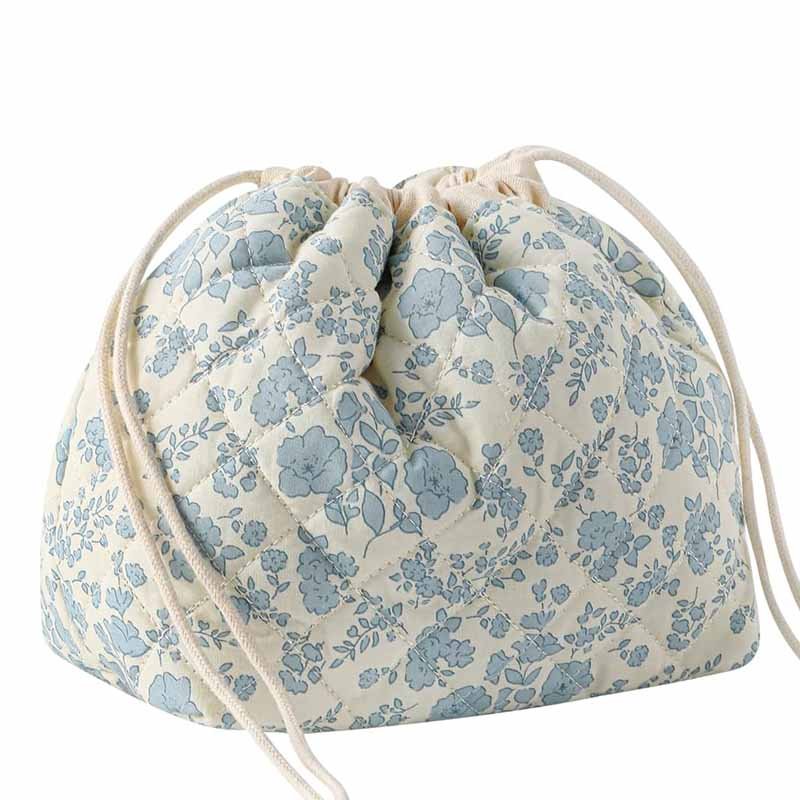
How branding considerations influence pattern layout
Branding works best when the pattern allows for it.
Good patterns include:
- flat panels for printing or embroidery
- seams placed away from logo zones
- consistent proportions across sizes
At Szoneier, many “good DIY patterns” are modified to be brand-ready, ensuring logos sit straight and remain visible after the bag is filled.
Why reinforcement points should be defined in the pattern
Reinforcement should be planned, not improvised.
Critical reinforcement zones:
- drawstring exits
- side seams near the base
- handle attachment points (if any)
Defining these in the pattern ensures consistent quality in every unit—especially important for OEM and private label production.
Design Element Checklist
| Element | Why It Matters | Common Failure If Ignored |
|---|---|---|
| Channel height & width | smooth closure | cord jamming, fraying |
| Seam reinforcement | load support | seam splitting |
| Base shape | stability | bag collapsing |
| Fabric compatibility | durability | premature wear |
| Pocket placement | usability | distorted shape |
| Branding zones | clean presentation | crooked logos |
How Do You Draft and Sew a Drawstring Project Bag Pattern
To draft and sew a drawstring project bag pattern, you first define the finished bag size and structure, then add seam allowances and drawstring channel space. Accurate cutting, correct sewing order, reinforced channel exits, and proper drawstring insertion ensure the bag opens smoothly, holds weight evenly, and remains durable through repeated use.
Drafting and sewing a drawstring project bag pattern is not just a craft process—it is a problem-solving process. Many bags fail not because of poor sewing, but because the pattern didn’t anticipate how fabric behaves under tension, how drawstrings move, or where stress accumulates.
At Szoneier, even simple drawstring bags go through pattern validation, because once a pattern is wrong, no amount of careful sewing can fully fix it. The steps below reflect both DIY best practices and factory-ready logic.
How do you decide the finished size before drafting the pattern?
Always start with the finished bag size, not the cut size.
Ask three questions:
- What is the largest item the bag must hold?
- Should the bag stand upright when opened?
- Does it need extra depth or just height?
Common finished size ranges:
- Small projects: 20 × 25 cm
- Medium projects: 25–30 × 35 cm
- Large projects: 35–40 cm height or more
If stability matters (knitting, tools), plan for boxed corners or a gusset at this stage. Size decisions made later usually cause awkward proportions or wasted fabric.
How do you calculate seam allowance and drawstring channel space?
This is where many beginner patterns go wrong.
A correct pattern adds two separate allowances:
- Seam allowance (usually 1–1.5 cm per seam)
- Channel allowance (extra height for folding)
Typical calculation example:
- Desired finished height: 30 cm
- Channel height (finished): 2.5 cm
- Fabric needed for channel fold: ~5–6 cm
- Seam allowance (top + bottom): ~2–3 cm
Total cut height ≈ 37–39 cm
If you don’t add enough channel space, the bag will close poorly or expose raw seams. Szoneier often sees this issue in DIY patterns brought in for mass production.
How do you draft the pattern pieces correctly?
Most drawstring project bags use one of these layouts:
- One main rectangle (folded)
- Two mirrored panels
- One panel + separate gusset/base
Drafting best practices:
- Draw on paper or digital CAD at full scale
- Mark grain direction to prevent twisting
- Clearly mark:
- seam lines
- channel fold lines
- drawstring exit points
For repeatability (selling or scaling), Szoneier converts approved patterns into standard cutting templates, ensuring every unit matches the sample.
How do you cut and prepare fabric accurately?
Cutting accuracy affects final symmetry.
Best practices:
- Cut fabric on grain
- Use rotary cutter + ruler for straight edges
- Transfer all pattern markings before sewing
If lining is used, outer fabric and lining should be cut from the same pattern, with adjustments only if fabric thickness differs.
In factory settings, inaccurate cutting is one of the main causes of twisted seams and uneven channels.
What is the correct sewing order for a drawstring project bag?
Sewing order determines strength and appearance.
Standard sewing sequence:
- Sew pockets or labels first (flat stage)
- Sew side seams (leave channel gaps unstitched)
- Reinforce channel exit points (bartacks)
- Fold and stitch drawstring channel
- Box corners or attach gusset (if any)
- Turn bag right-side out
- Insert drawstring(s)
Changing the order often leads to trapped seams or weak channels. This order is used by Szoneier for consistent OEM production.
How do you reinforce the drawstring channel properly?
The channel is the highest-wear area.
Effective reinforcement methods:
- Double-stitch along channel edge
- Bartack at cord exits
- Use interfacing or folded layers for thin fabrics
A common mistake is sewing the channel with a single line of stitching on lightweight cotton—this almost guarantees tearing after repeated use.
How do you insert and secure the drawstring correctly?
Drawstring setup affects usability.
Best practices:
- Use two opposing drawstrings for medium and large bags
- Ensure cords glide freely before final trimming
- Heat-seal or knot cord ends to prevent fraying
For heavy-duty bags, Szoneier often replaces cord with tape or webbing, which requires wider channels and stronger exit reinforcement.
How do you finish edges and seams for a professional result?
Finishing determines whether a bag feels “handmade” or “retail-ready.”
Common finishing options:
- Overlocked seams (fast, clean)
- French seams (light fabric, premium feel)
- Bound seams (durable, decorative)
Edge finishing also prevents fraying and improves wash durability—important for project bags used daily.
How do you test and adjust the pattern after sewing the first sample?
Never assume the first sample is final.
After sewing:
- Load the bag with real items
- Open and close it repeatedly
- Check stress points:
- channel exits
- side seams near base
- corner folds
At Szoneier, patterns are adjusted after use testing, not just visual inspection. Small changes—like widening a channel by 5 mm—can dramatically improve long-term performance.
Drafting & Sewing Checklist
| Step | Why It Matters |
|---|---|
| Define finished size | avoids awkward proportions |
| Add correct channel allowance | ensures smooth closure |
| Mark stress points | enables reinforcement |
| Follow correct sewing order | prevents weak seams |
| Reinforce channel exits | stops tearing |
| Test with real load | validates durability |
Do Custom Drawstring Project Bag Patterns Matter for Brands
Yes. Custom drawstring project bag patterns matter for brands because they define product consistency, durability, user experience, and brand recognition. A custom pattern allows better control over size, structure, materials, and reinforcement, reducing defects and returns while creating a distinct product that can be scaled reliably in OEM or private label production.
Many brands underestimate the role of patterns, treating them as a technical formality rather than a core product asset. In reality, the pattern determines how a bag feels in use, how it holds up over time, and how consistently it can be produced.
From Szoneier’s experience working with overseas brands and Amazon sellers, one fact is clear:
Most quality problems in drawstring bags come from generic or unoptimized patterns—not from fabric or labor.
A free or off-the-shelf pattern may work for a few handmade pieces, but once a product is sold under a brand name, the pattern becomes responsible for customer reviews, repeat orders, and long-term reputation.
Do custom patterns improve product differentiation?
Yes, and often more effectively than surface-level branding.
In crowded markets, many drawstring bags share:
- similar fabrics
- similar sizes
- similar colors
What actually makes customers feel a difference is:
- how wide the bag opens
- whether it stands upright
- how smoothly the drawstring closes
- whether seams feel solid
All of these are pattern decisions, not logo decisions.
A custom pattern allows brands to:
- adjust proportions for a better hand-feel
- design a more stable base
- create a signature silhouette
- reserve clean areas for logos and labels
These differences are immediately noticeable in use—even if customers cannot describe them technically.
Do custom patterns improve consistency and quality control?
Absolutely. Consistency is where generic patterns break down.
Generic or DIY patterns often:
- lack clear tolerance ranges
- assume hand-sewing flexibility
- ignore batch-to-batch variation
In mass production, this leads to:
- uneven sizes
- twisted seams
- inconsistent channel height
- higher defect and return rates
Custom patterns developed with a factory like Szoneier include:
- standardized seam allowances
- defined reinforcement points
- clear stitch sequences
- fabric-specific adjustments
This makes it possible to reproduce the same bag hundreds or thousands of times with minimal variation, which is critical for brand trust.
Do custom patterns reduce long-term costs?
Yes—even if initial development costs slightly more.
Brands using non-optimized patterns often face hidden costs:
- frequent rework
- higher inspection rejection rates
- customer complaints and returns
- wasted materials due to pattern inefficiency
A production-ready custom pattern:
- reduces sewing errors
- speeds up assembly
- lowers training time for workers
- stabilizes material consumption
Over multiple production runs, these savings usually outweigh the upfront pattern optimization cost. This is why experienced brands treat custom pattern development as an investment, not an expense.
Do custom patterns affect lead time and scalability?
Strongly—and positively.
When a pattern is clearly defined and validated:
- sampling becomes faster
- revisions are more targeted
- mass production starts smoothly
At Szoneier, many repeat clients can move from design confirmation to mass production quickly because their pattern is already locked and proven.
This is especially important for:
- seasonal launches
- Amazon restocks
- promotional campaigns
Brands with stable custom patterns respond to market demand faster than those constantly adjusting generic designs.
Are custom patterns necessary for private label and OEM products?
In practice, yes.
Private label and OEM products require:
- visual consistency across batches
- predictable sizing for packaging
- reliable performance to protect the brand name
Using a generic pattern increases risk because the pattern was never designed with your brand’s use case, fabric choice, or customer expectations in mind.
Szoneier supports OEM/ODM clients by:
- refining existing patterns
- drafting new patterns from scratch
- adapting patterns for different fabrics and sizes
- testing patterns under real use conditions
This ensures that the final product reflects the brand’s positioning—not a generic template.
When is a generic pattern “good enough,” and when is it not?
A generic pattern may be acceptable if:
- the product is for internal use only
- volume is very low
- durability expectations are minimal
A custom pattern is strongly recommended if:
- the bag is sold under your brand
- customers use it repeatedly
- reviews and returns matter
- you plan to reorder or scale
Once a product reaches the market, pattern weaknesses become brand problems, not sewing problems.
Brand Impact Summary Table
| Aspect | Generic Pattern | Custom Pattern |
|---|---|---|
| Product feel | Inconsistent | Controlled |
| Durability | Unpredictable | Engineered |
| Brand differentiation | Low | High |
| QC stability | Weak | Strong |
| Scalability | Poor | Excellent |
| Long-term cost | Higher | Lower |
Final
A drawstring project bag may look simple—but the pattern behind it decides:
- how the bag feels in daily use
- how long it lasts
- how well it represents a brand
For DIY makers, a good pattern saves frustration.
For brands, a production-ready pattern saves money, time, and reputation.
Why Work With Szoneier for Custom Drawstring Project Bags?
At Szoneier, drawstring bags are not an afterthought—they are part of a complete bag development system.
Whether you are a craft brand, an online seller, or a growing label, our team helps turn a simple pattern into a reliable, scalable product.
Contact Szoneier today to discuss your drawstring project bag pattern, request samples, or receive a custom quotation.