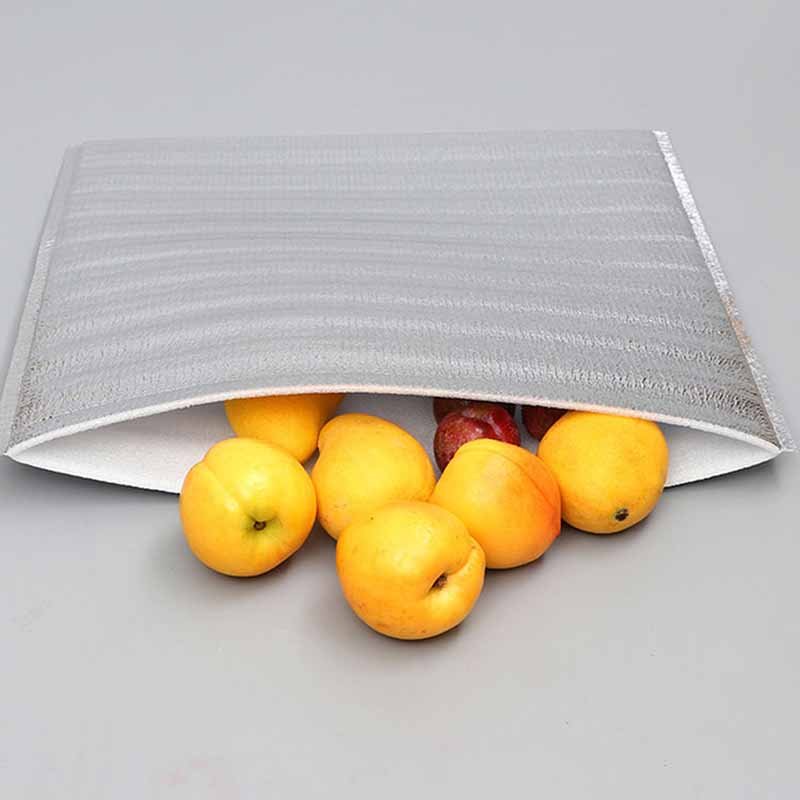
When people first look at a cooler bag, the shiny silver lining usually gets all the attention. It looks technical, clean, and cold-resistant, so many people naturally assume that aluminum foil is the main reason a cooler bag can hold low temperatures. In real manufacturing, that is only part of the story. A cooler bag keeps food and drinks cold because of the full insulation structure, not because of one single visible layer. In most cases, foam is the real thermal barrier, while aluminum foil helps reflect radiant heat and improves the internal environment.
For importers, brand owners, Amazon sellers, meal-prep companies, and food delivery businesses, this difference matters a lot. Choosing the wrong insulation structure can lead to short cold-holding time, customer complaints, leaking condensation, weak bag shape, and rising product return rates. Choosing the right structure can improve temperature retention, product feel, daily usability, and final market positioning.
Foam usually does more of the actual insulation work in cooler bags, while aluminum foil plays a supporting role by reflecting heat and improving thermal efficiency. The best-performing cooler bags usually combine both materials rather than relying on only one. If your goal is to keep drinks, lunch boxes, breast milk, frozen snacks, or takeaway meals cold for longer, the insulation system should be designed as a full layered structure, with each material handling a different part of heat transfer.
This is where many low-cost cooler bags fail. From the outside, two bags may look very similar. Both may use polyester fabric, zipper closure, carry handles, and silver lining. But once you open the material structure, the difference becomes obvious. One bag may use only a thin foil layer with almost no foam support. Another may use 6 mm or 8 mm closed-cell foam, laminated foil lining, leak-resistant seams, and stronger outer fabric. After a few hours in hot weather, the performance gap becomes impossible to hide. That is why insulation material choice is not just a technical detail. It directly affects the customer experience, your product reputation, and your selling price in the market.
What Is Foam Insulation in Cooler Bags?
Foam insulation is the main material that slows down heat entering a cooler bag. It works by trapping air inside a cellular structure, creating a barrier that reduces heat transfer between the outside air and the cold items stored inside. In practical product design, foam is the part that gives cooler bags real holding power. Without it, the bag may still look insulated, but actual cooling performance will be weak and unstable.
For most soft cooler bags, the foam layer sits between the outer fabric and the inner lining. This middle layer gives the bag thickness, body, and thermal resistance. It also helps the bag keep its shape, protects packed items from light impact, and improves the overall feel of the product. In other words, foam is not only about temperature control. It also affects appearance, structure, user comfort, and product grade.
A cooler bag with the right foam structure can usually hold temperature much longer than a bag that relies only on reflective lining. This is one of the most important points for customers comparing different insulated bag suppliers.
What foam insulation is used in cooler bags?
Not all foam is the same. In cooler bag production, the foam type influences insulation performance, softness, flexibility, weight, cost, and even sewing behavior. The most common options are PE foam, EPE foam, EVA foam, and in some special cases PU foam. Each has a different position in the market.
PE foam is one of the most widely used materials in commercial cooler bags. It is lightweight, cost-effective, easy to laminate, and stable enough for daily-use insulation bags. EPE foam is also common because it is soft, flexible, and affordable. EVA foam is often used in more premium cooler bags because it feels denser, looks neater after shaping, and gives the bag a better hand feel. PU foam is less common in standard sewn cooler bags, but may appear in rigid or semi-structured insulation systems.
The table below gives a practical comparison:
| Foam Type | Common Thickness | Main Advantage | Main Limitation | Common Use |
|---|---|---|---|---|
| PE Foam | 3–10 mm | Good insulation, light weight, easy to process | Moderate rebound | Lunch bags, grocery cooler bags |
| EPE Foam | 4–10 mm | Soft, low cost, flexible | Lower structure support | Promotional cooler bags |
| EVA Foam | 4–8 mm | Better feel, cleaner shape, stronger body | Higher cost | Premium lunch bags, retail cooler bags |
| PU Foam | 8–20 mm | Strong insulation performance | Heavier, more complex use | Specialized insulated products |
In actual sourcing, most small and medium cooler bags on the market use foam thickness between 5 mm and 8 mm. Bags below this range often struggle in warm outdoor conditions. Bags above this range perform better, but they also become bulkier, heavier, and more expensive to ship.
At Szoneier, insulation thickness is usually recommended according to the bag’s use rather than chosen blindly. For example, a daily office lunch bag may work well with 5 mm PE foam, while a picnic cooler bag, grocery bag, or short-distance food delivery bag may need 6 mm to 8 mm closed-cell foam for more reliable performance. If the client is targeting a higher-end market, EVA can also be considered to improve the bag’s shape, touch, and product positioning.
How does foam insulation work in cooler bags?
To understand why foam matters so much, it helps to look at how heat actually moves. In a cooler bag, cold does not “stay in” by itself. The bag is constantly fighting outside heat. Heat enters through three main paths: direct contact, air movement, and radiant heat from the surrounding environment. Foam mainly helps reduce heat coming through direct transfer and slows temperature change inside the bag.
The reason foam works is simple. Its internal structure contains many tiny sealed air pockets. Air is a weak heat conductor, so when air gets trapped inside foam cells, heat moves much more slowly. This gives the contents inside the cooler bag more time to stay cold.
In real-life use, this means a cooler bag with proper foam insulation can better handle:
- hot car interiors
- direct summer sunlight
- warm office environments
- frequent carrying during commuting
- short-term outdoor use
- supermarket-to-home cold chain transport
The effect of foam thickness can be seen more clearly in product testing and field experience. The table below shows a practical performance range for common soft cooler bag structures under warm conditions, assuming normal zipper closure and use with ice packs:
| Foam Thickness | Light Daily Use | Outdoor Use in Warm Weather | Common Result |
|---|---|---|---|
| 2–3 mm | 1–2 hours | Less than 1 hour | Weak insulation, mostly appearance only |
| 4–5 mm | 2–4 hours | 1.5–3 hours | Acceptable for short lunch use |
| 6–8 mm | 4–6 hours | 3–5 hours | Good balance for most retail cooler bags |
| 10 mm+ | 6–8 hours or more | 4–6 hours or more | Better retention, but more bulk |
These numbers are not fixed laboratory claims. Actual results depend on ice pack volume, food temperature at loading, zipper closure, bag color, external temperature, and how often the bag is opened. But from a manufacturing point of view, the direction is clear: thin foam may be cheaper, but it often leads to poor customer satisfaction.
This is why experienced cooler bag manufacturers do not sell insulation based on appearance alone. The foam layer has to match the end use. A parent carrying breast milk storage packs, a delivery rider transporting fresh meals, and a family packing cold drinks for a beach day do not have the same insulation requirement.
Is thick foam insulation better for cooler bags?
Thicker foam usually improves cold retention, but it does not automatically mean the bag becomes a better product. Good cooler bag design is about balance. If the foam is too thin, the bag performs poorly. If it is too thick, the bag becomes stiff, bulky, harder to fold, and more expensive to produce and ship.
This is where many product decisions need real manufacturing judgment. Some clients focus only on insulation hours and ask for the thickest foam possible. On paper, this sounds reasonable. In the actual market, it can create new problems. A daily-use lunch bag that is too thick may feel awkward for office workers. A grocery cooler bag that cannot fold easily may be inconvenient to store in the car. A retail product with too much foam may also take up more carton space, increasing freight cost per unit.
Here is a more practical way to look at it:
| Bag Type | Recommended Foam Range | Why It Works |
|---|---|---|
| Kids lunch bag | 4–5 mm | Light, compact, easy to carry |
| Office lunch bag | 5–6 mm | Good daily balance of insulation and size |
| Grocery cooler bag | 6–8 mm | Better for transport from store to home |
| Picnic cooler bag | 6–8 mm | Holds shape better and keeps contents cooler longer |
| Food delivery bag | 8–10 mm | Better thermal stability during transport |
| Premium outdoor cooler bag | 8–12 mm | Improved retention for longer trips |
Another point customers care about is cost. Foam thickness affects not just material consumption, but also lamination, sewing difficulty, bag turning, edge binding, packing size, and freight efficiency. Even a small increase from 5 mm to 8 mm can noticeably change the product cost structure.
For many custom cooler bag projects, Szoneier often recommends 6 mm to 8 mm foam as the most balanced option for mainstream commercial use. This range performs well, keeps the product attractive, and avoids pushing the bag into an unnecessarily high cost bracket. For premium projects, thicker construction can be developed based on target market, insulation goal, and shipping budget.
What customers should check before choosing foam insulation?
When clients compare cooler bag quotations from different factories, insulation details are often hidden behind simple wording like “with foil lining” or “insulated structure.” That is not enough. Two bags can both be described as insulated, while their actual performance may be completely different.
A serious custom development process should check at least the following points:
- Foam type: PE, EPE, EVA, or other material
- Foam thickness: 3 mm, 5 mm, 6 mm, 8 mm, or more
- Foam density: denser foam often gives better structure and more stable performance
- Layer position: where the foam sits in the bag structure
- Lamination quality: whether foam and lining bond well or separate easily
- Inner lining material: PEVA, aluminum foil film, EVA, TPU, or food-contact layer
- Seam treatment: whether the bag can reduce leakage and condensation seepage
- End use: lunch, grocery, medical, delivery, outdoor, promotional, or premium retail
Many low-price cooler bags on the market use very thin foam just to make the bag look padded in photos. This may help suppliers win on price, but it rarely helps the brand build repeat orders. If the cooler bag is part of your core product line, insulation structure should be treated as a performance feature, not just a visual feature.
For that reason, experienced clients usually ask for cross-section confirmation during sampling. Some also request a cut-open sample to check the exact layer build. This is a smart step, especially when insulation performance is part of your sales promise.
How foam insulation affects product quality and customer experience
From the customer’s side, insulation is never judged only by technical specifications. It is judged by use. Does the drink still feel cold after a commute? Does the lunch stay fresh until noon? Does the grocery bag help protect frozen food on the drive home? Does condensation leak through the seams? Does the bag feel cheap after one week of use?
Foam influences all of these points.
A better foam structure usually gives the bag:
- more stable temperature retention
- fuller body and nicer shape
- better protection for packed containers
- less outer surface collapse
- stronger perceived product value
- better support for premium retail pricing
This is especially important for brands building their own private label cooler bag line. End users may not know the exact foam type inside the bag, but they immediately notice whether the bag feels thin, flimsy, warm too quickly, or loses shape after repeated use.
That is why insulation choice should always match the target customer. A cheap promotional giveaway bag and a premium branded lunch cooler should not be built to the same standard. The materials may look similar in online images, but the user experience will not be similar at all.
For custom manufacturing, Szoneier usually evaluates foam insulation together with outer fabric, lining choice, bag size, zipper quality, stitching structure, and intended use scenario. This helps clients avoid a common mistake: spending too much attention on exterior design while underestimating the internal structure that actually determines performance.
What Is Aluminum Foil Insulation in Cooler Bags?
Aluminum foil insulation in cooler bags is the reflective inner layer that helps reduce heat radiation and supports the foam insulation system. It does not replace foam insulation. Instead, it improves overall thermal efficiency by reflecting radiant heat away from the bag’s interior and helping maintain a cooler internal environment.
In most soft cooler bags, the aluminum foil layer is laminated to a plastic film such as PE, PET, or PEVA. This laminated material forms the inner lining of the bag. The lining performs several functions at the same time: reflecting heat, resisting moisture, preventing leaks, and providing a surface that is easy to clean after use.
When customers open a cooler bag and see a silver reflective interior, that is usually the aluminum foil composite layer. While it plays an important role in temperature control, its effectiveness depends heavily on the foam insulation behind it. Without foam support, foil alone cannot keep food cold for long periods.
Why aluminum foil insulation is used in cooler bags?
Aluminum foil is used because of its ability to reflect radiant heat. Heat from the environment often comes in the form of thermal radiation, especially under sunlight or in warm rooms. The reflective surface of aluminum foil helps bounce some of that heat away instead of letting it penetrate the bag interior.
Another advantage of foil lining is that it creates a cleaner and more hygienic surface for food storage. The laminated foil layer usually sits on top of a thin plastic film, which helps prevent direct contact between food containers and the foam insulation layer.
Manufacturers prefer foil lining because it offers several practical benefits:
- reflects a portion of radiant heat
- improves internal thermal stability
- adds a moisture-resistant barrier
- helps prevent condensation leakage
- provides a smooth interior for easy cleaning
- supports laminated insulation structures
The table below shows common inner lining materials used in cooler bags.
| Inner Lining Material | Appearance | Heat Reflection | Leak Resistance | Cleaning Ease | Typical Use |
|---|---|---|---|---|---|
| Aluminum foil + PE film | Silver reflective | High | Moderate | Easy | Lunch cooler bags |
| Aluminum foil + PET film | Silver reflective | High | Good | Easy | Grocery cooler bags |
| PEVA lining | Matte or semi-gloss | Moderate | Good | Very easy | Food contact bags |
| EVA lining | Smooth plastic | Low | Excellent | Very easy | Waterproof insulated bags |
| TPU lining | Clear flexible | Low | Excellent | Easy | Premium insulated bags |
Many commercial cooler bags combine foil laminated lining + foam insulation + outer fabric to create a multi-layer structure that balances insulation, durability, and cost.
How does foil insulation reflect heat in cooler bags?
Heat can move through materials in several ways. One of those ways is radiation, which occurs when heat energy travels through electromagnetic waves. Sunlight is the most obvious example of radiant heat. Even without direct sunlight, warm environments still emit heat radiation.
Aluminum foil works well in cooler bags because it reflects a portion of that radiant heat instead of absorbing it. When radiant heat reaches the foil surface, some of it is reflected outward rather than entering the bag.
This reflective effect becomes particularly useful in situations such as:
- outdoor picnics
- beach trips
- warm car interiors
- grocery transport in summer
- lunch storage during warm weather
The reflective performance of foil insulation can be illustrated simply:
| Surface Type | Heat Reflection Ability |
|---|---|
| Dark fabric | Low reflection, absorbs heat |
| Plastic lining | Moderate reflection |
| Aluminum foil | High reflection |
However, aluminum foil works best when it is part of a layered insulation system. If the foil sits directly against outside heat with no foam behind it, the reflected heat advantage becomes limited.
This is why many cooler bag structures place foil on the inside and foam in the middle. The foil reflects radiation, while the foam blocks conductive heat from reaching the contents.
Is aluminum foil insulation durable in cooler bags?
Durability depends on how the foil layer is laminated and protected. Pure aluminum foil by itself would tear easily and wrinkle quickly. To solve this problem, cooler bag manufacturers laminate foil onto a thin plastic film layer.
This laminated structure improves:
- tear resistance
- flexibility
- water resistance
- cleaning durability
- seam bonding strength
For example, aluminum foil laminated with PE film creates a surface that can be wiped clean after food spills. The plastic layer protects the foil from damage while still allowing it to reflect heat.
Another durability factor is seam construction. Many cooler bags use sewn seams, and those seams can allow moisture to seep through over time. Higher-quality cooler bags may add seam tape or special stitching techniques to improve leakage resistance.
The durability of foil insulation also depends on usage patterns. If the bag frequently carries sharp containers or heavy ice packs, the lining should be reinforced or upgraded to thicker composite film.
Can aluminum foil insulation work without foam layers?
Technically, it can be used alone, but the performance is limited. Some promotional cooler bags use foil lining without real foam insulation to reduce manufacturing cost. These bags may look insulated but do not hold cold temperatures for long.
A bag with only foil lining usually experiences several problems:
- rapid temperature change
- weak bag structure
- easy heat penetration
- limited cold retention time
To understand this difference, consider the following simplified comparison.
| Structure Type | Insulation Performance | Typical Cold Retention |
|---|---|---|
| Foil only | Low | 30–60 minutes |
| Thin foam + foil | Moderate | 2–3 hours |
| 6–8 mm foam + foil | Good | 4–6 hours |
| Thick foam + foil + tight sealing | Very good | 6–8 hours |
Because of this, experienced manufacturers rarely rely on foil alone. Instead, foil is used as part of a layered insulation system that works together with foam, lining films, and outer fabrics.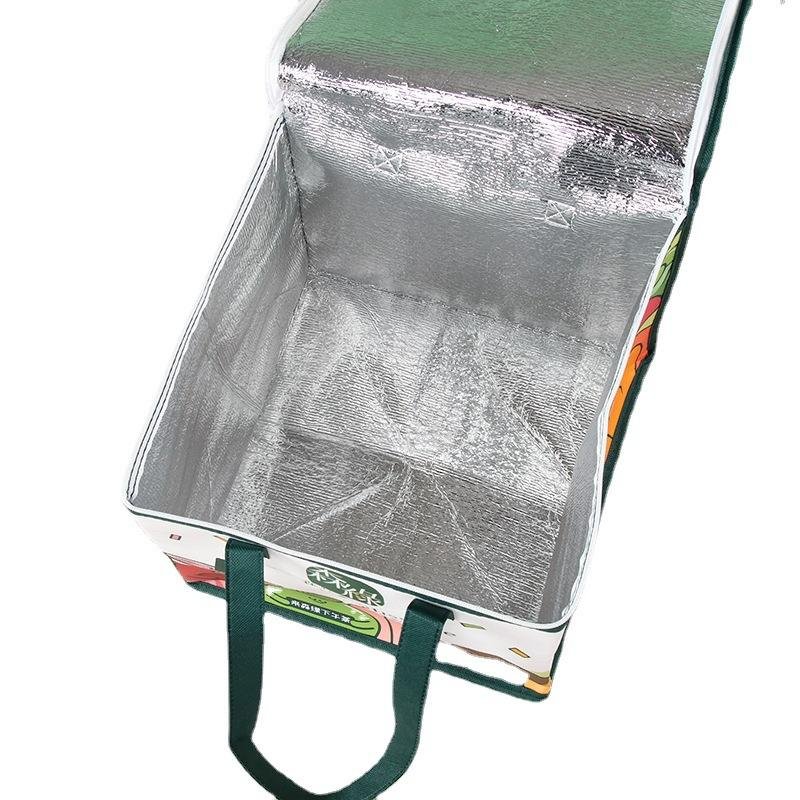
How Do Foam and Foil Insulation Work in Cooler Bags?
Foam and aluminum foil perform different roles inside a cooler bag, and the best insulation results appear when they are combined in a layered structure. Foam reduces heat transfer through thickness and trapped air, while foil reflects radiant heat away from the interior. Together, they slow down multiple paths through which heat can enter the bag.
Most modern cooler bags are built using a multi-layer insulation structure rather than a single insulation material. Each layer handles a different task, allowing the bag to maintain temperature more effectively during daily use.
Why cooler bags use foam and aluminum foil together?
Using both materials together allows the bag to manage different types of heat transfer at the same time. Foam mainly blocks conduction, while foil reduces radiation.
When foam and foil are combined correctly, they form a more efficient insulation barrier.
The layered structure usually looks like this:
| Layer | Function |
|---|---|
| Outer fabric (polyester, nylon, canvas) | Protects bag exterior |
| Foam insulation layer | Main thermal barrier |
| Foil laminated lining | Reflects heat and protects interior |
| Inner film layer | Leak resistance and easy cleaning |
Each layer contributes to the overall performance of the cooler bag. Removing one layer weakens the insulation system.
How insulation layers improve cooler bag performance?
Layered insulation slows down temperature change inside the bag. Instead of heat moving quickly from the outside environment to the inside contents, it encounters multiple barriers.
This layered resistance improves:
- ice pack longevity
- food freshness duration
- drink temperature retention
- internal condensation control
- user satisfaction
The effectiveness of layered insulation becomes noticeable during longer outdoor activities or food delivery scenarios.
For example:
| Cooler Bag Structure | Estimated Cold Holding |
|---|---|
| Single layer foil lining | 1 hour |
| Thin foam + foil | 2–3 hours |
| 6 mm foam + foil | 4–5 hours |
| 8 mm foam + foil + sealed seams | 6 hours or more |
These values vary depending on ice quantity, outside temperature, and bag closure quality.
What is the common insulation structure in cooler bags?
Most commercial cooler bags use a three-layer or four-layer insulation structure.
A standard construction often looks like this:
| Layer Position | Material |
|---|---|
| Outer shell | Polyester, nylon, canvas |
| Insulation core | PE foam or EVA foam |
| Reflective layer | Aluminum foil laminated film |
| Interior surface | PEVA, EVA, or food-safe plastic |
This structure balances thermal performance, flexibility, and manufacturing cost. It also allows the bag to remain lightweight while still providing practical insulation for everyday use.
Premium cooler bags may add extra layers such as:
- thicker foam insulation
- reinforced leak-resistant lining
- waterproof TPU layers
- seam sealing technology
These upgrades increase product performance but also increase cost and production complexity.
How insulation design affects custom cooler bag development
When brands develop custom cooler bags, insulation design becomes one of the most important engineering decisions. Small changes in foam thickness or lining material can significantly influence product performance, appearance, and cost.
Manufacturers usually evaluate insulation design based on several factors:
- target market price
- expected insulation time
- bag size and shape
- shipping weight limits
- production efficiency
- cleaning requirements
- durability expectations
At Szoneier, insulation structures are typically customized based on the final use scenario. For example, a compact lunch cooler may prioritize flexibility and portability, while a grocery cooler bag may prioritize larger capacity and stronger insulation.
This development approach helps ensure that the final product meets real-world usage expectations instead of relying on marketing claims alone.
Which Insulation Is Better for Cooler Bags?
When people compare cooler bags, one of the most common questions is whether foam insulation or aluminum foil insulation performs better. The short answer is that foam usually provides the main insulation performance, while aluminum foil enhances efficiency by reflecting radiant heat. In real product development, the most effective cooler bags combine both materials so that each layer handles a different part of heat transfer.
If a cooler bag relies only on foil lining, its cooling ability is limited. If a bag uses foam but no reflective lining, it still works, but its performance may drop faster in hot environments. Combining foam and foil creates a more stable insulation system that slows temperature change and improves real-world usability.
Which insulation keeps cooler bags colder longer?
In practical testing, foam thickness is the factor that most directly influences how long a cooler bag can hold temperature. Foam acts as the main barrier between outside heat and the interior space.
The difference becomes clear when comparing different insulation structures.
| Insulation Structure | Typical Cold Retention | Practical Use Case |
|---|---|---|
| Foil lining only | 30–60 minutes | Promotional bags |
| 3 mm foam + foil | 1–2 hours | Lightweight snack bags |
| 5 mm foam + foil | 2–4 hours | Standard lunch bags |
| 6–8 mm foam + foil | 4–6 hours | Grocery cooler bags |
| 8–10 mm foam + foil | 6–8 hours | Food delivery bags |
These numbers depend on external temperature, ice packs, and how often the bag is opened. However, they provide a useful guideline when evaluating cooler bag designs.
From a manufacturing perspective, insulation performance increases as foam thickness increases, but the improvement slows after a certain point. Doubling foam thickness does not always double cooling time. That is why experienced manufacturers focus on balanced insulation structures rather than extreme thickness.
Which insulation lasts longer in cooler bags?
Durability is another important factor for brands developing cooler bag products. Insulation materials must survive repeated folding, cleaning, loading, and transportation.
Foam durability mainly depends on density and compression resistance. Higher-density foam keeps its shape longer and resists flattening after repeated use.
Foil lining durability depends on the quality of lamination and the protective plastic film layer.
The following table summarizes durability characteristics.
| Material | Durability | Common Issues |
|---|---|---|
| Thin foil lining | Moderate | Wrinkling, tearing |
| Laminated foil film | Good | Minor creasing |
| PE foam | Good | Compression over long use |
| EVA foam | Very good | Higher cost |
| TPU lining | Excellent | Higher production cost |
In lower-cost cooler bags, the foil layer may wrinkle or wear out quickly because the laminate layer is thin. Higher-quality cooler bags use thicker laminated films or reinforced lining materials.
Another factor affecting durability is seam construction. Sewn seams can allow moisture to leak if they are not sealed properly. Some premium cooler bags add seam tape or welded seams to improve leak resistance.
Which insulation costs less for cooler bags?
Cost is always part of the decision when developing a cooler bag product. Foam thickness and lining materials influence material consumption, production time, and shipping weight.
Generally speaking:
- thinner foam reduces material cost but weakens insulation
- thicker foam increases performance but adds weight and shipping volume
- aluminum foil laminated film adds moderate cost but improves appearance and insulation efficiency
The following table shows simplified material cost levels.
| Insulation Material | Cost Level | Market Position |
|---|---|---|
| Thin foil lining | Low | Promotional products |
| PE foam + foil | Medium | Mainstream retail cooler bags |
| EVA foam + foil | Medium-High | Premium lunch bags |
| Thick foam + reinforced lining | High | Professional cooler bags |
For many retail brands, 6–8 mm PE foam with foil lining provides the most balanced combination of cost, performance, and usability.
Choosing materials only based on price can lead to poor performance and customer complaints. On the other hand, choosing unnecessarily expensive insulation may increase retail price without meaningful benefits.
Successful cooler bag products usually find the middle ground between performance and cost.
How Do Manufacturers Choose Cooler Bag Insulation?
Designing a cooler bag involves more than simply selecting insulation materials. Manufacturers must consider the final use scenario, the expected temperature retention time, product size, transportation cost, and user experience. Insulation structure becomes one of the core engineering decisions during product development.
Professional manufacturers typically evaluate insulation design using a structured approach.
What insulation is best for custom cooler bags?
The best insulation depends on how the cooler bag will be used. A lunch bag for office workers does not need the same insulation structure as a delivery bag for hot meals or frozen groceries.
Manufacturers normally match insulation design to the product category.
| Bag Type | Recommended Insulation |
|---|---|
| Lunch cooler bag | 5–6 mm PE foam + foil lining |
| Grocery cooler bag | 6–8 mm PE foam + foil lining |
| Picnic cooler bag | 6–8 mm EVA foam + foil lining |
| Food delivery bag | 8–10 mm foam + reinforced lining |
| Outdoor cooler bag | 8–12 mm foam + waterproof lining |
These configurations balance insulation performance with product usability and cost.
Some premium cooler bags also add structural features such as reinforced panels, leak-resistant lining, and stronger zippers to improve long-term durability.
How thick should cooler bag insulation be?
Foam thickness strongly affects insulation time, bag flexibility, and shipping efficiency. Selecting the correct thickness requires understanding how the bag will be used.
A very thick insulation layer may improve cold retention but also create disadvantages:
- heavier product weight
- larger packaging size
- higher shipping costs
- reduced flexibility
- more difficult sewing process
Because of these trade-offs, most commercial cooler bags use foam thickness between 5 mm and 8 mm.
The following guideline is commonly used by manufacturers.
| Foam Thickness | Product Category |
|---|---|
| 3–4 mm | Lightweight promotional bags |
| 5–6 mm | Everyday lunch cooler bags |
| 6–8 mm | Grocery and picnic cooler bags |
| 8–10 mm | Delivery cooler bags |
| 10 mm+ | Heavy-duty outdoor coolers |
Choosing thickness based on real usage helps maintain product competitiveness in the market.
How Szoneier designs insulated cooler bags
Szoneier has more than 18 years of experience in designing and manufacturing insulated bags for international brands, importers, and online sellers. Cooler bags are one of the most requested categories because they combine textile engineering with thermal performance.
During development, Szoneier evaluates several technical factors before finalizing insulation structure.
Key evaluation points include:
- bag size and capacity
- expected temperature retention time
- external fabric type
- foam density and thickness
- lining material safety
- leak resistance requirements
- packaging efficiency
- target retail price
A typical insulated cooler bag structure developed by Szoneier often includes:
- Durable outer fabric such as polyester, canvas, or Oxford fabric
- Closed-cell foam insulation layer (usually 6–8 mm)
- Aluminum foil laminated lining or PEVA food-safe lining
- Reinforced stitching and zipper closure
This layered design provides reliable temperature control while keeping the bag lightweight and practical for everyday use.
Szoneier also supports a wide range of customization options for cooler bags, including:
- custom bag sizes
- private label logos
- color matching
- custom insulation thickness
- leak-proof lining upgrades
- waterproof fabrics
- reinforced base panels
- foldable or collapsible designs
For brands selling on platforms such as Amazon, Shopify, or retail stores, optimizing insulation structure can significantly improve product ratings and repeat purchases.
Final Thoughts
Foam and aluminum foil insulation play different roles inside cooler bags. Foam acts as the main thermal barrier that slows heat transfer, while aluminum foil reflects radiant heat and improves overall insulation efficiency. When combined in a layered design, these materials create a cooler bag capable of maintaining stable temperatures for several hours.
For companies developing their own cooler bag products, insulation structure should be treated as a core design feature rather than a simple lining detail. Foam thickness, lining materials, and seam construction all influence real-world performance.
A well-designed cooler bag can improve food freshness, protect beverages during transport, and deliver a better user experience. These factors often determine whether a product becomes a long-term bestseller or quickly disappears from the market.
Szoneier specializes in custom cooler bag manufacturing, offering full support from product design to production. With more than 18 years of bag manufacturing experience, the company works with global brands, retailers, and distributors to develop insulated bags that balance performance, durability, and cost efficiency.
If you are planning to develop custom cooler bags, insulated lunch bags, or thermal delivery bags, the Szoneier team can help you design the right insulation structure for your market.
You are welcome to contact Szoneier to discuss your project, request samples, or receive a quotation for customized insulated bag production.