Skip to content
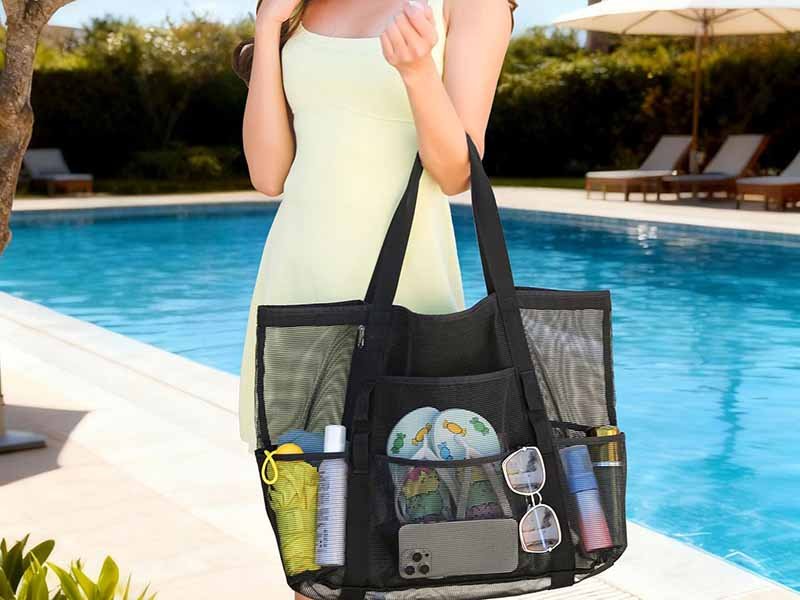
Beach bags made from mesh materials are a favorite choice because they combine breathability, water drainage, and quick drying—making them ideal for beachgoers who want to keep their items safe and dry without adding extra weight. But choosing the right mesh material is crucial for ensuring your beach bag performs well under the harsh conditions of sand, saltwater, and sunlight.
Nylon mesh, polyester mesh, and PVC mesh are the three most popular options for beach bags, each offering its own unique set of benefits. Nylon mesh is known for its strength and resistance to abrasion, making it a good choice for durability. Polyester mesh offers excellent UV resistance, which helps it maintain color and strength over time. PVC mesh, on the other hand, is more waterproof, making it ideal for keeping wet items separated from dry ones.
When choosing the best mesh for your beach bag, it’s important to think about factors such as durability, water resistance, UV protection, and ease of cleaning. Let’s dive into the specifics of each material, how they perform in different conditions, and which one is right for your design needs.
What Is Mesh Material for Beach Bags?
Mesh material refers to a fabric made up of interwoven threads that create small holes, allowing air and water to pass through easily. This is a key feature for beach bags, as it allows wet items to dry faster and sand to escape without getting trapped inside.
Mesh bags are typically made from synthetic fibers such as nylon, polyester, or PVC (polyvinyl chloride). These materials are lightweight and flexible, which makes them easy to carry and store. Additionally, they are highly durable and resistant to wear and tear—important qualities for beach bags that see frequent use.
Mesh bags are perfect for beach settings because they are designed to handle wet conditions, dry quickly, and allow for air circulation, making them an ideal choice for carrying beach gear.
Which types of mesh are used?
There are three main types of mesh materials commonly used for beach bags:
- Nylon Mesh: Known for its strength, abrasion resistance, and lightweight properties, nylon mesh is commonly used for beach bags that need to withstand wear and tear from sand and other outdoor elements.
- Polyester Mesh: Polyester mesh is UV-resistant, making it ideal for bags that will be exposed to the sun. It also dries quickly and is strong enough for everyday beach use.
- PVC Mesh: PVC mesh is waterproof and tear-resistant, making it perfect for keeping wet items contained. It is also easy to clean, but it lacks the breathability of nylon and polyester mesh.
What makes mesh good for beach use?
Mesh materials are highly breathable, allowing air to flow through and helping to dry wet items quickly. This is particularly useful for items like towels and swimsuits, which tend to get soggy at the beach. The material also helps keep sand from accumulating inside the bag, as sand can easily escape through the mesh holes.
Other important benefits of mesh for beach bags include:
- Lightweight: Mesh bags are easy to carry, making them ideal for beachgoers who need to transport their gear.
- Fast drying: Mesh fabric dries quickly, preventing odors from developing and keeping your bag and belongings fresh.
- Water drainage: Mesh bags are great for storing wet swimsuits, soggy towels, or snacks without worrying about mold or mildew.
How is mesh measured ?
Mesh fabric is typically measured by denier, which refers to the thickness of the individual threads used to weave the mesh. Denier is a key factor in determining the durability and feel of the mesh. Higher denier fabrics are thicker and more durable, while lower denier fabrics are lighter and more flexible.
In addition to denier, the size of the holes in the mesh also plays a significant role. A larger hole size allows for better air circulation and quicker drying, but may not be suitable for smaller items that need more protection. A smaller hole size can help protect smaller items but may slow down drainage and airflow.
Practical comparison of mesh denier and hole size
| Material | Denier Range | Hole Size | Typical Use |
|---|---|---|---|
| Nylon Mesh | 200D – 600D | Medium – Small | General use, durable beach bags |
| Polyester Mesh | 100D – 400D | Medium – Small | UV-resistant, color-retentive beach bags |
| PVC Mesh | 300D – 700D | Large | Waterproof, heavy-duty beach bags |
For beach bags, nylon mesh with a medium to small hole size is a popular choice due to its durability and strength. Polyester mesh is also commonly used in bags that need to resist UV degradation. PVC mesh, with larger holes, is best for waterproof bags but can make small items like phones more vulnerable.
Which Mesh Is Best: Nylon, Polyester, or PVC?
The choice between nylon, polyester, and PVC mesh depends largely on the specific needs of the bag. Each type of mesh has different strengths when it comes to durability, water resistance, and UV resistance. Let’s look at how each material stacks up.
How strong is nylon mesh?
Nylon mesh is renowned for its strength, making it an excellent choice for beach bags that are exposed to rough conditions. Nylon’s abrasion resistance ensures it holds up well against sand, rocks, and other outdoor elements. It’s also a lightweight material, which makes it easy to carry, even when the bag is loaded with gear.
Benefits of nylon mesh for beach bags:
- High abrasion resistance—ideal for handling rough conditions.
- Lightweight and flexible, making it comfortable for carrying.
- Durable in both wet and dry conditions, especially in sand-heavy environments.
However, one downside of nylon mesh is that it is more susceptible to UV degradation than polyester. Over time, the material may weaken or fade when exposed to sunlight.
How durable is polyester mesh?
Polyester mesh is often more durable in the long run, especially when exposed to UV light. Unlike nylon, polyester is UV-resistant and maintains its color and strength even after prolonged exposure to the sun. This makes it an excellent option for beach bags that will be used frequently in sunny conditions.
Benefits of polyester mesh for beach bags:
- UV resistance—won’t degrade or lose strength with prolonged sun exposure.
- Quick drying—ideal for wet conditions.
- Strong and highly durable, even with repeated use in beach environments.
One trade-off with polyester mesh is that it is heavier than nylon mesh, though this difference is often negligible for beach bags.
What are the benefits of PVC mesh?
PVC mesh is unique because of its waterproof properties. While it lacks the breathability of nylon and polyester, it is ideal for storing wet items such as swimsuits or towels, without worrying about water seeping out. It is also highly resistant to abrasion, making it durable for heavy-duty use.
Benefits of PVC mesh for beach bags:
- Waterproof—keeps wet items contained and separate from dry items.
- Tear-resistant—ideal for rugged use.
- Easy to clean—just rinse with water and let it dry.
However, because PVC mesh isn’t as breathable, it may trap moisture inside the bag if left closed for too long.
How Do Mesh Materials Handle Sand, Water, and Salt?
Beach environments are harsh on materials. Fine sand particles, salt crystals, moisture, and strong sunlight all work together to accelerate wear, weaken fibers, and reduce the lifespan of low-quality fabrics.
Among nylon, polyester, and PVC mesh:
- Nylon performs well against abrasion and tearing.
- Polyester shows better UV and salt resistance over time.
- PVC prevents water penetration but may stiffen with prolonged salt exposure.
Choosing the right mesh is therefore less about appearance and more about how the material behaves after repeated beach trips.
Does water drain and dry quickly in each mesh type?
Fast drainage is one of the main reasons people choose mesh beach bags. However, drying speed depends on fiber chemistry + hole structure, not just visible openness.
Water handling comparison
| Material | Drain Speed | Drying Time | Real-World Result |
|---|---|---|---|
| Nylon mesh | Fast | Moderate | may feel slightly damp longer |
| Polyester mesh | Fast | Fast | dries most evenly |
| PVC mesh | Slow surface release | Very fast after wipe | water doesn’t absorb into fibers |
Key insight customers notice: Polyester often feels driest because it absorbs less moisture internally than nylon. PVC feels dry fastest only when surface water is wiped off, since it does not absorb water at all.
Which mesh resists long-term salt exposure best?
Salt is one of the most damaging beach factors because it:
- attracts moisture
- accelerates fiber aging
- weakens coatings and plasticizers
Salt resistance ranking
| Material | Salt Resistance | Long-Term Effect |
|---|---|---|
| Polyester mesh | High | minimal strength loss |
| Nylon mesh | Medium | gradual fiber weakening |
| PVC mesh | Medium-low | possible stiffening or micro-cracks |
For frequent ocean use, polyester mesh usually maintains color, flexibility, and tensile strength longer than nylon. PVC remains usable but may lose softness after months of repeated salt drying cycles.
How easily can sand be removed from each mesh?
Sand removal depends mainly on hole geometry and surface friction.
- Large, smooth holes → sand falls out easily
- Textured fibers or tight weave → sand may cling inside
Sand release behavior
| Material | Sand Release | Cleaning Effort |
|---|---|---|
| Nylon mesh | Good | shake + light rinse |
| Polyester mesh | Very good | quick shake usually enough |
| PVC mesh | Excellent | rinse clears instantly |
PVC performs best for instant sand removal, which is why it is often used in family beach totes and kids’ gear bags. Polyester offers the best balance between clean release and lightweight comfort.
What Are Comfort and Carrying Considerations for Mesh Beach Bags?
Material choice affects more than durability. It directly changes how the bag feels on the shoulder, hangs under load, and behaves in heat.
Customers rarely describe this using technical words. Instead, they say:
- “The straps dig into my shoulder.”
- “The bag feels floppy when full.”
- “It gets hot against my skin.”
All three are strongly linked to mesh material structure.
In general:
- Nylon = soft and flexible
- Polyester = balanced firmness
- PVC = structured but heavier
Is mesh comfortable against skin and clothing?
Comfort depends on fiber stiffness, coating, and edge finishing.
Skin-contact comfort comparison
| Material | Softness | Breathability | Summer Comfort |
|---|---|---|---|
| Nylon mesh | Soft | High | very comfortable |
| Polyester mesh | Medium-soft | High | comfortable |
| PVC mesh | Firm | Low | may feel warm or stiff |
Nylon feels best for bare-arm carrying, which is why it is popular in lightweight fashion beach totes. PVC is usually paired with fabric shoulder straps to avoid stiffness against skin.
Which mesh holds shape under heavy load?
Shape retention determines whether a bag feels organized or saggy.
Load stability comparison
| Material | Structure | Best Load Range |
|---|---|---|
| Nylon mesh | Flexible | light to medium |
| Polyester mesh | Semi-structured | medium |
| PVC mesh | Rigid | medium to heavy |
PVC mesh clearly performs best when carrying:
- multiple towels
- water bottles
- beach toys
- sunscreen kits
This is why oversized family beach bags often use PVC panels combined with fabric trim.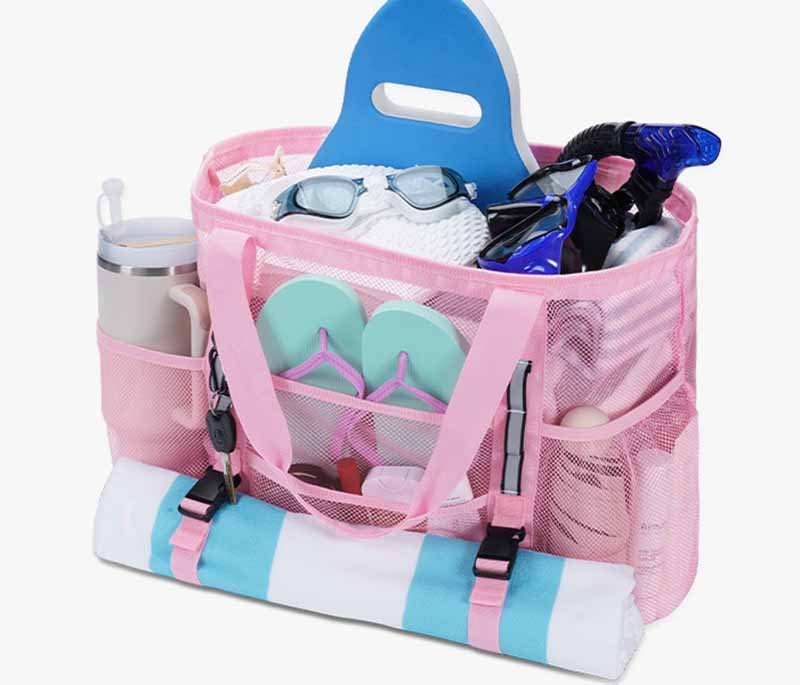
How does mesh influence airflow and heat buildup?
Ventilation is critical in hot beach climates.
Breathability ranking
| Material | Airflow | Heat Retention |
|---|---|---|
| Nylon mesh | Excellent | very low |
| Polyester mesh | Excellent | low |
| PVC mesh | Minimal | higher |
For tropical travel or long outdoor walking, breathable nylon or polyester mesh provides noticeably better comfort than PVC.
How to Choose the Right Mesh for Your Beach Bag Design?
Selecting mesh should start with real usage scenarios, not just cost or color.
A practical decision framework considers:
- carrying weight
- exposure to sun and salt
- need for waterproof separation
- comfort during walking
- target retail price
Which mesh is best for casual beach use?
For light, everyday beach trips, the priorities are:
- low weight
- fast drying
- comfortable carry
Best choice: Polyester mesh for durability + UV resistance Nylon mesh for ultra-light comfort
Both provide strong performance at mid-range production cost.
Which mesh suits heavy gear or family beach bags?
When bags carry:
- large towels
- drinks
- toys
- shoes
structure becomes more important than softness.
Best choice: PVC mesh panels for strength and shape combined with polyester webbing straps for comfort
This hybrid design is common in high-capacity beach totes.
What should brands consider for OEM custom beach bags?
For companies developing beach bag collections, material selection affects:
- product lifespan
- customer reviews
- return rates
- brand positioning
| Product Tier | Recommended Mesh | Reason |
|---|---|---|
| budget retail | polyester mesh | balanced cost & durability |
| mid-range | reinforced polyester or nylon | comfort + lifespan |
| premium | PVC + textile hybrid | structure + visual impact |
Working with an experienced manufacturer helps ensure:
- correct mesh density and coating
- reinforced seam construction
- accurate load testing before mass production
This prevents common issues like tearing corners, fading color, or sagging shape.
Are There Safety and Sustainability Factors to Consider?
Yes. While mesh beach bags are often chosen for convenience and style, long-term customer satisfaction increasingly depends on material safety, environmental impact, and durability under sunlight.
Modern consumers pay attention to:
- whether materials contain harmful plasticizers
- how long the bag lasts before disposal
- whether fabrics resist UV damage without cracking or fading
- recyclability or reduced environmental footprint
For beach products exposed to heat, salt, and sunlight, these factors directly influence product lifespan, safety perception, and brand trust.
In practical terms:
- Polyester usually provides the best balance of safety, durability, and recyclability.
- Nylon offers long service life but is less UV-stable.
- PVC provides waterproof strength but requires stricter control of additives and disposal.
Are some mesh materials more environmentally responsible?
Environmental impact varies mainly by:
- raw polymer type
- coating chemicals
- recyclability after use
General sustainability comparison
| Material | Recyclability | Environmental Notes |
|---|---|---|
| Polyester mesh | High (rPET possible) | widely recycled, stable |
| Nylon mesh | Medium | durable but harder to recycle |
| PVC mesh | Low | chlorine chemistry complicates recycling |
Polyester stands out because recycled PET yarn is already widely used in bags and apparel.
This allows brands to promote:
- reduced virgin plastic use
- lower carbon footprint
- easier compliance with retail sustainability policies
PVC can still be used responsibly, but usually in long-life products where durability offsets disposal impact.
Do tighter meshes improve safety for small personal items?
Yes.
Hole size directly affects whether small belongings fall out.
Common customer concerns:
- keys slipping through mesh
- jewelry or earbuds getting lost
- sunscreen caps popping open
Safety effect of mesh density
| Mesh Density | Item Protection | Typical Use |
|---|---|---|
| Large holes | Low | towels, toys |
| Medium holes | Balanced | general beach bags |
| Small holes | High | valuables & travel use |
Many premium beach bags solve this by combining:
- outer breathable mesh
- inner zip pocket with lining fabric
This hybrid design keeps airflow while protecting small essentials.
Which materials resist UV aging and color fading best?
Sunlight is the primary aging force for beach bags.
UV radiation breaks polymer chains, causing:
- color fading
- brittleness
- reduced tensile strength
UV resistance ranking
| Material | UV Stability | Visible Aging Speed |
|---|---|---|
| Polyester mesh | High | slow |
| Nylon mesh | Medium | moderate fading |
| PVC mesh | Medium | may stiffen or discolor |
Polyester is widely preferred for long-term outdoor exposure because it maintains:
- color brightness
- fiber flexibility
- structural strength
This is especially important for retail products expected to last multiple seasons.
Final Decision Guide: Nylon vs Polyester vs PVC Mesh
Choosing the right mesh becomes easier when matched to real usage scenarios rather than abstract material properties.
Best overall balance for most beach bags
For everyday beach use, the ideal material must provide:
- durability under sun and salt
- comfortable lightweight carry
- reasonable cost for retail pricing
Most balanced choice:
Polyester mesh
Because it delivers:
- strong UV resistance
- stable color retention
- good airflow and drainage
- scalable cost for mass production
This makes polyester the most widely used material in commercial beach bags.
Best choice for lightweight comfort and flexibility
When softness and portability matter most:
Nylon mesh becomes the preferred option.
Ideal for:
- fashion-focused beach totes
- travel packing bags
- foldable or compact designs
Its main advantage is high strength at low weight, though brands must consider UV protection treatments for long outdoor exposure.
Best solution for heavy-duty or waterproof beach storage
For large family beach bags or wet-gear separation:
PVC mesh or PVC-coated panels provide the strongest structure.
Best suited for:
- oversized tote bags
- mixed wet/dry storage
- rugged outdoor handling
Although heavier, PVC delivers maximum shape retention and water containment, which some customers value more than breathability.
How Szoneier Supports Custom Mesh Beach Bag Development
For brands planning new beach bag collections, success depends on aligning:
- material performance
- target price level
- user comfort expectations
- retail durability requirements
With over 18 years of bag manufacturing experience, Szoneier helps global clients develop:
- nylon, polyester, or PVC mesh beach bags
- reinforced stitching for heavy loads
- UV-resistant color solutions
- eco-friendly recycled material options
- rapid sampling and low-MOQ production
What clients gain from working with Szoneier
| Capability | Practical Benefit |
|---|---|
| material engineering support | correct mesh choice from start |
| fast prototype sampling | quicker product launch |
| strict quality control | fewer defects and returns |
| flexible order quantities | easier market testing |
| global export experience | smooth international delivery |
Whether you are launching a new summer product line or upgrading an existing beach bag design, selecting the right mesh material is the first step toward long-lasting customer satisfaction and strong market performance.
Request a Custom Quote for Mesh Beach Bags
If you are developing nylon, polyester, or PVC mesh beach bags and want reliable manufacturing support, Szoneier is ready to assist.
You can receive:
- free design consultation
- rapid material sampling
- low minimum order quantities
- stable production timelines
- full OEM / private-label customization
Reach out to the Szoneier team to discuss your next beach bag project and receive a tailored quotation based on your target market, material choice, and quantity needs.