Skip to content
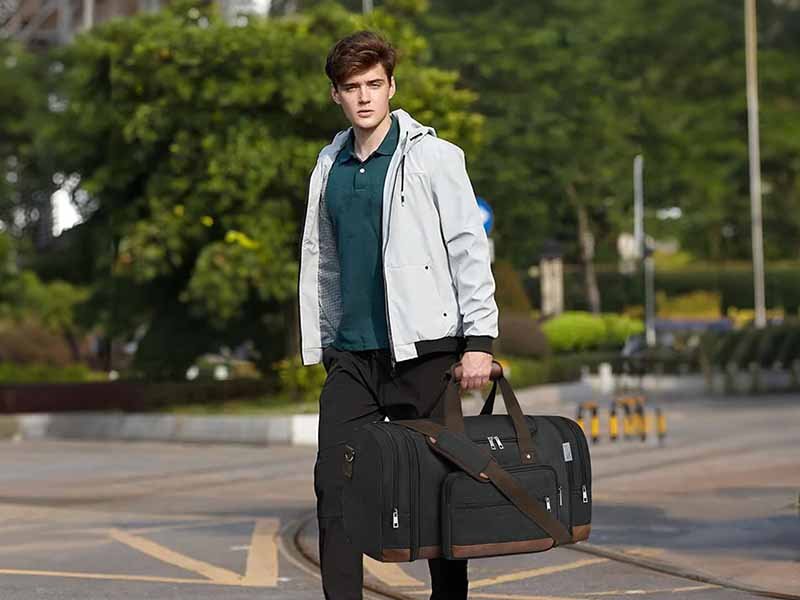
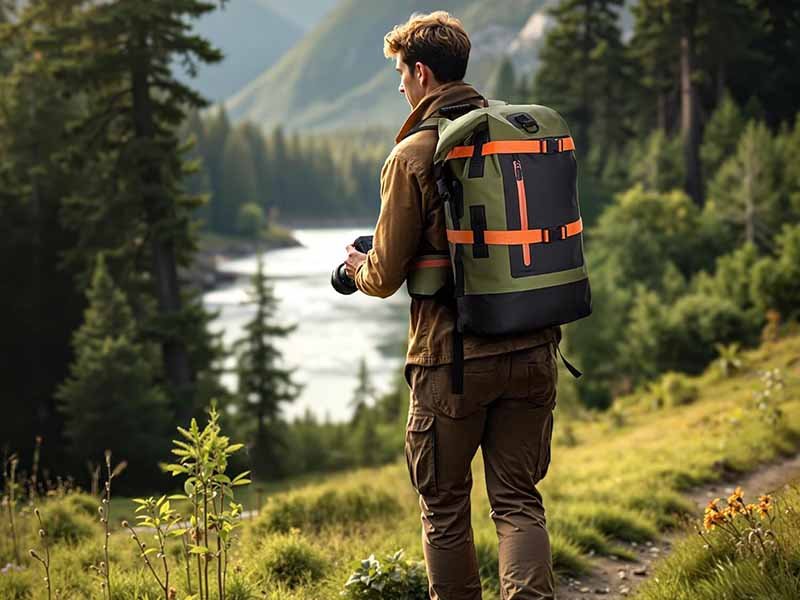
A travel bag usually looks fine on day one. The real test starts later: when it is dragged across airport floors, pushed into overhead bins, stuffed into car trunks, exposed to rain, overpacked for weekend trips, and used again and again without much care. That is where material choice stops being a technical detail and becomes the difference between a bag that keeps earning trust and a bag that quickly turns into a complaint.
For importers, private label brands, and product managers, material selection affects much more than appearance. It influences return rates, product lifespan, production cost, logo execution, shipping weight, and customer reviews. A bag that looks premium online but wears out after a few trips will damage the brand behind it. A bag made with the right fabric, lining, reinforcement, and coating can stay in use for years and create the kind of product experience that drives repeat orders.
The best materials for durable travel bags are usually nylon, polyester, canvas, leather, and neoprene, but there is no single “perfect” fabric for every project. The right choice depends on how the bag will be used, what price point the brand wants to hit, how much weight the bag must carry, and what kind of look and feel the market expects.
A good travel bag is not only about fabric strength on paper. It is about how that fabric behaves after 500 openings of the zipper, 30 long-haul flights, a few rainy commutes, and months of friction against clothing, luggage carts, and concrete. That is why experienced manufacturers do not just ask what fabric you want. They ask what kind of travel bag you are building, who will use it, how often it will be used, and what kind of product story you want customers to remember.
What Makes Durable Travel Bags Last Longer?
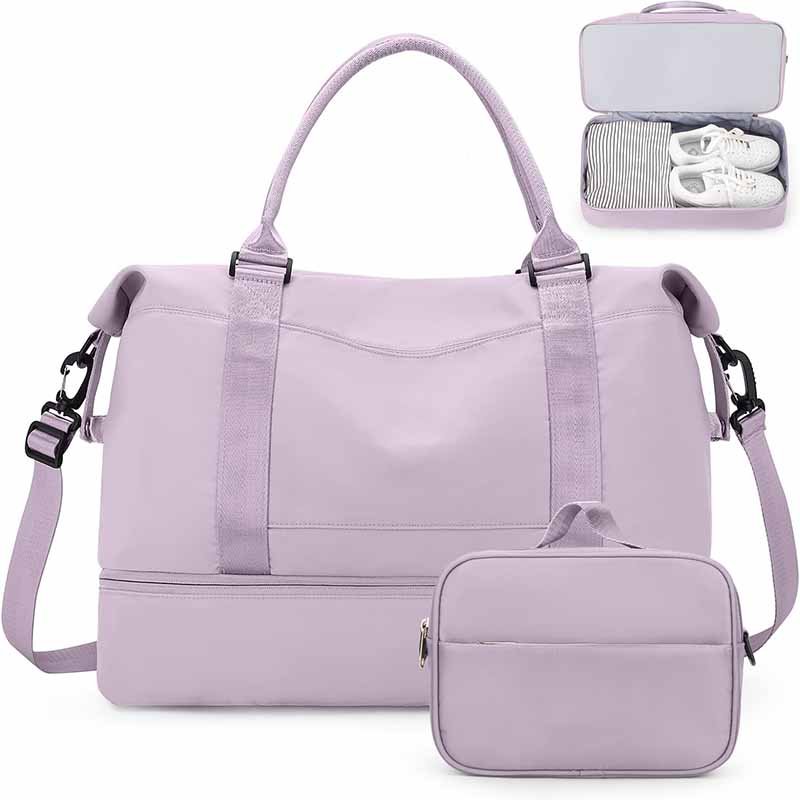
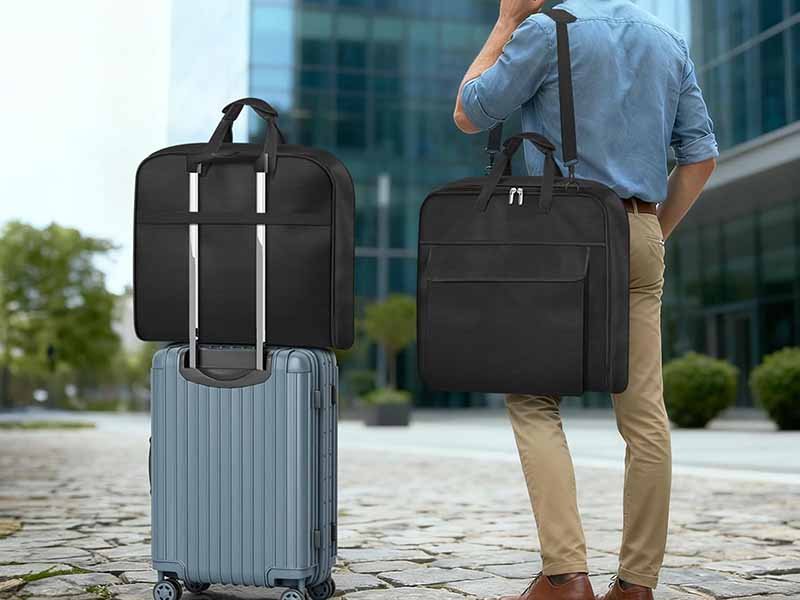
A durable travel bag lasts longer when the fabric, coating, structure, and hardware work together. Fabric strength matters, but long-term performance also depends on tear resistance, abrasion resistance, water protection, seam reinforcement, zipper quality, and how well the bag handles repeated loading and unloading.
What defines durable travel bags?
When customers say they want a durable travel bag, they usually mean something very practical. They do not want the handle to tear off. They do not want the corners to wear through after a few trips. They do not want the zipper to fail when the bag is full. They do not want the shape to collapse or the fabric to look old too quickly.
In production terms, durability is made up of several measurable factors:
- abrasion resistance
- tear strength
- tensile strength
- seam strength
- water resistance
- shape retention
- color fastness
- load-bearing performance
A bag can be made from a strong fabric and still fail early if the stitching is weak or the bottom panel is not reinforced. On the other hand, a mid-priced fabric can perform very well when the pattern design, seam construction, webbing, zipper, and reinforcement points are handled correctly.
For travel bags, the highest-stress areas are usually:
- top handles
- shoulder strap attachments
- zipper ends
- bag corners
- base panels
- side seams
- internal pocket joints
These are the places where real durability is won or lost. A factory with deep development experience will not only look at the main shell fabric. It will review the entire stress map of the bag.
The table below shows the main factors that affect how long a travel bag lasts in real use.
| Durability Factor | What It Means | Why It Matters in Travel Bags |
|---|---|---|
| Abrasion Resistance | Ability to resist surface wear from rubbing | Important for corners, bottom panels, and front surfaces |
| Tear Strength | Ability to stop a cut or puncture from expanding | Important for bags used in airports, train stations, and outdoor travel |
| Tensile Strength | Ability to hold under pulling force | Important for handles, straps, and overpacked bags |
| Water Resistance | Ability to block rain or moisture penetration | Important for daily commuting and travel in changing weather |
| Seam Strength | Ability of stitched areas to hold under repeated stress | Important for long-term use and heavy packing |
| Shape Retention | Ability to keep structure after repeated use | Important for premium look and better user experience |
| Hardware Durability | Lifespan of zippers, buckles, sliders, rings | Important because hardware failure is a common complaint source |
A well-made travel bag is usually judged by the customer within the first three seconds by its look, and then judged over the next six to twelve months by its durability. That is why material decisions should never be made by appearance alone.
How do fabrics affect durability?
Fabric is the foundation of the bag. Different fabrics handle stress in different ways, and that directly affects product positioning.
Nylon is known for its high strength-to-weight ratio. It is tough, flexible, and resistant to tearing and abrasion. This is why many premium backpacks, duffels, and performance travel bags use nylon or advanced nylon constructions such as ripstop nylon and high-denier woven nylon.
Polyester is widely used because it offers a good balance of cost, stability, printability, and durability. It is often chosen for mainstream luggage, casual travel bags, promotional bags, and private label collections that need to stay within a target price.
Canvas has a strong, natural, heavy look. It works well for lifestyle travel bags, vintage-style duffels, and casual weekend bags. It can be durable, but it is usually heavier and absorbs more moisture if untreated.
Leather has excellent long-term wear potential when the quality is good, but it is heavier, more expensive, and requires more maintenance. It is more often used in fashion travel products than in lightweight performance travel bags.
Neoprene has a different value. It is soft, flexible, padded, water-resistant, and shock-absorbing. It is not the first choice for every travel bag, but it is highly suitable for protective travel cases, laptop sleeves, compact carry bags, bottle carriers, and travel accessories that need cushioning and a premium hand feel.
Here is a practical comparison:
| Material | Weight | Abrasion Resistance | Water Resistance | Softness | Cost Level | Common Use |
|---|---|---|---|---|---|---|
| Nylon 420D–1680D | Light to medium | High | Medium to high with coating | Medium | Medium to high | Backpacks, duffels, carry-on bags |
| Polyester 300D–1200D | Light to medium | Medium | Medium to high with coating | Medium | Low to medium | Casual travel bags, budget luggage |
| Canvas | Medium to heavy | Medium | Low unless treated | Low to medium | Medium | Weekend bags, heritage-style bags |
| Leather | Heavy | High | Low to medium with finish | Medium | High | Premium travel bags |
| Neoprene | Medium | Medium to high | High | High | Medium | Sleeves, travel cases, accessory bags |
For many brands, the question is not “Which fabric is strongest?” The better question is “Which fabric gives the right mix of lifespan, look, cost, and user experience for this exact bag?”
That is where product development becomes valuable. A good manufacturer will often recommend different fabrics for different panels of the same bag. For example:
- 1680D ballistic nylon for the bottom
- 600D or 900D nylon for the main body
- neoprene for padded electronics compartments
- polyester lining for internal organization
- reinforced webbing for handles and shoulder strap anchoring
This kind of mixed-material approach often delivers better performance than using one material everywhere.
Why do coatings and structure matter?
Many customers focus only on face fabric, but coatings and structure often decide whether a travel bag still looks and performs well after extended use.
A fabric may look similar from the outside, but its back coating can completely change its performance. Common backing and coating options include:
- PU coating
- PVC coating
- TPU lamination
- water-repellent finishing
- anti-UV treatment
- stain-resistant finishing
PU coating is widely used because it improves water resistance without making the bag too stiff. PVC offers stronger water blocking and more body, but it can add weight and change the hand feel. TPU gives a more advanced and premium performance in many technical bags, especially when flexibility and cleaner appearance matter.
Bag structure is just as important. A travel bag that holds 15 to 25 kilograms repeatedly needs more than decent fabric. It needs:
- proper seam allowance
- stress-point bartacking
- reinforced base panel
- durable webbing connection
- stable edge binding
- strong zipper tape and slider quality
A simple example: two duffel bags may both use 600D fabric. One lasts for years, the other fails within months. The difference often comes from construction details such as:
- whether the handles wrap under the bag body
- whether the base includes a second support layer
- whether the zipper ends are reinforced
- whether corners use extra abrasion patches
- whether lining is anchored correctly to reduce shifting and tearing
The table below shows how construction choices affect durability.
| Construction Detail | Basic Version | Better Version | Impact on Product Life |
|---|---|---|---|
| Handle Attachment | Sewn only on top panel | Wrapped around body with reinforcement | Greatly reduces handle tearing |
| Base Panel | Single-layer shell fabric | Double-layer or padded reinforced base | Improves wear resistance on ground contact |
| Zipper Area | Standard seam | Reinforced zipper ends and binding | Reduces zipper distortion and failure |
| Shoulder Strap Joint | Simple box stitch | Box stitch plus bartack | Better for repeated heavy loads |
| Corners | No added protection | Abrasion-resistant corner reinforcement | Slows visible wear |
This is where experienced factories stand out. Szoneier, for example, works with neoprene and related bag materials across many categories, including bags, sleeves, protective products, sports supports, medical supports, and wetsuit-related items. That experience matters because neoprene development teaches a factory how to think beyond appearance and focus on stretch behavior, recovery, lamination, edge finishing, cushioning performance, and long-term use. Those same development habits improve travel bag engineering as well.
For brands building durable travel bags, the right approach is not to ask for the “best-looking” material sample first. It is to define the real use case, weight target, market position, and expected lifespan. Once those are clear, the material choice becomes far more accurate.
Which Materials Are Used in Durable Travel Bags?
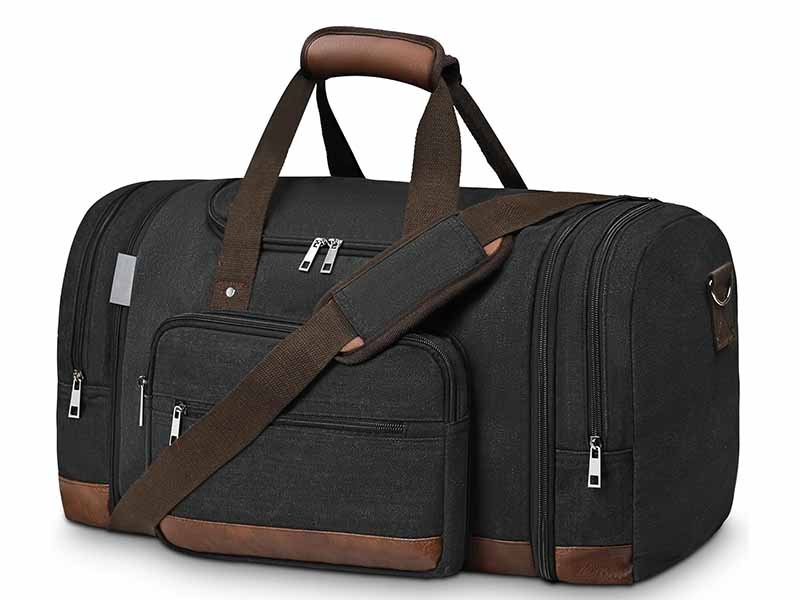
The most common materials used in durable travel bags are nylon, polyester, canvas, leather, and neoprene. Among them, nylon usually offers the strongest balance of light weight and toughness, polyester offers strong value for cost-sensitive projects, and neoprene adds cushioning, flexibility, and water resistance in specialized travel products.
Is nylon best for durable travel bags?
In many cases, yes. Nylon is often the first recommendation for durable travel bags because it performs well in the areas customers care about most:
- strong tear resistance
- strong abrasion resistance
- relatively light weight
- good flexibility under repeated stress
- long service life in active use
High-denier nylon fabrics such as 840D, 1050D, and 1680D are especially common in premium travel bags, business backpacks, carry-on duffels, and adventure luggage.
One reason nylon performs so well is that it handles repeated flexing better than many stiffer fabrics. A travel bag is not static. It bends, compresses, stretches slightly under load, and rubs against multiple surfaces. Nylon tends to survive this repeated movement very well.
Ballistic nylon and Cordura-type nylon constructions are especially respected in the market because they bring stronger abrasion performance and a rugged image that customers often associate with premium quality.
Still, nylon is not always the right answer. It generally costs more than polyester, and some nylon fabrics can have a shinier look that does not fit every brand style. For brands targeting minimalist, natural, or fashion-led markets, other materials may be more suitable.
How does polyester compare in durable travel bags?
Polyester remains one of the most commercially important bag materials in the world because it offers broad usefulness at a competitive price.
Its main strengths include:
- stable supply chain
- good printability
- solid color consistency
- lower raw material cost than many nylon options
- decent UV resistance
- lighter cost pressure in bulk orders
For many mid-range travel bags, polyester is enough. If the bag is intended for light to moderate use, good-quality polyester with proper backing and reinforcement can deliver a very acceptable product.
The issue is that not all polyester is equal. A cheap, low-density polyester can feel thin, crease easily, and wear faster on the corners and bottom. A better-grade polyester with tighter weaving, stronger backing, and thoughtful structure can perform far better.
That is why serious product development should not stop at asking whether the shell is “polyester.” The real questions are:
- what denier is it
- what is the yarn quality
- what is the weave density
- what is the backing type
- what is the fabric weight
- how will the bag be reinforced
For brands balancing cost and durability, polyester is often the best starting point, but it should be specified carefully rather than chosen as a generic option.
Are canvas and leather still used in durable travel bags?
Yes, and they still have strong market value, especially when the brand wants a specific visual identity.
Canvas gives travel bags a more natural, relaxed, and heritage-driven appearance. It works especially well for:
- weekend duffels
- short-trip travel bags
- lifestyle bags
- travel tote bags
- casual overnight bags
Its advantages include strong visual character, thicker feel, and good logo decoration compatibility through embroidery, patches, woven labels, and screen printing. The disadvantages are higher weight, slower drying, and lower inherent water resistance unless treated.
Leather remains attractive in premium and executive travel bag categories. A good leather travel bag can last for years and even develop a stronger appearance with age. But for many modern travel applications, leather is limited by:
- heavier overall weight
- higher cost
- more complex care requirements
- more difficult mass consistency compared with synthetic fabrics
Many brands now combine leather trims with technical fabrics instead of making the whole bag from leather. This keeps the premium image while improving practicality.
What is Cordura in durable travel bags?
Cordura is a high-performance fabric name widely associated with toughness, especially in backpacks, work bags, tactical gear, and premium travel products.
What makes Cordura popular is not just raw strength. It is the confidence it gives the market. When a brand uses a recognized high-durability fabric, it becomes easier to communicate value to the customer.
Cordura-style fabrics are often chosen when the bag needs to project these qualities:
- rugged
- long-lasting
- high performance
- outdoor capable
- premium function
For many travel bag projects, Cordura or similar high-strength nylon fabrics are used in the areas that take the most wear, such as:
- bottom panels
- front face
- side panels
- handle zones
This selective use helps control cost while still improving overall durability.
Is neoprene suitable for durable travel bags?
Neoprene is highly suitable for certain durable travel bag categories, especially when protection, cushioning, flexibility, and comfort are priorities.
Neoprene performs especially well in products such as:
- laptop sleeves
- tech travel cases
- compact travel pouches
- bottle bags
- wash bags
- padded organizer bags
- travel accessories with soft structure
Its value is different from woven nylon or polyester. Neoprene is not mainly chosen for a rugged outdoor look. It is chosen because it offers:
- natural cushioning
- water resistance
- soft premium hand feel
- shock absorption
- flexible body structure
- easy shaping for modern silhouettes
For brands that want to build differentiated travel products, neoprene creates opportunities that traditional woven fabrics cannot always provide.
Because Szoneier has more than 18 years of experience in neoprene material development and manufacturing, this is one of the areas where the factory can offer real product value. That includes not only producing standard neoprene bags, but also helping brands adjust thickness, lamination, edge finishing, panel structure, printing style, and logo application based on target use and price level.
A travel product does not need to look “technical” to be durable. Sometimes the most commercially successful item is the one that feels softer, looks cleaner, and still protects well in daily use. That is where neoprene can be a very smart choice.
How Do Durable Travel Bags Perform in Use?
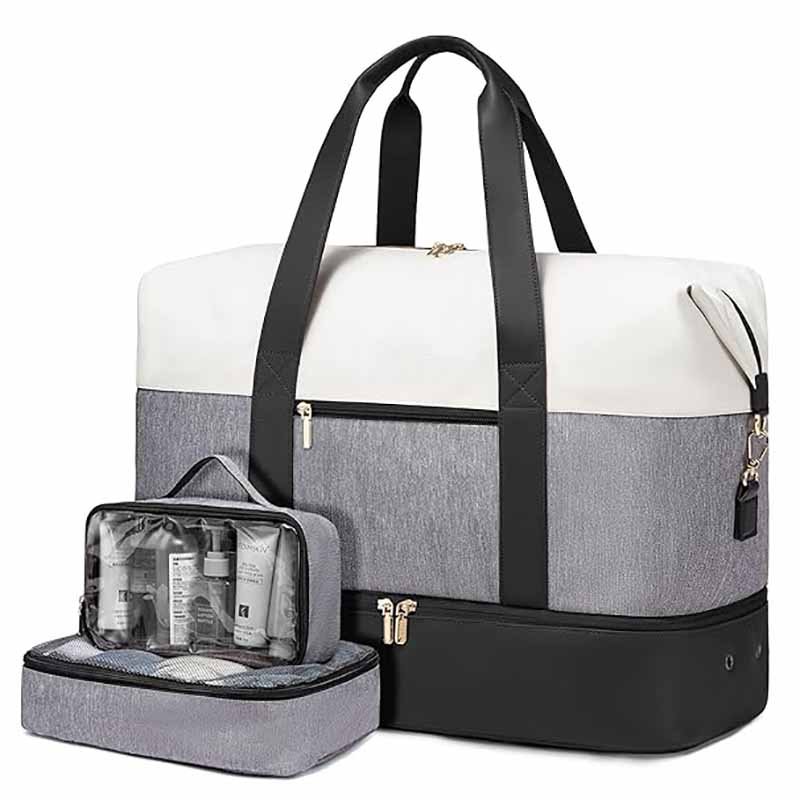
Durable travel bags perform differently depending on how they are used, how often they are used, and what materials and structure they are built with. A bag that works well for occasional weekend trips may fail quickly under frequent travel, while a well-engineered bag can handle years of heavy use with minimal wear.
Which durable travel bags suit frequent travel?
Frequent travel puts consistent stress on a bag. This includes repeated lifting, compression, dragging, and exposure to different environments such as airports, taxis, hotels, and outdoor conditions.
For high-frequency travelers, the most reliable material combinations are:
- 840D–1680D nylon for the main structure
- reinforced bottom panels (double-layer or coated fabric)
- heavy-duty webbing handles (minimum 1.5” width)
- high-quality zippers (YKK or equivalent level)
These bags are designed to handle 50–100+ travel cycles per year without major structural issues.
From real production feedback, bags used by frequent travelers often fail in the following areas:
- zipper track deformation
- handle stitching fatigue
- bottom panel abrasion
- corner wear
To prevent this, better-performing bags use:
- handle wrap-around construction
- reinforced zipper ends
- abrasion-resistant base fabrics
- internal load distribution panels
A well-built nylon travel bag can typically maintain good condition for 3–5 years under regular travel, while lower-grade materials may show visible wear within 6–12 months.
How do durable travel bags handle heavy loads?
Load performance is one of the most important but often underestimated factors. Many travel bags are marketed as “durable,” but they are not engineered to carry consistent heavy weight.
In real use, travel bags commonly carry:
- 10–15 kg for light travel
- 15–25 kg for standard travel
- 25–35 kg for heavy-duty use
The ability to handle this weight depends on more than fabric strength.
Key load-bearing components include:
- webbing tensile strength
- stitching density (stitches per inch)
- reinforcement patterns (box stitch, bartack)
- panel structure and layering
Here is a practical comparison:
| Load Level | Required Material Setup | Risk if Underbuilt |
|---|---|---|
| 10–15 kg | 600D polyester or 420D nylon | Minimal, suitable for casual use |
| 15–25 kg | 800D–1000D nylon + reinforced seams | Moderate failure risk if poorly stitched |
| 25–35 kg | 1000D+ nylon + double-layer base + heavy webbing | High failure risk if structure is weak |
One key detail is how the handles are attached. If handles are only stitched to the top panel, they will eventually tear. If they wrap around the body and connect to the base, the load is distributed more evenly.
This is a simple change in construction, but it can increase load durability by 40–60%.
Are durable travel bags waterproof?
Most travel bags are not fully waterproof, but many are water-resistant to a practical level.
Water performance depends on:
- fabric type
- coating or lamination
- seam construction
- zipper type
Here is how common materials perform:
| Material | Natural Water Resistance | With Coating | Real Use Performance |
|---|---|---|---|
| Nylon | Medium | High (PU/PVC) | Good for rain and splashes |
| Polyester | Medium | Medium–High | Suitable for daily use |
| Canvas | Low | Medium (waxed/coated) | Limited water protection |
| Leather | Low | Medium (treated) | Sensitive to water over time |
| Neoprene | High | Not required | Very good water resistance |
Neoprene stands out because it naturally resists water penetration and provides insulation. This makes it particularly useful for:
- electronics protection
- wet/dry separation bags
- travel kits used in humid environments
However, even with strong fabric, water can still enter through:
- seams
- zipper gaps
- needle holes
To improve water resistance, better travel bags use:
- coated zippers
- seam binding or sealing
- flap-covered openings
- internal waterproof compartments
For brands targeting outdoor or active travel markets, these details are often more important than the base fabric alone.
How long do durable travel bags last?
The lifespan of a travel bag depends on usage frequency, material quality, and construction.
A realistic lifespan estimate looks like this:
| Material Level | Usage Frequency | Expected Lifespan |
|---|---|---|
| Low-cost polyester | Occasional use (5–10 trips/year) | 1–2 years |
| Mid-grade polyester/nylon | Regular use (10–30 trips/year) | 2–3 years |
| High-grade nylon (Cordura level) | Frequent use (30–80 trips/year) | 3–5+ years |
| Premium engineered bags | Heavy use (80+ trips/year) | 5+ years |
The most common reasons for failure are:
- zipper breakdown (about 35% of issues)
- seam failure (about 25%)
- fabric abrasion (about 20%)
- hardware breakage (about 10%)
- other issues (about 10%)
This is why experienced manufacturers focus heavily on:
- zipper selection
- reinforcement design
- stress-point stitching
- material layering
A durable bag is not defined by one strong feature. It is defined by how well all components age together.
How to Choose Materials for Durable Travel Bags?
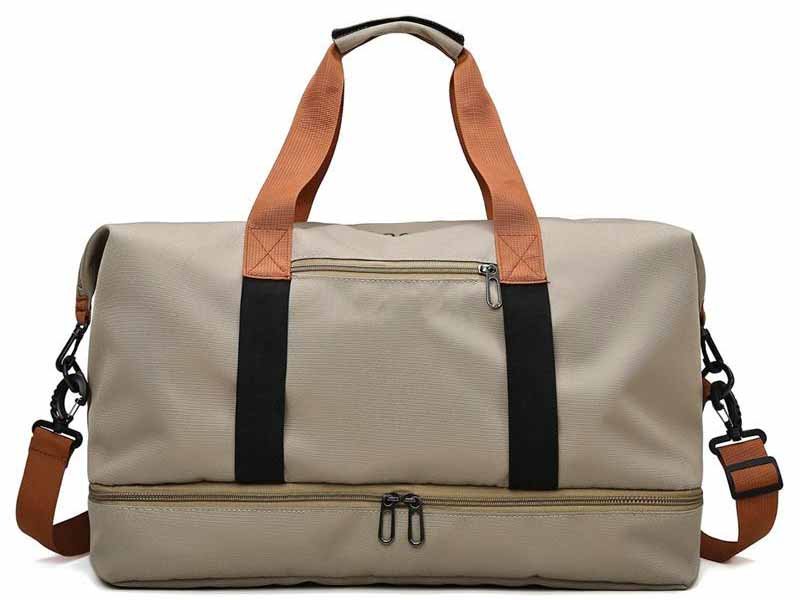
Choosing the right material is not about selecting the “strongest” fabric. It is about matching material performance with product positioning, price target, and real user behavior.
What materials fit each bag type?
Different travel bag types require different material strategies. A one-size-fits-all approach usually leads to either over-costing or underperformance.
Here is a clear guide:
| Bag Type | Recommended Materials | Reason |
|---|---|---|
| Duffel bags | 600D–1000D nylon or polyester | Balance of durability and flexibility |
| Backpacks | Nylon (ripstop, Cordura) | Lightweight + strong + abrasion resistant |
| Carry-on travel bags | 800D–1680D nylon | Handles repeated use and heavy loads |
| Travel tote bags | Canvas or polyester | Style + moderate durability |
| Tech travel bags | Neoprene + nylon | Protection + structure |
| Outdoor travel bags | Cordura nylon | High durability in rough environments |
For example, a fashion-focused travel tote may prioritize canvas for its look, while a performance travel duffel will prioritize nylon for strength.
Material choice should always follow product purpose.
How to balance cost and durability?
Cost is one of the biggest concerns for brands, especially when working with bulk orders.
Material cost can vary significantly:
| Material | Approx Cost Level (Relative) |
|---|---|
| Polyester | 1.0x |
| Canvas | 1.3x |
| Nylon | 1.5x–2.0x |
| Cordura-type nylon | 2.0x–3.0x |
| Neoprene | 1.8x–2.5x |
| Leather | 3.0x+ |
However, focusing only on material cost can be misleading.
A slightly higher material cost can:
- reduce return rates
- improve customer satisfaction
- increase perceived value
- support higher retail pricing
For example:
- A bag costing $2 more in production can retail $10–$20 higher if durability improves noticeably
- Reducing product returns by even 10–15% can significantly improve profit margins
The smarter approach is to optimize:
- material placement (stronger where needed)
- structure design
- reinforcement strategy
Instead of upgrading the entire bag to expensive material, many brands:
- use high-strength fabric for bottom panels
- use mid-grade fabric for body panels
- reinforce key stress areas
This hybrid approach often delivers the best balance.
Which materials support custom branding?
Material choice also affects how well a brand can present its identity.
Different materials support different logo techniques:
| Material | Best Logo Methods |
|---|---|
| Nylon | Screen printing, heat transfer, embroidery |
| Polyester | Sublimation, printing, embroidery |
| Canvas | Screen printing, embroidery, patches |
| Leather | Embossing, debossing, metal logos |
| Neoprene | Heat transfer, sublimation, embossing |
Neoprene is particularly strong in branding flexibility because it supports:
- full-surface printing
- bright colors
- clean modern look
- smooth texture for logo application
For brands targeting younger markets or lifestyle products, this can be a major advantage.
How to select materials for OEM durable travel bags?
For OEM and private label projects, material selection should follow a structured process.
A practical approach includes:
- Define target price range
- Define expected usage frequency
- Define load capacity
- Define target market (premium, mid-range, entry)
- Select base material accordingly
- Optimize reinforcement and structure
- Test samples under real use conditions
At Szoneier, this process is supported by:
- over 18 years of material development experience
- strong capability in neoprene and technical fabrics
- fast sampling cycles
- low MOQ flexibility
- support for custom design and branding
Instead of simply offering standard materials, the factory can adjust:
- material thickness
- lamination structure
- panel composition
- logo application method
- reinforcement strategy
This allows brands to build products that are not only durable, but also differentiated in the market.
Why Materials Matter in Durable Travel Bags?
The material of a travel bag is not just a technical decision. It directly affects how customers perceive the product, how long they use it, and whether they come back to buy again. In today’s market, where many products look similar online, material choice is often the hidden factor that separates a one-time purchase from a long-term brand relationship.
How materials affect product value?
Customers may not always understand technical specifications, but they immediately feel the difference between a low-quality bag and a well-made one.
Material influences product value in several visible and measurable ways:
- how the bag feels when touched
- how it holds shape when empty or full
- how it resists wrinkles and deformation
- how it reacts to water, dirt, and friction
- how it ages after months of use
A travel bag made with stronger material and better construction often allows brands to position the product at a higher price point.
Here is a simple comparison:
| Factor | Low-Grade Material Bag | High-Quality Material Bag |
|---|---|---|
| Retail Price Range | $20–$40 | $50–$120+ |
| Average Lifespan | 6–12 months | 2–5 years |
| Return Rate | Higher | Lower |
| Customer Satisfaction | Medium to low | High |
| Repeat Purchase Rate | Low | Higher |
In many real cases, upgrading material cost by 10–20% can increase perceived value by 30–80%, especially when combined with better design and branding.
This is why more brands are shifting from “low-cost production” to “value-driven production.”
Are advanced fabrics changing durable travel bags?
Yes, very clearly. Traditional materials like polyester and basic nylon are still widely used, but more brands are now moving toward engineered fabrics that offer better performance and a more modern look.
These include:
- high-density nylon (840D, 1050D, 1680D)
- ripstop nylon with anti-tear grid structure
- TPU-laminated fabrics
- multi-layer composite materials
- neoprene with customized thickness and lamination
These materials improve:
- abrasion resistance
- water resistance
- structural stability
- visual texture
- product differentiation
For example, ripstop fabrics use a reinforced grid pattern that prevents small tears from spreading. This is especially useful for travel bags that are used in rough environments.
TPU-laminated fabrics provide a cleaner, more modern surface while improving water resistance and durability. These are often used in premium or outdoor travel products.
Neoprene, on the other hand, introduces a different type of product experience. Instead of focusing only on toughness, it adds:
- softness
- cushioning
- flexibility
- comfort during carrying
This opens up new product directions, especially for:
- urban travel bags
- tech protection bags
- lifestyle travel accessories
At Szoneier, neoprene is not treated as a single standard material. It can be adjusted in:
- thickness (commonly 2mm to 7mm)
- lamination (fabric + foam combinations)
- surface finishing (smooth, textured, printed)
- edge construction (binding, stitching, cutting)
This flexibility allows brands to create products that are not only durable, but also visually different and more aligned with their target market.
Is neoprene a trend in durable travel bags?
Neoprene is not replacing all traditional materials, but it is becoming more important in specific product categories.
Its growth is driven by several factors:
- increased demand for lightweight travel products
- growth of electronics and tech accessories
- preference for soft-touch, comfortable materials
- rising interest in modern, minimal design
Neoprene performs especially well in:
- laptop travel sleeves
- packing cubes and organizers
- compact duffel bags
- personal item bags for flights
- bottle carriers and lunch bags
Compared with woven fabrics, neoprene offers:
| Feature | Neoprene Advantage |
|---|---|
| Cushioning | Built-in padding protects contents |
| Water Resistance | Naturally resistant to moisture |
| Flexibility | Easily adapts to different shapes |
| Comfort | Softer feel during carrying |
| Branding | Clean surface for modern designs |
However, neoprene is not ideal for every application. For very large travel bags or heavy-duty outdoor use, high-denier nylon is still more suitable due to its structural strength.
The best approach is not choosing one material over another, but combining materials based on function.
For example:
- nylon exterior for durability
- neoprene compartments for protection
- polyester lining for cost control
This layered approach is becoming more common in modern travel bag design.
How do materials impact brand positioning?
Material choice plays a direct role in how a brand is perceived in the market.
Customers often associate materials with quality levels, even if they do not know the exact specifications.
Here is how materials influence brand positioning:
| Material Strategy | Market Perception |
|---|---|
| Basic polyester | Affordable, entry-level |
| Standard nylon | Practical, reliable |
| High-density nylon / Cordura | Professional, durable |
| Canvas | Casual, lifestyle, eco-inspired |
| Leather | Premium, classic |
| Neoprene | Modern, functional, design-focused |
For brands building private label or OEM travel bags, material is one of the fastest ways to differentiate without changing the entire product structure.
A simple change from standard polyester to textured nylon or neoprene panels can:
- improve shelf appeal
- increase perceived quality
- support higher pricing
- make the product stand out online
In competitive markets, these small changes often make a big difference.
Start Your Durable Travel Bag Project with Szoneier
Choosing the right material is only the first step. Turning that material into a reliable, well-designed, and market-ready product requires experience, engineering, and manufacturing control.
Szoneier has over 18 years of experience,
The factory supports a wide range of products, including:
- travel bags and duffels
- neoprene bags and sleeves
- koozies and promotional products
- sports and medical supports
- wetsuit-related products
What makes the process smoother for brands is not just production capacity, but the ability to guide material and structure decisions based on real use cases.
For brands that are building new travel bag collections or improving existing products, working with a manufacturer that understands both materials and end-use scenarios can significantly reduce development time and risk.
If you are planning to develop durable travel bags, or looking to upgrade your current product line, the next step is simple.
Share your idea, target price, and usage scenario, and Szoneier can help you:
- select the right materials
- optimize structure and durability
- create samples for testing
- prepare for stable mass production
A strong travel bag is not created by one good decision. It is built through a series of correct decisions—from material to structure to production.
Start that process with the right partner.