Skip to content
Smartphones, car keys, wireless earbuds, laptops—modern life runs on radio signals. But the same convenience that makes wireless technology useful also creates new risks: unwanted tracking, signal interception, remote unlocking, data exposure, and interference. This is why Faraday bags, once limited to military and forensic use, are now becoming a consumer-level concern.
As interest grows, many people ask a simple question: Can I make a Faraday bag myself? Search results are full of advice—wrap your phone in aluminum foil, use a metal box, line a pouch with conductive fabric. Some methods work. Others fail quietly, giving a false sense of protection. Understanding the difference matters.
A Faraday bag is not magic. It is physics, materials, and construction working together. When done correctly, it blocks radio frequency (RF) signals such as cellular, Wi-Fi, Bluetooth, GPS, and RFID. When done incorrectly, it looks protected—but leaks signals anyway. A DIY Faraday bag is a signal-blocking pouch made with conductive materials that prevent wireless signals from entering or leaving a device. It works by creating a continuous conductive enclosure that shields against RF signals such as cellular, Wi-Fi, Bluetooth, GPS, and RFID. Homemade Faraday bags can work, but effectiveness depends on materials, construction quality, and proper sealing.
The difference between a reliable Faraday bag and a failed one is often invisible. That’s why understanding how Faraday bags work—and how DIY versions compare to professionally manufactured ones—is essential before trusting them with valuable devices or sensitive data.
What Is a Faraday Bag
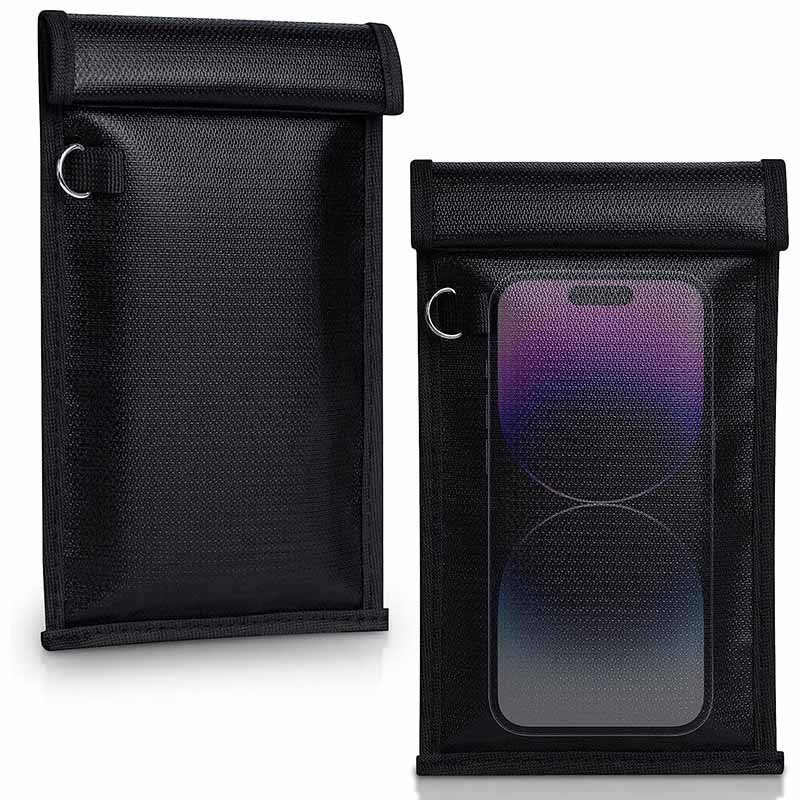
A Faraday bag is a signal-blocking enclosure designed to prevent wireless communication between electronic devices and external networks. By fully surrounding a device with conductive material, a Faraday bag blocks RF signals such as cellular, Wi-Fi, Bluetooth, GPS, RFID, and NFC. It is commonly used to protect privacy, prevent tracking, stop remote access, and secure sensitive electronics.
What does a Faraday bag actually do in real life?
In practical terms, a Faraday bag cuts off all wireless communication between a device and the outside world.
When a phone is placed inside a properly functioning Faraday bag:
- Calls cannot reach the phone
- Messages are not delivered
- GPS location cannot update
- Wi-Fi and Bluetooth connections drop
The same principle applies to car key fobs, tablets, laptops, and wireless storage devices. The bag does not turn the device off—it simply prevents radio signals from entering or leaving.
This distinction matters. A Faraday bag does not erase data, block malware already on a device, or protect against physical access. Its sole function is wireless signal isolation, and when built correctly, it does this extremely well.
How does a Faraday bag block signals?
Faraday bags work based on electromagnetic shielding, a principle discovered by Michael Faraday.
Wireless signals are electromagnetic waves. When these waves encounter a continuous conductive surface, they are absorbed and redistributed along that surface instead of passing through it. As long as the conductive layer fully encloses the device, the signals are effectively neutralized.
Three conditions must be met:
- Conductive material must surround the device
- No gaps or openings can exist in the enclosure
- Continuity must be maintained, including at seams and closures
This is why poorly sealed DIY Faraday bags fail. Even a small gap at a zipper, fold, or seam can act like an antenna, allowing signals to leak through.
Which signals does a Faraday bag block?
A well-designed Faraday bag blocks a wide range of common wireless signals, including:
- Cellular (2G, 3G, 4G, 5G)
- Wi-Fi (2.4 GHz, 5 GHz)
- Bluetooth
- GPS
- RFID and NFC
- Keyless entry signals (car fobs)
However, effectiveness depends on material quality and construction. Some DIY or low-quality bags may block Wi-Fi but fail to block cellular or GPS, leading to false confidence.
This is why testing across multiple signal types is essential—not just one connection.
What are Faraday bags commonly used for?
Faraday bags were originally used in military, law enforcement, and digital forensics, but their use has expanded rapidly.
Common real-world applications include:
- Preventing car key relay theft
- Stopping phone tracking or surveillance
- Securing digital evidence
- Protecting devices during travel
- Reducing wireless exposure in sensitive environments
In each case, the goal is the same: control when and how a device communicates wirelessly.
What a Faraday bag does NOT do
Understanding limitations is just as important as understanding capabilities.
A Faraday bag does not:
- Protect against hacking once the device is online
- Encrypt data stored on the device
- Shield against physical damage or theft
- Block sound, cameras, or sensors
It is a signal isolation tool—not a complete security solution. Using it correctly means pairing it with good digital hygiene and physical protection when necessary.
Why Faraday bags are often misunderstood
Many people assume Faraday bags are “high-tech” or mysterious. In reality, they are simple in concept but strict in execution.
Most failures come from:
- Incomplete enclosure
- Poor closures
- Degraded materials
- Overreliance on appearance rather than testing
This misunderstanding is why aluminum foil “works” in theory but fails in practice, and why professional manufacturing focuses so heavily on seams, closures, and material integration.
Why DIY a Faraday Bag
People DIY Faraday bags to quickly block wireless signals, reduce cost, customize size, or learn how signal shielding works. Homemade Faraday bags can be effective for temporary or low-risk use, but performance varies depending on materials and construction. DIY solutions are best for experimentation and short-term protection, while professional Faraday bags offer more reliable long-term performance.
Can you make a homemade Faraday bag—and why do people try?
Yes, you can make a homemade Faraday bag, and many people try for practical reasons rather than technical curiosity.
The most common motivations include:
- Immediate need (no commercial bag available)
- Cost sensitivity
- Desire for a specific size or shape
- Curiosity about how signal blocking works
DIY Faraday bags are often built using household materials like aluminum foil or conductive fabric scraps. From a physics perspective, the concept is sound: a fully enclosed conductive layer can block RF signals.
However, what most people underestimate is execution difficulty. The gap between “the idea works” and “the bag works every time” is much larger than it appears. This is why DIY attempts are common—but long-term satisfaction is mixed.
What problems are DIY Faraday bags trying to solve?
DIY Faraday bags usually target specific, narrow problems, not broad security needs.
Common DIY use cases include:
- Blocking phone signals temporarily (meetings, privacy)
- Protecting spare car keys from relay theft
- Testing RF shielding concepts
- Travel-related signal isolation
In these scenarios, users often accept:
- Reduced durability
- Inconsistent performance
- Manual testing requirements
Problems arise when DIY Faraday bags are expected to perform like professional products—daily use, repeated folding, long-term reliability. DIY solutions are rarely designed for those conditions.
Is DIY mainly about cost savings—or control?
While cost is a factor, control and flexibility are often more important motivations.
DIY allows users to:
- Build custom sizes for unusual devices
- Experiment with different materials
- Adjust layering and closure styles
- Learn firsthand how signal leakage occurs
For technically curious users, DIY Faraday bags serve as a learning tool. For others, they provide a quick workaround rather than a permanent solution.
It’s important to note that when durability, time, and replacement costs are considered, DIY solutions are not always cheaper in the long run—especially when multiple rebuilds are required.
What are the limitations and risks of DIY Faraday bags?
DIY Faraday bags carry hidden risks that are not obvious at first glance.
Common limitations include:
- Signal leakage from seams or closures
- Performance degradation after folding
- Material cracking (especially foil)
- Inconsistent blocking across frequencies
The most serious risk is false confidence. A DIY bag may block Wi-Fi but allow cellular or GPS signals through, giving the impression of protection when none exists.
This is why DIY Faraday bags are unsuitable for:
- Legal or forensic evidence handling
- High-value devices
- Professional or commercial use
- Situations where failure has consequences
When does DIY make sense—and when does it not?
DIY Faraday bags make sense when:
- The use is temporary or experimental
- The risk of failure is low
- The user is willing to test frequently
- Learning is part of the goal
DIY does not make sense when:
- Protection must be consistent and reliable
- The bag will be used daily
- The device value is high
- Branding, resale, or compliance matters
Understanding this boundary helps users choose the right solution instead of forcing DIY beyond its limits.
How DIY Faraday bags compare to professional solutions
DIY Faraday bags focus on concept proof. Professional Faraday bags focus on repeatable performance.
Key differences include:
- Engineered closures vs improvised seals
- Durable conductive fabrics vs fragile materials
- Quality control vs one-off builds
- Consistent multi-frequency blocking vs partial shielding
DIY teaches how Faraday shielding works. Professional manufacturing ensures it works every time.
This distinction is critical for users deciding whether DIY is a stepping stone—or a dead end.
What Materials Are Needed for DIY Faraday Bags
DIY Faraday bags require a fully enclosed conductive shielding layer, a protective outer fabric, and a closure that prevents signal leakage. Common shielding materials include aluminum foil and conductive fabrics, while outer layers are usually nylon or polyester. Effectiveness depends on conductivity, durability, layering, and sealing quality rather than material thickness alone.
What role does the conductive shielding material play?
The conductive layer is the core functional element of a Faraday bag. Its job is to intercept and dissipate electromagnetic waves before they reach the device.
For a DIY Faraday bag to work, the shielding material must:
- Be electrically conductive
- Fully surround the device
- Maintain continuity across seams, folds, and closures
Thickness alone does not determine performance. A thin but continuous conductive layer can outperform a thick material with gaps. This is why many DIY Faraday bags fail—not because the material is “too weak,” but because the enclosure is incomplete.
When evaluating materials, conductivity and continuity matter far more than appearance or rigidity.
What is the best material for a DIY Faraday bag?
For DIY projects, conductive fabric is the most reliable material when performance and durability are both considered.
Conductive fabrics are typically made by weaving or coating textiles with:
- Copper
- Nickel
- Silver
- Stainless steel fibers
Their advantages include:
- Flexibility for folding and daily use
- Stable conductivity over time
- Easier seam overlap and enclosure sealing
- Compatibility with sewing or bonding
This is why most commercial Faraday bags use conductive fabric rather than rigid metal. For DIY builders willing to invest slightly more, conductive fabric offers the best balance between effectiveness and usability.
Can I use aluminum foil as a Faraday bag material?
Yes, aluminum foil can block RF signals—but with important limitations.
Aluminum foil is highly conductive and can form an effective Faraday enclosure only if it remains unbroken and fully sealed. In real-world DIY use, this condition is difficult to maintain.
Common foil-related problems include:
- Cracking after folding
- Pinholes and tears
- Poor seam sealing
- Rapid performance degradation
Foil is useful for:
- Demonstrating Faraday shielding principles
- Very short-term or experimental use
It is not suitable for:
- Repeated daily use
- Bags that open and close frequently
- Long-term protection
Foil works in theory—but fails quickly in practice.
Which conductive fabrics work better than foil?
Conductive fabrics outperform foil because they are engineered for movement and durability.
Common conductive fabric options include:
- Copper–nickel woven fabrics
- Silver-coated textiles
- Stainless steel fiber blends
These materials maintain conductivity even after repeated folding, making them far more reliable than foil-based solutions.
However, not all conductive fabrics are equal. Poor-quality fabrics may:
- Lose conductivity over time
- Perform unevenly across frequencies
- Tear easily at seams
For DIY use, selecting a fabric designed specifically for RF shielding is critical.
What outer fabrics are needed—and why they matter
The outer fabric does not block signals—but it protects the shielding layer, which directly affects long-term performance.
Common outer materials include:
- Nylon
- Polyester
- Laminated or coated fabrics
A good outer fabric provides:
- Abrasion resistance
- Moisture protection
- Structural support
Without a protective outer layer, even high-quality conductive fabric degrades quickly. Many DIY Faraday bags fail simply because the shielding layer is exposed to wear.
Why closures and seams are as important as materials
Even the best materials fail if seams and closures are poorly designed.
Common closure options in DIY builds include:
- Fold-over flaps
- Envelope-style closures
- Roll-top designs
Zippers are problematic unless shielded, as they create linear gaps that leak RF signals.
Key seam rules:
- Overlap conductive layers at seams
- Avoid straight-through gaps
- Reinforce high-stress areas
In Faraday bags, the weakest point determines overall performance. This is why professional designs focus heavily on seam engineering.
How material choices affect DIY success vs long-term reliability
DIY Faraday bags often succeed initially because materials are new and undamaged. Over time, however:
- Foil cracks
- Fabrics fatigue
- Seams loosen
- Closures deform
This gradual degradation explains why many DIY Faraday bags “used to work” but no longer do.
Understanding material limits helps users decide whether DIY is appropriate—or whether a professionally manufactured solution is the better long-term choice.
How to Make a DIY Faraday Bag
To make a DIY Faraday bag, you must fully enclose a device inside a continuous conductive layer, add a protective outer layer, and use a closure that prevents signal leakage. Key steps include measuring the device with clearance, layering conductive material without gaps, sealing seams properly, and testing signal blocking across multiple wireless signals. Proper sealing matters more than material thickness.
Step 1 — What should you measure before making a Faraday bag?
Before cutting any material, measure how the device will be used, not just its physical size.
Best practice:
- Measure device length, width, and thickness
- Add 2–3 cm clearance on every side
- Consider accessories (case, key ring, cable, etc.)
A Faraday bag that fits too tightly is more likely to fail because:
- Seams are under tension
- Closures don’t overlap properly
- Conductive layers shift or separate
Many DIY Faraday bags fail not because of bad materials—but because they were sized with zero tolerance.
Step 2 — How do you cut and prepare conductive materials correctly?
Cutting conductive material is not the same as cutting fabric.
Key rules:
- Always cut larger than needed, then trim later
- Plan seam overlap before cutting
- Avoid sharp internal corners (they crack or lift)
If using conductive fabric:
- Keep the conductive side facing inward
- Minimize needle holes if sewing
If using aluminum foil:
- Use multiple layers
- Avoid excessive folding
- Replace foil frequently
The goal is not thickness—it is continuous electrical coverage. Gaps, not thinness, cause signal leakage.
Step 3 — How should the shielding layer be assembled?
This is the most critical step.
The conductive layer must:
- Fully surround the device
- Overlap at all seams
- Remain continuous when closed
Best practices:
- Stagger seams if using multiple layers
- Ensure overlaps face inward
- Avoid straight-through seams
A good test at this stage: imagine water instead of signals. If water could leak through a seam or closure, signals will too.
Step 4 — How do you add an outer protective layer?
The outer layer does not block signals—but it protects the shielding layer, which determines how long the Faraday bag works.
Outer layer functions:
- Prevent abrasion
- Reduce moisture exposure
- Provide structural stability
Common outer fabrics:
- Nylon
- Polyester
- Laminated or coated fabrics
Without an outer layer, even high-quality conductive fabric degrades quickly. Many DIY builds fail within weeks simply because the shielding layer is exposed.
Step 5 — What closure designs work best for DIY Faraday bags?
Closures are the number one failure point in DIY Faraday bags.
Effective DIY closure options:
- Fold-over flap with conductive overlap
- Envelope-style closure
- Roll-top with multiple folds
Problematic closures:
- Standard zippers
- Snaps without shielding overlap
- Velcro without conductive backing
If using a zipper, it must be shielded with a conductive flap. Otherwise, it creates a straight RF leakage path.
Rule of thumb: If the closure looks convenient, it’s probably leaking signals.
Step 6 — How do you test a DIY Faraday bag properly?
Testing must be done every time the bag is modified or used heavily.
Basic tests:
- Put a phone inside and call it
- Test Wi-Fi and Bluetooth connections
- Check GPS location updates
Advanced testing:
- Test with the bag folded, pressed, or partially worn
- Repeat tests after opening/closing multiple times
Important note: A DIY Faraday bag that passes once but fails later is not reliable. Consistency over time matters more than initial success.
Step 7 — How do you know when DIY is no longer enough?
DIY Faraday bags are best viewed as:
- Learning tools
- Temporary solutions
- Low-risk protection
DIY becomes unsuitable when:
- Daily reliability is required
- Devices are high-value
- Repeated opening and closing is expected
- Failure has real consequences
At this point, professionally manufactured Faraday bags—with engineered seams, shielded closures, and tested materials—become the safer option.
Do DIY Faraday Bags Really Work
DIY Faraday bags can work, but their performance is inconsistent and often degrades quickly. A homemade Faraday bag may block some signals under ideal conditions, but small gaps, poor closures, and material fatigue frequently cause signal leakage over time. DIY solutions are suitable for short-term or low-risk use, while professionally manufactured Faraday bags provide more reliable and repeatable protection.
Under what conditions do DIY Faraday bags actually work?
DIY Faraday bags can work in controlled, short-term situations.
Most successful DIY results occur when:
- The conductive layer fully encloses the device
- Seams and folds overlap generously
- The bag is newly made and undamaged
- The device emits low-power signals
In these conditions, DIY bags often block:
- Wi-Fi
- Bluetooth
- RFID / NFC
- Car key fob signals
This is why many people initially believe their DIY Faraday bag “works perfectly.” The problem is that these conditions are temporary and fragile. Once the bag is folded repeatedly, opened frequently, or exposed to moisture or abrasion, performance begins to drop—often without obvious visual damage.
Which signals are hardest for DIY Faraday bags to block?
Not all signals are equal.
DIY Faraday bags struggle most with:
- Cellular signals (4G / 5G)
- GPS signals
These signals operate at higher power levels and wider frequency ranges. Even very small gaps—especially around closures—can allow leakage.
This explains a common DIY failure pattern:
- Wi-Fi and Bluetooth are blocked
- Phone still receives calls or updates location
From a user perspective, this is dangerous because it creates false confidence. A bag that blocks one signal does not necessarily block all signals.
Why do DIY Faraday bags fail over time?
DIY Faraday bags rarely fail immediately. They fail gradually.
Common degradation mechanisms include:
- Aluminum foil cracking after repeated folding
- Conductive fabrics losing conductivity at stress points
- Seams loosening
- Closures deforming or misaligning
- Moisture and dirt reducing electrical continuity
Because these failures are often microscopic, users may not notice them until the bag stops working entirely—or worse, partially works.
Professional Faraday bags are designed around these failure modes. DIY bags are not.
What does “inconsistent performance” actually look like?
Inconsistent performance means:
- The bag works one day but not the next
- It blocks signals in one orientation but not another
- It works when flat, but fails when compressed
- It passes a test once, but fails after repeated use
This inconsistency makes DIY Faraday bags unsuitable for:
- Daily carry
- Evidence protection
- High-value electronics
- Security-critical applications
Reliability matters more than raw shielding strength—and this is where DIY solutions struggle most.
How do DIY Faraday bags compare to commercial Faraday bags?
The core difference is repeatability.
DIY Faraday bags focus on:
- Concept demonstration
- Low upfront cost
- Custom, one-off builds
Commercial Faraday bags focus on:
- Multi-layer engineered shielding
- Shielded closures and seam control
- Durability under repeated use
- Consistent performance across frequencies
Below is a practical comparison:
| Aspect | DIY Faraday Bag | Commercial Faraday Bag |
|---|---|---|
| Initial signal blocking | Often works | Works |
| Long-term reliability | Low | High |
| Closure integrity | Weak | Engineered |
| Multi-frequency protection | Inconsistent | Consistent |
| Daily use | Not recommended | Designed for it |
| Failure detection | Hard | Predictable |
DIY answers “can it work once?” Commercial answers “will it work every time?”
When is DIY good enough—and when is it not?
DIY Faraday bags are good enough when:
- Use is temporary or experimental
- Device value is low
- Failure has minimal consequences
- Learning is part of the goal
DIY Faraday bags are not good enough when:
- Protection must be reliable
- Devices are expensive or sensitive
- The bag is opened frequently
- You need confidence, not hope
Understanding this boundary helps users choose the right solution instead of forcing DIY beyond its limits.
Which Faraday Bag Designs Are Best for Custom Products
The best Faraday bag designs for custom products are those that combine reliable signal blocking, durable construction, and practical usability. Common custom-ready designs include flat pouches, roll-top bags, shielded zipper pouches, and structured cases. Professional designs integrate multi-layer conductive fabrics, engineered closures, and protective outer shells, allowing branding and customization without compromising shielding performance.
What Faraday bag designs are most commonly used in custom products?
Custom Faraday bags are typically built around proven form factors rather than experimental shapes. This is because signal shielding depends on predictable geometry and closure behavior.
The most common custom-ready designs include:
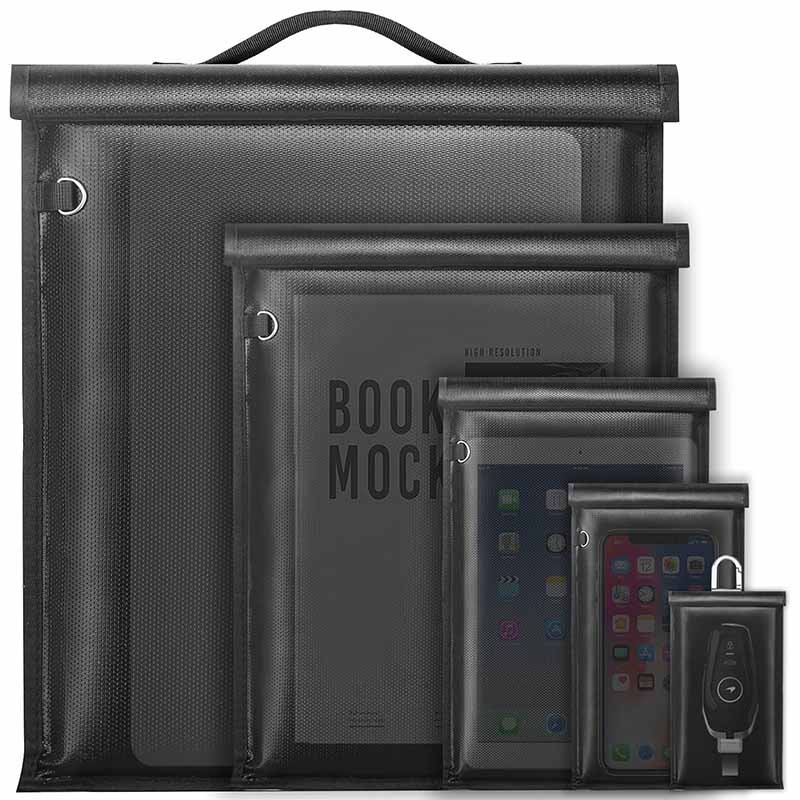
- Flat pouches – slim, lightweight, ideal for phones, wallets, and passports
- Roll-top bags – excellent sealing reliability for higher-security use
- Shielded zipper pouches – convenient access with engineered leakage control
- Structured cases – designed for laptops, tablets, tools, or forensic equipment
These designs are widely adopted because they balance signal integrity, usability, and manufacturability. From an OEM perspective, they also allow consistent quality control across production batches.
Why roll-top designs are preferred for high-reliability Faraday bags
Roll-top Faraday bags are often considered the most reliable design for signal blocking.
Key advantages include:
- No straight-line gaps like standard zippers
- Multiple folds increase RF attenuation
- Simple structure with fewer failure points
Roll-top designs are especially popular for:
- Law enforcement and forensic use
- Travel security
- High-value device protection
For custom products, roll-top bags also simplify manufacturing. Fewer components mean fewer tolerance issues and more consistent performance across units—an important factor for brands prioritizing reliability over convenience.
When shielded zipper designs make sense for custom products
Despite their risks, shielded zipper Faraday bags are widely used in commercial products because of their convenience.
The key difference between DIY and professional zipper designs is engineering:
- Conductive zipper tapes
- Conductive flaps covering zipper teeth
- Multi-layer shielding around the zipper path
When designed correctly, shielded zipper bags offer:
- Faster access
- Better user experience
- Clean external appearance for branding
For consumer-focused products, shielded zipper designs often deliver the best balance between usability and protection—provided manufacturing quality is controlled.
How structured Faraday cases differ from soft pouches
Structured Faraday cases are designed for larger or sensitive equipment, such as laptops, tablets, drones, or tools with wireless modules.
Compared to soft pouches, they offer:
- Impact protection
- Shape stability
- Better internal organization
However, they also require:
- More complex pattern engineering
- Reinforced seams and frames
- Higher production costs
For brands targeting professional or industrial users, structured cases allow higher perceived value and stronger differentiation—but they demand experienced manufacturing partners to avoid signal leakage at rigid seams.
What materials and layer structures work best for custom designs?
Custom Faraday bags rely on layered construction, not single materials.
A typical professional structure includes:
- Inner conductive shielding layer (copper–nickel, silver, or stainless steel fabric)
- Secondary shielding layer (optional, for higher attenuation)
- Insulating or spacer layer (prevents wear on conductive fabric)
- Outer protective shell (nylon, polyester, laminated fabric)
This layered approach ensures:
- Consistent multi-frequency blocking
- Durability under repeated use
- Stable performance across product lifespan
For OEM projects, material compatibility and sourcing stability are just as important as shielding effectiveness.
How branding and customization are integrated without breaking shielding
One of the biggest challenges in custom Faraday bag design is branding without compromising performance.
Best practices include:
- Placing logos on outer, non-conductive layers
- Avoiding stitching through conductive layers for labels
- Using heat transfer, embroidery shields, or patch systems
- Designing logo zones away from seams and closures
Professional manufacturers plan branding during the pattern design stage, not after production. This prevents signal leakage and reduces costly revisions.
Which designs are best for OEM, private label, and low-MOQ projects?
Different business goals favor different designs:
- OEM / high-security markets → Roll-top or structured cases
- Private label / consumer retail → Shielded zipper pouches
- Low MOQ or test launches → Flat pouches with standard sizes
Choosing the right design early:
- Reduces development time
- Controls cost
- Improves consistency across batches
This is why experienced manufacturers guide clients toward designs that match both use case and business model.
How to Care for and Maintain a Faraday Bag
To maintain a Faraday bag’s shielding performance, keep it clean and dry, avoid aggressive folding and abrasion, and test it regularly for signal leaks. Washing, moisture, and wear at seams or closures can reduce conductivity and create gaps that allow signals through. Replace a Faraday bag when it no longer blocks key signals consistently or shows visible damage at stress points.
Do washing, moisture, or sweat affect Faraday bag performance?
Yes—often more than people expect.
Conductive fabrics and shielding layers can be sensitive to:
- Water exposure
- Sweat and salts
- Detergents and washing agitation
These factors can reduce conductivity, accelerate corrosion, or weaken bonding layers. Even if the bag looks fine, its shielding efficiency can drop after improper washing.
Best practice:
- Do not machine wash a Faraday bag unless the manufacturer explicitly says it’s safe
- Wipe the outer shell with a damp cloth instead
- Keep the bag away from saltwater, heavy sweat exposure, or wet storage
If the bag is used during travel or outdoor activity, let it dry naturally before storing it closed.
How does folding and daily use damage shielding layers?
Most Faraday bags fail because of repeated mechanical stress, not because the material is “cheap.”
High-risk habits include:
- Folding sharply along the same crease every day
- Crushing the bag in a tight backpack pocket
- Frequently stuffing oversized devices into a tight pouch
These stresses cause:
- Micro-cracks in conductive coatings
- Fiber fatigue in conductive textiles
- Seam separation or distortion near the closure
Best practice:
- Store the bag flat when possible
- Avoid hard creases; use gentle curves
- Choose a size that allows easy insertion without tension
If the Faraday bag is for daily use, durability depends as much on handling as on materials.
Why closures are the first place Faraday bags fail
Closures are the most common leak point because they are opened and closed repeatedly.
Common closure failure modes:
- Zipper paths forming a straight leakage channel
- Flap overlaps becoming misaligned
- Roll-top folds losing stiffness or shape
- Conductive edges fraying at the mouth
Practical tips:
- Always fully close the bag (no “half zip”)
- Make sure flap overlaps sit flat and fully cover the opening
- For roll-top styles, use multiple folds, not one fold
- Avoid overstuffing—tension distorts closure geometry
If a Faraday bag is opened 20–50 times per day, closure engineering and handling become as important as the shielding material itself.
How to test a Faraday bag for signal leaks (a simple routine)
Testing should be routine, not a one-time check.
A simple weekly test routine:
- Put your phone inside the bag and seal it completely
- Call the phone and see if it rings
- Check whether Wi-Fi or Bluetooth reconnects
- If possible, check GPS or location updates
Important: test in different positions:
- Flat on a table
- Compressed inside another bag
- With the device placed near the seams
If the bag passes only in “perfect conditions,” it’s not reliable for real-world use.
What warning signs indicate your Faraday bag is losing effectiveness?
Some warning signs are obvious. Others are subtle.
Obvious signs:
- Tears or holes
- Fraying seams
- Cracked foil (in DIY builds)
- Deformed zipper or closure
Subtle signs:
- Phone receives intermittent notifications while “sealed”
- Car key fob works occasionally inside the bag
- Performance changes depending on device position
These signs suggest the bag may still block some signals but is no longer consistent—often the most dangerous stage because it creates false confidence.
When should you repair a Faraday bag, and when should you replace it?
In most cases, replacement is safer than repair—especially for critical use.
Repair might be acceptable if:
- Only the outer shell is damaged
- The shielding layer and closure remain intact
- Testing shows consistent blocking
Replace the bag if:
- Signal blocking becomes inconsistent
- Closures leak despite careful sealing
- The conductive layer shows wear at folds or seams
- The bag is used for high-value or sensitive devices
DIY repairs (tape, patches, foil overlays) may temporarily restore performance but often introduce new gaps or weak points.
How long does a Faraday bag typically last?
There is no single number because lifespan depends on:
- Frequency of use (daily vs occasional)
- Folding style and storage habits
- Environmental exposure (humidity, sweat, dust)
- Closure type (roll-top generally lasts longer than poorly shielded zippers)
As a practical rule:
- Light use: longer lifespan
- Daily use with frequent opening: shorter lifespan
- Heavy folding and compression: fastest decline
This is why professional manufacturers focus on durable outer shells, reinforced seams, and engineered closures—because real users stress bags in predictable ways.
Conclusion
DIY Faraday bags are a great way to understand how signal shielding works—but they are not a long-term solution for users who need consistent, reliable protection.
If you’re looking to develop custom Faraday bags, signal-blocking pouches, or private-label RF shielding products, working with an experienced manufacturer matters.
Szoneier brings over 18 years of bag R&D and manufacturing experience.
Contact Szoneier today to discuss your Faraday bag project and turn a DIY concept into a reliable, scalable product.