Skip to content
Bag making design is often misunderstood. Many people think it starts with a sketch and ends with a finished product—but in reality, that’s only the visible surface. Behind every bag that feels comfortable to carry, lasts through daily use, and sells well in the market, there is a chain of design decisions that connect function, structure, materials, cost, and production feasibility.
Today’s buyers don’t just ask, “Does this bag look good?” They ask deeper questions:
Will it hold up under real use? Does it feel right for the price? Can it be produced consistently? Can it be customized with my logo without compromising quality?
Bag making design is the complete process of planning how a bag looks, functions, and is produced. It includes defining the bag’s purpose, choosing materials, designing structure and compartments, developing patterns, testing prototypes, and refining details for mass production. Good bag design balances appearance, usability, durability, and cost, ensuring the final product meets both user expectations and manufacturing requirements.
What makes this topic more interesting—and more challenging—is that bag design is not only creative. It is deeply practical. A beautiful design that cannot be produced efficiently or fails in real-world use will struggle to succeed. As we go deeper, you’ll see how professional bag making design bridges creativity and manufacturing reality—and why experienced factories play a critical role in this process.
What Is Bag Making Design
Bag making design is the end-to-end process of planning how a bag is structured, functions, looks, and can be manufactured at scale. It includes defining the bag’s use case, selecting suitable materials, designing internal and external structures, creating technical patterns, testing prototypes, and optimizing the design for stable production. Effective bag making design balances user experience, durability, cost control, and manufacturability.
What does “bag making design” actually include in real projects?
In real manufacturing projects, bag making design is not a single creative step—it is a multi-stage development system. It begins with understanding how and where the bag will be used, then translates those needs into structural and technical decisions.
A complete bag making design typically includes:
- usage scenario definition (daily carry, travel, outdoor, tools, sports, etc.)
- capacity and compartment planning
- load-bearing structure and reinforcement zones
- material selection and thickness control
- stitching methods and seam construction
- hardware placement and compatibility
- pattern development and size grading
- prototype testing and revision
Each step affects how the bag performs in real life and whether it can be produced consistently in volume. Skipping any of these steps often leads to quality issues later.
How is bag making design different from fashion or visual design?
Fashion design focuses primarily on appearance, trends, and aesthetics, while bag making design focuses on function, structure, and production reality. A visually appealing bag may look good in photos but fail quickly if the structure is weak or the materials are mismatched.
For example:
- a backpack design must manage weight distribution and shoulder pressure
- a tool bag must resist deformation under heavy loads
- a cooler bag must maintain insulation performance and seam integrity
Bag making design prioritizes how a bag behaves under stress, repeated use, and environmental exposure. Appearance is important—but it is always built on top of functional and structural logic.
Why is bag making design closely tied to manufacturing feasibility?
A design is only successful if it can be manufactured repeatedly with stable quality. Bag making design therefore considers production constraints from the beginning, including cutting efficiency, sewing difficulty, material waste, and labor time.
For example, overly complex panel layouts may look impressive but increase defect rates. Unstandardized hardware can cause supply delays. Inconsistent material thickness may affect stitching quality. Experienced factories often review designs early to adjust details before sampling, helping ensure the design works not just once, but across thousands of units.
This is why bag making design is inseparable from manufacturing knowledge.
Who is bag making design for, and when is it needed?
Bag making design is essential for:
- brands developing custom or private-label bags
- startups turning ideas into physical products
- importers and retailers launching exclusive designs
- buyers improving existing bags for better performance or lower cost
It is needed whenever a bag is new, modified, customized, or produced at scale. Even small changes—such as switching materials, adding pockets, or resizing—require proper bag making design to avoid unexpected problems.
What makes a bag making design “good” or “professional”?
A professional bag making design is:
- user-focused: comfortable, practical, and intuitive
- structurally sound: strong where stress occurs
- material-appropriate: fabrics and hardware match the use case
- production-ready: easy to manufacture with consistent quality
- cost-balanced: meets target pricing without sacrificing performance
Good design rarely feels “designed”—it simply works. That invisible reliability is the result of careful planning, testing, and manufacturing experience built into the design process.
Why Is Good Bag Design Important
Good bag design is important because it determines how a bag performs, how long it lasts, how efficiently it can be produced, and whether it is profitable to sell. Well-designed bags improve user comfort, reduce quality issues, lower production waste, and support consistent mass manufacturing. Poor design often leads to high return rates, unstable quality, and rising costs—even if the bag looks attractive.
Why does bag design directly affect user experience and satisfaction?
From a user’s perspective, bag design is felt—not analyzed. Weight balance, strap comfort, pocket accessibility, and ease of opening all influence daily experience. These are not random outcomes; they are direct results of design decisions such as structure layout, padding placement, and material stiffness.
For example, a backpack with poorly planned load distribution may cause shoulder fatigue within minutes. A travel bag with shallow or poorly positioned pockets becomes frustrating in real use. When these issues appear, users rarely blame the design—they blame the brand. That’s why good bag design is the foundation of user satisfaction and long-term brand trust.
Is it profitable to make bags without strong design planning?
In most cases, no—or at least not sustainably. Bags with weak design often look acceptable at first but fail during real use or repeated production. This leads to higher defect rates, more customer complaints, and costly returns.
Below is a simplified comparison seen frequently in manufacturing:
| Design Quality | Sample Revisions | Defect Rate | Return Risk | Profit Stability |
|---|---|---|---|---|
| Weak design | High | High | High | Low |
| Average design | Medium | Medium | Medium | Unstable |
| Optimized design | Low | Low | Low | Sustainable |
Strong design reduces uncertainty. It allows pricing to be planned accurately and margins to be protected over time.
How does bag design influence manufacturing efficiency and cost control?
Every design choice has a cost consequence. Panel complexity affects cutting efficiency. Stitch density affects labor time. Material thickness affects sewing speed and needle wear. Even hardware selection impacts lead time and MOQ.
Good bag design considers how the bag will be made, not just how it will look. Designs optimized for production reduce waste, shorten assembly time, and improve consistency. This is especially important for OEM and private label projects, where small inefficiencies can multiply across thousands of units.
Why does poor bag design often lead to quality problems after production?
Many quality issues are not caused by factories—they are caused by design limitations. Weak stress points, unclear seam specifications, or incompatible materials create failure points that no amount of quality inspection can fully fix.
For example:
- handles tearing due to insufficient reinforcement
- zipper failure caused by mismatched fabric tension
- shape collapse from poor internal structure
These problems usually appear only after use, making them expensive to correct. Good design identifies and reinforces risk areas before mass production begins.
How does good bag design reduce returns and protect brand reputation?
In e-commerce and international trade, return rates are critical. Bags are frequently returned due to functional dissatisfaction rather than visible defects. When pockets don’t work as expected or straps feel uncomfortable, users disengage quickly.
Good bag design anticipates real usage scenarios and tests them during sampling. This proactive approach significantly reduces post-sale issues. Brands that invest in design upfront often experience fewer complaints, higher repeat orders, and stronger reviews—all of which directly impact long-term sales performance.
Why do experienced manufacturers emphasize design review before production?
Experienced manufacturers understand that most production problems originate upstream. Reviewing design details early—materials, structure, stitching methods—helps eliminate risks before they become costly mistakes.
This is why factories like Szoneier treat bag design as a collaborative process rather than a handoff. Early design feedback shortens development cycles, stabilizes quality, and increases the chance that a bag will succeed in both the market and production line.
When does bag design become a strategic advantage rather than a cost?
Bag design becomes a strategic advantage when it:
- enables consistent quality at scale
- supports customization without instability
- allows cost optimization without reducing performance
- aligns user needs with production reality
At this stage, design is no longer an expense—it becomes a tool for differentiation, margin protection, and long-term growth.
How Do You Start a Bag Design
To start a bag design, you first define the bag’s purpose, target users, and real usage scenarios. Then you translate those needs into functional requirements, material choices, and structural layouts. After sketching concepts, the design is converted into technical patterns and prototypes for testing and refinement. A successful start balances user needs, production feasibility, and cost control from the beginning.
How to design a bag and get it made step by step?
Starting a bag design is not about drawing first—it’s about thinking correctly in sequence. In professional bag development, the process usually follows these steps:
- Define the bag’s core purpose and usage context
- Identify the target user and how they will interact with the bag
- List functional requirements (capacity, protection, organization)
- Select preliminary materials based on performance and budget
- Develop rough sketches and reference concepts
- Convert ideas into technical drawings and patterns
- Make prototypes, test, revise, and optimize for production
Skipping steps often leads to design rework, higher costs, or production delays. A clear process reduces uncertainty and improves the success rate of custom bag projects.
How do you define the bag’s purpose and real use scenarios?
Every bag must solve a specific problem. A tote bag for retail shopping, a gym bag for daily workouts, and a dry bag for outdoor activities may look similar at a glance—but their internal logic is completely different.
Key questions to ask include:
- How often is the bag used, and for how long each time?
- What weight will it carry regularly?
- Will it face moisture, heat, abrasion, or impact?
- Is it carried by hand, shoulder, or back?
Clear answers guide all later decisions, from material thickness to reinforcement placement. Designs that skip this step often fail in real-world use, even if they look attractive.
How do you identify target users and their expectations?
Good bag design starts with empathy. A bag designed for commuters prioritizes comfort and accessibility. A bag for tools prioritizes structure and load-bearing. A bag for cosmetics focuses on organization and surface protection.
Designers should consider:
- user body size and carry habits
- comfort tolerance for weight and pressure
- visual expectations based on price level
- lifestyle and environment of use
Understanding users helps avoid common mistakes, such as overbuilding a lightweight bag or underbuilding a heavy-duty one. Professional manufacturers often provide insight here, based on similar past projects.
How do you translate ideas into functional layouts and structure?
Once purpose and users are clear, the next step is functional planning. This includes deciding:
- number and size of compartments
- internal vs. external pocket placement
- reinforcement zones for stress points
- opening methods (zipper, roll-top, flap)
Structure planning is where design shifts from abstract to practical. A well-planned layout improves usability and extends product lifespan. Poor layout creates frustration and early failure, regardless of materials used.
How do sketches and references fit into early bag design?
Sketches are tools for communication, not final solutions. They help align expectations between designers, buyers, and manufacturers. At this stage, rough drawings are often more useful than polished visuals because they invite feedback and revision.
Reference samples—existing bags, materials, or hardware—also play a key role. They help clarify proportions, construction methods, and quality standards. Factories like Szoneier often request references early to ensure technical feasibility before sampling begins.
Why is early manufacturer involvement critical at the start?
Many design problems appear only when production begins. Involving a manufacturer early helps identify risks before they become expensive mistakes. Factories can advise on material availability, construction difficulty, cost impact, and scalability.
Early collaboration often results in:
- fewer sample revisions
- more accurate cost estimates
- shorter development timelines
- higher production consistency
This is why starting bag design is not just a creative step—it’s a strategic one.
What should be finalized before moving to prototyping?
Before making a prototype, key elements should be clear:
- intended use and performance goals
- basic structure and dimensions
- material direction and alternatives
- branding method and placement
Finalizing these elements ensures that sampling focuses on improvement rather than correction. A clear starting point leads to faster, more effective development.
When does a bag design move from concept to production-ready?
A bag design becomes production-ready when it:
- performs well in real-use testing
- maintains shape and strength under load
- can be produced consistently with stable quality
- meets target cost and lead-time expectations
At this stage, the design is no longer just an idea—it’s a manufacturable product.
Which Materials Are Best for Bag Design
The best materials for bag design depend on the bag’s function, durability requirements, budget, and production volume. Common materials include canvas, nylon, polyester, leather, PU, TPU, neoprene, and composite fabrics. Each material affects weight, strength, water resistance, appearance, and manufacturing efficiency. Choosing the right material means balancing performance, cost, and production stability—not following trends alone.
Which material categories are most commonly used in bag design?
Bag materials can be grouped into functional categories rather than styles. This helps designers and buyers make clearer decisions.
| Material Category | Typical Materials | Common Applications |
|---|---|---|
| Natural fabrics | Canvas, cotton | Tote bags, shopping bags |
| Synthetic fabrics | Nylon, polyester | Backpacks, travel bags |
| Coated materials | TPU, PVC | Dry bags, waterproof bags |
| Foam-based materials | Neoprene | Sports and protective bags |
| Premium surfaces | Leather, PU | Fashion and gift bags |
| Functional composites | Fireproof, smellproof fabrics | Tool and safety bags |
This classification allows designers to match materials with real performance needs rather than aesthetics alone. 
How do canvas and cotton perform in bag making design?
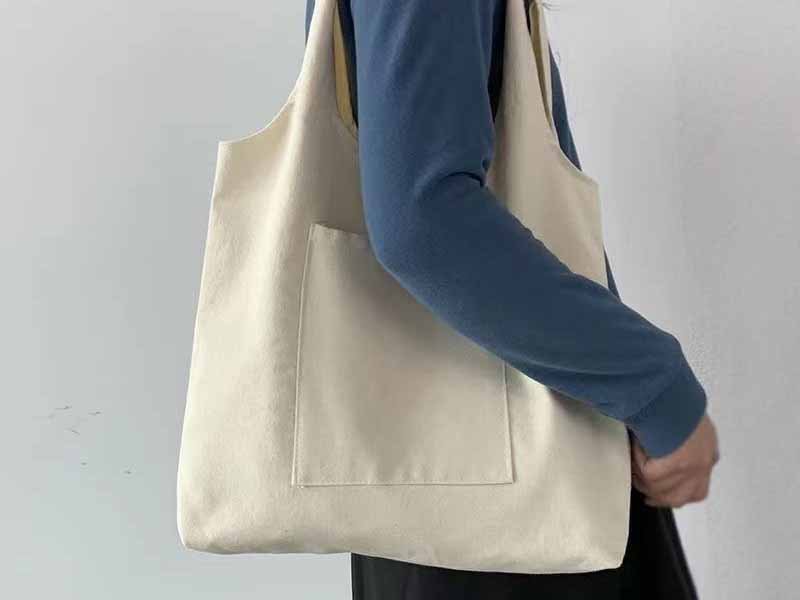
Canvas and cotton are widely used for tote bags and casual carry products. They offer a natural look, good printability, and relatively low material cost. However, they are heavier than synthetics and offer limited water resistance unless treated.
In bag design, cotton fabrics work best for light to medium loads and short carry durations. Designers should reinforce stress points carefully, as cotton fibers stretch under repeated weight. For large production runs, fabric weight (oz or GSM) consistency is critical for quality control.
Why are nylon and polyester preferred for backpacks and travel bags?
Nylon and polyester dominate functional bag design because of their high strength-to-weight ratio. They resist abrasion, dry quickly, and support various coatings.
Nylon generally offers better abrasion resistance, while polyester provides better UV stability and cost efficiency. In mass production, both materials are reliable, consistent, and easy to sew—making them ideal for scalable designs such as backpacks, gym bags, and travel bags.
When should waterproof materials like TPU or PVC be used?
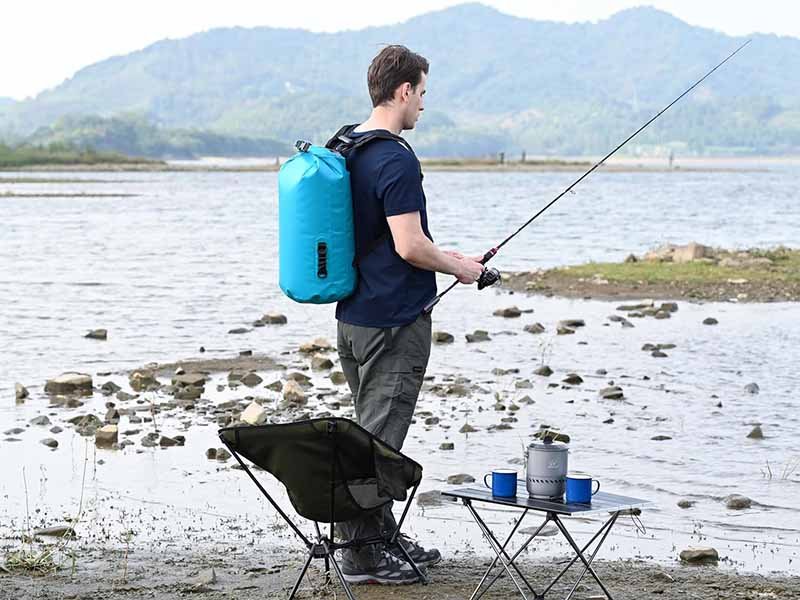
TPU and PVC are used when water protection is a primary requirement. They create airtight or water-resistant barriers and are common in dry bags, cooler bags, and marine applications.
However, these materials increase sewing complexity and require special seam treatments. Designers must consider stiffness, weight, and heat sensitivity. Poor material matching can lead to cracking or seam failure over time, so early testing is essential.
How does neoprene fit into modern bag design?
Neoprene is valued for its cushioning and flexibility. It protects contents from impact and provides thermal insulation, making it popular for sports bags and protective sleeves.
From a design perspective, neoprene requires controlled thickness and edge finishing. While comfortable and durable, it is heavier than woven fabrics and may not suit large-volume carry products unless weight is carefully managed.
What should designers know about leather and PU materials?
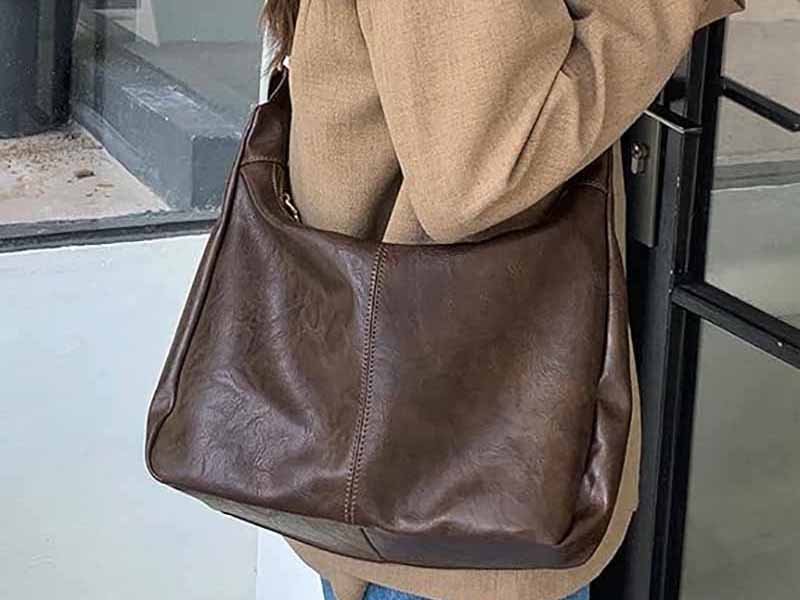
Leather and PU are chosen for appearance and perceived value rather than pure performance. Genuine leather offers durability and aging character, while PU provides cost control and visual consistency.
In bag design, leather requires attention to thickness variation, edge treatment, and stitching reinforcement. PU materials demand careful selection to avoid peeling or cracking. These materials work best in structured designs with controlled load.
How do functional composite materials support specialty bag design?
Functional composites—such as fireproof, smellproof, or cut-resistant fabrics—are engineered for specific risks. They often combine multiple layers to achieve performance targets.
These materials affect pattern design, sewing methods, and cost. Designers should evaluate whether the functional benefit justifies the added complexity. Factories with experience in these materials can help optimize structure and reduce failure risk.
How does material choice affect cost, lead time, and scalability?
Material availability, MOQ, and processing difficulty all influence production planning. Some high-performance fabrics have longer lead times or limited suppliers.
Choosing widely available, production-friendly materials improves scalability and price stability. This is why early material consultation with manufacturers like Szoneier often results in more reliable outcomes.
What makes a material “right” for a specific bag design?
A material is “right” when it:
- supports the bag’s intended function
- withstands real-use stress
- fits within target cost
- can be produced consistently
- aligns with branding and market positioning
There is no universal “best” material—only the best match for a specific design goal.
How Is a Bag Prototype Made
A bag prototype is made by converting a bag design into technical patterns, cutting selected materials, sewing and assembling components, and testing the sample under real-use conditions. The prototyping process allows designers and manufacturers to evaluate structure, fit, durability, and usability before mass production. Multiple revisions are often required to optimize performance, cost, and production stability.
What information is required before making a bag prototype?
Before sampling begins, clear inputs are essential. A factory cannot create a reliable prototype from sketches alone. Typically required information includes:
- intended use and performance expectations
- target dimensions and capacity
- preferred materials or reference samples
- functional requirements (pockets, closures, protection level)
- branding method and placement
Missing information leads to guesswork, which increases revision cycles. Clear communication at this stage shortens development time and improves sample accuracy.
How are technical patterns created for a bag prototype?
Patterns are the foundation of any prototype. Pattern makers translate design concepts into precise shapes, accounting for seam allowances, folding lines, reinforcement areas, and material behavior.
For complex bags, patterns often include:
- outer shell panels
- lining components
- reinforcement layers
- pocket and divider elements
A good pattern ensures symmetry, load balance, and repeatability. Poor patterns cause misalignment, weak seams, and unstable shapes—issues that worsen at scale.
How does material cutting and preparation affect the prototype?
Material cutting determines dimensional accuracy and visual consistency. In professional sampling rooms, cutting is done carefully to replicate production conditions as closely as possible.
Key considerations include:
- grain direction and fabric stretch
- thickness variation across panels
- edge treatment for coated or layered materials
Improper cutting leads to distortion or uneven stress distribution. Accurate preparation ensures the prototype reflects true production performance, not an idealized version.
How is the bag prototype sewn and assembled?
Assembly follows a specific sequence designed to protect structure and function. Components such as pockets, reinforcements, and straps are often sewn before final assembly.
Critical factors during sewing include:
- stitch length and tension
- needle type and thread strength
- seam reinforcement at stress points
Factories test assembly methods during prototyping to identify potential bottlenecks or failure risks. This step often reveals whether a design is production-friendly or needs simplification.
How is a bag prototype tested and evaluated?
Testing separates workable designs from problematic ones. Prototypes are typically evaluated for:
- load-bearing performance
- comfort during carrying
- ease of access and organization
- shape retention after repeated use
Some factories also perform abrasion or water-resistance tests depending on the bag’s function. Feedback from testing guides design refinement before approval.
How many prototype revisions are usually required?
Most professional bag designs require 2–4 prototype revisions. Each revision addresses specific issues such as fit, structure, material behavior, or assembly efficiency.
A clear revision strategy focuses on one improvement category at a time. Endless redesign without clear goals wastes time and cost. Experienced manufacturers help prioritize changes that deliver the most impact.
How does prototyping differ from mass production?
Prototypes are made in controlled quantities with higher manual input, while mass production emphasizes speed and consistency. However, a good prototype closely mirrors production conditions.
If a prototype relies on special handling that cannot be replicated at scale, it is not production-ready. Prototyping aims to validate both design and manufacturing process—not just appearance.
Why do factories emphasize prototyping before bulk orders?
Prototyping reduces risk. It identifies design flaws early, stabilizes cost estimates, and prevents large-scale quality issues.
Factories like Szoneier use prototyping to align expectations between buyers, designers, and production teams—ensuring that what is approved can be reliably produced.
When is a bag prototype considered approved?
A prototype is approved when it:
- meets functional and durability requirements
- reflects the intended appearance and branding
- can be produced consistently
- aligns with target cost and lead time
Approval marks the transition from development to production planning.
What Are Common Design Challenges and Solutions
Common bag design challenges include weak structural planning, unsuitable material selection, overcomplicated designs, poor load distribution, and insufficient prototype testing. These issues often lead to durability problems, high defect rates, and production delays. Effective solutions involve early design validation, material testing, structural reinforcement, prototype iteration, and close collaboration with experienced manufacturers before mass production.
What are the most common bag design mistakes in early development?
Many bag design problems begin at the concept stage. A frequent mistake is designing based on appearance alone, without fully understanding how the bag will be used. Designers may overlook weight load, carry duration, or environmental exposure.
Other common early-stage mistakes include:
- unclear use case definition
- copying existing designs without understanding their structure
- ignoring manufacturing constraints
- setting dimensions without testing real capacity
These issues often remain hidden until sampling or real use, when correction becomes more expensive and time-consuming.
Why does poor structural design cause durability failures?
Structure determines how stress moves through a bag. Weak structure leads to failure at predictable points—handles, straps, zipper ends, and bottom corners.
Common structural issues include:
- insufficient reinforcement at load-bearing points
- poor panel alignment causing uneven stress
- lack of internal support for heavy contents
The solution is structural mapping during design: identifying stress zones and reinforcing them with proper stitching, webbing, or layered materials before prototyping.
How does incorrect material selection create hidden problems?
Materials that look suitable may perform poorly in real use. For example, lightweight fabrics may stretch under load, coatings may crack, or PU surfaces may peel after repeated folding.
Designers often underestimate how materials behave when stitched, folded, or stressed. The solution is early material testing and matching material properties—strength, flexibility, abrasion resistance—to actual usage conditions rather than visual appeal alone.
Why do overcomplicated designs fail in production?
Complex designs increase the risk of inconsistency. Too many panels, decorative seams, or unique components slow production and raise defect rates.
Overdesign often leads to:
- longer sewing times
- higher labor cost
- difficulty maintaining consistent quality
Simplifying structure without sacrificing function is a key professional skill. Experienced manufacturers frequently recommend design simplification to improve reliability and scalability.
How does poor load distribution affect comfort and usability?
Even durable bags can feel uncomfortable if load distribution is poorly planned. Misplaced straps, shallow back panels, or uneven compartment layout cause imbalance.
This leads to user fatigue, dissatisfaction, and returns. The solution involves testing weight distribution during prototyping—loading the bag as intended and evaluating comfort during movement, not just static inspection.
Why do some bags fail after production despite passing inspection?
Quality inspection checks workmanship, not design logic. A bag may be sewn correctly yet still fail due to design flaws such as:
- stress concentration at zipper ends
- inadequate seam allowance
- incompatible material layering
These failures appear only after repeated use. Design-level testing during sampling is the only way to prevent them.
How can prototyping reduce design risk effectively?
Prototyping turns assumptions into evidence. It allows teams to test:
- structural integrity
- comfort and ergonomics
- access and usability
- production feasibility
Multiple prototype rounds—each with a clear goal—dramatically reduce risk. Skipping or rushing this stage is one of the most expensive mistakes in bag development.
What role does manufacturer feedback play in solving design challenges?
Manufacturers see recurring failure patterns across hundreds of projects. Their feedback often highlights issues designers miss, such as sewing difficulty, material inconsistency, or hardware limitations.
Early collaboration allows:
- design optimization before cost is locked
- fewer revisions later
- smoother transition to mass production
Factories like Szoneier integrate design review into the development process to prevent avoidable mistakes.
How do professional solutions turn design challenges into advantages?
When challenges are addressed early, they become opportunities:
- better structure improves durability
- simplified design improves efficiency
- correct material choice improves user experience
- validated prototypes improve market success
Good bag design is not about avoiding problems—it’s about solving the right ones before they reach customers.
Conclusion
Bag making design is not just about creativity—it’s about execution. From idea and materials to structure, sampling, and production, every decision shapes the final outcome.
With over 18 years of experience, Szoneier helps brands and buyers turn bag concepts into reliable, scalable products. We support custom bag development across a wide range of materials and styles, offering free design support, low MOQ, rapid sampling, and strict quality control.
If you’re planning a new bag project—or refining an existing design—share your idea with Szoneier. Our team will review your requirements and help you move from concept to production with confidence.
Start your custom bag inquiry with Szoneier today.