Skip to content


A bag can leave the factory with a competitive unit price and still become surprisingly expensive by the time it reaches a warehouse. In many projects, the unexpected cost does not come from fabric, zippers, hardware, embroidery, or sewing. It comes from the physical space the finished shipment occupies. A lightweight backpack packed upright with paper stuffing and thick protective materials can cost more to move than a heavier bag packed efficiently. Once this difference is multiplied across hundreds of cartons, packaging becomes a serious part of landed-cost planning rather than a minor detail decided at the end of production.
Packaging affects bag shipping cost by changing gross weight, dimensional weight, carton dimensions, pieces per carton, total carton quantity, and total CBM. Lightweight but bulky bags are particularly sensitive to volumetric pricing for express and air shipments, while carton volume and container utilization become increasingly important in sea freight. Better packaging reduces unnecessary space without compromising product protection or presentation.
This is why experienced product teams review packing before bulk production begins. Imagine approving a structured travel bag that looks excellent in the sample room, only to discover during final packing that the paper filling, expanded shoulder straps, and oversized individual box reduce carton capacity from 24 pieces to 16. The product has not changed, but the logistics budget has. Packaging decisions can quietly change the economics of an entire program, which is why understanding them early can save much more than trying to negotiate a few cents from the manufacturing price.
What Makes Packaging Affect Shipping Cost?
Packaging affects shipping cost because transportation providers charge for both physical weight and the space cargo occupies. For bags, inner packaging, retail boxes, protective materials, folding methods, carton dimensions, and pieces per carton can all change the final freight calculation. Even when packaging materials add little direct cost, they can create a much larger logistics expense if they reduce packing density or increase shipment volume.
Packaging Cost
Packaging cost has two layers, and separating them helps explain where money is actually being spent. The first layer is visible and easy to understand: polybags, dust bags, paper inserts, hangtags, retail boxes, gift boxes, labels, master cartons, tape, and protective wrapping all have a direct purchase cost. The second layer appears after the finished goods enter the logistics system. If those materials increase packed dimensions, they may increase dimensional weight, carton quantity, CBM, warehouse space, and handling requirements.
A simple fabric tote packed flat inside a thin polybag occupies little more space than the bag itself. The same tote placed inside a rigid presentation box with paper stuffing, an internal insert, and an outer sleeve can occupy several times more volume. The material cost of the packaging may still look reasonable when quoted per unit, but the freight impact becomes much larger when 3,000, 5,000, or 20,000 units are packed and shipped together.
A practical landed-cost formula is:
Product cost + individual packaging + export cartons + freight + applicable import costs + fulfillment = landed cost
This formula is more useful than looking at factory price alone. A brand that saves $0.10 per bag on a 5,000-piece order reduces manufacturing cost by $500. If the selected packaging increases shipment volume by several cubic meters, that entire saving can disappear in international logistics. Good sourcing decisions therefore compare packaging and freight together rather than treating them as unrelated cost categories.
Size and Weight
Shipping economics depend on both kilograms and cubic space. This matters particularly for sewn products because many bags are relatively lightweight while occupying significant volume. A canvas tote, padded backpack, cosmetic case, or cooler bag may not be physically heavy, yet foam, reinforcement, structured panels, long handles, or retail packaging can make the master carton much larger than the scale weight would suggest.
Consider a carton measuring 60 × 40 × 30 cm. Its volume is 0.072 cubic meters. If the height can safely be reduced from 30 cm to 24 cm without changing the other dimensions, the carton volume becomes 0.0576 cubic meters. That is a 20% reduction in volume from changing only one dimension. Across 100 cartons, total volume falls from 7.20 CBM to 5.76 CBM, a difference of 1.44 CBM before any change is made to the actual bag.
| Carton Size | Volume per Carton | 100 Cartons | Volume Reduction |
|---|---|---|---|
| 60 × 40 × 30 cm | 0.072 m³ | 7.20 CBM | — |
| 60 × 40 × 25 cm | 0.060 m³ | 6.00 CBM | 16.7% |
| 60 × 40 × 24 cm | 0.0576 m³ | 5.76 CBM | 20.0% |
| 60 × 40 × 20 cm | 0.048 m³ | 4.80 CBM | 33.3% |
The important question is not always whether a smaller carton can be used. It is what is creating the carton height in the first place. Thick handles, excess paper stuffing, rigid bottom panels, inefficient folding, padded straps, stacked zipper pulls, or oversized individual packaging may all contribute. Once the main source of volume is identified, the production team can determine whether that space protects the product or is simply the result of an unoptimized packing method.
Landed Cost
Landed cost gives a more realistic picture of commercial performance than unit price alone. Two suppliers may quote almost identical products, yet different packing methods can create very different final costs. Suppose one packing method places 24 bags in a carton while another safely fits 30. For a 6,000-piece order, the first method requires 250 cartons and the second requires 200. Fifty fewer cartons can affect freight, handling, receiving, warehouse space, and disposal at the destination.
If a carton occupies approximately 0.07 CBM, the difference between 250 cartons and 200 cartons represents roughly 3.5 CBM in a simplified comparison. Actual savings depend on final carton size, weight, shipping mode, forwarder pricing, destination charges, and whether the shipment moves by LCL or FCL, but the example shows why purchasing teams should not compare suppliers only by EXW or FOB unit price.
Before confirming a large order, it is useful to request packed unit dimensions, pieces per carton, carton dimensions, net weight, gross weight, total carton quantity, and total CBM. For repeat programs, these figures should become part of the controlled product specification. If packaging changes between seasons without review, logistics cost can change even when the bag itself remains identical.
How Is Bag Shipping Cost Calculated?
Bag shipping cost is normally influenced by actual weight, dimensional weight, total shipment volume, destination, service level, and handling requirements. Express and air services frequently compare physical and volumetric weight, while sea freight places greater emphasis on CBM, shipment size, routing, container utilization, and local charges. Reliable freight planning starts with final packing data rather than product quantity alone.
Actual Weight
Actual weight is the number shown when the packed carton is placed on a scale. Several figures are useful in a commercial shipment: unit product weight, total product weight inside a carton, net carton weight, gross carton weight, and total shipment gross weight. Gross weight is particularly important because it includes the products, individual packaging, inserts, labels, protective materials, and outer carton.
If one finished backpack weighs 0.72 kg and 20 pieces are packed into one carton, the products alone weigh 14.4 kg. Once polybags, paper inserts, hangtags, moisture protection, and the master carton are added, the gross weight may rise noticeably. Increasing pieces per carton can improve space utilization, but it may also create a carton that is too heavy for efficient warehouse handling or specific logistics requirements.
This is why the highest possible packing quantity is not automatically the best packing quantity. A practical carton must balance volume efficiency with gross weight, carton strength, manual handling, product pressure, and warehouse requirements. A configuration that looks efficient mathematically can still create operational problems if cartons become too heavy, deform during stacking, or place excessive compression on the products inside.
Dimensional Weight
Dimensional weight converts the space occupied by a carton into an equivalent billable weight. It matters most when products are relatively light compared with their package size, which describes many backpacks, cooler bags, travel bags, padded cases, and other soft goods. A commonly used metric formula for many international express services is length × width × height in centimeters divided by 5,000, although the exact divisor can vary by carrier, route, service, and commercial agreement.
The practical impact is easy to see. A carton measuring 60 × 40 × 30 cm produces a dimensional weight of 14.4 kg when a 5,000 divisor is used. If the carton physically weighs only 9 kg, the volumetric figure may become more important for freight pricing. Reduce the carton height to 20 cm and the calculated dimensional weight drops to 9.6 kg, even though the products themselves have not become lighter.
| Carton Size | Actual Weight | Dimensional Weight at ÷5,000 | Main Cost Signal |
|---|---|---|---|
| 60 × 40 × 30 cm | 9 kg | 14.4 kg | Volume dominates |
| 60 × 40 × 25 cm | 9 kg | 12.0 kg | Volume still dominates |
| 60 × 40 × 20 cm | 9 kg | 9.6 kg | Nearly balanced |
| 50 × 40 × 20 cm | 9 kg | 8.0 kg | Actual weight dominates |
The divisor should never be treated as universal. Freight providers can use different formulas or contract terms, and other charges may apply. The main value of this calculation during product development is comparison. It shows whether one packaging option is substantially more efficient than another before the logistics provider issues the final quote.
CBM and Chargeable Weight
CBM means cubic meter and is one of the most useful planning figures for larger international shipments. To calculate the CBM of a carton, convert its dimensions to meters and multiply length by width by height. A carton measuring 58 × 42 × 36 cm occupies approximately 0.0877 CBM. If an order requires 120 identical cartons, the total shipment volume is approximately 10.52 CBM.
Chargeable weight works differently. For many express and air services, physical weight and dimensional weight are compared, and the applicable higher figure may be used for pricing. Ocean freight is generally evaluated differently, with CBM, shipment type, routing, container space, weight-to-measurement rules, and local charges becoming more important. The same carton can therefore behave very differently under express, air, and sea freight.
A professional packing list should clearly show carton count, carton dimensions, net weight, gross weight, and total volume. Without this information, freight quotations remain preliminary. Estimating shipping solely from the number of bags can be misleading because 2,000 flat cotton totes and 2,000 padded cooler bags may occupy completely different amounts of transport space.
Which Packaging Choices Increase Freight?
Packaging increases freight when it adds unnecessary volume, creates oversized cartons, reduces pieces per carton, or adds protective materials without enough practical value. Rigid gift boxes, excessive filling, thick inserts, poorly sized cartons, and unused internal space are common causes. The objective is not to eliminate packaging, but to distinguish useful protection and channel requirements from volume that adds little benefit.
Retail Packaging
Retail packaging can serve an important commercial purpose. It may improve shelf presentation, protect a premium surface, carry product information, simplify barcode handling, or create a stronger unboxing experience. The problem begins when retail presentation is designed without considering how thousands of finished units will fit into export cartons.
A cosmetic pouch measuring 28 × 20 × 3 cm may be highly efficient when packed flat. Placing it inside a 30 × 22 × 8 cm rigid box changes the logistics profile dramatically because package thickness increases far more than product weight. The premium box may still be justified for a beauty brand, gift program, retail launch, or influencer kit, but the transport cost should be evaluated before the packaging dimensions are finalized.
Simple polybags create very little extra volume, while dust bags add moderate surface protection without dramatically changing carton dimensions. Mailer boxes, rigid retail boxes, and presentation gift boxes require much more space. This does not make them poor choices. It simply means that their value should be measured against both branding goals and shipment economics. A presentation box that increases perceived value and retail price may be worthwhile; an oversized box used only because it was the nearest available stock dimension may not be.
For larger programs, individual packaging dimensions should be tested inside actual master cartons. A few millimeters may look insignificant on one unit, but small changes multiply when products are arranged in layers and then repeated across hundreds of cartons.
Protective Materials
Protective materials should never be removed simply because they take up space. Their purpose is to prevent damage that could cost more than the freight saving. Tissue, foam sleeves, paper filling, handle wrapping, hardware protection, nonwoven bags, and internal inserts can all perform useful functions when matched to an actual product risk.
A canvas shopping bag normally tolerates compression better than a structured PU handbag. Plated hardware can mark an adjacent coated surface if products are stacked tightly. Embroidery may flatten under prolonged pressure. Foam panels can develop permanent creases. Insulated cooler bags can lose shape if aggressively compressed. Leather may retain pressure marks long after the carton is opened.
A useful packaging review asks what each layer is protecting and whether the same protection can be achieved with less material or space. If two sheets of tissue perform the same function as four, reducing the quantity may be sensible. If a thin foam sleeve prevents metal hardware from scratching PU, removing it may create a higher return and complaint risk than the space saving is worth.
Physical testing is more reliable than assumptions. Production-equivalent samples can be packed using two different configurations, stored under realistic compression, moved and reopened, then checked for shape recovery, coating marks, hardware impressions, embroidery distortion, zipper alignment, and structural damage. The best packaging is the smallest configuration that still delivers the product in acceptable condition.
Carton Space
Unused carton space is one of the least visible costs in bag logistics because it rarely appears as a separate line on a quotation. Common causes include standard stock cartons that do not match the product, inconsistent folding, handles stacked in one position, overfilled products, zipper pulls creating uneven layers, conservative packing quantities, and individual boxes with unnecessary internal space.
Carton measurements should be based on the closed external dimensions after products have settled, not theoretical internal dimensions. A carton that bulges after closure may be measured at its widest point by logistics providers, which can increase dimensional weight. Packing instructions should therefore define not only the carton size but also the way products are placed inside it.
For repeat orders, packing should become a controlled manufacturing process. The specification can include folding sequence, handle position, alternate layer direction, pieces per layer, number of layers, pieces per carton, carton grade, and target gross weight. This level of consistency reduces the chance that one production run ships efficiently while the next uses larger cartons simply because another team packed it differently.

How Do Bag Structures Affect Packing?
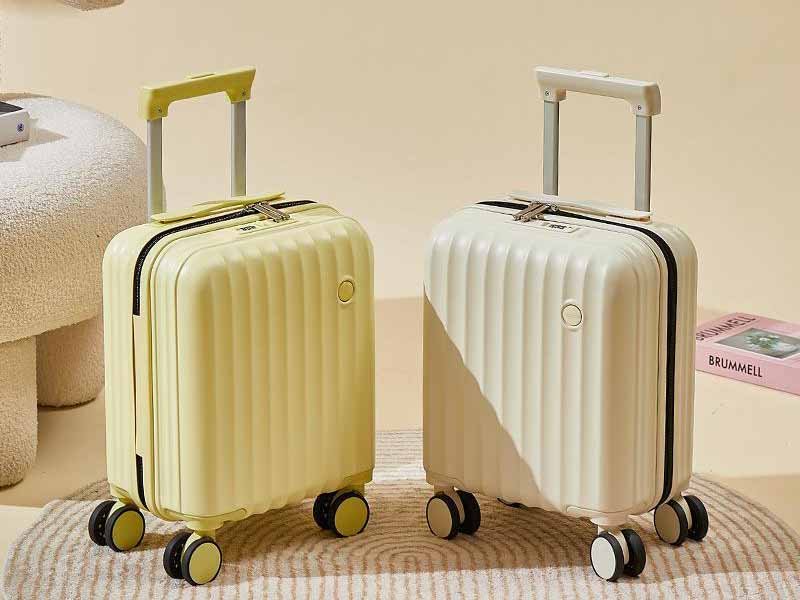
Bag structure determines how much a product can be folded, nested, stacked, or compressed without changing its appearance or function. Simple fabric totes and drawstring bags usually support dense flat packing, while padded backpacks, cooler bags, camera bags, structured handbags, pet carriers, and EVA cases need more protective volume. Freight optimization should therefore begin with product construction rather than applying one packing rule to every bag.
Flat Bags
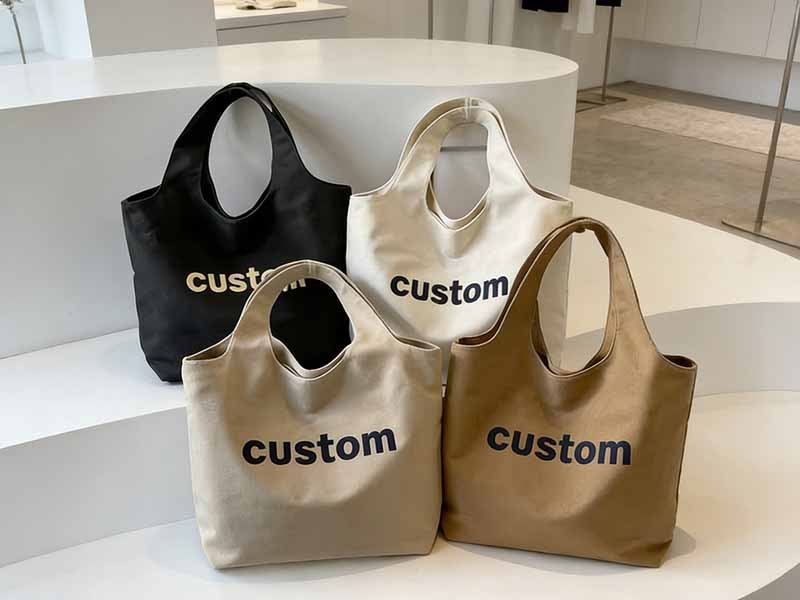
Flat bags provide the greatest opportunity for efficient packing because their commercial value usually does not depend on maintaining a rigid three-dimensional shape during transit. Cotton totes, canvas shopping bags, drawstring bags, simple polyester pouches, laundry bags, and many promotional products can often be folded with relatively little risk.
Even simple products can vary considerably in packing efficiency. A tote with thick rope handles takes more vertical space than one with flat webbing. A permanent rigid bottom board limits folding compared with a removable insert. Large eyelets, zipper pulls, and thick exterior pockets can create uneven stacking if every unit is placed in the same direction.
Alternating product orientation often improves carton density. If handle attachments create extra thickness at one end, alternating the direction of each layer distributes that thickness more evenly. Zipper pulls can be positioned away from one another, and detachable straps can often be placed inside the main compartment rather than beside the bag.
The important point is repeatability. A folding method that works perfectly for one sample but cannot be reproduced consistently by workers across 5,000 units is not suitable for bulk production. The final method should be simple enough to photograph, document, train, and inspect during packing.
Structured Bags
Structured products need a different approach because shape is part of the specification customers are paying for. Padded backpacks, camera bags, cooler bags, insulated lunch bags, structured PU handbags, leather products, pet carriers, reinforced tool bags, and EVA cases can all suffer when compressed beyond their construction limits.
Foam panels may develop creases, piping can distort, coated surfaces can form pressure lines, leather can take set marks, and rigid inserts can push against nearby products. A package that reduces CBM but creates visible defects is not truly cost-efficient.
There are still many ways to improve packing without crushing the product. Shoulder straps can often be folded into the bag, long webbing can be tucked into compartments, detachable straps can be placed inside, removable inserts can be packed separately or flat, and hardware can be wrapped and positioned so it does not create unnecessary height.
Szoneier’s own manufacturing guidance treats structured leather bags, EVA cases, padded backpacks, cooler bags, pet carriers, camera bags, and similar products as categories that should not be compressed blindly. The better approach is to understand which parts need to retain shape and optimize the surrounding space instead.
Folding and Compression
Folding, controlled compression, and vacuum compression are different methods and should not be treated as interchangeable. Folding follows natural product geometry. Controlled compression removes temporary air while keeping pressure within a range the materials can recover from. Vacuum compression applies much greater pressure and may be unsuitable for foam, reinforcement boards, coated fabrics, molded components, or products expected to look presentation-ready immediately after unpacking.
A practical test should use a finished production-equivalent sample in the proposed real packaging. The bag should remain compressed for a representative period and then be inspected after unpacking. Important points include visible crease lines, foam recovery, panel shape, piping, zipper alignment, embroidery, print surfaces, laminated materials, PU finish, leather marks, hardware impressions, and handle recovery.
Suppose controlled folding reduces packed thickness from 12 cm to 9 cm. That represents a 25% reduction in thickness. If the product returns to approved shape after unpacking, the saving may be commercially valuable. If the same compression causes permanent marks or shape loss on premium products, the lower volume may create more cost through complaints, returns, and replacement stock.
The correct limit is therefore determined by product recovery, not by the smallest carton available.
Which Shipping Method Costs Less?
No single shipping method is always cheapest for bags. Express is commonly used for samples and small urgent shipments, air freight suits time-sensitive commercial quantities, and sea freight generally becomes more economical for larger orders with sufficient lead time. Packaging influences every method, but dimensional weight matters especially in express and air planning, while CBM and container utilization become central to sea freight.
Express Shipping
Express courier services are widely used during product development because they provide fast door-to-door movement and reliable tracking. They are practical for prototypes, approval samples, pre-production samples, urgent replacement pieces, and small launch quantities. The disadvantage for bags is that oversized sample cartons can produce high dimensional weight even when the product itself is light.
A backpack weighing 1.5 kg placed inside a 50 × 40 × 30 cm carton produces a calculated dimensional weight of 12 kg when a 5,000 divisor is used. Put the same product into a carefully folded 45 × 35 × 15 cm package and the dimensional weight falls to approximately 4.73 kg. The physical bag still weighs 1.5 kg, but the transport space has changed substantially.
This does not mean every approval sample should be compressed aggressively. Presentation and product recovery still matter. It does mean that using an oversized box simply because it is available can make sample shipping much more expensive than necessary.
For development teams sending multiple prototypes every month, standardized sample cartons and better folding practices can reduce recurring courier cost without changing the products themselves.
Air Freight
Air freight is commonly selected when commercial quantities must arrive faster than ocean shipping can support. Seasonal launches, Amazon replenishment, promotional deadlines, retail openings, late production, and stock shortages are all situations where air freight may be justified.
Air pricing involves more than a single kilogram rate. Chargeable weight, airport handling, routing, available capacity, pickup, customs clearance, destination delivery, and local charges all affect the final quotation. Packing density still matters because lightweight bulky cartons can create a large chargeable volume.
If one carton holds 18 bags and an improved arrangement safely increases capacity to 24, the number of cartons needed for a 2,400-piece shipment falls from approximately 134 cartons to 100. The exact freight saving depends on actual dimensions, weight, and the logistics provider’s rules, but reducing 34 cartons can have a meaningful impact on both volume and handling.
Split shipment is another practical option. A brand can send part of the order by air to protect an important launch date while the remaining quantity travels by sea. This costs more than moving everything by ocean but can be much more economical than air-freighting the full order.
Sea Freight
Sea freight usually becomes the preferred option when shipment volume grows and the delivery schedule allows additional transit time. For custom bag programs, importers commonly compare LCL and FCL options. LCL is useful when cargo does not fill a complete container, while FCL becomes more attractive as shipment size increases and dedicated container utilization improves.
Packaging optimization matters in both cases. For LCL shipments, reducing total CBM can directly influence the freight calculation, although minimum charges, destination fees, documentation, and local handling can limit the percentage saving. For FCL, the focus moves toward how efficiently cartons fill the available container space.
Carton geometry matters as much as mathematical CBM. Two carton designs can have similar individual volume but stack differently in a container. One may create unused gaps because of awkward dimensions, while another forms a more efficient loading pattern.
| Shipping Method | Best Suited To | Packaging Cost Driver | Main Planning Data |
|---|---|---|---|
| Express | Samples, urgent small lots | Dimensional weight | Carton size, actual weight |
| Air Freight | Urgent commercial quantities | Chargeable weight, volume | Dimensions, gross weight |
| Sea LCL | Medium bulk shipments | CBM, local charges | Total CBM, carton count |
| Sea FCL | Larger repeat orders | Container utilization | Carton pattern, total volume |
| Split Air + Sea | Launches and replenishment | Mixed cost/time balance | Priority quantity, total volume |
Ocean freight should also be considered together with inventory planning. The cheapest transport mode can become expensive if the longer lead time creates stockouts or forces excessive safety stock. Freight decisions work best when packaging, production timing, sales forecasts, and replenishment strategy are considered together.
How Can Brands Reduce Bag Shipping Cost?
Brands reduce bag shipping cost most effectively by optimizing packaging before bulk production. The process includes testing folding methods, increasing safe pieces per carton, selecting suitable carton dimensions, removing unnecessary packaging layers, controlling gross weight, calculating CBM and dimensional weight, and comparing shipping options using real packing data. The objective is the smallest repeatable package that protects the product and meets channel requirements.
Carton Optimization
Carton optimization is one of the most practical ways to improve freight efficiency because it can often be tested without redesigning the bag. The trial should use a production-equivalent product, final individual packaging, approved hangtags, protective materials, accessories, retail packaging, and the proposed master carton.
Start with the standard packing quantity and record carton dimensions, weight, and product condition. Then test one or two alternative arrangements. For a 3,600-piece order, moving from 18 pieces per carton to 24 reduces carton quantity from 200 to 150. If carton volume can also be reduced from 0.072 CBM to 0.060 CBM, theoretical total shipment volume falls from 14.40 CBM to 9.00 CBM.
That is a reduction of 5.40 CBM, or 37.5%, in the simplified example. Achieving this safely requires more than forcing extra products into a box. The packing team needs to check product recovery, carton strength, gross weight, stacking pressure, external bulging, and whether workers can repeat the method consistently during full production.
Useful questions include whether there is unnecessary headspace, whether handles can be repositioned, whether alternate layers can face opposite directions, whether a smaller carton remains strong enough, and whether increasing pieces per carton creates excessive gross weight.
Protection and Efficiency
Shipping-cost reduction often fails when teams treat product protection and freight efficiency as opposite goals. They are actually part of the same cost equation. Over-packaging increases freight, while under-packaging increases the risk of damage, returns, rework, and poor customer experience.
A useful approach is to divide packaging into three categories. The first is essential protection, which includes materials needed to prevent abrasion, deformation, moisture exposure, hardware damage, or other predictable defects. The second is channel requirements, including labels, barcodes, FNSKU, carton marks, retail packaging, and other receiving specifications. The third is optional presentation, such as extra tissue, oversized inserts, decorative sleeves, or secondary boxes used mainly for appearance.
Essential protection should usually remain, although it can still be improved. Channel requirements must be confirmed against the destination warehouse or platform. Optional presentation deserves the closest review because this is often where unnecessary volume enters the shipment.
For a structured handbag, removing all paper filling may reduce volume but create a collapsed appearance after shipping. A better solution may be to reduce the amount of filling or redesign the insert. For a cooler bag, thick insulation is a functional component and should not be crushed simply to fit more units into a carton. Effective packaging keeps the features customers value while removing space that provides little measurable benefit.
Supplier Planning
Freight planning should start while the sample and packaging specification are still flexible. At that stage, product teams can review bag size, foam thickness, bottom boards, handles, detachable straps, removable inserts, gift boxes, protective filling, and folding tolerance before thousands of pieces have already been produced.
Before approving bulk production, request realistic packing data that includes pieces per carton, carton dimensions, net weight, gross weight, carton quantity, total CBM, and the proposed folding method. For air or express shipments, dimensional weight should be calculated using the actual carrier or forwarder terms. For sea shipments, the final volume can be compared against LCL and FCL options under current freight conditions.
Warehouse rules should also be reviewed before packing begins. Amazon FBA, 3PL facilities, retail distribution centers, and brand warehouses can have specific requirements for carton dimensions, gross weight, labels, SKU separation, barcodes, palletization, or receiving documents.
Szoneier’s documented manufacturing and logistics workflow covers packaging inspection, carton-size control, gross-weight planning, volume-weight optimization, FBA preparation, split shipment, and international delivery coordination. This makes it practical to compare a standard packing arrangement with a freight-optimized alternative before bulk shipment rather than discovering logistics problems after production is complete.
Conclusion
Packaging is not merely the last task completed after a bag leaves the sewing line. It connects product structure, surface protection, warehouse requirements, freight pricing, container utilization, and landed cost. A few centimeters of unnecessary carton height may look insignificant when reviewing one sample, but the same space multiplied across hundreds of cartons can become a substantial logistics expense.
The most effective approach is not to chase the smallest possible carton. Different products have different limits. A flat cotton tote can tolerate packing methods that would damage a structured PU handbag, insulated cooler bag, padded backpack, or molded EVA case. Packaging should therefore be optimized around real product behavior rather than a universal compression rule.
Brands that review packing during development gain much clearer cost control. Measuring actual carton dimensions, gross weight, pieces per carton, total CBM, and dimensional weight before shipment makes it easier to compare freight options and identify unnecessary volume while there is still time to change the configuration.
For custom bag programs, the useful question is no longer simply, “What is the price per bag?” A stronger question is, “What will this product cost when it arrives at the warehouse in saleable condition?” Once packaging is treated as part of that calculation, freight decisions become more predictable, product protection becomes easier to manage, and the full supply chain becomes more efficient.
Frequently Asked Questions
How does packaging size affect bag shipping cost?
Packaging size affects freight because carriers and freight forwarders must account for the physical space a shipment occupies. For express and many air services, larger cartons may create dimensional weight that exceeds actual weight. For sea freight, larger cartons increase total CBM and may reduce container utilization. Even when the bag itself is lightweight, oversized packaging can therefore increase the transport cost substantially across a large production order.
What is dimensional weight for bag shipping?
Dimensional weight is a calculated weight based on package dimensions rather than the reading on a physical scale. A commonly used formula for international express shipments is length × width × height in centimeters divided by 5,000, although carrier rules can vary. It is especially important for backpacks, cooler bags, padded travel bags, and other lightweight products that occupy considerable carton space relative to their actual physical weight.
Can folding bags reduce shipping cost?
Folding can reduce shipping cost when the product construction allows it to be packed more densely without permanent deformation. Cotton totes, canvas shoppers, drawstring bags, and many simple pouches usually respond well to flat packing. Structured handbags, padded backpacks, cooler bags, camera bags, and EVA cases require more careful testing because excessive folding or compression can damage foam, reinforcement, surfaces, piping, hardware, or the intended three-dimensional shape.
Is sea freight always cheaper than air freight for bags?
Sea freight is generally more economical for larger, less urgent bag orders, while air freight is used when delivery speed is more important. The final comparison depends on shipment size, total CBM, chargeable weight, destination, route, local handling, and current freight rates. Air can be commercially sensible for a small urgent batch, while ocean freight usually becomes more attractive as order volume increases and sufficient lead time is available.
How many bags should be packed in one carton?
There is no universal number because the correct quantity depends on bag dimensions, structure, individual packaging, gross weight, carton strength, and product protection. A simple tote may allow dozens of units per carton, while a structured backpack or cooler bag may require far fewer. The best quantity is determined through a physical packing trial that balances carton utilization, safe handling, stacking pressure, and product condition after unpacking.
How can I calculate CBM for a bag shipment?
Calculate one carton’s volume by multiplying its length, width, and height in meters, then multiply the result by the total carton quantity. For example, a carton measuring 0.60 × 0.40 × 0.30 meters has a volume of 0.072 CBM. If the shipment contains 100 identical cartons, total volume is 7.20 CBM. Final freight cost still depends on the shipping mode, route, and forwarder pricing.
When should packaging be finalized in custom bag production?
Packaging should be reviewed during sample development and finalized before bulk packing begins. This gives the production team time to test folding, individual packaging, carton dimensions, pieces per carton, gross weight, CBM, product recovery, labels, and destination requirements. Waiting until production is complete can make optimization difficult because product structure, retail boxes, protective materials, and other cost-driving choices may already be fixed.