Skip to content


Mention “custom soft goods” and most people immediately picture a backpack, tote bag, duffle, or cosmetic pouch. Those products certainly belong to the category, but they only reveal part of what soft-goods manufacturing can actually accomplish. The same materials, pattern-making skills, sewing techniques, reinforcement methods, foam systems, hardware integrations, and production controls used to build a technical backpack can also create protective cases, equipment covers, medical organizers, insulated carriers, wearable accessories, tool storage systems, neoprene products, travel organizers, and hybrid products combining textiles with EVA, foam, leather, plastic, or metal components.
Custom soft goods are products built mainly from flexible or semi-flexible materials and engineered through patterns, seams, reinforcements, linings, foams, closures, webbing, hardware, and other components. Bags are an important category, but soft goods also include cases, covers, sleeves, organizers, wearable products, insulated goods, protective systems, and functional sewn products developed around a specific use, user, brand, or market.
The distinction becomes important the moment a product moves beyond simple decoration. Imagine developing a protective carrying system for portable electronics. The outer shell uses abrasion-resistant fabric, the interior contains shaped foam, a semi-rigid panel keeps the product from collapsing, two internal pockets organize cables, webbing distributes load, and a water-resistant zipper protects the opening. Calling that product “just a bag” tells you almost nothing about the engineering required to make it reliable. Understanding soft goods as a complete product-development discipline leads to better specifications, better prototypes, fewer production surprises, and ultimately more commercially successful products.
What Are Custom Soft Goods?
Custom soft goods are flexible or semi-flexible products developed from fabrics, leather, foam, neoprene, webbing, zippers, hardware, and related components for a defined use or brand. The category includes conventional bags, but also pouches, cases, covers, sleeves, organizers, insulated products, wearable accessories, protective systems, and other sewn goods requiring coordinated material, pattern, construction, and production decisions.
What Defines a Soft Good?
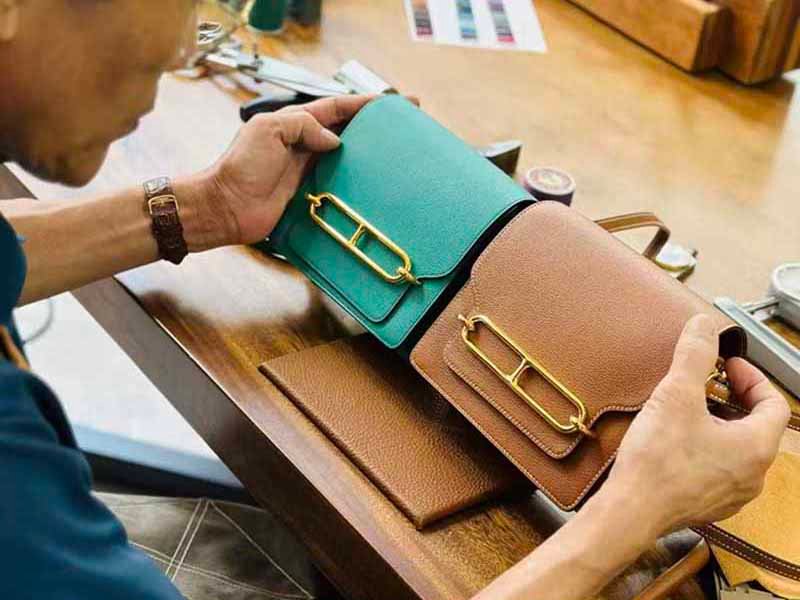
The easiest way to recognize a soft good is not by looking at its retail category but by looking at how its shape is created. Most soft goods start as flat materials. Those materials are cut into patterns and transformed into three-dimensional products through sewing, folding, bonding, padding, reinforcement, binding, welding, hardware installation, or a combination of these processes. Their final geometry depends heavily on construction rather than on a rigid molded shell.
That distinction has practical consequences during development. Fabric stretches, folds, compresses, wrinkles, and responds to sewing tension. Foam adds thickness and changes internal volume. A lining may alter how a panel turns during assembly. Binding changes edge thickness. Webbing transfers force into neighboring panels. A zipper determines both access and part of the finished geometry. Even a small change in seam allowance or material thickness can noticeably alter the completed product.
A protective electronics case illustrates how quickly a seemingly simple sewn item becomes an engineered system. The outer textile may provide abrasion resistance, foam manages impact, lining protects the device surface, elastic holds accessories, EVA creates shape, and a zipper controls access. Each component solves a different problem, but all of them must be integrated within the same pattern and production sequence. That is why professional soft-goods manufacturing goes considerably further than operating a sewing machine.
Szoneier’s documented product range reflects this broader definition. Its manufacturing scope includes traditional bags as well as storage pouches, neoprene products, leather accessories, EVA protective cases, fabric covers, tool bags, medical bags, waterproof products, and other functional sewn goods rather than being limited to a single bag category.
Are Soft Goods the Same as Bags?
Bags are one major part of the soft-goods market, but the terms should not be treated as interchangeable. A backpack, equipment cover, padded sleeve, tool roll, cooler, medical organizer, and wearable pouch may look unrelated on a retail shelf, yet their development often relies on the same fundamental capabilities: material selection, pattern development, component sourcing, prototype construction, reinforcement engineering, sewing, inspection, and repeatable production.
| Soft-Goods Category | Common Examples | Main Development Focus |
|---|---|---|
| Carry Products | Backpacks, totes, duffles | Load distribution, access, comfort |
| Storage Products | Pouches, organizers, packing systems | Capacity, layout, compartment control |
| Protective Products | Sleeves, padded cases, equipment cases | Fit, impact and abrasion protection |
| Covers | Equipment and protective covers | Dimensional fit, access, installation |
| Insulated Products | Cooler and lunch products | Thermal layers, sealing, cleanability |
| Wearable Products | Belt pouches, harness accessories | Ergonomics, movement, load |
| Hybrid Soft Goods | Fabric, foam, EVA and hardware assemblies | Multi-material integration |
This broader classification matters when selecting a manufacturing partner. A factory that has spent years producing only simple promotional totes may have reliable sewing capacity but limited experience with structured foam, shaped EVA, technical linings, complex internal organization, load-bearing attachments, unusual geometry, or specialized closures. None of those limitations automatically make the factory poor; they simply indicate that soft-goods capability should be evaluated by the requirements of the actual product rather than the number of items shown in a catalog.
The terminology also affects product development inside brands. Teams sometimes assume that a product is outside the traditional bag industry because it is described internally as a protective system, wearable accessory, travel organizer, equipment case, or storage solution. In practice, the manufacturing disciplines may be almost identical. Recognizing that connection makes it easier to find suppliers with the right pattern, material, sampling, and production experience.
Which Industries Use Custom Soft Goods?
Soft goods appear in almost every industry where something needs to be carried, protected, organized, covered, insulated, separated, stored, or worn. Outdoor brands use technical packs, dry storage, protective covers, and equipment organizers. Beauty companies develop cosmetic cases, brush organizers, travel pouches, and gift sets. Tool brands require reinforced storage systems. Medical and first-aid products often need removable compartments, clearly organized interiors, reliable closures, and surfaces that can tolerate frequent handling.
Consumer electronics provide another useful example. Headphones, cameras, portable instruments, batteries, drones, testing equipment, and other devices frequently require custom cases that combine textiles with foam, mesh, elastic, semi-rigid inserts, molded EVA, and specialized hardware. The visual design may be simple, yet the fit of the device, compression of the foam, zipper path, internal retention, and protection of sensitive surfaces can make the project technically demanding.
Travel, fitness, golf, cycling, pet care, baby products, automotive accessories, hospitality, promotional merchandise, corporate gifting, and industrial equipment create similar opportunities. Szoneier’s documented customer and product universe covers outdoor, travel, beauty, pet, tool, industrial, medical, retail, promotional, Amazon, Shopify, and other branded-product programs, illustrating how one soft-goods manufacturing platform can serve several markets without reducing every project to a conventional bag.
The common factor across these industries is not appearance. It is the need to convert flexible materials and components into a product that performs predictably. Once a product depends on patterns, sewn assemblies, reinforcement, flexible layers, fabric-to-hardware connections, foam, or related construction methods, soft-goods expertise becomes relevant regardless of what the marketing department eventually calls the finished product.
Which Products Go Beyond Bags?
Products beyond conventional bags include protective cases, sleeves, equipment covers, tool organizers, medical kits, insulated goods, neoprene accessories, wearable pouches, storage systems, and hybrid textile products. Their names vary, but their development relies on the same core disciplines: material behavior, pattern geometry, reinforcement, component integration, functional sampling, and repeatable manufacturing.
Pouches, Cases, and Covers
Pouches are sometimes treated as entry-level products because they often contain fewer components than backpacks or travel bags. In reality, simple construction can make quality problems more obvious. If a zipper waves, a corner collapses, the lining twists, or a logo sits several millimeters off position, there are fewer visual details available to hide the mistake. Minimal products often demand very clean pattern balance and sewing control.
Protective cases introduce additional layers. A typical padded product may use a 300D to 600D polyester or nylon outer shell, several millimeters of foam, a soft lining, elastic retention, binding, zippers, and sometimes EVA or PE board for structure. These ranges are common examples rather than universal specifications; the correct combination depends on product weight, drop or abrasion risk, target retail price, desired appearance, and the amount of structure required.
Covers create another challenge because the manufacturer must understand the object underneath the textile shell. A cover for equipment, machinery, furniture, electronics, or a shaped accessory needs enough allowance to install easily while still looking controlled. Corners, handles, protrusions, openings, ventilation areas, fastening points, and water-shedding geometry may all need to be incorporated into the pattern rather than added as an afterthought.
The number of panels therefore tells you very little about development difficulty. A six-panel cover built around irregular equipment can require more pattern work than a conventional twenty-panel bag that the factory already manufactures every month. Product complexity is better measured by interfaces, materials, function, geometry, and repeatability than by visual appearance alone.
Protective and Wearable Products
Protective and wearable soft goods demand greater attention to movement and load. A belt pouch must remain stable while the user walks or bends. A medical organizer may need fast access under pressure. A tool pouch can experience concentrated load from heavy or sharp contents. A sports accessory may face repeated flexing, abrasion, perspiration, and outdoor exposure. These factors change the way seams, materials, reinforcement, closures, and attachment points should be designed.
A useful development habit is to trace the load path through the entire product. If a handle is expected to carry 8 kilograms, that force does not stop at the webbing. It moves through the handle stitching and into the fabric or reinforcement underneath. If the connection area is too small, the webbing may remain intact while the surrounding textile gradually tears. Strength depends on the complete attachment system rather than one component.
Common reinforcement methods include additional backing layers, wider webbing, box-X stitching, bar tacks, layered patches, and designs that extend straps further into the body of the product. The correct method depends on the material and load rather than one standard formula. Heavy stitching on a weak fabric, for example, may simply concentrate force around the needle holes instead of solving the structural problem.
Experienced developers therefore examine where force enters the product, how it moves through the construction, and which areas are likely to experience repeated movement or abrasion. Many of the most important durability decisions remain invisible once the lining is closed, yet they determine whether the product continues performing after months of use.
Hybrid Soft Goods
Many modern soft products are hybrids rather than purely textile items. A protective case can use a molded EVA body wrapped in fabric. A technical backpack may contain aluminum stays or semi-rigid plastic panels. A cooler can combine polyester, insulating foam, PEVA lining, plastic hardware, webbing, and metal zipper sliders. Travel accessories increasingly combine fabric with magnets, molded clips, compression panels, removable dividers, or specialty components.
These combinations create interface problems because each material behaves differently. Textile stretches and folds. Foam compresses. EVA maintains shape. Leather changes gradually with use. Plastic hardware can be rigid and concentrate force within a relatively small area. Metal adds strength but also weight. A successful design must manage those differences rather than simply place several attractive materials next to each other.
Consider a metal D-ring mounted on a lightweight fabric panel. The prototype may initially look clean, but repeated pulling can concentrate load around a narrow stitched area. Extending a webbing anchor further into the panel and supporting it with a reinforcement patch can spread the force across a larger surface. The hardware has not changed; the way it interacts with the textile system has.
This is one reason hybrid projects benefit from early physical sampling. CAD drawings can show where components sit, but they cannot fully demonstrate how a padded wall bends, how webbing pulls on fabric, how a zipper behaves around a tight radius, or how the assembled object feels in the user’s hand. Material interaction has to be experienced physically.
Functional Soft Goods
Functional soft goods are defined primarily by the task they perform. Common examples include tool organizers, medical bags, first-aid kits, camera cases, tactical storage, golf accessories, waterproof pouches, insulated carriers, pet travel accessories, packing systems, protective sleeves, and equipment covers. Their commercial value usually depends more on usability and performance than on decorative styling alone.
The more functional a product becomes, the more valuable measurable requirements become during development. “Make the strap strong” is difficult to engineer because strength has not been defined. “The product normally carries approximately 6 kilograms” gives the pattern and sampling teams a useful starting point. Likewise, “waterproof” could refer to water-resistant fabric, a coated textile, water-resistant zipper construction, welded seams, or a product designed for temporary immersion.
Specifications do not need to become unnecessarily complicated, but they should describe the problem the product is expected to solve. Important questions include what the product carries, how frequently it will be opened, whether it will be used outdoors, whether users wear it against the body, whether it must retain shape, how much abrasion it may encounter, and whether it requires cleaning after use.
This approach also improves conversations between brands and factories. Instead of asking a supplier to copy a reference product exactly, the development team can explain which functions matter most and where the design has flexibility. That gives an experienced manufacturer room to recommend more suitable materials, reinforcements, production methods, or component choices without changing the purpose of the product.
What Makes Soft Goods Design Different?
Soft-goods design is different because flexible materials do not maintain final geometry on their own. Patterns, seams, foam, reinforcement, lining, webbing, zippers, hardware, and assembly order collectively create the shape and performance of the product. Small changes in material thickness, seam allowance, or construction can therefore affect dimensions, capacity, appearance, durability, and manufacturability.
Patterns and Product Shape
Pattern making is the point where a three-dimensional concept becomes something a production team can actually manufacture. A designer may create a detailed backpack rendering, but the sewing line does not work from perspective drawings. The product must be separated into front panels, back panels, gussets, linings, pockets, straps, reinforcement pieces, zipper panels, and other components that fit correctly after seams and material thickness are taken into account.
Small dimensional changes can have a large cumulative effect. Increasing a gusset by 8 millimeters changes overall depth. Adjusting a zipper curve affects both appearance and opening access. Replacing a thin stabilizer with thicker foam may reduce usable internal space. Moving one seam can improve shape but make production more difficult. Those consequences are difficult to judge from a flat artwork file alone.
Physical samples therefore play a central role in professional soft-goods development. The product should be filled, carried, opened, closed, compressed, handled, and viewed from different angles. A backpack that looks balanced when empty may lean forward when loaded. A cosmetic case that appears spacious in CAD may lose usable volume when thick foam and turned seams are introduced.
Pattern design also affects cost. Additional panels create more cutting operations, seam length, alignment work, sewing time, and opportunities for dimensional variation. This does not mean complex constructions should always be simplified. Premium and technical products often justify additional pieces. The important question is whether each panel or seam contributes meaningful function, structure, appearance, or manufacturability.
Load Paths and Reinforcement
Every soft product carries forces through its structure, even if nobody describes it as an engineered object. Place 10 kilograms in a backpack and that load travels from the bottom and main compartment into the side panels, shoulder-strap attachments, webbing, stitching, reinforcement layers, and eventually the user’s shoulders. A tote or tool pouch follows the same principle on a smaller scale.
Good reinforcement begins by understanding where those forces concentrate. Handle bases, shoulder-strap roots, zipper ends, bottom corners, D-rings, buckle anchors, detachable straps, and heavily loaded pockets are common areas requiring extra attention. Reinforcement should follow actual load paths rather than being added randomly because “more stitching” sounds stronger.
Szoneier’s documented sewing controls include stitch quality, binding, reinforced stress points, zipper operation, strap attachment, lining condition, dimensional consistency, and conformity with an approved sample. These are practical checkpoints because a product can look excellent during a showroom inspection yet still contain weak attachment structures that only become obvious after repeated use.
Material choice also changes the reinforcement strategy. Heavy webbing attached to a lightweight shell can create a mismatch if the force is not distributed. Dense stitching may weaken some coated textiles by creating closely spaced needle holes. A better solution can involve larger backing patches, different seam construction, or extending load-bearing webbing further into the product body.
This is why durability cannot be judged only by touching the outside fabric or counting the number of stitches. The more useful question is whether the complete assembly has been designed around how the product will actually be carried, pulled, opened, dropped, and used.
Soft vs. Hard Product Engineering
Soft and hard products use different manufacturing processes, but both benefit from disciplined product definition. A molded plastic housing may be controlled with CAD geometry, resin specifications, mold tolerances, fasteners, and dimensional inspection. A textile product still requires controlled specifications, but its materials introduce additional variation because they stretch, compress, fray, wrinkle, and react to sewing.
A serious soft-goods specification can include finished dimensions, fabric construction, fabric weight or denier, coating, foam type, foam thickness, lining, seam allowance, stitch type, thread, zipper size, webbing width, hardware finish, reinforcement position, logo placement, and packaging method. If several of those variables change between sampling and production, the finished order can drift significantly from the approved product.
The approved physical sample therefore remains extremely valuable, but it should not be the only source of information. Material references, measurements, artwork positions, component specifications, BOM records, and production notes help reduce interpretation on the sewing floor. Operators should not have to remember critical details from a sample they handled several weeks earlier.
A useful mindset is similar to engineering in other industries: define requirements, build, test, identify problems, revise, document, and reproduce. Flexible materials may demand more physical iteration, but that does not reduce the importance of controlled data. In many cases, it makes documentation even more important because material behavior introduces more variables.
Design for Manufacturing
A prototype can look excellent while being unnecessarily difficult to manufacture. Imagine a travel organizer containing forty individual cut pieces, multiple custom zipper sizes, several small hardware variations, difficult curved seams, and decorative details requiring slow manual alignment. A skilled sample maker may produce one beautiful piece, but volume production introduces a different set of questions around efficiency and repeatability.
Design for manufacturing examines whether each construction choice contributes enough user value to justify the added complexity. A manufacturer may recommend standardizing zipper sizes, sharing hardware between compartments, improving sewing access, simplifying an internal curve, relocating reinforcement, reducing unnecessary seam intersections, or adjusting a pattern to improve material yield.
These changes should not automatically turn a premium product into a cheaper product. Some details deserve extra cost because they improve usability, strength, comfort, or brand differentiation. A concealed reinforcement layer may add labor but significantly improve durability. A more expensive opening construction may make a travel product far easier to use. The goal is not to eliminate complexity; it is to distinguish useful complexity from accidental complexity.
DFM is especially important before orders begin scaling. A construction that adds only twenty seconds of unnecessary labor may seem minor during sampling, but across 20,000 units it represents more than 110 production hours. Likewise, a component available from only one difficult source may create schedule risk that does not appear in the prototype cost.
Professional DFM therefore balances aesthetics, function, quality, cost, sourcing risk, labor, and production consistency. It protects the parts of the design that matter while removing obstacles that offer little commercial benefit.
Which Materials and Components Matter?
Material selection determines much more than appearance. Outer fabric, lining, foam, webbing, zippers, hardware, coatings, reinforcement, thread, and structural components collectively influence weight, shape, durability, protection, hand feel, price, and manufacturability. The best specification is based on real use conditions rather than simply choosing the heaviest fabric or most expensive component available.
Fabrics for Different Uses
Denier, fabric weight, and thickness are useful references, but they should never be treated as simple quality rankings. A 600D polyester is not automatically superior to a 420D nylon because yarn quality, weave, coating, finishing, tear behavior, abrasion resistance, and intended use all affect real-world performance. A lighter technical material can be more appropriate than a heavier fabric in products where weight matters.
| Material | Common Reference Range | Typical Applications | Main Considerations |
|---|---|---|---|
| Polyester | 210D–1200D | Bags, cases, promotional goods | Cost, durability, printability |
| Nylon | 210D–1000D | Outdoor and technical products | Weight, abrasion, hand feel |
| Oxford | 300D–1680D | Backpacks, utility and tool products | Structure, durability |
| Canvas | Approx. 8–24 oz/yd² | Totes and lifestyle products | Natural feel, weight, wash behavior |
| Neoprene | Approx. 2–5 mm | Sleeves and protective accessories | Cushioning, flexibility |
| EVA | Application-specific | Structured protective cases | Shape, density, molding |
| PVC / TPU | Application-specific | Waterproof or transparent products | Sealing, flexibility, finish |
These specifications are broad industry references rather than guarantees. A fabric’s denier does not tell you how well the final product will perform after it is cut, stitched, coated, and combined with other materials. The complete construction remains more important than one headline material number.
Szoneier’s documented material system includes polyester, nylon, Oxford, cotton, canvas, neoprene, leather, PU, PVC, TPU, EVA, mesh, jute, RPET, and related materials. Material selection is considered in relation to usage, price positioning, hand feel, water resistance, abrasion, load, appearance, and sales channel rather than using one standard fabric across every product.
A useful material brief therefore starts with questions about use. Will the item be carried outdoors? Does it need to fold flat? Will it hold heavy equipment? Is easy cleaning important? Does the brand want a natural, luxury, technical, or sporty feel? Are low weight and shipping efficiency priorities? Those answers are usually more valuable than specifying a fabric simply because another successful product used it.
Foam and Linings
Foam is one of the most misunderstood elements in soft-goods development because thickness alone does not tell the whole story. Foam can provide cushioning, thermal insulation, comfort, separation, shape retention, or structural support. A light cosmetic pouch may need almost none, while a camera case can require a carefully controlled combination of cushioning and rigidity.
Two foams with the same nominal thickness can behave very differently because density, resilience, compression characteristics, and cell structure matter. Five millimeters of soft foam used for comfort is not equivalent to five millimeters of denser protective material. Adding excessive thickness can also reduce internal capacity, create bulky seams, complicate binding, or make curved areas difficult to sew.
Neoprene introduces similar choices. Common product development ranges frequently include approximately 2 mm, 3 mm, 4 mm, and 5 mm material, with the appropriate thickness determined by flexibility, cushioning, finished bulk, and the intended application. A bottle sleeve and a protective equipment case may both use neoprene but require completely different constructions.
Linings also deserve more attention than they normally receive. A lining can protect contents, support internal pockets, conceal seams, increase cleanability, reduce abrasion, add visual contrast, and improve perceived quality when users open the product. A premium outer shell paired with a weak lining can undermine the overall experience because consumers interact with the interior every time they use the product.
The best results come from treating shell material, foam, lining, reinforcement, and construction as one layered system. Choosing each element independently can create unnecessary thickness, difficult sewing, excessive weight, or poor shape, even if every individual material looked impressive in isolation.
Zippers, Webbing, and Hardware
Consumers often judge product quality through the components they touch most frequently. Zippers, zipper pullers, buckles, snaps, hooks, handles, shoulder straps, and adjustment hardware may account for a relatively small part of total material area, but they directly influence how the product feels during every use.
A travel organizer may be opened and closed several times per day. A backpack shoulder strap stays under tension for hours. A buckle can be cycled hundreds of times during a product’s usable life. Hardware also hits tables, floors, vehicles, luggage systems, and other objects. Component selection therefore deserves the same attention as shell fabric.
Zipper evaluation can include chain size, slider design, puller shape, tape, opening direction, water-resistance requirements, replacement availability, and compatibility with curved construction. Webbing should be considered by width, thickness, weave, stretch, edge feel, color consistency, and the load it is expected to carry.
Hardware requires similar judgment. Metal components may communicate premium positioning but increase weight. Plastic hardware can reduce weight and cost but needs suitable geometry and quality. Surface finish matters where corrosion, scratches, or frequent handling are expected. Oversized hardware can also make a lightweight product uncomfortable even when it is technically strong.
The objective is not to specify the most expensive component in every position. A promotional pouch and a technical travel product have different requirements. Good development matches the level of the component to the function, user expectation, brand position, and expected service life of the entire product.
Waterproof and Sustainable Materials
“Waterproof” is a useful example of how material descriptions can become misleading when construction is ignored. A highly water-resistant TPU-coated textile can still produce a finished product that allows water through conventional needle holes, unsealed seams, zipper openings, binding, or hardware attachment points. The performance of the material does not automatically become the performance of the complete product.
It is therefore useful to distinguish between water-resistant material, a water-resistant finished product, highly water-resistant construction, welded waterproof construction, and a product designed for immersion. These are different levels of performance and can require very different materials, machinery, seam methods, zippers, and testing.
Sustainability claims benefit from the same precision. Recycled fabrics such as RPET can support a brand’s environmental goals, but their selection should still consider durability, documentation, color consistency, manufacturing waste, packaging, and expected product life. A material does not become the best environmental option automatically because recycled content appears in its description.
Longer product life can be an important part of responsible development. A product that performs reliably for several years may create less replacement demand than a poorly specified product that fails quickly. Durable reinforcement, replaceable components, sensible material use, and packaging optimization can all contribute to sustainability alongside recycled content.
Strong material claims are therefore based on documented specifications and realistic product performance rather than broad adjectives. Brands gain more credibility when they can explain what the material actually does and how the construction supports the claim.
How Are Custom Soft Goods Developed?
Custom soft goods typically move from product requirements and material selection through pattern development, prototype construction, revision, production engineering, approval, bulk manufacturing, quality inspection, packaging, and shipment. Sampling is especially important because it exposes problems with size, structure, materials, usability, construction, and cost before those issues become expensive production problems.
From Idea to Prototype
A custom project does not always need to start with a finished tech pack. Some brands arrive with a complete specification and physical reference sample, while others begin with sketches, photographs, competitor references, approximate dimensions, target pricing, or a description of the problem the product should solve. Both situations can lead to successful development when assumptions are identified early.
The first professional step is converting available information into requirements. The team needs to understand intended users, dimensions, capacity, load, material direction, closures, internal organization, branding, packaging, quantities, target markets, and timing. Areas that remain unknown should be deliberately identified instead of being silently guessed.
Pattern makers then translate those requirements into manufacturable geometry. Materials are cut and assembled into the first physical sample, which frequently reveals issues that were difficult to see in drawings. The opening may be smaller than expected, a pocket can interfere with a seam, the product may collapse when empty, or a chosen foam may make the corners too bulky.
Szoneier’s documented development process allows projects to begin from reference photos, physical samples, tech packs, material requirements, branding, or product concepts and then move through material selection, structure development, pattern making, sampling, revision, production, inspection, packaging, and export coordination.
The first prototype should therefore be viewed as a learning tool rather than a miniature production order. Its purpose is to turn assumptions into something that can be touched, tested, measured, and improved.
What Sampling Should Check
A useful sample review goes much further than asking whether the product looks attractive. The team should check finished dimensions, usable capacity, opening access, pocket positions, strap comfort, hardware placement, material feel, loaded shape, zipper function, foam performance, branding proportions, construction quality, and packaging compatibility.
A typical development sequence may use an early sample to establish overall proportion and construction, a second version to refine materials or functionality, and a later sample to confirm branding and production details. This should not be treated as a fixed three-sample rule. Simple products can require fewer rounds, while technical projects involving custom components and complex structures may reasonably require more.
The important principle is that every revision should close specific questions. If Sample 1 reveals that an opening is too narrow, the next sample should test an agreed correction rather than introduce a completely new product direction. Controlled revisions allow the team to move steadily toward an approved construction.
Cost also needs to be reviewed during sampling. A feature may function perfectly but push labor or material costs beyond the commercial target. Discovering that problem during the prototype stage gives the team time to consider alternative materials, fewer components, different construction, or a redesigned feature without disrupting bulk production.
Sampling becomes expensive when direction changes repeatedly without clear decisions. It becomes valuable when each prototype converts uncertainty into knowledge.
DFM and Production Readiness
A completed prototype proves that one unit can be made. Production preparation must determine whether the same product can be made consistently hundreds or thousands of times. This requires a different level of review covering pattern stability, material availability, cutting efficiency, component lead times, sewing sequence, machine requirements, tolerances, reinforcement methods, inspection points, labor content, and packaging.
Cost engineering becomes especially useful at this stage. Suppose a product uses four zipper sizes but two of them could be standardized without affecting access or appearance. Reducing component variety can simplify purchasing, inventory control, line preparation, and quality checks. The change may have little visible effect on the consumer but meaningful operational value.
Other improvements can involve removing unnecessary panels, improving sewing access, reducing difficult seam intersections, increasing material yield, relocating reinforcement, or replacing a component that has an excessively long procurement lead time. None of these changes should happen simply because the factory wants an easier product; they should be evaluated against function and brand intent.
The same logic works in the opposite direction. If a construction detail significantly improves durability or the user experience, keeping it can be commercially sensible even when it adds cost. Good production engineering is not a race to the cheapest possible design. It is a disciplined process for making the intended product reliably manufacturable.
Production readiness is reached when the team has enough clarity around materials, patterns, components, workmanship, inspection, packaging, and critical dimensions that the bulk line does not need to reinterpret the product from scratch.
Sample-to-Bulk Consistency
Consistency between an approved sample and bulk production is one of the most important indicators of a reliable manufacturing system. A beautiful sample has limited commercial value if fabric, color, dimensions, zipper quality, reinforcement, logo placement, or packaging changes noticeably when the order scales.
Useful production controls convert decisions into references rather than relying on memory. These references can include an approved sample, BOM, material records, color standards, finished measurements, component specifications, artwork positions, construction notes, and packaging instructions. The more complicated the product becomes, the more important these records become.
| Production Stage | Main Checks | Problems Prevented |
|---|---|---|
| Incoming Materials | Fabric, color, coating, hardware | Wrong or inconsistent inputs |
| Pre-Production | Approved sample and specifications | Incorrect production standard |
| Cutting | Pattern pieces and dimensions | Cutting and panel errors |
| In-Line Production | Sewing, reinforcement, assembly | Repeated workmanship defects |
| Final Inspection | Dimensions, function, appearance | Defective finished products |
| Packing | Labels, quantities, cartons | Fulfillment and shipping mistakes |
Szoneier’s documented QC workflow covers materials, accessories, pre-production confirmation, production-stage checks, semi-finished products, finished products, and packaging before shipment. This multi-stage approach is important because production problems become more expensive to correct as more value is added to the product.
If the wrong fabric is discovered before cutting, the issue is primarily a material problem. If it is discovered after thousands of units are stitched and packed, it becomes a much larger financial and scheduling problem. Effective quality control therefore focuses on preventing defects from multiplying rather than relying only on a final inspection at the end.
How Do You Choose a Soft Goods Manufacturer?
A capable soft-goods manufacturer should be evaluated on more than sewing price. Material knowledge, pattern development, sampling, structural understanding, quality systems, sourcing, communication, capacity, documentation, packaging, and delivery all matter. The right manufacturing partner should be able to move a defined concept or tech pack into repeatable production while keeping critical materials, construction details, and quality requirements under control.
Capabilities Beyond Sewing
Sewing machines are easy to photograph, which is why factory websites often focus heavily on equipment. For procurement teams, the more revealing questions involve everything around those machines. Can the manufacturer identify a suitable replacement when the original fabric is unavailable? Can a pattern maker correct poor proportions? Can the sourcing team find compatible hardware? Can production explain why a prototype is difficult to scale?
These questions expose whether the supplier has only capacity or a functioning development system. Strong operations normally connect material sourcing, pattern development, sample making, sample revision, cost review, bulk production, in-line inspection, final inspection, packaging, and shipment preparation within one coordinated workflow.
The difference becomes more visible when a project encounters problems. A straightforward tote made from standard materials can make many suppliers look equally capable. A multi-material protective case with shaped foam, custom hardware, unusual geometry, branded packaging, and several SKUs is more likely to reveal differences in project management and technical judgment.
Szoneier describes itself as a factory-based custom bags and soft goods manufacturer with in-house or directly managed capabilities covering sampling, materials, patterns, sewing production, quality inspection, packaging, and delivery rather than acting only as a trading intermediary. Its documented manufacturing experience exceeds 18 years across custom bags and sewn soft goods.
For established brands and growing product programs, this broader capability can reduce the number of separate suppliers that need to be coordinated. Material, sample, production, inspection, and packaging decisions can be managed through one development path instead of being repeatedly translated between independent parties.
OEM or ODM
OEM and ODM are useful terms, but they describe different levels of manufacturer involvement rather than different levels of quality. OEM is generally appropriate when a brand already controls most product decisions and can provide a finished sample, complete tech pack, defined materials, artwork, quality requirements, and packaging standards. The manufacturer’s role focuses on industrialization and accurate production.
ODM becomes more relevant when part of the product still needs to be developed. A brand may understand the user, function, target price, and desired appearance but still require help with dimensions, internal organization, materials, pocket layout, structural reinforcement, or production cost. The manufacturer’s development team then contributes more actively before the product reaches bulk manufacturing.
Many commercial projects fall somewhere between the two. A customer may provide the exterior shape but ask the factory to redesign the interior. Another may supply an existing sample but want lighter materials and different hardware. A third may have a finished concept but need production engineering before the product can be scaled efficiently.
Szoneier’s documented service model supports both customer-defined OEM programs and more development-oriented ODM projects that can begin from ideas, reference images, samples, material directions, usage requirements, or brand specifications. The practical decision is therefore not whether OEM or ODM sounds more professional, but how much of the product has already been solved.
Brands save considerable time when this is discussed openly at the start. If the manufacturer knows which decisions are fixed and which remain flexible, its technical team can focus attention where it adds the most value instead of spending development effort on areas the customer does not want changed.
Quality and Production Risk
Quality control is most valuable when it prevents problems rather than merely identifying defective finished pieces. The timing of discovery determines the real cost of a mistake. If the wrong zipper color is discovered when components first arrive, only a component shipment may need correction. If it is discovered after 5,000 units have been sewn, the problem can involve rework, delayed delivery, labor, and replacement materials.
The same principle applies to dimensions, logo placement, color, reinforcement, lining, packaging, and hardware. A good quality system creates checkpoints at stages where errors can still be corrected with relatively limited impact. Material inspection, pre-production approval, cutting checks, in-line production inspection, final inspection, and packing checks each address different categories of risk.
Brands should also ask what the factory uses as the production reference. Statements such as “our workers know the product” provide less control than an approved sample supported by measurements, material references, artwork specifications, component records, and written construction requirements.
Another useful question is how problems are communicated. No realistic manufacturing system produces perfect results at every stage. What matters is whether deviations are identified early, recorded clearly, escalated to the right people, and corrected before they spread across the order.
For established brands, this process protects far more than the factory cost of each unit. Quality problems can affect launch dates, product reviews, retailer relationships, replacement expenses, customer service, and brand reputation. Preventing defects upstream is therefore both a manufacturing discipline and a commercial risk-management strategy.
Capacity and Scaling
Production capacity is important, but headline numbers should always be interpreted in relation to product complexity. Producing 50,000 identical drawstring bags is fundamentally different from producing the same total quantity across twenty styles, several materials, multiple colors, custom hardware, branded packaging, and staggered delivery dates.
Szoneier’s documented production system includes 8 production lines, more than 120 production employees, over 160 pieces of equipment, and a network of 10+ controlled satellite partner factories. Regular monthly output is documented at approximately 120,000–200,000 pieces, while annual capacity is approximately 1.5–2.4 million pieces depending on product type, structure, materials, branding process, packaging, and production schedule.
The qualification attached to those numbers is more important than it may appear. Credible manufacturers recognize that one unit of a complex backpack does not consume the same production resources as one simple pouch. Capacity should therefore be discussed in terms of SKU mix, materials, labor content, component readiness, packaging, and delivery timing rather than a universal maximum quantity.
Companies planning significant scale should also ask how the manufacturer maintains the approved standard as volume increases. Capacity without control can produce more problems faster. The manufacturing system needs suitable line planning, material coordination, production records, inspection resources, and communication as volume grows.
Providing a detailed RFQ improves this evaluation. Dimensions, reference images, target materials, quantity, colors, logo process, internal construction, packaging, destination, and timeline allow the factory to estimate both price and production resources more accurately. Good sourcing decisions begin with comparable specifications rather than comparing several quotations built on different assumptions.
Custom soft goods become much easier to understand when they are no longer viewed simply as pieces of fabric that need sewing. They are flexible engineered products in which materials, patterns, reinforcements, foam, linings, zippers, webbing, hardware, manufacturing methods, inspection standards, and packaging all influence the final result. A product may eventually be sold as a backpack, case, organizer, cover, sleeve, carrier, or accessory, but the underlying development discipline remains remarkably similar.
For brands, this broader perspective changes how products are developed and how manufacturing partners are evaluated. Instead of asking only whether a factory can make a bag, a stronger question is whether the team can understand the intended use, choose appropriate materials, translate the idea into patterns, identify structural risk, build useful prototypes, prepare the construction for production, and reproduce the approved result at scale.
That is also where an experienced manufacturer becomes more valuable than a production line alone. Szoneier’s role in custom soft goods is built around connecting product concepts with material sourcing, sampling, pattern and structure development, sewing production, quality inspection, packaging, and repeat manufacturing. The objective is not to claim that every flexible product is identical, but to provide a manufacturing system capable of handling the differences between them.
Return to the earlier example of the protective electronics carrier: abrasion-resistant fabric outside, foam inside, a semi-rigid insert, multiple straps, accessory pockets, reinforced attachment points, and a water-resistant zipper. Whether the marketing team eventually calls it a bag, protective case, carry system, or equipment accessory is secondary. The real question is whether every layer works together and whether the same result can be reproduced when one prototype becomes thousands of commercial units.
Frequently Asked Questions
Are all custom bags considered soft goods?
Most conventional textile, leather, neoprene, and similar sewn bags fall within the broader soft-goods category because their shape and performance depend heavily on flexible materials, patterns, seams, reinforcement, components, and sewing. However, soft goods extend much further than bags. Protective sleeves, equipment covers, organizers, wearable accessories, insulated products, cases, and mixed-material textile assemblies can all use the same development and manufacturing disciplines even when consumers would never describe them as bags.
What is the difference between a bag manufacturer and a soft goods manufacturer?
A bag manufacturer may specialize primarily in recognized categories such as backpacks, totes, duffles, cosmetic bags, or travel bags, while a soft-goods manufacturer generally works across a broader range of flexible sewn products and product structures. The distinction becomes more meaningful when a project requires unusual patterns, foam, EVA, protective construction, technical materials, wearable elements, custom hardware, or combinations of rigid and flexible components rather than a conventional bag format.
What materials are commonly used in custom soft goods?
Common materials include polyester, nylon, Oxford fabric, canvas, cotton, mesh, neoprene, PU, genuine leather, PVC, TPU, EVA, RPET fabrics, foam, webbing, and various linings. The correct choice depends on intended use, load, durability, water exposure, structure, appearance, weight, cost, and brand positioning. Material names alone are not enough because coating, thickness, density, weave, reinforcement, and construction strongly influence how the finished product actually performs.
How many prototype samples are usually needed before production?
There is no reliable universal number because project complexity varies significantly. A straightforward pouch based on an established construction may require only a limited sampling cycle, while a technical protective case or multi-compartment travel product can require several revisions. More important than the number of prototypes is what each version resolves. A structured development process uses samples to close questions about size, materials, function, appearance, cost, construction, and manufacturability before bulk production begins.
Can a manufacturer develop soft goods from an idea or reference image?
Yes, when the manufacturer offers genuine product-development and ODM capabilities rather than only contract sewing. A useful reference image can establish appearance and product direction, but additional information about dimensions, intended contents, materials, quantities, function, branding, packaging, and target market will usually be needed. Experienced teams can then convert these inputs into material proposals, patterns, prototype samples, revisions, and eventually production specifications rather than simply attempting to copy what is visible in one photograph.
How should brands evaluate a custom soft goods manufacturer?
Brands should evaluate more than price, equipment photographs, or the number of products displayed online. Material sourcing, pattern development, sampling, technical communication, production engineering, quality checkpoints, component management, manufacturing capacity, packaging, and repeat-order control are all important. Factory visits, video reviews, relevant sample inspections, development discussions, and carefully specified trial projects can reveal much more about capability than a general sales presentation or an unusually low quotation.
What information should be included in a soft goods RFQ?
A useful RFQ should include a sketch, photo, physical reference, or tech pack together with finished dimensions, target materials, approximate quantity, colors, logo requirements, internal organization, closures, hardware, packaging, destination, required delivery timing, and any important functional or testing expectations. Brands do not need to know every technical detail before contacting a manufacturer, but clearly separating confirmed requirements from unresolved areas helps the development team provide more realistic recommendations, quotations, timelines, and sample plans.