Skip to content
Choosing between RPET and regular polyester sounds easy until an actual custom bag reaches the sampling table. On paper, the difference seems straightforward: one comes from recycled PET feedstock and the other from virgin petrochemical material. In production, however, the decision quickly becomes more practical. The fabric still needs the right denier, weave, coating, color, hand feel, abrasion resistance, logo compatibility, seam behavior and sourcing stability. A recycled 600D fabric and a virgin 600D fabric may share the same denier label while producing noticeably different bags because their yarn quality, weave density, backing and finishing are not identical.
RPET is usually the stronger option when a project needs verified recycled content, sustainability positioning or retailer-specific environmental requirements without giving up the normal performance expected from polyester. Regular polyester remains practical when cost, broad stock availability, rapid sourcing and established color continuity carry more weight. Neither material is automatically better. The better choice depends on the finished bag’s function, fabric specification, coating, order volume, certification needs and repeat-production plan.
That distinction matters because recycled polyester is no longer a niche textile. Textile Exchange reported approximately 9.3 million tonnes of recycled polyester production in 2024, representing about 12% of total polyester production, while roughly 98% of recycled polyester feedstock still came from plastic bottles. The scale is significant, but so is the gap between a recycled-material story and a well-controlled finished product. A sourcing team therefore needs to look beyond the word “recycled” and ask whether the fabric can be traced, sampled, tested and reproduced consistently.
A familiar situation illustrates the issue. A brand approves an attractive RPET backpack sample, launches it successfully, and returns six months later for a larger reorder. The second batch uses a new fabric lot, the green shade is slightly different, the PU backing feels stiffer, and the logo transfer behaves differently. Nothing on the original specification changed except the parts that were never recorded. Good material selection is therefore not only about choosing RPET or regular polyester once. It is about creating a specification that can survive the first sample, the first production run and the fifth reorder.
What Is RPET vs Regular Polyester?
RPET is polyester made with recycled PET feedstock, while regular polyester usually refers to virgin polyester produced from new petrochemical inputs. Both can be woven and finished for custom bags, so the biggest practical differences are feedstock origin, traceability, supply availability, commercial cost and environmental positioning rather than appearance alone. Proper comparison requires the complete fabric specification, not only the material name.
What Is RPET Fabric?
RPET stands for recycled polyethylene terephthalate. In a typical textile supply chain, eligible PET waste is collected, sorted, processed and converted into material that can be made into polyester yarn. That yarn can then be woven into many of the same fabric constructions already familiar in custom bag production, including lightweight plain weaves, Oxford-style fabrics, smoother fabrics for pouches and coated structures used for travel or outdoor products.
The term RPET describes the recycled origin of the polyester, but it does not fully describe the usable fabric. A complete material specification may still need denier, yarn density, fabric weight, weave, coating, backing, surface finish and color reference. A lightweight RPET grocery tote and a structured recycled-polyester travel backpack can therefore share the same sustainability story while needing completely different technical constructions.
Szoneier’s documented material range includes RPET for tote bags, backpacks, cooler bags, drawstring bags, packing cubes, travel pouches, cosmetic bags and grocery bags. The same material guidance makes an important distinction: recycled claims should be supported by actual material origin and documentation rather than simply describing conventional polyester as recycled. This becomes particularly important when the finished product will carry environmental language on packaging, hangtags or product pages.
Recycled polyester is also not synonymous with textile-to-textile recycling. Textile Exchange reported that about 98% of recycled polyester feedstock was still derived from PET bottles in 2024, while textile-to-textile recycled fiber remained below 1% of the overall global fiber market. For brands, this means claims should describe what is actually verified rather than treating every recycled-polyester product as proof of a fully circular textile system.
What Is Virgin Polyester?
Virgin polyester is manufactured from newly produced petrochemical PET rather than reclaimed PET feedstock. It has been used for decades across backpacks, promotional bags, travel products, cosmetic pouches, gym bags, lunch bags and numerous other sewn goods. Because the supply chain is mature, standard virgin-polyester fabrics are available in a broad range of deniers, weights, weaves, colors and coated constructions.
Its strongest advantage is often commercial familiarity. Common black, navy, gray or standard-color polyester fabrics may already exist in stock programs, which can shorten sourcing time and reduce the need for special production runs. Established material codes also help factories reproduce long-running programs where maintaining an approved construction matters more than changing the sustainability positioning of the product.
That maturity should not be confused with automatic quality superiority. Virgin polyester can be poorly woven, lightly coated or inconsistent just as recycled polyester can be carefully engineered and stable. A tightly woven RPET fabric with controlled coating may outperform a cheaper virgin alternative even when both are labeled 600D. Material quality still comes from yarn, weave density, finishing, coating and production control.
Szoneier’s material-selection framework therefore evaluates polyester and RPET across cost, hand feel, appearance, strength, water resistance, abrasion resistance, environmental positioning, logo application and bulk-production stability rather than treating one feedstock source as inherently better. This is a more useful way to approach a commercial product because the finished bag is judged by how it looks, performs and repeats in production.
Which Differences Matter for Bags?
For an actual bag program, six differences deserve attention: physical performance, visual consistency, customization, cost, supply availability and traceability. The recycled-versus-virgin distinction matters, but it is only one variable inside a larger product system. A fabric can have the right environmental story and still be unsuitable because the coating is too stiff, the color cannot be repeated reliably or the weave does not support the intended logo process.
Consider two materials both described as 600D polyester. One could be a dense Oxford weave with substantial PU backing, while another could use a lighter weave and thinner coating. They may look similar in a web photo but feel, sew and wear differently once converted into a backpack. This is why experienced development teams do not treat the letter “D” as a complete specification.
The same principle applies to finished durability. Material origin does not determine whether a shoulder strap tears away from the body, a zipper end fails or a bottom panel wears through. Seam allowance, reinforcement, bartacks, webbing quality, foam, hardware and stress distribution all contribute to performance. The most successful material decision is therefore made together with the bag structure rather than separately from it.
A useful RFQ should go beyond “quote 600D RPET.” It should include the product type, dimensions, expected load, use environment, desired hand feel, lining, coating, logo method, target color, recycled-content requirement, order quantity and destination market. With those details, Szoneier can compare suitable polyester and RPET constructions before sampling rather than forcing a material choice into an unsuitable product.
| Comparison Point | RPET | Regular Polyester |
|---|---|---|
| Feedstock | Recycled PET | Virgin petrochemical PET |
| Typical Bag Uses | Totes, backpacks, pouches, travel bags, cooler bags | Almost all sewn bag categories |
| Environmental Positioning | Strong when recycled content is verified | Limited for recycled-content claims |
| Stock Availability | Good, but specification-dependent | Generally broader |
| Custom Color | Widely possible, lot control important | Widely possible, mature supply |
| Coatings | PU, water-repellent and other finishes available | Broad coating options available |
| Certification Planning | Often relevant | Usually simpler |
| MOQ | Depends strongly on fabric and certification route | Often more flexible for stock materials |
| Lead Time | Can increase with certified or custom fabric | Usually easier for standard materials |
| Repeat Production | Reliable when source and specification are controlled | Generally straightforward with established materials |
Is RPET as Durable as Regular Polyester?
RPET can meet the durability requirements of many custom bags when compared with regular polyester at equivalent specifications. Recycled origin alone does not decide strength. Denier, yarn quality, weave density, coating, fabric weight, seam construction and reinforcement often matter more. For demanding applications, the actual production fabric and completed bag should be tested rather than assuming that every recycled or virgin polyester behaves alike.
How Does Strength Compare?
One of the most persistent misconceptions is that recycled polyester must be weaker because the original PET material has already been used once. That is too broad a conclusion for modern textile sourcing. Quality RPET yarn can be engineered into fabrics suitable for daily-use backpacks, totes, cooler bags, travel organizers and many other applications, provided the yarn, weave and finishing are appropriate for the intended load.
Szoneier’s RPET material guidance notes that strength depends on denier and weaving construction and that RPET can be used for ordinary through medium-to-higher-strength applications. The same internal guidance describes abrasion resistance as potentially close to regular polyester when comparable specifications are used. The phrase “comparable specifications” matters because a lightweight recycled 300D cannot reasonably be compared with a heavily coated virgin 900D and used as evidence that one feedstock is superior.
A useful evaluation looks at strength on two levels. The first is the textile itself, including tensile behavior, tear resistance, abrasion performance and coating adhesion. The second is structural strength in the finished bag. Shoulder-strap attachment, top handles, bottom seams, zipper ends and loaded pocket corners often receive concentrated stress and may fail even when the face fabric remains undamaged.
This is where bag engineering becomes as important as the fabric. Bartacks, box-X stitching, reinforcement patches, adequate seam allowance and stronger webbing can dramatically improve real-world performance. A premium textile cannot rescue a poorly designed strap junction, while a well-reinforced structure can allow a lighter fabric to perform reliably within its target use. Material selection and construction design should therefore be reviewed together during sampling.
Which Denier Works Best?
Denier measures yarn linear density and gives developers a useful reference for comparing textile constructions. It does not provide a complete durability rating. Two fabrics using the same nominal denier can still differ in weight, weave density, coating thickness and finished performance, so denier should be treated as a starting point rather than an automatic quality level.
Lightweight ranges such as approximately 210D to 300D are commonly explored for linings, foldable totes, lightweight pouches and packing products where low weight matters. Midweight constructions around 300D to 600D appear frequently in day bags, cosmetic products, cooler shells, sports bags and general backpacks. Heavier constructions can be considered for structured travel products, outdoor bags and selected work applications where abrasion and body become more important.
Moving to a higher denier is not always an upgrade. A heavier textile increases material weight and may make a bag stiffer, bulkier and more difficult to turn or bind around small curves. It can also change freight weight and the visual character of a product. A sleek commuter backpack may perform better with a well-engineered midweight material than with an unnecessarily heavy fabric that makes the finished bag feel industrial.
The better approach is to select the lightest practical construction that meets the product’s expected load, abrasion exposure, structure and brand positioning. Swatches should then be compared with the actual foam, lining and reinforcement system. Once approved, the material code and construction should be recorded so that future production is based on the same fabric rather than only a generic “600D” description.
| Common Fabric Range | Typical Development Applications | Main Approval Checks |
|---|---|---|
| 210D–300D | Linings, foldable totes, pouches, packing products | Tear behavior, print quality, transparency, hand feel |
| 300D–420D | Day bags, cosmetic bags, travel organizers | Structure, coating, abrasion, seam behavior |
| 420D–600D | Backpacks, duffles, sports bags, cooler shells | Abrasion, PU backing, load areas, stitching |
| 600D–900D | Structured travel and outdoor bags | Base wear, strap reinforcement, seam strength |
| 900D+ | Selected rugged or work applications | Weight, stiffness, hardware compatibility, sewing difficulty |
How Do Abrasion and Water Resistance Compare?
Abrasion should be evaluated according to where the product actually experiences wear. The bottom of a backpack placed repeatedly on concrete faces a different environment from the side panel of a cosmetic pouch stored inside luggage. Duffle corners, tool-bag bases and outdoor-pack contact areas may require stronger fabrics or reinforcement even when the main body uses a lighter specification.
Szoneier’s broader material guidance lists polyester, Oxford, nylon, coated textiles and reinforced materials among the options considered for applications requiring higher abrasion resistance. This highlights an important design principle: one product does not necessarily need one fabric everywhere. A lighter RPET body can be combined with a tougher bottom construction when that creates a better balance of weight, appearance and durability.
Water performance also needs precise language. RPET can receive PU backing or water-repellent finishing, but ordinary RPET is not automatically waterproof. Szoneier’s material records explicitly make this distinction. Regular polyester works the same way. The water behavior depends on finishing and the finished construction rather than simply whether the feedstock is virgin or recycled.
Product teams should distinguish water-resistant fabric from a genuinely waterproof bag. A PU-backed textile may resist rain, while needle holes at seams and conventional zippers can still allow water ingress. Higher levels of protection may require waterproof zippers, seam sealing, laminates or welded structures. If water performance appears in consumer marketing, a defined test and realistic claim are safer than relying on vague terms such as “100% waterproof.”
How Do Color, Printing, and Coatings Compare?

RPET and regular polyester can both support extensive color, logo and coating options, but recycled-material projects may need closer control of material lots, custom dyeing and repeat-order supply. Physical color approval, logo testing on the actual fabric and confirmation of the final coating before bulk production are especially important when a project uses pale shades, precise brand colors or long-running retail programs.
How Stable Is Color?
Color control is one of those production details that seems unimportant until a repeat order arrives and the new batch no longer matches the original shelf sample. Both virgin and recycled polyester can be dyed into a wide commercial color range, but sourcing route, yarn lot, dye batch and finishing can influence the final result. Recycled-material programs deserve particularly careful lot management when visual consistency is a major brand requirement.
Szoneier’s internal RPET guidance specifically identifies color variation and batch-supply stability as issues to check during material approval and inspection. This does not mean RPET is unsuitable for custom colors. It means a color should be controlled through a physical approval process instead of relying on an image viewed on different computer or phone screens.
A practical workflow starts with an agreed color reference, often a Pantone reference where appropriate. The fabric mill prepares a lab dip or sample yardage, and the actual textile is reviewed before bulk fabric production. Dark colors such as black and navy generally hide minor visual differences more easily, while cream, beige, pale gray and pastel colors can expose relatively small lot variations.
Repeat orders require the same discipline. A brand might order 8,000 green backpacks during spring and another 15,000 in autumn. Even if the Pantone number remains unchanged, the yarn source, dye batch or coating could differ. Recording the approved physical swatch, material code and finish gives the next order a stronger reference than a simple instruction saying “same green as last time.”
Which Logo Methods Work Best?
RPET remains a polyester-based textile, so brands are not restricted to one decoration method. Screen printing, heat transfer, sublimation on suitable constructions, embroidery, woven labels, silicone or rubber patches, leather patches and metal branding can all be considered. The important question is not whether the process works on “RPET” in general, but whether it works on the exact recycled fabric and finish used in the product.
Surface texture plays a major role. Fine graphics may print sharply on a smooth textile yet lose definition on a coarse Oxford-style weave. Embroidery introduces needle penetration and localized weight, which can distort lighter materials unless appropriate backing is used. Heat-transfer logos add temperature, pressure and adhesive variables, while a coating on the fabric can change bonding performance.
Sublimation can produce strong results on appropriate polyester constructions, but the base color and fabric specification must fit the process. Similarly, screen printing depends on surface structure, ink system and curing. A logo method that worked perfectly on the previous virgin-polyester version of a bag should still be tested if the main fabric is changed to a different RPET construction.
The safest approval method is to develop the logo on the actual production fabric during sampling. Szoneier’s sampling system covers material confirmation, pattern making, sample sewing, internal checking, photo or video review, revisions and final sample approval. This makes it possible to catch print adhesion, embroidery distortion, logo placement and color issues before those problems reach thousands of finished pieces.
How Do Coatings Change the Fabric?
A coating can change the character of either virgin or recycled polyester substantially. PU backing can increase water resistance and add body. Surface water-repellent treatment can help droplets bead rather than soak quickly into the textile. Laminated constructions can provide stronger barrier properties, while other finishing methods can alter gloss, stiffness, hand feel and resistance to abrasion.
This is why “600D RPET” should never be the entire line on a serious material specification. A useful production record can include recycled-polyester content, denier, weave, fabric weight where controlled, coating type, color reference and surface finish. Those details affect how the material cuts, folds, turns around curves, accepts binding and works with the selected sewing method.
Coating also affects environmental communication. A bag may use recycled polyester as its main shell while still containing conventional coatings, lining, foam, zipper tape, thread, webbing and hardware. The most accurate environmental language identifies the verified component rather than implying that every material in the finished bag has the same recycled content.
Szoneier’s material guidance specifically lists coating as a factor that can affect both performance and environmental positioning. In practical development, the final coating should therefore be confirmed before the approval sample is signed off. Switching to a stiffer or heavier backing afterward can alter shape, seam turning, zipper installation and even the way the bag stands on the shelf.
How Do Cost, MOQ, and Lead Time Compare?
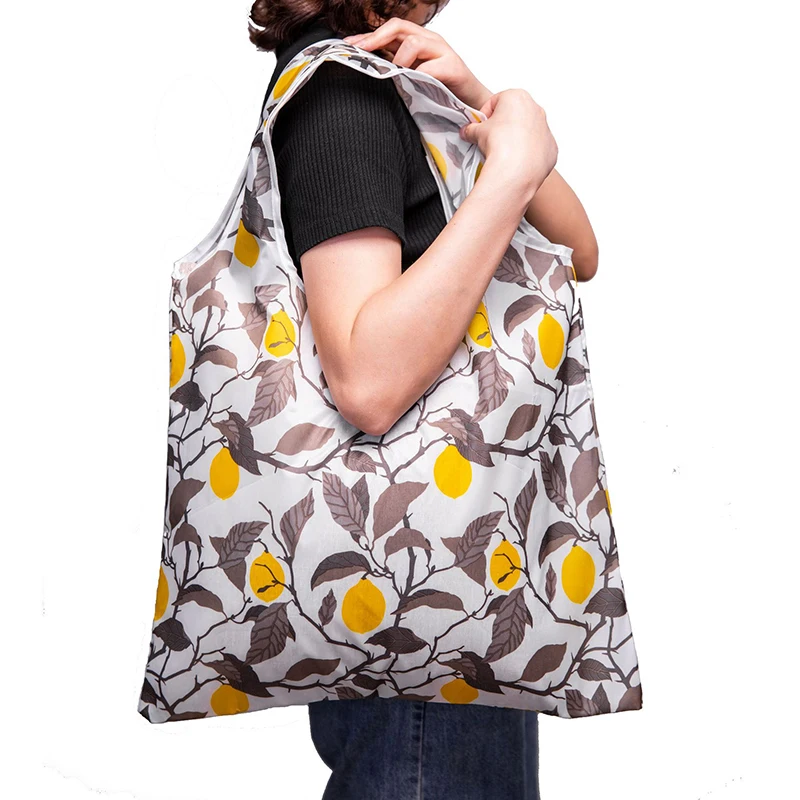
Regular polyester often provides the simplest route when stock availability, cost and fast development are the main priorities. RPET can require higher minimums or longer sourcing when custom colors, specialized coatings or certified supply chains are needed. There is no reliable universal RPET price premium, so a useful comparison looks at the complete specification, component requirements and documentation rather than using one percentage across every project.
Why Can RPET Cost More?
The textile price is only one part of the cost structure. An RPET program can involve controlled recycled feedstock, qualified yarn or fabric suppliers, custom dyeing, finishing requirements and additional documentation. Each extra requirement can reduce the number of supply routes available and make purchasing more dependent on a specific mill or production batch.
It is therefore misleading to state that RPET always costs a fixed percentage more than regular polyester. The actual difference changes with raw-material markets, denier, weight, weave, coating, color, recycled-content level, certification route and quantity. A stock black RPET Oxford may create relatively little commercial complexity, while a custom-colored certified fabric developed specifically for one program can behave very differently.
Virgin polyester can also become expensive when the product requires unusual yarn, a specialized coating, heavy backing, custom printing or a small production run. A meaningful comparison therefore looks at the full finished specification rather than assuming virgin always means low cost and recycled always means premium cost.
Szoneier’s documented material system evaluates fabrics against product use, target price, hand feel, strength, water performance, branding and repeat-order stability. This approach helps procurement teams understand where cost is actually coming from. Saving a small amount on the shell fabric matters less if complicated hardware, custom packaging or inefficient construction is responsible for a larger share of the finished product cost.
What Changes MOQ?
MOQ becomes easier to understand once the project is separated into its individual supply-chain minimums. The finished bag has an MOQ, but the main fabric, custom color, zipper, webbing, hardware, printed label and retail packaging may each have their own minimum. A manufacturer can sometimes sew a relatively small quantity while one customized component requires a much larger production run.
This is especially relevant to RPET when a program requires a specific certified source or custom color. A stock black recycled polyester may be available for a relatively modest order, while custom Pantone dyeing on a certified construction may require significantly more fabric. Virgin polyester follows the same logic, although its wider stock availability often gives factories more options for conventional programs.
Szoneier’s company documentation states that selected custom bag projects can start from 200 pieces, while the exact MOQ depends on material availability, colors, product structure, logo process, customized accessories and packaging. The number should not be interpreted as a guarantee that every RPET construction, color and certification requirement can be produced at 200 pieces.
SKU count can also change the economics dramatically. One bag in one color creates one main textile combination. Three sizes in four colors create twelve combinations before different packaging or regional labels are considered. A total order may look large in a spreadsheet but become inefficient when divided into many small material lots. The better question is therefore not simply “What is the MOQ?” but “What is the minimum for this exact fabric, color, finish and documentation route?”
What Changes Lead Time?
Lead time is not one single factory number. It is the total of material sourcing, color or coating development, sampling, component preparation, bulk sewing, quality inspection, packing and transport. Identifying which stage sits on the critical path is more useful than asking whether RPET is generally slower than ordinary polyester.
If a suitable RPET fabric is already in stock, material preparation may be quick. If the project requires a certified mill, custom Pantone dye, special PU backing and order-level documentation, sourcing can take longer. Szoneier’s RPET material records specifically flag material availability, batch consistency, documentation, MOQ and potentially longer sourcing time as issues that should be confirmed before final production planning.
The main fabric is not always the slowest component. A custom molded zipper pull, special webbing color, embroidered badge or printed retail box can become the bottleneck even when the fabric is ready. A complete project schedule therefore tracks materials and accessories separately rather than assuming sewing time determines the whole delivery date.
Early confirmation has a large effect on efficiency. When the fabric, color, logo method, lining and packaging are approved before bulk production begins, purchasing and production can move in parallel with fewer interruptions. Last-minute changes often create delays because they affect several departments at once, including material purchasing, sample revision, sewing settings, artwork and QC standards.
| Project Variable | Lower Complexity | Higher Complexity |
|---|---|---|
| Main Fabric | Existing stock polyester or RPET | Custom-developed fabric |
| Color | Existing shade | Custom Pantone development |
| Finish | Standard PU backing | Special coating or lamination |
| Recycled Claim | No formal certified claim | Certified traceability required |
| Hardware | Stock components | Custom molded hardware |
| Packaging | Standard protective packaging | Printed retail-ready packaging |
| SKU Structure | One size and color | Multiple sizes and colors |
| Repeat Order | Existing approved material | Changed source or specification |
Do RPET Bags Need GRS or RCS?
An RPET bag does not automatically need GRS or RCS certification. These standards become particularly relevant when a brand, retailer or sourcing policy requires independently verified recycled content and chain-of-custody evidence. The certification route should be defined before materials are purchased because certification involves the supply chain and transaction records, not simply a certificate added to a finished order afterward.
What Do GRS and RCS Verify?
The Recycled Claim Standard and Global Recycled Standard are Textile Exchange systems used to verify recycled materials and track them through the supply chain. RCS focuses primarily on recycled-content verification and chain of custody, while GRS adds requirements related to social, environmental and chemical processing practices.
This distinction is important because “GRS fabric” is often treated casually in commercial conversations. A material request for recycled polyester and a requirement for a GRS-certified product are not the same thing. Once certification is required, the sourcing route, eligible facilities and documentation become part of the specification and can influence material availability, cost and planning.
Textile Exchange’s current guidance states that GRS may be used as a business-to-business certification tool for products containing at least 20% recycled content, while consumer-facing GRS labeling requires at least 50% recycled content under the applicable claims rules. RCS has its own eligibility and claims structure, so the required standard should be confirmed against the exact product and claim rather than chosen because one acronym sounds stronger.
The standards are also evolving. Textile Exchange published GRS 5.0 and RCS 3.0 documents on July 1, 2026, while its broader Materials Matter system is being phased in through a multi-year transition. Long-term sourcing programs should therefore check the applicable version and claims policy instead of copying certification wording indefinitely from an older specification.
Which Documents Matter?
One of the most important distinctions is the difference between proving that a company has certification and proving that a specific flow of material or shipment belongs to the certified chain. A Scope Certificate normally shows the activities and materials covered by an organization’s certification scope. Transaction-related documentation is used within the certification system to support the movement of eligible certified material through the supply chain.
This matters when a retailer asks for evidence relating to a specific order. Seeing a general supplier certificate does not automatically prove that the recycled material inside a particular production run followed the required certified route. Material source, participating facilities and transaction records still need to align with the applicable system.
Szoneier’s RPET documentation framework lists possible requirements including GRS, RCS, Transaction Certificates, material-supplier certificates, recycled-content statements, customer-specific audit documents, laboratory testing and compliance declarations. Not every project needs every item, so the correct documentation package should be defined according to the destination market, retailer policy and marketing claim.
A practical procurement file should record the recycled-content percentage, material supplier, relevant certification scope, material lot, purchase records and intended consumer claim. Keeping those pieces connected makes repeat orders easier and prevents the common situation where a marketing team expects documentation that the original production route was never designed to provide.
How Should Brands Verify Claims?
The most useful verification process starts by replacing broad environmental language with precise questions. Instead of asking whether a material is “eco-friendly,” ask what percentage is recycled, what type of feedstock is used, which component the percentage refers to, which facility is certified and which documents will support the actual production order.
The wording of the final claim also matters. “The outer fabric contains recycled polyester” communicates something different from “this is a fully recycled bag.” The second statement may imply that the lining, zipper tape, foam, webbing, thread and other components share the same recycled status. Textile Exchange allows component-level claims under defined conditions, but the communication must make clear which component is covered.
Environmental marketing rules are also becoming stricter. The European Union’s Directive (EU) 2024/825 introduces rules addressing environmental claims and applies from September 27, 2026, following the national transposition deadline. For companies selling into the EU, this strengthens the commercial value of precise, supportable claims rather than broad language that cannot be demonstrated.
Certification should therefore be planned before the purchase order. If material moves through a non-certified supply route and the brand requests certified transaction evidence only after the bags have been completed, paperwork cannot simply recreate a compliant chain of custody retroactively. Good documentation starts with the sourcing decision, continues through production and ends with claim wording that matches the evidence.
Which Material Should You Choose for Custom Bags?
Choose RPET when verified recycled content supports a real brand, retail or sourcing requirement and the material can meet the required quality, color and commercial targets. Choose regular polyester when stock availability, cost, rapid development or continuity with an existing specification carries more weight. The right answer is determined by the total product brief rather than by assuming that either recycled or virgin polyester wins every comparison.
Which Is Better by Bag Type?
Material selection should begin with how the bag will be used. A lightweight promotional drawstring product may prioritize printing, cost and delivery date, while a commuter backpack needs stronger attention to abrasion, strap loading, zipper performance and water resistance. A premium travel bag may add demanding hand-feel and color-consistency requirements on top of those functional needs.
For foldable totes and lightweight organizers, fabrics in the 210D to 300D range are commonly explored because low weight and flexibility matter. Everyday backpacks and sports bags frequently use constructions around 300D to 600D, while heavier travel or rugged products may move toward 600D, 900D or other reinforced materials depending on the desired structure and abrasion exposure.
These numbers are development references rather than universal quality rules. A carefully engineered 420D RPET backpack can outperform an inadequately constructed heavier bag if the reinforcement, sewing and component system are better. The same principle applies to regular polyester. The finished product should be assessed as a system rather than ranking materials solely by denier.
Cooler bags illustrate this particularly well. The outer RPET or polyester shell contributes appearance, abrasion resistance and weather protection, but thermal performance depends heavily on insulation foam, reflective or PEVA-type lining, closure construction and seam design. Choosing recycled outer fabric does not automatically make the cooler perform better or worse; the entire structure determines the result.
How Should You Balance Sustainability and Cost?
A useful decision starts by separating a genuine sustainability requirement from a general preference. If a major retailer specifies independently verified recycled content, switching to virgin polyester merely to save a small amount on fabric may make the product unsuitable for the program. In that case, the recycled material is part of the commercial requirement rather than an optional marketing feature.
At the other end of the spectrum, a price-sensitive promotional giveaway with no recycled-content commitment may gain little commercial value from a complex certified supply route. Regular polyester might allow the project to meet budget, delivery and print requirements more efficiently. Neither conclusion is ideological; both follow from the purpose of the product.
Many brand programs sit between these two extremes. A company may choose verified RPET for the main visible shell while keeping some internal accessories conventional, or it may set higher recycled-content targets across multiple textile components. The most useful approach is to define these targets before requesting quotations so that suppliers are comparing the same specification.
Cost should also be considered over the full product rather than the fabric alone. A small saving on the outer shell may be less important than oversized hardware, inefficient cutting, elaborate packaging or a construction that requires substantially more sewing time. Good material planning finds the combination that protects the product’s most important value—performance, sustainability, appearance or cost—without overspecifying features the end user will never benefit from.
How Should You Test Before Bulk Production?
The final material decision should be based on physical evidence. Start with actual swatches and compare hand feel, color, surface texture, stiffness, coating and backing. The next step is a full prototype using the intended lining, zipper, webbing, foam, reinforcement and logo method because many problems only appear once materials interact inside the completed structure.
Testing should reflect the real use of the product. A tote may require attention to handle attachment and seam strength. A backpack may need strap loading, zipper cycling, abrasion checks and water-resistance evaluation. A cosmetic pouch may prioritize colorfastness, zipper operation and logo quality. A cooler bag adds lining integrity and insulation-related checks to the normal sewing inspection.
Szoneier’s documented QC workflow covers material inspection, accessory inspection, pre-production sample confirmation, cutting inspection, sewing-process inspection, semi-finished inspection, final inspection and packaging inspection. The value of this sequence is that quality is checked throughout production rather than relying on one final visual inspection after every major manufacturing decision has already been made.
The approved sample should then become the production reference. Material code, color, coating, zipper, webbing, logo placement, dimensions, stitching and packaging details should be recorded. This matters particularly for repeat orders, where the objective is not merely to make another acceptable bag but to reproduce the established product without gradually changing fabric weight, color, structure or finishing across multiple production cycles.
| Bag Type | Common Development Fabric Range* | Priority Checks |
|---|---|---|
| Foldable Tote | 210D–300D | Tear behavior, printing, folding, weight |
| Everyday Tote | 300D–600D | Handle reinforcement, seam strength, color |
| Cosmetic Pouch | 210D–420D | Surface finish, zipper, lining, logo clarity |
| Day Backpack | 300D–600D | Strap load, abrasion, coating, zipper cycling |
| Travel / Duffle Bag | 420D–900D | Base abrasion, handle strength, seams |
| Cooler Bag Outer | 420D–600D | Coating, abrasion, insulation compatibility |
| Rugged / Work Bag | 600D–900D+ | Load points, base wear, hardware, webbing |
- The ranges above are practical development references rather than mandatory performance specifications. Fabric weight, weave density, coating, reinforcement and finished construction can substantially change performance even when two materials share the same denier.
Final Takeaway
The most useful conclusion is not that RPET is always better because it is recycled or that regular polyester is always safer because the supply chain is older. RPET has become a practical material for a wide range of custom bags, and quality recycled constructions can deliver the appearance, abrasion resistance, coating compatibility and strength required by many commercial programs. Regular polyester remains equally relevant when established supply, rapid material access, strict continuity or cost control carries greater weight.
The deciding factor should be a measurable product specification. Define the application, expected load, fabric construction, coating, color, logo method, environmental claim, order quantity and documentation requirement before selecting the material. Then validate those decisions with physical samples and realistic testing. This approach removes much of the uncertainty from the recycled-versus-virgin debate because both options are compared against the same finished-product requirements.
For projects developed with Szoneier, the material decision can be reviewed alongside the complete structure rather than treated as an isolated textile choice. Szoneier operates as a custom bags and soft goods manufacturing partner with material sourcing, sampling, sewing production coordination, quality inspection, packaging and export-delivery capabilities. The practical value is not simply access to RPET or polyester, but the ability to move an approved material specification into a repeatable finished bag.
The strongest custom bag programs usually begin with a less dramatic question than “Which fabric is best?” They ask which material can meet the actual product requirement, be verified where necessary, remain commercially sensible and still be reproduced when the successful first order becomes a much larger repeat order. Once those conditions are defined clearly, RPET and regular polyester stop being competing slogans and become two useful engineering choices.
Frequently Asked Questions
Is RPET really as strong as regular polyester for bags?
RPET can provide comparable practical durability to regular polyester when the fabrics use similar yarn size, weave density, weight, coating and finishing. The recycled origin alone does not determine whether the finished bag will be strong. Strap reinforcement, seam construction, webbing and stress-point engineering often have an equally large impact. For backpacks, travel bags or other demanding products, testing the actual production material and finished prototype is more useful than relying only on an RPET or denier label.
Is RPET more expensive than regular polyester?
RPET is often more expensive when a project requires certified recycled input, custom colors, specialized coatings or a restricted supply chain, but there is no dependable universal percentage premium. Stock recycled fabrics can sometimes be commercially close to common virgin constructions, while highly customized virgin polyester can also become expensive. The correct comparison includes fabric, coating, dyeing, accessories, certification, order quantity and overall production efficiency rather than applying one generic surcharge to every RPET bag.
Does RPET always need GRS certification?
No. A bag can physically be made from recycled polyester without automatically requiring GRS certification, but a formal recycled-content claim, retailer specification or sustainability program may require third-party verification. GRS and RCS address recycled material and chain-of-custody requirements in different ways, and the correct route should be defined before production. Where consumer-facing certification claims are planned, applicable Textile Exchange eligibility and claims rules should also be checked for the current standards version.
Can RPET fabric be waterproof?
RPET can be produced with PU backing, water-repellent finishes or other treatments that improve water performance, but ordinary RPET fabric is not automatically waterproof. The same is true for regular polyester. A finished bag’s protection also depends on seams, zipper construction, lining and other details. If a product requires stronger rain protection or a genuine waterproof claim, the specification and test method should be defined around the complete bag rather than judging the outer textile alone.
Can RPET be printed, embroidered or customized like regular polyester?
Yes. Suitable RPET constructions can support screen printing, heat transfer, sublimation, embroidery, woven labels, patches and other common bag-decoration processes. Results depend on surface texture, coating, fabric color and the artwork itself. A logo that performs well on smooth polyester may react differently on coarse Oxford or heavily coated RPET, so the safest process is to apply the final branding method to the actual production fabric during sampling rather than approving the artwork separately from the textile.
What is the best RPET denier for custom backpacks?
There is no single best denier because backpack construction varies widely. Many everyday designs are developed around fabrics in the 300D to 600D range, while heavier travel, outdoor or work-oriented products may use 600D, 900D or other constructions. Denier should be considered together with fabric weight, weave, coating, foam, reinforcement and the expected load. A properly engineered 420D or 600D bag may perform better than a heavier bag with weak seams or poorly reinforced shoulder straps.
Should a brand switch an existing polyester bag to RPET?
A switch makes sense when recycled content supports a genuine brand, retail or procurement objective and the replacement fabric can maintain the required appearance, hand feel, color, performance and production consistency. The safest route is to treat RPET as a material change rather than a simple supplier substitution. Compare swatches, rebuild the sample using the proposed recycled construction, recheck branding and functional performance, and confirm documentation before changing a successful existing bulk specification.