Skip to content
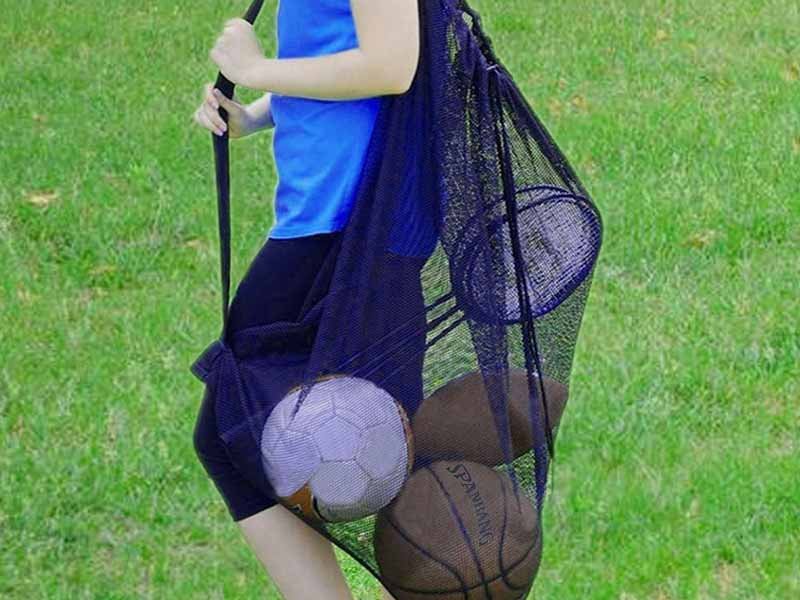
Sports gear rarely stays clean, dry, or perfectly packed. A football bag may carry grass-stained shoes, damp uniforms, training cones, and water bottles. A swim team bag may hold wet towels, goggles, caps, slippers, and sunscreen. A gym equipment bag may deal with sweaty gloves, resistance bands, towels, and personal items after every session. When everything is placed inside a fully closed bag, moisture and odor stay trapped. That is where a mesh sports equipment bag becomes much more than a simple carrying product.
Mesh Sports Equipment Bag Manufacturing focuses on creating breathable, strong, lightweight, and customized bags for active use. A well-made mesh sports bag helps gear dry faster, makes items easier to identify, reduces unpleasant odor buildup, and supports daily carrying for teams, gyms, schools, outdoor clubs, swim programs, and sports brands.
For custom brands, the value is not only the mesh fabric. The real value comes from structure, reinforcement, logo placement, strap comfort, bag size, packaging, and factory control. A cheap mesh bag may look acceptable in photos, but after a few weeks of carrying balls, shoes, wet towels, or protective gear, weak seams and poor straps quickly show. A good mesh bag, however, becomes the kind of product people keep using because it solves small daily problems without making noise.
Think of a coach after practice, collecting balls while students rush out. Or a swimmer leaving the pool with wet gear and no time to organize everything. Or a gym brand trying to offer a practical branded product that members actually use. In all these moments, the bag must be light, breathable, strong, easy to carry, and clear in brand identity. That is exactly why mesh sports equipment bags need proper manufacturing, not just simple sewing.
What Is Mesh Sports Equipment Bag Manufacturing?
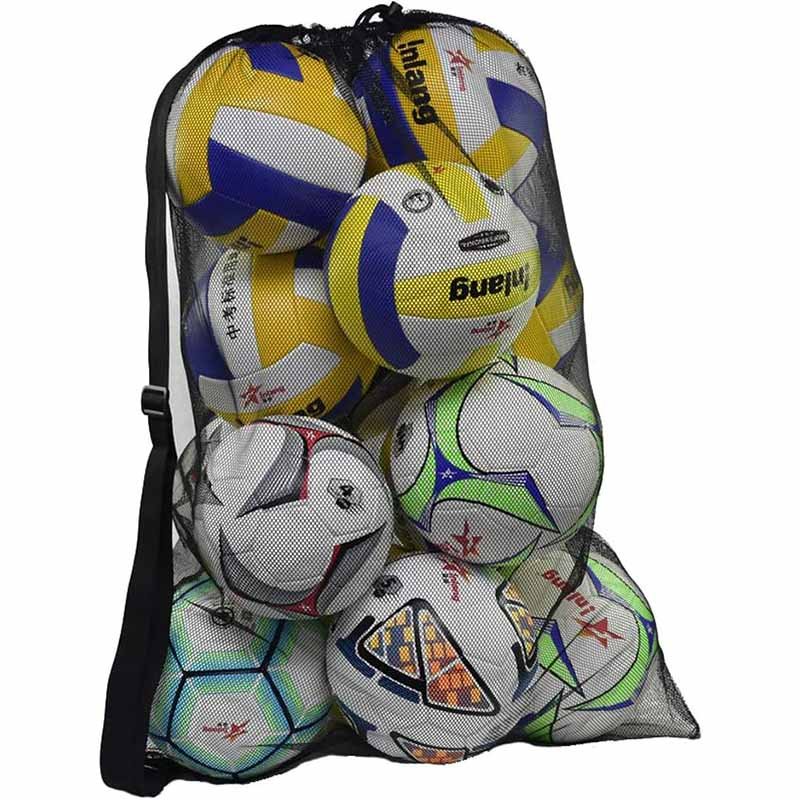
Mesh Sports Equipment Bag Manufacturing is the process of developing and producing breathable sports bags for carrying balls, shoes, uniforms, towels, wet gear, gym accessories, training tools, and outdoor equipment. It includes product design, material selection, size planning, sampling, cutting, sewing, logo customization, quality checking, packing, and shipment. A strong factory helps turn a simple bag idea into a practical product that fits real sports use.
What Is A Mesh Sports Bag?
A mesh sports bag is a carrying bag made mainly with breathable mesh fabric. The mesh body allows air to pass through the bag, which helps reduce moisture, odor, and trapped heat after sports activities. Compared with a fully closed fabric bag, a mesh sports bag is easier to ventilate, easier to clean, and easier to check from the outside.
Common mesh sports bag styles include drawstring bags, ball bags, duffel bags, backpack bags, swim gear bags, gym bags, beach sports bags, and team equipment bags. Some designs use full mesh construction, while others combine mesh with polyester, nylon, Oxford fabric, PVC-coated fabric, or neoprene panels.
For different markets, the structure can change a lot. A school sports bag may focus on lightweight carrying and low cost. A swim club bag may need quick drainage and fast drying. A team ball bag may need large capacity and reinforced seams. A retail sports brand may care more about logo position, packaging, color matching, and product feel.
The most important point is simple: a mesh sports bag should not only “hold things.” It should match the way people actually use sports gear.
Why Mesh Works For Sports Gear
Mesh works well for sports gear because most sports items need air, not sealed storage. Shoes, gloves, towels, uniforms, balls, swimming equipment, and protective pads often become damp or dirty after use. If these items stay inside a closed bag for hours, odor can become stronger and drying time becomes longer.
Mesh helps solve this problem in three practical ways. First, it improves airflow. Second, it lets users see what is inside the bag quickly. Third, it keeps the bag lightweight, which matters when children, students, athletes, or gym members carry it often.
For example, swim gear bags benefit from mesh because towels, goggles, caps, and slippers can drain and dry more easily. Ball bags benefit from mesh because coaches can check the quantity of balls inside without opening the bag. Gym bags benefit from mesh because sweaty items have better ventilation after training.
However, not every mesh fabric is suitable for every product. Large-hole mesh gives better airflow but may not hold small accessories well. Fine mesh holds small items better but may be less breathable. Stronger mesh improves durability but may increase cost and weight. A professional manufacturer helps balance these factors based on real use.
Who Needs Mesh Sports Bags?
Mesh sports equipment bags are used across many sports and lifestyle markets. They are practical for team sports, swimming, school PE programs, fitness clubs, outdoor recreation, beach sports, youth camps, sports retail, and promotional projects.
Sports teams often use mesh bags for balls, cones, training bibs, gloves, and team equipment. Schools use them for student activity programs and PE storage. Swimming clubs use them for wet towels, goggles, caps, water shoes, and pool accessories. Gyms use them as member bags, retail items, or branded training gear. Outdoor and beach brands use mesh bags for sandals, snorkeling gear, towels, toys, and water sports accessories.
For small and medium custom brands, mesh bags are attractive because they are functional, lightweight, easy to brand, and suitable for repeat orders. A mesh sports bag can also be developed as part of a full sports product collection, such as gym accessories, neoprene bottle holders, protective supports, wet bags, or outdoor storage products.
The market need is clear: people want bags that can handle active, messy, wet, and fast-moving lifestyles. Mesh sports bags answer that need in a simple but highly useful way.
What Makes A Good Mesh Bag?
A good mesh sports bag should be breathable, strong, comfortable, easy to use, and easy to recognize as part of a brand. The difference between a low-grade mesh bag and a well-manufactured one is usually found in the details: seam strength, strap quality, zipper smoothness, logo position, reinforced edges, and material matching.
For sports use, the most common weak points are strap joints, bottom corners, zipper ends, drawstring channels, and side seams. These areas need stronger stitching or extra reinforcement because they receive repeated pulling and pressure. If the bag is used for balls, shoes, or wet gear, the stress becomes even higher.
A good mesh bag also needs the right balance between openness and protection. Too much open mesh may not hold small items securely. Too much closed fabric may reduce breathability. The factory must consider what the bag will carry before finalizing the material and structure.
| Quality Point | What To Check | Practical Value |
|---|---|---|
| Mesh strength | Yarn thickness, tear resistance, stretch control | Helps prevent holes and deformation |
| Mesh hole size | Large, medium, or fine mesh | Controls airflow and item visibility |
| Stitching | Stitch density, thread type, seam alignment | Improves long-term durability |
| Strap area | Webbing thickness, bartack stitching, joint reinforcement | Prevents strap tearing under load |
| Closure | Zipper, drawstring, buckle, cord lock | Affects daily convenience and security |
| Bottom structure | Single mesh, reinforced fabric, padded panel | Protects gear and improves load support |
| Logo area | Print panel, woven label, patch, tag | Makes branding clearer and more premium |
| Packaging | Folding method, polybag, hangtag, carton | Supports retail and shipment quality |
A strong custom mesh sports bag is not created by choosing mesh alone. It comes from matching fabric, structure, sewing, branding, and use scenario.
Which Materials Fit Mesh Sports Equipment Bag Manufacturing?
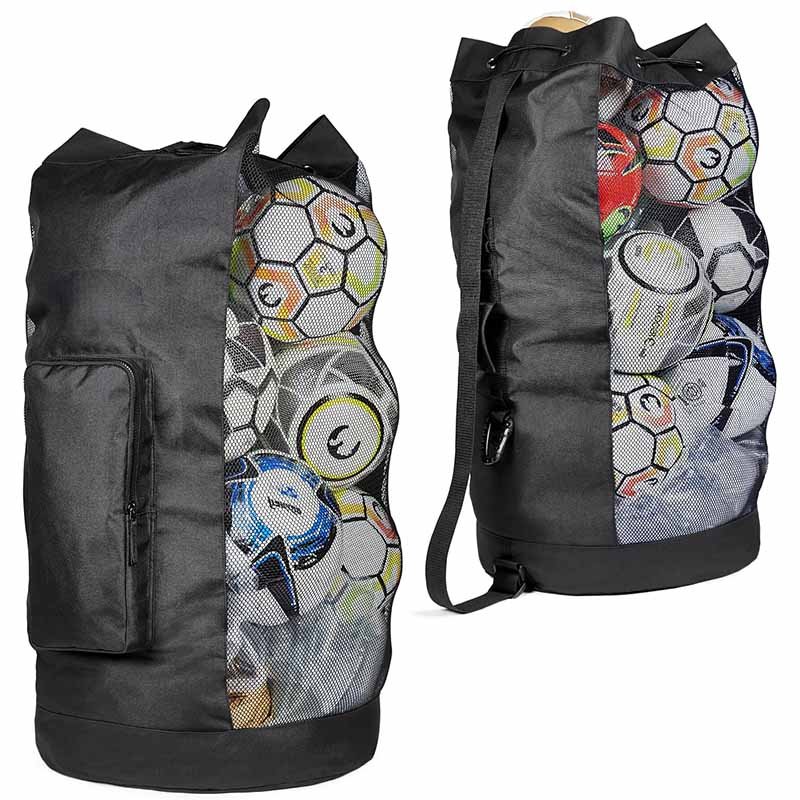
The right materials for Mesh Sports Equipment Bag Manufacturing depend on product use, carrying weight, moisture exposure, target price, and brand positioning. Common materials include polyester mesh, nylon mesh, neoprene, Oxford fabric, webbing, drawcord, zippers, buckles, binding tape, and custom labels. For better performance, many sports bags use a mixed-material structure instead of relying on mesh alone.
Mesh Fabric Options
Mesh fabric is the core material of the bag, but it comes in many forms. Some mesh fabrics are light and soft, suitable for swim bags, school bags, or promotional sports bags. Some are thicker and stronger, suitable for balls, shoes, outdoor gear, or heavy-duty team equipment. Others are elastic or textured, often used for pockets, side panels, or breathable sections.
The most common mesh choices include polyester mesh and nylon mesh. Polyester mesh is widely used because it is cost-effective, color-stable, lightweight, and quick-drying. Nylon mesh can offer better flexibility and abrasion resistance in some cases, but it usually comes with a higher material cost.
Mesh hole size is one of the biggest decisions. Large-hole mesh gives excellent ventilation and visibility. It is useful for ball bags, beach bags, swimming gear, and wet equipment. Medium-hole mesh creates a better balance between airflow and durability. Fine mesh is better for smaller items, but it may not dry as quickly.
| Mesh Type | Common Use | Main Advantage | Possible Limitation |
|---|---|---|---|
| Large-hole mesh | Ball bags, beach bags, wet gear bags | Strong airflow and easy visibility | Small items may fall out |
| Medium mesh | Gym bags, team bags, school sports bags | Balanced strength and breathability | Less open than large mesh |
| Fine mesh | Accessory pockets, swim bags, small item storage | Better item protection | Lower airflow |
| Heavy-duty mesh | Equipment bags, outdoor sports bags | Better tear resistance | Higher cost and weight |
| Elastic mesh | Side pockets, bottle pockets, flexible areas | Stretch and easy access | Not ideal for heavy main body use |
Material selection should always begin with the question: what will the bag carry most often?
Polyester Mesh Benefits
Polyester mesh is one of the most practical choices for custom sports equipment bags. It offers a good balance of price, strength, weight, color stability, and production availability. For brands that need custom colors, repeat orders, or multiple product styles, polyester mesh is often easier to manage than more specialized materials.
Polyester mesh also dries quickly, which makes it suitable for wet gear, gym clothes, swim accessories, and outdoor use. It can be produced in different weights and hole structures, allowing the factory to adjust the bag for lightweight promotional use or stronger team equipment use.
For many custom mesh sports bags, polyester mesh can be combined with Oxford fabric or neoprene to improve performance. For example, a polyester mesh main body can provide breathability, while Oxford fabric at the bottom improves load resistance. A neoprene shoulder pad can improve comfort. A solid polyester front panel can make logo printing cleaner.
Approximate material direction:
| Product Position | Suggested Material Direction | Suitable Market |
|---|---|---|
| Entry-level sports bag | Lightweight polyester mesh | Events, schools, basic gym use |
| Mid-range team bag | Medium-weight polyester mesh + webbing reinforcement | Clubs, teams, training programs |
| Retail sports bag | Polyester mesh + solid logo panel | E-commerce, retail brands |
| Premium sports bag | Mesh + neoprene + reinforced Oxford fabric | Gyms, outdoor brands, private label |
| Heavy gear bag | Heavy-duty mesh + reinforced bottom + wide straps | Team equipment, balls, shoes, outdoor gear |
Polyester mesh is not the most expensive option, but it is one of the most flexible. That makes it a strong starting point for most custom sports bag projects.
Neoprene Support Panels
Neoprene can add comfort, structure, cushioning, and a more premium hand feel to mesh sports equipment bags. Szoneier has over 18 years of experience in neoprene material development and manufacturing, which makes it especially useful for projects that need more than a basic mesh bag.
Neoprene is often used in shoulder pads, handle wraps, bottom panels, side panels, bottle holders, protective pockets, or soft support areas. It can help reduce shoulder pressure, protect gear from impact, and make the bag feel more comfortable during carrying. For sports and outdoor products, this can be a clear advantage.
A mesh-neoprene combination is especially suitable for gym brands, swimming brands, water sports products, recovery products, fitness gear, and premium team bags. For example, a mesh swim bag with neoprene handles feels softer when carried with wet hands. A gym mesh duffel with neoprene shoulder padding feels more comfortable when loaded with shoes, gloves, towel, and accessories.
The main point is not to use neoprene everywhere. The smart approach is to place neoprene only where it improves function or product value.
Strong Webbing Straps
Straps decide how the bag feels in real use. Even if the mesh body is strong, poor straps can ruin the product. For sports equipment bags, straps need to carry weight, resist pulling, stay comfortable, and remain stable after repeated use.
Common strap materials include polyester webbing and nylon webbing. Polyester webbing is widely used because it is strong, cost-effective, and stable. Nylon webbing can be softer and stronger in some applications, but it may increase cost. Strap width usually ranges from narrow drawcords to wider webbing handles, depending on bag size and function.
For heavier sports bags, reinforced stitching is important. Bartack stitching, box stitching, cross stitching, or multiple rows of stitching can be used at stress points. Wider straps can also reduce pressure on the hand or shoulder.
| Bag Style | Strap Suggestion | Reason |
|---|---|---|
| Drawstring mesh bag | Thick drawcord or soft rope | Lightweight and simple |
| Mesh backpack | Adjustable shoulder straps | Better carrying comfort |
| Mesh duffel bag | Dual webbing handles + shoulder strap | Suitable for gym and travel |
| Ball carrying bag | Strong webbing handles | Handles heavier load |
| Premium sports bag | Webbing + neoprene padding | Better comfort and higher value |
For custom projects, strap design should be tested with real weight. A strap that looks fine on an empty sample may feel uncomfortable when the bag is fully loaded.
Durable Zippers And Closures
Closures affect the way users interact with the bag every day. A smooth zipper, strong drawcord, reliable buckle, or easy cord lock can make the bag feel better immediately. A weak closure, on the other hand, creates frustration even when the bag body is well made.
Common closure methods include drawstring tops, zipper openings, buckle straps, flap covers, cord locks, and hook-and-loop closures. Drawstring bags are simple, low-cost, and easy to pack. Zipper bags provide better security and a cleaner structure. Buckles are useful for adjustable compression or outdoor-style bags.
For mesh sports equipment bags, zippers must be selected carefully because sand, moisture, and outdoor use can affect performance. Larger zipper teeth may be better for heavy-use sports bags. Smooth sliders and reinforced zipper ends can reduce breakage. Custom pullers can also support brand recognition.
| Closure Type | Best Use | Key Benefit |
|---|---|---|
| Drawstring | Swim bags, school bags, event bags | Simple and lightweight |
| Zipper | Gym bags, duffel bags, retail bags | Secure and structured |
| Cord lock | Adjustable drawstring bags | Better control |
| Buckle | Outdoor or equipment bags | Strong and sporty look |
| Hook-and-loop | Quick-access pockets | Fast opening and closing |
| Flap cover | Wet gear or outdoor storage | Added protection |
A closure should fit the product’s real use. A ball bag may not need a delicate zipper. A premium gym bag should not rely on a weak cord. The right closure makes the bag easier to use and easier to sell.
How Does Mesh Sports Equipment Bag Manufacturing Work?
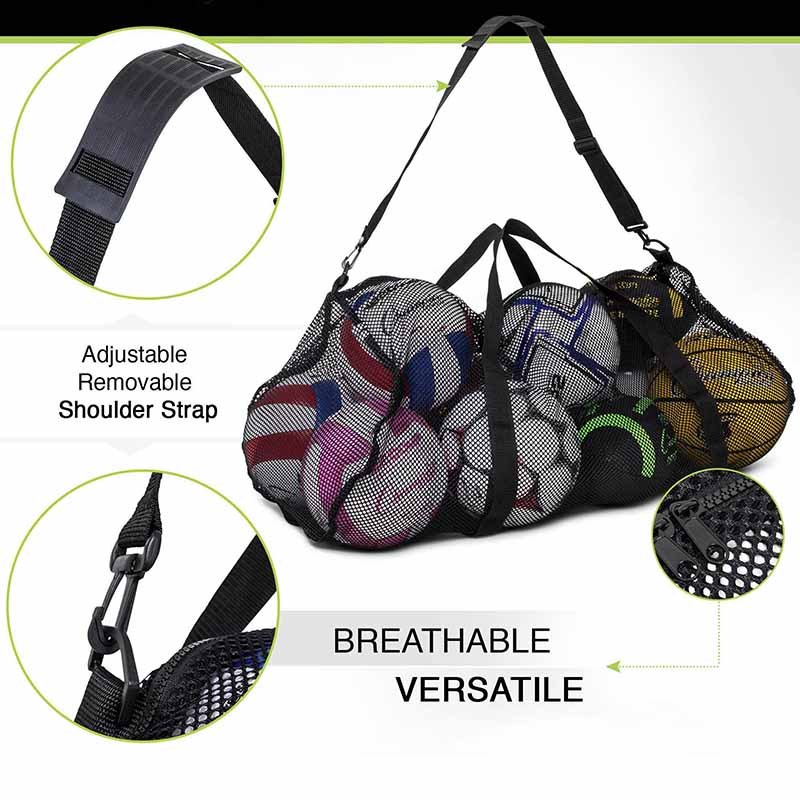
Mesh Sports Equipment Bag Manufacturing usually follows a practical process: product idea review, size planning, material matching, sample development, logo testing, cutting, sewing, quality checking, packing, and shipment. A good factory does not only produce what is drawn on paper. It helps adjust weak details before bulk production, so the final bag is easier to carry, stronger in use, and more suitable for the target market.
Design And Size Planning
The first step is not sewing. It is understanding what the bag must carry and who will use it. A mesh bag for soccer balls, a mesh bag for swim gear, and a mesh bag for gym shoes may all look similar at first, but their size, opening, strap design, mesh density, and reinforcement points should be different.
For sports equipment bags, size planning should begin with actual gear dimensions. If the bag is for balls, the factory needs to know ball type, quantity, and diameter. If the bag is for swimming, it should fit towels, goggles, caps, slippers, bottles, and possibly wet clothing. If it is for gym use, shoes, towels, gloves, resistance bands, shaker bottles, and personal items should be considered.
Many product problems happen because the bag is designed by appearance rather than use. A bag may look clean in a product image but become difficult to use when loaded. The opening may be too narrow. The strap may sit in the wrong position. The bottom may sag. The logo may be covered when the bag is full.
For custom sports brands, the design stage should answer these questions:
| Design Question | Why It Matters |
|---|---|
| What gear will the bag carry? | Decides size, mesh strength, and reinforcement |
| Will the gear be wet or dry? | Affects mesh hole size and drainage needs |
| Who will carry the bag? | Influences strap width, length, and comfort |
| Is the product for retail or team use? | Changes logo, packaging, and visual design |
| Will the bag carry heavy items? | Requires stronger seams and bottom support |
| Does the bag need pockets? | Improves organization but adds cost |
| Is the bag foldable for shipping? | Affects carton volume and logistics cost |
Szoneier can support customers who already have technical files, but it can also work from sketches, reference photos, market samples, product ideas, or basic size requirements. This is useful for brands that want custom development but do not have a full product design team.
A practical design process may include:
Initial product purpose review
Target market and user group discussion
Reference style comparison
Bag size and capacity confirmation
Material and color direction
Logo position planning
Strap and handle structure
Pocket and compartment layout
Sample specification confirmation
The goal is not to make the most complicated bag. The goal is to make the right bag for the customer’s market.
Sample Development
Sample development is where the bag becomes real. For mesh sports equipment bags, sampling is especially important because mesh fabric behaves differently from solid fabric. It stretches, shifts, folds, and opens under pressure. A design that looks good on screen may need adjustment once it is made into a physical sample.
During sampling, the factory checks the full structure: mesh strength, bag size, seam position, strap angle, zipper opening, logo clarity, edge binding, pocket usability, and overall hand feel. This is also the stage where the customer can test whether the bag matches the expected price level and product positioning.
Szoneier offers fast sampling support, free design assistance, low MOQ customization, and free samples based on project conditions. For overseas customers, a sample can be used for product approval, internal review, retailer presentation, online listing photography, pre-sale preparation, or team confirmation.
A useful sample should be tested in real conditions. For example:
Load the bag with actual sports gear.
Check whether the opening is wide enough.
Carry the bag for several minutes.
Test if the strap feels comfortable.
Pull the strap joints by hand.
Open and close the zipper repeatedly.
Place wet items inside and check drainage.
Check if the logo remains visible when the bag is full.
Fold the bag and review packing volume.
Sample development is not only about confirming appearance. It is about reducing risk before mass production.
Common sample adjustments include:
| Sample Issue | Possible Adjustment |
|---|---|
| Bag feels too soft | Add reinforced bottom or side panels |
| Strap feels uncomfortable | Increase width or add neoprene padding |
| Logo is unclear on mesh | Move logo to solid fabric panel or patch |
| Opening is too small | Increase zipper length or drawstring opening |
| Mesh stretches too much | Change mesh type or add binding |
| Bag cannot stand enough load | Reinforce seams and strap joints |
| Product cost is too high | Simplify pockets or adjust material mix |
A good factory does not treat sample revisions as a problem. It treats them as part of building a better product.
Cutting And Sewing
After the sample is approved, the production team prepares materials and begins cutting. Mesh fabric requires careful control because it can shift more easily than solid woven fabric. If cutting is inaccurate, the finished bag may have twisted seams, uneven panels, poor shape, or size differences across the order.
For mesh sports equipment bags, cutting accuracy is important for:
Bag body panels
Side panels
Bottom panels
Zipper openings
Logo panels
Pocket panels
Binding strips
Neoprene pads
Webbing straps
Drawstring channels
Once cutting is complete, sewing begins. This is where product quality becomes visible. A bag can use good fabric but still fail if sewing is weak. Sports bags are pulled, thrown, carried, filled, emptied, and used repeatedly. That means sewing must be stronger than ordinary lightweight promotional items.
Important sewing details include:
Stitch density
Thread strength
Seam allowance
Edge binding
Bartack reinforcement
Box stitching
Cross stitching
Zipper end finishing
Strap joint reinforcement
Bottom corner sewing
Stress points need special care. These are areas where force gathers during use. For mesh sports equipment bags, the most common stress points are strap attachments, bottom corners, drawstring openings, zipper ends, and side seams. Reinforcement in these areas helps extend product life.
| Production Area | Recommended Control |
|---|---|
| Strap joint | Bartack or box stitching |
| Bottom corner | Reinforced seam or added fabric panel |
| Zipper end | Extra stitching and clean finishing |
| Drawstring channel | Strong folded edge and smooth cord path |
| Mesh edge | Binding tape to reduce fraying |
| Logo panel | Flat sewing to avoid wrinkles |
| Neoprene padding | Clean edge control and stable stitch tension |
For mixed-material bags, sewing control becomes even more important. Mesh, neoprene, Oxford fabric, and webbing all behave differently under the sewing machine. The factory must adjust needle type, thread tension, stitch spacing, and seam method to avoid puckering, tearing, or uneven edges.
This is where experienced manufacturing matters. A simple mesh bag may look easy, but bulk production consistency requires skilled workers and clear standards.
Logo And Label Adding
Branding is one of the main reasons customers choose custom mesh sports equipment bags instead of stock bags. A logo turns a practical carrying product into a brand touchpoint. Every time the bag is carried to a gym, court, field, pool, beach, or school, the brand becomes visible.
However, logo application on mesh needs careful planning. Printing directly on open mesh is not always the best choice because the holes can break the artwork. Fine details may not appear clearly. Some ink may pass through the mesh or create uneven results. For this reason, many custom mesh bags use a solid logo panel, woven label, rubber patch, PVC patch, embroidery patch, or heat transfer area.
Common logo methods include:
| Logo Method | Suitable Area | Best For |
|---|---|---|
| Screen printing | Solid fabric panel | Simple logos and cost control |
| Heat transfer | Polyester panel or smooth fabric | Multi-color designs |
| Woven label | Mesh body, seam edge, front panel | Clean private label look |
| Rubber patch | Front panel or strap area | Premium sports products |
| PVC patch | Outdoor and team bags | Strong visual texture |
| Embroidery patch | Fabric panel | Classic brand feel |
| Zipper pull logo | Zipper bags | Small detail branding |
| Hangtag | Retail packaging | Product information and brand story |
| Inner label | Private label bags | Size, care, origin, brand identity |
For sports brands, logo placement should consider how the bag looks when full. A logo placed on a soft mesh area may bend, stretch, or become less visible when gear is inside. A logo placed on a front fabric panel or patch area usually looks cleaner in product photos and real use.
Custom branding can also extend beyond the main logo. For example:
Branded zipper pullers
Custom woven labels
Color-matched drawcords
Printed care labels
Retail hangtags
Barcode stickers
Branded polybags
Custom carton marks
Product instruction cards
These details make the product feel more complete, especially for Amazon, Shopify, retail stores, gym merchandise, sports clubs, and private label projects.
Final Quality Check
Quality checking is not just the last step before shipment. It should happen throughout production. For mesh sports equipment bags, quality control should include material inspection, cutting check, sewing inspection, logo review, functional testing, final cleaning, packing review, and carton marking.
Customers usually care about visible defects first, but real product quality also includes hidden strength. A bag may look good when empty but fail when loaded. That is why inspection should include both appearance and function.
Main inspection points include:
Bag size measurement
Mesh quality check
Color consistency
Stitching alignment
Strap pulling area
Zipper smoothness
Drawstring function
Logo position and clarity
Pocket size and opening
Bottom reinforcement
Loose thread trimming
Stain or dirt inspection
Packing quantity
Carton label accuracy
For custom sports bags, Szoneier can follow the approved sample as the reference standard. This helps ensure bulk production matches the confirmed design. The sample should not only represent appearance, but also material, logo position, strap structure, stitching method, and packaging style.
Common quality problems and prevention methods:
| Common Problem | Why It Happens | How To Prevent It |
|---|---|---|
| Mesh tearing | Weak fabric or rough edge | Choose stronger mesh and use binding |
| Strap detachment | Poor stitching at stress points | Add bartack or box stitching |
| Zipper jamming | Low-quality zipper or poor sewing alignment | Use better zipper and inspect opening |
| Logo distortion | Logo printed on open mesh | Use solid panel or patch |
| Size inconsistency | Cutting or sewing deviation | Use accurate patterns and in-line checks |
| Loose threads | Poor finishing control | Trim and inspect before packing |
| Bottom sagging | No reinforcement for heavy load | Add Oxford, polyester, or neoprene panel |
| Color mismatch | Different material batches | Confirm swatches before production |
A professional quality process protects both the customer and the factory. It reduces complaints, protects brand reviews, and improves repeat order confidence.
What Can Be Customized In Mesh Sports Equipment Bag Manufacturing?
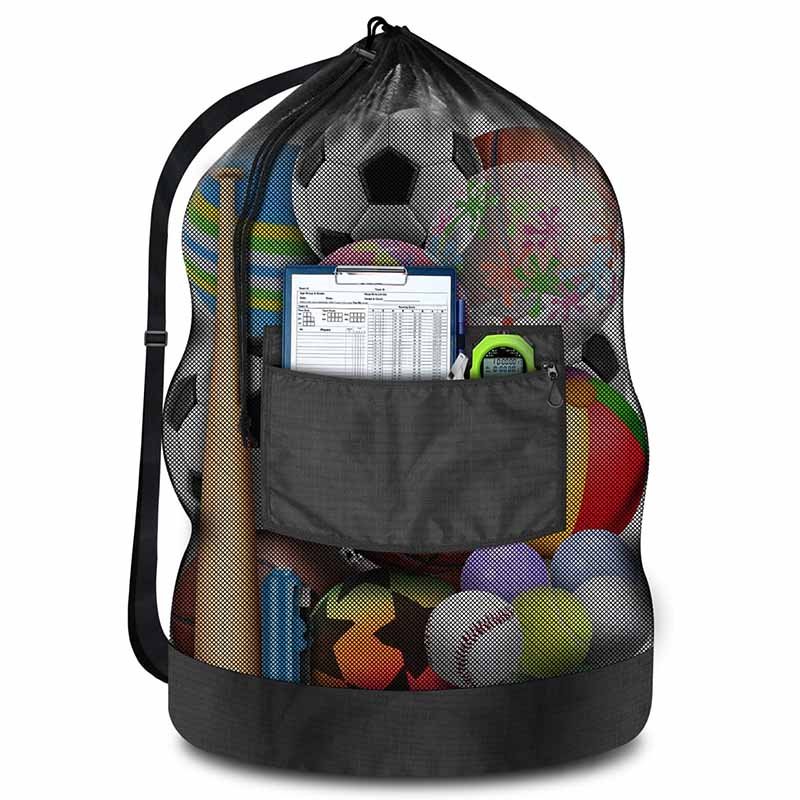
Mesh Sports Equipment Bag Manufacturing can be customized in size, shape, color, mesh density, material combination, strap type, pocket layout, zipper style, closure method, logo process, labels, hangtags, and packaging. Customization helps brands build products for teams, gyms, swim clubs, schools, outdoor users, e-commerce stores, and retail channels instead of selling the same standard bag as everyone else.
Custom Bag Sizes
Size is one of the most important custom choices. A bag that is too small creates frustration. A bag that is too large may look bulky, cost more, and feel uncomfortable. The correct size depends on what the user carries and how the bag will be used.
For sports equipment, the bag should be planned around real items. A swim gear bag may need to carry a towel, swimsuit, goggles, cap, water shoes, and bottle. A basketball mesh bag may need to hold several balls with a wide opening. A gym bag may need separate areas for shoes, towel, gloves, and personal accessories. A school PE bag may need to stay lightweight and easy for students to carry.
Useful size planning factors include:
Equipment type
Number of items carried
Average user age
Carrying distance
Storage method
Retail shelf display
Shipping volume
Target price range
Approximate size directions:
| Bag Type | Size Direction | Main Use |
|---|---|---|
| Small mesh drawstring bag | 30 × 40 cm range | Kids, swim items, light gym gear |
| Medium mesh backpack | 35 × 45 cm range | School sports, daily training |
| Mesh duffel bag | 45–60 cm length range | Gym, team, travel sports |
| Large ball bag | Capacity-based sizing | Soccer, basketball, volleyball |
| Long equipment bag | Custom length | Sticks, mats, outdoor gear |
| Multi-pocket mesh bag | Custom layout | Retail sports accessories |
These are only general references. Final size should be based on the customer’s actual product needs. Szoneier can help adjust patterns according to target use, material behavior, and packing requirements.
Custom Colors
Color helps connect the product to a team, school, sports club, gym, or retail brand. A simple mesh bag can feel much more professional when the mesh, straps, zipper, logo, and labels follow one clear color direction.
Common sports bag colors include black, navy, gray, red, royal blue, green, orange, and white. Black and navy are popular because they hide dirt better and match many sports categories. Bright colors work well for schools, youth sports, beach products, events, and outdoor activities. Neutral colors can work better for premium fitness brands or lifestyle sports lines.
Color can be customized in different parts:
Mesh body
Side panels
Bottom panels
Webbing straps
Drawcord
Zipper tape
Zipper puller
Logo panel
Neoprene padding
Binding tape
Label and hangtag
Packaging
For custom color projects, customers should provide Pantone references or physical color samples. It is important to remember that the same color may look slightly different on mesh, webbing, neoprene, and printed labels because each material absorbs and reflects color differently.
A smart approach is to use stock colors for early test orders and custom colors for larger or repeat orders. This can help reduce cost and shorten lead time.
Custom Logo Methods
Logo customization is one of the easiest ways to increase product value. However, the logo method should match the material and product level. A low-cost event bag may only need simple screen printing. A premium sports brand may need a rubber patch, woven label, custom zipper pull, and branded packaging.
For mesh sports bags, clean branding often requires a solid area. This can be a front fabric panel, bottom panel, strap label, side patch, or neoprene section. If the entire bag is mesh, a woven label or patch is often more suitable than direct printing.
Logo choices by product level:
| Product Level | Recommended Branding | Reason |
|---|---|---|
| Promotional bag | Screen print | Lower cost and simple production |
| School team bag | Screen print + woven label | Clear identity and durable use |
| Gym retail bag | Heat transfer + custom tag | Clean appearance for selling |
| Outdoor sports bag | Rubber patch or PVC patch | Stronger visual impact |
| Premium private label bag | Patch + zipper pull + hangtag + packaging | Complete brand presentation |
Customers should prepare logo files in clear formats, such as AI, PDF, EPS, or high-resolution PNG. The factory can help confirm size, color, placement, and production method.
Important logo questions include:
Where will the logo be placed?
Will the logo remain visible when the bag is full?
Is the artwork simple or detailed?
How many colors are in the logo?
Will the product be sold online or used by teams?
Does the logo need to resist washing or outdoor use?
Is the budget better suited for print, label, or patch?
A good logo method should look clean, last long enough for the use scenario, and match the product’s market positioning.
Custom Compartments
Compartments make a mesh sports bag more useful, but they should be added with purpose. A bag with too many pockets may cost more, take longer to sew, and become harder to clean. A bag with too few compartments may feel too basic for retail or premium markets.
Common custom compartment options include:
Main mesh compartment
Front zipper pocket
Side bottle pocket
Shoe pocket
Wet/dry pocket
Inner small item pocket
Drawstring top section
Separate ball area
Towel section
Accessory pocket
Name card pocket
Hidden valuables pocket
Different sports need different layouts. A swim bag may need a large breathable main section and a small dry pocket. A gym bag may need a shoe pocket and bottle pocket. A team ball bag may need one large open space with reinforced seams. A school sports bag may need a simple front pocket for cards, keys, or small personal items.
Compartment planning should consider cleaning as well. Sports bags often get dirty, so complicated pocket structures can trap sand, dust, and moisture. For some products, a simpler design with better ventilation may be more practical than a complex multi-pocket layout.
| User Scenario | Useful Compartments |
|---|---|
| Swim club | Main mesh body, wet gear area, small dry pocket |
| Gym member | Shoe pocket, towel section, bottle pocket |
| School sports | Main compartment, front name pocket |
| Team coach | Large ball area, cone/accessory pocket |
| Outdoor beach use | Mesh drainage body, zipper valuables pocket |
| Retail sports brand | Organized pockets, strong logo panel |
The best compartment design makes the bag easier to use without making it unnecessarily expensive.
Private Label Packaging
Packaging is part of the product experience. For team orders, simple bulk packing may be enough. For retail, e-commerce, gift, or private label projects, packaging should make the product look organized and ready to sell.
Private label packaging can include:
Custom hangtags
Brand labels
Care labels
Barcode stickers
Size stickers
Warning labels
Instruction cards
Branded polybags
Paper sleeves
Retail display cards
Custom cartons
Outer carton marks
For online sellers, packaging also affects warehouse handling and customer reviews. A mesh bag that arrives clean, folded properly, and clearly labeled creates a better first impression. For retail stores, hangtags and barcode labels help with display and inventory management.
Szoneier can support private label packaging based on customer requirements. This is useful for sports brands, gym merchandise programs, Amazon sellers, Shopify stores, school suppliers, and wholesale distributors.
Packaging should be practical, not overdone. Since mesh bags are usually foldable, efficient folding can reduce carton size and shipping cost. The packaging plan should protect the logo, avoid deformation, and make receiving goods easier for the customer.
A practical packaging plan may include:
One bag per clear polybag
Custom sticker or barcode on each polybag
Hangtag attached to handle or zipper
Care label inside the bag
Fixed quantity per carton
Carton mark with SKU, color, quantity, and order number
Moisture protection when needed
Good packaging saves time after delivery and makes the product feel more professional before the customer even starts using it.
How To Choose A Mesh Sports Equipment Bag Manufacturer?
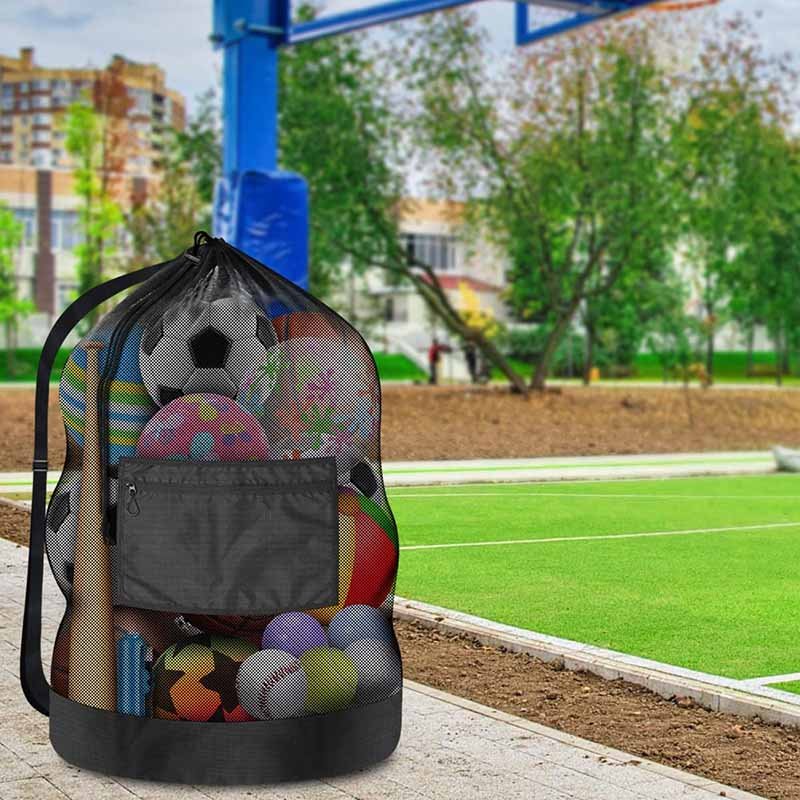
Choosing a Mesh Sports Equipment Bag Manufacturer should not be based only on the lowest unit price. A strong factory should understand fabric behavior, sports-use pressure, logo application, sample development, bulk production control, export packing, and custom project communication. For serious brands, the right manufacturer helps reduce product failure, avoid wasted sampling time, control cost, and create bags that customers actually want to use.
Check Factory Experience
Factory experience matters because mesh sports bags are used in rough, active, and often wet environments. A bag may need to carry shoes, balls, gloves, towels, protective pads, swim gear, or training tools. These items create pressure on seams, straps, zippers, and bottom panels. A factory without enough bag-making and material experience may produce a sample that looks fine, but fails after repeated use.
Szoneier has more than 18 years of experience in neoprene material development and custom product manufacturing. The company works with bags, koozies, sports supports, medical supports, wetsuits, and other neoprene-related products. This background is useful for mesh sports equipment bags because many projects require mixed materials, such as breathable mesh plus neoprene padding, polyester webbing, Oxford fabric reinforcement, zipper pockets, and private label branding.
When checking a factory, customers should not only ask, “Can you make this bag?” A better question is, “Have you made similar sports-use products, and how would you improve this structure?” A capable manufacturer can usually point out weak areas before production starts.
Important experience points to review:
Material knowledge across mesh, neoprene, polyester, nylon, Oxford fabric, and webbing
Experience with sports bags, gym bags, swim bags, outdoor bags, and equipment bags
Ability to support OEM, ODM, and private label projects
Understanding of reinforcement methods for straps, seams, zippers, and bottom panels
Experience serving overseas small buyers, growing brands, and premium custom projects
Ability to develop samples from sketches, reference photos, or existing samples
A strong manufacturer should be able to discuss product function, not only quote a price. If a factory only gives a number without asking about use scenario, load weight, logo method, or packaging needs, the project may face problems later.
Ask About MOQ
MOQ is one of the first concerns for custom sports bag customers. A new brand may want to test 300 or 500 pieces before scaling. A school or sports club may need a limited quantity for one season. A gym chain may start with one color and expand later. An e-commerce seller may want to test several colors, but not hold too much inventory at the beginning.
Low MOQ customization gives customers more flexibility. It helps reduce inventory pressure and makes product testing easier. Szoneier supports low MOQ custom orders, which is valuable for overseas small and medium buyers, private label sellers, boutique sports brands, gyms, schools, and sports clubs.
However, MOQ depends on many factors. A simple mesh drawstring bag with available fabric colors is easier to produce at lower quantity. A custom-dyed mesh bag with special zipper pullers, rubber patches, printed packaging, and multiple compartments may require a higher MOQ because every custom part has its own production requirement.
MOQ is affected by:
Material availability
Custom color requirements
Logo method
Packaging design
Bag structure complexity
Hardware and accessory sourcing
Cutting efficiency
Labor time
Order color split
Factory production schedule
| Custom Requirement | MOQ Impact | Cost Impact |
|---|---|---|
| Stock mesh color | Lower | Lower |
| Custom-dyed mesh | Higher | Medium to high |
| Simple screen print | Lower | Lower |
| Rubber patch logo | Medium | Medium |
| Custom zipper puller | Medium to high | Medium |
| Retail packaging | Medium | Medium |
| Multiple pockets | Medium | Higher labor cost |
| Neoprene padding | Medium | Adds material and sewing cost |
| Multi-color order split | Higher | Higher setup cost |
Customers should be open about their quantity plan. If the first order is a market test, the factory can suggest cost-friendly materials and structures. If the order is for a long-term product line, the factory can help prepare a more complete private label solution.
A practical way to discuss MOQ is to ask for two or three options:
Basic version with lower MOQ
Retail version with better branding
Premium version with upgraded materials and packaging
This allows the customer to compare cost, quality, and market positioning before making a final decision.
Review Sample Quality
A sample tells the truth faster than a long quotation sheet. It shows whether the factory understands the product, whether the material feels right, whether the stitching is clean, and whether the structure works when the bag is actually used. For mesh sports equipment bags, sample review should be hands-on, not just visual.
Customers should test the sample with real gear. If the bag is designed for footballs, put footballs inside. If it is for swimming, place wet towels, goggles, slippers, and bottles inside. If it is for gym use, test shoes, gloves, resistance bands, towels, and personal items. A sample that looks good empty may behave differently when loaded.
Important sample checking points:
Is the size suitable for the intended gear?
Does the mesh feel strong enough?
Does the bag stretch too much when full?
Are the seams straight and secure?
Do the straps feel comfortable under load?
Are the strap joints reinforced?
Does the zipper open smoothly?
Is the drawstring easy to pull?
Is the logo clear and correctly placed?
Does the bag fold neatly for packing?
Does the product match the expected retail level?
| Sample Area | Good Sign | Warning Sign |
|---|---|---|
| Mesh body | Even texture, no broken yarns | Loose holes, weak stretch, rough defects |
| Stitching | Straight seams, strong thread | Skipped stitches, loose thread, uneven lines |
| Straps | Firm attachment, comfortable width | Thin webbing, weak joint, twisting |
| Zipper | Smooth movement | Jamming, uneven sewing, weak puller |
| Logo | Clear, centered, durable | Distorted, misplaced, hard to see |
| Bottom | Holds shape under load | Sagging, weak corners, no support |
| Packing | Clean fold, protected logo | Wrinkles, stains, poor folding |
If the first sample needs changes, that is normal. Custom product development often requires adjustment. What matters is whether the factory can understand the feedback and improve the second version quickly and accurately.
Good sample development protects the customer from bigger problems in bulk production. It is better to fix the strap angle, logo position, mesh strength, or pocket size at sample stage than after thousands of units are finished.
Compare Lead Time
Lead time affects product launches, seasonal sales, school orders, sports events, and retail delivery plans. A delayed bag order can miss a tournament, summer swim season, gym campaign, or back-to-school sales window. That is why customers should discuss the full timeline clearly before placing an order.
Lead time includes more than production days. It includes design communication, material confirmation, logo artwork approval, sample making, sample shipping, sample revision, deposit arrangement, bulk material preparation, cutting, sewing, inspection, packing, and international shipping.
A simple stock-material mesh bag can move faster than a heavily customized bag. A product with custom color mesh, custom zipper pullers, patches, hangtags, and special packaging needs more preparation time. Clear artwork and fast approval from the customer can also shorten the project timeline.
Common project timeline reference:
| Project Stage | Estimated Time Range | Notes |
|---|---|---|
| Design discussion | 1–3 days | Faster if requirements are clear |
| Material confirmation | 1–5 days | Depends on stock or custom material |
| Sample development | 5–10 days | Complex bags may take longer |
| Sample shipping | 3–7 days | Depends on destination and courier |
| Sample revision | 3–10 days | Based on changes needed |
| Bulk material preparation | 3–15 days | Custom color or accessories need more time |
| Bulk production | 15–35 days | Depends on quantity and complexity |
| Inspection and packing | 2–5 days | Based on order size |
| Shipping | 5–45 days | Express, air, sea, or rail options |
Szoneier supports quick sampling and short lead times, which can help customers move faster during early development. Still, customers should plan ahead if they need products for a fixed event or seasonal launch.
Useful lead time questions to ask:
When can the first sample be ready?
How long does sample shipping usually take?
How quickly can revisions be made?
Are materials available in stock?
Will custom color or logo accessories add time?
What is the estimated bulk production time?
When should artwork and packaging files be confirmed?
Can the factory support urgent orders?
A clear timeline reduces pressure for both the customer and the factory. It also helps customers plan marketing, online listing, photography, retail delivery, and warehouse receiving.
Confirm Quality Control
Quality control is where professional manufacturing protects the customer’s brand. A mesh sports equipment bag may seem simple, but small problems can create big complaints. A broken strap, stuck zipper, loose seam, or unclear logo can quickly damage product reviews and repeat business.
Quality control should happen in several stages, not only at the end. Material should be checked before cutting. Cutting pieces should be checked before sewing. Sewing quality should be checked during production. Finished bags should be inspected before packing. Packed cartons should be checked before shipment.
For mesh sports equipment bags, QC should focus on:
Material defects
Color consistency
Mesh tearing or broken yarns
Panel size accuracy
Seam strength
Strap joint strength
Zipper movement
Drawstring function
Logo clarity and position
Pocket size and usability
Bottom reinforcement
Loose threads
Stains or dirt
Packing method
Carton quantity and marks
A useful inspection standard should be based on the approved sample. The bulk order should match the confirmed sample in material, size, color, logo position, sewing method, strap structure, and packaging.
| QC Stage | Inspection Focus | Why It Matters |
|---|---|---|
| Incoming material check | Mesh, webbing, zipper, labels | Prevents poor materials entering production |
| Cutting inspection | Pattern accuracy, panel size | Keeps bag shape consistent |
| Sewing inspection | Stitching, seam strength, reinforcement | Reduces product failure |
| Logo inspection | Position, clarity, color | Protects brand appearance |
| Function test | Zipper, drawstring, strap load | Confirms daily usability |
| Final inspection | Size, stains, threads, packing | Ensures shipment quality |
| Carton check | Quantity, marks, SKU | Avoids receiving and warehouse mistakes |
Customers can also request extra testing depending on product use. For heavier equipment bags, pull testing and load testing may be useful. For swim or beach bags, drainage and drying behavior can be checked. For retail bags, logo durability and packing appearance matter more.
Szoneier’s 100% quality assurance approach is valuable because custom products require stable execution. The customer is not only buying one sample. The customer needs the full order to match the sample, perform consistently, and arrive ready for sale or distribution.
Is Szoneier Right For Mesh Sports Equipment Bag Manufacturing?
Szoneier is a strong choice for Mesh Sports Equipment Bag Manufacturing because it combines more than 18 years of neoprene and fabric product experience with custom bag development, free design support, low MOQ, quick sampling, free sample support, short lead time, OEM/ODM service, private label options, and quality-focused production. This is especially useful for customers who need flexible customization instead of standard stock products.
18+ Years Fabric Experience
Szoneier’s manufacturing experience gives customers a practical advantage in custom sports bag development. The company is not limited to one basic bag type. It has long-term experience with neoprene fabric development and a wide range of neoprene-related products, including bags, koozies, sports supports, medical supports, wetsuits, and other customized items.
This matters because many mesh sports equipment bags need mixed-material thinking. A bag may use mesh for breathability, neoprene for comfort, Oxford fabric for reinforcement, polyester webbing for carrying strength, and custom labels for private label branding. Each material behaves differently during cutting, sewing, printing, and daily use. A factory with broader material experience can help prevent structural problems before production.
For example, a customer may want a breathable swim bag with a soft shoulder pad. Szoneier can suggest a mesh body for drainage, neoprene padding for comfort, and a solid logo panel for cleaner branding. A gym brand may want a mesh duffel with a shoe pocket and premium hand feel. The factory can combine mesh, reinforced fabric, and neoprene detail to improve both function and appearance.
Szoneier’s experience is useful for customers who want:
Custom mesh sports bags
Mesh and neoprene hybrid bags
Gym equipment bags
Swim gear bags
Ball carrying bags
Outdoor sports storage bags
Team equipment bags
Private label sports accessories
Custom logo bags for retail or e-commerce
For customers, the benefit is simple: the factory can help turn a product idea into something that is easier to manufacture, easier to use, and easier to sell.
Free Design Support
Not every customer has a complete design file. Some customers only have a reference photo. Some have a rough sketch. Some know the market problem but are not sure how to turn it into a bag structure. This is common in custom manufacturing, especially for small and medium brands developing new products.
Szoneier offers free design support to help customers move from idea to sample. This support can include size suggestions, material selection, structure improvement, logo placement, color matching, packaging ideas, and cost-control advice.
Free design support can help solve questions such as:
What mesh type should be used?
Should the bag have a zipper or drawstring?
Where should the logo be placed?
Does the bag need a bottom panel?
Can neoprene improve comfort?
How large should the opening be?
Which pocket layout is practical?
How can cost be controlled without weakening quality?
What packaging is suitable for retail or online sales?
A good design process should not make the bag more complicated than necessary. The better goal is to make the product clear, useful, and manufacturable. For example, adding five pockets may look attractive on a design sheet, but it may raise cost and reduce breathability. A factory with product experience can help customers decide which features are worth keeping.
Szoneier’s design support is especially helpful for:
Start-up sports brands testing their first product
Gyms creating member merchandise
Schools and teams needing custom colors and logos
Amazon and Shopify sellers preparing private label products
Outdoor brands developing breathable storage products
Distributors needing product variations for different customers
When customers work with Szoneier, they can provide basic information and let the factory help refine the details before sample production.
Low MOQ Custom Orders
Low MOQ is important because many customers need flexibility. Not every project starts with a large order. Some customers need a small batch for market testing. Some want to test different colors. Some need custom bags for one team season, one gym event, or one promotional campaign. High MOQ can stop these projects before they begin.
Szoneier supports low MOQ custom orders, allowing customers to start with more manageable quantities. This is useful for new product launches, private label testing, sports club orders, school orders, boutique retail, and online selling.
Low MOQ helps customers reduce:
Inventory pressure
Cash flow risk
Storage cost
Unsold color risk
Market testing uncertainty
First-order hesitation
However, low MOQ should still be planned wisely. Customers can reduce cost and lead time by choosing available mesh colors, simple logo methods, and practical packaging. For first orders, it may be better to start with a clean, reliable design instead of adding too many custom accessories at once.
A smart low-MOQ launch may look like this:
| Launch Stage | Product Choice | Reason |
|---|---|---|
| First test order | 1–2 colors, simple logo, standard material | Lower risk and faster production |
| Second order | Add color options or packaging | Based on market feedback |
| Growth order | Upgrade logo, straps, compartments | Better brand positioning |
| Repeat order | Stable SKU and optimized cost | More efficient production |
For customers who plan long-term cooperation, low MOQ can be the first step. Once the product performs well in the market, Szoneier can support repeat orders, design upgrades, color expansion, packaging improvement, and larger production runs.
Fast Sampling Service
Fast sampling is valuable because product development often has timing pressure. A customer may need product photos for an online launch. A gym may need bags before a membership campaign. A swim club may need gear bags before summer season. A school supplier may need samples approved before a purchasing deadline.
Szoneier supports fast sampling to help customers confirm design, material, logo, and structure earlier. A sample allows the customer to touch the mesh, check the sewing, test the capacity, review the logo, and confirm whether the bag fits the intended market.
Fast sampling is useful for:
Product development
Retail presentation
Online store preparation
Pre-sale campaigns
Team approval
Distributor discussion
Material confirmation
Packaging review
Cost adjustment
A fast sample should not only be quick. It should be meaningful. The sample should help the customer make decisions. If the strap feels too thin, it can be upgraded. If the logo is not clear on mesh, it can be moved to a patch or solid panel. If the bag is too soft, a reinforced bottom can be added. If the cost is too high, unnecessary compartments can be removed.
Sample review checklist:
Load real gear inside the bag
Check if the capacity is enough
Test the strap comfort
Pull the strap connection points
Open and close the zipper several times
Check logo clarity from a normal viewing distance
Review the bag shape when full
Fold the bag for packing
Compare cost with expected selling price
Confirm changes before bulk production
Fast sampling helps customers move forward with confidence. It also helps the factory understand the customer’s quality expectations before mass production begins.
OEM And ODM Support
Szoneier supports OEM and ODM custom manufacturing for overseas customers who want their own mesh sports equipment bags. This includes customers with ready-made designs, customers with only rough ideas, and customers who need full private label support.
OEM is suitable when the customer already has a clear product design, technical file, sample, or specification. The factory follows the customer’s requirements and produces the bags with the customer’s logo, packaging, and quality standard.
ODM is suitable when the customer needs help developing the product. The customer may only know the target market, product purpose, or reference style. Szoneier can help with material suggestions, structure development, sampling, logo placement, and production planning.
Private label service is suitable for customers who want the product to look like their own brand from the outside to the inside. This can include logo labels, hangtags, packaging bags, barcode stickers, care labels, custom zipper pullers, and carton marks.
Szoneier can support:
Custom product design
Reference sample development
Material sourcing
Mesh and neoprene combination
Pattern making
Sample production
Logo customization
Private label packaging
Bulk production
Quality inspection
Export packing
Repeat order support
| Service Type | Best For | What Szoneier Supports |
|---|---|---|
| OEM | Customers with clear designs | Production based on customer specification |
| ODM | Customers with ideas or reference products | Design improvement and sample development |
| Private label | Brands selling under their own name | Logo, label, packaging, and retail details |
| Low MOQ custom | Small and medium customers | Flexible first orders and testing |
| Repeat production | Growing brands and distributors | Stable quality and scalable supply |
For sports brands, gyms, schools, outdoor companies, distributors, Amazon sellers, and Shopify stores, this flexibility can make product development much easier. Customers do not need to manage every detail alone. They can work with Szoneier from idea to sample to final shipment.
Start Your Custom Mesh Sports Bag Project With Szoneier
Mesh sports equipment bags may look simple, but the details decide whether the product feels cheap, useful, durable, or worth reordering. The right mesh density improves ventilation. The right strap structure improves comfort. The right reinforcement prevents tearing. The right logo method makes the brand easier to recognize. The right packaging helps the product arrive clean, organized, and ready to sell.
For customers developing custom sports bags, the most important question is not only “How much is the unit price?” A better question is: “Can this bag solve my customer’s real problem, and can the factory produce it consistently?”
With more than 18 years of neoprene and fabric product manufacturing experience, Szoneier can support customers with free design service, low MOQ customization, quick sampling, free sample support, short lead time, OEM/ODM manufacturing, private label packaging, and quality-controlled production.
To get a more accurate quotation, customers can prepare the following information:
Bag style or reference image
Target size or equipment dimensions
Expected use scenario
Preferred material
Logo artwork
Color requirement
Target quantity
Packaging requirement
Target price range
Delivery country
Special quality requirement
If you already have a design file, Szoneier can review it and prepare a manufacturing plan. If you only have a rough idea, Szoneier can help improve the structure and develop a sample based on your market needs.
For sports brands, gyms, schools, clubs, outdoor companies, promotional suppliers, and private label sellers, a custom mesh sports equipment bag can be more than a storage item. It can become a practical product customers carry every week, a visible brand tool, and a repeat-order item with strong daily value.
Contact Szoneier today to discuss your custom mesh sports equipment bag project, request a sample, and build a breathable, durable, brand-ready sports bag for your market.