A foldable duffle bag looks simple when finished, but it is one of the easiest bag categories to get wrong. On paper, the concept sounds easy: make a full-size bag that can be packed into a much smaller form. In real production, that idea creates a chain of technical decisions. The fabric has to be light enough to fold easily, but strong enough to carry real weight. The structure has to be soft enough to collapse, but not so weak that the bag feels cheap when opened. The seams have to survive repeated folding, not just one round of factory inspection. Even the zipper position, handle attachment, and corner shape can affect whether a foldable bag becomes a useful travel product or a disappointing sample.
Foldable duffle bag manufacturing is the process of developing a duffle bag that can compress into a compact size without losing its carrying function, usable volume, and basic durability. It usually depends on lightweight woven fabrics such as nylon or polyester, a clear folding method, careful stress-point reinforcement, and simplified construction that avoids bulky padding or rigid framing. Good foldable bag manufacturing is not only about sewing a bag. It is about making storage efficiency, portability, and real-world use work together.
At Szoneier, this difference becomes obvious very quickly during sampling. Two bags may look almost identical when hanging in a showroom, yet after ten or twenty folding cycles, one still opens cleanly while the other starts showing seam distortion, wrinkled panels, or a pouch that is too tight for real use. That is why foldable bag manufacturing is not just about appearance. It is about whether the product still works after customers actually live with it.
What Is Foldable Duffle Bag Manufacturing?
Foldable duffle bag manufacturing means designing and producing a duffle bag that can be reduced into a smaller stored form and then reopened for normal use. The process depends on material flexibility, compact structure planning, and controlled sewing methods so the bag remains easy to fold, carry, and use repeatedly.
Foldable Duffle Bag Basics
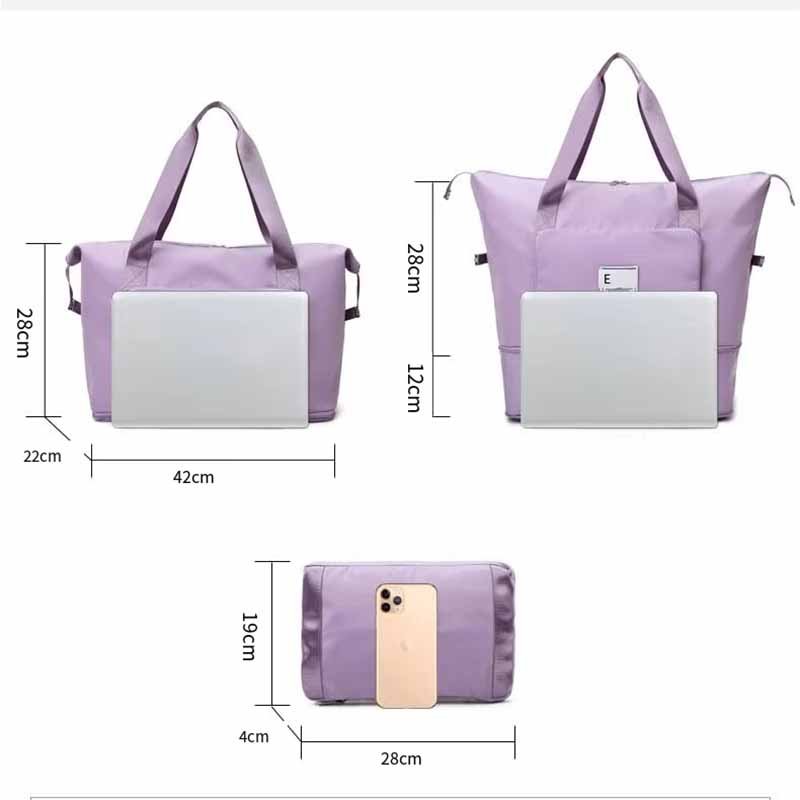
A foldable duffle bag is not simply a smaller duffle bag or a softer duffle bag. It is a product built around two states. In one state, it works like a normal carrying bag with real storage volume. In the other, it compresses into a compact package that is easy to store in luggage, a backpack, a car trunk, or a drawer. That sounds simple, but those two states often demand opposite things from the construction.
A normal travel duffle can rely on body panels, padding, and heavier fabric to create shape. A foldable duffle bag cannot depend too much on those features because extra bulk makes folding difficult. This is why foldable products require a more disciplined structure. Every part must justify its space and weight.
In practical factory development, most foldable duffle bags are built for one of these market needs:
- Spare travel bag for return trips or extra shopping
- Lightweight gym or sports bag for daily use
- Promotional or retail packable bag sold on portability
- Outdoor or emergency bag for easy backup storage
Customers usually care about four things first:
- How small the bag becomes after folding
- How easy it is to unfold and refold
- Whether it still feels useful when opened
- Whether it survives repeated use without looking weak
That is why foldable bag manufacturing should never be treated as only a styling job. It is a balance between stored size, opened shape, carry comfort, and cost.
What Makes a Foldable Duffle Bag
What makes a foldable duffle bag work is not only soft material. It is the combination of flexible fabric, reduced bulk, predictable folding direction, and controlled stress distribution. Many products fail because they only focus on “can it fold once for the photo?” instead of “can it fold and unfold many times in real life?”
A foldable duffle bag usually needs these structural conditions:
- Outer fabric that bends easily without cracking or holding deep creases
- Minimal stiff internal support
- Limited use of foam, heavy piping, or rigid boards
- Handles and zippers placed so they do not fight the folding path
- A pouch or storage method large enough for realistic packing speed
This last point is often underestimated. In many samples from inexperienced suppliers, the built-in pouch is technically correct but practically frustrating. The user can fold the bag into it once in the factory, but in normal life it takes too long or requires excessive force. That creates poor user experience even if the bag passes visual inspection.
A good foldable duffle bag is defined by repeatability. It should open cleanly, store easily, and maintain acceptable appearance after many cycles. That is why the most important test is not whether the first sample looks attractive. It is whether the product remains functional after repeated handling.
Foldable Duffle Bag Structures
Foldable duffle bag structures vary depending on target market, price level, and intended folding size. The structure determines how intuitive the product feels to users and how much labor complexity the factory must manage.
The most common foldable structures are shown below:
| Structure Type | Folding Method | Main Advantage | Main Limitation | Common Use |
|---|---|---|---|---|
| Flat Fold | Body folds into layered rectangle | Simple construction | Less compact than pouch fold | Travel backup bags |
| Built-In Pouch Fold | Bag turns into attached zip pocket | Easy to sell, easy to carry | Pouch sizing must be precise | E-commerce, retail travel bags |
| Roll Fold | Bag rolls from one end into compact form | Quick packing | Looks less neat after use | Sports and outdoor bags |
| End-Pocket Fold | Bag stuffs into side compartment | Saves extra pouch cost | Fold path less intuitive | Basic travel and gym bags |
| Strap-Bound Fold | Bag folds flat and secures with webbing | Lower sewing complexity | Bulkier stored form | Utility and promotional bags |
Among these, built-in pouch fold is one of the most commercially successful because it gives customers a clear “before and after” value story. It is easy to photograph, easy to demonstrate, and easy to understand. But it is also one of the easiest structures to misjudge in development. If the pouch is too small, users struggle. If it is too large, the folded product looks sloppy.
Flat fold structures are often safer for lower-cost production because the construction is simpler and the tolerance requirements are lower. They may not compress as impressively, but they reduce complaint risk when the priority is broad usability rather than highly compact packaging.
Why Foldable Duffle Bags Sell
Foldable duffle bags sell because they solve a real inconvenience without asking customers to change behavior much. People already use duffle bags for travel, gym, and spare storage. A foldable version adds portability and space saving, which makes the value easy to understand at first glance.
From a product strategy angle, foldable duffle bags perform well because they match several customer habits:
- Travelers want a backup bag for the return journey
- Gym users want a bag that does not occupy much storage space at home
- E-commerce customers like compact products that feel practical and giftable
- Outdoor users like emergency storage options that stay out of the way until needed
There is also a freight and packaging advantage. A foldable bag can reduce packed volume significantly compared with a structured duffle. For importers, retailers, and online sellers, that affects carton quantity, warehouse density, and shipping economics.
Here is a simple commercial comparison:
| Product Type | Storage Efficiency | Shipping Efficiency | Retail Story | Visual Impact When Packed |
|---|---|---|---|---|
| Standard Duffle Bag | Lower | Lower | Familiar | Larger package |
| Foldable Duffle Bag | Higher | Higher | Practical and portable | Compact package |
This is why foldable products often work well in gift, travel, and impulse-purchase channels. The function is immediately visible. The challenge is that a product that sells easily also gets judged quickly. If the folding system is awkward or the bag feels fragile, customers notice right away.
Which Foldable Duffle Bag Materials Are Best?
The best foldable duffle bag materials are the ones that balance light weight, repeated foldability, acceptable strength, and target cost. Nylon and polyester are the main commercial choices, while neoprene and waterproof technical fabrics serve more specialized product directions. No single material fits every foldable bag project.
Nylon Foldable Duffle Bag Materials
Nylon is one of the strongest material choices for foldable duffle bags when the goal is to keep weight low without sacrificing too much durability. It performs well in travel and sports products because it combines flexibility, tear resistance, and a relatively refined surface feel.
In manufacturing, not all nylon behaves the same. Denier level, weave density, yarn quality, and coating all affect the final result. For foldable duffle bags, lighter deniers are usually more practical because they collapse more easily and reduce packed size. Heavier nylon may improve wear resistance, but it can make the bag too bulky when stored.
A practical range looks like this:
| Nylon Type | Product Feel | Best Use | Strength Level | Foldability |
|---|---|---|---|---|
| 190D Nylon | Very light, soft | Ultra-packable travel bags | Moderate | Excellent |
| 210D Nylon | Light and flexible | Backup travel bags | Moderate | Excellent |
| 420D Nylon | More balanced, slightly firmer | Better daily-use foldable duffles | Good | Good |
| 600D Nylon | Stronger, more substantial | Heavy-use foldable sports bags | High | Moderate |
For many brands, 210D or 420D nylon is the best middle ground. It provides enough body to feel usable when opened but still folds into a compact size. A PU coating can improve splash resistance, but coating thickness must be controlled. If the coating is too heavy, the bag becomes stiffer and harder to fold neatly.
Nylon is especially valuable when customers want a foldable bag that does not feel disposable. It is often the right choice for mid-range or premium travel lines where product reviews depend on both portability and long-term use.
Polyester Foldable Duffle Bag Materials
Polyester remains a strong commercial choice for foldable duffle bag manufacturing because it helps control cost, offers stable supply, and works well across large-volume orders. For many importers and private label sellers, polyester is attractive because it sits in a practical middle zone between price and performance.
A well-made polyester foldable bag can perform reliably in daily use, especially for lighter applications such as spare luggage, casual travel, retail promotions, and gym use. It also holds color well, which matters for bright seasonal collections or branded merchandise.
Common polyester options include 190D, 210D, 300D, and 420D, depending on the target feel and required strength. Lower denier polyester improves portability, while slightly heavier constructions provide a fuller shape.
Here is a useful comparison:
| Polyester Type | Main Use | Cost Position | Foldability | Durability |
|---|---|---|---|---|
| 190D Polyester | Budget packable bags | Lower | Excellent | Basic |
| 210D Polyester | Entry travel and promo use | Lower | Very good | Basic to moderate |
| 300D Polyester | Better all-around foldable bags | Medium | Good | Good |
| 420D Polyester | Higher-use foldable sports bags | Medium | Fair to good | Better |
The weakness of polyester is not that it is a poor material. The weakness is that low-grade polyester is often overused in projects that require better strength than it can reasonably provide. When sellers push cost too aggressively, the result is often thin fabric, weak handle attachment zones, and shape loss after repeated use.
For brands that need aggressive cost control, polyester is often the most logical starting point. But the correct decision is not simply “use polyester.” It is “use the right polyester weight and build the structure around its limits.”
Neoprene Foldable Duffle Bag Materials
Neoprene is a more specialized choice in foldable duffle bag manufacturing. It is not usually the first material for ultra-light packable travel bags, but it offers a different product value that some brands want: softness, cushioning, stretch, and a more premium tactile feel.
For Szoneier, neoprene matters because it opens product directions that standard woven fabrics cannot always achieve. A neoprene foldable duffle bag can feel smoother, more protective, and more fashion-forward than a basic lightweight woven bag. It can also support categories where comfort, water resistance, and soft structure matter.
Still, neoprene creates a different engineering balance. It is heavier than thin nylon or polyester, and thickness must be controlled carefully. If the foam layer is too thick, the bag loses its compact-storage advantage. If it is too thin, it may not deliver enough of the material’s signature feel.
A practical view looks like this:
| Neoprene Construction | Feel | Advantage | Limitation | Suitable Product Direction |
|---|---|---|---|---|
| Thin Neoprene | Soft, flexible | Better foldability | Lower structure | Casual travel, lifestyle |
| Medium Neoprene | Cushioned, premium | Better hand feel and protection | Heavier | Sports, wellness, premium retail |
| Laminated Neoprene Blend | Technical look | Better customization | More complex sourcing | Fashion-performance hybrids |
Neoprene is useful when the product story is not only about compact storage. It is also about feel, protection, and a distinctive market position. It works best for brands that want the foldable function but do not want the bag to look like a simple emergency backup product.
Waterproof Foldable Duffle Bag Materials
Waterproof foldable duffle bag materials are used when the product needs stronger moisture protection than standard coated woven fabric can provide. These materials usually include TPU laminations, PVC coatings, or lightweight tarpaulin constructions. They are popular in outdoor, marine, camping, and wet-travel categories.
The challenge is that waterproof performance often pushes against foldability. As waterproof layers become thicker, the fabric usually becomes stiffer, bulkier, and less cooperative in repeated folding. That is why waterproof foldable bags require tighter design discipline than normal packable bags.
A useful breakdown is below:
| Material Type | Water Protection | Foldability | Product Feel | Market Position |
|---|---|---|---|---|
| PU-Coated Nylon/Polyester | Splash resistant | Good | Light, flexible | Daily travel and gym |
| PVC-Coated Fabric | Stronger barrier | Moderate | Firmer, more industrial | Utility and value outdoor |
| TPU Laminated Fabric | High | Good to moderate | Cleaner, more premium | Premium outdoor and travel |
| Lightweight Tarpaulin | High | Moderate | Rugged | Adventure and gear bags |
Customers should be careful not to ask for “waterproof” just because it sounds stronger in marketing. Waterproof materials make the most sense when the bag really will face wet conditions. Otherwise, the extra cost, added stiffness, and increased packed bulk may work against the product’s convenience.
The better question is often this: does the customer need rain protection, splash resistance, or true water-blocking performance? Once that is clear, material selection becomes much more rational.
Lightweight vs Durable Foldable Duffle Bag Materials
One of the most important decisions in foldable duffle bag manufacturing is choosing where the product should sit between very light and more durable. Many projects fail because the brand wants both extremes at the same time: ultra-compact storage and heavy-duty use. In most cases, these goals compete with each other.
Lightweight materials improve portability and reduce shipping cost. They make the product easier to fold and easier to carry as a backup bag. But lighter materials are less forgiving under high loads, repeated abrasion, and rough handling. Durable materials improve product life, but they increase packed size, total weight, and cost.
A realistic comparison looks like this:
| Direction | Main Material Range | Best For | Key Benefit | Main Trade-Off |
|---|---|---|---|---|
| Lightweight | 190D–210D nylon/polyester | Spare luggage, compact travel | Easy folding, lower weight | Lower wear resistance |
| Balanced | 210D–420D nylon/polyester | Daily travel, gym, light sports | Better function balance | Slightly larger packed size |
| Durable | 420D–600D nylon or reinforced fabric | Frequent-use sports or gear bags | Longer life, stronger feel | Less compact, heavier |
The right answer depends on how the bag is used. A travel backup bag stored in a suitcase does not need the same build as a foldable sports bag used three or four times a week. Good factories help customers make this distinction early, before expectations become unrealistic.
At Szoneier, this is often where product direction becomes clearer. Once the intended use frequency, carry weight, and packed-size target are defined, the material decision becomes far easier and much more cost-effective.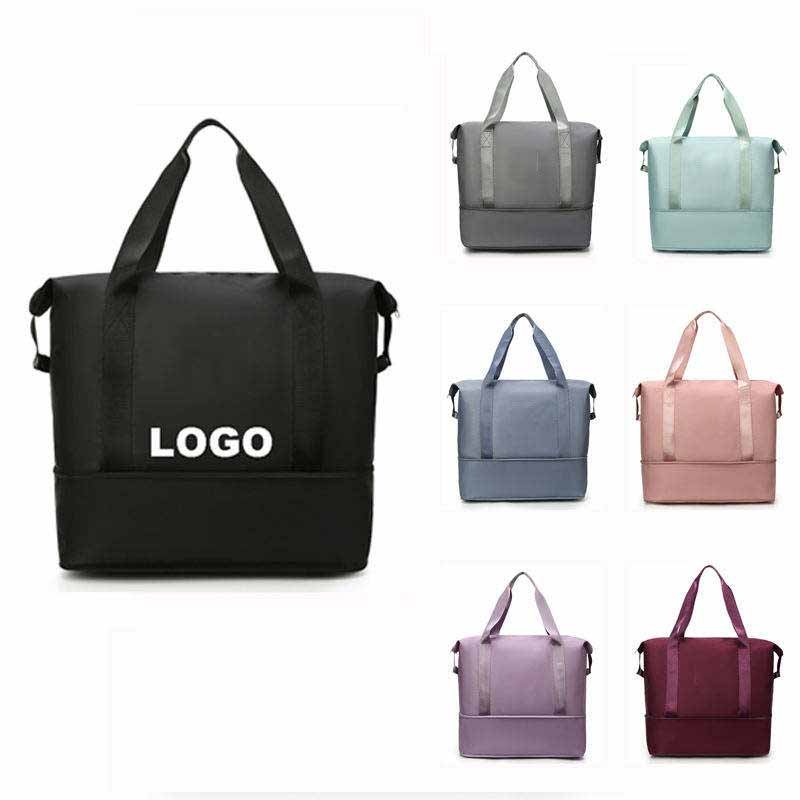
How Do You Design a Foldable Duffle Bag?
Foldable duffle bag design is about controlling how the bag behaves in both open and folded states. A well-designed bag should open smoothly, hold a usable shape, and fold back quickly without forcing the user. The key is balancing flexibility, structure, and folding logic while keeping production practical.
Foldable Duffle Bag Folding Design
The folding design determines whether the product is easy or frustrating to use. Many bags fail not because of material, but because the folding path is unclear or too complicated.
A good folding design follows three basic principles:
- The folding direction is intuitive
- The number of steps is limited
- The final packed size is consistent
In real development, most foldable bags use 3–5 folding steps. More steps increase complexity and reduce user satisfaction.
A simple folding comparison:
| Folding Type | Steps | User Effort | Result |
|---|---|---|---|
| Simple Flat Fold | 3–4 | Low | Larger final size |
| Pouch Fold | 4–5 | Medium | Compact and clean |
| Roll Fold | 2–3 | Very low | Less structured |
One common issue seen in production is “over-designed folding.” Some samples look compact in factory demonstrations but require too much force or precision. In real use, customers stop folding them properly.
The goal is not the smallest possible folded size. The goal is repeatable folding with minimal effort.
Foldable Duffle Bag Pouch Design
The pouch is one of the most critical elements in foldable bag design. It directly affects user experience, product appearance, and production consistency.
There are two main pouch types:
- Built-in pouch (attached to the bag)
- Separate pouch (detachable)
Most commercial foldable duffle bags use built-in pouches because:
- They are always available
- They reduce accessory loss
- They simplify packaging
However, pouch sizing must be carefully calculated. A pouch that is too small makes folding difficult. A pouch that is too large makes the product look loose and unstructured.
A practical sizing guideline used in factories:
| Bag Volume | Recommended Pouch Ratio |
|---|---|
| 20–30L | 1:6 to 1:7 |
| 30–50L | 1:7 to 1:8 |
| 50L+ | 1:8 to 1:10 |
This means the pouch should be about 1/6 to 1/10 of the total unfolded volume.
Another important detail is pouch opening design. Narrow openings slow down folding and frustrate users. A wider zipper opening improves usability but increases material cost slightly.
Foldable Duffle Bag Structure Balance
A foldable duffle bag must strike a balance between softness and structure. Too soft, and the bag looks cheap and collapses when used. Too structured, and it becomes difficult to fold.
Key structure decisions include:
- Whether to include base reinforcement
- Whether to use lining or single-layer fabric
- Whether to add webbing support
A common approach is selective reinforcement:
- Reinforced bottom panel for load-bearing
- Double-layer handle attachment zones
- Minimal reinforcement on fold areas
Here is a structure comparison:
| Structure Type | Advantage | Risk |
|---|---|---|
| No Reinforcement | Easy folding | Weak load capacity |
| Full Reinforcement | Strong structure | Poor foldability |
| Selective Reinforcement | Balanced performance | Requires precise design |
Selective reinforcement is widely used in high-quality foldable duffle bags because it protects critical areas without affecting folding performance.
Foldable Duffle Bag Zipper Design
Zippers are often overlooked in foldable bag development, but they directly affect durability and usability.
Key considerations:
- Zipper type (coil vs molded)
- Zipper size (No.5 vs No.8 vs No.10)
- Zipper placement
For foldable bags, coil zippers (nylon zippers) are more suitable because they are flexible and easier to fold. Molded zippers are stronger but less flexible.
Zipper size also matters:
| Zipper Size | Use Case |
|---|---|
| No.5 | Lightweight foldable bags |
| No.8 | Standard foldable duffle bags |
| No.10 | Heavy-duty bags |
Zipper placement should avoid major folding lines. If the zipper sits directly on a folding crease, it may deform over time.
Another important detail is zipper pull design. Smaller pulls reduce bulk when folded, while larger pulls improve usability. The choice depends on product positioning.
How Is a Foldable Duffle Bag Made?
Foldable duffle bag manufacturing involves precise control of cutting, sewing, reinforcement, and testing. Unlike standard bags, foldable bags must pass both functional and folding performance checks.
Foldable Duffle Bag Cutting Process
Material cutting is the first step where many quality differences begin. Foldable bags require more precise cutting because panel size affects folding accuracy.
Key cutting considerations:
- Fabric grain direction (affects folding behavior)
- Panel symmetry (important for balanced folding)
- Material wastage control
Factories usually use:
- Manual cutting for small orders
- CNC cutting for large production
A small deviation in panel size can cause uneven folding, which becomes visible in finished products.
Foldable Duffle Bag Sewing Process
Sewing foldable bags requires a different approach compared to structured bags. The focus is on flexibility and consistency.
Key sewing points:
- Seam allowance control
- Stitch density (usually 8–10 stitches per inch)
- Thread selection (polyester thread for durability)
Critical areas include:
- Handle attachment points
- Zipper ends
- Fold stress zones
In many cases, double stitching or bar-tacking is used to strengthen these areas.
Foldable Duffle Bag Reinforcement
Reinforcement must be carefully applied to avoid affecting foldability.
Common reinforcement methods:
- Bar-tack stitching on stress points
- Double-layer fabric in high-load areas
- Webbing reinforcement for handles
A typical reinforcement layout:
| Area | Reinforcement Type |
|---|---|
| Handle base | Bar-tack + double layer |
| Bottom panel | Extra fabric layer |
| Zipper ends | Reinforced stitching |
Over-reinforcement is a common mistake. It makes the bag stronger but reduces flexibility and increases bulk.
Foldable Duffle Bag Quality Check
Quality control for foldable bags includes both standard and folding-specific tests.
Key tests include:
- Folding cycle test (10–50 cycles)
- Load test (10–25 kg depending on design)
- Zipper smoothness test
- Appearance check after folding
A practical QC standard:
| Test | Requirement |
|---|---|
| Folding cycles | No major deformation after 20 cycles |
| Load capacity | No tearing under specified weight |
| Zipper test | Smooth operation without jamming |
| Appearance | No permanent creases or damage |
Factories that skip folding tests often produce bags that look fine but fail in real use.
How Do You Choose a Foldable Duffle Bag Manufacturer?
Choosing the right foldable duffle bag manufacturer is often more important than the design itself. A good factory can improve your product, reduce risk, and stabilize your supply chain. A weak factory may deliver samples that look acceptable but fail during real production or after customers start using the product.
The key is not just price. It is the ability to understand foldable structures, control materials, and maintain consistency across orders.
Foldable Duffle Bag MOQ and Samples
Minimum order quantity (MOQ) and sampling capability directly affect how quickly a product can move from idea to market. For foldable duffle bags, sampling is especially important because folding performance cannot be judged on drawings alone.
In real production, MOQ depends on material type and customization level:
| Product Type | MOQ Range | Notes |
|---|---|---|
| Standard polyester foldable bag | 100–300 pcs | Suitable for testing markets |
| Nylon foldable duffle bag | 100–200 pcs | Balanced performance and flexibility |
| Neoprene foldable bag | 200–500 pcs | Material sourcing may increase MOQ |
| Waterproof foldable bag | 300–500 pcs | Specialized materials and processes |
Sampling timelines are usually:
- 5–7 days for basic designs
- 7–12 days for custom materials or structures
A reliable manufacturer will not rush samples without testing folding logic. They will adjust pouch size, seam position, and reinforcement during sampling.
A useful approach for customers:
- First sample → check size, folding method, and appearance
- Second sample → adjust material and reinforcement
- Final sample → confirm for bulk production
Skipping this process often leads to problems later.
Foldable Duffle Bag Custom Options
Customization is where a product becomes competitive. Many foldable duffle bags in the market look similar because they use standard materials and structures. Customization allows brands to create differentiation.
Common customization options include:
- Fabric selection (nylon, polyester, neoprene, waterproof materials)
- Color matching (Pantone-based production)
- Logo application (printing, embroidery, heat transfer)
- Folding structure adjustment
- Pouch size and shape optimization
- Handle design and reinforcement
Here is a practical customization breakdown:
| Custom Area | Options | Impact |
|---|---|---|
| Material | Nylon, polyester, neoprene, TPU | Performance and cost |
| Logo | Print, embroidery, rubber patch | Brand identity |
| Structure | Flat fold, pouch fold, roll fold | User experience |
| Accessories | Zippers, pulls, webbing | Durability and appearance |
A key point is that customization should match product positioning. Adding too many features to a low-cost product increases risk without improving sales. On the other hand, under-designing a premium product reduces perceived value.
Foldable Duffle Bag Lead Time
Lead time affects inventory planning, product launches, and cash flow. For foldable duffle bags, lead time depends on material availability, production complexity, and order quantity.
Typical timelines:
| Stage | Time |
|---|---|
| Sampling | 5–12 days |
| Material sourcing | 5–10 days |
| Bulk production | 20–30 days |
| Total production cycle | 30–45 days |
Factors that can increase lead time:
- Custom fabric development
- Complex folding structures
- Large order quantities
- Peak production seasons
For customers, one important strategy is to plan buffer time. Many delays happen not in sewing, but in material preparation and approval stages.
Factories with stable supply chains can reduce risk and maintain more predictable delivery schedules.
Foldable Duffle Bag Factory Support
Factory support is what turns a design into a reliable product. A strong manufacturer does more than follow instructions—they help improve the product.
At Szoneier, foldable duffle bag projects are supported through a structured process:
- Product concept discussion
- Material and structure recommendation
- Sample development
- Folding and durability testing
- Bulk production planning
- Quality control and shipment
Key support advantages include:
- Experience with lightweight and flexible materials
- Ability to adjust folding structures during sampling
- Fast response for design changes
- Stable quality across production batches
A good factory also helps prevent common problems such as:
- Pouch too small for real use
- Fabric too stiff for folding
- Weak handle attachment
- Poor zipper placement
These issues are not always visible in early samples but become critical in real use.
Work With Szoneier to Build Your Foldable Duffle Bags
Foldable duffle bag manufacturing is not just about making a bag smaller. It is about creating a product that works in real life—easy to carry, easy to store, and strong enough to handle daily use.
At Szoneier, we combine over 18 years of experience in fabric development and bag manufacturing to help brands build foldable duffle bags that perform well in both design and production.
We support a wide range of materials, including:
- Nylon and polyester for lightweight foldable bags
- Neoprene for soft and premium designs
- TPU and coated fabrics for waterproof performance
Our services include:
- Free design support
- Low MOQ customization
- Fast sampling (5–7 days)
- Stable production quality
- Short lead times
Whether you are developing a new travel product, expanding your gym bag line, or launching a private label brand, we can help you choose the right materials, optimize folding design, and deliver reliable production.
If you are planning your next foldable duffle bag project, this is the best time to start with the right partner.
Contact Szoneier today to:
- Get professional material recommendations
- Develop custom foldable bag designs
- Receive fast samples for testing
- Start stable bulk production
Build a foldable duffle bag that is not only compact—but truly usable, durable, and ready for your market.