Skip to content
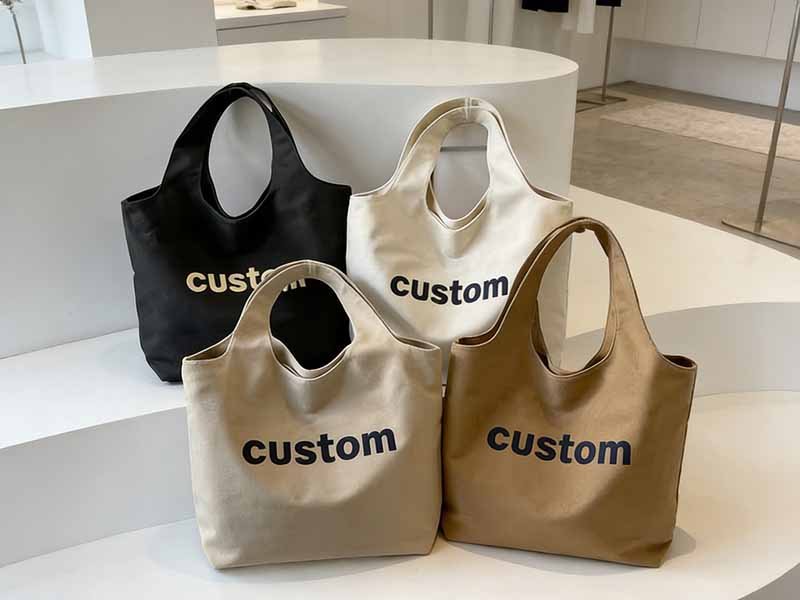
At first glance, a tote bag looks easy to make. It has two panels, two handles, and maybe a logo on the front. But once a company starts developing a real custom tote bag for sale, gifting, retail display, or brand promotion, the process becomes much more technical than it seems. Fabric choice affects cost and print quality. Handle construction affects load-bearing strength. Stitch density affects durability. Even small changes in gusset width or pocket placement can change material consumption, labor time, carton quantity, and shipping cost.
The custom tote bags manufacturing process usually includes product planning, fabric selection, pattern making, material cutting, logo application, sewing assembly, reinforcement, finishing, inspection, and packaging. Every stage affects the final result. A tote bag that looks attractive in a mockup may fail in daily use if the fabric is too light, the handles are attached poorly, or the seams are not reinforced for weight-bearing use.
For brands, importers, retailers, and e-commerce sellers, understanding this process is not just about factory curiosity. It helps answer real business questions. Why does one quote come in much lower than another? Why do two bags that look similar have very different quality? Why do some printed logos stay sharp after months of use while others crack early? The answers are usually hidden inside the manufacturing steps.
A well-made tote bag is not the result of one good material or one good machine. It comes from a chain of decisions that work together. Once you understand that chain, it becomes much easier to develop a tote bag that is not only attractive, but also commercially reliable.
What Is the Custom Tote Bags Manufacturing Process?
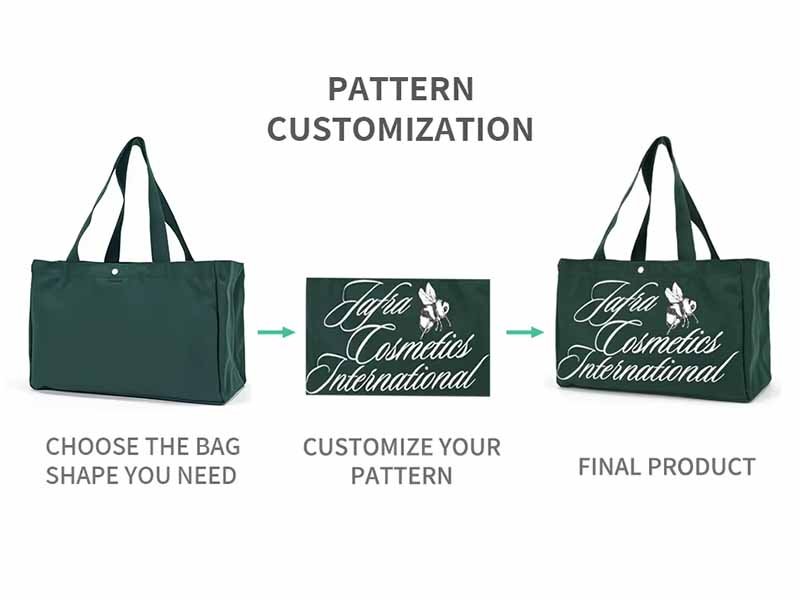
The custom tote bags manufacturing process is the complete production workflow used to transform raw materials—such as cotton canvas, polyester fabric, or recycled textiles—into finished tote bags ready for retail, promotional campaigns, or wholesale distribution. While the final product appears simple, the production process behind it involves several coordinated steps including product development, fabric preparation, cutting, printing, sewing, reinforcement, finishing, and quality inspection.
For companies ordering custom tote bags, understanding this process helps explain why two bags with a similar appearance can differ significantly in durability, cost, and delivery time. Factors such as fabric weight, stitch density, handle reinforcement, and printing methods all influence the final performance of the bag.
A standard custom tote bag production cycle generally follows the stages below:
| Manufacturing Stage | Purpose | Key Output |
|---|---|---|
| Product development | Define size, structure, and materials | Approved design specifications |
| Fabric preparation | Inspect and prepare materials | Fabric ready for cutting |
| Cutting | Produce accurate bag panels | Fabric components |
| Printing or embroidery | Apply logos or graphics | Branded fabric panels |
| Sewing and assembly | Construct bag structure | Complete tote bag |
| Reinforcement | Strengthen load-bearing areas | Durable handles and seams |
| Finishing and cleaning | Trim threads and shape bag | Neat finished product |
| Quality inspection | Verify production standards | Approved shipment batch |
Each stage is designed to control both product quality and production efficiency, which is especially important when producing hundreds or thousands of bags in one order.
Production Planning and Product Development
The manufacturing process begins with detailed planning. At this stage, the factory reviews the customer’s design concept, technical drawings, or reference samples. Several parameters must be confirmed before production starts.
These include:
- finished bag dimensions
- fabric type and weight
- gusset structure
- handle length and material
- logo size and printing method
- accessory components such as zippers or pockets
Even small adjustments during this stage can affect cost and production speed. For example, adding a bottom gusset increases carrying capacity but also increases fabric consumption and sewing time.
Below is a common size comparison used in tote bag development:
| Tote Bag Type | Dimensions (cm) | Capacity Use |
|---|---|---|
| Flat promotional tote | 35 × 40 | events, giveaways |
| Medium retail tote | 38 × 42 | daily shopping |
| Large grocery tote | 40 × 45 × 12 gusset | heavy groceries |
Factories typically create a prototype sample before bulk production begins. This allows both the manufacturer and the client to verify structure, print placement, and overall appearance.
Fabric Preparation and Inspection
Once the design is confirmed, the factory prepares the raw materials for production. Fabric inspection is a critical step because inconsistencies in fabric quality can lead to defects during cutting or sewing.
Common fabric checks include:
- weight verification (for example 10 oz or 12 oz canvas)
- color consistency between fabric rolls
- weaving defects such as holes or loose yarn
- shrinkage testing under washing conditions
For cotton canvas tote bags, fabric weight is often measured using grams per square meter (GSM) or ounces per square yard.
| Canvas Weight | Approximate GSM | Strength Level |
|---|---|---|
| 8 oz canvas | ~270 GSM | lightweight |
| 10 oz canvas | ~340 GSM | medium |
| 12 oz canvas | ~400 GSM | durable |
| 16 oz canvas | ~540 GSM | heavy-duty |
Higher fabric weight usually results in stronger bags but also increases material cost and shipping weight. Selecting the right balance between durability and cost is an important decision for most customers.
Cutting and Panel Preparation
After materials are inspected, the fabric moves to the cutting department. Large rolls of fabric are spread across cutting tables and layered to allow multiple pieces to be cut at once.
Precision cutting ensures that all bag panels are identical in size. This consistency is important for achieving clean seams and a symmetrical bag shape.
Typical components cut during this stage include:
- front and back panels
- side or bottom gussets
- handle straps
- pocket panels
- reinforcement patches
Factories often optimize cutting layouts to minimize fabric waste. Efficient cutting patterns can reduce material loss by 5–8 percent, which becomes significant in large orders.
Printing and Branding Application
For branded tote bags, logos are usually applied before the sewing stage. Printing on flat fabric panels ensures that the graphics remain aligned and clear.
Common logo methods include:
| Branding Method | Suitable Fabric | Advantages |
|---|---|---|
| Screen printing | cotton canvas | durable and cost-efficient |
| Heat transfer printing | polyester | good for detailed graphics |
| Digital printing | cotton or polyester | full-color designs |
| Embroidery | thick canvas | premium appearance |
Screen printing remains the most widely used method for promotional tote bags because it offers strong color coverage and good durability when the bag is washed or exposed to friction.
Sewing and Bag Assembly
The sewing stage is where the tote bag begins to take its final shape. Industrial sewing machines assemble the cut panels and attach handles.
The basic assembly sequence usually includes:
- joining front and back panels
- attaching gussets if required
- installing pockets or zipper closures
- attaching handles
- folding and stitching the top edge
Different stitch types are used depending on the load-bearing requirement of the bag.
| Stitch Type | Purpose |
|---|---|
| Lockstitch | general seam construction |
| Double stitch | stronger seam reinforcement |
| Overlock stitch | prevents fabric fraying |
High-quality sewing ensures that the bag maintains its structure even when carrying heavier items.
Handle Reinforcement
Handles are the most stressed area of any tote bag. Without proper reinforcement, handles may tear away from the bag body after repeated use.
Factories therefore apply reinforcement techniques such as:
- box stitching
- cross stitching
- bar-tack reinforcement
These techniques distribute the load across a wider area of fabric, improving durability.
For most retail tote bags, reinforced handles allow safe carrying capacity between 8 kg and 15 kg, depending on fabric thickness and stitching strength.
Final Inspection and Packaging
Before shipment, finished tote bags undergo final inspection. Quality control teams check each batch to confirm that it matches the approved sample.
Inspection usually includes:
- dimensional accuracy
- stitching strength
- logo clarity and position
- overall cleanliness
Approved bags are then folded, counted, and packed according to the customer’s packaging requirements.
Typical packaging options include:
| Packaging Method | Application |
|---|---|
| bulk carton packing | wholesale distribution |
| individual polybags | retail packaging |
| branded boxes | premium product lines |
After packing, cartons are prepared for shipment via sea freight, air freight, or courier services.
Which Materials Are Used in the Custom Tote Bags Manufacturing Process?
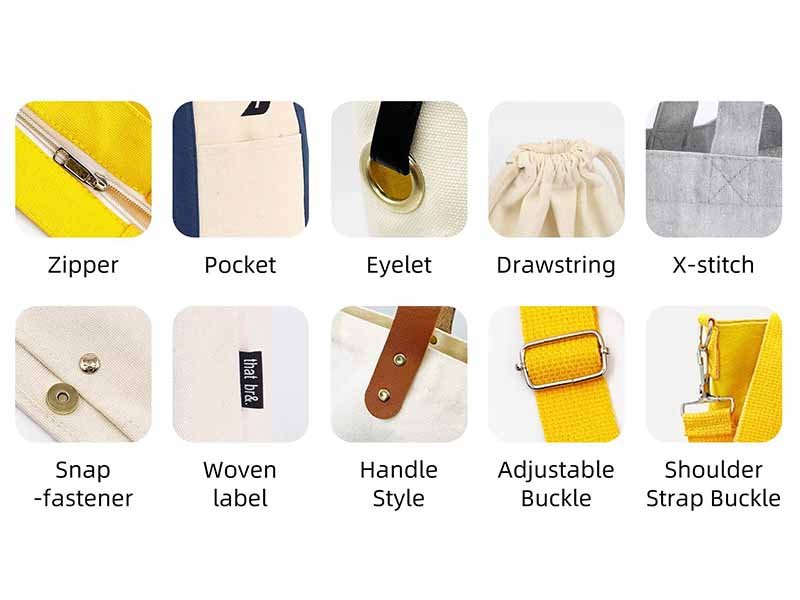
Material selection is one of the most commercially important parts of tote bag manufacturing. It affects not only the look and feel of the bag, but also strength, logo performance, MOQ, packing volume, target price, and even return rate.
In many projects, customers focus first on style, then ask about material later. In reality, it often works better the other way around. Once the material is chosen correctly, many other decisions become easier.
The most commonly used tote bag materials include:
- cotton canvas
- plain cotton
- polyester
- recycled polyester
- recycled cotton
- non-woven PP
- jute
- laminated fabrics
- neoprene for special tote styles
Each one serves a different market purpose.
What Fabrics Are Used in the Custom Tote Bags Manufacturing Process?
The best fabric depends on how the tote bag will be used, how it will be sold, and what price level it needs to hit.
Here is a practical comparison of commonly used tote bag materials:
| Fabric | Common Weight Range | Main Strengths | Common Limitations | Best Use |
|---|---|---|---|---|
| Cotton | 4 oz–8 oz | natural look, soft hand feel | lower structure, lighter load use | simple giveaways, retail basics |
| Cotton canvas | 8 oz–16 oz | stronger, better print surface, reusable | higher cost than thin cotton | shopping, retail, lifestyle |
| Polyester | 150D–600D | lighter, cost-efficient, durable color | less natural feel | promo bags, foldable totes |
| Non-woven PP | 80–120 gsm | low cost, volume production | lower premium feel | grocery and event bags |
| Jute | varies | rustic look, eco image | rough texture, harder printing | eco retail and gift bags |
| Recycled cotton/poly | varies | sustainability value | sometimes less consistent hand feel | eco-focused collections |
For many custom tote projects, cotton canvas remains the most balanced option because it offers:
- better strength than plain cotton
- cleaner structure for sewing
- strong compatibility with screen printing and embroidery
- a reusable look that fits lifestyle and eco positioning
But cotton canvas is not always the best answer. A supermarket giveaway program with hundreds of thousands of pieces may prioritize price and packing efficiency. In that case, non-woven PP or lighter polyester may be more suitable. A foldable travel tote may need polyester because it is lighter and dries faster. A fashion retail tote may need heavier canvas for a more premium feel.
Material choice should always match the real sales goal.
Are Canvas Fabrics Common in the Custom Tote Bags Manufacturing Process?
Yes, very common. In fact, canvas is one of the most widely used materials in custom tote bag manufacturing because it is strong, familiar to customers, and highly adaptable to branding.
Canvas is usually made from cotton or cotton-blend yarns woven in a way that creates a denser and stronger fabric than standard plain cotton. This denser structure improves:
- carrying strength
- body shape retention
- sewing stability
- print performance
- overall product feel
Below is a useful canvas weight guide for tote bag development:
| Canvas Weight | Feel | Strength Level | Common Use |
|---|---|---|---|
| 6 oz–8 oz | light and soft | light to medium | event bags, simple promo totes |
| 10 oz–12 oz | balanced | medium to strong | daily-use totes, shopping bags |
| 14 oz–16 oz | thick and sturdy | strong | premium retail, grocery, heavy-use bags |
This is where many customers make a smart upgrade. A small increase from 8 oz to 10 oz or 12 oz canvas often changes the bag noticeably:
- it feels more substantial in hand
- it stands better after filling
- it handles printing more cleanly
- it reduces the “cheap thin bag” impression
At the same time, heavier canvas also increases:
- material cost
- sewing effort
- carton weight
- shipping cost
So the best choice depends on the final market.
For customers selling online or in boutiques, heavier canvas often supports a better product image. For promotions and giveaways, lighter canvas may be enough. The key is not choosing the heaviest material. The key is choosing the right material for the customer’s actual use.
Do Eco Materials Change the Custom Tote Bags Manufacturing Process?
Yes, sometimes they do, and this is becoming more important as more brands build tote bag collections around sustainability.
Eco materials such as recycled cotton, recycled polyester, organic cotton, and blended recycled fabrics are increasingly used in tote bags. They help brands support a stronger environmental message, but they also bring some production differences that need attention.
For example:
- recycled fibers may show more natural variation in texture
- recycled yarn quality may influence surface smoothness
- some eco fabrics behave differently during printing
- shrinkage control may need closer testing
- color consistency between lots may require tighter review
That does not mean eco materials are difficult. It means they should be handled with realistic expectations and proper testing.
Here is a simple comparison:
| Eco Material | Main Advantage | Production Note |
|---|---|---|
| Recycled cotton | reduces virgin cotton use | surface may feel less uniform |
| Organic cotton | stronger eco marketing value | cost is usually higher |
| Recycled polyester | strong sustainability story and stable structure | printing and finish should be tested |
| Recycled blends | balanced cost and message | appearance can vary by ratio |
For many brands, eco materials do more than improve the product story. They can also help justify a better selling price when the target customer values sustainability.
Still, good results depend on process control. Eco materials should be tested for:
- print clarity
- shrinkage behavior
- stitching performance
- washing results
- handle strength under load
That is why experienced factories normally suggest approving real material swatches and samples before bulk production, especially for recycled or blended fabrics.
For customers building reusable tote bag programs, eco materials can be a strong direction. But the best projects are the ones where sustainability and usability work together, not where one is chosen at the expense of the other.
How Does the Custom Tote Bags Manufacturing Process Work?
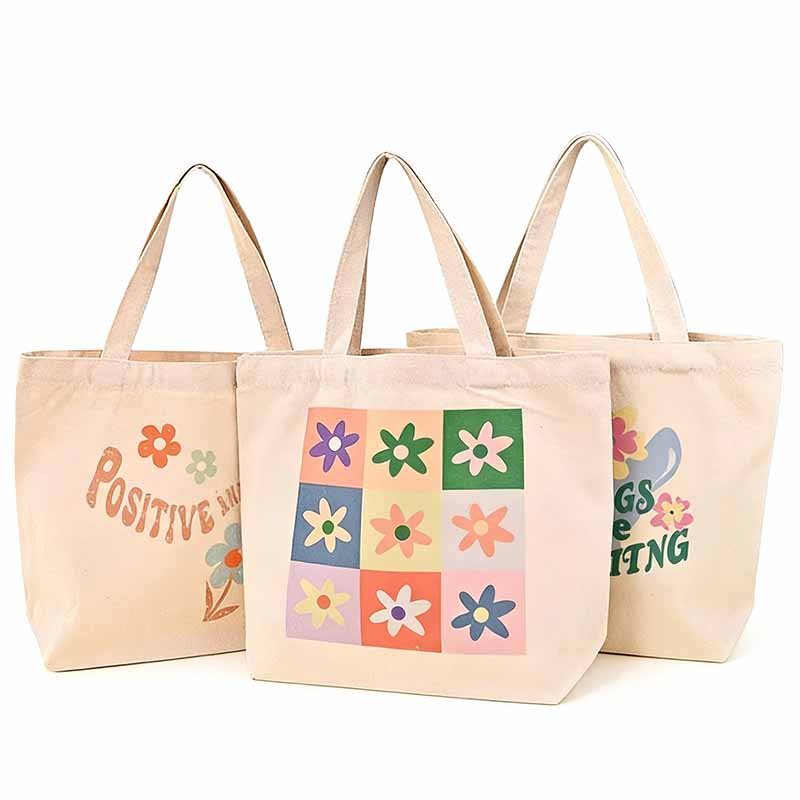
Once the materials and design specifications are confirmed, the real production stage of tote bag manufacturing begins. This stage converts fabric rolls into finished bags through a sequence of cutting, printing, sewing, reinforcement, trimming, and finishing steps.
A well-organized tote bag factory usually separates this process into several production areas:
| Production Area | Main Function |
|---|---|
| Fabric inspection | verify fabric quality and color consistency |
| Cutting workshop | cut panels and handle strips |
| Printing workshop | apply logos and graphics |
| Sewing workshop | assemble the bag body |
| Reinforcement station | strengthen handle connections |
| Finishing area | trimming, cleaning, shaping |
| Quality inspection | verify production standards |
Each stage must be coordinated carefully. If cutting accuracy is poor, sewing alignment will suffer. If printing is done incorrectly, the final appearance of the bag may look unprofessional. That is why experienced factories treat tote bag production as a structured workflow rather than a simple sewing task.
How Does Cutting Begin the Custom Tote Bags Manufacturing Process?
Fabric cutting is the first physical step in the production process. At this stage, large rolls of fabric are cut into individual pieces that will later be assembled into tote bags.
Precision matters here because even small measurement errors can create uneven seams or distorted bag shapes.
The cutting stage usually involves the following steps:
1.Fabric inspection
Before cutting begins, the fabric is inspected to confirm:
- correct color tone
- consistent weight and weave
- absence of holes or weaving defects
If defects are found early, they can be removed before cutting.
2.Pattern layout
A cutting pattern is placed over the fabric to maximize material efficiency. Factories often use specialized software to calculate how panels should be arranged on the fabric to minimize waste.
3.Bulk cutting
Multiple layers of fabric are stacked and cut simultaneously using industrial cutting machines.
Typical tote bag components cut during this stage include:
| Component | Function |
|---|---|
| Front panel | main outer surface |
| Back panel | rear side of bag |
| Bottom gusset | expands bag capacity |
| Side gussets | adds internal space |
| Handle strips | shoulder carrying straps |
| Pocket panels | optional internal storage |
Efficient cutting is important because fabric is often the largest cost component in tote bag production. Good cutting layouts can reduce material waste by 5–10%, which becomes significant in large orders.
How Does Sewing Shape the Custom Tote Bags Manufacturing Process?
Once the panels are cut, they move to the sewing workshop where the tote bag structure begins to take shape.
Sewing is the stage where the flat pieces of fabric become a three-dimensional bag.
Most tote bag sewing lines follow a sequence similar to the following:
1.Panel assembly
The front and back panels are stitched together along the sides and bottom.
2.Gusset construction
If the bag design includes side or bottom gussets, these panels are sewn to increase capacity.
3.Pocket installation
Optional interior or exterior pockets are attached before the final seams are closed.
4.Top edge finishing
The top edge of the bag is folded and stitched to create a clean opening and improve durability.
Industrial sewing machines used in tote bag production usually include:
- single-needle lockstitch machines
- double-needle sewing machines
- overlock machines for edge finishing
The sewing quality depends heavily on stitch density and thread strength.
| Stitch Type | Strength Level | Common Use |
|---|---|---|
| Lockstitch | strong and neat | main seams |
| Double stitch | stronger reinforcement | load-bearing seams |
| Overlock stitch | edge finishing | preventing fraying |
Proper sewing ensures that the bag maintains its shape even when carrying heavier items such as groceries or books.
How Are Handles Added in the Custom Tote Bags Manufacturing Process?
Handles are one of the most critical components of a tote bag because they carry the entire weight of the bag’s contents. Poorly attached handles are one of the most common reasons tote bags fail during use.
Handle construction typically includes several reinforcement techniques.
Handle material selection
Handles may be made from:
- folded canvas strips
- cotton webbing
- polyester webbing
- reinforced fabric handles
Each option affects strength and comfort.
| Handle Type | Strength | Comfort | Common Use |
|---|---|---|---|
| Fabric handles | medium | soft | everyday tote bags |
| Cotton webbing | strong | comfortable | retail bags |
| Polyester webbing | very strong | moderate | heavy-duty bags |
Reinforcement stitching
Factories usually apply additional stitching at the handle attachment points.
Common reinforcement methods include:
- box stitching
- cross stitching
- bar-tack reinforcement
These techniques distribute weight across a larger area of fabric.
| Reinforcement Style | Strength | Visual Appearance |
|---|---|---|
| Single line stitch | basic | minimal |
| Box stitch | strong | clean and professional |
| Box with cross stitch | very strong | widely used for durable bags |
For example, a box-cross reinforcement stitch can increase handle load capacity significantly compared with a single stitch line.
In many retail tote bags, reinforced handles allow the bag to safely carry 10–15 kilograms of weight, depending on fabric thickness.
How Are Logos Added in the Custom Tote Bags Manufacturing Process?

Branding is one of the most important elements of custom tote bag production. Many companies use tote bags as promotional products or retail merchandise, which means the logo must be clear, durable, and visually attractive.
Several printing and decoration methods are commonly used.
What Printing Methods Fit the Custom Tote Bags Manufacturing Process?
Different printing methods work better with different fabrics and order quantities.
Below is a comparison of common tote bag printing techniques.
| Printing Method | Best For | Advantages |
|---|---|---|
| Screen printing | simple logos | durable and cost-effective |
| Digital printing | detailed graphics | full color images |
| Heat transfer | small batches | flexible production |
| Embroidery | premium designs | high-end appearance |
Each printing method has different setup costs and production speeds, so factories usually recommend the method that best fits the customer’s order quantity and artwork complexity.
Is Screen Printing Used in the Custom Tote Bags Manufacturing Process?
Screen printing is the most widely used printing method for tote bags, especially for cotton canvas fabrics.
The process involves pushing ink through a mesh screen onto the fabric surface using a stencil that defines the logo shape.
Advantages of screen printing include:
- strong color coverage
- good durability
- cost efficiency for medium and large orders
However, screen printing works best for designs with a limited number of colors.
| Number of Colors | Printing Cost | Production Efficiency |
|---|---|---|
| 1–2 colors | low | high |
| 3–4 colors | medium | moderate |
| 5+ colors | higher | slower |
For promotional tote bags with simple logos, screen printing is often the most economical choice.
Do Embroidery Methods Improve the Custom Tote Bags Manufacturing Process?
Embroidery is another popular decoration method used when brands want a more premium appearance.
Instead of printing ink on the fabric surface, embroidery uses thread to stitch the logo directly into the material.
Benefits include:
- long-lasting logo appearance
- textured visual effect
- premium brand perception
However, embroidery also has limitations.
| Factor | Impact |
|---|---|
| Production speed | slower than printing |
| Cost | higher for large logos |
| Fabric compatibility | best with thicker fabrics |
For canvas tote bags intended for retail sale, embroidery is often used to create a more upscale design.
How Do Factories Control the Custom Tote Bags Manufacturing Process?
A well-managed custom tote bags manufacturing process does not end when the bag is sewn together. Reliable factories place strong emphasis on inspection, durability testing, and production monitoring to ensure that every batch of bags meets the agreed specifications.
Tote bags may appear simple, but small inconsistencies during production can quickly affect usability. If stitching tension varies, seams may loosen. If handle alignment is inconsistent, the bag may hang unevenly. If printing quality fluctuates, the logo may appear faded or misaligned.
Professional factories therefore implement multiple quality checkpoints during production.
| Production Stage | Quality Focus |
|---|---|
| Fabric inspection | weight, color, weave defects |
| Cutting stage | panel size accuracy |
| Printing stage | color density and alignment |
| Sewing stage | stitch strength and seam quality |
| Final assembly | handle reinforcement and symmetry |
| Packaging | quantity and folding consistency |
These inspections reduce the chance that defective bags enter the final shipment.
What Inspections Support the Custom Tote Bags Manufacturing Process?
Quality inspections in tote bag manufacturing usually occur at three key stages: incoming material inspection, in-line production inspection, and final product inspection.
Incoming material inspection
Before production begins, factories verify that all raw materials match the approved specifications.
Common checks include:
- fabric weight measurement
- color comparison against Pantone standards
- fabric shrinkage testing
- accessory quality verification (zippers, webbing, labels)
For example, if a customer specifies 12 oz cotton canvas, the factory measures the fabric weight to ensure it falls within acceptable tolerance levels.
In-line production inspection
During sewing and assembly, quality control staff monitor production lines to identify issues early.
Typical checks include:
- stitch density consistency
- seam alignment
- handle placement accuracy
- logo positioning
Detecting problems during production helps prevent large quantities of defective bags from being completed.
Final inspection
After the bags are fully assembled, a final inspection verifies that the finished products match the approved sample.
Inspection criteria often include:
| Inspection Item | Requirement |
|---|---|
| bag dimensions | within tolerance range |
| stitching quality | no skipped stitches |
| handle alignment | symmetrical placement |
| print quality | clean edges and correct color |
| overall appearance | no stains or damage |
These inspections help ensure consistent product quality before shipment.
How Is Durability Tested in the Custom Tote Bags Manufacturing Process?
Because tote bags are designed to carry weight, durability testing is an important part of quality control.
Factories often perform several tests to evaluate whether the bag structure can withstand real-world use.
Handle load test
Handles are subjected to a weight load for a specified period of time to ensure the stitching does not tear.
| Test Type | Load Weight | Duration |
|---|---|---|
| standard tote bag test | 8–10 kg | 24 hours |
| heavy-duty tote bag test | 12–15 kg | 24 hours |
Seam strength test
Seams are pulled under tension to confirm that the stitching does not break.
Fabric abrasion test
Fabric samples are rubbed repeatedly to check how well the material resists wear.
These tests simulate daily usage conditions such as carrying groceries, books, or work materials.
Factories that conduct durability testing can identify weak points in bag construction and improve the design before large-scale production begins.
Why Is QC Critical in the Custom Tote Bags Manufacturing Process?
Quality control is essential because tote bags are often produced in large quantities for retail distribution, promotional campaigns, or corporate events.
Even a small defect rate can become significant when production volumes reach thousands of units.
For example:
| Order Quantity | 2% Defect Rate | Defective Units |
|---|---|---|
| 1,000 bags | 2% | 20 bags |
| 10,000 bags | 2% | 200 bags |
| 50,000 bags | 2% | 1,000 bags |
Without strong quality control, these defects could reach customers and affect brand reputation.
Effective quality management helps companies maintain consistent product standards and avoid unnecessary replacement costs.
For brands selling tote bags online or through retail channels, reliability is especially important because customer reviews often focus on durability and stitching quality.
Final Thoughts: Building Reliable Custom Tote Bags
The custom tote bags manufacturing process is a structured production system that combines material selection, cutting accuracy, sewing precision, logo printing, and strict quality control.
When each stage is handled carefully, the result is a tote bag that looks professional, carries weight reliably, and maintains its appearance after repeated use.
For companies developing custom tote bags, understanding this process makes it easier to:
- choose the right materials
- design practical bag structures
- control production costs
- maintain consistent product quality
Working with an experienced manufacturer also helps reduce development time and avoid common production mistakes.
Start Your Custom Tote Bag Project with Szoneier
Szoneier is a professional bag manufacturer with more than 18 years of experience in fabric development and custom bag production. The company specializes in manufacturing a wide range of fabric products, including tote bags, neoprene bags, koozies, sports supports, medical supports, and wetsuits.
With integrated material sourcing and manufacturing capabilities, Szoneier supports international brands, retailers, and e-commerce companies with customized product solutions.
Typical manufacturing capabilities include:
| Service | Details |
|---|---|
| Custom design support | free design consultation |
| Minimum order quantity | flexible for new brands |
| Sampling lead time | fast sample development |
| Production lead time | short and reliable schedule |
| Quality assurance | multi-stage inspection |
Szoneier also provides customization options such as:
- logo printing and embroidery
- fabric and color selection
- handle styles and reinforcement methods
- packaging solutions for retail or promotional use
Whether you are launching a new product line or sourcing promotional tote bags for your brand, selecting the right manufacturing partner can make a significant difference in product quality and delivery reliability.
If you are planning a custom tote bag project, you can contact the Szoneier team to discuss your design ideas, material options, and production requirements. Their experience in fabric development and bag manufacturing can help turn your concept into a durable and market-ready product.