Skip to content
Search results for bag manufacturers in China can look crowded and confusing. On one page, you may see polished factory websites, marketplace listings, social profiles, and sourcing platforms all promising low prices and fast delivery. The hard part is not finding suppliers. The hard part is finding one that can actually turn your design into a stable, repeatable product line. In bags, that difference matters a lot. A supplier that handles samples well but struggles in bulk production can cause size inconsistency, weak stitching, unstable lead times, and expensive rework. A supplier that quotes cheaply but controls neither materials nor workmanship can damage your brand faster than a delayed launch.
Reliable bag manufacturers in China are usually identified by five things: real factory capability, clear product development ability, stable quality control, honest communication, and production records that support repeat orders. The best choice is not always the cheapest quote. It is the supplier that can keep materials, construction, branding, and delivery under control from sample approval to bulk shipment.
That is why professional sourcing needs more than price comparison. It needs a practical way to judge whether a supplier is a real manufacturing partner or only a trading layer. China remains one of the world’s biggest export and manufacturing bases, with Guangdong standing out for high-value export manufacturing and strong logistics, while broader industrial belts across Guangdong, Zhejiang, Jiangsu, and Fujian are known for concentrated supply-chain networks.
Why Choose Bag Manufacturers in China?
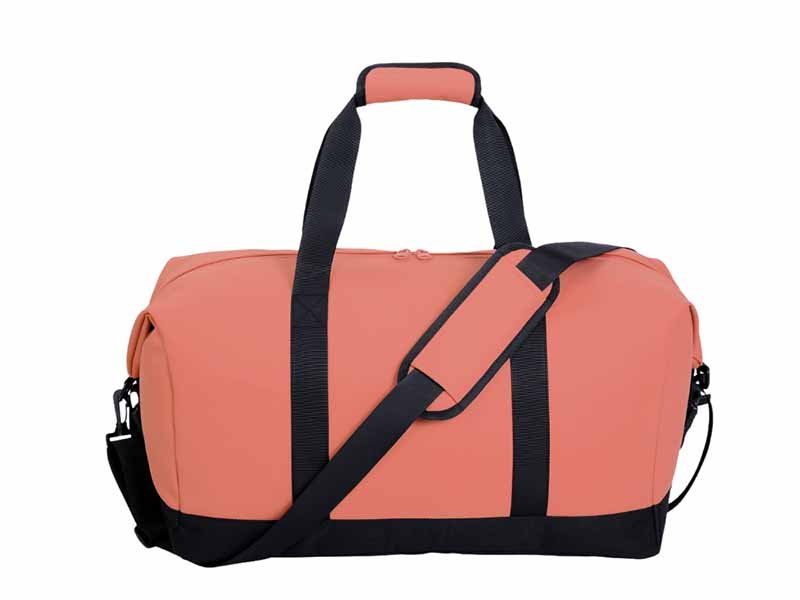
China remains a top sourcing destination for custom bags because it combines factory scale, material access, skilled labor, and export infrastructure in one market. For brands that need OEM, private label, or custom development, this usually means faster sourcing, more material choices, and better control over cost versus quality when the supplier is chosen carefully.
Why Are Bag Manufacturers in China Popular?
The main reason is not “low cost” alone. It is supply-chain density. In a strong manufacturing region, the fabric mill, webbing supplier, zipper source, printing workshop, hardware supplier, and sewing factory may all be within a short operating distance of each other. That reduces sourcing friction and helps factories solve problems faster when a material needs to be replaced, a color needs to be matched, or a production line needs to move quickly. Guangdong’s export ecosystem is especially strong, with Shenzhen and Dongguan supported by large trade volume and advanced logistics infrastructure.
For customers, this matters in very practical ways. A mature supply chain usually improves these four areas:
| Factory Advantage | What It Means for Your Project |
|---|---|
| Faster material access | Less waiting for fabric, webbing, buckles, zippers |
| Better development support | More options for structure, printing, and trims |
| Higher production flexibility | Easier to handle test orders and repeat orders |
| More reliable export handling | Better carton labeling, shipping documents, and scheduling |
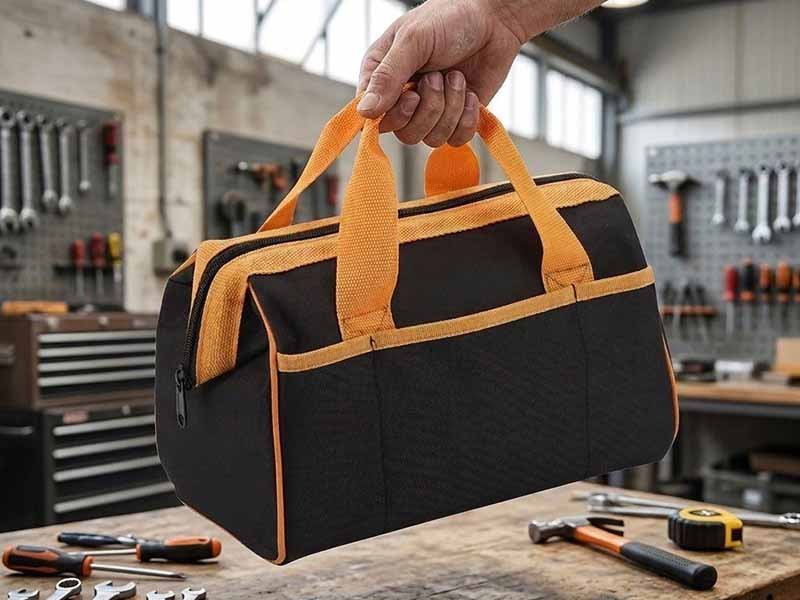
A good supplier in China is also more likely to support multiple bag categories under one roof or through long-term connected suppliers. That matters if your plan is not just one tote bag, but a broader line such as backpacks, travel bags, cosmetic bags, cooler bags, tool bags, or gym bags. Szoneier’s position fits this model well because the company develops and manufactures a wide mix of custom bags across cotton, canvas, polyester, nylon, neoprene, PVC, TPU, EVA, jute, and leather, which is exactly the kind of product range many growing brands need when they want one supplier that can scale with them.
Another reason Chinese suppliers stay competitive is experience with export-oriented production. Many factories are set up around overseas customer requirements such as logo application, barcode labels, polybag standards, hangtags, carton marks, AQL-style inspections, and private label packaging. That does not mean every supplier does it well. It means the market has enough depth that you can find suppliers who already understand these requirements if you screen carefully.
Which Regions Have Bag Manufacturers in China?
Not every region in China produces the same kinds of bags or works at the same quality level. Some regions are stronger in fashion handbags, some in backpacks and sports bags, and some in export-focused sewn goods more broadly. For sourcing, location matters because regional specialization often influences material access, labor experience, development speed, and production style.
The most relevant regions usually include these clusters:
| Region | Common Strength |
|---|---|
| Guangdong | Higher-value manufacturing, export support, broad material access |
| Fujian | Bags and cases, backpacks, sports and travel-related products |
| Zhejiang | Leather goods, accessories, mixed textile and sewn-goods production |
Fujian, especially Quanzhou, appears repeatedly across supplier records as a major bags-and-cases center. Multiple factory listings on Made-in-China describe Quanzhou as a manufacturing base for bags and cases, with local production covering backpacks, travel bags, cooler bags, cosmetic bags, and sports bags. Zhejiang also shows a strong manufacturing presence in textiles, clothing-related industry belts, and leather goods production.
Guangdong is especially valuable for brands that need broader customization, stronger export responsiveness, and more premium development support. Shenzhen and Guangzhou are backed by stronger external-trade infrastructure and dense supplier networks. Shenzhen alone exceeded RMB 4 trillion in trade volume in 2024 according to Made-in-China Insights, showing how deep the region’s export system is.
For customers, a simple rule works well:
- If you care most about sophisticated development, mixed materials, and export response, Guangdong is often a strong starting point.
- If you care about established volume production for backpacks, travel bags, or sports bags, Fujian deserves attention.
- If your line includes leather or accessory-heavy products, Zhejiang can also be worth screening.
The right region is not about prestige. It is about how well that factory cluster matches your product type.
Are Bag Manufacturers in China Good for OEM?
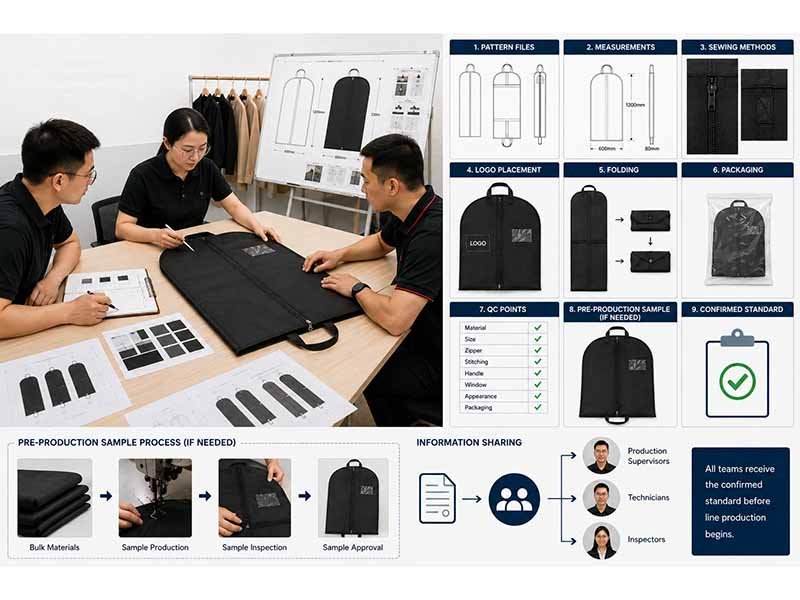
Yes, but only when the factory truly operates like an OEM manufacturer instead of only a reseller. OEM work means the supplier makes products to your design, measurement, material direction, and branding requirements. In practice, that requires more than sewing capacity. It requires sample development, material matching, spec management, and repeat-order control.
The difference between OEM and loose custom production is important. A real OEM-capable factory should be able to do most of the following:
| OEM Capability | Why It Matters |
|---|---|
| Review your tech pack or reference sample | Prevents costly design mistakes early |
| Recommend materials by use case and target price | Balances cost with performance |
| Produce development samples quickly | Speeds up launch planning |
| Retain approved standards for repeat orders | Reduces variation in later production |
| Support logo, label, and packaging details | Makes private label rollout smoother |
The OEM concept itself is widely recognized as manufacturing products for another company’s specifications and brand, while ODM typically includes more supplier-led design involvement. For bag sourcing, that distinction matters because many customers already have a design direction, brand style, or market target, and they need the factory to execute accurately rather than sell a stock item with a new logo.
This is where Szoneier has a strong positioning advantage. The company is not limited to one narrow product class. It can custom-produce tote bags, backpacks, travel bags, makeup bags, drawstring bags, fireproof bags, cooler bags, dry bags, smellproof bags, tool bags, gym bags, and more, across a wide material range. For customers, that reduces the need to keep changing suppliers as the catalog expands. It also makes it easier to build coordinated collections under one private label system.
Still, customers should stay realistic. “China is good for OEM” is true only when the screening process is serious. A factory that cannot explain stitching methods, reinforcement options, MOQ logic, or sampling timelines clearly is not suddenly a great OEM partner just because it is based in China. The location gives access to an ecosystem. The factory still has to prove it can use that ecosystem well.
What Should Customers Care About First Before Contacting Factories?
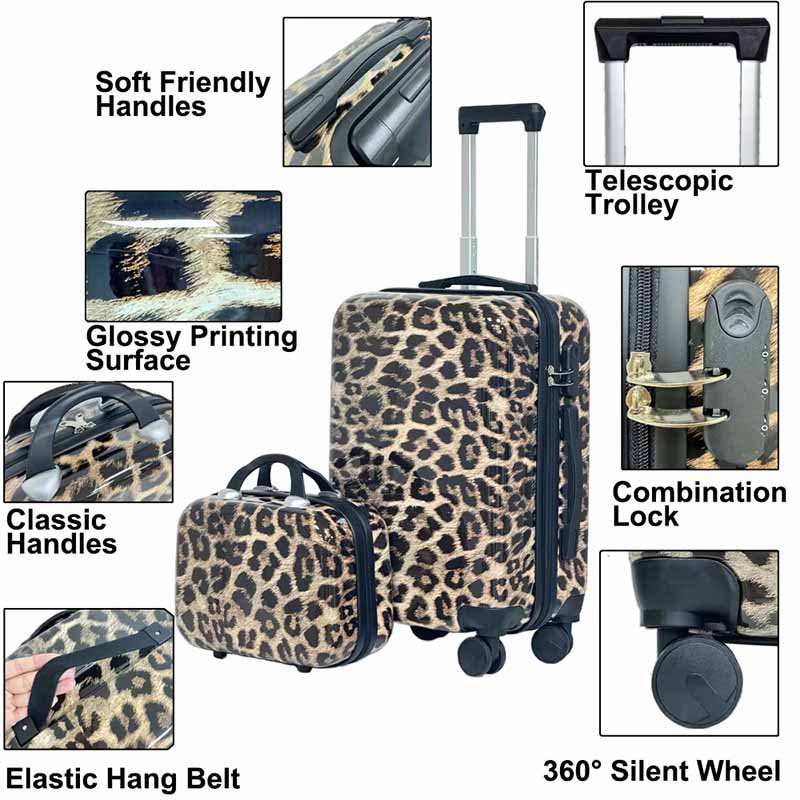
Many sourcing conversations fail before they even begin because the customer sends a very short inquiry such as: “Please quote this bag.” From the factory’s perspective, that message does not provide enough information to calculate cost, evaluate production difficulty, or recommend materials. As a result, the quotation becomes vague and the communication cycle becomes longer than necessary.
Before contacting bag manufacturers in China, customers should spend some time clarifying their product requirements. When the initial inquiry contains clear details about the bag design, materials, quantity, and target market, factories can respond with more accurate suggestions and realistic pricing. This preparation also helps customers quickly identify which manufacturers truly understand the product category.
Define the Bag Type and Intended Use
The first thing a customer should determine is the exact type of bag they want to produce and how it will be used. Different bag categories require different materials, construction methods, and quality standards.
For example, the design considerations for a cooler bag are very different from those for a canvas tote bag or a tool bag.
| Bag Type | Key Performance Requirement |
|---|---|
| Tote bags | Lightweight and durable fabric |
| Backpacks | Strong shoulder straps and structure |
| Cooler bags | Thermal insulation and waterproof lining |
| Tool bags | Reinforced seams and heavy-duty materials |
| Gym bags | Large capacity and ventilation features |
If the intended use is clearly explained, manufacturers can recommend appropriate materials and structural details. Without this information, factories may only provide general price estimates rather than practical production guidance.
Clarify Material Preferences Early
Material choice is one of the biggest factors influencing bag cost, durability, and appearance. When contacting a factory, customers should indicate the preferred material type or at least describe the expected product quality level.
Common materials used in bag manufacturing include:
| Material | Characteristics | Typical Applications |
|---|---|---|
| Cotton | Natural and breathable | Promotional tote bags |
| Canvas | Thick and durable | Shopping bags and backpacks |
| Polyester | Lightweight and water-resistant | Travel bags and backpacks |
| Nylon | Strong and abrasion resistant | Outdoor bags |
| Neoprene | Flexible and protective | Laptop sleeves |
| TPU / PVC | Waterproof coating | Dry bags and cooler bags |
| Leather | Premium appearance | Fashion bags |
Providing material guidance helps the factory estimate production cost more accurately. For instance, a 16 oz canvas tote bag requires more material and sewing strength than an 8 oz cotton promotional bag, which directly affects the unit price.
Prepare Basic Product Dimensions
Bag size influences several production factors including fabric consumption, pattern layout, and packaging volume. Even approximate dimensions can significantly improve quotation accuracy.
A simple dimension reference usually includes:
| Dimension | Example |
|---|---|
| Width | 35 cm |
| Height | 40 cm |
| Depth / gusset | 10 cm |
| Handle length | 60 cm |
Providing dimensions also helps factories determine how the bag should be constructed. For example, larger bags may require reinforced handles or thicker materials to support weight.
Decide on Branding and Logo Method
Branding is another important element in bag manufacturing. Many customers plan to sell products under their own brand, so logo application must be considered during the early stage of development.
Factories usually offer several logo options:
| Logo Method | Advantages |
|---|---|
| Screen printing | Cost-effective for simple designs |
| Embroidery | Premium appearance |
| Heat transfer | Suitable for complex graphics |
| Woven label | Durable brand identification |
| Rubber patch | Distinct visual branding |
The chosen logo method affects both production cost and manufacturing process. For example, embroidery requires additional machine time, while screen printing requires preparation of printing screens.
If customers provide logo artwork during the initial inquiry, factories can also evaluate whether the design is suitable for the chosen material.
Estimate Order Quantity
Order quantity is essential for determining price and production planning. Manufacturing costs are strongly influenced by production scale because setup work, material sourcing, and labor allocation are distributed across the total order quantity.
Typical order structures look like this:
| Order Stage | Quantity Range |
|---|---|
| Sample development | 1–3 pieces |
| Small trial order | 100–300 pieces |
| Standard production | 500–1000 pieces |
| Large-scale orders | 2000+ pieces |
Factories may adjust pricing based on these quantities. When customers clearly state their estimated order size, manufacturers can provide more realistic quotations and production timelines.
Consider Packaging and Shipping Requirements
Packaging details are often overlooked during the early inquiry stage, yet they can influence the total project cost. Retail packaging, barcode labels, and special carton markings may require additional materials and labor.
Typical packaging elements include:
| Packaging Component | Purpose |
|---|---|
| Polybag | Protects the bag during shipping |
| Hangtag | Displays brand information |
| Barcode label | Required for retail distribution |
| Custom carton marks | Identifies shipment details |
If the bags will be sold through online marketplaces or retail stores, these packaging requirements should be discussed early.
Prepare Visual References
Finally, providing visual references helps factories understand the design concept quickly. These references may include product photos, sketches, or technical drawings.
Visual materials help clarify features such as:
- pocket placement
- zipper type
- handle design
- stitching style
- hardware accessories
Even a simple reference image can greatly reduce misunderstandings during the product development process.
Why Preparation Improves Communication With Factories
Factories receive many inquiries every day, but the most productive discussions usually begin with detailed product information. When customers provide clear specifications, manufacturers can respond with practical recommendations instead of generic quotations.
A well-prepared inquiry allows the factory to evaluate:
- production feasibility
- material availability
- estimated manufacturing cost
- potential design improvements
This preparation ultimately saves time for both sides and increases the chances of developing a successful bag product.
For customers working with experienced manufacturers such as Szoneier, providing these details early allows the development team to suggest better materials, optimize construction methods, and move quickly from concept to sample production.
How Do You Read a Supplier’s Website Without Being Misled?
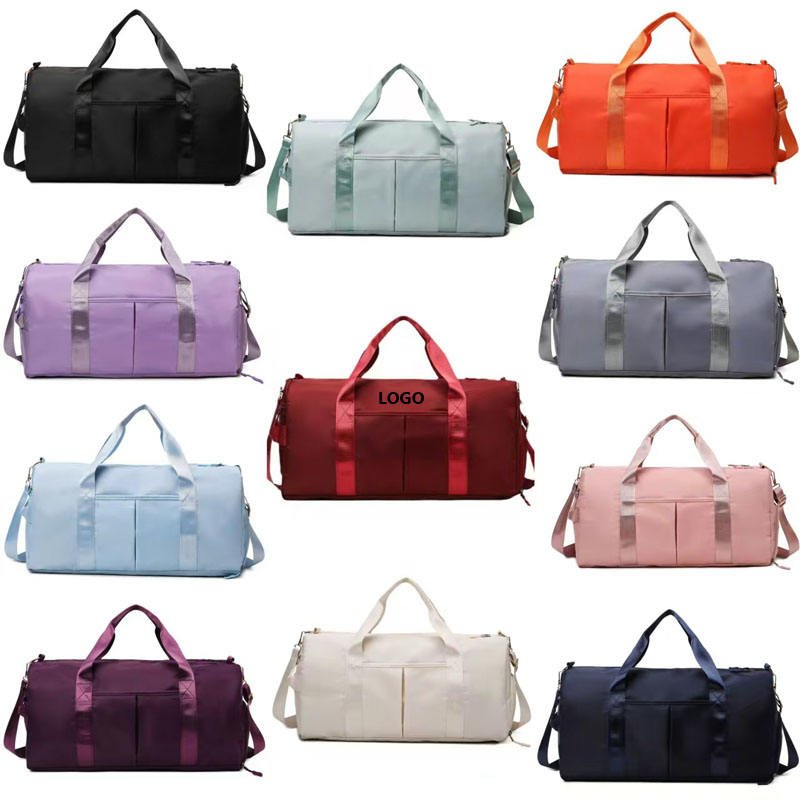
A supplier’s website is useful, but it should never be treated as proof by itself. In bag sourcing, many companies can build a clean website, upload attractive product photos, and write polished marketing copy. That does not automatically mean they own a factory, understand your product category, or can keep quality stable in bulk production.
A better mindset is this: a supplier website is a screening tool, not a final decision tool. Its real value is helping you judge whether the company is worth the next step, such as a detailed inquiry, sample request, video call, or factory audit.
For most customers, the risk is not that a website is “fake” in the obvious sense. The bigger risk is that the website creates the impression of deeper manufacturing ability than the company actually has. A trading company may present itself like a factory. A factory may look experienced in every bag type but only be strong in two or three categories. A supplier may show excellent samples online but struggle with repeat-order consistency. That is why reading the site critically saves time and money later.
Start With Product Logic, Not Website Design
A beautiful website can be helpful, but the first thing to check is not the homepage style. It is whether the product range makes industrial sense.
Look at the categories and ask simple questions:
- Does the company focus on bag products, or does it also sell many unrelated goods?
- Do the product types fit together naturally?
- Does the material range match the product range?
- Does the supplier seem specialized, or does it look like a broad catalog reseller?
For example, a supplier focused on tote bags, backpacks, travel bags, cooler bags, tool bags, and cosmetic bags is commercially believable if it also discusses materials like canvas, polyester, nylon, neoprene, TPU, EVA, and leather. That shows a reasonable link between products and production capability.
But if one site claims deep expertise in handbags, hard luggage, silicone kitchen tools, pet toys, electronics, and furniture, that should raise questions. A company can trade many things, but that does not mean it manufactures them well.
Here is a practical screening table:
| Website Signal | What It Usually Suggests |
|---|---|
| Product range is focused and related | Better chance of real category experience |
| Product range is extremely broad and unrelated | Higher chance of trading or mixed sourcing |
| Materials are explained clearly | Better technical understanding |
| Materials are barely mentioned | Weaker product-development depth |
| Product pages discuss structure and function | Stronger factory or engineering mindset |
| Product pages only repeat sales phrases | More marketing than manufacturing substance |
A strong bag supplier website usually shows clear product logic. That matters because real manufacturing ability tends to be built around categories, materials, and process familiarity, not around a random catalog.
Check Whether the Site Talks About Real Manufacturing Details
One of the fastest ways to judge a supplier website is to see whether it explains real production details or only uses general sales language.
A real bag manufacturer usually understands and mentions things like:
- fabric types and weights
- lining options
- zipper brands or zipper types
- stitching and reinforcement points
- printing methods
- MOQ logic
- sample lead times
- production lead times
- packaging options
- quality-control stages
A weaker supplier often avoids these specifics and uses broad phrases like:
- high quality
- best service
- competitive price
- fast delivery
- professional team
- one-stop solution
Those phrases are not wrong, but by themselves they tell you nothing. Every supplier can write them.
A stronger website tends to answer real customer questions before you ask them. For example, if you visit a page about custom cooler bags, does the supplier explain insulation materials, leakproof lining choices, zipper sealing, and common testing points? If you visit a page about backpacks, does it discuss shoulder-strap padding, load-bearing reinforcement, back-panel construction, and fabric denier options?
That kind of detail is much harder to fake consistently across a website.
Use this checklist:
| Detail on Website | Why It Matters |
|---|---|
| Fabric names and specifications | Shows technical knowledge |
| Bag construction explanations | Shows actual product familiarity |
| Sample and MOQ information | Shows commercial practicality |
| Logo method comparisons | Shows customization experience |
| QC process description | Shows production control awareness |
| Lead time ranges | Shows order-management realism |
If the site explains none of these, it may still be a legitimate company, but you should assume you still know very little about its real ability.
Look Closely at Factory Photos and Videos
Factory photos are helpful, but they must be read carefully. Many customers see workshop photos and assume that proves strong production. Not necessarily. The goal is not just to confirm that sewing machines exist. The goal is to understand whether the facility shown matches the company’s claims.
Useful workshop images usually include:
- cutting tables or cutting machines
- sewing lines
- sample room
- material storage area
- QC inspection area
- finished goods packing area
- logo printing or embroidery area, if relevant
If a supplier claims to be a strong OEM bag factory, but the website only shows close-up product photos and no production environment, that is a gap. If the site shows only a few machines with no people, no line layout, and no workflow scenes, that is also limited evidence.
More useful signs include:
| Factory Content | Better Sign |
|---|---|
| Sample room photos | Suggests development ability |
| Production line photos | Suggests real sewing capacity |
| Material warehouse photos | Suggests active inventory handling |
| QC station photos | Suggests organized inspection |
| Carton packing photos | Suggests export order experience |
| Videos of workers sewing or inspecting | Harder to fake than static images |
You do not need a website to show every detail, but you do want enough evidence that the business is more than a digital storefront.
Customers should also compare the website claim with the visual evidence. For example, if a supplier says it handles many complex custom categories with fast lead times and low MOQ, does the site show a setup that supports that claim? A company promising broad capability should usually show broad operational evidence.
Judge the Quality of the Product Photos The Right Way
Many customers look at product photos and only ask, “Does this bag look nice?” That is not enough. Product photos can tell you much more if you look at them like a sourcing professional.
Check the following:
- Are the stitches straight and even?
- Do the panels align cleanly?
- Are handles symmetrical?
- Do corners look full and stable, or collapsed?
- Does the zipper path look smooth?
- Does the bag shape look balanced?
- Are fabric surfaces wrinkled or clean?
- Does the logo look sharp and well placed?
These details matter because factories that regularly produce higher-quality bags often show cleaner product finishing even in their catalog images.
Here is a useful review table:
| Product Photo Detail | What It Can Reveal |
|---|---|
| Clean top edge | Better finishing discipline |
| Straight stitching | Better sewing consistency |
| Even handle placement | Better pattern and assembly control |
| Full, stable shape | Better material choice and structure |
| Sharp logo application | Better branding execution |
| Clean interior photos | Confidence in construction quality |
Also check whether the photos look original. If many product images appear to come from different styles, lighting conditions, and branding directions with no consistency, the supplier may be collecting images from multiple sources. That does not prove dishonesty, but it does reduce the value of the website as evidence.
Original, consistent product photography usually suggests the company has direct access to the products it is promoting.
Read the Custom Process Page Very Carefully
If the supplier claims to support OEM or private label work, the website should explain how the custom process works. This is one of the most important sections for serious customers.
A useful custom process page often includes:
| Process Step | What You Want to See |
|---|---|
| Inquiry stage | What information the customer should send |
| Design review | How the factory checks feasibility |
| Material selection | How fabrics and trims are chosen |
| Sampling | Sample time and revision logic |
| Bulk production | Lead time and process flow |
| QC | Inspection checkpoints |
| Packaging and shipping | Export and packing support |
A weak custom page often says only “send us your logo” or “we support OEM/ODM.” A stronger one shows that the company knows what custom development actually involves.
For example, if you are sourcing a custom backpack, the site should make it clear whether the supplier can handle structure development, foam padding, lining, webbing, zipper selection, logo options, and packaging. If you are sourcing a cooler bag, the site should talk about insulation, leakproof construction, foil or EVA lining, and sealing details.
The more the custom process reflects real work, the more useful the website becomes.
Check Whether the Website Helps You Understand MOQ and Lead Time
MOQ and lead time are among the first things customers care about, yet many supplier websites avoid clear answers. That is understandable to a point, because MOQ can vary by bag type, material, and logo method. But a good website should still help you understand the order logic.
A stronger supplier website may say things like:
- simple cotton tote bags may support lower MOQs
- structured backpacks may require higher MOQs
- sample time is usually 5–7 days or 7–10 days
- bulk lead time depends on quantity and materials
- custom hardware or special fabrics affect schedule
That kind of explanation is useful because it shows the supplier understands production economics.
A weak site often claims both “very low MOQ” and “very fast delivery” for every product category without context. That is usually unrealistic. A serious factory knows that MOQ and lead time are linked to:
| Production Factor | Effect on MOQ or Lead Time |
|---|---|
| Fabric availability | In-stock materials reduce waiting time |
| Logo method | Embroidery, patches, or metal logos add steps |
| Product complexity | More pockets and structure increase labor time |
| Order size | Larger orders need more line time |
| Season | Peak seasons affect production planning |
Customers should prefer websites that explain these realities instead of hiding them.
Read the About Us Page for Operational Clues
The “About Us” page is often ignored, but it can reveal a lot about whether the company is positioned like a manufacturer or mainly like a trader.
A useful About Us page often includes:
- founding year
- factory location
- main product categories
- material strengths
- export markets
- team or workshop information
- production philosophy
- development support
- quality-control approach
Look for alignment. If the company says it has 18 years of experience, does the rest of the site reflect that depth? Are there detailed product pages, process explanations, factory information, and material knowledge? Or is the site thin and generic?
You are not looking for a perfect corporate story. You are looking for internal consistency.
Here is a simple scoring view:
| About Us Clue | What It Suggests |
|---|---|
| Specific years and product focus | More believable operating history |
| Clear factory city and region | More traceable business identity |
| Material and category expertise | More specialized manufacturing base |
| Vague statements only | Weaker proof of real capability |
For a company like Szoneier, the story is commercially coherent when the site presents years of experience, broad custom bag categories, wide material capability, and OEM/private-label support in a way that fits together logically.
Use Contact Behavior to Test the Website’s Credibility
The website is only step one. The real test begins when you make contact.
A reliable supplier usually responds in a way that matches what the website promised. If the website claims strong custom development, the sales or project team should ask for product dimensions, materials, artwork, quantity, and packaging details. If the website claims broad bag expertise, the team should be able to discuss recommended fabrics, logo methods, and construction points for your category.
After first contact, compare the response with the website:
| Website Claim | What the Reply Should Show |
|---|---|
| “We do OEM” | Asks detailed product questions |
| “We offer low MOQ” | Explains MOQ by bag type |
| “We control quality strictly” | Describes QC stages |
| “We sample fast” | Gives realistic sample time |
| “We support many materials” | Recommends materials by use case |
If the website looks strong but the replies are vague, slow, or disconnected from the product, trust the reply more than the website. Websites are easy to polish. Real communication is harder to fake.
What Should Customers Do After Reading the Website?
The best next step is not to trust or reject the supplier immediately. It is to move to verification.
After reviewing the site, do these things:
- send a detailed inquiry
- ask category-specific questions
- request recent sample photos or videos
- ask about MOQ by your exact bag type
- ask about sample lead time
- request factory photos or video call if needed
- compare 3 to 5 suppliers side by side
A supplier website should help you narrow the field, not make the final choice for you.
In practical sourcing, a trustworthy website is one that makes the next step easier because it gives you real, useful signals about product focus, manufacturing logic, custom workflow, and communication style. That is the right way to read it. Not as proof, but as the first filter between you and a costly mistake.
What Types of Bag Manufacturers in China Exist?
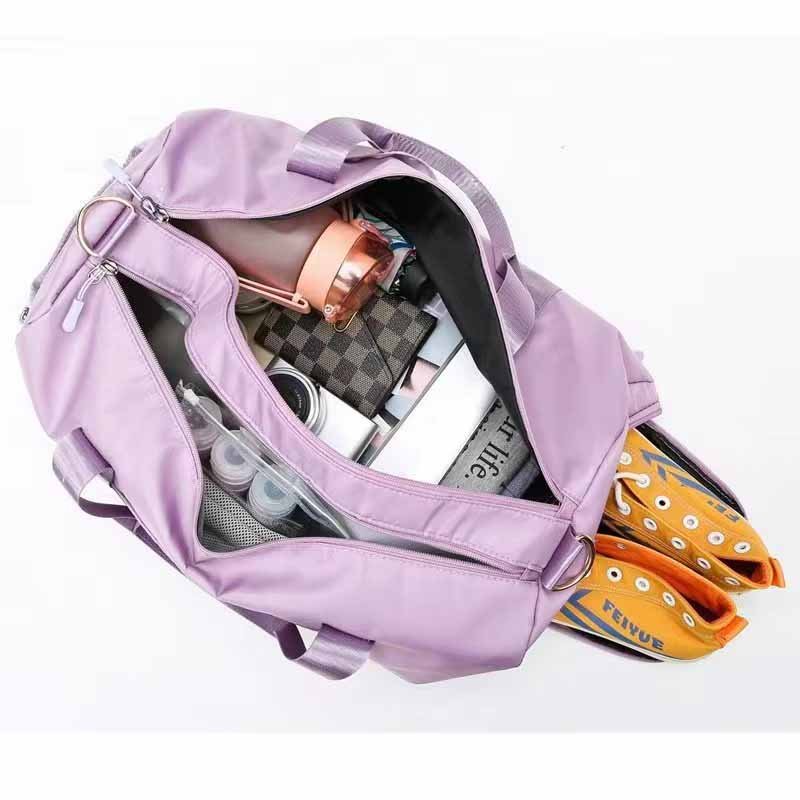
Understanding the different types of bag manufacturers in China is one of the most important steps before starting supplier outreach. Many sourcing problems happen because buyers assume every supplier operates in the same way. In reality, Chinese bag suppliers fall into several categories, each with different strengths, limitations, and business models.
A buyer looking for custom OEM production should clearly distinguish between factories that develop and manufacture products themselves and companies that mainly coordinate production through other factories. The difference affects pricing, communication speed, production control, and long-term cooperation.
What Is an OEM Bag Manufacturer in China?
An OEM bag manufacturer in China produces bags according to the customer’s design, specifications, and branding. The buyer typically provides product information such as size, materials, logo method, and packaging requirements. The factory then develops samples and organizes bulk production.
In the bag industry, OEM manufacturing is widely used by international brands, Amazon sellers, retailers, and promotional product companies.
A typical OEM cooperation structure looks like this:
| Production Step | Factory Responsibility | Customer Responsibility |
|---|---|---|
| Design review | Evaluate structure and materials | Provide drawings or reference sample |
| Sampling | Develop prototype bag | Approve sample or request revision |
| Material sourcing | Prepare fabric, lining, hardware | Confirm material choices |
| Production | Organize cutting and sewing lines | Confirm production quantity |
| Quality inspection | Conduct in-line and final inspection | Review inspection report |
| Shipment | Prepare packaging and export documents | Arrange shipping or forwarder |
OEM manufacturing works well when the customer already has a clear product concept and brand identity. For example, a company developing custom backpacks, travel bags, or cooler bags may already know its target materials and logo design. The factory’s role is to convert that concept into a production-ready product.
Factories like Szoneier operate primarily in this OEM model. They help customers develop custom bags using materials such as canvas, polyester, neoprene, PVC, TPU, EVA, and leather while integrating logo printing, labels, and packaging into the production process.
What Is an ODM Bag Manufacturer in China?
ODM stands for “original design manufacturer.” In this model, the supplier develops its own bag designs and offers them to customers for branding or minor customization.
This approach is common for buyers who want to launch products quickly without building a completely new design.
The ODM process usually follows a structure like this:
| Stage | Description |
|---|---|
| Product catalog | Factory offers existing bag styles |
| Design adjustment | Buyer modifies color, material, or logo |
| Sample preparation | Factory produces modified sample |
| Bulk production | Order proceeds based on approved design |
ODM products can include many types of bags such as:
- backpacks
- cosmetic bags
- drawstring bags
- tote bags
- travel bags
The main advantage of ODM manufacturing is speed. Because the basic design already exists, development time is shorter. However, ODM products may offer less differentiation compared with fully custom OEM products.
For brands focused on unique product identity, OEM manufacturing usually provides greater flexibility.
Are Trading Companies Bag Manufacturers in China?
Not every supplier advertising bags online is a factory. Many companies operate as trading firms that coordinate production through external factories.
Trading companies can still be useful partners in certain situations. They may help manage communication, consolidate orders from multiple factories, or handle export logistics. However, buyers should understand the differences between trading companies and direct manufacturers.
The following comparison illustrates the distinction:
| Supplier Type | Advantages | Limitations |
|---|---|---|
| Direct factory | Strong production control, lower cost | Communication depends on factory experience |
| Trading company | Easier communication, broader product sourcing | Less direct production control |
A common way to identify supplier type is to ask detailed questions about production capability.
For example, buyers may ask:
- How many sewing lines does the factory operate?
- What types of bag materials do you process in-house?
- Can you show photos of cutting and sewing workshops?
- What is your monthly production capacity?
Factories usually answer these questions clearly because they operate the equipment themselves. Trading companies may provide more general answers or request additional time to confirm with their partner factories.
For custom product development, many brands prefer working directly with manufacturers because it allows faster problem solving during sampling and production.
How Can You Find Bag Manufacturers in China?
Finding bag manufacturers in China requires using multiple sourcing channels. Relying on only one platform can limit supplier options and make it harder to compare factories effectively.
Professional sourcing teams usually combine online research, industry platforms, and trade events to build a reliable supplier list.
How Do Buyers Search Bag Manufacturers in China?
Online search remains one of the most common ways to identify potential suppliers. Search engines help buyers discover factory websites, industry directories, and product catalogs.
Effective search strategies often include combining product keywords with manufacturing terms.
Examples include:
- “custom backpack manufacturer China”
- “canvas tote bag factory China”
- “cooler bag OEM supplier China”
Using detailed product keywords helps narrow results to manufacturers specializing in a particular category.
When reviewing supplier websites, buyers should pay attention to several indicators:
| Website Element | What It Reveals |
|---|---|
| Product specialization | Indicates factory expertise |
| Customization process | Shows OEM capability |
| Factory images | Suggests real production facilities |
| Material information | Demonstrates technical knowledge |
Suppliers that explain production steps, materials, and customization methods often have stronger manufacturing experience.
Which Trade Shows Show Bag Manufacturers in China?
Trade shows remain one of the best opportunities to meet bag manufacturers directly. These events allow buyers to inspect product samples, discuss customization options, and evaluate supplier professionalism in person.
Some major sourcing exhibitions include:
| Trade Show | Location | Focus |
|---|---|---|
| Canton Fair | Guangzhou | General export products |
| Global Sources Expo | Hong Kong | Consumer goods and accessories |
| China International Bags Expo | Shanghai | Bags and luggage |
Meeting suppliers face-to-face allows buyers to evaluate several important factors:
- product craftsmanship
- material quality
- supplier communication ability
- production experience
Trade shows also provide opportunities to compare multiple suppliers quickly, which can help buyers identify factories that align with their product requirements.
Do Agents Help Find Bag Manufacturers in China?
Sourcing agents are another option for companies unfamiliar with the Chinese manufacturing market. These professionals assist buyers in locating suppliers, negotiating prices, and monitoring production.
Agents can provide several useful services:
| Service | Benefit |
|---|---|
| Supplier search | Identifies factories matching product needs |
| Factory verification | Confirms manufacturing capability |
| Quality inspection | Monitors production quality |
| Logistics coordination | Manages shipment arrangements |
However, buyers should choose agents carefully and understand their fee structure. Some agents charge a commission based on order value, while others charge fixed service fees.
Many experienced buyers eventually develop direct relationships with manufacturers once they understand the sourcing process.
For brands planning long-term product lines, working directly with an experienced bag factory—such as Szoneier—often provides better communication and stronger product development support.
How Do You Check Bag Manufacturers in China?
Before committing to a production order, it is essential to verify that a supplier truly operates as a reliable manufacturer. Many sourcing problems occur because buyers rely only on quotations or online product photos without evaluating the factory’s real capabilities. Checking bag manufacturers in China requires reviewing their production capacity, quality systems, development ability, and communication practices.
How Do You Review Bag Manufacturers in China Quality?
Quality control is one of the most important factors when evaluating bag manufacturers in China. A reliable factory does not rely on final inspection alone. Instead, it applies quality checks throughout the entire production process.
Most professional bag factories follow a structured inspection workflow.
| Quality Stage | Inspection Focus |
|---|---|
| Raw material inspection | Fabric thickness, color consistency, hardware quality |
| Cutting inspection | Panel accuracy and material utilization |
| In-line sewing inspection | Stitch strength, seam alignment, reinforcement points |
| Final product inspection | Appearance, dimensions, logo quality |
| Packaging inspection | Carton quantity, labeling accuracy |
A factory with an organized quality system should also maintain documentation for production standards. These records help ensure that repeat orders maintain the same material specifications and construction methods.
Customers may also request sample testing. For example, bag manufacturers may perform durability tests such as:
| Test Type | Purpose |
|---|---|
| Load testing | Evaluates handle strength |
| Abrasion testing | Checks fabric durability |
| Colorfastness testing | Prevents dye fading |
| Zipper cycling test | Ensures smooth operation |
Factories that regularly perform these tests are generally better prepared to maintain consistent quality during bulk production.
What Capacity Should Bag Manufacturers in China Have?
Production capacity determines whether a supplier can meet order deadlines. Buyers should evaluate both the size of the factory and the efficiency of its production system.
Key capacity indicators include:
| Capacity Factor | What It Indicates |
|---|---|
| Number of sewing lines | Daily output capability |
| Worker experience | Production efficiency |
| Cutting equipment | Material preparation speed |
| Warehouse size | Inventory and storage capacity |
For example, a mid-sized bag factory may operate 5–10 sewing lines, producing between 3,000 and 10,000 bags per month depending on product complexity.
Factories specializing in custom OEM production also maintain sample development teams. These teams handle new product prototypes, allowing brands to refine designs before mass production.
Manufacturers like Szoneier, with more than 18 years of bag production experience, typically integrate development, sampling, and bulk production under one system. This structure allows new designs to move from concept to finished product efficiently.
Do Bag Manufacturers in China Offer Samples?
Sampling is an essential step when working with bag manufacturers in China. Samples allow buyers to verify materials, workmanship, and design details before committing to a large order.
A typical sampling process follows these stages:
| Step | Description |
|---|---|
| Design confirmation | Customer submits drawings or reference samples |
| Material preparation | Factory selects fabrics and accessories |
| Prototype production | First sample is produced |
| Sample evaluation | Customer reviews product |
| Revision | Adjustments are made if necessary |
Sampling timelines vary depending on product complexity. For many bag styles, the development process takes between 5 and 10 days.
Factories often charge a sample fee to cover material and labor costs. However, many manufacturers refund this fee once the customer places a bulk order.
Sampling provides valuable insight into how the factory handles communication, revisions, and product improvements. Suppliers that respond quickly and provide clear technical explanations usually demonstrate stronger development capability.
How Do You Work With Bag Manufacturers in China?
Once a reliable supplier has been identified, the next step is establishing a structured cooperation process. Clear communication and well-defined expectations help ensure that production runs smoothly and that both parties understand the project requirements.
How Do You Contact Bag Manufacturers in China?
The first contact with a bag manufacturer often determines how efficiently the project will proceed. When reaching out to a factory, it is helpful to provide detailed information about the product.
Important details include:
| Information to Provide | Purpose |
|---|---|
| Product type | Helps supplier evaluate capability |
| Material preference | Determines sourcing requirements |
| Estimated quantity | Influences pricing and production planning |
| Logo method | Affects printing process |
| Target market | Guides quality expectations |
A clear inquiry message allows the supplier to provide accurate feedback and quotations.
Buyers should also evaluate how quickly the factory responds and how detailed their answers are. Strong manufacturers usually ask follow-up questions to clarify product specifications and improve the design.
What MOQ Do Bag Manufacturers in China Require?
Minimum order quantity (MOQ) is an important consideration when sourcing custom bags. MOQs vary depending on materials, construction complexity, and production setup costs.
Typical MOQ ranges for bag production include:
| Product Type | Typical MOQ |
|---|---|
| Simple tote bags | 100–300 pieces |
| Backpacks | 300–500 pieces |
| Cooler bags | 300–500 pieces |
| Technical bags | 500+ pieces |
Factories offering OEM services may adjust MOQs depending on the project. For example, a manufacturer may accept smaller trial orders for new clients or startup brands.
Szoneier supports low MOQ customization, which helps small and medium buyers test new products without committing to very large quantities.
How Do Bag Manufacturers in China Start Production?
After the sample is approved and the order is confirmed, the production process begins. Manufacturers typically follow a standardized workflow to maintain efficiency and product consistency.
A simplified production timeline looks like this:
| Production Stage | Typical Duration |
|---|---|
| Material procurement | 7–10 days |
| Cutting and preparation | 2–3 days |
| Sewing assembly | 10–15 days |
| Quality inspection | 2–3 days |
| Packaging and shipment | 2–5 days |
Overall production lead times often range between 25 and 35 days depending on order size and product complexity.
During production, many factories provide progress updates and inspection reports so customers can monitor the order status.
Reliable manufacturers maintain consistent communication throughout the production cycle, ensuring that potential issues are resolved before shipment.
Start Your Custom Bag Project With Szoneier
Finding reliable bag manufacturers in China requires careful evaluation, but the effort is worthwhile when the right partner is selected. A strong manufacturing partner provides more than production capacity—it provides design guidance, quality control, and long-term support for product development.
Szoneier has more than 18 years of experience in bag design, development, and manufacturing. The company specializes in producing custom bags using a wide range of materials, including cotton, canvas, polyester, nylon, neoprene, PVC, TPU, EVA, jute, and leather.
The factory supports many product categories such as:
- tote bags
- backpacks
- travel bags
- makeup bags
- drawstring bags
- cooler bags
- tool bags
- gym bags
- dry bags
- fireproof bags
Szoneier works with international brands, e-commerce businesses, and small to medium buyers to develop custom OEM and private label bag products. Services include free design assistance, rapid sampling, low MOQ production, and strict quality control.
If you are planning a new bag product or searching for a reliable manufacturing partner, Szoneier can help transform your concept into a finished product ready for the global market.
Contact Szoneier today to discuss your custom bag project and receive a professional quotation.