 Skip to content
How to Choose a Waterproof Dry Bags Factory with Reliable Welding Machines
- Eric
- March 5, 2026
- 8:34 am
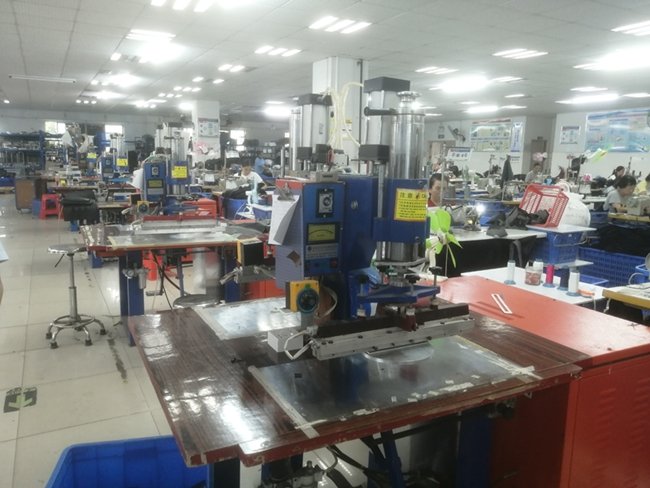
Outdoor brands, marine equipment companies, and adventure gear retailers all rely on one product to keep gear safe from water: waterproof dry bags. These bags are used on kayaks, boats, motorcycles, hiking trails, and beaches around the world. When a dry bag fails, the result is simple — expensive equipment gets soaked.
That is why the manufacturing technology behind waterproof dry bags matters so much. Unlike normal fabric bags that rely on stitching, dry bags depend on welding technology to seal seams completely. The welding process bonds waterproof materials together using heat, pressure, or radio-frequency energy. If this process is not done correctly, even a well-designed bag will leak.
Choosing a reliable waterproof dry bags factory requires evaluating welding technology, material quality, seam construction, and factory production experience. Factories using professional RF or high-frequency welding machines typically produce stronger waterproof seams than stitched construction. Buyers should review welding equipment, seam strength testing, waterproof materials such as PVC or TPU, and the factory’s quality control process before selecting a supplier.
Many buyers focus only on price or design. However, the real difference between a reliable dry bag and a leaking one often comes down to a single factor: the quality of the welding machines used in production. Let’s explore what really matters when choosing a waterproof dry bags factory.
What Are Waterproof Dry Bags?
Waterproof dry bags are sealed storage bags designed to keep items completely dry in wet or unpredictable environments such as kayaking, boating, rafting, fishing, hiking, and motorcycle travel. Unlike traditional fabric bags that rely on stitched seams, waterproof dry bags are constructed using laminated waterproof materials and welded seams, which eliminate needle holes and prevent water penetration.
In practical terms, a dry bag acts as a flexible waterproof container. Outdoor users place clothing, electronics, documents, or camping equipment inside the bag, roll down the opening several times, and secure it with a buckle system. When the closure is properly rolled and sealed, the bag creates a barrier that keeps water, sand, and dust away from the contents.
For outdoor brands and retailers, dry bags are one of the most trusted gear accessories because they solve a very simple but critical problem: protecting valuables from water damage.
How Waterproof Dry Bags Actually Work
The waterproof performance of a dry bag depends on three core design elements:
| Component | Function | Why It Matters |
|---|---|---|
| Waterproof laminated fabric | Blocks water from entering through the material surface | Prevents absorption or seepage |
| Welded seams | Fuses fabric layers without needle holes | Eliminates leak points |
| Roll-top closure system | Compresses the opening to create a tight seal | Prevents water entry from the top |
The roll-top closure is especially important. Most dry bags require the user to roll the top edge at least three times before locking the buckle. Each fold increases the seal pressure and improves waterproof reliability.
If the bag is only folded once or twice, the seal may not be strong enough to prevent water entry during splashes or brief immersion.
Common Sizes and Capacity of Waterproof Dry Bags
Dry bags are produced in multiple sizes to suit different outdoor activities. Capacity is usually measured in liters.
| Capacity | Typical Use |
|---|---|
| 2–5L | phones, wallets, keys |
| 10L | day trip clothing, small gear |
| 20L | kayaking gear, camera equipment |
| 30L | camping equipment |
| 40L+ | expedition gear or multi-day trips |
Many outdoor brands offer size-coded product lines, where each capacity is assigned a different color to help customers identify the bag quickly.
Example product range:
| Capacity | Typical Product Height | Recommended Use |
|---|---|---|
| 5L | 30–35 cm | personal valuables |
| 10L | 40–45 cm | day trips |
| 20L | 50–55 cm | kayaking or rafting |
| 30L | 60–70 cm | camping storage |
Larger bags generally use thicker materials because the seams must withstand greater weight and stress.
Why Outdoor Brands Continue to Use Dry Bags
Outdoor equipment brands prefer dry bags because they provide reliable waterproof protection while remaining lightweight and flexible.
Compared with rigid waterproof cases, dry bags offer several advantages:
| Feature | Dry Bags | Hard Waterproof Cases |
|---|---|---|
| weight | light | heavy |
| storage | flexible and compressible | bulky |
| portability | easy to pack | difficult to carry |
| cost | lower | higher |
Because of these advantages, dry bags have become a standard accessory in many outdoor categories including kayaking, camping, sailing, and motorcycle travel.
Many brands also integrate dry bags into complete outdoor gear systems, selling them alongside backpacks, waterproof duffels, and adventure equipment.
What Users Expect from a Good Waterproof Dry Bag
From the perspective of end customers, a reliable dry bag must meet several expectations.
| Customer Expectation | Performance Requirement |
|---|---|
| keeps gear dry | welded seams and waterproof fabric |
| easy to use | simple roll-top closure |
| durable | abrasion-resistant material |
| lightweight | optimized material thickness |
| visible in outdoor environments | bright color options |
Outdoor gear customers rely on these products during trips where equipment protection is critical. A leaking dry bag can damage electronics, clothing, or safety gear, which is why brands pay close attention to manufacturing quality.
Which Materials Work Best for Waterproof Dry Bags?
Waterproof dry bags are sealed storage bags designed to keep items completely dry in wet or unpredictable environments such as kayaking, boating, rafting, fishing, hiking, and motorcycle travel. Unlike traditional fabric bags that rely on stitched seams, waterproof dry bags are constructed using laminated waterproof materials and welded seams, which eliminate needle holes and prevent water penetration.
In practical terms, a dry bag acts as a flexible waterproof container. Outdoor users place clothing, electronics, documents, or camping equipment inside the bag, roll down the opening several times, and secure it with a buckle system. When the closure is properly rolled and sealed, the bag creates a barrier that keeps water, sand, and dust away from the contents.
For outdoor brands and retailers, dry bags are one of the most trusted gear accessories because they solve a very simple but critical problem: protecting valuables from water damage.
How Waterproof Dry Bags Actually Work
The waterproof performance of a dry bag depends on three core design elements:
| Component | Function | Why It Matters |
|---|---|---|
| Waterproof laminated fabric | Blocks water from entering through the material surface | Prevents absorption or seepage |
| Welded seams | Fuses fabric layers without needle holes | Eliminates leak points |
| Roll-top closure system | Compresses the opening to create a tight seal | Prevents water entry from the top |
The roll-top closure is especially important. Most dry bags require the user to roll the top edge at least three times before locking the buckle. Each fold increases the seal pressure and improves waterproof reliability.
If the bag is only folded once or twice, the seal may not be strong enough to prevent water entry during splashes or brief immersion.
Common Sizes and Capacity of Waterproof Dry Bags
Dry bags are produced in multiple sizes to suit different outdoor activities. Capacity is usually measured in liters.
| Capacity | Typical Use |
|---|---|
| 2–5L | phones, wallets, keys |
| 10L | day trip clothing, small gear |
| 20L | kayaking gear, camera equipment |
| 30L | camping equipment |
| 40L+ | expedition gear or multi-day trips |
Many outdoor brands offer size-coded product lines, where each capacity is assigned a different color to help customers identify the bag quickly.
Example product range:
| Capacity | Typical Product Height | Recommended Use |
|---|---|---|
| 5L | 30–35 cm | personal valuables |
| 10L | 40–45 cm | day trips |
| 20L | 50–55 cm | kayaking or rafting |
| 30L | 60–70 cm | camping storage |
Larger bags generally use thicker materials because the seams must withstand greater weight and stress.
What Materials Are Used in Waterproof Dry Bag
The majority of waterproof dry bags are produced using laminated waterproof fabrics. These fabrics combine a base textile (usually polyester or nylon) with a waterproof coating layer.
The two most widely used material systems are:
| Material | Key Characteristics | Typical Applications |
|---|---|---|
| PVC tarpaulin | durable, abrasion resistant | marine and heavy outdoor use |
| TPU laminated fabric | flexible, lightweight | premium outdoor gear |
PVC materials are widely used because they offer strong durability and stable welding performance. TPU materials are often used by higher-end outdoor brands because they provide better flexibility and environmental performance.
Material thickness also affects durability.
| Thickness | Typical Application |
|---|---|
| 0.3–0.4 mm | lightweight travel bags |
| 0.5 mm | standard outdoor dry bags |
| 0.6–0.7 mm | heavy-duty marine bags |
Thicker materials increase abrasion resistance and seam strength but also increase product weight.
How Waterproof Are Dry Bags in Real Use?
Many customers ask whether dry bags are completely waterproof. The answer depends on how the bag is used and how it was manufactured.
Well-constructed dry bags can protect contents from:
- heavy rain
- water splashes
- waves from boats or kayaks
- short accidental submersion
However, most dry bags are not designed for long underwater exposure like diving equipment.
Waterproof performance is usually influenced by:
| Factor | Impact on Waterproof Performance |
|---|---|
| seam welding quality | determines leak resistance |
| material thickness | affects durability |
| roll-top sealing method | determines closure tightness |
| hardware strength | maintains closure pressure |
If seams are poorly welded or materials are too thin, water may eventually enter through microscopic gaps.
How Do Welding Machines Affect Waterproof Dry Bags?
Waterproof dry bags rely on welding machines to seal seams. If welding is unstable, the bag leaks even if the material is expensive. This is why experienced sourcing teams often evaluate welding equipment before discussing price or logo customization.
Welding machines fuse waterproof fabrics together using controlled heat, pressure, or radio-frequency energy. Instead of stitching two panels with thread, the machine melts the material layers so they bond into a single continuous seam.
When the welding process is correct, the seam becomes almost as strong as the fabric itself.
What Welding Machines Are Used for Waterproof Dry Bags?
Factories producing waterproof dry bags usually rely on three types of welding systems:
| Welding Method | How It Works | Typical Use |
|---|---|---|
| RF welding (high frequency) | electromagnetic energy melts material | TPU and PVC laminates |
| Hot air welding | heated air melts seam layers | lightweight waterproof fabrics |
| Hot wedge welding | heated metal wedge bonds layers | long straight seams |
RF welding machines are often used in high-end dry bag production because they can create consistent welds across complex shapes.
Hot air welding machines are common in outdoor gear factories because they allow flexible seam geometry and are easier to operate for medium production volumes.
Hot wedge welding is mainly used for long seams such as:
- large dry duffel bags
- inflatable boat fabric
- industrial waterproof bags
Each machine type has advantages depending on the material and seam design.
How Do RF Welding and Heat Welding Work for Waterproof Dry Bags?
RF welding uses high-frequency electromagnetic energy to generate heat directly inside the material layers. This allows the material to melt and fuse together without burning the outer surface.
Key RF welding characteristics:
| Parameter | Typical Range |
|---|---|
| Frequency | 27.12 MHz |
| Welding time | 1–5 seconds |
| Pressure | 0.3–0.6 MPa |
| Seam width | 10–20 mm |
RF welding is especially effective for PVC and TPU materials because these materials respond well to electromagnetic heating.
Hot air welding works differently. Instead of electromagnetic energy, the machine blows heated air between the two material layers while rollers apply pressure.
Typical hot air welding parameters:
| Parameter | Typical Range |
|---|---|
| Air temperature | 350–550°C |
| Welding speed | 3–8 meters/min |
| Pressure rollers | 0.2–0.5 MPa |
Hot air welding allows more flexibility for curved seams and smaller bags.
Factories producing lightweight dry bags often prefer this method because the machines are easier to adjust and maintain.
Which Welding Quality Shows Reliable Waterproof Dry Bags?
For buyers evaluating factories, the real question is not which machine is used but how consistent the seam quality is.
There are several indicators that reveal seam strength and waterproof reliability.
| Indicator | What to Check |
|---|---|
| Seam width | usually 12–18 mm |
| Seam appearance | smooth, no bubbles |
| Edge alignment | straight and even |
| Weld overlap | uniform across seam |
| Material distortion | minimal warping |
Good welded seams should look clean and uniform along the entire seam line.
Common seam problems caused by poor welding:
- seam bubbles
- uneven melting
- narrow seam margins
- fabric warping
- weak seam peel strength
If a factory produces inconsistent weld seams, leaks will eventually occur under pressure or repeated use.
What Factory Capabilities Matter for Waterproof Dry Bags?
Not every bag factory can produce reliable waterproof dry bags. Many bag factories specialize in sewing rather than welding, which means their equipment and expertise are not designed for waterproof seam construction.
A strong waterproof dry bag factory usually has three core capabilities:
- specialized welding equipment
- waterproof material sourcing experience
- quality testing procedures
Which Production Lines Make Quality Waterproof Dry Bags?
A well-equipped dry bag factory normally operates dedicated welding lines.
Typical production setup includes:
| Equipment | Purpose |
|---|---|
| RF welding machines | complex seams and panels |
| hot air welders | flexible seam construction |
| seam trimming stations | remove excess material |
| roll-top folding equipment | closure assembly |
| hardware installation stations | buckles and straps |
Production capacity often depends on the number of welding machines.
Example production scale:
| Welding Machines | Monthly Capacity |
|---|---|
| 5 machines | 30,000–50,000 bags |
| 10 machines | 60,000–100,000 bags |
| 20 machines | 150,000+ bags |
Factories that specialize in waterproof bags usually dedicate separate production lines to avoid contamination from sewing operations.
What QC Standards Should Waterproof Dry Bags Meet?
Reliable factories conduct several tests to confirm waterproof performance.
Common quality tests include:
| Test Type | Purpose |
|---|---|
| Seam peel test | check weld strength |
| Water immersion test | detect leakage |
| roll-top closure test | verify sealing |
| abrasion test | evaluate durability |
| buckle load test | verify hardware strength |
For example, a seam peel test measures the force required to separate the welded seam.
Typical seam strength target:
| Material | Peel Strength |
|---|---|
| PVC tarpaulin | 30–50 N |
| TPU laminate | 35–60 N |
Water immersion tests are also commonly used.
Procedure example:
- fill bag with air
- submerge bag underwater
- observe air bubbles along seams
If bubbles appear, the seam has microscopic leakage.
This simple test quickly reveals welding quality problems.
How Do Experienced Factories Produce Waterproof Dry Bags?
Factories with long experience in waterproof bag production typically control three critical factors:
- welding temperature
- welding pressure
- welding speed
These parameters must match the material thickness and laminate type.
Example process settings:
| Material Thickness | Temp Range | Speed |
|---|---|---|
| 0.4 mm PVC | 420–480°C | 6 m/min |
| 0.5 mm PVC | 450–500°C | 5 m/min |
| 0.6 mm PVC | 480–520°C | 4 m/min |
If the welding speed is too fast, the material will not melt fully.
If temperature is too high, the fabric may burn or warp.
Experienced operators adjust machine parameters continuously during production.
Factories with strong process control also maintain welding logs for each production batch. These logs help identify issues quickly if defects appear later.
How Do Brands Customize Waterproof Dry Bags?
Most outdoor brands do not sell generic waterproof dry bags. Instead, they develop customized products that match their brand identity, target market, and specific outdoor activities such as kayaking, boating, fishing, hiking, or motorcycle travel. Customization helps brands differentiate their products in a competitive market where many dry bags may look similar at first glance.
For a brand, customization usually involves several product elements working together: bag structure, materials, carrying systems, logo application, color design, and packaging. A professional dry bag factory should be able to support these modifications while maintaining waterproof performance and production efficiency.
Developing a customized waterproof dry bag usually begins with defining the product positioning and use scenario. A dry bag designed for ultralight backpacking will require different materials and construction compared with a heavy-duty marine dry bag used on fishing boats.
Customizing the Structure and Design of Waterproof Dry Bags
The structural design of a dry bag determines how it performs in real outdoor environments. Brands often modify structural elements to improve usability and functionality.
Key structural components that can be customized include:
| Structural Element | Customization Options | Purpose |
|---|---|---|
| roll-top closure | side buckle, top buckle, cross buckle | sealing and compression |
| shoulder strap system | single strap, removable strap, backpack straps | portability |
| bottom shape | flat base, oval base, reinforced base | stability and durability |
| attachment points | D-rings, gear loops | accessory connection |
| compression straps | adjustable side straps | volume control |
For example, kayaking and rafting brands often prefer cross-buckle roll-top systems because they compress the opening evenly and maintain stronger sealing pressure when the bag is exposed to splashes or waves.
Travel brands frequently request detachable shoulder straps, allowing the dry bag to be carried like a small duffel bag during transport.
Some marine brands also add reinforced bottom panels to improve abrasion resistance when bags are placed on boat decks or rocky surfaces.
Customizing Bag Capacity and Product Size
Dry bags are usually offered in multiple sizes to accommodate different types of gear. Outdoor brands often develop product lines that include several capacities to meet customer needs.
Typical dry bag size ranges include:
| Capacity | Typical Height | Common Use |
|---|---|---|
| 5L | 30–35 cm | phones, wallets |
| 10L | 40–45 cm | personal gear |
| 20L | 50–55 cm | kayaking equipment |
| 30L | 60–65 cm | camping gear |
| 40L+ | 70 cm+ | expedition storage |
Brands often design a color-coded product system where each capacity has a different color. This makes it easier for customers to identify the correct size quickly.
Example product lineup:
| Size | Color |
|---|---|
| 5L | yellow |
| 10L | orange |
| 20L | blue |
| 30L | black |
Retailers often prefer this system because it improves product presentation on shelves and simplifies inventory management.
Customizing Materials and Performance Features
Material customization allows brands to match the dry bag to specific outdoor environments.
The most common materials used in custom dry bags include:
| Material | Typical Use |
|---|---|
| PVC laminated fabric | marine and heavy-duty outdoor use |
| TPU laminated fabric | lightweight outdoor gear |
| nylon TPU laminate | ultralight backpacking |
Material selection influences several performance factors:
| Factor | Impact |
|---|---|
| durability | resistance to abrasion |
| flexibility | ease of folding |
| weight | portability |
| welding compatibility | seam reliability |
Brands targeting high-end outdoor markets often choose TPU laminated fabrics because they offer better flexibility and lower weight.
Marine equipment brands often prefer thicker PVC tarpaulin materials because they provide stronger abrasion resistance against rough surfaces.
Customizing Logo and Branding on Waterproof Dry Bags
Brand identity is one of the most visible aspects of a dry bag. Outdoor brands use logos and graphics to strengthen brand recognition and product value.
Common branding methods include:
| Branding Method | Characteristics |
|---|---|
| screen printing | economical for large logos |
| heat transfer printing | supports detailed graphics |
| reflective printing | improves nighttime visibility |
| embossed logo | subtle premium branding |
Logo placement is usually selected to maximize visibility while maintaining a clean design.
Typical logo locations include:
- front panel center
- upper front panel near the roll-top
- bottom panel for subtle branding
Recommended logo sizes often vary by bag capacity.
| Bag Capacity | Typical Logo Width |
|---|---|
| 5L | 6–10 cm |
| 10–20L | 12–18 cm |
| 30L+ | 18–25 cm |
Factories normally test printing adhesion on the waterproof surface to ensure that the logo remains durable after long-term use.
Customizing Hardware and Accessories
Hardware components play a key role in the functionality of waterproof dry bags.
Brands can customize several accessory elements, including:
| Component | Custom Options |
|---|---|
| buckles | side release buckles, heavy-duty buckles |
| straps | adjustable webbing straps |
| D-rings | plastic or metal |
| handles | top carry handles or side handles |
Higher-end outdoor products often use reinforced nylon buckles because they are lightweight and resistant to corrosion in marine environments.
For large-capacity bags, reinforced shoulder straps may include foam padding or breathable mesh materials to improve carrying comfort.
Customizing Packaging for Retail or E-Commerce
Packaging is another important customization area for brands selling waterproof dry bags.
Common packaging formats include:
| Packaging Type | Application |
|---|---|
| poly bag packaging | bulk wholesale |
| color box packaging | retail stores |
| printed zipper bag | e-commerce packaging |
Outdoor brands often include additional product information on packaging, such as:
- waterproof usage instructions
- roll-top closure guide
- capacity specifications
- safety warnings
Clear usage instructions help reduce customer misuse, which can prevent negative reviews caused by improper sealing.
Typical Development Process for Custom Waterproof Dry Bags
Custom dry bag development usually follows a structured production process.
| Stage | Typical Timeline |
|---|---|
| design discussion | 1–2 days |
| material confirmation | 2–3 days |
| sample production | 5–7 days |
| sample approval | 3–5 days |
| mass production | 25–35 days |
Factories with experienced development teams can help brands optimize the design before production begins. This reduces the risk of performance problems and improves manufacturing efficiency.
How Much Do Waterproof Dry Bags Cost?
The cost of waterproof dry bags varies widely depending on materials, welding complexity, size, and order quantity.
Understanding cost structure helps brands plan product pricing and negotiate effectively with suppliers.
What Factors Affect Dry Bag Production Cost?
Dry bag pricing is influenced by several components.
Typical cost structure breakdown:
| Cost Component | Approximate Share |
|---|---|
| waterproof material | 40–55% |
| welding labor | 15–25% |
| hardware (buckles, straps) | 8–15% |
| printing | 5–8% |
| packaging | 3–5% |
| quality control | 3–6% |
Material thickness and size significantly influence cost because larger bags require more laminated fabric.
What Is the Typical Price Range for Waterproof Dry Bags?
Price also depends heavily on order quantity and customization complexity.
Example price reference for OEM orders:
| Size | Material | MOQ | Estimated Unit Price |
|---|---|---|---|
| 5L | PVC | 500 pcs | $3.5–$5 |
| 10L | PVC | 500 pcs | $5–$7 |
| 20L | PVC | 500 pcs | $7–$10 |
| 30L | PVC | 500 pcs | $10–$14 |
| 20L | TPU | 500 pcs | $9–$14 |
These numbers vary based on printing, straps, and packaging options.
Large volume orders can significantly reduce per-unit costs due to material purchasing efficiency.
How Does Order Quantity Affect Pricing?
Production efficiency increases with larger orders.
Example price reduction pattern:
| Order Quantity | Price Reduction |
|---|---|
| 300 pcs | baseline |
| 1000 pcs | 8–12% lower |
| 3000 pcs | 15–20% lower |
| 5000 pcs | 20–30% lower |
Brands planning long-term product lines usually negotiate pricing based on annual forecast volume rather than single orders.
This approach helps factories optimize production planning.
How Do You Evaluate a Waterproof Dry Bags Factory?
Choosing a waterproof dry bags factory is very different from choosing a normal bag manufacturer. Many bag factories specialize in sewing backpacks, tote bags, or travel bags, but waterproof dry bags require laminated materials, welding equipment, and strict leak testing processes. If a factory lacks experience with waterproof construction, the final product may look good but fail during real outdoor use.
For brands sourcing dry bags, evaluation should focus on five practical areas: welding technology, material control, production capacity, quality testing, and development support. These factors determine whether a factory can consistently produce waterproof products that meet market expectations.
Instead of relying only on quotations or product photos, experienced buyers typically evaluate factories using measurable indicators and production evidence.
Check the Factory’s Welding Equipment and Technology
Waterproof dry bags depend on seam welding instead of stitching. The welding equipment used by the factory directly affects seam strength and long-term waterproof performance.
A factory producing high-quality dry bags usually operates specialized welding machines designed for laminated waterproof fabrics.
Common welding machines used in dry bag production include:
| Welding Machine | Function |
|---|---|
| RF (high-frequency) welding machine | fuses PVC or TPU materials using electromagnetic energy |
| hot air welding machine | melts fabric layers with heated air |
| hot wedge welding machine | bonds material layers with heated metal wedges |
When evaluating a factory, buyers should check several technical indicators:
| Evaluation Point | What to Look For |
|---|---|
| seam width consistency | typically 12–18 mm |
| seam surface quality | smooth and uniform |
| welding machine quantity | sufficient production capacity |
| operator experience | trained technicians |
Factories that produce waterproof products regularly usually have dedicated welding production lines, rather than adapting sewing lines for occasional waterproof projects.
Evaluate Material Sourcing and Fabric Quality
Material quality is another key factor in waterproof dry bag performance. Even the best welding machines cannot compensate for poor fabric quality.
Reliable factories normally maintain long-term relationships with laminated fabric suppliers and can provide detailed material specifications.
Important material parameters to verify include:
| Parameter | Typical Range |
|---|---|
| base fabric density | 210D – 1000D |
| laminated coating | PVC or TPU |
| fabric thickness | 0.35 – 0.7 mm |
| fabric weight | 300 – 900 g/m² |
Factories should also provide information about material testing, such as:
- abrasion resistance
- tensile strength
- waterproof coating durability
Material consistency is important for large production runs. If the thickness or coating quality varies between batches, welding performance may become unstable.
Review Production Capacity and Equipment
A professional waterproof bag manufacturer should have sufficient equipment and production space to support consistent output.
Typical dry bag production equipment includes:
| Equipment | Role |
|---|---|
| welding machines | seam construction |
| material cutting machines | precise panel cutting |
| seam trimming stations | finishing welded seams |
| hardware installation stations | buckles and straps |
| inspection stations | quality control |
Production capacity often depends on the number of welding machines available.
Example production capacity estimates:
| Welding Machines | Monthly Output |
|---|---|
| 5 machines | 30,000–50,000 bags |
| 10 machines | 60,000–100,000 bags |
| 20 machines | 150,000+ bags |
Brands planning large orders should confirm whether the factory has enough equipment and workforce to meet delivery schedules.
Examine Quality Control Procedures
Waterproof dry bags must undergo testing to verify that seams and materials can withstand water exposure and mechanical stress.
Factories specializing in waterproof products usually implement several testing procedures.
Common dry bag quality tests include:
| Test | Purpose |
|---|---|
| seam peel test | measure seam bonding strength |
| air pressure test | detect microscopic leaks |
| water immersion test | confirm waterproof integrity |
| abrasion test | evaluate durability |
| buckle load test | verify hardware strength |
For example, a seam peel test measures how much force is required to separate the welded seam.
Typical seam strength ranges:
| Material | Seam Strength |
|---|---|
| PVC laminated fabric | 30–50 N |
| TPU laminated fabric | 35–60 N |
A water immersion test is also commonly used. The bag is filled with air and submerged in water while inspectors observe whether air bubbles appear along the seams.
This simple test quickly reveals seam defects that might otherwise go unnoticed.
Evaluate Sample Development and Engineering Support
Another important factor is the factory’s ability to assist with product development. Outdoor brands often modify dry bag designs several times before finalizing the product.
Factories with experienced engineering teams can help optimize:
- seam placement
- material thickness
- strap attachment points
- welding parameters
Typical development timeline for a custom dry bag project:
| Stage | Estimated Time |
|---|---|
| design discussion | 1–2 days |
| material selection | 2–3 days |
| sample production | 5–7 days |
| sample evaluation | 3–5 days |
| production preparation | 7–10 days |
Factories that can produce samples quickly help brands reduce product development cycles and launch new products faster.
Assess Factory Experience in Outdoor Product Manufacturing
Experience in the outdoor equipment industry is also valuable when evaluating waterproof dry bag suppliers.
Factories with long experience producing outdoor gear usually understand real usage conditions such as:
- repeated folding during packing
- abrasion from sand and rocks
- UV exposure during long outdoor trips
- temperature changes in marine environments
These conditions influence design decisions such as:
- seam reinforcement
- strap positioning
- material thickness selection
Factories with extensive outdoor product experience are more likely to recommend practical improvements that enhance durability and customer satisfaction.
Key Questions Brands Should Ask When Evaluating a Dry Bag Factory
When contacting potential suppliers, brands often ask technical questions to confirm manufacturing capability.
Examples include:
- What welding machines do you use for waterproof seams?
- What laminated fabrics do you recommend for marine use?
- How do you test waterproof performance?
- What is your sampling lead time?
- What is your MOQ for custom dry bags?
Factories that provide clear answers and technical explanations usually demonstrate stronger manufacturing expertise.
Conclusion
Choosing the right waterproof dry bags factory requires careful evaluation of welding technology, materials, quality control systems, and production experience.
Reliable factories demonstrate strong capabilities in:
- welding seam construction
- waterproof material sourcing
- performance testing
- customization flexibility
- stable production capacity
Brands that invest time in evaluating these factors usually achieve better product performance and fewer quality issues after launch.
If you are planning to develop custom waterproof dry bags with your own brand logo, working with an experienced manufacturer can simplify the process and reduce production risk.
Szoneier supports global customers with OEM, private label, and custom bag manufacturing, offering flexible MOQ, free design assistance, and fast sampling.
If you would like to develop a new waterproof dry bag product or request a quotation, you can contact the Szoneier team to discuss your design and production requirements.
manufacturer Categories
- Custom Tote Bags Manufacturer
- custom backpacks Manufacturer
- custom travel bags& Duffle bags manufacturer
- custom makeup bags & toiletry bags manufacturer
- custom cooler bags manufacturer
- custom drawstring bags manufacturer
- custom makeup bags & toiletry bags manufacturer
- custom golf bags manufacturer
- custom fireproof bags manufacturer
- custom dry bags manufacturer
- custom ski bags manufacturer
- custom gym & sports bags manufacturer
- custom laptop bags manufacturer
- custom tactical bags manufacturer
- custom beach bags manufacturer
- custom medical bags manufacturer
- custom camera bags manufacturer
- custom wetsuits manufacturer
- custom leather goods manufacturer
- more personalized products


Can't find the answers?
No worries, please contact us and we will answer all the questions you have during the whole process of bag customization.
Make A Sample First?
If you have your own artwork, logo design files, or just an idea,please provide details about your project requirements, including preferred fabric, color, and customization options,we’re excited to assist you in bringing your bespoke bag designs to life through our sample production process.
