Skip to content
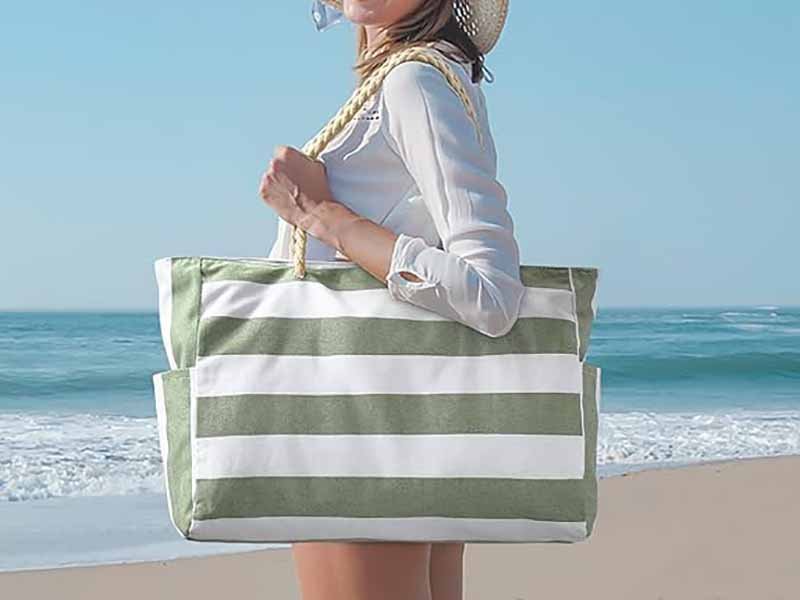
Most bags fail at the beach for a simple reason: the beach is not a normal environment. Fine sand behaves like powder and gets into seams and zippers. Saltwater dries into crystals that scratch surfaces and weaken coatings. Strong sunlight slowly breaks down fibers and causes fading. Then you add real-life load—wet towels, bottles, snacks, toys—and suddenly the “cute tote” turns into a bag with broken straps, a sagging base, and sand in every corner.
The best beach bag structures are built around three jobs: (1) manage sand so it drains out instead of accumulating, (2) control water exposure so wet gear doesn’t ruin dry items, and (3) carry heavy loads without deforming or tearing. That usually means a stable base + reinforced handles + a sand-release body + a protected valuables zone. Mesh works best for fast drainage. Roll-top structures work best for real waterproofing. Neoprene sits in the sweet spot for brands that want a premium look with water resistance and soft protection.
If you’ve ever walked back from the shoreline with a bag that feels heavier than it should—because it’s holding half the beach inside it—you already know why structure matters. Let’s break down what actually works.
What Makes a Good Beach Bag Structure?
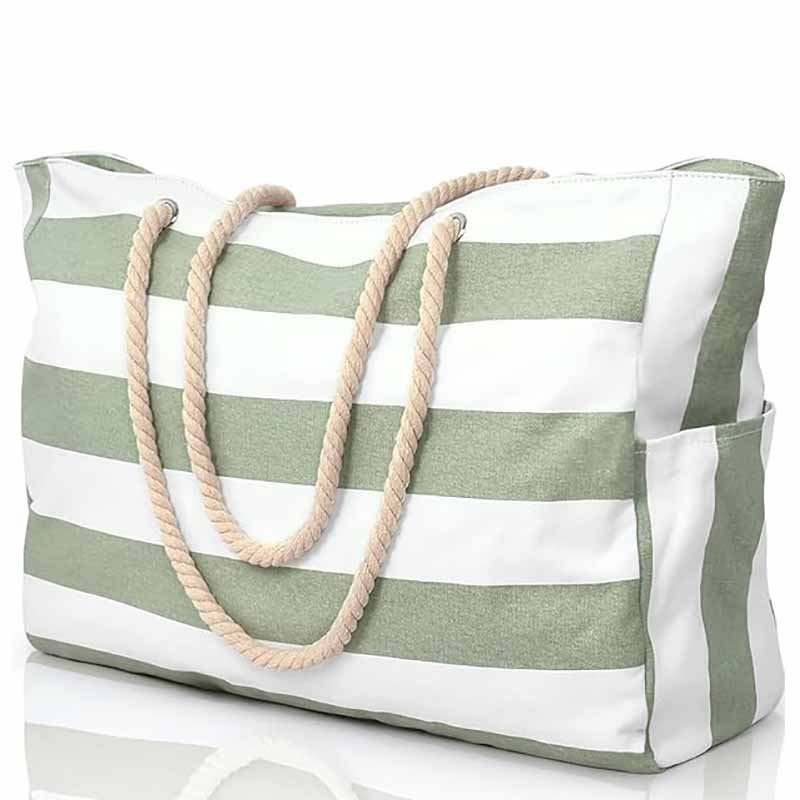
A good beach bag structure is not defined by appearance or fashion trends. What really matters is how the bag performs in a harsh beach environment. Sand particles, saltwater, strong sunlight, and heavy loads from wet towels or bottles all put stress on the bag. If the structure is weak, problems appear quickly: handles tear, bottoms sag, zippers jam with sand, and fabrics wear out.
From a manufacturing perspective, a reliable beach bag structure must solve four practical problems:
- Prevent sand accumulation
- Protect items from water exposure
- Carry heavy loads without deformation
- Maintain durability under UV and abrasion
A well-designed beach bag usually combines a stable base, reinforced handles, durable fabrics, and smart compartment layout. These elements work together to improve usability and extend product lifespan.
Key structural elements of a high-quality beach bag
A beach bag may look simple, but internally it consists of several structural components that determine performance.
| Structural Component | Function | Recommended Design |
|---|---|---|
| Base panel | supports weight and keeps shape | EVA or PP board reinforcement |
| Handle system | carries load | webbing handles + reinforced stitching |
| Body material | determines durability | neoprene, mesh, or coated nylon |
| Internal pockets | organize valuables | waterproof or sand-resistant pockets |
| Corner reinforcement | prevents abrasion damage | binding tape or reinforcement patch |
Each of these components plays an important role in the bag’s overall durability.
How strong should a beach bag be?
Many people underestimate the amount of weight a beach bag carries. A typical beach trip often includes several heavy items.
Average weight of common beach gear
| Item | Approximate Weight |
|---|---|
| Wet beach towel | 1 – 1.5 kg |
| Water bottle (1L) | 1 kg |
| Sunscreen & accessories | 0.5 kg |
| Extra clothing | 0.8 – 1.2 kg |
| Snacks / toys | 1 – 2 kg |
Total typical load:
6 – 10 kg (13 – 22 lbs)
For safety and durability, most manufacturers design beach bags with a load capacity of at least 12–15 kg.
Recommended structural load capacity
| Bag Type | Recommended Load Capacity |
|---|---|
| Small beach tote | 6 – 8 kg |
| Medium beach bag | 8 – 12 kg |
| Large family beach bag | 12 – 15 kg |
If the structure cannot support this load, the most common failure is handle tearing at the attachment point.
Why reinforced handles are critical
The handle attachment area is the most stressed part of any beach bag. Each time the bag is lifted, the entire weight concentrates on two small fabric points.
Without reinforcement, repeated lifting causes stitching to loosen and eventually tear.
Common handle reinforcement methods
| Reinforcement Method | Strength Level | Notes |
|---|---|---|
| Single stitching | Low | not recommended for heavy bags |
| Double stitching | Medium | acceptable for light loads |
| Box stitch reinforcement | High | widely used for durable bags |
| Box stitch + bartack | Very high | ideal for heavy beach bags |
A box stitch pattern with bartack reinforcement spreads the load across a wider area of fabric, reducing stress concentration.
This method allows a bag to safely carry 10–15 kg without tearing.
Why a reinforced bottom improves usability
Another structural feature customers often notice is whether the bag can stand upright on sand.
A beach bag with a thin fabric bottom tends to collapse when filled with gear. This causes several problems:
- items pile up on one side
- sunglasses or electronics get crushed
- sand enters more easily
Adding a reinforced base panel solves these issues.
Materials used for beach bag base reinforcement
| Material | Thickness | Benefit |
|---|---|---|
| EVA foam board | 2 – 4 mm | flexible and shock absorbing |
| PP board | 0.8 – 1.5 mm | strong structural support |
| PE board | 1 – 2 mm | lightweight reinforcement |
With a reinforced base, the bag maintains its shape even when carrying heavy loads.
Why sand management is essential in beach bag design
Sand is one of the biggest challenges for beach bags. Fine sand particles behave like powder and can easily enter seams, pockets, and zippers.
Over time, sand accumulation causes several problems:
- zipper teeth wear out
- pockets become dirty
- fabrics show abrasion marks
This is why many beach bag structures use sand-release designs.
Sand management structures used in beach bags
| Structure | Benefit |
|---|---|
| Mesh panels | sand falls through |
| Mesh bottom | prevents sand buildup |
| Open-top tote | easy sand removal |
| Drainage holes | allows sand to escape |
These designs make cleaning easier. After a beach trip, users can simply shake the bag and most sand falls out.
How compartment design improves beach bag functionality
A beach bag is often used to carry both wet items and dry valuables. Without proper compartment separation, wet gear can easily damage electronics or clothing.
A well-designed beach bag typically includes:
- a large main compartment for towels and clothing
- a waterproof pocket for phones or wallets
- a mesh pocket for wet swimsuits
- side pockets for bottles
Recommended compartment layout
| Compartment | Purpose |
|---|---|
| main compartment | towels and clothing |
| waterproof inner pocket | phone, keys, wallet |
| mesh pocket | wet swimwear |
| bottle pocket | water bottles |
Separating these zones helps keep items organized and prevents moisture contamination.
What materials support strong beach bag structures?
Material choice plays a major role in the bag’s durability.
The most common materials used in beach bags include:
| Material | Key Advantage |
|---|---|
| Neoprene | flexible and water resistant |
| Mesh | excellent sand drainage |
| EVA foam | structured and waterproof |
| Nylon (PU coated) | lightweight and durable |
| Polyester | strong UV resistance |
Each material offers different benefits depending on the design goal.
For example:
- Mesh is ideal for sand drainage.
- Neoprene offers cushioning and water resistance.
- EVA creates a structured bag that stands upright.
Many modern beach bags combine two or three materials to achieve the best balance of performance.
Manufacturing insight: what experienced factories focus on
From a factory development perspective, the most reliable beach bags share several design principles:
- reinforced handle attachment
- stable bottom structure
- sand-release body design
- durable UV-resistant materials
Manufacturers with strong experience in neoprene and fabric products, such as Szoneier, typically evaluate these structural elements during sample development to ensure the bag performs well in real beach environments.
When these structural details are implemented correctly, the result is a beach bag that:
- carries heavy loads comfortably
- stays stable on sand
- resists water and abrasion
- remains durable after repeated use
This combination of structure, materials, and reinforcement is what truly defines a high-quality beach bag.
Which Beach Bag Structures Work Best on Sand?
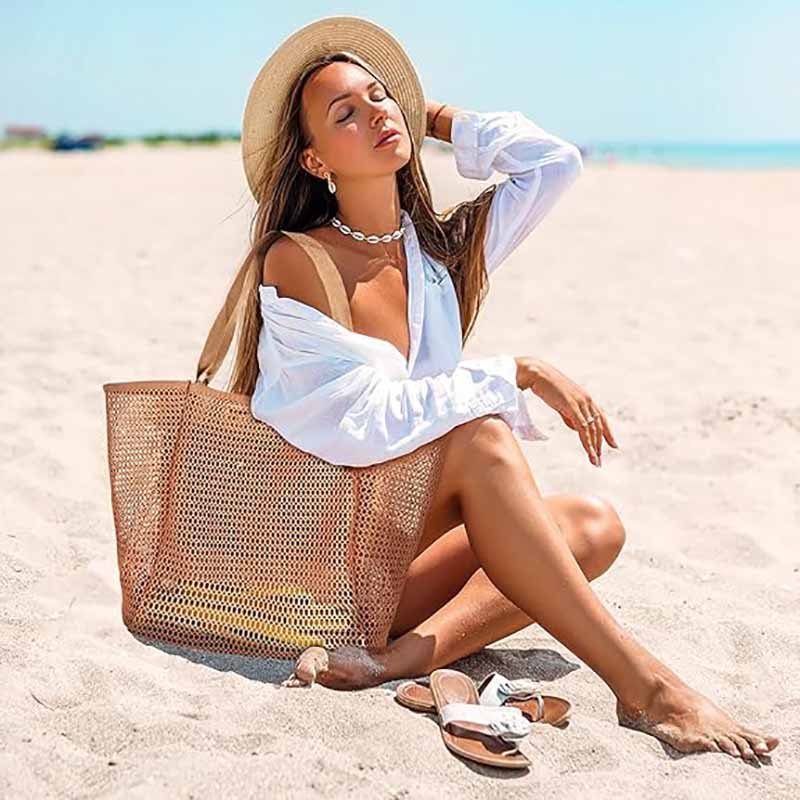
For sand-heavy environments, the best beach bag structures are mesh body bags, open-top tote structures, and sand-release base designs (mesh bottoms or drainage designs). These structures stop sand from collecting in corners and reduce zipper failure. For brands, the most reliable approach is a hybrid: mesh or open main body + a protected pocket for valuables.
What is a mesh beach bag structure?
A mesh beach bag structure uses open weave material so sand and water don’t get trapped. The bag feels light, dries fast, and is easy to shake clean—perfect for towels, toys, and swim gear.
Why customers like mesh beach bags
- Sand drops out instead of staying inside
- Bag dries quickly, less odor risk
- You can see what’s inside (faster access)
What customers complain about (and how to fix it)
Mesh bags can feel “too open” for valuables. The fix is simple: add a small sealed pocket.
| Mesh bag issue | Customer concern | Better structure |
|---|---|---|
| Items visible | privacy | inner pouch / hidden pocket |
| Small items fall | keys, lip balm | zipped inner pocket |
| No “shape” | bag collapses | reinforced base panel |
Which beach bag bottoms release sand easily?
Sand usually gets trapped in the bottom corners. A smart beach bag base is designed to stop sand collection and stop the bag from collapsing.
Base structures ranked by sand-release performance
| Base type | Sand release | Shape stability | Best for |
|---|---|---|---|
| Flat fabric base | Low | Low–Medium | fashion totes (not ideal) |
| Mesh bottom | High | Medium | toy + towel bags |
| EVA perforated base | Very high | High | premium “structured” beach bags |
| Reinforced base + drainage gaps | High | Very high | heavy-load beach totes |
Recommended base thickness (engineering reference)
| Base reinforcement material | Suggested thickness | Benefit |
|---|---|---|
| EVA sheet | 2–4 mm | cushion + stability |
| PP board | 0.8–1.5 mm | stiffness + shape retention |
| PE board | 0.8–1.2 mm | cost-effective support |
Customer-facing benefit:
A stable base means the bag stands up on sand, doesn’t tip over, and protects sunglasses/phones from crushing.
How do open beach bag structures prevent sand buildup?
Open-top beach bag structures work because sand has fewer places to get trapped. In real use, fewer zippers often means fewer problems.
Why open structures sell well
- easy to load towels and bulky items
- faster access
- quick cleaning: shake it out, rinse, dry
But open bags need one key upgrade: “dry valuables zone”
Customers want open convenience without losing protection. The most requested add-ons:
- waterproof inner pocket (phone + wallet)
- detachable pouch (can be carried separately)
- key leash (small detail, high satisfaction)
| Add-on | Why it matters | Where it should be placed |
|---|---|---|
| waterproof pocket | protects phone/cards | upper inside wall |
| key leash | prevents loss | near pocket opening |
| detachable pouch | flexible use | clipped to inner D-ring |
Size matters (common capacity ranges customers understand)
| Size | Capacity | Best use |
|---|---|---|
| Small | 10–15 L | essentials only |
| Medium | 20–30 L | 1–2 people beach day |
| Large | 35–50 L | family + extra gear |
Why this matters for custom development
When brands develop beach bags, the fastest way to improve reviews is not “more features.” It’s fixing the top three functional complaints:
- sand trapped inside
- bag collapses / can’t stand
- straps break under heavy loads
That’s why Szoneier prioritizes:
- sand-release body structures (mesh/open designs where needed)
- reinforced base systems (EVA/PP board choices)
- strong handle anchoring (box stitch + bartack + webbing)
For neoprene beach bags specifically, we can also tune the thickness (commonly 2–5 mm) and add laminated linings or structured bases depending on whether the brand wants a soft tote or a “stands-up” premium tote.
How Do Waterproof Beach Bag Structures Work?
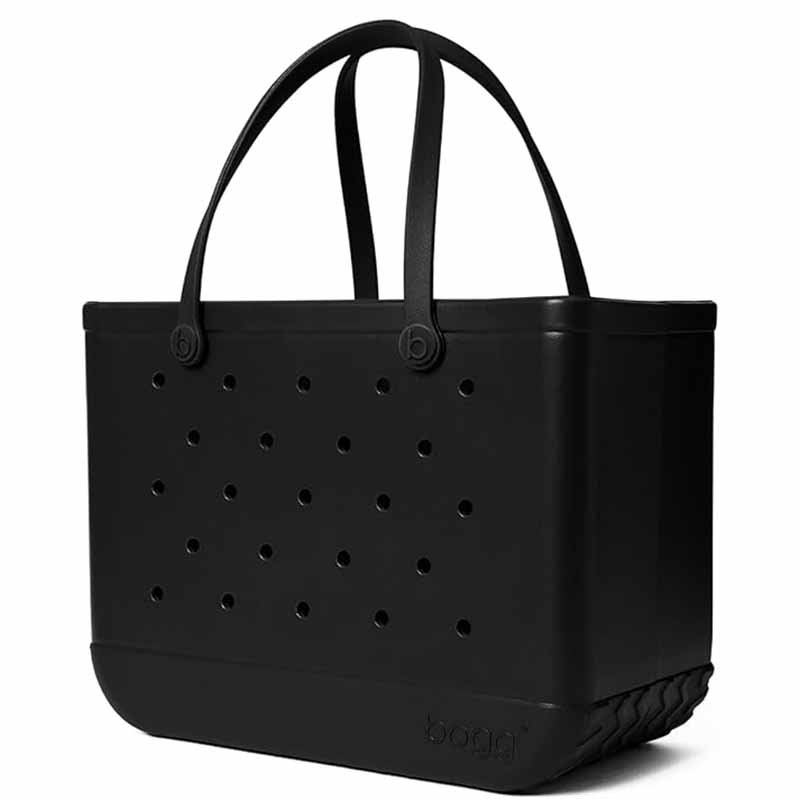
Waterproof beach bag structures prevent water from entering the bag by combining coated materials, sealed seams, and protective closures such as roll-tops or waterproof zippers. Effective designs also separate wet and dry zones inside the bag so that wet towels, swimsuits, and sand do not contaminate valuables like phones, wallets, or clothing.
Why water protection matters in beach bags
Water exposure at the beach is unavoidable. Even if the bag never enters the ocean, moisture still comes from several sources:
- wet swimsuits
- wet towels
- spilled drinks
- sea spray
- humid air and condensation
When moisture accumulates inside a poorly designed bag, several problems appear:
| Problem | What Happens | Customer Experience |
|---|---|---|
| Fabric absorption | water penetrates fibers | bag feels heavy and damp |
| Odor buildup | moisture + heat | unpleasant smell |
| Electronics damage | water reaches pockets | phones or keys damaged |
| Mold growth | trapped moisture | long-term hygiene issue |
For this reason, high-quality beach bags often use two levels of protection:
- Water-resistant outer structure
- Waterproof internal compartments
This layered protection system keeps beach gear functional without making the bag overly complicated.
What is a roll-top waterproof beach bag structure?
A roll-top structure is one of the most reliable waterproof systems used in outdoor equipment. It works by folding the opening several times and securing it with buckles or clips, which creates a compression seal.
This structure is widely used in:
- dry bags for kayaking
- marine storage bags
- waterproof backpacks
- high-end beach bags
Why roll-top structures perform well
| Feature | Benefit |
|---|---|
| Folded closure | blocks water entry |
| No zipper opening | fewer leak points |
| Adjustable capacity | bag expands when needed |
Unlike traditional zippers, which can allow water to seep through stitching holes, roll-top closures rely on compression sealing.
Recommended folding depth
| Roll folds | Protection level |
|---|---|
| 1 fold | splash resistant |
| 2 folds | strong water resistance |
| 3 folds | near waterproof protection |
For beach bags designed to protect electronics or clothing, at least two folds are recommended.
However, roll-top bags can be slightly slower to open and close. Because of this, many beach bag designs combine roll-top protection with quick-access outer pockets.
Which beach bag linings prevent water leaks?
Inner lining materials play a huge role in moisture protection. Even if the exterior fabric absorbs water, the inner lining can stop moisture from reaching important items.
Common waterproof lining materials
| Lining Material | Water Resistance | Durability | Typical Use |
|---|---|---|---|
| TPU laminated fabric | Excellent | High | premium beach bags |
| PVC coated lining | Very good | High | waterproof totes |
| PEVA lining | Good | Medium | cooler bags |
| Nylon PU coating | Moderate | Medium | lightweight bags |
Among these options, TPU laminations are increasingly popular because they provide strong waterproof performance while remaining flexible and lightweight.
Recommended lining thickness
| Lining type | Thickness |
|---|---|
| TPU laminate | 0.2 – 0.4 mm |
| PVC coating | 0.3 – 0.6 mm |
| PEVA lining | 0.15 – 0.3 mm |
Thicker coatings improve waterproof performance but may reduce flexibility.
Are sealed seams necessary for waterproof beach bags?
One of the most common misunderstandings about waterproof bags is that fabric alone provides waterproof protection.
In reality, stitching holes create tiny pathways where water can enter.
For truly waterproof designs, seams must be treated with additional protection methods.
Seam sealing techniques used in bag manufacturing
| Technique | Protection level | Cost |
|---|---|---|
| Standard stitching | Low | Low |
| Seam tape | High | Medium |
| Welded seams | Very high | High |
How seam tape works
Seam tape is applied to the inside of the bag over stitching lines. Heat activates the adhesive, sealing the holes created during sewing.
Benefits include:
- improved waterproof performance
- increased seam durability
- longer product lifespan
For beach bags used mainly on dry sand, seam sealing may not be essential. However, for bags intended for boating, paddleboarding, or travel, sealed seams significantly improve reliability.
Which Materials Build Strong Beach Bag Structures?
The strongest beach bag structures are built using materials that balance water resistance, durability, and flexibility. Common choices include neoprene, coated nylon, EVA, and mesh fabrics. Each material performs differently depending on whether the bag is designed for sand drainage, waterproof protection, or heavy load capacity.
Why material choice determines beach bag performance
The structure of a beach bag depends heavily on its material properties. Different materials behave differently when exposed to:
- saltwater
- UV radiation
- sand abrasion
- heavy loads
A good beach bag material should meet several criteria:
- durable under repeated use
- resistant to fading or cracking
- easy to clean
- capable of supporting structural reinforcement
Manufacturers typically select materials based on the function and price positioning of the product.
Is neoprene a strong material for beach bags?
Neoprene is widely used in beach bags because of its flexibility, cushioning, and natural water resistance.
Originally developed for wetsuits, neoprene performs extremely well in marine environments.
Advantages of neoprene beach bags
| Property | Benefit |
|---|---|
| Water resistance | prevents water absorption |
| Elastic structure | absorbs load stress |
| Soft surface | comfortable to carry |
| Thermal insulation | protects temperature-sensitive items |
Neoprene also has excellent shock absorption, which helps protect sunglasses, electronics, and fragile items.
Common neoprene thickness for bags
| Thickness | Typical use |
|---|---|
| 2 mm | lightweight totes |
| 3 mm | standard beach bags |
| 4–5 mm | structured premium bags |
Thicker neoprene increases durability and structure but also increases weight.
Are mesh beach bags better for airflow?
Mesh fabrics are extremely effective in environments where sand and water must drain quickly.
Unlike solid fabrics, mesh materials allow air and water to pass through the structure.
Benefits of mesh beach bags
- rapid drying
- sand release
- lightweight structure
- visibility of contents
Mesh density options
| Mesh density | Characteristics |
|---|---|
| Large mesh | maximum drainage |
| Medium mesh | balanced airflow |
| Fine mesh | prevents small items falling out |
For beach gear bags, medium or large mesh is most common.
However, mesh bags usually require reinforced edges and handles, because the open structure provides less support than solid fabrics.
Which fabrics create durable beach bag structures?
Beyond neoprene and mesh, several technical fabrics are commonly used in beach bags.
Comparison of common beach bag materials
| Material | Strength | Water resistance | Weight | Best use |
|---|---|---|---|---|
| Neoprene | High | High | Medium | premium beach totes |
| EVA foam | High | Excellent | Medium | structured beach bags |
| Nylon (PU coated) | Medium | Good | Light | travel beach bags |
| Polyester | Medium | Moderate | Light | casual beach totes |
| Mesh | Low | Excellent drainage | Very light | sand gear bags |
UV resistance comparison
| Material | UV durability |
|---|---|
| Nylon | Very good |
| Polyester | Excellent |
| Neoprene | Good |
| EVA | Excellent |
For beach bags exposed to strong sunlight, polyester and EVA often maintain color and structural integrity longer.
Material combinations used in modern beach bags
Many premium beach bags combine multiple materials to balance performance.
Common hybrid constructions
| Combination | Advantage |
|---|---|
| neoprene + mesh | drainage + durability |
| EVA base + nylon body | structure + light weight |
| mesh body + waterproof pouch | sand release + protection |
Hybrid designs allow brands to create products that solve several problems at once.
For example, a beach bag might include:
- mesh side panels for sand drainage
- neoprene body for strength
- EVA base for stability
- waterproof pocket for valuables
This layered approach improves usability without making the bag overly complex.
How Do Manufacturers Design Better Beach Bags?
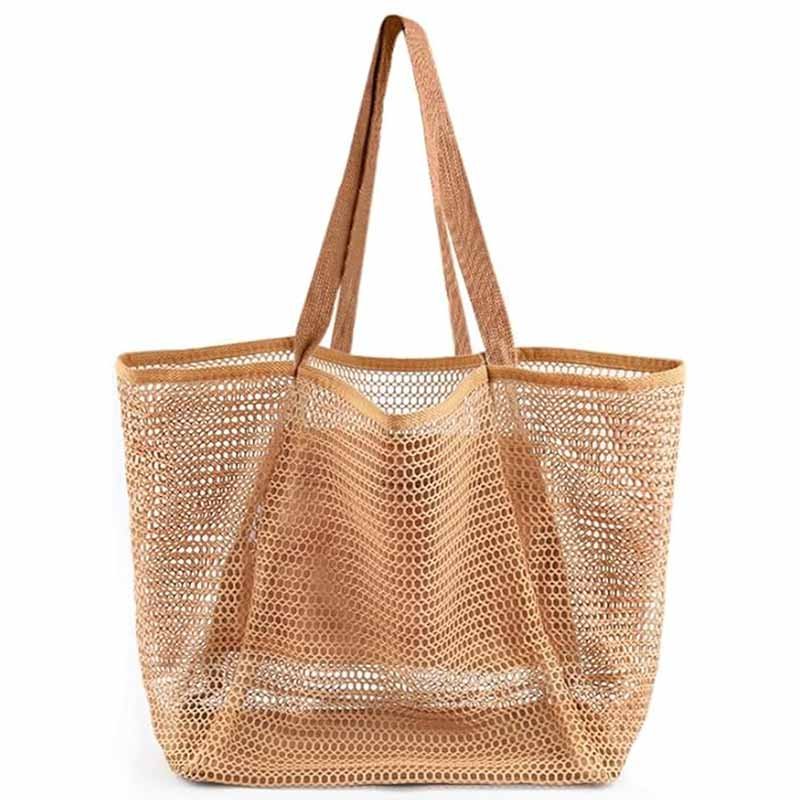
Professional manufacturers design better beach bags by strengthening structural stress points, selecting durable materials, and testing load capacity under real usage conditions. Reinforced handles, stable bottom panels, and abrasion-resistant fabrics are critical. Factories also perform repeated load and durability tests to ensure beach bags can carry wet towels, water bottles, and gear without tearing or deforming.
Why engineering matters in beach bag design
From the outside, a beach bag may look simple. But behind a reliable product is a careful combination of structural design, material selection, and manufacturing techniques.
Factories with strong product development experience focus on three core engineering priorities:
- Structural load distribution
- Long-term durability under sand and water exposure
- Ease of use for everyday beach activities
A beach bag that looks attractive but fails after several uses will quickly receive poor customer feedback. For brands selling online, this often leads to low ratings and costly returns.
Most common structural failures in beach bags
| Failure Type | Cause | Result |
|---|---|---|
| Strap tearing | weak reinforcement | bag becomes unusable |
| Bottom collapse | thin base panel | items shift or spill |
| Side seam splitting | heavy loads | bag loses shape |
| Fabric abrasion | sand friction | holes appear |
Preventing these problems requires a combination of reinforced stitching patterns, strong materials, and structural support panels.
Where are the structural stress points in beach bags?
Stress points are areas where repeated force occurs during normal use. Identifying these points is essential for designing durable bags.
Key stress areas in beach bags
| Structural Area | Stress Level | Recommended Reinforcement |
|---|---|---|
| Handle attachment points | Very high | box stitch + bartack |
| Bottom corners | High | corner binding + reinforcement patch |
| Side seams | Medium | double stitching |
| Base panel edges | High | reinforced binding |
Handle anchoring method
One of the strongest handle attachment methods is the box stitch with bartack reinforcement.
This method distributes the load across a wider area of fabric.
Typical stitching patterns include:
- box stitch (square reinforcement)
- X-stitch reinforcement
- bartack reinforcement
These techniques dramatically increase the bag’s load capacity.
How do manufacturers test beach bag durability?
Professional bag factories perform various durability tests to ensure the product performs reliably.
Load testing procedures
A filled bag is subjected to repeated lifting cycles to simulate real usage.
| Test Type | Standard |
|---|---|
| Static load test | bag filled to 15 kg for 24 hours |
| Lift cycle test | 5,000 lifting repetitions |
| Handle stress test | upward force resistance |
Abrasion testing
Sand particles can act like sandpaper. Over time, this can damage fabric surfaces.
Testing includes:
- repeated rubbing cycles
- surface wear inspection
- fabric coating evaluation
UV exposure testing
Beach bags must tolerate prolonged sunlight exposure.
UV tests simulate extended outdoor use.
| UV test duration | Equivalent outdoor exposure |
|---|---|
| 24 hours | several weeks |
| 72 hours | several months |
Fabrics with strong UV resistance maintain color and fiber strength longer.
How do manufacturers design compartments for beach bags?
Beyond strength, usability is extremely important.
Beach bags must allow users to organize items efficiently.
Recommended compartment layout
| Compartment | Function |
|---|---|
| main compartment | towels, clothing |
| waterproof pocket | phone, keys |
| mesh pocket | wet swimsuits |
| bottle pocket | water bottles |
Separating wet and dry items improves the overall user experience.
For example:
- wet towels should not soak clothing
- sand-covered toys should not scratch electronics
Many modern beach bags also include removable pouches, allowing users to carry valuables separately.
What design features increase customer satisfaction?
Small details can greatly improve the usability of a beach bag.
Popular design features requested by brands
| Feature | Benefit |
|---|---|
| reinforced base panel | bag stands upright |
| removable waterproof pouch | protects valuables |
| adjustable shoulder straps | comfortable carrying |
| quick-dry materials | reduces odor |
These features help differentiate products in a competitive market.
For e-commerce brands, improving functionality often leads to:
- higher product ratings
- fewer customer complaints
- stronger brand loyalty
How Does Szoneier Develop Custom Beach Bags for Brands?
For brands and retailers developing private-label beach bags, working with an experienced manufacturer can greatly reduce development time and product risk.
Szoneier has more than 18 years of experience developing neoprene products and custom bags, including beach bags, wetsuit accessories, cooler bags, and sports gear.
The company supports clients through a structured product development process.
Step 1: Product concept and design
The process begins with understanding the customer’s product goals.
Information typically includes:
- target market
- desired bag size
- preferred materials
- logo placement
- packaging requirements
Based on this information, engineers create design suggestions and material options.
Step 2: Sample development
A prototype sample is produced to evaluate:
- size accuracy
- structure stability
- stitching quality
- material compatibility
Sample production normally takes 3–7 days depending on complexity.
Step 3: Testing and improvements
Before mass production begins, the sample is reviewed and tested.
Adjustments may include:
- reinforcing handles
- adjusting pocket placement
- improving material thickness
This stage ensures the final product performs reliably.
Step 4: Mass production
After approval, the factory begins production.
Typical production timelines:
| Order Size | Production Time |
|---|---|
| 500–1000 pcs | 15–20 days |
| 1000–5000 pcs | 20–25 days |
| 5000+ pcs | 25–30 days |
Factories monitor quality through multiple inspection stages.
Step 5: Packaging and shipping
Finished products are packed according to client requirements.
Options include:
- individual poly bags
- retail packaging boxes
- custom branded packaging
Shipping methods depend on urgency and cost considerations.
Conclusion: Choosing the Right Beach Bag Structure Matters
The best beach bags are not defined by appearance alone. Their performance depends on how well the structure handles sand, water, sunlight, and heavy loads.
Reliable beach bags typically include:
- sand-release structures such as mesh panels
- waterproof pockets for valuables
- reinforced handles and base panels
- durable materials like neoprene, EVA, or coated nylon
When these elements are combined effectively, the result is a bag that remains functional and durable even after repeated beach trips.
For brands developing their own beach bag collections, focusing on structure and durability during product design can dramatically improve customer satisfaction and long-term sales performance.
Start Your Custom Beach Bag Project with Szoneier
If you are planning to launch or upgrade your beach bag product line, working with an experienced manufacturer can make the process faster and more reliable.
Szoneier specializes in custom neoprene products and fabric bags, supporting clients with:
- custom beach bag design
- private label production
- OEM / ODM manufacturing
- low MOQ customization
- rapid sampling (3–7 days)
- stable production quality
Whether you are an e-commerce seller, brand owner, or wholesale distributor, the team at Szoneier can help transform your idea into a durable, market-ready product.
If you would like to develop custom beach bags with your logo, feel free to contact the Szoneier team to discuss your project and receive a quotation.
Your next best-selling beach bag could start with a simple conversation.