Skip to content
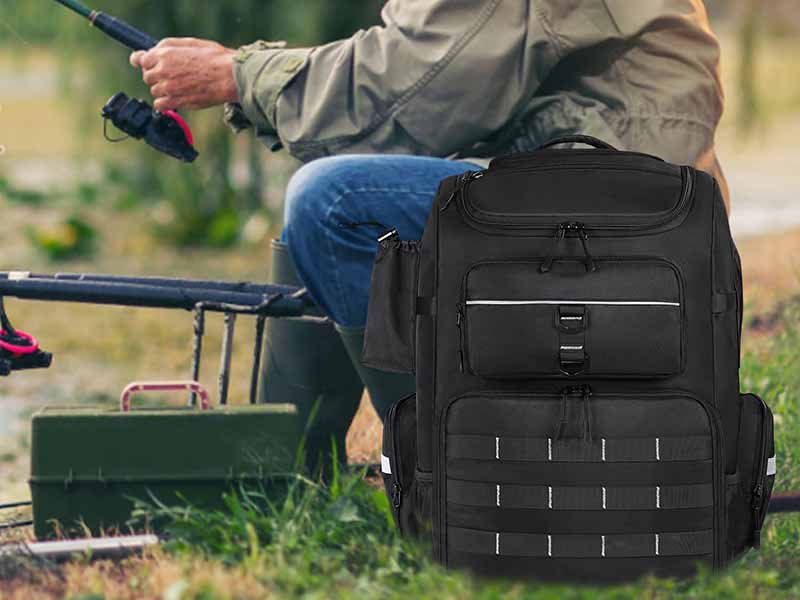
A rugged fishing bag isn’t “outdoor style.” It’s a work bag that happens to live outdoors. If your customer fishes from shore, the bag gets dragged over rocks, slammed onto sand, and carried for hours. If your customer fishes from a boat, the bag gets splashed, stepped on, and bounced around in tight space—often with saltwater involved. That’s why the failure points are predictable: zippers corrode, bottom panels wear through, seams burst at strap anchors, and wet gear turns the inside into a smell problem.
To design rugged fishing bags for shoreline and boat use, start with abrasion-resistant fabrics (nylon, polyester, or neoprene systems), then engineer the “risk zones”: bottom, corners, zipper track, and strap anchors. Add water management (coatings, sealed pockets, drainage), corrosion-resistant hardware, and an organized layout that fits real tackle boxes and tools. The best fishing bags balance durability, carry comfort, and fast access.
One scene explains the whole design challenge: an angler walking a rocky shoreline at dawn, hands full, bag swinging, waves splashing. When a fish hits, they need one-handed access to pliers and lures—without soaking everything or ripping a pocket. That moment is what your bag design must survive.
What Are Rugged Fishing Bags?
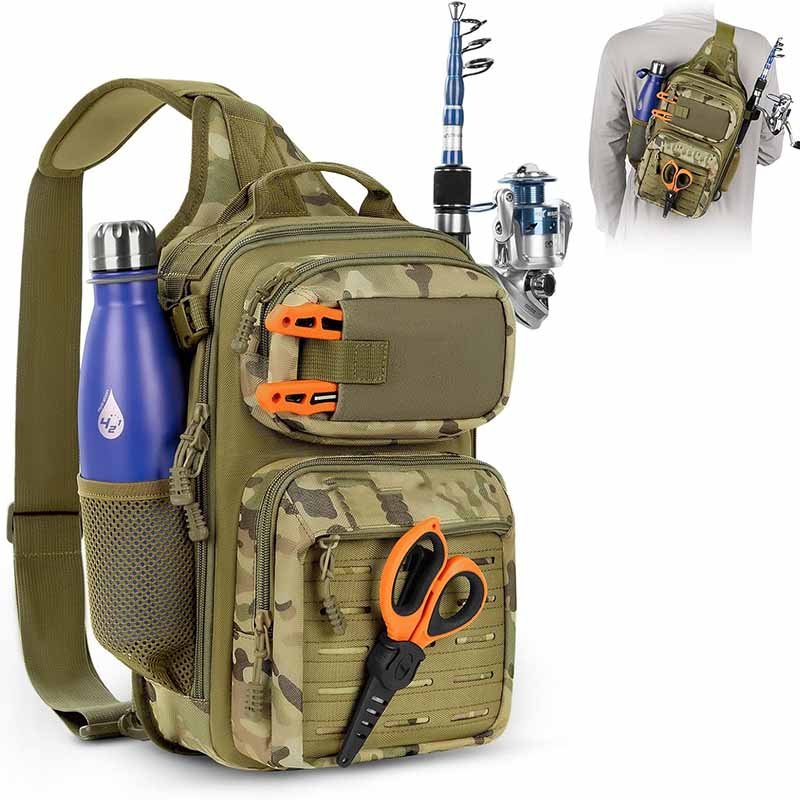
Rugged fishing bags are heavy-duty gear bags built to carry fishing tackle, tools, and accessories in harsh environments such as rocky shorelines, rivers, and fishing boats. Unlike ordinary backpacks, rugged fishing bags use stronger fabrics, reinforced structures, corrosion-resistant hardware, and water-resistant construction to protect fishing equipment from abrasion, moisture, and heavy loads during outdoor fishing trips.
What Makes Fishing Bags Rugged?
A fishing bag is considered rugged when it can withstand the real conditions anglers face: rough terrain, water exposure, heavy tackle weight, and frequent movement.
In practice, fishing bags are exposed to far more stress than normal outdoor backpacks. Anglers often place their bags on sand, rocks, muddy riverbanks, or wet boat decks. Over time, these surfaces grind against the bottom of the bag and gradually weaken thin fabrics.
Because of this, rugged fishing bags typically include several durability features.
Common structural characteristics of rugged fishing bags
- high-density outer fabrics
- reinforced base panels
- heavy-duty stitching
- corrosion-resistant hardware
- water-resistant fabric coatings
Each of these elements addresses a specific type of wear.
| Rugged Feature | Why It Matters | Result |
|---|---|---|
| High-density fabric | resists tearing and abrasion | longer product life |
| Reinforced bottom panel | protects against rocks and sand | reduced wear damage |
| Heavy stitching | strengthens seams under heavy load | prevents strap failure |
| Rust-resistant hardware | protects metal parts from saltwater | smoother zipper operation |
| Water-resistant coating | blocks moisture penetration | protects fishing gear |
Without these features, fishing bags often fail within a short period of heavy use.
For example, anglers who fish from shorelines frequently report that the bottom corners of their bags wear through first, especially when the bag is repeatedly placed on rocky ground.
This is why many rugged fishing bags include double-layer base panels or molded bottom plates.
Why Do Rugged Fishing Bags Matter for Anglers?
Fishing trips usually involve carrying a large amount of equipment. Even a short trip can require multiple tools and tackle boxes.
Below is a typical weight breakdown for fishing gear stored inside a fishing bag.
| Fishing Equipment | Average Weight |
|---|---|
| Tackle box with lures | 1.5–2.5 kg |
| Fishing reel | 0.4–0.8 kg |
| Tool set (pliers, cutter) | 0.3–0.6 kg |
| Spare fishing line | 0.2 kg |
| Bait containers | 0.5–1 kg |
| Misc accessories | 0.5 kg |
A fully packed fishing bag often reaches 6–10 kilograms.
When this weight is carried over long walking distances along shorelines or docks, weak fabrics and poorly reinforced seams can quickly fail.
Another factor is gear protection. Fishing equipment such as reels, lures, and hooks can be damaged when stored loosely in soft bags.
Rugged fishing bags solve this problem by providing:
- structured compartments
- protective padding
- reinforced internal dividers
These features help prevent gear from colliding or becoming tangled.
What Conditions Must Rugged Fishing Bags Handle?
Fishing environments vary widely, but most rugged fishing bags must handle several common environmental challenges.
1. Abrasion from rough surfaces
Shoreline fishing often takes place on rocky coasts, gravel riverbanks, or sandy beaches. Bags are frequently dragged or dropped on these surfaces.
2. Water exposure
Fishing gear is constantly exposed to moisture from:
- rain
- waves
- splashing water
- wet hands handling fish
3. Saltwater corrosion
Saltwater environments accelerate corrosion on metal hardware such as zippers, hooks, and buckles.
4. Temperature and sunlight
Fishing bags may remain exposed to sunlight for many hours. UV exposure can weaken fabrics and fade colors.
The following table summarizes the environmental challenges that fishing bags must withstand.
| Environmental Factor | Impact on Bags |
|---|---|
| Rocks and sand | fabric abrasion |
| Rain and splashes | moisture penetration |
| Saltwater | hardware corrosion |
| Sunlight | UV degradation |
| Heavy gear loads | seam stress |
To handle these conditions, rugged fishing bags are designed using stronger materials and reinforced construction techniques.
How Do Rugged Fishing Bags Differ from Ordinary Bags?
At first glance, rugged fishing bags may appear similar to normal backpacks or travel bags. However, several design differences make them much more suitable for fishing activities.
| Feature | Rugged Fishing Bags | Ordinary Backpacks |
|---|---|---|
| Fabric thickness | thicker outdoor fabrics | lighter fabrics |
| Bottom structure | reinforced or molded base | simple fabric base |
| Storage layout | tackle-focused compartments | general storage |
| Hardware | corrosion-resistant | standard hardware |
| Water protection | coated or waterproof fabrics | minimal water resistance |
One of the most important differences is gear organization.
Fishing bags must store items of many different shapes and sizes, including lures, tools, hooks, and lines. Without proper organization, these items can become tangled or difficult to find during fishing.
For this reason, rugged fishing bags often include:
- removable tackle tray systems
- dedicated tool pockets
- external gear loops
- mesh pockets for wet gear
These features turn fishing bags into efficient portable workstations for anglers.
Why Are Rugged Fishing Bags Important for Fishing Gear Brands?
For brands selling fishing equipment, rugged fishing bags represent an important product category because they combine functional design with strong market demand.
Outdoor gear customers typically value three factors when purchasing fishing bags:
- durability
- gear organization
- water resistance
A fishing bag that fails quickly can damage a brand’s reputation and lead to negative product reviews.
For this reason, many fishing gear companies invest heavily in material selection and structural design when developing fishing bags.
Working with experienced manufacturers—especially those familiar with **neoprene materials, outdoor fabrics, and reinforced bag construction—**helps brands produce fishing bags that perform well in demanding environments.
For companies planning to develop fishing gear products, understanding the characteristics of rugged fishing bags is the first step toward creating equipment that anglers can rely on in real fishing conditions.
Which Materials Are Best for Fishing Bags?
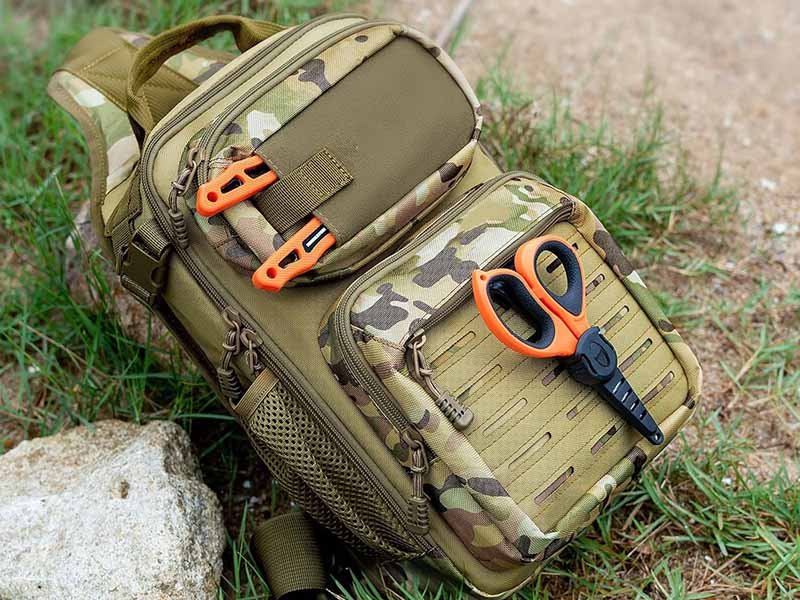
The best materials for fishing bags must resist abrasion, moisture, and heavy loads. Most rugged fishing bags are made from high-density polyester, nylon, neoprene, or laminated waterproof fabrics. Polyester offers strong cost efficiency, nylon provides superior durability and tear resistance, and neoprene adds cushioning and water resistance. The right material depends on how and where the fishing bag will be used.
Is Nylon Good for Fishing Bags?
Nylon is one of the strongest materials used in outdoor gear, which is why it appears frequently in high-end fishing bags, tactical backpacks, and expedition equipment.
From a manufacturing perspective, nylon fabrics provide excellent strength relative to weight. This means fishing bags made from nylon can remain lightweight while still carrying heavy loads.
Nylon also performs very well against abrasion. When anglers place their bag on rocky shorelines or wooden boat decks, nylon fibers resist surface wear better than many lighter fabrics.
Common nylon fabrics used in fishing bags
| Nylon Fabric | Weight Range | Typical Application |
|---|---|---|
| 420D Nylon | Lightweight | Sling fishing bags |
| 600D Nylon | Medium | Day fishing backpacks |
| 840D Nylon | Heavy duty | Shoreline tackle bags |
| 1680D Ballistic Nylon | Extra heavy duty | Premium fishing gear bags |
Among these materials, 1680D ballistic nylon is particularly durable. The dense weave and thick yarns create a surface that tolerates heavy abrasion and sharp objects better than standard fabrics.
However, nylon fabrics usually cost more than polyester, which means they are more common in premium fishing gear products rather than budget models.
Another design consideration is UV exposure. Nylon fibers can fade slightly faster under constant sunlight compared with polyester. For shoreline fishing products used in bright environments, UV-resistant coatings or darker colors are often recommended.
Are Polyester Fishing Bags Durable?
Polyester fabrics dominate the fishing bag market because they provide a strong balance between durability and cost.
For many outdoor brands, 600D polyester has become the standard material for mid-range fishing bags.
The advantages of polyester include:
- stable structure that holds bag shape well
- strong resistance to sunlight and UV exposure
- good color consistency across production batches
- lower cost compared with nylon
Polyester fabrics are commonly woven in Oxford-style patterns that increase abrasion resistance.
Typical polyester fabrics used in fishing bags
| Polyester Fabric | Fabric Weight | Common Use |
|---|---|---|
| 420D Polyester | Light duty | Compact fishing bags |
| 600D Polyester | Medium duty | Most fishing backpacks |
| 900D Polyester | Heavy duty | Large tackle bags |
| 1200D Polyester | Extra durable | Boat fishing gear bags |
In many cases, polyester fishing bags achieve excellent durability when manufacturers add reinforced bottom panels or PVC backing.
For example, a fishing bag made from 600D polyester with PVC backing can resist abrasion and moisture significantly better than an uncoated fabric.
Because polyester fabrics are easier to dye, they also allow brands to create fishing bags with unique color combinations or camouflage patterns.
This flexibility is useful for companies selling fishing gear through retail or e-commerce channels where product appearance matters.
Can Neoprene Be Used in Fishing Bags?
Neoprene is increasingly used in specialized fishing bags, particularly for products that require water resistance and shock protection.
Neoprene is a synthetic rubber foam material widely used in wetsuits, protective gear, and insulated drink sleeves.
Unlike woven fabrics such as nylon or polyester, neoprene has a closed-cell foam structure that offers several advantages.
Advantages of neoprene in fishing bag design
- natural water resistance
- shock absorption for fragile gear
- soft surface that protects equipment
- excellent thermal insulation
Because of these characteristics, neoprene is commonly used in fishing gear products such as:
- reel protective covers
- rod sleeves
- tackle storage pouches
- insulated bait bags
Neoprene can also be laminated with fabrics such as polyester to improve durability and appearance.
Typical neoprene thickness used in fishing products ranges between 2 mm and 5 mm, depending on the level of protection required.
| Neoprene Thickness | Common Fishing Application |
|---|---|
| 2 mm | small tackle pouches |
| 3 mm | fishing accessory bags |
| 4 mm | protective gear cases |
| 5 mm | insulated bait storage |
For brands developing fishing products, neoprene offers a unique opportunity to create differentiated gear that combines durability with comfort and protection.
Companies like Szoneier, which specialize in neoprene materials and manufacturing, often help outdoor brands develop custom neoprene fishing bags and accessories tailored to specific fishing scenarios.
How Should Fishing Bags Be Designed?
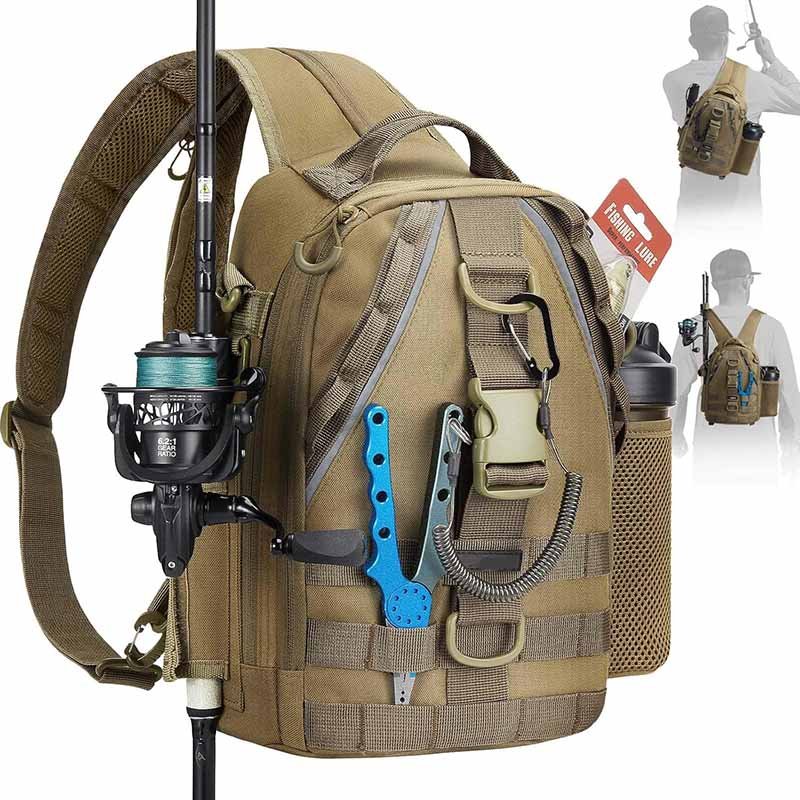
Fishing bags should be designed to protect gear, keep tools organized, and remain comfortable to carry in outdoor environments. Effective fishing bag design combines multiple compartments, reinforced structure, water-resistant materials, and ergonomic carrying systems. A well-designed fishing bag allows anglers to quickly access gear while protecting equipment from water, abrasion, and impact.
How Many Compartments Do Fishing Bags Need?
The number of compartments in a fishing bag directly affects how easily anglers can organize their equipment.
Fishing gear is diverse and often includes small items that can easily become tangled or lost.
For this reason, most fishing bags include multiple storage zones.
Basic compartment structure
| Compartment Type | Purpose |
|---|---|
| Main compartment | Store tackle boxes |
| Side pockets | Tools and pliers |
| Front pocket | Frequently used accessories |
| Mesh pockets | Wet gear or bottles |
| Internal dividers | Organize small items |
Many fishing bags are designed to fit standard tackle trays, which makes it easier for anglers to swap boxes depending on fishing conditions.
For example, a medium fishing bag may hold 3–4 tackle trays, while larger tackle bags may accommodate 6 trays or more.
This modular storage system allows anglers to customize their gear for different fishing environments.
Do Fishing Bags Need Reinforced Bottoms?
The bottom panel of a fishing bag experiences the most wear.
Anglers frequently place their bags on rough ground, boat decks, or sandy shorelines. Without reinforcement, the base fabric can quickly wear through.
For this reason, rugged fishing bags typically include reinforced base panels.
Common reinforcement solutions include:
- double-layer fabric construction
- PVC-coated base panels
- molded EVA base plates
- rubber anti-slip pads
Each method improves durability in different ways.
| Bottom Reinforcement | Benefit |
|---|---|
| Double fabric layer | simple abrasion protection |
| PVC coated base | stronger wear resistance |
| EVA molded base | improved structure |
| Rubber pads | anti-slip surface |
Boat fishing bags often include non-slip bases to prevent movement on wet surfaces.
How Do Fishing Bags Stay Organized?
Efficient organization is one of the most important aspects of fishing bag design.
Anglers often need to access tools quickly while handling fishing rods or fish.
A well-designed fishing bag minimizes the time required to locate gear.
Several design elements improve organization.
First, removable dividers allow anglers to customize storage spaces based on the size of their gear.
Second, transparent pockets help users quickly identify small items such as hooks or swivels.
Third, elastic tool holders keep pliers, scissors, and other tools easily accessible.
Organization features often found in premium fishing bags
| Feature | Purpose |
|---|---|
| removable dividers | customizable storage |
| tool holders | fast access to tools |
| mesh pockets | ventilation for wet gear |
| clear compartments | easy identification |
| external attachment loops | additional gear storage |
These features transform fishing bags from simple storage containers into efficient mobile workstations for anglers.
What Features Make Fishing Bags Waterproof?
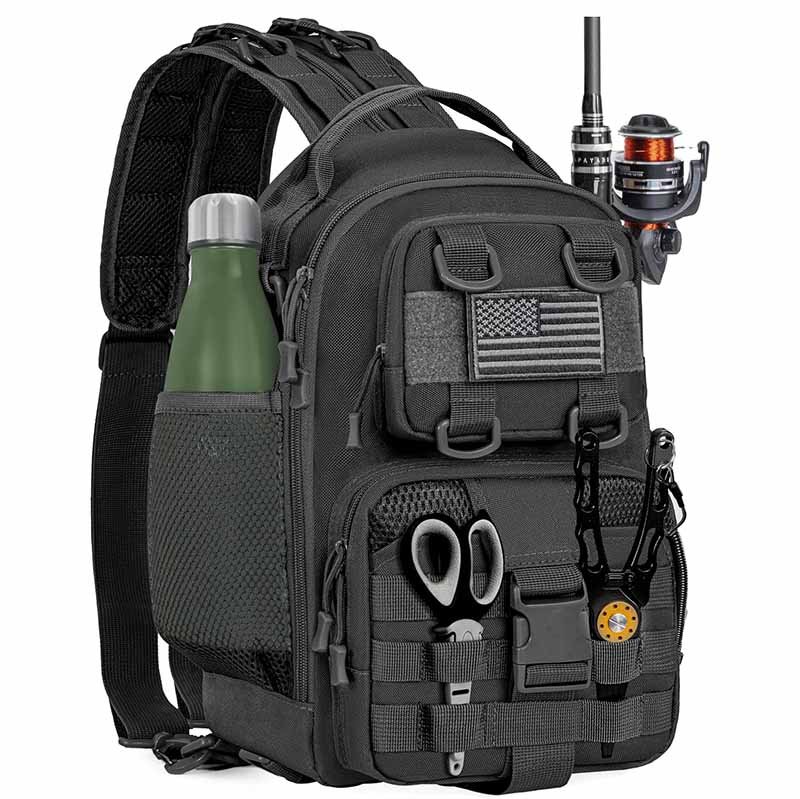
Waterproof fishing bags protect gear from rain, splashes, and saltwater exposure by combining coated fabrics, sealed seams, and corrosion-resistant hardware. Materials such as PU-coated polyester, TPU-laminated fabrics, and neoprene panels help block water penetration, while drainage pockets and waterproof zippers prevent moisture buildup inside the bag.
Are Waterproof Fishing Bags Necessary?
Fishing environments expose gear to water almost constantly. Even anglers fishing on dry shorelines frequently encounter wet conditions caused by waves, rain, or fish handling.
Water can damage several types of fishing equipment:
| Fishing Equipment | Risk When Wet |
|---|---|
| Fishing hooks | Rust and corrosion |
| Reels and metal parts | Reduced performance |
| Fishing lines | Material degradation |
| Electronics (fish finders, scales) | Device failure |
| Soft bait materials | Reduced lifespan |
Because of these risks, many anglers prefer fishing bags that offer at least water-resistant protection.
There are generally three levels of water protection used in fishing bag design.
| Water Protection Level | Description | Typical Use |
|---|---|---|
| Water-resistant | Fabric repels light rain | Standard fishing backpacks |
| Water-repellent | Coated fabric slows water penetration | Shoreline fishing bags |
| Waterproof | Sealed construction blocks water completely | Boat fishing bags |
For shoreline fishing, water-repellent fabrics often provide enough protection. Boat fishing, however, typically requires stronger waterproof materials because gear is frequently exposed to splashes or wet surfaces.
Another useful design feature is a separate waterproof pocket for storing valuables such as phones or wallets.
How Do Fishing Bags Handle Water and Salt?
Saltwater is particularly damaging to outdoor gear. Over time, salt can corrode metal parts, weaken fabrics, and cause zippers to jam.
Fishing bags designed for marine environments often include specialized materials and hardware to resist corrosion.
Key saltwater protection features
- corrosion-resistant zippers
- stainless steel or coated metal components
- sealed stitching or taped seams
- waterproof fabric coatings
The zipper is one of the most vulnerable components in fishing bags. Salt crystals can accumulate between zipper teeth, causing the zipper to become difficult to open.
Many premium fishing bags therefore use marine-grade zippers or sealed waterproof zippers.
| Zipper Type | Corrosion Resistance | Typical Use |
|---|---|---|
| Standard coil zipper | Moderate | Basic fishing bags |
| Nylon zipper | Good | Mid-range bags |
| Waterproof zipper | Excellent | Marine fishing bags |
Another design solution involves drainage systems. If water enters the bag, drainage holes or mesh compartments allow moisture to escape rather than accumulating inside.
These features are particularly useful for storing wet gear such as gloves, nets, or fish grippers.
Which Hardware Works Best for Fishing Bags?
Fishing bags operate in demanding outdoor environments where hardware must withstand moisture, sand, and heavy loads.
The most commonly used hardware components include:
- buckles
- D-rings
- adjustment sliders
- zippers
- hooks
High-quality hardware materials improve both durability and user experience.
| Hardware Material | Advantages |
|---|---|
| Reinforced plastic | lightweight and corrosion resistant |
| Stainless steel | strong and rust resistant |
| Aluminum alloy | durable with reduced weight |
Plastic buckles are widely used because they resist corrosion and remain lightweight.
Metal components may be used for higher load capacity but must be treated to resist rust.
Another feature found in many rugged fishing bags is external gear attachment points.
These include:
- carabiner loops
- rod holders
- tool attachment rings
These features allow anglers to attach frequently used tools externally for quick access.
How Can Brands Customize Fishing Bags?
Brands can customize fishing bags by selecting materials, storage layouts, sizes, colors, and branding elements. Custom fishing bags may include reinforced structures, waterproof features, modular compartments, and personalized logos. Working with an experienced manufacturer allows brands to develop fishing gear products tailored to specific fishing environments and customer preferences.
Which Fishing Bags Are Most Popular?
Fishing bags come in several popular styles depending on how anglers carry their gear.
Understanding these categories helps brands select the right product types for their market.
| Fishing Bag Type | Capacity | Typical Use |
|---|---|---|
| Fishing sling bag | 5–10 L | Mobile shoreline fishing |
| Fishing backpack | 15–30 L | Long fishing trips |
| Tackle shoulder bag | 10–20 L | Everyday fishing gear |
| Boat tackle bag | 20–40 L | Boat storage |
| Waist tackle bag | 3–6 L | Minimalist fishing setups |
Among these designs, fishing backpacks and tackle shoulder bags are currently the most popular because they balance storage capacity with portability.
Fishing backpacks often include rod holders, multiple compartments, and padded straps for comfortable long-distance walking.
Boat tackle bags tend to be larger and focus more on storage capacity than mobility.
How Do Brands Add Logos to Fishing Bags?
Custom branding plays an important role in fishing gear products. Outdoor brands rely on strong visual identity to differentiate their equipment in a competitive market.
Several logo application methods are commonly used.
| Logo Method | Appearance | Best For |
|---|---|---|
| Screen printing | flat printed logo | simple designs |
| Embroidery | stitched logo | premium bags |
| Rubber patches | raised logo | rugged gear |
| Heat transfer | colorful graphics | detailed designs |
Rubber patches are particularly popular for fishing bags because they are durable and match the rugged outdoor aesthetic.
Many brands also use custom zipper pulls or branded webbing to strengthen brand identity.
How Does Szoneier Develop Fishing Bags?
Developing a successful fishing bag requires a combination of material expertise, structural engineering, and manufacturing experience.
Szoneier has more than 18 years of experience in neoprene material development and outdoor product manufacturing.
The company specializes in producing neoprene products including:
- fishing gear bags
- insulated koozies
- sports protection equipment
- medical braces
- wetsuits and water sports gear
Because Szoneier controls neoprene material production as well as product manufacturing, the company can develop customized fishing bags with strong material performance.
Typical Szoneier product development process
| Stage | Description |
|---|---|
| Product concept | Discuss design goals and target market |
| Material selection | Recommend neoprene or fabric combinations |
| Prototype sampling | Develop samples within 5–7 days |
| Design optimization | Improve durability and structure |
| Mass production | Quality-controlled manufacturing |
| Global delivery | Reliable international shipping |
Szoneier also supports private label and OEM production, allowing brands to launch fishing gear products under their own brand names.
Request Custom Fishing Bags from Szoneier
Designing rugged fishing bags for shoreline and boat use requires the right balance between durable materials, waterproof construction, and efficient gear organization.
For brands entering the fishing gear market, working with an experienced manufacturing partner can significantly improve product quality and reduce development risk.
Szoneier is a specialized neoprene product manufacturer with over 18 years of experience in material research, design, and production.
Whether you want to develop waterproof fishing tackle bags, neoprene gear pouches, or rugged outdoor fishing backpacks, Szoneier can help transform your product concept into a market-ready product.
Contact the Szoneier team today to request samples or receive a customized quotation for your next fishing gear project.