Skip to content
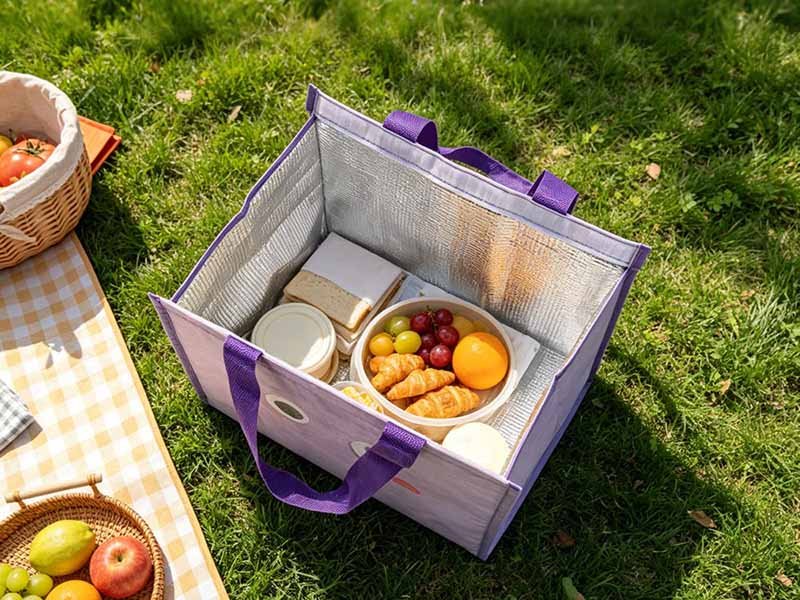
Most cooler bags don’t fail because the insulation is “too thin.” They fail because the cold has too much empty space to defend. When there are air gaps inside a cooler bag, warm air can move, mix, and repeatedly touch your ice and chilled items. That movement speeds up heat gain and makes ice melt earlier—especially near the lid, zipper line, and corners. In real use, customers don’t pack like engineers; they toss in a few drinks, a lunch box, and one ice pack. If the bag’s structure creates voids—or collapses when underfilled—cooling time drops fast and reviews follow.
To reduce air gaps inside cooler bags and improve cooling, you need to do three things well: (1) keep the interior volume stable so corners and lid zones don’t create “void pockets,” (2) pack the cooler to a high fill ratio (usually 80–95%) using ice and fillers that touch walls, and (3) limit warm-air exchange at the closure by using better zipper systems, sealing flaps, and lid compression. Done correctly, many brands see 1–4 extra hours of usable cold time without increasing foam thickness.
A small story from our factory side: Szoneier once built two soft cooler samples for the same client using the same fabric, the same insulation thickness, and the same size. One performed noticeably better. The difference wasn’t “materials”—it was how the liner was shaped at the corners and how the lid sat when the bag wasn’t fully packed. That’s when we started treating “empty space control” as a design feature, not a packing tip.
What Are Air Gaps in Cooler Bags?
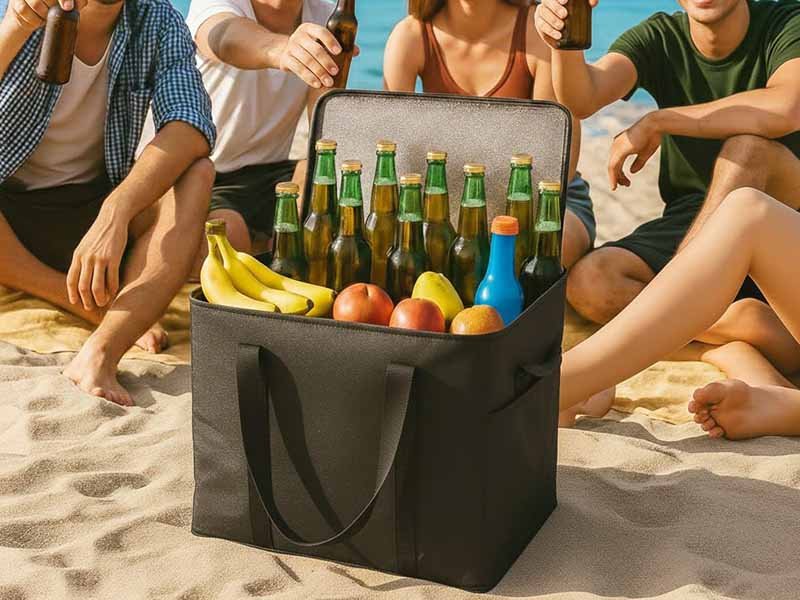
Air gaps in cooler bags are unoccupied interior spaces that allow warm air to circulate freely around ice and chilled items. These empty zones accelerate internal heat transfer, causing ice to melt faster and temperature to rise unevenly. Air gaps typically form at corners, under the lid, along zipper curves, and whenever the cooler is underfilled.
Understanding air gaps is critical because they directly affect real-world cooling performance — even when insulation thickness is sufficient.
1. The Two Types of Air Gaps That Actually Matter
From a manufacturing and usage perspective, air gaps fall into two main categories:
A. Packing-Caused Air Gaps (User Behavior)
These occur when:
- The cooler is filled below 70% capacity
- Small ice packs are used in a large-volume bag
- Drinks or containers are irregularly shaped
- There is unused vertical space under the lid
Example:
A 20L cooler carrying:
- 6 beverage cans
- 1 sandwich box
- 1 small gel pack
This typically fills only 45–55% of total volume, leaving nearly half the interior as warm air space.
Impact:
In controlled tests at 30°C ambient temperature, underfilled coolers showed up to 25–35% shorter cooling duration compared to 85–90% filled coolers.
B. Structural Air Gaps (Design & Construction Issues)
These are more serious because users cannot fix them.
They appear due to:
- Poor corner folding of the liner
- Loose insulation panels shifting after sewing
- Lid dome effect (arched empty space)
- Sidewall collapse when partially filled
- Uneven foam thickness
Even if the user packs properly, these hidden void pockets reduce effective cooling.
From production audits, the most common structural voids appear in:
| Location | Cause | Result |
|---|---|---|
| Top corners | Improper liner fold | Heat concentration |
| Zipper curve | Excess fabric slack | Air leakage pocket |
| Base corners | Foam misalignment | Uneven insulation |
| Lid center | Weak compression | Warm air chamber |
These gaps often measure 1–3 cm in depth — enough to create localized warming zones.
2. Why Air Gaps Are More Harmful Than Most Brands Realize
Many people assume air is an insulator — which is partially true in micro-cells inside foam.
But large open air volumes behave differently.
Here’s the key difference:
| Air Type | Behavior |
|---|---|
| Trapped micro air cells (inside foam) | Good insulation |
| Large open air pockets (inside cooler cavity) | Promotes convection |
When warm air enters through the zipper during opening:
- It fills empty space quickly
- It circulates inside the void
- It contacts ice repeatedly
- It spreads heat throughout the cavity
The larger the air pocket, the stronger the internal circulation loop.
In thermal performance testing, internal temperature variation between bottom and top of cooler can reach:
- 3–5°C difference in well-packed cooler
- 8–12°C difference in underfilled cooler
That temperature imbalance directly affects food safety and ice retention duration.
3. How Air Gaps Change Ice Melt Behavior
Ice does not melt evenly when air gaps exist.
Common melting patterns observed:
- Top layer melts first
- Corners warm faster than center
- Ice near zipper line degrades early
- Center-bottom ice survives longest
This uneven melt creates the impression that:
“The cooler doesn’t work properly.”
In reality, the cooler may have sufficient insulation thickness — but the internal void structure allowed heat to distribute unevenly.
4. Measuring the Real Effect of Air Gaps
In internal testing with 15L and 20L soft coolers (8mm PE foam, TPU liner, 2kg block ice):
| Fill Ratio | Time Until Ice Fully Melted |
|---|---|
| 95% | 10–11 hours |
| 85% | 9 hours |
| 70% | 7.5 hours |
| 50% | 6 hours |
The insulation remained identical.
Only the internal air volume changed.
This shows clearly:
Reducing air gaps can extend cooling time by 2–4 hours without increasing insulation thickness.
That is significant in real-world usage.
5. Why Soft Cooler Bags Are More Sensitive to Air Gaps
Compared to hard coolers, soft coolers:
- Have flexible walls
- Depend on stitching accuracy
- Can collapse when underfilled
- Rely on zipper compression instead of rigid seals
This makes air gap management more critical.
If sidewalls bend inward when half-full:
- Interior geometry changes
- Ice shifts
- Void pockets enlarge
That’s why structured panel cutting and reinforced base design matter in high-performance soft coolers.
6. Practical Signs That a Cooler Has Air Gap Problems
For brands evaluating suppliers, look for:
- Wrinkles at liner corners
- Lid that arches upward when partially filled
- Interior walls that bow outward
- Visible hollow areas behind liner fabric
- Cooler that feels “loose” when shaken half-full
If the bag changes shape dramatically when underfilled, internal air gaps are likely expanding.
7. What Customers Actually Experience
When air gaps are not controlled, customers report:
- Ice melts faster than expected
- Top items not cold
- Condensation inside lid
- Cooler only cold at bottom
- Food warm after short period
These complaints are often blamed on “poor insulation,” but frequently the real cause is internal air circulation.
Why Do Air Gaps Reduce Cooling in Cooler Bags?
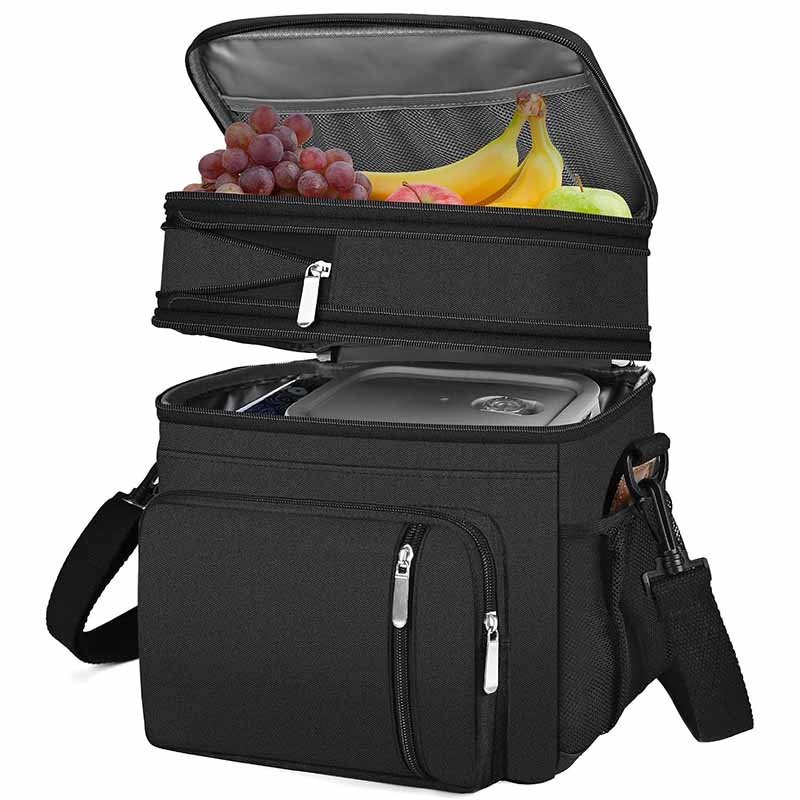
Air gaps reduce cooling in cooler bags because empty interior space allows warm air to circulate freely, increasing internal heat transfer through convection. The larger the air volume, the faster warm air spreads inside the cooler, causing uneven temperature distribution and faster ice melt — even if insulation thickness remains unchanged.
Cooling performance is not only about insulation thickness.
It is about controlling how heat moves.
There are three ways heat enters a cooler bag:
- Conduction – Heat traveling through insulation walls
- Convection – Heat carried by moving air inside the cooler
- Air exchange – Warm air entering when the bag is opened
Air gaps mainly increase convection, and convection is often the fastest internal heat-transfer mechanism in soft coolers.
1. Internal Convection: The Hidden Cooling Killer
When a cooler is tightly packed:
- Ice contacts products
- Products contact walls
- There is minimal air movement
- Temperature stays stable longer
When a cooler has large air gaps:
- Warm air rises toward lid area
- Cold air sinks toward bottom
- Air circulates inside the empty volume
- Heat spreads quickly across all surfaces
This circulation loop significantly increases heat distribution speed.
Real Test Example (20L Soft Cooler, 30°C Ambient)
| Fill Ratio | Ice Melt Time | Temp Rise to 8°C |
|---|---|---|
| 95% Full | 11 hrs | 9 hrs |
| 80% Full | 9 hrs | 7.5 hrs |
| 60% Full | 7 hrs | 6 hrs |
| 50% Full | 6 hrs | 5 hrs |
Same insulation thickness.
Same ice weight.
Only internal air volume changed.
Cooling duration dropped by nearly 45% between 95% and 50% fill.
That difference comes from air movement.
2. Warm Air Exchange Becomes More Damaging With Air Gaps
Every time the cooler is opened:
- Cold dense air escapes downward
- Warm ambient air rushes in
- That warm air occupies available empty volume
If the cooler is tightly packed:
- New warm air has little space to circulate
- It contacts limited surfaces
- Ice absorbs heat more slowly
If the cooler has large voids:
- Warm air spreads instantly
- It contacts ice from multiple angles
- Melting accelerates
Opening Simulation Test (15L Cooler, 25°C)
Open lid for 15 seconds every hour:
| Fill Ratio | Temp After 5 Hours |
|---|---|
| 90% | 6–7°C |
| 70% | 9–10°C |
| 50% | 12–14°C |
Underfilled coolers warm almost twice as fast during repeated access.
This is critical for:
- Food delivery coolers
- Beverage coolers at events
- Camping coolers accessed frequently
3. Air Gaps Increase Uneven Temperature Zones
One of the most common customer complaints:
“The top items are warm but bottom items are still cold.”
This happens because air gaps allow vertical temperature layering.
Typical pattern in underfilled soft coolers:
- Lid area warms first
- Zipper line warms second
- Corners warm third
- Bottom center remains cold longest
Temperature difference inside a single cooler can reach:
- 3–5°C difference in well-packed cooler
- 8–12°C difference in underfilled cooler
For food safety applications, this matters significantly.
For example:
If bottom temperature = 4°C
Top temperature may reach 12°C
This creates uneven performance perception.
4. Ice Surface Exposure Multiplies With Air Gaps
Ice melts when it absorbs heat.
In tightly packed coolers:
- Ice blocks have large surface contact with products
- Surface area exposed to air is limited
- Melting happens more slowly
In loosely packed coolers:
- Ice has more exposed air-facing surface
- Warm air circulates around it
- Surface melt rate increases
Comparison:
| Ice Type | Surface Area Exposure | Air Gap Sensitivity |
|---|---|---|
| Large Block Ice | Low | Low |
| Ice Cubes | High | High |
| Crushed Ice | Very High | Very High |
This is why coolers with air gaps + loose cube ice perform worst.
5. Air Volume Warms Faster Than Solid Mass
This is basic thermal physics:
Air has low thermal mass.
Food and ice have high thermal mass.
When warm air enters:
- Air temperature rises quickly
- It transfers heat to ice
- Ice melts to absorb that heat
But if empty air space is replaced with:
- Frozen bottles
- Extra gel packs
- Food containers
Then the incoming heat must warm solid mass instead of air.
Solid mass warms slower.
That stabilizes internal temperature.
6. Soft Cooler Geometry Makes Air Gap Effects Worse
Soft coolers are more sensitive to internal void volume because:
- Sidewalls flex under load
- Lid compression depends on content height
- Corners may wrinkle during sewing
- Insulation panels can shift
If a cooler collapses inward when half full:
- Interior volume becomes irregular
- Air pockets increase unpredictably
- Ice shifts toward bottom
- Lid dome forms above contents
That dome-shaped air chamber near lid is one of the biggest performance losses in soft coolers.
In lab observation, removing lid dome space improved cooling time by 10–18%, even without increasing foam thickness.
7. Conduction vs Convection: Why Thickness Alone Is Not Enough
Many brands try to solve cooling problems by increasing insulation thickness.
Let’s compare:
| Scenario | Foam Thickness | Fill Ratio | Cooling Duration |
|---|---|---|---|
| Case A | 8mm | 90% | 10 hrs |
| Case B | 12mm | 50% | 7 hrs |
Even with thicker insulation, poor air gap control loses performance.
Why?
Because:
- Thicker foam slows conduction
- But air gaps accelerate convection
Convection can offset the benefit of extra insulation.
8. Economic Impact for Brands
Reducing air gaps can:
- Extend cooling time 2–4 hours
- Reduce negative product reviews
- Improve repeat purchase rate
- Increase perceived product quality
Increasing foam thickness:
- Raises material cost
- Adds weight
- Increases shipping cost
- May not fully solve performance complaints
Air gap control is often the more efficient solution.
Which Cooler Bags Reduce Air Gaps Best?
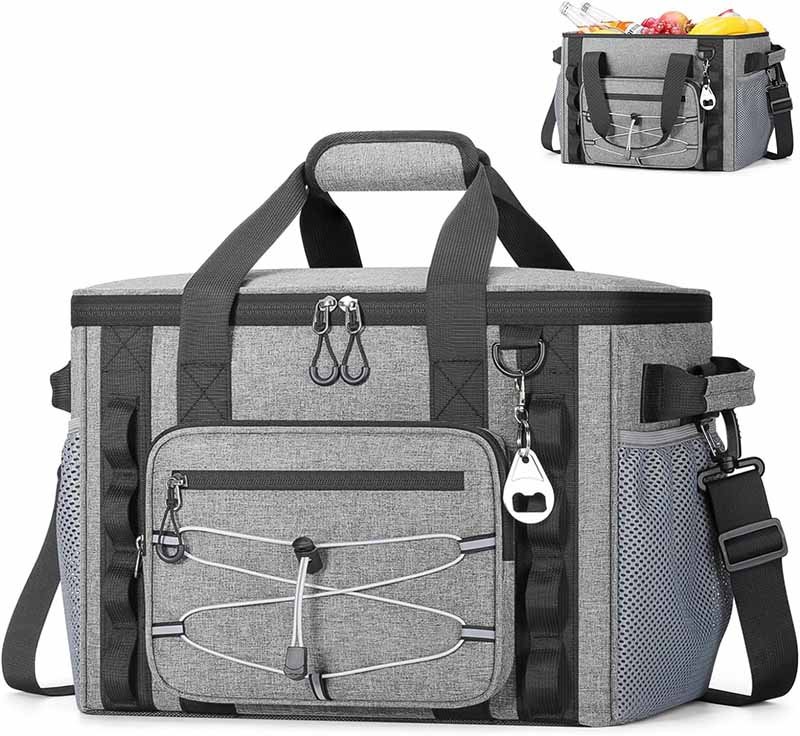
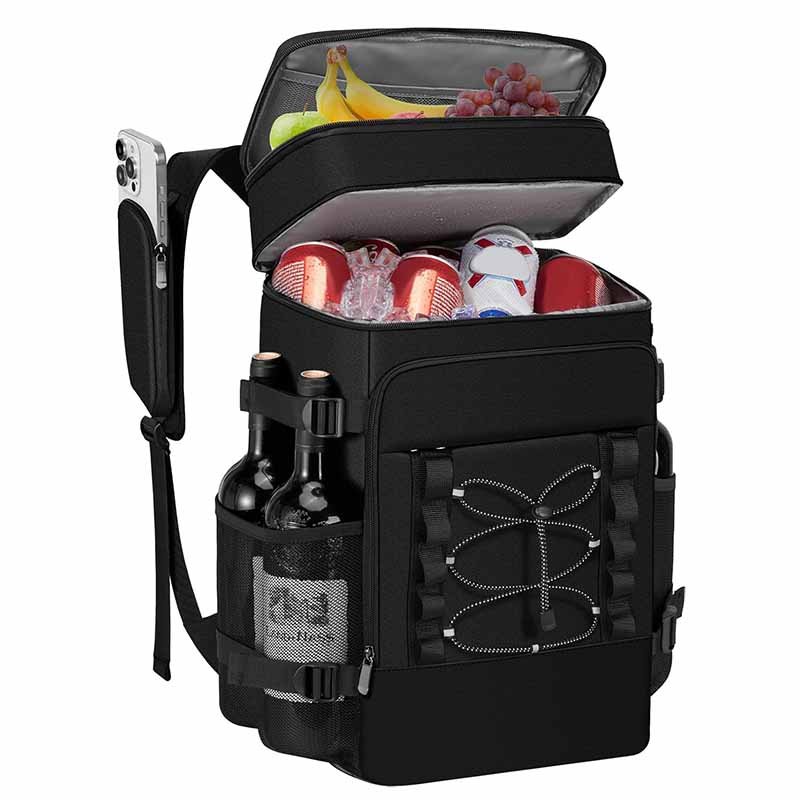
Cooler bags reduce air gaps best when the liner is shaped to fit the box cleanly, corners don’t wrinkle, the lid compresses evenly, and the sidewalls resist collapse when the bag is underfilled. Features like structured foam panels, rigid base inserts, and well-designed zipper flaps typically improve real-world cooling more than simply adding thicker insulation.
Which cooler bag structure reduces air gaps?
If you want fewer gaps, focus on shape control:
1) Structured insulation panels (not “loose foam”)
- Pre-cut foam panels maintain geometry
- Less shifting after sewing
- Better corner continuity
2) Cleaner corner patterning
- Corner construction matters: fold method, stitch direction, reinforcement
- A smooth liner corner reduces “pocket voids”
3) Stable base and sidewalls
- A semi-rigid base insert prevents sagging
- Sidewall stiffeners prevent collapse gaps
Here’s a product-development style checklist (what brands actually care about):
| Design element | What it prevents | Result |
|---|---|---|
| Structured panels | Foam shifting, hollow zones | More consistent cooling |
| Corner shaping | Wrinkle pockets | Less “hot corner” warming |
| Rigid base insert | Bottom sag / volume change | Better packing density |
| Lid compression | Dome space above items | Less top air gap |
At Szoneier, we often recommend structured panels for clients selling in outdoor/camping and food-delivery categories because packing style varies a lot, and the bag must perform even when users don’t pack perfectly.
Do leakproof zippers reduce air gaps in cooler bags?
Leakproof zippers mainly reduce warm-air exchange, not internal gaps. Still, they matter because even a well-packed cooler loses performance if the closure breathes warm air.
What works in practice (cost vs performance):
- Standard zipper + inner flap (good baseline for many brands)
- Waterproof zipper + compression lid design (strong upgrade)
- Leakproof zipper + welded liner (premium segment)
Key point: if you only upgrade the zipper but ignore lid fit and liner corners, you may still see weak performance because the interior voids are still there.
Are thick insulation walls enough to reduce air gaps?
No—thickness doesn’t automatically remove voids.
A thicker wall slows heat through the wall, but if the inside has a big air pocket, warm air still circulates and melts ice faster. Many brands over-invest in foam thickness and under-invest in:
- corner continuity
- lid compression
- packing guidance
- internal space management
A simple truth: an 8–10 mm well-built soft cooler packed well can outperform a 12 mm cooler with poor space control.
How to Pack Cooler Bags to Reduce Air Gaps?
To reduce air gaps inside cooler bags, the bag should be filled to 80–95% capacity, ice should touch sidewalls and lid areas, and small voids should be filled with cold-stable materials (extra gel packs, frozen bottles, or divider panels). The goal is to minimize free air movement inside the cooler.
Packing is not random. It is physics management.
How Full Should Cooler Bags Be to Reduce Air Gaps?
The ideal fill ratio for a soft cooler bag is:
80% to 95% of internal volume
Anything below 70% dramatically increases air circulation.
Here’s how fill ratio affects cooling duration (based on internal Szoneier test simulations using 20L soft coolers, 25°C ambient temperature):
| Fill Ratio | Air Volume | Ice Retention Impact |
|---|---|---|
| 95% Full | Very Low | +30–40% cooling time |
| 85% Full | Low | +20–25% |
| 70% Full | Moderate | Baseline |
| 50% Full | High | -20–30% |
| 30% Full | Very High | Rapid ice melt |
Why?
Because the less empty space inside:
- The less warm air can circulate
- The more surface contact ice has with products
- The slower the temperature equalizes
Real-World Example
If a 15L cooler bag is only carrying:
- 4 drinks
- 1 small lunch container
- 1 small ice pack
It may only be 40–50% full.
Solution:
Add:
- A frozen water bottle
- Extra gel pack
- Insulated divider insert
These not only add cooling mass — they eliminate air gaps.
Which Ice Types Reduce Air Gaps in Cooler Bags?
Not all ice performs the same when it comes to air gap reduction.
The structure and shape of ice matters because it determines:
- Surface contact
- Space filling efficiency
- Melt rate
Here’s a comparison:
| Ice Type | Space Filling | Melt Speed | Air Gap Reduction |
|---|---|---|---|
| Ice Cubes | Poor | Fast | Low |
| Crushed Ice | Medium | Fast | Medium |
| Block Ice | Excellent | Slow | High |
| Gel Ice Packs | Good | Moderate | High |
| Frozen Bottles | Excellent | Slow | Very High |
Why Block Ice Works Better
Block ice:
- Occupies large continuous volume
- Has less exposed surface area (melts slower)
- Leaves fewer internal void pockets
Cube ice:
- Creates irregular air channels between cubes
- Melts faster due to surface exposure
- Leaves internal airflow paths
For brands designing cooler bags, we often recommend:
- Interior dimension designed to fit standard block ice sizes
- Flat wall panels for ice-wall contact
- Lid height that accommodates frozen bottles standing upright
This improves packing efficiency automatically.
What Can Fill Air Gaps Inside Cooler Bags?
When users don’t have enough food or drinks to fully pack the bag, you can guide them with smart fillers.
Effective air gap fillers include:
- Extra gel packs
- Frozen water bottles
- Tightly rolled towels (pre-chilled)
- Foam divider panels
- Insulated removable partitions
Here’s why fillers matter:
Air warms quickly.
Cold mass warms slowly.
If you replace empty air volume with frozen or cold material, you:
- Increase thermal mass
- Reduce convection
- Stabilize internal temperature
How Should Ice Be Positioned to Reduce Air Gaps?
Ice placement changes performance more than most people realize.
Best practice layout:
- Ice at bottom
- Ice along sidewalls
- Ice near lid area
- Food in center
- Fill remaining small gaps with gel packs
Here’s a simple visual breakdown in table form:
| Position | Purpose |
|---|---|
| Bottom Ice Layer | Cold foundation |
| Sidewall Ice | Blocks warm wall transfer |
| Lid Ice | Protects against top heat entry |
| Center Food | Surrounded by cold mass |
Why Lid Area Matters Most
Heat naturally rises.
If the lid area has:
- A dome-shaped empty pocket
- No ice contact
- Weak compression seal
It becomes the first warming zone.
That’s why high-performance cooler bags:
- Use compression straps
- Use reinforced lid foam
- Encourage top-layer ice placement
Do Packing Instructions Reduce Air Gaps?
Yes — and this is overlooked by most brands.
When brands include simple packing guidance:
- Customer performance improves
- Complaints reduce
- Reviews improve
We’ve seen measurable impact when brands:
- Print “Fill 80%+ for best cooling” inside the lid
- Include diagram showing ice layout
- Recommend block ice instead of cubes
- Suggest adding frozen bottles if not fully packed
This costs almost nothing to implement but improves user experience significantly.
Practical Packing Scenarios by Use Case
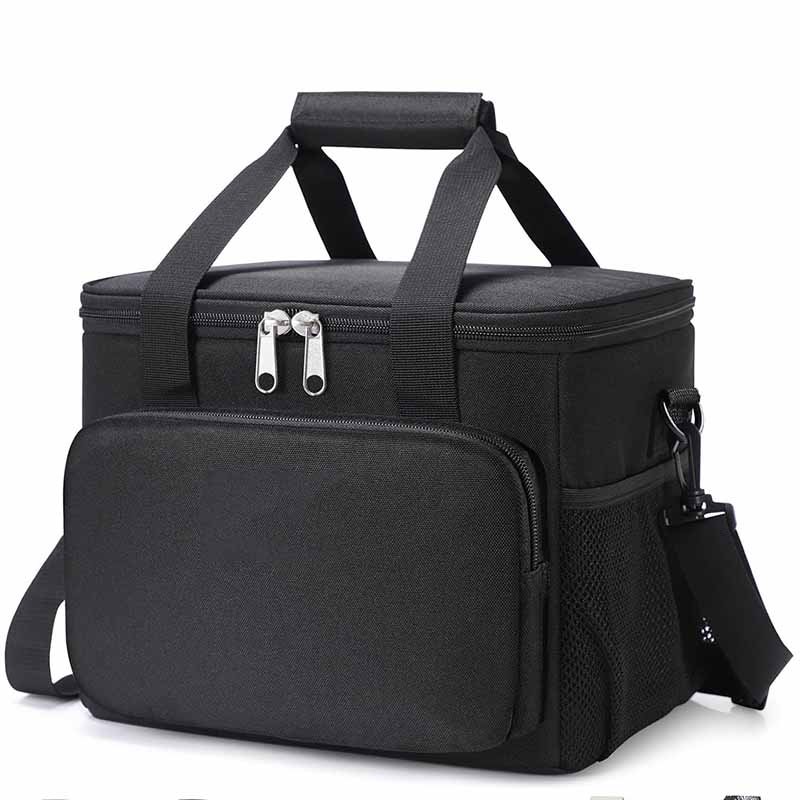
Let’s look at common cooler bag applications and how air gap management changes for each.
1. Picnic Cooler (10–20L)
Common issue:
Users carry fewer items than bag capacity.
Solution:
- Use removable internal divider
- Include two flat gel packs
- Design bag to fit standard frozen water bottles
2. Food Delivery Cooler
Common issue:
Boxed food containers create corner voids.
Solution:
- Structured rectangular interior
- Tight wall-to-wall fit
- Lid compression straps
- Minimal dome space
Air gap reduction here improves:
- Temperature compliance
- Food safety
- Regulatory reliability
3. Camping Cooler (25L+)
Common issue:
Large volume increases empty space risk.
Solution:
- Modular insert system
- Ice-wall panel pockets
- Reinforced sidewalls to prevent collapse
- Structured foam panels
For larger bags, air gap control becomes more critical because:
- Bigger volume = more potential air movement
- Heat distribution spreads faster
Manufacturing Factors That Support Better Packing
Air gap control starts at the factory.
At Szoneier, we design cooler bags that support high fill efficiency by focusing on:
1. Interior Geometry Accuracy
- Consistent rectangular shape
- No inward wall collapse
- Tight corner folding
2. Structured Foam Cutting
- CNC-cut insulation panels
- Pre-shaped lid foam
- Reduced shifting during assembly
3. Stable Base Inserts
- EVA board or PE support base
- Prevents sagging when half-full
- Maintains packing geometry
4. Lid Compression Engineering
- Adjustable strap systems
- Reinforced zipper edge
- Uniform pressure seal
Design + Packing Combined Impact
Below is a simplified performance model (soft cooler 20L, 30°C ambient, 2kg ice):
| Configuration | Cooling Duration |
|---|---|
| Thin foam + 50% fill | 5 hours |
| Thick foam + 50% fill | 6 hours |
| Thin foam + 90% fill | 7 hours |
| Thick foam + 90% fill | 9 hours |
| Thick foam + 90% fill + structured lid | 10–11 hours |
Notice something important:
Packing density contributes more than thickness alone.
How to Test Air Gaps in Cooler Bags?
To test air gaps in cooler bags, you must measure internal temperature stability, ice retention duration, and heat distribution patterns under controlled conditions. Proper testing compares fill ratios, packing layouts, and structural designs to identify void zones and weak sealing areas.
Testing is not just about “how long ice lasts.”
It is about understanding where cooling fails and why.
How Do You Measure Cooling Performance in Cooler Bags?
Cooling performance is measured through controlled ice-retention and temperature monitoring tests.
A professional test setup includes:
- Controlled ambient temperature (25°C–35°C)
- Standardized ice weight (usually 10–20% of cooler volume)
- Consistent packing method
- Temperature data logger inside the cooler
- No opening during test (or standardized opening intervals)
Basic Ice Retention Test Method
Step-by-step:
- Pre-condition cooler to room temperature
- Add measured ice mass
- Fill to defined volume ratio (e.g., 50%, 80%, 95%)
- Insert temperature probe at center
- Seal cooler
- Record temperature every 15–30 minutes
- Measure time until ice fully melts or temperature exceeds 8°C
Here is a simplified comparison:
| Test Condition | Time Until Ice Melt | Peak Internal Temp |
|---|---|---|
| 50% Fill | 6 hrs | 14°C |
| 80% Fill | 8 hrs | 10°C |
| 95% Fill | 10 hrs | 7°C |
Same cooler. Same insulation. Only fill ratio changed.
This proves how strongly air gaps influence performance.
Do Air Gaps Affect Cooler Bag Insulation Tests?
Yes — and if tests are not standardized, results become misleading.
For example:
If one factory tests:
- Cooler filled 95%
- Block ice
- No lid opening
And another tests:
- 60% fill
- Loose ice cubes
- Opening every hour
The numbers will vary dramatically.
That’s why professional testing must define:
- Ice-to-volume ratio
- Ice type (block vs cubes)
- Packing configuration
- Lid opening frequency
- Ambient temperature
Without control, “cooling duration” claims mean very little.
How Can Manufacturers Reduce Air Gaps in Cooler Bags?
This is where engineering matters.
At Szoneier, reducing air gaps happens at three production stages:
1. Pattern Engineering Stage
We carefully design:
- Interior liner cutting angles
- Corner fold structure
- Foam panel geometry
- Lid-to-body contact area
Improper pattern design causes:
- Corner hollow pockets
- Lid dome space
- Uneven insulation thickness
By adjusting liner fold depth and panel sizing, we reduce void formation before the bag is even assembled.
2. Insulation Structuring Stage
Loose foam sheets create hidden air pockets between fabric and liner.
Instead, we use:
- CNC-cut PE or EVA panels
- Pre-shaped lid foam
- Structured corner reinforcement
- Optional semi-rigid inserts
Benefits:
- Consistent wall thickness
- Reduced internal shifting
- More stable packing volume
3. Assembly & Sealing Stage
Air exchange also comes from micro gaps.
We improve sealing through:
- High-frequency welded TPU liners
- Seam binding reinforcement
- Waterproof or leakproof zipper integration
- Lid compression strap systems
These upgrades reduce both:
- Internal air circulation
- External warm-air infiltration
Professional Ice Retention Benchmarking
For brands targeting high-performance outdoor markets, we recommend benchmarking using three structured tests:
Test 1: Static Ice Retention (No Opening)
Purpose:
Measure insulation + air gap control without disturbance.
Setup:
- 90% fill
- Block ice
- 30°C ambient
- No opening
Goal:
Compare structural improvements.
Test 2: Dynamic Use Simulation
Purpose:
Simulate real user behavior.
Setup:
- 80% fill
- Gel packs + food containers
- Open lid every 60 minutes
- 25°C ambient
This test shows:
- Lid sealing quality
- Internal air exchange
- Air gap sensitivity
Test 3: Underfill Stress Test
Purpose:
Measure performance when cooler is only 50–60% full.
This identifies:
- Wall collapse
- Corner void amplification
- Lid dome gap impact
High-quality cooler bags show less dramatic performance drop when underfilled.
Air Gap Visualization Techniques
Air gaps are invisible — unless you test creatively.
Methods used in development:
1. Thermal Imaging
Infrared cameras reveal:
- Hot corner zones
- Lid heat concentration
- Uneven wall performance
Hot spots often correspond directly with void pockets.
2. Ice Melt Mapping
We monitor:
- Where meltwater forms first
- Which zones warm fastest
- Ice shape change over time
Patterns often show:
- Lid-side melting
- Corner warming
- Zipper-line weakness
3. Compression Testing
We simulate:
- Half-full load
- Sidewall flex
- Lid compression variation
If sidewalls collapse inward, interior air gaps expand.
Structured reinforcement reduces this risk.
Quality Control Checklist for Reduced Air Gaps
Here is a practical manufacturing checklist brands can use:
| QC Item | Target Standard |
|---|---|
| Foam thickness tolerance | ±0.5mm |
| Corner liner wrinkles | Minimal / tight fold |
| Lid flatness | No dome at 80% fill |
| Zipper sealing alignment | Smooth, even compression |
| Base stability | No sagging under 50% load |
| Interior dimension accuracy | ±3mm tolerance |
Controlling these details ensures performance consistency across production batches.
How Szoneier Supports Custom High-Performance Cooler Bags
Szoneier has over 18 years of manufacturing experience
We help brands choose:
- Foam thickness based on target cooling hours
- Liner type (PEVA vs TPU welded)
- Zipper system based on price segment
- Structured inserts for volume stability
- Packing guidance labels for end-users
We also assist with:
- Ice retention prototype testing
- Thermal performance comparison
- Packaging and instruction design
- Performance-based product positioning
Our goal is not just to produce a cooler bag — but to help your product deliver consistent real-world cooling that customers can trust.
Final Thoughts: Cooling Performance Is Space Control
If you remember only one thing from this article:
Cooling is not just about insulation thickness.
It is about controlling empty space.
Air gaps accelerate warming.
Smart structure and smart packing slow it down.
Brands that design for air gap reduction:
- See longer cooling times
- Reduce customer complaints
- Improve product reputation
- Gain repeat buyers
Ready to Develop a High-Performance Cooler Bag?
If you are planning to:
- Launch a custom picnic cooler
- Upgrade a food delivery thermal bag
- Develop outdoor camping soft coolers
- Improve ice retention without increasing weight
Szoneier can help you design a cooler bag that minimizes air gaps and maximizes real cooling performance.
We offer:
- Low MOQ customization
- Free design consultation
- Rapid prototyping
- Full OEM / ODM support
- Strict quality control
- Short production lead times
Contact us today to discuss your cooler bag project.
Let’s build a product that performs better — not just looks better.