Skip to content
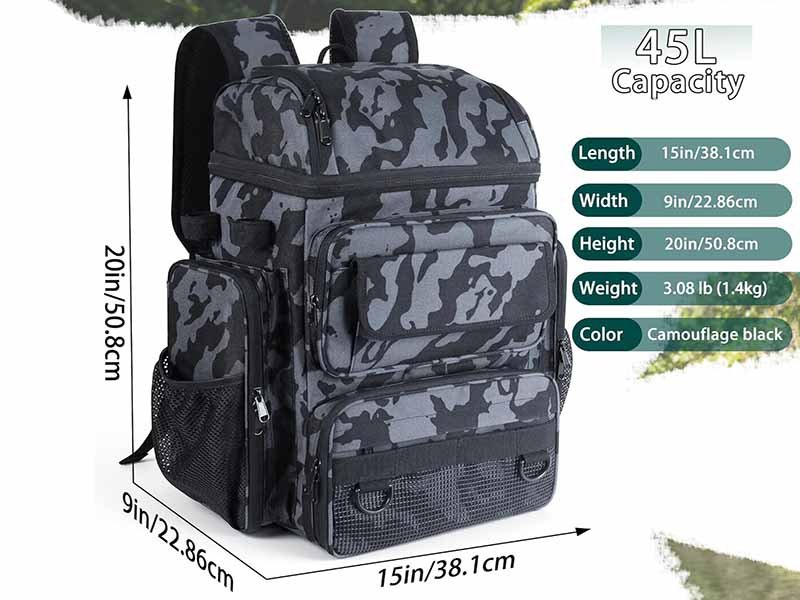
If you’ve ever packed for a fishing trip and still ended up with lures in your pockets, pliers “somewhere”, and a wet jacket tied around your waist—you already know the real problem: the bag capacity was never defined in a useful way. Many fishing bags show a liter number, but anglers don’t carry “liters.” They carry tackle trays, leaders, reels, scissors, scale, rain gear, water, snacks, and sometimes a camera or fish finder battery. If the bag’s size isn’t translated into “fits what,” people either overbuy a huge bag that becomes heavy and messy—or underbuy and spend the whole session searching for tools.
A practical fishing bag capacity definition uses two things together: (1) the bag’s usable internal volume (liters) and (2) a realistic packing list—what specific gear it fits without crushing, bending, or blocking access. In most fishing setups: 5–10 L covers essentials; 10–25 L supports a day session; 25–45 L holds a full tackle system plus clothing; 45 L+ is for travel, boat storage, or multi-day fishing.
One factory test we often do when developing a new fishing bag is simple: we pack it exactly like a real angler—then we time how long it takes to find pliers, swap a lure, and grab rain gear with one hand. The surprising truth is: capacity isn’t only about “how much.” It’s about whether your gear stays reachable when your hands are wet, cold, or busy.
What Is Fishing Bag Capacity?
Fishing bag capacity is the usable internal space available to carry fishing gear in a stable and accessible way. The most reliable way to define it is usable liters + “fits what” packing list, because soft bags lose space to padding, seams, pockets, and structure. Two bags labeled “20 L” can feel completely different depending on shape and layout.
What does “liters” mean in bag capacity?
A liter is a unit of volume. In bag terms, it’s the space inside the bag.
Basic calculation:
- Liters ≈ (Length × Width × Height in cm) ÷ 1000
But fishing bags are rarely perfect boxes. Curved corners, internal dividers, foam padding, and stiffeners reduce usable space.
A realistic rule for fishing bags:
- Usable capacity = labeled liters × 0.70 to 0.90
That range depends on construction:
- More padding & structure → less usable space, better protection
- Softer walls → more usable space, less protection
Practical conversion chart
| Labeled Capacity | Expected Usable (Most Bags) | “Feels Like” in Real Packing |
|---|---|---|
| 5–7 L | 4–6 L | chest pack / quick grab kit |
| 10 L | 7–9 L | sling with 1–2 trays + tools |
| 15 L | 11–13 L | day bag light setup |
| 20 L | 14–18 L | full day bag for most anglers |
| 30 L | 22–27 L | heavy day / shore + jacket |
| 40 L | 28–36 L | full tackle system + clothing |
| 50 L+ | 35–45+ L | travel / boat / multi-day |
Customer tip: If a bag is advertised in liters but has many thick internal walls, ask for:
- main compartment inner dimensions
- tackle tray compatibility list
- max load weight
Those tell the truth faster than a marketing liter number.
How do manufacturers measure capacity?
There are two common ways brands “measure” liters. Only one is useful.
1. Internal usable volume (recommended)
This measures the actual storage cavity.
- based on inner dimensions
- closer to real capacity
- best for professional products
2. External dimension estimate (often inflated)
This uses the bag’s outside size, then converts to liters like it’s a box.
- includes padding + walls + dead corners
- often overstates liters
- common for low-end listings
What to request when you’re sourcing or comparing bags
| Data Item | Why it Matters | What It Prevents |
|---|---|---|
| Inner L×W×H (cm) | converts to real liters | “20 L” that packs like 14 L |
| Tray size compatibility | confirms practical fit | trays that don’t slide in |
| Opening width (cm) | determines access | bag that fits trays but can’t load them |
| Load rating (kg) | durability & comfort | strap tear / seam burst |
| Pocket volume map | real organization | pockets steal main space |
A bag may “fit” a tackle tray diagonally, but the opening zipper is too narrow—so loading becomes annoying. That is why opening width is a real customer complaint point, and why it must be designed and tested.
Why capacity matters for anglers
Capacity affects three things anglers care about immediately:
1. How long you can stay out
- water + food + jacket = longer sessions
- no space = early return
2. How fast you can work
- faster lure changes
- faster tool access
- fewer dropped items
3.How tired you feel
- correct size = balanced weight
- wrong size = shoulder pain, shifting load
“Capacity vs comfort” reality check (useful for product planning)
| Loaded Weight | Comfort Range (Average Adult) | Typical Bag Range |
|---|---|---|
| 1–3 kg | comfortable for 4–6 hours | 5–15 L |
| 3–6 kg | comfortable for 2–4 hours | 15–30 L |
| 6–10 kg | needs strong straps + waist support | 25–45 L |
| 10 kg+ | better for trolley/boat storage | 45 L+ |
This is why “bigger is better” is often wrong. Many anglers buy large bags, then leave them in the car because they’re too heavy when packed.
Which Sizes Are Common for Fishing Bags?
Most fishing bags fall into four capacity bands. The best way to compare them is liters + standard gear list. Below is a clear “fits what” breakdown that matches how anglers pack in real life.
Small (5–10 L): Fits what?
Best for: short trips, ultralight fishing, walking long distances, minimal gear
Common contents that fit comfortably:
- 1 small tackle tray (or 1 slim lure box)
- pliers + line cutter
- leaders + snaps + hooks
- small spool (line)
- phone/keys/wallet
Typical limit: no jacket + no large water bottle
Small capacity packing list
| Item | Fits Easily? | Notes |
|---|---|---|
| 3600-size tray | sometimes | depends on opening width |
| 3500-size tray | yes | most reliable choice |
| 1L bottle | rarely | better with external bottle pocket |
| rain jacket | no | only ultra-thin shell, folded tight |
Small bags are awesome when you move constantly, but they punish you if weather changes.
Medium (10–25 L): Fits what?
This is the “most people should start here” category because it covers the majority of day fishing needs.
Best for: shore fishing, light boat fishing, half-day to full-day trips
Common contents:
- 2–4 tackle trays (varies by tray size)
- soft bait packs
- tool set: pliers, scissors, hook remover
- 500 ml–1 L water bottle
- small first aid kit
- compact rain layer (in many models)
What typically fits by sub-range
| Capacity | Fits What (Realistic) |
|---|---|
| 10–12 L | 1–2 trays + tools + small bottle |
| 13–18 L | 2–3 trays + tools + bottle + snacks |
| 19–25 L | 3–4 trays + bottle + light jacket |
Best design features customers look for:
- wide-opening main zipper
- front tool panel or “quick access” pocket
- stiff bottom to prevent tipping
Large (25–45 L): Fits what?
Large bags are for anglers who carry a full system or fish in changing conditions.
Best for: all-day fishing, cold weather, heavy lure setups, shore-to-spot hikes with gear
Common contents:
- 4–8 tackle trays
- spare reel or spool cases
- rain jacket or warm layer
- lunch + 1–2 L water
- electronics accessories (power bank, headlamp)
Large bag capacity map
| Capacity | Recommended Use | Loaded Weight Range |
|---|---|---|
| 25–30 L | heavy day trips | 4–7 kg |
| 31–40 L | full tackle + clothing | 6–10 kg |
| 41–45 L | maximum shore carry | 8–12 kg |
Customer complaint to avoid (for product development):
- shoulder straps too thin
- bag becomes a “black hole” without dividers
- weak zipper under heavy load
Large bags must be engineered, not just sized up.
Extra Large (45 L+): Fits what?
Best for: multi-day trips, travel fishing, boat storage, guiding
Common contents:
- 8–12 trays (or bulk lure bins)
- clothing layers + spare shoes (some models)
- large tool kit
- batteries / electronics
- wash bag / dry bag inside
These bags often need:
- reinforced handle + stitching
- rigid base
- optional trolley sleeve
- water-resistant shell (TPU/PVC coated fabrics)
Extra-large “use case” guide
| Scenario | Best Capacity | Why |
|---|---|---|
| travel + checked luggage | 50–70 L | holds full kit + clothing |
| boat storage box replacement | 45–60 L | bulk storage |
| multi-day shore trip | 50 L+ | food + layers + tackle |
Quick Size-to-Gear Table
This table is designed for product pages and for customers who want an instant answer.
| Bag Capacity | Tackle Trays | Water | Clothing | Best For |
|---|---|---|---|---|
| 5–10 L | 1–2 small | 0–500 ml | none | quick sessions, ultralight |
| 10–18 L | 2–3 | 500 ml–1 L | thin shell | most day fishing |
| 18–25 L | 3–4 | 1 L | light jacket | full day + comfort |
| 25–35 L | 4–6 | 1–2 L | jacket + layer | heavy day setups |
| 35–45 L | 6–8 | 2 L | layers | long shore trips |
| 45 L+ | 8–12 | 2 L+ | multi layers | travel, boat, multi-day |
How Do You Choose Capacity Based on Fishing Style?
Choosing fishing bag capacity becomes much easier when you start with how you actually fish, not how the bag looks online. Different fishing environments change:
- how far you walk
- how long you stay out
- how much gear must be carried
- whether weight or storage matters more
The most reliable way to select capacity is to match liters directly to fishing duration, mobility, and safety gear needs. When capacity fits the fishing style, anglers move more freely, spend less time searching for tools, and stay out longer without discomfort.
What capacity works best for shore or bank fishing?
Shore fishing usually involves walking, repositioning, and carrying everything yourself, so balance is critical.
Most experienced anglers prefer:
- 15–25 L for half-day to full-day sessions
- 10–15 L for short evening trips
- 25–30 L only when carrying extra clothing or food
Why this range works:
- enough room for multiple lure options
- space for water and safety basics
- still light enough for continuous walking
Typical shore-fishing packing weight
| Gear Category | Average Weight |
|---|---|
| tackle trays (3–4 pcs) | 1.5–2.5 kg |
| tools & accessories | 0.5–1 kg |
| water & snacks | 0.5–1.5 kg |
| light jacket | 0.4–0.8 kg |
| total | 3–6 kg |
This explains why 20 L bags dominate real usage—they sit right inside the comfortable carry zone.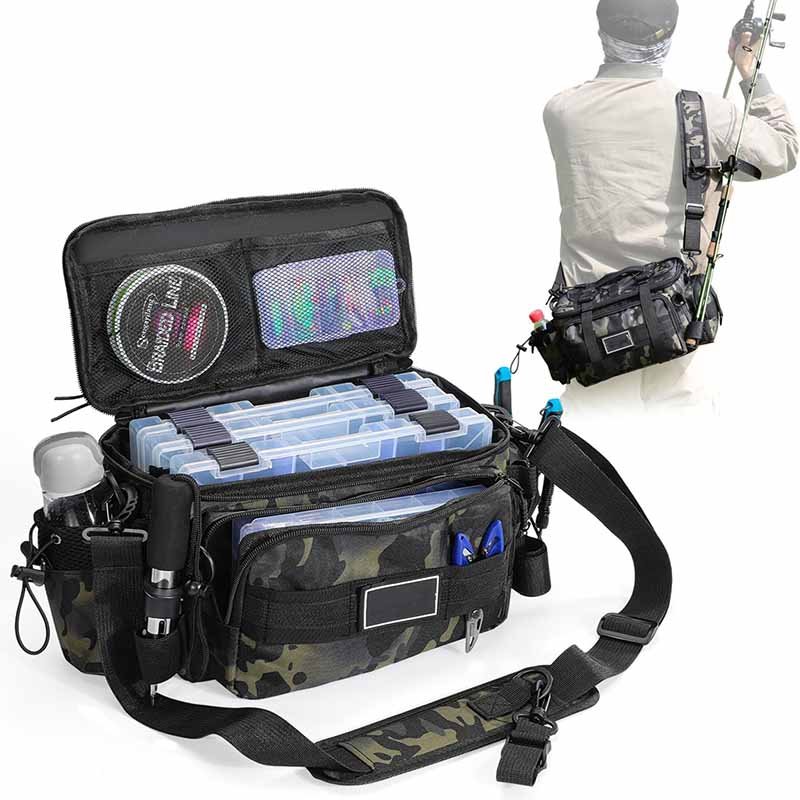
What capacity is suitable for kayak or small-boat fishing?
Kayak and small-boat anglers face a different constraint: limited storage space, but less need to carry weight on the body.
That shifts the ideal capacity upward.
Most common choices:
- 20–35 L for kayak deck storage
- 25–40 L for small boats
- 40 L+ when acting as a full tackle station
Why larger sizes work here:
- the bag is placed, not carried long distances
- extra space allows organized lure systems
- safety gear (dry clothes, emergency kit) must fit
Kayak safety packing reality
| Required Item | Space Impact |
|---|---|
| dry clothing set | high |
| waterproof pouch | medium |
| emergency food | medium |
| headlamp / whistle | low |
Because of safety gear, kayak anglers often outgrow small bags quickly, even if tackle needs are modest.
Material request from serious customers:
- waterproof TPU-laminated fabric
- sealed zippers or roll-top inner pouch These prevent water splash from ruining electronics or spare clothes.
What capacity is needed for multi-day or travel fishing?
Travel fishing changes the equation completely. Now the bag must hold both fishing gear and personal essentials.
Common real-world capacity:
- 40–55 L for weekend trips
- 55–70 L for multi-day travel with clothing
- separate rod tube + tackle bag for flights
Multi-day packing example
| Category | Volume Share |
|---|---|
| tackle system | 35–45% |
| clothing layers | 25–35% |
| toiletries & extras | 10–15% |
| food & water | 10–20% |
This shows why 45 L often feels too small once clothing is included.
Air travel insight customers often overlook: Soft fishing bags under 60 L are easier to compress into luggage limits.
Do extra compartments change the capacity you need?
Yes—sometimes dramatically.
More compartments improve organization, but they also:
- reduce main storage volume
- add zipper weight
- increase cost
Compartment trade-off chart
| Design Style | Advantage | Limitation |
|---|---|---|
| many small pockets | fast tool access | less space for trays |
| large open cavity | maximum volume | slower organization |
| modular divider system | flexible layout | higher production cost |
Best balance for most anglers:
- 1 large main compartment
- 1–2 tray sleeves
- 1 quick-access tool pocket This layout preserves usable liters while keeping gear reachable.
What Gear Should Fit in Each Capacity Range?
Capacity numbers become meaningful only when translated into real gear lists. Customers rarely ask, “How many liters?” They ask, “Will it fit my tackle boxes, water, and jacket?”
Below is a clear, real-world gear mapping based on common fishing setups.
Tackle trays, reels, and core tools
Tackle storage is always the largest space consumer.
Standard tray compatibility by capacity
| Capacity | 3500 Trays | 3600 Trays | 3700 Trays |
|---|---|---|---|
| 10 L | 2–3 | 1–2 | 0–1 |
| 20 L | 4–6 | 3–4 | 2–3 |
| 30 L | 8–10 | 6–8 | 4–5 |
| 45 L | 12+ | 9–12 | 7–9 |
Tray width and zipper opening matter more than total liters. A poorly designed opening makes trays hard to insert even if space exists.
Food, water, and personal essentials
Hydration often determines trip length, yet many small fishing bags ignore bottle storage.
Space required for hydration
| Bottle Size | Volume Needed |
|---|---|
| 500 ml | ~0.7 L |
| 1 L | ~1.2 L |
| 1.5 L | ~1.8 L |
That means a “15 L” bag may lose 10% of usable space just to water.
Rain gear and spare clothing
Weather protection quickly separates day bags from serious fishing bags.
Clothing volume estimate
| Item | Packed Volume |
|---|---|
| ultralight rain shell | 1–2 L |
| fleece layer | 3–5 L |
| full clothing change | 8–12 L |
This explains why anglers upgrading from 20 L to 30 L suddenly feel far more prepared.
Electronics and accessories
Modern fishing increasingly includes:
- action cameras
- fish finders
- batteries / power banks
- lighting
These items require:
- padding
- water resistance
- dedicated pockets
Electronics protection need by trip type
| Trip Type | Protection Level |
|---|---|
| short shore trip | low |
| kayak fishing | high |
| travel fishing | very high |
This is why waterproof fabric and sealed seams become real buying factors, not just marketing features.
How to Compare Bag Dimensions vs. Liters
Two fishing bags with the same liters can feel completely different. That’s because shape controls usability.
Understanding dimension ratios helps customers avoid wrong purchases and helps brands design better products.
Which measurements matter most?
Three numbers matter more than liters alone:
- internal length → tray compatibility
- opening width → loading comfort
- depth → stacking efficiency
Dimension priority for fishing bags
| Measurement | Why It Matters Most |
|---|---|
| opening width | determines real usability |
| internal length | controls tray fit |
| depth | controls total volume |
How do volume charts help visualize space?
Many anglers cannot imagine liters. But they understand gear counts.
That’s why the most effective product pages include:
- tray count charts
- packing diagrams
- real gear photos inside bags
These reduce confusion and increase purchase confidence.
How can anglers estimate liters without measuring?
A simple field rule works well:
- 10 L ≈ small lunchbox size
- 20 L ≈ school backpack half-full
- 30 L ≈ full daypack
- 50 L ≈ travel carry bag
This mental comparison helps customers choose quickly, even without specs.
Do Other Features Affect Capacity Use?
While bag capacity is crucial, it’s not just about volume. Other design features can dramatically impact how well a fishing bag holds up in real-world use.
A bag might advertise 30 L of space, but if it’s not well-organized or lacks durability, it will quickly become inefficient and uncomfortable to carry. To make a meaningful choice, customers need to consider extra features that help organize and protect gear while keeping weight manageable.
Pockets & organization
More compartments often lead to better organization, but they can also consume valuable space. Too many small pockets can lead to limited main compartment storage, which defeats the purpose of having extra space in the first place.
Types of pockets to look for:
- External pockets for quick-access items (pliers, scissors, small tackle boxes)
- Mesh pockets for drying wet gear or storing food
- Zippered internal dividers for separating valuables or wet clothing from dry items
A bag with a modular divider system allows for maximum flexibility without losing essential space. These systems are often adjustable and can be rearranged depending on the user’s fishing style.
Waterproofing & material type
The type of material used affects not only durability but also how much space is usable in practice.
Waterproof materials like PVC or TPU-coated nylon keep your gear dry in rain or while wading into water, but they can add to the bag’s weight and reduce breathability. Conversely, breathable materials (like uncoated nylon) are lighter but offer less protection from water.
Material breakdown:
- PVC-coated fabric – 100% waterproof, heavy-duty, but increases bag weight
- TPU laminated fabric – lighter than PVC, but still offers excellent water resistance
- Polyester – lightweight, affordable, but less durable and not waterproof
- Nylon – offers a good balance of durability and weight but requires additional waterproofing treatments
Customer reality check: A lightweight bag with minimal waterproofing might be suitable for short, dry trips, but if you’re fishing in a region with unpredictable weather, a heavier waterproof material is essential for long-lasting durability.
Weight and comfort (straps & padding)
Carrying a fishing bag is an ongoing physical task, and a poorly designed bag can lead to shoulder strain, neck pain, and back discomfort. Comfort is directly related to strap design and weight distribution.
What to look for in comfortable fishing bags:
- Padded shoulder straps for even weight distribution
- Waist and chest straps to reduce shoulder load, especially for larger bags
- Breathable back panels to keep your back dry and reduce heat buildup
- Stabilizing straps to keep the bag from bouncing when moving quickly
When considering comfort vs. capacity, customers should always think about how long they plan to carry the bag, how heavy the load will be, and whether the bag will be used for long periods of walking.
Custom Fishing Bags by Szoneier
Are you looking for custom fishing bags tailored to your unique needs? Szoneier offers professional-grade fishing bags with customizable sizes, compartments, and materials. With over 18 years of experience in fishing gear design and manufacturing, we specialize in low MOQ, fast sampling, and high-quality craftsmanship.
Our team will work closely with you to create the perfect fishing bags—whether you’re designing for shore fishing, kayak expeditions, or multi-day trips.
Request a custom quote today to get started on your ideal fishing bag design.