Skip to content
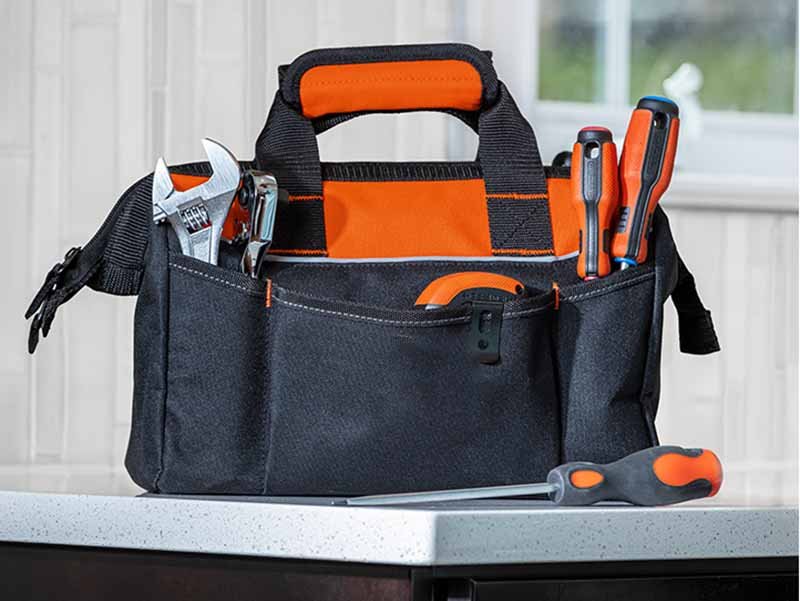
A tool bag that falls over is more than an annoyance—it changes how people work. On a jobsite, users want to unzip the bag, see everything at once, and grab tools fast without using one hand to “hold the bag open.” When the bag collapses, tools pile together, small parts disappear, and sharp items can scratch or puncture the lining. The result is slower work, more frustration, and bad reviews that usually sound the same: “Nice bag, but it won’t stay upright.”
A self-standing tool bag stays upright through three things working together: a rigid, wide base; reinforced sidewalls that resist folding; and balanced internal weight distribution that keeps the center of gravity low. Materials like laminated neoprene, EVA/PP inserts, and stable opening structures (frames, side stays, or stiffened rims) prevent collapse when the bag is open—even on uneven ground.
There’s a reason the “sample looks great” but the “bulk order gets complaints.” In a showroom, the bag is empty and the floor is flat. In real life, it’s loaded with metal tools, placed on rough concrete, and opened dozens of times a day. The design details you can’t see at first glance—base stiffness, panel thickness, stitch layout, and pocket balance—are what decide whether the bag stands like a toolbox or slumps like a shopping tote.
What Makes a Tool Bag Self-Standing?
A tool bag stays upright when opened because it has enough structure to resist gravity, even when the interior is unevenly loaded. The stability comes from:
- Base rigidity and footprint (wide, stiff, non-slip),
- Sidewall reinforcement (panels that don’t buckle),
- Load control (heavy items kept low and centered).
If any one of these is weak, the bag may stand empty but tip once tools are inside.
What role does base structure play?
The base is the “foundation.” If it flexes, the bag leans. If it’s narrow, it tips. If it absorbs moisture, it warps over time.
A strong base usually includes:
- a rigid insert (PP board, HDPE sheet, or composite plate)
- a protective bottom skin (rubberized fabric, TPU film, or molded base)
- corner protection (binding + reinforcement patches)
- feet or rails to reduce slip and keep the bottom off wet ground
Base choices and what they change in real use
| Base Build | What It’s Made Of | Upright Stability | Wet Ground Protection | Common Complaint if Used Wrong |
|---|---|---|---|---|
| Fabric-only bottom | 1–2 fabric layers | Low | Low | “Flops over” |
| Foam stiffener | foam + fabric | Medium | Medium | “Stands empty, tips loaded” |
| Board-reinforced | PP/HDPE board + fabric | High | Medium-high | “Good, but corners soften after months” |
| Composite / molded base | rigid plate or molded shell | Very high | High | “Heavier, costs more” |
Rule of thumb for professional loads: If you expect users to carry 10–20 kg regularly, a board or composite base is strongly recommended. Fabric-only bases are mainly for light hand tools.
What materials provide rigidity without making the bag feel like a brick?
Many brands make the mistake of choosing “thicker fabric” and expecting stiffness. Thickness helps, but structure comes from lamination and inserts, not thickness alone.
Common structural materials and how they behave
| Material / Component | What It Does | “Feel” in Hand | Best Use |
|---|---|---|---|
| Laminated neoprene (with fabric) | adds body + shock absorption | firm but cushioned | soft-structured tool totes |
| 1680D polyester/ballistic | abrasion resistance + stiffness | firm and tough | heavy-duty outer shells |
| EVA panel | sidewall stiffness + shape memory | semi-rigid | walls, dividers, lids |
| PP/HDPE board | base rigidity | rigid | bottom insert |
| Aluminum/steel stays | prevents side collapse | rigid | rim/side support |
Why neoprene is useful in self-standing designs: Neoprene is naturally springy. When laminated correctly, it can keep a bag “open” without feeling hard. It’s also comfortable against the body and protects contents from impact.
What weight distribution matters most?
Stability is basically physics: your bag stays upright if the center of gravity stays inside the base footprint. Tools are heavy and not evenly shaped, so pocket planning matters.
Stability principles that work on real jobsites:
- keep heavy tools low (near bottom)
- place weight symmetrically left and right
- avoid tall narrow silhouettes
- reduce “top-heavy” layouts (big external pockets high up)
How bag shape affects tipping risk
| Bag Shape | Tip Resistance | Why |
|---|---|---|
| Wide base + low height | Very high | low center of gravity |
| Square footprint | High | balanced stance |
| Tall + narrow | Low | easy to tip when open |
| Soft sides + narrow base | Very low | collapses inward then tips |
For many upright tool bags, designers aim for a base width roughly 60–75% of bag height to reduce tipping. (Exact ratio depends on tool load and opening style.)
Which Materials Are Best for Upright Stability?
The best material strategy is rarely “one fabric.” High-performing self-standing tool bags use layered construction, where each layer has a job: surface protection, structure, cushioning, and easy cleaning.
For neoprene-based tool bags, stability is achieved by combining laminated neoprene panels with rigid inserts in the base and sidewalls.
Which fabrics add structure with flexibility?
Users want a bag that stands, but they also want it comfortable to carry and not overly heavy. That’s where “structured but flexible” materials win.
Practical material comparison for self-standing performance
| Material System | Upright Support | Abrasion Resistance | Comfort | Best Product Position |
|---|---|---|---|---|
| Neoprene laminate (3–6 mm) | Medium-high | Medium | Excellent | premium soft-structured |
| 600D/900D polyester + inserts | High | High | Good | balanced workhorse |
| 1680D ballistic + inserts | Very high | Very high | Moderate | heavy-duty pro |
| Canvas + inserts | Medium | Medium | Good | classic utility style |
When you want quiet, cushioned, scratch-protecting tool storage that still stands upright—especially for smaller to mid-size tool kits, electronics tool sets, or maintenance gear.
Which reinforcement options improve strength the most?
Reinforcement is what turns a “bag” into a “standing tool organizer.”
High-impact reinforcement choices:
- PP/HDPE base board (main stability driver)
- EVA side panels (prevents wall collapse)
- stiffened rim (keeps opening wide)
- internal frame or stays (locks shape under load)
Reinforcement options and what customers notice
| Reinforcement | What It Improves Most | Weight Change | What Customers Feel |
|---|---|---|---|
| PP/HDPE base board | standing stability | Low | “Doesn’t flop” |
| EVA side panels | open-mouth stability | Medium | “Stays open” |
| Stiffened rim | access + shape | Low-medium | “Easy to grab tools” |
| Metal stays/frame | max stiffness | High | “Very solid, more weight” |
A common “sweet spot” for many brands is: PP base + EVA side panels + stiffened rim, because it delivers strong stability without turning the bag into a heavy toolbox.
Are composite materials better than single layers?
Yes—because tool bags must do multiple jobs at once. A single layer can’t be soft, stiff, abrasion-resistant, and water-resistant all at the same time.
A composite build lets you assign functions:
- outer layer: abrasion + water splash protection
- middle layer: structure and rebound (neoprene/EVA)
- inner layer: smooth lining for easy cleaning and low snagging
Example composite panel stack (used in upright designs)
| Layer | Common Material | Job |
|---|---|---|
| Outer | polyester / TPU-coated fabric | abrasion + water resistance |
| Middle | neoprene / EVA | structure + cushioning |
| Inner | nylon lining | easy cleaning, low snag |
This approach improves “standing performance” while also improving durability and user comfort—two things customers pay for.
How Do Internal Frames and Supports Work?
Internal support systems are what separate a bag that only looks structured from one that stays upright under real tool weight. While fabric choice and base rigidity create the foundation, frames and side supports control how the bag behaves when:
- fully opened
- unevenly loaded
- lifted repeatedly
- placed on rough ground
A well-designed support structure distributes force across the entire body instead of allowing stress to concentrate at seams or corners. This greatly improves shape retention, durability, and long-term user satisfaction.
In professional tool bags, three support approaches appear most often:
- metal or composite rim frames that hold the opening shape
- removable structural inserts that reinforce walls and base
- side stays or vertical supports that prevent collapse inward
Each method changes both stability and portability, so choosing the right combination is a key design decision.
How do metal rods or rim frames affect stability?
Metal rim frames are commonly used along the top opening edge. Their main purpose is to keep the mouth of the bag fully open without hand support, allowing quick tool access.
Performance benefits of rim frames:
- maintains rectangular opening geometry
- prevents sidewall folding inward
- improves one-handed usability
- distributes load across the top seam
However, full metal frames also introduce trade-offs:
- increased overall weight
- higher manufacturing cost
- reduced foldability for storage
Rim frame material comparison
| Frame Type | Rigidity | Weight | Foldability | Best Use Case |
|---|---|---|---|---|
| Steel rod | Very high | High | Low | heavy industrial tool bags |
| Aluminum rod | High | Medium | Low | professional service kits |
| Plastic composite | Medium | Low | Medium | lightweight structured totes |
| No frame | Low | Very low | High | soft storage bags |
For many mid-weight professional tool bags, aluminum rim frames provide the best balance between strength and portability.
How can removable inserts improve versatility?
Removable inserts allow a bag to switch between rigid standing mode and lighter flexible mode. This is especially valuable for users who sometimes carry:
- heavy metal tools
- delicate instruments
- mixed equipment with changing layouts
Common removable structural parts:
- PP base plates
- EVA wall panels
- divider frames with rigid cores
These inserts also make cleaning and replacement easier, extending product life.
Insert system advantages for brands
| Feature | User Benefit | Commercial Value |
|---|---|---|
| Replaceable structure | longer lifespan | fewer warranty claims |
| Modular layout | adaptable storage | wider customer appeal |
| Easier cleaning | hygiene maintenance | useful for medical/technical markets |
| Shipping flat option | reduced logistics cost | better bulk transport efficiency |
Because of these benefits, removable inserts are widely used in OEM professional tool storage lines.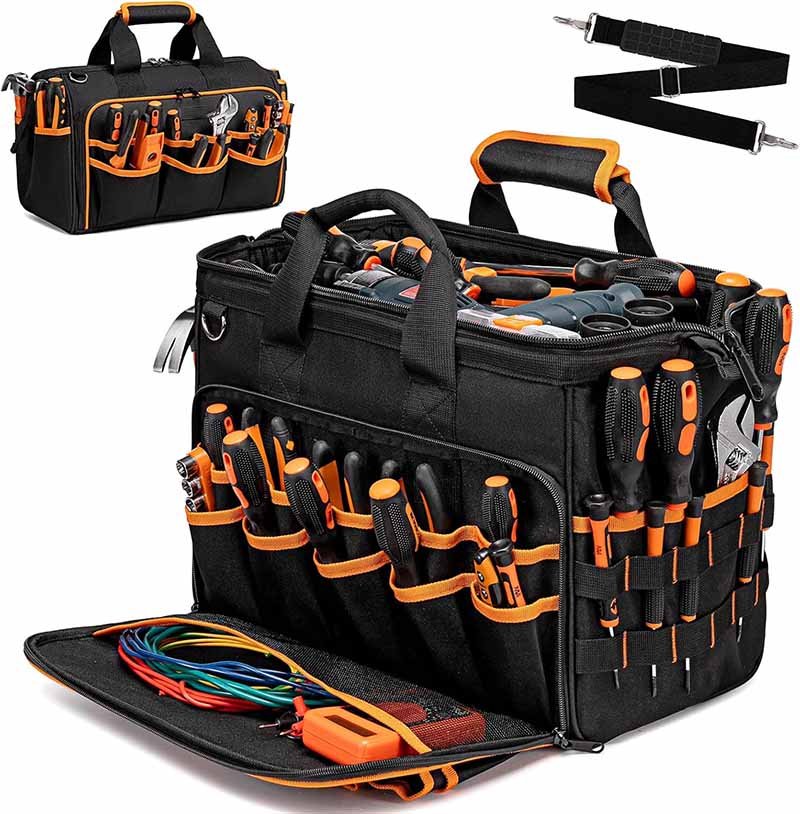
How do side stays prevent collapse?
Side stays are vertical reinforcement elements placed inside front, back, or corner panels. They stop the bag walls from bending inward when tools press against them.
Without side stays, even a rigid base may still lead to:
- wall sagging
- narrowed opening
- uneven tipping behavior
Side stay construction options
| Stay Type | Flexibility | Strength | Weight Impact | Typical Application |
|---|---|---|---|---|
| EVA strip | Medium | Medium | Low | medium-duty bags |
| Plastic sheet | Low | High | Medium | structured tool totes |
| Metal strip | Very low | Very high | High | industrial environments |
For neoprene-based self-standing bags, EVA or thin plastic stays usually provide enough rigidity while keeping the bag comfortable to carry.
What Design Features Keep the Bag Upright When Opened?
Even with strong materials and frames, overall geometry and layout determine whether a bag truly stands in daily use. Design details that seem minor on paper—such as base width, pocket height, and zipper direction—often decide real-world stability.
Successful upright tool bags typically share three visible traits:
- wide and flat bottom footprint
- balanced pocket arrangement
- opening structure that locks shape when unzipped
These features work together to maintain stability across different loading conditions.
What base shapes improve standing stability?
The most stable base is not simply “thick”—it is wide relative to height and distributes load evenly.
Base geometry and tipping resistance
| Base Shape | Stability Level | Reason |
|---|---|---|
| Wide rectangle | Very high | large contact area |
| Square footprint | High | balanced load center |
| Rounded bottom | Low | rolling tendency |
| Narrow strip base | Very low | high tipping risk |
Professional electricians and mechanics usually prefer rectangular wide-base designs, especially for floor placement.
How does pocket layout influence balance?
Pocket placement changes internal weight distribution, which directly affects tipping behavior.
Stable layout principles:
- heavy tools stored symmetrically near bottom
- tall pockets positioned toward center, not edges
- small-item pockets placed higher and lighter
Pocket balance comparison
| Layout Style | Stability Result | User Experience |
|---|---|---|
| Symmetrical lower storage | Strong | bag stands reliably |
| One-side heavy storage | Weak | bag leans or tips |
| High external pockets | Unstable | top-heavy feeling |
Careful pocket engineering can improve stability without adding weight or cost, making it one of the most efficient design optimizations.
What opening and closure systems help stability?
The way a bag opens determines whether the structure holds shape or collapses outward.
Common upright-friendly openings:
- doctor-style framed opening
- double-zip wide mouth with stiff rim
- hinged lid with reinforced edge
Opening structure comparison
| Opening Type | Shape Retention | Access Speed | Structural Weight |
|---|---|---|---|
| Framed doctor opening | Very high | Fast | High |
| Stiffened zip mouth | High | Fast | Medium |
| Soft zipper opening | Low | Medium | Low |
For many modern self-standing tool bags, the stiffened wide-zip opening offers the best compromise between structure, weight, and cost.
How Do You Balance Stability with Portability?
Designing a self-standing tool bag is always a balance between structural rigidity and comfortable portability. If the structure is too soft, the bag collapses. If the structure is too rigid, the bag becomes heavy, bulky, and uncomfortable to carry over long distances.
The most successful professional tool bags are not the stiffest ones—they are the ones where every gram of reinforcement serves a clear purpose. This requires careful coordination between:
- material thickness
- reinforcement placement
- frame selection
- bag size and intended load
When these factors are aligned, the bag can remain upright while still feeling light enough for daily work.
How can designers reduce weight without losing upright strength?
Reducing weight is not about removing reinforcement. It is about using the right reinforcement only where stress actually occurs.
High-efficiency lightweight strategies include:
- PP base boards instead of full metal plates
- EVA side panels rather than thick multi-layer fabric
- aluminum frames instead of steel rods
- targeted reinforcement at corners and seams only
Weight-to-stability efficiency comparison
| Design Approach | Weight Level | Upright Strength | Efficiency Result |
|---|---|---|---|
| Thick fabric everywhere | High | Medium | inefficient |
| Targeted panel reinforcement | Medium | High | optimal balance |
| Full metal structure | Very high | Very high | heavy to carry |
| Hybrid lightweight frame | Medium-low | High | best portability mix |
For most professional users, medium-weight hybrid structures provide the most comfortable long-term experience.
How do foldable or semi-rigid designs improve storage and transport?
Many distributors and end users value tool bags that can compress slightly when empty to reduce storage space. Fully rigid boxes protect shape but increase:
- shipping volume
- warehouse space
- transportation cost
Semi-rigid self-standing designs solve this by allowing:
- removable base boards
- flexible side panels
- collapsible rim frames
Structural flexibility vs logistics efficiency
| Structure Type | Upright Performance | Shipping Efficiency | Best Market Use |
|---|---|---|---|
| Fully rigid case | Excellent | Low | heavy industrial |
| Semi-rigid standing bag | Very good | Medium-high | professional tools |
| Soft collapsible bag | Low | Very high | light household tools |
Because of freight cost pressure in global trade, semi-rigid upright bags have become the most commercially balanced solution.
Is there an ideal compromise between stiffness and comfort?
Rather than a single “perfect” stiffness level, designers usually target application-specific balance:
- electricians → moderate stiffness + lighter carry
- mechanics → higher rigidity + abrasion resistance
- maintenance crews → balanced structure + flexible storage
The key insight is that comfort is part of durability. If a bag feels too heavy or awkward, users replace it sooner—even if the structure is strong.
Therefore, true product success depends on:
- ergonomic carrying feel
- long-term shape retention
- manageable transport weight
All three must work together.
Are There Common Mistakes in Self-Standing Tool Bag Design?
Many upright tool bags fail not because of poor materials, but because of structural misjudgment during design. These mistakes often appear only after months of real use, when repeated loading and environmental stress reveal hidden weaknesses.
Understanding these risks early helps brands avoid:
- customer complaints
- warranty returns
- damaged professional reputation
Are weak bases the most frequent failure point?
Yes. The base experiences the highest continuous stress from:
- total tool weight
- ground impact
- moisture exposure
- repeated lifting motion
If the base softens or bends, the entire bag begins to lean.
Base failure progression in real use
| Stage | Structural Change | Visible User Problem |
|---|---|---|
| Early wear | slight bending | bag feels less stable |
| Mid fatigue | corner deformation | uneven standing |
| Advanced failure | base collapse | bag tips over easily |
A reinforced PP or composite base plate is one of the most effective ways to prevent long-term instability.
Do incorrect reinforcements cause wall collapse?
Yes. Sidewalls often fail when reinforcement is:
- too thin
- poorly positioned
- disconnected from the base
When this happens, walls bow inward and reduce the opening width.
Reinforcement positioning impact
| Reinforcement Layout | Result |
|---|---|
| Continuous panel from base to rim | strong vertical stability |
| Partial mid-panel insert | moderate support |
| No structured panel | collapse under load |
Proper reinforcement alignment is therefore just as important as material strength.
Can poor material selection undermine the entire design?
Absolutely. Even well-engineered geometry fails if materials cannot withstand:
- abrasion from tools
- moisture from worksites
- repeated folding stress
Low-quality fabrics may initially appear strong but degrade quickly.
Material durability hierarchy for professional tool bags
| Material Level | Expected Lifespan | Typical Use |
|---|---|---|
| Light polyester | short | household tools |
| Standard oxford fabric | medium | DIY / light trade |
| Ballistic polyester or neoprene composite | long | professional daily use |
| Multi-layer reinforced composite | very long | industrial environments |
Choosing professional-grade materials from the beginning reduces total lifecycle cost, even if initial production cost is slightly higher.
Request Custom Self-Standing Tool Bags from Szoneier
Creating a tool bag that truly stays upright requires more than stitching strong fabric. It demands coordinated control of:
- base rigidity
- sidewall reinforcement
- internal frame engineering
- weight distribution
- long-term durability under real workloads
With more than 18 years of experience in neoprene material development and bag manufacturing, Szoneier supports global brands with:
- professional structural design guidance for upright tool bags
- custom material selection using neoprene composites and reinforced fabrics
- rapid sampling and structural testing before mass production
- stable OEM and private-label manufacturing for international markets
- flexible low-MOQ solutions for new product launches
Whether you are developing electrician tool totes, maintenance kits, or heavy-duty professional storage, the right structural engineering from the beginning determines how your product performs in the field.
Contact Szoneier today to request samples, discuss your design, or receive a quotation for custom self-standing tool bags. A tool bag that stays upright does more than hold tools—it supports the way professionals work every day.