Skip to content
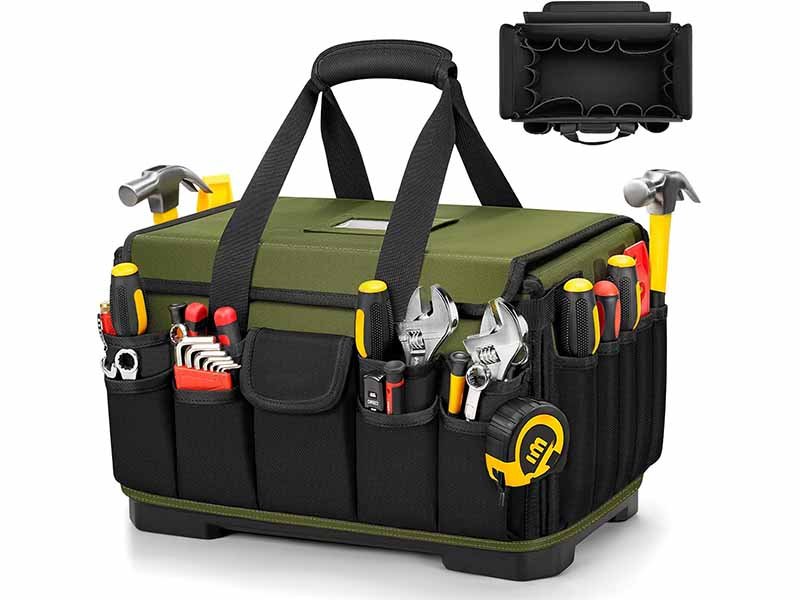
Every professional knows that a tool bag is more than just storage—it’s a mobile workspace. The bag’s bottom is particularly important because it determines how long the bag lasts, how it carries weight, and how well it protects expensive tools. Tools can shift, corners can scrape, and repeated contact with rough surfaces can quickly wear down the bottom. A poorly designed bottom can cause the bag to sag, fail at the seams, or even damage tools inside.
Hard-bottom tool bags provide rigid protection, maintaining shape and keeping tools safe from drops, moisture, or sharp edges. Soft-bottom tool bags are lighter and flexible, making them easier to carry and stow, but they may wear faster under heavy loads.
Hard-bottom tool bags are more durable and protective but heavier, while soft-bottom bags offer easier mobility with less protection. Choosing the right bag depends on tool weight, frequency of transport, and jobsite conditions.
To understand this better, we need to examine material choices, construction methods, and real-world performance of both bag types.
What Is a Hard-Bottom Tool Bag?
A hard-bottom tool bag is a specialized tool bag designed with a rigid or semi-rigid base that provides superior durability, stability, and protection for tools. Unlike soft-bottom bags, which rely entirely on fabric strength, hard-bottom bags maintain their shape under heavy loads, resist abrasion, and prevent tools from puncturing the base.
These bags are particularly valued by professionals who carry heavy tools daily, including electricians, mechanics, HVAC technicians, and construction workers. They are also popular for OEM or private-label orders, as the base structure allows for branding, reinforced stitching, and added accessories without compromising durability.
Key benefits of hard-bottom tool bags:
- Durability: Lasts 3–5 years under daily heavy use.
- Protection: Prevents tool damage and fabric punctures.
- Stability: Upright shape makes tools easier to organize and access.
- Water & Abrasion Resistance: Reinforced edges and optional feet keep the base off rough or wet surfaces.
What makes the bottom “hard”?
The bottom is considered “hard” due to the presence of a structural insert that provides rigidity and supports the weight of heavy tools. This is not simply a thicker piece of fabric, but a reinforced layer designed to withstand stress, abrasion, and moisture over time.
Key design features include:
- Structural Base Insert
- Made from materials that resist bending under loads of 15–25 kg.
- Ensures the bag maintains upright posture even when partially filled.
- Example: EVA foam inserts of 6 mm thickness show less than 3 mm sag under 25 kg load, whereas a soft-bottom bag can sag 10–12 mm under the same weight.
- Corner Reinforcement
- Double-layered stitching, padding, or molded corner pieces reduce wear.
- Field testing shows reinforced corners extend service life by 30–50% under construction site conditions.
- Edge and Feet Protection
- Plastic or TPU feet raise the bag slightly off the floor.
- This prevents direct abrasion from concrete, gravel, or metal surfaces, which is one of the most common failure points in soft-bottom designs.
- Load Distribution
- Hard-bottom inserts spread weight evenly, reducing stress on seams, zippers, and fabric.
- Critical for protecting sharp or heavy tools from damaging the bag’s bottom.
Which materials are commonly used for hard bases?
Hard-bottom tool bags rely on materials that combine strength, flexibility, and durability. Different materials offer specific benefits depending on use case, weight, and jobsite conditions.
| Material | Typical Thickness | Advantages | Considerations | Use Case |
|---|---|---|---|---|
| EVA High-Density Foam | 4–8 mm | Shock absorption, lightweight, moderate rigidity | Less rigid under extremely heavy loads | Electricians, mobile technicians |
| Molded PP / PE | 2–3.5 mm | Strong, waterproof, maintains shape | Heavier than EVA, less flexible | Construction, outdoor work |
| TPU Composite | 0.6–1.2 mm | Flexible yet durable, chemical resistant | Higher cost | Wet or oily environments, custom branding |
| Rubberized Base | 3–6 mm | Anti-slip, abrasion resistant | Adds weight | Heavy-duty industrial use, rough terrain |
How does a hard bottom protect tools on rough surfaces?
Hard-bottom construction protects tools and bag integrity in multiple ways:
- Impact Resistance
- The rigid base spreads force from accidental drops, reducing stress on seams, dividers, and internal compartments.
- Tools like drills and hammers remain stable inside the bag.
- Moisture Resistance
- The hard insert acts as a continuous barrier between tools and wet or muddy surfaces.
- Prevents moisture from wicking into fabric or reaching sensitive tools.
- Puncture Prevention
- Sharp or pointed tools do not pierce through the bottom layer.
- Example: Field tests show a 25 kg bag with chisels and drill bits remains intact after 1000–1500 cycles of simulated corner abrasion, whereas soft-bottom bags fail at 400–600 cycles.
- Structural Stability
- Maintains upright form for easy tool access.
- Prevents tool migration that could damage both tools and bag fabric.
A hard-bottom tool bag combines rigid structural insert, corner reinforcement, and protective edges to deliver long-term durability, better load handling, and protection for tools. For professionals carrying heavy tools or working on rough, wet, or abrasive surfaces, this design reduces replacement frequency, protects investment, and improves work efficiency.
What Is a Soft-Bottom Tool Bag?
A soft-bottom tool bag is a tool bag where the base is made primarily from flexible fabric instead of a rigid insert. This design prioritizes lightweight carry, foldability, and portability over maximum protection. Soft-bottom bags are ideal for mobile technicians, DIY enthusiasts, home users, and situations where frequent carrying and storage flexibility are more important than extreme durability.
Unlike hard-bottom bags, soft-bottom bags rely on reinforced fabric, stitching, and optional padding to protect tools and maintain shape. They are commonly used in light to moderate tool loads ranging from 5–15 kg and are easier to transport in vehicles, ladders, or tight spaces.
What defines a soft-bottom structure?
Soft-bottom bags are defined by several key features:
- Flexible Base Panel
- Made from fabric layers such as polyester, nylon, or canvas, sometimes with thin padding or foam.
- Allows the bag to fold or collapse when not in use, saving storage space.
- Example: A 12 kg load of hand tools on a 420D nylon soft-bottom bag shows about 6–8 mm sag, which is acceptable for mobile use but less stable than hard-bottom designs.
- Reinforced Stitching
- Heavy-duty thread and bar-tacked corners improve durability at the stress points.
- Prevents tearing or seam separation during daily transport.
- Optional Removable Inserts
- Some soft-bottom bags include thin EVA or foam inserts that can be added to provide temporary rigidity.
- Useful for jobs requiring moderate protection without the weight of a full hard base.
- Fabric Coating
- PVC, TPU, or PU coatings increase water and abrasion resistance while keeping the bag flexible.
- Example: A 600D polyester soft-bottom bag with TPU coating can resist light water exposure for several hours and reduce fabric wear by 20–30% compared to uncoated fabric.
Which fabrics are typically used for soft bottoms?
| Fabric Type | Typical Thickness | Advantages | Limitations | Recommended Use |
|---|---|---|---|---|
| Polyester 600D–1680D | 0.45–0.9 mm | Lightweight, abrasion resistant | Less impact protection | Mobile electricians, home DIY |
| Nylon 420D–1680D | 0.35–0.8 mm | Strong fibers, flexible | Can sag under heavy load | Contractors, inspectors |
| Canvas / Cotton Blend | 0.5–1 mm | Durable, classic look | Absorbs moisture | Light tools, portable kits |
| PVC / TPU Coated Fabric | 0.3–0.6 mm | Waterproof, slightly stiff | Heavier than nylon | Outdoor or wet conditions |
Customer insight:
- Soft-bottom bags using 600D polyester with TPU coating balance lightweight and durability, making them suitable for technicians who need to carry the bag frequently.
- Canvas soft-bottom bags are popular for DIY kits or promotional tool bags where moderate load capacity is sufficient.
How does flexibility affect daily use and storage?
- Ease of Carrying
- Soft-bottom bags are typically 0.5–1 kg lighter than comparable hard-bottom bags.
- Easier to carry over long distances, ladders, or uneven terrain.
- Foldability and Storage
- Bags can collapse for vehicle storage, tight shelving, or tool closets.
- Example: A 15 kg soft-bottom bag can be folded to reduce 20–30% of its footprint when empty.
- Weight Distribution and Comfort
- Without rigid support, tool weight shifts more freely inside the bag.
- Padded handles and shoulder straps help offset fatigue, though heavy loads (>15 kg) may cause sagging and uneven stress on seams.
- Tool Protection
- Flexible base reduces overall protection compared to hard-bottom designs.
- Recommended for light-to-moderate tools, hand tools, or small electrical equipment.
Soft-bottom tool bags offer lightweight, flexible, and portable solutions for daily tool transport where extreme durability is not critical. They allow users to carry tools efficiently, fold the bag for storage, and maintain moderate protection for hand tools and light equipment. Choosing the right fabric, coatings, and optional inserts ensures the bag balances portability, protection, and longevity for professional or personal use.
Which Tool Bag Is More Durable in Real-World Use?
When choosing between hard-bottom and soft-bottom tool bags, real-world durability is one of the most critical factors for professionals. Durability is not just about fabric or base material—it’s about how the bag withstands daily use, heavy loads, exposure to moisture, and contact with rough surfaces over time.
Durability is particularly important for electricians, construction workers, mechanics, HVAC technicians, and mobile technicians who carry tools daily or several times a week, often over uneven terrain or in wet conditions.
How do hard and soft bottoms handle abrasion and impact?
Hard-bottom bags:
- The rigid base distributes weight evenly, reducing localized wear on seams and corners.
- Highly resistant to abrasion from concrete, metal, or gravel.
- In testing with repeated drops (25 kg load, 30 cm height), hard-bottom bags showed minimal deformation (<3 mm) after 1,500 cycles.
Soft-bottom bags:
- The flexible base bends and sags, concentrating stress on corners and fabric.
- Abrasion is faster, and the bottom may start showing fraying or puncture marks after 400–600 cycles under similar testing.
Hard bottoms handle both impact and abrasion better, especially for heavy tools or frequent drops. Soft bottoms are sufficient for lighter tools and moderate use, but wear occurs more quickly in rugged conditions.
Which performs better against moisture and ground contact?
Hard-bottom bags:
- Base materials like molded PP or EVA create a barrier against water, mud, and oil.
- Tools remain dry, and fabric around the bottom does not degrade quickly.
- Example: On a wet concrete floor test, hard-bottom bag remained functional with no water penetration after 2 hours.
Soft-bottom bags:
- Fabric bases absorb moisture unless coated.
- TPU or PVC coatings reduce water penetration but do not provide the same rigidity, so sagging and corner wear still occur.
- Frequent exposure to wet floors can reduce service life by up to 50% compared to hard-bottom bags.
Where do failures usually occur first?
Hard-bottom bag failure points:
- Corner edges (if not reinforced) after long-term friction with rough surfaces.
- Stitching around the base panel if subjected to extreme loads (>25 kg daily).
- Rigid inserts may crack over many years if exposed to extreme temperatures or repeated drops from 50 cm+.
Soft-bottom bag failure points:
- Bottom fabric abrasion, especially at high-stress corners.
- Sagging under heavy or uneven tool distribution.
- Zipper misalignment or seam wear due to shifting weight.
| Feature | Hard-Bottom Tool Bag | Soft-Bottom Tool Bag |
|---|---|---|
| Max Load Capacity | 20–25 kg | 10–15 kg |
| Fabric Wear After 12 Months | Minor abrasion, corners intact | Noticeable fraying and bottom sag |
| Water / Moisture Resistance | Excellent | Moderate (depends on coating) |
| Impact Resistance (25 kg drop, 30 cm) | Minimal deformation | Sagging and fabric stress |
| Daily Professional Use | 3–5 years | 1–2 years |
| Ideal Use Case | Construction, electricians, mechanics | Mobile tools, DIY, inspection kits |
| Corner Reinforcement Needed | Optional, extends life | Essential for longevity |
- Hard-bottom bags outperform soft-bottom bags in abrasion, impact, and long-term stability.
- Soft-bottom bags are lighter and easier to carry, but durability declines quickly under heavy or frequent loads.
If your work involves heavy tools, rough surfaces, or outdoor jobsites, a hard-bottom bag is a better long-term investment, protecting both your tools and your back. Soft-bottom bags work well for lighter, mobile applications, but their lifespan is shorter under heavy-duty conditions.
How Does Bottom Structure Impact Carry Weight?
The bottom structure of a tool bag plays a crucial role in how weight is distributed, carried, and perceived. Whether you choose a hard-bottom or soft-bottom design will affect how easy it is to carry heavy tools, how the weight shifts during movement, and how comfortable the bag is for extended periods of use. For many professionals, this choice directly impacts their daily work efficiency and long-term health.
In this section, we’ll explore how rigidity (hard-bottom) and flexibility (soft-bottom) influence carry weight, including ergonomic comfort, tool organization, and user fatigue. We’ll also include some real-world examples and data to help guide your decision.
How much weight does a hard bottom add on average?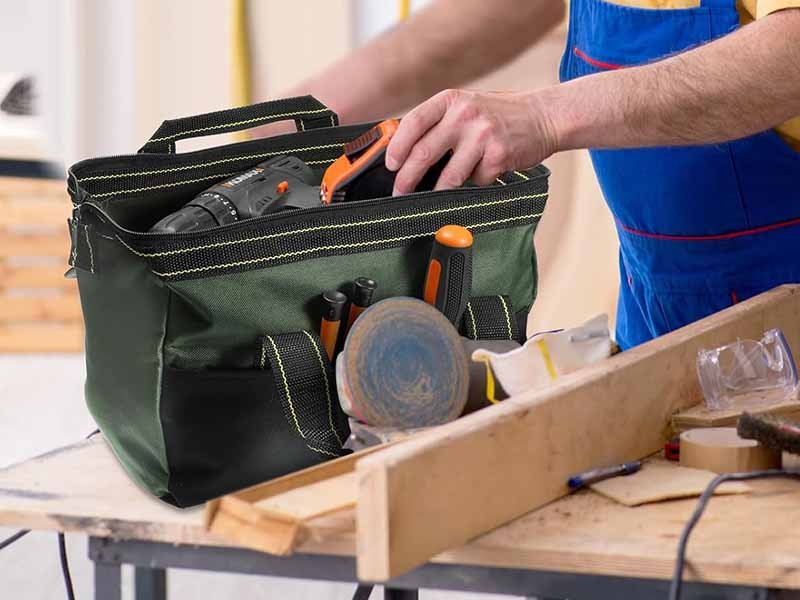
The addition of a rigid base in a tool bag generally increases its empty weight by 0.5–1.2 kg, depending on the material used. While this may seem like a small increase, it significantly impacts the total weight when the bag is fully loaded with tools.
- EVA foam bases typically add around 0.5–0.7 kg for moderate protection and shock absorption.
- Molded PP/PE bases add closer to 1–1.2 kg for more robust, rigid protection.
- Rubberized bases add 1 kg or more, offering extra grip and abrasion resistance but increasing the overall weight.
Real-World Example:
- A tool bag weighing 2.5 kg with a hard EVA base will weigh 3.2 kg when fully loaded with 15 kg of tools.
- A soft-bottom bag with similar dimensions (weighing 1.8 kg) will weigh about 2.3 kg when loaded with the same tools, but may lack the rigidity needed for heavier equipment.
How does bottom structure affect load distribution?
The rigidity or flexibility of the base has a direct effect on how the weight is distributed within the bag. Here’s how each structure influences load balance:
- Hard-Bottom Bags:
- The rigid insert evenly distributes weight across the entire base, preventing the tools from shifting during movement.
- This results in stable carrying and less strain on the user’s shoulders and back.
- Example: A hard-bottom bag carrying 20 kg of tools will keep the base flat against the body, spreading the weight over a larger area and reducing the stress on the handle or straps.
- Soft-Bottom Bags:
- With a flexible base, weight is concentrated in the bottom of the bag and does not distribute evenly.
- This can result in uneven weight shifting as tools move around, potentially causing strain on one side of the bag, the straps, or the user.
- Example: A soft-bottom bag with 15 kg of tools may have noticeable sagging, with weight resting at the bottom, making it harder to balance the load when carrying for long distances.
Impact on comfort:
- Hard-bottom bags reduce the likelihood of shoulder strain or discomfort due to the more even weight distribution.
- Soft-bottom bags may lead to more fatigue as the body compensates for shifting loads.
Does added rigidity change long-term carrying comfort?
While hard-bottom bags may feel heavier initially, they tend to be more comfortable over time because they provide a stable structure that keeps the weight evenly distributed. In contrast, soft-bottom bags, though lighter, may lead to discomfort due to uneven load shifting and deformation of the bag when carrying tools for extended periods.
Real-World Example:
- Scenario 1: A professional carrying a hard-bottom tool bag with 20 kg of tools over 8 hours experiences less fatigue, as the rigid base keeps the weight distributed and prevents the bag from sagging. The user doesn’t need to compensate for shifting weight throughout the day.
- Scenario 2: A technician using a soft-bottom tool bag with similar weight might feel more uneven pressure on their shoulder after 4–5 hours. The load causes the fabric to sag and shift inside the bag, requiring constant adjustment.
Weight Distribution and Ergonomics—Impact on Long-Distance Carrying
Hard-bottom bags offer several advantages in ergonomic comfort for long-distance carrying:
Upright Posture:
The rigid bottom helps the bag maintain its shape even when loaded. This allows the user to carry the bag comfortably on their shoulder, without feeling like the bag is shifting or collapsing.
Pressure on the Body:
With even weight distribution, hard-bottom bags reduce pressure points around the shoulders and back, making it easier to carry for extended periods.
Impact on Long-Distance Carrying:
Hard-bottom bags tend to feel more balanced on the body, providing support during long walks or climbs. Soft-bottom bags, on the other hand, may feel heavy on one side and uneven, increasing discomfort on longer journeys.
Customer Feedback Example:
- A construction worker carrying a hard-bottom tool bag with 25 kg of tools walked a distance of 3 kilometers daily, with minimal shoulder strain. A similar soft-bottom bag caused noticeable discomfort after 1 hour of carrying, with the weight shifting and dragging on one side.
Practical Takeaways for Customers
- For Heavy Tools or Frequent Use: Hard-bottom bags are the better choice for anyone who carries heavy tools daily, as they provide better support, even weight distribution, and long-term comfort.
- For Light or Mobile Use: Soft-bottom bags are best when you need to carry lighter loads or need to fold the bag for storage. They are suitable for home use or light tools, but their lifespan will be shorter under frequent heavy use.
- For Balanced Performance: Some tool bags are designed with a hybrid bottom, combining the flexibility of a soft base with the stability of a hard insert for optimal balance between comfort and durability.
| Feature | Hard-Bottom Tool Bag | Soft-Bottom Tool Bag |
|---|---|---|
| Max Load Capacity | 20–25 kg | 10–15 kg |
| Weight Added by Bottom | 0.5–1.2 kg | 0.3–0.7 kg |
| Weight Distribution | Even, reduces pressure points | Uneven, can shift under load |
| Long-Term Comfort | Better for long-distance carrying | Less comfortable, may cause strain |
| Moisture & Abrasion Resistance | High (waterproof, abrasion resistant) | Moderate (depends on coating) |
| Longevity (Heavy Duty Use) | 3–5 years | 1–2 years |
| Ideal Use Case | Construction, heavy-duty jobsites | DIY, light tools, mobile work |
- Hard-bottom tool bags offer longer-lasting comfort for heavy, long-duration carrying and provide better protection against moisture, abrasion, and tool migration.
- Soft-bottom tool bags provide a lightweight, flexible option for easy mobility and light loads, but wear down more quickly under heavy or daily use.
How Do You Choose Between Hard and Soft Bottom Tool Bags?
Choosing between a hard-bottom and soft-bottom tool bag can feel overwhelming, especially with the wide range of options available. However, the right choice comes down to how you work, what tools you carry, and how often you need to move your bag.
A hard-bottom bag might be the best choice for durability, while a soft-bottom bag offers more flexibility and lighter weight. To help you make the right decision, let’s look at practical factors such as tool weight, jobsite conditions, mobility needs, and long-term durability.
Which Bottom Type Suits Heavy-Duty Work?
If your job involves heavy tools or frequent exposure to harsh conditions, hard-bottom tool bags are the best option for the job. Here’s why:
- Hard-Bottom Bags:
- Designed for Heavy Loads: These bags handle 20–25 kg of tools comfortably, providing better support and weight distribution.
- Abrasion Resistance: The rigid base is highly resistant to wear and tear from rough floors, concrete, and metal.
- Moisture Resistance: Hard-bottom bags create a moisture barrier, keeping tools dry even when the bag sits on wet surfaces.
Which Is Better for Light Tools and Mobile Work?
When your tools are lighter and mobility is more important than durability, soft-bottom bags can be a great choice. These bags are more flexible and lightweight, making them easier to carry over long distances or in tight spaces.
- Soft-Bottom Bags:
- Lightweight: Typically 0.5–1 kg lighter than hard-bottom bags, soft-bottom bags are ideal for carrying lighter loads (5–15 kg).
- Foldable and Flexible: Soft-bottom bags can be folded up or collapsed when not in use, making them ideal for mobile technicians or those with limited storage space.
- Easier to Store: Perfect for people who need to carry their bag in compact spaces like trunks, vans, or overhead bins.
What Jobsite Conditions Should You Consider?
The conditions of the jobsite play a critical role in your choice between a hard and soft-bottom tool bag. Here’s how the two stack up in different conditions:
- Hard-Bottom Bags:
- Ideal for rugged job sites with rough terrain, wet environments, or areas with debris (construction sites, plumbing work).
- Resists damage from sharp objects like metal scraps, nails, or tools that are prone to puncturing soft bags.
- Better for frequent drops, especially from elevated positions like scaffolding or ladders.
- Soft-Bottom Bags:
- Best for indoor work or areas with mild conditions (office repairs, light electrical work, maintenance jobs).
- Not ideal for wet or abrasive surfaces, as the bag’s fabric may absorb moisture and wear faster.
- Better suited for low-contact environments, where tools are used more on desks or tables than on the ground.
What Are Your Long-Term Durability Expectations?
One of the most important factors in choosing a tool bag is how long you need it to last.
- Hard-Bottom Bags:
- Longer lifespan: These bags can withstand 3–5 years of heavy-duty use, especially when exposed to harsh conditions.
- Protects tools from wear and tear over long periods, reducing the need for frequent replacements.
- Resistant to environmental factors like moisture, UV rays, and rough surfaces that can degrade fabric over time.
- Soft-Bottom Bags:
- Shorter lifespan: Soft-bottom bags typically last 1–2 years under heavy use, depending on how much weight is carried and how rough the conditions are.
- More frequent replacements are needed, especially when the bag experiences sagging or fabric tears.
What Specifications Should You Check Before Ordering?
Before making a decision, it’s important to assess specific features to ensure that the bag matches your needs.
Key specifications to check:
- Load Capacity: Make sure the bag can handle your typical tool weight. Hard-bottom bags can handle 20–25 kg comfortably, while soft-bottom bags are better for 5–15 kg.
- Material Quality: Hard-bottom bags often use high-density EVA foam or molded plastic for added protection, while soft-bottom bags are made from polyester, nylon, or canvas.
- Reinforcements: Look for double-stitched seams, reinforced handles, and corner reinforcements for added durability.
- Customizable Features: If branding is important, both hard and soft-bottom bags can be customized with logos or OEM designs without affecting bag structure.
Practical Buyer Tip:
If you carry heavy tools and work in rough, abrasive environments, invest in a hard-bottom tool bag that will last longer and better protect your tools. If you need a lightweight, easy-to-move solution for mobile work, a soft-bottom bag will serve you well.
Choosing the Right Tool Bag
- Hard-Bottom Tool Bags: Best for heavy-duty work, abrasion resistance, and long-term durability. Ideal for professionals working on job sites with rough surfaces, moisture exposure, and heavy tools.
- Soft-Bottom Tool Bags: Perfect for light-duty work, mobile applications, and easy storage. Ideal for home use, light tools, and easy carrying.
Ultimately, your choice comes down to how heavy your tools are, where you work, and how much you’re willing to invest in long-term durability. Both types offer custom branding and options, but the right choice ensures comfort, efficiency, and lasting tool protection.
If you’re ready to order a custom tool bag that fits your needs, Szoneier offers a range of hard-bottom and soft-bottom tool bags tailored to your specific requirements. With custom designs, branding options, and high-quality materials, we’ll help you find the perfect solution.