Skip to content
Bowling may look simple from the outside—roll a ball, knock down pins—but anyone who bowls regularly knows that the equipment is heavy, valuable, and surprisingly technical. A single bowling ball can weigh anywhere from 10 to 16 pounds, and many players carry multiple balls, shoes, towels, wrist supports, and accessories. This is where the bowling bag becomes more than just a bag—it becomes an essential piece of equipment.
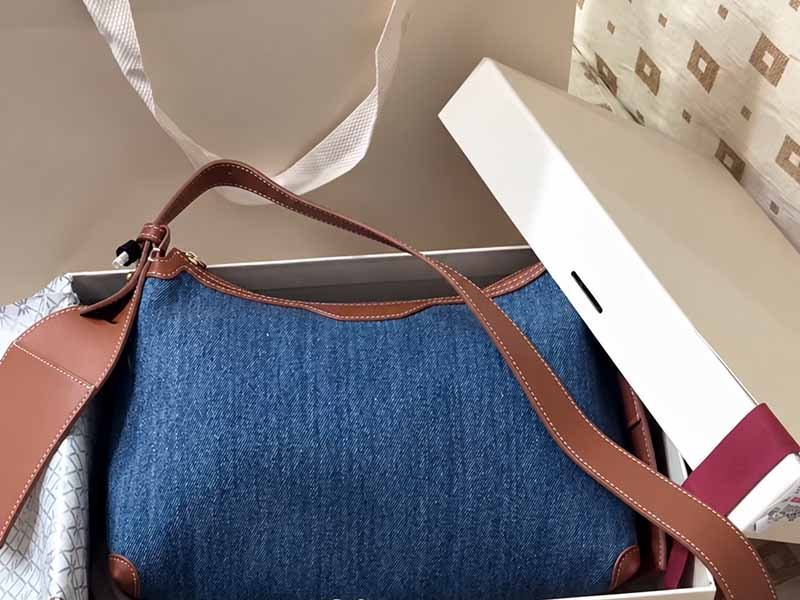
Interestingly, the term “bowling bag” is also used outside the bowling alley. In fashion and leather goods, the phrase “bowler bag” refers to a structured handbag inspired by early bowling bags. This overlap often confuses buyers: What are bowling bags exactly? What defines a bowler bag? And are bowling bags actually trendy today?
A bowling bag is a specialized bag designed to carry and protect bowling equipment, especially bowling balls, shoes, and accessories. Traditional bowling bags feature reinforced structures, padded ball compartments, and durable materials to handle heavy loads. The term “bowler bag” also refers to a handbag style inspired by classic bowling bags, known for its structured shape and rounded silhouette.
Understanding what a bowling bag really is—and how it has evolved from a purely functional sports bag into a recognized design category—helps both players and brands make smarter choices. Let’s start with the fundamentals.
What Is a Bowling Bag

A bowling bag is a specially designed bag used to carry, protect, and organize bowling equipment such as bowling balls, shoes, towels, and accessories. Unlike regular sports bags, bowling bags are reinforced to support heavy weight, often include padded or molded ball compartments, and are built from durable materials. The term also extends to “bowler bags,” a fashion style inspired by the original bowling bag shape.
What are bowling bags and what are they used for?
Bowling bags are purpose-built sports bags created specifically to transport bowling equipment safely and efficiently. The primary item they carry—the bowling ball—is both heavy and sensitive to surface damage. A single ball can weigh up to 16 pounds, and many players carry two or more.
Because of this, bowling bags are designed to:
- Hold concentrated weight without tearing or deforming
- Prevent balls from colliding or rolling
- Organize shoes, towels, gloves, and accessories
In short, a bowling bag is not optional gear—it is a functional necessity for anyone who bowls regularly.
Why is it called a bowling bag?
The name “bowling bag” comes directly from its original purpose: carrying bowling balls.
In the early days of organized bowling, players often used simple leather or canvas carriers to transport their balls to bowling alleys. Over time, these carriers evolved into more structured, reinforced bags designed specifically around the shape and weight of bowling balls. The name stuck because the function was clear and specific—this was a bag made for bowling.
What exactly defines a bowler bag?
A bowler bag is slightly different from a bowling bag, and this distinction is important for SEO and buyer clarity.
In modern usage:
- A bowling bag refers to a functional sports bag for bowling equipment
- A bowler bag refers to a handbag or travel bag style inspired by bowling bags
Bowler bags are typically defined by:
- A structured, semi-rigid body
- Rounded or dome-shaped top
- Short handles and zipper closure
Although bowler bags no longer carry bowling balls, their design language comes directly from classic bowling bags.
How is a bowling bag different from other sports bags?
The key difference is load concentration.
Most sports bags carry distributed weight (clothes, shoes, towels). Bowling bags carry dense, point-loaded weight from bowling balls. This creates unique engineering challenges:
| Feature | Bowling Bag | Regular Sports Bag |
|---|---|---|
| Weight type | Heavy & concentrated | Light & distributed |
| Structure | Reinforced base & walls | Soft-sided |
| Ball protection | Padded or molded holders | None |
| Durability needs | Very high | Moderate |
This is why using a regular gym bag for bowling often results in discomfort, bag damage, or equipment risk.
Are bowling bags only for professional bowlers?
No. Bowling bags are used by all levels of players, from beginners to professionals.
- Casual bowlers often use single-ball carry bags
- League players prefer double-ball or tote-style bags
- Competitive bowlers rely on roller bags for tournaments
The complexity of the bag increases with skill level, frequency of play, and amount of equipment carried.
Are bowling bags only used for bowling today?
Functionally, yes—but design-wise, no.
Traditional bowling bags remain strictly sports equipment. However, bowler-inspired bags have crossed into:
- Fashion handbags
- Travel bags
- Lifestyle accessories
This crossover is why “bowling bag” appears in both sports gear searches and fashion-related searches, making it a valuable category for brands exploring private label or hybrid designs.
Why Use a Bowling Bag

A bowling bag is used to safely carry and protect bowling equipment, especially heavy bowling balls and shoes. It reduces strain on the hands and body, prevents damage to expensive gear, and keeps accessories organized. Compared to regular sports bags, bowling bags are reinforced to handle concentrated weight and frequent use, making them essential for anyone who bowls regularly.
Why do bowlers need a dedicated bowling bag?
Bowling balls are unlike most sports equipment. They are dense, heavy, and easily damaged on the surface. Carrying them without proper support increases the risk of dropping, chipping, or altering ball performance.
A dedicated bowling bag:
- Cradles the ball to prevent movement
- Distributes weight more evenly
- Reduces fatigue and hand strain
For bowlers who play weekly or competitively, a proper bag is not a luxury—it’s essential equipment.
How does a bowling bag protect expensive equipment?
A quality bowling ball can cost USD $100–300 or more. Bowling shoes, gloves, wrist supports, and cleaners add further value.
Bowling bags protect this investment through:
- Padded or molded ball compartments
- Reinforced bases to absorb impact
- Separation between balls, shoes, and accessories
This protection significantly extends equipment lifespan and maintains consistent performance.
Does using a bowling bag improve comfort and safety?
Yes—especially over time.
Without a bowling bag, bowlers often:
- Carry balls by hand
- Use weak gym bags
- Strain wrists, shoulders, and lower back
Bowling bags—particularly roller models—reduce repetitive stress and make transportation safer, especially for older players or those carrying multiple balls.
Why is a regular sports bag not a good substitute?
Regular sports bags are designed for distributed, lightweight items like clothing and towels. They lack:
- Structural reinforcement
- Ball stabilization
- Weight-rated stitching
As a result, seams stretch, zippers fail, and the bag becomes uncomfortable or unsafe to carry. Bowling bags are engineered for a completely different load profile.
Do bowling bags help with organization and efficiency?
Absolutely.
Modern bowling bags include:
- Dedicated shoe compartments
- Accessory pockets for towels and tools
- Organized layouts that speed up setup and packing
This organization helps bowlers focus on the game rather than searching for gear.
Are bowling bags useful for all skill levels?
Yes.
- Beginners benefit from simple single-ball bags
- League players rely on multi-ball bags for consistency
- Competitive bowlers use roller bags for tournaments
As a bowler’s skill and equipment grow, the need for a proper bag becomes even more important.
Can bowling bags be used beyond the bowling alley?
Functionally, bowling bags are purpose-specific. However, bowler-inspired bags have influenced:
- Fashion handbags
- Travel bags
- Lifestyle accessories
This crossover explains why bowling bag design remains relevant beyond sports.
Which Types of Bowling Bags Are There

Bowling bags are commonly categorized by ball capacity and carrying method. The main types include single-ball bowling bags, double- and triple-ball bowling bags, roller bowling bags with wheels, and tote or duffel-style bowling bags. Each type serves different users—from casual bowlers to competitive players—based on how much equipment they carry and how frequently they travel.
What is a single-ball bowling bag?
A single-ball bowling bag is the most basic and lightweight option.
Key characteristics:
- Holds one bowling ball
- Usually includes a small shoe pocket
- Lightweight and easy to carry by hand or shoulder strap
Best for:
- Beginners
- Casual or recreational bowlers
- Occasional bowling nights
These bags focus on simplicity and affordability, making them the most popular entry-level choice.
What are double-ball and triple-ball bowling bags?
Multi-ball bowling bags are designed for bowlers who use different balls for different lane conditions.
Features include:
- Separate padded compartments for 2–3 balls
- Reinforced structure to support added weight
- Larger accessory and shoe storage areas
Best for:
- League bowlers
- Intermediate to advanced players
- Bowlers who value flexibility and consistency
As ball count increases, build quality becomes far more important than appearance.
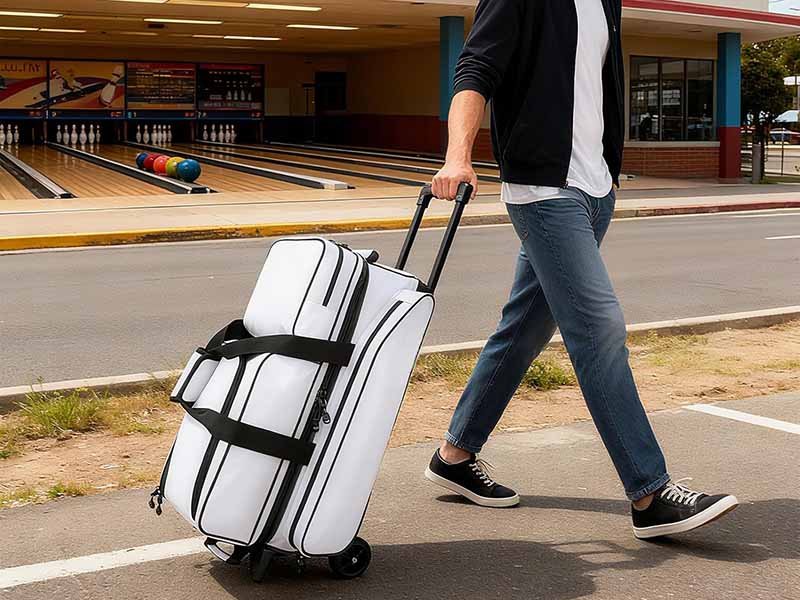
What is a roller bowling bag?
A roller bowling bag uses wheels and a telescoping handle to move heavy loads with minimal effort.
Common features:
- Smooth-rolling wheels
- Extendable pull handle
- Capacity for 2–6 bowling balls
Best for:
- Tournament players
- Frequent bowlers
- Anyone carrying multiple balls regularly
Roller bags are considered the most premium category due to their complex construction and hardware.
What is a tote-style bowling bag?
Tote bowling bags resemble compact duffel or handbag styles.
Characteristics:
- Top handles or short shoulder straps
- Soft-sided or semi-structured design
- Often used for single or double balls
Best for:
- Short-distance carrying
- Bowlers who prefer a cleaner, minimalist look
- Users blending sport and casual style
Tote bags are especially popular in women’s bowling segments and casual leagues.
Are duffel-style bowling bags different from totes?
Yes. Duffel-style bowling bags are slightly larger and more flexible than totes.
Differences include:
- Longer shoulder straps
- More flexible interior space
- Better for carrying shoes and accessories
Duffel bowling bags are often chosen by users who want versatility and occasional non-bowling use.
What are specialty or hybrid bowling bags?
Some bowling bags blend features across categories.
Examples:
- Roller bags with removable tote compartments
- Fashion bowler bags inspired by bowling bags
- Travel-style bowling bags with luggage features
These hybrids appeal to brands targeting lifestyle or crossover markets rather than purely competitive sports users.
How do bowling bag types compare at a glance?
| Bag Type | Ball Capacity | Portability | Best For |
|---|---|---|---|
| Single-ball | 1 | Very high | Beginners |
| Double/Triple-ball | 2–3 | Medium | League players |
| Roller | 2–6 | Very high | Competitive / Travel |
| Tote | 1–2 | High | Casual / Style-focused |
| Duffel | 1–2 | Medium | Versatile use |
What Features Should a Bowling Bag Have

A quality bowling bag should have reinforced structure to support heavy bowling balls, padded or molded ball compartments for protection, durable materials, strong stitching, and reliable zippers. Additional features such as shoe compartments, accessory pockets, ventilation, and smooth-rolling wheels (for larger bags) improve usability and comfort. These features ensure safety, durability, and long-term performance.
Why is structural reinforcement the most important feature?
Bowling balls create extreme point load. A single 15–16 lb ball concentrates weight in a very small area, unlike clothing or shoes.
A good bowling bag must include:
- Reinforced base panels
- Internal support boards or frames
- Thick foam padding around ball compartments
Without proper structure, bags sag, seams stretch, and zippers fail. Structural integrity is the foundation of every reliable bowling bag.
What kind of ball protection should a bowling bag provide?
Protecting the ball surface is critical for performance.
Effective bowling bags use:
- Padded ball cradles to prevent movement
- Molded ball cups to isolate each ball
- Internal dividers in multi-ball bags
This prevents balls from colliding, cracking, or developing surface damage that can affect lane reaction.
Which materials are best for bowling bags?
Material choice directly affects durability, weight, and price.
Common options include:
- 600D–1680D polyester or nylon for abrasion resistance
- PU- or PVC-coated fabrics for water resistance
- Synthetic leather or genuine leather for premium or fashion-oriented bowler bags
High-denier fabrics and reinforced leather panels perform best under repeated heavy loads.
How important are stitching quality and seam construction?
Extremely important.
Look for:
- Double or reinforced stitching at stress points
- Bar-tacking on handles and straps
- Thick, high-tensile thread
Most bowling bag failures occur at seams—not fabric panels—making stitching quality a key indicator of long-term reliability.
What role do zippers and hardware play?
Zippers and hardware experience constant stress.
A quality bowling bag should use:
- Heavy-duty coil or metal zippers
- Reinforced zipper tracks
- Strong metal or reinforced plastic buckles
Weak hardware is one of the fastest failure points in low-quality bowling bags.
Why are shoe compartments and organization features important?
Bowling shoes are bulky and often damp after use.
Good bowling bags include:
- Separate shoe compartments
- Ventilation panels or mesh sections
- Dedicated accessory pockets
This improves hygiene, organization, and overall user experience.
When are wheels and handles essential features?
For multi-ball bags, wheels are not optional—they are essential.
Roller bowling bags should have:
- Smooth, durable wheels
- Telescoping handles with locking positions
- Stable wheel placement to prevent tipping
These features reduce strain and make transport practical for heavy loads.
Are comfort features important in bowling bags?
Yes, especially for carry bags.
Comfort features include:
- Padded shoulder straps
- Adjustable carrying handles
- Balanced weight distribution
Comfort directly affects how often and how safely a bowler uses the bag.
Do water resistance and durability matter for bowling bags?
Yes. Bowling alleys, parking lots, and travel environments expose bags to moisture and dirt.
Water-resistant fabrics and coated bases:
- Protect equipment
- Extend product lifespan
- Improve perceived quality
These features are especially valuable for travel and tournament use.
What features differentiate premium bowling bags from basic ones?
Premium bowling bags often include:
- Stronger frames and thicker padding
- Higher-grade fabrics and hardware
- Better wheel systems
- Cleaner internal organization
These features justify higher prices and appeal to serious bowlers.
How to Choose the Right Bowling Bag

To choose the right bowling bag, consider how many balls you carry, how often you bowl, how you transport your equipment, and your physical comfort needs. Single-ball bags suit casual bowlers, while multi-ball and roller bags are better for league and competitive players. Durability, structure, and ease of transport matter more than style alone.
How many bowling balls do you carry regularly?
This is the most important decision factor.
- 1 ball → Single-ball carry or tote bag
- 2 balls → Double-ball bag or compact roller
- 3+ balls → Roller bowling bag (recommended)
Choosing a bag with unnecessary capacity increases weight and cost, while choosing one that’s too small quickly becomes limiting.
How often and how seriously do you bowl?
Bowling frequency directly impacts bag requirements.
- Occasional / recreational bowlers Lightweight, simple bags are sufficient.
- League bowlers Need stronger structure, better organization, and durability.
- Tournament / competitive bowlers Require roller bags with heavy-duty wheels, reinforced frames, and multiple compartments.
The more often you bowl, the more important construction quality becomes.
How do you transport your bowling equipment?
Transportation method affects both comfort and safety.
- Walking short distances → Carry or tote bag
- Driving regularly → Carry or roller bag
- Traveling or flying → Roller bag with rigid structure
If you routinely move equipment long distances, wheels are a necessity, not a luxury.
How much weight and strain can you comfortably handle?
A fully loaded bowling bag can exceed 40–60 pounds.
Consider:
- Your wrist, shoulder, and back health
- Whether you bowl multiple games in one session
- Long-term strain from repeated carrying
Roller bags significantly reduce injury risk, especially for older bowlers or those carrying multiple balls.
Which bag size balances portability and capacity best?
Bigger is not always better.
- Oversized bags encourage overpacking
- Under-sized bags force poor organization
The best bowling bag fits only what you actually use, while still leaving room for essentials like shoes, towels, and accessories.
How important are materials and construction quality?
Extremely important—especially for long-term use.
Look for:
- Reinforced bases and sidewalls
- High-denier fabrics or quality leather
- Strong stitching at stress points
- Reliable zippers and hardware
A well-built bowling bag lasts years longer than a poorly constructed one.
Should you consider comfort and ergonomics?
Yes.
Comfort-focused features include:
- Padded handles and shoulder straps
- Balanced weight distribution
- Smooth-rolling wheels
Comfort affects how often you enjoy bowling—and how safe transporting your gear feels.
Are style and appearance important when choosing a bowling bag?
They matter—but secondarily.
Traditional bowlers prioritize function, while some users prefer:
- Cleaner, minimalist designs
- Bowler-style bags with lifestyle appeal
- Brand-matching colors or logos
Modern bowling bags increasingly balance performance and aesthetics, especially for private-label products.
When should you choose a custom or private-label bowling bag?
Custom bowling bags are ideal when:
- You are building a brand or product line
- You want unique materials or structure
- You need logo branding or packaging
- You want to differentiate in a crowded market
OEM/ODM solutions allow brands to control design, quality, and positioning.
Where to Get Bowling Bags Made or Customized

Bowling bags can be sourced from domestic manufacturers, brand-owned factories, or overseas OEM/ODM suppliers. Brands seeking customization, private label options, and competitive pricing typically work with experienced overseas manufacturers—especially in China—who offer material sourcing, structural engineering, logo branding, low MOQs, and fast sampling for bowling bags.
Where are bowling bags typically manufactured today?
Most bowling bags sold globally are produced through specialized bag manufacturing hubs, not general textile factories.
Common sourcing regions include:
- China – largest global hub for bowling bag OEM/ODM
- Vietnam & Southeast Asia – emerging alternatives
- USA / EU – limited, higher-cost production, mostly small batches
China dominates because bowling bags require complex structure, reinforced stitching, hardware assembly, and material variety, which benefit from integrated supply chains.
What are the differences between domestic and overseas manufacturing?
Understanding this difference helps brands set realistic expectations.
| Factor | Domestic Manufacturing | Overseas OEM/ODM |
|---|---|---|
| Cost | High | Competitive |
| Customization | Limited | Extensive |
| MOQ | High | Low to medium |
| Lead time | Longer | Faster (with sampling) |
| Material options | Limited | Wide range |
For brands focused on scalability and differentiation, overseas OEM/ODM is usually the more practical choice.
What does OEM vs ODM mean for bowling bags?
Both models are widely used in bowling bag manufacturing.
- OEM (Original Equipment Manufacturer) You provide the design and specifications; the factory produces exactly to your requirements.
- ODM (Original Design Manufacturer) The factory provides proven base designs that you can customize with materials, colors, structure, and branding.
ODM is ideal for faster launches, while OEM suits brands with strong design identity.
What customization options are available for bowling bags?
Professional manufacturers can customize nearly every aspect, including:
- Ball capacity and internal structure
- Materials (polyester, nylon, PU, leather)
- Padding thickness and reinforcement
- Zippers, wheels, handles, and hardware
- Logo methods (printing, embroidery, embossing)
- Colorways and packaging
This flexibility allows brands to target different price tiers and user segments.
What should brands look for in a bowling bag manufacturer?
Choosing the right factory matters more than choosing the lowest price.
Key evaluation criteria:
- Experience with heavy-load bags
- In-house sampling and pattern development
- Clear quality control standards
- Ability to explain structure, not just appearance
- Transparent communication and lead times
A good manufacturer should talk confidently about engineering, materials, and durability, not just visuals.
Do manufacturers offer low MOQ and free samples?
Yes—experienced OEM/ODM suppliers often do.
Typical offerings include:
- Low MOQ for custom designs
- Free or low-cost design support
- Fast prototype and sample turnaround
- Pre-production samples before mass order
This is especially important for startups, Amazon sellers, and niche brands testing the market.
How long does it take to develop a custom bowling bag?
A realistic development timeline looks like this:
| Stage | Typical Time |
|---|---|
| Design confirmation | 3–7 days |
| Sampling | 7–15 days |
| Sample revision | 5–10 days |
| Mass production | 25–45 days |
Working with an experienced factory shortens development and reduces costly revisions.
Why do many brands choose Chinese manufacturers for bowling bags?
Because China offers:
- Complete material and accessory supply chains
- Skilled labor for reinforced bag construction
- Competitive pricing without sacrificing quality
- Strong experience with OEM/ODM and private label
For bowling bags—where structure and durability matter more than fashion trends—this manufacturing ecosystem is a major advantage.
FAQ: Bowling Bag Questions
Bowling bags are designed to safely carry heavy bowling equipment such as bowling balls, shoes, and accessories. They vary by ball capacity, structure, and carrying method. Choosing the right bowling bag depends on how many balls you carry, how often you bowl, and how you transport your gear. Quality bowling bags focus on durability, protection, and comfort rather than appearance alone.
Are bowling bags standardized in size?
No. Bowling bags are not standardized in size.
Sizes vary based on:
- Number of balls carried
- Bag style (carry, tote, roller)
- Shoe and accessory compartments
Manufacturers design bags around capacity and structure rather than universal dimensions.
How much weight can a bowling bag safely carry?
A quality bowling bag is engineered to handle:
- Single-ball bag: 15–20 lbs
- Double-ball bag: 30–40 lbs
- Roller bag: 50+ lbs
This is why reinforced bases, stitching, and hardware are critical. Using weak bags increases injury and equipment risk.
Can bowling bags be used for other sports or gym use?
Technically yes, but it’s not ideal.
Bowling bags are optimized for:
- Heavy, compact loads
- Specific internal structure
For clothing-based sports, they may feel heavy or overly rigid. However, bowler-style bags inspired by bowling bags are commonly used as fashion or travel bags.
Are bowling bags allowed as carry-on luggage when traveling?
Most bowling bags are too heavy or large for airline carry-on limits when fully loaded.
Roller bowling bags are best treated as:
- Checked luggage
- Ground-transport gear
Always check airline size and weight restrictions before flying with bowling equipment.
How long does a good bowling bag last?
A high-quality bowling bag can last 3–7 years or more, depending on:
- Frequency of use
- Load weight
- Storage conditions
Premium materials and reinforced construction significantly extend lifespan.
What is the difference between a bowling bag and a bowler bag?
- Bowling bag: Sports equipment bag for bowling balls
- Bowler bag**:** Fashion bag inspired by bowling bag design
They share visual DNA but serve different purposes.
Do bowling bags protect bowling balls from damage?
Yes—when properly designed.
Good bowling bags:
- Prevent ball movement
- Absorb impact
- Reduce exposure to moisture and dirt
This protection helps maintain ball performance over time.
Are bowling bags suitable for beginners?
Absolutely.
Beginners often start with:
- Single-ball carry bags
- Simple tote-style bowling bags
As skill and equipment increase, they can upgrade to larger or roller bags.
Can bowling bags be customized with logos or branding?
Yes.
Many manufacturers offer:
- Logo printing or embroidery
- Custom colors and materials
- Private label and branded packaging
This is especially popular for brands, bowling centers, and promotional programs.
What is the most common mistake when buying a bowling bag?
The most common mistake is choosing style over structure.
Many buyers underestimate:
- Total weight
- Stress on seams and zippers
- Importance of internal support
A good-looking bag without proper reinforcement often fails quickly.
Are expensive bowling bags always better?
Not always—but quality costs more.
Higher-priced bowling bags typically offer:
- Better materials
- Stronger structure
- Smoother wheels and hardware
However, value depends on matching the bag to actual usage, not price alone.
Conclusion
Whether you are developing a sports equipment brand, expanding a fashion accessories line, or sourcing private-label bowling bags, choosing the right manufacturing partner is essential.
Szoneier is a professional bag manufacturer with over 18 years of experience.
From functional multi-ball roller bags to stylish bowler-inspired leather bags, we help brands turn ideas into reliable, market-ready products.
Contact Szoneier to start your custom bowling bag project today. Custom designs · Private label · Wholesale · OEM / ODM