 Skip to content
How Long Do Cooler Bags Work: Full Guide on Cooling Time.Lifespan & Insulation Effectiveness
- Eric
- November 20, 2025
- 8:56 am
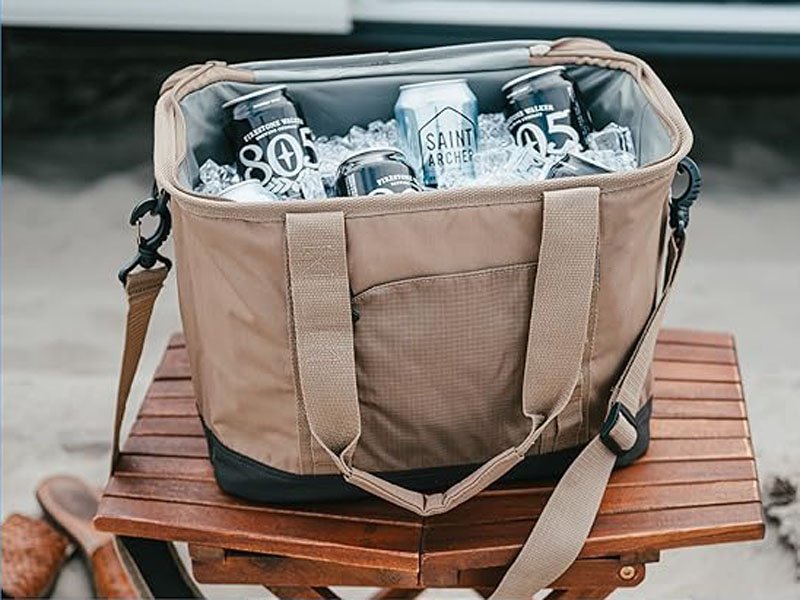
Cooler bags have become essential for modern lifestyles, from daily lunch transport to outdoor adventures, long road trips, grocery shopping, and professional food delivery. Yet consumers and brand buyers constantly ask the same question: “How long do cooler bags actually work?” The truth is that cooling performance is not fixed—it depends on insulation materials, bag construction, ice quantity, environmental conditions, and how the user handles the bag throughout the day.
Most cooler bags keep items cold for 4–12 hours, depending on insulation thickness, ice quantity, bag structure, ambient temperature, and opening frequency. Soft insulated bags work best for short to medium use, while premium coolers maintain cold for 24–72 hours. Cooling performance improves significantly when using block ice, pre-chilled food and drinks, and minimizing how often the bag is opened.
To understand this better, imagine a family heading on a 9-hour road trip in summer. They fill a mid-sized cooler bag with frozen water bottles and snacks. Instead of melting quickly, the ice remained solid until evening—because the bag was packed correctly, kept closed, and stored out of direct sunlight. This kind of real-world proof shows that cooler bags often exceed expectations when used properly.
What Determines How Long a Cooler Bag Can Keep Items Cold?
Cooling time mainly depends on insulation materials (EPE, PE foam, EVA), bag structure, airtightness, environmental temperature, ice quantity, and opening frequency. Thick multi-layer insulation and airtight zippers significantly extend cooling duration, while heat exposure and frequent opening reduce performance.
A cooler bag’s cooling time is determined by how effectively it slows down heat transfer—which occurs through conduction, convection, and radiation. Insulation materials, bag construction, and user behavior all influence how quickly external heat enters the bag.
1. Insulation Layers
Most cooler bags use EPE foam or EVA foam in thicknesses ranging from 4mm to 15mm. Thicker foam with closed-cell structure reduces heat transfer dramatically. Aluminum foil or PEVA liners reflect radiant heat.
Premium coolers often use:
- Multi-layer composite insulation
- Vacuum panels
- High-density EVA foam
- Heat-welded seams
These technologies allow them to retain cold for 24–72 hours.
2. Bag Structure
A well-built cooler bag with reinforced walls, airtight liners, and welded seams performs significantly better than a thin, foldable lunch bag. Structured bags hold cold longer because they reduce air exchange.
3. External Temperature
If the outdoor temperature is above 30°C (86°F), cooling capacity decreases by up to 40%. Sunlight exposure accelerates heat penetration. Conversely, shade improves performance.
4. Ice Quantity and Type
Block ice lasts 2–4 times longer than cube ice because it melts more slowly. Gel ice packs provide consistent cooling.
5. Opening Frequency
Every time you unzip the cooler, 50–80% of cold air escapes. Minimizing opening intervals extends cooling dramatically.
What Insulation Materials Affect Cooling Time?
Cooling time in a cooler bag is determined primarily by its insulation materials. The most common insulation types include EPE foam, PE foam, EVA foam, PU foam, closed-cell foam, aluminum foil lining, PEVA lining, TPU lining, reflective films, and multi-layer composite insulation panels. Each material offers different levels of thermal resistance, durability, weight, flexibility, and cost. EVA and closed-cell foams provide the longest cooling retention, while EPE foam is ideal for lightweight daily-use cooler bags. Reflective liners such as aluminum foil and PEVA reduce radiant heat and improve temperature stability. High-performance cooler bags often combine multiple materials for maximum cooling time.
EPE Foam
EPE foam is the most widely used insulation in cooler bags due to its lightweight, flexible structure and cost-efficiency. It provides moderate cooling performance, typically keeping items cold for 4–8 hours. EPE foam comes in thicknesses ranging from 3mm to 10mm, with thicker layers offering better insulation. It is ideal for daily-use cooler bags, lunch bags, grocery coolers, and short outdoor trips.
EPE foam is composed of closed-cell polyethylene, making it lightweight and capable of providing basic thermal insulation. Its structure allows small air pockets to slow down heat conduction from outside the cooler. While not as dense as EVA foam, EPE offers a good balance between insulation performance and affordability. Because of its flexibility, EPE foam conforms easily to soft cooler bag shapes, making it suitable for foldable designs.
However, EPE foam compresses over time, which reduces its insulating ability after 2–3 years of heavy use. For this reason, it’s primarily used in lower- to mid-tier cooler bags. When combined with aluminum foil or PEVA liners, EPE foam performs significantly better, extending cooling time by another 1–3 hours.
PE Foam (Polyethylene Foam)
PE foam is similar to EPE but offers higher density, improved durability, and better heat resistance. It provides longer-lasting insulation and is used in mid-range cooler bags that require more structure and improved cooling. PE foam typically supports cooling performance lasting 6–10 hours.
PE foam has a more compact bubble structure, giving it better compression resistance compared to EPE. This means it maintains insulation performance longer over time. PE foam is ideal for cooler bags that need more body and structure, such as upright coolers, beverage carriers, or small soft coolers used for longer events like beach trips or hiking.
Its denser material slows heat transfer more effectively, extending cooling retention. PE foam is often paired with aluminum foil to enhance thermal reflection. For OEM buyers looking for mid-tier performance without upgrading to EVA foam, PE foam is an excellent balance of cost and performance.
EVA Foam (Ethylene-Vinyl Acetate)
EVA foam is a high-performance insulation material used in premium cooler bags. Its dense closed-cell structure provides superior thermal resistance, supporting cooling times of 10–24 hours depending on packing and external conditions. EVA foam is ideal for outdoor coolers, delivery coolers, and heavy-duty cooler bags.
EVA foam is stronger, denser, and more durable than both EPE and PE foams. It maintains shape over time, making it suitable for semi-rigid or structured cooler bags. EVA’s thermal resistance is significantly higher, minimizing heat transfer and creating a more stable internal temperature. It is commonly found in:
- Outdoor coolers
- Beach coolers
- Camping cooler backpacks
- Commercial delivery cooler bags
- Premium insulated totes
The downside is its higher cost and weight. But for brands targeting premium performance, EVA foam is the most reliable soft-cooler insulation available before stepping into hard-cooler-grade polyurethane.
PU Foam (Polyurethane Foam)
PU foam is a high-density insulation material used mostly in hard coolers but increasingly integrated into hybrid semi-rigid cooler bags. It offers excellent cooling retention—24–72 hours depending on thickness—and is ideal for durable, premium cooler products.
Although more commonly used in rigid coolers, PU foam can be added to semi-hard cooler bags for enhanced cooling. PU foam’s extremely low thermal conductivity makes it the gold standard for long-term ice retention. Brands designing premium hybrid coolers often choose thinner PU panels to reduce weight while providing premium performance.
PU foam is ideal for:
- Multi-day outdoor coolers
- Fisherman coolers
- Camping coolers
- Portable “box-style” cooler bags
It is the best option for customers who want more than 24 hours of cooling without the bulk of a full hard cooler.
Closed-Cell Foam (High-Density Insulation Foam)
Closed-cell foam has superior thermal retention because its tightly sealed air pockets prevent heat from entering. It supports cooling durations of up to 24 hours in soft coolers and is used in performance-oriented designs such as cooler backpacks and delivery bags.
Closed-cell foam is frequently used in high-end cooler bags. Unlike open-cell foam, which absorbs moisture, closed-cell foam is waterproof, rigid, and highly efficient at blocking heat. It withstands compression, making it suitable for structured cooler bag models. When combined with reflective inner liners and waterproof exteriors, closed-cell foam enhances both durability and cooling performance.
Aluminum Foil Lining
Aluminum foil lining acts as a reflective barrier that reduces heat radiation and enhances cooling efficiency. Although it is not an insulation material on its own, it boosts the performance of underlying foam layers significantly.
Aluminum foil reflects up to 97% of radiant heat, acting as a thermal shield that slows external heat penetration. When paired with EPE or EVA foam, it allows cooler bags to stay cold longer while stabilizing internal temperature. It is widely used in grocery bags, lunch coolers, and travel cooler totes.
PEVA Lining (Food-Safe Non-Toxic Lining)
PEVA is a food-safe, waterproof lining used inside cooler bags. It prevents moisture absorption, supports hygienic storage, and provides mild thermal reflection. PEVA pairs well with EPE for basic cooler performance.
PEVA (polyethylene vinyl acetate) is more flexible than aluminum foil and more environmentally friendly (PVC-free). It’s ideal for cooler bags intended for children, families, and food-focused uses. It provides modest thermal support but is valued for hygiene and durability.
TPU Lining (Thermoplastic Polyurethane)
TPU is a premium waterproof lining used in high-end cooler bags. It is more durable and flexible than PEVA and aluminum foil. TPU is abrasion-resistant, leak-proof, and suitable for professional delivery cooler bags.
TPU supports repeated folding and heavy loads without cracking. It is used extensively in modern premium coolers and insulated backpacks. TPU also maintains integrity in low temperatures, making it excellent for ice-heavy applications.
Multi-Layer Composite Insulation Panels
High-performance cooler bags often use composite insulation panels made from layers of EVA, reflective foil, closed-cell foam, and waterproof films. This allows them to retain cold for 24–96 hours and withstand demanding environments.
Composite insulation is engineered for professional-grade use such as food delivery or multi-day outdoor trips. These panels combine multiple materials to block heat transfer through all three thermal pathways: conduction, convection, and radiation. They are the top choice for commercial cooler bags.
Reflective Thermal Film
Reflective thermal film boosts insulation performance by reflecting heat energy, improving cooling time by 10–20% when combined with foam layers. It is lightweight, flexible, and ideal for performance-driven designs.
Reflective films enhance internal temperature stability. They are commonly used in medical cooler bags, breastmilk cooler bags, and specialty coolers requiring temperature accuracy.
How Effective Are Cooler Bags in Real Conditions?
Cooler bags are very effective in real-world use when packed and handled correctly. A standard soft cooler with 8–10 mm EPE/EVA insulation can keep drinks and food cold for 6–12 hours during daily activities, while premium EVA or composite-insulated cooler bags used for outdoor or delivery purposes can maintain safe chilled temperatures for 12–24+ hours. Their effectiveness depends on insulation thickness, liner material, packing method, outside temperature, and how often the bag is opened. With proper preparation, cooler bags often perform much better than most users expect.
1. Cooling Performance in Typical Daily Use (6–12 Hours)
Cooler bags are designed for short-to-medium cooling needs, and in daily life they perform very well:
- A standard soft cooler with 8–10mm EPE foam typically keeps drinks cold for 6–9 hours indoors.
- Outdoors (25–32°C), properly packed coolers maintain cold for 4–8 hours.
- Adding two large ice packs extends cooling to 8–12 hours.
- Grocery and lunch cooler bags often exceed consumer expectations when pre-chilled items are used.
2. Cooling Performance in Outdoor or High-Temperature Environments (8–24+ Hours)
Outdoor coolers with thicker EVA or composite insulation are far more effective:
- EVA foam coolers retain cold for 10–16 hours even in hotter climates.
- Delivery-grade or commercial coolers keep items below 10°C for 12–24+ hours.
- Multi-layer composite insulation (EVA + reflective film + PE foam) greatly enhances stability.
- Storing the cooler in shade increases retention by 20–30%.
3. Effectiveness Based on Packing Method (Up to 40–70% Difference)
The way you pack dramatically changes real-world performance:
- A 1:1 ratio of ice to contents improves cooling time by 40–60%.
- Block ice or frozen bottles last 2–3x longer than cube ice.
- Filling empty air spaces reduces heat transfer significantly.
- Pre-chilling food/drinks adds 3–6 hours of effective cooling.
4. Effectiveness Compared With Hard Coolers
Cooler bags are surprisingly effective for mobility:
- Soft cooler bags → cooling for 6–24 hrs
- Hard coolers → cooling for 24–72 hrs
- But cooler bags win in portability, weight, cost, comfort, and storage.
5. Factors That Reduce Real-World Effectiveness (Most Common Mistakes)
The most common reasons users think cooler bags “don’t work well”:
- Using too little ice
- Adding warm food/drinks
- Opening the cooler frequently
- Leaving the bag in direct sunlight or a hot car
- Poor-quality bags with thin insulation (<5mm)
How Does Bag Structure Impact Thermal Retention?
The structure of a cooler bag plays a crucial role in thermal retention because it determines how well the bag prevents warm air from entering and cold air from escaping. Features such as wall thickness, foam density, seam construction, zipper airtightness, lid design, and shape stability directly influence insulation performance. Rigid or semi-rigid structures retain cold longer because they minimize compression and air leakage, while thin or loosely stitched soft coolers warm up faster. In real conditions, a well-engineered cooler bag can increase cooling time by 20–60% compared to basic models.
Cooler bag structure is one of the most underestimated factors affecting performance. Even with high-quality insulation, a poorly designed structure can cause rapid heat transfer. Thermal retention relies on how well the bag forms a stable barrier against external heat, and the following elements play the biggest roles.
1. Wall Thickness, Density & Structural Rigidity
The thickness and density of the bag’s walls directly determine how much heat can penetrate.
- Rigid or semi-rigid walls prevent compression, allowing the foam layer to maintain its insulating properties.
- Thicker walls (8–20mm) significantly reduce conductive heat transfer.
- Structured side panels help maintain internal cool air pockets and prevent cold air from escaping through bends or creases.
Soft, collapsible lunch bags often use thin 3–5mm foam and are easily compressed, which reduces their insulation efficiency. In contrast, thicker EVA or composite foam walls in outdoor cooler bags create a more stable microclimate that preserves cold temperatures much longer.
2. Lid Design & Opening Structure
The lid is the weakest structural point of most cooler bags, and its design heavily impacts performance.
- Lids with full foam coverage perform better than those made of thin fabric.
- Tight-fitting lids or overlapping flap closures reduce air exchange.
- U-shaped openings are convenient but allow more cold air to escape, while top-access flaps reduce heat loss.
Studies show that up to 30% of total cooling loss happens through the lid. A well-insulated lid improves heat retention more than thicker sidewalls alone.
3. Zippers, Seam Construction & Airtightness
Air leakage is one of the biggest enemies of thermal retention.
- Waterproof zippers limit warm air entry and prevent cold air leaks.
- Heat-welded seams perform better than stitched seams, especially in maintaining airtightness.
- Double-layer seam reinforcement prevents gaps forming over time.
- Poor zipper alignment can reduce cooling time by up to 20–30%.
Premium coolers use pressure-resistant zippers and welded seams similar to dry bags.
4. Shape Stability & Internal Air Circulation
The internal geometry of the cooler affects how cold air behaves:
- Square or box-shaped coolers hold cold air better than narrow or tall bags.
- Flat-bottom coolers allow ice packs to spread cold efficiently.
- Flexible bags can collapse inward, squeezing out cool air and creating warm pockets.
Stable structures maintain consistent cooling throughout the entire interior.
5. Reinforced Base & External Protection
Heat often enters through the bottom of the bag when placed on hot surfaces.
- Reinforced bases prevent direct heat conduction.
- Rubber or thick external coatings help reduce heat from sand, pavement, or car seats.
Outdoor coolers often feature a 3-layer base system specifically to address this weak point.
What External Conditions Reduce Cooling Performance?
External conditions such as high ambient temperature, direct sunlight, hot surfaces, car trunk heat, humidity, wind exposure, and frequent environmental temperature changes significantly reduce cooler bag performance. Heat penetrates faster when the cooler is placed on warm ground, exposed to UV rays, or left in a closed car where temperatures can exceed 50–70°C. Humidity accelerates heat transfer, while wind turbulence forces warm air into the bag each time it’s opened. These factors can reduce cooling time by 30–70%, even if insulation quality is high.
1. High Ambient Temperature (Heat > 28–30°C / 82–86°F)
High temperatures increase the rate of heat conduction through the cooler walls.
- At 30–35°C, cooling performance drops by 25–40%.
- At 40°C+, ice melts twice as fast as in mild environments.
- Outdoor activities like beach trips or camping expose coolers directly to high heat.
Even premium coolers struggle if directly exposed to hot air for extended periods.
2. Direct Sunlight & UV Exposure
Sunlight is one of the biggest enemies of insulation performance.
- UV radiation heats the exterior fabric quickly.
- Black or dark-colored exteriors absorb more heat.
- Sunlight exposure increases internal temperature by 10–20°C within hours.
A cooler that lasts 10 hours in shade may last only 4–6 hours in direct sun.
3. Hot Car Interiors (50–70°C / 122–158°F)
Leaving a cooler in a car trunk or backseat dramatically reduces performance.
- Car interiors can exceed 60–70°C in summer.
- This accelerates heat transfer into the cooler even with strong insulation.
- Ice melts up to 3x faster compared to room temperature.
This is one of the most common real-life mistakes customers make.
4. Hot Surfaces (Sand, Pavement, Rocks, Truck Beds)
Heat can enter the cooler from the bottom—a weak point many users ignore.
- Placing coolers on hot sand, grass, or pavement transfers heat directly.
- A cooler sitting on a 50°C surface can lose 20–30% of cooling time.
- Premium coolers often use reinforced bottoms to combat this.
Placing the cooler on a blanket or in shade can significantly reduce heat absorption.
5. Humidity & Moisture in the Air
Humidity increases heat transfer efficiency.
- Moist warm air carries more thermal energy.
- This accelerates temperature rise inside the cooler.
- Humid climates (Southeast Asia, coastal areas, rainy seasons) show 15–25% faster warming.
Humidity also affects opening/closing cycles by exchanging warm, moist air with cool internal air.
6. Wind Exposure & Air Circulation
Wind forces warm air around the cooler, raising heat transfer.
- Windy environments reduce cooling by 10–20%.
- Strong wind forces warmer air inside the bag every time it’s opened.
Wind cannot “cool down” a cooler—this is a common misconception.
7. Frequent Temperature Fluctuations (Shade → Sun → Indoor → Outdoor)
Rapid environmental changes reduce efficiency by destabilizing the internal temperature.
- Taking the cooler repeatedly between hot and cold environments breaks thermal equilibrium.
- This causes ice to melt faster as insulation layers constantly adjust to new temperatures.
Stabilizing the cooler in one environment improves cold retention noticeably.
How Long Do Different Types of Cooler Bags Keep Ice?
Cooling time varies widely depending on the type of cooler bag. Soft cooler bags typically keep ice for 4–12 hours, while hard coolers retain ice for 24–72 hours, and premium EVA or composite insulated cooler bags designed for outdoor or delivery use can maintain ice for 24–96 hours. Insulation thickness, foam density, outer fabric, sealing structure, and packing method all influence performance.
Soft Cooler Bags
Soft cooler bags generally keep ice for 4–12 hours, depending on their insulation thickness (usually 5–10mm EPE or PE foam), liner type (PEVA or aluminum foil), and external conditions. When packed with enough ice packs or frozen bottles, many mid-range soft coolers can maintain food-safe temperatures for an entire workday or picnic. Their lightweight design makes them ideal for lunches, short trips, grocery transport, and everyday outdoor activities.
Soft cooler bags are the most common type for daily use. Their insulation typically ranges from 5–10mm EPE foam combined with a PEVA or aluminum foil lining. While not as rigid as EVA or hard coolers, they excel in portability and convenience.
Typical ice retention:
- Indoors (20–25°C): 8–12 hours
- Outdoors in warm weather (25–32°C): 4–8 hours
- With 2–3 large ice packs: 10–14 hours
Real performance depends heavily on how the bag is packed. Frozen drinks or block ice extend cooling significantly. These bags are best for:
- Office lunches
- School lunch boxes
- Park picnics
- Grocery cold-chain transport
- Short hikes and beach visits
Soft-Sided Premium EVA Cooler Bags
Premium soft-sided EVA cooler bags maintain ice for 10–24 hours, thanks to thicker EVA or closed-cell foam insulation and semi-rigid structural walls. These cooler bags resist compression, offering superior thermal retention compared to basic soft coolers. They are ideal for outdoor sports, beach trips, boating, hiking, fishing, and all-day excursions.
EVA cooler bags are structurally superior to regular soft coolers. Their 8–20mm EVA foam provides excellent insulation because EVA is denser and more rigid than EPE. Its closed-cell structure prevents heat from penetrating quickly.
Typical ice retention:
- Mild weather (20–26°C): 16–24 hours
- Warm outdoor temperatures (28–35°C): 10–18 hours
- With block ice & limited opening: 24+ hours
They are commonly used for:
- Camping day trips
- Long fishing sessions
- Beach outings
- Outdoor sports
- Travel coolers
Key advantages:
- More stable internal temperature
- Semi-rigid shape prevents ice compression
- Stronger structure reduces heat leakage
Hard Cooler Boxes
Hard cooler boxes provide the longest ice retention, typically keeping ice for 24–72 hours or longer due to thick polyurethane (PU) insulation and rigid molded shells. They are ideal for camping, fishing, road trips, and multi-day outdoor activities where extended cooling is essential.
Hard coolers are the gold standard for long-term cooling because they use 20–40mm PU insulation, which has significantly lower thermal conductivity than soft coolers. Their rigid walls prevent heat exchange and air pockets remain stable, maximizing ice longevity.
Typical ice retention:
- Moderate conditions (20–26°C): 48–72 hours
- Hot outdoor conditions (30–35°C): 24–48 hours
- Premium models with block ice can reach 3–5 days
They are commonly used by:
- Campers
- Hunters
- Professional anglers
- Overland travelers
- Outdoor event vendors
Drawbacks:
- Heavy
- Bulky
- Not foldable
Delivery & Commercial Cooler Bags
Commercial-grade cooler bags used by food delivery companies can maintain chilled temperatures for 12–48 hours, depending on insulation layers and bag design. They use composite panels, reinforced EVA foam, and airtight zippers to ensure temperature stability during transportation.
Delivery coolers are built for heavy-duty, daily professional use. They incorporate multi-layer composite insulation, often mixing EVA, closed-cell foam, and reflective films. Combined with waterproof TPU liners and welded seams, these bags retain cold exceptionally well.
Typical ice retention:
- Controlled environments: 24–48 hours
- Outdoor delivery conditions: 12–24 hours
Use cases:
- Food delivery platforms
- Catering companies
- Pharmaceutical cold-chain transport
- Meal prep delivery
These cooler bags emphasize durability:
- Reinforced stitching
- Hardboard-supported sides
- High-efficiency reflective foil
Cooler Backpacks
Cooler backpacks keep ice for 6–18 hours, depending on the foam thickness and how the load is distributed. They are favored by hikers, cyclists, and travelers because they combine portability with cooling performance.
Cooler backpacks use soft or EVA insulation but distribute weight vertically for comfortable carrying. Their insulation is typically thinner than box coolers, but high-quality models with thick EVA panels perform extremely well.
Typical ice retention:
- Urban use: 8–12 hours
- Outdoor use: 6–10 hours
- Premium EVA versions: 12–18 hours
Ideal use cases:
- Hiking
- Cycling
- Theme parks
- Outdoor day trips
Foldable / Collapsible Cooler Bags
Foldable cooler bags are lightweight and convenient but keep ice for only 3–8 hours due to thin insulation and flexible construction. They are ideal for grocery use, quick picnics, or short errands.
Collapsible coolers prioritize weight and packability over long-term insulation. Their foam layer (3–5mm EPE) is significantly thinner, and their flexible walls compress easily—two factors that reduce cooling efficiency.
Typical ice retention:
- Indoor grocery transport: 3–6 hours
- Outdoor light use: 3–5 hours
- With ice packs: 5–8 hours
Advantages:
- Lightweight
- Easy storage
- Fast drying
Hybrid Semi-Hard Coolers
Semi-hard cooler bags combine soft insulation with molded EVA or PU panels, offering 10–30 hours of cooling performance—positioning them between soft coolers and hard coolers.
These coolers use mixed insulation technologies:
- EVA molded panels
- PU injected corners
- Reinforced frames
They maintain shape like hard coolers but remain lighter and easier to store. Cooling retention depends on material mix and design.
Typical ice retention:
- Moderate temperatures: 16–30 hours
- Hot conditions: 10–20 hours
Is an Insulated Bag as Good as a Cooler?
Insulated bags work very well for daily use and short trips, but hard coolers outperform them for long-term cold retention. Insulated bags are lighter, cheaper, more portable, and better for everyday mobility.
For most casual users, a well-designed insulated bag is more practical than a heavy hard cooler. But for long camping trips, hard coolers remain unmatched.
What Real Factors Influence Cooling Duration in Daily Use?
Daily cooling performance depends on how the cooler is packed, how often it is opened, the type and amount of ice used, and whether items were pre-chilled. Even the best cooler bag loses efficiency if warm food is added or the bag is opened frequently. Proper preparation and disciplined use can extend cooling time by 30–70%.
Understanding real-world cooling behavior is essential for maximizing performance. Even the most advanced cooler bags cannot overcome poor usage practices. Cooling effectiveness is not only about insulation quality—it’s about how users interact with the bag.
1. Ice Quantity and Type
Ice is the heart of the cooling system. A 1:1 ratio of ice to contents is ideal for extended cooling. Block ice melts significantly slower than cube ice because it has a smaller surface area relative to volume. Gel ice packs maintain a more stable temperature and are less messy. Frozen water bottles provide dual function: cooling + drink supply.
2. Opening Frequency
Every time the cooler bag is opened, cold air escapes and warm air enters. In tests, opening a cooler bag once every 20 minutes reduces cooling time by nearly half. Grouping items, pre-planning, and minimizing rummaging significantly improve retention.
3. Pre-Chilling Food and Drinks
Placing warm items inside a cooler consumes ice energy and increases internal temperature. Pre-chilling drinks for 8–12 hours ensures the cooler starts with a cold base, extending cooling time by 3–6 hours.
4. Bag Placement and Environment
A cooler bag placed in a shaded, ventilated area performs far better than one left in direct sun or the back of a hot vehicle. Even a towel draped over the cooler can reduce exterior heat absorption by 15–25%.
5. Packing Strategy
Items should be placed tightly with minimal air gaps. More empty space means more warm air and faster warming. Fill empty gaps with extra ice packs or soft items.
Understanding these factors empowers buyers—and brand clients—to get the best real-world performance out of any cooler bag.
How Long Do Cooler Bags Last Before Wearing Out?
Cooler bags generally last 2–6 years, depending on insulation quality, outer fabric durability, stitching, zippers, and how frequently they are used. Premium cooler bags may last longer with proper care.
1. Insulation Lifespan
EPE foam, EVA, and PE foam break down slowly over time. After 2–5 years, foam may compress, reducing insulation efficiency. EVA has the longest lifespan due to its density and closed-cell structure.
2. Outer Fabric
Polyester, Oxford cloth, and nylon each have different lifespans. Waterproof coatings slowly degrade with use. UV exposure and abrasion accelerate wear.
3. Seams and Stitching
Poorly reinforced seams may weaken over time, especially in bags carrying heavy loads. Double-stitching, bar-tacking, and reinforced corners significantly extend lifespan.
4. Zippers and Hardware
Zippers are often the first point of failure. Waterproof zippers require more frequent maintenance. Metal hardware lasts longer than plastic buckles.
With good maintenance practices—cleaning, air-drying, storing away from sunlight—cooler bags can last much longer than average.
How to Extend the Cooling Time and Lifespan of a Cooler Bag?
To extend both cooling time and lifespan, users should pre-chill the cooler, use sufficient ice, minimize air gaps, avoid frequent openings, protect the bag from heat sources, and keep it clean and dry after every use. Long-term durability also improves when the cooler is properly stored, regularly inspected for seam or zipper damage, and paired with high-quality ice packs. With correct care and usage habits, a cooler bag’s performance and lifespan can increase by 30–60%.
Pre-Chilling Techniques
Pre-chilling the cooler, ice packs, and stored items significantly extends cooling time—often by 30–50%. Cold walls and pre-frozen contents reduce the initial thermal load, allowing ice to last much longer. Users should place ice packs inside the cooler for 1–2 hours before packing and avoid loading warm beverages or unrefrigerated food.
A cooler bag’s insulation works best when it starts cold. If the interior walls are warm, ice must first cool the bag itself before cooling your items, wasting precious energy. The most effective method is to:
- Place pre-frozen ice packs inside for 1–2 hours
- Store drinks and food in the refrigerator overnight
- Avoid adding warm items—they melt ice 3–5× faster
- Freeze bottled water for dual-purpose hydration + cooling
- Pre-chill the cooler in an air-conditioned room before packing
For premium EVA or composite coolers, pre-chilling greatly enhances heat stability and delays thawing. Delivery companies use this technique routinely because it increases total cooling time without adding weight.
Packing Strategy for Maximum Cooling
Effective packing maximizes cooling time by limiting air gaps, using enough ice, and placing ice on top where heat enters most. A balanced ratio of 50% ice and 50% contents ensures optimal cold retention.
The way a cooler is packed affects cooling time more than most users realize. Consider these proven principles:
- Use block ice or frozen bottles (lasts 2–3× longer than cubes)
- Fill empty spaces with more ice or towels to reduce warm air pockets
- Place ice on top, because cold air sinks and warm air rises
- Use multiple ice packs rather than one large pack for even cooling
- Group similar-temperature items together (don’t mix hot and cold foods)
- Keep frequently used items on top to reduce opening time
Food delivery companies follow the “tightly packed” rule because dense packing stabilizes temperature and prevents pockets of warm air from forming.
Care, Cleaning, and Maintenance
Proper cleaning and maintenance extend a cooler bag’s lifespan by preventing mold, liner cracking, odor buildup, and zipper corrosion. Wiping the interior after every use, allowing full air drying, avoiding harsh chemicals, and storing the bag in a cool, dry environment can extend lifespan by 1–3 years.
Cooler bags last longest when regularly cleaned and dried. Moisture trapped inside the liner encourages mold and odor, while sunlight degrades fabrics and insulation. OEM-approved maintenance includes:
- Wiping the interior with mild soap after each use
- Air drying with the lid open for 12–24 hours
- Avoiding bleach or alcohol which weakens PEVA/TPU liners
- Lubricating zippers occasionally to prevent corrosion
- Avoiding prolonged exposure to UV to prevent fabric fading
- Never storing the cooler compressed (can crush insulation foam)
Premium TPU or EVA-lined cooler bags last longer if stored upright in a dust-free, shaded area.
Structural Protection & Usage Habits
Protecting the cooler from compression, heat exposure, and rough handling helps maintain insulation integrity. Avoid placing it on hot surfaces, overloading it beyond design limits, or storing it under heavy items.
Insulation performance relies on maintaining structural shape. When foam collapses from pressure, thermal resistance drops quickly. Good habits include:
- Keeping the cooler out of direct sunlight
- Using a blanket or mat to prevent heat from entering from below
- Avoiding leaving the cooler in a hot car
- Not stacking heavy items on top
- Avoiding dragging or sharp surfaces that can tear seams
- Closing the lid tightly each time
For delivery or outdoor professionals, these small habits significantly increase ice life and prevent premature wear.
Long-Term Storage to Preserve Lifespan
Proper long-term storage—dry, cool, and uncompressed—can double a cooler bag’s usable lifespan. Insulation foam degrades when crushed, humidity causes mold, and heat accelerates liner aging.
A cooler bag’s lifespan depends heavily on how it is stored during downtime. Long-term storage guidelines include:
- Keep it open slightly to prevent mildew
- Store in a cool, shaded place (avoid attics, hot garages, sunlight)
- Use a dust cover to protect the outer fabric
- Ensure complete dryness to prevent liner peeling
- Avoid leaving heavy objects on top—compression reduces insulation thickness
- For foldable coolers, fold loosely rather than tightly
Conclusion
Cooler bags are indispensable tools for daily life and outdoor adventures. Whether your customers need a lunch cooler, a family picnic cooler, or a commercial delivery cooler, understanding insulation, materials, design, and proper usage empowers you to choose or develop better products.
Ready to customize your cooler bags? Contact Szoneier today to start your project.
manufacturer Categories
- Custom Tote Bags Manufacturer
- custom backpacks Manufacturer
- custom travel bags& Duffle bags manufacturer
- custom makeup bags & toiletry bags manufacturer
- custom cooler bags manufacturer
- custom drawstring bags manufacturer
- custom makeup bags & toiletry bags manufacturer
- custom golf bags manufacturer
- custom fireproof bags manufacturer
- custom dry bags manufacturer
- custom ski bags manufacturer
- custom gym & sports bags manufacturer
- custom laptop bags manufacturer
- custom tactical bags manufacturer
- custom beach bags manufacturer
- custom medical bags manufacturer
- custom camera bags manufacturer
- custom wetsuits manufacturer
- custom leather goods manufacturer
- more personalized products
Can't find the answers?
No worries, please contact us and we will answer all the questions you have during the whole process of bag customization.
Make A Sample First?
If you have your own artwork, logo design files, or just an idea,please provide details about your project requirements, including preferred fabric, color, and customization options,we’re excited to assist you in bringing your bespoke bag designs to life through our sample production process.
