 Skip to content
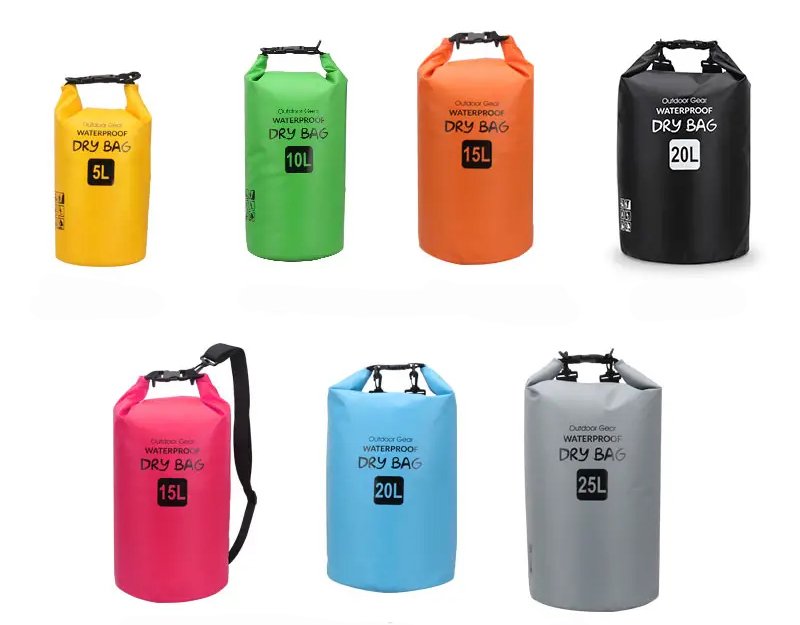
If you’ve ever packed for a weekend paddle, mountain hike, or beach trip, you already know the golden rule of outdoor gear: space matters as much as waterproofing. The right dry bag doesn’t just keep water out — it keeps your essentials organized, light, and accessible. But when faced with options ranging from 2 liters to over 70 liters, the question becomes: which size actually fits your real-world needs?
Dry bag sizes range from 2L mini pouches for phones and keys to 70L expedition bags for multi-day gear. The ideal capacity depends on your activity: 5–10L for day trips, 20–30L for kayaking or hiking, 40–60L for camping, and 70L+ for group or extended travel. Choosing correctly ensures comfort, balance, and protection without unnecessary bulk.
Whether you’re an adventurer buying for personal use or a brand sourcing for your next outdoor product line, size is more than a number — it’s a performance equation. Let’s break down every dry bag size and help you find your perfect fit.
What Is a Dry Bag?
A dry bag is a waterproof sack designed to protect your gear from rain, splashes, or full water immersion. Its size — ranging from 2L to 90L — determines how much you can store and how easily you can carry it. Smaller bags suit short water activities, while larger ones fit multi-day expeditions. Choosing the right capacity ensures a balance between protection, comfort, and practicality for your specific environment and activity.
What Are Dry Bags Used For?
Dry bags protect valuables and clothing from rain, splashes, and full water immersion. They’re essential for activities like:
- Kayaking, canoeing, paddleboarding
- Camping and hiking
- Beach, swimming, or gym use
- Motorcycle or cycling travel
Smaller bags hold phones, wallets, and electronics; larger ones carry sleeping bags, clothes, and food.
A good dry bag isn’t just a waterproof accessory; it’s a reliability guarantee in unpredictable environments.
How Dry Bags Work: The Science of Waterproofing
Dry bags protect contents through three main components:
| Component | Function | Example |
|---|---|---|
| Material | Prevents water penetration | 500D PVC Tarpaulin, TPU-coated nylon |
| Seams | Welded or heat-sealed joints stop leaks | RF welded seams on Szoneier bags |
| Closure System | Creates airtight seal | Roll-top or watertight zipper |
When you roll the top edge 3–4 times, trapped air forms an inner cushion that resists both splashes and short submersion. Some larger bags even act as floatation aids if accidentally dropped into water.
Tip from Szoneier: A well-sealed 20L TPU dry bag can remain buoyant for up to 4–6 hours in open water, keeping internal items dry even under pressure.
Why Size Directly Impacts Functionality
A common misconception is that “bigger is better.” In reality, capacity affects handling, portability, and even waterproof integrity. Here’s how:
- Storage Capacity: A 2L dry bag fits essentials like phones and keys; a 60L one can store sleeping bags, clothing, and cookware. Overestimating size often leads to wasted space and poor load balance.
- Weight Distribution: Smaller dry bags integrate easily into backpacks or kayak compartments, while larger ones need external strapping or shoulder harnesses.
- Buoyancy: The more air inside, the more the bag floats — but excess air also makes packing less efficient. Correct sizing ensures optimal floatation without bulk.
- Ergonomics: Carrying a 60L bag on a short paddle trip is inconvenient. Matching activity duration to capacity keeps users comfortable and mobile.
The Relationship Between Size and Use Case
Let’s simplify how size aligns with common activities:
| Capacity Range | Typical Use | Example Items | Key Benefit |
|---|---|---|---|
| 2–5L | Essentials | Phone, wallet, keys | Fits in backpack; minimal bulk |
| 10–15L | Day gear | Towel, spare clothes | Great for kayaking or beach |
| 20–30L | Weekend trips | Clothes, food, shoes | Balance of space & portability |
| 40–60L | Camping or multi-day | Tent, sleeping bag, gear | Perfect for adventure storage |
| 70L+ | Expeditions | Group or professional gear | Maximum waterproof volume |
Factory Observation: 80% of Szoneier’s international clients order 20L–40L sizes — the “sweet spot” balancing retail popularity, usability, and material cost efficiency.
Do All Dry Bags Offer the Same Level of Waterproof Protection?
No — protection levels depend heavily on materials, seam construction, and closure type. Here’s the difference in technical performance:
| Waterproof Rating | Description | Example Use |
|---|---|---|
| IPX4 (Splash-proof) | Handles rain & splashes | Beach or gym bag |
| IPX6 (Water jet proof) | Resists heavy spray & brief immersion | Kayaking, boating |
| IPX7 (Submersible up to 1m) | Survives short underwater submersion | River rafting or diving |
PVC tarpaulin bags typically provide IPX6 protection, while advanced TPU laminated bags — like those engineered by Szoneier — reach IPX7 submersion rating, ensuring gear remains dry even under extreme water pressure.
Szoneier Quality Standard: Every roll-top dry bag is hydro-tested for 20 minutes at 10,000 mm hydrostatic head before mass shipment — simulating prolonged rain and water impact.
What Are the Common Dry Bag Sizes?
Dry bags are available in standard sizes from 2L to 90L. Small bags (2–10L) carry phones and valuables, medium sizes (15–30L) suit day trips and kayaking, and large ones (40–70L) fit multi-day camping gear. Selecting the right size ensures comfort, waterproof efficiency, and organized packing. Each capacity corresponds to a specific outdoor scenario — from light coastal paddling to expedition-level travel.
Why Standardized Dry Bag Sizes Exist
In the outdoor equipment industry, capacity standardization is essential. Manufacturers like Szoneier produce dry bags in specific liter-based categories (2L, 5L, 10L, 15L, 20L, 30L, 40L, 60L, 70L, and 90L) because:
Comprehensive Dry Bag Size Chart
| Size (Liters) | Common Dimensions (cm) | Typical Weight (g) | Fits / Holds | Ideal For | Szoneier Recommendation |
|---|---|---|---|---|---|
| 2L | 15 × 25 | 90 | Phone, wallet, keys | Kayak deck pocket, small pouch | Great as promotional mini bag |
| 5L | 20 × 35 | 120 | Snacks, towel, light shirt | SUP, short kayak trip | Entry-level product for retail |
| 10L | 22 × 45 | 200 | One outfit, towel, small gear | Beach, pool, 1-day trips | Szoneier’s most popular personal-use size |
| 15L | 25 × 50 | 280 | 1–2 outfits, shoes | Kayaking, boat trip | Perfect balance of volume & mobility |
| 20L | 28 × 55 | 400 | 1 jacket, clothes, camera | Weekend or single-person trip | Core OEM capacity; bestseller for outdoor brands |
| 30L | 32 × 60 | 550 | 2 outfits, shoes, towel | Hiking, canoeing, light camping | Ideal for backpack-style bags |
| 40L | 35 × 65 | 750 | Tent, sleeping bag, gear | Multi-day adventure | Common for premium TPU builds |
| 50L | 40 × 70 | 820 | Clothes for 3–4 days | Motorcycle or rafting trips | Fits dual-strap ergonomic designs |
| 60L | 43 × 75 | 900 | 2 sleeping bags, gear sets | Camping, travel, marine | Balanced large-size option |
| 70–90L | 50 × 80+ | 1000–1200 | Expedition, team gear | Group or expedition travel | Heavy-duty welded TPU construction |
2L–5L: Compact Everyday Companions
Best For:
Personal essentials — smartphones, car keys, cash, snacks, or a compact action camera.
These sizes are ultra-light (under 150g) and fit easily inside other bags. They’re favored by paddleboarders, runners, and beachgoers for securing valuables.
Use Case Example:
A Szoneier 5L TPU dry bag fits perfectly on a SUP deck, attached via D-ring, and stays dry even in splashing conditions.
Design Insight:
- Single roll-top strap or clip closure.
- Popular in giveaway and branding promotions (due to compact cost).
- Recommended for retail sets like “3-pack dry bags” (2L + 5L + 10L).
10L–15L: The Everyday Adventure Range
Best For:
Short kayaking trips, one-day hikes, or as a secondary internal waterproof layer.
Capacity Example: Enough for 1–2 T-shirts, one towel, one pair of sandals, and a small camera or power bank.
Why It’s Popular:
- Compact but capable.
- Fits on small boats or backpacks without adding bulk.
- Suitable for both casual and outdoor-lifestyle buyers.
Szoneier Note: The 15L model is often used as a “day adventure” bag — balancing waterproof protection and storage convenience. Many of our U.S. and European clients offer this as their “core” SKU.
20L–30L: The Universal Sweet Spot
Best For:
Weekend warriors, kayakers, campers, and motorcyclists.
These are the most balanced and commercial sizes — providing enough volume for 2–3 days’ worth of clothing and food while still easy to carry. They also serve as backpack-style dry bags, with adjustable padded straps or shoulder slings.
Example Gear Load (20L Bag):
- Jacket
- T-shirt
- Pants
- Shoes
- Light towel
- Power bank
Example Gear Load (30L Bag):
- 2 outfits + outer layer
- Small tent
- Lunchbox + water bottle
40L–60L: The Expedition Essentials
Best For:
Multi-day travel, kayaking groups, or extended camping trips.
A 40L bag typically fits one person’s full camping kit (clothes, sleeping bag, mat), while a 60L version supports 3–5 days of gear. These are often built with reinforced base layers, padded straps, and compression belts for stability.
Durability Notes:
- PVC or TPU laminated fabric (0.5–0.7mm thickness).
- Welded seams for load-bearing resistance.
- Optional air-release valve for easier packing.
70L–90L: The Expedition Giants
Best For:
Long-term travel, rafting expeditions, or storing collective gear.
These bags are serious load haulers — perfect for guiding teams, divers, or long-distance motorcyclists who require all-weather gear protection.
Key Features:
- Heavy-duty TPU or 1000D PVC shell.
- Reinforced base and webbing straps.
- Dual carry handles + backpack harness.
- Interior mesh compartment or divider (optional for custom builds).
A Quick Comparison: Storage Reality vs Expectation
Many users misjudge what a liter means in practical terms. Here’s how each bag’s size translates to real-world use:
| Size | Fits | Example Equivalent | Best For |
|---|---|---|---|
| 2L | Phone, wallet | 1 small lunch box | SUP, paddleboard |
| 5L | Light essentials | 1 large lunch box | Beach trips |
| 10L | Towel, shirt, shorts | 1 shoe box | Day paddle or swim |
| 20L | Outfit + gear | 1 carry-on bag | Weekend camping |
| 40L | Camping setup | Small backpack | Multi-day adventure |
| 60L+ | Full expedition kit | Cabin luggage | Rafting, touring |
How Do You Choose the Right Dry Bag Size for Your Activities?
To choose the right dry bag size, match capacity to your activity and duration: 2–10L for essentials and short trips, 15–30L for day paddling and hiking, 40–60L for camping or multi-day adventures, and 70L+ for expedition or group use. Consider how you carry the bag (hand, shoulder, backpack), the type of gear (electronics vs bulky clothes), and transport method (kayak, motorcycle, hiking). The best size is the smallest one that comfortably fits your real gear.
Which Size Is Best for Kayaking, Canoeing, or Paddleboarding?
For paddlesports, your dry bag has to be waterproof AND space-smart. You usually have limited deck or hatch space, and anything too big becomes unstable or awkward to reach on the water.
- 2–5L: for phones, keys, snacks, and safety items on the deck.
- 10–15L: for spare clothes and towel under bungee cords or inside the cockpit.
- 20–30L: for longer day trips or overnight river runs, stored in hatches or strapped securely.
For recreational paddlers, a combination of one 5L + one 15–20L bag is almost always enough. The small bag stays accessible on deck; the larger bag goes inside the kayak or at the bow/stern of a SUP.
Which Size Works Best for Camping or Hiking?
For camping and hiking, your dry bag becomes part of your packing system, not just a separate item. You need to think in layers: what must stay absolutely dry (sleeping bag, spare base layer) versus what only needs light protection (outer shell, food).
- 10–15L: clothing layers or electronics inside a main backpack.
- 20–30L: solo overnight gear like clothes + food + compact sleeping gear.
- 40–60L: full camping kits including sleeping bags, mats, and spare clothes.
Backpackers often use multiple mid-size dry bags instead of one huge one — for example, a 10L bag for clothes, 5L for electronics, 20L for sleeping kit. This modular packing makes it easier to organize and also reduces risk: if one bag is opened in the rain, everything else stays dry.
Which Dry Bag Is Ideal for Motorcycle, Beach, or Gym Use?
For motorcycle riders, the primary concerns are aerodynamics, mounting, and durability. For beach and gym users, it’s more about convenience, sand resistance, and quick access.
Motorcycle / Touring:
- 20–30L is ideal as a tail or side bag for weekend rides.
- 40–50L works as a main duffel strapped across the seat or rack. These bags need reinforced bases, strong webbing, and multiple tie-down points. Szoneier often builds them with 0.5–0.7 mm TPU or PVC, welded seams, and roll-top duffel construction.
Beach / Pool / Gym:
- 5–10L for towels, sunscreen, phone, and flip-flops.
- 15–20L if you’re carrying a change of clothes and shoes. Here, brands usually prioritize lightweight materials, bright colors, and logo visibility. Szoneier can add transparent windows, inner pockets, or mesh outer compartments to make the bag feel more like a lifestyle product than pure outdoor gear.
For everyday users, a 10–20L dry bag with a shoulder strap is the most versatile choice: big enough for clothes and accessories, small enough to carry comfortably on foot or by bike. For brands, this size band is a sweet spot — usable across categories (gym, beach, boat, commute), easy to display in retail, and affordable to produce with strong margins.
Putting It All Together
A simple way to guide your customers (or your own product planning) is:
- 2–10L – Essentials and short activities.
- 15–30L – Single-person day and weekend trips.
- 40–60L – Multi-day adventures and camping.
- 70L+ – Expedition or group gear.
What Materials and Constructions Affect Size Performance?
Dry bag performance depends on its materials and construction. PVC tarpaulin is tough and affordable for large waterproof bags; TPU offers superior flexibility, eco-friendliness, and cold resistance; ripstop nylon is lightweight for compact dry bags. Welding, lamination, and roll-top sealing techniques determine waterproof integrity. Choosing the right material–construction combo ensures the best balance of weight, strength, and water protection for your intended use.
Common Dry Bag Materials: A Comparative Guide
| Material | Structure & Feel | Weight | Waterproof Rating | Durability | Eco Profile | Ideal Bag Size Range |
|---|---|---|---|---|---|---|
| PVC Tarpaulin (500D–1000D) | Smooth, stiff, glossy | Heavy | IPX6–IPX7 | Very high | Moderate (not biodegradable) | 15L–90L |
| TPU Laminate (420D–840D Nylon Base) | Soft, flexible, matte | Medium | IPX6–IPX8 | Excellent | High (eco-friendly, recyclable) | 5L–70L |
| Ripstop Nylon (PU or TPU Coated) | Light, slightly textured | Very light | IPX4–IPX6 | Moderate | High | 2L–30L |
| Polyester (PVC or PU Coated) | Firm, colorful | Medium | IPX5–IPX6 | Moderate | Moderate | 5L–30L |
| EVA Composite | Soft touch, rubber-like | Light | IPX6 | High | Excellent | 5L–20L |
PVC Tarpaulin
PVC (polyvinyl chloride) tarpaulin is a synthetic polymer fabric coated on both sides for total waterproof sealing. It’s the industry standard for budget-friendly yet highly durable dry bags.
Advantages:
- Extremely resistant to puncture and abrasion.
- Holds shape well even when full.
- Simple to heat-weld, ensuring 100% waterproof seams.
Drawbacks:
- Heavier than TPU or nylon.
- Can become stiff in cold environments (below 0°C).
- Not as environmentally sustainable due to chlorine content.
Best for:
- 20L–90L dry duffels or expedition bags.
- Commercial brands needing robust waterproofing for outdoor or marine use.
Szoneier Standard: Szoneier uses 500D PVC tarpaulin (0.5–0.7mm) for large-capacity bags, pressure-tested to 20,000mm hydrostatic head, ensuring zero leakage under prolonged submersion.
TPU (Thermoplastic Polyurethane)
TPU is a next-generation material that bonds a soft polyurethane film to a base fabric (nylon or polyester). It combines elasticity, strength, and environmental compliance, making it the preferred choice for high-end dry bags.
Advantages:
- Remains flexible in cold or hot weather.
- Resistant to UV, chemicals, and oil.
- Eco-safe: free from halogens and phthalates.
- Softer feel and lighter than PVC for the same waterproof rating.
Drawbacks:
- Slightly higher production cost.
- Needs precision heat-welding to prevent delamination.
Best for:
- Premium OEM/ODM bags (5L–70L).
- Outdoor brands targeting the eco-conscious market.
Ripstop Nylon
Ripstop nylon is a woven fabric with reinforced grids that resist tearing. When coated with TPU or PU, it becomes water-resistant to waterproof depending on coating thickness.
Advantages:
- Ultra-lightweight and compressible.
- Available in vibrant colors and prints.
- Perfect for internal packing or travel-oriented dry bags.
Drawbacks:
- Less abrasion-resistant than PVC or TPU.
- Not suitable for submersion or heavy marine use.
Best for:
- 2L–20L dry bags, packing cubes, or foldable waterproof pouches.
Polyester and EVA
- Polyester (PU/PVC coated): Provides good color retention and printability. It’s ideal for branded gift dry bags or promotional products (5L–15L).
- EVA (Ethylene Vinyl Acetate): Soft, flexible, odor-free, and recyclable. Used for transparent waterproof bags or electronics storage cases.
Brand Tip: When creating custom-branded dry bags, many of Szoneier’s clients combine EVA windows with TPU bodies — giving both transparency and strength without sacrificing waterproof performance.
Construction Methods: The Invisible Science Behind Waterproofing
Material alone doesn’t make a bag waterproof — how it’s assembled matters even more. Here are the main construction types that define performance across sizes:
| Construction Type | Technique | Waterproof Reliability | Commonly Used On |
|---|---|---|---|
| RF (Radio Frequency) Welding | High-frequency electromagnetic fusion of material layers | ⭐⭐⭐⭐⭐ | TPU, PVC |
| Hot Air Welding | Thermally fuses overlapping seams | ⭐⭐⭐⭐ | PVC tarpaulin bags |
| Ultrasonic Sealing | High-speed vibration bonding | ⭐⭐⭐⭐ | Nylon/PU coated fabrics |
| Stitched + Taped Seams | Sewing + waterproof seam tape | ⭐⭐ | Lightweight nylon bags |
| Laminated Film Bonding | Multi-layer pressing | ⭐⭐⭐⭐ | TPU & hybrid fabrics |
How Construction Affects Size Performance
1. Small Dry Bags (2L–15L)
These require lightweight, flexible materials — ripstop nylon or thin TPU. Construction focuses on precision seam alignment and roll-top elasticity. The smaller the volume, the greater the fold density at the roll-top, so the material must compress easily.
Szoneier Design Tip: For 2L–10L bags, Szoneier uses 0.3–0.4mm TPU or 70D nylon TPU laminate, ensuring lightness and airtight sealing.
2. Medium Dry Bags (20L–40L)
Balance is key here. Bags need to be light enough to carry but strong enough to withstand daily abrasion. The preferred material mix is 420D nylon TPU laminate or 500D PVC, with RF-welded seams and double-buckle roll-tops for stability.
Real Use Case: A 30L TPU bag used for kayaking must resist pressure from being tied on deck — hence reinforced side panels and bottom welding layers are standard in Szoneier’s construction.
3. Large & Expedition Bags (50L–90L)
These sizes experience the highest stress loads, especially when fully packed or dragged. Hence, heavier materials (600D–1000D PVC or 840D TPU) and multi-layer base reinforcement are critical. Szoneier adds structural heat patches and 3D curved bases to prevent seam tension cracks — a common failure point in cheaper dry bags.
Durability Testing: Each Szoneier 70L+ dry bag is load-tested with 25–30 kg of weight for 24 hours under humidity and temperature cycling to verify seam integrity.
The Roll-Top Closure: Small Design, Big Impact
The roll-top is where 80% of waterproof failures occur if not designed properly. For small bags (2–10L), flexibility ensures easy rolling. For larger bags, reinforced stiffeners help create tighter, more consistent seals.
Performance Enhancements Szoneier Applies:
- Dual-coated edges to prevent delamination.
- Widened 25–40mm webbing with POM buckles (cold-resistant).
- Optional air-release valve for large bags to reduce trapped air volume.
These small design tweaks greatly increase user comfort and long-term durability.
Eco & Sustainability Angle
Modern outdoor brands are shifting from PVC to eco-friendly TPU and EVA. TPU’s lifecycle advantage:
- 35% lower CO₂ emissions during production.
- 100% recyclable after separation.
- No heavy metals or halogens.
Which Brands or Types Offer the Most Practical Designs?
The best dry bags balance portability, waterproof integrity, and user comfort. Backpack-style dry bags with padded straps and reinforced bottoms are most practical for travel or outdoor use. Look for features like D-rings, air-release valves, transparent windows, or outer mesh pockets for convenience.
What Features Should You Look for in a Travel Dry Bag?
- Adjustable padded straps
- Side compression straps
- Transparent panels or quick-access pockets
- Air-release valve (for rolling efficiency)
- Reflective logos or trims
Do Backpack-Style Dry Bags Provide Better Comfort?
Yes — especially for 30L+. Padded straps and sternum buckles distribute load evenly, crucial for long hikes or kayak portages.
Which Dry Bag Sizes Are Most Popular Among Professionals?
| Activity | Preferred Size | Material Type |
|---|---|---|
| Kayaking | 20L | TPU |
| Camping | 40L–60L | PVC / TPU |
| Motorcycle | 30L–40L | TPU / Nylon |
| Diving | 70L+ | Reinforced TPU |
Conclusion
Choosing the right dry bag size is more than a personal decision — it’s about how your adventure (or your brand) performs in the real world. From 2L pouches to 70L expedition duffels, each capacity tells a different story of mobility, protection, and lifestyle.
At Szoneier, our mission is to turn those stories into tangible products — designed, tested, and manufactured with precision. Whether you need a minimalist 5L day pack or a full 90L expedition-grade dry duffel, we ensure every seam, buckle, and logo reflects your quality promise..
Start Your Custom Project Today
Szoneier — Your Global Partner for Waterproof Innovation.
manufacturer Categories
- Custom Tote Bags Manufacturer
- custom backpacks Manufacturer
- custom travel bags& Duffle bags manufacturer
- custom makeup bags & toiletry bags manufacturer
- custom cooler bags manufacturer
- custom drawstring bags manufacturer
- custom makeup bags & toiletry bags manufacturer
- custom golf bags manufacturer
- custom fireproof bags manufacturer
- custom dry bags manufacturer
- custom ski bags manufacturer
- custom gym & sports bags manufacturer
- custom laptop bags manufacturer
- custom tactical bags manufacturer
- custom beach bags manufacturer
- custom medical bags manufacturer
- custom camera bags manufacturer
- custom wetsuits manufacturer
- custom leather goods manufacturer
- more personalized products
Can't find the answers?
No worries, please contact us and we will answer all the questions you have during the whole process of bag customization.
Make A Sample First?
If you have your own artwork, logo design files, or just an idea,please provide details about your project requirements, including preferred fabric, color, and customization options,we’re excited to assist you in bringing your bespoke bag designs to life through our sample production process.
