Skip to content
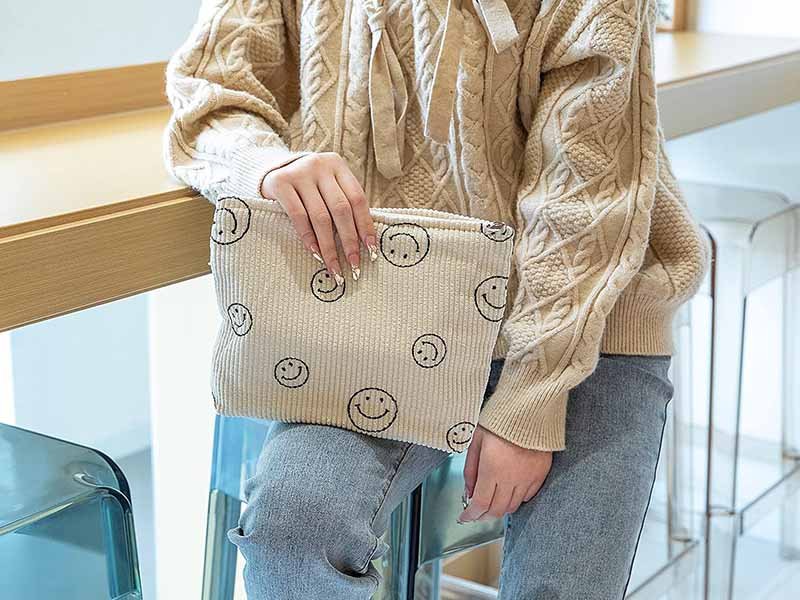
Small bags rarely get the attention they deserve. In a world dominated by backpacks, totes, and travel luggage, the pouch bag often looks like a simple accessory—until you start paying attention to how people actually organize their lives.
From tech cables and cosmetics to tools, documents, medical supplies, and travel essentials, pouch bags quietly solve one of the biggest daily frustrations: small-item chaos. They sit inside backpacks, suitcases, gym bags, and even vehicles, keeping critical items accessible, protected, and easy to find. That’s why pouch bags are no longer just add-ons—they’ve become standalone products, branded merchandise, and high-volume OEM items for global brands.
What makes pouch bags especially interesting for professional buyers is their flexibility. They can be minimalist or structured, soft or reinforced, promotional or premium. A pouch bag can be a $1 giveaway or a $40 leather accessory—depending entirely on design, material, and positioning. This wide performance and pricing range explains why pouch bags are among the most customized bag categories in modern manufacturing.
A pouch bag is a compact storage bag designed to organize, protect, and carry small items. Unlike larger bags, pouch bags prioritize accessibility and internal organization. They are commonly used for cosmetics, travel accessories, tools, electronics, and everyday essentials. Pouch bags can be made from fabric, leather, or technical materials and are widely customized for private label, OEM, and branded applications.
The reason pouch bags continue to grow in demand isn’t fashion—it’s function. And once you understand how they differ from traditional bags, their value becomes obvious.
What Is a Pouch Bag
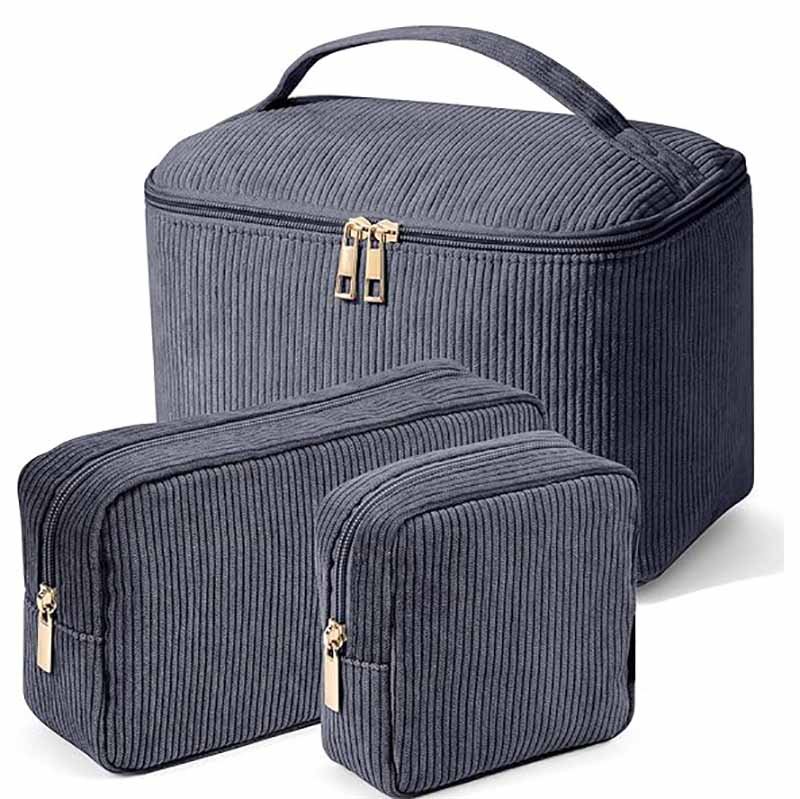
A pouch bag is a compact, soft-structured bag designed to store, organize, and protect small items. It typically features a simple shape, minimal compartments, and secure closures such as zippers or drawstrings. Unlike larger bags, a pouch bag is not intended for carrying heavy loads but for efficient internal organization, portability, and quick access. Pouch bags are widely used for cosmetics, travel accessories, tools, electronics, and everyday essentials.
What does a pouch bag mean in modern bag design?
In modern bag design, a pouch bag refers to a function-driven storage solution rather than a primary carrying bag. Its core purpose is not transportation but containment and organization.
A pouch bag is designed to group related small items into a single, manageable unit. This reduces clutter inside larger bags and improves access speed. Because of this role, pouch bags are commonly placed inside backpacks, tote bags, travel luggage, tool bags, or gym bags, although many are also used independently.
From an industry perspective, pouch bags are defined by three key design principles:
- Compact footprint – optimized for small to medium items
- Flexible structure – soft or semi-structured, adaptable to contents
- Single-function focus – designed around specific use cases
This clarity of purpose is what makes pouch bags one of the most versatile and customizable bag categories in manufacturing.
Is a pouch bag defined by size, structure, or function?
A pouch bag is defined primarily by function, not size alone.
While most pouch bags are small, size is not the determining factor. Some pouch bags are slim and flat, while others are box-shaped or gusseted. What distinguishes a pouch bag is the absence of load-bearing features such as shoulder straps, rigid frames, or weight distribution systems.
Structurally, pouch bags usually have:
- Soft fabric construction
- Limited or no external pockets
- One main compartment, sometimes with internal organizers
Functionally, pouch bags are designed to support other bags, not replace them. Their role is to make larger storage systems more efficient by preventing item mixing, damage, or loss.
What items are typically stored in a pouch bag?
Pouch bags are used to store items that are frequently accessed, easily misplaced, or require protection.
Common examples include:
- Cosmetics and personal care items
- Phone chargers, cables, power banks
- Travel documents and passports
- Small tools and hardware
- First-aid or medical supplies
- Stationery and office accessories
In professional environments, pouch bags often carry task-specific kits, such as technician tools, photographer accessories, or healthcare supplies. This targeted usage is why pouch bags are often purchased in multiples rather than as single items.
How is a pouch bag different from other small bags?
Not all small bags are pouch bags.
A pouch bag differs from wallets, clutches, or mini bags in intent and usage context. Wallets are designed for money and cards. Clutches are fashion-oriented and carried externally. Mini bags often function as scaled-down handbags.
A pouch bag, by contrast, is utilitarian first. It prioritizes protection, organization, and compatibility with other bags. This distinction is important for buyers comparing product categories or planning OEM projects.
Why has the pouch bag become a core category in bag manufacturing?
Pouch bags have become a core category because they offer:
- High usage frequency
- Broad application across industries
- Flexible material and structure options
- Lower development and tooling cost
- Faster sampling and production cycles
For manufacturers like Szoneier, pouch bags are ideal for OEM, ODM, and private label projects because they allow brands to test markets, launch accessories, and extend product lines with controlled risk and predictable production.
Which Types of Pouch Bags Exist
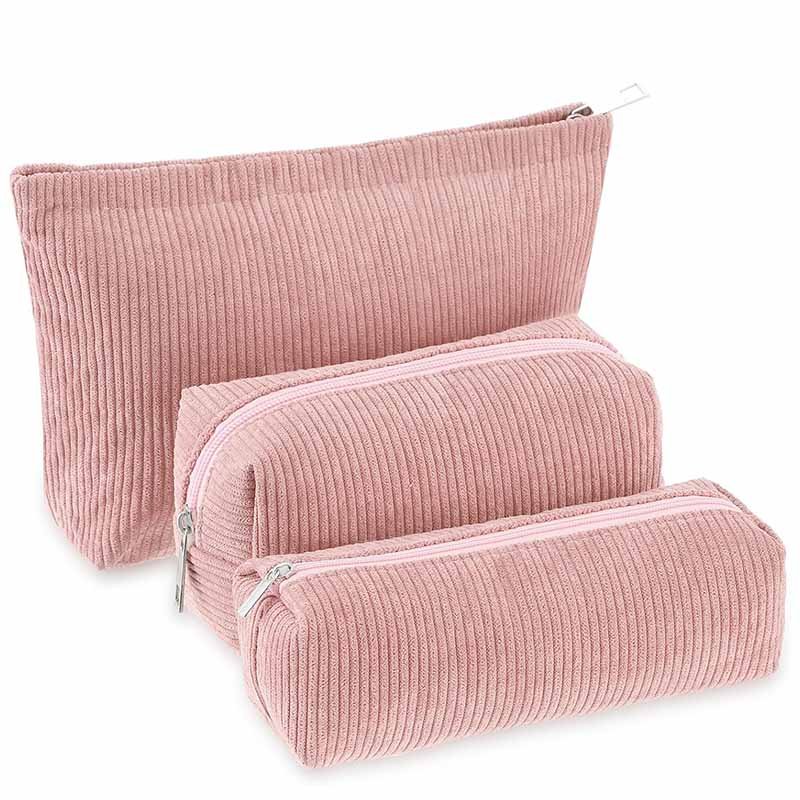
Pouch bags exist in multiple types based on closure, structure, and use. Common pouch bag types include zipper pouches, drawstring pouches, cosmetic pouches, tech pouches, tool pouches, travel organizers, waterproof pouches, and specialty-function pouches. Each type is designed to store and protect specific items efficiently, making pouch bags one of the most versatile bag categories for daily use, travel, and professional applications.
How are pouch bags commonly classified in the market?
In real manufacturing and retail environments, pouch bags are not classified by fashion style, but by functional logic. Based on industry data from OEM orders and retail assortments, pouch bags are typically grouped using three dimensions:
- Closure type – how items are secured
- Structure & shape – how volume and protection are created
- Primary use case – what items the pouch is designed to carry
What are the most common pouch bag types by closure?
Closure type is the most immediately visible and widely searched classification.
| Closure Type | Share of Global Pouch Market* | Typical Uses |
|---|---|---|
| Zipper pouch | ~65–70% | Travel, cosmetics, tech, tools |
| Drawstring pouch | ~15–20% | Promotional, gifts, lightweight storage |
| Hook & loop | ~5–8% | Medical, quick-access kits |
| Roll-top / waterproof | ~3–5% | Outdoor, dry storage |
| Button / snap | <5% | Lifestyle, leather pouches |
- Estimates based on OEM production demand and retail category distribution.
Zipper pouches dominate because they offer security, durability, and ease of use, especially for repeated daily access. Drawstring pouches remain popular where cost and simplicity matter more than protection.
Which pouch bag types are defined by structure and shape?
Structure determines how a pouch bag behaves when filled.
- Flat pouches – slim, flexible, ideal for documents, cables, stationery
- Gusseted pouches – expandable base, common for cosmetics and tools
- Box-style pouches – structured, stand-up designs for professional kits
- Padded pouches – shock protection for electronics
- Multi-compartment pouches – internal dividers for organized storage
From a buyer perspective, structure affects material consumption, stitching complexity, and unit cost, which is why structure decisions are critical in OEM projects.
What are the most popular pouch bag types by use case?
Use-case classification reflects real user intent and search behavior.
| Use Case | Pouch Type | Key Design Focus |
|---|---|---|
| Cosmetics | Makeup pouch | Lining, wipe-clean interior |
| Travel | Packing pouch | Lightweight, volume efficiency |
| Electronics | Tech pouch | Padding, cable loops |
| Tools | Tool pouch | Reinforced fabric, strong seams |
| Medical | Utility pouch | Hygiene, fast access |
| Gym | Accessory pouch | Moisture resistance |
| Outdoor | Waterproof pouch | Sealed seams, roll-top |
Are there specialty and functional pouch bag types?
Yes—and this segment is growing fastest.
Specialty pouch bags are designed around specific performance requirements, not general storage:
- Waterproof pouches (TPU-coated, welded seams)
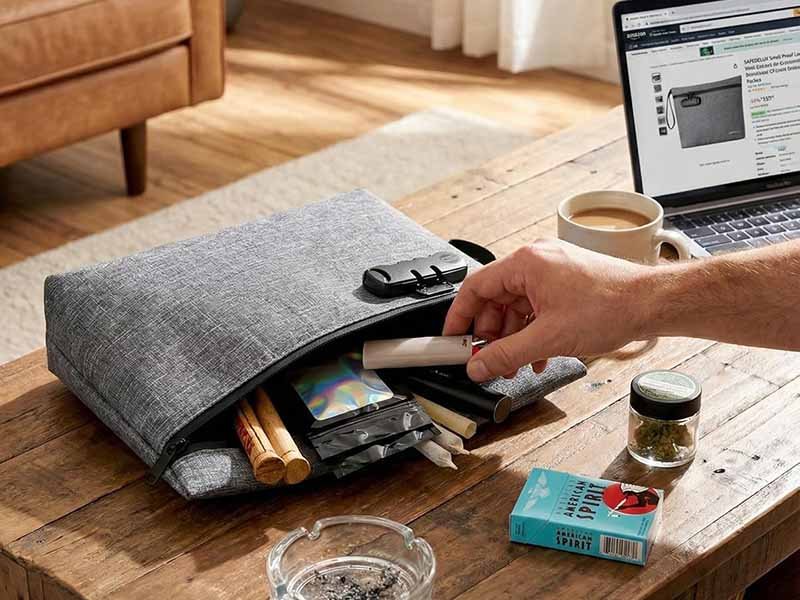
- Smell-proof pouches (activated carbon lining)
- Fire-resistant pouches (fiberglass or aramid layers)
- RFID-shielding pouches (signal-blocking fabric)
- Medical-grade pouches (antimicrobial materials)
These pouches usually represent lower volume but higher unit value projects and are commonly developed through OEM/ODM partnerships rather than off-the-shelf sourcing.
Which pouch bag types are most suitable for OEM and private label projects?
From a manufacturing standpoint, the most OEM-friendly pouch types are:
- Zipper cosmetic pouches
- Tech organizer pouches
- Travel accessory pouches
- Tool and utility pouches
These types balance design flexibility, stable demand, and manageable production risk. At Szoneier, these categories account for a significant portion of repeat OEM orders because they allow brands to customize materials, structure, and branding without complex tooling.
What Materials Are Pouch Bags Made From
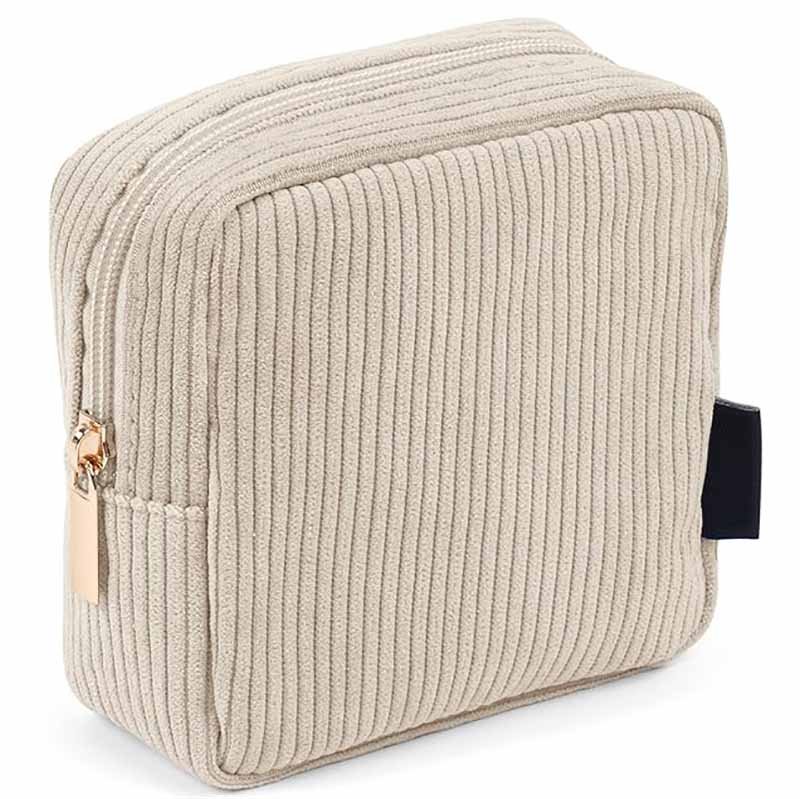
Pouch bags are made from natural fabrics, synthetic textiles, leather, and technical composite materials. Common materials include cotton, canvas, polyester, nylon, leather, TPU, PVC-free coatings, and specialty fabrics such as fire-resistant or smell-proof textiles. Material choice affects durability, weight, water resistance, protection level, cost, and branding potential, making it a critical factor in pouch bag design and customization.
How are pouch bag materials categorized in manufacturing?
In manufacturing and sourcing, pouch bag materials are grouped into four primary categories, based on performance rather than appearance:
- Natural fabrics – breathable, soft, cost-effective
- Synthetic textiles – durable, stable, versatile
- Leather materials – premium, long-lasting, high perceived value
- Technical & composite materials – performance-driven, protective
Which natural fabrics are used for pouch bags?
Natural fabrics are widely used for lifestyle and promotional pouch bags.
- Cotton: Lightweight, breathable, easy to print; commonly used for cosmetic and giveaway pouches
- Canvas: Heavier and more durable than cotton; preferred for everyday carry and brand merchandise
- Linen / Jute blends: Eco-positioned materials with textured appearance
Over 35–40% of promotional pouch bags globally are produced using cotton or canvas due to low cost, fast production, and print compatibility.
Limitations include low water resistance and moderate abrasion performance, which restrict their use in demanding environments.
What synthetic fabrics are most common for pouch bags?
Synthetic textiles dominate functional and professional-use pouch bags.
| Material | Key Properties | Typical Uses |
|---|---|---|
| Polyester | Color stability, cost efficiency | Travel, gym pouches |
| Nylon | High abrasion & tear strength | Tool, tech pouches |
| Oxford fabric | Structured, durable | Utility pouches |
| Ripstop | Tear-resistant grid | Outdoor pouches |
Approximately 50–55% of mid- to high-performance pouch bags are made from polyester or nylon due to their durability-to-cost ratio.
Synthetic fabrics also accept coatings and laminations, enabling water resistance and extended lifespan.
Are leather materials suitable for pouch bags?
Yes—when positioning supports the cost.
- PU leather: Lower cost, consistent appearance, easy to scale
- Genuine leather: Premium feel, high durability, luxury positioning
Leather pouch bags are commonly used for executive gifts, travel kits, and retail accessories. However, leather increases unit cost by 2–4× compared to fabric pouches and requires stricter quality control.
From a manufacturing perspective, leather pouch bags demand skilled stitching, edge finishing, and longer sampling cycles.
What technical and specialty materials are used in pouch bags?
Technical materials support high-risk or regulated applications:
- TPU-coated fabrics – waterproof, flexible, PVC-free
- Smell-proof fabrics – activated carbon layers
- Fire-resistant textiles – fiberglass, aramid blends
- RFID-blocking fabrics – signal-shielding layers
- Antimicrobial fabrics – medical-grade use
Specialty-material pouch bags account for only 10–15% of total volume, but over 30% of total value in OEM pouch projects due to higher margins and customization.
How does material choice affect cost, durability, and branding?
Material selection impacts every aspect of a pouch bag’s lifecycle:
| Factor | Low-End Materials | High-Performance Materials |
|---|---|---|
| Unit cost | Low | Medium–High |
| Lifespan | Short | Long |
| Protection | Minimal | Advanced |
| Branding methods | Printing only | Printing + embossing |
| Return risk | Higher | Lower |
For professional buyers, selecting the wrong material often leads to premature failure or negative reviews, while the right material improves long-term brand perception.
How Are Pouch Bags Used
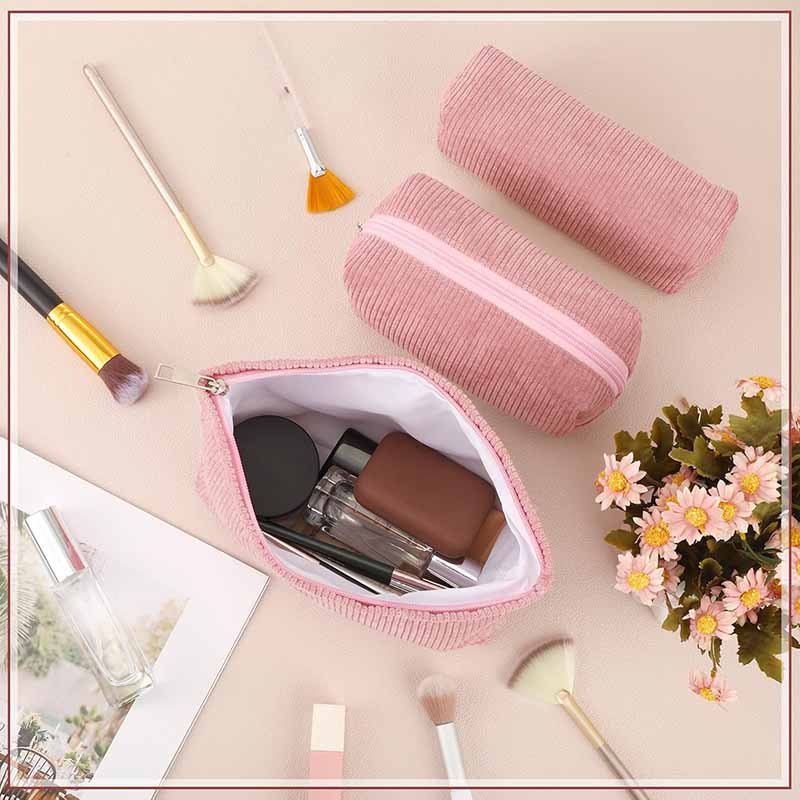
Pouch bags are used to organize, protect, and transport small items in daily life, travel, work, and professional environments. Common uses include cosmetics, electronics, tools, medical supplies, documents, and accessories. They are often used inside larger bags for sorting but can also function as standalone storage solutions. Their primary value lies in improving accessibility, reducing clutter, and protecting sensitive items.
What is the use of a pouch bag in everyday life?
In everyday life, pouch bags serve as personal organizers.
Consumers use pouch bags to group items that are frequently accessed—such as makeup, hygiene products, chargers, keys, and stationery. Without pouches, these items often scatter inside backpacks or handbags, increasing search time and wear.
Studies on everyday carry (EDC) behavior show that users value access speed and organization more than total storage volume. Pouch bags directly address this need, which explains their high repeat usage rate.
From a product perspective, everyday pouch bags prioritize comfort, lightweight materials, and smooth zippers rather than extreme durability.
What are pouches used for in travel and packing?
Travel is one of the largest use cases for pouch bags.
Travelers rely on pouch bags to separate toiletries, electronics, documents, clothing accessories, and emergency items. Instead of unpacking entire suitcases, users access only the relevant pouch.
In travel accessory markets, over 60% of consumers use more than two pouch bags per trip, often assigning each pouch a dedicated function (tech, hygiene, documents).
Travel pouch bags are typically designed with water-resistant linings, lightweight fabrics, and reinforced seams to handle frequent opening and closing.
How are pouch bags used inside backpacks, tote bags, or luggage?
Inside larger bags, pouch bags function as modular storage units.
They prevent items from mixing, reduce damage caused by friction, and allow users to transfer essentials between bags without reorganizing. This is especially important for commuters and professionals who switch bags depending on activity.
In professional fields—such as photography, healthcare, logistics, or field services—pouch bags often act as task-specific kits, enabling faster workflows and reducing errors.
For OEM buyers, internal-use pouch bags must be dimensionally compatible with common bag sizes and durable enough to withstand repeated removal.
How are pouch bags used in professional and industrial environments?
Beyond consumer use, pouch bags play a critical role in professional settings.
- Tool pouches organize hand tools and accessories
- Medical pouches store sterile or regulated supplies
- Tech pouches protect sensitive equipment
- Utility pouches support field operations
Professional-use pouch bags represent a smaller volume but significantly higher durability requirements, often lasting 2–3× longer than everyday pouches.
This usage demands reinforced stitching, high-denier fabrics, and industrial-grade zippers.
Can pouch bags be used as standalone bags?
Yes, but with clear limitations.
While pouch bags are primarily designed for internal organization, many users carry them independently for short trips—such as makeup pouches, document pouches, or minimalist tech pouches.
Standalone pouch bags typically include wrist straps or reinforced edges. However, they are not intended to replace backpacks or handbags for extended carry.
Understanding this distinction helps buyers select appropriate designs and avoid overengineering.
Do Pouch Bags Have Advantages Over Other Storage Options
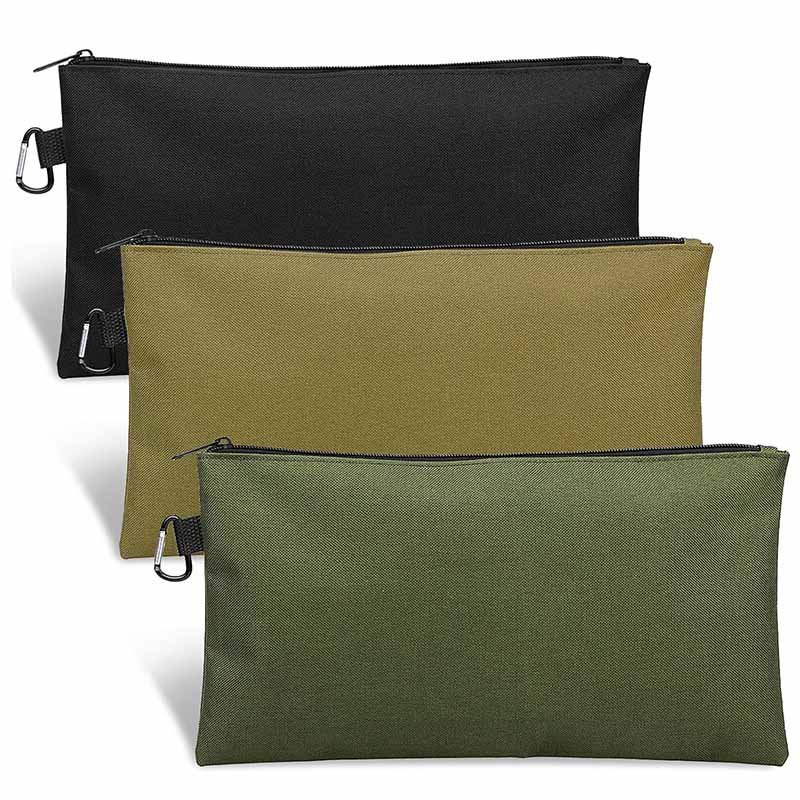
Yes. Pouch bags offer clear advantages over traditional bags, rigid cases, and generic organizers. They are lighter, more flexible, easier to integrate into larger bags, and optimized for sorting small items. Compared to other storage options, pouch bags improve accessibility, reduce wasted space, and adapt better to changing daily or professional needs.
What is the difference between a pouch bag and a regular bag?
The key difference lies in design intent.
A regular bag—such as a tote, backpack, or duffel—is built to carry volume and weight. It prioritizes capacity, load distribution, and long-term carrying comfort. A pouch bag, by contrast, is designed to organize and isolate.
Pouch bags typically lack shoulder straps or frames. Instead, they focus on compact size, quick access, and internal compatibility with larger bags. This distinction makes pouch bags more effective for managing small items that would otherwise shift, tangle, or get damaged.
User behavior studies show that over 70% of items lost inside bags are small accessories, not primary belongings. Pouch bags directly address this pain point.
Are pouch bags better than rigid organizers or hard cases?
In many scenarios, yes.
Rigid organizers and hard cases provide strong protection but sacrifice flexibility. They occupy fixed volume even when partially empty and often fail to adapt to different bag shapes.
Pouch bags, being soft or semi-structured, conform to available space. This reduces dead space and increases overall storage efficiency.
| Storage Option | Flexibility | Space Efficiency | Protection | Portability |
|---|---|---|---|---|
| Pouch bag | High | High | Medium–High | High |
| Hard case | Low | Low | Very High | Medium |
| Rigid organizer | Low | Medium | Medium | Low |
For everyday and travel use, flexibility often outweighs maximum protection.
How do pouch bags improve organization and access speed?
Pouch bags reduce cognitive and physical friction.
Instead of searching through a single large compartment, users retrieve a dedicated pouch assigned to a specific function. This reduces access time and stress.
Time-motion studies in travel and work environments indicate that organized storage systems reduce item retrieval time by 30–50%. Pouch-based systems account for the majority of this improvement.
Because pouch bags are portable units, users can reorganize systems without repacking—simply by moving pouches between bags.
Do pouch bags reduce wear, damage, and loss?
Yes, significantly.
Small items often suffer the most wear when stored loosely—cables bend, tools scratch, liquids leak. Pouch bags create separation and protection.
Products stored in dedicated pouches show lower damage and replacement rates, especially for electronics and tools. This is why professional kits almost always include multiple pouches.
For brands, this translates into fewer complaints and lower return rates.
Are pouch bags more cost-effective than other storage options?
From both user and brand perspectives, yes.
Pouch bags require less material, simpler construction, and lower tooling costs compared to large bags or molded cases. This results in lower unit cost and faster production cycles.
For OEM and private label buyers, pouch bags offer a high return on investment. They deliver high perceived value while keeping development and inventory risk manageable.
How to Choose the Right Pouch Bag

To choose the right pouch bag, start with the items you need to carry, then match size, structure, closure type, and material to the real use scenario. Daily pouches prioritize comfort and easy access, while travel, tech, and tool pouches require stronger fabrics, better zippers, and protective linings. For bulk or private label orders, confirm specs (dimensions, GSM/denier, zipper grade) to reduce failure and returns.
Which size and shape work best for different pouch uses?
Size should be chosen by content volume + access style, not by “looks.” A pouch that’s too small causes zipper strain and seam stress; too large wastes space and lets items tumble.
A simple decision rule used in product development:
- If items are mostly flat (documents, cables, receipts) → flat or slim pouch
- If items are bulky (cosmetics, chargers, small tools) → gusseted or box pouch
- If items must stay upright (toiletries, brush sets) → stand-up / structured base
In many travel/cosmetic categories, “too small” and “can’t fit items” are among the most common negative review themes—so matching size to the top 5 carried items is a high-impact step.
sizing checklist :
- What are the top 5 items stored?
- Do any items have rigid edges (power bank, tools)?
- Does the pouch need to stand upright?
- Will it be placed inside a backpack or used standalone?
How do closure types affect pouch bag usability and lifespan?
Closures determine security, user speed, and long-term durability.
- Zipper: Best overall for security; ideal for daily use and travel.
- Drawstring: Lightweight and lower cost; better for gifting or basic storage.
- Hook & loop: Fast access but wears over time; dust and fibers reduce performance.
- Roll-top / waterproof: Best for outdoor and water exposure; not ideal for quick daily access.
For frequently used pouches, zipper performance is a top failure point. In manufacturing QC, brands often track zipper cycle performance (how many open/close cycles before issues). Choosing a higher-grade zipper and proper stitching near zipper ends noticeably reduces failure complaints.
If the pouch will be opened many times a day (tech/tools), avoid ultra-thin zipper tape and weak slider design—these are common cost-cutting points that backfire.
Which materials should you pick for daily, travel, tech, or tool pouches?
Material should match friction level + moisture risk + protection need.
- Daily carry (light friction): cotton/canvas, basic polyester
- Travel (moderate friction + spills): polyester/nylon + wipeable lining
- Tech (impact + scratch risk): nylon/poly + foam padding + soft lining
- Tools (high abrasion): high-denier nylon/Oxford + reinforced seams
- Outdoor (water exposure): TPU-coated fabrics + sealed construction
Synthetic fabrics (poly/nylon) dominate functional pouch orders because they provide a strong durability-to-cost ratio, especially when reinforced with lining and proper stitching.
What features matter most for professional buyers and private label orders?
If you’re sourcing for retail or branded programs, the goal isn’t “a pouch.” The goal is a pouch that keeps performance stable at scale.
Key spec items to lock in before quoting:
- Dimensions (tolerance matters for mass production)
- Fabric spec (GSM / denier; coating type if any)
- Lining type (wipeable? soft? waterproof?)
- Zipper grade + slider type
- Stitch density and reinforcement areas
- Logo method (screen print, embroidery, woven label, deboss)
In many accessories categories, returns often come from a short list of failures—zipper, seam split, coating peel, lining tear. Tightening specs on these points reduces risk more than adding “fancy” design elements.
How do you avoid common pouch bag mistakes that increase complaints?
Most pouch bag failures are predictable.
Common mistakes and fixes:
| Common Problem | Likely Cause | Better Choice |
|---|---|---|
| Zipper breaks early | low-grade zipper, weak zipper-end stitches | upgrade zipper + reinforce ends |
| Seams split | thin fabric + heavy contents | higher denier/GSM + bartack |
| Bad shape collapse | no structure for bulky items | gusset + piping or foam |
| Stains/leaks | no lining or poor coating | wipeable lining / TPU coating |
| Scratches on devices | rough interior | soft lining / padded walls |
A pouch bag should be designed around the worst-case load, not the average load. People always overstuff.
Are Pouch Bags Customizable for Brands or Businesses
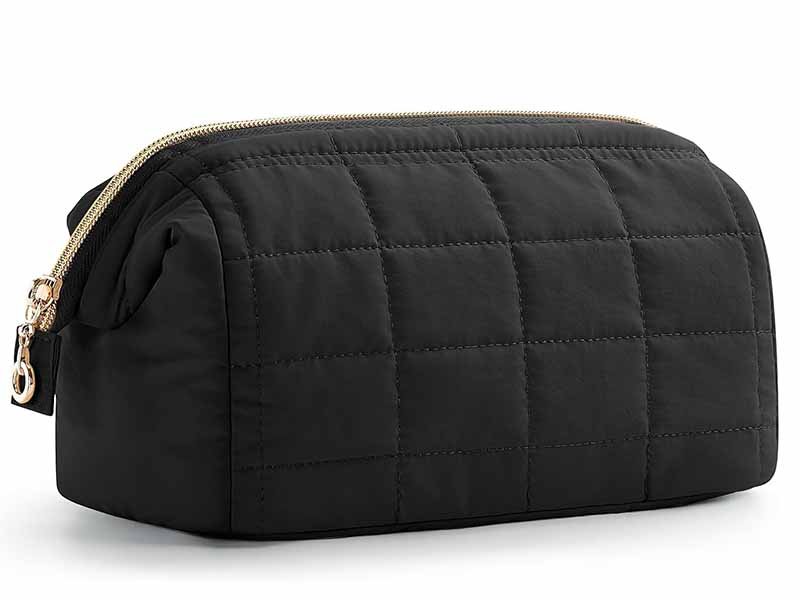
Yes. Pouch bags are highly customizable and widely used by brands and businesses for OEM, ODM, and private label projects. Size, shape, material, structure, closure, color, lining, and logo placement can all be customized. Because pouch bags have simpler construction and lower development risk than larger bags, they are one of the most cost-effective categories for branded merchandise and retail accessories.
What parts of a pouch bag can be customized?
Almost every element of a pouch bag can be customized, which is why it’s a preferred category for brand expansion.
Common customization options include:
- Size & dimensions – flat, gusseted, box-style
- Material selection – cotton, canvas, polyester, nylon, leather, TPU, specialty fabrics
- Structure – padding, internal dividers, stand-up base
- Closure type – zipper (standard / waterproof), drawstring, roll-top
- Color & finish – solid dye, custom Pantone colors
- Lining – wipe-clean, padded, waterproof, soft-touch
- Branding – printing, embroidery, woven label, leather patch, metal logo
Which branding methods work best for pouch bags?
Pouch bags are especially brand-friendly because they usually offer flat, visible logo zones.
| Branding Method | Best For | Durability | Cost Level |
|---|---|---|---|
| Screen printing | Promotional, large volume | Medium | Low |
| Heat transfer | Detailed logos | Medium | Low–Medium |
| Embroidery | Premium textile pouches | High | Medium |
| Woven label | Clean brand identity | High | Low |
| Deboss / emboss | Leather & PU pouches | Very High | Medium–High |
| Metal logo | Luxury positioning | Very High | High |
In private label pouch projects, screen printing + woven label is the most common combination for cost-effective branding, while embossed leather logos dominate premium gift and retail lines.
Why are pouch bags ideal for OEM and private label programs?
From a sourcing perspective, pouch bags offer lower risk and faster execution than most bag categories.
Key reasons brands start with pouch bags:
- Simpler structure = fewer production variables
- Lower MOQ compared to backpacks or travel bags
- Faster sampling cycles
- Easier logistics and storage
- Broad consumer acceptance across industries
In many bag factories, pouch bags account for a high percentage of repeat OEM orders, because brands can quickly test new materials, designs, or markets without committing to large tooling or inventory risk.
How does customization impact cost, MOQ, and lead time?
Customization level directly affects project economics.
| Custom Level | MOQ Impact | Lead Time | Cost Effect |
|---|---|---|---|
| Stock size + custom logo | Very low | Fast | Low |
| Custom size + material | Medium | Moderate | Medium |
| Custom structure + lining | Higher | Longer | Medium–High |
| Specialty materials | Higher | Longer | High |
Most successful private label pouch projects start with custom branding + limited structural changes, then expand once market demand is validated.
How do manufacturers like Szoneier support pouch bag customization?
At Szoneier, pouch bag customization follows a development-first approach, not just quoting.
Typical workflow includes:
- Clarifying use case and target market
- Recommending suitable materials and structure
- Creating rapid samples for validation
- Adjusting specs based on real feedback
- Scaling to stable mass production
With over 18 years of bag manufacturing experience, Szoneier supports pouch bag OEM/ODM projects across lifestyle, travel, tools, outdoor, and professional applications—helping brands move from idea to shipment efficiently.
What information should brands prepare before requesting a custom pouch bag quote?
Providing clear information speeds up sampling and reduces revisions.
Recommended details:
- Intended use (daily, travel, tech, tools, etc.)
- Approximate size or items to be stored
- Preferred material or performance requirements
- Branding method and logo file
- Target order quantity
- Target delivery timeline
Conclusion
If you’re planning to develop custom pouch bags—whether for retail, brand merchandising, travel kits, tools, or professional applications—working with the right manufacturing partner matters.
Szoneier is a China-based bag manufacturer with over 18 years of experience in bag R&D, sampling, and mass production. We support OEM, ODM, and private label pouch bag projects across a wide range of materials and applications.
Share your pouch bag concept, usage scenario, target market, and quantity. Our team will help you translate ideas into production-ready products—efficiently and professionally.
Contact Szoneier today to request a quote or sample and start your custom pouch bag project.