Skip to content
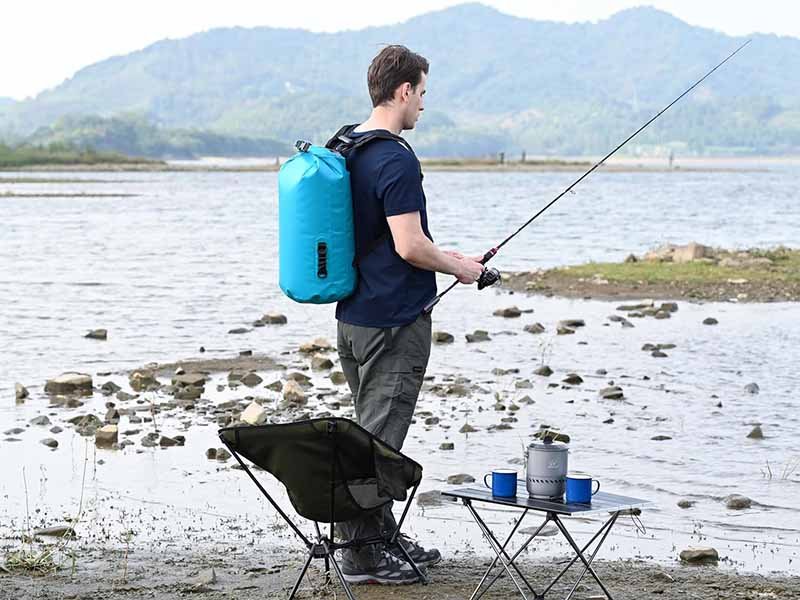
A lot of people think all waterproof dry bags are basically the same: a waterproof body, a roll-top opening, and maybe a shoulder strap. But once you really start using them, or once you start developing them for your own brand, the differences become very clear. A 5L sack dry bag for kayaking essentials is not built the same way as a 30L backpack dry bag for paddleboarding. A large duffel dry bag for overlanding or marine trips has very different load-bearing needs from a waterproof phone pouch sold at tourist shops or beach resorts.
Waterproof dry bags come in several main types, including sack dry bags, backpack dry bags, duffel dry bags, and waterproof phone pouches. Each type is designed for a different carry method, storage volume, and use environment. Sack bags are simple and lightweight, backpack dry bags are easier to carry for longer distances, duffel dry bags are better for large gear loads, and phone pouches are built for small electronics and personal valuables.
For customers, this matters because the wrong shape, wrong material, or wrong closure system can quickly turn a useful product into a disappointing one. For brands, it matters even more. The style you choose affects selling price, target market, logo area, material cost, shipping volume, and return rate. In other words, “dry bag” is not one product. It is a category with very different commercial uses. That is exactly why many outdoor brands, gift brands, water sports brands, and Amazon sellers now spend more time choosing the right dry bag structure before moving into sampling and production. A bag may look simple online, but behind it are many small engineering decisions that directly affect customer satisfaction.
What Are Waterproof Dry Bags?
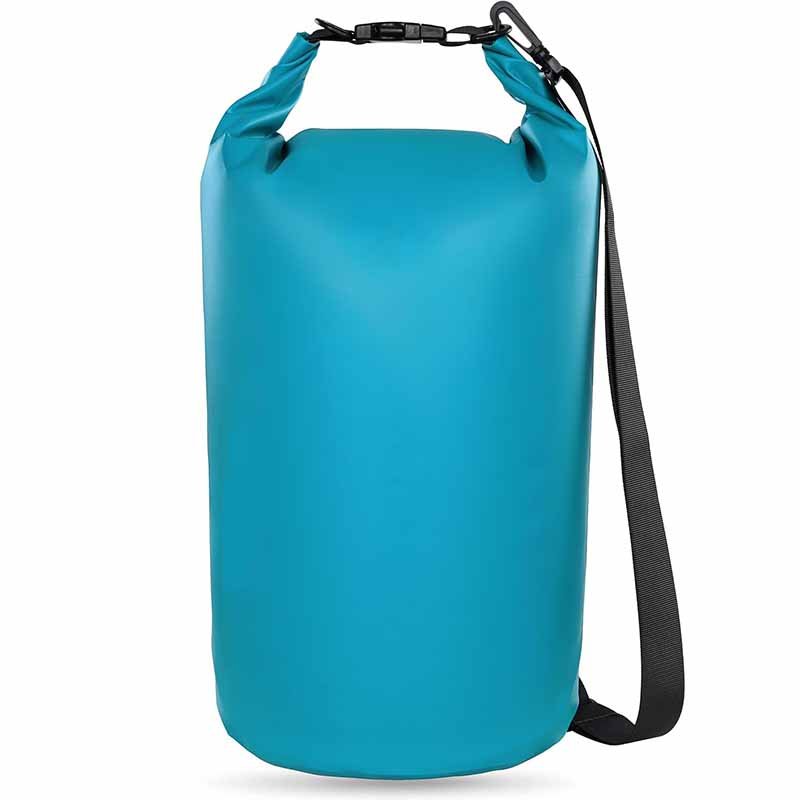
Waterproof dry bags are storage bags made with water-resistant or waterproof materials and sealed structures that help protect gear from rain, splashes, wet surfaces, and in many cases temporary water exposure. Their main job is simple: keep the contents dry. But a good waterproof dry bag does more than that. It should also be easy to carry, easy to seal, resistant to wear, and suitable for the way the user actually travels, hikes, paddles, camps, or commutes.
What Is a Waterproof Dry Bag?
A waterproof dry bag is a bag designed to block water from reaching the contents inside. Most are made from coated fabric or laminated material, then closed with a roll-top system or waterproof zipper. Compared with ordinary backpacks or tote bags, a dry bag uses fewer stitched leak points and relies more on welded seams, sealed edges, and water-blocking construction.
From a product development point of view, there are two very different levels in the market. The first is the low-cost promotional level. These bags may look waterproof from the outside, but often use thin material, weak buckles, and unstable seam welding. They may survive light splashes, but they often fail under pressure, folding stress, or long-term use. The second is the performance level. These products are developed for outdoor use, marine use, paddle sports, fishing, diving support gear, or premium travel use. They require more stable materials, stronger weld quality, better closure consistency, and more reliable accessories.
For customers, the most important point is this: waterproof does not only depend on the fabric. It depends on the full system. A bag with strong TPU fabric but poor welding can still leak. A bag with a good roll-top but a badly shaped opening can still be difficult to seal correctly. A product becomes dependable only when material, structure, and production control work together.
How Do Waterproof Dry Bags Work?
The working principle of a waterproof dry bag is straightforward, but the performance depends on execution. In most cases, dry bags keep water out through three key parts: the material body, the seam sealing method, and the closure system.
The material body acts as the first barrier. PVC, TPU, coated nylon, and tarpaulin materials are commonly used because they resist water penetration. Then come the seams. Traditional sewing creates needle holes, which naturally become weak points for water entry. That is why many better dry bags use heat welding or high-frequency welding instead of relying only on stitching. Finally, the closure system completes the protection. A roll-top opening works by folding the material down multiple times to create compression and block water ingress. The buckle then locks the folded top in place.
The real-world performance of a dry bag often depends on how well these three parts match each other. For example, if the material is too stiff, the roll-top may not fold smoothly, especially in cold weather. If the seam area is too thick, weld consistency may drop. If the opening width is too narrow, the user experience suffers, even if the bag is technically waterproof.
This is why experienced factories do not simply choose a fabric and start production. They balance fabric thickness, hand feel, welding temperature, accessory strength, and carrying method. At Szoneier, this kind of balance is especially important because customers may want very different products under the same “waterproof dry bag” category, from lightweight promotional dry sacks to premium TPU backpack dry bags for outdoor brands.
Which Materials Are Used in Waterproof Dry Bags?
Material selection is one of the biggest decisions in dry bag development because it affects not only waterproof performance, but also price, softness, weight, appearance, logo method, and long-term durability.
The most common materials are PVC, TPU, and coated nylon. PVC is still widely used because it is cost-effective, easy to process, and provides strong waterproof performance for many mainstream dry bag products. TPU is more premium. It is softer, cleaner in appearance, often feels better in hand, and usually performs better in colder environments where flexibility matters. Coated nylon is lighter and often used when brands want a more outdoor-technical feel, but it requires more careful construction control if the goal is strong waterproof protection.
Here is a useful comparison table for customers developing dry bag products:
| Material | Feel | Waterproof Performance | Durability | Cost Level | Best For |
|---|---|---|---|---|---|
| PVC Tarpaulin | Firm | High | High | Low to mid | Entry to mid-level dry bags |
| TPU Lamination | Soft and premium | High | High | Mid to high | Premium outdoor and sports bags |
| Coated Nylon | Light and flexible | Medium to high | Medium | Mid | Lightweight hiking products |
| PVC + Polyester Base | Structured | High | High | Mid | Duffel dry bags and travel bags |
In factory practice, material thickness also changes the final result a lot. A thin 0.30 mm material may be enough for a small phone pouch, but a 40L duffel dry bag usually needs a much stronger body to handle pulling force, abrasion, and repeated folding. If a customer wants a low return rate and stable end-user reviews, choosing the right material grade is often more important than saving a few cents on raw material.
What Performance Details Matter Most?
Many customers first focus on style and price, which is understandable. But once sampling starts, the questions usually become more practical. Will the bag crack after repeated folding? Will the buckle break in cold weather? Will the seams open when the bag is filled too full? Will the shoulder strap anchor points hold under real use?
These are the details that decide whether a dry bag becomes a one-time order or a repeat product line.
Below is a practical checklist many brands use when evaluating dry bag performance:
| Item | What to Check | Why It Matters |
|---|---|---|
| Seam strength | Weld consistency and peel resistance | Weak seams are a major leak risk |
| Roll-top width | Smooth folding and alignment | Poor alignment causes sealing failure |
| Buckle quality | Snap strength and durability | Low-grade buckles fail quickly |
| Material thickness | Fit for bag size and load | Thin fabric on big bags causes deformation |
| Strap anchors | Reinforcement and pull strength | Important for backpack and duffel styles |
| Surface finish | Scratch resistance and logo result | Affects retail appearance and complaints |
For a simple sack dry bag, the risk points are usually around the top closure and bottom weld. For backpack dry bags, the load-bearing points become more critical. For duffel dry bags, the handles, end panels, and zipper structure become major engineering areas. For phone pouches, the weak points are often window clarity, touch sensitivity, and seal consistency.
That is why professional product development should never treat all waterproof dry bags as the same item with only different shapes. Each style has its own failure points, and each one needs a different production focus.
What Types of Waterproof Dry Bags Exist?

The main types of waterproof dry bags include sack dry bags, backpack dry bags, duffel dry bags, and waterproof phone pouches. These products all belong to the same broad category, but they solve different carrying and storage problems. A sack dry bag is light and simple. A backpack dry bag is built for mobility. A duffel dry bag is designed for larger gear loads. A phone pouch focuses on small-item protection and convenience.
What Is a Sack Dry Bag?
A sack dry bag is the most basic and most widely used dry bag style. It usually has a cylindrical or oval body, a flat or round bottom, and a roll-top closure with side-release buckle. Because the structure is simple, this style is light, easy to pack, and relatively efficient to produce.
For customers, the biggest strength of the sack dry bag is versatility. It fits many outdoor situations without requiring complex structure. People use it for kayaking clothes, food storage, electronics, first-aid kits, towels, and spare gear. It can also be sold in sets, such as 5L, 10L, and 20L combinations, which is popular in retail and e-commerce.
From a manufacturing point of view, sack dry bags are often the best entry product for brands starting in the waterproof category. The tooling is simpler, material waste can be controlled more easily, and logo placement is straightforward. This makes it easier to hit a competitive price point.
The table below shows common size ranges and likely use cases:
| Size | Common Use | Suitable User |
|---|---|---|
| 2L–5L | Phone, wallet, keys, passport | Beach, short trips, paddle use |
| 10L | Towel, light clothing, snacks | Day trips, kayaking, rafting |
| 20L | Clothing set, shoes, gear | Hiking, camping, boating |
| 30L–40L | Multi-day essentials | Expedition support, travel |
However, sack dry bags also have limits. They are not ideal for heavy loads over longer carry distances, especially if they only have a single shoulder strap. So while they are excellent for storage and basic transport, they are not always the best solution for users who need both waterproofing and carrying comfort.
What Is a Backpack Dry Bag?
A backpack dry bag is designed for users who need waterproof protection and hands-free carrying at the same time. It keeps the dry bag concept but adds backpack-style functionality, usually including padded shoulder straps, adjustable webbing, back support, and in some cases chest straps or waist straps.
This style is especially useful when the user needs to walk some distance before reaching the water, move between locations, or carry gear for longer periods. That is why backpack dry bags are common in paddle sports, fishing, motorcycle touring, hiking near wet terrain, and outdoor travel.
Compared with sack dry bags, backpack dry bags are more demanding to develop well. Once straps are added, the product is no longer just a sealed container. It becomes a load-bearing bag. The strap attachment areas must handle pulling force. The back panel design affects comfort. The bag shape affects center of gravity. Even the opening design affects whether the bag is easy to pack when standing upright.
This style usually sells at a higher price because it includes more parts, more labor, and more engineering. But it also gives brands more room for added value. Customers often pay more for comfort, better organization, and premium appearance.
Here is a practical comparison:
| Item | Sack Dry Bag | Backpack Dry Bag |
|---|---|---|
| Carry comfort | Low to medium | High |
| Structure complexity | Low | Medium to high |
| Production cost | Lower | Higher |
| Retail price potential | Medium | Medium to high |
| Best for | Storage and short carry | Active outdoor movement |
For brands targeting serious outdoor customers instead of casual beach users, backpack dry bags often offer stronger product positioning and better margin space.
What Is a Duffel Dry Bag?
A duffel dry bag is built for larger capacity and bulkier gear. It usually has a horizontal shape, wider opening, reinforced side panels, and multiple carrying options such as hand carry, shoulder carry, or backpack carry. This style is common in boating, marine work, long travel, diving support, overlanding, and team sports.
In commercial terms, duffel dry bags are often more premium products because they combine waterproof protection with travel utility. They are not just for keeping a spare T-shirt dry. They are designed to hold large clothing sets, footwear, ropes, tools, camping equipment, or professional gear.
This style also has more structural demands. When a bag reaches 40L, 60L, or even 90L, the stress on the handles, side seams, zipper areas, and base becomes much higher. The material has to be strong enough, but not so stiff that the bag becomes difficult to pack or ship. The opening must be practical. If it uses a waterproof zipper, zipper cost and zipper sealing performance become important considerations. If it uses a roll-top design, the body proportions have to be well balanced so the bag still packs neatly.
Below is a simple product development view:
| Capacity | Recommended Material Direction | Key Design Focus |
|---|---|---|
| 30L–40L | Mid-weight PVC or TPU | Weight balance, opening size |
| 50L–70L | Reinforced PVC/TPU | Handle strength, seam stability |
| 80L+ | Heavy-duty laminated fabric | Base reinforcement, carrying system |
For Szoneier, duffel dry bags are a good fit for customers who want stronger product value, more visible branding space, and more serious outdoor positioning. They also work well for custom OEM and private label programs because there is more room for feature differentiation.
What Is a Waterproof Phone Pouch?
A waterproof phone pouch is the smallest product in this category, but not the simplest. It is designed to protect phones, ID cards, cash, keys, and other small valuables from water, sand, dust, and moisture. It usually includes a transparent front and back, a locking seal, and a neck strap or carry cord.
Many people treat phone pouches as cheap impulse products, but the product quality gap is actually very large. A poor phone pouch may have cloudy film, bad touch response, weak locking clips, or fast yellowing. A better one offers clear visibility, stable touch use, cleaner weld lines, and dependable sealing.
For brands, phone pouches can be attractive because they are compact, lightweight, easy to ship, and suitable for tourism, gifts, water sports, and seasonal promotions. But this product also comes with risk. Because the pouch protects high-value electronics, customer expectations are high. Even a small defect can lead to complaints.
The most important quality points usually include:
| Quality Point | Why It Matters |
|---|---|
| Seal reliability | Prevents water leakage into the pouch |
| Film clarity | Affects screen visibility and photo use |
| Touch sensitivity | Improves real user experience |
| Anti-yellowing performance | Helps keep product looking clean |
| Lanyard attachment strength | Prevents accidental drops |
If a brand wants to sell waterproof phone pouches seriously, it should not treat them as just cheap accessories. Better material choice and seal design often make a major difference in reviews, repeat orders, and brand trust.
How Do These Dry Bag Types Differ?
The biggest difference between these waterproof dry bag types is not just size. It is intended use. A sack dry bag is mainly about simple waterproof storage. A backpack dry bag adds comfort and movement. A duffel dry bag supports larger volume and heavier packing. A phone pouch focuses on convenient protection for small valuables.
That means each type serves a different customer and sits at a different point in the price-performance range. A beach gift shop may do very well with small phone pouches and 5L dry sacks. A paddle gear brand may focus on 20L backpack dry bags. A premium overland or marine brand may prefer 60L duffel dry bags with heavy-duty construction and custom branding.
This is also where product planning becomes important. Not every brand should launch all dry bag types at once. In many cases, it is smarter to begin with the one style that best matches the target customer and sales channel, then expand the line after testing demand.
Here is a practical line-planning view:
| Product Type | Best For | Price Range Direction | Development Difficulty |
|---|---|---|---|
| Sack Dry Bag | Entry outdoor, gift, travel | Low to medium | Low |
| Backpack Dry Bag | Outdoor, paddle, hiking | Medium to high | Medium |
| Duffel Dry Bag | Marine, travel, expedition | Medium to high | High |
| Phone Pouch | Tourism, accessories, beach retail | Low to medium | Medium |
For many Szoneier customers, this planning step is where the real business value begins. Instead of choosing a dry bag only by appearance, they choose by margin, customer use case, production complexity, and long-term product line potential.
Which Waterproof Dry Bags Are Best for Outdoor Use?
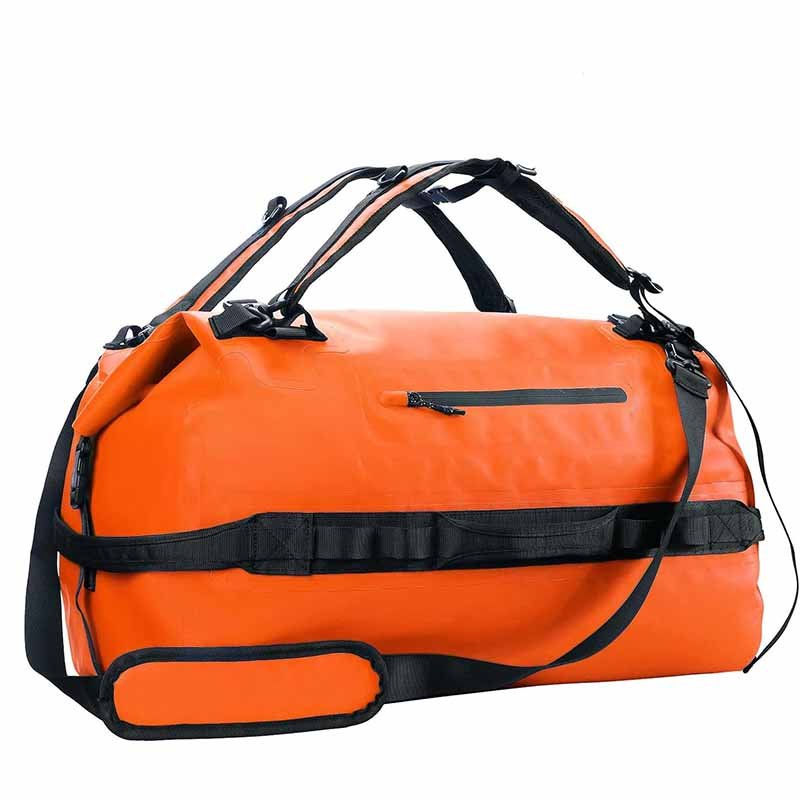
Different outdoor activities expose gear to very different environments. Some involve constant splashing, others involve rain, sand, mud, or simply the risk of dropping equipment into shallow water. Because of this, the best waterproof dry bag for one activity may be completely wrong for another.
Choosing the right type is not only about waterproof performance. It also depends on how far the user must carry the bag, how quickly gear needs to be accessed, and how much equipment must fit inside. A kayaker might prioritize compact waterproof storage, while a hiker may care more about comfort and load distribution.
Understanding how different dry bags perform in real outdoor situations helps both customers and brands select the right structure before production.
Which Waterproof Dry Bags Work Best for Water Sports?
Water sports such as kayaking, rafting, paddleboarding, and boating expose equipment to constant splashes and occasional full water contact. In these environments, waterproof protection must be dependable and easy to use.
For most water sports users, sack dry bags and backpack dry bags are the most practical choices.
Sack dry bags work well because they are lightweight and easy to secure inside kayaks or boats. They can be compressed into small spaces and do not add unnecessary weight. Many paddlers also carry multiple small sack bags instead of one large bag, which helps organize gear and prevent total loss if one bag fails.
Backpack dry bags are often used when users must walk from parking areas to launch points. Paddleboarders and kayak tour operators especially prefer backpack versions because they can carry equipment hands-free.
The following comparison shows typical dry bag choices for water sports.
| Activity | Recommended Dry Bag Type | Reason |
|---|---|---|
| Kayaking | Sack Dry Bag (10L–20L) | Compact and easy to store in kayak compartments |
| Paddleboarding | Backpack Dry Bag (20L–30L) | Easier to carry gear to launch sites |
| Rafting | Sack Dry Bag (20L–30L) | Durable and easy to stack |
| Sailing | Duffel Dry Bag (40L+) | Holds larger gear loads |
| Canoeing | Sack or Backpack Dry Bag | Depends on distance and gear amount |
Another factor that many outdoor brands consider is visibility. Bright colors such as orange, yellow, and lime green are often used because they are easier to spot if a bag falls into water.
Which Waterproof Dry Bags Work Best for Hiking and Camping?
Hiking and camping involve a different set of challenges compared with water sports. Rain, mud, humidity, and river crossings are more common concerns than full water immersion.
In these situations, backpack dry bags and medium-capacity sack dry bags usually perform best.
Backpack dry bags provide comfort during long walks, which becomes important when carrying food, spare clothing, sleeping gear, or cameras. Good models include padded straps and ventilation support on the back panel.
Sack dry bags are still very useful during hiking trips because they help organize gear inside a larger backpack. Many hikers place their clothes, sleeping bags, and electronics inside smaller dry bags to protect them from rain even if the main backpack becomes wet.
Below is a simple gear protection strategy commonly used by experienced hikers.
| Gear Item | Recommended Dry Bag Size |
|---|---|
| Phone and wallet | 2L–5L |
| Extra clothing | 10L |
| Sleeping gear | 15L–20L |
| Cooking equipment | 20L–30L |
Using multiple smaller dry bags instead of one large bag helps keep equipment organized and reduces packing time.
For camping brands developing dry bag products, a common approach is offering three-size sets such as 5L + 10L + 20L. These sets sell well because they allow users to organize gear efficiently.
Which Waterproof Dry Bags Are Best for Travel?
Travelers often need waterproof bags for reasons that go beyond water exposure. Wet swimsuits, muddy shoes, beach towels, and gym clothing can create problems when packed together with clean items.
In travel scenarios, duffel dry bags and mid-size sack dry bags are often the most useful.
Duffel dry bags work well for larger travel needs because they combine waterproof protection with the carrying convenience of a travel bag. Their wider openings also make packing easier compared with narrow cylindrical bags.
Many travel brands prefer duffel dry bags because they can be used for multiple situations:
- beach vacations
- boat tours
- adventure travel
- camping trips
- motorcycle travel
For travelers who prefer lighter gear, sack dry bags can also work well for separating wet clothing or storing items during boat excursions.
The following table shows typical dry bag uses during travel.
| Travel Situation | Suggested Dry Bag |
|---|---|
| Beach trips | 10L–20L sack dry bag |
| Boat tours | 10L waterproof sack |
| Adventure travel | 30L backpack dry bag |
| Multi-day trips | 40L–60L duffel dry bag |
Many brands also design travel-focused dry bags with additional features such as external pockets, detachable straps, or compression straps.
Which Waterproof Dry Bags Protect Phones and Electronics?
Smartphones, cameras, and small electronics are among the most valuable items people carry during outdoor activities. Even a small amount of water exposure can damage them.
For this reason, waterproof phone pouches and small dry bags are extremely popular.
Phone pouches are designed with transparent windows so users can operate their devices without removing them. Higher-quality models allow full touchscreen interaction and clear photography through the film window.
Small dry bags also work well for protecting cameras, GPS devices, power banks, and other electronics.
A simple protection system used by many travelers looks like this:
| Device | Protection Method |
|---|---|
| Smartphone | Waterproof phone pouch |
| Camera | Small dry bag (3L–5L) |
| Power bank | Small dry bag |
| Passport and documents | Waterproof pouch |
The key detail here is double protection. Many experienced outdoor travelers place electronics inside a pouch and then inside a larger dry bag. This approach reduces risk significantly.
How Do You Choose Waterproof Dry Bags?
Selecting the right waterproof dry bag is not only about style or appearance. It involves several practical considerations such as size, material, closure type, durability, and carrying comfort.
Customers who spend time evaluating these factors before ordering usually achieve better product satisfaction and fewer returns.
What Size Waterproof Dry Bags Should You Choose?
Capacity is one of the most important decisions when choosing a dry bag. If the bag is too small, it becomes inconvenient. If it is too large, the bag becomes bulky and difficult to carry.
Most dry bags are measured in liters (L), which represent internal volume.
Here is a general guide used across the outdoor industry.
| Capacity | Common Use |
|---|---|
| 2L–5L | Phone, wallet, keys |
| 10L | Small personal gear |
| 15L–20L | Day trip equipment |
| 30L | Hiking or paddle gear |
| 40L–60L | Travel or expedition |
| 80L+ | Professional outdoor use |
Many outdoor brands prefer to offer three or four size options because it gives customers flexibility without making the product line too complicated.
Which Materials Make Better Waterproof Dry Bags?
Material choice directly affects durability, waterproof reliability, weight, and product cost.
The most common dry bag materials include PVC tarpaulin, TPU laminated fabric, and coated nylon.
Each material has advantages depending on the target product.
| Material | Advantages | Limitations |
|---|---|---|
| PVC | Affordable and durable | Slightly heavier |
| TPU | Flexible and premium feel | Higher cost |
| Nylon + coating | Lightweight | Lower abrasion resistance |
Premium outdoor brands often choose TPU because it feels softer and more modern, while entry-level products often use PVC because it offers strong waterproof performance at a lower price.
How Important Are Sealing Systems in Waterproof Dry Bags?
The sealing system is what actually prevents water from entering the bag. Even the best material cannot compensate for a poor sealing design.
The most common sealing methods include:
| Closure Type | Waterproof Level | Common Use |
|---|---|---|
| Roll-top closure | Very reliable | Most dry bags |
| Waterproof zipper | High | Duffel dry bags |
| Clip seal | Medium | Phone pouches |
Roll-top closures remain the most popular system because they are simple, reliable, and cost-effective.
However, they require correct use. Most manufacturers recommend rolling the top three to four times before fastening the buckle to ensure proper sealing.
What Durability Factors Should Customers Consider?
Many dry bag failures happen not because of waterproof material problems but because of structural weaknesses.
Areas that deserve special attention include:
- shoulder strap attachment points
- bottom seam welding
- buckle quality
- material thickness
High-quality factories perform pull strength testing and seam inspection to ensure these areas remain reliable during long-term use.
Below is a typical durability checklist used in production quality control.
| Component | Test Focus |
|---|---|
| Weld seams | Peel strength |
| Buckles | Impact resistance |
| Straps | Pull strength |
| Material | Abrasion resistance |
When these factors are properly controlled, waterproof dry bags can maintain performance for many years of outdoor use.
How Are Custom Waterproof Dry Bags Made?
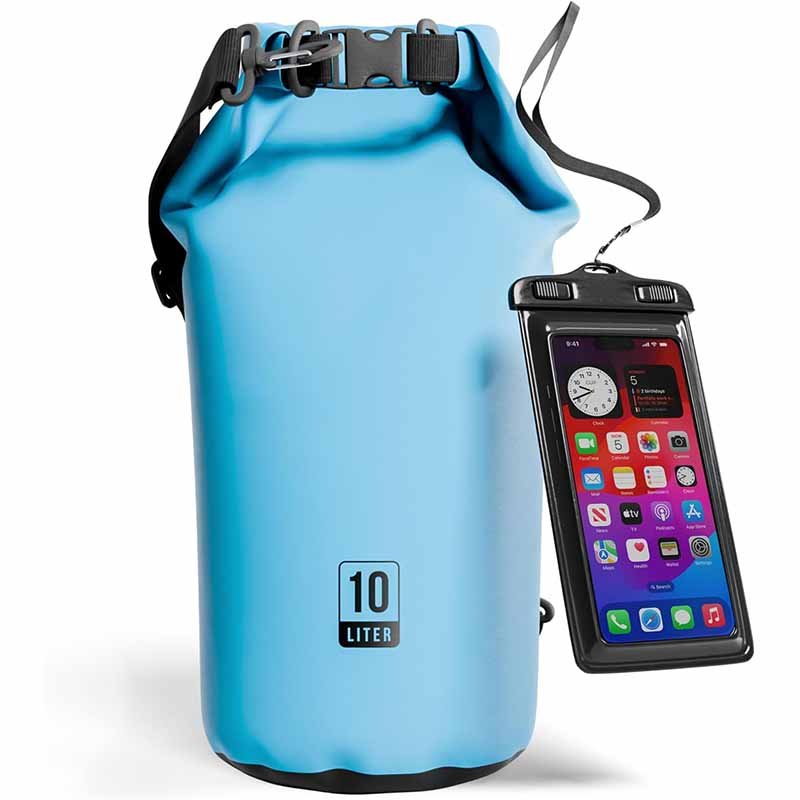
Developing a custom waterproof dry bag may look simple from the outside, but behind the product is a structured manufacturing process that involves material engineering, design validation, performance testing, and production control.
For outdoor brands, the goal is not just to produce a waterproof bag, but to develop a product that balances waterproof reliability, user comfort, brand identity, and cost control.
Most successful dry bag projects follow a clear development workflow.
What Custom Options Are Available for Waterproof Dry Bags?
One reason waterproof dry bags remain popular in outdoor markets is their strong customization potential. A brand can easily differentiate its products through structure, materials, colors, or accessories.
Common customization areas include:
| Custom Element | Available Options |
|---|---|
| Bag structure | Sack dry bag, backpack dry bag, duffel dry bag |
| Material | PVC tarpaulin, TPU laminated fabric, coated nylon |
| Capacity | 2L – 100L |
| Color | Solid color, two-tone, custom Pantone |
| Logo method | Screen printing, heat transfer, embossed patch |
| Accessories | Shoulder straps, D-rings, handles, compression straps |
| Closure system | Roll-top buckle, waterproof zipper |
For example, many outdoor brands choose matte TPU materials combined with minimalist logo printing to achieve a modern outdoor aesthetic. Meanwhile, tourism brands often choose bright colors and larger logos because visibility and brand recognition are more important in retail environments.
Phone pouches also offer customization possibilities. Clear TPU windows can be designed with different transparency levels, frame colors, and locking mechanisms.
These small design differences often determine whether a product stands out on a retail shelf or online store.
How Do Factories Produce Waterproof Dry Bags?
Professional waterproof bag manufacturing usually follows a multi-step process designed to ensure consistency and durability.
The typical production workflow includes the following stages.
| Step | Description |
|---|---|
| Material sourcing | Selecting PVC, TPU, or nylon fabrics |
| Pattern development | Creating accurate cutting patterns |
| Material cutting | Precision cutting of panels |
| Welding / sealing | Heat welding or high-frequency welding seams |
| Accessory installation | Buckles, straps, D-rings |
| Quality inspection | Checking seams, closures, and structure |
| Packaging | Preparing retail or bulk packaging |
One important difference between dry bags and traditional sewn bags is the welding process.
Instead of sewing panels together, many waterproof dry bags rely on heat welding or RF welding, which melts the material surfaces together and forms a sealed bond.
This technique prevents water from entering through needle holes and creates a cleaner, stronger seam.
Factories must carefully control welding temperature and pressure. Too little heat results in weak seams. Too much heat can damage the material structure.
For experienced factories, seam welding quality is one of the most important production skills.
How Can Brands Develop Private Label Waterproof Dry Bags?
Private label dry bag development has become very common among outdoor brands, Amazon sellers, and sporting goods distributors.
The typical development process follows several stages.
| Development Stage | What Happens |
|---|---|
| Concept planning | Decide product type, capacity, and target market |
| Design confirmation | Create technical drawings or reference samples |
| Sample production | Build functional prototypes |
| Testing and revision | Evaluate performance and make adjustments |
| Bulk production | Start mass manufacturing |
| Packaging preparation | Prepare branding and retail packaging |
During sampling, brands often evaluate several factors:
- sealing reliability
- material thickness
- strap comfort
- logo quality
- color consistency
A well-developed sample ensures that bulk production runs smoothly and avoids quality disputes later.
Experienced manufacturers also help customers optimize designs to reduce production risks or unnecessary cost increases.
How Szoneier Develops Custom Waterproof Dry Bags for Global Brands
Szoneier has more than 18 years of experience developing neoprene and waterproof material products, including dry bags, koozies, sports supports, and protective gear.
Because the company operates multiple specialized material factories, it can control fabric development, accessory sourcing, and product assembly under one integrated system.
This allows the team to offer faster sampling and more stable production quality.
Material Development and Sourcing
Szoneier works with several waterproof material systems depending on the product design.
| Material Type | Typical Use |
|---|---|
| PVC tarpaulin | Sack dry bags and travel bags |
| TPU laminated fabric | Premium outdoor dry bags |
| Neoprene laminated fabric | Specialty sports gear |
| Coated nylon | Lightweight dry bags |
Controlling material quality is critical because waterproof performance starts with the fabric itself. Even small variations in coating thickness or lamination strength can affect durability.
Sampling and Product Development
One advantage of working with an experienced factory is faster product development.
Szoneier typically follows a sampling timeline like this:
| Stage | Time Required |
|---|---|
| Design review | 1–2 days |
| Material preparation | 2–3 days |
| Sample production | 5–7 days |
| Sample shipping | 3–5 days |
This rapid sampling process allows customers to evaluate product details quickly and move toward production with greater confidence.
Manufacturing and Quality Control
Quality control is a critical part of waterproof bag production.
Szoneier uses multiple inspection stages during manufacturing.
| Inspection Stage | Purpose |
|---|---|
| Material inspection | Check coating consistency |
| Welding inspection | Verify seam strength |
| Structural inspection | Check strap anchors and hardware |
| Final inspection | Confirm appearance and sealing |
These checks help reduce product defects and ensure consistent production results.
MOQ and Production Lead Time
One common challenge for smaller brands is minimum order quantity. Many factories require large production volumes, which can make product testing difficult.
Szoneier offers more flexible production conditions.
| Production Factor | Typical Range |
|---|---|
| MOQ | 100–300 pcs depending on style |
| Sample time | 5–7 days |
| Production lead time | 20–30 days |
This allows new brands and e-commerce sellers to test products before committing to large inventory orders.
Final Thoughts
Waterproof dry bags may appear simple, but the category includes a wide range of products designed for very different environments. Sack dry bags, backpack dry bags, duffel dry bags, and waterproof phone pouches each serve unique purposes depending on the activity, storage needs, and carrying preferences.
Choosing the right structure, material, and capacity can dramatically improve the user experience and product reliability. For brands entering the outdoor gear market, understanding these differences helps avoid costly design mistakes and ensures that the final product matches the expectations of real users.
If you are planning to develop your own custom waterproof dry bags, working with an experienced manufacturer can make the process far smoother. A reliable factory can help refine designs, recommend appropriate materials, and maintain consistent quality from sampling to bulk production.
Szoneier works with global outdoor brands, e-commerce sellers, and distributors to develop custom waterproof bags, neoprene products, and private label outdoor gear. With over 18 years of manufacturing experience, fast sampling, flexible MOQ, and strong material sourcing capabilities, the team can help transform product ideas into reliable, market-ready products.
If you are looking for a trusted waterproof dry bag manufacturer, feel free to contact the Szoneier team to discuss your design ideas, material requirements, and customization needs.
The next successful outdoor product in your lineup could start with a simple conversation.