Skip to content
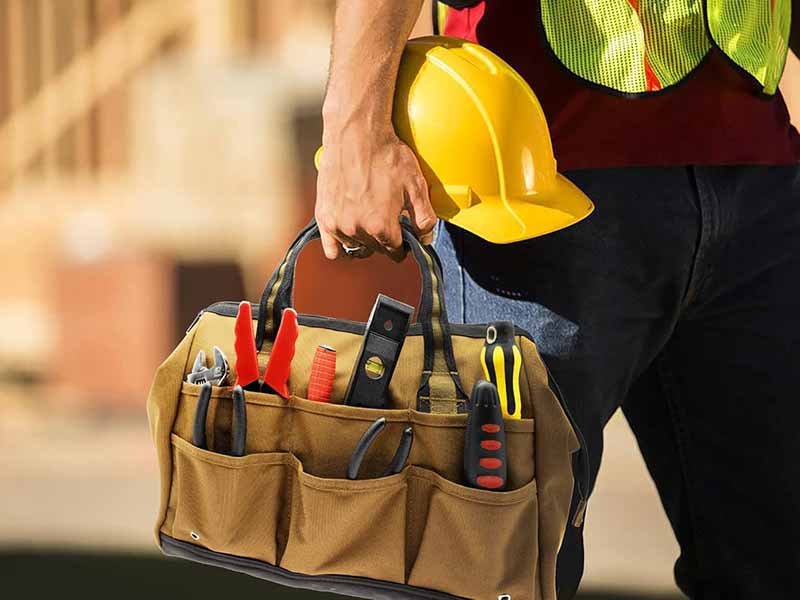
When it comes to organizing and carrying tools, choosing the right tool bag is crucial for both efficiency and ease of use. Whether you’re a professional tradesperson, a DIY enthusiast, or someone who frequently uses tools for various projects, the right tool bag helps keep everything organized, easily accessible, and well-protected. With many options on the market, including tote tool bags, backpacks, rolling tool bags, and pouches, it can be difficult to know which one is best for your specific needs. A tool bag is a storage solution designed to carry tools and accessories in an organized way. It provides protection against environmental elements like dust and moisture while ensuring that your tools are secure and easy to access. The right tool bag also saves you time and effort, letting you focus on the job without having to search through a disorganized mess of tools. There are different types of tool bags designed to meet specific needs, including tote bags, backpacks, rolling tool bags, and pouches. Each bag type offers unique features that make them better suited for certain tasks or jobs.
This article will break down the different types of tool bags and provide you with practical insights on how each one can benefit your work. From carrying tools on-site to organizing your tools at home, we’ll help you choose the right bag based on your needs.
What Are Tool Bags and Why Do They Matter?
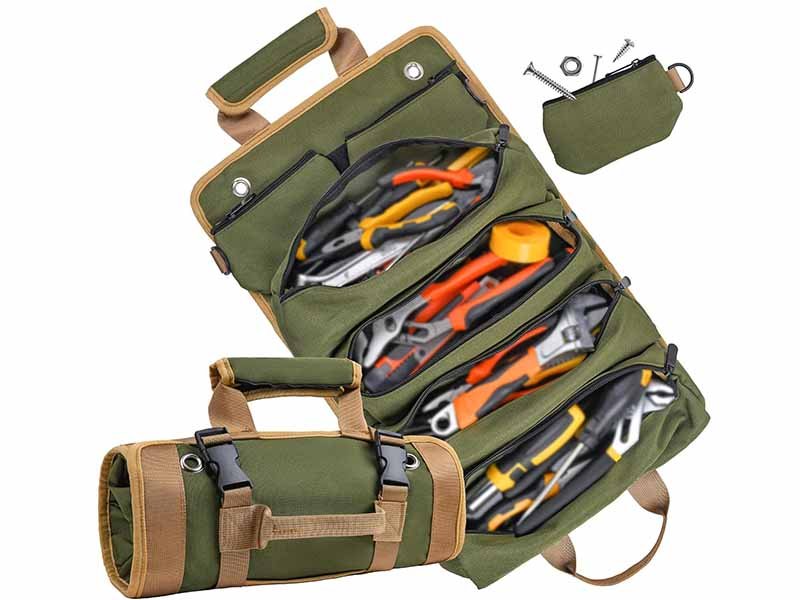
A tool bag is not just a storage solution—it’s an essential part of your daily workflow. Whether you’re a professional tradesperson, a DIY enthusiast, or someone who works in an environment where tools are needed regularly, having the right tool bag makes all the difference. It ensures that your tools are organized, protected, and easily accessible, allowing you to work more efficiently and effectively.
What Is a Tool Bag?
A tool bag is a container designed specifically to carry and organize tools and accessories. These bags come in a variety of styles, shapes, and sizes, ranging from compact pouches for hand tools to large rolling tool bags for carrying heavy-duty equipment. The purpose of a tool bag is not just to hold your tools but to help you stay organized, minimize time spent searching for items, and keep your tools protected from damage.
The right tool bag can help you increase productivity, reduce clutter, and prevent tool loss or damage, all while making it easier to carry your tools from one job site to another.
Why Do Tool Bags Matter?
Choosing the right tool bag goes beyond just convenience—it directly impacts your work efficiency and comfort. A poorly organized bag or one that is too small for your needs can lead to wasted time, frustration, and even the risk of damaging your tools.
Here are the key reasons why tool bags matter:
- Improved Organization: A good tool bag features compartments and pockets to separate different tools. Whether you’re a plumber, electrician, or mechanic, this organization ensures that each tool has its place, making it quick and easy to find what you need.
- Protection for Tools: Tools can be expensive, and leaving them exposed to the elements or tossing them around in an unorganized bag can lead to rust, wear, and tear. Tool bags made from durable materials like nylon or canvas provide protection against moisture, dirt, and physical damage. Additionally, reinforced zones and padding inside the bag can help prevent delicate tools from breaking.
- Portability: Having a tool bag means you can carry your tools to the job site without having to drag around bulky cases or boxes. Many tool bags are designed to be lightweight and easy to carry, with padded straps or wheels for added convenience. If you’re someone who needs to move around a lot during the day, a backpack tool bag or rolling tool bag will make a significant difference.
- Efficiency and Time-Saving: With all your tools neatly organized, you can quickly grab what you need and start working. The more time you spend searching for the right tool, the less productive you become. A well-organized tool bag lets you focus on the task at hand, rather than wasting time finding the right tool.
- Security: Many tool bags are designed with secure closures, such as zippers, buckles, or Velcro straps, to ensure that tools remain inside the bag. This security feature is especially important for expensive or sensitive equipment that needs protection during transport.
What Makes a Good Tool Bag?
To get the most out of your tool bag, it should have several key characteristics:
Durable Materials:
A good tool bag is made from high-quality, abrasion-resistant materials like 600D polyester, nylon, or canvas. These materials can withstand heavy use and exposure to harsh conditions like moisture, dirt, and rough handling.
| Material | Benefits | Common Uses |
|---|---|---|
| 600D Polyester | Strong, abrasion-resistant, water-resistant | Backpacks, tote bags, work bags |
| Nylon | Flexible, lightweight, tear-resistant, weather-resistant | Backpack tool bags, rolling tool bags |
| Canvas | Durable, resistant to wear and tear, breathable | Light-duty tool bags, utility bags, tool pouches |
| TPU-Coated Fabrics | Waterproof, resistant to punctures and abrasions | Base reinforcements, outdoor tool bags, wet conditions |
Organizational Features:
A well-organized tool bag has pockets, compartments, and loops designed for specific tools. This keeps your tools separated and easy to find, so you’re not digging through a jumbled mess to locate what you need. For example, pliers, screwdrivers, and wrenches should each have their own designated space, preventing damage from rubbing against other tools.
Comfort and Portability:
A tool bag should also be easy to carry, especially if you’re frequently moving between job sites. Look for features like padded straps, ergonomic handles, and wheeled designs that reduce the strain on your body. If you’re carrying a heavy load, comfort is a critical factor.
Reinforced Stress Zones:
The base, straps, corners, and handles of a tool bag are the areas most prone to wear and tear. A well-built tool bag uses reinforced stitching, extra padding, and strong materials in these zones to ensure that it doesn’t break under pressure.
Why Tool Bags Are Essential for Different Professions
Tool bags are essential for various trades, as each profession has specific needs when it comes to storing and transporting tools. Here are a few examples of how tool bags benefit different types of workers:
| Profession | Tool Bag Needs | Benefits of Using a Tool Bag |
|---|---|---|
| Electricians | Backpack tool bags with compartments for wires, testers, and small tools | Organized storage for small tools, quick access, hands-free mobility |
| Plumbers | Tote tool bags with external pockets for hand tools | Easy access to essential tools, lightweight for mobility |
| Mechanics | Rolling tool bags for large, heavy tools | Durability under heavy weight, easy transport |
| Contractors/Builders | Rolling tool bags, backpacks for carrying large equipment | Comfortable carrying for large tools, organized storage |
For electricians, a backpack tool bag allows easy access to essential tools like wire cutters and voltage testers, while mechanics need rolling tool bags to carry heavier equipment, like wrenches and socket sets, between job sites. The flexibility and organization of tool bags make them indispensable for keeping work efficient and organized.
What Is a Tote Tool Bag and Which Jobs Need It?
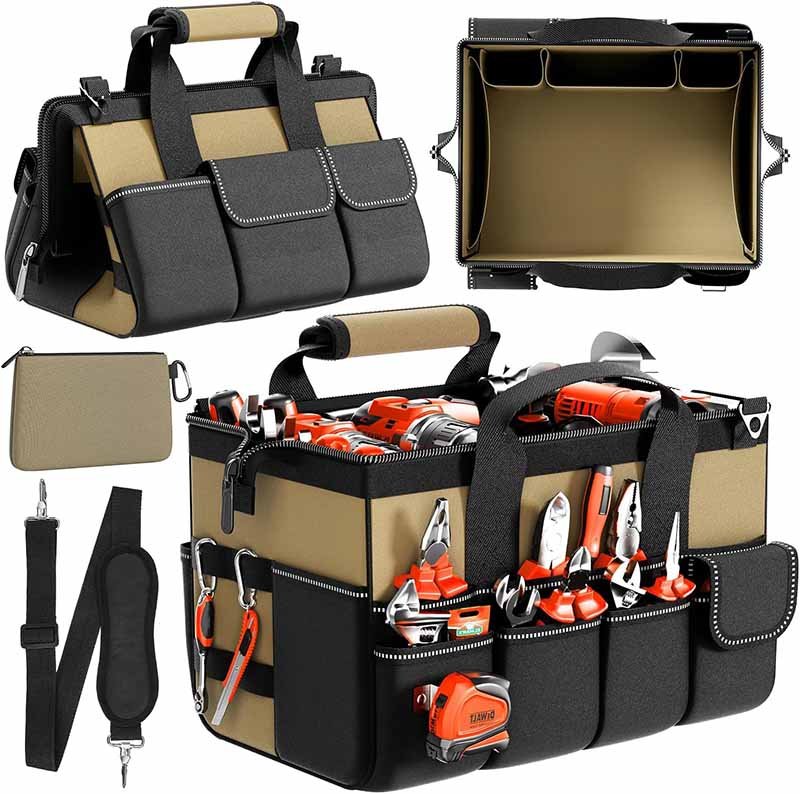
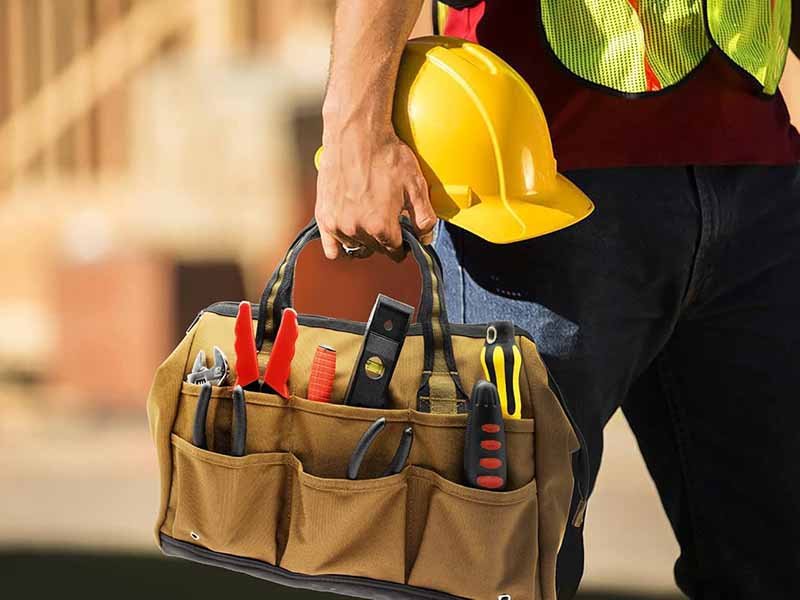
Tote tool bags are the most versatile and lightweight option, offering easy access to tools with an open design. They’re often used for tasks that don’t require a lot of heavy equipment, making them ideal for light to moderate-duty jobs where accessibility and portability are key.
What defines a tote tool bag?
Tote tool bags typically have open tops with multiple external pockets for organizing small tools, fasteners, or accessories. They are made from durable materials such as canvas or polyester, designed for flexibility and easy handling. Some tote bags also include a reinforced bottom to provide structure and prevent the bag from sagging under weight.
Tote tool bags are well-suited for quick, on-the-go tasks. For example, electricians, plumbers, and home repair specialists often use tote tool bags because they offer quick access to hand tools and supplies. These bags are also ideal for light-duty jobs, such as carrying small parts or tools that don’t require heavy storage.
Advantages of Tote Tool Bags:
| Feature | Benefits | Best Use Cases |
|---|---|---|
| Open Design | Quick access to tools without zippers or flaps | Electrical work, light-duty tasks, quick jobs |
| Multiple Pockets | Organizes small tools and accessories | Hand tools, fasteners, small parts |
| Lightweight | Easy to carry and transport | On-site workers, mobile tradespeople |
The simplicity of a tote tool bag makes it easy to grab what you need without fuss, making it an excellent choice for tasks where quick access is more important than carrying large equipment. However, due to the open design, tote bags are better suited for carrying smaller tools and are less ideal for carrying large or heavy equipment.
What Are Backpack Tool Bags and How Do They Improve Portability?
Backpack tool bags are designed for hands-free portability, making them ideal for professionals who need to carry tools over long distances or in crowded environments where traditional bags may be cumbersome. A backpack tool bag lets you move freely while keeping your hands available for other tasks.
What features define a backpack tool bag?
A backpack tool bag is equipped with padded shoulder straps, multiple compartments, and reinforced bottoms. These bags allow you to carry heavy tools and materials without putting too much strain on your back. They are made from materials like heavy-duty nylon or polyester, which are designed to withstand the weight of the tools inside while providing comfort and ease of movement.
The multiple compartments of a backpack tool bag help with organizing tools based on size and use, making it easy to find what you need quickly. Some backpacks also feature ergonomic back panels, which help distribute the weight evenly across your body to reduce strain during long periods of use.
Advantages of Backpack Tool Bags:
| Feature | Benefits | Best Use Cases |
|---|---|---|
| Ergonomic Design | Reduces strain on back and shoulders | Long-distance travel, hiking, construction jobs |
| Multiple Compartments | Keeps tools organized and easy to access | Electricians, carpenters, service technicians |
| Hands-Free Carrying | Allows free use of hands while carrying | Working in tight spaces, on the move |
A backpack tool bag is perfect for those who need to be mobile and have easy access to their tools while keeping their hands free for work. These bags are particularly useful for fieldwork, service calls, and outdoor jobs, where having a backpack-style tool bag makes carrying heavy or bulky tools easier and more efficient.
What Are Rolling Tool Bags and When Do You Need Them?

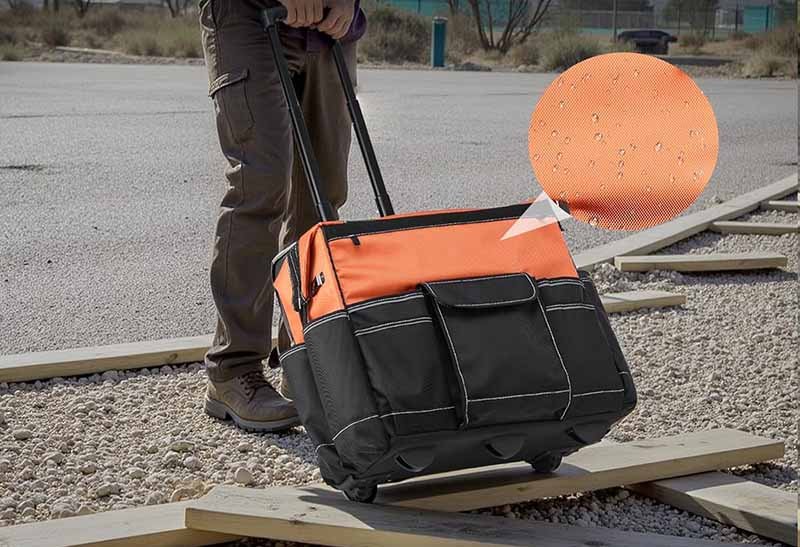
Rolling tool bags combine the best of portability and storage, featuring wheels and a telescoping handle to make transportation easier, especially for those carrying large, heavy tools. These bags are perfect for situations where carrying a tool bag by hand is impractical.
What makes a rolling tool bag different?
Unlike traditional tool bags, rolling tool bags are designed with wheels and a retractable handle for easy movement. They often feature sturdy frames to support the weight of tools, with reinforced zippers and multiple compartments for efficient organization. This makes them ideal for jobs that require carrying multiple large tools or heavy equipment over long distances, such as moving gear on construction sites or traveling with a set of tools from one job to another.
Rolling tool bags are often built with rugged materials that can withstand tough environments, and the wheeled design ensures that workers don’t have to strain their back or shoulders when transporting heavy tools.
Advantages of Rolling Tool Bags:
| Feature | Benefits | Best Use Cases |
|---|---|---|
| Wheeled Design | Makes it easier to transport heavy tools and equipment | Construction jobs, heavy-duty equipment transport |
| Heavy-Duty Materials | Ensures durability under tough conditions | Workshops, industrial use, on-site jobs |
| Multiple Compartments | Provides excellent organization for large tools | Mechanics, contractors, field technicians |
Rolling tool bags are essential for those working with heavy-duty equipment or multiple tools that need to be transported over long distances. They are perfect for workshops, construction sites, or industrial environments where ease of mobility is key, and carrying a heavy load by hand would be cumbersome.
What Are Tool Pouches and How Do They Complement Other Bags?
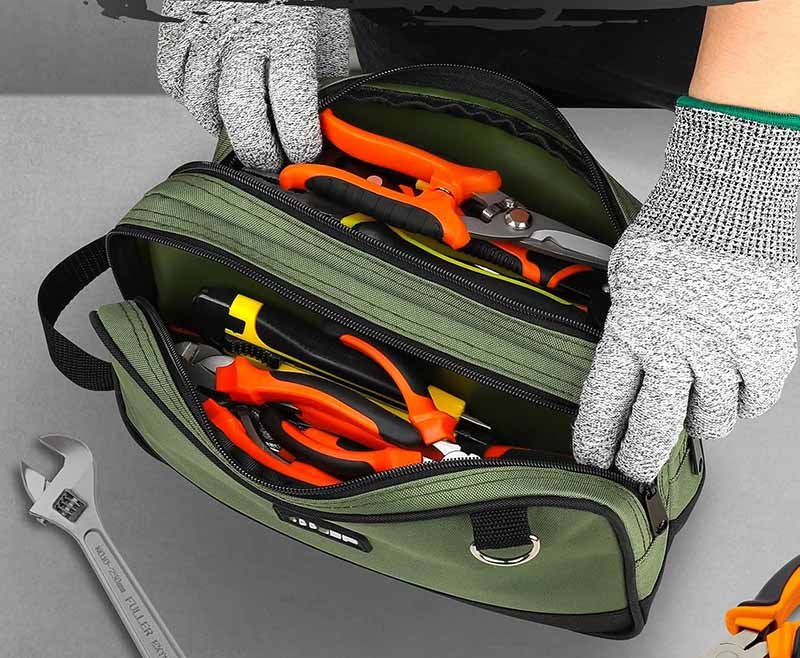
:Tool pouches are small, compact storage solutions designed to carry a limited set of tools or accessories. They are often worn on the belt or attached to larger tool bags to provide quick access to the most frequently used tools. A tool pouch is not a stand-alone solution for carrying all your tools but rather a complement to your main tool bag.
These pouches are ideal for carrying small hand tools, like screwdrivers, pliers, or utility knives, as well as fasteners or drill bits. They are often made from durable, flexible materials such as leather, nylon, or canvas and come with various pockets and loops to organize tools.
What is the key benefit of a tool pouch?
The primary benefit of a tool pouch is easy access to frequently used tools. Whether you’re a plumber, electrician, or mechanic, tool pouches allow you to keep essential tools close by, minimizing downtime spent searching for tools in your main tool bag. When paired with a larger tool bag, the pouch helps keep the main bag organized by separating smaller items.
Advantages of Tool Pouches:
| Feature | Benefits | Best Use Cases |
|---|---|---|
| Compact Size | Easy to carry around and attach to a tool belt or main bag | On-site work, small jobs, quick access tasks |
| Organized Compartments | Helps keep small tools and accessories organized | Plumbers, electricians, DIY enthusiasts |
| Durable Materials | Provides protection against wear and tear | Long-term use in rugged environments |
Tool pouches are particularly beneficial for professionals who need to quickly switch between tools during a task. For example, an electrician might carry a pouch to hold wire cutters, tape measure, and pliers while keeping the rest of their tools organized in a larger bag. This way, they don’t need to dig through the whole bag for tools they need immediately.
How to Choose the Right Type of Tool Bag for Your Needs
When selecting a tool bag, it’s important to understand the type of work you do and how your tools are best organized. The ideal tool bag depends on several factors such as the size and weight of your tools, how often you need to move around, and the type of environment in which you’ll be working.
Here are the key considerations when choosing a durable tool bag:
- What tools do you need to carry? If you need to carry a lot of tools, especially large or heavy ones, a rolling tool bag or a backpack tool bag might be the best option. These bags provide ample space and reinforced structures to carry and protect your tools, reducing the risk of damage.
- Do you need portability? If you need to move quickly between different work areas, a backpack tool bag might suit your needs better. It provides hands-free mobility, allowing you to carry tools without restricting your movement.
- Do you need quick access? If you need fast access to frequently used tools, a tote tool bag or tool pouch will be ideal. These bags are open-top and easy to access, offering a quick solution for tasks that require fast switching between tools.
- How heavy is your load? If you’re carrying a lot of heavy equipment, a rolling tool bag with wheels will prevent you from straining your back while ensuring that your tools are securely transported.
Choosing Based on Your Specific Job:
| Job Type | Ideal Tool Bag | Key Features |
|---|---|---|
| Electrician | Backpack Tool Bag | Multiple compartments for organized tools, padded straps |
| Plumber | Tote Tool Bag | Easy access to hand tools, external pockets for accessories |
| Mechanic | Rolling Tool Bag | Durable materials, large compartments, heavy-duty wheels |
| DIY Enthusiast | Tool Pouch + Tote Bag | Compact tool pouch for quick access, tote for larger tools |
Selecting the right tool bag should align with your work style and the environment in which you’ll be using it. Whether you need a backpack for easy mobility or a rolling tool bag for transporting heavy gear, making the right choice will help you work more efficiently and comfortably.
How to Choose the Right Type of Tool Bag for Your Needs?
Choosing the right tool bag depends on multiple factors, including the type of work you do, the tools you carry, and how much mobility you need. Below, we provide additional insights into how you can make the best choice based on different work conditions and requirements.
Do You Need Fixed Storage or Mobile Solutions?
Some jobs require the ability to transport large, heavy equipment across long distances, while others need an easy-to-access storage solution with simple portability. If you frequently work in one place and just need to organize your tools efficiently, a fixed storage tool bag such as a tote bag or tool pouch may be ideal.
However, for fieldwork, where you might need to carry heavier or larger tools, mobile solutions like backpacks or rolling tool bags would be more suitable. These options ensure that you can move easily while keeping your tools safe and organized.
Fixed Storage vs. Mobile Solutions:
| Type of Storage | Best for | Recommended Bags |
|---|---|---|
| Fixed Storage | Staying at one job site, organizing tools on-site | Tote tool bags, tool pouches |
| Mobile Solutions | Carrying tools over long distances, fieldwork | Backpack tool bags, rolling tool bags |
If you need on-the-go mobility, backpack tool bags provide hands-free carrying, while rolling tool bags reduce strain when carrying heavy tools, especially for jobs that require transporting multiple tools between job sites.
Is Material and Reinforcement Important?
When choosing a tool bag, material selection and reinforcement are key considerations. The right materials ensure durability, water-resistance, and abrasion resistance. Tool bags made from high-density nylon or polyester are often more durable, with the ability to withstand wear and tear from rough job sites or long periods of use.
Additionally, areas like the base, straps, and corners should be reinforced to improve the bag’s strength, especially for those who carry heavy or sharp tools. Reinforced webbing, double stitching, and TPU-coated fabrics ensure that the bag maintains its structure and holds up under stress.
Material and Reinforcement Considerations:
| Material | Benefits | Applications |
|---|---|---|
| High-Density Nylon | Lightweight, durable, tear-resistant, water-resistant | Backpacks, rolling tool bags, rugged use |
| Polyester | Strong, abrasion-resistant, flexible | Tote tool bags, pouches, worksite use |
| TPU-Coated Fabrics | Waterproof, resistant to abrasion, highly durable | Bottoms of bags, wet conditions |
| Canvas | Durable, thick fabric with natural resistance to wear | Light-duty work, outdoor use |
Canvas tool bags are often used for light-duty tasks where flexibility is required, while TPU-coated fabrics provide additional waterproofing and strength for outdoor or heavy-duty jobs.
Which Tool Bag Fits Best With Trade and Workload?
Different professions require different tool bags. While a mechanic may need a large bag with compartments for both hand tools and power tools, an electrician may prefer a backpack tool bag with specialized compartments for wires, testers, and small tools. The size, capacity, and organizational features should be matched to the specific needs of your trade.
Choosing a Tool Bag Based on Workload:
| Trade | Recommended Tool Bag | Why It Works |
|---|---|---|
| Electrician | Backpack Tool Bag | Easy access to tools, compact, hands-free carrying |
| Plumber | Tote Tool Bag | Open design, quick access to wrenches and hand tools |
| Mechanic | Rolling Tool Bag | Heavy-duty, ample space for large tools and equipment |
| Contractor/Builder | Rolling Tool Bag, Backpack Tool Bag | Easy transport of heavy equipment and tools, organized storage |
If you’re in a trade that requires a mix of light-duty and heavy-duty tools, consider a bag that offers a combination of compartments. Backpacks with multiple pockets for small tools and rolling tool bags for large equipment can provide the right balance of organization and portability.
Conclusion: Choosing the Best Tool Bag for Your Needs
Selecting the right tool bag isn’t just about convenience—it’s about improving your efficiency, comfort, and organization. By carefully considering your work conditions, the tools you need to carry, and how mobile you need to be, you can choose a tool bag that will help you work faster and smarter. Whether you opt for a tote tool bag for easy access, a backpack tool bag for mobility, a rolling tool bag for heavy-duty use, or a pouch for on-the-go access, there’s a solution for every job.
Szoneier offers a variety of custom tool bags tailored to meet the specific needs of professionals across industries. Whether you need a durable rolling tool bag with extra compartments, a backpack tool bag for easy carrying, or a pouch to keep your small tools within reach, we can help you design the perfect bag for your needs.
At Szoneier, we provide OEM/ODM services for tool bags, allowing you to customize every detail, from materials and reinforcement zones to logos and design. Our tool bags come with low MOQs, fast sampling, free samples, and 100% quality assurance.