Skip to content
Odor is a “small” problem until it ruins a trip, a commute, or a product experience. A sandwich smell drifting through a backpack, sweaty gym gear making a car stink for days, or strong aromas transferring into clothing inside luggage—these situations happen because most bags are built to carry items, not to control air movement. Smellproof bags solve that with a different design mindset: they reduce odor leakage by combining barrier layers + adsorption layers + leak-resistant closures.
Smellproof bags are purpose-built storage bags that reduce odor release by using dense barrier fabrics, activated carbon layers, and tight sealing closures (like airtight zippers or roll-top seals). Pouches, stash bags, backpacks, duffles, and cases all work on the same principle, but they differ in capacity, sealing strength, durability, and how long they can maintain odor control in real-life conditions.
Here’s the part most people miss: odor control is not only about “carbon lining.” If seams leak, zippers gap, or moisture saturates the liner, performance drops quickly. In the sections below, you’ll see which bag types are best for short carry vs. long travel, which structures hold up under daily abuse, and what details actually separate a good smellproof bag from one that only looks good in photos.
What Are Smellproof Bags?

Smellproof bags are storage bags designed to reduce odor escape by combining a tight seal with odor-trapping materials. Most rely on activated carbon (to trap odor molecules) plus dense fabrics and low-leak closures (airtight zippers or roll-top seals). The best designs slow odor diffusion, reduce air exchange, and keep strong smells from spreading into cars, luggage, closets, or nearby items.
What makes smellproof bags different from “regular” bags?
A normal bag is usually optimized for cost and strength—not air control. Smellproof bags are engineered to slow or block the three main odor pathways:
- Air leakage (through zippers, seams, stitch holes)
- Diffusion through fabric (thin textiles let odor migrate)
- Contamination transfer (residue inside the bag keeps producing odor)
So, a smellproof bag is a system: fabric + liner + seam build + closure + internal cleanliness.
Performance depends on design details
In real use, odor control commonly fails for these reasons:
- The zipper track isn’t airtight, or slider tolerances are loose
- Seams are stitched but not taped/covered in a way that reduces leakage
- Carbon layer is too thin or low-density
- Moisture and oils saturate the liner (reducing adsorption efficiency)
| Feature | Regular Bag | Smellproof Bag |
|---|---|---|
| Main goal | Carrying capacity | Odor containment + carrying |
| Typical fabrics | 210D–600D polyester/nylon | Dense fabrics + barrier film + carbon |
| Closures | standard zipper, drawcord | airtight zipper / roll-top / double seal |
| Seam treatment | basic stitching | reinforced seams, reduced leakage design |
| Odor control lifespan | none | depends on carbon density & care |
What makes a bag smellproof?
A bag becomes smellproof when airflow and odor diffusion are reduced, and odor molecules are captured before they leave. In most successful designs, there are four layers of protection:
- Outer shell (strength layer): 420D/600D/900D polyester or nylon, sometimes TPU-coated
- Barrier layer (slow diffusion): dense film or laminated layer that reduces odor migration
- Carbon layer (odor capture): activated carbon cloth, carbon foam, or carbon-coated textile
- Inner liner (clean layer): smooth lining that resists residue buildup and wipes clean
But structure matters just as much as materials. If the bag uses carbon cloth but has a loose zipper, odor will still escape through the easiest path: the gap. That’s why high-performing products use closure-first design—the seal is treated like a “door,” not decoration.
Common closure options and their real impact
| Closure type | Odor containment strength | Notes |
|---|---|---|
| Standard zipper | Low | convenient but leaks air easily |
| “Airtight” zipper (rubberized track) | High | best for soft bags |
| Roll-top + buckle | Medium–High | depends on fold count & stiffness |
| Hard case gasket seal | Very High | best for long-term storage |
How do odor-blocking materials work?
Most odors are caused by volatile organic compounds (VOCs). Activated carbon works by adsorption: VOC molecules attach to the carbon’s microscopic pore surfaces. The more effective the carbon layer, the more surface area is available, and the longer it can keep working before saturation.
However, carbon performance is not “magic.” Three factors dominate in real life:
- Carbon density & thickness (how much “active surface” exists)
- Humidity & oils (moisture can reduce adsorption efficiency)
- Time + concentration (strong smells over many hours require more carbon)
A helpful way to think about it:
- For short carry (minutes to a few hours), thin carbon is often enough.
- For all-day travel, you want thicker carbon panels and better seals.
- For multi-day storage, hard cases or heavy stash bags perform more consistently.
Typical carbon constructions
| Carbon construction | Flexibility | Odor control duration | Best for |
|---|---|---|---|
| Carbon cloth (thin) | High | Short–medium | pouches, small stash bags |
| Carbon foam/pad | Medium | Medium–long | backpacks, duffles |
| Replaceable carbon panel | Medium | Long | travel bags, premium designs |
Do smellproof bags really stop smell?
They reduce smell significantly, but “100% forever” is not realistic for soft bags in every situation. A better way to set expectations is to treat odor control as a range that depends on seal quality, bag volume, and odor intensity.
In practical use cases:
- A strong seal + dense carbon often prevents noticeable smell in a car or room
- Weak seals leak—especially when the bag is squeezed or moved
- Higher temperature increases vapor pressure and makes odor “push” outward more
Practical performance ranges (real-life expectations)
| Bag type | Typical odor reduction range | Best scenario |
|---|---|---|
| Small pouch | 60–80% | short carry, inside another bag |
| Stash bag (thicker) | 75–90% | daily storage, commute |
| Backpack (sealed) | 80–95% | travel and all-day carry |
| Duffle (sealed) | 80–95% | gym, trips, larger loads |
| Hard case w/ gasket | 90–99% | long-term or high-intensity odors |
The biggest jump in performance usually comes from closure quality (air leakage control), not simply “more carbon.”
Which Types of Smellproof Bags Exist?
The main smellproof bag types are pouches, stash bags, backpacks, duffles, and cases. Pouches are compact for quick carry, stash bags offer thicker odor control for daily storage, backpacks balance capacity and mobility, duffles handle bulky loads like gym gear, and cases provide the strongest sealing and crush protection. The best choice depends on capacity needs, travel style, and how long odor containment must last.
Why “type” matters more than people think
People often shop by appearance, but smellproof performance is influenced by:
- Volume: larger interior needs stronger sealing and more adsorption capacity
- Load pressure: packed bags compress air and push odor toward leakage points
- Use time: short carry is easier than multi-day storage
- Environment: heat/humidity makes odor control harder
So the “right type” is the one that matches your use pattern, not just size.
What are smellproof pouches?
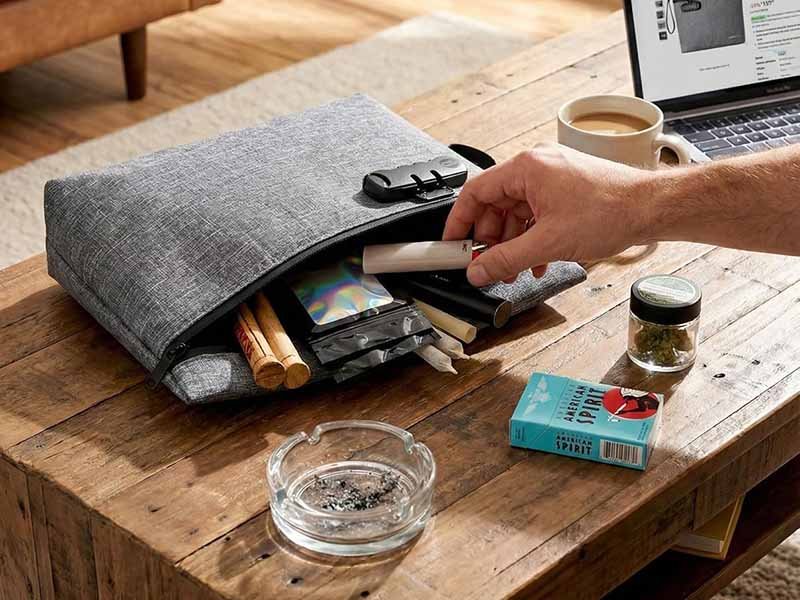
Smellproof pouches are small, flexible odor-control containers designed for quick, discreet storage. They are commonly used as “inside organizers” placed within a backpack, luggage, or drawer. Because they’re compact, they typically rely on thin carbon cloth and a single closure.
What customers care about most with pouches is usability:
- Can it open quickly with one hand?
- Is it slim enough to carry daily?
- Does it keep odor down for a few hours without becoming bulky?
Pouches shine in short-duration use. Their limitation is that thin carbon layers saturate faster, and small zippers can be the weak link if they aren’t tight.
Typical pouch specs
| Spec | Common range |
|---|---|
| Length | 15–25 cm |
| Thickness | 2–6 cm |
| Fabric | 210D–600D polyester/nylon |
| Lining | thin carbon cloth |
| Best use time | short carry to daily use |
If your customer stores items with stronger odors or longer hours, a pouch may be too light—stash bags handle that better.
What are stash bags and how are they used?
Stash bags are the “workhorse” category because they offer a practical blend of:
- thicker carbon layer
- better zipper systems
- sturdier shape and seam build
They’re commonly used at home (closets, drawers), in cars, and for travel packing. Many users prefer stash bags because they can hold multiple items while still being manageable in size.
From a product standpoint, stash bags often win because they can include:
- double zipper tracks for reduced leakage
- binding tape + reinforcement on seams
- wipe-clean liners to prevent residue odor buildup
Stash bag advantages vs. pouches
| Factor | Pouch | Stash bag |
|---|---|---|
| Odor control strength | Medium | Medium–High |
| Carbon capacity | Lower | Higher |
| Best for | quick carry | daily storage + commute |
| Seal quality | varies | usually better |
| Lifespan | shorter | longer (with care) |
If you’re designing for customers who use the bag daily, stash bags are often the safest choice.
How do smellproof backpacks differ?
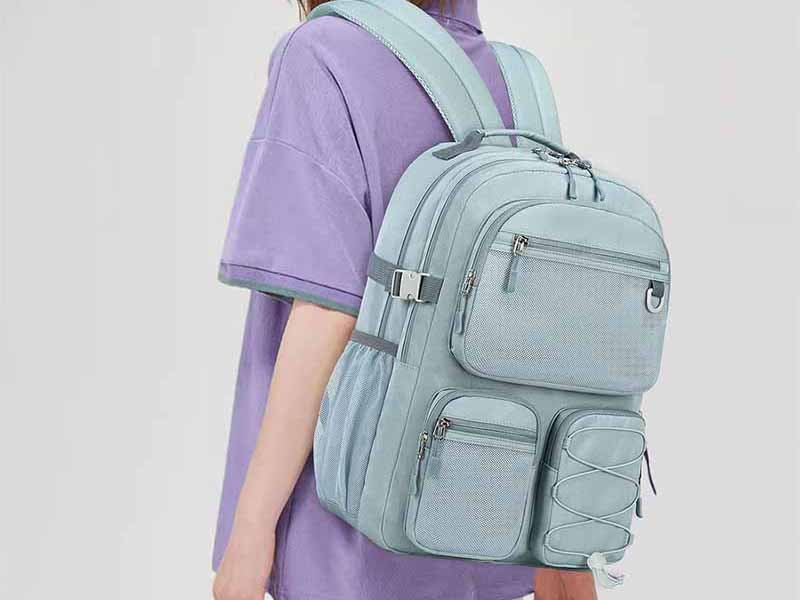
Smellproof backpacks are built for people who need capacity + mobility, but that creates a design challenge: backpacks have more seams, more panels, more zipper length, and more chances for leakage.
High-performing smellproof backpacks typically add:
- reinforced zipper tunnels (extra flap coverage reduces leakage)
- panel-based carbon layers (more stable odor control vs. thin cloth)
- moisture barriers (TPU laminations, coated fabrics)
Backpacks are often used for commuting and travel, so comfort and durability matter as much as odor control. Customers will notice:
- strap strength and stitching
- abrasion resistance at the base
- how the bag holds shape when full
Backpack material choices that customers actually ask about
| Material | What it affects | Common choice |
|---|---|---|
| 600D–900D polyester/nylon | abrasion resistance | travel/backpacks |
| TPU coating | water resistance + wipe clean | outdoor/travel |
| EVA foam panels | shape + protection | premium backpacks |
| Carbon pads | longer odor control | higher-end lines |
A smellproof backpack is ideal when users want “one bag” for all-day carry and don’t want to keep separate containers inside.
What Makes Smellproof Duffles and Cases Different?

Smellproof duffles and cases are designed for larger capacity and longer odor containment. Duffles focus on flexible storage for gym gear, travel clothing, or bulky items, using thick carbon layers and reinforced seals. Hard or semi-rigid cases provide the strongest odor control and physical protection through gasket seals and rigid shells, making them suitable for long trips, transport, or high-intensity odor sources.
Why larger bags require stronger odor engineering
As storage volume increases, odor pressure inside the bag also increases. More air space means:
- More odor molecules circulating
- Greater internal pressure when compressed
- Longer exposure time before opening
Because of this, large smellproof bags cannot rely on the same thin carbon layer used in pouches. They require:
- Higher carbon density
- Better seam reinforcement
- More reliable closure systems
This is why duffles and cases often show the biggest quality gap between low-cost and professional manufacturing.
What defines a smellproof duffle?
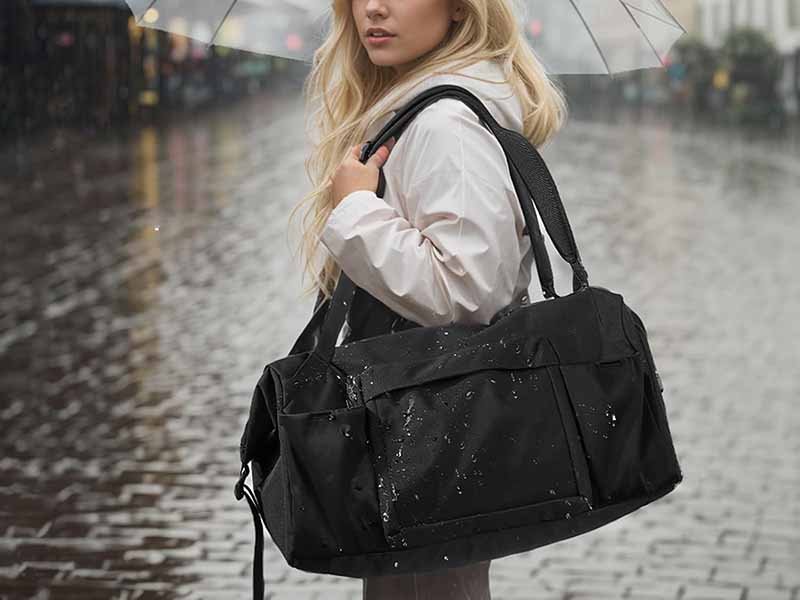
A smellproof duffle is built for bulk storage with mobility. Customers typically use duffles for:
- Gym clothing and shoes
- Travel packing
- Outdoor gear transport
- Multi-item daily carry
Because these items often produce continuous odor, duffles must manage:
- Moisture + odor together
- Heavy internal compression
- Frequent opening and closing
Key structural upgrades commonly found in reliable duffles:
- Thick multilayer carbon lining (often 2–4× thicker than pouch lining)
- Wide waterproof zippers with protective flaps
- Reinforced base panels to prevent deformation
- Vent-resistant seam construction
Typical duffle performance ranges
| Feature | Entry Level | High Quality |
|---|---|---|
| Carbon thickness | Thin cloth | Thick pad / multilayer |
| Zipper sealing | Standard | Airtight + flap |
| Moisture resistance | Low | TPU / coated lining |
| Odor containment duration | Short | All-day to multi-day |
| Shape stability | Soft collapse | Reinforced base |
For customers, the most noticeable difference is simple: a good duffle keeps gym odor inside the bag even after hours in a car.
How do smellproof cases provide stronger protection?
Cases represent the highest level of odor containment because they combine:
- Rigid shell structure
- Compression-style gasket seal
- Minimal seam exposure
Unlike soft bags, a rigid case does not deform when squeezed. This matters because deformation can force air out through tiny gaps in soft bags.
Common construction methods include:
- EVA molded shells
- ABS or polypropylene hard shells
- Silicone or rubber gasket seals
- Lockable latch closures
These features create an environment closer to sealed storage rather than flexible carrying.
Case vs. soft bag containment comparison
| Factor | Soft Smellproof Bag | Hard Smellproof Case |
|---|---|---|
| Flexibility | High | Low |
| Crush protection | Limited | Strong |
| Seal reliability | Medium–High | Very High |
| Odor leakage risk | Moderate | Very Low |
| Travel durability | Good | Excellent |
Customers usually choose cases when:
- Odor intensity is strong
- Storage time is long
- Physical protection is required
- Travel conditions are rough
In these situations, structure matters more than portability.
How Do You Choose the Right Smellproof Bag?

Choosing the right smellproof bag depends on use time, odor strength, storage volume, and travel conditions. Small pouches suit short carry, stash bags handle daily storage, backpacks balance mobility and capacity, duffles manage bulky or damp gear, and hard cases provide maximum containment and protection. Matching the bag structure to real usage is more important than price or appearance.
Start with real-life usage, not product photos
Customers often choose based on size or style, but performance depends on:
- How long items stay inside
- How strong the odor is
- Whether moisture is present
- How often the bag is opened
- Transport environment (car, plane, outdoors)
A clear decision process prevents dissatisfaction later.
Which bag type fits different daily scenarios?
Different environments place different stress on odor control.
Practical selection guide
| Scenario | Recommended Type | Reason |
|---|---|---|
| Short errands | Pouch | Lightweight, quick access |
| Office or school | Stash bag | Balanced size and control |
| Commuting or travel | Backpack | Capacity + mobility |
| Gym or sports | Duffle | Handles moisture + bulk |
| Long storage or transport | Hard case | Maximum sealing |
This table reflects real user behavior, not marketing positioning.
What size and internal capacity should you select?
Capacity affects both convenience and odor containment.
Too small:
- Items compress → air forced out → leakage risk rises
Too large:
- Excess air volume → more odor circulation → harder containment
The goal is balanced internal volume.
Common size ranges by category
| Type | Typical Capacity |
|---|---|
| Pouch | 0.5–2 L |
| Stash bag | 2–6 L |
| Backpack | 15–30 L |
| Duffle | 20–50 L |
| Case | varies by shell size |
Customers who travel frequently often prefer mid-range capacity because it balances:
- portability
- containment efficiency
- packing flexibility
How do materials and sealing design affect performance?
From a manufacturing standpoint, three components dominate performance:
- Carbon quality → determines odor adsorption strength
- Closure precision → determines air leakage rate
- Fabric density & coating → slows diffusion and improves durability
Low-cost bags usually reduce cost by:
- using thin carbon spray instead of real carbon layer
- using decorative zippers instead of sealing zippers
- skipping seam reinforcement
These shortcuts are why some products look similar online but perform very differently in use.
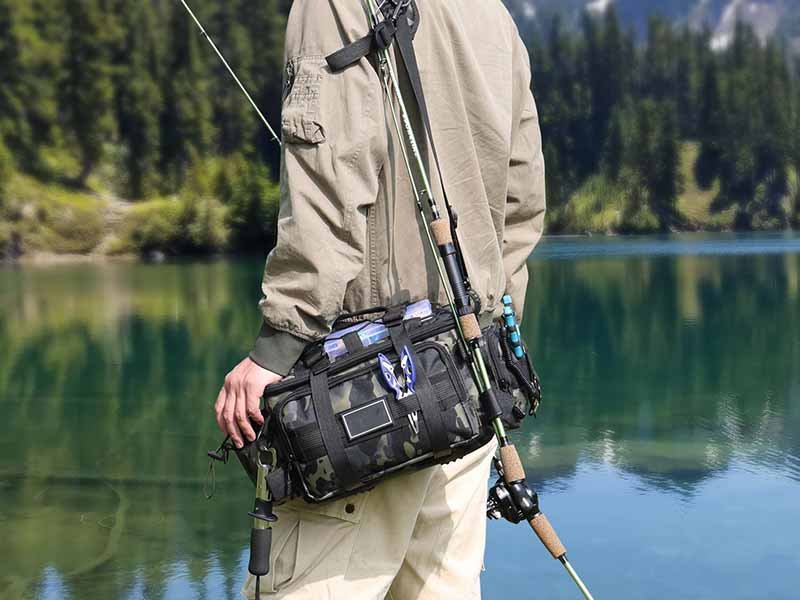
Are some designs better for travel, gym, or outdoor use?
Yes. Environment changes the engineering requirements.
Environment vs. design priority
| Environment | Key Requirement |
|---|---|
| Gym | Moisture resistance + thick carbon |
| Air travel | Secure seal + compression resistance |
| Car storage | Long-duration odor containment |
| Outdoor use | Abrasion resistance + waterproofing |
Customers rarely regret choosing stronger structure, but they often regret choosing too light a design.
Are Smellproof Bags Reusable and Durable?
Direct answer (≤70 words): High-quality smellproof bags are reusable for months or years, depending on carbon density, sealing structure, and maintenance. Durability is influenced by zipper lifespan, seam strength, moisture exposure, and cleaning habits. Premium multilayer carbon bags with reinforced closures typically maintain effective odor control far longer than thin, low-cost designs.
Reusability depends on material science, not marketing claims
Customers often assume smellproof bags “stop working quickly.” In reality, lifespan is controlled by three technical factors:
- Activated carbon saturation rate
- Mechanical wear on closures and seams
- Moisture and residue contamination inside the liner
If these are managed correctly, a well-built smellproof bag can remain effective for 6–24 months of regular use, sometimes longer.
How long do smellproof bags typically last?
Real-world durability varies widely across price levels and construction quality.
Average functional lifespan by construction level
| Construction Level | Expected Odor Control Lifespan | Common Failure Point |
|---|---|---|
| Thin carbon fabric pouch | 1–3 months | Carbon saturation or zipper leakage |
| Mid-grade stash bag | 3–9 months | Carbon fatigue or seam wear |
| Reinforced backpack/duffle | 9–18 months | Zipper wear or moisture buildup |
| Replaceable-filter premium bag | 12–24+ months | Replaceable carbon insert aging |
| Hard gasket case | 2+ years | Seal wear over time |
Two patterns are clear:
- Closure durability often fails before carbon does
- Moisture is the biggest hidden enemy of lifespan
This is why customers who use bags for gym gear or humid travel conditions benefit from moisture-resistant inner linings.
Do odor-blocking layers weaken over time?
Yes — but the process is gradual and predictable.
Activated carbon loses efficiency when:
- pores become filled with odor molecules
- oils or moisture coat the surface
- airflow exposure slowly releases trapped compounds
However, weakening is rarely sudden. Most users notice slow reduction in containment strength, not total failure.
Factors that accelerate carbon fatigue
| Factor | Impact on Lifespan |
|---|---|
| High humidity | Strong negative impact |
| Continuous strong odor | Moderate impact |
| Lack of cleaning | Moderate impact |
| Direct sunlight heat | Mild impact |
Allowing the bag to air-dry in a clean, low-humidity space can slightly extend useful life, although it cannot fully restore saturated carbon.
What cleaning and care methods extend durability?
Good maintenance significantly improves long-term performance.
Recommended care routine:
- Empty contents promptly after use
- Wipe interior with mild, non-oily cleaner
- Keep zipper tracks clean and dry
- Store in ventilated, low-humidity space
- Avoid machine washing carbon-lined bags
These simple habits often double the usable odor-control period compared with neglected bags.
Care impact comparison
| Maintenance Level | Typical Lifespan Outcome |
|---|---|
| No cleaning, humid storage | Short lifespan |
| Occasional wipe + dry storage | Moderate lifespan |
| Regular cleaning + ventilation | Long lifespan |
For customers investing in premium bags, care habits matter as much as build quality.
Why Are Smellproof Bags Becoming More Popular Worldwide?
Smellproof bags are growing in popularity because modern lifestyles involve more travel, gym activity, outdoor recreation, and shared living spaces where odor control matters. Improvements in multilayer materials, waterproof coatings, and durable closures have also made odor-blocking bags more reliable and accessible across different price ranges and everyday use scenarios.
Lifestyle changes are driving real functional demand
Demand is not only trend-driven. It reflects practical daily problems:
- storing sweaty sportswear in cars or apartments
- carrying food or personal gear during long commutes
- organizing travel luggage in confined spaces
- protecting nearby items from odor contamination
Urban living, smaller homes, and shared transportation all increase the value of odor containment.
Which industries and user groups are expanding fastest?
Growth is strongest in everyday functional categories, not niche uses.
Rapid-growth application segments
| Segment | Key Reason for Adoption |
|---|---|
| Fitness & gym | Moisture + odor control in transit |
| Travel & commuting | Long carry time in enclosed spaces |
| Outdoor recreation | Gear storage during multi-day trips |
| Home organization | Closet and drawer odor management |
This broad utility explains why smellproof bags are shifting from specialized accessories to standard lifestyle gear.
How are materials and manufacturing improvements shaping the market?
Recent product improvements focus on real durability, not just appearance.
Key advances include:
- thicker multilayer carbon composites
- waterproof TPU laminations
- reinforced airtight zipper engineering
- modular or replaceable odor-filter systems
These upgrades increase:
- usable lifespan
- structural strength
- reliability during travel
As manufacturing techniques mature, price-to-performance ratios improve, making high-quality smellproof bags accessible to more global customers.
Why do customers care more about quality than ever before?
Online shopping has changed expectations.
Customers now:
- compare real-world performance reviews
- look for long-term durability, not short-term novelty
- value functional engineering over decorative design
This shift rewards manufacturers who focus on:
- material authenticity
- structural precision
- consistent production quality
In other words, trust and performance now matter more than appearance alone.
Choosing a Reliable Manufacturing Partner for Smellproof Bags
Selecting the right smellproof bag is only part of the decision. For brands, wholesalers, and product developers, the larger question is:
Who can manufacture odor-control bags with consistent quality, reliable materials, and scalable production?
This is where manufacturing experience becomes critical.
A dependable factory must control:
- multilayer material sourcing
- carbon density consistency
- airtight zipper precision
- reinforced stitching and sealing
- long-term durability testing
Without these capabilities, even well-designed products struggle in real-world use.
Work With an Experienced Smellproof Bag Manufacturer
Szoneier is a China-based bag manufacturer with over 18 years of experience in fabric development, structural design, and large-scale production across:
- backpacks, duffles, pouches, and protective cases
- multilayer odor-control constructions
- waterproof and reinforced travel gear
- private-label and custom product development
For brands seeking reliable smellproof bag production, working directly with an experienced factory provides:
- stable material quality
- flexible customization options
- efficient sampling and production timelines
- consistent long-term supply
Request a Custom Quote or Product Development Consultation
If you are planning to develop or source smellproof pouches, stash bags, backpacks, duffles, or protective cases, the Szoneier team can support you from:
- concept design
- material selection
- prototype sampling
- mass production
You are welcome to contact the team to discuss your project specifications, target market, and customization requirements.
Start your inquiry today and build smellproof products that truly perform in real life.