Skip to content
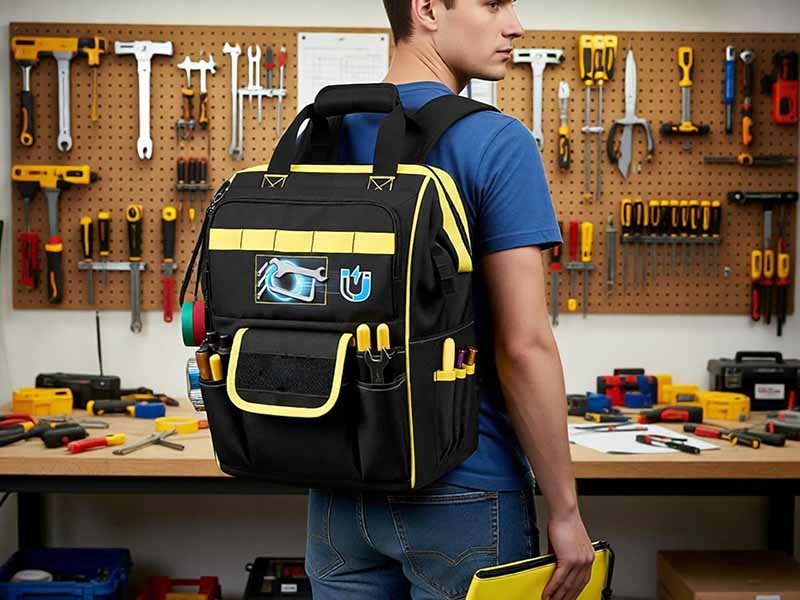
For many professionals, a tool bag is not just an accessory—it’s a daily work companion. Electricians, carpenters, HVAC technicians, and contractors rely on their tool bags to protect expensive tools, improve efficiency on the job site, and withstand years of physical abuse. That’s why the phrase “tool bags made in USA” carries so much weight. It signals durability, craftsmanship, and trust—but it also raises questions about price, availability, and sourcing flexibility.
Some buyers assume “Made in USA” automatically means better quality. Others are shocked by the price tags and wonder whether domestic production is truly worth the premium. Meanwhile, brands and distributors face a different challenge: how to balance customer demand for USA-made products with the realities of cost, lead time, and customization.
Tool bags made in USA are products that meet FTC standards for domestic manufacturing, meaning all or nearly all materials, labor, and processing occur in the United States. Buyers seek them for perceived quality, durability, and compliance, but they typically cost more due to higher labor and material expenses. While USA-made tool bags suit premium or professional markets, overseas OEM manufacturing offers more flexibility for custom designs, lower MOQs, and scalable production.
Behind every “Made in USA” label is a set of trade-offs. Understanding those trade-offs—before you buy or source—is the difference between a smart decision and an expensive mistake. Let’s break it down clearly, step by step.
What Does “Tool Bags Made in USA” Really Mean?
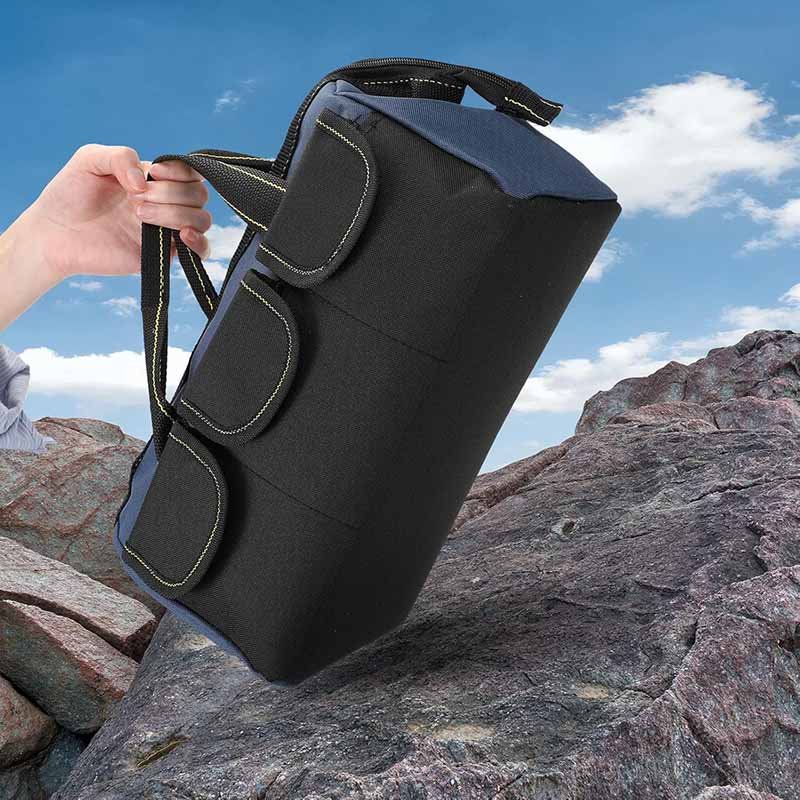
“Tool bags made in USA” refers to products that meet U.S. Federal Trade Commission (FTC) standards, meaning all or virtually all manufacturing processes, labor, and components occur in the United States. This includes domestic cutting, sewing, assembly, and finishing. Products labeled “assembled in USA” or “designed in USA” do not meet the same standard and indicate only partial U.S. involvement.
What qualifies a tool bag as “Made in USA” under FTC rules?
The FTC defines “Made in USA” as a claim that requires “all or virtually all” of a product to be made domestically. For tool bags, this means:
- Final assembly must occur in the U.S.
- Core manufacturing steps (cutting, sewing, reinforcing, stitching) must happen in the U.S.
- Most components—fabric, webbing, thread, foam, and reinforcement—must be U.S.-sourced or contribute minimally to foreign content
If imported components represent a significant portion of the product’s value, the claim may be considered misleading. This is why many manufacturers avoid using the “Made in USA” label unless they are fully compliant.
Are materials, labor, and assembly all required to be US-based?
Yes—but not equally.
The FTC focuses primarily on where the value is created, not just where parts come from. Labor-intensive processes such as sewing and structural reinforcement carry more weight than minor imported components like snaps or labels.
In practice:
- U.S. labor + U.S. assembly = essential
- Imported minor hardware = sometimes acceptable
- Imported main fabric or overseas sewing = usually disqualifying
This nuance explains why two tool bags that “look similar” may legally carry very different origin claims.
Are “assembled in USA” tool bags the same as “made in USA”?
No—and this distinction is critical for buyers.
- Made in USA: All or virtually all production is domestic
- Assembled in USA: Final assembly occurs in the U.S., but many components are imported
- Designed in USA: Only the design or engineering originates domestically
From a compliance and trust standpoint, only the first claim meets the strict FTC definition. Buyers specifically searching for tool bags made in USA are usually seeking the highest level of domestic manufacturing—not partial involvement.
What manufacturing steps must happen in the USA for a tool bag to qualify?
A truly USA-made tool bag typically includes the following domestic steps:
- Material cutting (fabric, leather, reinforcement panels)
- Industrial sewing and bar tacking
- Structural reinforcement (stress points, load-bearing seams)
- Assembly of pockets, frames, and compartments
- Final inspection and packing
If any of these core processes occur overseas, the product may no longer qualify as “Made in USA.”
Why is “Made in USA” harder to achieve for tool bags than for simple products?
Tool bags are complex, labor-intensive products. Unlike molded or automated goods, they require skilled sewing, multiple layers of reinforcement, and manual quality checks. This makes them costly to produce domestically and limits scalability.
As a result:
- Production volumes are usually smaller
- Customization options are limited
- Lead times can fluctuate based on labor availability
These realities explain both the premium pricing and the scarcity of true USA-made tool bags.
How can buyers verify “Made in USA” claims when sourcing tool bags?
Professional buyers should not rely on labels alone. Best practices include:
- Requesting written compliance confirmation
- Asking for a breakdown of manufacturing steps by location
- Reviewing supplier transparency about materials and labor
- Avoiding vague terms like “USA quality” without documentation
For brands and distributors, mislabeling can lead to FTC enforcement actions, customer backlash, and reputational damage.
Why Do Buyers Look for Tool Bags Made in USA?
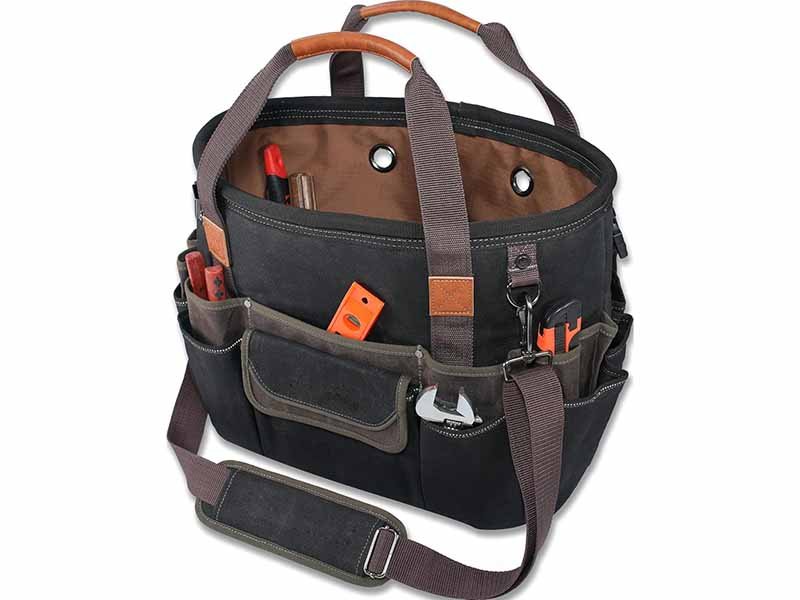
Buyers look for tool bags made in USA because they associate domestic manufacturing with durability, consistent quality, regulatory compliance, and brand trust. Professional users value longer service life and accountability, while brands value origin transparency. However, USA-made tool bags are more expensive due to higher labor and production costs, making them best suited for premium or professional markets rather than price-sensitive buyers.
Why does “Made in USA” matter to professional users and contractors?
For professionals, a tool bag is part of their livelihood. Electricians, carpenters, HVAC technicians, and linemen often carry tools worth thousands of dollars every day. A bag failure doesn’t just cause inconvenience—it causes downtime.
“Made in USA” signals:
- Stronger stitching and reinforcement
- More conservative load ratings
- Designs tested in real job-site conditions
- Easier communication with domestic suppliers
Professionals are often willing to pay more if it means fewer failures, less replacement, and more predictable performance.
Why are tool bags so expensive when they are made in the USA?
The cost difference is structural, not cosmetic.
USA-made tool bags cost more because:
- Sewing and reinforcement are labor-intensive
- Skilled labor wages are significantly higher
- Production runs are smaller (less economy of scale)
- Compliance, insurance, and overhead costs are higher
In many cases, a USA-made tool bag costs 2–4× more than an imported equivalent. For professionals, that premium can be justified over years of use. For casual users, it often isn’t.
Do buyers believe USA-made tool bags are higher quality?
Yes—perception plays a major role, but it’s not purely emotional.
Domestic manufacturing often allows:
- Tighter quality control loops
- Faster feedback between design and production
- Less variation between batches
However, it’s important to note that quality is not guaranteed by geography alone. Well-engineered tool bags produced by experienced overseas OEM factories can match or exceed USA-made quality when materials and processes are properly specified.
Why does “Made in USA” build more trust for brands and distributors?
From a brand perspective, “Made in USA” reduces certain risks:
- Clearer compliance with labeling laws
- Lower risk of origin-related customer complaints
- Stronger storytelling for premium positioning
For some customers—especially government buyers, unions, or institutional clients—domestic origin is not just a preference but a requirement. In these cases, trust and compliance outweigh cost considerations.
Are buyers motivated by ethics, patriotism, or supply-chain security?
All three—but in different proportions.
Some buyers value:
- Supporting domestic jobs
- Ethical labor standards
- Shorter, more transparent supply chains
Others prioritize:
- Reduced geopolitical risk
- More predictable lead times
- Local accountability
These motivations intensified after global supply-chain disruptions, making “Made in USA” more than just a patriotic label—it became a risk-management choice.
Who typically searches for “tool bags made in USA”?
Search intent usually comes from three groups:
- Professional tradespeople seeking long-term reliability
- Brand buyers or distributors evaluating sourcing strategies
- Consumers comparing premium vs imported options
Each group values “Made in USA” differently, which is why clear explanations—not slogans—matter when presenting USA-made tool bags.
Which Tool Bags Are Commonly Made in the USA?
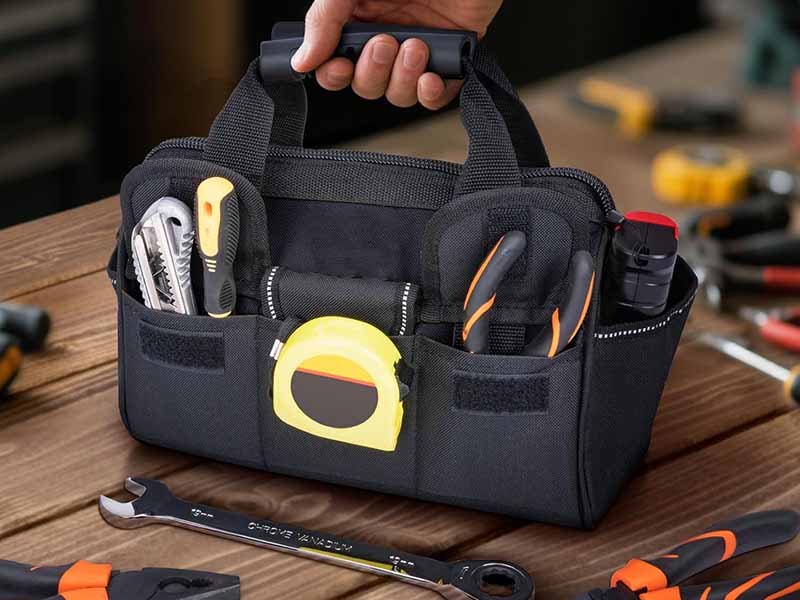
Tool bags commonly made in the USA are typically heavy-duty, professional-grade products such as leather tool belts, carpenter nail bags, electrician pouches, framing rigs, and specialty trade tool bags. These products emphasize durability, load-bearing strength, and long service life, making them suitable for small-batch, labor-intensive domestic manufacturing rather than mass-market production.
Which types of tool bags are most often made in the USA?
USA manufacturing is most common in high-stress, trade-specific tool bags where performance matters more than price.
The most frequently USA-made categories include:
- Leather tool belts and nail bags (carpenters, framers)
- Electrician tool pouches (compact, modular designs)
- Framing rigs and suspension systems
- Heavy canvas or leather tool totes
- Utility and lineman tool bags
These bags share common traits: thick materials, heavy stitching, reinforced stress points, and relatively stable designs that don’t change seasonally. This stability makes domestic production feasible despite higher labor costs.
Why are leather tool bags and tool belts more likely made in the USA?
Leather tool bags are one of the strongest USA-made categories for three reasons:
- Skilled labor dependency Leather cutting, forming, and stitching rely heavily on craftsmanship rather than automation.
- Durability-first design Leather tool bags are built for years of use, aligning with the long-term value proposition of USA manufacturing.
- Lower design volatility Leather tool belts don’t change style frequently, allowing small domestic factories to focus on consistency rather than rapid redesign.
This is why many iconic USA-made tool bags are leather-based rather than synthetic.
Where are Occidental tool bags made, and why are they a key example?
Occidental Leather is one of the most cited examples when discussing tool bags made in the USA. Their manufacturing is based in California, and they specialize in:
- Heavy leather tool belts
- Framing and carpentry systems
- Modular pouches for professional trades
Occidental’s products are widely respected for durability and ergonomics. However, they also illustrate the trade-offs of USA manufacturing: higher price points, limited customization, and focus on professional users rather than private-label buyers.
They are a reference brand—not a universal solution.
Are heavy-duty and specialty tool bags more likely US-produced?
Yes. The more specialized and job-specific a tool bag is, the more likely it is to be made in the USA.
Examples include:
- Tool bags designed for union trades
- Bags with strict weight-distribution requirements
- Products made for safety-regulated environments
These niches value reliability and compliance over price, making domestic production economically viable.
Which tool bags are rarely made in the USA (and why)?
Understanding what is not made in the USA is just as important.
Rarely USA-made:
- Mass-market nylon tool backpacks
- Multi-pocket polyester tool organizers
- Entry-level retail tool bags
- Highly stylized or seasonal designs
These products require large-scale automation, low unit cost, and frequent design changes—conditions that favor overseas manufacturing.
Do USA-made tool bags usually support customization or private label?
In most cases, no.
USA manufacturers typically:
- Focus on their own branded products
- Offer limited or no OEM/private-label services
- Have fixed designs and materials
- Enforce higher MOQs or non-negotiable pricing
This is why brands seeking customization often look beyond USA manufacturing, even if they respect USA-made craftsmanship.
How should buyers decide if a USA-made tool bag fits their needs?
Ask yourself:
- Is durability more important than price?
- Do I need customization or branding?
- Is this for professional daily use or resale?
- Do customers require USA origin, or just high quality?
USA-made tool bags excel in professional, durability-first scenarios. For branded resale, product line expansion, or cost-sensitive markets, other sourcing models often make more sense.
How Do Tool Bags Made in USA Compare to Imported Tool Bags?
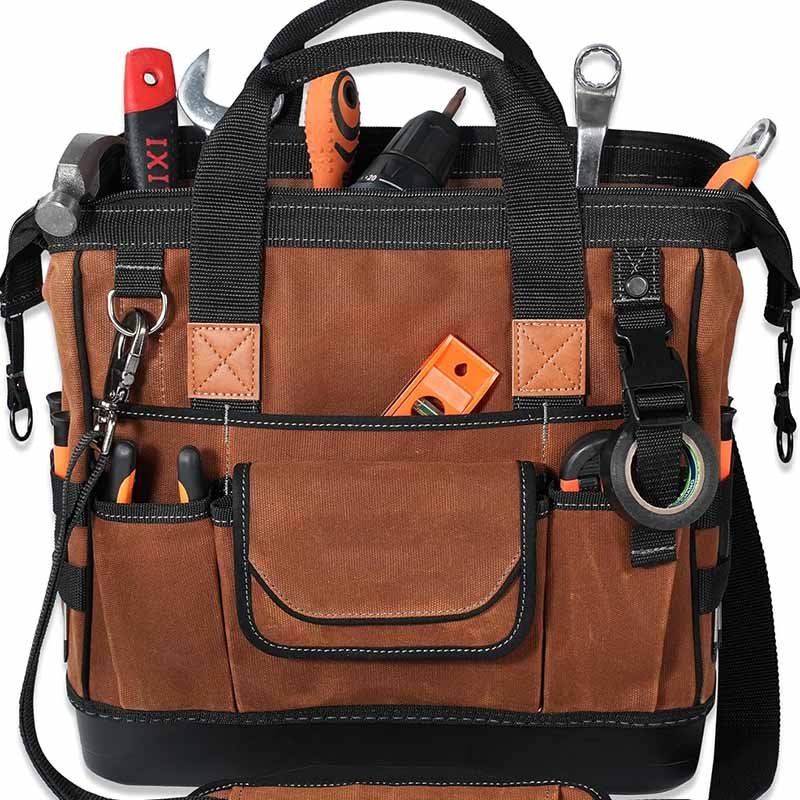
Tool bags made in the USA typically offer stronger domestic branding, perceived durability, and compliance transparency but come with higher costs, limited customization, and lower scalability. Imported tool bags—especially those produced by experienced OEM manufacturers—offer lower prices, broader material options, flexible branding, and low MOQs. The better choice depends on whether durability heritage or customization, cost control, and scalability matter more to the buyer.
How do price, lead time, and MOQ compare between USA-made and imported tool bags?
The most immediate difference buyers notice is cost structure.
| Factor | USA-Made Tool Bags | Imported Tool Bags |
|---|---|---|
| Unit price | High | Low to mid |
| Labor cost | Very high | Low |
| MOQ | Fixed / often high | Low MOQ available |
| Lead time | Short–moderate | Moderate |
| Scalability | Limited | High |
USA-made tool bags often cost 2–4 times more per unit due to labor-intensive construction and smaller batch sizes. Imported tool bags benefit from economies of scale, making them far more accessible for brands, distributors, and growing product lines.
How do durability and build quality really compare?
This is where misconceptions often appear.
USA-made tool bags are typically:
- Built for professional daily use
- Over-engineered at stress points
- Conservatively rated for load capacity
However, durability is not guaranteed by geography alone. Imported tool bags manufactured by experienced OEM factories—using 900D–1680D fabrics, reinforced bartacking, double stitching, and structured panels—can match or exceed the durability of many USA-made products when specifications are clear.
The real difference lies in engineering discipline, not the country of origin.
How do customization and private-label options compare?
This is one of the biggest decision drivers for brands.
USA-made tool bags:
- Rarely support OEM or private label
- Offer limited material or color changes
- Focus on fixed, proven designs
Imported tool bags:
- Support full OEM/ODM customization
- Offer fabric, size, structure, and layout flexibility
- Allow logo options (woven label, embroidery, rubber patch, print)
- Support branded packaging
For any brand building a differentiated product line, imported manufacturing is usually the only viable option.
Is Veto Pro Pac American, and what does that tell buyers?
Veto Pro Pac is an American brand, but most of its tool bags are manufactured overseas.
This is not an exception—it’s a strategic choice. By designing in the USA and manufacturing overseas, brands like Veto Pro Pac can:
- Maintain strict design control
- Achieve consistent quality
- Offer broader product ranges
- Keep pricing within reach of professionals
This hybrid model highlights a key reality: American brands do not always manufacture domestically, and doing so doesn’t automatically reduce quality.
How do compliance, labeling, and legal risks compare?
USA-made tool bags simplify compliance for buyers who require domestic origin, such as:
- Government contracts
- Union projects
- Institutional procurement
Imported tool bags require careful origin labeling (“Made in China,” “Made in Vietnam,” etc.), but when done transparently, they pose no legal risk. Problems arise only when brands misrepresent origin, not when they manufacture overseas responsibly.
Which option offers better long-term supply-chain stability?
This depends on priorities.
USA manufacturing offers:
- Shorter physical distance
- Easier communication
- Fewer geopolitical variables
Imported manufacturing offers:
- Multiple sourcing options
- Better scalability
- More resilient cost structure
Many mature brands mitigate risk by using dual sourcing: USA-made flagship products and imported lines for volume or customization.
Which buyers should choose USA-made tool bags, and who should choose imported ones?
Choose USA-made tool bags if you:
- Sell to professionals demanding domestic origin
- Value heritage branding and craftsmanship
- Don’t require customization
- Accept higher price points
Choose imported tool bags if you:
- Need OEM or private-label branding
- Want cost control and low MOQs
- Plan to scale product lines
- Serve price-sensitive or mixed markets
Are Tool Bags Made in USA Worth the Cost?
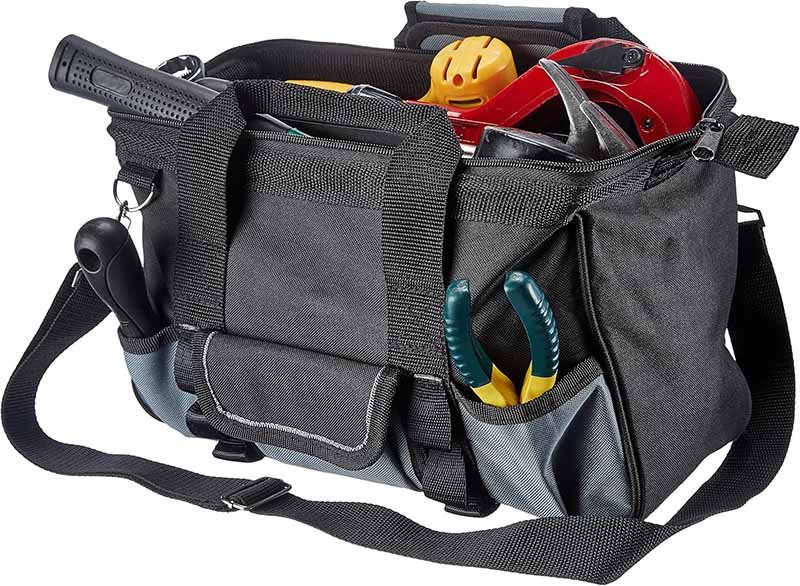
Tool bags made in USA are worth the cost for professionals who rely on their bags daily and value long-term durability, domestic origin, and compliance. However, for brands, distributors, and price-sensitive buyers, imported tool bags often deliver better value through lower cost, customization, and scalability. Whether USA-made tool bags are “worth it” depends on how the bag is used, who is buying it, and what risks or requirements matter most.
Is the higher price of USA-made tool bags justified by lifespan?
For many professional users, the answer is yes—but with conditions.
USA-made tool bags are often built with:
- Thicker leather or heavier fabrics
- More conservative load tolerances
- Reinforced stress points
- Slower, craftsmanship-focused production
This often results in a longer usable lifespan, especially in harsh job-site conditions. A bag that lasts 5–10 years can be cost-effective compared to replacing cheaper bags every 1–2 years.
However, lifespan advantage only matters if:
- The bag is used daily
- It carries heavy tools
- Downtime or failure has real cost
For light or occasional use, the premium rarely pays back.
Do USA-made tool bags reduce risk for professional users?
Yes—and this is often overlooked.
For professionals:
- A bag failure can damage tools
- Lost or broken tools mean downtime
- Downtime means lost income
USA-made tool bags are often chosen not because they are cheaper—but because they reduce operational risk. In this context, paying more upfront is a form of insurance.
For casual users or homeowners, this risk reduction is far less valuable.
Are USA-made tool bags worth it for brands and resellers?
In most cases, no—and this is where many sourcing decisions become clearer.
For brands and distributors:
- USA-made bags are expensive to wholesale
- Customization is limited or unavailable
- MOQs and design flexibility are restricted
- Margins are harder to control
Unless your brand identity is built entirely around “Made in USA,” the cost structure often doesn’t support scalable resale.
This is why many successful American brands design domestically but manufacture overseas.
How does cost-per-use compare between USA-made and imported tool bags?
Looking at cost-per-use helps remove emotion from the decision.
Example:
- USA-made bag: $300 lasting 8 years → ~$37/year
- Imported bag: $120 lasting 3 years → ~$40/year
In professional use, USA-made can actually be cheaper long-term. In light use, the imported option almost always wins.
The key variable is intensity of use, not the label.
Are there situations where USA-made tool bags are required, not optional?
Yes. In some cases, USA-made is not about preference—it’s about compliance.
Examples include:
- Government or municipal contracts
- Union or infrastructure projects
- Buyers with strict domestic sourcing policies
In these scenarios, the higher cost is unavoidable and justified by regulatory or contractual requirements.
Can high-quality imported tool bags offer similar value at lower cost?
Absolutely—when sourced correctly.
Experienced OEM manufacturers can produce tool bags with:
- 900D–1680D fabrics
- Reinforced stitching and bartacking
- Structured panels and load-tested designs
- Consistent quality control
When engineered properly, these bags meet the needs of many professionals at a significantly lower price point—especially for branded or private-label programs.
How should buyers decide if USA-made tool bags are worth it for them?
Ask yourself:
- Will this bag be used daily or occasionally?
- Does failure cause real financial loss?
- Is domestic origin required or just preferred?
- Do I need customization or branding?
- Am I paying for performance or ideology?
Clear answers to these questions usually make the decision obvious.
Tool bags made in USA are not universally “better”—they are situationally better. They make sense when durability, compliance, and risk reduction matter more than price. For many buyers and most brands, imported tool bags offer better overall value when quality engineering and responsible manufacturing are in place.
How Should Brands Source Tool Bags If “Made in USA” Is Required?
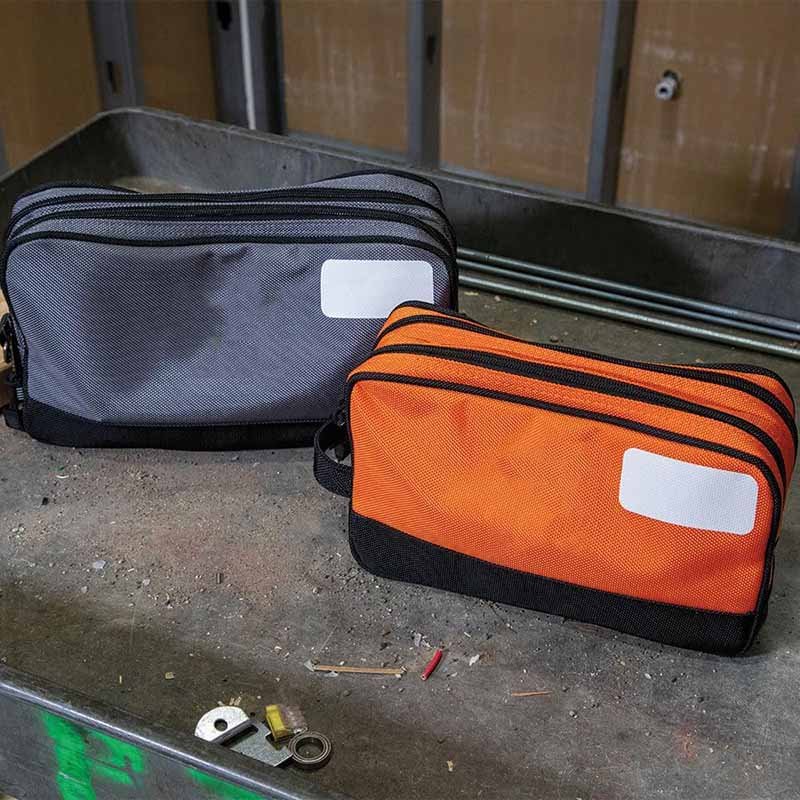
Brands sourcing tool bags labeled “Made in USA” must verify FTC compliance, ensure that all or virtually all manufacturing occurs domestically, and work with transparent suppliers. This typically involves higher costs, limited customization, and smaller production runs. When full domestic production is impractical, brands may consider compliant alternatives such as “assembled in USA” or dual sourcing strategies—provided labeling is clear and accurate.
How can brands verify “Made in USA” claims and FTC compliance?
Verification is not optional—it’s a legal necessity.
Brands should request:
- Written confirmation of FTC compliance
- A breakdown of manufacturing steps and locations
- Transparency on material sourcing
- Documentation of domestic labor involvement
Red flags include vague language (“USA quality,” “American standard”) and reluctance to explain production steps. FTC enforcement actions can result in fines and brand damage, so due diligence is essential.
What questions should brands ask a USA-based tool bag supplier?
Before committing, brands should ask:
- Where are cutting, sewing, and assembly performed?
- Which materials are sourced domestically vs imported?
- Can you support consistent quality across batches?
- What customization options are available, if any?
- How do you document origin for compliance audits?
Suppliers who can answer clearly are far less risky than those who cannot.
What are the practical limitations of sourcing tool bags made in USA?
Brands often underestimate these constraints:
- Higher unit costs limit pricing flexibility
- Limited material options restrict design variation
- Higher MOQs or fixed designs reduce differentiation
- Capacity constraints limit scalability
These limitations don’t mean USA sourcing is “bad”—but they must be planned for honestly.
Can brands still offer customization or private label with USA-made tool bags?
In most cases, customization is minimal.
USA manufacturers usually:
- Focus on their own branded products
- Offer fixed SKUs rather than custom builds
- Allow limited logo applications, if any
If your brand strategy depends on unique designs, multiple SKUs, or frequent updates, full USA manufacturing may not be compatible.
What compliant alternatives exist if full USA manufacturing is not feasible?
When 100% USA production isn’t practical, brands often use compliant alternatives:
- “Assembled in USA” (final assembly domestic, components imported)
- Dual-line strategy (USA-made flagship + imported core line)
- Overseas OEM with transparent origin labeling
The key is honesty and clarity. Mislabeling is far riskier than manufacturing overseas.
How does hybrid sourcing work without violating USA labeling rules?
Hybrid sourcing can be effective if:
- Only compliant products carry “Made in USA” labels
- Imported products are clearly labeled by origin
- Marketing language avoids implying domestic origin where it doesn’t exist
Many mature brands use hybrid models to balance compliance, cost, and scalability.
When does sourcing overseas actually make more sense for brands?
Overseas sourcing is often the better option when brands need:
- OEM / private-label programs
- Low MOQs for market testing
- Broad material and design flexibility
- Predictable cost control
- Scalable production capacity
This is why many American brands design domestically but manufacture overseas—without compromising quality.
Key Takeaway for Brands
Sourcing tool bags labeled “Made in USA” is as much a legal and strategic decision as a manufacturing one. It works best for premium, compliance-driven, or heritage-focused brands. For growth-oriented brands, hybrid or overseas sourcing—done transparently—often delivers better long-term results.
FAQ: Tool Bags Made in USA
Tool bags made in USA must meet FTC standards requiring all or virtually all manufacturing to occur domestically. Not all American brands manufacture in the USA, and labels like “assembled in USA” or “designed in USA” indicate partial domestic involvement. USA-made tool bags typically cost more and offer limited customization, while imported tool bags dominate OEM and private-label markets.
What does “Made in USA” legally mean for tool bags?
Legally, “Made in USA” means that all or virtually all of a tool bag’s manufacturing—including cutting, sewing, assembly, and finishing—takes place in the United States. According to FTC guidelines, minor imported components may be allowed only if they represent a small portion of total value. If major materials or labor are overseas, the product cannot legally claim “Made in USA.”
Are “assembled in USA” tool bags the same as “made in USA”?
No. “Assembled in USA” means final assembly happens domestically, but many components or earlier processes occur overseas. This claim is legally distinct and should not be confused with full domestic manufacturing. Buyers specifically searching for “tool bags made in USA” are usually looking for the stricter FTC definition, not partial assembly.
Are all American tool bag brands actually made in the USA?
No. Many well-known American brands are designed in the USA but manufactured overseas. This approach allows brands to control quality and design while keeping costs manageable and offering broader product ranges. Being an American brand does not automatically mean domestic manufacturing.
Is Veto Pro Pac American, and where are their tool bags made?
Veto Pro Pac is an American brand founded in the United States, but most of its tool bags are manufactured overseas. This is a strategic choice that balances quality, cost, and scalability. Their case illustrates that overseas manufacturing does not inherently mean lower quality when engineering and quality control are properly managed.
Where are Occidental tool bags made, and why are they often cited?
Occidental Leather manufactures its tool bags in the United States, primarily in California. They are frequently cited because they represent one of the clearest examples of true USA-made tool bags, particularly in leather carpenter and framing systems. Their products also reflect the higher price points and limited customization typical of domestic production.
Why are tool bags made in USA so expensive?
USA-made tool bags are expensive mainly due to higher labor costs, smaller production runs, and labor-intensive construction. Skilled sewing, reinforcement, and quality checks significantly increase cost. Compliance, insurance, and overhead expenses also contribute. These costs reflect structural realities rather than branding alone.
Do tool bags made in USA last longer than imported ones?
Often—but not always. USA-made tool bags are typically built for professional use with conservative load ratings and reinforced construction. However, imported tool bags produced by experienced OEM manufacturers can match or exceed durability when proper materials and engineering standards are applied. Longevity depends more on design and quality control than origin alone.
Are USA-made tool bags worth the higher price?
They are worth it for professionals who use tool bags daily, value domestic origin, or require compliance for contracts. For casual users, brands, or resellers, imported tool bags often offer better overall value due to lower cost, customization options, and scalability.
Can brands order custom or private-label tool bags made in USA?
In most cases, customization options are limited. USA manufacturers often focus on their own branded products and fixed designs. OEM or private-label services are rare and typically expensive. Brands seeking extensive customization usually turn to overseas manufacturing.
How can buyers verify a “Made in USA” claim when sourcing tool bags?
Buyers should request written compliance confirmation, a breakdown of manufacturing steps, and transparency about material sourcing. Vague marketing language without documentation is a red flag. Brands are legally responsible for accurate labeling, even if they rely on suppliers.
What are the best alternatives if full USA manufacturing is not possible?
Common alternatives include “assembled in USA” labeling, dual-line product strategies (USA-made flagship + imported core line), or transparent overseas manufacturing with accurate origin labeling. These approaches allow brands to balance compliance, cost, and scalability without misleading customers.
Do government or institutional buyers require USA-made tool bags?
Sometimes. Certain government, union, or infrastructure projects may require domestic origin. In these cases, USA-made tool bags are not optional but mandatory. Buyers should always confirm contract requirements before sourcing.
Are imported tool bags legal to sell in the USA?
Yes. Imported tool bags are legal as long as country-of-origin labeling is accurate and compliant. Problems arise only when origin is misrepresented, not from overseas manufacturing itself.
Conclusion
If you are sourcing tool bags for your brand, distributor network, or professional customers, choosing the right manufacturing strategy matters more than choosing a label.
Szoneier is a China-based tool bag manufacturer with 18+ years of experience,.
Whether you need heavy-duty tool bags, cooler tool totes, fire-resistant tool bags, or branded work gear, we help you balance performance, cost, and scalability—without compromising quality.
Contact Szoneier today to discuss your custom tool bag project and request a quotation.