Skip to content
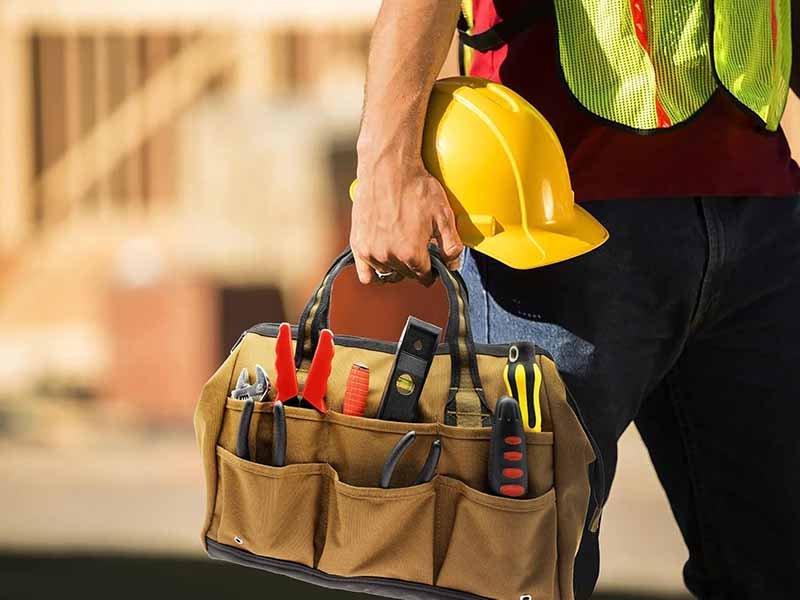
A lot of tool bags look strong when they are brand new. The fabric feels thick, the handles feel solid, and the bag gives the impression that it can survive years of rough use. But on real job sites, the first serious damage usually does not start at the zipper or handle. It starts at the corners. That is where the bag scrapes the ground, hits truck beds, rubs against concrete, and carries the pressure of heavy tools day after day. Once the corner starts wearing through, the whole bag begins to lose shape, strength, and reliability.
For professionals carrying drills, pliers, socket sets, hammers, testers, and hardware, the bottom corners take the hardest punishment. They face repeated friction from rough surfaces, constant compression from concentrated weight, and impact every time the bag is dropped or set down quickly. ASTM notes that abrasion performance is influenced by fiber properties, yarn construction, fabric structure, finishes, and test conditions, which is why bag durability cannot be judged by fabric thickness alone. AATCC and ASTM also both maintain abrasion test methods because abrasion resistance is a core performance issue for textiles in real use.
Reinforced corner design for tool bags means adding extra protection to the bottom corners and nearby wear zones by using stronger fabrics, layered construction, better stitching patterns, and in some cases rubber, TPU, PVC, or molded base components. The goal is simple: reduce wear, slow down fabric breakdown, and help the bag keep carrying heavy tools without premature failure. ASTM also makes an important point here: lab abrasion testing is useful for comparing materials, but real end-use trials still matter, because actual wear depends on how and where the product is used.
That is exactly why reinforced corner design matters so much for custom tool bags. A tool bag is not just a storage product. For many electricians, mechanics, field service teams, installers, and industrial maintenance crews, it is daily working equipment. If the corners fail, the bag stops being dependable. At Szoneier, this is one of the first areas worth upgrading when a customer wants a bag that lasts longer, carries more weight, and reflects a more professional product standard.
What Is Reinforced Corner Design for Tool Bags?
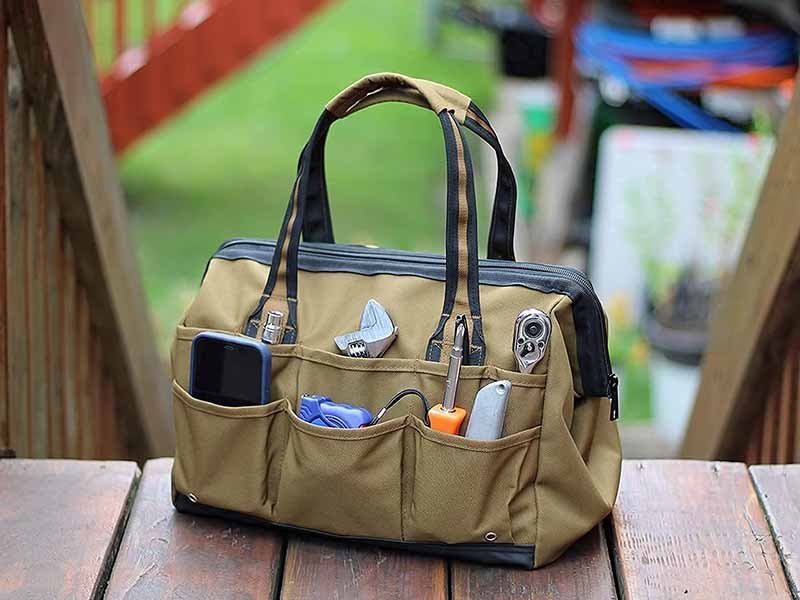
Reinforced corner design for tool bags is the method of strengthening the bottom corner areas of a bag so they resist rubbing, tearing, and deformation under heavy daily use. In practical manufacturing, this usually means combining tougher outer materials, extra internal support, stronger seam construction, and protective corner patches or base structures to handle the most punishing contact points. ASTM guidance supports this approach because abrasion resistance depends on more than one factor; fibers, yarns, fabric build, and finishing all affect performance.
Why Is Reinforced Corner Design Important for Tool Bags?
Most customers ask about fabric weight first. They want to know whether 600D, 900D, or 1680D is “strong enough.” That is a fair question, but on a heavy-duty tool bag, the real problem is often not the main body panel. The problem is where stress gets concentrated.
The corner is a meeting point for several forces:
- The full load of the tools pushes downward.
- The bag edge rubs against rough ground.
- The seam line bends when the bag is lifted.
- The corner absorbs shock when the bag is dropped.
- Dirt, dust, and moisture collect at the bottom and accelerate wear.
In other words, the corner does not face one kind of damage. It faces several kinds at the same time. That is why an ordinary single-layer construction often fails early even when the rest of the bag still looks acceptable.
For customers developing private label or OEM tool bags, this matters for more than product life. Corner failure creates visible quality complaints fast. End users may say things like:
- “The bottom wore through too soon.”
- “The bag cannot stand up anymore.”
- “The stitching opened after a few months.”
- “The tools started poking the corners.”
These are not minor cosmetic issues. They directly affect repeat orders, review quality, warranty claims, and brand trust.
A stronger corner design usually gives three practical business advantages:
| Benefit | What It Means for the End User | What It Means for the Brand |
|---|---|---|
| Better abrasion resistance | Less wear on concrete, tile, steel, and truck beds | Fewer early complaints |
| Better load support | Bag keeps shape under heavy tools | Higher perceived quality |
| Better seam protection | Lower risk of corner splitting | Lower after-sales cost |
This is also why many premium industrial bags do not rely on fabric alone. CORDURA states that its classic and ballistic nylon fabrics are built for abrasion resistance and tear strength, while industrial coated ballistic nylon products are widely used in equipment and gear applications where tougher wear performance is needed.
For a customer comparing factories, the most useful question is not just “What fabric do you use?” A better question is: How do you build the corners, and what do you add in the high abrasion zones? That answer tells you much more about whether the bag is truly designed for work.
Where Are the High Abrasion Zones on Tool Bags?
If a customer wants a durable custom tool bag, it helps to map the wear zones before talking about materials. Not every part of the bag needs the same level of protection. Some panels mainly need shape and appearance. Others need real structural reinforcement.
The highest-risk areas are usually these:
| Wear Zone | Main Problem | Common Failure Sign | Reinforcement Priority |
|---|---|---|---|
| Bottom corners | Scraping and impact | Fraying, holes, seam opening | Very high |
| Bottom edge seam | Ground friction | Stitch wear, tape damage | Very high |
| Base panel | Compression and dragging | Surface abrasion, sagging | High |
| Handle anchor area | Load tension | Stitch pulling, distortion | High |
| Side pocket lower edge | Rubbing and snagging | Fabric thinning | Medium |
Among these, the bottom corners nearly always deserve the most attention because they touch the floor first and take the most concentrated pressure. This becomes even more serious when the bag is used in:
- Construction environments with concrete and gravel
- Mechanical workshops with oil, metal edges, and hard floors
- Electrical service work with frequent vehicle loading and unloading
- Industrial plants where bags are dragged more than carried
ASTM’s abrasion guidance helps explain why these zones behave differently in use: abrasion results are affected by fabric structure, specimen pressure, the nature of the rubbing surface, and even debris build-up during testing. In real life, that means a corner dragged across unfinished concrete is a very different wear situation from a bag resting on a smooth office floor.
This is where many low-cost bags fall short. They may use a decent-looking body fabric, but the corner area still has:
- only one fabric layer,
- no patch reinforcement,
- standard stitching density,
- no protective piping or binding upgrade,
- no raised base structure.
That kind of build may look acceptable in photos, but under real field use, wear starts quickly.
For Szoneier customers developing heavy-duty tool bags, one practical approach is to separate the bag into performance zones: standard body zones, support zones, and high abrasion zones. That lets the budget go where it matters most instead of overbuilding the whole bag unnecessarily.
Do Reinforced Corners Extend Tool Bag Lifespan?
Yes, they usually do, and often by a meaningful margin. But it is important to be honest about what “longer lifespan” really means. A reinforced corner does not make a tool bag indestructible. What it does is slow down the first stage of failure in the area most likely to break first.
That matters because early corner wear tends to trigger other issues:
- The bag loses its upright shape.
- Moisture and debris enter from the damaged base.
- The seam line becomes exposed.
- Internal pressure from tools pushes through weakened areas.
- The product starts to look old even if the rest of the bag is still functional.
A reinforced corner delays that chain reaction.
In custom product development, customers often face a choice between two strategies:
| Strategy | Upfront Cost | Durability Outcome | Suitable For |
|---|---|---|---|
| Basic single-layer corner | Lower | Faster visible wear | Entry-level price projects |
| Reinforced multi-layer corner | Higher | Better long-term value | Professional and repeat-use markets |
For many brands, the smarter business decision is not always the cheapest ex-factory price. It is the structure that reduces return risk and improves user satisfaction after three, six, and twelve months of use.
ASTM also cautions that abrasion test results should be used together with real end-use trials, because laboratory comparisons alone do not fully predict service life in specific applications. That is especially relevant in tool bags. A bag carried lightly indoors and a bag dragged across concrete during field installation are not the same product situation, even if the base fabric is identical.
So when customers ask, “Will reinforced corners really make a difference?” the most practical answer is this: they usually make the biggest difference in the part of the bag most likely to fail first. That is exactly why good factories pay close attention to those zones.
Why Do Tool Bags Need Reinforced Corner Design?
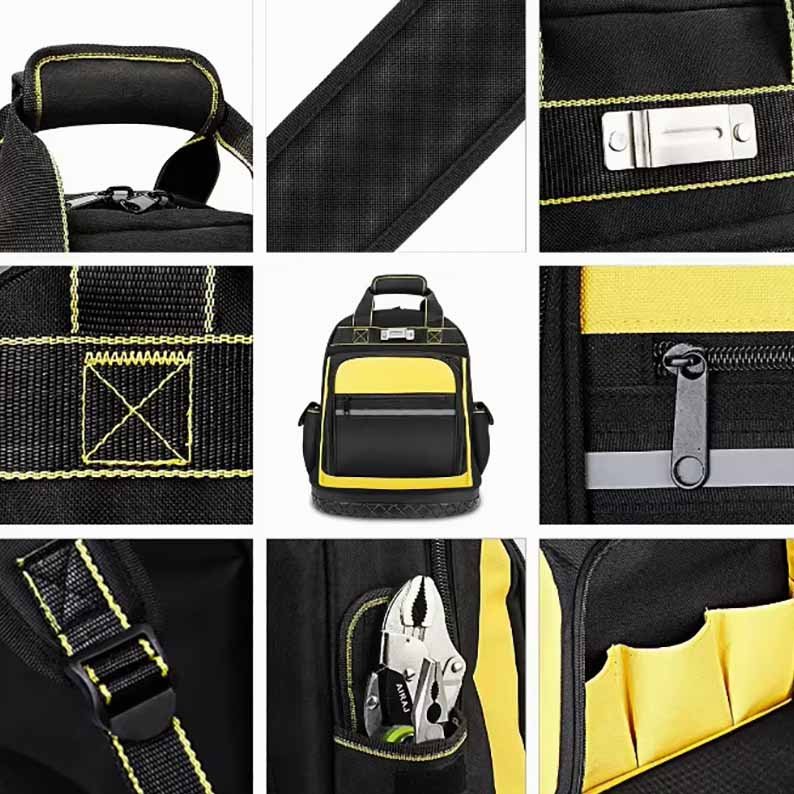
Tool bags need reinforced corner design because the bottom corners experience the highest concentration of pressure, abrasion, and impact during daily use. When tools are placed inside the bag, gravity pushes the weight toward the bottom edges. When the bag is lifted, dropped, or dragged across rough surfaces, those same corners absorb the majority of the mechanical stress. Without reinforcement, the fabric and seams in these areas tend to wear out much faster than the rest of the bag.
Unlike backpacks or luggage, tool bags are used in demanding environments such as construction sites, repair workshops, electrical maintenance work, and industrial facilities. These workplaces often involve rough floors, sharp edges, and heavy equipment. As a result, the bottom corners of the bag are constantly rubbing against hard surfaces.
To understand the need for reinforced corner design, it helps to look at how tool bags are typically used during a normal workday.
A technician or electrician may place their tool bag on the ground 20–50 times per day. Each time the bag is set down, the weight of the tools transfers directly to the bottom corners. Over weeks and months, this repeated contact slowly breaks down the fabric fibers.
How Do Heavy Tools Damage Tool Bag Corners?
One of the main reasons reinforced corners are necessary is the density of tools carried inside the bag. Most professional tool bags are designed to carry metal tools, which are compact but heavy.
Here is a typical weight distribution inside a medium-sized tool bag:
| Tool Type | Average Weight |
|---|---|
| Cordless drill | 1.5 – 2.5 kg |
| Hammer | 0.7 – 1 kg |
| Socket wrench set | 2 – 4 kg |
| Adjustable wrench | 0.4 – 1 kg |
| Screwdrivers and pliers | 0.5 – 1 kg |
| Electrical testing equipment | 0.3 – 0.8 kg |
A fully loaded tool bag can easily reach 10–20 kg (22–44 lbs). When the bag sits on the ground, this weight presses directly downward onto the base and especially the corners.
Because tools are rigid objects, they do not distribute weight evenly. Instead, they shift and settle into the corners of the bag. This creates pressure points inside the bag, which push against the outer fabric.
Over time, this pressure weakens the corner structure in several ways:
- Fabric fibers gradually thin due to friction.
- Stitching begins to loosen under repeated load tension.
- Seam intersections experience stress when the bag is lifted.
- The corner fabric begins to deform under concentrated weight.
Once the corner structure weakens, small holes may appear, allowing tools to push through the fabric. At this point the bag often becomes unusable even though the rest of the bag still looks intact.
Which Tool Bag Areas Wear Out First?
Field feedback from technicians and repair professionals shows that tool bags usually fail in predictable locations. These high-stress areas are often called wear zones because they receive more friction and pressure than other parts of the bag.
The most common wear zones include:
| Wear Zone | Cause of Damage | Typical Signs of Wear |
|---|---|---|
| Bottom corners | Constant ground friction and load pressure | Fabric thinning, holes |
| Bottom seam edges | Dragging across rough surfaces | Stitching fray |
| Handle anchor points | Repeated lifting of heavy loads | Stitch stretching |
| Base panel center | Compression from tools | Material deformation |
| Lower pocket edges | Frequent rubbing against tools | Fabric abrasion |
Among these areas, bottom corners usually fail first because they experience both internal pressure from tools and external friction from the ground.
When a bag is dragged slightly instead of lifted, the corners become the main contact point with the floor. On rough concrete surfaces, this can quickly wear down ordinary fabric materials.
For this reason, reinforced corner design focuses specifically on protecting these areas before damage begins.
Are Corners the Weakest Part of Tool Bags?
In many standard tool bag designs, the corners are indeed the weakest structural point. This is mainly because several mechanical stresses meet at the same location.
The corner area must handle:
- downward pressure from tool weight
- seam tension when the bag is lifted
- friction against hard surfaces
- bending when the bag changes shape under load
Because multiple seams intersect at the corner, the structure is naturally more vulnerable than flat fabric panels.
In a basic tool bag without reinforcement, the corner may consist of only:
- one layer of fabric
- standard seam stitching
- minimal structural support
This type of construction works well for light-duty use but may wear out quickly when the bag carries heavy tools daily.
Reinforced corner design improves this weak point by strengthening the structure through additional materials and construction methods. Common improvements include:
| Reinforcement Method | Benefit |
|---|---|
| Double-layer corner fabric | Slows abrasion |
| Reinforcement patches | Protects contact area |
| Bartack stitching | Strengthens seam intersections |
| Binding tape reinforcement | Protects seam edges |
| Structural base inserts | Distributes weight across the base |
By strengthening these areas, the bag can handle heavier loads while maintaining its shape and structural integrity.
For companies developing custom tool bags, reinforced corners are one of the most effective ways to improve durability without significantly increasing overall manufacturing cost. Instead of reinforcing the entire bag, manufacturers focus on the specific areas that receive the most stress during real-world use.
This targeted reinforcement approach allows the product to remain lightweight and flexible while still performing reliably in demanding work environments.
Which Materials Are Used in Reinforced Corner Design for Tool Bags?
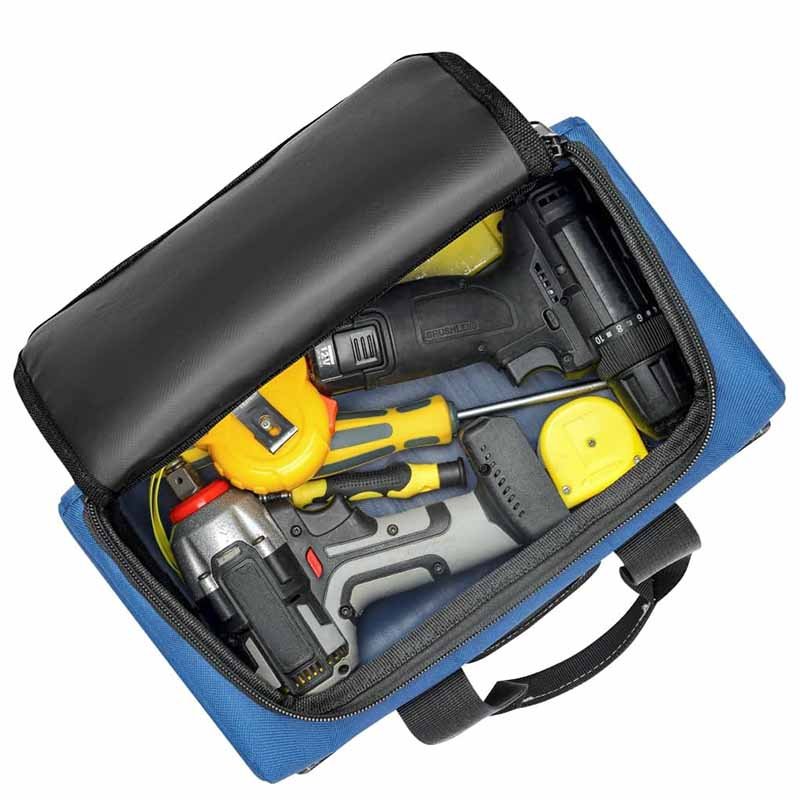
Reinforced corner design for tool bags relies heavily on selecting the right materials for the areas that experience the most friction and pressure. In heavy-duty work environments, standard fabrics alone are rarely enough to protect the corners. Manufacturers typically combine abrasion-resistant fabrics, protective coatings, and reinforcement components to slow down wear and extend product life.
The most durable designs usually involve two or more materials working together. For example, a strong outer fabric may resist tearing, while a rubberized corner patch absorbs friction against the floor. The goal is not simply to make the bag thicker, but to make the high-wear zones more resistant to abrasion and stress.
Is 1680D Nylon Good for Reinforced Tool Bag Corners?
Among professional tool bag materials, 1680D ballistic nylon has become one of the most widely used options for high-stress areas such as corners and base panels. The reason is simple: it offers a strong balance of abrasion resistance, tear strength, and flexibility.
Compared with standard polyester fabrics, ballistic nylon fibers are woven in a tighter and heavier structure. This allows the material to resist repeated rubbing and maintain its integrity even after long exposure to rough surfaces.
The following comparison shows why many manufacturers choose this material for reinforcement areas:
| Fabric Type | Abrasion Resistance | Tear Strength | Typical Use |
|---|---|---|---|
| 600D Polyester | Medium | Medium | Light duty tool bags |
| 900D Polyester | Medium-High | Medium | Mid-range work bags |
| 1680D Ballistic Nylon | High | High | Professional tool bags |
| 1050D Cordura Nylon | Very High | Very High | Industrial gear and military equipment |
For customers developing tool bags that must survive daily jobsite use, 1680D nylon offers several advantages:
- stronger resistance to floor abrasion
- better structural stability under heavy loads
- longer service life in high-wear areas
- improved professional appearance after extended use
Many factories also apply PU or PVC backing coatings to ballistic nylon fabrics. These coatings increase water resistance and add an additional protective layer between the tool bag interior and the outer surface.
For reinforced corners specifically, manufacturers often use double-layer ballistic nylon panels, which significantly slow down fabric breakdown.
Are TPU or PVC Patches Used in Reinforced Tool Bag Corners?
Fabric reinforcement alone may not be sufficient when tool bags are used on extremely rough surfaces such as construction floors, steel platforms, or gravel areas. In these environments, many manufacturers add TPU or PVC corner patches.
These patches function like protective armor for the corners. Instead of the fabric rubbing directly against the ground, the patch takes the friction.
Common patch materials include:
| Material | Characteristics | Typical Application |
|---|---|---|
| PVC reinforcement patch | Thick, durable, cost-efficient | Entry-level heavy-duty bags |
| TPU corner guard | Flexible and abrasion resistant | Professional tool bags |
| Rubber corner armor | Excellent friction resistance | Industrial tool carriers |
| Hypalon reinforcement | Chemical and abrasion resistant | Marine and field equipment |
Each material has its own strengths.
PVC patches are widely used because they are affordable and easy to weld or stitch onto the bag. TPU patches are more flexible and resistant to cracking over time. Rubber corner protectors provide excellent abrasion resistance but increase production cost.
When selecting a reinforcement patch, customers often consider the following factors:
- expected load weight
- working environment (indoor vs outdoor)
- product price positioning
- brand durability expectations
For example, a basic contractor tool bag may only require PVC corner reinforcement. But a premium electrician bag designed for daily field work might benefit from TPU or molded rubber corner protection.
Do Leather Patches Improve Reinforced Tool Bag Corners?
Leather reinforcement has been used in tool bags for decades, especially in traditional craftsman and electrician bags. Even today, leather still appears in some heavy-duty bag designs.
The reason is that thick leather provides:
- strong abrasion resistance
- natural flexibility under stress
- long-term durability when properly maintained
Full-grain or split leather patches are typically applied to:
- bottom corners
- base edges
- handle anchor points
Leather performs particularly well in environments where the bag frequently rubs against rough wooden or metal surfaces.
However, leather also comes with some limitations. Compared with synthetic materials, leather can:
- absorb moisture if not treated
- increase overall product weight
- require more complex stitching processes
Because of this, many modern tool bags now combine synthetic reinforcement with leather accents rather than relying on leather alone.
A hybrid reinforcement design might look like this:
| Reinforcement Component | Material |
|---|---|
| Corner outer patch | TPU or rubber |
| Structural reinforcement layer | 1680D nylon |
| Edge protection | Heavy binding tape |
| Decorative reinforcement | Leather trim |
This combination provides durability while maintaining a professional appearance.
For brands targeting high-end markets, leather reinforcement can also add a premium visual element that communicates craftsmanship and durability to the end user.
How Is Reinforced Corner Design for Tool Bags Made?
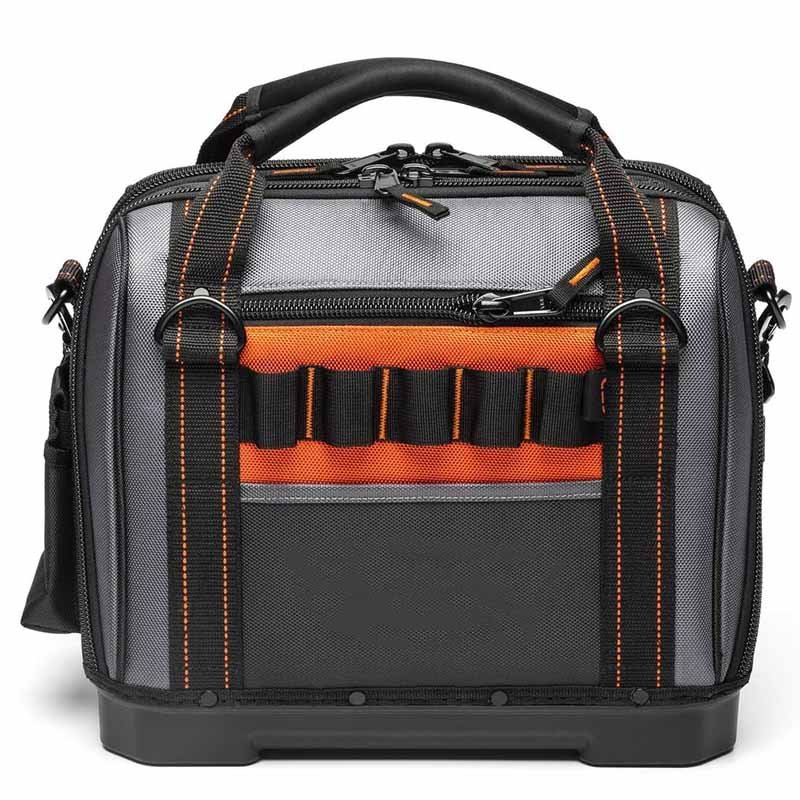
Creating durable reinforced corners is not only about choosing the right materials. The construction process plays an equally important role. Even strong fabrics can fail quickly if they are not assembled correctly.
Professional tool bag manufacturers use a combination of layered construction, specialized stitching techniques, and structural reinforcement to protect the corners.
Do Tool Bags Use Double-Layer Reinforced Corners?
One of the most common reinforcement methods is double-layer fabric construction. Instead of relying on a single piece of fabric at the corner, manufacturers add an additional reinforcement panel on top of the main body material.
This reinforcement panel typically extends several centimeters beyond the corner seam so that the high-wear area is fully protected.
A typical double-layer corner structure may include:
- Outer abrasion-resistant fabric
- Reinforcement patch layer
- Structural support layer
- Internal lining fabric
This layered structure distributes stress across multiple materials instead of concentrating it on a single seam.
A simplified comparison illustrates the difference:
| Corner Structure | Wear Resistance | Load Capacity |
|---|---|---|
| Single-layer fabric | Low | Limited |
| Double-layer reinforced fabric | Medium-High | Improved |
| Multi-layer reinforced structure | High | Professional grade |
In practical use, double-layer corners can significantly delay the first signs of wear, particularly when the bag is frequently placed on rough surfaces.
How Does Bartack Stitching Strengthen Tool Bag Corners?
Stitching quality is just as important as fabric selection when reinforcing tool bag corners.
One technique widely used in heavy-duty bags is bartack stitching. This method creates a short series of very dense stitches that lock the fabric layers together at critical stress points.
Bartack stitching is commonly used in:
- pocket corners
- strap anchor points
- reinforced fabric panels
- corner reinforcement patches
The purpose is to prevent seams from spreading under load.
Compared with standard stitching, bartack stitching provides several advantages:
| Stitch Type | Stitch Density | Load Resistance |
|---|---|---|
| Standard seam stitching | Medium | Moderate |
| Double seam stitching | Medium-High | Strong |
| Bartack reinforcement stitching | Very high | Extremely strong |
In tool bags, bartack reinforcement is usually placed where multiple seams intersect. This prevents tearing when the bag is lifted with heavy tools inside.
Are Rivets Used in Reinforced Tool Bag Corners?
In some heavy-duty tool bag designs, manufacturers add metal rivets to further strengthen the corners and structural joints.
Rivets provide mechanical reinforcement by physically locking layers of fabric or reinforcement panels together. They are especially useful when the bag carries heavy loads or experiences frequent lifting.
Common locations for rivet reinforcement include:
- corner reinforcement patches
- handle anchor points
- base panel connections
However, rivets must be used carefully. If placed incorrectly, they may create pressure points that damage the fabric over time.
For this reason, experienced factories usually combine rivets with:
- internal reinforcement layers
- protective washers
- reinforced stitching patterns
When used correctly, rivets can significantly improve the structural integrity of high-load tool bags.
How Do Factories Improve Reinforced Corner Design for Tool Bags?
Professional tool bag factories rarely rely on a single reinforcement method. Instead, they combine several structural improvements so that the corner area can handle friction, impact, and heavy loads at the same time. The most reliable designs typically integrate stronger materials, structural base support, and protective external elements that reduce direct contact with rough surfaces.
In industrial manufacturing, the goal is not only to protect the fabric itself but also to prevent the entire bag structure from collapsing under weight. When a bag maintains its shape and keeps the base off abrasive ground surfaces, the corner areas naturally experience less damage.
Do Molded Bases Protect Reinforced Tool Bag Corners?
One of the most effective ways to protect tool bag corners is by adding a molded base structure. This design introduces a rigid or semi-rigid bottom platform that prevents the fabric from touching the ground directly.
Instead of the corner fabric scraping the floor, the molded base absorbs the friction.
Common molded base materials include:
| Base Material | Characteristics | Typical Use |
|---|---|---|
| EVA molded base | Lightweight, shock absorbing | Mid-range professional tool bags |
| PP plastic base | Strong structural support | Heavy-duty technician bags |
| Rubber molded base | High abrasion resistance | Industrial jobsite tool bags |
| TPU reinforced base | Flexible and durable | Premium tool bags |
The molded base provides several practical benefits:
- lifts the bag slightly off the ground
- protects fabric corners from direct abrasion
- improves load distribution across the bottom panel
- allows the bag to stand upright when fully loaded
For professionals working on construction sites or factory floors, this small structural upgrade can dramatically reduce wear on the corners.
Another advantage is improved stability. When the base structure is rigid, tools inside the bag do not push outward as easily. This reduces stress on seams and corner stitching.
Many electricians and mechanics prefer tool bags with molded bases because they can place the bag on wet floors, gravel, or uneven surfaces without damaging the fabric.
How Do Raised Bottom Panels Reduce Corner Wear?
Another method used by manufacturers is designing raised bottom panels. This approach does not require a full molded base but still helps reduce friction between the bag and the ground.
In this design, the base panel is slightly elevated using internal support materials such as:
- foam reinforcement boards
- polypropylene bottom inserts
- thick EVA structural panels
When the bag rests on the ground, the pressure is distributed across the entire bottom panel rather than concentrating on the corners.
Raised base designs usually work together with additional corner reinforcement patches.
The overall structure may look like this:
| Structural Layer | Function |
|---|---|
| Outer abrasion resistant fabric | Protects against surface wear |
| Reinforcement patch | Strengthens corner area |
| Structural support board | Maintains base shape |
| Internal lining layer | Protects interior contents |
By spreading the load across a wider area, raised base designs reduce the stress that normally concentrates at the corner seams.
For brands targeting contractor and technician markets, this structure often offers a good balance between durability and cost.
How Does Szoneier Develop Reinforced Tool Bag Corners?
After more than 18 years of manufacturing fabric products and custom bags, Szoneier has refined several reinforcement strategies specifically for heavy-duty tool bags.
During product development, the engineering team typically begins with a wear zone analysis. This means identifying exactly where the bag will experience the most friction and weight stress during daily use.
The bag is then divided into structural zones:
| Structural Zone | Design Priority |
|---|---|
| Upper body panels | Lightweight flexibility |
| Side panels | Shape retention |
| Base panel | Load distribution |
| Bottom corners | Maximum abrasion protection |
For reinforced corner design, Szoneier commonly uses a multi-layer protection system that includes:
- high-denier nylon or polyester outer fabric
- additional reinforcement patch layers
- bartack stitching at stress intersections
- thick binding tape along base seams
- optional molded or structured base panels
During sampling, these reinforcement elements are adjusted according to the expected load weight of the tool bag.
For example:
| Tool Bag Type | Expected Load | Recommended Corner Structure |
|---|---|---|
| Light technician bag | 5–8 kg | Double-layer fabric corner |
| Electrician tool bag | 8–15 kg | Reinforcement patch + bartack stitching |
| Industrial maintenance bag | 15–25 kg | Molded base + reinforced corners |
By tailoring the reinforcement level to the product’s working environment, customers can avoid unnecessary production cost while still achieving reliable durability.
Another important part of development is prototype testing. Before finalizing production, sample bags are typically evaluated for:
- abrasion resistance
- seam strength
- load carrying performance
- base stability
This testing helps identify weak areas early in the development process.
For many OEM and private label customers, these improvements translate into:
- longer product lifespan
- fewer customer complaints
- stronger brand reputation in professional markets
Final Thoughts: Building Tool Bags That Last
Tool bags are used in environments where equipment is constantly exposed to weight, impact, and rough surfaces. In these conditions, the corner areas become the most vulnerable part of the bag. If the corners fail, the entire bag quickly loses its strength and usefulness.
Reinforced corner design addresses this problem by strengthening the high abrasion zones where damage normally begins. By combining durable fabrics, reinforcement patches, strong stitching techniques, and structural base support, manufacturers can significantly extend the life of a tool bag.
For companies developing their own tool bag product line, focusing on corner reinforcement during the design stage can prevent many problems later in the product lifecycle. Stronger corners mean fewer warranty issues, better customer feedback, and higher confidence from professional users.
At Szoneier, we specialize in manufacturing custom fabric products and heavy-duty bags using a wide range of materials including nylon, polyester, neoprene, canvas, and technical fabrics. With over 18 years of experience in bag development and manufacturing, our team works closely with clients to create durable, practical products tailored to their brand requirements.
If you are planning to develop custom tool bags, heavy-duty work bags, or private label equipment bags, our engineers can help you design reinforcement structures that match your product’s working conditions and target market.
Whether you need low MOQ sampling, custom logo branding, or full OEM and ODM production, Szoneier provides:
- free design assistance
- fast prototype sampling
- flexible customization options
- strict quality control
- reliable production timelines
If you would like to explore a custom reinforced tool bag design, feel free to contact the Szoneier team today. We would be happy to help you turn your product concept into a durable, professional tool bag built for real work environments.