Skip to content

Choosing between nylon and polyester bags may seem like a technical detail, yet this single decision shapes how a bag performs in the real world—whether it survives years of travel, gym sweat, outdoor rainstorms, or daily commuting abuse. Most people only notice the design, color, or size of a bag. But behind every reliable backpack, duffel, or travel organizer is a material choice that determines everything from weight and durability to sustainability and cost. Nylon and polyester have quietly become the two dominant forces in the global bag industry, each with distinct strengths rooted in fiber science, manufacturing technology, and end-use performance.
Nylon is stronger, more flexible, and ideal for heavy-duty or performance-driven bags, while polyester is more UV-resistant, abrasion-resistant, quick-drying, and cost-effective. Nylon suits premium backpacks and outdoor gear; polyester suits everyday, gym, and travel bags. The right choice depends on durability requirements, water resistance, weight, sustainability goals, and pricing targets.
What makes this comparison especially relevant today is how buyers are shifting toward higher expectations—lighter bags, longer lifespan, greener materials, and better value. Whether you are a brand developing a new collection or a buyer curious about the best fabric, understanding the differences between nylon and polyester can help you avoid costly mistakes and design a product that actually performs as promised.
What Are the Key Differences Between Nylon and Polyester Bags?
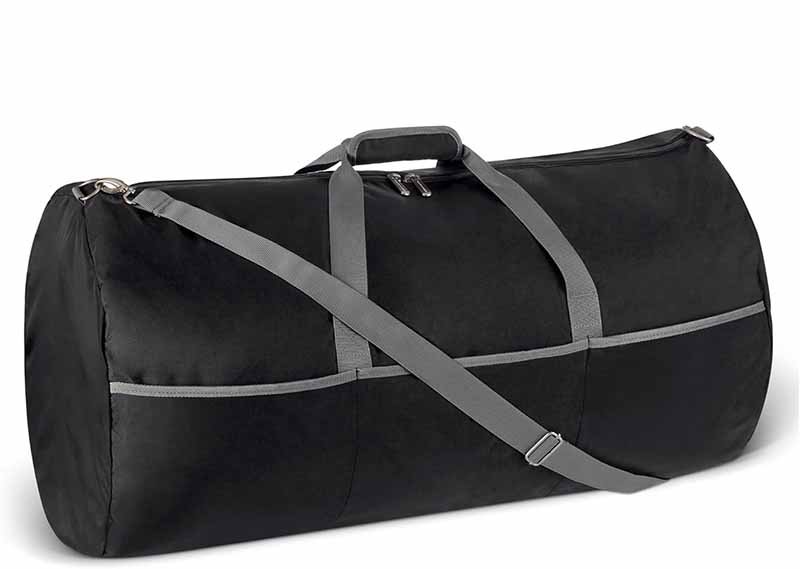
Nylon is stronger, stretchier, and more suitable for premium or heavy-duty bags, while polyester is more UV-resistant, abrasion-resistant, quick-drying, and affordable. Nylon absorbs more water but offers superior tensile strength; polyester maintains color better, resists sunlight, and works well for everyday and travel bags. The main differences come from each fiber’s moisture behavior, molecular structure, coating performance, durability, and cost.
Nylon vs Polyester: Performance Comparison Table
| Performance Metric | Nylon | Polyester |
|---|---|---|
| Tensile Strength | ★★★★★ (Very High) | ★★★★☆ |
| Abrasion Resistance | ★★★★☆ | ★★★★★ (Superior) |
| Water Absorption | 3–4% | <1% |
| Drying Speed | Slow | Fast |
| UV Resistance | Medium (Weakens Over Time) | Excellent (Color-Stable) |
| Coating Adhesion | Strong (Ideal for TPU/PU) | Good |
| Cost Level | Higher | Lower |
| Texture | Softer, premium, flexible | Stiffer to mid-soft, depends on denier |
| Best Bag Types | Outdoor, tactical, heavy-duty | Everyday, gym, travel, promo bags |
What Are Nylon Bags Made Of?
Nylon fibers are formed through a polycondensation reaction that creates long, flexible molecular chains. These chains can stretch under pressure and return to shape, giving nylon its unmatched tensile strength and superior tear resistance. Because nylon fibers are smoother and rounder, the fabric feels softer and more premium—one of the reasons high-end brands often use 420D, 500D, or 1680D ballistic nylon in performance backpacks and travel gear. Nylon’s molecular structure also allows coatings like TPU and heavy PU to bond more tightly, making nylon the preferred choice for waterproof bags such as dry bags, mountaineering packs, and marine equipment.
What Are Polyester Bags Made Of?
Polyester bags come from PET (polyethylene terephthalate) fibers. PET is naturally hydrophobic, meaning water does not easily adhere or absorb into the fiber. This results in faster drying and better odor control—ideal traits for gym bags, school bags, travel organizers, and cooler bags. Polyester fibers resist UV degradation and maintain color for years, even under sunlight exposure. This is why polyester is widely used in lifestyle bags, promotional bags, and colorful printed designs. Recycled versions (rPET) also make polyester the go-to material for brands seeking sustainability and GRS-certified production lines.
How Do Their Fiber Structures Affect Performance?
The difference lies in their chemical composition. Nylon’s amide groups absorb energy, making the fabric flexible and resilient under directional stress. This is ideal for load-bearing bags or packs that endure sudden pulling forces. Polyester’s rigid ester chains resist surface wear, providing superior abrasion resistance—essential for daily friction seen in school bags, messenger bags, and travel luggage. Polyester also maintains hydrophobicity during long-term use, while nylon eventually loses water repellency unless coated. The structure also affects how each fiber dyes: nylon absorbs dyes more effectively but fades faster under UV; polyester holds pigments more permanently.
What Type of Fabric Is Best for Bags?
There is no single “best fabric”—only the fabric that best matches the bag’s purpose.
- For heavy-duty performance (military, outdoor, tactical, heavy backpacks): Nylon is superior.
- For everyday use (totes, gym bags, travel organizers, cooler bags): Polyester performs better and keeps costs predictable.
- For sustainability-focused brands: rPET polyester is currently the most scalable option.
- For waterproof constructions: Nylon with TPU/PU coating outperforms polyester.
Brands should evaluate strength requirements, coating needs, color expectations, and pricing targets rather than choosing based on assumptions.
Which Material Is More Durable for Daily Use?
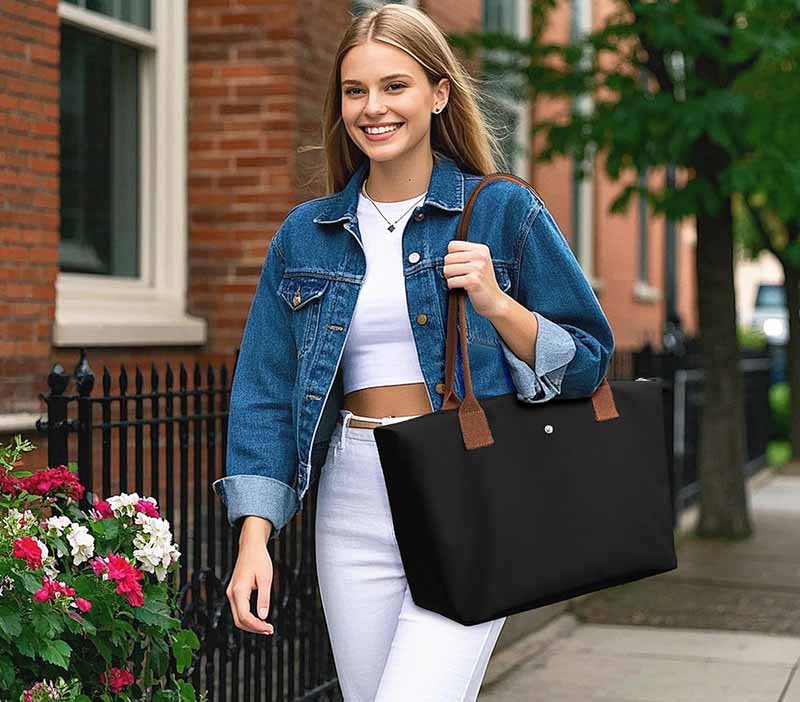
When evaluating durability for daily use, it’s important to define what “durable” actually means in the context of a bag. A school backpack experiences constant abrasion against chairs and floors, while a travel backpack faces impact, stretching, and variable weather conditions. A gym bag encounters sweat, moisture, and repeated stuffing. Different durability metrics matter in different environments.
Nylon and polyester do not fail in the same way. Nylon is stronger under tension, meaning it resists tearing when pulled or overloaded. Polyester is stronger on the surface, meaning it resists scratching, rubbing, fraying, and UV damage. In real-world scenarios, these differences create very different durability outcomes.
For example, a 420D nylon backpack can endure heavy loads for years, but may fade or weaken if exposed to strong sunlight over long periods. Meanwhile, a 600D polyester school bag may not handle extreme loads, but its surface will resist daily friction and keep its color intact even after months of dragging on the ground.
Moisture also impacts durability. Nylon absorbs more water and may stretch slightly when wet, while polyester maintains its structure and dries quickly, reducing odor and mold risks.
Below is an upgraded performance comparison reflecting everyday bag usage:
Everyday Durability Factors Comparison
| Durability Factor | Nylon | Polyester |
|---|---|---|
| Tensile Strength | ★★★★★ (Excellent) | ★★★★☆ |
| Abrasion Resistance | ★★★★☆ | ★★★★★ (Superior) |
| UV/Sun Resistance | ★★★☆☆ | ★★★★★ |
| Color Retention | ★★★☆☆ | ★★★★★ |
| Shape Retention When Wet | ★★★☆☆ | ★★★★★ |
| Resistance to Daily Scuffing | ★★★★☆ | ★★★★★ |
| Load-Bearing Performance | ★★★★★ | ★★★☆☆ |
Is Nylon Stronger in Tensile Strength?
Yes. Nylon significantly outperforms polyester in tensile strength because its molecular chains are long and flexible, allowing the fibers to stretch under force before breaking. This property makes nylon ideal for bags that carry substantial weight—travel backpacks, hiking packs, tactical bags, and luggage shells. When overstuffed or pulled abruptly, nylon fibers distribute stress more evenly and resist tearing better than polyester.
For example, 1680D ballistic nylon is commonly used in high-end luggage due to its ability to withstand impact forces and heavy loads. Even lighter variants, such as 420D or 500D nylon, can outperform thicker polyester fabrics in tensile tests. For applications where the bag must endure significant stress—lifting, dragging, overloading, or carrying heavy gear—nylon performs better and retains structural integrity longer.
Is Polyester More Resistant to Abrasion?
Yes. Polyester outperforms nylon in long-term abrasion resistance. It has a harder, more rigid molecular structure that prevents fibers from fraying or wearing down quickly when they rub against surfaces. In daily use—chairs, car seats, floors, walls, sports equipment—bags experience constant micro-abrasion. Polyester handles this far better than nylon.
This is why school backpacks, gym bags, and daily commuter bags are commonly made from 300D–900D polyester. The material resists pilling, fuzzy texture, and fuzzing along edges. Even under continuous rubbing, polyester maintains a cleaner, newer appearance. High-quality polyester fabrics also benefit from protective coatings that increase their surface hardness, extending lifespan even further.
How Do Both Handle Long-Term Wear and UV Exposure?
Polyester has exceptional UV stability. Its chemical structure prevents sunlight from breaking down the fibers, enabling it to retain color vibrancy and strength over long periods. Nylon, however, degrades faster under UV exposure. Prolonged sunlight can weaken nylon fibers, causing fading, dryness, or reduced tear resistance.
For bags frequently used outdoors—beach totes, kids’ backpacks, bicycle bags, outdoor promotional bags—polyester remains the more reliable option. Even solution-dyed nylon cannot match polyester’s UV resistance unless treated with specialized UV inhibitors.
From a structural standpoint, polyester also holds its shape better when exposed to heat and moisture. Nylon may stretch slightly when wet, which can lead to sagging in certain bag designs. Polyester dries fast and maintains its original form, reducing the risk of mold or odor buildup.
How Do Nylon and Polyester Compare in Water Resistance?
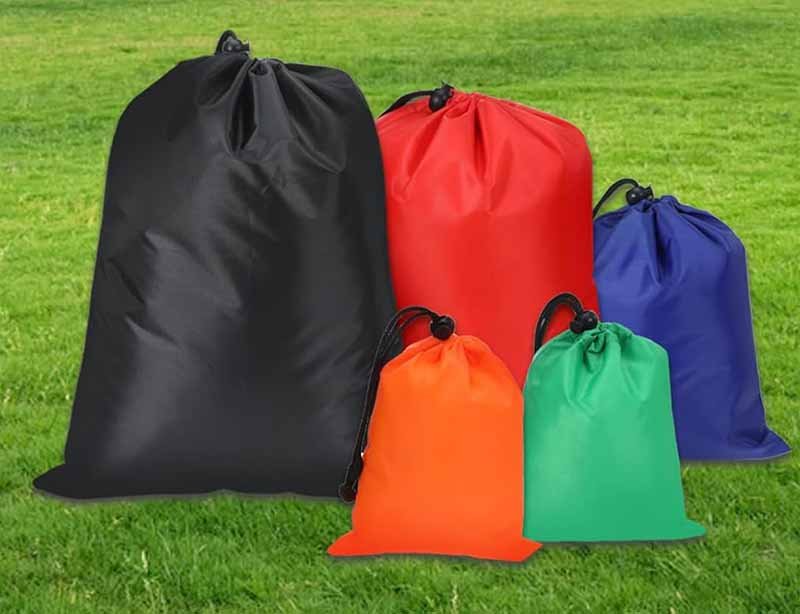
Polyester is naturally more water-resistant and dries faster than nylon because it absorbs less moisture. Nylon absorbs 3–4% of its weight in water, while polyester absorbs less than 1%. However, once coated with PU or TPU, nylon becomes more waterproof than polyester due to superior coating adhesion. Polyester is ideal for light rain and daily moisture, while coated nylon is preferred for fully waterproof or submersion-level bags.
Water Resistance Comparison Table
| Fabric Type | Untreated Water Behavior | PU-Coated | TPU-Coated |
|---|---|---|---|
| Nylon | Absorbs 3–4% moisture | Very good (1,000–5,000 mm HH) | Excellent (10,000–20,000+ mm HH) |
| Polyester | Absorbs <1% moisture | Good (800–3,000 mm HH) | Good–Very good (3,000–8,000 mm HH) |
HH = Hydrostatic Head, a waterproof rating used globally.
Is Nylon Naturally More Water-Absorbent?
Yes. Nylon is naturally more hydrophilic and absorbs roughly 3–4% of its weight in water under normal conditions. This moisture absorption causes the fabric to darken, become slightly heavier, and take longer to dry. Outdoor users often notice that nylon jackets or backpacks feel damp longer than polyester equivalents.
However, this absorption is not entirely negative. Because nylon fibers swell slightly when exposed to water, they create microscopic pathways that allow waterproof coatings to penetrate deeper. This leads to stronger and longer-lasting waterproof layers once PU or TPU is applied. This is why most professional outdoor packs, alpine dry bags, snow gear bags, and river/water sports bags use coated nylon instead of polyester.
In summary: untreated nylon = weaker water resistance; coated nylon = superior waterproofing.
Do Polyester Bags Dry Faster?
Yes. Polyester is naturally hydrophobic, meaning it repels water and does not absorb liquid into its fibers. As a result, polyester dries significantly faster than nylon. This makes it ideal for:
- Gym bags exposed to sweat
- Travel bags used in humid climates
- School bags left on damp floors
- Everyday bags likely to encounter rain
Fast drying prevents mold growth, foul odors, and fabric degradation. For example, polyester gym bags remain lightweight even if exposed to wet towels or pool water, while nylon bags might retain moisture longer.
Additionally, polyester maintains its structure when wet—meaning the bag will not stretch, sag, or lose shape. This is another reason why polyester is widely used in soft coolers, insulated lunch bags, kids’ backpacks, and travel totes where moisture contact is frequent.
How Do PU/TPU Coatings Change Waterproofing Levels?
Coatings dramatically change fabric performance—often more than the fiber itself.
PU Coating (Polyurethane)
PU adds a water-resistant or waterproof barrier on the backside of the fabric.
- Polyester + PU → Good water resistance
- Nylon + PU → Very good water resistance
Nylon’s natural absorption helps PU anchor better, improving long-term durability.
TPU Coating (Thermoplastic Polyurethane)
TPU is a premium waterproof coating used in professional outdoor gear.
- Polyester + TPU → Middle–high waterproof levels
- Nylon + TPU → Industry-leading waterproofing (10,000–20,000+ mm HH)
TPU-coated nylon is used in: ✔ Dry bags ✔ Dive gear bags ✔ Marine equipment ✔ Snow sports bags ✔ Military waterproof pouches
In these categories, polyester cannot match nylon’s waterproofing potential because its smooth, hydrophobic fibers do not bond with TPU as strongly.
Are Nylon Bags or Polyester Bags Lighter and More Comfortable?
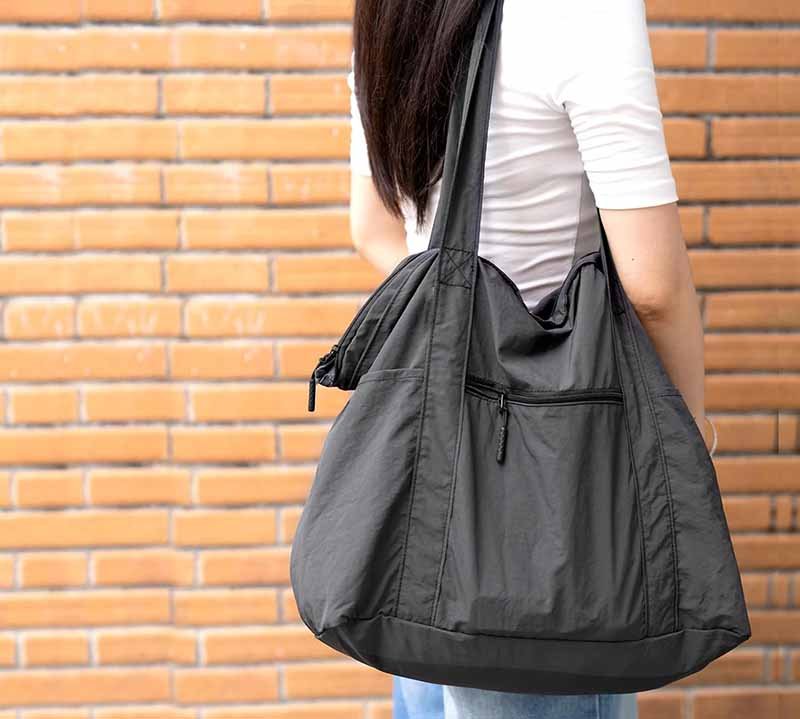
Nylon is generally softer, more flexible, and often feels more comfortable to carry, while polyester is slightly stiffer but can be engineered to similar weights depending on denier. Nylon offers a better strength-to-weight ratio, making premium backpacks and outdoor bags lighter without sacrificing durability. Polyester works well for everyday bags, but nylon typically provides a smoother handfeel, better drape, and greater carrying comfort.
Weight & Comfort Comparison Table
| Factor | Nylon | Polyester |
|---|---|---|
| Strength-to-Weight Ratio | ★★★★★ | ★★★★☆ |
| Surface Softness / Handfeel | ★★★★★ | ★★★☆☆–★★★★☆ |
| Flexibility & Drape | ★★★★★ | ★★★★☆ |
| Shape Retention | ★★★☆☆ | ★★★★★ |
| Comfort for Long Wear (Backpacks) | ★★★★★ | ★★★★☆ |
| Moisture Behavior | Absorbs slightly | Repels & dries fast |
| Typical Weight (at same D) | Slightly lighter | Slightly heavier |
How Does Density (Denier) Affect Bag Weight?
Denier (D) is the measurement of fiber thickness and plays a more important role in fabric weight than whether the fiber is nylon or polyester. A higher denier equals a thicker, heavier, and typically stronger fabric.
However, nylon offers a superior strength-to-weight ratio, meaning a lower-denier nylon can match or exceed the strength of a higher-denier polyester. For example:
- 210D Nylon ≈ 300–420D Polyester
- 420D Nylon ≈ 600D Polyester
This allows premium outdoor and travel bags to stay lightweight without sacrificing durability. Polyester can also be engineered to be light, but manufacturers usually need to increase denier or coating thickness to reach the same mechanical strength as nylon. As a result, nylon often becomes the preferred material for brands optimizing for weight reduction.
Which Material Offers Better Flexibility and Softness?
Nylon is naturally softer and more flexible due to its rounder and smoother fiber structure. It drapes well, bends easily, and conforms to the body during movement. This gives nylon bags a premium, comfortable feel—noticeable in high-end backpacks, sling bags, and outdoor packs where body contact is continuous.
Polyester varies widely in softness depending on the weave and finishing method. High-density polyester (600D–900D) tends to feel stiffer. Lower-denier polyester can feel softer but may also feel more plasticky. Brushed polyester and “peach skin” polyester improve softness significantly, but these treatments are more common in apparel than in heavy-duty bags.
For products where comfort and premium touch are a priority, such as travel backpacks or shoulder bags, nylon usually provides the superior tactile experience.
Is Polyester or Nylon Better for Gym Bags?
For gym bags, polyester is typically the better choice due to its moisture behavior. Polyester repels water, resists sweat absorption, and dries quickly—an essential factor when users carry wet towels, sportswear, or shoes. It also resists odor buildup more effectively than nylon, which can retain moisture longer.
Additionally, polyester maintains structural integrity when wet, preventing sagging or stretching. This characteristic is valuable in compartments designed for shoes, toiletries, or damp items. Polyester’s abrasion resistance further enhances durability against hard gym floors, locker-room surfaces, and repeated stuffing.
Nylon gym bags exist and work well for premium-style duffels or fitness backpacks, but for most everyday gym users, polyester offers superior practicality, easier cleaning, and better long-term appearance.
How Do These Materials Perform in Different Bag Types?
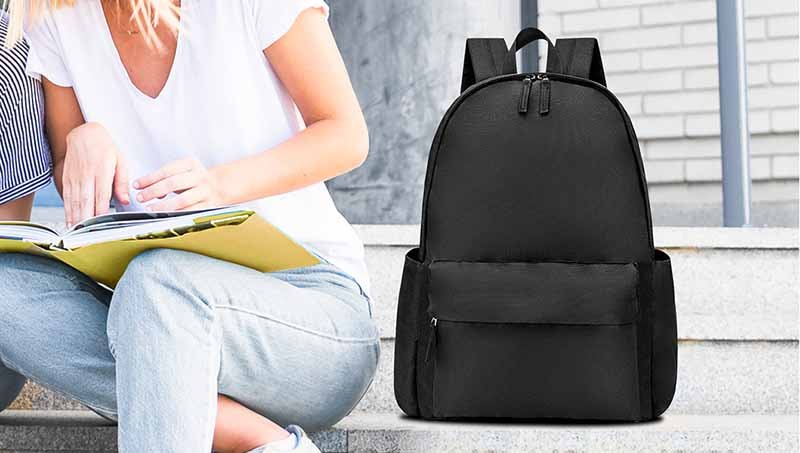
Nylon performs best in heavy-duty, outdoor, and technical bag types due to its superior tensile strength and coating compatibility, while polyester excels in everyday, travel, gym, and promotional bags thanks to its abrasion resistance, color stability, and lower cost. Nylon suits backpacks, tactical bags, and waterproof dry bags; polyester suits tote bags, school bags, drawstring bags, cooler bags, and travel accessories.
Performance by Bag Category
| Bag Type | Best Material | Reason |
|---|---|---|
| Backpacks / Travel Backpacks | Nylon | Higher tensile strength, flexibility, premium feel |
| Everyday Backpacks / School Bags | Polyester | Abrasion resistance, color retention, cost control |
| Tote Bags | Polyester | Structure retention, printability |
| Gym Bags / Sports Bags | Polyester | Fast drying, odor resistance, anti-sweat behavior |
| Drawstring Bags | Polyester | Lightweight, printable, low cost |
| Cooler Bags / Insulated Lunch Bags | Polyester | Water resistance, stiffness, insulation compatibility |
| Dry Bags / Waterproof Bags | Nylon (TPU-coated) | Highest waterproof performance |
| Outdoor / Tactical / Military Bags | Nylon | Superior strength and coating adhesion |
Which Is Better for Backpacks and Travel Bags?
For backpacks—especially travel backpacks, trekking packs, and multi-pocket designs—nylon is usually the superior choice. Nylon provides a higher strength-to-weight ratio, allowing the bag to remain lightweight while carrying heavy loads such as laptops, books, travel gear, or hiking equipment. The flexibility of nylon also gives backpacks a smoother drape and better ergonomic movement.
Travel backpacks often use 420D, 500D, or 1680D nylon for body fabric and reinforcements because these materials resist tearing during airport baggage handling or long-term hiking. Nylon is also compatible with advanced coatings (PU/TPU), which improves resistance to rain and moisture.
Polyester backpacks are common for school and casual use, but for premium, long-distance, or heavy-load backpacks, nylon remains the industry standard.
Which Works Best for Tote Bags, Gym Bags, and Drawstring Bags?
Tote Bags
Polyester is the better choice. It holds its shape effectively, supports clean printing, and resists fading. Nylon totes tend to feel softer and less structured.
Gym Bags
Polyester dominates this category because it:
- repels sweat
- dries quickly
- resists odor buildup
- maintains shape even when damp
Nylon gym bags exist but usually target higher-end styles.
Drawstring Bags
Polyester is the global standard for drawstring bags because it provides:
- lightweight construction
- high print clarity (logos, patterns)
- low unit cost
- strong abrasion resistance
Nylon drawstring bags feel premium but are rarely necessary from a cost-performance standpoint.
How Do They Perform in Outdoor, Waterproof, or Heavy-Duty Bags?
For outdoor, technical, or heavy-duty bags, nylon clearly outperforms polyester. These categories include:
- Hiking packs
- Tactical and military bags
- Mountaineering backpacks
- Fireproof or high-performance gear bags
- Waterproof dry bags
- Snow and ski bags
- Marine bags
- Rescue or survival equipment bags
The key reasons nylon excels:
- Tensile Strength – Handles heavy loads, dynamic movement, and lifting stress.
- Coating Adhesion – TPU bonds better with nylon, achieving 10,000–20,000+ mm hydrostatic head for true waterproofing.
- Flexibility – Allows expansion, body movement, and ergonomic comfort.
- Abrasion Under Stress – Nylon performs better when both friction and tension occur simultaneously.
Polyester outdoor bags exist, especially for budget models, but they cannot match nylon’s strength or waterproofing potential for professional applications.
Which Material Performs Best in Insulated Cooler Bags and Lunch Bags?
Cooler bags require shape retention, moisture resistance, and compatibility with foam insulation. Polyester performs better in this category because it:
- maintains a stiff structure even when moisture is present
- repels exterior water
- is compatible with PEVA, aluminum foil liners, and foam insulation
- supports clear logo printing
- is easier to clean and dries quickly
Nylon cooler bags are used in higher-end outdoor coolers but require thicker coatings. For most commercial and promotional cooler bags, polyester is the best balance of performance, hygiene, and cost.
How Do Nylon and Polyester Compare in Waterproof Dry Bags?
Dry bags are a special category where nylon overtakes polyester decisively. Premium dry bags typically use TPU-laminated nylon, which delivers:
- stronger fabric-to-coating bonding
- much higher waterproof ratings (10,000–20,000+ mm HH)
- better flexibility in cold weather
- superior durability under rolling, folding, and pressure
Polyester dry bags with PVC or PU coating exist, but they:
- crack more easily in cold conditions
- delaminate faster
- do not tolerate high water pressure
For diving, kayaking, marine use, fishing, snow sports, and river trekking, TPU-coated nylon remains the industry gold standard.
Are Nylon or Polyester Bags Better for Sustainability?
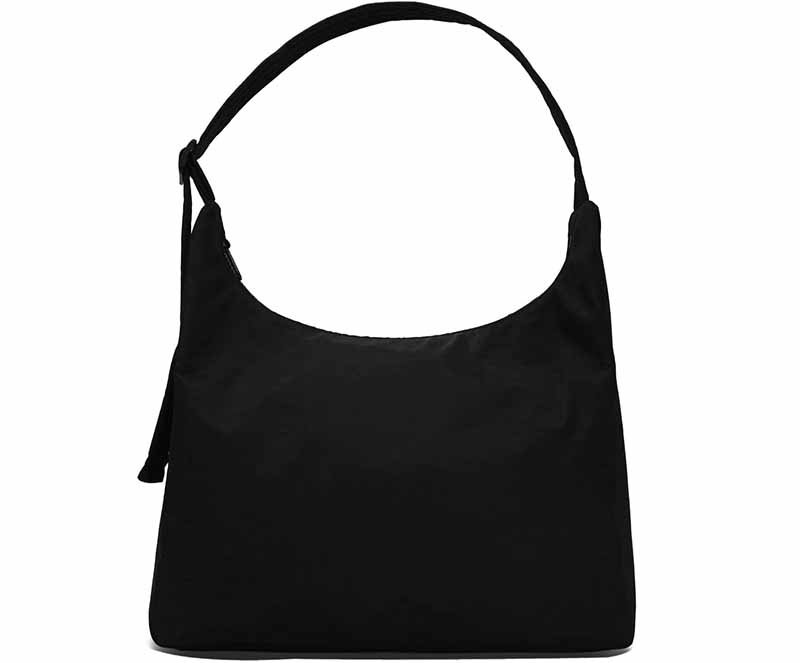
Polyester is generally more sustainable than nylon due to its lower production energy, lower carbon footprint, and mature global recycling infrastructure. Nylon is stronger and longer-lasting, but its production emits more greenhouse gases and requires more resources. Polyester—especially recycled polyester (rPET)—is easier to recycle, widely available, and accessible for large-scale sustainable bag manufacturing. Nylon becomes competitive only when using advanced recycled versions such as ECONYL, which are high-quality but limited in supply and higher in cost.
Sustainability is a multi-dimensional comparison, not a simple “which is greener” question. Nylon and polyester impact the environment differently across production, recycling, durability, energy use, and end-of-life stages. Below is a detailed one-paragraph analysis for each sustainability dimension.
Production Energy & Resource Consumption
Polyester is considered more energy-efficient because its production process requires significantly lower heat and pressure compared with nylon’s complex polymerization. Nylon manufacturing involves multiple high-energy stages and elevated reaction temperatures, resulting in roughly 30–40% higher energy consumption per kilogram of fiber. Polyester, being simpler and highly industrialized, benefits from optimized global production processes, making it less resource-intensive and more consistent across manufacturers. From a sustainability standpoint, polyester wastes fewer resources during production and demands fewer petrochemical inputs, giving it a visible advantage in overall resource efficiency.
Carbon Footprint & Greenhouse Gas Emissions
Polyester has a lower carbon footprint than nylon primarily due to its production chemistry. Nylon manufacturing releases nitrous oxide (N₂O)—a greenhouse gas up to 300 times more potent than CO₂—which increases its environmental impact even when factories follow modern emission control standards. Polyester production generates fewer toxic byproducts and has lower emissions per unit weight. Although both materials rely on petrochemicals, the chemical reactions behind polyester fiber formation are less carbon-intensive. Therefore, from an emissions perspective, polyester is the more sustainable option.
Recycling Feasibility & Global Infrastructure
Polyester is far easier to recycle at scale because global recycling systems already process billions of PET bottles annually. This creates a steady supply of recycled polyester (rPET), making it the most widely available eco-material in the global textile and bag industry. Nylon, in contrast, has limited recycling facilities and more complex chemical recycling requirements, making recycled nylon scarce and significantly more expensive. While innovative materials such as ECONYL demonstrate what fully recycled nylon can achieve, they remain boutique solutions rather than mainstream options. Polyester’s established recycling ecosystem makes it the more practical and sustainable choice for most brands.
Availability of Recycled Material (rPET vs Recycled Nylon)
Recycled polyester (rPET) is abundant, cost-effective, and supported by a stable global supply chain sourced from post-consumer bottles, packaging waste, and industrial scrap. This scalability enables brands to adopt recycled materials across multiple bag categories—from tote bags to travel bags and backpacks—without major cost increases. Recycled nylon, although high-performance, comes from more limited streams such as fishing nets, carpets, and industrial waste. It is therefore much more expensive and often reserved for premium or environmentally focused product lines. If brands prioritize sustainability with mass-market accessibility, rPET remains the most viable solution.
Durability & Lifespan as a Sustainability Factor
Nylon outperforms polyester in durability, abrasion resistance, and load-bearing strength, making it the better long-term material for heavy-duty bags. A bag that lasts longer reduces replacement frequency and overall material consumption, which is an often overlooked aspect of sustainability. Polyester, although strong enough for daily use, is more prone to wear and fiber fatigue over time, especially in rugged outdoor environments. Therefore, when longevity and repeated usage are considered part of sustainability, nylon has the upper hand—particularly in applications such as outdoor gear, travel bags, and tactical backpacks.
Water Usage, Dyeing Impact & Chemical Footprint
Polyester is generally more sustainable in the dyeing stage because it can be solution-dyed, a method that embeds the pigment into the fiber without requiring water-intensive processes. Solution-dyed polyester reduces water usage by 70–90% and lowers chemical waste. Nylon typically relies on acid dyes, which require more water and generate wastewater with higher chemical loads. Even though modern dye houses have improved filtration systems, nylon’s dyeing chemistry still leaves a larger environmental footprint. Polyester’s compatibility with low-impact dye technologies gives it another sustainability advantage.
Microplastic Shedding & End-of-Life Impact
Both nylon and polyester shed microplastics during washing and abrasion, contributing similarly to microplastic pollution. However, nylon tends to shed slightly fewer fibers because of its stronger molecular structure and higher abrasion resistance. Still, neither material biodegrades naturally, meaning end-of-life management plays a crucial role. Polyester’s recyclability helps mitigate this issue by allowing the fiber to re-enter the manufacturing cycle, while nylon’s limited recycling options make its end-of-life environmental burden heavier.
Conclusion
Choosing between nylon and polyester is ultimately about finding the right balance of performance, durability, sustainability, and cost for your specific application. Both materials offer strong advantages—nylon excels in strength, abrasion resistance, and long-term durability, while polyester delivers better sustainability, colorfastness, and market-friendly pricing, especially in its recycled rPET form. For brands planning new product lines or upgrading existing collections, the real value comes from selecting the right material and working with a manufacturing partner capable of translating technical requirements into commercially successful products.
If you’re ready to design your next nylon or polyester bag collection—whether for retail, outdoor sports, e-commerce, promotional campaigns, or premium luxury branding—Szoneier is ready to support you from concept to mass production.
Contact Szoneier today to discuss your custom project and receive a tailored quotation, material recommendations, and development plan.