A Trusted China Manufacturer Since 2007!

Neoprene Bottle Holder Manufacturer

Custom-fit sleeves, carriers, slings, and promotional holders developed for branded drinkware, fitness, outdoor, retail, and event programs.
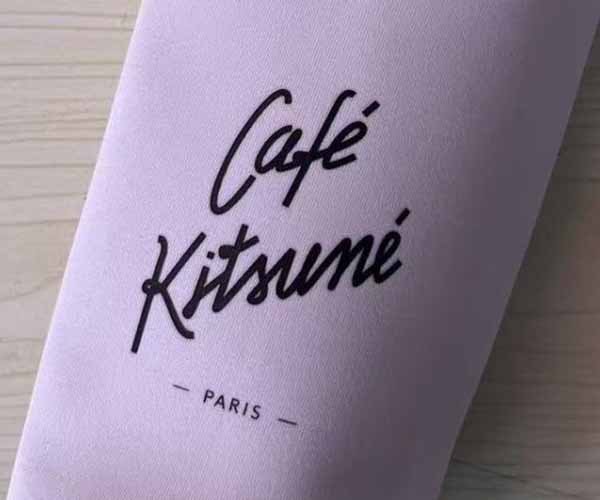
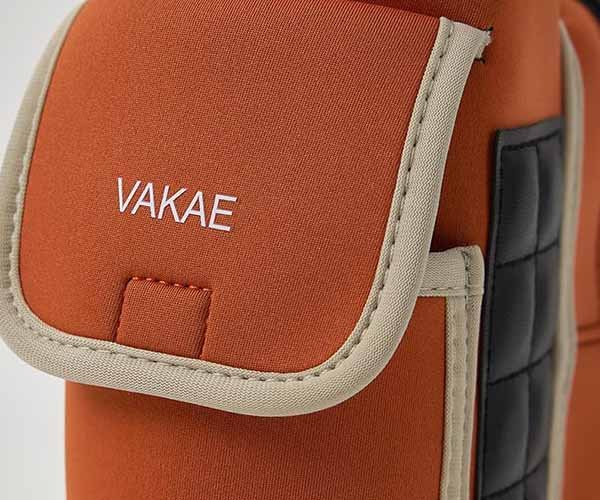
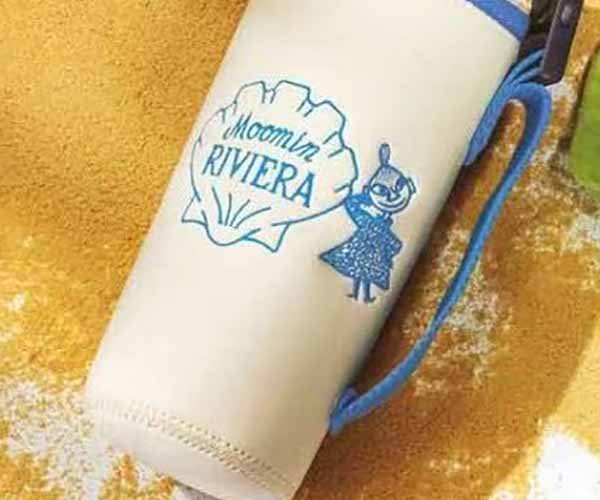
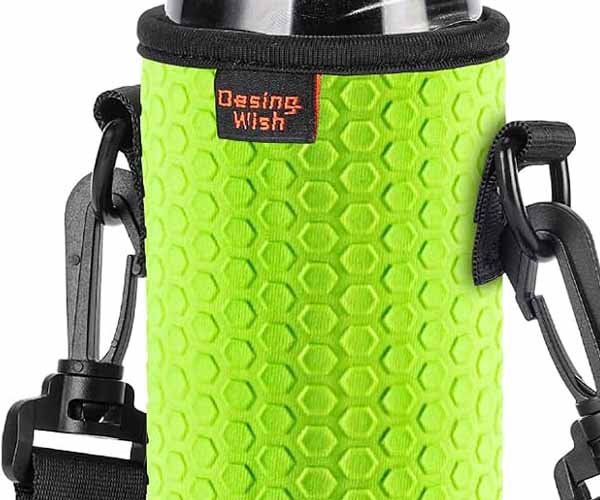
Szoneier develops custom neoprene bottle holders around the bottle, carrying method, branding plan, sales channel, and target order volume.
  • Bottle-specific pattern development from samples, drawings, or measurements
  • Common neoprene thickness options from 2 mm to 5 mm
  • Sublimation, screen printing, woven labels, patches, and branded accessories
  • Sampling, bulk production, inspection, packaging, and global shipment support
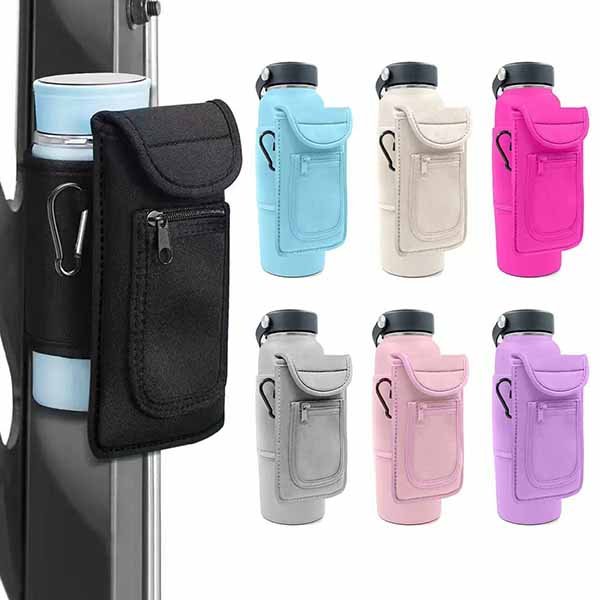
neoprene bottle holder (5)

Manufacturing Support for Serious Bottle Holder Programs

Clear production references help product teams estimate feasibility, development time, order planning, and the information required before receiving an accurate quotation.

18+ Years Experience

Szoneier has more than 18 years of experience in custom bags, sewn soft goods, material sourcing, pattern development, sampling, production control, inspection, packaging, and export coordination. Neoprene products form part of a wider soft-goods manufacturing system rather than a standalone printing service.

2–5 mm Material Options

Common thickness options range from approximately 2 mm to 5 mm. The correct choice depends on bottle diameter, desired cushioning, insulation expectation, carrying structure, sewing method, packing volume, and target price. Thicker foam is not automatically better for every design.

MOQ From 300 Pieces

Selected standard neoprene bottle holder projects can begin from approximately 300 pieces. Ready materials, standard colors, mature patterns, simple branding, and regular packaging provide the best conditions for a lower starting quantity. Special colors, molded patches, or complex accessories may require higher quantities.

Controlled Project Timing

Simple fit samples may take about 5–7 working days. Standard printed carriers normally require 7–12 working days, while complex structures may require 12–20 working days. Bulk production often takes 20–35 days after final approvals and material readiness.

Bottle Holder Manufacturing for Established Product Programs

Different industries require different fit, carrying, branding, packaging, and production controls. Szoneier develops each program around its actual commercial use.

Drinkware Brands

Drinkware brands need holders that match a defined bottle body, cap, handle, and retail presentation. Szoneier can work from a physical bottle, technical drawing, 3D file, or dimension sheet to create a sleeve or carrier that fits the intended bottle rather than a generic volume category.

Fitness Brands

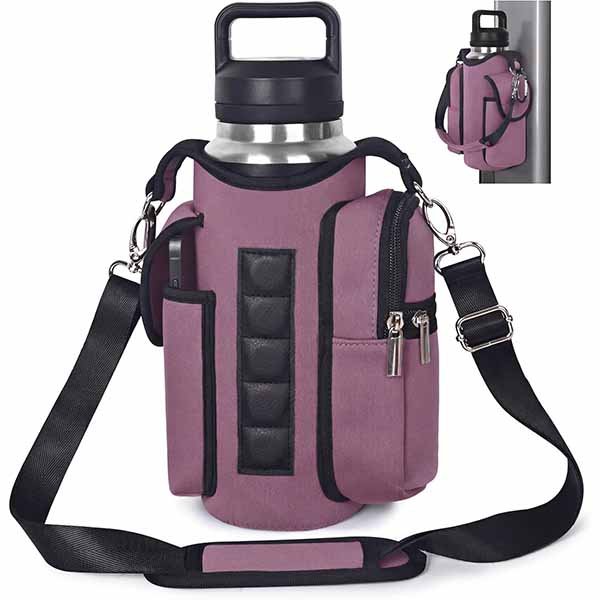
Fitness and sports brands often require holders for 32 oz, 40 oz, 64 oz, half-gallon, or one-gallon bottles. Important details include bottom support, reinforced handles, adjustable straps, snap hooks, phone pockets, sweat resistance, and stable carrying when the bottle is full.

Beverage Companies

Beverage companies commonly use neoprene bottle sleeves for product launches, seasonal promotions, tasting events, membership gifts, and bundled drink sets. Production priorities usually include accurate campaign colors, visible branding, clean printing, high-volume consistency, carton efficiency, and delivery before a fixed event date.

Outdoor Brands

Outdoor programs require more than a printed sleeve. Carriers may include wider webbing, adjustable shoulder straps, durable hooks, reinforced stress points, secure openings, and exterior pockets. Material thickness and construction must be balanced against total carried weight and user movement.

Retail Brands

Retail products need consistent appearance, finished edges, barcode control, hangtags, retail-ready packaging, and repeat-order records. Szoneier can manage pattern files, approved materials, artwork positions, accessory specifications, packing instructions, and carton data for later replenishment orders.

Promotional Companies

Promotional firms frequently manage several end-clients, artwork files, quantities, and event deadlines. Szoneier can support simple sleeves, bottle koozies, wine covers, branded carriers, and gift-set packaging with structured sample approval and bulk production coordination. 

Bottle Holder Risks Controlled Before Bulk Production

Small errors in fit, foam, print, or reinforcement can affect thousands of finished units. Early engineering and approved standards reduce avoidable production problems.

Incorrect Bottle Fit

Nominal capacity alone cannot define the pattern. Two 750 ml bottles may have different diameters, shoulder curves, bases, caps, and handle projections. Szoneier reviews:
  • Maximum body diameter
  • Base and neck diameter
  • Bottle height and taper
  • Cap or handle clearance
  • Filled bottle weight
  • Required exposed area
A fit sample is checked before bulk cutting begins.

Unstable Material Performance

Neoprene-like foam materials may vary in thickness, density, smell, elasticity, lamination, and surface appearance. A softer sample material can feel different when replaced by another bulk batch. Control points include:
  • Confirmed material swatch
  • Thickness measurement
  • Surface and lamination check
  • Elastic recovery observation
  • Batch identification
  • Approved color and hand-feel reference

Distorted Artwork

Elastic material can stretch during fitting, changing the visual proportion of logos, text, and full-surface graphics. Seams, binding, and curved bottle areas also affect artwork placement. Artwork preparation covers:
  • Printable panel dimensions
  • Seam allowance
  • Stretch direction
  • Logo safety area
  • Color approval
  • Pattern alignment
  • Final position on a filled bottle

Weak Carrying Points

Handles, shoulder straps, hooks, and bottom panels carry the full bottle weight. Poor reinforcement can cause seam opening, webbing pullout, or unstable balance during walking. Szoneier evaluates:
  • Webbing insertion length
  • Bartack or reinforcement stitching
  • Bottom support
  • Hook and buckle strength
  • Strap attachment position
  • Finished-product load checks

Custom Neoprene Bottle Holder Styles We Manufacture
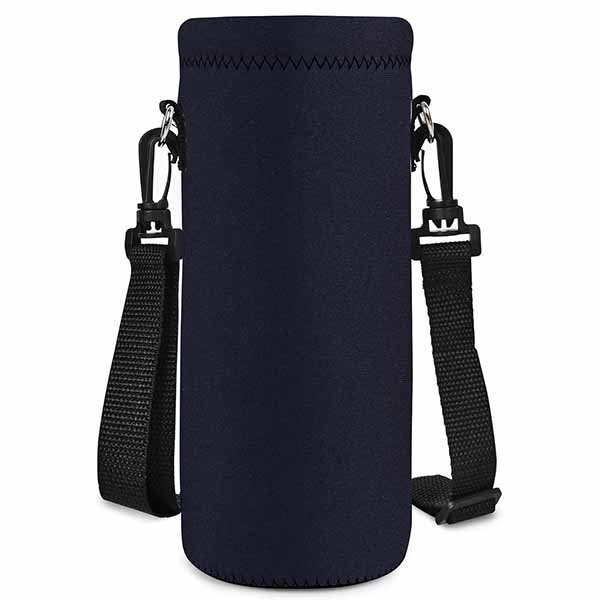
From simple promotional sleeves to structured crossbody carriers, each style can be developed around a specific bottle, use case, branding plan, and price level. CTA: Choose Your Style
1. standard bottle sleeve

Standard Bottle Sleeve

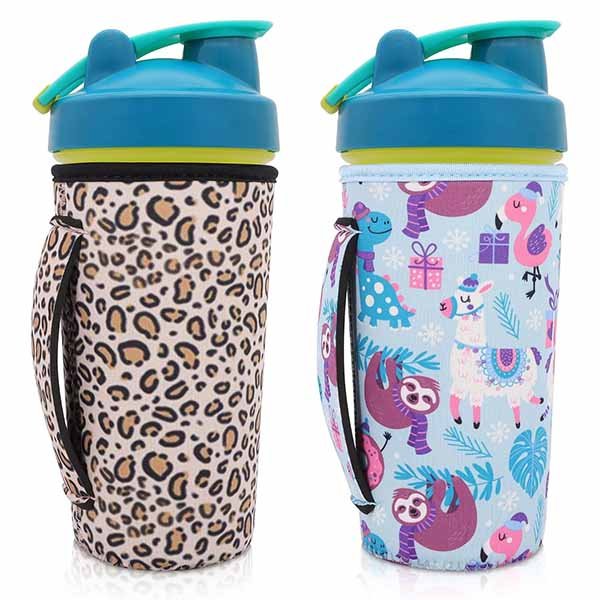
A fitted cylindrical sleeve provides grip, light cushioning, reduced surface condensation, and a large branding area. It suits sports bottles, glass bottles, promotional drinkware, and everyday hydration products. Construction can use a side seam, base panel, stitched edge, or bound opening.
2. handled bottle holder

Handled Bottle Holder

An integrated webbing or fabric handle makes the bottle easier to carry between the gym, office, vehicle, or event venue. Handle length, width, insertion depth, and reinforcement are selected according to the bottle’s filled weight and intended carrying position.
3. shoulder strap carrier

Shoulder Strap Carrier

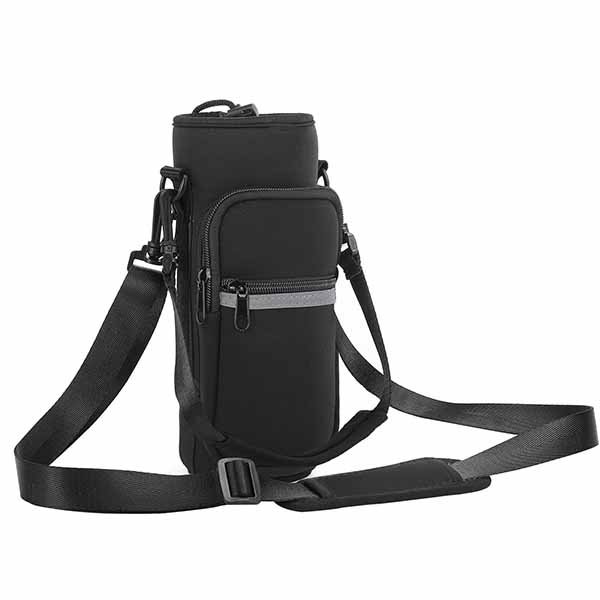
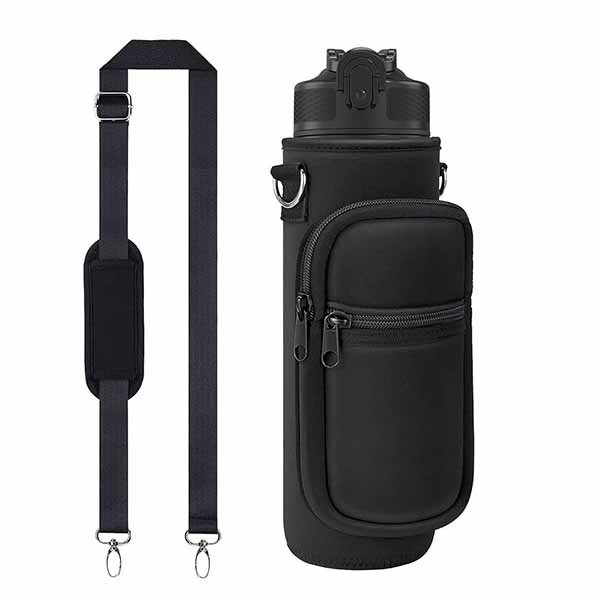
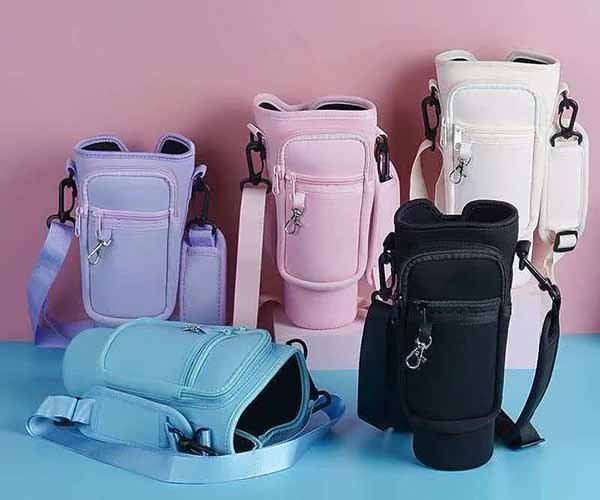
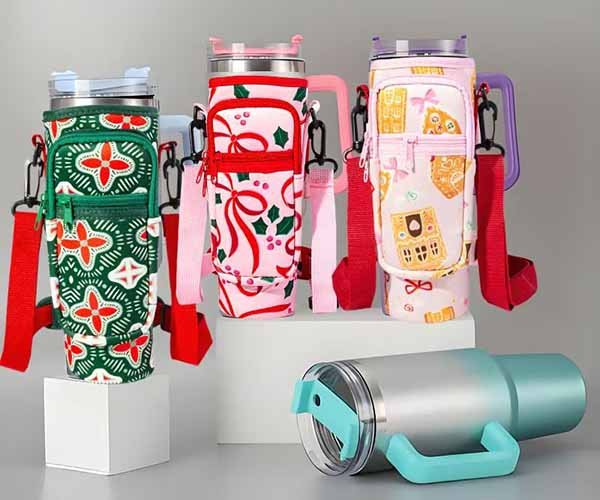
A detachable or fixed shoulder strap converts the holder into a portable bottle bag. Options include adjustable webbing, plastic or metal hooks, shoulder pads, side D-rings, and reinforced anchor panels. Strap balance must be checked with a filled bottle.
4. crossbody bottle sling

Crossbody Bottle Sling

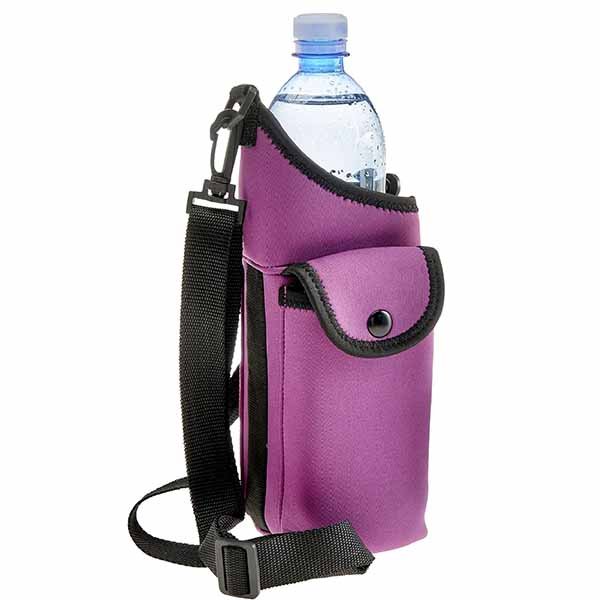
Crossbody designs are suitable for walking, festivals, travel, parks, and outdoor activities. A longer adjustable strap keeps hands free while the bottle remains accessible. The opening, bottom support, strap angle, and body height are developed to reduce excessive movement.
5. zippered bottle cover

Zippered Bottle Cover

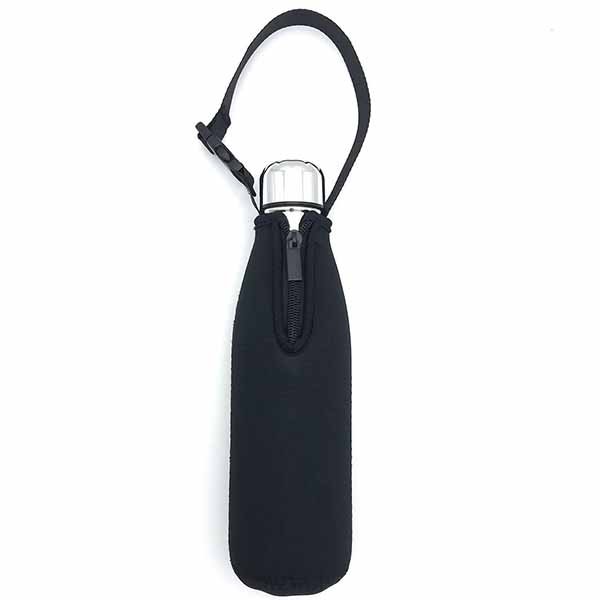
A zippered cover provides a closer enclosure and can support bottles with irregular shapes or wider upper sections. Zipper size, opening length, puller type, binding, and internal clearance must be coordinated so the bottle remains easy to insert and remove.
6. large gym bottle holder

Large Gym Bottle Holder

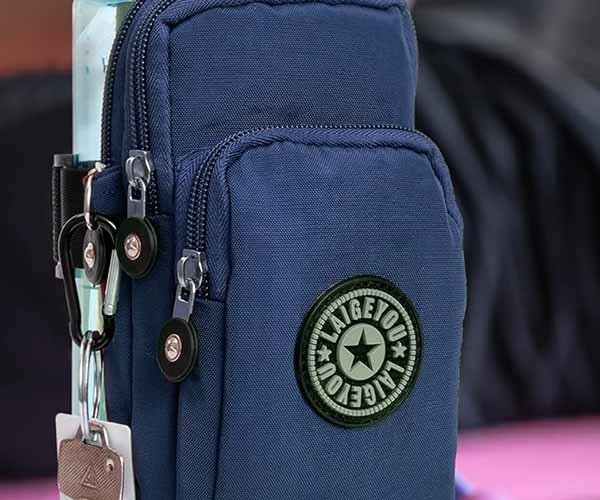
Large carriers are designed for half-gallon, 64 oz, or one-gallon gym bottles. Filled weight requires stronger handles, wider webbing, reinforced bottom construction, and carefully positioned seams. Exterior phone pockets or card pockets can be added when required.
7. wine bottle sleeve

Wine Bottle Sleeve

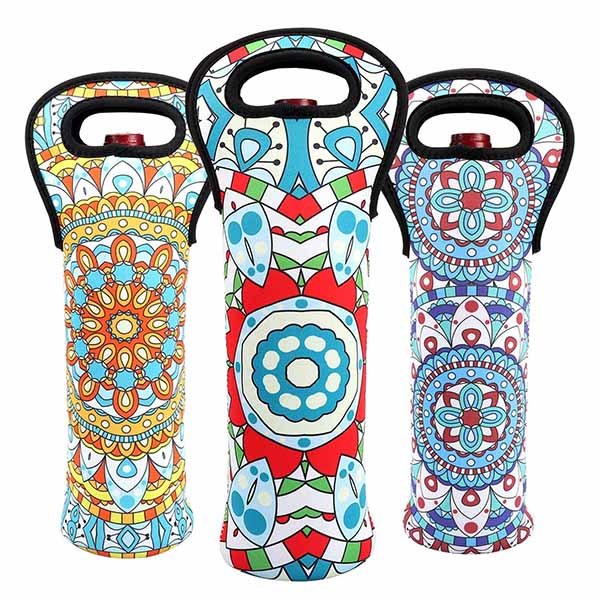
Wine bottle sleeves can be produced as single-bottle covers, zippered gift sleeves, handled carriers, or multi-bottle totes. Branding options include sublimation, screen printing, woven labels, patches, hangtags, and retail packaging for gift and promotional programs.
8. dual bottle carrier

Dual Bottle Carrier

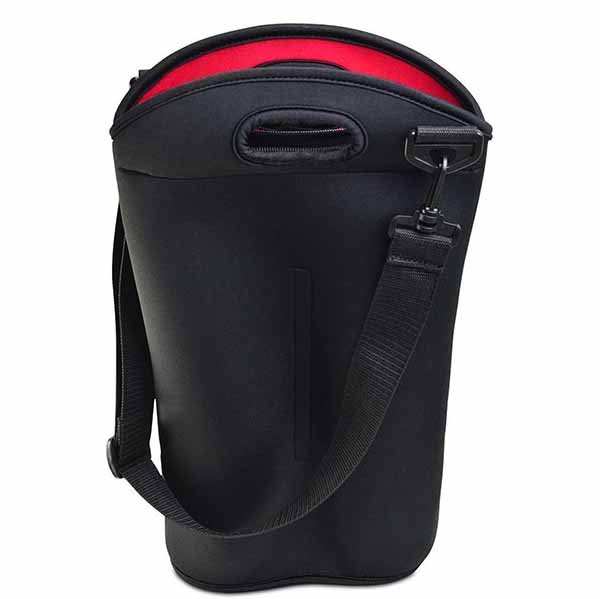
Dual carriers hold two bottles in separate compartments or a divided body. The center divider helps reduce bottle contact, while reinforced handles or straps support the combined weight. They are suited to wine gifts, beverage sampling, sports events, and branded drink sets.
9. pocket bottle carrier

Pocket Bottle Carrier

A front or side pocket can hold a phone, card, key, small nutrition sachet, or earphones. Pocket dimensions should follow actual contents. Zippered, elastic, mesh, or open pockets can be integrated without interfering with bottle fit or carrying balance.

Design the Holder Around Its Sales Channel

A bottle holder intended for an event giveaway has different requirements from a retail product, drinkware set, gym accessory, or outdoor carrier.

Retail Shelves

Retail programs require controlled shape, clean finishing, barcode labels, hangtags, packing consistency, carton marks, and repeat-order records. Product dimensions should also consider shelf presentation, master-carton utilization, and transport compression. Key planning points:
  • Retail price level
  • Display method
  • Barcode location
  • Pack quantity
  • Color assortment

Online Stores

Amazon and direct online sales require photography-ready samples, consistent branding, compact packing, accurate SKU labels, and protection against avoidable review complaints. Fit, odor, stitching, printing, and accessory function should be checked from an end-user perspective before launch. Key planning points:
  • FNSKU or barcode
  • Polybag requirements
  • Product insert
  • Carton dimensions
  • Replenishment plan

Promotional Events

Event merchandise must balance visible branding, cost, quantity, and a fixed delivery date. Simple structures, existing material colors, efficient printing, and uncomplicated packaging often provide the best production stability. Key planning points:
  • Event date
  • Artwork deadline
  • Distribution method
  • Carton quantity
  • Delivery location

Drinkware Gift Sets

A holder sold together with a bottle requires coordinated dimensions, colors, branding, and packaging. The bottle may be packed inside the holder or placed beside it in a gift box. Box structure and internal space must be verified before mass packaging. Key planning points:
  • Bottle and holder assembly
  • Gift-box insert
  • Product orientation
  • Transport protection
  • Set packing sequence

Fitness Accessories

Gym-focused products need reinforcement for heavier bottles and frequent carrying. Wide handles, adjustable straps, snap hooks, phone pockets, and washable surface fabrics are common additions. A filled-bottle carry test is more useful than inspecting an empty holder alone. Key planning points:
  • Full bottle weight
  • Grip comfort
  • Sweat exposure
  • Pocket function
  • Strap adjustment

Outdoor Carriers

Outdoor use places greater emphasis on carrying stability, hardware, access, abrasion exposure, and weather conditions. Neoprene can provide cushioning and limited resistance to moisture, but construction should not be marketed as fully waterproof without suitable seams and testing. Key planning points:
  • Carry duration
  • Walking movement
  • Hardware type
  • Attachment points
  • Required protection

Bottle Dimensions Come Before Pattern Development

Reliable bottle fit begins with actual geometry, filled weight, and carrying behavior rather than a general capacity description.

Nominal Bottle Volume Is Not Enough

A description such as “500 ml bottle” or “32 oz bottle” does not provide enough information for accurate pattern making. Capacity describes how much liquid a bottle contains, but it does not define its outer shape. Two bottles with the same capacity may differ in:
  • Maximum diameter
  • Bottom diameter
  • Shoulder angle
  • Neck width
  • Overall height
  • Cap height
  • Handle projection
  • Surface texture
  • Body taper
A holder made only from a nominal capacity can become too loose, too tight, too short, or difficult to remove. Bottles with side handles, flip lids, straw lids, or wide caps require additional clearance at the opening. Szoneier can begin development from:
  • A physical bottle sent to the sample room
  • A dimensional technical drawing
  • A 3D bottle file
  • A reference holder and bottle
  • Clear measurement photos
  • A complete specification sheet
For projects involving multiple bottle sizes, each size should be measured separately. Scaling a small pattern by a fixed percentage may change seam position, artwork proportion, pocket placement, and strap balance.

Fit Validation Before Bulk Cutting

Pattern development considers both the bottle dimensions and the stretch behavior of the selected material. Neoprene foam laminated with fabric does not behave like non-stretch woven material. Foam thickness, fabric direction, lamination, seam construction, and printing can influence the finished internal circumference. A fit sample should be checked for:

  • Insertion force
  • Removal force
  • Sidewall tension
  • Opening shape
  • Base alignment
  • Bottle exposure
  • Seam position
  • Filled-bottle balance
  • Handle and strap movement

For a close-fitting sleeve, moderate compression may help the product remain secure. Excessive compression can distort printing, stress seams, and make the bottle difficult to insert. A carrier with straps may need slightly more clearance but stronger bottom support. Photos and videos can be recorded with the actual bottle during the sample review. Final bulk dimensions should follow the approved physical sample, confirmed pattern, and measurement record rather than an unverified digital mockup. 

Common Bottle Classes and Required Fit Information

Bottle ClassCommon Volume ReferenceRequired MeasurementsCommon Holder DirectionMain Sample Check
Compact Bottle350–500 mlHeight, maximum diameter, base diameterFitted sleeve or short handled holderOpening tension and bottom position
Standard Bottle600–750 mlHeight, body diameter, neck taperSleeve, handle carrier, or shoulder carrierSidewall fit and logo position
Sports Bottle24–32 ozHeight, body diameter, cap widthFitted sleeve or adjustable carrierCap clearance and carrying balance
Tumbler Bottle30–40 ozHeight, base diameter, upper diameterTapered sleeve or handled holderTaper accuracy and removal force
Large Gym Bottle64 ozHeight, diameter, handle location, filled weightReinforced carrier with wide strapHandle strength and bottom support
One-Gallon Bottle1 gallonFull profile, handle projection, filled weightHeavy-duty carrier with reinforced baseStrap position and loaded stability
Wine Bottle750 mlHeight, body diameter, neck diameterSleeve, gift cover, or handled carrierNeck exposure and gift presentation

Volume ranges provide a starting reference, while final patterns follow actual bottle measurements, shape, weight, opening structure, and approved fit samples.

Note: Common volume labels do not replace dimensional verification. Bottles with built-in handles, unusual caps, strong taper, or non-round bodies require additional measurements.

Neoprene Construction Selected for Product Performance

Bottle holder quality depends on foam core, laminated fabric, thickness, elasticity, printing compatibility, smell, recovery, and consistency across production batches.

Foam Core and Laminated Surface

The market commonly uses “neoprene” as a broad commercial term for flexible foam sheets laminated with polyester, nylon, or other fabrics. Available constructions may include SBR-based foam, CR-based foam, or blended options, depending on performance requirements, sourcing conditions, and budget. A suitable material is selected by reviewing:
  • Required thickness
  • Foam density
  • Stretch direction
  • Elastic recovery
  • Surface fabric
  • Printing process
  • Hand feel
  • Product structure
  • Target price
  • Testing requirements
Polyester-laminated surfaces are widely used for sublimation printing because they can accept detailed, full-color artwork. Nylon-laminated surfaces may offer a different hand feel and abrasion performance but require evaluation for the intended branding process. Material selection also affects sewing. A thicker or softer foam can compress under the presser foot, changing seam appearance and finished dimensions. Binding, needle type, thread, stitch density, and seam allowance should be adjusted during sampling. Szoneier confirms the selected material through swatches, sample construction, and project records before bulk production.

Thickness, Smell, and Recovery Control

Material thickness should be measured rather than judged only by touch. Foam can compress during storage, lamination, cutting, packing, and transport. A nominal thickness is therefore evaluated together with an acceptable production tolerance and finished-product performance. Important checks include:

  • Measured thickness
  • Surface bonding
  • Delamination risk
  • Foam uniformity
  • Edge condition
  • Odor level
  • Color consistency
  • Stretch and return
  • Crease recovery
  • Cutting cleanliness

A strong chemical smell can damage the first-use experience, especially for online retail and gift products. Material storage, ventilation, printing, adhesive use, and packing time can influence odor. Finished products should not be sealed immediately after processes that require airing. Elastic recovery also affects bottle fit. Material that stretches but does not return properly may become loose after repeated use. Sample review should therefore include several insertion and removal cycles rather than a single fit check.

Choose Thickness by Function, Fit, and Construction

ThicknessProduct FeelSuitable ApplicationsMain BenefitsEngineering Considerations
2 mmLight and flexiblePromotional sleeves, compact bottle covers, high-volume event itemsLower weight, easier folding, controlled costLimited cushioning; may show bottle shape clearly
3 mmBalanced and supportiveStandard bottle sleeves, handled holders, sports bottle carriersGood balance of fit, grip, cushioning, and sewabilityCommon starting point; still requires bottle-specific sampling
4 mmThicker and more protectivePremium covers, larger bottles, structured carriersIncreased cushioning and fuller hand feelHigher cost, greater seam bulk, tighter packing volume
5 mmHeavy and highly cushionedSpecial protection needs, selected large-bottle applicationsStronger cushioning and substantial feelMore difficult binding and sewing; unsuitable for many compact sleeves

Structure and Accessories Built for Daily Use

Each added component must improve carrying, access, protection, or branding. Unnecessary accessories increase cost without improving product value. CTA: Configure Your Holder

Webbing Carry Handle

A webbing handle provides a simple carrying point for gym, office, event, or travel use.
Engineering details:
  • Handle width and length
  • Webbing thickness
  • Insertion depth
  • Reinforcement stitches
  • Position relative to bottle weight
  • Color matching with binding and print
A loaded-bottle check helps confirm comfort and seam strength.

Adjustable Shoulder Strap

Adjustable straps support crossbody or shoulder carrying across different body sizes.
Options include:
  • Polyester or nylon webbing
  • Plastic or metal adjusters
  • Fixed or detachable construction
  • Shoulder pads
  • Printed or jacquard branding
  • Single-side or two-side attachment
Attachment position must prevent excessive bottle tilt during movement.

Snap Hook Hardware

Hooks make straps removable and allow the holder to attach to other gear.
Selection considers:
  • Plastic or metal construction
  • Hook opening
  • Rotating or fixed design
  • Surface finish
  • Weight rating
  • Compatibility with D-rings or webbing loops
Hardware should not rub directly against printed foam during use.

Zipper Opening

A zipper can secure the bottle, enlarge the opening, or support shaped bottle profiles.
Development covers:
  • Zipper gauge
  • Opening length
  • Single or double puller
  • End reinforcement
  • Internal clearance
  • Binding and seam location
The zipper should operate smoothly with the bottle inserted.

Drawcord Closure

A drawcord can reduce opening size and help retain bottles with narrow necks or uneven profiles.
Important details:
  • Cord diameter
  • Cord-lock quality
  • Exit position
  • Reinforced eyelets
  • User access
  • Interaction with cap or handle
The closure should not create pressure on fragile bottle components.

Phone Pocket

A phone pocket increases retail value for walking, festivals, travel, and fitness use.
Pocket design follows:
  • Device dimensions
  • Case thickness
  • Access direction
  • Zipper or elastic closure
  • Screen protection
  • Carrying balance
A pocket should not make bottle insertion difficult or shift weight excessively.

Reinforced Bottom

The base carries the full bottle load and receives repeated impact when placed on surfaces.
Reinforcement options include:
  • Double-layer neoprene
  • Additional woven panel
  • Circular base panel
  • Webbing support
  • Higher stitch density
  • Internal support material
Construction depends on bottle size and total filled weight.

Edge Binding

Binding protects raw edges, improves shape, and creates a finished visual line.
Common options include:
  • Polyester binding
  • Nylon binding
  • Stretch binding
  • Color-matched binding
  • Contrast binding
  • Printed binding
Binding width and tension must remain consistent around curves and openings.

Custom Zipper Puller

A custom puller can strengthen brand recognition on premium carriers.
Available directions include:
  • Molded rubber puller
  • Silicone puller
  • Metal puller
  • Woven pull tab
  • Printed webbing pull
  • Standard puller with branded tag
Molded designs may involve tooling cost and higher minimum quantities.

Logo Methods for Neoprene Bottle Holders
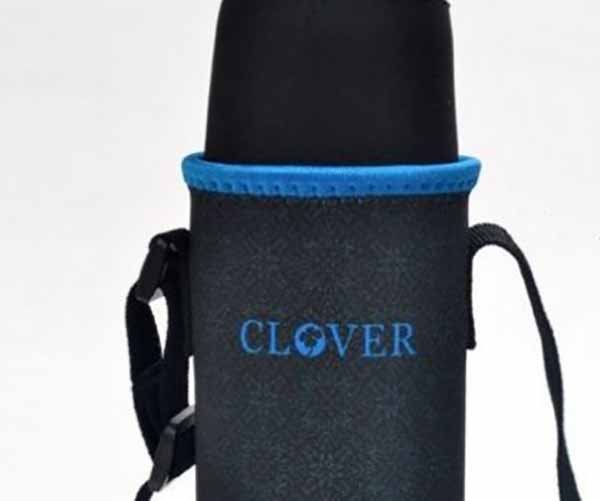
Branding is selected according to artwork detail, coverage area, stretch, surface fabric, durability, quantity, cost, and desired market positioning.
1. sublimation printing

Sublimation Printing

Sublimation is well suited to polyester-laminated neoprene and supports detailed graphics, gradients, photographic artwork, and near-full-panel coverage. Best suited for:
  • Full-color brand artwork
  • Repeating patterns
  • Sports graphics
  • Seasonal collections
  • Multi-color retail products
Artwork must include seam allowance and account for panel stretch after assembly.
2. screen printing

Screen Printing

Screen printing works well for simple logos, clear shapes, and limited color counts. It is widely used for promotional and event programs. Best suited for:
  • One- or two-color logos
  • Bold text
  • High-volume orders
  • Controlled print areas
  • Cost-sensitive programs
Ink compatibility, stretch, curing, and edge definition should be checked on the chosen fabric.
3. heat transfer printing

Heat Transfer Printing

Heat transfer supports detailed local artwork without printing the entire panel. It can be useful for medium-size logos and shorter programs. Best suited for:
  • Local front logos
  • Detailed small artwork
  • Multi-color designs
  • Names or event graphics
  • Selected low-volume programs
Adhesion and cracking resistance should be evaluated on flexible surfaces during sampling.
4. embroidery

Embroidery

Embroidery creates texture and a premium stitched appearance. Neoprene compression and needle penetration require suitable backing and controlled stitch density. Best suited for:
  • Compact logos
  • Lifestyle branding
  • Club marks
  • Monograms
  • Premium local decoration
Large dense embroidery can stiffen the panel and change the bottle fit.
5. woven labels

Woven Labels

Woven labels provide consistent branding without placing ink directly on the stretch material. They can be sewn into a side seam, binding, handle, or pocket. Best suited for:
  • Clean brand signatures
  • Small detailed logos
  • Repeat production
  • Minimalist designs
  • Multiple colorways
Label size and seam position should be confirmed on the physical sample.
6. rubber or silicone patches

Rubber or Silicone Patches

Molded patches suit fitness, outdoor, and performance-oriented products. They provide dimensional branding and strong visual identity. Best suited for:

  • Sports collections
  • Outdoor carriers
  • Premium accessories
  • Repeat programs
  • Rugged visual styling

Tooling, patch thickness, sewing or bonding method, and minimum quantity require early confirmation. 

Lorem ipsum dolor sit amet, consectetur adipiscing elit. Ut elit tellus, luctus nec ullamcorper mattis, pulvinar dapibus leo.

From Bottle Details to Approved Production Sample

Sampling converts product requirements into a measurable standard for materials, fit, printing, construction, accessories, packaging, and bulk production.

Project Review

The project team reviews bottle type, dimensions, product references, quantity, market, use scenario, branding, packaging, target date, and budget direction. Required information may include:
  • Bottle photos
  • Dimension drawing
  • Reference link
  • Estimated quantity
  • Delivery country
  • Launch date
Missing information is identified before quotation or pattern work begins.

Bottle Measurement

A physical bottle or reliable drawing is used to record all fit-related dimensions. Measurements include:
  • Overall height
  • Maximum diameter
  • Base diameter
  • Neck diameter
  • Cap projection
  • Handle position
  • Filled weight
Measurement photos and a marked specification sheet reduce misunderstandings between product, pattern, and sampling teams.

Material Selection

Material is selected according to thickness, foam type, laminated surface, print method, desired hand feel, cushioning, price level, and testing needs. The review may cover:
  • 2–5 mm thickness
  • Polyester or nylon surface
  • Existing color or printed panel
  • Stretch direction
  • Odor and recovery
  • Binding compatibility
A material swatch may be confirmed before the full sample.

Structure Proposal

The structure is planned around carrying and end use. A simple sleeve may need only a side seam and base, while a retail carrier may require straps, hardware, pockets, zippers, binding, and reinforcement. The proposal defines:
  • Panel structure
  • Opening method
  • Bottom construction
  • Carrying points
  • Accessory locations
  • Reinforcement areas

Artwork Review

Logo files and full-panel graphics are checked before printing. The artwork review covers:
  • File resolution
  • Vector elements
  • Pantone references
  • Print dimensions
  • Seam allowance
  • Safety area
  • Pattern repeat
  • Orientation on the bottle
A digital mockup supports communication but does not replace a printed physical sample.

Pattern Development

Pattern makers convert bottle geometry and selected material behavior into cutting panels. Pattern decisions include:
  • Finished internal circumference
  • Material compression
  • Seam allowance
  • Bottom diameter
  • Opening curve
  • Pocket position
  • Strap anchor position
  • Print alignment
Pattern references are retained for approved repeat production.

Sample Sewing

The sample room cuts, prints, binds, stitches, assembles, and finishes the first physical unit. Sample technicians observe:
  • Material compression
  • Seam bulk
  • Binding tension
  • Panel alignment
  • Handle position
  • Hardware movement
  • Overall appearance
Engineering adjustments can be recorded before producing a revised sample.

Internal Inspection

Before international shipment, the sample is reviewed against the specification and actual bottle. Checks include:
  • Fit and removal
  • Dimensions
  • Artwork position
  • Color
  • Stitching
  • Binding
  • Strap function
  • Pocket access
  • Packaging
Photos or videos can be shared before dispatch to avoid unnecessary courier cost.

Approval and Records

Approved materials, patterns, artwork, accessories, construction notes, packaging files, and QC requirements are organized for bulk production. Final approval normally covers:

  • Physical sample
  • Measurement record
  • Material
  • Logo
  • Accessories
  • Packaging
  • Quantity
  • Delivery plan

Changes after approval should be reviewed for cost, timing, and production impact.

MOQ, Sample Time, Production, and Pricing Factors

Project ItemTypical ReferenceSuitable ConditionsFactors That May Change It
Starting MOQFrom approximately 300 pcsExisting materials, standard colors, mature structure, simple logo, regular packagingCustom colors, special foam, molded patches, hardware, multiple sizes, printed packaging
Simple Fit SampleAbout 5–7 working daysBasic sleeve, available material, simple local logoNew bottle measurements, special printing, material sourcing
Standard Carrier SampleAbout 7–12 working daysStrap, handle, binding, standard pocket or zipperSeveral accessories, print matching, fit revisions
Complex SampleAbout 12–20 working daysMulti-pocket carrier, unusual bottle, custom hardware, retail packTooling, new materials, repeated revisions, testing
Bulk ProductionAbout 20–35 daysFinal sample approved, materials available, artwork and packaging confirmedQuantity, printing capacity, accessories, peak season, third-party inspection
Unit PriceProject basedComplete specifications suppliedThickness, surface fabric, product size, print coverage, straps, hardware, pockets, packaging
Sample CostDevelopment basedScope confirmed before work startsPattern complexity, print trial, material sourcing, tooling, packaging sample, urgency

Production Control From Material to Packed Cartons

Approved samples become production standards through documented materials, artwork, patterns, accessories, sewing instructions, inspection points, and packing requirements.

Pre-Production Preparation

Bulk production should not begin from a quotation alone. The production team requires confirmed specifications and a clear reference standard. Pre-production preparation includes:
  • Final sample approval
  • Material and color confirmation
  • Artwork approval
  • Pattern confirmation
  • Bill of materials review
  • Accessory specifications
  • Packaging instructions
  • Quantity by SKU
  • Carton-mark requirements
  • Delivery schedule
Incoming foam sheets and laminated fabrics are checked for thickness, surface condition, color, smell, bonding, and visible defects. Printed panels are compared against approved artwork and color references before full cutting proceeds. Cutting plans consider print orientation, stretch direction, panel matching, seam allowance, and material utilization. Components such as webbing, binding, hooks, adjusters, zippers, labels, and packaging are prepared according to the approved bill of materials. For larger orders, a pre-production unit may be assembled with bulk materials to verify fit, print placement, binding, hardware, and packaging before line production.

Cutting, Printing, and Sewing Control

Neoprene cutting requires clean edges and consistent panel dimensions. Variations in panel size can change bottle fit after sewing. Cutting templates and pattern records help maintain the same finished circumference across production. Process checks include:
  • Panel dimensions
  • Print orientation
  • Pattern matching
  • Bottom alignment
  • Binding width
  • Stitch distance
  • Seam consistency
  • Handle insertion
  • Reinforcement positions
  • Hardware direction
During sewing, foam compression can create wrinkles, uneven edges, or dimensional change. Machine settings, presser-foot pressure, needle selection, thread, stitch density, and operator handling are adjusted for the chosen material thickness. Handles and straps are not treated as decorative parts. Anchor points are checked during assembly, especially for large gym bottles or carriers with phone pockets. Inline inspections identify recurring problems before the entire order is completed.

Finishing, Packing, and Shipment Preparation

Finished products are shaped, cleaned, aired, inspected, counted, and packed according to the approved instructions. Neoprene goods may require ventilation before sealing, especially after printing or adhesive-related processes.
Final preparation covers:

  • Loose thread removal
  • Surface cleaning
  • Odor observation
  • Fit sampling with the bottle
  • Strap and hardware function
  • Logo position
  • Individual packaging
  • Barcode or FNSKU labels
  • Master-carton quantity
  • Carton marks
  • Gross weight
  • Packing-list accuracy

Packing pressure should be controlled so thick holders are not excessively compressed. Retail boxes and gift sets are checked for product orientation and internal fit. Amazon orders require correct SKU separation and label placement.
Photos of finished goods, cartons, labels, and loading preparation can be supplied before shipment. Third-party inspection can also be coordinated when required.

Quality Checks for Every Critical Product Detail

Inspection standards follow the approved sample, product specification, packaging instructions, and project-specific risks rather than a generic visual check.

Material Thickness

Material thickness influences fit, cushioning, feel, sewing, and unit cost. Inspection covers:
  • Thickness readings
  • Batch consistency
  • Foam compression
  • Surface lamination
  • Edge condition
  • Approved material comparison
Measurements are taken before production and checked again when material performance appears different during cutting or sewing.

Material Odor

Strong odor can affect unboxing and first-use experience. Control measures include:
  • Incoming material observation
  • Printing-process review
  • Adhesive control
  • Ventilation time
  • Finished-product airing
  • Packing timing
Products should not be sealed immediately when printing or assembly processes require additional airing.

Elastic Recovery

Recovery determines whether the holder remains fitted after repeated use. Checks may include:
  • Repeated bottle insertion
  • Removal cycles
  • Sidewall tension
  • Opening recovery
  • Crease recovery
  • Comparison with approved sample
Material that stretches without returning can lead to loose fit and end-user complaints.

Print Color

Artwork is checked for color, scale, position, sharpness, and panel alignment. Inspection points include:
  • Approved color reference
  • Logo dimensions
  • Text readability
  • Seam-area placement
  • Pattern direction
  • Color variation between units
Elastic stretch is considered when judging the print on the filled holder.

Bottle Fit

Fit inspection uses the intended bottle or a verified fit reference. Checks cover:
  • Insertion force
  • Removal force
  • Bottom seating
  • Opening clearance
  • Sidewall tension
  • Bottle exposure
  • Stability during carrying
Random units can be tested during and after production.

Edge Binding

Binding strongly affects appearance and durability. Inspection covers:
  • Width consistency
  • Tension
  • Color
  • Curve smoothness
  • Joint position
  • Loose edges
  • Skipped stitches
  • Wrinkling
Uneven binding can make an otherwise simple product appear poorly made.

Stitching Quality

Seams are checked for strength, alignment, and visual consistency. Inspection points include:
  • Stitch density
  • Straightness
  • Backstitching
  • Open seams
  • Thread tension
  • Needle marks
  • Seam allowance
  • Loose threads
Critical seams receive more attention than decorative stitching.

Strap Strength

Straps and handles are checked with the expected bottle load. Inspection covers:
  • Webbing quality
  • Stitch pattern
  • Anchor position
  • Bartacks
  • Hardware attachment
  • Adjuster movement
  • Carrying balance
  • Visible deformation
Large-bottle holders require stronger control than lightweight promotional sleeves.

Packaging Accuracy

Packaging errors can delay warehouse receiving and Amazon intake. Checks include:

  • Correct product and color
  • Quantity per bag
  • Barcode or FNSKU
  • Warning labels
  • Carton quantity
  • Carton marks
  • Gross weight
  • Packing list
  • SKU separation

Final carton checks are completed before shipment release. 

Product Claims Supported by Structure and Testing

Accurate product descriptions reduce compliance risk, returns, and disappointment. Performance statements should match the selected material, construction, intended use, and available test evidence.

Insulation Limits

Neoprene can slow temperature change and reduce direct contact with cold condensation. Performance depends on thickness, bottle temperature, ambient temperature, opening area, fit, and use duration.
It should not be presented as equivalent to:
  • Thick insulated cooler bags
  • Vacuum-insulated bottles
  • Rigid thermal containers
  • Refrigerated storage
Specific time claims require a defined test method.

Water Resistance

Foam and laminated surfaces may resist light moisture, but sewn seams and openings can allow water entry.
Marketing should distinguish between:
  • Water-resistant material
  • Splash-resistant construction
  • Moisture protection
  • Fully waterproof construction
A standard stitched bottle holder should not be described as completely waterproof without suitable seam engineering and testing.

Cushioning Limits

Neoprene provides light cushioning against scratches, contact, and minor daily impact. It does not offer the same protection as molded EVA, hard-shell cases, or engineered protective packaging.
Protection depends on:
  • Foam thickness
  • Density
  • Coverage
  • Bottom structure
  • Bottle material
  • Drop height
  • Impact surface
High-protection claims need suitable validation.

Market Testing Support

Testing requirements depend on destination, brand policy, retail channel, material composition, and intended use.
Szoneier can help coordinate review of:

  • Material documentation
  • Colorfastness
  • Print adhesion
  • Restricted substances
  • Hardware performance
  • Strap strength
  • Product-specific tests
  • Third-party inspection

Testing scope and cost should be confirmed before production.

Packaging for Promotion, Retail, and Online Fulfillment

Packaging protects the holder, communicates the brand, supports warehouse handling, and influences carton volume and total delivery cost.

Bulk Carton Packing

Bulk packing suits event merchandise, internal distribution, and cost-sensitive programs. Products can be grouped by color, size, or artwork. Packing pressure, carton quantity, moisture protection, and count accuracy must be controlled to avoid deformation or sorting problems.

Individual Polybag

Individual bags keep units separated and clean during handling. Options include clear OPP or PE bags, resealable bags, printed warning text, adhesive closure, and barcode labels. Bag size should not create excessive material use or unnecessary shipping volume.

Branded Hangtag

Hangtags communicate size, material, use instructions, brand story, barcode, or compliance information. Options include folded cards, kraft tags, coated cards, strings, plastic fasteners, and reinforced eyelets. Tag position should not damage the neoprene surface.

Retail Paper Sleeve

A paper sleeve wraps around part of the product while leaving the material and print visible. It provides a strong retail presentation with less volume than a full box. Sleeve dimensions must remain secure without compressing the holder excessively.

Retail Gift Box

Gift boxes suit premium drinkware sets, corporate gifts, and seasonal products. The box may hold the bottle inside the holder or present both products separately. Inserts, window positions, product orientation, and transport protection require physical packing confirmation.

FBA Packaging

Amazon packing may involve FNSKU labels, polybag warnings, carton labels, SKU separation, carton size control, and packing-list accuracy. Szoneier can pack products according to supplied shipping plans and label files before delivery to an FBA destination or forwarder.

Shipping From Samples to Repeat Bulk Orders

Shipping method is selected according to quantity, carton volume, destination, budget, launch date, warehouse type, and inventory urgency.

Express Samples

DHL, UPS, FedEx, and other express services are commonly used for material swatches, fit samples, printed samples, packaging samples, and approval units. Photo or video confirmation before dispatch can reduce unnecessary international sample shipments and revision cost.

Air Freight

Air freight supports urgent launches, event deadlines, seasonal sales, and stock replenishment. It is faster than sea freight but more expensive, especially when products have high dimensional weight. Carton compression and packing efficiency can materially affect freight cost.

Sea Freight

Sea freight is commonly selected for large orders, regular replenishment, and cost-controlled delivery. Available arrangements may include FOB, CIF, shipment to an overseas warehouse, or delivery through an appointed forwarder. Earlier production and inventory planning are important.

DDP and FBA

DDP and FBA first-leg delivery can be evaluated according to destination, address type, HS code, carton data, weight, SKU count, and available routes. DDP is not suitable for every country or shipment, so final feasibility and cost require project-level review. 

A Factory-Based Soft Goods Manufacturing System

Szoneier combines product development, sampling, material coordination, sewing production, inspection, packaging, and export support under one project-management structure.

18+ Years Experience

More than 18 years of custom bag and soft-goods experience supports material selection, pattern development, sewing, branding, inspection, packaging, and international order coordination across different product categories and markets.

In-House Sampling

The sampling system supports pattern making, material preparation, trial printing, cutting, sewing, revision, internal inspection, photo review, sample shipment, and final approval before bulk production planning.

Material Coordination

Szoneier works with neoprene foam, laminated fabrics, binding, webbing, zippers, hooks, adjusters, labels, patches, printed packaging, and related components required for simple sleeves and structured carriers.

Sewing Equipment

More than 160 production and auxiliary machines support different sewing, binding, cutting, reinforcement, and finishing requirements across Szoneier’s wider custom bags and soft-goods manufacturing system.

Production Management

Production plans coordinate materials, artwork, cutting, sewing, inline inspection, finishing, packaging, and shipment preparation. Approved samples and documented specifications provide the reference for bulk work.

Independent Inspection

Quality staff review materials, components, pre-production standards, cutting, sewing, finished appearance, product-specific functions, packaging, quantities, labels, and cartons before shipment release.

Flexible Capacity

Szoneier combines its own factory-based production with a controlled network of more than 10 long-term satellite partner factories. Sampling, standards, communication, inspection, and delivery remain managed through the Szoneier project team.

Factory Review

Qualified procurement teams can request video meetings, remote factory review, product-development discussions, or scheduled factory visits to examine samples, materials, sewing areas, inspection procedures, packaging, and project-management capability. 

Neoprene Bottle Holder Manufacturing Case Studies

Brand identities, artwork, and unreleased product files remain confidential. The following anonymized records show typical order quantities, development issues, production controls, and delivery arrangements.

US Fitness Brand — 3,600 Large Bottle Holders

A US fitness brand required a carrier for a large gym bottle sold through its online store and partner gyms. The full bottle weight exceeded the load handled by a normal promotional sleeve, so the project required a stronger carrying structure.
Order Scope:
  • Quantity: 3,600 pieces
  • Material: 3 mm neoprene with polyester surface
  • Structure: Reinforced circular bottom
  • Carrying: Wide webbing handle and detachable shoulder strap
  • Hardware: Rotating snap hooks and adjustable buckle
  • Branding: Full-color sublimation print
  • Packaging: Individual bag, barcode label, 24 pieces per carton
  • Sample time: 10 working days
  • Bulk production: 32 days
  • Shipment: Sea freight to a US warehouse
Main Development Issues:
The first concept placed the strap anchors too high, causing the filled bottle to tilt during walking. The bottom panel also needed greater support because the loaded bottle pressed heavily against a single foam layer.
Szoneier Solution:
The strap anchor positions were lowered and reinforced with internal webbing extensions. A double-layer bottom panel was introduced, and handle insertion depth was increased. The printed artwork was adjusted around the reinforcement areas to avoid visual distortion.
Quality Controls:
  • Fit checks with the filled bottle
  • Handle and strap load checks
  • Hook rotation and closure inspection
  • Binding-width control
  • Print-position comparison
  • Barcode and carton verification
The brand approved the revised sample and retained the pattern, artwork, BOM, and packaging records for later replenishment.

European Beverage Campaign — 8,400 Promotional Sleeves

A European beverage company needed bottle sleeves for a summer retail campaign across several regional distributors. Delivery timing and artwork consistency were more important than complex accessories.
Order Scope:
  • Quantity: 8,400 pieces
  • Bottle type: Standard 500 ml glass bottle
  • Material: 2 mm neoprene-style foam with printable polyester surface
  • Structure: Fitted sleeve with base panel
  • Branding: Four-color full-panel sublimation
  • Colorways: Three campaign designs
  • Packaging: Bulk packed by artwork
  • Sample time: 7 working days
  • Bulk production: 27 days
  • Shipment: FOB sea freight
Main Development Issues:
The supplied artwork placed small legal text close to the side seam. Stretching around the bottle reduced readability, while the three designs required accurate separation during packing.
Szoneier Solution:
The text was moved into a safer print area, and the artwork scale was adjusted after the first fit sample. Each design received an approved color reference, SKU code, packing mark, and separate carton identification.
Quality Controls:
  • Artwork scale verification
  • Text readability check
  • Color comparison by design
  • Sleeve fit sampling
  • Carton separation
  • Quantity reconciliation
  • Shipping-mark inspection
Production was completed before the requested campaign shipping window, with all three artwork groups separated for regional distribution.

US Drinkware Brand — 2,400 Retail Bottle Slings

A US drinkware brand developed a crossbody bottle sling as an accessory for a new insulated bottle collection. The holder needed to fit two bottle sizes while maintaining a consistent retail look.
Order Scope:

  • Quantity: 2,400 pieces
  • SKUs: Two bottle sizes and four colors
  • Material: 3 mm neoprene
  • Structure: Crossbody sling with front phone pocket
  • Strap: Adjustable polyester webbing
  • Branding: Woven side label and small screen-printed logo
  • Packaging: Hangtag, individual bag, FNSKU label
  • Sample time: 14 working days
  • Bulk production: 35 days
  • Shipment: Split delivery to a US warehouse and FBA

Main Development Issues:
The original phone pocket became tight when the bottle was inserted. One scaled pattern also placed the woven label too close to the curved lower seam.
Szoneier Solution:
Separate patterns were developed for both bottle sizes instead of scaling one pattern directly. The pocket gained additional width and a more flexible opening. Label position was moved upward, and carton quantities were adjusted by SKU for split shipment.
Quality Controls:

  • Fit checks by bottle size
  • Phone-pocket access check
  • Strap adjustment inspection
  • Label-position control
  • FNSKU verification
  • SKU carton separation
  • Split-shipment count check

Approved project records were retained to support later colors and repeat-order planning.

Extend Your Neoprene Product Collection
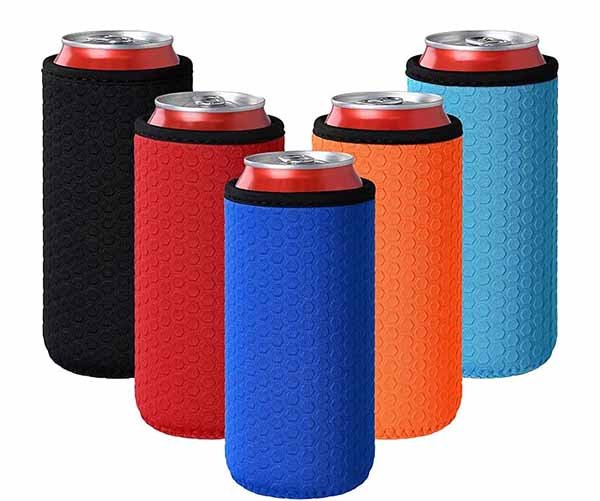
Shared colors, artwork, labels, binding, and packaging can connect a bottle holder with related neoprene accessories across one branded collection.
1. neoprene koozies

Neoprene Koozies

Can coolers and bottle koozies provide a compact promotional format for beverage launches, sports clubs, festivals, events, and corporate campaigns. They can share print artwork and campaign colors with bottle sleeves or gift packaging.
2. neoprene lunch bags

Neoprene Lunch Bags

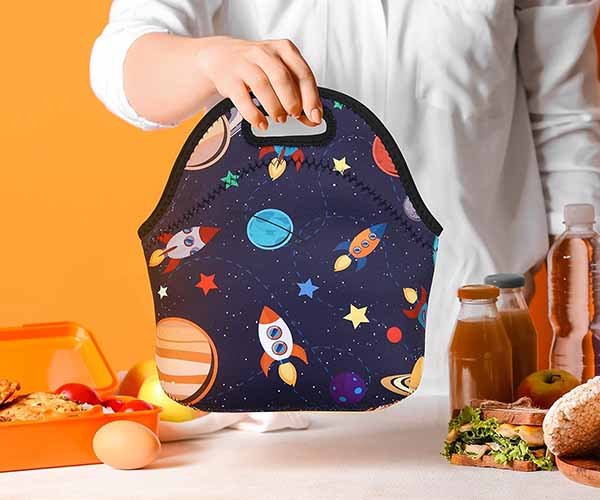
Neoprene lunch bags can extend a hydration or lifestyle collection into food carrying. Options include handles, zippers, pockets, printed surfaces, labels, and retail packaging aligned with the bottle holder program.
3. neoprene laptop sleeves

Neoprene Laptop Sleeves

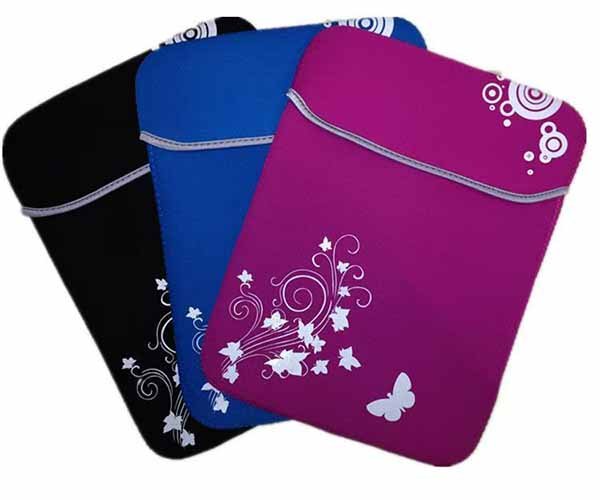
Laptop and tablet sleeves use related foam and laminated fabrics while requiring different fit, opening, zipper, and protection engineering. Coordinated artwork can create a broader office, travel, or lifestyle accessory range.
4. neoprene sports accessories

Neoprene Sports Accessories

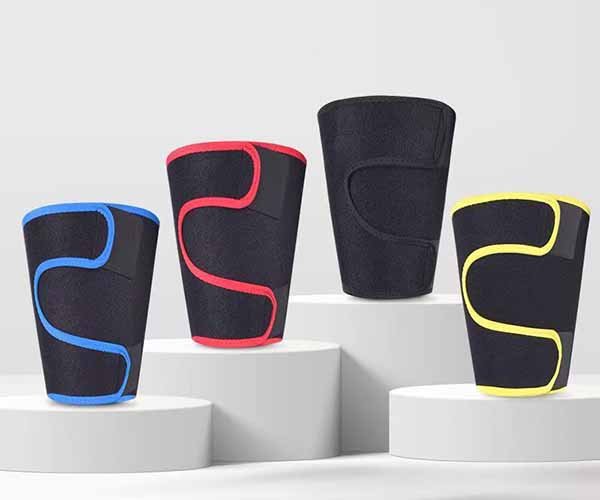
Sports collections may include bottle carriers, armbands, protective sleeves, support products, equipment covers, and small storage pouches. Shared branding and material records support visual consistency across several product categories.

Neoprene Bottle Holder Frequently Asked Questions
Selected standard projects can begin from approximately 300 pieces. Final MOQ depends on material availability, thickness, colors, printing, straps, hardware, molded patches, packaging, and the number of sizes or SKUs. Existing materials and simple branding provide the best conditions for a lower starting quantity.
Yes. A physical bottle is one of the most reliable references for pattern development. Szoneier can also work from technical drawings, 3D files, dimension sheets, measurement photos, or a reference holder. Height, maximum diameter, base diameter, neck, cap, handle, taper, and filled weight should be supplied.
Three millimeters is a common starting point for many bottle sleeves and carriers because it balances fit, cushioning, hand feel, cost, and sewability. Two millimeters suits lighter promotional products, while 4–5 mm may support selected protective or premium designs. Final selection depends on the bottle and structure.
Yes. Sublimation printing on a compatible polyester-laminated surface supports detailed, full-color, gradient, and near-full-panel artwork. Szoneier also supports screen printing, heat transfer, embroidery, woven labels, rubber patches, silicone patches, and other branding methods according to the design and material.
Simple fit samples may require about 5–7 working days. Standard carriers with printing, straps, or binding usually require 7–12 working days. Complex structures, new materials, several pockets, custom hardware, packaging samples, or repeated revisions may require 12–20 working days or longer.
Yes. Options include fixed handles, detachable straps, adjustable webbing, shoulder pads, plastic or metal hooks, D-rings, buckles, and branded webbing. Attachment positions and reinforcement must follow the bottle’s filled weight and carrying direction.
Several sizes may be combined when materials, colors, branding, and production methods are compatible. MOQ allocation depends on the number of sizes, print designs, accessories, and material requirements. Each bottle size normally needs its own pattern and fit approval.
The foam and laminated surface may resist light moisture, but normal stitched seams and openings are not completely waterproof. A bottle holder should be described as water-resistant or splash-resistant unless waterproof construction and suitable testing support a stronger claim.
Yes. Szoneier can support individual bags, hangtags, paper sleeves, retail boxes, gift boxes, barcodes, FNSKU labels, polybag warnings, SKU separation, master-carton labels, packing lists, and FBA first-leg shipping preparation.
Inspection covers incoming material, thickness, odor, elasticity, print color, panel size, stitching, binding, bottle fit, handles, straps, hardware, pockets, packaging, labels, quantities, and cartons. Project-specific inspection points follow the approved sample and confirmed specifications.

Start Your Custom Bottle Holder Project

Send Szoneier enough information to evaluate bottle fit, material, structure, branding, MOQ, sample development, production time, packaging, and shipping. A complete request allows the product, pattern, sampling, production, and logistics teams to prepare a more accurate proposal. Please include:
  • Bottle photos, dimensional drawing, 3D file, or physical sample information
  • Overall height, maximum diameter, base diameter, neck, cap, and handle details
  • Desired holder style, thickness, strap, pocket, zipper, or hardware requirements
  • Logo file, full-surface artwork, Pantone references, or branding direction
  • Required quantity by size, design, and color
  • Individual packaging, barcode, retail, gift-set, or FBA requirements
  • Destination country, warehouse type, and target delivery date
  • Any testing, inspection, or brand-specific quality requirements
neoprene bottle holder (3)

Ask For A Quick Quote

We will contact you within 24 Hours, please pay attention to the email with the suffix“@szoneier.com”

For all inquiries, please feel free to reach out at:

Ask For A Quick Quote

We will contact you within 24 Hours, please pay attention to the email with the suffix“@szoneier.com”

Contact Us

Send us a message if you have any questions or request a quote. We will be back to you ASAP!

For all inquiries, please feel free to reach out at:

Contact Us

Send us a message if you have any questions or request a quote. We will be back to you ASAP!

Exclusive Offer for First-Time Customers

For first-time customers, we will send you a free color card for you to choose.Once you have confirmed the fabric and color, our factory will make a free sample proofing for you.

For customers who frequently cooperate with us, we will send new color charts free of charge several times a year.

For all inquiries, please feel free to reach out at: