Skip to content
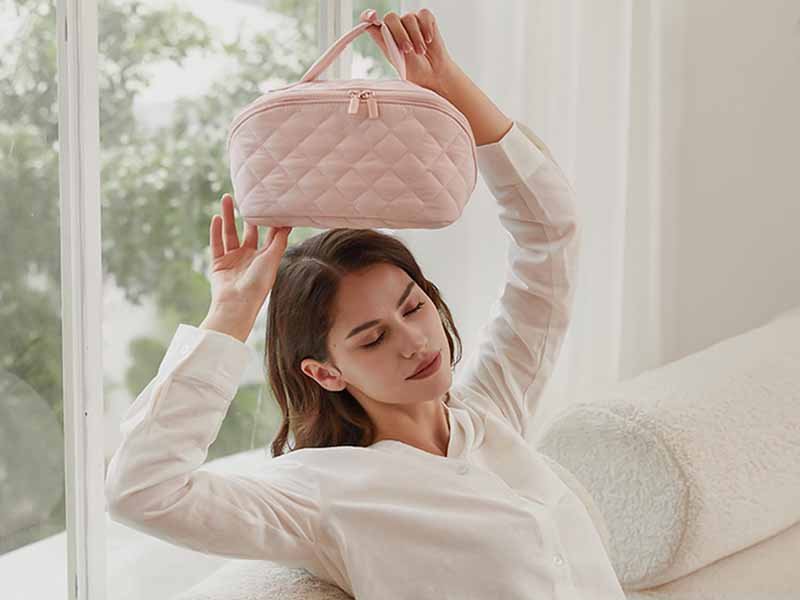
In the beauty industry, product quality matters, but presentation often decides whether a customer stops, clicks, and buys. A lipstick, serum, or skincare set may look similar to competing products on a shelf or on a product page, but when it is paired with a well-made custom makeup bag, the perceived value changes immediately. The product feels more complete. The brand feels more intentional. The customer feels like they are getting more than cosmetics; they are getting a better experience.
For beauty brands, makeup bags are no longer small side items. They are now part of launch strategy, holiday campaigns, gift sets, influencer kits, travel collections, and private label accessories. A custom makeup bag can help improve retail presentation, support product bundling, increase average order value, and create repeat exposure because customers continue using the bag after the cosmetics are finished. This is especially important for growing beauty brands that want to look established without carrying the cost of a full luxury packaging system.
A professional makeup bag manufacturer helps beauty brands turn these ideas into physical products that are commercially workable. That includes material selection, size planning, logo application, sample development, sewing quality, packaging details, and production control. The right factory does not only sew bags. It helps reduce development mistakes, control cost, shorten launch time, and improve the consistency of every unit that reaches the customer.
Many beauty founders start by focusing only on formulas and outer cartons. Later, they realize that the makeup bag itself can become the part customers keep, photograph, reuse, and remember. That is where smart product development begins to separate a serious brand from a forgettable one.
What Are Makeup Bag Manufacturers?
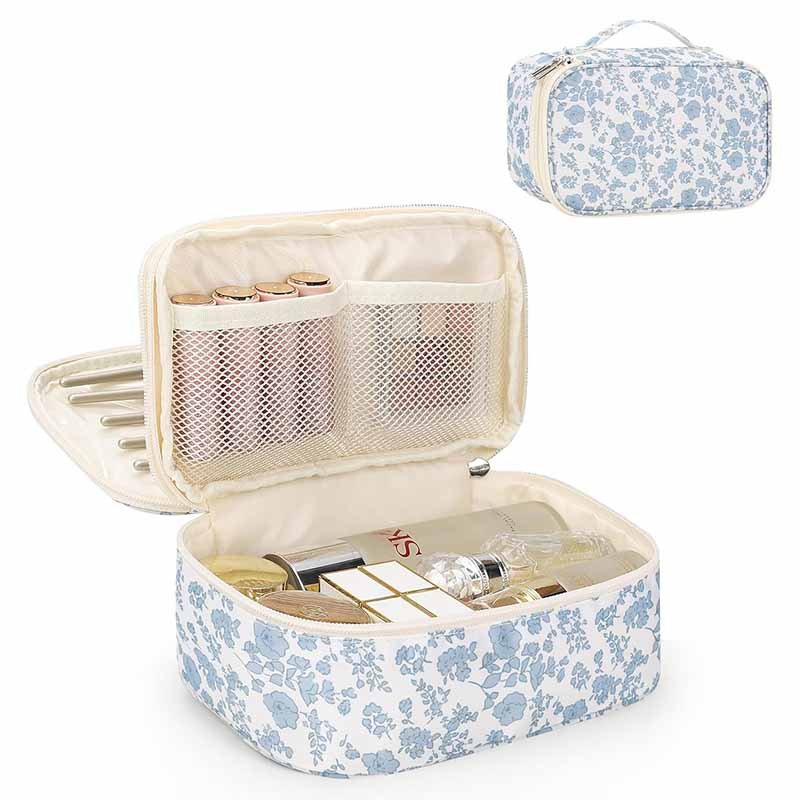
Makeup bag manufacturers are factories that develop and produce cosmetic bags for beauty brands, retailers, subscription box companies, and promotional programs. Their job is not limited to sewing a pouch. A capable manufacturer helps transform a brand concept into a practical, repeatable, and market-ready product that fits both the visual direction of the brand and the commercial realities of production.
A serious beauty brand usually needs more than a generic zipper pouch. It may need the correct structure for brushes, leak-resistant lining for skincare, a shape that fits inside gift boxes, or a premium finish that supports higher retail pricing. That is why specialized makeup bag manufacturers matter. They understand both the product and the commercial purpose behind it.
What Do Makeup Bag Manufacturers Produce?
A professional makeup bag manufacturer can produce a wide range of cosmetic storage and beauty accessory products. Different beauty brands need different bag formats depending on product category, target retail price, and customer use scenario.
Some brands need a small promotional pouch for gift-with-purchase campaigns. Some need a travel organizer for full skincare sets. Some need a structured premium bag that can be sold as a standalone accessory. The manufacturer must be able to match bag type with brand strategy.
Common product categories include:
| Product Type | Common Size Range | Main Use | Best For |
|---|---|---|---|
| Flat cosmetic pouch | 18–24 cm width | Samples, daily essentials | Entry-level beauty brands |
| Box makeup bag | 20–26 cm width | Full-size cosmetics | Retail sets and travel kits |
| Brush bag | 20–25 cm length | Brush storage | Makeup tool collections |
| Clear cosmetic bag | 18–28 cm width | Travel and visibility | Airport use, promotional kits |
| Hanging toiletry bag | 22–30 cm height | Organized skincare storage | Travel and subscription boxes |
| Train case style bag | 24–32 cm width | Premium storage | Higher-end beauty positioning |
From a commercial point of view, these products usually fall into three business uses:
| Use Type | Purpose | Value to Brand |
|---|---|---|
| Packaging accessory | Added to a cosmetic set | Raises perceived value |
| Retail product | Sold separately | Creates extra margin |
| Promotional item | Used for events or gifting | Improves brand recall |
For many brands, a makeup bag is not just packaging. It becomes a reusable brand touchpoint. If a customer uses the bag for 6 to 18 months after purchase, the logo continues to work without extra advertising cost.
Are Makeup Bag Manufacturers Different From Bag Factories?
Yes. This difference matters more than many beauty brands expect.
A general bag factory may be able to sew simple pouches, but makeup bags have their own design logic. Cosmetics create special demands: liquid spills, oily residues, zipper opening convenience, lining cleanliness, compact storage, and appearance quality that has to match the beauty market. A factory without experience in cosmetic bags may produce a bag that looks acceptable in photos but performs poorly in real use.
For example, beauty brands often care about details such as:
- whether foundation stains can be cleaned easily
- whether the zipper opens wide enough for quick access
- whether the bag stands upright on a bathroom counter
- whether the lining wrinkles after filling
- whether the shape collapses during shipping
- whether metallic printing peels after repeated use
These are not small issues. They directly affect customer feedback, return rates, and how premium the brand feels.
Here is a practical comparison:
| Capability Area | General Bag Factory | Specialized Makeup Bag Manufacturer |
|---|---|---|
| Cosmetic-focused shapes | Basic | Strong |
| Easy-clean lining knowledge | Limited | Experienced |
| Beauty packaging matching | Limited | Strong |
| Small accessory sewing control | متوسط/varies | More stable |
| Logo methods for beauty use | Basic | More options |
| Gift set coordination | Limited | Often available |
A factory that works regularly with beauty brands also tends to understand visual consistency better. In this market, a 2 mm crooked logo, uneven zipper wave, or poorly matched piping color can make a brand look cheaper than it is. That is why experienced makeup bag manufacturers are often preferred even when their quotation is not the lowest.
Why Do Beauty Brands Work With Makeup Bag Manufacturers?
Beauty brands work with makeup bag manufacturers because a well-developed cosmetic bag can improve three things at the same time: presentation, commercial value, and customer retention.
First, it can increase perceived value. A skincare set packed with a custom cosmetic bag usually feels more complete than the same products packed loose in a carton. This often supports stronger pricing in gift sets, holiday bundles, influencer boxes, and limited-edition releases.
Second, it helps brand memory. Most outer cartons are thrown away quickly. A makeup bag stays. Customers reuse it for daily cosmetics, travel toiletries, cables, small tools, or personal items. That means the brand remains visible long after the original products are used.
Third, it helps brands build better product architecture. Many beauty companies use makeup bags in tiered offers such as:
- order over $49 gets a free pouch
- premium set includes a custom travel bag
- holiday collection includes a matching makeup organizer
- subscription box members receive an exclusive cosmetic pouch
The bag supports both conversion and retention.
Here is how brands often use cosmetic bags in real business terms:
| Brand Goal | Makeup Bag Role | Commercial Effect |
|---|---|---|
| Raise average order value | Bundle with skincare set | Higher cart value |
| Improve gift appeal | Add premium pouch | Better seasonal sales |
| Build loyalty | Offer exclusive members bag | Stronger repeat engagement |
| Support launch campaign | Include branded bag in PR kits | More social sharing |
| Expand category | Sell bag separately | Extra revenue stream |
In lower and middle price segments, even a modestly priced cosmetic bag can make the overall package feel more premium. In premium segments, the bag needs to match brand identity closely in texture, hardware, stitching, and color tone. In both cases, the manufacturer plays a direct role in the commercial result.
Do Makeup Bag Manufacturers Offer OEM and ODM?
Most professional factories offer OEM, ODM, and private label service, but beauty brands should understand the difference clearly before starting development.
OEM is suitable when a brand already has its own concept, design file, reference sample, or very specific requirements. This model gives more control over size, structure, material, lining, zipper puller, logo placement, and packaging details. It is usually the better path for brands that care deeply about visual identity and product differentiation.
ODM is faster. In this model, the factory already has existing bag shapes or templates. The brand chooses a base design and customizes selected parts such as fabric, color, logo, zipper, or labeling. This is useful for startups, test orders, seasonal promotions, and projects with tight timelines.
Private label usually sits between the two. The bag shape may be standard, but the logo, colorway, woven label, hangtag, and packaging are customized so the final product still looks aligned with the brand.
A simple comparison looks like this:
| Model | Who Owns the Design Direction | Development Cost | Speed | Custom Level |
|---|---|---|---|---|
| OEM | Brand | Higher | Medium | High |
| ODM | Factory base design | Lower | Faster | Medium |
| Private Label | Shared / standard base | Lower to medium | Fast | Medium |
Many small beauty brands start with ODM or private label because it reduces development risk. Many established brands move toward OEM because it gives them better control over product identity.
For reference, the practical impact often looks like this:
| Project Type | Sample Time | Tooling Complexity | Suitable Order Stage |
|---|---|---|---|
| Simple ODM pouch | 5–7 days | Low | Market testing |
| Private label zipper bag | 7–10 days | Low to medium | Early launch |
| Fully custom OEM bag | 10–15 days | Medium to high | Brand scale-up |
For brands that want to move fast without losing brand consistency, the right manufacturer helps decide which model makes sense instead of pushing the same solution for every project.
How Do Makeup Bag Manufacturers Work?
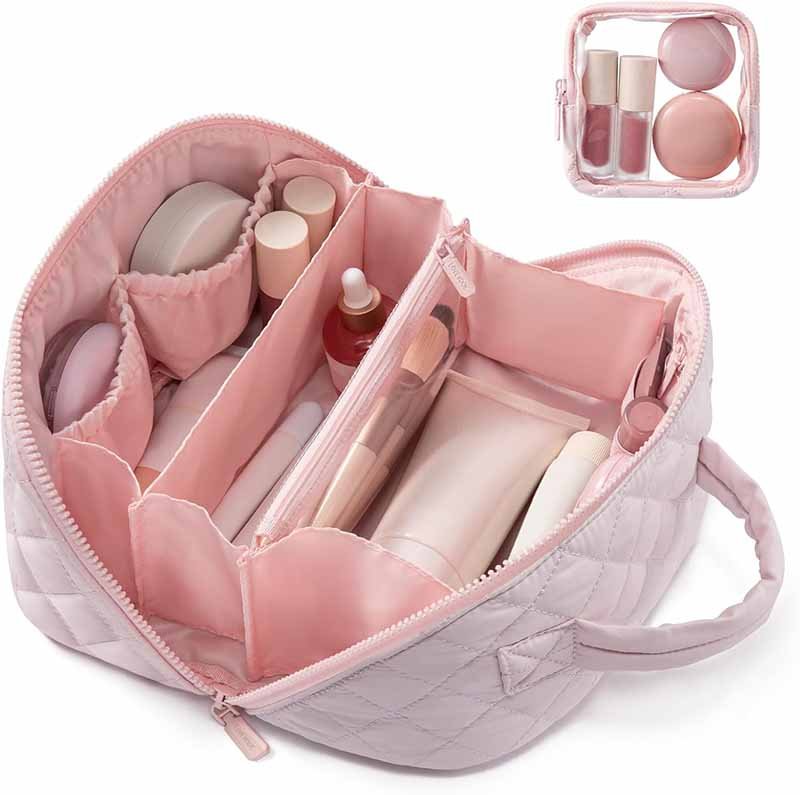
A professional makeup bag manufacturer usually follows a clear process: project review, material selection, pattern development, sample making, revision, bulk production, inspection, and packing. For beauty brands, this process is important because delays and small errors can affect launch calendars, promotional campaigns, and product quality perception.
The best manufacturers do not only produce. They help brands prevent avoidable mistakes before bulk production starts.
How Do Makeup Bag Manufacturers Start a Project?
Most projects start with information, not sewing.
A beauty brand usually comes to the factory with one or more of the following:
- a rough idea
- reference photos
- target size
- expected material
- logo artwork
- packaging concept
- order quantity estimate
- target market price
At this stage, a good manufacturer should not immediately give a random low quote. It should first study whether the design is commercially workable. Many cosmetic bag concepts look attractive on screen but create hidden problems in real production, such as unstable shape, difficult corner sewing, over-complicated inner construction, or material choices that push cost too high.
A careful project review normally checks:
| Review Item | Why It Matters |
|---|---|
| Size and proportions | Affects usefulness and material cost |
| Structure | Affects sewing difficulty and shape stability |
| Material type | Affects price, look, cleaning, and durability |
| Logo method | Affects branding result and unit cost |
| Lining choice | Affects spill resistance and bag performance |
| Target quantity | Affects MOQ and price level |
This early review saves money. In many projects, changing just one construction detail can reduce unit cost by 8% to 15% without making the product look cheaper. Examples include adjusting bag depth, simplifying pocket construction, replacing custom metal pulls with molded pulls, or using a more efficient lining layout.
For brands working on first launches, this step is often where a strong factory creates the most value. It helps the brand avoid developing a bag that is attractive in concept but frustrating in production.
How Do Makeup Bag Manufacturers Develop Samples?
Sampling is where ideas become measurable.
A sample is not just a preview piece. It is the point where the factory and the brand confirm whether the product works in real life. Good sampling should check size, shape, material feel, stitching quality, logo result, zipper performance, and filling behavior. For cosmetic bags, this is especially important because beauty products vary a lot in size, weight, and leakage risk.
The sample development process usually includes:
- pattern drafting
- material sourcing
- cutting
- sewing
- logo testing
- structure review
- revision if needed
A realistic sample schedule may look like this:
| Step | Working Days |
|---|---|
| Requirement confirmation | 1–2 |
| Material preparation | 2–4 |
| Pattern and cutting | 1–2 |
| Sewing and finishing | 2–4 |
| Review and correction | 1–3 |
For a straightforward project, total sample lead time is often around 5 to 10 working days. For more complex OEM designs, it may take 10 to 15 working days.
Brands should also understand that the first sample is rarely the final answer. It often reveals issues such as:
- bag opening feels too narrow
- height is not enough for bottles
- lining wrinkles when filled
- handle placement looks off balance
- zipper tape color does not match the shell
- printed logo is too small or weak visually
This is normal. The sample stage exists to solve these issues before bulk production.
At Szoneier, projects like cosmetic bags made from neoprene, PU, polyester, canvas, or clear PVC often move faster when the customer provides a target size, logo file, and expected use scenario at the beginning. The more complete the input, the more accurate the sample can be.
How Do Makeup Bag Manufacturers Manage Production?
After sample approval, production moves into execution. This is where many brands start focusing on delivery date, defect control, and consistency between approved sample and final goods.
Mass production of makeup bags usually includes the following stages:
- raw material purchasing
- material inspection
- cutting
- panel preparation
- printing or logo application
- sewing assembly
- hardware attachment
- trimming and cleaning
- final inspection
- packing
Production time depends mainly on design complexity, material availability, and quantity.
A useful reference table is below:
| Order Quantity | Simple Pouch | Structured Cosmetic Bag | Complex Multi-Pocket Bag |
|---|---|---|---|
| 300 pcs | 12–18 days | 15–20 days | 18–25 days |
| 500 pcs | 15–20 days | 18–22 days | 20–28 days |
| 1000 pcs | 18–25 days | 20–28 days | 25–32 days |
| 3000 pcs+ | 25–35 days | 28–38 days | 35–45 days |
For beauty brands, the biggest production risk is not always delay. It is inconsistency. If 1,000 bags are ordered for a beauty launch, the brand needs the 1,000th bag to look and function like the approved sample. That requires good production control.
Key control points include:
| Production Risk | Factory Control Method |
|---|---|
| Color variation | Batch material matching |
| Crooked logo | Position template control |
| Uneven sewing | In-line inspection |
| Zipper problems | Functional testing |
| Shape inconsistency | Process standardization |
| Dirty finished goods | Cleaning and packing checks |
Factories with real accessory production experience usually control small-detail consistency better than factories focused only on large bags.
How Do Makeup Bag Manufacturers Control Quality?
Quality control in makeup bag production needs to be practical, not decorative. Beauty brands do not need factories that only say “100% inspection.” They need factories with a system that catches defects early and reduces the chance of batch-level problems.
A stronger quality system usually has four checkpoints:
| QC Stage | Main Focus |
|---|---|
| Incoming material check | Fabric shade, thickness, defects, lining quality |
| Pre-production confirmation | Approved sample and process alignment |
| In-line inspection | Sewing accuracy, logo position, zipper function |
| Final inspection | Appearance, dimensions, packing, cleanliness |
For cosmetic bags, the most common quality concerns are:
- loose threads
- uneven edge binding
- crooked or off-center logos
- zipper snagging
- unstable shape
- scratched hardware
- dirty lining
- odor issues in enclosed packaging
Brands should pay attention to measurable quality points, not just visual promises. A useful internal QC sheet may include:
| Inspection Item | Control Standard |
|---|---|
| Size tolerance | Within agreed range, often ±0.5–1 cm |
| Logo placement | Centered to approved standard |
| Zipper function | Smooth opening and closing |
| Stitch consistency | No skipped stitches or loose seams |
| Cleanliness | No visible dirt, glue marks, or oil stains |
| Packing accuracy | Correct quantity, labels, and carton marking |
For beauty brands selling online, these details matter because product photography is close-up and customer reviews are unforgiving. A single defect may not only create a return. It may create a public complaint that weakens trust in the brand.
This is why experienced manufacturers do more than make bags. They protect launch quality, support repeat orders, and help brands grow with fewer avoidable problems.
Which Materials Do Makeup Bag Manufacturers Use?
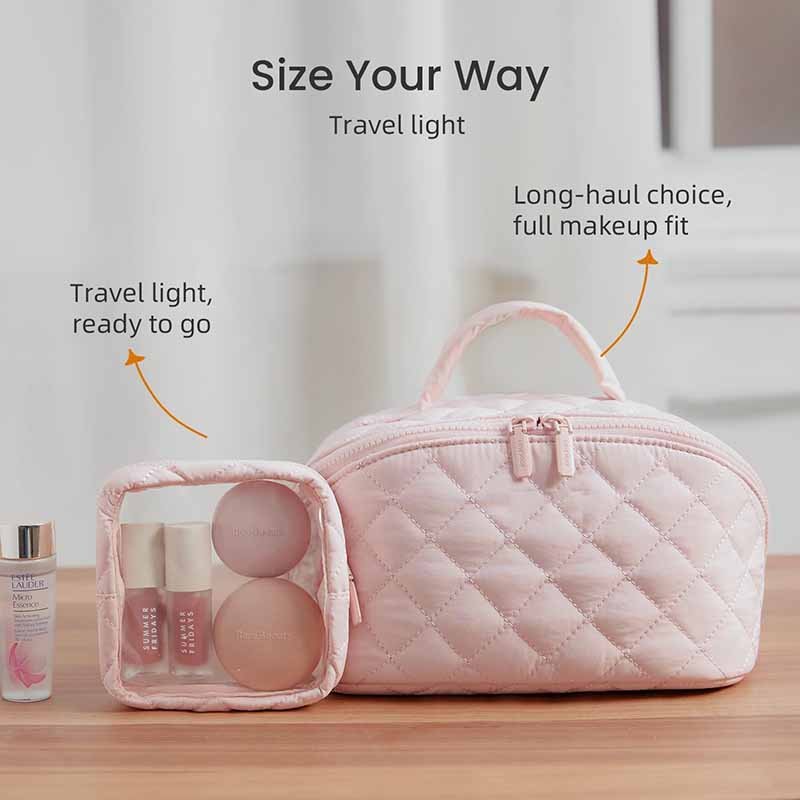
The material used in a makeup bag determines far more than its appearance. It influences durability, cleanability, brand positioning, production cost, shipping weight, and how the bag performs when exposed to cosmetics, oils, or moisture.
For beauty brands, material choice is not simply a design decision. It is a commercial decision. A fabric that looks luxurious in product photos may wrinkle easily in shipping. A low-cost material may save money but reduce the perceived value of the entire beauty set.
Professional makeup bag manufacturers usually guide brands through material selection by balancing four factors:
| Material Factor | Why It Matters |
|---|---|
| Appearance | Determines brand perception |
| Durability | Affects customer satisfaction |
| Cleanability | Important for cosmetic spills |
| Cost | Direct impact on retail pricing |
Most cosmetic bags today fall into three material categories:
- synthetic fabrics
- coated materials
- specialty materials
Each has advantages depending on how the bag will be used.
Which Fabrics Do Makeup Bag Manufacturers Recommend?
Fabric-based cosmetic bags remain the most widely used option because they balance cost, flexibility, and appearance. Manufacturers often recommend polyester, nylon, canvas, or cotton blends depending on the brand’s positioning.
Polyester is the most common material used for cosmetic bags in the mid-price beauty market. It is lightweight, durable, and widely available, which helps keep production costs stable.
Nylon offers slightly better abrasion resistance and a smoother texture. It is commonly used in travel cosmetic bags or makeup organizers where durability matters more than price.
Canvas and cotton fabrics create a more natural, lifestyle-oriented look. These materials are often used by clean beauty brands or eco-conscious companies that want a softer visual style.
A comparison of common fabric choices is shown below:
| Fabric Type | Strength | Cost Level | Cleaning Difficulty | Brand Positioning |
|---|---|---|---|---|
| Polyester | Good | Low | Easy | Mass market |
| Nylon | Very good | Medium | Easy | Travel / active |
| Cotton | Medium | Medium | Moderate | Natural brands |
| Canvas | Good | Medium | Moderate | Lifestyle brands |
For many beauty brands, polyester remains the most practical option because it balances appearance and cost. However, higher-end brands sometimes move toward textured nylon or heavier canvas to create a stronger tactile experience.
Another important consideration is fabric thickness, usually measured in denier (D). Cosmetic bags commonly use materials ranging from 210D to 600D depending on the bag structure.
| Fabric Thickness | Typical Application |
|---|---|
| 210D – 300D | Lightweight pouches |
| 300D – 420D | Standard cosmetic bags |
| 600D | Structured organizers |
Choosing the right thickness helps the bag maintain shape without making it unnecessarily heavy.
Do Makeup Bag Manufacturers Use Waterproof Materials?
Water resistance is a critical feature for cosmetic bags because many beauty products contain liquids, oils, or creams. A spill inside the bag should not damage the outer surface or leak into other items.
Manufacturers usually solve this problem using coated materials or waterproof linings.
The most common waterproof solutions include:
| Waterproof Method | Description | Typical Use |
|---|---|---|
| PU coating | Thin polyurethane layer on fabric | Everyday cosmetic bags |
| PVC material | Fully waterproof plastic surface | Clear bags |
| TPU coating | Flexible waterproof film | Premium waterproof bags |
| PEVA lining | Water-resistant interior layer | Budget cosmetic bags |
Among these options, PU-coated polyester is widely used because it maintains fabric flexibility while adding basic water resistance. This allows cosmetic bags to resist spills while still feeling soft and foldable.
Clear cosmetic bags, which are popular for travel and airport security compliance, are usually made from PVC or TPU. These materials allow visibility of contents and easy cleaning.
However, beauty brands should also consider the trade-off between waterproof performance and environmental concerns. PVC offers strong waterproof properties but has environmental drawbacks, while TPU is more environmentally friendly but typically costs more.
Another effective solution used by manufacturers is combining a fabric exterior with a waterproof interior lining.
Example structure:
| Layer | Material | Purpose |
|---|---|---|
| Outer shell | Polyester or nylon | Appearance and durability |
| Inner lining | PEVA or PU lining | Spill resistance |
| Interlayer | Foam padding (optional) | Shape support |
This layered structure allows cosmetic bags to maintain a premium appearance while protecting against internal spills.
Are Eco Materials Used by Makeup Bag Manufacturers?
Sustainability has become increasingly important in the beauty industry. Many skincare and cosmetic brands now promote environmental responsibility, and packaging accessories such as makeup bags are expected to follow the same philosophy.
Manufacturers now offer several eco-friendly material options.
The most widely used sustainable materials include:
| Material | Source | Key Advantage |
|---|---|---|
| Recycled polyester (RPET) | Recycled plastic bottles | Reduces plastic waste |
| Organic cotton | Chemical-free farming | Natural feel |
| Cork fabric | Tree bark material | Unique appearance |
| Recycled nylon | Reprocessed synthetic fiber | High durability |
Among these materials, recycled polyester has become particularly popular because it maintains the durability of standard polyester while reducing environmental impact.
For example, producing one kilogram of RPET fabric can reuse roughly 60 to 70 plastic bottles, depending on bottle size. This makes it a practical option for brands that want to communicate sustainability without sacrificing durability.
However, eco materials may affect cost.
| Material Type | Relative Cost |
|---|---|
| Standard polyester | 1.0x |
| Recycled polyester | 1.15x – 1.3x |
| Organic cotton | 1.3x – 1.5x |
| Cork fabric | 1.6x – 2.0x |
Beauty brands must decide whether sustainability messaging justifies the price difference. In many premium skincare segments, eco materials actually strengthen brand identity and help justify higher retail pricing.
Which Materials Do Makeup Bag Manufacturers Use for Luxury Bags?
Luxury beauty brands often choose materials that create a more refined tactile and visual experience.
These materials may include:
- premium PU leather
- microfiber leather
- velvet
- quilted nylon
- structured EVA shells
Among these options, PU leather remains the most widely used because it provides a leather-like appearance while remaining easier to maintain than real leather.
Luxury cosmetic bags also often include structural reinforcement to maintain shape.
A typical premium cosmetic bag structure might include:
| Component | Material |
|---|---|
| Outer shell | PU leather or textured nylon |
| Lining | Polyester satin or microfiber |
| Reinforcement | EVA or foam panel |
| Hardware | Metal zipper and puller |
These additional elements increase manufacturing complexity but create a product that feels substantially more premium.
For beauty brands selling high-value skincare or cosmetics, this extra investment often improves the overall unboxing experience and strengthens brand perception.
What Should You Ask Makeup Bag Manufacturers?
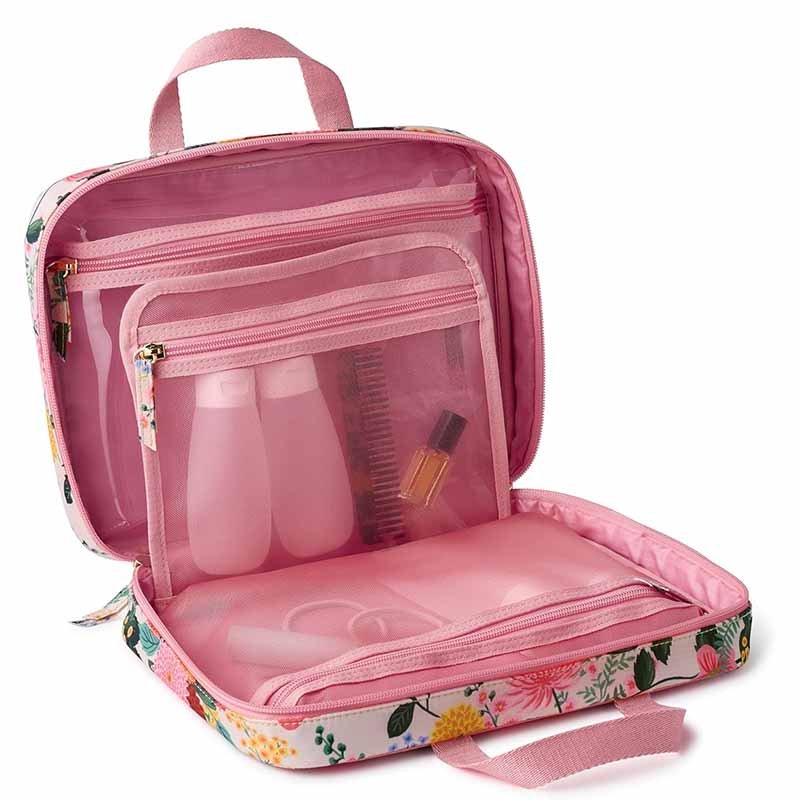
Choosing a makeup bag manufacturer is not only about price. Beauty brands must evaluate whether the factory can deliver consistent quality, realistic lead times, and stable communication.
Many product development problems happen because brands do not ask the right questions early in the process.
Understanding a manufacturer’s capabilities can help prevent delays, cost overruns, and production issues.
What Is the MOQ of Makeup Bag Manufacturers?
MOQ, or minimum order quantity, is the smallest number of units a manufacturer is willing to produce for a single order.
MOQ exists because factories must purchase materials, prepare production lines, and allocate labor for each project. Producing very small quantities is often inefficient.
Typical MOQs for cosmetic bags vary depending on complexity.
| Product Type | Typical MOQ |
|---|---|
| Simple cosmetic pouch | 200 – 300 pcs |
| Standard makeup bag | 300 – 500 pcs |
| Structured organizer | 500 – 800 pcs |
| Complex multi-pocket bag | 800 – 1000 pcs |
Some manufacturers like Szoneier offer lower MOQ options for brands that are testing new products or launching small initial runs.
Low MOQ production is especially important for:
- startup beauty brands
- influencer cosmetic lines
- seasonal gift sets
- market testing campaigns
Lower MOQs allow brands to reduce inventory risk while still launching custom products.
How Fast Are Makeup Bag Manufacturers for Sampling?
Speed matters for beauty brands that are preparing product launches, promotional events, or holiday campaigns.
Sampling time varies depending on complexity and material availability.
Typical sampling timelines look like this:
| Project Complexity | Sample Time |
|---|---|
| Simple pouch | 5–7 days |
| Custom cosmetic bag | 7–10 days |
| Complex organizer | 10–15 days |
Factories with strong development teams can sometimes accelerate this process when brands provide clear design files and detailed requirements.
A faster sample cycle allows beauty brands to test multiple design options before committing to mass production.
Do Makeup Bag Manufacturers Support Private Label?
Private label production allows beauty brands to customize cosmetic bags with their own branding.
Common branding options include:
| Branding Method | Effect |
|---|---|
| Screen printing | Cost-efficient logo printing |
| Embroidery | Premium textured logo |
| Heat transfer | High color accuracy |
| Metal logo plate | Luxury appearance |
| Woven label | Classic branding detail |
Private label customization may also include:
- zipper pull design
- custom lining prints
- hangtags and packaging
- branded dust bags
These elements help cosmetic bags align closely with brand identity.
Which Certifications Do Makeup Bag Manufacturers Have?
Certifications help demonstrate that a factory follows recognized quality, environmental, or safety standards.
Beauty brands often look for manufacturers that comply with standards such as:
| Certification | Purpose |
|---|---|
| ISO 9001 | Quality management system |
| BSCI | Social responsibility compliance |
| REACH | Chemical safety regulation |
| OEKO-TEX | Textile safety certification |
While certifications alone do not guarantee perfect quality, they provide a structured framework for responsible manufacturing practices.
For beauty brands entering large retail chains or international markets, working with certified factories can help meet regulatory expectations.
How Do Makeup Bag Manufacturers Support Beauty Brands?
Makeup bag manufacturers support beauty brands in ways that go far beyond simple sewing production. A capable manufacturer contributes to product development, packaging strategy, cost optimization, quality control, and supply chain stability.
For beauty brands competing in crowded markets, these operational advantages can significantly influence how quickly new products reach the market and how consistently they perform once they arrive.
The right manufacturer becomes a long-term development partner rather than a simple supplier.
How Do Makeup Bag Manufacturers Help Brand Packaging?
In the beauty industry, packaging has become a strategic tool rather than a protective necessity. Cosmetic bags now frequently serve as part of the packaging itself.
Instead of placing cosmetics inside disposable cartons, many brands include reusable makeup bags that increase the perceived value of the product.
This approach creates several commercial advantages.
| Packaging Strategy | Impact on Brand |
|---|---|
| Cosmetic bag gift set | Raises perceived value |
| Branded makeup pouch | Improves brand visibility |
| Travel cosmetic kit | Enhances user convenience |
| Limited edition bag | Drives seasonal promotions |
A well-designed cosmetic bag can extend the life of brand exposure. Customers often reuse these bags for travel, storage, or daily organization.
If a makeup bag stays in a customer’s routine for 6 to 12 months, the brand logo continues to appear repeatedly without additional advertising cost.
For example, many skincare companies bundle cosmetic bags with:
- skincare travel kits
- holiday gift sets
- influencer promotional packages
- subscription box launches
This strategy transforms a relatively small manufacturing cost into long-term brand visibility.
Do Makeup Bag Manufacturers Help New Beauty Brands?
Yes. For new beauty brands, working with an experienced makeup bag manufacturer can significantly reduce product development risk.
Startup brands often face three common challenges:
- limited product development experience
- limited manufacturing knowledge
- limited budget for large inventory orders
A capable manufacturer helps address these challenges by providing practical guidance during the design process.
For example, manufacturers can recommend adjustments that improve manufacturing efficiency without sacrificing visual appeal.
| Design Challenge | Manufacturer Recommendation |
|---|---|
| Too many internal pockets | Simplify structure |
| Custom metal hardware | Replace with molded pullers |
| Thick materials | Reduce weight for shipping |
| Complex shapes | Adjust pattern structure |
Small design adjustments can sometimes reduce production cost by 10–20 percent while maintaining the same visual result.
For emerging beauty brands launching their first cosmetic accessory, this guidance is extremely valuable.
Many successful beauty companies actually begin with a simple cosmetic pouch included in their first product set. Over time, these accessories evolve into a full product category.
How Do Makeup Bag Manufacturers Improve Product Value?
Product value is strongly influenced by presentation. When a beauty product is packaged inside a well-designed cosmetic bag, customers perceive the entire set as more complete.
This allows brands to increase product value in several ways.
| Value Strategy | Result |
|---|---|
| Bundled cosmetic set | Higher retail pricing |
| Gift-ready packaging | Better seasonal sales |
| Travel-ready pouch | Improved user convenience |
| Branded organizer bag | Long-term brand exposure |
For example, a skincare kit containing five products may retail for $59 without a cosmetic bag. When paired with a custom makeup bag, the same set might sell for $69 or $79 depending on positioning.
This additional value often outweighs the manufacturing cost of the bag itself.
In many cases, the cosmetic bag becomes the most frequently reused item in the set.
Customers may finish the skincare products within a few months, but they often keep the cosmetic bag for daily use.
Why Do Beauty Brands Choose Experienced Makeup Bag Manufacturers?
Beauty brands often prefer experienced cosmetic bag manufacturers because the small details matter.
In cosmetic accessories, tiny imperfections are easy to notice.
Examples include:
- crooked logos
- uneven stitching
- misaligned zipper tape
- wrinkled lining
- loose threads
These issues may seem minor in production, but they can affect how the brand is perceived by customers.
Factories with long-term experience in cosmetic accessories usually maintain more consistent quality because they have developed standardized production processes.
Key advantages of experienced manufacturers include:
| Capability | Why It Matters |
|---|---|
| Material sourcing network | Stable fabric quality |
| Skilled sewing workers | Consistent stitching |
| Pattern development experience | Accurate bag structure |
| Production planning | Reliable delivery timelines |
| Quality inspection system | Reduced defect rate |
Consistency becomes even more important as beauty brands scale their production.
A brand that orders 500 cosmetic bags for its first launch may later need 5,000 or even 50,000 units for global distribution.
Working with a reliable manufacturer ensures that product quality remains stable as volume increases.
Why Beauty Brands Work With Szoneier
For beauty brands looking to develop cosmetic bags or cosmetic packaging accessories, choosing the right manufacturer can significantly influence product quality, development speed, and long-term supply stability.
Szoneier is a Chinese manufacturing company with more than 18 years of experience in fabric development and sewn product production. The company focuses on custom manufacturing of neoprene and fabric-based accessories for international brands.
Over the years, Szoneier has developed strong capabilities in producing cosmetic bags, travel organizers, promotional pouches, and related accessories for global beauty companies.
Szoneier Manufacturing Advantages
Beauty brands working with Szoneier benefit from several practical advantages.
| Capability | Benefit for Beauty Brands |
|---|---|
| 18+ years manufacturing experience | Stable production knowledge |
| Integrated fabric development | Better material control |
| Low MOQ customization | Suitable for growing brands |
| Fast sample development | Shorter product launch cycle |
| Flexible OEM & ODM service | Supports different brand stages |
| Strict quality control | Consistent product results |
Szoneier supports the production of cosmetic bags using multiple materials including:
- neoprene
- polyester
- nylon
- canvas
- PU leather
- EVA
- clear PVC
These materials allow beauty brands to develop cosmetic bags suitable for different product positioning, from promotional pouches to premium travel organizers.
Typical Customization Options
Brands can customize many aspects of their cosmetic bags when working with Szoneier.
| Customization Area | Options |
|---|---|
| Bag size | Fully custom dimensions |
| Materials | Fabric, neoprene, PU, PVC |
| Logo methods | Printing, embroidery, metal logo |
| Zippers | Custom pullers and colors |
| Lining | Waterproof or decorative lining |
| Packaging | Custom polybags or retail boxes |
Szoneier also provides design assistance for brands that want to convert simple ideas into manufacturable products.
Typical Development Timeline
| Development Stage | Estimated Time |
|---|---|
| Project discussion | 1–2 days |
| Sample development | 5–10 days |
| Sample revision | 3–7 days |
| Bulk production | 20–30 days |
These timelines allow many beauty brands to move from concept to finished product within a relatively short development cycle.
Start Customizing Your Makeup Bags With Szoneier
As beauty brands continue to grow and compete in increasingly crowded markets, accessories like cosmetic bags play a larger role in shaping brand identity and customer experience.
A well-developed makeup bag can help:
- strengthen product presentation
- increase perceived product value
- improve customer retention
- support promotional campaigns
- create reusable brand exposure
However, these results depend heavily on choosing a manufacturer that understands both the technical and commercial aspects of cosmetic accessories.
Szoneier works with global beauty brands, retailers, and emerging cosmetic companies to develop custom makeup bags that match brand positioning while maintaining practical production costs.
Whether you are launching your first cosmetic pouch or developing a large retail cosmetic bag collection, the right manufacturing partner can help you move faster and reduce development risks.
If you are planning to create custom makeup bags for your beauty brand, Szoneier’s development team is ready to help you evaluate materials, optimize designs, and produce reliable cosmetic bags that support your brand growth.
You can contact the Szoneier team to discuss your project and receive a quotation for custom cosmetic bag production.