 Skip to content
Low MOQ Cosmetic Bag Manufacturing — How Brands Launch Cosmetic Bags with Controlled Risk
Low MOQ cosmetic bag manufacturing is a specialized OEM/ODM process designed for brands that need flexibility, speed, and controlled investment rather than large-volume commitments. Many beauty brands, startups, and eCommerce sellers struggle to find factories willing to support true low-MOQ customization without compromising materials, branding durability, or quality consistency.
With over 18 years of bag manufacturing experience, Szoneier supports low MOQ cosmetic bag production starting from 100–300 pcs per design, backed by in-house sampling, multi-material sourcing, and documented quality control processes. This page explains how low MOQ cosmetic bag manufacturing actually works, the real challenges buyers face, and how professional OEM/ODM factories help brands test, launch, and scale cosmetic bag products reliably.
Why brands choose low MOQ cosmetic bag manufacturing
- Launch new cosmetic bag designs with 100–300 pcs MOQ
- Test market response before scaling to mass production
- Reduce inventory and cash-flow pressure for new brands
- Support seasonal, influencer, or limited-edition collections
- Shorten development cycles with 7–10 day sampling
Who Needs Low MOQ Cosmetic Bag Manufacturing & Why
Low MOQ cosmetic bag manufacturing is primarily used by brands that need real customization, fast validation, and scalable production without committing to high inventory or rigid supplier constraints.
Typical production needs
- Cosmetic bags used as product packaging or gift-with-purchase items
- Strong alignment with brand color, texture, and logo standards
- Small batch launches tied to product releases
Common challenges
- High MOQ requirements from traditional factories
- Logo durability issues at low quantities
- Inconsistent quality between samples and bulk
Szoneier capability Szoneier supports low MOQ OEM cosmetic bags starting at 100–300 pcs, with locked material specs and logo testing, ensuring brand consistency even in small batches.
What startups usually lack
- Manufacturing experience
- Clear material specifications
- Margin tolerance for trial-and-error
Risks they face
- Over-customized designs driving cost too high
- Weak construction damaging early brand reputation
- Factories unwilling to invest engineering effort at low MOQ
How Szoneier supports startups With in-house design and sampling teams, Szoneier helps startups simplify structures, choose cost-efficient materials, and avoid early-stage manufacturing mistakes—without forcing large order volumes.
Typical requirements
- Cosmetic bags that withstand shipping and repeated handling
- Stable zipper performance and stitching quality
- Clean packaging suitable for fulfillment centers
Frequent issues in low MOQ sourcing
- Zipper failures
- Logo peeling or cracking
- High return rates due to cosmetic defects
Szoneier’s approach Even for low MOQ cosmetic bag orders, Szoneier applies multi-stage QC, including in-process inspection, not just final checks.
Use cases
- Influencer collaborations
- Seasonal beauty promotions
- Limited-edition cosmetic bag drops
Why low MOQ matters Production volumes may range from 200–800 pcs, where speed and branding impact matter more than unit cost.
Szoneier advantage Szoneier’s flexible production planning allows parallel sampling and short lead times, ideal for time-sensitive campaigns.
Why Low MOQ Cosmetic Bag Manufacturing Is Challenging
Low MOQ cosmetic bag manufacturing introduces challenges in material sourcing, branding cost, and quality consistency that standard mass-production factories are often not structured to handle.
Material Sourcing Constraints at Low MOQ
Manufacturing reality
- Fabric and PU suppliers often have higher MOQs than finished products
- Color-matching across small quantities is more complex
Risk Factories may substitute materials without disclosure.
Szoneier solution By working with long-term material partners and shared inventories, Szoneier minimizes substitution risk for low MOQ cosmetic bag projects.
Branding Cost vs Durability Trade-Off
Common mistake Choosing logo methods purely based on appearance.
Result
- Cracked prints
- Distorted embossing
- Inconsistent logo placement
Professional approach Szoneier evaluates logo durability based on material behavior, not just aesthetics—especially important for PU and fabric cosmetic bags.
Higher Unit Cost Structure at Small Volumes
Low MOQ production involves:
- Higher setup cost per unit
- Lower cutting efficiency
- Manual assembly steps
Professional mindset Low MOQ manufacturing is about cost control and predictability, not chasing the lowest unit price.
Quality Consistency Risks in Small Batches
Small batches are often handled manually.
Risk
- No standardized process
- No documented tolerances
- QC skipped to save time
Szoneier standard All low MOQ cosmetic bag orders follow the same BOM locking and QC logic used in larger-scale production.
Why Many Factories Refuse Low MOQ Cosmetic Bags
- Production lines optimized for thousands of units
- Setup costs not justified at small volumes
- Lack of engineering and sampling capacity
This is why buyers should work with factories experienced in low MOQ OEM/ODM, not purely volume-driven suppliers.
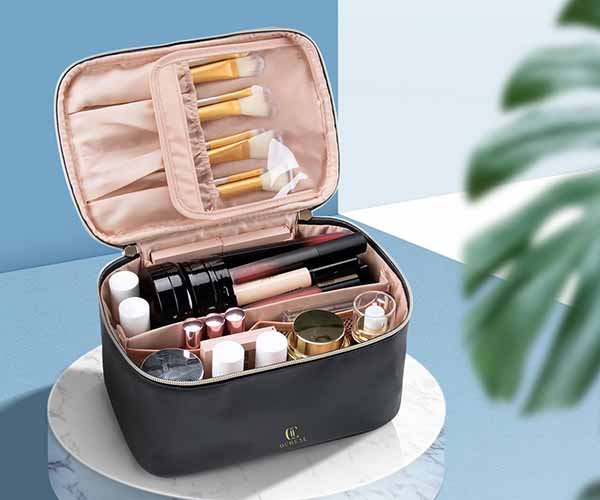
Key Factors When Choosing a Low MOQ Cosmetic Bag Manufacturer
Not all bag factories can handle low MOQ cosmetic bag manufacturing effectively. Buyers should evaluate engineering support, material flexibility, branding durability, and quality systems—not just minimum order numbers.
True Low MOQ Capability vs “Marketing MOQ”
Why this matters
Many factories claim “low MOQ” but only offer:
- Stock items with logo printing
- Limited materials or colors
- No structural customization
What true low MOQ OEM/ODM means
- Custom materials or approved alternatives
- Custom size, structure, and pocket layout
- Consistent quality across 100–500 pcs
Szoneier benchmark Szoneier supports true OEM cosmetic bag development from 100–300 pcs per design, depending on material and construction.
In-House Sampling & Engineering Support
Why low MOQ needs engineering
At small volumes, mistakes are expensive and hard to amortize.
Key questions to ask
- Do you have your own sampling room?
- Can you modify structure to reduce cost at low volume?
- Will engineers review the design, or only sales?
Szoneier capability With in-house pattern making and sampling, Szoneier can:
- Simplify construction
- Reduce material waste
- Shorten sampling to 7–10 days
Material Flexibility at Small Quantities
Low MOQ reality
Many cosmetic bags use:
- PU leather
- Polyester or nylon fabric
- Canvas or coated materials
Each has different upstream MOQ constraints.
Professional handling
- Recommend materials with flexible sourcing
- Share material inventories across SKUs
- Avoid unnecessary color fragmentation
Szoneier practice Szoneier helps clients select low-MOQ-friendly materials without compromising appearance or durability.
Branding Durability at Low MOQ
Common buyer concern
“Will my logo look cheap if I order small quantities?”
The real issue Some logo methods require volume to stabilize cost and quality.
Professional advice At low MOQ:
- Embossing on PU
- Woven labels
- Controlled embroidery
often outperform low-cost prints.
Szoneier approach Logo methods are selected based on material behavior + usage, not only visual preference.
Quality Control Consistency for Small Batches
Myth
Small orders are easier to control.
Reality Small batches are often more manual and inconsistent.
Szoneier standard Low MOQ orders follow the same:
- BOM locking
- In-process QC
- Final inspection
used for larger production.
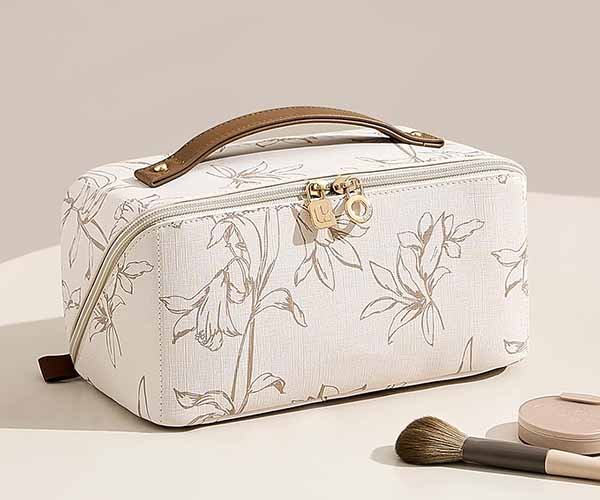
Low MOQ Cosmetic Bag OEM/ODM Workflow (Step-by-Step)
Low MOQ cosmetic bag manufacturing follows a structured OEM/ODM process. Understanding each step helps brands control cost, avoid rework, and ensure small-batch quality consistency.
Step 1
Requirement Clarification & Risk Review
What is defined
- Cosmetic bag type and usage (daily use, travel, gifting)
- Target retail price and market positioning
- Acceptable MOQ range and budget
Szoneier value Early-stage risk review helps avoid over-designed products unsuitable for low MOQ.
Step 2
Structure & Material Optimization for Low MOQ
Engineering focus
- Reduce unnecessary pockets or layers
- Choose materials with flexible sourcing
- Balance appearance with manufacturability
Result Lower setup cost and more stable quality at small volumes.
Step 3
Sampling & Functional Validation
Sampling goals
- Validate shape and size
- Test zipper smoothness
- Review logo durability
- Check stitching quality
Timeline At Szoneier, typical sampling takes 7–10 days, depending on complexity.
Step 4
BOM Locking & Unit Cost Confirmation
What gets locked
- Fabric / PU type
- Lining
- Zipper and hardware
- Logo method
This step prevents silent material substitution during production.
Step 5
Small Batch Production & In-Process QC
Production focus
- Manual assembly control
- Reinforcement at stress points
- Consistent logo placement
Szoneier applies in-process QC, even for 100–300 pcs orders.
Step 6
Final Inspection, Packaging & Shipping Support
Final checks
- Appearance and cleanliness
- Functionality (zipper, seams)
- Packaging accuracy
Added value Szoneier supports export-ready packaging, suitable for retail or e-commerce fulfillment.
Cosmetic Bag Types Suitable for Low MOQ Manufacturing
Not every cosmetic bag design performs well at low MOQ. Certain structures, materials, and construction logics are inherently more stable for small-batch OEM/ODM production while controlling cost and quality risk.
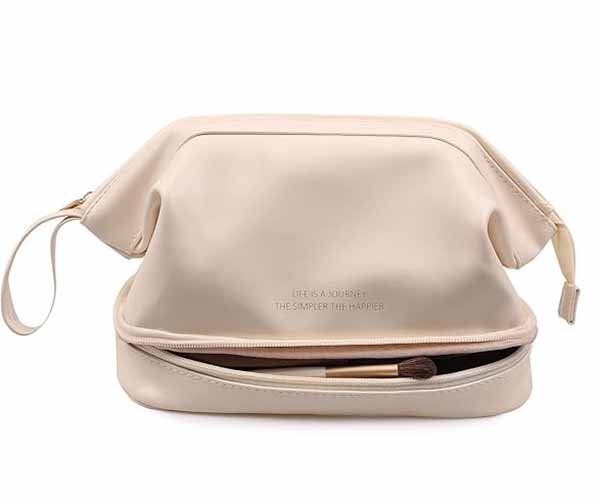
1. PU Cosmetic Bags (Most Low-MOQ-Stable Category)
Why PU cosmetic bags work exceptionally well at low MOQ
PU (synthetic leather) is one of the most reliable materials for low MOQ cosmetic bag manufacturing because it offers material stability, visual consistency, and flexible sourcing.
Recommended PU specifications
- Thickness: 0.6–1.0 mm
- Backing: fabric-backed or microfiber-backed PU
- Surface: smooth / lychee / saffiano
Typical low MOQ range
- 100–300 pcs per color / style
Common use cases
- Beauty brand gift-with-purchase bags
- Retail cosmetic pouches
- Influencer collaboration items
Key advantages at low MOQ
- Embossed or debossed logos are highly stable
- Minimal color variation between batches
- Clean appearance even with simple construction
Potential risks
- Very thin PU may crack at fold lines
- Overly stiff PU may increase sewing difficulty
Szoneier recommendation
Szoneier typically recommends mid-soft PU with good fold endurance, tested during sampling to ensure logo durability at small volumes.
2. Fabric Cosmetic Bags (Polyester & Nylon)
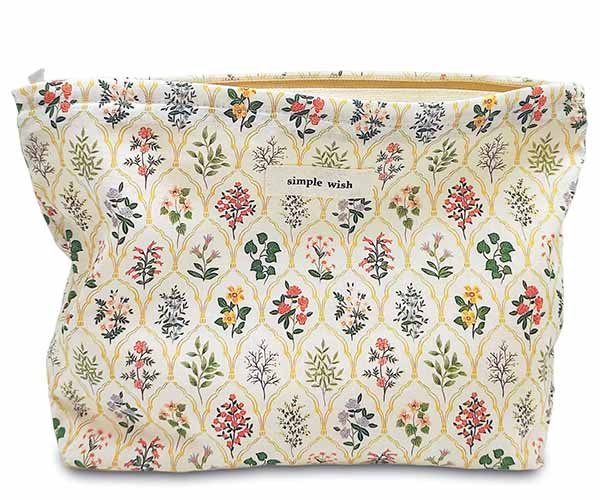
Fabric cosmetic bags are widely used for low MOQ projects when structure and color complexity are controlled.
Common fabric specifications
- Polyester: 210D / 300D / 600D
- Nylon: 210D / 420D
Recommended MOQ
- 200–500 pcs, depending on color count
Best use scenarios
- E-commerce cosmetic organizers
- Lightweight daily-use pouches
- Subscription box packaging
Advantages
- Lower material cost
- Flexible sizing
- Good abrasion resistance
Low MOQ considerations
- Each additional color increases sourcing complexity
- Logo printing durability must be tested
- Fabric texture affects perceived quality
Professional advice
For first low MOQ runs, Szoneier advises limiting to 1–2 fabric colors and using woven labels or controlled printing for branding.
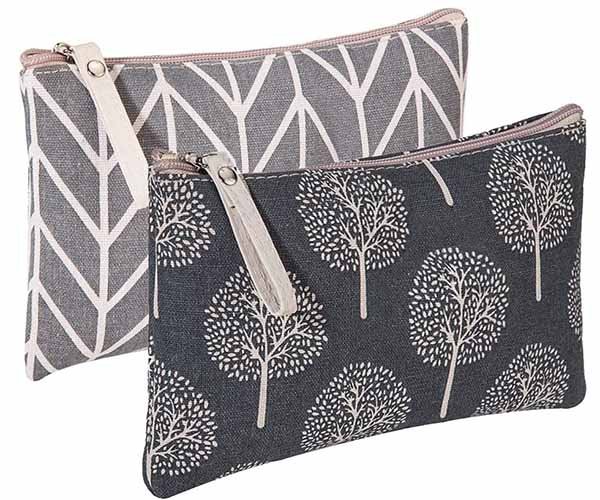
3. Canvas Cosmetic Bags (Natural & Brand-Oriented)
Canvas cosmetic bags are popular for brands seeking a natural, eco-friendly, or lifestyle-oriented image, but they require careful material selection at low MOQ.
Common canvas weights
- 8–10 oz: soft cosmetic pouches
- 10–12 oz: standard daily cosmetic bags
- 12–14 oz: structured or premium positioning
Recommended MOQ
- 200–400 pcs
Best use cases
- Lifestyle beauty brands
- Sustainable or natural product lines
- Promotional and retail accessories
Advantages
- Strong branding surface
- Natural texture enhances perceived authenticity
Risks at low MOQ
- Thin canvas deforms easily
- Thick canvas increases sewing difficulty and cost
- Shape retention issues without internal structure
Szoneier guideline
For low MOQ cosmetic bags, 10–12 oz canvas with light internal structure offers the best balance between appearance and manufacturability.
4. Structured Cosmetic Pouches (With Padding or Shape Support)
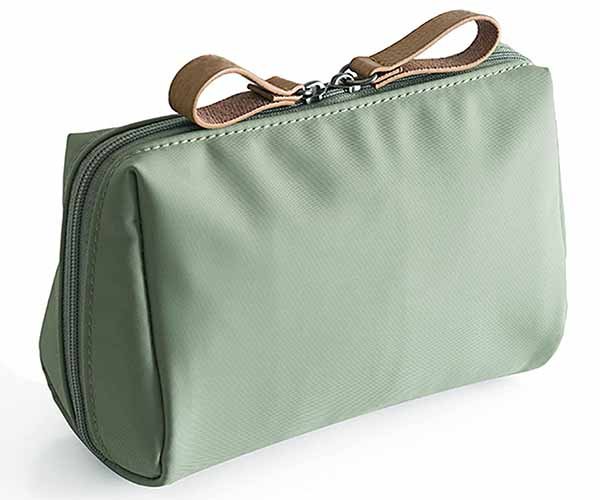
Structured cosmetic bags offer a premium feel but introduce higher engineering and QC requirements, especially at low MOQ.
Typical structures
- Foam padding (2–5 mm)
- Thin EVA or PE board inserts
- Boxy or semi-rigid silhouettes
Recommended MOQ
- 300–500 pcs (structure-dependent)
Use cases
- Travel cosmetic organizers
- Premium gift sets
- High-end brand accessories
Advantages
- Better shape retention
- Higher perceived value
Low MOQ risks
- Inconsistent shape if assembly is not controlled
- Higher unit cost due to manual work
- Increased risk of deformation during shipping
Professional recommendation
Szoneier often suggests launching structured designs after validating simpler versions, especially for new brands.
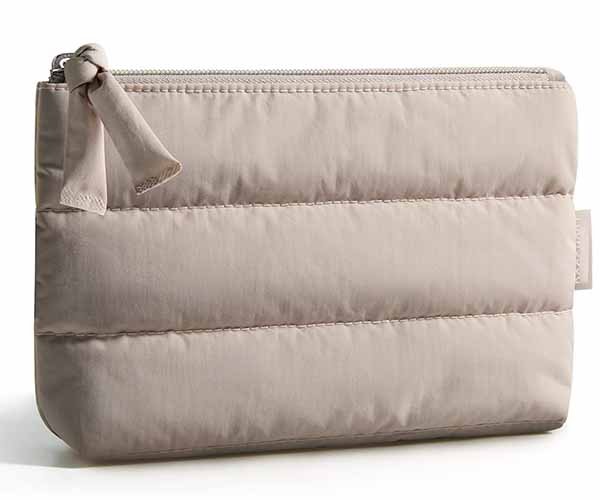
5. Flat & Minimalist Cosmetic Pouches (Best Entry-Level Option)
Flat cosmetic pouches are among the lowest-risk designs for low MOQ manufacturing.
Characteristics
- Minimal seams
- Simple zipper construction
- No rigid structure
Recommended MOQ
- 100–200 pcs
Ideal for
- First-time OEM buyers
- Promotional giveaways
- Market testing SKUs
Advantages
- Lowest production risk
- Fast sampling
- Excellent cost control
Limitations
- Less premium feel
- Limited internal organization
Szoneier insight
Many successful brands start with flat pouches to validate demand, then expand into more complex designs.
6. Multi-Compartment Cosmetic Bags (Higher Risk at Low MOQ)
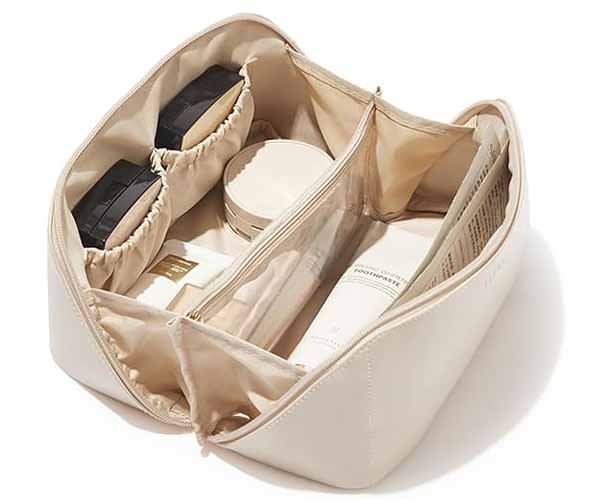
Multi-compartment cosmetic bags offer functionality but are the most challenging at low MOQ.
Typical features
- Internal dividers
- Multiple zipper layers
- Mesh or elastic pockets
Recommended MOQ
- 400–800 pcs for stable consistency
Advantages
- High functionality
- Strong differentiation
Low MOQ risks
- Pocket misalignment
- Inconsistent internal layout
- Higher defect rates if QC is weak
Professional guidance
Szoneier usually advises simplifying internal layouts for first low MOQ runs, then adding complexity after scaling.
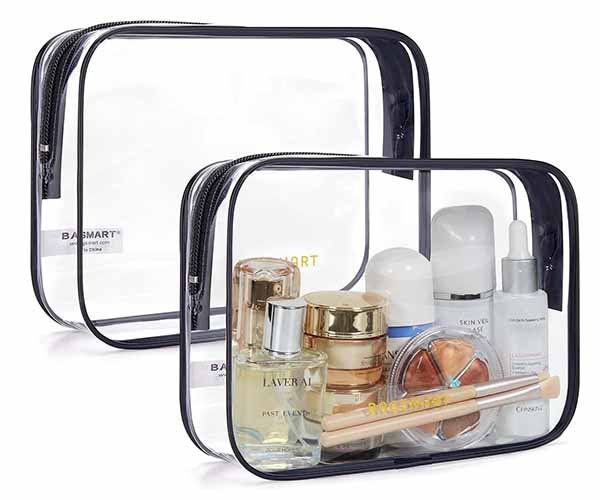
7. Transparent & PVC Cosmetic Bags (Special Considerations)
Transparent cosmetic bags are used for travel or compliance-related applications, but they require careful handling.
Materials
- Clear PVC
- TPU (preferred for flexibility)
MOQ considerations
- Material supplier MOQ may exceed finished product MOQ
Risks
- Scratches
- Yellowing
- Welding or seam inconsistency
Szoneier approach
Transparent cosmetic bags are recommended only when functional necessity outweighs aesthetic risk, especially at low MOQ.
Quick Decision Table — Low MOQ Suitability by Bag Type
| Cosmetic Bag Type | Low MOQ Suitability | Risk Level | Best Starting Choice |
|---|---|---|---|
| PU Cosmetic Bags | ⭐⭐⭐⭐⭐ | Low | Yes |
| Flat Fabric Pouches | ⭐⭐⭐⭐⭐ | Low | Yes |
| Canvas Cosmetic Bags | ⭐⭐⭐⭐ | Medium | Yes (with guidance) |
| Structured Pouches | ⭐⭐⭐ | Medium–High | After validation |
| Multi-Compartment Bags | ⭐⭐ | High | Later stage |
| Transparent PVC Bags | ⭐⭐ | Medium–High | Case-by-case |
Materials & Construction for Low MOQ Cosmetic Bags
In low MOQ cosmetic bag manufacturing, material selection and construction logic determine cost predictability, visual consistency, and durability. Poor material decisions at small volumes quickly amplify risk and quality variation.
1. Why Materials Matter More at Low MOQ Than at Scale
At high volumes, factories can absorb:
- Material waste
- Process inefficiencies
- Minor quality deviations
At low MOQ (100–300 pcs), these buffers disappear.
Low MOQ material risks include
- Upstream supplier MOQ higher than finished goods MOQ
- Color inconsistency across small lots
- Over-specified materials inflating unit cost
- Materials that behave unpredictably during sewing or folding
Professional principle used by Szoneier
- Low MOQ material selection prioritizes stability and repeatability over novelty.
This principle governs every material recommendation at Szoneier’s feasibility review stage.
2. PU Leather (Most Reliable Material for Low MOQ Cosmetic Bags)
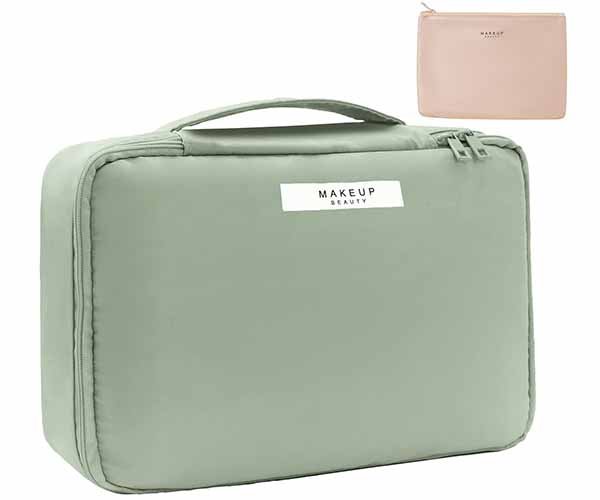
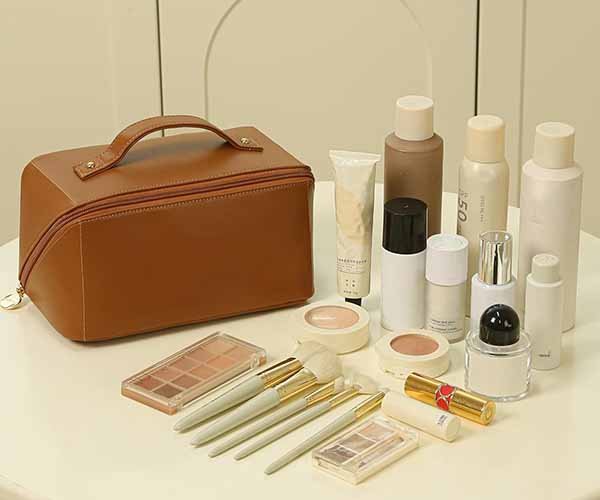
PU leather is the most widely used and lowest-risk material for low MOQ cosmetic bag manufacturing.
Why PU Performs Well at Low MOQ
- Manufactured in controlled rolls → stable thickness
- Surface texture hides minor stitching variation
- Easy to apply embossed / debossed logos
- Flexible upstream sourcing in small quantities
Common PU Specifications Used by Szoneier
- Thickness:
- 0.6–0.7 mm → soft, lightweight pouches
- 0.8–0.9 mm → most balanced option (recommended)
- 1.0 mm → structured or premium cosmetic bags
- Backing: microfiber-backed or fabric-backed PU
- Surface finishes: smooth, lychee, saffiano
Low MOQ Compatibility
- Recommended MOQ: 100–300 pcs / color / style
- Cost behavior: predictable
- Quality consistency: high
Common Low MOQ Risks (and How to Avoid Them)
- Too-thin PU cracking at fold lines → avoid <0.6 mm
- Too-stiff PU increasing sewing difficulty → test fold endurance
Szoneier practice PU materials are tested for fold endurance, logo retention, and seam behavior during sampling—especially important at small volumes.
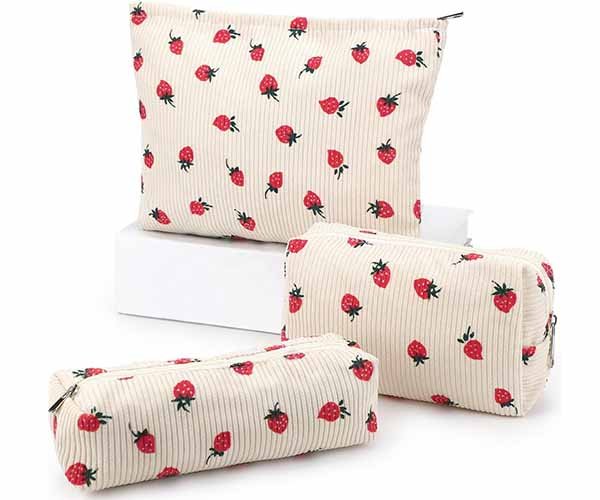
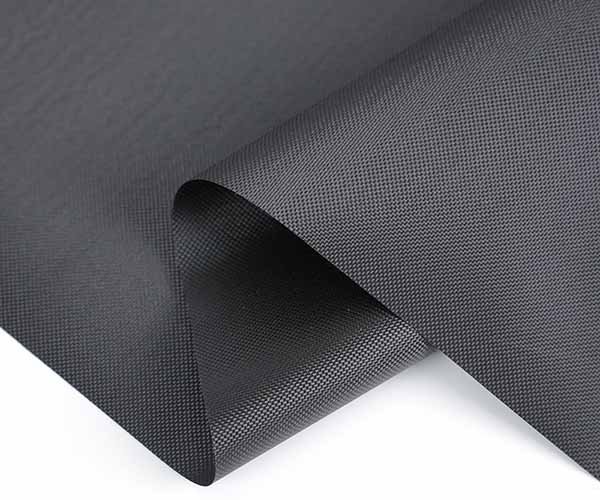
3. Fabric Materials — Polyester & Nylon (Low MOQ with Controls)
Fabric cosmetic bags are popular but require tighter control than PU at low MOQ.
Common Fabric Specifications
- Polyester:
- 210D → lightweight cosmetic pouches
- 300D → balanced daily-use bags (recommended)
- 600D → heavy-duty feel, higher cost
- Nylon:
- 210D → premium lightweight
- 420D → stronger abrasion resistance
Advantages at Low MOQ
- Lower material cost than PU
- Flexible sizing
- Good abrasion resistance
Low MOQ Challenges
- Each additional color increases sourcing complexity
- Fabric texture affects perceived quality
- Printing durability varies by coating and weave
Professional Guidelines
- Limit to 1–2 body colors in first batch
- Match lining color to body to reduce sourcing
- Prefer woven labels or embroidery over large prints
Szoneier insight Fabric cosmetic bags perform best at low MOQ when structure is simple and color palette is controlled.
4. Canvas Materials (oz Matters at Low MOQ)
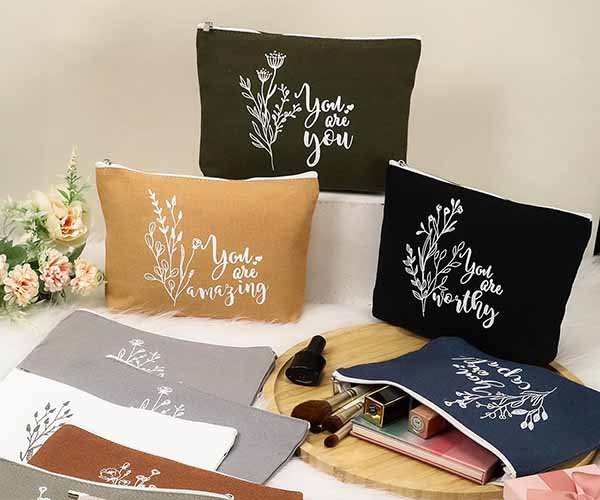
Canvas cosmetic bags are visually attractive but highly sensitive to material weight and structure, especially at low MOQ.
Common Canvas Weights
- 8–10 oz:
- Soft, collapsible cosmetic pouches
- Risk of deformation without structure
- 10–12 oz (Recommended):
- Best balance for low MOQ cosmetic bags
- Stable sewing and good branding surface
- 12–14 oz:
- Structured or premium positioning
- Higher sewing difficulty and cost
Low MOQ Considerations
- Thin canvas stretches → shape loss
- Thick canvas increases labor cost
- Natural color variation is normal
Szoneier guideline For low MOQ cosmetic bags, 10–12 oz canvas + light internal structure offers the most stable result.
5. Transparent & PVC / TPU Materials (High-Risk at Low MOQ)
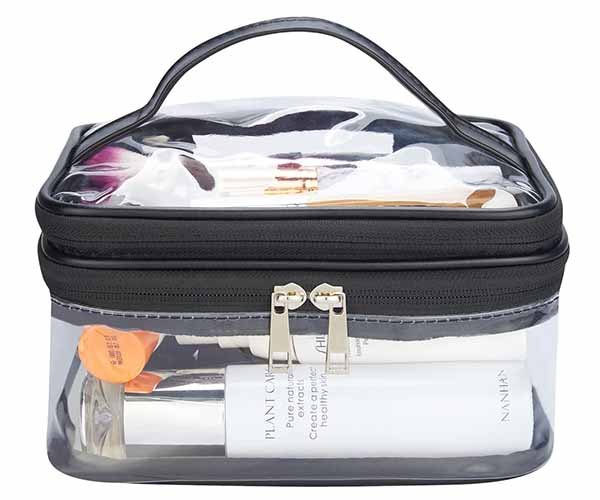
Transparent cosmetic bags are often requested but are not beginner-friendly at low MOQ.
Materials
- Clear PVC (economical but stiff)
- TPU (more flexible, higher cost)
Risks at Low MOQ
- Scratching during handling
- Yellowing (PVC)
- Welding inconsistency
- Higher upstream MOQ
Professional Recommendation
Szoneier recommends transparent cosmetic bags only when function requires visibility (e.g., travel compliance), not purely for aesthetics at low MOQ.
6. Lining Materials & Interior Performance
The lining is often overlooked but critical for cosmetic bags.
Common Lining Options
- 210D polyester lining — standard, lightweight
- PE-coated lining — wipe-clean, cosmetic-safe
Low MOQ Advice
- Avoid unnecessary lining color changes
- Choose wipe-clean lining for skincare and makeup use
Szoneier often recommends wipe-clean linings for cosmetic bags to reduce after-sale complaints.
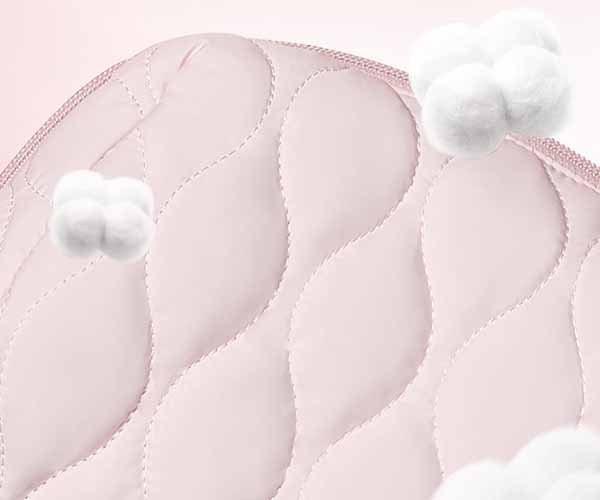
7. Padding, Structure & Shape Control
Common Structure Options
- Foam padding: 2–5 mm
- Thin EVA sheets: for shape retention
- PE boards: bottom support
Low MOQ Risks
- Excessive padding increases cost
- Inconsistent assembly causes deformation
- Shipping compression affects shape
Professional Strategy
- Use structure only where functionally required
- Avoid over-structuring first batches
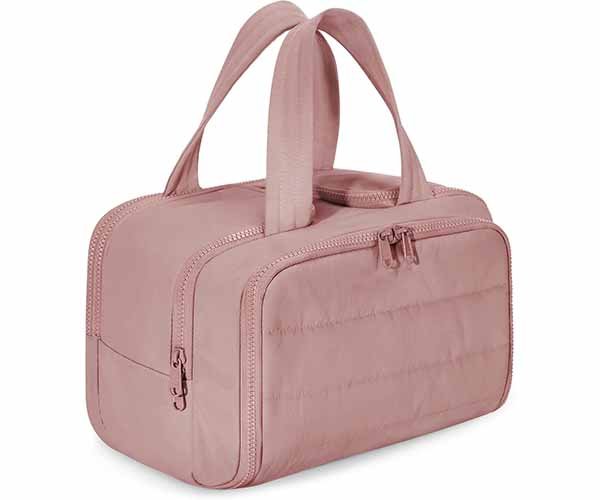
8. Construction Logic for Low MOQ Cosmetic Bags
Construction matters more than materials at low MOQ.
Key Construction Principles
- Zipper ends must be reinforced
- Corners experience highest stress
- Webbing carries load; fabric provides appearance
- Stitch density must match material thickness
Szoneier Standard
Even for 100–300 pcs orders, Szoneier applies:
- Defined stitch density
- Reinforcement at stress points
- Construction reference samples
9. Material & Construction Compatibility Matrix
| Material Type | MOQ Stability | Cost Predictability | QC Risk | Best for First Batch |
|---|---|---|---|---|
| PU Leather | ⭐⭐⭐⭐⭐ | High | Low | ✅ Yes |
| Polyester Fabric | ⭐⭐⭐⭐ | Medium–High | Medium | ✅ Yes |
| Canvas (10–12 oz) | ⭐⭐⭐⭐ | Medium | Medium | ✅ Yes |
| Structured / EVA | ⭐⭐⭐ | Medium–Low | High | Later |
| Transparent PVC | ⭐⭐ | Low | High | Case-by-case |
Customization & Branding at Low MOQ — How to Build a Premium Look Without Volume
Branding at low MOQ requires different decisions than mass production. The right logo method, placement, and color strategy can elevate perceived value, while the wrong choice can quickly expose quality risks.
1. Why Branding Is More Complex at Low MOQ
At large volumes, branding benefits from:
- Process stability
- Cost amortization
- Dedicated production lines
At low MOQ (100–300 pcs), these advantages disappear.
Low MOQ branding risks
- Logo methods that look good on samples but fail in bulk
- High setup costs disproportionate to order size
- Inconsistent logo placement due to manual processes
- Material–logo incompatibility (cracking, peeling, distortion)
Professional principle used by Szoneier
- At low MOQ, branding decisions must prioritize durability and repeatability over visual complexity.
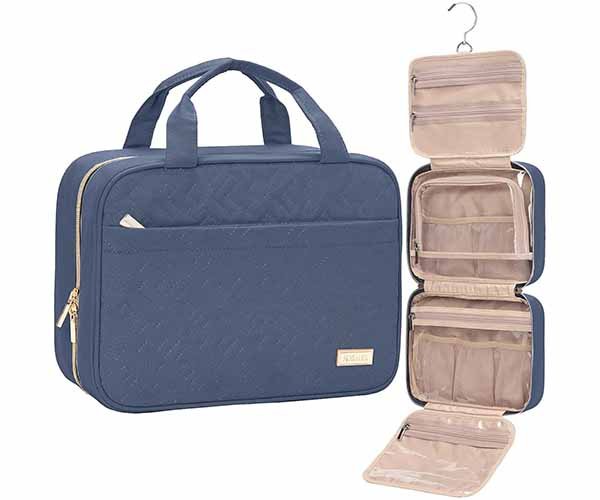
2. Logo Methods — Real Performance at Low MOQ
Embossed / Debossed Logo
Best materials
- PU leather
- Synthetic leather with stable backing
Why it works at low MOQ
- No ink or thread variables
- High visual consistency
- Minimal failure points
MOQ friendliness
- Excellent (100–300 pcs)
Common risks
- Insufficient depth on very thin PU
- Misalignment if placement is not defined numerically
Szoneier recommendation
For first low MOQ cosmetic bag runs, embossing or debossing is often the safest premium option.
Woven Labels (Most Stable & Flexible)
Best materials
- PU, fabric, canvas
Why they perform well
- Produced independently from bag sewing
- Easy to apply consistently
- Low setup cost
MOQ friendliness
- Excellent
Typical use
- Inner branding
- Side seam branding
- Minimalist exterior look
Szoneier insight
Woven labels are frequently used by Szoneier clients to maintain brand identity while controlling cost at low MOQ.
Embroidery (Good, but Needs Control)
Best materials
- Canvas
- Polyester / nylon fabrics
Advantages
- High durability
- Strong tactile branding
Low MOQ risks
- Fabric puckering on thin materials
- Color inconsistency with multiple thread colors
- Higher labor cost
Professional guidance Limit embroidery size and color count for first low MOQ runs.
Silk Screen Printing (Case-by-Case)
Best materials
- Flat PU panels
- Smooth fabric surfaces
Advantages
- Low setup cost
- Good for simple logos
Low MOQ risks
- Cracking at fold lines
- Abrasion wear
- Color inconsistency
Szoneier approach Printing is recommended only after fold and rub testing, especially on PU cosmetic bags.
Heat Transfer / PU Patch / Metal Logos (Advanced)
When to use
- After validating design at low MOQ
- For premium positioning
Low MOQ challenges
- Higher setup cost
- Attachment durability risk
- Increased QC complexity
Professional advice These methods are better suited for second or third production runs, not first low MOQ orders.

3. Logo Placement Engineering (Often Ignored, Always Critical)
Many low MOQ failures are caused by poor logo placement, not poor logo choice.
Common mistakes
- Logos placed on fold lines
- Inconsistent distance from seams
- Placement decided visually, not dimensionally
Professional placement rules
- Define placement distance in millimeters
- Avoid high-stress and high-fold zones
- Maintain orientation consistency
Szoneier standard Logo placement is approved using physical samples + numeric references, ensuring repeatability across small batches.
4. Color Strategy for Low MOQ Branding
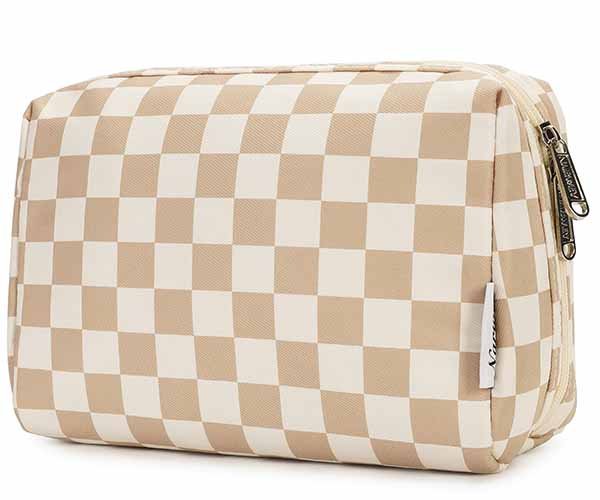
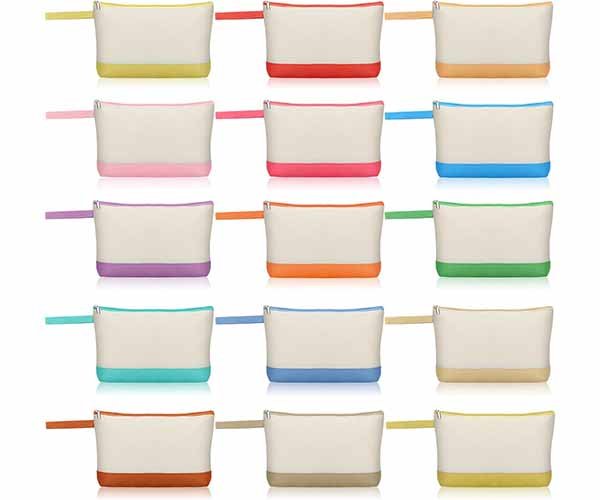
At low MOQ, color decisions multiply risk quickly.
Common pitfalls
- Too many color variants
- Mismatched zipper, thread, and logo colors
- Relying on digital color references
Professional low MOQ strategy
- Limit exterior colors to 1–2
- Match zipper tape and thread to main body
- Approve physical color swatches, not screenshots
Szoneier practice Color standards are archived to ensure future reorders remain visually consistent, even months later.
5. Customization Scope Control (Less Is More at First Batch)
Low MOQ does not mean “do everything at once.”
High-risk customizations at low MOQ
- Multiple internal compartments
- Complex mixed materials
- Multiple logo methods on one bag
Professional sequencing approach
- Validate core design + branding
- Collect market feedback
- Add complexity in later runs
This staged approach is how Szoneier helps brands scale safely from low MOQ to volume production.
6. Packaging as an Extension of Branding
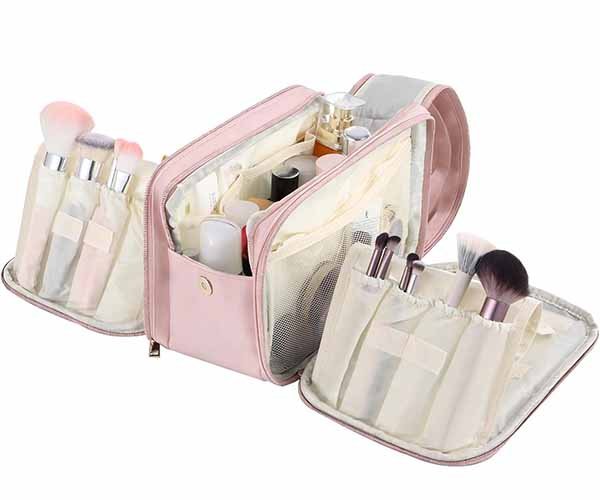
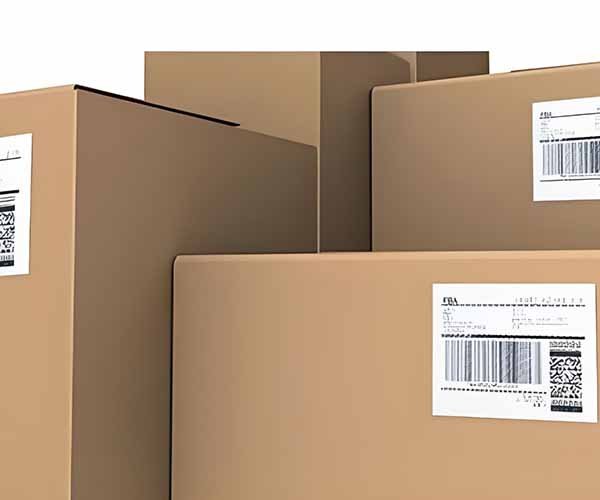
For cosmetic bags, packaging strongly influences perceived value.
Low MOQ-friendly packaging
- Individual polybags (cost-efficient)
- Simple dust bags
- Custom hangtags or inserts
Low MOQ risks
- Over-engineered packaging inflating cost
- Inconsistent folding or packing
Szoneier recommendation
Packaging should be brand-aligned but structurally simple for first low MOQ launches.
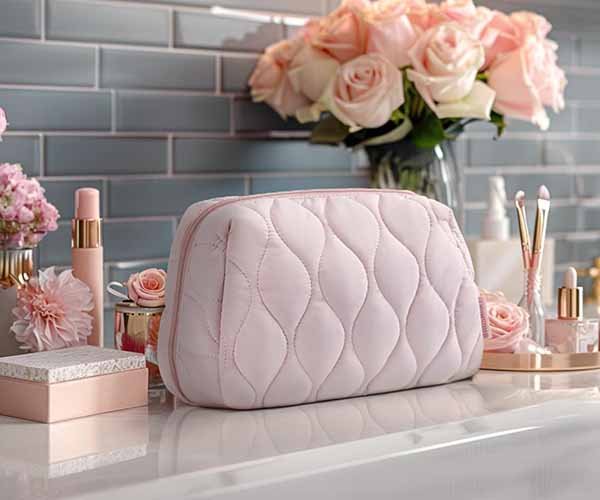
7. Branding Durability Testing at Low MOQ
Even small batches should be tested.
Common tests applied by Szoneier
- Logo adhesion / peel test
- Fold endurance test
- Abrasion rub test
These tests help ensure branding survives real consumer use, not just photography.
8. Low MOQ Branding Decision Matrix
| Branding Method | MOQ Stability | Cost Control | Durability | Best for First Batch |
|---|---|---|---|---|
| Emboss / Deboss | ⭐⭐⭐⭐⭐ | High | High | ✅ Yes |
| Woven Label | ⭐⭐⭐⭐⭐ | High | High | ✅ Yes |
| Embroidery | ⭐⭐⭐⭐ | Medium | High | ✅ Yes (controlled) |
| Printing | ⭐⭐⭐ | Medium | Medium | Case-by-case |
| Metal / Patch | ⭐⭐ | Low | High | Later stage |
Quality Control & Testing for Low MOQ Cosmetic Bags
Low MOQ cosmetic bag manufacturing requires stricter quality discipline than mass production. With fewer units and higher manual involvement, structured QC and functional testing are essential to ensure consistency and brand reliability.
1. Why Low MOQ Cosmetic Bags Need a Different QC Logic
In large-volume production, factories rely on:
- Statistical sampling
- Process averaging
- Automated consistency
In low MOQ production (100–300 pcs), these advantages do not exist.
Key low MOQ QC risks
- High manual sewing ratio
- Operator-to-operator variation
- Fewer chances to detect systemic issues
- “Sample looks perfect, bulk feels different” syndrome
Szoneier’s core QC principle
- Low MOQ requires more checkpoints, not fewer.
2. Three-Stage QC System Applied to Low MOQ Orders
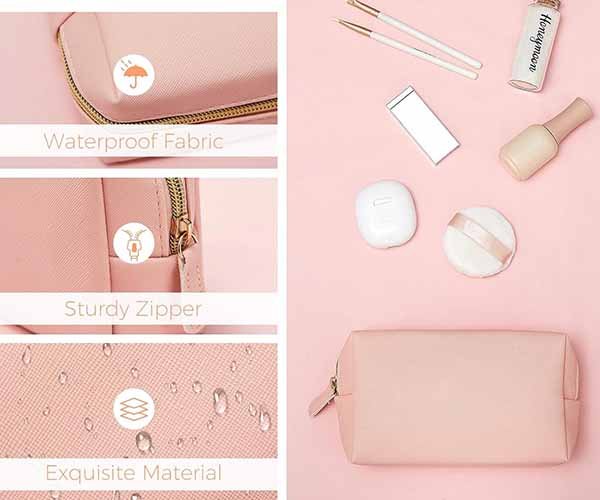
Even for small batches, Szoneier applies a structured, three-stage QC framework, rather than relying on final inspection only.
Stage 1
Incoming Material Inspection (IQC)
Why it matters At low MOQ, one defective roll of PU or fabric can affect a large percentage of the order.
What is checked
- Surface defects (scratches, pinholes, coating issues)
- Thickness consistency (PU / padding)
- Color accuracy against approved swatches
- Hardware qu
- ality (zipper smoothness, plating finish)
Low MOQ focus Materials that fail IQC are rejected early to avoid downstream waste.
Stage 2
In-Process Quality Control (IPQC)
This is the most critical stage for low MOQ cosmetic bags.
QC checkpoints during production
- Stitch density and straightness
- Seam alignment and corner accuracy
- Zipper installation symmetry
- Logo placement accuracy
Why this stage matters Most cosmetic bag defects originate during sewing and assembly—not at the end.
Szoneier practice
IPQC checks are performed during production, allowing immediate correction instead of batch-wide rework.
Stage 3
Final Inspection (FQC)
Final checks include
- Overall appearance and cleanliness
- Functional testing (zipper, seams)
- Logo integrity and placement
- Packaging accuracy
Low MOQ nuance
Because batches are small, Szoneier often inspects a higher percentage of units compared to mass production.
3. Functional Testing Applied to Low MOQ Cosmetic Bags
Functional testing ensures the cosmetic bag survives real-world use—not just photography.
Common Functional Tests
| Test Item | Purpose | Low MOQ Importance |
|---|---|---|
| Zipper cycling test | Smooth open/close | High |
| Seam pull test | Prevent seam splitting | High |
| Logo adhesion test | Branding durability | High |
| Fold endurance test | Prevent cracking | High |
| Abrasion rub test | Surface wear resistance | Medium–High |
Zipper Performance Testing
What is tested
- Smoothness
- Tooth alignment
- End-stop security
Why it matters Zipper failure is one of the top return reasons for cosmetic bags.
Seam Strength & Stitch Testing
Focus areas
- Zipper ends
- Corners
- Handle or pull-tab attachments
Professional benchmark Seams should withstand normal pulling and repeated opening without distortion.
Logo Durability Testing
Tests include
- Adhesion / peel test (printing, heat transfer)
- Fold test (PU embossing)
- Abrasion rub test (printed logos)
Szoneier insight Logos that survive testing often look slightly less aggressive visually—but perform far better in real use.
4. Visual & Aesthetic Consistency Checks
Cosmetic bags are appearance-sensitive products.
Visual QC focuses on
- Symmetry and proportion
- Color consistency
- Clean edges and finishing
- Absence of oil marks, glue residue, or wrinkles
Low MOQ challenge Manual processes increase variation—visual standards must be clear and enforced.
5. Packaging & Presentation QC
Packaging is part of brand perception, especially for beauty products.
Packaging checks include
- Correct folding method
- Cleanliness
- Hangtag or insert accuracy
- Barcode or labeling consistency
Low MOQ risk Inconsistent packing leads to a “cheap” first impression—even if the bag itself is good.
6. Documentation & Repeatability for Reorders
Low MOQ does not mean “one-off.”
Szoneier documentation includes
- Approved reference samples
- Locked BOM
- QC checkpoints and tolerance notes
This ensures future reorders match the first batch, even months later.
7. Common Low MOQ QC Mistakes (and How to Avoid Them)
Mistake 1: Relying on final inspection only → Leads to batch-wide defects
Mistake 2: Skipping tests to save time → Leads to after-sale complaints
Mistake 3: Treating low MOQ as “less important” → Damages brand trust early
Professional mindset First batches matter more than later ones.
8. Low MOQ QC vs Mass Production QC — Key Differences
| Aspect | Low MOQ QC | Mass Production QC |
|---|---|---|
| Inspection Ratio | Higher | Statistical |
| Manual Control | High | Medium |
| Documentation | Critical | Important |
| Error Tolerance | Very Low | Medium |
| Brand Risk | High | Spread out |
Buyer Checklist for Low MOQ Cosmetic Bag Manufacturing
Low MOQ cosmetic bag manufacturing requires stricter evaluation than large-volume sourcing. This checklist helps brands assess whether a factory can truly support small-batch OEM/ODM without hidden risks.
1. Low MOQ Capability Verification
Key questions to ask
- What is your true MOQ for custom cosmetic bags (not stock items)?
- Does MOQ change by material or logo method?
- Can you support multiple SKUs under small quantities?
Professional benchmark Szoneier typically supports 100–300 pcs per design, depending on material and construction.
2. Sampling & Engineering Support
Why it matters At low MOQ, there is little room for trial-and-error.
Key questions 4. Do you have in-house sampling and pattern making? 5. Will engineers review my design for cost and durability? 6. How long does sampling usually take?
Expected answer Professional factories offer 7–10 day sampling and structural optimization feedback.
3. Material & BOM Control
Key questions 7. Will materials be locked after sample approval? 8. How do you manage color consistency across small batches? 9. Will you notify us before any substitution?
Low MOQ projects still require BOM discipline, not flexibility without control.
4. Branding & Logo Durability
Key questions 10. Which logo methods work best at low MOQ? 11. How do you test logo durability on PU or fabric? 12. Can you define logo placement numerically?
Professional signal Factories that test logo adhesion and folding behavior understand cosmetic bag usage.
5. Quality Control System
Key questi
ons 13. Do you perform in-process QC for small batches? 14. What functional tests are applied? 15. How do you document approved samples for reorders?
Buyer Tip
Low MOQ does not justify skipping QC stages.
Buyer Evaluation Table
| Evaluation Area | Weak | Acceptable | Strong |
|---|---|---|---|
| MOQ Transparency | unclear | partial | clear & defined |
| Sampling Speed | slow | average | 7–10 days |
| Material Control | flexible | semi-locked | BOM locked |
| Logo Expertise | visual only | basic | durability-tested |
| QC System | final only | limited | multi-stage |
Ready To Elevate Your business Line?
Begin your journey with Szoneier bag now. We can assist in wholesaling or customizing Luggage and bags at the most competitive prices to enhance your brand.
Case Studies — Low MOQ Cosmetic Bag OEM Projects
These case studies show how brands used low MOQ cosmetic bag manufacturing to test markets, control costs, and protect brand quality—while avoiding the common risks of small-batch OEM production.
Case Study 1 — Indie Skincare Brand (PU Cosmetic Pouch Launch)
Brand Background
- Market: North America
- Brand stage: Early-stage skincare brand
- Sales channel: DTC website + pop-up events
Project Scope
- Product: PU cosmetic pouch (gift-with-purchase)
- MOQ: 200 pcs
- Material: 0.8 mm PU leather + wipe-clean lining
- Logo: Debossed logo
Low MOQ Challenges
- Premium look required at small quantity
- Risk of logo cracking on thin PU
- Tight budget, no room for rework
Szoneier OEM Solution
- Selected mid-soft PU with proven fold endurance
- Adjusted logo depth to avoid surface damage
- Simplified internal structure to control cost
Result
- Retail-ready appearance
- Stable logo performance after folding tests
- Successful brand launch without excess inventory
Key Low MOQ Insight
Premium perception at low MOQ comes from material behavior control, not complexity.


Case Study 2 — Amazon Seller (Fabric Cosmetic Bag for FBA)
Brand Background
- Market: United States
- Business model: Amazon FBA
- Product role: Standalone cosmetic organizer
Project Scope
- MOQ: 300 pcs
- Material: 300D polyester + standard lining
- Logo: Woven label
Low MOQ Problems Identified
- Previous supplier caused zipper failures
- High return rate damaged listing performance
- Inconsistent stitching in small batches
Szoneier’s Manufacturing Actions
- Upgraded zipper grade suitable for repeated use
- Added in-process QC for zipper installation
- Standardized stitch density for small batch sewing
Outcome
- Improved durability
- Reduced post-launch complaints
- More stable Amazon reviews
Key Low MOQ Insight
In low MOQ e-commerce projects, durability matters more than marginal cost savings.
Case Study 3 — Startup Beauty Brand (Multi-SKU Low MOQ Test)
Brand Background
- Market: Europe
- Stage: Pre-scale startup
- Goal: Test multiple cosmetic bag designs
Project Scope
- 3 SKUs × 150 pcs each
- Materials: PU + fabric mix
- Logo: Emboss + woven label
Low MOQ Risks
- Budget fragmentation across SKUs
- High setup cost per design
- Risk of inconsistent branding
Szoneier Strategy
- Shared PU and lining materials across SKUs
- Unified zipper and hardware selection
- Parallel sampling to reduce lead time
Result
- Faster time-to-market
- Clear performance data per SKU
- Smooth transition to larger reorders
Key Low MOQ Insight
SKU architecture planning is critical to low MOQ success.


Case Study 4 — Influencer Collaboration (Limited Edition Cosmetic Bag)
Brand Background
- Market: Asia-Pacific
- Project type: Influencer co-branding
- Sales window: 30 days
Project Scope
- MOQ: 500 pcs
- Material: PU cosmetic bag
- Branding: Embossed logo + custom hangtag
Low MOQ Challenges
- Fixed launch date
- Strong visual branding requirement
- No margin for delay
Szoneier OEM Execution
- Parallel sample development and packaging prep
- Simplified internal structure to speed production
- Daily progress checkpoints
Outcome
- On-time delivery
- Strong brand presentation
- Successful limited-edition campaign
Key Low MOQ Insight
At low MOQ, schedule discipline is as important as material selection.
Case Study 5 — DTC Brand (Canvas Cosmetic Bag First SKU)
Brand Background
- Market: Australia
- Brand focus: Natural / lifestyle cosmetics
Project Scope
- MOQ: 250 pcs
- Material: 10–12 oz canvas + light structure
- Logo: Screen print
Low MOQ Risks
- Canvas deformation
- Logo cracking after washing
- Inconsistent shape in shipment
Szoneier Optimization
- Recommended 10–12 oz canvas instead of lighter weight
- Added light internal structure for shape retention
- Tested logo placement away from fold lines
Results
- Stable bag shape
- Improved durability
- Positive customer feedback
Key Low MOQ Insight
Canvas weight selection determines success or failure at low MOQ.


Case Study 6 — Gift Set Program (Mixed-Material Cosmetic Bags)
Brand Background
- Market: North America
- Use case: Holiday gift sets
Project Scope
- MOQ: 200 pcs
- Material: PU exterior + fabric lining
- Logo: Woven label
Low MOQ Concerns
- Color mismatch between PU, zipper, and lining
- Inconsistent appearance in small batches
Szoneier Controls
- Physical color swatch approval
- Locked BOM before production
- High inspection ratio during final QC
Outcome
- Consistent visual presentation
- Retail-ready gift sets
- Smooth reorder for next season
Key Low MOQ Insight
Color control becomes more important as order size decreases.
Low MOQ Case Summary Table
| Case Type | MOQ Range | Core Challenge | Key Solution |
|---|---|---|---|
| Indie brand launch | 200 pcs | Premium look | PU + deboss |
| Amazon FBA | 300 pcs | Returns | Zipper & QC |
| Startup multi-SKU | 150×3 | Cost & speed | Shared materials |
| Influencer collab | 500 pcs | Timeline | Parallel execution |
| Canvas pouch | 250 pcs | Shape | oz selection |
| Gift set | 200 pcs | Color | BOM locking |
FAQ — Low MOQ Cosmetic Bag Manufacturing
These frequently asked questions address the most common concerns brands have when sourcing low MOQ cosmetic bags from OEM/ODM factories.
Q1. What is considered “low MOQ” for cosmetic bag manufacturing?
Low MOQ typically refers to orders starting from 100–300 pieces per design, depending on material, structure, and branding method.
Q2. Does low MOQ mean lower quality?
No. Quality depends on material control, construction standards, and QC systems—not order size.
Q3. How long does low MOQ sampling take?
Sampling usually takes 7–10 days, depending on design complexity and revision cycles.
Q4. Which materials are best for low MOQ cosmetic bags?
PU leather, polyester, and nylon fabrics are generally more low-MOQ-friendly than highly specialized materials.
Q5. Can I customize size, color, and logo at low MOQ?
Yes, but customization scope should be balanced to control cost and consistency.
Q6. Are low MOQ cosmetic bags suitable for retail?
Yes, many brands use low MOQ production to test retail response before scaling.
Q7. How is logo durability ensured at small volumes?
By selecting logo methods compatible with material behavior and testing adhesion and folding resistance.
Q8. Can I reorder the same design later?
Yes. Professional factories document BOMs and samples to ensure consistency in reorders.
Q9. Is low MOQ suitable for Amazon or e-commerce?
Yes, especially for new listings, product testing, and controlled inventory management.
Q10. What is the biggest risk in low MOQ cosmetic bag manufacturing?
Lack of documentation and process control—not order size itself.
Discuss Your Low MOQ Cosmetic Bag Project with an OEM Expert
If you’re planning a low MOQ cosmetic bag project, the smartest first step is a technical discussion—not a rushed quote. Share your idea, and we’ll help assess feasibility and risks.
Recommended Inquiry Information
- Cosmetic bag type & usage
- Target market & price point
- Estimated quantity (per SKU)
- Preferred materials
- Logo method
- Timeline & launch goal
“We’ll help you decide whether and how to proceed—no pressure, no obligation.”
If you have any questions or need a quote, please leave us a message. Our experts will respond within 12 hours to assist you in selecting the ideal fashion products tailored to your needs.
Exclusive Offer for You
As a first-time buyer, you’ll receive a Free bags Color Card to help you select the right material and shade. Once confirmed, we’ll also provide a Free Sample made by our factory—no extra cost.
For our regular partners, we send New Color Charts multiple times a year—completely free—to support your latest collections.
