Skip to content
Industrial Bag Line Development | Custom Industrial Bag Manufacturer
Custom industrial bag product lines for tool brands, equipment companies, field service programs, medical supply teams, outdoor work gear ranges, and retail-ready carry systems.
Szoneier helps turn product ideas, reference samples, sketches, tech packs, and field-use requirements into sample-ready and production-ready industrial bag lines.
- 18+ years in custom bags and sewn soft goods manufacturing.
- MOQ starts from 200 pcs for selected standard structures and stock-material projects.
- Common sample timing: 5-7 days for standard bags, 7-15 days for complex structures.
- Industrial product families can include tool bags, utility pouches, equipment cases, medical bags, waterproof bags, EVA cases, and soft goods accessories.
- Development covers materials, pattern work, reinforced stitching, hardware selection, packaging files, QC standards, and export delivery.
Industrial Sewn Bag Development, Not Packaging Machinery
Industrial bag line development here means custom sewn bags for carrying, storing, protecting, organizing, and transporting equipment, tools, parts, medical supplies, field kits, and work gear.
Sewn Product Lines
Szoneier develops industrial-use soft goods made with fabric, webbing, zippers, hardware, padding, lining, reinforcement panels, labels, and retail or warehouse packaging. A line may include one hero tool bag, two utility pouches, a protective case, a cable organizer, and replacement accessory bags. Development focuses on real handling needs: carrying weight, opening speed, internal organization, moisture resistance, abrasion points, field visibility, cleaning, and repeat production consistency.
Clear Project Boundary
Industrial packaging sacks, FIBC bulk bags, plastic bagging machines, conveyor systems, and packaging automation lines belong to different industries. Szoneier focuses on custom cut-and-sew bags, soft storage systems, protective cases, and brand-ready carry products. Procurement teams searching for product development, sample refinement, reinforced sewing, branded packaging, and scalable OEM/ODM production will find a stronger fit than teams needing plastic packaging film or factory machinery.
Built for Programs
A serious industrial bag range needs more than one good sample. Materials, patterns, pocket layouts, zipper grades, webbing widths, logo methods, carton data, QC checkpoints, and repeat order files must stay organized from first sample to replenishment. Szoneier supports development from concept review through sample approval, bulk production, packaging, delivery, and later SKU expansion, giving brand teams a controlled route from idea to stable supply.
Built for Brands Developing Industrial Bag Ranges
Different programs need different industrial bag logic. Szoneier supports teams planning durable, organized, branded, and scalable sewn bag families.
Equipment Brands
Equipment companies often need soft cases for meters, instruments, electronics, spare parts, maintenance kits, and field tools. Development usually starts with product dimensions, protection level, accessory count, and carrying method. Szoneier reviews foam thickness, EVA panels, padded dividers, zipper path, handle placement, elastic loops, and carton packing so every case supports real equipment use instead of becoming a generic pouch with a logo.
Tool Brands
Tool and hardware ranges need bags with load-bearing handles, reinforced bottoms, wide openings, tool slots, inner pockets, and abrasion-resistant fabrics. Szoneier can develop single tool bags, roll-up organizers, accessory pouches, cable bags, drill kit cases, and multi-SKU sets. Key decisions include polyester or nylon denier, webbing width, bartack position, base board, zipper strength, and packaging style for retail shelves or warehouse dispatch.
Field Service Teams
Field service product teams need fast access, clean organization, and consistent kit layout. Bags may carry cables, meters, gloves, tablets, safety items, manuals, and replacement parts. Szoneier can build numbered compartments, color-coded trims, transparent pockets, detachable pouches, shoulder straps, and carton labels. The goal is a repeatable kit system where every piece has a place and every replenishment batch follows the approved layout.
Medical Supply Teams
Medical and emergency programs need organized storage, visible compartments, wipeable materials, stable zippers, and accurate labeling. Szoneier can develop first-aid bags, emergency response packs, medicine organizer pouches, removable clear pockets, cold-chain accessory bags, and padded medical equipment cases. Material selection may include polyester Oxford, TPU-coated fabric, PVC clear film, mesh, elastic loops, and easy-clean lining, depending on care environment and handling frequency.
Outdoor Work Gear
Outdoor work gear ranges need weather-aware materials, tough stitching, glove-friendly pulls, reflective trims, and reliable carrying comfort. Szoneier can support utility bags, waterproof storage bags, cooler work bags, safety gear bags, equipment backpacks, and jobsite pouches. Development normally reviews water exposure, mud, abrasion, loaded weight, opening access, shoulder comfort, and whether branding should appear through woven labels, rubber patches, embroidery, or reflective printing.
Retail Product Teams
Retail and channel programs need industrial styling with clear cost, packaging, barcodes, carton marks, and SKU consistency. Szoneier can develop a bag family for store shelves, online bundles, distributor kits, or Amazon-ready dispatch. Important details include sellable size, folded pack size, carton quantity, master carton strength, logo durability, care label, instruction card, color system, and repeat order file control across seasons.
Why Develop a Line Instead of One Bag
A complete industrial bag line improves assortment logic, SKU planning, channel fit, visual identity, and repeat production control.
Stronger Product Family
One bag rarely covers every use case. A line can combine a main tool bag, a small organizer pouch, a padded equipment case, a waterproof storage bag, and replacement accessory bags. Shared material language, matching trims, consistent logo placement, and organized packaging create a recognizable family. Szoneier helps plan sizes, structures, and cost levels so each SKU has a role rather than competing with another item in the same range.
Better Supply Control
Line development allows patterns, BOM files, material records, zipper choices, webbing specs, logo files, packaging artwork, carton data, and QC standards to be built as one system. Reorders become easier because approved records do not restart from zero. For mature industrial programs, record control matters as much as unit price. It reduces version confusion, protects brand consistency, and keeps replenishment orders closer to the approved sample.
Industrial Bag Product Line Options
Szoneier can develop single products or coordinated bag families across tool, equipment, field service, medical, outdoor, and protective storage applications.
Tool Bags
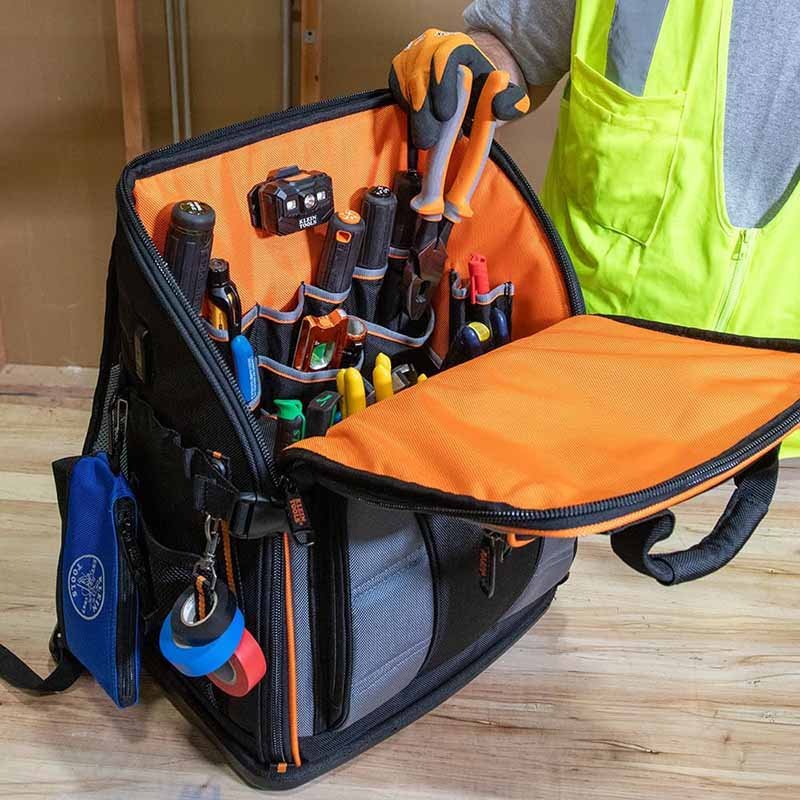
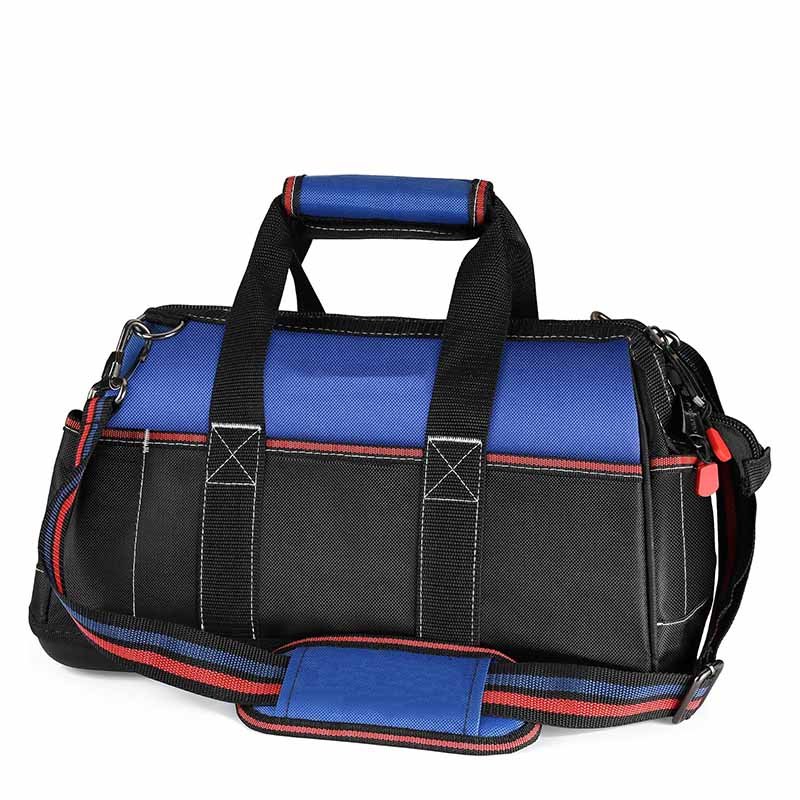
Tool bags usually need heavy fabrics, wide openings, strong handles, pocket organization, and bottom reinforcement. Szoneier can develop open-mouth tool totes, zip-top tool bags, roll-up tool organizers, electrician pouches, drill kit bags, and accessory packs. Common details include 600D-1680D polyester, nylon Oxford, PE board, rubber feet, metal or acetal hardware, box-X stitching, bartacks, and retail or warehouse packaging.
Equipment Bags
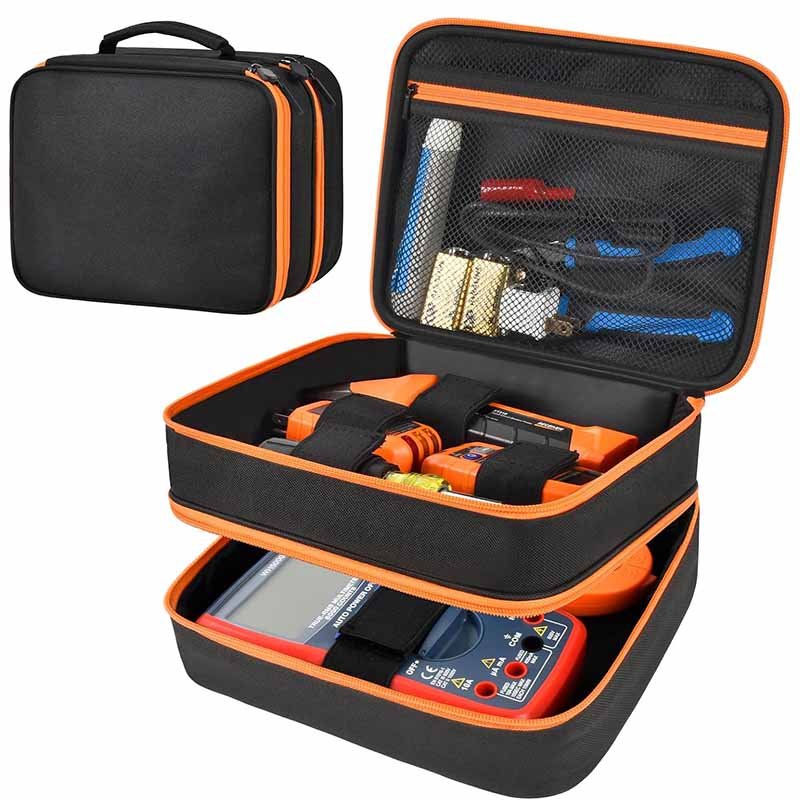
Equipment bags protect instruments, test devices, meters, electronics, camera-style tools, and service parts. Development begins with equipment dimensions, shock protection, compartment layout, and carrying method. Szoneier can add EVA panels, foam padding, padded lining, adjustable dividers, mesh pockets, elastic loops, label windows, and custom zipper pulls. A good equipment bag keeps devices protected while making every accessory easy to locate.
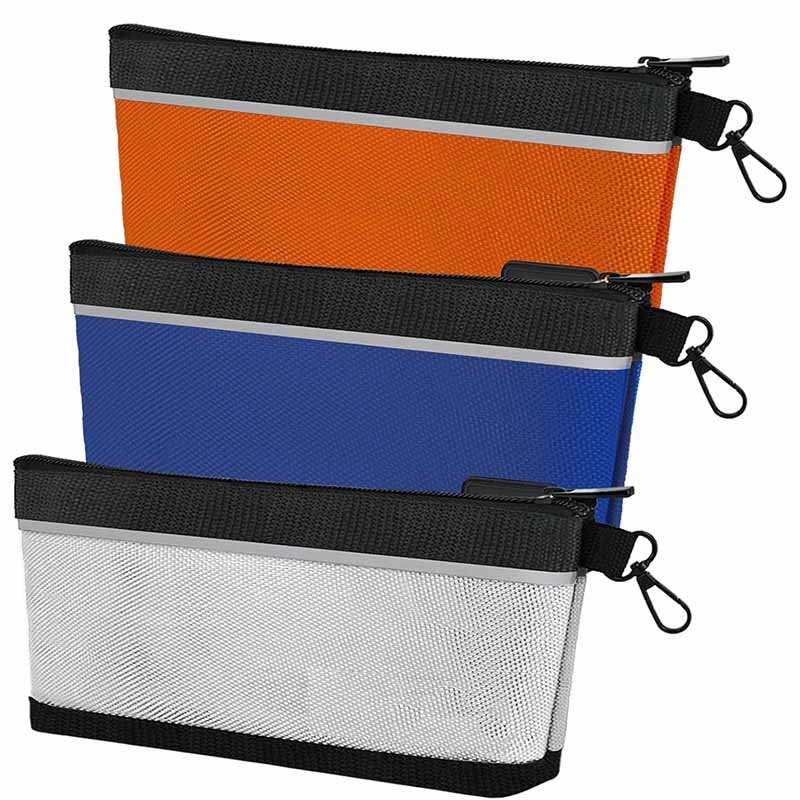
Utility Pouches
Utility pouches work well as add-on SKUs inside a larger industrial line. They can store screws, cables, gloves, meters, personal protective items, repair kits, and small tools. Szoneier can make zippered pouches, flat pouches, belt pouches, clear-window pouches, hanging pouches, and color-coded pouches. Size, fabric weight, zipper length, puller shape, and label placement can be standardized for repeat orders.
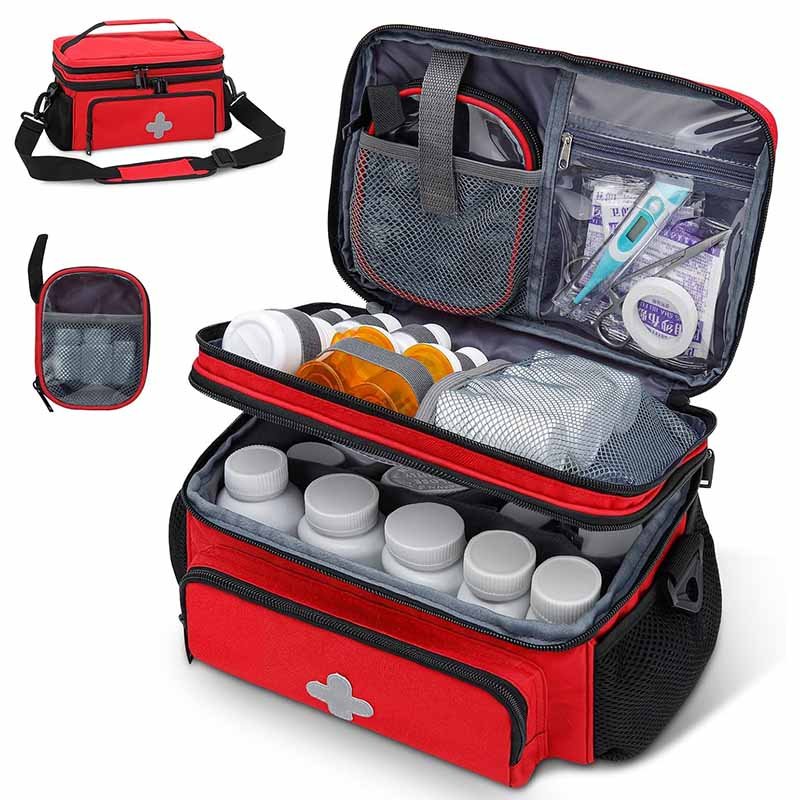
Medical Bags
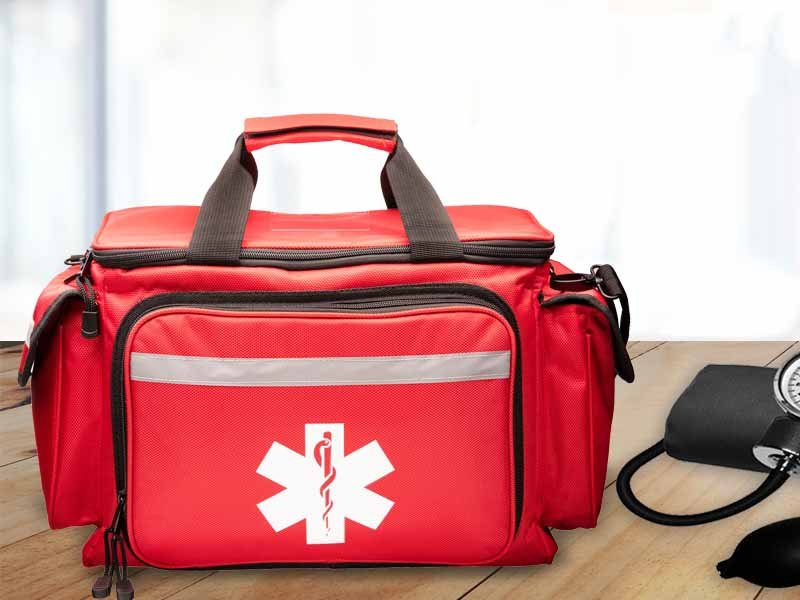
Medical bags need clean organization and reliable access. Szoneier can develop first-aid bags, trauma kit bags, medicine organizer pouches, emergency response packs, and equipment cases. Common structures include removable internal pouches, elastic loops, transparent pockets, mesh panels, large zipper openings, wipeable linings, and reflective marks. Materials and labeling should be selected according to actual care environment, not only visual preference.
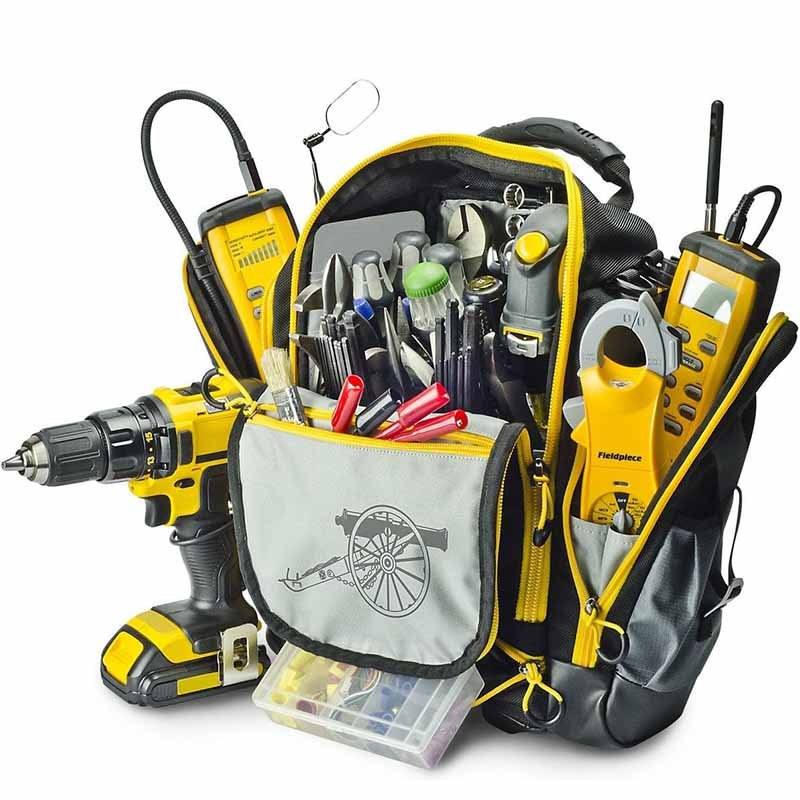
Field Service Kits
Field service kits combine carrying, storage, and workflow. They may hold cables, manuals, handheld devices, spare parts, safety items, and forms. Szoneier can build kit bags with numbered pockets, color coding, removable panels, tablet compartments, document sleeves, shoulder straps, and durable carton labels. A controlled kit layout helps service teams pack, check, dispatch, and replenish supplies with fewer mistakes.
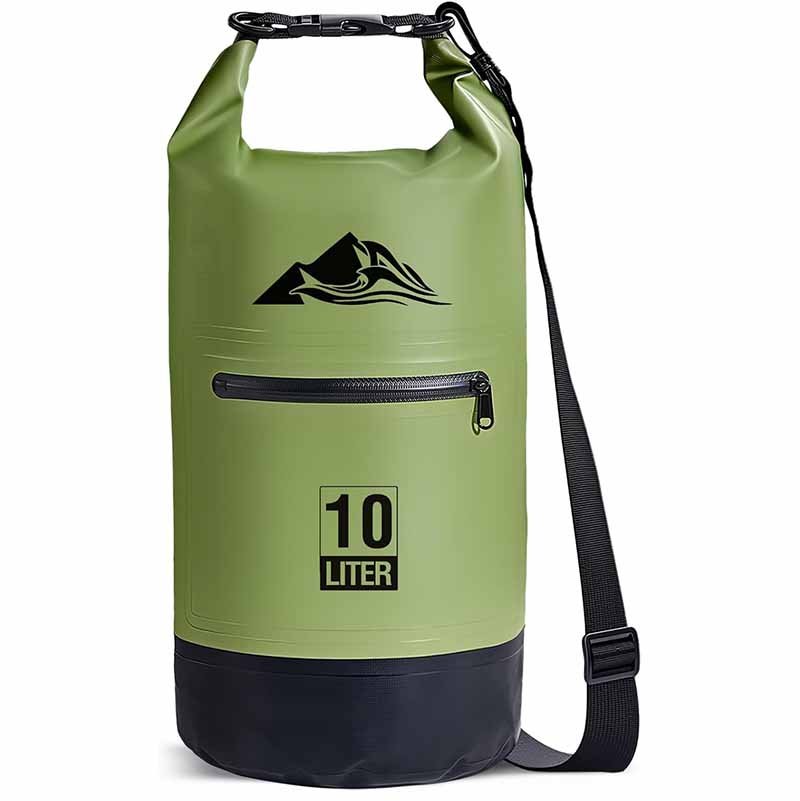
Waterproof Bags
Waterproof or water-resistant bags need clear performance boundaries. Szoneier can develop TPU roll-top dry bags, coated Oxford storage bags, waterproof zipper pouches, welded or sewn hybrid bags, and splash-resistant utility bags. Key choices include seam treatment, closure method, fabric coating, zipper type, weldability, and testing request. A splash-resistant work bag should never be described as a fully submersible dry bag without proper validation.
EVA Cases
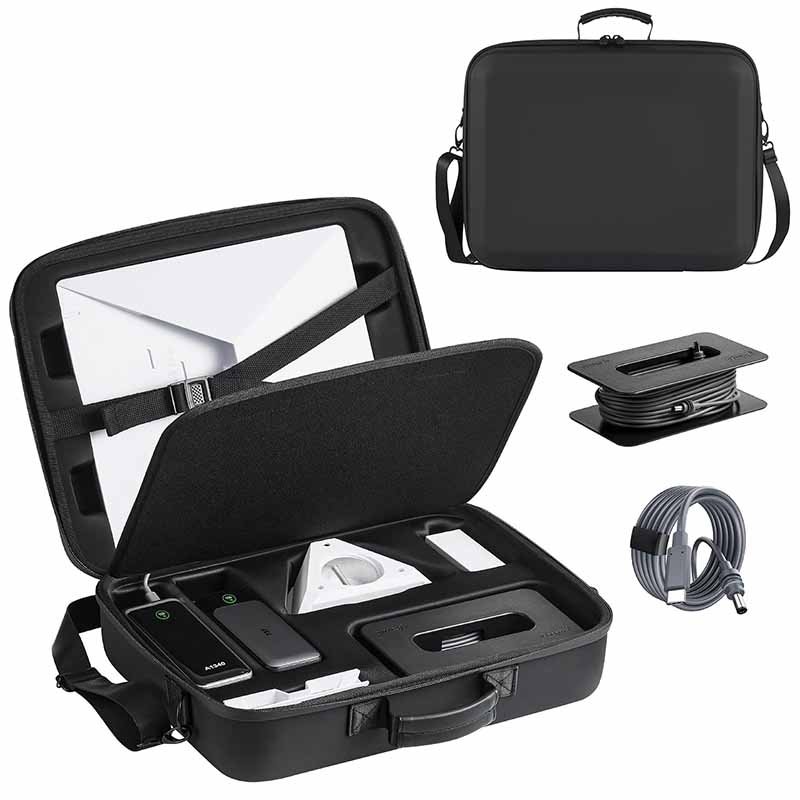
EVA cases suit tools, electronics, medical instruments, meters, and delicate accessories needing shaped protection. Szoneier can develop molded EVA shells, fabric-laminated cases, inner trays, mesh pockets, elastic straps, zipper closures, handle designs, and printed or embossed branding. EVA case development usually requires more tooling review than fabric pouches, so dimensions, samples, and target protection level should be confirmed early.
Tactical Bags
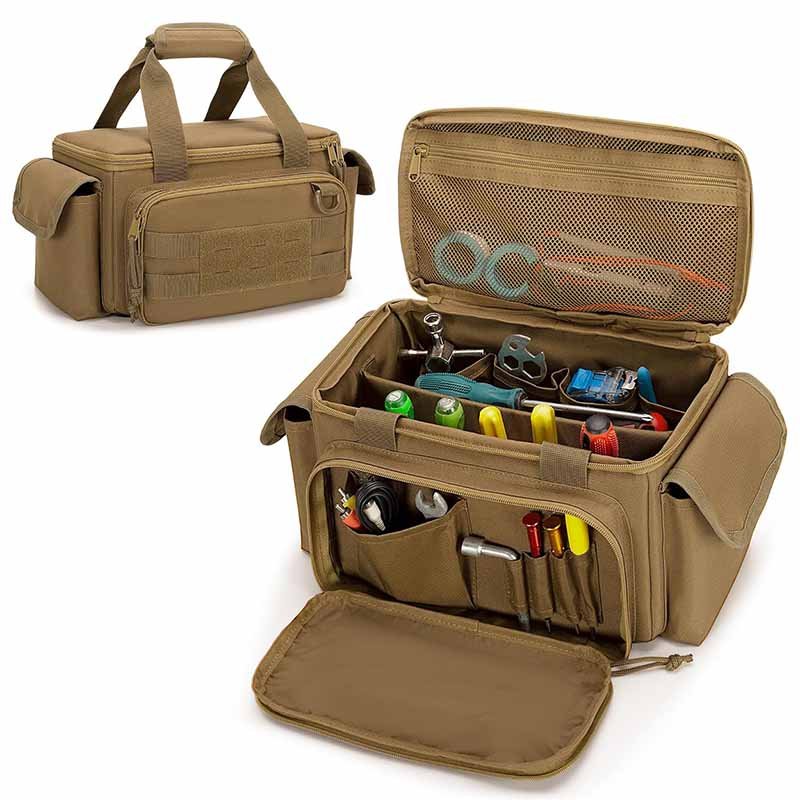
Tactical-style bags can support workwear, outdoor, repair, safety, and field programs. Szoneier can develop MOLLE panels, webbing rows, compression straps, reinforced handles, hook-and-loop patches, internal dividers, hydration pockets, and modular pouches. Material options often include 600D polyester, 1000D nylon, Oxford fabric, and coated fabrics. Structure must balance rugged appearance with real load and sewing control.
Cooler Work Bags
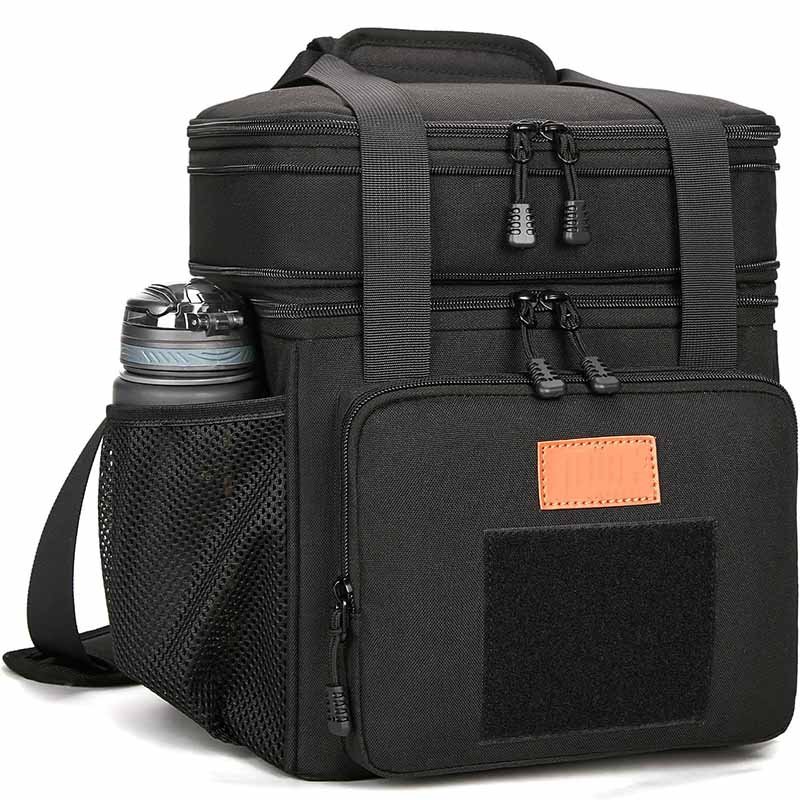
Cooler work bags serve jobsite lunch storage, field crews, medical transport accessories, and temperature-sensitive utility use. Szoneier can develop insulated lunch bags, cooler backpacks, soft cooler totes, bottle holders, and ice-pack pouches. Common layers include outer Oxford fabric, PE foam, aluminum foil lining, PEVA lining, webbing handles, zipper closures, and leak-conscious inner construction. Cold-retention claims should follow test conditions.
Cable Organizer Bags
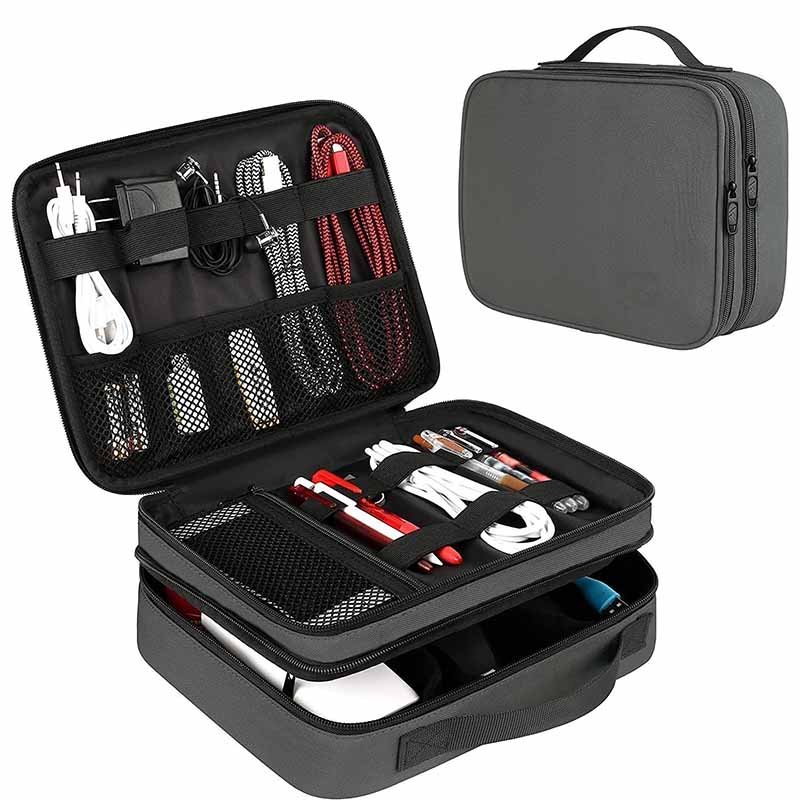
Cable organizer bags are useful for equipment companies, repair teams, electronics programs, and travel work kits. Szoneier can develop flat cable cases, zip pouches, roll-up organizers, elastic-loop panels, mesh pockets, charger compartments, and label sections. A strong design keeps cables visible, separated, and protected. Sizes can be planned around USB cables, power cords, adapters, test leads, and handheld devices.
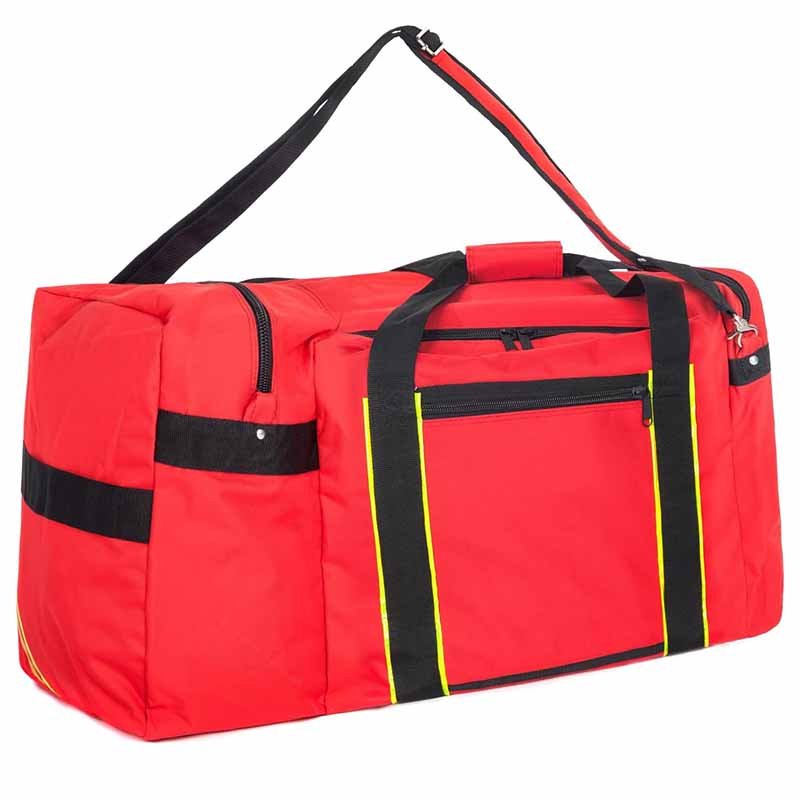
Safety Gear Bags
Safety gear bags carry gloves, goggles, masks, helmets, reflective vests, first-aid items, or emergency accessories. Szoneier can develop drawstring bags, zippered pouches, gear totes, helmet bags, PPE organizer bags, and vehicle storage kits. Bright trims, reflective tape, mesh ventilation, transparent windows, and easy-clean materials can improve handling. Packaging may require item labels, instruction cards, and grouped kit packing.
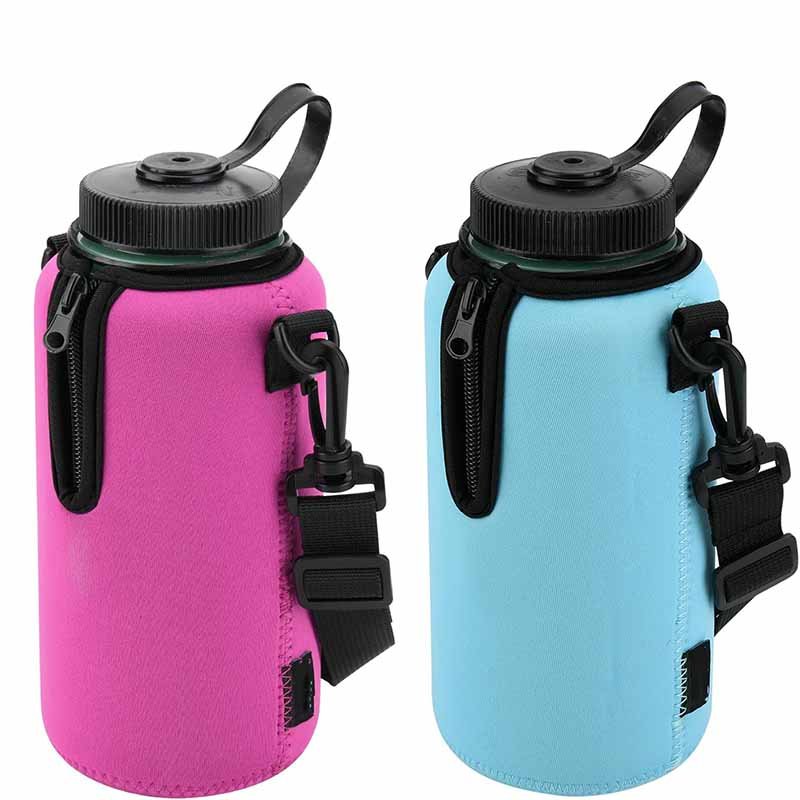
Soft Accessories
Soft accessories help extend an industrial line beyond main bags. Szoneier can develop straps, shoulder pads, detachable pouches, bottle sleeves, neoprene protectors, dust covers, tool wraps, cable ties, and branded storage sleeves. These items are useful for bundles, replacement parts, and channel-specific kits. Shared colors, matching labels, and standardized packaging help the entire range look planned instead of assembled from unrelated items.
Project Inputs Szoneier Can Develop From
A complete tech pack helps, but many industrial bag projects begin with samples, photos, field notes, or equipment dimensions.
Reference Samples
A physical reference sample gives the clearest starting point for size, handling, fabric feel, pocket direction, sewing quality, and carry comfort. Szoneier can review what should remain, what should improve, and what should be redesigned for manufacturing. Useful notes include loaded weight, weak points found after use, preferred opening angle, pocket count, handle length, and any parts needing stronger padding or cleaner access.
Photos and Sketches
Photos, sketches, and marked-up images can be enough for an early feasibility review. Szoneier can translate visual direction into rough size, possible material choices, pocket layout, seam positions, logo placement, and quotation questions. Clear front, back, side, inside, and detail views improve accuracy. For industrial bags, photos should show how tools, equipment, or supplies sit inside the bag rather than only the outside shape.
Tech Packs
A tech pack helps speed quotation and sampling when it includes size, material, color, hardware, stitching notes, logo artwork, packaging, labels, tolerance, and testing needs. Szoneier can review missing or risky details before sample work begins. Industrial soft goods often need extra notes for load-bearing seams, bottom support, padding, zipper grade, webbing width, inner pocket dimensions, and carton requirements.
Equipment Dimensions
Equipment bags should begin with product dimensions, accessory count, protection level, and preferred carrying method. Szoneier can build a layout around main device size, cable storage, charger placement, foam clearance, elastic loops, and document pockets. Providing photos with a ruler, 3D dimensions, and weight improves pattern accuracy. For multi-SKU equipment ranges, each device group can receive its own case size while sharing brand details.
Target Channel
Retail, distributor, Amazon, corporate kit, and industrial supply channels often require different packaging and labeling. Szoneier can review barcode placement, polybag warning text, carton marks, master carton size, FNSKU labels, hangtags, inserts, and pallet considerations. Channel planning should happen before bulk production because packaging format affects folded size, labor, carton quantity, freight cost, and warehouse handling.
Target Quantity
Quantity affects material purchasing, accessory sourcing, logo method, packaging cost, and production planning. Szoneier can review trial quantities, multi-SKU splits, replenishment expectations, and staged launches. Selected standard structures can start from 200 pcs, while complex industrial bags, custom hardware, molded EVA, special coated fabrics, and private packaging may require higher starting quantities. Clear quantity planning creates a more accurate quotation.
Common Industrial Bag Specification Ranges
The ranges below help teams frame early RFQ details before sample development and costing.
| Product Type | Common Size Range | Usual Materials | Structure Focus | Sample Time | Bulk Lead Time |
|---|---|---|---|---|---|
| Tool Bag | 12-20 in length | 600D-1680D polyester, nylon Oxford | Wide opening, pockets, reinforced base | 7-12 days | 25-35 days |
| Utility Pouch | 6-12 in width | Polyester, nylon, PVC mesh, clear TPU | Zipper, label, inner divider | 5-7 days | 20-30 days |
| Equipment Case | Custom by device | EVA, nylon, polyester, foam | Protection, dividers, mesh pocket | 10-15 days | 30-45 days |
| Medical Bag | 10-18 in length | Oxford, PVC clear film, mesh, PE board | Removable pockets, visibility, access | 7-12 days | 25-40 days |
| Waterproof Storage Bag | 5L-30L capacity | TPU, PVC-coated fabric, coated Oxford | Closure, seams, water exposure | 10-15 days | 30-45 days |
| Field Service Kit | 14-22 in length | 600D polyester, nylon, lining fabric | Numbered layout, document storage | 10-15 days | 30-40 days |
| Safety Gear Bag | 12-24 in length | Polyester Oxford, mesh, reflective trim | Ventilation, quick access, label area | 7-12 days | 25-35 days |
Material Strategy for Industrial Bag Programs
| Material | Best-Fit Uses | Strengths | Watch Points | Szoneier Suggestion |
|---|---|---|---|---|
| 600D Polyester | Tool bags, utility pouches, PPE bags | Balanced cost, printability, color access | Not as rugged as higher denier nylon | Good base material for value-driven lines |
| 900D-1680D Polyester | Heavy tool bags, field kits | Stronger hand feel and abrasion resistance | Higher fabric cost and stiffer handling | Use for load areas and premium SKUs |
| Nylon Oxford | Equipment bags, outdoor work bags | Strong, flexible, durable surface | Color and price vary by specification | Good fit for performance-focused ranges |
| Canvas | Workwear-style bags, tool totes | Strong lifestyle look, firm hand feel | May need coating for water resistance | Best for branded industrial lifestyle lines |
| TPU / PVC Coated Fabric | Waterproof storage, easy-clean bags | Water barrier, wipeable surface | Sewing and seam method need review | Use when water exposure matters |
| Neoprene | Sleeves, protective wraps, bottle holders | Cushioning, elasticity, soft protection | Edge binding and thickness affect cost | Good for accessory extensions |
| EVA | Molded protective cases | Shape stability and impact protection | Tooling and sampling need more planning | Best for device-specific protection |
| PU / Leather | Premium work accessories | Strong visual and brand feel | Abrasion, edge finish, and cost need control | Use for trims or premium sub-lines |
Structure Engineering for Industrial Use
Szoneier reviews opening access, internal layout, load paths, protection level, and repeat production stability before sampling.
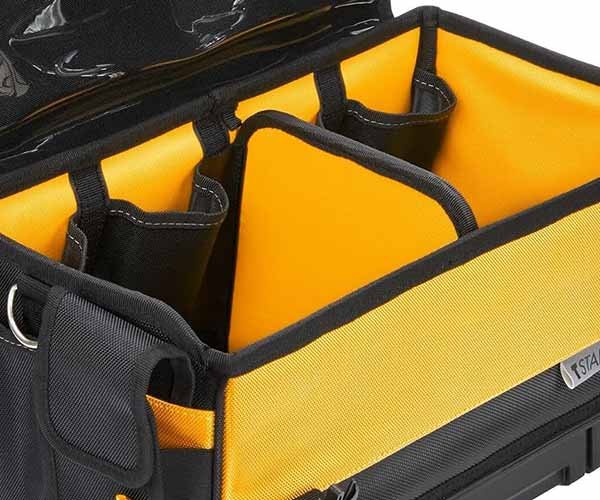
Wide Opening Design
Industrial bags often need fast access while wearing gloves or working in tight spaces. Szoneier can develop U-shaped zippers, doctor-bag frames, open-mouth structures, roll-top access, clamshell openings, and top-lid designs. The opening should match how tools or equipment are removed, not only how the bag looks in photos. A wide opening may need stronger binding, zipper reinforcement, and base support.
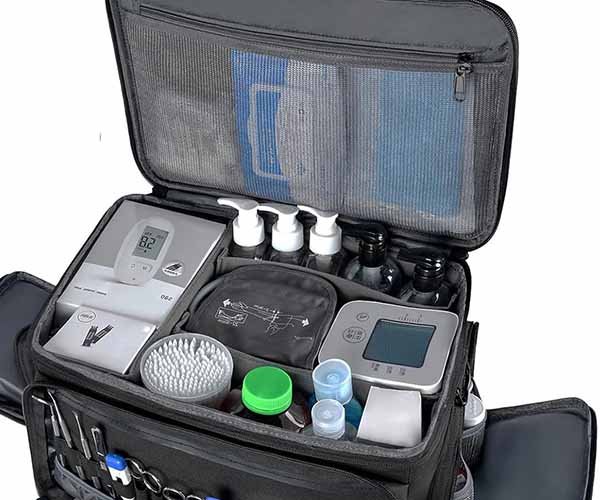
Internal Organization
Internal layout decides whether a bag becomes useful after launch. Szoneier can add elastic loops, mesh pockets, tool slots, padded dividers, removable panels, transparent pockets, document sleeves, and color-coded sections. Dimensions should be planned around actual tools, cables, accessories, and replenishment items. Pocket depth, angle, closure method, and sewing order must be confirmed during sampling to avoid crowded interiors.
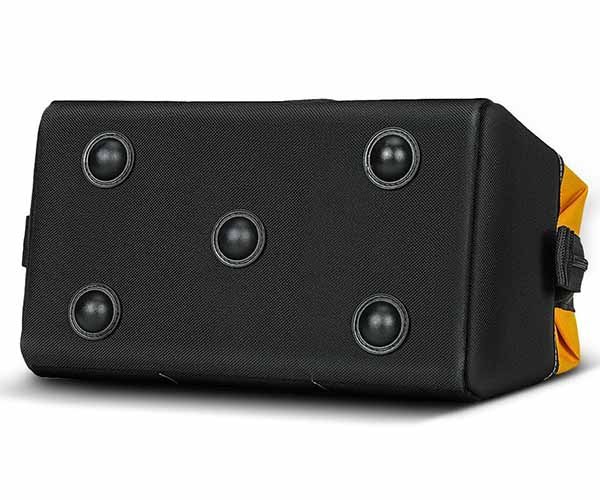
Bottom Reinforcement
The base carries most abuse when bags are loaded, dragged, dropped, or placed on rough floors. Szoneier can add PE board, foam, EVA panels, PVC-coated fabric, rubber feet, double-layer fabric, or reinforced binding. Bottom design should match expected weight and surface contact. For tool bags and equipment kits, base reinforcement often protects both product shape and long-term user experience.
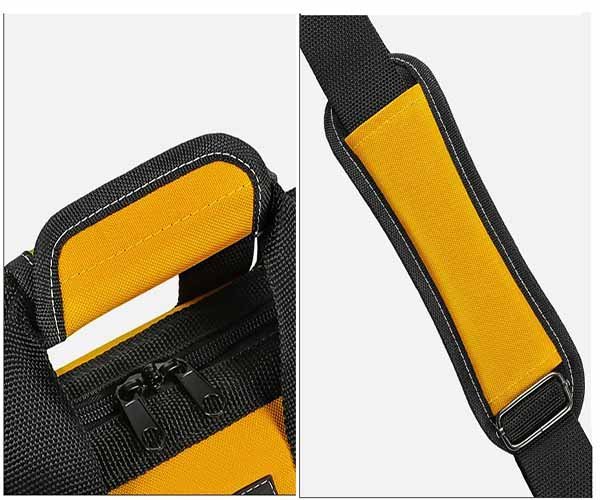
Carry Comfort
Industrial bags may be carried by hand, shoulder, belt, backpack straps, vehicle hooks, or carts. Szoneier can develop padded handles, box-X webbing attachments, detachable shoulder straps, shoulder pads, waist straps, grab handles, or dual carry systems. Strap width, stitch length, hardware selection, and attachment location should match loaded weight. Comfort decisions should be tested with sample weight, not empty samples.
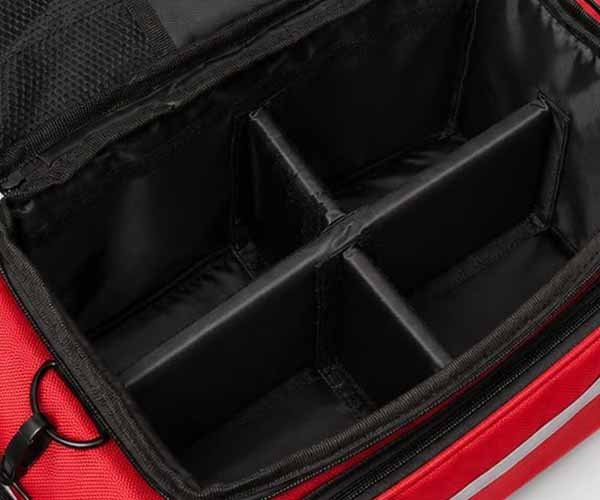
Protective Padding
Equipment, electronics, medical instruments, and repair kits often require structured protection. Szoneier can add foam, EVA, pearl cotton, padded lining, molded panels, inner trays, and removable dividers. Padding should protect without wasting space or raising freight cost too much. The best design balances device clearance, accessory access, zipper movement, inner lining, and carton packing efficiency.
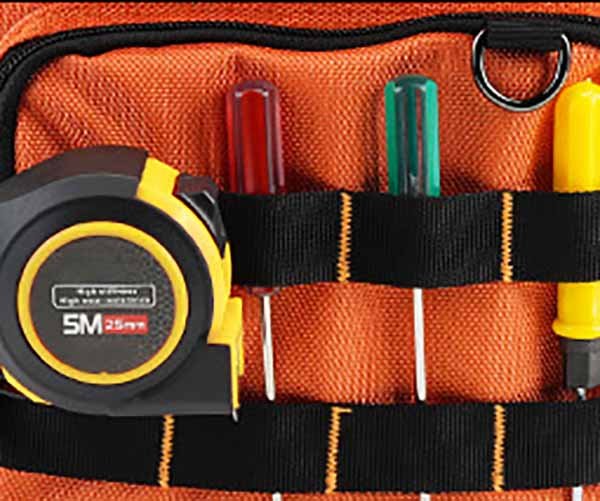
Modular Storage
Modular industrial bags can use detachable pouches, hook-and-loop panels, MOLLE-style webbing, snap attachments, compression straps, and replaceable inserts. Modularity works well for field kits, tactical-style ranges, medical bags, and repair programs. Szoneier can review whether modular features truly help daily use or only add cost. Connection strength and sewing direction matter more than decoration.
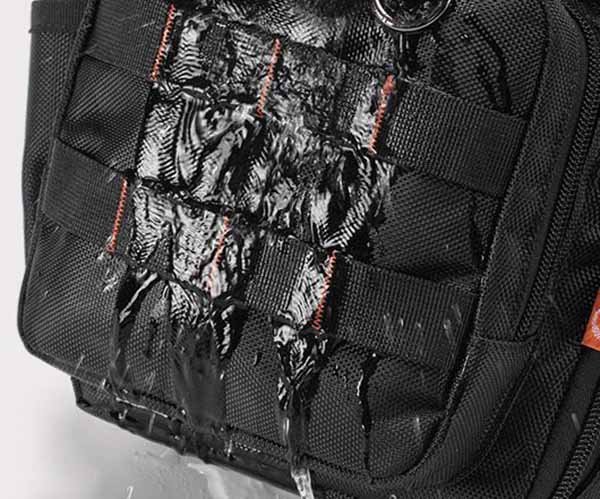
Water Exposure
Water resistance depends on fabric coating, zipper type, seam construction, closure design, and testing method. Szoneier can develop splash-resistant work bags, coated storage bags, roll-top dry bags, and welded or sewn hybrid designs. Claims should stay aligned with construction. A coated fabric with regular sewing may resist rain but cannot be promoted as submersible without suitable seam technology and testing.
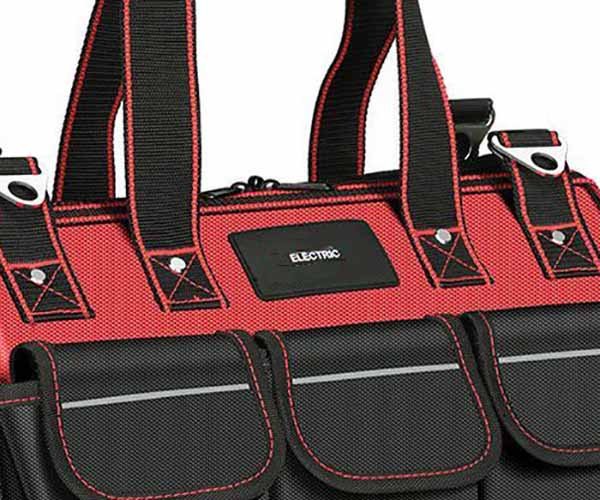
Label and Access Points
Industrial kits often need visible labels, serial areas, instruction pockets, barcode positions, or safety identification. Szoneier can build clear windows, woven labels, printed panels, rubber patches, removable ID sleeves, and color tabs. Label position should remain visible during storage and handling. For multi-SKU programs, label and color logic can reduce picking mistakes across warehouses and field teams.
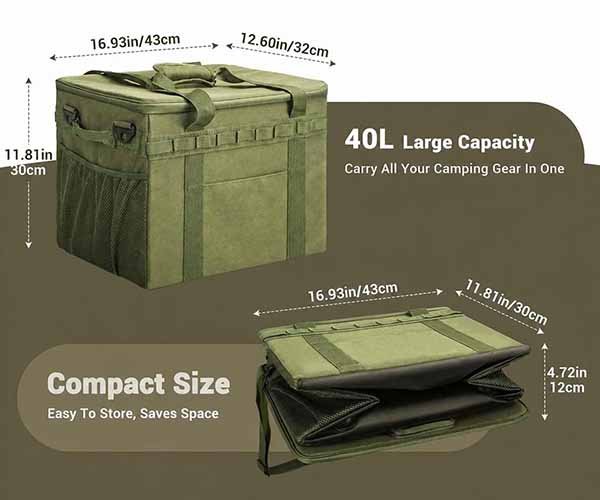
Folded and Packed Size
Folded size affects carton quantity, freight, retail shelf space, FBA planning, and storage efficiency. Szoneier can review whether a bag should ship flat, semi-structured, stuffed, folded, or nested with accessories. A heavily padded equipment case may need larger cartons, while a utility pouch can pack compactly. Packaging structure should be reviewed during sample stage, not after production ends.
Reinforced Sewing and Stress-Point Control
Industrial bags fail first at handles, zipper ends, pocket corners, binding edges, and loaded seams. Szoneier designs around those risks.
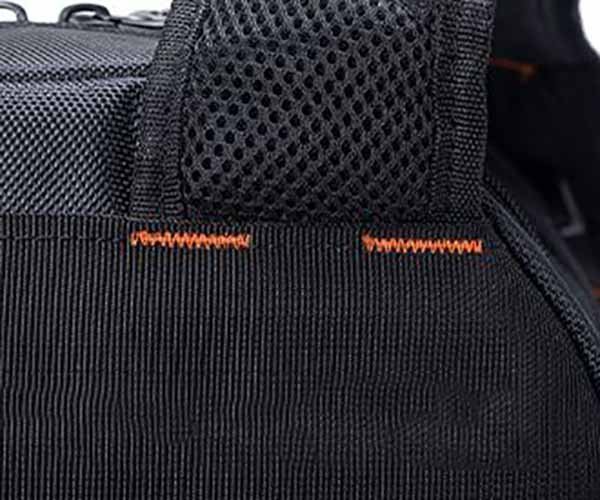
Bartack Positions
Bartacks strengthen high-stress points such as handle ends, strap anchors, pocket corners, zipper ends, elastic loops, and MOLLE webbing. Szoneier reviews where bartacks improve strength and where they may create bulk or needle damage. Placement should follow load direction. A bag with strong fabric but weak attachment points can still fail after repeated jobsite use.
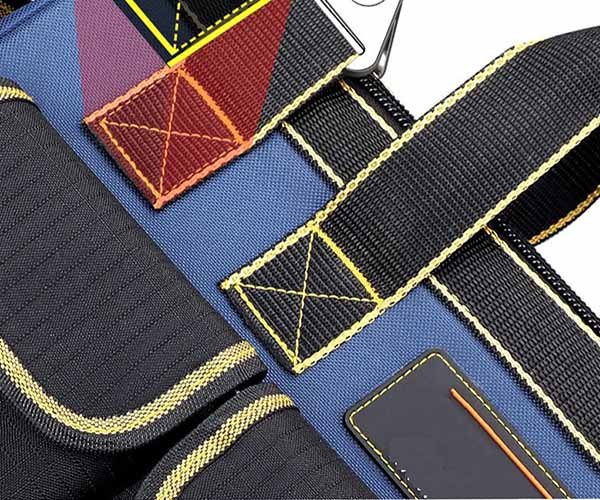
Box-X Stitching
Box-X stitching is useful for handles, shoulder strap anchors, and webbing attachments carrying repeated load. Szoneier can adjust box size, stitch density, reinforcement patch, and thread selection based on fabric thickness and expected weight. For tool bags and field kits, box-X areas should connect to reinforced fabric layers rather than a single thin shell panel.
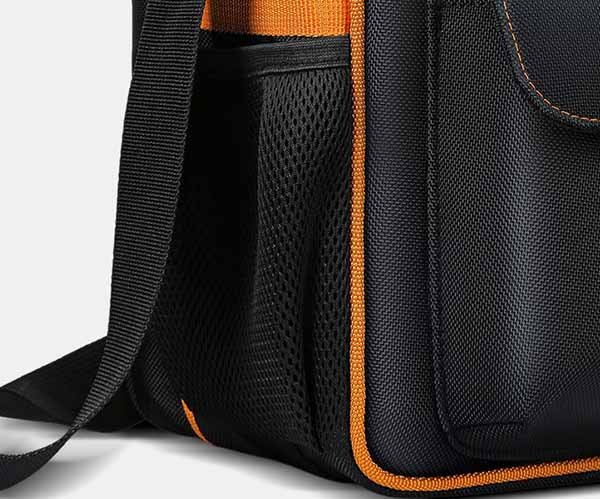
Binding Control
Binding protects raw edges, improves appearance, and reduces fraying. Industrial bags may use polyester binding, nylon binding, PU binding, cotton binding, or leather binding depending on material and positioning. Szoneier reviews binding width, color, thickness, curve handling, and seam bulk. Clean binding around corners, openings, and padded edges often shows stronger workmanship than broad advertising claims.
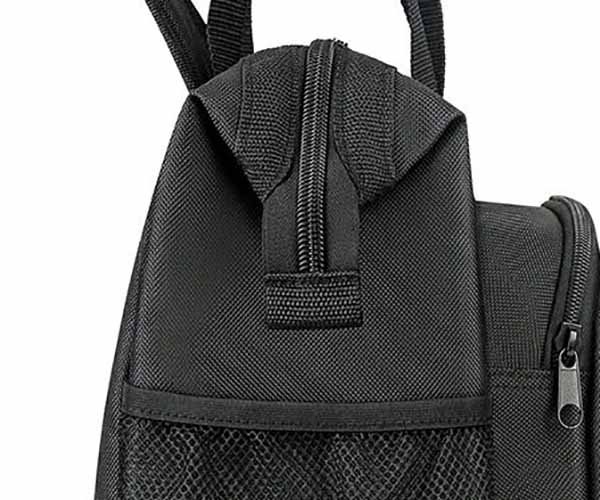
Zipper End Reinforcement
Zipper ends receive pulling force every time a bag opens or closes. Szoneier can add fabric tabs, bartacks, end covers, reinforced zipper garages, or wider seam allowance. Heavy-duty zipper tape should also match slider quality and surrounding fabric. For bags opened many times per day, zipper reinforcement should be confirmed on samples before production begins.
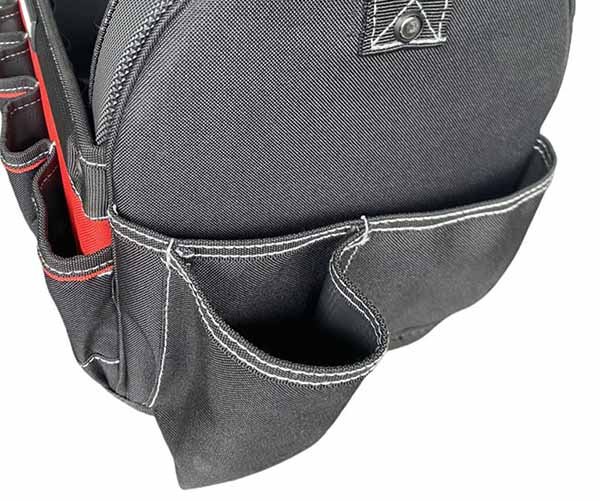
Pocket Corner Strength
Pockets fail when sharp tools, cables, or repeated pulling stress the same corner. Szoneier can reinforce pocket corners with bartacks, double stitching, binding, layered fabric, or rounded pocket geometry. Pocket size should match contents and retrieval direction. Overloaded pockets can distort the outer shell, so layout and load distribution should be reviewed together.
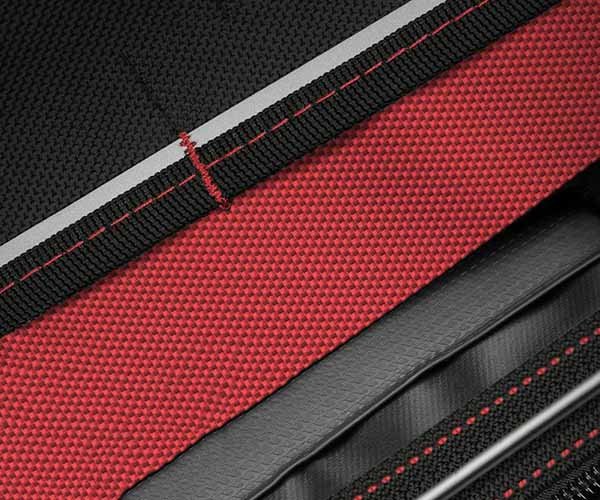
Thread and Needle Fit
Thread, needle, and stitch density must match fabric thickness, coating, lining, foam, binding, and webbing. Szoneier reviews stitch balance to avoid skipped stitches, puckering, needle holes, and weak seams. Coated fabrics, thick webbing, EVA panels, and multilayer corners need careful sewing setup. Small details at sewing stage often decide bulk consistency and long-term durability.
Hardware, Webbing, Zippers, and Accessories
Industrial bag components must match load, opening frequency, environment, and brand level rather than only price.
Heavy-Duty Zippers
Zipper selection depends on bag size, opening curve, frequency of use, and environment. Szoneier can source nylon coil zippers, resin zippers, metal zippers, waterproof zippers, reverse zippers, and lockable zipper options. Larger zippers feel stronger but can add stiffness and cost. Slider quality, puller shape, tape color, and end reinforcement should be reviewed as one system.
Webbing Choices
Webbing carries handles, shoulder straps, compression straps, loops, and attachment points. Szoneier can review width, thickness, weave, color, hand feel, and logo options. Common industrial uses may involve 25 mm, 38 mm, or 50 mm webbing depending on load and visual style. Wider webbing can improve comfort, but attachment construction must also support the load path.
Buckles and D-Rings
Buckles, D-rings, hooks, adjusters, and snap hooks affect carrying safety and ease of use. Szoneier can match acetal, nylon, zinc alloy, or metal hardware to product positioning. Tool and field bags often need stronger hardware than gift bags. Hardware should be checked for strap width, pull direction, corrosion risk, noise, weight, and compatibility with branded visual details.
Hook and Loop
Hook-and-loop closures help create removable pockets, adjustable dividers, patch areas, and quick-access panels. Szoneier can use them in medical bags, tool organizers, tactical pouches, camera-style inserts, and field kits. They are useful but not silent, and repeated use can reduce grip over time. High-frequency products should use stable grades and sample testing before approval.
Foam and Boards
Foam, PE board, EVA, pearl cotton, and stiffener panels can improve structure, protection, and shape retention. Szoneier reviews thickness based on bag function and folding needs. Too much padding increases carton size and cost; too little protection may cause poor field performance. For equipment cases, protective layers should follow device shape, accessory placement, and zipper clearance.
Pullers and Labels
Pullers and labels can improve daily use and brand recognition. Szoneier can develop rubber pullers, woven zipper pulls, metal pullers, fabric tabs, woven labels, PVC patches, leather patches, and reflective labels. For industrial bags, label choice should withstand abrasion, handling, and outdoor use. Branding must stay readable after repeated opening, packing, and transport.
Branding Methods for Industrial Bag Lines
Industrial products can still carry a strong brand system through durable logo placement, trims, labels, packaging, and color control.
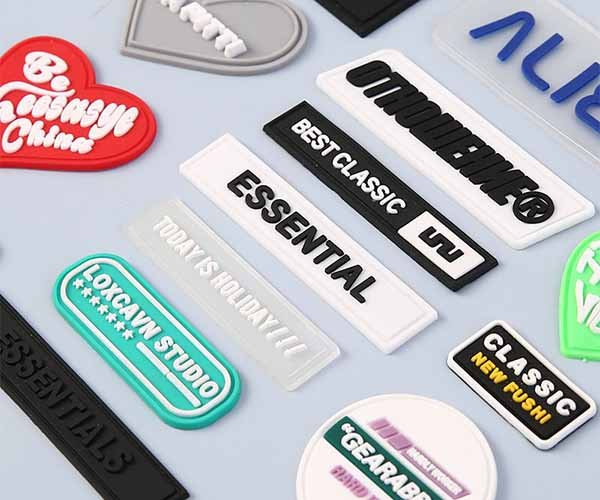
Rubber Patches
Rubber or silicone patches work well for outdoor, tool, tactical-style, and work gear products. They add dimension, weather-ready appearance, and strong shelf recognition. Szoneier can place them on front panels, lids, side pockets, handles, or accessory pouches. Patch size, thickness, color, backing, and stitch method should match bag material and bending area to avoid lifting or distortion.
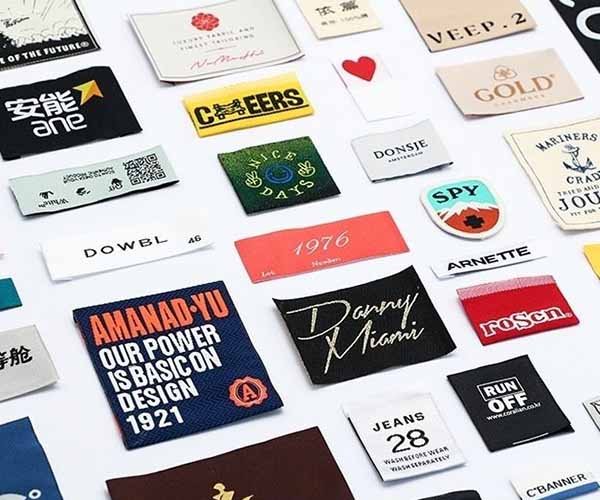
Woven Labels
Woven labels are stable, versatile, and suitable for most industrial bag ranges. They work on tool bags, pouches, medical bags, utility kits, and accessories. Szoneier can coordinate label size, fold type, color count, edge finish, and sewing position. Woven labels are useful when direct printing may wear quickly or when a premium but controlled brand detail is needed.
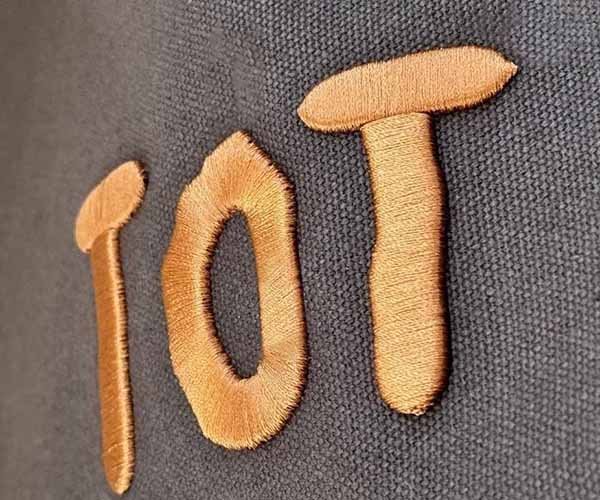
Embroidery
Embroidery gives a durable textile feel and can look strong on canvas, polyester, nylon, and selected panels. It suits logos with readable shapes and limited fine detail. Szoneier reviews stitch density, backing, thread color, panel thickness, and placement before sampling. Embroidery can create puckering on thin fabric, so industrial bags often need reinforcement behind the logo area.
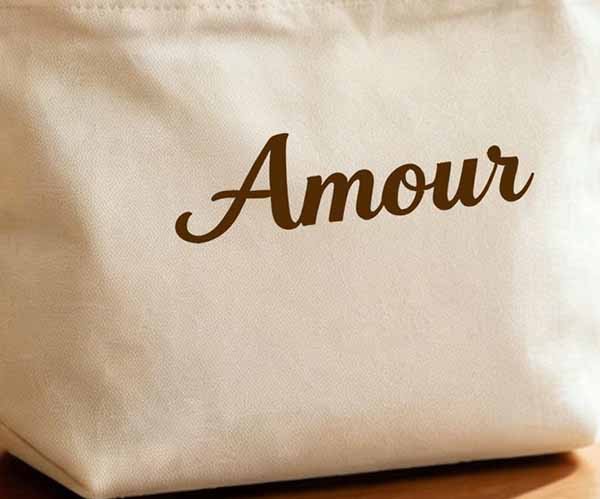
Screen Printing
Screen printing works for larger logos, simple graphics, instruction marks, and brand panels. It can be cost-efficient for stable designs and suitable materials. Szoneier reviews ink compatibility, color accuracy, placement, rubbing risk, and panel shape. For industrial bags exposed to abrasion, printing should be placed away from heavy contact areas or tested under expected use conditions.
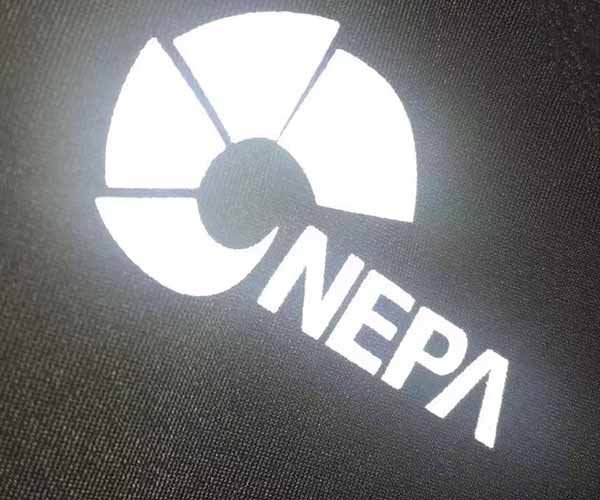
Reflective Logos
Reflective printing, reflective tape, and reflective labels help outdoor work gear, safety kits, and field service bags gain visibility. Szoneier can integrate reflective elements into panels, zipper pulls, handles, or side trims. Reflective details should be selected for visibility and durability, while any formal safety requirement should be confirmed with specific testing standards before production claims.
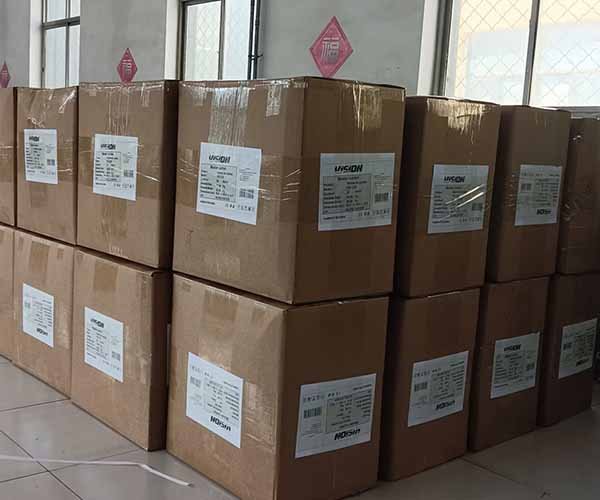
Branded Packaging
Packaging completes the industrial line. Szoneier can coordinate hangtags, instruction cards, barcode labels, polybags, carton marks, FNSKU labels, master cartons, and set packing. For multi-SKU ranges, packaging files must match product code, color, size, channel, and destination. Branded packaging should support warehouse accuracy as much as shelf appearance.
Sample Development From Idea to Approval
Industrial bag sampling should confirm structure, strength, organization, cost, packaging, and production feasibility before bulk order approval.
Requirement Review
Szoneier begins by reviewing product type, use case, photos, sample, sketch, size target, material preference, expected load, logo file, quantity, packaging, and destination country. Missing details are clarified before sampling to reduce rework. For industrial bags, early questions often cover tool dimensions, weight, pocket count, water exposure, carry method, access speed, and retail or warehouse packing needs.
Material Matching
After reviewing use and budget, Szoneier suggests material directions such as 600D polyester, 900D polyester, 1680D polyester, nylon Oxford, canvas, TPU-coated fabric, PVC, neoprene, EVA, mesh, lining, foam, and webbing. Material selection is not only a fabric decision. It influences sewing setup, structure, carton size, logo method, surface durability, and final quotation.
Pattern Development
Pattern work translates size and function into cut panels, seam allowance, pocket shapes, zipper paths, webbing positions, and reinforcement areas. Szoneier checks whether the proposed structure can be sewn consistently during bulk production. For industrial bags, pattern development often needs more attention around corners, openings, padded sections, bottom support, and inner compartment alignment.
First Sample
A first sample tests the product idea in physical form. Standard structures may need 5-7 days, while complex industrial bags often need 7-15 days depending on materials, hardware, padding, and logo method. Szoneier can share photos or videos before shipping samples. Internal review focuses on dimensions, workmanship, carrying comfort, pocket access, reinforcement, and obvious production risks.
Sample Revision
Revision may adjust size, pocket depth, zipper route, handle length, webbing strength, logo placement, lining, foam thickness, or packing method. Szoneier records revision points so changes remain traceable. Industrial bag projects often improve after one or two review rounds because field-use logic becomes clearer when a real sample is loaded with tools or equipment.
Sealed Approval
After sample approval, Szoneier uses the confirmed sample, BOM, pattern, logo file, packaging file, and QC notes as the production base. The approved sample should represent material, shape, size, structure, sewing details, and packaging expectation. Sealed approval protects both sides from vague interpretation when bulk production begins, especially for multi-SKU industrial lines.
Cost Engineering Without Weakening Critical Structure
Szoneier reviews target price through material, structure, quantity, logo, packaging, and freight decisions while protecting key stress points.
Material Cost Balance
Material cost can be adjusted by fabric type, denier, coating, lining, reinforcement placement, and use of stock colors. Szoneier can suggest where premium fabric matters and where a more balanced material can work. For example, a tool bag may need stronger base and handle panels, while inner pockets can use a lighter lining if load and abrasion remain controlled.
Construction Cost Control
Complex pockets, curved zippers, padded dividers, binding, hidden seams, and multi-layer corners increase labor time. Szoneier can review which features improve performance and which features add cost without enough value. Cost engineering should not remove bartacks, reinforcement patches, or load-bearing webbing. A cheaper sample may become expensive later if field failures create returns or complaints.
Packaging and Freight
Packaging format affects carton quantity, labor, freight volume, warehouse handling, and channel readiness. Szoneier can compare flat packing, folded packing, individual polybags, instruction cards, hangtags, inner cartons, and master cartons. Bulky padded cases may need carton optimization, while utility pouches can often pack efficiently. Freight planning should be reviewed before final quotation for large industrial lines.
MOQ and Multi-SKU Launch Planning
Selected standard industrial bag structures can start from 200 pcs, while complex materials, tooling, and private accessories require case-by-case review.
Standard Launch Orders
For stock materials, mature structures, simple logo methods, and standard packaging, Szoneier can support MOQ from 200 pcs for selected custom bag projects. A sensible industrial launch may start with one main bag and one accessory pouch, then expand after field feedback. The starting quantity should match material availability, color count, production setup, packaging needs, and expected replenishment speed.
Complex Program Orders
Custom hardware, molded EVA, special coated fabric, color-dyed fabric, jacquard webbing, waterproof zipper, private packaging, and heavy multi-compartment structures can require higher starting quantities. Szoneier reviews each variable before confirming MOQ. For a serious line, teams often approve core structure first, then add colors, sizes, accessories, and channel-specific packaging in later batches.
Bulk Production Control After Sample Approval
Szoneier manages industrial bag production through confirmed samples, BOM records, material checks, sewing control, QC, packaging, and delivery files.
Order Confirmation
Bulk production begins after quotation, sample approval, PI confirmation, quantity split, logo file, packaging file, destination, and payment terms are settled. Szoneier reviews all approved details before production scheduling. For multi-SKU programs, each item should have its own code, size, material, color, logo method, packaging note, and carton requirement to avoid mixed production instructions.
BOM Locking
The BOM records fabric, lining, foam, webbing, zipper, hardware, label, logo process, packaging, carton, and any special component. Szoneier uses locked BOM data to reduce material drift between sample and bulk order. If an approved material becomes unavailable, replacement options need confirmation before purchasing. BOM discipline is essential for repeat orders and multi-SKU industrial families.
Material Purchasing
Material purchasing follows approved specifications, quantity, color, and delivery schedule. Szoneier checks fabric rolls, webbing, zippers, hardware, labels, foam, boards, and packaging materials before full production moves forward. Industrial bags often combine many components, so delayed hardware or special fabric can affect schedule. Early purchasing review protects sample-to-bulk consistency and delivery planning.
Cutting Control
Cutting accuracy affects bag shape, pocket alignment, zipper matching, and final size. Szoneier manages cutting according to approved pattern files and material direction. Coated fabrics, thick fabric, EVA panels, foam, and lining materials may require different handling. Cutting mistakes can create sewing defects later, so industrial bag programs need pattern clarity and quantity control before assembly.
Logo Process
Logo production may involve rubber patches, woven labels, embroidery, printing, heat transfer, reflective marks, or zipper pullers. Szoneier checks logo color, size, position, batch consistency, and attachment method before assembly. For industrial lines, logo areas must handle abrasion and bending. Logo approval should be connected to fabric choice and sewing process, not treated as a final decoration.
Sewing Production
Sewing production follows approved sample, pattern, BOM, and workmanship notes. Szoneier monitors seam allowance, pocket placement, binding, zipper path, bartacks, handle anchors, lining assembly, and finishing. Industrial bags often include thick corners and layered stress points, so sewing setup must fit material thickness. In-line checks help catch issues before defects spread across the full batch.
In-Line Inspection
In-line inspection reviews dimensions, stitch quality, component placement, pocket function, zipper movement, handle strength, labels, and visible workmanship during production. Szoneier checks semi-finished goods before final packing. Early inspection matters because industrial bags often have many parts. A small error in pocket direction, webbing length, or zipper puller position can affect the entire line.
Final QC
Final inspection checks appearance, size tolerance, function, stitching, logo, packaging, carton marks, quantity, and agreed details. For industrial bags, QC may also review load-bearing points, zipper operation, pocket alignment, handle balance, bottom structure, padding, and accessory placement. Photo and video reports can be arranged for important orders before shipment, helping remote teams review production status.
Shipment Preparation
Shipment preparation includes polybags, labels, carton packing, carton marks, packing list, commercial invoice, delivery method, and tracking follow-up. Szoneier can support express, air, sea, DDP, FBA-related preparation, and multi-address dispatch depending on project needs. Packed size, carton weight, and destination rules should be reviewed before production finishes, especially for bulky padded products.
Quality Control for Industrial Bag Projects
QC focuses on materials, dimensions, stitching, function, reinforcement, packaging, and repeat order consistency.
Material Inspection
Material inspection reviews fabric color, texture, coating, thickness, defects, lining, foam, webbing, zippers, hardware, labels, and packaging materials before production. Industrial bags often combine many components, so a weak accessory can reduce overall product reliability. Szoneier checks incoming materials against approved sample and BOM records before cutting begins whenever project schedule allows.
Dimension Check
Dimension checks compare finished products against approved size and tolerance. Industrial bags may require checks for length, width, height, pocket depth, strap length, handle drop, zipper opening, divider position, and packed size. Even small dimension changes can affect tool fit or device protection. Szoneier uses approved sample and pattern data as the main control reference.
Stitching Review
Stitching review covers seam straightness, stitch density, skipped stitches, thread tension, bartacks, binding, webbing attachment, zipper ends, pocket corners, and thick intersections. Industrial bags need special attention around load-bearing areas. Szoneier does not treat all stitches equally; handle anchors, base seams, pockets, and zipper ends require stronger control than low-stress decorative seams.
Function Testing
Function testing checks zipper movement, buckle operation, removable pouches, hook-and-loop grip, pocket access, strap adjustment, opening angle, divider stability, and packed function. For equipment bags, device fit and accessory placement may be reviewed with mockups or supplied items. For field kits, packing sequence matters. Product function should match daily use, not only factory appearance.
Packaging Check
Packaging check confirms polybag, label, barcode, hangtag, instruction card, carton mark, FNSKU, carton quantity, and master carton condition. Industrial bag programs often ship multiple SKUs, so packaging accuracy is part of quality control. A strong bag packed with the wrong label can still create warehouse problems. Szoneier keeps packaging files connected with item codes.
Repeat Order Records
Repeat order QC depends on saved files. Szoneier can archive pattern, BOM, material, accessory, logo, packaging, carton data, QC notes, and revision history. Reorders can then be compared with approved standards instead of relying on memory. For industrial product lines with seasonal replenishment or channel expansion, documentation is one of the strongest quality controls.
Packaging, Carton, FBA, and Delivery Support
Szoneier connects product packing with channel needs, warehouse handling, carton data, and international delivery planning.
Retail Packaging
Retail programs may need hangtags, header cards, printed inserts, barcode labels, instruction cards, display-ready polybags, and clean carton presentation. Szoneier can help align packaging with product size, folded shape, SKU code, and visual identity. Industrial bags sold through retail channels need rugged product value plus clean shelf communication. Packaging should explain function without slowing warehouse operations.
Warehouse Packaging
Warehouse and distributor shipments need accurate carton marks, item labels, quantity control, master cartons, and packing lists. Szoneier can set carton labels by SKU, color, size, and destination. Industrial bag lines often include multiple similar pouches, so clear labeling prevents picking errors. Carton data should be confirmed before production ends, not during loading.
Amazon Preparation
For Amazon-related programs, Szoneier can support FNSKU labels, carton labels, polybag warning text, master carton planning, and delivery coordination according to provided requirements. Product size and carton packing can influence storage and shipping cost. Teams should provide latest channel instructions because platform rules may change, and Szoneier can follow confirmed packaging files during production.
DDP Coordination
DDP shipments can reduce receiving complexity for teams wanting door-to-door delivery. Szoneier can coordinate shipment options based on product size, packed volume, destination, timeline, and order quantity. Industrial bags with padding, frames, or EVA shells may create higher volume freight than simple pouches. Early carton planning helps avoid surprise freight pressure after goods are packed.
Split Shipments
A line may need samples, pilot quantities, marketing sets, warehouse stock, and distributor cartons sent to different addresses. Szoneier can prepare split shipment data when addresses, quantities, labels, and packing rules are confirmed early. Split shipments require careful carton marking and item allocation. Strong file control prevents mixed cartons and supports cleaner receiving at each destination.
Export Documents
Export support may include commercial invoice, packing list, carton details, shipment photos, and logistics tracking. Szoneier can coordinate express, air, sea, and other routes depending on project needs. Industrial product lines often involve heavier cartons or larger packed volume, so delivery planning should consider both timeline and total landed cost. Documentation should match product names, quantities, and carton marks.
Multi-SKU and Repeat Order Documentation
A line becomes easier to scale when every approved detail is recorded for future production.
Pattern Records
Pattern files control size, seam allowance, pocket shape, zipper path, strap position, lining shape, and panel structure. Szoneier can keep approved pattern records after sample approval, helping later orders maintain consistent shape. Pattern records are especially important for industrial bags because small shifts can affect tool fit, device protection, pocket function, and packing size across different production batches.
BOM Records
BOM records list the approved fabric, lining, coating, foam, webbing, zipper, hardware, labels, logo method, packaging, and carton requirements. Szoneier uses BOM files to support future sourcing and reorders. For a multi-SKU line, BOM control helps separate similar products with different fabric weights, zipper grades, or packaging formats. Clear BOMs reduce confusion when quantities grow.
Packaging Records
Packaging records include artwork, barcode, FNSKU, warning text, instruction card, polybag size, hangtag, carton mark, master carton size, and packing method. Szoneier connects packaging records with each SKU. In industrial lines, packaging errors can affect receiving, shelf display, warehouse scanning, or online dispatch. Correct files make replenishment faster and reduce repeated confirmation work.
Revision History
Revision history records changes made after first sample, pre-production sample, bulk order feedback, or repeat order review. Szoneier can document adjustments to size, pockets, reinforcement, material, strap length, logo position, packaging, or carton quantity. A controlled revision history helps product managers see why changes happened and avoids older versions returning during later production.
Factory-Based Development System Behind Szoneier
Szoneier combines in-house sampling, sewing production coordination, controlled partner capacity, QC, packaging, and export delivery support.
18+ Years Experience
Szoneier has built more than 18 years of experience in custom bags, sewn soft goods, material sourcing, sampling, bulk production, quality inspection, and export delivery. The experience covers tote bags, tool bags, cooler bags, medical bags, backpacks, waterproof bags, neoprene products, EVA cases, leather goods, and functional storage products. Industrial bag lines benefit from cross-category knowledge rather than single-product thinking.
In-House Sampling
Szoneier supports sample development, material confirmation, pattern making, sample sewing, logo coordination, internal checking, and sample revision. In-house sampling helps reduce information loss between design notes and factory execution. For industrial bags, sampling is where load paths, pocket dimensions, padding, openings, and sewing details become visible. Fast, accurate sample review can prevent expensive bulk changes.
Sewing Coordination
Szoneier manages custom bag production through confirmed samples, patterns, BOMs, material checks, cutting, logo process, sewing, in-line inspection, final inspection, packaging, and shipment preparation. Industrial bag sewing requires attention to thick corners, reinforced seams, webbing anchors, zipper ends, and binding. Strong coordination helps keep sample and bulk production aligned.
Supply Chain Access
Located in Shenzhen and supported by the South China supply chain, Szoneier can coordinate fabrics, zippers, webbing, hardware, labels, foam, EVA, printing, packaging, cartons, and export logistics. Industrial bag projects often need many components from different sources. Strong supplier access helps compare options, control lead time, and match materials with target use and cost.
Satellite Factory Network
Szoneier works with a controlled network of 10+ long-term satellite partner factories for capacity support, category specialization, special processes, and large or multi-SKU orders. Project communication, sample standards, material requirements, QC expectations, packaging, and delivery responsibility remain under Szoneier management. The network helps handle varied industrial bag categories without sending brands into scattered supplier communication.
Remote Review Support
For serious custom bag projects, Szoneier can arrange online meetings or video factory review. Teams can review sample room, material options, sewing areas, QC process, packaging process, similar product samples, and shipment preparation. Complex industrial lines may include product development, sampling, material, production, QC, and logistics discussion in one meeting so decisions move faster.
Industrial Bag Line Case Studies
Three examples show how Szoneier can support industrial bag development from sample planning to bulk delivery and repeatable documentation.
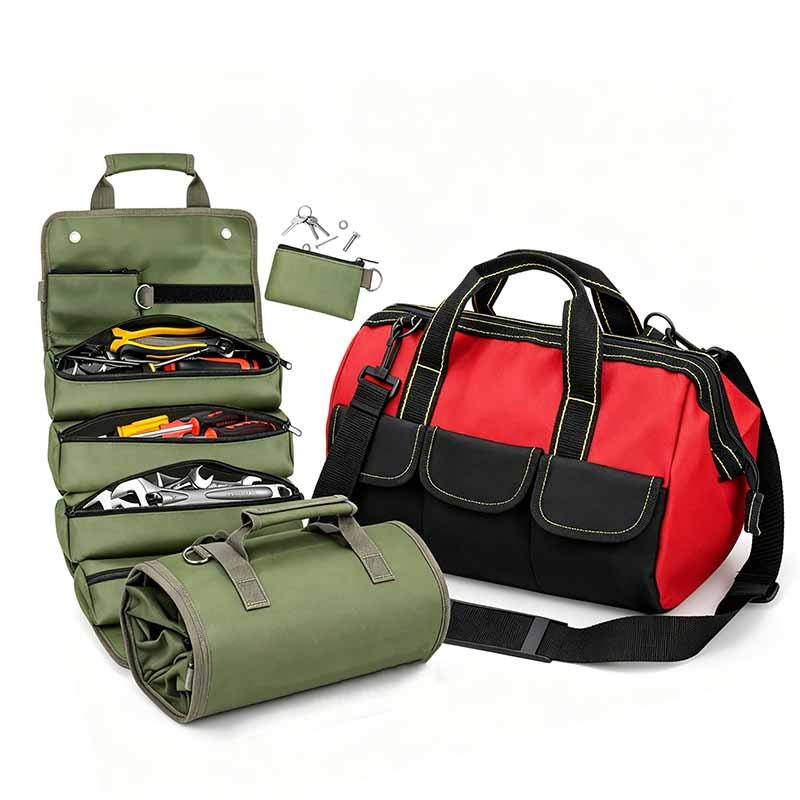
US Tool Brand
A US tool brand needed a 3-SKU work bag range: a 16-inch tool bag, a roll-up organizer, and a small zipper pouch. The first order included 1,200 pcs across three styles. Szoneier used 900D polyester, reinforced base panels, 38 mm webbing handles, rubber patches, and barcode polybags. Sample work took 12 days, bulk production took 32 days, and QC focused on handle anchors, pocket stitching, zipper movement, and carton labels.
European Service Kit
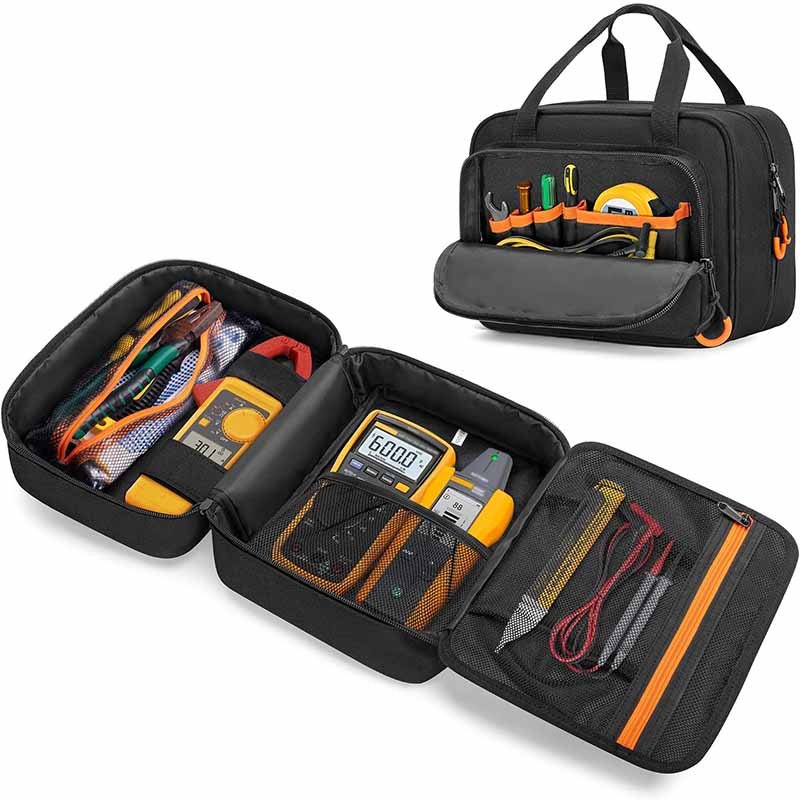
A European field service company needed 800 pcs of equipment kit bags for technicians carrying meters, cables, gloves, and manuals. Szoneier developed padded dividers, numbered mesh pockets, document sleeves, color-coded trim, and a shoulder strap system. The main risk was layout confusion across similar accessories, so Szoneier created a packing reference and SKU record. Bulk goods shipped by sea after final inspection and carton photo review.
Australian Work Gear
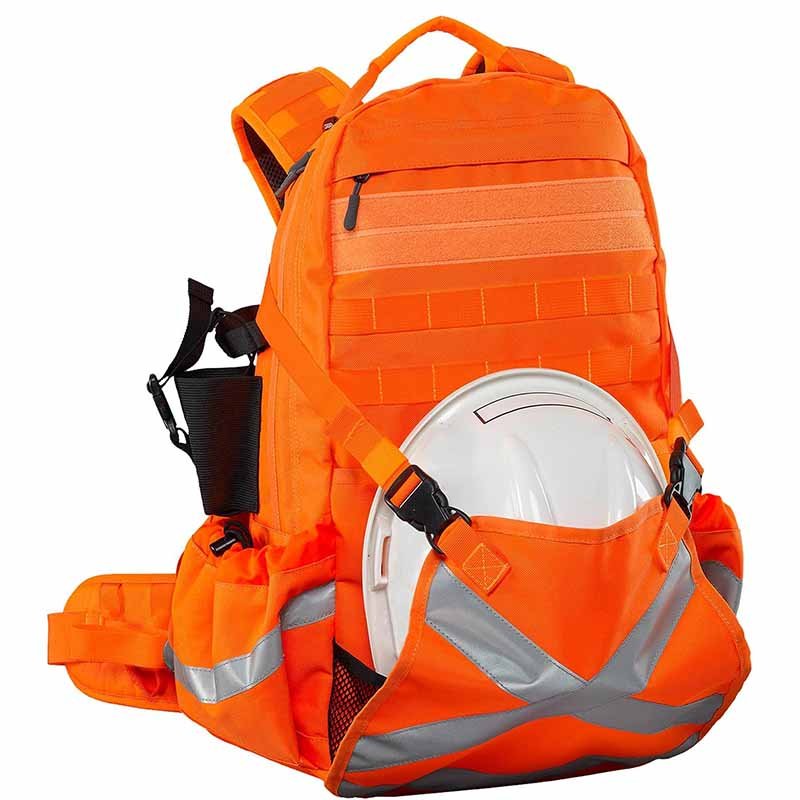
An Australian outdoor work gear distributor requested 1,500 pcs of splash-resistant utility bags for vehicle storage and field supplies. Szoneier selected coated Oxford fabric, easy-clean lining, large zipper pulls, reinforced grab handles, and reflective labels. Sample development took 10 days, followed by one pocket adjustment before approval. Bulk production took 35 days. QC checked dimensions, binding edges, zipper ends, label position, and packed carton weight.
Frequently Asked Questions About Industrial Bag Line Development
It includes product family planning, material selection, structure design, pattern work, sample development, logo method, reinforced sewing, component sourcing, packaging files, QC standards, production planning, delivery coordination, and repeat order documentation. A line may include tool bags, utility pouches, equipment cases, medical bags, waterproof storage bags, and accessories under one shared brand system.
Yes. Szoneier can review physical samples, photos, sketches, marked-up images, tech packs, equipment dimensions, and field-use notes. Clear information about size, contents, loaded weight, preferred material, logo, quantity, packaging, and destination helps create a more accurate sample plan and quotation.
MOQ starts from 200 pcs for selected standard structures using available materials and regular logo methods. Complex industrial bags, custom hardware, molded EVA, special coated fabrics, private accessories, custom packaging, or multi-SKU development may require higher quantities. Szoneier confirms MOQ after reviewing structure, materials, color count, and production requirements.
Standard bag samples usually take 5-7 days after details are confirmed. Complex industrial bags with padding, many compartments, special hardware, waterproof structure, or EVA elements usually take 7-15 days. Timing depends on material availability, logo method, pattern complexity, and revision scope.
Yes. Szoneier can develop a coordinated line with main bags, pouches, equipment cases, accessory sleeves, straps, and packaging variants. Each SKU should have its own size, material, structure, logo file, packaging note, carton data, and QC standard while sharing one overall brand direction.
Common choices include 600D polyester, 900D polyester, 1680D polyester, nylon Oxford, canvas, coated Oxford, PE board, EVA panels, and reinforced webbing. Final selection depends on loaded weight, abrasion level, brand positioning, target cost, water exposure, and required pocket structure.
Yes. Szoneier can add bartacks, box-X stitching, reinforcement patches, double fabric layers, stronger webbing, binding, bottom panels, PE board, rubber feet, and zipper end tabs. Reinforcement plans should be reviewed during sampling with expected loaded weight and actual use method.
Yes. Szoneier can support woven labels, rubber patches, embroidery, printing, hangtags, instruction cards, barcode labels, polybags, FNSKU labels, carton marks, master cartons, and set packing. Packaging files should be confirmed before bulk production, especially for multi-SKU and warehouse-ready programs.
Szoneier uses approved samples, locked BOM records, pattern files, material inspection, pre-production samples, in-line checks, final inspection, packaging checks, and shipment documentation. For repeat orders, Szoneier can archive pattern, material, logo, packaging, carton, QC, and revision files.
Please send product type, reference photos, sample details, target size, material preference, expected contents, loaded weight, logo file, quantity, packaging needs, destination country, preferred delivery method, and target timeline. For equipment bags, include device dimensions and accessory list.
Start Your Industrial Bag Line Project
Szoneier can review your industrial bag concept, current sample, tool layout, equipment dimensions, material request, and target quantity before preparing a development route. Send clear project files, and Nancy will help organize the RFQ details for sample evaluation, cost review, structure planning, packaging discussion, and production feasibility. For a faster review, please include:
- Product type and target use scenario.
- Reference photos, sketch, sample photos, or tech pack.
- Target size, capacity, and loaded weight.
- Preferred materials, colors, logo method, and packaging.
- Expected quantity per SKU and planned delivery country.
- Channel requirements such as retail barcode, carton mark, FNSKU, DDP, or warehouse packing.
- Any stress points needing reinforcement, padding, waterproofing, or special structure.