Skip to content

A heavy-duty tote bag can look “strong” at first glance—thick fabric, wide handles, neat stitching—yet still turn into a droopy U-shape after a few real-world uses. That sagging isn’t just an appearance problem. It affects how the bag carries, how comfortable it feels on the shoulder, how the logo shows on the front panel, and how long customers keep it before they complain or replace it.
Preventing sagging is basically load engineering. When the bag carries weight, the fabric wants to stretch, the bottom wants to bow, and the handle seams want to creep upward. If any one area is under-built, the whole bag loses shape—even if the material “feels” thick.
To prevent sagging in heavy-duty tote bags, you need a stronger fabric structure (higher GSM or higher denier), a reinforced bottom (panel/insert + correct seam build), and handle attachment that spreads load (box-X + bar-tacks + deeper anchoring). When these are designed together, the bag keeps a flatter base, straighter sidewalls, and better shape after repeated heavy loads.
A quick story you’ll recognize: a customer loads a tote with a laptop, chargers, water bottle, and a few books. It holds… until month two. The bottom permanently curves, and now the bag looks “cheap” even though it didn’t rip. That’s the pain we’re solving in this guide.
What Causes Sagging in Heavy-Duty Tote Bags?
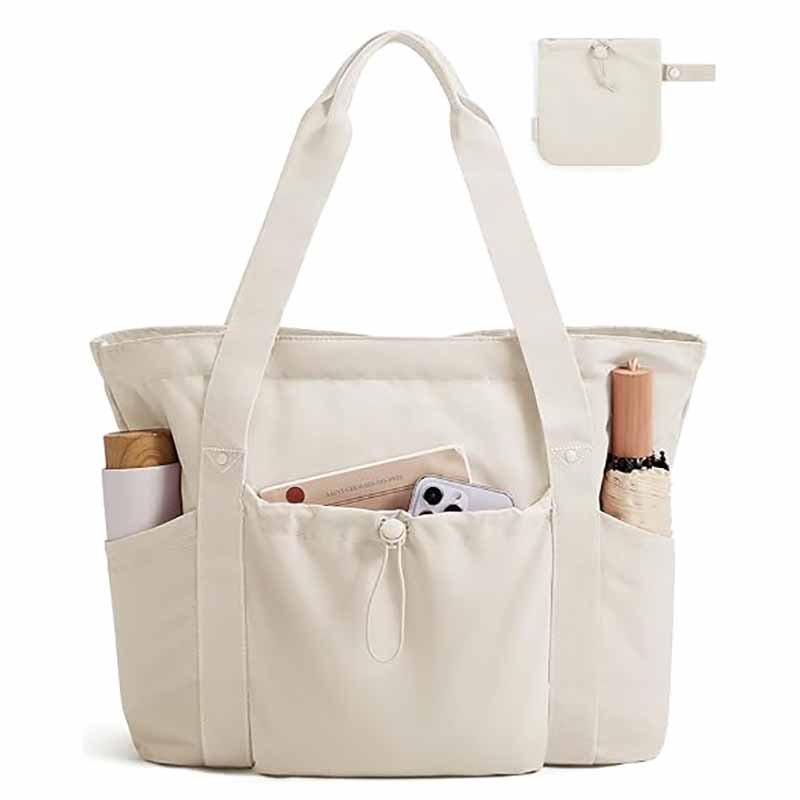
Sagging in heavy-duty tote bags is not random. It happens when the bag’s structural strength does not match the real weight it carries over time. Most sagging problems come from a combination of fabric stretch, weak bottom structure, seam elongation, and poor load distribution.
In real usage, customers rarely carry “light” loads. Grocery totes often hold 10–18 kg. Tool totes can exceed 20 kg. If the bag is only engineered for 8–12 kg, sagging will appear quickly — even if nothing tears.
Below are the core causes explained in practical terms.
1. Fabric Stretch Under Continuous Load
Fabric does not need to rip to fail. It only needs to stretch.
When a tote carries weight, the bottom panel experiences downward tension. If the fabric fibers elongate permanently, the bag develops a curved bottom shape.
Key factors that increase stretch:
- Low GSM (under 280 GSM for canvas)
- Loose weave density
- Soft cotton fibers without reinforcement
- Low denier synthetic materials
Fabric Stretch Comparison Under 15 kg Load
| Fabric Type | Stretch Risk After 50 Uses | Visible Sag Likelihood |
|---|---|---|
| 220 GSM Cotton | High | Very Likely |
| 300 GSM Canvas | Moderate | Possible |
| 450 GSM Canvas | Low | Low |
| 600D Polyester | Low | Low |
| 1680D Polyester | Very Low | Very Rare |
Light fabrics may look thick but lack internal stiffness. Once fibers stretch, they do not fully recover. The sag becomes permanent.
2. Weak Bottom Construction
The bottom panel is the most stressed part of any heavy-duty tote bag.
When weight sits inside the bag, gravity pulls straight down. If the base has no reinforcement, the fabric bends inward like a hammock.
Common bottom weaknesses:
- Single-layer fabric
- No internal insert
- Thin seam allowance
- No corner reinforcement
Bottom Structure Impact on Sagging
| Bottom Build Type | Shape Retention After 20 kg Test |
|---|---|
| Single Fabric Layer | Curves Immediately |
| Double Fabric | Slight Curve |
| 2mm PP Insert | Stays Mostly Flat |
| HDPE Plate | Remains Flat |
Without reinforcement, even high-quality fabric will bow under heavy loads.
3. Seam Elongation and Thread Creep
Sagging often starts at the seams — not the fabric center.
When stitching is too light or seam allowance is too narrow, thread tension slowly relaxes. The stitch holes widen, and the seam begins to stretch.
This process is called seam creep.
Signs of seam creep:
- Bottom corners pull upward
- Handle root fabric wrinkles
- Stitch spacing looks uneven after use
Stitch Construction Strength Comparison
| Stitch Type | Load Resistance |
|---|---|
| Single Stitch | Low |
| Double Stitch | Medium |
| Box Stitch | High |
| Box-X + Bar-Tack | Very High |
Heavy-duty tote bags carrying over 15 kg should use reinforced stitching at all stress points.
4. Poor Handle Load Distribution
Handles are the bridge between weight and structure.
If handles are sewn only into the top seam and not anchored deep into the body panel, all force concentrates in one narrow line. That concentration causes the upper panel to pull inward, contributing to bottom sag.
Better load distribution methods:
- Extend handle stitching 5–8 cm down panel
- Use box-X stitch pattern
- Add bar-tack reinforcement
- Use wider webbing (3–4 cm)
Handle Anchor Depth vs Sag Risk
| Anchor Depth | Sag Risk |
|---|---|
| 2 cm | High |
| 4 cm | Moderate |
| 6–8 cm | Low |
The deeper the anchor, the wider the force spread.
5. Overloading Beyond Design Capacity
Many tote bags are marketed as “heavy-duty” but are engineered for mid-level loads.
If a tote is built for 10 kg but regularly carries 16 kg, sagging is inevitable.
Real-World Load Behavior
- Grocery shopping: 12–18 kg
- Laptop + books: 8–14 kg
- Tools: 15–25 kg
- Travel items: 10–20 kg
Engineering rule:
Design for at least 30–50% above expected average load.
If expected use is 15 kg, structure should support 20–22 kg safely.
6. Large Bag Size Without Structural Support
Bigger bags sag more easily.
A 45 cm wide tote distributes weight differently than a 30 cm bag. The larger the bottom span, the greater the bending force.
Wide-format tote bags require:
- Thicker base inserts
- Stronger fabric
- Reinforced corner stitching
Without structural upgrades, large totes sag faster than smaller ones — even with identical fabric.
7. Long-Term Fatigue and Repeated Stress
Sagging is cumulative.
Each load cycle stretches fibers slightly. After 30–50 cycles, the deformation becomes visible.
Factors accelerating fatigue:
- Moisture exposure
- Heat during washing
- UV exposure (weakens fibers)
- Rough handling
Durable heavy-duty tote bags are designed not just for first use, but for 100+ load cycles.
Which Materials Prevent Sagging in Heavy-Duty Tote Bags?
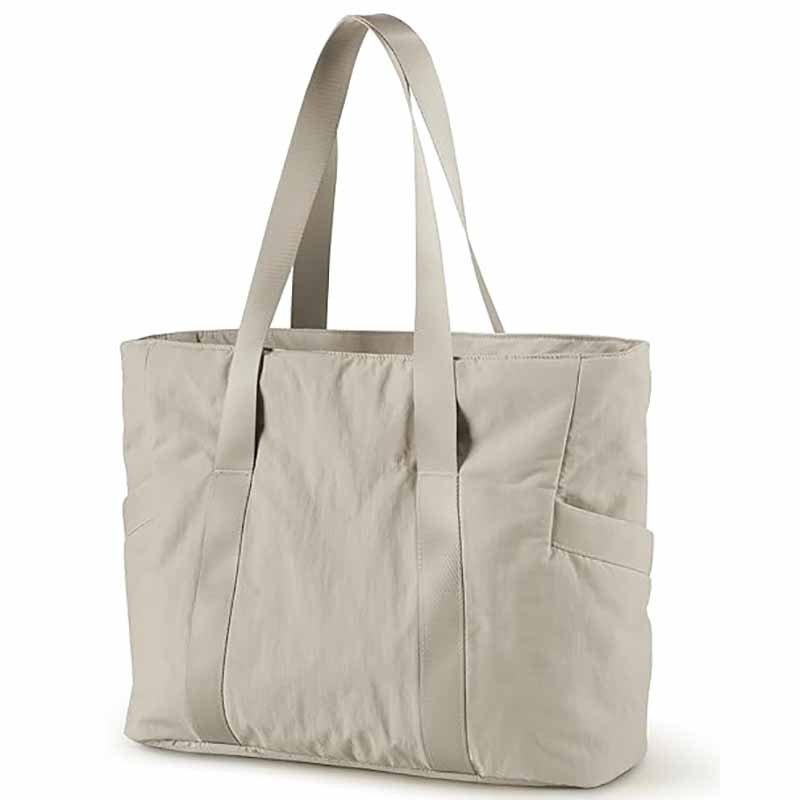
Sagging resistance starts with material structure. The right fabric doesn’t just “feel thick” — it resists elongation, bending, and fiber displacement under load. If the fabric lacks internal rigidity, no stitching upgrade will fully compensate.
When choosing materials for heavy-duty tote bags, you need to evaluate three performance factors:
- Tensile strength (resistance to pulling force)
- Bending stiffness (resistance to downward bowing)
- Shape memory (ability to recover after unloading)
Does Canvas Prevent Sagging?
Canvas can prevent sagging — but only at the correct weight and weave density.
Light canvas (under 280 GSM) is still prone to bottom curvature when carrying 10kg+. However, heavy canvas (400–600 GSM) significantly improves shape retention.
Canvas performance breakdown
| Canvas Weight | Real Performance Under Load | Sag Resistance |
|---|---|---|
| 220–260 GSM | Everyday shopping use | Moderate sag after 8–10kg |
| 280–360 GSM | Mid-duty tote | Holds shape up to 12kg |
| 400–600 GSM | Heavy-duty tote | Strong resistance up to 18kg |
However, canvas alone is not enough. Even 500 GSM canvas will sag if:
- The base has no reinforcement panel
- The seam construction is weak
- Handles are poorly anchored
Canvas performs best when paired with:
- Structured bottom insert
- Box-X handle stitching
- Double or triple seam construction
Is Nylon Better for Heavy-Duty Tote Bags?
Nylon generally offers higher tensile strength than cotton canvas at similar thickness levels.
Advantages of nylon:
- Higher tear resistance
- Better load distribution
- More consistent fiber structure
- Lower moisture absorption
But nylon has one challenge: flexibility. Uncoated nylon can still bow if the base is unsupported.
This is why high-performance heavy-duty totes often use:
- 900D–1680D ballistic nylon
- TPU or PVC backing for added stiffness
- Laminated layers for structural memory
Canvas vs Nylon for Sag Prevention
| Feature | Heavy Canvas | 900D Nylon | 1680D Ballistic Nylon |
|---|---|---|---|
| Tensile Strength | Good | Very Good | Excellent |
| Bottom Bow Resistance | Moderate | Moderate | High |
| Abrasion Resistance | Moderate | High | Very High |
| Structure Without Insert | Medium | Medium | Better |
| Cost Level | Medium | Medium | High |
For industrial tool totes or heavy grocery bags, 1680D nylon with reinforced base panels performs extremely well against sagging.
Do Laminated or Coated Fabrics Reduce Sagging?
Yes — significantly.
When fabric is backed with PVC, TPU, or PE coatings, stiffness increases. This reduces downward bending and helps maintain base flatness.
Benefits of coated fabrics:
- Increased structural rigidity
- Improved waterproofing
- Reduced fiber shift
- Higher resistance to permanent stretch
Typical stiffness increase after coating: 20–40% improvement in shape retention
However, coatings also:
- Increase weight
- Increase cost
- Reduce breathability
For heavy-duty tote bags used for tools, groceries, or outdoor use, coated fabrics are often worth the upgrade.
How to Design Heavy-Duty Tote Bags to Stop Sagging?
Material alone cannot prevent sagging. Structure design is equally important. The base and handle system must distribute weight across a wider surface area.
The key principle: Load must travel through reinforced pathways — not concentrate at one seam.
Should You Add a Reinforced Base?
Yes. A reinforced base is one of the most effective anti-sag solutions.
Common base reinforcement methods:
- Sewn-in base panel (double fabric layer)
- Removable PP board insert
- EVA foam insert
- HDPE structural plate
- Bottom cross webbing support
Base reinforcement comparison
| Base Type | Sag Prevention Level | Weight Added | Best For |
|---|---|---|---|
| Double fabric layer | Moderate | Low | Mid-duty totes |
| PP board insert | High | Medium | Grocery / retail totes |
| EVA foam insert | High + soft support | Medium | Fashion + structure |
| HDPE plate | Very High | Higher | Tool / industrial totes |
| Cross webbing | Moderate | Low | Lightweight reinforcement |
For heavy-duty totes carrying over 15kg, internal base inserts dramatically reduce bottom bowing.
A well-installed 2–3mm PP board can increase shape retention by 35–50%.
Do Double Stitching and Bar-Tacks Help?
Yes — but placement matters.
Stitch reinforcement should focus on:
- Handle attachment points
- Bottom corners
- Side-to-base junction
Handle attachment reinforcement types
| Stitch Type | Strength Level | Application |
|---|---|---|
| Straight stitch | Basic | Light-duty |
| Double stitch | Stronger | Mid-duty |
| Box stitch | Strong | Heavy-duty |
| Box-X stitch | Very Strong | Industrial |
| Bar-tack | Reinforcement lock | Stress zones |
A box-X with bar-tacks spreads force across a larger fabric area, reducing seam stretch.
Proper reinforcement can increase handle load tolerance by 30–60%.
How Do Structured Panels Prevent Sagging?
Structured side panels reduce the “U-shape collapse” effect.
Without panel structure:
- Side walls fold inward
- Bottom seam pulls upward
- Load concentrates at center
With panel structure:
- Load spreads across entire base
- Side walls remain upright
- Fabric stress reduces
Options include:
- Foam laminated lining
- Internal PE board
- Interfacing layers
- Webbing frame support
Adding structure to both bottom and lower sidewalls is especially important for large-format tote bags (40cm+ width).
Do Handles Affect Sagging in Heavy-Duty Tote Bags?
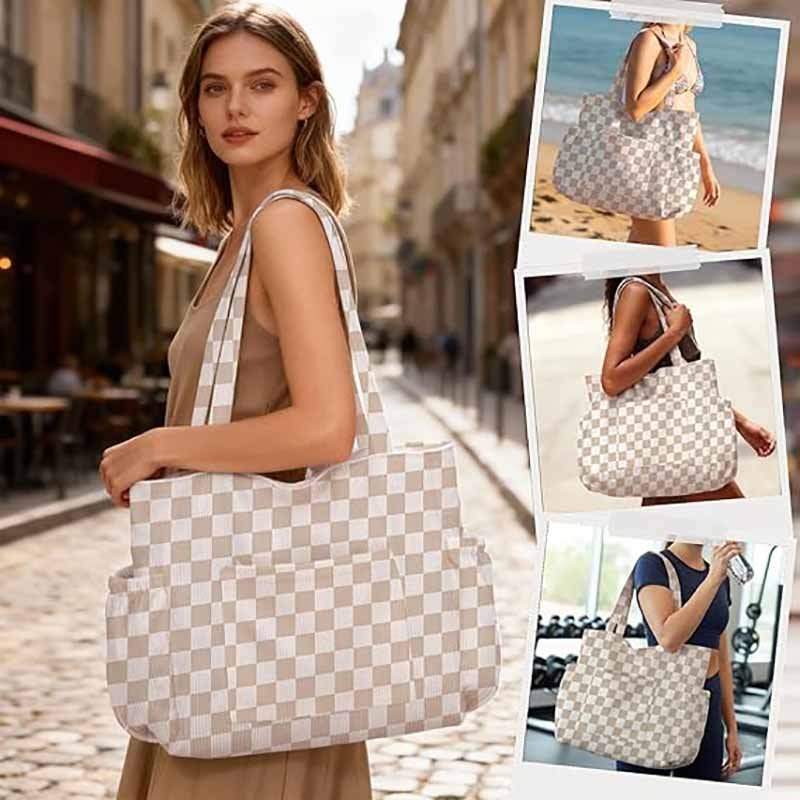
Many people focus on fabric and base, but handle engineering plays a huge role.
If handles are short-anchored or stitched only at the top seam, weight pulls downward and inward — causing base deformation.
Should Handles Be Reinforced?
Absolutely.
Best practices:
- Extend handle stitching 5–8cm down the body panel
- Use box-X stitching pattern
- Add bar-tack reinforcement at stress points
- Use thicker webbing (2.5–3mm thickness)
Webbing strength example:
| Webbing Width | Breaking Strength |
|---|---|
| 2.5 cm | ~600–900 kg |
| 3.8 cm | ~900–1500 kg |
While breaking strength is far above usage weight, seam strength determines real performance.
Does Handle Length Impact Sagging?
Yes.
Longer handles increase leverage force on seams.
When handle drop exceeds 28–30cm, downward torque increases, especially under heavy loads.
Engineering solution:
- Reinforce deeper into panel
- Increase stitching width
- Add internal support strip behind handle root
Are Cross-Stitch Anchors Necessary?
For heavy-duty totes above 15kg target load — yes.
Cross-stitch anchors distribute tension diagonally, reducing concentrated pull at one point.
Without cross anchoring:
- Fabric stress localizes
- Seam holes widen
- Sagging begins early
With proper anchor stitching:
- Load spreads evenly
- Bottom remains flatter
- Shape retention improves over time
How to Maintain Heavy-Duty Tote Bags Without Sagging?
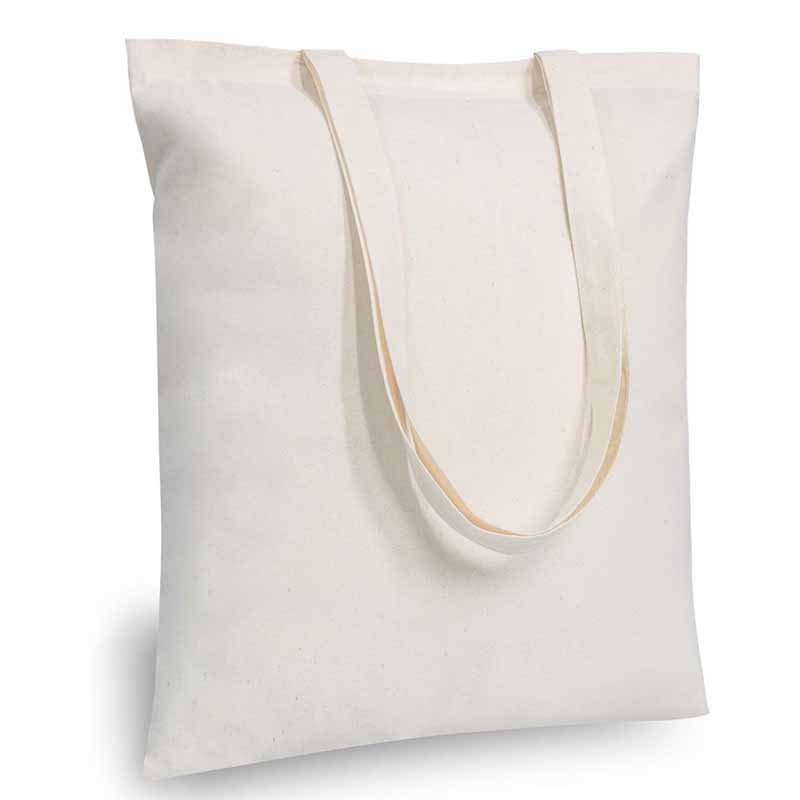
Even a well-engineered heavy-duty tote bag can lose shape if it is poorly maintained. Fabric memory, seam tension, and base structure all respond to how the bag is cleaned, stored, and repeatedly loaded.
Good maintenance does not replace strong design — but it significantly extends structural life.
Does Washing Cause Sagging?
Yes — improper washing accelerates sagging.
Heavy-duty tote bags made from cotton canvas or blended fabrics are especially vulnerable when exposed to:
- Hot water (fiber expansion)
- Aggressive spin cycles
- High-heat drying
- Chemical detergents that weaken fiber bonding
Repeated hot wash cycles reduce fabric stiffness by 10–20% over time. This affects the bottom panel first.
Recommended care instructions for heavy-duty totes:
| Fabric Type | Cleaning Recommendation | Sagging Risk After 20 Washes |
|---|---|---|
| Cotton Canvas | Cold wash, air dry | Moderate |
| Polyester | Gentle wash, low heat | Low |
| Nylon | Spot clean preferred | Very Low |
| Coated Fabric | Wipe clean only | Minimal |
For reinforced tote bags with PP or HDPE base inserts, machine washing can deform the insert if not removable. Designing removable base panels protects long-term structure.
How Should Heavy-Duty Tote Bags Be Stored?
Improper storage is a silent contributor to sagging.
If bags are:
- Hung on hooks with weight inside
- Compressed under heavy stacking
- Folded sharply for long periods
The base and side panels slowly deform.
Best storage practice:
- Empty bag before storing
- Store upright with bottom flat
- Avoid long-term hanging under load
- Do not fold if base insert is rigid
In warehouse or retail distribution, stacking height also matters. Excess vertical pressure during shipment can compress bottom structure.
For bulk buyers, carton packing method directly affects shape retention.
Can Inserts Prevent Sagging in Heavy-Duty Tote Bags?
Yes — inserts are one of the most effective anti-sag tools.
There are two main categories:
- Permanent sewn-in inserts
- Removable structural inserts
Insert material comparison
| Insert Type | Thickness Range | Sag Prevention | Weight Impact | Cost Impact |
|---|---|---|---|---|
| PP Board | 1.5–3 mm | High | Medium | Low |
| HDPE Plate | 2–4 mm | Very High | Higher | Medium |
| EVA Foam | 2–6 mm | Moderate + Cushion | Medium | Medium |
| Fiberboard | 1–3 mm | Moderate | Low | Low |
| Double Fabric + Interfacing | N/A | Moderate | Low | Low |
For heavy-duty grocery totes carrying 15–20kg, a 2mm PP board significantly reduces bottom bowing.
For tool or industrial totes targeting 25kg+, HDPE plates provide superior rigidity.
How Is Sag Resistance Tested in Heavy-Duty Tote Bags?
Preventing sagging should not rely on guesswork. Professional manufacturers conduct structured load testing before mass production.
Static Load Test
This test measures bottom deformation under constant weight.
Procedure example:
- Load bag with 15kg
- Hang for 2–5 minutes
- Measure bottom curve depth (mm)
- Compare before/after unloading
Acceptable deformation guideline:
| Target Load | Max Bottom Curve Allowed |
|---|---|
| 10 kg | < 10 mm |
| 15 kg | < 18 mm |
| 20 kg | < 25 mm |
Higher curve depth indicates insufficient base reinforcement.
Dynamic Load Test
Simulates real walking movement.
Procedure:
- Load bag to 120% of rated weight
- Lift and drop 5–10cm repeatedly (20–50 cycles)
- Inspect seam creep and base distortion
Dynamic stress reveals weaknesses not visible in static testing.
Handle Stress Distribution Test
Focuses on handle root reinforcement.
Key checks:
- Thread elongation
- Seam hole widening
- Fabric tearing at anchor points
Heavy-duty tote bags should show:
- No seam opening
- No visible stretching at handle roots
- No distortion of panel shape
Factories serious about durability conduct these tests during sampling stage.
How to Calculate Reinforcement Level for Heavy-Duty Tote Bags?
Instead of guessing, reinforcement should be matched to expected load.
A simple calculation logic:
Step 1: Estimate real customer load
Example: Grocery tote → 12kg average
Step 2: Add safety margin (30–50%)
12kg × 1.4 = 16.8kg target structural capacity
Step 3: Choose reinforcement tier
| Target Capacity | Suggested Construction |
|---|---|
| 8–10 kg | 300–350 GSM + double stitch |
| 12–15 kg | 400 GSM + reinforced base |
| 15–20 kg | 600D–900D + PP insert + box-X |
| 20–25 kg | 1680D + HDPE base + triple stitch |
This approach prevents under-engineering.
How Does Anti-Sag Design Affect Cost?
Reinforcement increases cost — but usually less than brands expect.
Below is a simplified cost impact overview:
| Upgrade | Approx Cost Impact (FOB range context) | Sag Reduction Impact |
|---|---|---|
| Increase GSM fabric | +5–10% | Moderate |
| Add PP base insert | +3–6% | High |
| Upgrade stitching | +2–4% | Moderate |
| Add HDPE plate | +6–12% | Very High |
| Add coated backing | +8–15% | High |
In many projects, adding a base insert costs far less than upgrading the entire fabric type.
Strategic reinforcement can optimize performance without major budget increase.
Final Thoughts: Preventing Sagging Is Engineering, Not Decoration
Sagging in heavy-duty tote bags is predictable. It happens when:
- Fabric stiffness is insufficient
- Bottom structure is weak
- Handles are poorly anchored
- Reinforcement does not match real load
When designed correctly, heavy-duty tote bags:
- Maintain flatter bases
- Show less panel distortion
- Feel stable under weight
- Last significantly longer
- Protect brand image
Work With Szoneier to Build Sag-Resistant Heavy-Duty Tote Bags
At Szoneier, we don’t just manufacture tote bags — we engineer load-bearing structure based on your real usage scenario.
With over 18 years of bag development experience.
If your brand is developing:
- Heavy-duty grocery totes
- Industrial tool bags
- Travel or gym totes
- Promotional totes that must last
- Private label reinforced tote lines
We can help you calculate the right reinforcement structure before production.
Avoid sagging complaints. Avoid redesign costs. Avoid weak samples.
Send us your design idea, target load weight, and expected usage scenario.
Let’s build a heavy-duty tote bag that keeps its shape — even under real-world stress.
Contact Szoneier today to request a custom quotation and reinforced sample development.