A travel bag can look beautiful in photos and still fail the moment someone starts packing. That is the real problem many brands overlook. Customers do not judge a travel bag only by color, fabric, or logo placement. They judge it when they try to fit in three days of clothes, a pair of shoes, chargers, toiletries, and small personal items without turning the inside into a mess. A bag that feels “big” but cannot be packed neatly usually leads to disappointment, returns, and weak repeat orders.
Efficient packing is mostly a structure problem. The outer dimensions matter, but the real difference comes from shape, opening style, and how the inside is organized. Two travel bags with the same listed capacity can perform very differently in real use. One may feel tight, awkward, and hard to access. The other may feel roomy, clean, and easy to live with.
A travel bag packs efficiently when its shape matches the way people actually pack, its opening allows fast loading and easy access, and its inside space is not broken up by unnecessary panels or bulky pockets. The best designs usually use a rectangular body, a wide opening, and clear compartment logic so travelers can fit more, find things faster, and keep the bag stable during movement.
For brands developing custom travel bags, this is where product value is really built. A better silhouette and a smarter opening can improve usable space, make the bag look more premium, and give customers a much better experience without dramatically increasing material cost. That is why experienced manufacturers do not begin with decoration. They begin with packing logic. And once you start looking at travel bags that way, the design process becomes much clearer.
What Makes Travel Bags Pack Efficiently?
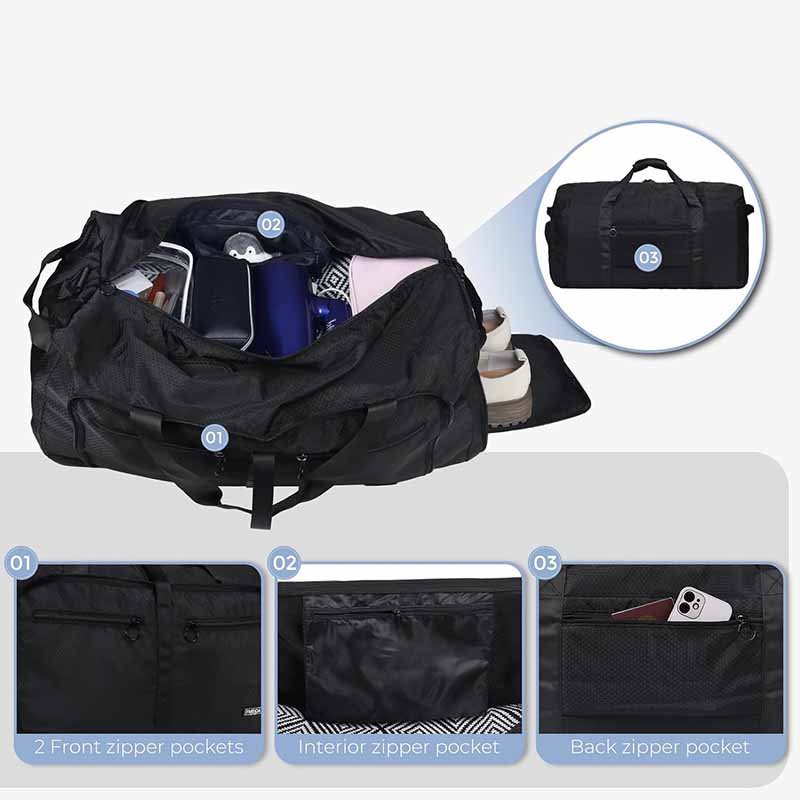
A travel bag packs efficiently when the listed capacity turns into real usable space. That happens when the bag shape is easy to fill, the opening is wide enough to load and unload smoothly, and the inside layout supports how people actually travel. Good travel bag design is not about making the bag bigger. It is about making every liter more usable.
What Does “Pack Efficiently” Mean in Travel Bags?
Packing efficiency means how much of the bag’s internal volume can actually be used in a practical way. This sounds simple, but it is where many travel bag designs fail.
A bag may be advertised as 35L or 40L, but that number alone does not tell the full story. If the bag has curved side walls, a narrow zipper opening, oversized internal pockets, or a collapsing body, then a good portion of that volume becomes difficult to use. In real travel situations, people do not pack loose cotton balls. They pack folded shirts, jackets, undergarments, shoes, cables, skincare items, passports, chargers, tablets, and small daily essentials. These are mostly rectangular, layered, or grouped items. If the bag cannot receive those items in a clean and stable way, the actual usable space drops fast.
A practical way to look at travel bag performance is to compare nominal volume and usable volume.
| Bag Style | Listed Capacity | Estimated Usable Capacity | Main Reason for Space Loss |
|---|---|---|---|
| Soft round duffle | 40L | 28L–31L | Curved walls, unstable stacking |
| Semi-structured weekender | 40L | 32L–35L | Better shape, but partial collapse |
| Box-shape travel bag | 40L | 36L–38L | Flat walls, better packing layers |
| Clamshell travel backpack | 40L | 35L–37L | Wide access, strong layout logic |
For customers, efficient packing usually means five things:
- clothes can be stacked without fighting the shape of the bag
- shoes can sit in a defined zone without crushing garments
- small items do not disappear into dead corners
- the bag stays balanced when partially filled
- items can be reached without unpacking half the load
This is why experienced product developers focus on usable structure first. A bag that holds more in daily use feels more premium, even if the listed liter count is the same as a competitor’s product.
Which Travel Bags Waste Packing Space?
The biggest space loss usually does not come from bag size. It comes from poor structural choices. Many travel bags waste space because they are designed to look sporty or stylish first, while packing performance becomes secondary.
The most common space-wasting design is the rounded duffle. A cylindrical body looks relaxed and casual, but when users try to pack folded clothing or packing cubes, the side curvature creates unused air gaps. Those gaps may seem minor, but once they appear on both sides and along the upper arc of the bag, the total lost space becomes obvious.
Another common issue is a narrow top entry. If the zipper path opens only the center of the top panel, users cannot see the full interior. This forces them to push items in from above rather than place them neatly. The result is poor layer control, wasted corner space, and more wrinkling.
Oversized built-in pockets also reduce main compartment efficiency. Customers often like the idea of “more pockets,” but too many thick internal pockets can eat into the main storage zone. This is especially problematic in travel bags below 35L, where every inch matters.
The table below shows how different design problems usually affect real packing.
| Design Problem | Effect on Packing | Customer Complaint It Often Creates |
|---|---|---|
| Round side walls | Empty edge gaps | “It looks big, but doesn’t fit much” |
| Narrow top opening | Hard to organize layers | “I have to dig for everything” |
| Too many sewn-in pockets | Main space feels cramped | “The inside is smaller than expected” |
| Weak body support | Bag slumps when half full | “It loses shape and feels messy” |
| Raised internal seams | Uneven stacking surface | “Packing cubes don’t sit flat” |
From a product development angle, these are not small details. They directly affect customer satisfaction, return risk, and perceived quality. A travel bag that wastes space often gets described as inconvenient, even when the fabric, stitching, and branding are all good.
How Do Travelers Pack Travel Bags Today?
Travelers pack differently now than they did ten or fifteen years ago. Modern packing is more modular, more compressed, and more organized. That change should directly influence how travel bags are designed.
Today, many travelers use:
- packing cubes
- shoe bags
- wet pouches
- laptop sleeves
- cable organizers
- slim toiletry kits
- compression bags
- passport and document pouches
This means the interior of a travel bag should support block-based packing, not random stuffing. A good travel bag now behaves more like a portable storage system than a simple sack with handles.
For example, in a 35L to 40L travel bag, a common real-use packing breakdown may look like this:
| Packing Category | Approximate Space Used |
|---|---|
| 3–5 days clothing | 14L–18L |
| Shoes | 4L–7L |
| Toiletries | 2L–4L |
| Electronics and chargers | 3L–5L |
| Outerwear or spare layer | 4L–6L |
| Documents and small items | 1L–2L |
That layout tells designers something very important: the bag must allow stacking, separation, and fast access. If the base is too soft, shoes sink into clothing. If the opening is too narrow, the clothing cubes cannot be placed flat. If the electronics pocket intrudes too deeply into the main body, the center load becomes distorted.
Customers also care more about access speed now. A bag may hold enough, but if they need to remove half their clothing to reach a charger or passport pouch, the design is no longer working in a real travel setting. This is why modern travel bag design has shifted toward clearer compartment logic and more practical openings.
Why Do Shape and Openings Affect Travel Bags?
Shape decides how the space is formed. Openings decide how easily that space can be used. Together, they control the entire packing experience.
The shape of a travel bag determines whether the contents can sit flat, stack cleanly, and stay stable during carrying. A rectangular base supports folded garments, packing cubes, and laptop sleeves far better than a curved or tapered form. Even a small taper can make the top layer less stable, which leads to shifting during movement.
The opening affects how the traveler interacts with the interior. If the opening exposes only 35% to 45% of the top surface, then the user is packing through a narrow channel. This often leads to rushed packing, bad visibility, and poor item separation. By contrast, a clamshell or wide U-zip opening can expose 70% to 90% of the usable interior, allowing much cleaner arrangement.
Here is a practical comparison:
| Structure Feature | Packing Impact | Access Impact |
|---|---|---|
| Rectangular body | Strong stacking ability | Easy to use corners |
| Tapered body | Less top-layer stability | Lower usable upper volume |
| Narrow top zip | Harder to place large items | Slower item retrieval |
| Wide U-zip opening | Easier layered packing | Better visibility |
| Clamshell opening | Best for full layout access | Fast organization and repacking |
This is one reason why travelers often describe certain bags as “easy to pack” even before they talk about fabric or capacity. What they are really reacting to is the relationship between shape and access. In practical manufacturing work, adjusting those two variables often improves the user experience more than adding another pocket or changing to a more expensive fabric.
For brands building a travel bag line, this matters a lot. Customers remember how smoothly a bag works in real life. Shape and opening design are what make that experience feel simple instead of frustrating.
Which Shapes Help Travel Bags Pack Efficiently?
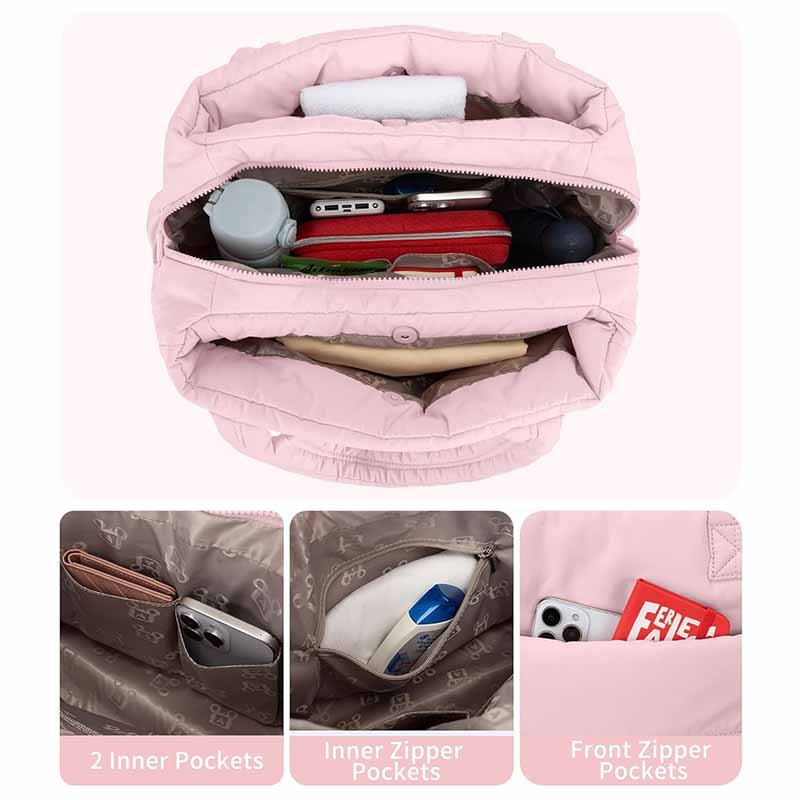
The most efficient travel bag shapes are usually rectangular, box-shaped, or semi-box structures with stable side walls and a defined base. These shapes reduce wasted space, support packing cubes and folded garments, and keep the bag balanced during movement. Round bags can work for casual use, but they usually lose efficiency when the goal is organized travel packing.
What Shape Works Best for Travel Bags?
The best shape for a travel bag is usually one that matches the shape of the items going inside it. Since most travel items are folded, stacked, or packed into smaller rectangular units, the bag itself performs best when its body follows that same logic.
That is why rectangular and box-shape travel bags consistently perform better in real packing tests. Clothes, toiletry kits, chargers, folders, and even shoe pouches all fit more naturally into a flat-base structure with straight side support. A user can build layers inside the bag instead of fighting the bag’s form.
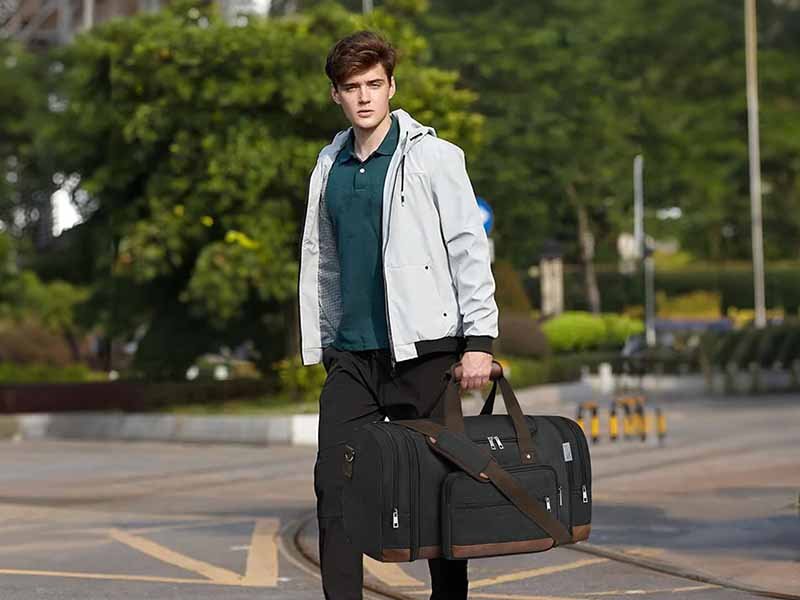
In manufacturing, this does not always mean a stiff suitcase-like body. A travel bag can still look soft, modern, and comfortable while using a box-informed silhouette. Many of the best travel bags on the market today use a semi-structured shape: clean edges, flat base, supported side walls, and slightly softened corners for a more relaxed appearance.
Below is a useful comparison of how shape affects practical travel use:
| Shape Type | Packing Performance | Best Use | Main Weakness |
|---|---|---|---|
| Box-shape | Excellent | Business travel, short trips, organized packing | Slightly more structured look |
| Semi-box weekender | Very good | General travel, weekend trips | Needs good pattern control |
| Tapered duffle | Fair | Light casual travel | Reduced top efficiency |
| Cylindrical duffle | Low to fair | Gym, sports, fast grab-and-go use | Dead space and shifting load |
For most custom travel bag projects, a box or semi-box silhouette is the safest choice when the goal is strong customer satisfaction and practical daily use.
How Do Box-Shape Travel Bags Pack Better?
Box-shape travel bags pack better because they create a stable internal geometry. That geometry matters more than many customers realize.
A flat rectangular base allows the first layer of packed items to sit evenly. Once that first layer is stable, the next layers become easier to build. Shoes can be placed heel-to-toe or sole-to-sole in one direction. Clothing cubes can sit above them without rocking. Toiletry pouches can slide into corners. Jackets or extra layers can cap the top load. Everything works more naturally.
The benefits are easy to understand in real-world terms:
- less time spent arranging and rearranging
- fewer wrinkles in folded clothing
- easier use of packing cubes
- less shifting during transport
- better visual order inside the bag
For a brand developing custom travel bags, box-shape designs also help with repeatability in production. Pattern pieces are easier to standardize, internal support materials are easier to place, and sample revisions are usually more predictable than with highly curved bag bodies.
A simple comparison makes the point clear:
| Packing Situation | Box-Shape Bag | Rounded Bag |
|---|---|---|
| Folded shirts | Stack neatly | Outer edges bend |
| Packing cubes | Sit flat | Leave edge gaps |
| Shoes | Easier to position | Roll and shift |
| Electronics pouch | Fits corners better | Less stable placement |
| Overall load balance | More controlled | More movement inside |
At Szoneier, this is one of the reasons why many travel bag developments begin from capacity mapping first. Before decoration, zipper style, or branding details are finalized, the structure is studied around how the target user will actually pack the bag.
Are Round Travel Bags Less Efficient?
In most travel scenarios, yes. Round travel bags are generally less efficient if the priority is organized, high-density packing. That does not mean they are bad products. It means they serve a different purpose.
Round or cylindrical bags are often excellent for gym gear, sportswear, or quick overnight use when the user is packing loose items. They are easy to carry, easy to throw in a car, and often visually appealing. But for structured travel packing, they usually lose space in several ways.
First, the curved side walls create empty areas when rectangular objects are packed inside. Second, items tend to roll or shift because the interior does not create clean boundaries. Third, the bag often looks full before it is actually efficiently loaded.
A realistic comparison looks like this:
| Bag Type | Estimated Space Efficiency | Packing Stability | Best Packing Method |
|---|---|---|---|
| Box-shape travel bag | 90%–95% | Strong | Layered and modular |
| Semi-structured duffle | 82%–88% | Moderate | Mixed packing |
| Round duffle | 70%–78% | Lower | Loose-fill packing |
This is why many newer travel bag products have moved toward hybrid shapes. They keep the casual visual language of a duffle, but the lower body becomes flatter, wider, and more controlled. That gives customers a softer-looking bag with better internal efficiency.
For brands, this hybrid approach is often smart. It meets the market’s visual preference for relaxed travel bags while still solving the customer’s biggest complaint: “Why can’t I fit as much as I expected?”
How Do Structured Travel Bags Improve Packing?
Structure is what allows a travel bag to hold its intended shape during real use. Without enough support, even a well-designed bag can lose efficiency once it is half-packed, under-packed, or unevenly loaded.
A structured travel bag does not have to be hard. In bag manufacturing, structure usually comes from carefully selected support materials placed in key zones. These may include:
- EVA foam panels
- PE foam reinforcement
- HDPE support sheets
- base boards
- padded wall construction
- binding reinforcement around opening lines
These materials help the bag keep its profile, especially around the base, side walls, and zipper entry. That makes a huge difference during packing.
When a bag collapses inward, the user immediately loses the ability to place items in layers. The interior becomes narrower than designed. Shoes push into clothing. Corners become awkward. The zipper line becomes harder to close. But when the structure holds, the bag stays open and usable.
Here is how support affects performance:
| Structural Element | Function | Customer Benefit |
|---|---|---|
| Reinforced base board | Stabilizes load | Easier bottom-layer packing |
| Padded side walls | Holds body shape | Less collapse during use |
| Foam around opening | Keeps access clean | Faster packing and unpacking |
| Internal frame sheet | Reduces distortion | Better shape retention |
In Szoneier travel bag development, structure planning is often one of the key stages between sketch approval and final sample refinement. A bag may look correct in a flat drawing, but until the support system is tested with actual loading, it is difficult to judge whether the bag will truly pack well. That is why good manufacturers do not only ask how the bag should look. They ask how the bag should behave when fully loaded, half loaded, and carried across real travel conditions.
Which Openings Make Travel Bags Easier to Pack?
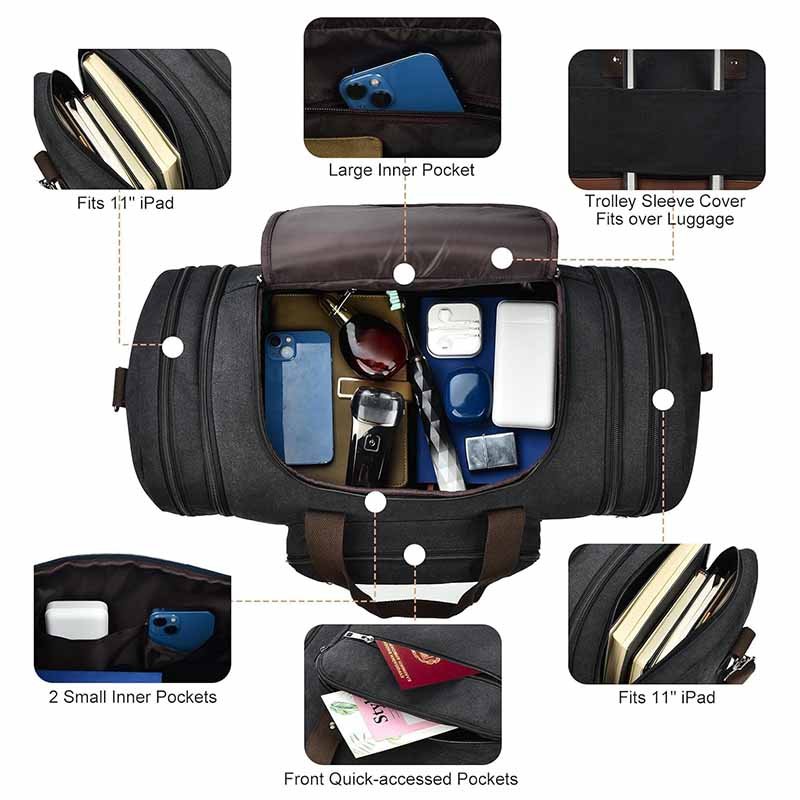
The opening of a travel bag determines how easily travelers can see, organize, and access the interior space. Even a well-shaped bag becomes difficult to use if the opening restricts visibility or limits how items can be placed inside. Wide openings, especially clamshell or U-shaped designs, allow travelers to pack items in layers, arrange clothing neatly, and reach belongings quickly without unpacking everything.
What Is a Clamshell Opening in Travel Bags?
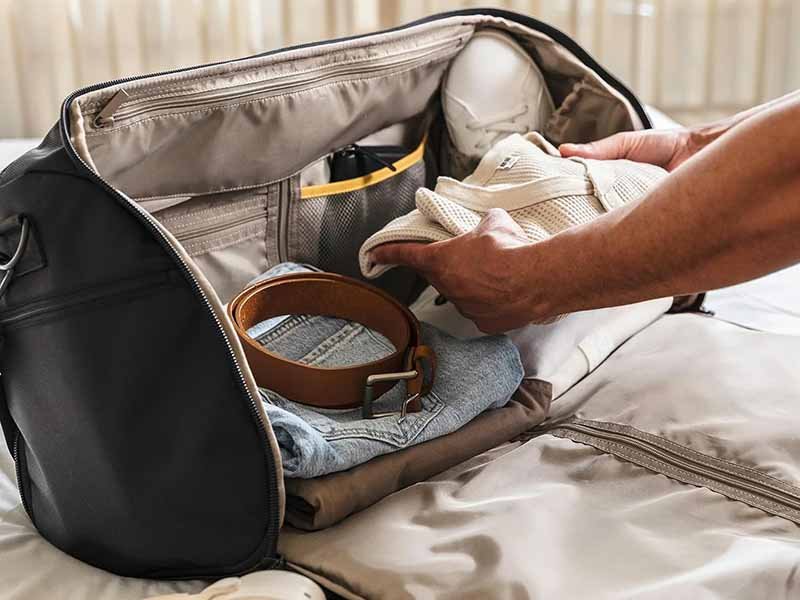
A clamshell opening is a design where the travel bag opens fully like a suitcase. The zipper usually runs along three sides of the bag, allowing the front panel to fold open and expose nearly the entire interior.
This design has become extremely popular in travel backpacks and modern travel bags because it provides a very clear packing layout.
Instead of packing through a narrow slot at the top, travelers can see the entire interior space at once. That visibility dramatically improves how efficiently items can be arranged.
When a clamshell bag is opened on a flat surface, the user can build packing layers in a logical order:
- bottom layer: shoes or heavier items
- middle layer: folded clothes or packing cubes
- upper layer: jackets or soft garments
Because the opening exposes most of the interior space, the traveler can place items precisely where they want them instead of pushing them downward blindly.
The advantages of clamshell openings include:
- full visibility of the packing area
- faster packing and unpacking
- easier use of packing cubes
- improved interior organization
However, clamshell designs also require thoughtful construction. The zipper must be durable, the edges must be reinforced, and the opening panels must maintain structural balance so the bag does not collapse when opened.
When engineered correctly, clamshell travel bags are often considered the most efficient format for organized packing.
How Do Top-Open Travel Bags Work?
Top-opening travel bags use a zipper along the upper panel of the bag, allowing access from above. This is one of the most traditional designs and is commonly found in duffle bags and weekend travel bags.
Top openings can still work well when they are designed properly. The key factor is how wide the zipper path allows the bag to open.
A narrow zipper opening creates a tunnel-like access point. Travelers must push items downward rather than placing them neatly. This leads to poor packing structure and uneven distribution of items.
But when the top opening extends far enough down the sides of the bag, the access becomes significantly better.
A well-designed wide top opening allows:
- clear visibility of the interior
- easy placement of folded garments
- smooth loading of packing cubes
For smaller travel bags such as 25L–35L weekenders, a wide top opening can be very practical because it keeps the bag simple and lightweight while still providing enough access for organized packing.
The following comparison shows how opening width affects usability.
| Opening Style | Interior Visibility | Packing Control | Best Use |
|---|---|---|---|
| Narrow top zipper | Low | Low | quick packing |
| Wide top zipper | Moderate | Good | weekend travel |
| Clamshell opening | Very high | Excellent | organized travel |
When developing a travel bag, the zipper length should usually allow the opening to expose at least 60–70% of the interior surface. This threshold is often where users begin to feel that the bag is “easy to pack.”
Are Wide-Open Travel Bags Better for Packing?
In most travel scenarios, wide-opening travel bags provide a significantly better user experience. The reason is simple: packing is a visual activity.
Travelers need to see the interior to organize items properly. When they can see the layout clearly, they naturally create better packing layers and waste less space.
Wide-opening travel bags allow travelers to:
- arrange clothing in stacks
- place shoes carefully
- separate clean and used items
- access electronics quickly
Without enough opening space, even a large bag becomes difficult to manage.
A study of customer feedback in travel bag design projects often shows that complaints about “hard to pack” bags are usually related to opening design rather than capacity.
Here is a comparison of packing performance based on opening type:
| Opening Type | Ease of Packing | Packing Speed | Item Visibility |
|---|---|---|---|
| Narrow top opening | Low | Slow | Limited |
| U-shaped opening | High | Fast | Good |
| Clamshell opening | Very high | Very fast | Excellent |
The difference becomes even more noticeable when the bag is nearly full. A narrow opening forces travelers to compress items awkwardly while closing the zipper. A wide opening allows them to adjust the arrangement easily before sealing the bag.
This is why many modern travel bags have moved toward wider opening patterns even if the overall bag silhouette remains similar to traditional duffle bags.
Which Opening Design Do Travel Bags Use Most?
Among modern travel bags, three opening styles dominate the market. Each style serves a slightly different travel scenario.
The most widely used designs include:
Clamshell opening
This design is common in travel backpacks and hybrid luggage bags. It is excellent for organized packing and is especially popular with travelers who use packing cubes.
U-shaped zipper opening
The zipper forms a curved path along the top and part of the sides of the bag. This allows the bag to open widely while still maintaining a soft duffle-style appearance.
Extended top zipper
This design looks similar to a traditional top opening but the zipper runs further down the sides, improving access and interior visibility.
A quick overview of their characteristics:
| Opening Type | Access Level | Packing Organization | Market Popularity |
|---|---|---|---|
| Clamshell | Highest | Excellent | Very popular |
| U-shaped opening | High | Very good | Popular |
| Extended top zipper | Moderate | Good | Common |
In custom travel bag manufacturing, the choice often depends on the product’s positioning. Premium travel bags frequently adopt clamshell structures because customers appreciate the clean layout and easy access. Casual weekend travel bags often use U-shaped openings because they balance usability with a relaxed appearance.
At Szoneier, many travel bag projects combine wide U-zip openings with reinforced zipper tracks to ensure the bag remains stable during packing. This approach allows brands to maintain a soft, stylish silhouette while still delivering practical packing performance.
How Do Compartments Help Travel Bags Pack Efficiently?
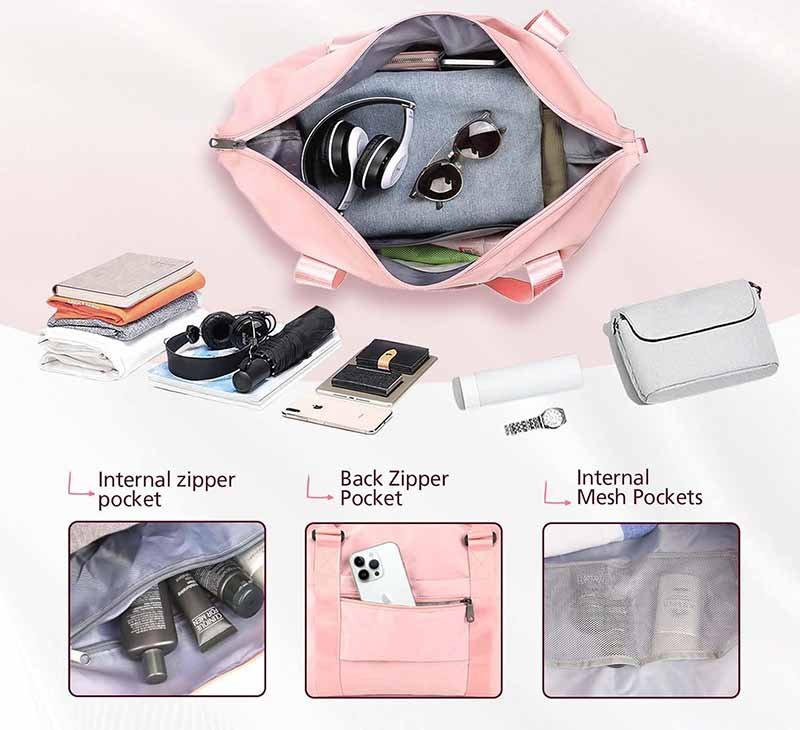
Compartments play a critical role in travel bag organization. The right compartment layout separates items logically, prevents shifting during movement, and allows travelers to access frequently used items quickly. However, too many compartments or poorly positioned pockets can reduce usable space. Efficient travel bags use compartments strategically rather than excessively.
What Compartments Should Travel Bags Have?
A good travel bag usually balances two storage zones: the main packing area and several supporting compartments.
The main compartment should remain as open and flexible as possible. This area holds the majority of the traveler’s belongings, especially clothing and larger items.
Supporting compartments handle smaller or specialized items such as:
- shoes
- toiletries
- electronics
- documents
When designed correctly, compartments help maintain order inside the bag. Without them, smaller items often slide to the bottom or mix with clothing.
However, the key is restraint. Too many fixed compartments can fragment the interior space.
A practical travel bag compartment system might look like this:
| Compartment Type | Purpose | Typical Position |
|---|---|---|
| Main storage area | clothing and bulk items | central body |
| shoe pocket | separates footwear | base or side |
| laptop sleeve | protects electronics | rear panel |
| internal zipper pocket | valuables | interior wall |
| external quick-access pocket | travel documents | front panel |
This structure supports organization without reducing the flexibility of the main compartment.
How Do Dividers Improve Travel Bags?
Dividers help separate categories of items without fully isolating them in rigid pockets.
In travel bags, dividers often appear as soft partitions or mesh panels that divide the interior into two zones. This design is commonly used in clamshell bags.
One side may hold clothing while the other side contains accessories or personal items.
Dividers offer several advantages:
- prevent items from shifting
- maintain clothing stacks
- allow cleaner packing layers
Mesh dividers are especially useful because they allow visibility. Travelers can see what is inside each section without opening every pocket.
Dividers also make it easier to repack quickly during travel. If one side contains clean clothes and the other side contains used garments, travelers can maintain organization throughout a trip.
The effectiveness of dividers depends on their placement. They should guide packing behavior rather than restrict it.
Do Packing Cubes Work Well in Travel Bags?
Packing cubes have become one of the most influential travel accessories in recent years. These lightweight fabric containers allow travelers to group clothing into compact modules.
For example:
- shirts in one cube
- underwear in another
- gym clothing in a third
This modular system allows the traveler to move entire groups of items at once instead of unpacking individual garments.
Travel bags that are designed to work with packing cubes usually perform much better in customer reviews.
The reason is simple: cubes transform loose clothing into structured blocks that fit neatly inside the bag.
Typical cube sizes for travel packing:
| Cube Size | Common Use |
|---|---|
| small cube | underwear and socks |
| medium cube | shirts and tops |
| large cube | jackets or pants |
When the travel bag shape is rectangular, these cubes stack naturally without leaving wasted space.
This is one reason many travel bags now advertise “cube-friendly design.”
How Do Wet Pockets Improve Travel Bags?
Wet pockets are specialized compartments designed to hold damp or dirty items. These pockets are typically made from waterproof or water-resistant materials.
During travel, wet pockets can serve multiple purposes:
- storing used gym clothes
- holding damp swimsuits
- isolating toiletries that may leak
Without a wet pocket, travelers often place these items inside plastic bags or mix them with clean clothing, which is inconvenient.
Wet pockets are usually placed in one of three areas:
| Placement | Advantage |
|---|---|
| bottom section | separates shoes or damp items |
| side pocket | easy access |
| interior divider pocket | controlled isolation |
The materials used for wet pockets typically include coated nylon or TPU-lined fabric to prevent moisture from spreading.
In many travel bag designs, the wet pocket also doubles as a shoe compartment. This dual-purpose design saves space while maintaining cleanliness inside the main compartment.
How Do Manufacturers Design Travel Bags That Pack Efficiently?
Efficient travel bags do not appear by accident. Behind every well-performing travel bag is a development process that combines user behavior analysis, structural engineering, material testing, and multiple sample revisions. Manufacturers must evaluate how travelers pack, how weight distributes inside the bag, and how the structure performs under real travel conditions.
For brands developing custom travel bags, understanding this process helps ensure that the final product performs well in the market rather than simply looking attractive in product photos.
How Do Designers Plan Travel Bags Structure?
The first stage of travel bag development usually begins with structure planning rather than decoration or color selection.
Designers ask several key questions before drawing the first pattern:
- How long will the trip typically be?
- What types of items will users pack?
- Should the bag work with packing cubes?
- Will electronics such as laptops or tablets be included?
- Does the bag need to fit airline carry-on limits?
These answers determine the basic structure of the bag.
For example, a 35–40 liter travel bag often follows a layout similar to this:
| Interior Zone | Purpose | Design Consideration |
|---|---|---|
| Main compartment | clothing and bulk items | flat base, minimal seams |
| shoe section | footwear isolation | reinforced base area |
| electronics sleeve | laptop or tablet | padded wall structure |
| quick-access pocket | documents and passport | easy external access |
Once this structure map is defined, designers begin developing pattern pieces that support the intended packing logic.
During early development, prototypes are often filled with weighted objects to simulate real packing conditions. This step helps identify potential issues such as:
- uneven weight distribution
- zipper stress points
- internal collapse areas
Adjustments are then made to panel dimensions and reinforcement zones.
This stage is critical because small structural decisions strongly influence the final usability of the bag.
Which Materials Keep Travel Bags in Shape?
Material choice directly affects whether a travel bag maintains its intended shape during packing and transport.
Many travel bags fail to pack efficiently not because of poor shape design, but because the materials are too soft to support the structure once the bag is partially filled.
Manufacturers typically combine several materials to create balanced support.
Common structural materials include:
| Material | Function | Typical Application |
|---|---|---|
| EVA foam | maintains panel stiffness | side walls and lid panels |
| PE foam | lightweight support | interior padding |
| HDPE sheet | structural reinforcement | base plate |
| polyester lining | interior durability | main compartment |
| nylon outer fabric | abrasion resistance | exterior shell |
The base of the travel bag usually receives the most reinforcement because it supports the entire load.
A reinforced base prevents the bag from sagging when carried. This keeps the interior packing layers stable and protects fragile items such as electronics.
Another important element is zipper support. Wide-opening travel bags place significant tension on the zipper path when the bag is fully packed. Reinforced seam construction and zipper tapes help maintain smooth operation even under heavy loads.
The right combination of materials allows the bag to feel structured without becoming heavy or rigid.
How Do Travel Bags Balance Capacity and Size?
Travel bag design must carefully balance two competing factors: capacity and portability.
A bag that holds too much may exceed airline carry-on restrictions or become uncomfortable to carry. On the other hand, a bag that is too compact may frustrate travelers who expect to pack several days of clothing.
For this reason, most travel bag designs fall within a relatively narrow size range.
Typical travel bag capacities:
| Bag Type | Capacity Range | Typical Use |
|---|---|---|
| small travel bag | 20–30L | overnight trips |
| medium travel bag | 30–40L | 2–4 day travel |
| large travel bag | 40–50L | extended travel |
Many airlines set carry-on limits near these dimensions:
| Airline Carry-On Limit | Approximate Size |
|---|---|
| height | 55 cm |
| width | 35 cm |
| depth | 20–25 cm |
Designers often build travel bags that stay slightly below these limits to ensure compatibility across multiple airlines.
Efficient packing allows these bags to hold more items without exceeding carry-on size restrictions.
Another strategy used by manufacturers is the expandable panel. This design allows the bag to expand slightly when additional packing space is needed.
Expandable panels typically add 3–5 liters of additional capacity, which can be very useful during return trips when travelers carry souvenirs or additional clothing.
How Does Szoneier Design Custom Travel Bags?
At Szoneier, travel bag development combines practical engineering with flexible customization options. With more than 18 years of manufacturing experience in fabric products and bags, the development process focuses heavily on real packing performance.
A typical custom travel bag project follows several stages:
1. Product concept discussion
Clients share product goals such as:
- target market
- expected capacity
- price range
- material preference
- brand positioning
2. Structure and material recommendation
Based on these goals, the development team proposes:
- bag dimensions
- opening type
- compartment layout
- fabric options
3. Sample development
Professional pattern makers create the first prototype. This sample is tested with real packing scenarios to evaluate usability.
4. Structural adjustments
Small modifications are made to improve:
- interior organization
- zipper operation
- carrying comfort
5. Production preparation
Once the design is finalized, the factory prepares cutting patterns, material sourcing, and quality control procedures.
Szoneier’s integrated manufacturing system helps accelerate this process because multiple materials can be sourced internally. The company operates several production facilities related to fabric and bag manufacturing, which allows faster sampling and shorter production lead times.
Typical production advantages include:
| Service | Benefit |
|---|---|
| free design assistance | helps refine bag structure |
| low MOQ customization | suitable for new brands |
| rapid sample production | usually within days |
| stable material supply | consistent fabric quality |
| strict quality inspection | reliable manufacturing standards |
This development approach helps brands transform ideas into practical travel bags that perform well in real use.
Conclusion: Designing Travel Bags That Travelers Actually Love
A travel bag is more than a container for belongings. It is a tool that travelers rely on during busy journeys, crowded airports, and unfamiliar environments. When the design works well, packing becomes smooth, items stay organized, and the entire travel experience feels easier.
Efficient travel bags usually share several important characteristics:
- rectangular or semi-box structures that maximize usable space
- wide openings that allow easy packing and visibility
- logical compartment layouts that separate items effectively
- supportive materials that maintain shape during transport
These design elements may seem simple, but together they determine whether a travel bag feels frustrating or satisfying to use.
For brands entering the travel bag market, investing time in proper structural design can significantly improve product quality and customer satisfaction. Even small adjustments to shape, opening style, or internal layout can dramatically increase usable packing space.
If you are planning to develop a new travel bag line or improve an existing product, working with an experienced manufacturer can make the process much smoother.
Szoneier has more than 18 years of experience producing custom bags for international brands and e-commerce companies. The company supports a wide range of customization options, including travel bags, backpacks, duffle bags, and specialized fabric products.
Whether you need assistance refining your bag structure, selecting materials, or developing prototypes, the Szoneier team can help turn your ideas into a reliable finished product.
If you would like to discuss your next travel bag project, feel free to contact Szoneier for design consultation, sampling, or production inquiries. A well-designed travel bag begins with the right manufacturing partner.