Skip to content
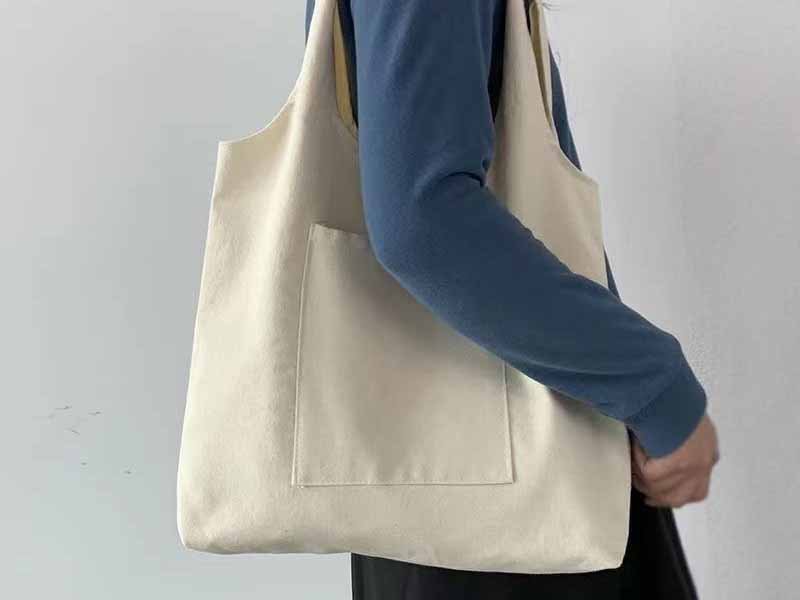
A canvas bag only looks simple when it is empty. Once it starts carrying 10 kg, 15 kg, or 25 kg of real goods day after day, every hidden weakness shows up fast. Corners begin to abrade. Bottom panels start to sag. Handles twist, seams open, and the whole bag loses shape. This is why heavy-duty canvas bag design is not just about using thicker fabric. It is about building a load-bearing system that can survive repeated lifting, dragging, folding, and impact in real working conditions.
The most reliable heavy-duty canvas bags are usually built with 16oz to 24oz cotton duck canvas, reinforced bottoms, full-wrap webbing handles, multi-row stitching, and stress-point bartacks or rivets. For medium-duty daily use, 16oz to 18oz canvas often provides the best balance of strength, weight, and cost. For higher load applications such as tool bags, utility storage, equipment carry bags, and industrial tote bags, 18oz to 24oz canvas with bottom reinforcement and stronger handle construction is more suitable.
A good heavy-duty canvas bag does three things at the same time. It carries weight without tearing. It keeps its shape well enough to stay usable. And it protects the brand from returns, complaints, and uneven reorder quality. That is the difference between a bag that looks rugged in photos and a bag that still works after six months of hard use. If you have ever seen two bags that looked almost the same at the sample stage but performed completely differently after one season in the market, you already know that the real story begins with fabric, structure, and reinforcement.
What Are Heavy-Duty Canvas Bags?
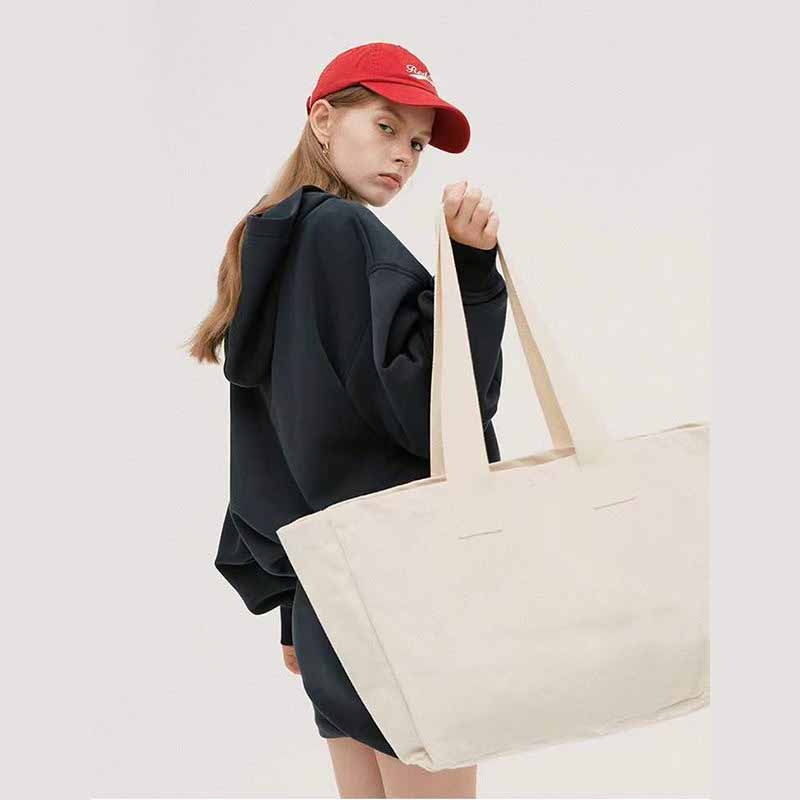
Heavy-duty canvas bags are load-bearing bags made with thicker canvas fabrics and reinforced construction so they can carry more weight and endure rougher use than standard tote bags. The real difference is not only the canvas itself, but the total structure: fabric weight, seam strength, bottom support, handle anchoring, and hardware all work together.
A lot of products are called “heavy-duty” in the market, but many of them are only visually heavy-duty. They may use a thick-looking fabric, but the bag still fails because the handles are stitched only into the top seam, the bottom has no support, or the pocket construction creates stress points that tear under load. A true heavy-duty canvas bag is designed from the load path upward. That means the factory has to think about where the weight sits, where the stress transfers, and where the abrasion will happen first.
From a commercial perspective, heavy-duty canvas bags are usually used in categories such as:
- utility and work bags
- grocery and retail carry bags
- tool and hardware bags
- gardening bags
- storage and organizer bags
- logistics and equipment carry bags
These products often serve users who care less about fashion language and more about service life. They want the bag to stand up, carry weight, resist wear, and stay reliable over repeated use. That is why canvas remains strong in this category. It offers a sturdy body, a rugged appearance, and a strong association with durability.
The term “heavy-duty” should therefore be tied to measurable performance, not decoration. In most real projects, that means looking at:
- fabric weight in ounces
- finished bag load target
- handle material and width
- seam type and stitch density
- bottom board or base reinforcement
- abrasion protection at corners and bottom
The table below gives a practical view of how canvas bag categories are commonly separated.
| Bag Level | Common Canvas Weight | Common Load Range | Common Use |
|---|---|---|---|
| Standard canvas bag | 10oz–12oz | 3–8 kg | Promotional totes, casual shopping |
| Medium-duty canvas bag | 14oz–16oz | 8–15 kg | Grocery, daily utility, retail |
| Heavy-duty canvas bag | 16oz–18oz | 15–25 kg | Work bags, storage, equipment |
| Industrial canvas bag | 20oz–24oz | 20–35 kg | Tools, hardware, rugged transport |
The most important point for customers is simple: a heavy-duty canvas bag is not defined by one thick fabric panel. It is defined by whether the whole bag is engineered to survive load.
What Is Heavy-Duty Canvas Bags Fabric?
Heavy-duty canvas bag fabric is usually cotton duck canvas in the 16oz to 24oz range, sometimes with wax, PU, PVC, or special finishing to improve water resistance, surface stability, or abrasion behavior. “Duck canvas” refers to a tightly woven construction that makes the material denser and stronger than ordinary plain cotton fabric.
For bag development, fabric weight matters because it strongly affects four things:
- load support
- abrasion resistance
- body stiffness
- final bag weight
A lighter canvas may look attractive in a swatch book, but once converted into a large tote or utility bag, it may collapse too easily or wear too fast at the bottom. A heavier canvas gives a stronger structure, but it also raises shipping weight, sewing difficulty, and sometimes material waste. That is why the right question is not “What is the thickest canvas?” but “What canvas weight matches the product use?”
Below is a working guide used in many bag projects:
| Canvas Weight | Fabric Character | General Performance | Product Fit |
|---|---|---|---|
| 12oz | Medium body | Good for light daily use | Casual tote, retail bag |
| 16oz | Firm body | Strong for regular carrying | Grocery, utility, work tote |
| 18oz | Heavier and sturdier | Better for repeated higher loads | Tool bag, organizer, outdoor utility |
| 24oz | Very dense and stiff | Best for rugged carrying | Industrial carry bag, heavy-duty equipment bag |
Customers should also pay attention to finishing. The same 18oz canvas can behave very differently depending on treatment:
- washed canvas feels softer and more casual
- waxed canvas resists moisture better
- coated canvas gains more structure
- laminated canvas is easier to clean
For OEM and private label projects, this matters because product appearance and product performance do not always point in the same direction. A soft washed canvas may look attractive on a lifestyle bag, while a coated 18oz duck canvas may perform better for high load use even if it feels less relaxed. Good development means deciding which trade-off fits the market.
Which Canvas Weight Is Best for Heavy-Duty Canvas Bags?
For most heavy-duty canvas bag projects, 16oz to 18oz canvas is the most practical range. It offers enough strength for repeated carrying, while still staying workable in sewing, sampling, and daily handling. Once the product moves into very high loads, sharp contents, or industrial use, 20oz to 24oz canvas becomes more appropriate.
This is where many customers make an expensive mistake. They assume heavier is always better. In reality, overbuilding can hurt the product too. A 24oz canvas bag may be extremely strong, but it also brings several costs:
- higher fabric cost
- higher freight cost
- stiffer turning and sewing
- more operator difficulty at multi-layer seams
- reduced comfort for handheld carrying
In many commercial products, 18oz canvas is the better answer because it carries substantial weight without making the bag feel overly bulky.
A practical guide looks like this:
| Canvas Weight | Recommended Bag Size | Recommended Load | Commercial Value |
|---|---|---|---|
| 16oz | Small to medium | 10–18 kg | Good balance of cost and performance |
| 18oz | Medium to large | 15–25 kg | Best all-around heavy-duty choice |
| 20oz–24oz | Medium to large, rugged structure | 20–35 kg | Better for industrial or specialty use |
The fabric should also match the bag shape. A compact square-bottom bag can often carry more weight than a wide soft tote because the structure distributes load better. So fabric weight should never be chosen in isolation. It should be chosen with:
- bag dimensions
- bottom width
- handle drop
- reinforcement method
- expected use frequency
For brands and importers, the best canvas weight is the one that gives enough safety margin without forcing the bag into an uncompetitive price or uncomfortable use experience.
Why Are Cotton Duck Fabrics Used in Heavy-Duty Canvas Bags?
Cotton duck fabrics are widely used because the weave is tight, the body is stable, and the material performs well under repeated bending and carrying. In simple terms, duck canvas gives more structure than ordinary cotton fabric and usually holds up better in work-style bags.
There are several practical reasons factories and brands keep using cotton duck for heavy-duty bags.
First, it has a natural rugged feel that customers immediately understand. It looks dependable before they even test it. That matters in retail and online sales because visual trust helps conversion.
Second, it supports structure well. Heavy-duty bags need the body fabric to help the bag stay usable. A limp fabric may technically hold weight, but it makes access, storage, and presentation worse. Duck canvas generally gives a better stand and shape.
Third, it is adaptable. Cotton duck can be used in:
- raw natural finish
- dyed finish
- washed finish
- waxed finish
- printed finish
- laminated or backed versions
This makes it suitable for brands that want heavy-duty performance without losing customization options.
Here is a practical comparison:
| Fabric Type | Structure | Abrasion Resistance | Visual Style | Best Use |
|---|---|---|---|---|
| Ordinary cotton fabric | Soft | Lower | Casual | Fashion or light totes |
| Cotton duck canvas | Firm | Better | Rugged, classic | Work and utility bags |
| Waxed duck canvas | Firmer, protected | Better in wet use | Premium rugged | Outdoor and utility bags |
Another reason cotton duck remains strong is repair behavior. In many rugged-use products, minor wear on duck canvas often looks acceptable or even desirable, while comparable damage on coated synthetics can appear more obvious or cheap. For some markets, that aging quality adds value rather than reducing it.
Are Heavy-Duty Canvas Bags Strong Enough for High Loads?
Yes, they are strong enough when the bag is engineered correctly. But canvas alone is not enough. A heavy-duty canvas bag must be designed so the fabric, seams, bottom, and handles share the load correctly. Without that, even a 24oz canvas shell can fail at the handle box stitch or split at the upper seam.
In real projects, heavy-duty canvas bags commonly carry:
- 10–15 kg in grocery and retail utility use
- 15–25 kg in work totes and organizer bags
- 20–30 kg in reinforced tool or equipment bags
Whether the bag survives these loads depends on more than fabric weight. The main performance drivers are:
- full-wrap or anchored handle design
- seam allowance width
- stitch density
- bartack placement
- bottom support construction
- corner reinforcement
The difference between “fabric can carry it” and “bag can carry it” is important. For example, a large tote filled with metal tools may create a concentrated downward pull at four top handle attachment points. If the handle is only stitched into one upper seam line, the bag may fail even if the canvas itself is very strong. A better design sends the load farther down the body panel or around the bottom.
The table below shows how structure affects real bag strength.
| Design Element | Weak Version | Stronger Version |
|---|---|---|
| Handle attachment | Only top seam stitched | Full-wrap webbing or deep box stitch |
| Bottom construction | Single layer | Double layer with board or reinforcement |
| Stress points | No bartack | Bartack or rivet reinforcement |
| Corner wear | Exposed canvas | Bound or reinforced corners |
For customers planning custom products, this is the key lesson: a high-load canvas bag is not just a canvas bag with thicker material. It is a reinforced carrying system.
Which Fabric Works Best for Heavy-Duty Canvas Bags?
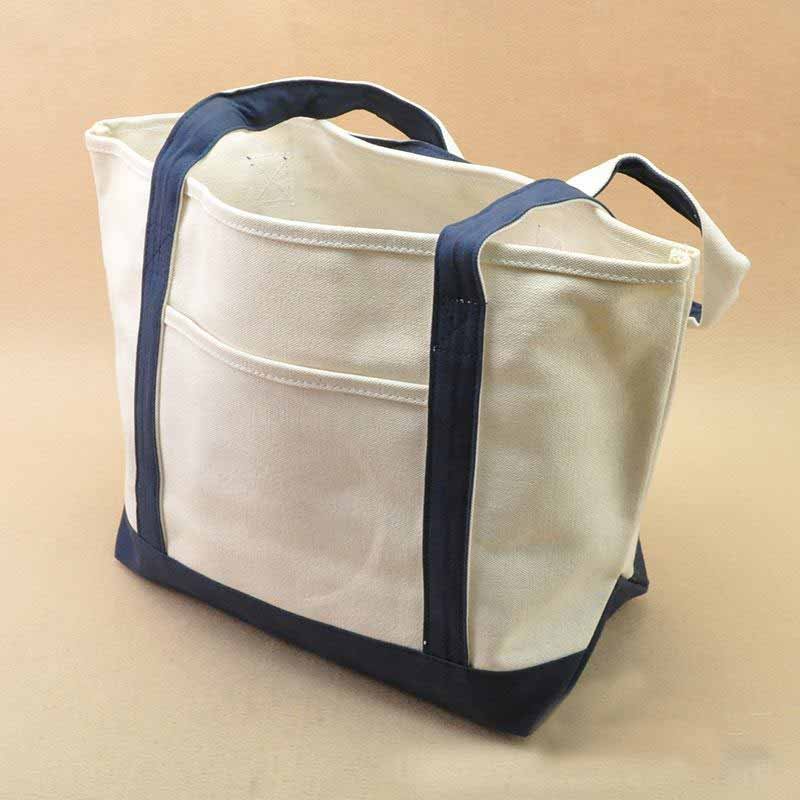
Choosing the right fabric for heavy-duty canvas bags is one of the most important decisions during product development. Many bags fail in the market not because the design looks wrong, but because the fabric cannot handle repeated stress, friction, or weight. A bag that carries 20 kg once may survive, but a bag that carries 15 kg every day for months requires much stronger material performance.
In most commercial projects, the fabrics used for heavy-duty canvas bags fall into a few main categories: 16oz–24oz cotton duck canvas, waxed canvas, reinforced canvas blends, and sometimes synthetic reinforcement fabrics combined with canvas. Each option has advantages depending on the bag’s use environment, expected load, and target price.
The key question for brands is not simply “Which fabric is strongest?” but rather which fabric delivers the best balance of strength, durability, usability, and cost.
How Do 16oz Canvas Heavy-Duty Canvas Bags Perform?
16oz cotton duck canvas is widely used for heavy-duty tote bags because it provides strong durability without making the bag overly heavy or stiff. It is often the starting point for products designed to carry significant weight while still being comfortable for everyday use.
From a structural perspective, 16oz canvas offers a dense weave that improves tear resistance compared with lighter fabrics such as 12oz or 14oz canvas. This allows the bag to maintain its shape when carrying heavier items.
In real commercial applications, 16oz canvas bags are commonly used for:
- grocery and shopping utility bags
- retail merchandise carry bags
- daily work tote bags
- storage and organizer bags
- gardening bags
When properly reinforced with double stitching and strong handles, 16oz canvas bags can usually support 10–18 kg loads without structural damage.
The table below shows a realistic performance overview.
| Fabric Type | Average Fabric Weight | Typical Load Range | Use Case |
|---|---|---|---|
| 12oz canvas | ~400 gsm | 5–10 kg | Standard tote bags |
| 16oz canvas | ~540 gsm | 10–18 kg | Heavy-duty daily bags |
| 18oz canvas | ~610 gsm | 15–25 kg | Tool and work bags |
For many brands entering the heavy-duty canvas category, 16oz canvas is often the most practical choice because it offers strong durability while keeping production costs reasonable.
Is 18oz Canvas Better for Heavy-Duty Canvas Bags?
For bags that must carry heavier loads or experience rougher handling, 18oz cotton duck canvas is often the preferred material. It provides greater structural stability than 16oz canvas while still remaining flexible enough for everyday use.
The difference between 16oz and 18oz canvas may seem small on paper, but the increased density of the weave significantly improves durability in real-world conditions. The thicker fibers resist abrasion better and maintain shape when the bag is filled with heavy items.
Many professional tool bags and work bags are made with 18oz canvas because the fabric performs well under repeated stress.
Typical applications include:
- tool carry bags
- construction site equipment bags
- hardware storage bags
- outdoor utility bags
- reinforced grocery bags
In these applications, the bags often carry 15–25 kg loads regularly.
Another advantage of 18oz canvas is improved structure. The fabric holds its form better, making the bag easier to open and organize. This is especially useful in tool bags where users need quick access to equipment.
For brands looking to build products that feel more rugged and durable, 18oz canvas often provides a noticeable improvement in perceived quality.
Why Are 24oz Canvas Heavy-Duty Canvas Bags Used?
24oz canvas represents the upper end of heavy-duty canvas fabrics. This material is significantly thicker and denser than standard canvas used in most tote bags.
Because of its strength, 24oz canvas is commonly used in industrial or extremely rugged applications, such as:
- heavy tool transport bags
- industrial equipment bags
- construction storage bags
- workshop organizer bags
This fabric can support loads exceeding 25–35 kg, especially when combined with reinforced handles and bottom panels.
However, heavier fabric also introduces several practical considerations.
First, the bag becomes heavier even before any items are placed inside. A large 24oz canvas bag may weigh nearly twice as much as a similar bag made with 16oz fabric.
Second, thicker fabric increases sewing complexity. Multiple layers of 24oz canvas can be difficult to stitch cleanly, requiring stronger industrial sewing machines and experienced operators.
Because of these factors, many brands use 24oz canvas selectively, often reinforcing only certain areas such as the bottom panel while keeping the body fabric lighter.
This approach helps balance durability with usability.
Do Waxed Fabrics Improve Heavy-Duty Canvas Bags?
Waxed canvas is another option frequently used for rugged canvas bags. In this process, wax is infused into the cotton fibers, creating a protective coating that improves water resistance and surface durability.
Waxed canvas offers several practical benefits:
- improved resistance to rain and moisture
- increased abrasion resistance
- stronger structural feel
- distinctive rugged appearance
These characteristics make waxed canvas popular for outdoor products such as field bags, travel bags, and camping gear.
The wax treatment also changes the way the fabric ages. Over time, waxed canvas develops creases and surface marks that many users associate with premium heritage products.
However, waxed canvas also has some limitations.
The wax coating makes the fabric slightly stiffer and heavier. It may also require occasional maintenance to maintain water resistance.
Because of this, waxed canvas is best suited for products where weather resistance and durability are more important than lightweight flexibility.
Comparing Fabrics for Heavy-Duty Canvas Bags
When selecting the best fabric, brands should evaluate several performance factors at the same time.
| Fabric | Strength | Weight | Water Resistance | Best Use |
|---|---|---|---|---|
| 16oz canvas | High | Moderate | Low | Utility and grocery bags |
| 18oz canvas | Very high | Moderate | Low | Tool and work bags |
| 24oz canvas | Extremely high | Heavy | Low | Industrial carry bags |
| Waxed canvas | High | Moderate | Medium | Outdoor utility bags |
In most product development projects, 18oz cotton duck canvas with reinforced handles and bottom panels offers the best balance between durability, usability, and cost.
For brands designing heavy-duty canvas bags, the final decision should consider not only fabric strength but also how the material interacts with the bag’s structure, reinforcement methods, and hardware components. A well-designed bag combines the right fabric with thoughtful engineering to ensure reliable performance over long-term use.
How Should Heavy-Duty Canvas Bags Be Reinforced?
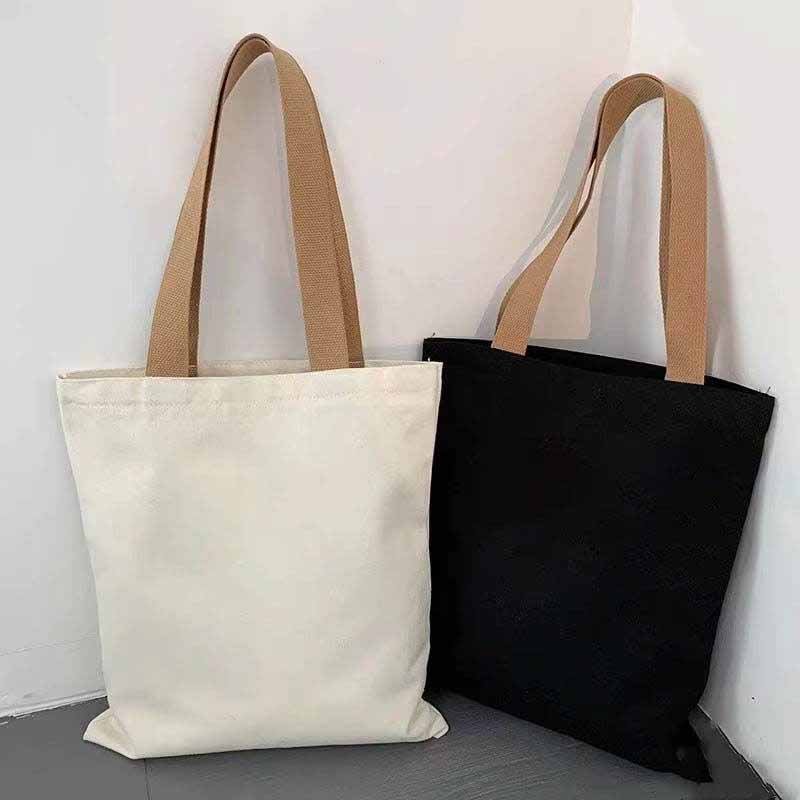
Heavy-duty canvas bags rarely fail because the fabric itself tears in the middle of a panel. Most failures occur at stress concentration points—places where the load from the handles transfers into the body of the bag or where friction repeatedly occurs. These areas include handle anchor points, bottom corners, seam intersections, and pocket edges.
Reinforcement design is therefore the most important step in building a reliable high-load canvas bag. A well-designed bag distributes the weight across a larger area of fabric instead of concentrating stress on a small stitch line.
There are four reinforcement principles used by most experienced bag manufacturers:
- distribute weight across the bag body rather than only at the top seam
- protect the bottom panel from abrasion and load pressure
- reinforce seams and stress points with additional stitching
- use stronger materials such as webbing or double-layer canvas where needed
When these elements are combined correctly, the load capacity of the bag increases significantly without requiring extremely heavy fabrics.
The table below shows how reinforcement methods affect real-world load capacity.
| Reinforcement Method | Load Stability Improvement | Common Use |
|---|---|---|
| Double-layer bottom panel | +20–30% durability | Grocery and utility bags |
| Webbing handle reinforcement | +30–50% load support | Work and tool bags |
| Bartack stitching at stress points | +25% seam strength | Heavy-duty totes |
| Internal support board | +20% structure stability | Equipment and storage bags |
These reinforcements allow a canvas bag made from 16oz or 18oz fabric to carry loads that might otherwise require much heavier materials.
How Do Bottom Panels Strengthen Heavy-Duty Canvas Bags?
The bottom panel of a heavy-duty canvas bag absorbs the majority of the load during use. When the bag is filled, the weight presses directly against the base. At the same time, the bottom surface experiences the highest friction against floors, ground surfaces, and work tables.
Without reinforcement, the bottom panel can begin to sag or wear through relatively quickly.
To prevent this, manufacturers commonly use several bottom reinforcement techniques:
| Bottom Construction | Benefit |
|---|---|
| Double-layer canvas bottom | Improves abrasion resistance |
| PVC or PU backing layer | Adds moisture protection |
| EVA bottom padding | Maintains structure |
| Removable bottom board | Supports heavy loads |
For example, many professional grocery or utility canvas bags include a removable PP or PE support board inside the bottom panel. This board spreads the weight of the contents evenly across the base rather than concentrating it in the center.
Another approach used in tool bags is adding synthetic reinforcement fabrics to the bottom exterior. These materials resist abrasion better than cotton canvas and significantly extend the bag’s service life.
By strengthening the bottom panel, manufacturers reduce the chance of fabric stretching or tearing under heavy loads.
What Handle Design Works for Heavy-Duty Canvas Bags?
Handles are the most critical load-bearing component of any bag. If the handle attachment fails, the entire bag becomes unusable regardless of how strong the fabric is.
A well-designed handle system must support the full weight of the bag while distributing stress across a wide area of fabric.
The most reliable design method is full-wrap webbing reinforcement. In this design, the handle webbing runs down the front and back panels of the bag and sometimes continues under the bottom.
This design spreads the load across the entire body of the bag rather than concentrating it at the top seam.
Common handle constructions include:
| Handle Design | Strength Level |
|---|---|
| Top seam stitched handles | Low |
| Reinforced box stitch handles | Medium |
| Webbing handles with bartack reinforcement | High |
| Full-wrap webbing handles | Very high |
Handle width also plays a role. Wider webbing distributes weight more evenly and reduces pressure on the user’s hands.
Typical webbing widths for heavy-duty bags include:
- 25 mm (light utility bags)
- 38 mm (medium-duty work bags)
- 50 mm (heavy-duty tool or equipment bags)
By combining wide webbing with strong stitching patterns, manufacturers significantly increase the load capacity of the bag.
Why Are Bartacks Important in Heavy-Duty Canvas Bags?
Bartack stitching is one of the most effective reinforcement techniques used in heavy-duty textile products. A bartack is a dense zigzag stitch pattern used to secure high-stress areas such as handle attachment points and pocket corners.
This stitch pattern distributes tension across multiple threads rather than relying on a single seam line.
Without bartack reinforcement, handle stitches can gradually loosen or tear under repeated lifting.
Bartacks are commonly placed at the following locations:
- handle attachment points
- upper corners of pockets
- seam intersections
- zipper ends
A typical bartack stitch pattern may contain 20–40 stitches in a short 10–12 mm length, creating a compact reinforcement zone that significantly improves seam durability.
In heavy-duty canvas bags designed for loads above 20 kg, bartack stitching is considered essential.
How Does Webbing Reinforce Heavy-Duty Canvas Bags?
Webbing is one of the strongest textile components used in bag construction. Unlike canvas fabric, which is woven for flexibility, webbing is designed specifically to carry load.
Polyester or nylon webbing is commonly used for:
- handles
- shoulder straps
- internal reinforcement
- edge binding
When webbing is integrated correctly, it acts like a structural skeleton for the bag.
A common reinforcement technique is to run webbing handles from the top of the bag down along the side panels. This design spreads the lifting force across a larger surface area of fabric.
The table below compares common webbing materials.
| Webbing Material | Strength | Typical Use |
|---|---|---|
| Cotton webbing | Medium | Lifestyle canvas bags |
| Polyester webbing | High | Utility bags |
| Nylon webbing | Very high | Heavy-duty equipment bags |
For high-load canvas bags, polyester webbing is often the most practical option because it combines high strength with good resistance to moisture and UV exposure.
By integrating webbing into the structure of the bag, manufacturers can dramatically improve durability without increasing the weight of the canvas fabric itself.
Which Hardware Is Best for Heavy-Duty Canvas Bags?
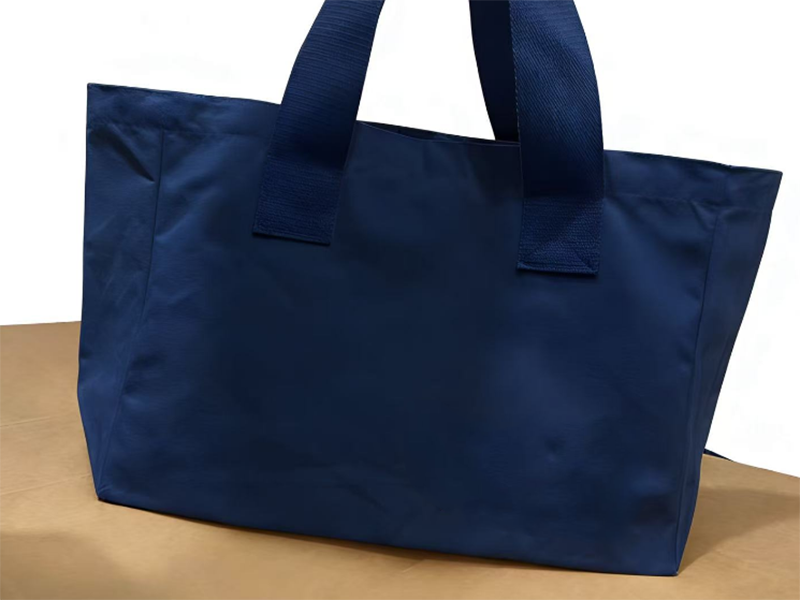
Hardware components play an important role in heavy-duty bag design. Even if the fabric and stitching are strong, weak hardware can still cause failure.
Hardware used in canvas bags must withstand:
- repeated opening and closing
- heavy loads pulling on attachment points
- outdoor exposure and corrosion
The most common hardware components include:
- zippers
- buckles
- D-rings
- rivets
- metal hooks
Material selection is important because hardware strength directly affects the reliability of the bag.
What Webbing Works for Heavy-Duty Canvas Bags?
As discussed earlier, webbing is one of the most important reinforcement elements in a heavy-duty bag.
Polyester webbing is widely used because it offers:
- high tensile strength
- good abrasion resistance
- low stretch under load
- resistance to moisture
Nylon webbing is even stronger but may stretch slightly under heavy load.
For most heavy-duty canvas bags carrying loads between 15–30 kg, polyester webbing provides the best balance of strength and cost.
Which Zippers Fit Heavy-Duty Canvas Bags?
Zippers used in heavy-duty bags must handle both weight and repeated use.
The most reliable zipper sizes include:
| Zipper Type | Strength Level |
|---|---|
| #5 zipper | Light duty |
| #8 zipper | Medium duty |
| #10 zipper | Heavy duty |
Many heavy-duty canvas tool bags use #10 nylon coil or metal zippers because they are strong enough to handle frequent use without jamming.
Are Metal Rivets Used in Heavy-Duty Canvas Bags?
Yes. Rivets are often used to reinforce handle attachment points or areas where multiple layers of fabric meet.
Rivets distribute stress across a wider area and reduce strain on the stitching.
They are commonly used in:
- tool bags
- industrial equipment bags
- heavy-duty work totes
However, rivets should complement stitching rather than replace it.
Do Buckles Improve Heavy-Duty Canvas Bags Strength?
Buckles are typically used for closure systems or adjustable straps.
Metal buckles provide the highest strength and durability, especially in industrial or outdoor applications.
Plastic buckles may still be used in medium-duty bags because they reduce weight and cost.
For heavy-duty bags expected to carry high loads, metal buckles and steel D-rings are usually preferred.
How Are Heavy-Duty Canvas Bags Developed by Manufacturers?
Designing a heavy-duty canvas bag does not stop at fabric selection or reinforcement layout. Before a product reaches the market, experienced manufacturers go through a structured development process that verifies whether the bag can actually perform under real-world conditions. This process usually includes material evaluation, prototype development, load testing, and production optimization.
A professional factory typically approaches heavy-duty canvas bag development through four stages:
- Material Selection and Evaluation
- Prototype and Structural Design
- Load Testing and Durability Verification
- Production Optimization and Quality Control
Each stage helps reduce the risk of structural failure once the product enters the market.
From a commercial perspective, brands care about three things:
- whether the bag performs well under heavy load
- whether production quality is consistent across orders
- whether the bag can be produced efficiently at scale
Manufacturers that combine textile knowledge with production engineering are usually better positioned to meet these expectations.
The table below shows how development stages influence product reliability.
| Development Stage | Key Focus | Impact on Final Product |
|---|---|---|
| Material evaluation | Fabric strength, coating, abrasion | Determines durability |
| Prototype construction | Pattern design and reinforcement | Determines structure |
| Load testing | Stress and fatigue simulation | Determines reliability |
| Production optimization | Stitching and assembly process | Determines consistency |
When this process is executed carefully, the resulting canvas bag can support heavy loads while maintaining structural stability over long-term use.
How Do Factories Test Heavy-Duty Canvas Bags?
Testing plays a crucial role in validating the design of heavy-duty canvas bags. Without proper testing, a bag may appear strong during sampling but fail after weeks of real use.
Factories typically perform several types of durability tests.
One of the most important is static load testing. In this test, the bag is filled with weight equivalent to or higher than the expected usage load. The bag is then suspended for several hours to verify that the seams and handles remain intact.
Another common method is cyclic load testing, which simulates repeated lifting and lowering of the bag. This test helps identify fatigue weaknesses in stitching or handle attachment points.
The following table shows common testing methods used for canvas bags.
| Test Type | Purpose | Typical Procedure |
|---|---|---|
| Static load test | Measure maximum load capacity | Bag filled with weight for 6–24 hours |
| Cyclic lift test | Simulate repeated use | 500–1000 lifting cycles |
| Abrasion test | Evaluate bottom durability | Fabric rubbed against abrasive surface |
| Seam strength test | Measure stitch durability | Tensile force applied to seams |
For example, a heavy-duty grocery tote designed to carry 20 kg may be tested with 25–30 kg during static testing to ensure an adequate safety margin.
These tests help manufacturers identify potential weak points before the product enters mass production.
How Do Brands Control Heavy-Duty Canvas Bags Cost?
Cost control is an important part of developing commercial canvas bags. While stronger materials and reinforcements improve durability, they also increase production cost. Successful product development requires balancing performance with affordability.
Several factors influence the cost of heavy-duty canvas bags.
The most significant cost drivers include:
- canvas fabric weight
- reinforcement materials
- hardware quality
- bag size and complexity
- production quantity
The following table illustrates how these factors affect cost.
| Cost Factor | Influence on Price |
|---|---|
| Canvas weight | Heavier fabrics increase material cost |
| Reinforcement layers | Additional fabric and labor |
| Hardware quality | Metal hardware costs more than plastic |
| Bag size | Larger bags require more fabric |
| Order quantity | Larger orders reduce unit cost |
Brands often find that improving reinforcement design can increase durability without dramatically increasing fabric weight. For instance, using full-wrap webbing handles may provide better strength than simply increasing canvas thickness.
This approach helps control material costs while maintaining performance.
How Do Custom Logos Work on Heavy-Duty Canvas Bags?
Branding is an important aspect of many canvas bag products, especially for retail or promotional use. Fortunately, canvas fabric supports a wide range of customization methods.
Common branding techniques include:
- screen printing
- heat transfer printing
- embroidery
- woven labels
- leather patches
Each method has different advantages.
Screen printing is often used for large logos or graphics because it is cost-effective for medium to large production runs.
Embroidery offers a more premium appearance and excellent durability, especially for workwear or outdoor brands.
Leather patches or woven labels are sometimes used when brands want a subtle and durable branding element that complements the rugged look of canvas.
Choosing the right branding method depends on:
- logo complexity
- product positioning
- order quantity
- budget considerations
Factories usually help clients select the most suitable branding method during the sampling stage.
How Can Szoneier Produce Heavy-Duty Canvas Bags?
Szoneier is a Chinese manufacturer with more than 18 years of experience in textile and bag product development. The company specializes in custom products for international brands, e-commerce businesses, and wholesalers.
One of Szoneier’s advantages is its vertically integrated production system. The company works closely with material suppliers and operates multiple manufacturing facilities that support the development of different textile products.
These capabilities allow Szoneier to manage several stages of production internally, including:
- fabric sourcing and development
- bag pattern design and sampling
- sewing and assembly
- quality inspection and packaging
For clients developing heavy-duty canvas bags, this integrated approach offers several benefits.
First, it allows faster sampling. Prototype samples can usually be produced within 5–7 days, allowing brands to evaluate design changes quickly.
Second, it improves quality consistency. Because the factory controls material selection and manufacturing processes, it is easier to maintain stable product quality across multiple production runs.
Third, it allows flexible customization. Clients can develop products with their own branding, packaging, and structural features without requiring extremely large minimum order quantities.
Typical OEM customization options include:
- canvas weight selection (16oz, 18oz, 24oz)
- custom bag dimensions
- reinforced handle construction
- custom logo printing or embroidery
- packaging and labeling design
For many brands, working with an experienced manufacturer helps simplify the development process and reduce the risk of production errors.
Final Thoughts
Designing heavy-duty canvas bags for high load use requires more than choosing thick fabric. Successful products combine strong materials with thoughtful structural engineering. Fabric weight, handle design, reinforcement methods, and hardware selection all play a role in determining how well the bag performs over time.
A well-designed heavy-duty canvas bag distributes weight evenly, protects stress points, and maintains structural stability under repeated use. By combining durable cotton duck canvas with reinforced seams, strong webbing handles, and reliable hardware, manufacturers can create products capable of carrying significant loads while maintaining long service life.
For brands developing custom canvas bags, working with an experienced manufacturing partner can make a significant difference. From fabric selection and structural design to load testing and mass production, professional factories help ensure that the final product meets both performance and commercial requirements.
If you are planning to develop custom heavy-duty canvas bags, Szoneier can help turn your ideas into reliable products. With over 18 years of manufacturing experience.
Whether you need durable work totes, reinforced utility bags, or heavy-duty canvas tool bags, Szoneier’s team can assist with product design and manufacturing.
You are welcome to contact Szoneier to discuss your project requirements and request samples for evaluation.