Skip to content
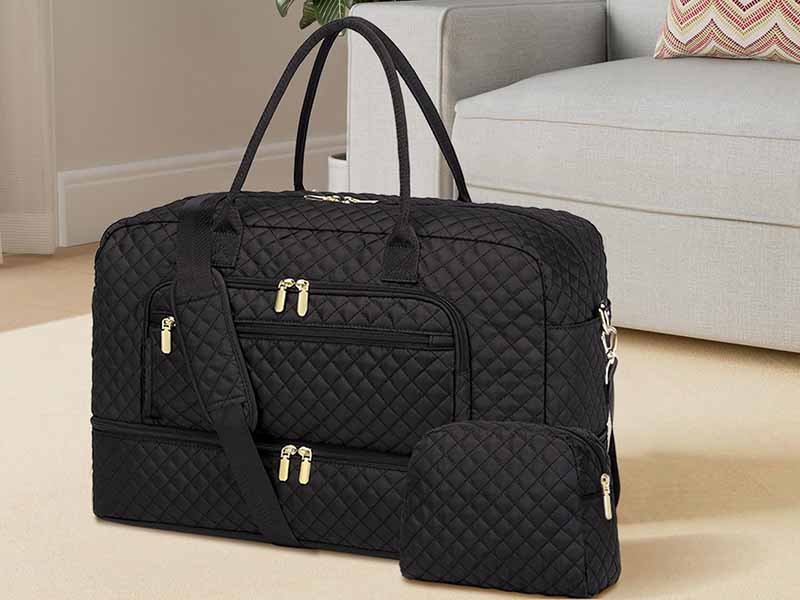
A duffle bag can look perfect on a product photo—and still disappoint the first time a customer packs it. The fastest way a bag gets labeled “cheap” isn’t the logo or the zipper. It’s the moment it slumps, twists, or caves in when loaded. Shape matters because it affects how the bag carries, how it stores, how it looks on shelves, and how premium it feels in real life. If your duffle bags are meant for travel, gym, tools, or outdoor use, shape retention is not a “nice-to-have.” It’s part of the product’s performance.
Duffle bags keep their shape when packed by combining a stable outer fabric, reinforced base and side panels, internal support layers (such as EVA foam or HDPE board), and construction details like piping, seam reinforcement, and load-balanced compartments. The goal is to control sagging at the bottom, buckling on the sides, and twisting at the opening under realistic loads.
At Szoneier, we’ve built and refined shape-stable duffle bags for brands and small-to-mid global buyers for over 18 years, and the same truth shows up in every successful project: structure is designed, not hoped for. In the next sections, you’ll see exactly what causes collapse—and how to engineer duffle bags that stay clean, upright, and dependable even when packed hard.
What Makes Duffle Bags Lose Their Shape?
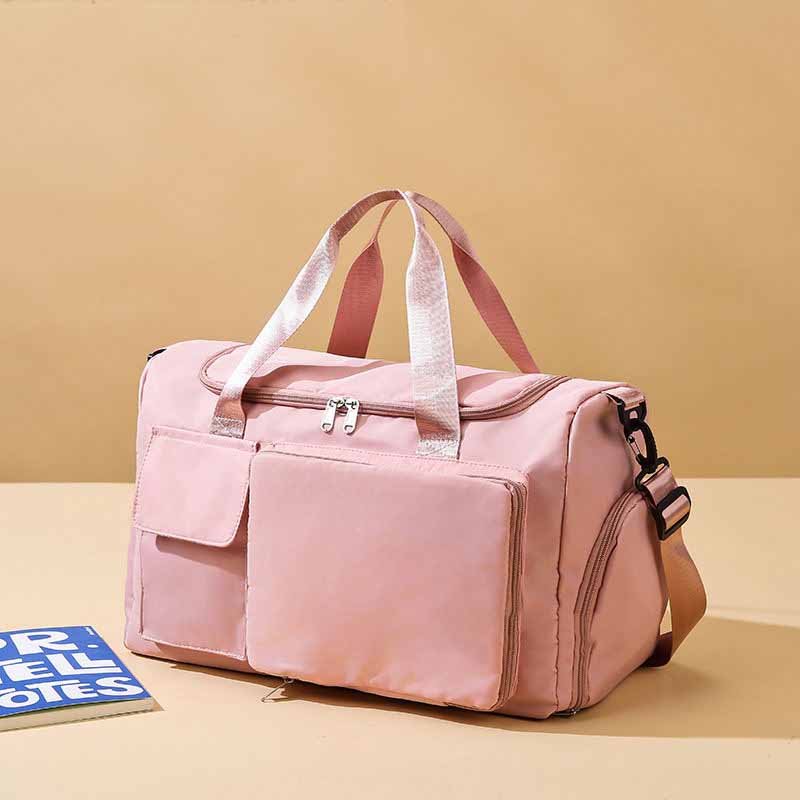
Duffle bags lose their shape when the base and side panels lack support, the fabric is too soft for the bag’s size, seams stretch under load, and internal space allows items to shift. Collapse usually starts at the bottom (sagging), then spreads to side walls (caving), and finally shows at the opening (twisting). These issues are preventable through panel engineering and reinforcement choices.
When a duffle bag collapses, it’s rarely “one problem.” It’s usually a chain reaction: the base panel bends, weight pulls on seams, side panels cave inward, and the bag loses its clean shape. This shows up faster in big volume bags (40–80L), bags with wide openings, and bags built from flexible fabrics without internal support.
From a factory viewpoint, shape loss typically comes from three areas customers notice immediately:
- Shelf appearance: bag looks wrinkled, saggy, or uneven when displayed.
- Carry feel: bag feels unstable; load shifts while walking.
- Long-term durability: seams and corners begin to deform after repeated packing.
A practical way to think about it: the bag must resist bending (base), buckling (side walls), and torsion (twist at the opening). If your design only relies on fabric, you’re asking fabric to do a job it’s not meant to do.
Below are the most common failure causes we see during duffle bag sampling and rework. Use these as a checklist before you approve a prototype.
What design mistakes make duffle bags collapse?
The most common design mistake is an “all-soft-body” structure: outer fabric + lining, with no internal support. That construction can work for small fashion duffles, but it fails quickly for travel, gym, tool, or equipment duffle bags. Another frequent mistake is over-sizing the bag without upgrading structure—bigger bags need stronger base panels and side-wall control.
High-risk design choices that often cause collapse:
- No bottom board or bottom reinforcement layer
- Single large compartment with no internal stabilization
- Weak seam allowance (too narrow) or low stitch density in load areas
- No piping at edges (soft corners fold inward)
- Handles stitched only to outer fabric (load pulls the shell out of shape)
If your bag is designed to carry 8–15 kg, the structure must be engineered for that load, not tested empty.
How does fabric softness affect duffle bags?
Fabric softness is not “good” or “bad”—it just changes what you must reinforce. Soft fabrics drape. That’s great for lightweight lifestyle bags, but it makes structure harder to maintain when packed. Many brands choose 600D polyester or standard nylon for cost reasons; these materials can work well, but only when combined with reinforcement.
Fabric stiffness is often influenced by:
- Yarn density and weave (tighter weave = more shape)
- Backing/coating (PU/PVC/TPU adds body)
- Fabric weight (GSM or denier)
- Lamination (bonded layers feel firmer)
A soft fabric duffle bag can still stay structured if the design includes EVA foam on side panels and a rigid base insert. Without those, the bag will slump even if the fabric looks “strong.”
Which packing situations cause duffle bags to sag?
Real-world packing is messy. People throw shoes, bottles, chargers, tools, and wet clothes into any available corner. Shape loss happens fastest when weight concentrates at the bottom center or one end of the bag.
Packing situations that trigger sagging:
- Heavy items placed at one end (shoes + bottle + toiletry pouch)
- Soft items compressing and leaving empty space (clothes settle)
- Overpacking beyond design load
- Carrying with one handle (twists the opening and side walls)
- Wet contents adding weight and changing fabric behavior
For product planning, we recommend defining a “design load” and testing it. For example, a 45L gym duffle might be tested at 10 kg, while a 70L travel duffle might be tested at 15–18 kg depending on the target market.
Common causes of shape loss and how to fix them
| Problem seen in duffle bags | Most common root cause | Practical design fix |
|---|---|---|
| Bottom sags and forms a “U” shape | No rigid base support | Add HDPE/PP bottom board + reinforced bottom panel |
| Side walls collapse inward | Soft fabric + no side reinforcement | Add EVA foam (3–5mm) or PE sheet in side panels |
| Bag twists at zipper opening | Opening too wide, no stabilization | Add piping + zipper tape reinforcement + top frame strip |
| Corners deform quickly | Weak corner stitching and stress points | Increase bartacks, add corner patches, wider seam allowance |
| Bag looks wrinkled on shelf | Low structure + thin lining | Use stiffer lining + panel bonding or foam lamination |
Which Materials Help Duffle Bags Keep Their Shape?
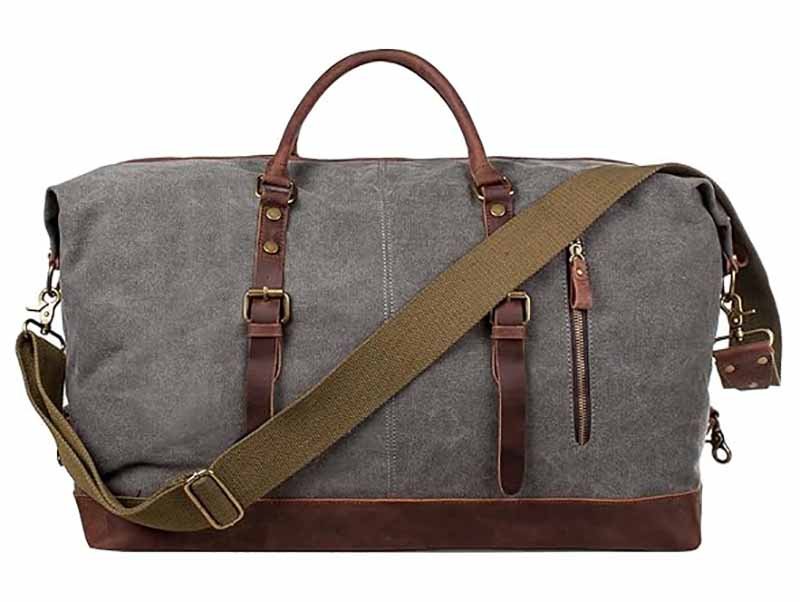
Duffle bags keep their shape best when the outer fabric has enough body (canvas, high-denier polyester, ballistic nylon, or coated fabrics) and the inside includes reinforcement layers (EVA foam, PE sheet, HDPE/PP board). The base panel usually needs the strongest support because it carries the full load. Material choices should match bag size, load target, and price tier.
Customers care about two things at the same time: the bag must feel strong, and it must not feel like a heavy suitcase. That’s why the best structured duffle bags use a “system,” not a single material. Think of a duffle bag like a sandwich structure:
- Outer fabric: abrasion resistance + appearance
- Support layer: stiffness + shape control
- Lining: clean interior + stability + easier sewing
For shape retention, the key is how materials work together at three zones:
- Base panel (anti-sag)
- Side walls (anti-collapse)
- Top opening (anti-twist)
A common mistake is choosing a premium outer fabric but skipping internal reinforcement to save cost. That usually backfires because customers judge structure immediately. In many markets, the difference between “feels premium” and “feels cheap” is a few cents of reinforcement per panel.
Below are the material choices we use most often when developing custom duffle bags at Szoneier—especially for travel, gym, tool, and outdoor categories.
Which fabrics work best for structured duffle bags?
Structured duffle bags typically use fabrics that resist bending and wrinkling. If your bag is meant to stand up and hold a clean silhouette, favor higher-density fabrics or fabrics with firm backings.
Common outer fabrics for shape-stable duffle bags:
- Ballistic nylon (e.g., 1680D): very high abrasion resistance and strong body
- High-denier polyester (900D/1200D): good structure at controlled cost
- Canvas (12–16oz): natural rigidity and premium lifestyle feel
- Oxford polyester (600D/900D): widely used; structure depends on backing and reinforcement
- TPU/PVC-coated fabrics: add stiffness plus water resistance
For mid-range products, a popular “safe” combo is 600D–900D polyester + EVA foam side panels + HDPE base board.
How do coated fabrics improve duffle bags?
Coatings help in two ways: they add stiffness and improve water resistance. A coating layer makes the fabric less likely to collapse into folds, which improves shelf look and real use—especially when the bag is partly filled.
Coating options used in duffle bags:
- PU coating: flexible, lighter feel; good for sports/gym
- PVC coating: stronger stiffness; good for tool and equipment duffles
- TPU coating: premium waterproof and durable; good for outdoor travel duffles
Design note: coated fabrics can feel firmer but may crease if folded hard. That’s why we often pair coated fabrics with foam backing to keep the surface looking smooth and to improve long-term shape.
Which reinforcement materials strengthen duffle bags?
If you want duffle bags that keep their shape when packed, reinforcement materials are your best value lever. They don’t change your exterior design much, but they completely change performance.
Most used reinforcement materials (and where they go):
- HDPE or PP board (1–2mm): base panel to prevent sagging
- EVA foam (3–8mm): side walls for structure + cushioning
- PE sheet: side panels for stiffness without much weight
- Non-woven stiffener: panel stability and cleaner sewing results
- Webbing reinforcement: handle/strap load transfer to reduce deformation
A strong base usually combines outer fabric + stiffener + board + lining, especially for bags designed above 10 kg load.
Material “recipes” by duffle bag positioning
| Duffle bag type | Best outer fabric choices | Best internal support choices | Shape goal |
|---|---|---|---|
| Gym duffle (35–50L) | 600D–900D polyester, PU-coated | EVA foam side (3–5mm), HDPE base board | Clean but not heavy |
| Travel duffle (50–80L) | 1200D polyester, ballistic nylon | PE sheet side + HDPE/PP base + piping | Upright + stable |
| Tool duffle | PVC-coated polyester | PP board base + reinforced corners | No sag under load |
| Outdoor duffle | TPU-coated nylon/polyester | Foam + sealed structure options | Shape + weather |
How Should Structured Duffle Bags Be Designed?
Structured duffle bags are designed by strengthening the base panel, stabilizing side panels, reinforcing seams, and controlling the bag’s opening structure. The goal is to distribute weight evenly and prevent sagging, twisting, or collapsing during use. Proper panel engineering, piping reinforcement, and load-bearing handle attachment points all contribute to a duffle bag that maintains its shape when packed.
Designing duffle bags that keep their shape requires more than choosing good materials. The bag must be engineered as a structural system, where each panel contributes to the stability of the whole product.
In professional bag manufacturing, duffle bags are usually divided into four structural zones:
- Base panel (load-bearing foundation)
- Side panels (volume stability)
- End panels (impact control and shape retention)
- Top opening (torsion control)
If any one of these areas lacks support, the bag begins to deform under weight.
Experienced bag developers therefore approach duffle bag design with the same thinking used in lightweight engineering: control the forces acting on the structure.
Below are the key design techniques used by professional manufacturers.
How do base panels support duffle bags?
The base panel carries the entire load of the bag. When a duffle bag is placed on the ground, gravity pushes all contents toward the bottom center. Without reinforcement, this area begins to sag, creating the familiar “banana shape” seen in low-quality duffle bags.
A strong base panel typically uses multiple structural layers.
Example of a common base panel construction:
| Layer | Material | Function |
|---|---|---|
| Outer layer | 600D–1680D polyester or nylon | Abrasion resistance |
| Reinforcement | EVA foam or PE sheet | Cushioning and stability |
| Structural board | HDPE or PP board (1–2mm) | Prevent sagging |
| Inner lining | Polyester lining | Clean interior finish |
For bags designed to carry 10–20 kg, HDPE or PP boards are highly recommended. These boards distribute weight across the entire base instead of concentrating pressure on seams.
Additional improvements include:
- Rubber or plastic bottom feet
- Double-layer bottom fabric reinforcement
- Extended base panel seam allowance
These features significantly increase durability and shape retention.
Which side panels prevent duffle bags from collapsing?
Side panels are responsible for maintaining the volume shape of the bag. Without reinforcement, they easily fold inward when the bag is partially filled.
To solve this, manufacturers often integrate support layers inside the side panels.
Common solutions include:
| Reinforcement | Thickness | Purpose |
|---|---|---|
| EVA foam | 3–8 mm | Adds structure and cushioning |
| PE sheet | 0.5–1 mm | Lightweight stiffness |
| Non-woven stiffener | 1–2 mm | Stabilizes panel shape |
| Foam lamination | varies | Smooth appearance |
For medium-sized duffle bags (40–60L), 3–5 mm EVA foam inside side panels provides a good balance of structure and weight.
Another important technique is panel segmentation. Instead of using one large side panel, designers divide it into smaller stitched sections. These seams act like ribs that help the panel resist folding.
This approach is widely used in premium travel bags and tactical duffle bags.
How do piping and frames stabilize duffle bags?
Edge piping is one of the simplest and most effective ways to improve bag structure. Piping is a narrow cord wrapped in fabric and sewn along panel edges.
It serves two purposes:
- Reinforces the seam
- Prevents edges from collapsing
Piping acts like a structural spine along the bag’s outline. Even when the fabric is soft, piping helps maintain a defined shape.
For larger duffle bags, some manufacturers also add semi-rigid frame strips along the zipper opening.
These strips are typically made from:
- Polypropylene strips
- Flexible plastic frames
- Reinforced webbing tape
The frame keeps the opening straight and prevents twisting when the bag is carried by one handle.
Combined with strong stitching and bartacks, piping and frame reinforcement significantly improve long-term shape stability.
Which Features Help Duffle Bags Stay Balanced?
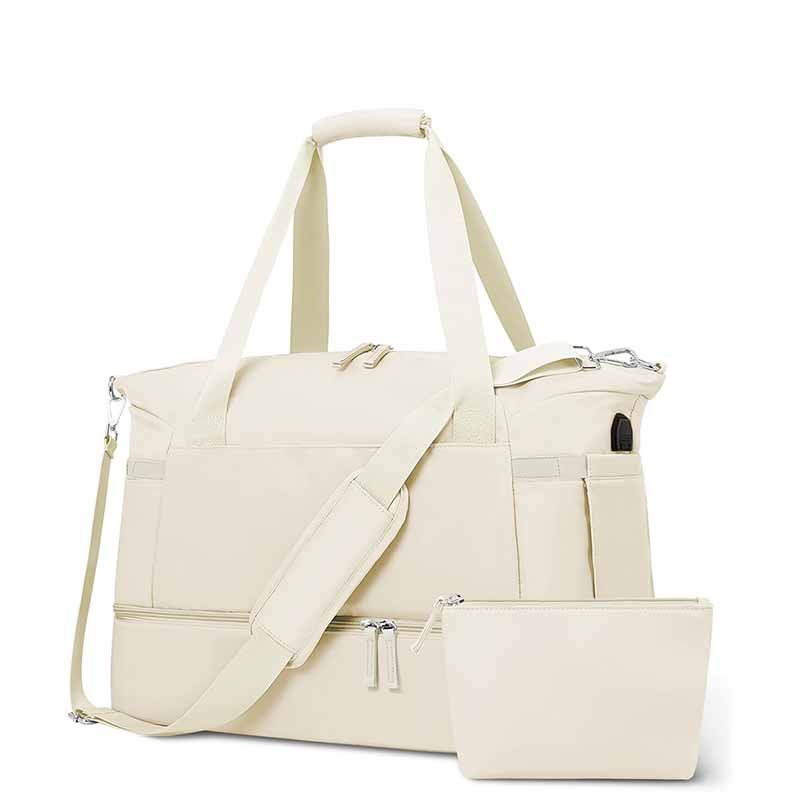
Duffle bags stay balanced when their internal compartments, compression straps, and load-distribution features keep contents from shifting. Organized packing prevents uneven weight concentration, which is one of the main causes of shape loss. Well-designed zipper openings and internal dividers also help stabilize the bag structure during movement.
Even a well-constructed duffle bag can lose its shape if the contents move freely inside. That is why many high-quality duffle bags include features that help control how items are packed.
These design features not only improve usability but also help the bag maintain its structure during travel.
The key principle is weight balance.
When contents shift to one side of the bag, the structure begins to distort. Over time, repeated uneven loads can stretch seams and deform panels.
Below are the most effective features used to stabilize duffle bags.
How do compartments stabilize duffle bags?
Internal compartments help distribute weight more evenly across the bag. Instead of allowing everything to settle into one large space, compartments create multiple zones for packing.
Common compartment layouts include:
| Compartment Type | Function |
|---|---|
| Shoe compartment | Keeps heavy shoes separate |
| Wet pocket | Stores damp clothing |
| Mesh interior pockets | Organizes small items |
| Divider panels | Separates equipment or clothing |
For example, many gym duffle bags include a side shoe compartment. Shoes are among the heaviest items users pack, and isolating them prevents the entire bag from tilting to one side.
In travel duffle bags, divider panels can help distribute clothing evenly, which improves structural balance.
Which compression straps control duffle bags?
Compression straps are often associated with backpacks, but they are equally useful in duffle bags.
These adjustable straps tighten the bag’s outer shell and prevent internal contents from shifting.
Benefits of compression straps include:
- Reduce internal empty space
- Stabilize packed items
- Maintain bag shape during movement
- Improve carrying comfort
Compression straps are typically placed:
- Along the side panels
- Across the top opening
- Inside the bag for load control
High-capacity duffle bags (60–90L) almost always include compression straps to keep the bag from bulging outward when packed.
How do zipper openings affect duffle bags?
The zipper opening structure also influences whether a duffle bag keeps its shape.
Very wide openings make packing easier, but they reduce structural stability if not reinforced.
Design improvements that help maintain shape include:
- Reinforced zipper tape
- Dual zipper tracks
- Structured zipper flaps
- Semi-rigid frame strips near the opening
Many premium duffle bags use U-shaped openings with reinforced edges. This design provides wide access while maintaining structural strength.
In addition, using heavy-duty zippers such as #8 or #10 coil zippers improves durability and prevents deformation around the opening.
Features that improve duffle bag stability
| Feature | Benefit | Typical application |
|---|---|---|
| Shoe compartment | Prevents weight concentration | Gym duffle bags |
| Compression straps | Reduces shifting contents | Travel duffle bags |
| Internal divider | Balances load | Equipment bags |
| Reinforced zipper opening | Prevents twisting | Large duffle bags |
| Edge piping | Maintains structure | Most premium bags |
How Do Manufacturers Build Shape-Stable Duffle Bags?
Professional manufacturers build shape-stable duffle bags by combining material engineering, reinforced panel construction, structured sampling, and real load testing. Factories carefully design the base panel, reinforce stress points, integrate internal support materials, and perform durability tests before production. This process ensures that duffle bags maintain their shape even under heavy packing and long-term use.
Developing duffle bags that keep their shape when packed requires a structured product development process. Professional factories do not rely on guesswork. Instead, they follow a systematic workflow that includes design engineering, prototype sampling, structural reinforcement, and performance testing.
At Szoneier, every custom duffle bag project follows a clear development process to ensure the final product meets both functional and aesthetic expectations.
The typical workflow includes:
- Product design analysis
- Material selection
- Structural engineering
- Prototype sampling
- Load testing and adjustments
- Final production approval
This structured process helps identify potential weaknesses early, reducing the risk of structural failure after the product reaches the market.
Below are the key steps manufacturers use to build shape-stable duffle bags.
How do factories develop duffle bag prototypes?
Prototype development is the most important stage of duffle bag engineering. During this phase, designers translate concept sketches into real physical products.
Factories usually create two to three prototype versions before approving the final design.
The prototype process typically includes:
| Step | Purpose |
|---|---|
| Pattern making | Define panel structure and sewing layout |
| Material testing | Evaluate fabric stiffness and durability |
| Structural reinforcement | Add foam, boards, or stiffeners |
| Assembly sample | Test bag construction and appearance |
| Functional review | Evaluate comfort and usability |
During prototype testing, the bag is filled with weight equivalent to real usage conditions. This helps identify whether the bag will sag, collapse, or twist during normal use.
If structural weaknesses are discovered, engineers adjust reinforcement layers or panel shapes before finalizing the design.
Which reinforcements do factories add to duffle bags?
Factories often combine several reinforcement techniques to improve structural stability.
Common reinforcement methods include:
| Reinforcement Technique | Function |
|---|---|
| Bottom HDPE board | Prevents sagging under heavy load |
| EVA foam panels | Maintains side wall structure |
| Edge piping | Reinforces seams and edges |
| Webbing reinforcement | Strengthens load-bearing areas |
| Bartack stitching | Prevents seam tearing |
One particularly effective method is handle load transfer reinforcement. Instead of attaching handles only to the outer fabric, manufacturers extend the webbing across the entire bag body. This distributes weight more evenly and prevents fabric deformation.
This method is commonly used in high-performance travel duffle bags and equipment bags.
How do factories test duffle bag durability?
Before mass production, professional factories perform durability testing to verify product quality.
Testing methods often include:
| Test Type | Test Method |
|---|---|
| Load test | Bag filled with 10–20 kg for 24 hours |
| Drop test | Bag dropped from 1 meter height |
| Handle strength test | Pull force test on handles |
| Seam strength test | Stitch tension evaluation |
| Abrasion test | Fabric wear resistance test |
For example, during load testing, a duffle bag may be filled with weighted blocks and suspended for several hours. Engineers then inspect whether the base panel bends or seams stretch.
These tests help ensure the bag maintains its structure during real-world usage such as travel, gym workouts, or outdoor activities.
How Much Does It Cost to Produce Structured Duffle Bags?
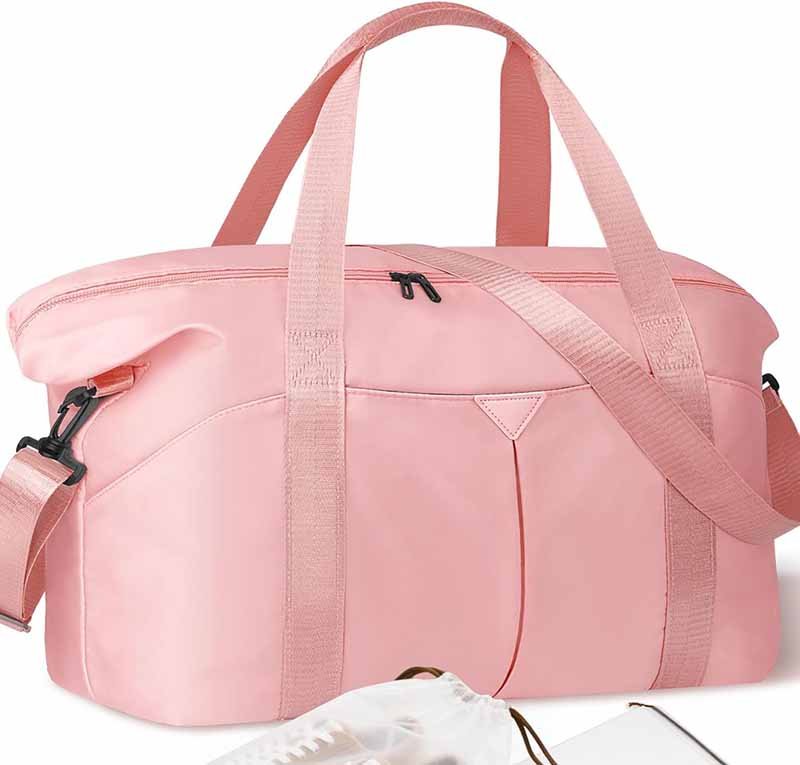
The cost of producing structured duffle bags depends mainly on the fabric type, reinforcement materials, hardware quality, labor complexity, and order volume. Compared with standard soft duffle bags, structured designs usually cost 8–20% more because they include additional materials such as EVA foam panels, HDPE base boards, reinforced seams, and stronger zippers. However, these structural upgrades significantly improve durability, load capacity, and product value.
Understanding the Real Cost of Structured Duffle Bags
Many buyers initially focus on the fabric price, but in bag manufacturing the structure of the bag often determines the real cost difference.
A duffle bag that keeps its shape typically includes:
- Reinforced base board
- Foam-supported side panels
- Stronger stitching in stress areas
- Heavier-duty zippers
- Additional internal compartments
Each of these components adds small costs individually, but together they create a bag that performs better and lasts longer.
Below is a realistic cost breakdown for a medium-sized 45–55L travel or gym duffle bag produced in China.
Typical Cost Structure of a Structured Duffle Bag
| Cost Component | Typical Share | Example Cost Impact |
|---|---|---|
| Outer fabric | 30–40% | $3.0 – $6.0 |
| Reinforcement materials | 6–12% | $0.8 – $2.0 |
| Hardware & accessories | 10–15% | $1.2 – $3.0 |
| Labor & assembly | 25–35% | $3.0 – $5.0 |
| Packaging | 3–5% | $0.3 – $0.8 |
| Overhead & QC | 5–8% | $0.5 – $1.2 |
Estimated factory price range for many structured duffle bags:
- Basic structured duffle bag: $9 – $14
- Mid-range reinforced duffle bag: $14 – $22
- Premium travel duffle bag: $22 – $40+
Actual pricing varies depending on fabric grade, order quantity, and design complexity.
Key Factors That Influence Production Cost
1. Fabric Type
Fabric is usually the single largest material cost. Higher-denier fabrics increase durability and structure but also raise the price.
| Fabric Type | Approx Material Cost (per bag) | Typical Use |
|---|---|---|
| 600D polyester | $1.5 – $2.5 | Budget sports bags |
| 900D polyester | $2.5 – $3.5 | Mid-range travel bags |
| 1680D ballistic nylon | $5 – $8 | Premium duffle bags |
| Canvas (16oz) | $4 – $6 | Lifestyle bags |
| TPU coated fabric | $6 – $10 | Waterproof outdoor bags |
For most mid-range duffle bags, 900D polyester with PU coating offers a good balance of durability and price.
2. Structural Reinforcement Materials
Reinforcement materials are essential for shape retention but add extra production cost.
Common reinforcement materials used in duffle bags:
| Reinforcement Material | Typical Cost Impact | Function |
|---|---|---|
| EVA foam (3–5mm) | $0.4 – $0.8 | Stabilizes side panels |
| PE sheet | $0.3 – $0.6 | Adds panel stiffness |
| HDPE board (bottom) | $0.5 – $1.2 | Prevents bottom sagging |
| Non-woven stiffener | $0.2 – $0.4 | Panel stability |
Even though these materials only increase total cost by a small amount, they dramatically improve the visual structure and durability of the bag.
3. Hardware and Accessories
Hardware quality can also significantly influence price.
Key hardware components include:
- Zippers
- Buckles
- D-rings
- Webbing straps
- Shoulder pad components
For example:
| Hardware Type | Approx Cost Difference |
|---|---|
| Standard zipper | baseline |
| SBS zipper | +$0.2 – $0.4 |
| YKK zipper | +$0.8 – $1.5 |
Premium brands often choose YKK or SBS zippers because they improve durability and reduce product failure rates.
4. Bag Size and Construction Complexity
Larger bags require more fabric, more reinforcement, and more labor.
| Bag Capacity | Typical Manufacturing Cost |
|---|---|
| 30–40L duffle bag | $8 – $15 |
| 45–60L duffle bag | $10 – $22 |
| 70–90L duffle bag | $18 – $35 |
Additional features that increase cost include:
- Shoe compartments
- Waterproof linings
- Laptop sleeves
- External pockets
- Compression straps
Each additional feature increases labor time and material consumption.
5. Order Quantity
Production quantity has a major impact on unit cost because many manufacturing costs are fixed.
| Order Quantity | Typical Price Effect |
|---|---|
| 100 pcs | highest cost per unit |
| 300 pcs | moderate cost |
| 500 pcs | balanced production cost |
| 1000+ pcs | lowest unit cost |
Many factories offer lower prices for larger production runs because material purchasing and production efficiency improve.
Cost vs Product Value
One important insight for brands is that structural reinforcement often adds only a small percentage to the total cost, but greatly improves product quality.
Example comparison:
| Bag Type | Manufacturing Cost | Customer Perceived Quality |
|---|---|---|
| Basic soft duffle bag | $9 | Low |
| Reinforced structured duffle bag | $11 | Medium-high |
| Premium engineered duffle bag | $18 | High |
A $2–$3 improvement in structure can dramatically improve:
- Product appearance
- Durability
- Customer reviews
- Brand reputation
For brands selling on Amazon, Shopify, or retail stores, these improvements often justify the additional production cost.
Practical Advice for Brands Developing Duffle Bags
If your goal is to create a duffle bag that maintains its shape and performs well for customers, focus your budget on the following areas:
- Reinforced base panel
- Side panel foam support
- Strong zipper system
- Load-bearing handle construction
These four upgrades usually provide the biggest improvement in product quality without dramatically increasing production cost.
Why Work With an Experienced Duffle Bag Manufacturer?
Designing and manufacturing duffle bags that keep their shape requires technical knowledge, material expertise, and production experience. Many product failures occur because factories lack experience with structural engineering.
Working with an experienced manufacturer provides several advantages:
| Capability | Benefit |
|---|---|
| Material sourcing expertise | Access to high-quality fabrics |
| Pattern engineering | Strong structural design |
| Rapid sampling | Faster product development |
| Quality control | Consistent product standards |
| Production efficiency | Reliable delivery schedules |
Szoneier has more than 18 years of experience in bag manufacturing, with specialized factories producing fabrics, neoprene materials, leather components, and finished bags. This integrated supply chain allows us to control quality and reduce development time.
Our team works closely with customers to develop custom duffle bags, travel bags, gym bags, tool bags, and outdoor bags using a wide range of materials including:
- Polyester
- Nylon
- Canvas
- Neoprene
- TPU / PVC
- Leather
We support custom logos, private label branding, OEM and ODM production, with services including:
- Free design assistance
- Fast sample development
- Low MOQ customization
- Free samples for evaluation
- Stable production lead times
Conclusion
Designing duffle bags that keep their shape when packed requires careful attention to materials, structural engineering, and reinforcement techniques. A strong base panel, reinforced side panels, durable fabrics, and smart internal features all work together to create a bag that performs well in real-world conditions.
Brands that invest in thoughtful product design not only improve durability but also enhance the perceived value of their products in the eyes of customers.
Whether you are developing travel duffle bags, gym bags, equipment bags, or outdoor gear bags, working with an experienced manufacturing partner can significantly improve the final product.
If you are planning to develop custom duffle bags for your brand, the Szoneier team is ready to help.
We can support you through the entire process:
- Product design and structural engineering
- Material selection and sourcing
- Prototype development and testing
- Mass production and quality control
If you would like to create durable duffle bags that maintain their shape and stand out in the market, feel free to contact Szoneier to discuss your project and request a quote.